Tag: Amarinder Singh

  • Politics: How accountable are Advisors?

    Politics: How accountable are Advisors?

    After independence, Prime Minister Jawahar Lal Nehru, had set the concept of appointing Advisors in motion when he named JJ Anjaria as the country’s first Chief Economic Advisor in 1956. Among those who followed JJ Anjaria was Indira Gandhi’s pick Dr Manmohan Singh  who remained  country’s Chief Economic Adviser  from 1972 to 1976.

    By Prabhjot Singh

    Appointing Advisors by spending  huge sums of public money for  soliciting expert advice to facilitate the formulation and improve the quality of public policy is nothing new in liberal democracies. Ever since Independence, both the central and state governments  have been making use of experts from outside the gambit of the available political or administrative machinery  for  their advice on matters of public interest or welfare. The governments have been using consultancies, think tanks, academicians, and technocrats, to obtain expert opinion or advice while formulating plans.

    After independence, Prime Minister Jawahar Lal Nehru, had set the concept of appointing Advisors in motion when he named JJ Anjaria as the country’s first Chief Economic Advisor in 1956. Among those who followed JJ Anjaria was Indira Gandhi’s pick Dr Manmohan Singh  who remained  country’s Chief Economic Adviser  from 1972 to 1976.

    The central government has since come a long way and now it has several very “powerful” Advisors, including the National Security Advisor, a position, though outside the purview of the Constitution, that has been shared by superannuated diplomats and policemen. The Chief Economic Adviser continues to be drawn from amongst the economists.

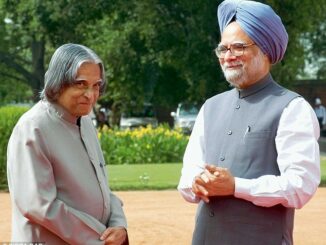
    In 1999-2000, the Union Government also appointed the country’s first Principal Scientific Advisor in Dr APJ Abdul Kalam. It is pertinent to mention that Dr Manmohan Singh (Chief Economic Advisor) and Dr APJ Abdul Kalam (Principal Scientific Advisor) rose to be the Prime Minister and President of the country, respectively. The appointments made on the basis of professional acumen and competence,  generally remain free of  any controversies. However, when the Advisors are appointed out of sheer political compulsions, they invariably  get  mired in controversies.

    There is a lot of ambiguity in the choice and classification of Advisors. There is a category of Advisors  who are  serving bureaucrats, technocrats, financial experts and are hand-picked  for  “plum” posts that generally fall in the category of ex-cadre posts.

    The second category is of political appointees  as Advisors. These appointments, if made for office for profit slots, need legislative approval.

    Chandigarh Administration is an example where serving bureaucrats hold the position of Adviser to the Administrator. The practice started in June, 1984, coinciding with the launch of Operation Bluestar in Punjab. K Banarji, who was the last Chief Commissioner of Chandigarh, became the first Adviser to the Administrator of Chandigarh. Since then, 18 Advisers have served the Administration.

    This category of “official” Advisers have their pay packets and service conditions protected by the civil service rules.

    There is another subgroup of these Advisors who  are superannuated bureaucrats, including diplomats, and financial wizards. Most of the Central Government Advisors belong to this group.

    There are no fixed norms like pay packets and service conditions for the political category of Advisers. Depending upon the status or clout of the appointee, his or her perks are fixed.

    It depends upon the State Governments or the Central Government to decide how  to make  best use  of expert advisors  in the policy process.

    The recent controversy about the appointment of Rajya Sabha member Raghav Chadha as Chairman of  an  Interim Advisory Committee has political implications. The Opposition parties are using it as a major tool to bash the Chief Minister Bhagwant Mann and the ruling Aam Aadmi Party for subjugating the interests of the State. The appointment has been challenged before the Punjab and Haryana High Court on the plea that an “outsider” has no locus standi to hold a position in a policy making body of the State.

    Punjab has a long history of being ruled by Advisors. Since the State had the longest spell of President’s Rule in 80s, it had a number of superannuated bureaucrats, defense personnel and policemen  as Advisors to the Governor or as members of the Governor-in-Council.Some of these Advisors, including JF Ribeiro, TS Baroca, Dr SS Sidhu, SL Kapur and others served  for terms from one to three years. The Governor-in-Council virtually performed the role of the State Cabinet and used to take all major policy decisions.

    Other than these Advisors, the discretion of appointing Advisors was frequently used in the post-militancy era by almost all Chief Ministers, including Parkash Singh Badal, Beant Singh, Capt Amarinder Singh and Charanjit Singh Channi. And most of these appointments were made either under political compulsions or to oblige people close to the affluent political families of the State.

    Instead of the State getting benefitted from the expert advice, these appointments  are generally  a big financial burden on deteriorating fiscal health of the State.

    Though no one disputes the rights and privileges of the elected government to appoint Advisors to seek  their expert opinion on various aspects of administration, including finances and governance, yet no provisions have been made  to hold the Advisors responsible  for advice that went against the interests of the State. Accountability clause is still not a part of terms of service conditions for the Advisors. There is no mechanism in place to judge the quality of the advice and the likelihood of it being accepted and implemented  for the welfare of the people.

    The mechanisms  to make external experts or Advisors  as active participants in the formulation of policies , and related factors or considerations influence the ability of governments to accept expert advice and incorporate it in their policy decisions are still to be worked out.

    Now when the AAP Government wants to use the expertise of Raghav Chadha to improve the fiscal health of the State, no one is talking about the role and work of the previous Financial Adviser, VK Garg, a retired bureaucrat appointed by the previous Congress Chief Minister, Capt Amarinder Singh. Intriguingly, in 2017, when Captain Amarinder Singh named six of his party legislators as  Political Advisors by according Cabinet Minister status to five of them and Minister of State status to the sixth, Bhagwant Mann was one of the frontline critics of the move saying it would put unnecessary burden on the State exchequer.There is no continuity in the expert advice or its continued implementation in the State.

    (The author  is a veteran journalist with over three decades of experience covering a wide spectrum of subjects and stories. He has covered  Punjab and Sikh affairs for more than three decades besides covering seven Olympics and several major sporting events and hosting TV shows. For more in-depth analysis please visit probingeye.com  or follow him on Twitter.com/probingeye. He can be reached at prabhjot416@gmail.com)

  • Punjab turmoil now a political storm for Cong

    Punjab turmoil now a political storm for Cong

    New Delhi/Chandigarh (TIP): A party in disarray in a poll-bound state. A defiant state unit chief rebuffing the party’s overtures. A snubbed former chief minister meeting a top political rival. And, senior leaders publicly voicing differences with the leadership, prompting protests by others in the same party.
    The Congress’ troubles in Punjab spilled over to Delhi on Wednesday as former chief minister Amarinder Singh met Union home minister Amit Shah and leaders upped their pitch for organisational changes, a day after state unit chief Navjot Singh Sidhu’s abrupt resignation plunged the party into crisis.
    Singh, who had denied talk of him visiting Shah a day ago, drove to the home minister’s residence around 6pm for a meeting that lasted less than an hour.
    The event stoked speculation that Singh, who resigned as CM last week after a months-long tussle with Sidhu and complained he was humiliated by the party leadership, could join the Bharatiya Janata Party (BJP) or seek its support.
    But Singh said the meeting focused on the ongoing farm agitation against three central laws. “Met Union home minister Amit Shah ji in Delhi. Discussed the prolonged farmers agitation and urged him to resolve the crisis urgently,” he tweeted.
    A senior BJP functionary said a section of the party felt Singh could resolve the standoff between the government and protesting farmers, but added that nothing was finalised. The Congress accused Shah and the BJP of trying to take revenge. “Amit Shah’s residence is the hub of anti-Dalit politics,”said party spokesperson Randeep Singh Surjewala, referring to the Punjab’s new chief minister Charanjit Singh Channi, a Dalit.
    “Not ji huzoor 23”
    The Congress’s woes in Punjab, where the party was well-placed to fight the February-March assembly polls before factionalism erupted in May, prompted a group of senior leaders in Delhi to resurrect their 2020 demands for organisational changes and internal elections.
    Ghulam Nabi Azad, one of the leaders of the so-called G23, wrote to party chief Sonia Gandhi seeking a Congress Working Committee meeting to discuss the Punjab and Goa situations as well as the “mass exodus” in the organisation. Senior Congress leader and former Goa CM Luizhinio Falerio joined the Trinamool Congress on Wednesday, Sept 29.
    Another G-23 leader, Kapil Sibal, demanded “open dialogue” and introspection, questioning the lack of clarity in the decision-making process.
    He emphasised that the grouping was not made up of yes men: “We are G23 but not ‘ji huzoor (yes, lordship) 23’,” he told reporters in the Capital.
    Sibal said he was speaking on behalf of the 23 leaders who wrote to Sonia Gandhi last year and were waiting for the leadership to act on their demands.
    “We don’t have a president. So, who’s taking the decisions? We all know and yet we don’t know. We want a CWC meeting for a dialogue to take place,” he said.
    The former Union minister clarified that the G-23 leaders did not plan to exit the party. “People close to them have left them. But those who are not considered close, are with them,” he said, referring to the exits of senior leaders in recent months.
    Party general secretary Ajay Maken criticised the comments and party workers protested outside his house in the evening with “get well soon” placards. “My appeal to Mr Sibal and others like him is that they should not denigrate the organisation which has given them political identity by rushing to the media every then and now,” Maken told PTI.
    Punjab tussle
    Dissension in the Congress’s Punjab unit erupted in May but the leadership hoped the appointment of Sidhu as party unit chief and the removal of his arch-rival Singh as CM would tamp down tensions.
    But Sidhu’s resignation barely 72 days after being appointed took the party by surprise, and embarrassed Rahul Gandhi and Priyanka Gandhi Vadra, who together orchestrated Sidhu’s appointment and Singh’s exit as part of an effort to end factionalism and improve the party’s chances in next year’s state elections.
    The move exposed new fault lines in the party. On Wednesday, Sidhu appeared to rebuff the Congress’s overtures and questioned key appointments made by chief minister Channi.
    “To fight for justice of ‘Guru Sahib’ and to improve the lives of people of Punjab and for the means, I will make any sacrifice but will always stand by principles,” Sidhu said, despite a series of senior leaders, including Channi, trying to convince him to take back the resignation.
    Senior leaders said differences between Sidhu and his one-time close associate Channi sprang up over picking minister Sukhjinder Singh Randhawa, who the former cricketer sees as a rival for the CM’s post, and controversial appointments to the positions of state advocate general and director general of police.
    Channi signalled that the party continued to talk to Sidhu. “I called him (Sidhu) and told him that the party is supreme… I have spoken to him on phone and told him to let’s sit, talk it out and resolve the issue,” the CM told reporters in Chandigarh.
    Defiant, Sidhu raises appointments in state
    Chandigarh : A day after his dramatic resignation as Punjab Congress chief, Navjot Singh Sidhu kept his party on tenterhooks on Wednesday, putting out a video to raise questions over key appointments by chief minister Charanjit Singh Channi and rebuffing overtures by top leaders. Channi, who is battling his first major political crisis just 10 days after taking over as the CM, offered to sit down and iron out differences. But Sidhu struck a defiant note in his video message, questioning the selection of the advocate general, director general of police and “tainted leaders” in the cabinet. Sidhu said he was ready to make any sacrifice but would always stand by his principles. “My first priority is to fight for justice that people have been waiting for…I will fight for truth till my last breath.
    Source: HT

  • Conflict in Punjab Congress

    • With elections in sight, ambitions begin to soar

    With just nine months to go before the term of the Punjab legislature ends, the conflict in the ruling Congress tells a story about ambition and hunger for power. Dissidents have been firing salvos at Chief Minister Capt Amarinder Singh for much of his current term, causing embarrassment to their own government over alleged corruption, the inconclusive probe into sacrilege cases and last year’s horrible spurious liquor tragedy. Now, the knives have been sharpened — there is an insistent demand for a change of guard in the state leadership. There is strong sentiment in Punjab against the BJP-ruled Centre over the three contentious farm laws, the Akali Dal is still suspect in the eyes of the voters due to past association with the BJP, the Aam Aadmi Party is also affected by factionalism and seems to have lost steam — the Congress leaders believe, thus, that power would be theirs for the taking when the elections are held early next year.

    Over the past few days, Congress leaders have vigorously washed their dirty linen in public. The dissidents have accused the CM of being distant and autocratic; they have pointed to the criminal syndicates operating in the state, especially the land, sand, drug and illicit liquor mafias. Former minister Navjot Singh Sidhu has been vocal on the sacrilege cases of 2015, alleging that the chief minister is protecting the culprits. Capt Amarinder Singh and the loyalists have countered the allegations, accusing Sidhu of trying to undermine his own party’s government over political ambitions. As the party’s central leadership tries to douse the fire, an unfavorable picture of the leaders’ priorities emerges before the populace, struck by loss, sorrow and economic deprivation amid the pandemic. There are no reports that these issues were discussed with the central leadership — an indication of flawed priorities.

    Currently, only three states in India have Congress chief ministers. In spite of the despair prevailing in Punjab — and indeed, all over the country — due to the pandemic, the party would have hopes of overcoming the anti-incumbency factor in the 2022 elections. Dissidence and ambition, however, have the potential to hurt its chances — as has happened in several other states.

    (Tribune India)

  • Punjab: precariously perched, politically and economically

    Punjab: precariously perched, politically and economically

    By Gurmit Singh Palahi

    “On the plank of Punjabi Suba (State) and other issues, first the Akalis alone and later with support from BJP ruled the State. Parkash Singh Badal occupied the throne for a record five times, totaling a quarter century. During his tenure, millions and billions of governmental debt accrued. The mafia ruled the roost. Betraying the people who elected them, the Akalis treacherously yielded all power to BJP who had a field day. Rivers issue was dispatched to cold storage. Dynastic rule and nepotism became prevalent.”

    The Center is really adamant about the black laws and is desperately trying to demolish and malign the farmers’ agitation by deployment of nefarious tactics and arm-twisting. Entire Punjab is in the worst crisis. A divide has been created between the farmers and the wholesalers, due to introduction of online trading of the produce. GST and other financial aid have been stopped by the Center with the ulterior objective of crushing Punjab and Punjabis.

    The gigantic maladies impacting Punjab have been, and are, massive yet the endeavors towards discovering remedies have always been below expectations. Since India’s independence, there has been no political outfit, worth its name, which has ventured, responsibly, into the arena of exploring viable cure to various afflictions. Political games have been played against Punjab, to reduce the martial race of Punjabis into reclusive, forcing them towards total annihilation. Major events continued unabated, leaving a bruised Punjab and instead of providing the much-needed succor, mere lip-service was provided and publicized.

    Come 1947 and millions of Punjabis, on both sides of the border, were not only uprooted, killed or injured but their souls tormented at the turn of events. Then, 1984 became witness to an era of a massive communal divide and the rise of militancy and terrorist activities. Police atrocities were rampant with fake encounters and rapes. The misadventure codenamed Operation BLUESTAR was launched by the army, under orders from the powers that be. The Delhi Sultanate deprived Punjab and Punjabis of their due rights. The most recent misdeed is the enactment of the three draconian laws against the farming community. The Congress ruled Punjab for several decades, becoming a rubber stamp in the hands of the Center, thereby hurting the economic interests of Punjab. In a State that is primarily agriculture-based, there was no agro-industries which were established here. No emphasis was laid upon procurement, management and marketing of the produce, rendering the occupation of agriculture a totally unprofitable enterprise. Suicides became rampant due to the mounting debts.

    Punjab was bifurcated on the basis of language, but a bulk of Punjabi speaking populace was separated from Punjab, when Chandigarh was snatched away and labeled as a Union Territory under Central rule, which also exercised control of the waterways. Punjab Congress leaders remained mute spectators. The writing of the saga of economic bankruptcy had started under Congress reign.

    On the plank of Punjabi Suba (State) and other issues, first the Akalis alone and later with support from BJP ruled the State. Parkash Singh Badal occupied the throne for a record five times, totaling a quarter century. During his tenure, millions and billions of governmental debt accrued. The mafia ruled the roost. Betraying the people who elected them, the Akalis treacherously yielded all power to BJP who had a field day. Rivers issue was dispatched to cold storage. Dynastic rule and nepotism became prevalent.

    The current Akali leadership has abandoned the original Akali ideology and has surely sidelined the pioneering and brave leaders of Akali history, thereby becoming a puppet in the hands of the land and construction mafia, brokers and wholesalers. The Akali image was tarnished as of the Congress. They ruled by rotation and it became sort of an unwritten agreement between them. Great hype was given to projects of public welfare, but it all remained on paper due to rampant bureaucratic red tape and allied corruption.

    Health and education sectors became big casualties of these evil times. The overall environment became polluted, metaphorically as well as literally. Power came to be centralized with the throne of the Chief Minister, surrounded by an army of nominated advisors, police and bureaucratic administrators. Real leaders and elected representatives became obsolete and were ignored. Municipal Corporations, Village Panchayats, Block Committees and District Councils were rendered redundant bodies and absolutely marginalized.

    All rights were usurped by the bureaucracy.

    The 3rd and 4th Fronts were formed, from time to time, by leftist parties, Aam Aadmi party, People’s Party of Manpreet Singh Badal, Lok Bhalai Party of Balwant Singh Ramoowalia, Bahujan Samaj Party, Akali Party of Simranjit Singh Maan, Akali Party 1920 of Ravi Inder Singh and Lok Insaaf Party of Bains Bros. from Ludhiana, with all of these making sincere endeavors to provide an alternative with support from the public, who were fed up and desired change. Amarinder Singh has lost the public confidence due to unfulfilled promises. Akalis got maligned in the aftermath of the sacrilege of Guru Granth Sahib and other religious matters. BJP has been in the doldrums due to the three black laws against the farmers.

    Again, all of this is leading towards another major politico-economic crisis, all the new parties have failed to develop vote banks despite massive support from the Punjabi diaspora, worldwide.

    Today, a great vacuum is verily visible. The Center is really adamant about the black laws and is desperately trying to demolish and malign the farmers’ agitation by deployment of nefarious tactics and arm-twisting. Entire Punjab is in the worst crisis. A divide has been created between the farmers and the wholesalers, due to introduction of online trading of the produce. GST and other financial aid have been stopped by the Center with the ulterior objective of crushing Punjab and Punjabis.

    Now it’s only some months when Punjab is to go to the polls. All parties are vying to get votes of the farmers who have successfully kept all politicians, at bay from the agitation. The BJP finds itself at the lowest ebb in Punjab. So, the BJP may either compromise with the farming Unions or it may mend fences with the Dalits, OBCs and SCs by propping up their leader to become the face of the prospective CM or it may bring forward some prominent and popular Sikhs.

    The Akalis, AAP, Congress and BJP are all trying hard to woo the people. Sukhdev Singh Dhindsa, Ranjit Singh Brahmpura and BSP are toying with the idea of forming a 4th Front. Election manifestos, public rallies, leaders Confabulations andworkers conclaves are in full swing.

    However, the pertinent query remains whether any political outfit or any conglomerate is empowered enough to stabilize the crumbling economy of Punjab, thereby filling the vacuum due to which the youth is restless and flying abroad and farmers are looking for avenues to safeguard their identity and existence. Punjab is in the throes of the menace of land mafia and overall corruption.

    (The author is President Punjabi KalamnaveesPatarkarManch(Regd.),Punjab, India, and Chairman Punjabi Virsa Trust (Regd.), Phagwara, Punjab, India. He can be reached at gurmitpalahi@yahoo.com)

    (Translated from Punjabi into English by Amarjit Singh Anand)