Tag: Amnesty International

  • Amnesty International says Israel using starvation to commit Gaza genocide

    Amnesty International says Israel using starvation to commit Gaza genocide

    WASHINGTON, D.C. (TIP): Amnesty International issued a report Thursday, July 3, 2025,  claiming a controversial Israeli- and U.S.-backed system to distribute aid in Gaza uses starvation tactics against Palestinians to continue to commit genocide in the Gaza Strip during Israel’s war with Hamas.

    The U.K.-based human rights group condemned Israel and the Gaza Humanitarian Foundation, which the U.S. and Israel have backed to take over aid distribution in Gaza from a network led by the United Nations.

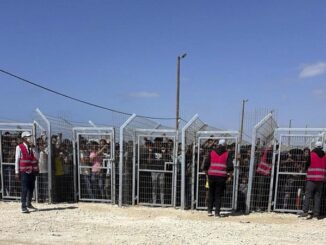
    Israel’s foreign minister denounced the Amnesty report, saying the organization has “joined forces with Hamas and fully adopted all of its propaganda lies.” Gaza’s Health Ministry says more than 500 Palestinians have been killed at or near GHF distribution centers over the past month. The centers are guarded by private security contractors and located near Israeli military positions. Palestinian officials and witnesses have accused Israeli forces of opening fire at crowds of people moving near the sites.

    The Amnesty report said Israel has “turned aid-seeking into a booby trap for desperate starved Palestinians” through GHF’s militarized hubs. The conditions have created “a deadly mix of hunger and disease pushing the population past breaking point.”

    “This devastating daily loss of life as desperate Palestinians try to collect aid is the consequence of their deliberate targeting by Israeli forces and the foreseeable consequence of irresponsible and lethal methods of distribution,” said Agnès Callamard, Amnesty’s secretary general.

    The Israeli army says it has fired warning shots to control crowds and only fires at people it says are acting suspiciously.

    The Foreign Ministry and COGAT, the Israeli defense body in charge of coordinating aid to Gaza, said Israel has facilitated the entry of over 3,000 aid trucks into the Gaza Strip since May 19 and GHF has delivered boxes of food with the equivalent of 56 million meals.

    Humanitarian organizations say that amount is not nearly enough to meet overwhelming need in Gaza. GHF did not immediately return requests for comment.

    The World Food Programme says despite the new Israel-backed initiative, food consumption reached a critical low last month, with food diversity reaching its worst level since the conflict began.

    “The continued closure of crossings, intensified violence since March, soaring food prices, and extremely limited humanitarian and commercial supplies have severely restricted access to even basic food items,” the WFP said in a June report.

    Amnesty’s report follows a statement earlier this week from more than 165 major international charities and non-governmental organizations calling for an immediate end to the foundation. They say the new mechanism allows Israel to use food as a weapon, violates humanitarian principles and is ineffective.

    It’s the latest sign of trouble for the GHF, a secretive initiative headed by an evangelical leader who is a close ally of President Donald Trump. Last month, the U.S. government pledged $30 million for the group to continue operation, the first known U.S. donation to the group, whose other funding sources remain opaque.

    GHF started distributing aid May 26 following a nearly three-month Israeli blockade that pushed Gaza’s population of more than 2 million to the brink of famine.

    Palestinian witnesses have described scenes of chaos around the distribution sites, and two contractors in the operation have told The Associated Press that colleagues fired live ammunition and stun grenades toward crowds of people. Palestinians often must travel long distances to reach the sites.

    In a statement Tuesday, GHF rejected criticism of its operations and claimed it has delivered more than 52 million meals to hungry Palestinians.

    “Instead of bickering and throwing insults from the sidelines, we would welcome other humanitarian groups to join us and feed the people in Gaza,” GHF said.

    GHF has called for Israel’s military to investigate the allegations from Gaza’s Health Ministry, but last month the organization said there has been no violence in or around its centers and its personnel have not opened fire.

    Israel demanded the alternative plan because it accuses Hamas of siphoning off aid. The U.N. and aid groups deny there is significant diversion.

    Amnesty accused Israel last year of committing genocide in the Gaza Strip during its war with Hamas, saying it has sought to deliberately destroy Palestinians by mounting deadly attacks, demolishing vital infrastructure, and preventing the delivery of food, medicine and other aid.

    Israel, which was founded in the aftermath of the Holocaust, has adamantly rejected genocide allegations against it as an antisemitic “blood libel.” It is challenging such allegations filed by South Africa at the International Court of Justice and has rejected the International Criminal Court’s accusations that Prime Minister Benjamin Netanyahu and his former defense minister committed war crimes in Gaza.

    (Source: AP)

  • USA must drop charges against Julian Assange: Amnesty International

    USA must drop charges against Julian Assange: Amnesty International

    LONDON (TIP)– Authorities in the USA must drop the espionage and all other charges against Julian Assange that relate to his publishing activities as part of his work with Wikileaks. The US government’s unrelenting pursuit of Julian Assange for having published disclosed documents that included possible war crimes committed by the US military is nothing short of a full-scale assault on the right to freedom of expression.
    Julian Assange is currently being held at Belmarsh, a high security prison in the UK, on the basis of a US extradition request on charges that stem directly from the publication of disclosed documents as part of his work with Wikileaks. Amnesty International strongly opposes any possibility of Julian Assange being extradited or sent in any other manner to the USA. There, he faces a real risk of serious human rights violations including possible detention conditions that would amount to torture and other ill-treatment (such as prolonged solitary confinement). The fact that he was the target of a negative public campaign by US officials at the highest levels undermines his right to be presumed innocent and puts him at risk of an unfair trial.
    Julian Assange’s publication of disclosed documents as part of his work with Wikileaks should not be punishable as this activity mirrors conduct that investigative journalists undertake regularly in their professional capacity. Prosecuting Julian Assange on these charges could have a chilling effect on the right to freedom of expression, leading journalists to self-censor from fear of prosecution.
    Sign the petition now and protect the right to freedom of expression.
    https://www.amnesty.org/en/petition/julian-assange-usa-justice/
    Urge the US authorities to drop the charges against Julian Assange that stem solely from his publishing activities with Wikileaks.

  • Amnesty International decries crackdown on supporters of farmers’ protests

    Amnesty International decries crackdown on supporters of farmers’ protests

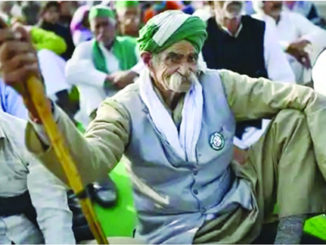
    New Delhi (TIP): Amnesty International has called on the Indian government to stop its “escalating crackdown” on protesters, farming leaders and journalists. In a statement, the human rights body, which shut shop in India in September last year, also called for the immediate and unconditional release of those arrested solely for peacefully exercising their right to freedom of expression.

    It highlighted the case of Mandeep Punia, a freelance journalist for The Caravan, who was initially accused of obstructing the police and then of violence. Punia was detained for an initial period of 14 days without being allowed to see a lawyer but was later granted bail.

    It regretted that rather than investigating reports of violence against protesters and bringing suspected perpetrators to justice, the authorities hindered access to protest sites and censored social media.

    The Government had frozen Amnesty’s bank accounts for alleged violation of foreign exchange laws while the group said it was forced to withdraw from India due to “continuing crackdown” and “harassment”.

    In its latest statement, Amnesty said the crackdown on those protesting the Citizenship Amendment Act still hasn’t ended, while new efforts to quell the anti-farm legislation protests have taken shape.

    The UN Office of the High Commissioner on Human Rights had on February 5 called on the Center and protesters to exercise “maximum restraint” and asked the Government should protect the right to freedom of peaceful assembly and expression.

    Twitter suspends over 500 accounts after govt order

    Twitter on Wednesday said it has suspended over 500 accounts, and blocked access to several others within India as it partly acceded to a government order to curb spread of misinformation and inflammatory content around farmers’ protests.

    Twitter, in a blogpost, said it has not blocked accounts consisting of “news media entities, journalists, activists and politicians” as doing so “would violate their fundamental right to free expression” guaranteed under the country’s law.

    The government, however, termed as “unusual” Twitter’s move to publish the blogpost before a slated talks with the IT Secretary on the issue, as sought by the US company.

    “Upon the request of Twitter seeking a meeting with the government, the Secretary IT was to engage with senior management of Twitter. In this light, a blog post published prior to this engagement is unusual,” IT Ministry said in its response on Koo, a homegrown social networking platform.

    The government will share its response soon, the post on Koo said. Koo is being touted as the homegrown contender to Twitter.

    PM says govt ready for

    talks, farmers announce rail roko agitation

    As farmers continue to protest against the Centre’s agricultural laws for over 75 days, Prime Minister Narendra Modi on Wednesday reiterated that the government was ready to discuss the issue. Farm union leaders, under the umbrella body Samuykta Kisan Morcha (SKM), said that they were still protesting the central leadership failed to offer any alternative to the three farm laws enacted in September last year.

    The two sides have held 11 meetings so far to end the impasse over the legislation but the talks have remained largely inconclusive as the protesting farmers are bent on their demand of a complete rollback of the three contentious laws and legal guarantee for Minimum Support Price (MSP) while the government has ruled out the repeal of laws but has offered to make amendments.

    Farmers have decided to intensify their demonstration against the agricultural laws and have called for a “rail roko” programme on February 18. On February 14, SKM will also hold a candle march as a tribute to the soldiers who lost their lives in the Pulwama attack in 2019. “Rail stop programs will be held on February 18… across the country,” farmer leader Darshan Pal said.

    *Following PM Modi’s remark in the Rajya Sabha that a new breed of people has emerged in the country who cannot live without an agitation, Pal said, the Prime Minister termed those protesting against the farm laws as ‘andolanjivis’. “The truth is that we are struggling on genuine issues of farmers for the past six months and have not raised any issue or demand beyond it,” he was quoted as saying.

  • US strikes may have killed 119 civilians in Iraq, Syria

    US strikes may have killed 119 civilians in Iraq, Syria

    WASHINGTON (TIP): The Pentagon said that US air strikes in Iraq and Syria against the Islamic State group may have killed 119 civilians since 2014, a figure far lower than casualty estimates by monitoring groups.

    The figures released by Centcom, the US military command in the Middle East, came from a months-long review of reports and databases, it said yesterday, adding that the deaths and injuries stemmed from 24 air strikes.

    London-based NGO Airways estimates coalition bombing has killed 1,787 civilians since the air campaign to destroy the Islamic State group began in August 2014.

    “We have teams who work full time to prevent unintended civilian casualties,” Colonel John Thomas was quoted as saying in the Centcom statement.

    “We do all we can to minimise those occurrences even at the cost of sometimes missing the chance to strike valid targets in real time.” The Pentagon’s investigation found that “in each of these strikes the right processes were followed; each complied with Law of Armed Conflict and significant precautions were taken, despite the unfortunate outcome,” Thomas said. The United States, which carries out 80 per cent of the coalition bombing, says it uses precision-guided munitions that limit civilian casualties. Meanwhile Russia is accused of using conventional bombs that are much more deadly to civilian populations.

    Amnesty International estimates that there have been at least 300 civilian victims in Syria alone from coalition strikes. (AP)

  • Talk is not sedition: Case against Amnesty International premature

    Talk is not sedition: Case against Amnesty International premature

    A case of sedition has been registered against Amnesty International India in Bangalore after it organized an event to highlight alleged human rights violations in Kashmir. Charges under the very ambiguous Section 124-A of the IPC have rarely been upheld in courts, yet our police and governments find it convenient to invoke the law when they don’t like what someone says. Amnesty is not an Indian organization, and is often not liked in most countries it operates in because by its very character it seeks to bring to light ugly realities that governments would rather leave under wraps. While its actions in the August 13 event can only be understood after an investigation, the point of concern is that the only evidence the police had before lodging the case was a complaint from the ABVP. Be it Hyderabad, JNU or IIT-Madras, FIRs based on ABVP complaints are becoming an unhappy pattern.

    Amnesty has denied its employees did anything more than discuss the human rights issue. Slogans were raised at the venue by some Kashmiri participants. According to a Supreme Court clarification, Section 124-A can be invoked only if there is a direct incitement to violence. But then that is a debate that was done to death after the JNU fracas. We as a country cannot afford to seem so weak as to feel threatened by a few ‘victim families’ raising some slogans, that too at a program of which the police had intimation in advance. It is the Congress in power in Karnataka, but the pressure from ultra-nationalism of the BJP is apparently beginning to weaken its confidence.

    Heavy-handed suppression of debate on Kashmir will only convey to the world we have something to hide, a message we do not want to send. If there is a situation in Kashmir that is being instigated by people inimical to our national interest, the government needs to expose them with evidence, and in parallel take all lawful and justifiable measures to quell the current uprising. More than 65 protesters have died in Kashmir thus far. Blocking a public discussion is not the answer. (Tribune, India)

  • BJP, Dalits, and the ‘Cow politics.’

    BJP, Dalits, and the ‘Cow politics.’

    In these four years, I also saw with, some disquiet, forces of divisiveness and intolerance trying to raise their ugly head. Attacks on weaker sections that militate against our national ethos are aberrations that need to be dealt with firmly. The collective wisdom of our society and our polity gives me confidence that such forces will remain marginalized, and India’s remarkable growth story will continue uninterrupted,”so said honorable Pranab Mukherjee, President of India, addressing the nation on the eve of the 70th yearof Independencefrom British colonialism.

    It is indeed quite an emphatic and forceful statement coming from the bully pulpit of the highest office in the land. It also puts to shame those who refuse to acknowledge the growing intolerance and prejudice that is sweeping across India by the rightwing zealots who are emboldened by the election of Narendra Modi to power. The question to ponder is whether this is only an aberration or a growing trend that may have disastrous consequences to the way of life as we experience it today!

    Just as India was celebrating its Independence Day, word has come out from Bengaluru that SEDITION charges are being filed against Amnesty International of India, an organization that promotes human rights and creates awareness when it is violated in any part of the world. Once again, it appears that the law enforcement agencies are madepawns by ultra-nationalists bent upon imposing their version of cultural hegemony on the diverse people of India.

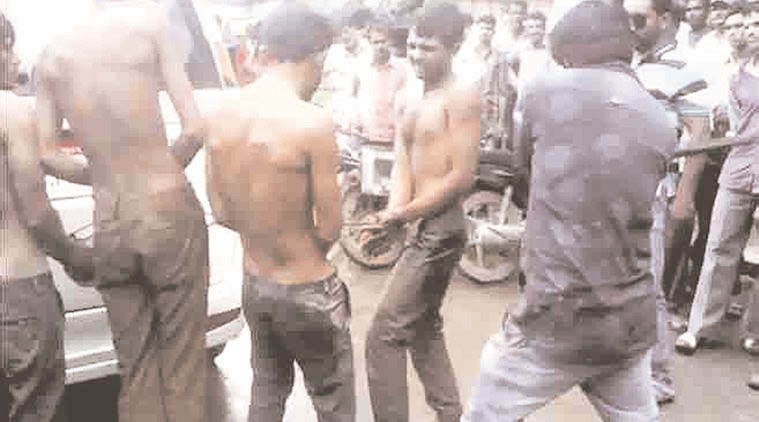
    Millions of Indians everywhere must be feeling the shame of India as the President has spoken out on the continuing assaults on Dalits. In a recent incident in Una, Gujarat, four Dalit youths were severely beaten up and dragged on the road for nearly a kilometer for allegedly possessing beef. It is widely known that the so-called upper castes will not touch the carcass and the Dalits are forced to clear or handle it and when they do, they are mercilessly beaten up in the name of self-appointed ‘Gau Rakshak Samiti.’

    Dalits who constitute one-sixth of India’s population, some 170 million people, live in precarious existence, shunned by much of Indian society because of their rank as “untouchables” or Dalits – meaning broken people – at the bottom of India’s caste system. Dalits are discriminated against, denied access to land and basic resources, forced to work in degrading conditions, and routinely abused at the hands of police and dominant caste groups that enjoy state’s protection.

    It appears that the Prime Minister had finally broken his silence when he made a statement in a town hall meeting saying that “I feel really angry that some people have opened shops in the name of cow protection. I have seen that some people commit anti-social activities through the night, but act as cow protectors by the day”. It is noteworthy that Modi did not call for the prosecution and punishment of these cow vigilantes but asked the authorities to prepare ‘dossiers’ on them and keep them under control!

    Almost a year ago, a mob lynched Mohammed Akhlaq in Dadri U.P. on suspicion of possessing beef in his home refrigerator. Subsequently, the meat was sent for forensic examination. In June, Baliyan, who is a member of Modi’s Council of Ministers, BJP MP Yogi Adityanath and BJP MLA Sangeet Som defended the killers and demanded action against the dead man’s family for the ‘crime of eating beef.’

    If there is growing intolerance on the dietary habits of Indians and rising violence by the emboldened vigilante groups who have taken up law unto their hands, many in the current leadership are in complicity, lending credence to their nefarious activities with their overt or covert support to this highly charged environment.

    Amit Shah, the President of BJP, boasted once that wherever there is a BJP government, there is a ban on beef. Raja Singh, a member of Parliament, went even further stating that he extends his full support to all those who take it upon themselves to teach those Dalits a valuable lesson!Mohinder Lal Khattar, the current Chief Minister of Haryana, is on the record saying that Muslims can live in the country only if they give up eating beef. Panchajanyam, an RSS newspaper has quoted Vedic scriptures that ordered the killing of sinners who slaughtered cows and the Union Minister of Agriculture Radhamohan Singh termed cow slaughter a ‘mortal sin.’

    There is no doubt that these vitriolic statements from higher ups have given fodder and cover to these cow vigilantes who roam the streets and become the judge, jury, and the executioners. Since BJP came to power, states like Maharashtra, Haryana and Jharkhand have tightened laws against cow slaughter, but those in the leadership used the beef issue as an emotive political tool without any repercussions from the Prime Minister. In Maharashtra state, one may get five years incarceration for possession of beef as opposed to two years for sexual harassment of a woman!

    Prime Minister himself effectively conjured up the specter of a ‘pink revolution’ – cow killing on a mass scale – in the event of a BJP’s defeat in the 2014 election as part of a   strategy to motivate people and to vote for his party. Both in Western Uttar Pradesh and again in Bihar Modi spoke at length about the dangers of ‘pink revolution.’ “The agenda of the Congress is the pink revolution,” he said. “we have heard of the green revolution and white revolution but never pink, and this means the slaughter of animals (pashu). You see, the color of mutton is pink, and they are committing the sin of exporting it and bringing revolution…Because of this, our animal wealth is being slaughtered, our cows are being slaughtered, or sent abroad to be slaughtered….And now the Congress is saying, ‘if you vote for us, we will give you permission to kill cows’”

    It is quite apparent that if Modi has to call the heinous and brutal beating of the Dalit boys in Gujarat as criminal wrongdoing and ask that the perpetrators to be punished, he would have to cross that ideological line he and his party have helped to formulate in attaining the power. However, what he has done with his recent statement to the nation is an attempt to soothe the bruised feelings of Dalits who are critical to the BJP’s prospects in the upcoming elections in U.P. and Punjab. What else could explain his silence in all these months when Muslim youths were lynched or beaten up by cow vigilantes?

    The very idea of a consolidated vote bank based on the ideology of ‘Hindutva’ to include the Dalits and other backward castes may be fast unraveling as the video footage of the beating has gone viral and stoked Dalit anger. The nation also witnessed the de-recognition of the Ambedkar Students Association in Chennai, mistreatment and subsequent suicide of the Dalit scholar Rohit Vemula in Hyderabad, torching of a Dalit home in Haryana and killing of two children. All these incidents may only reinforce the age-old Dalit thinking that BJP is essentially a party dominated by an upper caste ideology, and there may be very little room left in it for anyone else!

    (The author is a former Chief
    Technology Officer of the United
    Nations and Chairman of the Indian
    National Overseas Congress, USA)

  • Saudi Arabia urged to make more of its human rights successes by foreign office minster Tobias Ellwood

    Saudi Arabia urged to make more of its human rights successes by foreign office minster Tobias Ellwood

    RIYADH (TIP): A government minister has urged Saudi Arabia to do a “better job” of trumpeting its human rights successes during an official visit to the country, less than a month after it carried out the mass execution of 47 people.

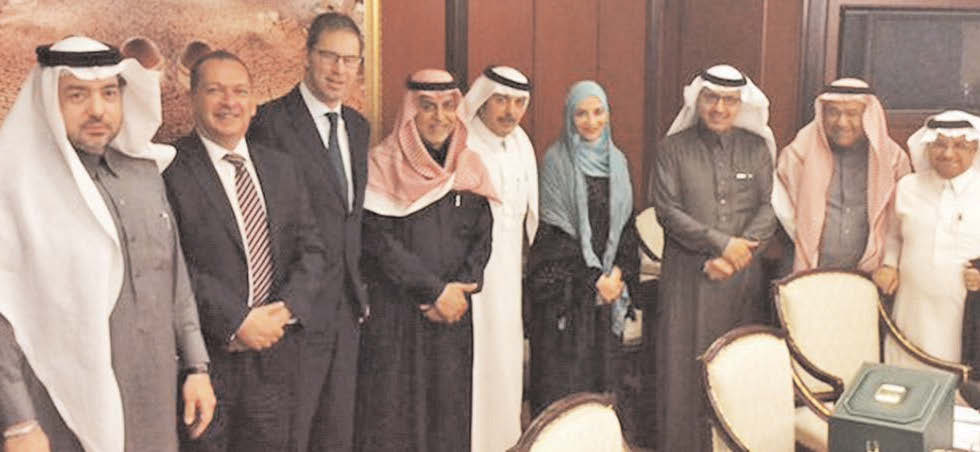
    Tobias Ellwood, the Foreign Office minister for the Middle East, made the comments on Monday as he and other British delegates addressed Saudi Arabia’s National Society for Human Rights in the capital Riyadh, The Independent understands.

    Leading human rights organisations described Ellwood’s remarks as “astonishing”, pointing out that Saudi Arabia was currently presiding over a surge in executions and engaging in a brutal military campaign in Yemen that may be breaking international laws.

    During the visit, which was not publicised by the Foreign Office, Ellwood was told that Saudi Arabia had introduced a series of reforms, such as allowing women to vote in municipal elections.

    In response, he told his hosts that they needed to improve the way they promoted their human rights successes, according to people present at the meeting.

    Accounts of the meeting that appeared in three Saudi media outlets claimed that Ellwood went even further, saying that people in Britain were unaware of the “notable progress” made on human rights by the Saudi regime.

    An article in the daily newspaper Al Watan read: “Tobias Ellwood revealed the ignorance of the British to the notable progress in Saudi Arabia in the field of human rights, confirming throughout the visit of a British FCO delegation… that he had expressed his opinion regarding the human rights situation in Saudi Arabia before the British Parliament, and that the notable progress in this area has been obscured.”

    However, a Foreign Office spokesman strongly denied that Ellwood had used those words. “We do not recognise these remarks,” he said. “Ellwood raised our human rights concerns in all of his meetings in Riyadh… The Government will continue to raise our concerns in public and private.

    “The minister was very clear that despite some recent incremental progress – such as December’s municipal elections… in which women were allowed to stand and vote in -further progress still needed to be made.” A press release issued by the National Society for Human Rights said Ellwood had been joined at the private meeting by Simon Collis, the British Ambassador, who stressed the importance of creating partnerships between human rights organisations in the two countries.

    The chairman of the society, Dr Mofleh bin Rabiean Qahtani, told Ellwood he was concerned that some high profile individual cases were being “exploited, generalised and circulated” in order to discredit Saudi Arabia’s reputation, the press release said.

    Recent cases which have drawn international condemnation include that of Raif Badawi, the liberal writer sentenced to 10 years in jail and 1,000 lashes for promoting free speech, and Ali al-Nimr, who was sentenced to death at the age of 17 for taking part in a pro-democracy protest.

    Nimr’s uncle, the Shia cleric Sheikh Nimr al-Nimr, was among 47 people killed by Saudi Arabia earlier this month as part of the country’s biggest mass execution for more than 30 years. It has since emerged that two of those killed were minors at the time they were arrested.

    Human rights groups have criticised Ellwood’s comments. “As Tobias Ellwood must surely realise, there’s one very easy way for Saudi Arabia to gain a better human rights reputation – and that’s by genuinely reversing the ongoing crackdown,” said Amnesty International UK’s head of policy and government affairs Allan Hogarth.

    “Saudi Arabia needs to release prisoners of conscience… to end rampant executions… and to ensure that the rights of women and repressed groups are properly respected.”

    Maya Foa, of the human rights organisation Reprieve, added: “These comments are astonishing. The Saudi authorities have a bad reputation on human rights because of their appalling human rights record – not because of bad PR.

    Ellwood told MPs earlier this month that Saudi Arabia was “making small progress” on human rights, but added that the Government still had serious concerns.

    (AFP)

  • Saudi Arabia omitted from UK’s death penalty strategy ‘to safeguard defence contracts’

    Saudi Arabia omitted from UK’s death penalty strategy ‘to safeguard defence contracts’

    LONDON (TIP): The British Government left Saudi Arabia off a list of thirty countries to be challenged by diplomats over their continued use of the death penalty – despite executing over 90 people a year.

    The Kingdom is the only major death penalty state to be omitted from a 20-page Foreign Office document setting out the UK’s five-year strategy to reduce the use of executions around the world.

    Among the countries given a greater priority were Barbados Singapore and Jordan that between them passed less than ten death sentences in 2014.

    Human rights groups and opposition politicians have expressed concern that ministers left the notoriously sensitive Saudi regime off the list to safeguard billions of pounds of defence contracts and security co-operation.

    The Liberal Democrat leader Tim Farron said the time had come to “shine a light” into the “shady corners” of the UK relationship with the Saudi regime.

    The Foreign Office minister Tobias Ellwood would only express the UK’s “disappointment” at the 47 executions carried out by Saudi Arabia at the end of last week.

    The UK strategy, which was written in 2011, sets out what it describes as a list of “priority countries” where British diplomats would be “encouraged” to “proactively drive forward” and “make progress” towards the UK’s ultimate goal of abolishing the death penalty over five years.

    It lists China, Iran, Belarus, the US and the Caribbean as the countries where most effort should be focused but goes on to list another 25 countries that have “been identified where posts should also be working towards” reducing the use of the death penalty.

    But Saudi Arabia does not appear on either list despite having one of the worst human rights records in the Middle East.

    Maya Foa, Director of the death penalty team at international human rights organisation Reprieve said it was a “shocking” omission.

    “Saudi Arabia has consistently ranked in the world’s top five executioners, and a large proportion of beheadings carried out in the country have been for non-violent offences, including protest,” she said.

    “It is shocking that the Kingdom was absent from the countries targeted by the UK’s death penalty strategy over the past five years, when every other major executioner in the world – China, Iran, Iraq, the US and Pakistan – was included.”

    Amnesty International’s Head of Policy Allan Hogarth said it was “astonishing” omission.

    “We’ve become increasingly alarmed that the UK government has been bending over backwards to avoid criticising Saudi Arabia’s appalling human rights record,” he said.

    “Ministers are always harping on about how their ‘engaged’ relationship with Riyadh means they can talk ‘frankly’ on issues like human rights, but what do these conversations actually consist of and what have they ever achieved? Apparently very little.

    “It’s time the government reviewed its approach to human rights in the Kingdom and adopted a far more robust stance.” Tim Farron, leader of the Liberal Democrats added: “Saudi Arabia is a barbaric regime and the UK government must do more to stand up to them. The Government must not just write reports and accidentally miss them out due to worrying about diplomatic nicety, it should hold them to account.

    “The Liberal Democrats have called for a debate into the UK – Saudi Arabia relations to try and shine a light into the shady corners of this relationship.”

    But former foreign secretary Sir Malcolm Rifkind said that there were “a number of advantages” to Britain’s relationship with Riyadh, including the provision of Saudi intelligence which had helped prevent terrorist plots.

    “There are a number of circumstances where Saudi Arabia and the West have co-operated effectively on counter-terrorism,” he said.

    “That has to be by far the single most important priority at this moment in time.” (The Independent)

  • A NEW BEGINNNING BY INDIA, PAK: SWARAJ ON BILATERAL DIALOGUE

    A NEW BEGINNNING BY INDIA, PAK: SWARAJ ON BILATERAL DIALOGUE

    NEW DELHI (TIP): A new beginning has been made by India and Pakistan as the two countries have agreed on a new bilateral comprehensive dialogue to address all outstanding issues through peaceful means, External Affairs Minister Sushma Swaraj said on December 17.

    To a question in Rajya Sabha on whether India has raised the issue of Pakistan Occupied Kashmir in international fora, Swaraj replied in affirmative and said government’s principled and consistent position on the issue of Jammu and Kashmir has been that the entire state is an integral part of India.

    “A new beginning has been made in the form of the agreement of the two countries on a new bilateral comprehensive dialogue to address all outstanding issues between them through peaceful means,” she said.

    During her visit to Islamabad earlier this month to attend a multilateral meet on Afghanistan, both India and Pakistan announced that they have decided to engage in a “comprehensive” dialogue.

    Replying to a query, she said the Permanent representative of Pakistan to the UN has recently written three letters to the President of the UN Security Council which referred to the issue of Jammu and Kashmir and asked the top decision making body to take note of situation along the Line of Control.

    To a separate question, Swaraj, who is also Overseas Indian Affairs Minister, said it was aware of an Amnesty International report which said that 279 Indian migrant workers died in Qatar in 2014.

    “The report also states that these figures are of migrant workers deaths from all causes, including fatalities, not directly related to labour conditions,” she said.

  • B’desh ’71 trial prosecutor packs a punch

    DHAKA (TIP): She’s one of the most talked-about women in Bangladesh today and also one of the most admired and reviled. Tureen Afroz is the person responsible for sending the 1971 war criminals to the gallows and her feisty but well-crafted arguments as the chief prosecutor in the International Crimes Tribunal (ICT) of Bangladesh has won her legions of followers across the country.

    It also earned her a lot of death threats, abuse and even Molotov cocktails hurled at her bungalow in Dhaka’s chic Uttara Model Town.

    Afroz, in her mid-forties, in her small frame. She is unfazed by the death threats-—she moves around without any police escort—and the volley of verbal abuse infamously heaped on her inside the courtroom over the past four years by one of the recently executed (former BNP leader Salauddin Quader Chowdhury) did not detract her from her firm resolve to secure convictions for the accused. Afroz is also a robust defender of the ICT that has been criticized by the UN, many western governments, legal bodies and human rights organisations like Amnesty International for being opaque and unfair. “All the criticism. (PTI)

  • Use of torture for forced confessions still ‘rampant’ in China, claims Amnesty International

    Use of torture for forced confessions still ‘rampant’ in China, claims Amnesty International

    GUNEVA(TIP): Using torture techniques to extract confessions from suspects is still
    “entrenched” in pre-trial detention in China, a report has warned.

    Additionally, when lawyers have attempted to protest, defend or raise the issue of the torture of their clients, they have endured torture themselves.

    The report No End in Sight by Amnesty International revealed the widespread use of torture in the country.

    The human rights organisation interviewed 37 lawyers and analysed a sample of 590 court decisions to reach their conclusion.

    The report details various methods of pre-trial torture used, including beatings by police or other detainees on officer’s orders.

    According to Amnesty, ‘confessions’ form the basis of most convictions in China so there is “an almost irresistible incentive for law enforcement agencies to obtain them by any means necessary”.

    Legal experts are quoted saying how getting confessions through these methods are “entrenched” in pre-trial detention, most often in cases involving dissidents, ethnic minorities or those involved with religious activities.

    Torture techniques used, dubbed ‘medieval’ by The Guardian, are said to include iron restraint chairs, sleep deprivation, denial of food and water as well as ‘tiger benches’ —where an individual’s legs are bound to a bench and bricks are gradually added under their feet, forcing their legs backwards.

    Allegedly, when lawyers have tried to raise these issues it has resulted in them being threatened, harassed, detained or even tortured themselves.

    One former lawyer, Tang Jitian from Beijing told Amnesty when he attempted to investigate alleged torture at a detention facility in north-east China he was tortured.

    He said: “I was strapped to an iron chair, slapped in the face, kicked on my left and hit so hard over the head with a plastic bottle filled with water that I passed out.”

    These revelations have come despite supposedly promising steps from China in cleaning up their torture record.

    In 1988, China ratified the UN convention against Torture and Other Cruel, Inhuman or Degrading Treatment of Punishment.

    However Amnesty claims they have “failed to bring domestic legislation in line with the obligations of the treaty.”

    Additionally, measures were introduced in 2010 to reform the country’s criminal justice system.

    According to Associated Press, despite the various reports and accounts, Chinese authorities maintain the practice of torture is declining.

    Following a previous report by Human Rights Watch in May, which found similar findings, Foreign Ministry spokeswoman Hua Chunying told the media Chinese law prohibits torture during interrogations and that anyone who had done so would be punished.

    Patrick Poon, China Researcher at Amnesty said: “In a system where even lawyers can end up being tortured by the police, what hope can ordinary defendants have?” “The government seem more concerned about the potential embarrassment wrongful convictions can cause than about curbing torture in detention.” He added: “If the government is serious about improving human rights it must start by holding law enforcement agencies to account when they commit abuses.” The report was released to coincide with a UN Committee Against Torture meeting which will review and scrutinise China’s practice of torture in Geneva next week.

  • Coalition strikes, fighting kill 40 rebels in Yemen’s Aden

    ADEN (TIP): Saudi-led coalition strikes against Iran-backed Shiite rebels in Yemen’s second city Aden today and ground clashes killed at least 40 Huthis and their allies, the city’s deputy governor said.

    Residents reported non-stop air raids on rebel positions across the city amid heavy fighting.

    The coalition air campaign against the rebels and allied forces loyal to former leader Ali Abdullah Saleh began on March 26 in an effort to restore UN-backed President Abedrabbo Mansour Hadi to power.

    “Coalition forces carried out qualitative and successful operations against the rebels after coordination between the coalition leadership and the Popular Resistance Council leadership” on the ground in Aden, the southern city’s deputy governor Naef al-Bakri told AFP.

    Anti-rebel forces — pro-government fighters, Sunni tribes, and southern separatists — are referred to as Popular Resistance Committees.

    Bakri did not give details on the operations but said warplanes destroyed a number of rebel vehicles and hit checkpoints in Aden’s north and northeast, adding that Popular Resistance fighters were also “provided with qualitative weapons”.

    “At least 40 rebels were killed and dozens were wounded” in air strikes and fighting, he said.

    A military source close to the Huthis confirmed to AFP that they had sustained “heavy losses”.

    Aden health chief Al-Kheder Lassouar said at least 19 civilians and anti-rebel fighters have been killed in two days of fighting there.

    Meanwhile in the capital, coalition jets hit a rebel-held air base and an arms depot on the Fajj Attan hill overlooking Sanaa. Similar strikes on Fajj Attan last month set off a chain of explosions that killed 38 civilians.

    Amnesty International warned today that “scores of casualties in Sanaa have been caused by anti-aircraft munitions shot by the Huthi armed group which detonated after landing in populated areas, killing and maiming civilians”.

    The London-based rights group’s senior crisis adviser Lama Fakih said both the coalition and the rebels “have failed to take the necessary precautions to protect civilian lives in violation of the laws of war. Instead they have carried out attacks that have had devastating consequences for the civilian population.”

    Amnesty urged the Arab coalition states “to take all feasible precautions to minimise the risks posed to civilians, as required by international humanitarian law.

    “The Huthi armed group should also move its military positions away from populated civilian areas where feasible,” the watchdog said.

  • Hong Kong police arrest ‘triads’ over protest clashes

    Hong Kong police arrest ‘triads’ over protest clashes

    HONG KONG (TIP): Hong Kong police have arrested eight suspected members of triad criminal gangs over clashes at ongoing pro-democracy protests, after attacks by groups including Beijing supporters left demonstrators injured and bloodied.

    The announcement, early on Saturday by police that they had arrested 19 men, including several thought to have ties to the city’s notorious organised crime gangs, came after student protesters called off talks with the government, citing police failure to stop the attacks.

    Hong Kong’s main student union said it was walking away from negotiations after police appeared to ignore what it claimed was orchestrated violence carried out by paid thugs sent by authorities to stir up trouble, with the aim of discrediting the protesters.

    “There is no other option but to call off talks,” said the Hong Kong Federation of Students
    (HKFS), one of several groups driving a campaign for free elections that has brought tens of thousands of people onto the streets of the semi-autonomous Chinese city for a week.

    “The government and police turned a blind eye to violent acts by the triads targeting peaceful Occupy protesters,” the union added, referring to Occupy Central, another prominent group. At the press briefing on Saturday, police denied acting in concert with triads, adding that 12 people had been injured in the clashes, including six officers.

    Hong Kong’s embattled leader Leung Chun-ying, facing calls to resign but firmly backed by Beijing, had promised students talks with a top civil servant in an attempt to end the stand-off that has posed the most serious challenge to China’s ruling Communist Party in years.

    Amnesty International blasted police, saying officers had “stood by and did nothing” to protect protesters. It had first-hand witness accounts of women being attacked in the densely packed shopping districts of Causeway Bay and Mong Kok, the rights group said.

    Demonstrators compared the police “inaction” to Sunday, when officers fired pepper spray and teargas at the peaceful crowds.

    “The police are so unfair, these people attack us and they do nothing,” Jenny Cheung, a demonstrator, told AFP.

    “We protest peacefully and the police use tear smoke and pepper spray; when we are attacked the police do nothing.”

    Police have defended their response to the chaotic scenes; with senior superintendent Kong Man-keung telling reporters the force had “deployed a lot of manpower to control the situation”.

    But furious protesters said pro-Beijing thugs had been freely allowed to attack their camps. Crowds in Mong Kok chanted “Bring out the handcuffs!” late into the night.

    Police officers were seen escorting a man from the scene with his face covered in blood.

    There were widespread allegations of sexual assault in the packed crowds, with three girls seen being bundled into a police van in tears after apparently being assaulted at the Causeway Bay protest.”I urgently want to express to all citizens, no matter what attitude you have towards Occupy (Central), you still have to remain calm, and not use violence or disrupt order under any situation,” the city’s leader Leung, viewed by demonstrators as a Beijing stooge, said in a televised message.

  • Egypt police crush pro-Morsi protests on anniversary

    Egypt police crush pro-Morsi protests on anniversary

    AIRO (TIP): Egyptian police swiftly quashed Islamist protests marking the first anniversary of the military ouster of president Mohamed Morsi on July 3, firing tear gas and arresting dozens of demonstrators. The protests are seen as a test of the Islamists’ strength, with the Muslim Brotherhood-led Anti Coup Alliance having issued an aggressive rallying cry demanding a “day of anger” to mark Morsi’s overthrow. Police closed off several main squares in Cairo and scoured neighbourhoods to prevent protests. In Cairo’s Ain Shams district, black-clad riot policemen fired tear gas and shotguns to disperse a few dozen protesters who burned tyres on a road. Police also dispersed other protesters elsewhere in the capital, security officials said.

    Thirty-nine wanted activists were arrested ahead of Thursday’s protests, and 157 suspected demonstrators were detained during the day, the interior ministry said. Morsi’s Muslim Brotherhood movement was listed as a terrorist group after his overthrow last July 3 and many of its leaders, including Morsi himself, have been jailed. The ex-army chief who toppled him, Abdel Fattah al- Sisi, has since replaced him as president. Security forces were also on high alert for further bombings, days after two senior policemen were killed when devices they were defusing outside the presidential palace exploded. Since Morsi’s ouster after a turbulent year in power, at least 1,400 people have been killed in street clashes and more than 15,000 have been imprisoned.

    Despite the crackdown, the Islamists have insisted on continuing their protests in the hope, they say, of making the country ungovernable for Sisi. Militants have launched scores of attacks that killed several hundred policemen and soldiers, mostly in the restive Sinai Peninsula. Rights groups say the crackdown has been the bloodiest seen in Egypt in decades. Among the Brotherhood leaders arrested was its supreme guide Mohamed Badie, who was sentenced to death in a speedy mass trial.

    “A surge in arbitrary arrests, detentions and harrowing incidents of torture and deaths in police custody recorded by Amnesty International provide strong evidence of the sharp deterioration in human rights in Egypt in the year since President Mohamed Morsi was ousted,” the Londonbased rights group said in a statement. The repression has further divided Egypt, a regional powerhouse and the Arab world’s most populous country, with a fast-growing population of 86 million stretching its dilapidated infrastructure. The military removed Morsi after days of huge protests demanding the resignation of the polarising Islamist.

    Almost 23 million voters went on to endorse Sisi in a May presidential election against a weak leftist candidate who garnered only several hundred thousand votes. Sisi’s supporters view him as a strong leader who can restore stability in the often tumultuous country. Yet the Brotherhood, which had won every vote since an uprising toppled veteran strongman Hosni Mubarak in 2011, still commands a loyal following. “Let us turn our wealth of revolutionary defiance into an overwhelming power,” the Anti Coup Alliance said in its statement on Wednesday. In violence, one man was killed overnight while apparently preparing an explosive device in an apartment south of Cairo, security officials said.

    In the capital itself, a small bomb went off inside a car near a military installation late Wednesday. Police arrested a man who was in the car, but another escaped. The government says the Brotherhood has been behind militant attacks, a charge the Islamist group denies.

  • US disputes Amnesty report on drones

    US disputes Amnesty report on drones

    WASHINGTON (TIP): The US has disputed a recent report by a prominent human rights group that by using drones it has acted contrary to international law.

    The United States “takes extraordinary care” to make sure that its counter terrorism actions are in accordance with all applicable domestic and international law, and that they are consistent with US values and policy, state department spokeswoman Jen Psaki told reporters.

    The state department, she said, has completed the review of the recently released report of London-based Amnesty International on use of drones in Pakistan, which according to it was in violation of international law. The state department also disputed the figures of civilian casualties by the Amnesty report, which Psaki said was on a very higher side.

    “To the extent that these reports claim that the US has acted contrary to international law, we would strongly disagree. We have repeatedly emphasised the extraordinary care we take to make sure counter terrorism actions are in accordance with all applicable law,” Psaki said.

    “When there are indications that civilian deaths may have occurred, intelligence analysts draw on a large body of information, including human intelligence, signals intelligence, media reports, and surveillance footage to help us make informed determinations about whether civilians were, in fact, killed or injured,” she said. “Substantial information concerning US counterterrorism strikes is collected, obviously, through a variety of methods,” she added.

  • Former Pakistan PM, officials deny US drone collusion

    Former Pakistan PM, officials deny US drone collusion

    ISLAMABAD (TIP): Pakistani officials and former prime minister Yousuf Raza Gilani on October 23 denied a report that they had approved US drone strikes on the country’s soil.Washington Post on october 21 quoted leaked secret documents as saying Pakistan had been regularly briefed on strikes up till late 2011 and in some cases had helped choose targets.The purported evidence of Islamabad’s involvement came as Prime Minister Nawaz Sharif met US President Barack Obama at the White House and urged him to end the attacks, which are widely unpopular with the Pakistani public.A Pakistani foreign ministry spokesman said the anti-drone stance of the Sharif government, elected in May, was clear and any past agreements no longer applied. Pakistani security officials claimed the story was a US attempt to undermine Sharif’s position and reduce criticism of the drone campaign, days after an Amnesty International report warned some of the strikes could constitute war crimes.Washington Post’s revelations concerned strikes in a four-year period from late 2007, when military ruler Pervez Musharraf was in power, to late 2011 when a civilian government had taken over. Gilani, prime minister from 2008 until June last year, vehemently denied giving any approval for drone strikes. “We have never allowed Americans to carry out drone attacks in the tribal areas,” Gilani told AFP. “From the very beginning we are against drone strikes and we have conveyed it to Americans at all forums,” he added. Islamabad routinely condemns the strikes targeting suspected Taliban and Al-Qaeda militants in its northwest tribal areas. But evidence of collusion or tacit approval has leaked out in recent years.

  • 50 killed in Sudan protests: Rights groups

    50 killed in Sudan protests: Rights groups

    KHARTOUM, SUDAN (TIP): Two leading rights groups said Sudanese police killed at least 50 people this week, often “shooting to kill” when they moved to quell angry protests over the government’s cut of fuel subsidies. Amnesty International and the African Center for Justice and Peace Studies urged authorities to end violent repression of the protesters. The groups’ statement late September 26 said most of the 50 killed in two days of rioting were between 19 and 26 years old. Youth activists and doctors at a Khartoum hospital have told the Associated Press at least 100 people died since protests first broke out on Monday. Amnesty’s deputy chief for Africa, Lucy Freeman said the police’s “aiming at protesters’ chests and heads” is a “blatant violation of the right to life.”

  • Morsi Backers Plan Fresh Rallies, Defying Egypt’s Police

    Morsi Backers Plan Fresh Rallies, Defying Egypt’s Police

    CAIRO (TIP): Supporters of Egypt’s ousted president Mohamed Morsi urged fresh rallies on August 2, raising fears of renewed violence as police prepared to disperse them amid international appeals for restraint. The call came as US secretary of state John Kerry said the military’s removal in July of Morsi — Egypt’s first democratically elected president — had been requested by millions. In comments that will be seen in Egypt as supportive of the interim rulers, Kerry told Pakistan’s Geo television: “The military was asked to intervene by millions and millions of people, all of whom were afraid of a descendance into chaos, into violence.”

    “And the military did not take over, to the best of our judgement — so far. To run the country, there’s a civilian government. In effect, they were restoring democracy,” he added. Allaa Mostafa, a spokeswoman for the pro-Morsi Anti Coup Alliance, told AFP that demonstrators would “continue our sit-ins and our peaceful protests” against what she termed a “coup d’Etat”. Morsi backers rejected an earlier offer from Egypt’s interior ministry of a “safe exit” if they quickly left their Cairo protest camps, as police discussed how to carry out their orders from the military-installed interim government to end the protests.

    In a statement, the ministry called on those in Rabaa al-Adawiya and Nahda squares “to let reason and the national interest prevail, and to quickly leave”. The ministry pledged “a safe exit and full protection to whomever responds to this appeal”. Authorities had already warned that the demonstrations would be dispersed “soon”, but without saying when or how. The stand-off raised fears of new violence, less than a week after 82 people were killed in clashes at a pro- Morsi rally in Cairo.

    More than 250 people have been killed since the president’s ouster following nationwide protests against his single year in power. Meanwhile, diplomatic efforts to avoid further bloodshed gathered pace, with the European Union’s Middle East envoy Bernardino Leon and German foreign minister Guido Westerwelle both arriving in Cairo to urge the rival camps to find common ground. A senior member of the Freedom and Justice Party, the political arm of Morsi’s Muslim Brotherhood, said the European envoys asked them to end their sit-ins.

    “All the European delegates have the same message; they are pressuring the anti-coup protesters to disperse the sit-ins,” said the official. Following a meeting with Muslim Brotherhood representatives, Westerwelle warned that the situation was “very explosive”. “We have seriously and adamantly pressured for a peaceful solution. I hope that those concerned have gotten the message,” he said in a statement. “The international community has to keep up its diplomatic efforts, even though we don’t know today whether these will prove successful.”

    Kerry also warned against further violence, saying the US was “very, very concerned” about the killing of dozens of pro-Morsi protesters in clashes with security forces and warning such loss of life was “absolutely unacceptable”. British counterpart William Hague also called for “an urgent end to the current bloodshed” and Morsi’s release, in a phone call to interim vice-president Mohamed ElBaradei, the foreign office in London said.

    Amnesty International condemned the cabinet order as a “recipe for further bloodshed” but the mood was calm in Rabaa al-Adawiya square, where thousands of protesters have been camping out in a tent city, despite warnings from the authorities. Foreign trade minister Munir Fakhry Abdel Nur said Wednesday’s statement did not “give room for interpretation”. Accusing Morsi supporters of bearing arms, he told AFP, “It is clear the interior ministry has been given the green light to take the necessary measures within legal bounds.”

    Egypt’s interim government also faces an increase in militant attacks in the restive Sinai peninsula, where gunmen on Thursday shot dead a policeman in the northern town of El- Arish, security officials said. Much of the Egyptian media expressed support for the government’s decision, with some saying the interim administration had received “the people’s mandate” in demonstrations last Friday backing Morsi’s overthrow. Further raising tensions on Wednesday, judicial sources said three top Brotherhood leaders, including Supreme Guide Mohamed Badie, would be referred to trial for incitement to murder.

    Morsi himself has been formally remanded in custody on suspicion of offences when he broke out of prison during the 2011 revolt that toppled former president Hosni Mubarak. He was detained hours after the coup and is being held at an undisclosed location, where EU foreign policy chief Catherine Ashton met him on August 30, later telling reporters he was “well”.

  • Rights activists protest across US, demand closure of Guantanamo Bay

    Rights activists protest across US, demand closure of Guantanamo Bay

    WASHINGTON (TIP): Rights activists across the United States held a series of protests on Thursday demanding the closure of Guantanamo Bay as a hunger-strike at the jail entered a third month. In a day of action aimed at drawing attention to the plight of prisoners at the facility, demonstrators — many wearing orange jumpsuits famously worn by Guantanamo inmates — demanded US President Barack Obama close the jail.

    The protests came as a group of 25 rights organisations wrote an open letter to the US leader. The letter, whose signatories included Amnesty International, Human Rights Watch, and the American Civil Liberties Union, said the majority of 166 prisoners held at Guantanamo were now on hunger strike. “The situation is the predictable result of continuing to hold prisoners indefinite y without charge for more than 11 years,” it said. “We urge you to begin working to transfer the remaining detained men to their home countries or other countries for resettlement, or to charge them in a court that comports with fair trial standards.”

  • Halt Further Executions, Amnesty tells India

    Halt Further Executions, Amnesty tells India

    NEW DELHI (TIP): Amnesty International has urged President Pranab Mukherjee to halt further executions and has picked procedural holes in the hanging of Pakistani terrorist Ajmal Amir Kasab. In an open letter to the president, Amnesty India has asked him to commute all death sentences to imprisonment.

    It has also sought an immediate halt to plans to carry out further executions and establish an official moratorium on executions as the first step to abolishing the death penalty. Wherever mercy petitions have been rejected, Indian authorities must promptly inform the individual, lawyers and the family of the decision, it said.

    Amnesty India’s Chief Executive G. Ananthapadmanabhan also demanded that the reasons for the decision to execute the convict, and the proposed date of execution should be made available. “(We) urge the Indian authorities to immediately establish a moratorium on executions with a view to abolishing the death penalty,” Amnesty said. Amnesty pointed out that 140 countries had abolished the death penalty in law or practice. While admitting that Kasab committed “grave and serious offences”, Amnesty said it was concerned about the secretive manner he was hanged in Pune Nov 21.

    “It is unclear whether he was aware of the possibility of seeking a review of your decision,” the letter said. “Information about the rejection of the petition for mercy and the date of execution was not made available to the public until after the execution had been carried out. “This practice is in contrast to how previous executions have been carried out in India over the past 15 years.” Fourteen former judges recently petitioned the president to commute 13 death sentences they believe were wrongly imposed.