
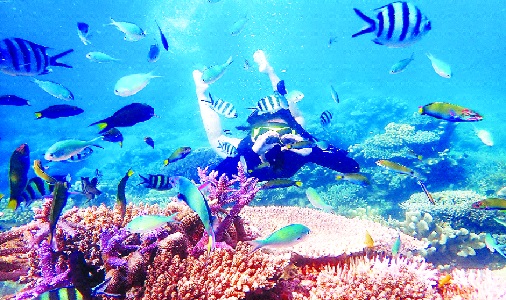

Turquoise waters, powder-soft beaches, colorful coral reefs and a history etched into the walls of an old colonial prison – the Andaman & Nicobar Islands offer a holiday that combines tropical beauty with stories from India’s freedom struggle. Tucked away in the Bay of Bengal, around 1,400 km from the east coast of mainland India, this island territory feels like a world apart.
Port Blair, the principal gateway to the islands, is connected to mainland India by air and sea. From here, ferries connect travelers to some of the most popular tourist destinations, including Swaraj Dweep (Havelock Island) and Shaheed Dweep (Neil Island). With their white-sand beaches, lush greenery and inviting waters, these islands have become favorites with travelers looking for both relaxation and adventure.
The Andaman & Nicobar Islands comprise hundreds of islands and islets, though only a small number are inhabited and fewer are accessible to tourists. This limited accessibility is also part of their appeal: many corners remain relatively untouched, offering visitors a chance to experience tropical landscapes away from the bustle of conventional beach destinations.
A holiday begins in Port Blair
Most journeys begin in Port Blair, which serves as the main transport hub for exploring the islands. While many travellers move onward soon after arriving, the city deserves at least a day or two. Its most significant landmark is the Cellular Jail, a powerful reminder of India’s struggle for independence. Beyond the jail, visitors can explore nearby beaches and take boat trips to islands such as North Bay and Ross Island. Depending on the itinerary and weather, excursions to places such as Baratang and Jolly Buoy Island can add another dimension to the trip.
Beaches made for adventure
For those drawn to the sea, the Andamans offer an impressive range of activities. Scuba diving, snorkelling, sea walking, kayaking, swimming and boat rides allow visitors to experience the islands from both above and below the water. North Bay near Port Blair, Elephant Beach on Swaraj Dweep and Bharatpur Beach on Shaheed Dweep are among the well-known spots for water-based activities. Beneath the clear waters, coral reefs and marine life create an underwater landscape that is as captivating as the beaches themselves.
Places to visit
Cellular Jail: A reminder of
India’s freedom struggle
The Cellular Jail, popularly known as Kala Pani, is perhaps the most historically significant attraction in the islands. Built by the British colonial administration in Port Blair, the prison was used to incarcerate and exile Indian political prisoners during the freedom struggle. The prison housed several freedom fighters, including Vinayak Damodar Savarkar, Batukeshwar Dutt and Yogendra Shukla. Its architecture was designed around individual cells, reflecting the harsh isolation imposed on prisoners. Today, the Cellular Jail is preserved as a national memorial. Walking through its corridors and cells offers visitors an opportunity to understand the difficult conditions faced by prisoners during the colonial period. The evening light-and-sound presentation further brings the history of the jail and the stories of its inmates to life. A visit here provides an important counterpoint to the carefree beach holiday elsewhere in the islands. The Andamans are not only about sun, sand and sea; they are also connected to one of the most difficult chapters of India’s journey towards independence.
Elephant Beach: An underwater playground
Located on Swaraj Dweep, Elephant Beach is known for its clear cyan waters, coral reefs and water-sport opportunities. It is particularly popular among travellers looking to add adventure to their island holiday.
Snorkelling and scuba diving offer opportunities to explore the marine world, while activities such as sea walking, kayaking, banana-boat rides and speedboat excursions appeal to those seeking a more active experience.
The beach can be reached by boat from the main jetty or by a trek through the island’s forested landscape. The journey itself can become part of the experience, particularly for travellers who prefer exploring on foot.
Those looking for a slower afternoon can simply settle on the sand, enjoy refreshments and take in the surrounding tropical scenery. The combination of dense greenery, bright blue water and coral-rich shallows gives Elephant Beach much of its distinctive character.
Shaheed Dweep: Slow island living
Formerly known as Neil Island, Shaheed Dweep is part of the Ritchie’s Archipelago and is known for its laid-back atmosphere and beautiful beaches. It is often included in itineraries covering Swaraj Dweep and Port Blair.
The island’s best-known beaches include Bharatpur, Sitapur and Lakshmanpur. Each has its own character, from the relatively active Bharatpur Beach, known for water activities, to the quieter stretches that invite visitors to simply sit back and watch the sea. Shaheed Dweep is also associated with agriculture, particularly vegetable cultivation, and supplies produce to other parts of the Andaman Islands. Its compact size makes it easy to explore, and cycling or walking can be a pleasant way to experience the island beyond its beaches.
Radhanagar Beach: The island classic
Few places capture the postcard image of the Andamans quite like Radhanagar Beach on Swaraj Dweep. Famous for its broad sweep of white sand and clear blue-green waters, the beach has long been one of the islands’ signature attractions. In 2004, TIME magazine named it among Asia’s best beaches, further adding to its international profile. The long shoreline makes Radhanagar ideal for leisurely walks, while the surrounding tropical vegetation adds to its sense of seclusion. Visitors can spend hours swimming, relaxing by the sea or simply watching the changing colours of the water and sky. Sunset is particularly memorable here, when the beach takes on a different character as the light softens over the Bay of Bengal.
For travellers seeking adventure, the area around Swaraj Dweep provides opportunities for diving and other water-based activities. For everyone else, Radhanagar offers something simpler – space to slow down, breathe deeply and enjoy the natural beauty of the islands.
Be the first to comment