Tag: Andhra Pradesh

  • India Gears Up for Historic General Elections: A Test of Democracy’s Integrity

    By Prof. Indrajit S Saluja

    As India braces itself for what is anticipated to be the largest and longest general election in its history, the significance of the democratic process reverberates not only within the nation’s borders but resonates globally. With the Election Commission’s notification for the 18th Lok Sabha elections, slated to span from 19th April 2024 to 1st June 2024, India is poised to witness a monumental exercise in democratic participation.

    The sheer scale of these elections is unprecedented. Covering a vast electorate of approximately 960 million eligible voters out of a population of 1.4 billion, this election surpasses any previous in terms of sheer magnitude. Seven phases will unfold over 44 days, excluding the first general election in 1951–52, marking a testament to the democratic ethos entrenched within the Indian polity.

    Key to this election is the incumbent Prime Minister Narendra Modi, seeking a third consecutive term in office. Having completed two terms, Modi’s leadership faces scrutiny and endorsement from the Indian electorate once again. However, amidst the fervor of electoral campaigns and political rallies, a crucial aspect has emerged — the integrity of the electoral process.

    In recent times, doubts have been cast upon the fairness of elections, with concerns surrounding Electronic Voting Machines (EVMs) and allegations of tampering to sway electoral outcomes. The Election Commission, tasked with safeguarding the sanctity of the electoral process, has faced mounting pressure to address these concerns. Calls for voter verification mechanisms and enhanced transparency in the electoral process have gained traction, echoing across the political spectrum.

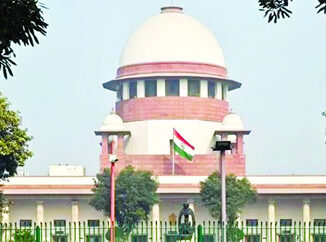
    Even India’s sitting Supreme Court Chief Justice, Chandrachud, has underscored these concerns, emphasizing the imperative of ensuring a transparent and accountable electoral process. In a democracy, elections serve as the cornerstone of representation, reflecting the will of the people. Thus, ensuring the integrity and fairness of elections is paramount to upholding the democratic fabric of the nation.

    Simultaneously, the general elections coincide with legislative assembly elections in several states, including Andhra Pradesh, Arunachal Pradesh, Odisha, and Sikkim. These concurrent elections further underscore the magnitude and complexity of the electoral exercise, as millions of voters across the country prepare to cast their ballots. Moreover, the inclusion of by-elections for 35 seats across 16 states adds another layer of significance to the electoral landscape. These by-elections present an opportunity for constituents to voice their preferences and influence the composition of legislative bodies at both the state and national levels.

    As the world watches with anticipation, the spotlight shines brightly on India, heralded as the largest democracy in the world. The forthcoming elections are not merely a domestic affair but hold implications for global democracy and governance. The manner in which India conducts its elections sets a precedent for other democracies worldwide, reaffirming the principles of transparency, accountability, and electoral integrity.

    In the lead-up to the elections, political parties are engaged in a frenetic battle of ideas, canvassing support and articulating their vision for the future of the nation. From grassroots mobilization to high-profile rallies, the electoral landscape is awash with fervent political discourse and spirited campaigning.

    However, amidst the cacophony of electoral politics, it is imperative to prioritize the integrity of the electoral process. Electoral malpractices, tampering with EVMs, and disenfranchisement of voters undermine the very foundation of democracy. Therefore, all stakeholders, including political parties, the Election Commission, and the incumbent government, must demonstrate a collective commitment to ensuring free, fair, and transparent elections.

    Furthermore, the role of civil society, media, and international observers assumes heightened significance in safeguarding the integrity of the electoral process. Vigilance, accountability, and transparency must be upheld at every stage of the electoral cycle, from voter registration to the declaration of results.

    The forthcoming general elections in India represent a pivotal moment in the nation’s democratic journey. As the world’s largest democracy, India has a responsibility to uphold the sanctity of the electoral process and set a precedent for democratic governance globally. With the eyes of the world upon it, India stands at the cusp of history, poised to reaffirm its commitment to democracy, justice, and the rule of law. As the electorate prepares to exercise its franchise, let us collectively strive to ensure that these elections reflect the true spirit of democracy — a celebration of diversity, inclusion, and the power of the people.

  • Indian American Lt. Governor Aruna Miller inducted into Maryland Women’s Hall of Fame

    Indian American Lt. Governor Aruna Miller inducted into Maryland Women’s Hall of Fame

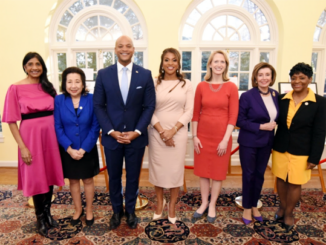
    MARYLAND (TIP): Aruna Miller, Indian American Lt. Governor of Maryland, the first woman of color and immigrant elected to statewide office in the state, has been inducted into the Maryland Women’s Hall of Fame with four others. Others honored with Miller were US House Speaker Nancy Pelosi, Maryland House Speaker Adrienne A. Jones, Secretary of State Susan Lee and Comptroller Brooke Lierman.
    Governor Wes Moore and First Lady Dawn Moore congratulated each inductee at the ceremony held at Government House on March 21, according to a press release.
    “I am grateful to stand among the remarkable women whose legacies inspire us to see more, do more, and be more,” said Miller. “Every day, I work to uplift the people of Maryland and create a strong foundation for a future that our next generation of leaders can be proud of. “
    “As my partner in this work, the Lt. Governor has made an invaluable mark on this state, and I am honored to serve alongside her,” said Moore. “The women inducted tonight into the Hall of Fame are not just an inspiration, they are our foundation. Our administration, this state, and our country would be incomplete without their hard work and impact.”
    “Lt. Governor Miller is a force within this administration and a leader for all young women throughout Maryland,” said First Lady Moore. “Congratulations to all the inductees, as their careers have opened the door to other women who aspire to lead.”
    Established in 1985, the Maryland Women’s Hall of Fame in partnership between the Maryland Commission for Women and the Women Legislators of Maryland memorializes and honors Maryland women whose lives and work are of historic significance to the health, economic, political, and cultural history of the state.
    The 10th Lt. Governor of Maryland, Miller is the second woman to serve as Lt. Governor and the first woman of color and immigrant elected to statewide office in Maryland.
    As Lt. Governor, her policy profile includes matters relating to transportation, mental health, and STEM equity. She serves as chair of the Governor’s Work Zone Safety Work Group, dedicated to making highway work zones safer and protecting the lives of workers, motorists, and law enforcement.
    Miller also chairs Maryland’s first Council on Interfaith Outreach, which convenes faith leaders from across religions and across the state of Maryland to bridge divides, increase religious tolerance, end hate, and better serve all communities.
    Born in Andhra Pradesh, India, Miller and her family immigrated to the United States when she was seven years old. The daughter of a mechanical engineer, she earned a Bachelor of Science degree in civil engineering from the Missouri University of Science and Technology.
    Previously, as a civil and transportation engineer in Montgomery County’s Department of Transportation, Miller worked to improve the safety of the public and alleviate traffic by creating equitable access to transportation throughout the county.
    For 25 years, she oversaw programs that advanced access to schools and employment centers, and made community facilities safe for pedestrians, bicyclists, transit users, and people with differing abilities.
    From 2010 to 2018, she represented District 15 in the Maryland House of Delegates.
    For over 30 years, she has lived in Montgomery County with her husband David, where they raised three daughters.

  • Supreme Court reserves verdict on same-sex marriage

    Supreme Court reserves verdict on same-sex marriage

    After 10 days of marathon arguments, the Supreme Court on Thursday, May 11, reserved its verdict on petitions seeking legal validation of same-sex marriage. A five-judge Constitution Bench headed by Chief Justice DY Chandrachud reserved its judgment after hearing arguments from senior advocates AM Singhvi, Raju Ramachandran, KV Viswanathan, Anand Grover and Saurabh Kirpal on behalf of the petitioners; Attorney General R Venkataramani, Solicitor General Tushar Mehta for the Centre and senior counsel Kapil Sibal for Jamiat-Ulama-i-Hind. The Bench has already made it clear that it would not get into the personal laws of various religious communities and would only examine the Special Marriage Act, 1954, to consider the petitioners’ prayer.
    The Centre, some of the states, certain Hindu, Muslim and Christian organisations have opposed the petitions. The governments of Assam, Andhra Pradesh and Rajasthan have the petitions, citing public opinion and adverse implications on the social and family system. On behalf of the Government of Madhya Pradesh, senior counsel Rakesh Dwivedi has opposed the petitions seeking recognition for same sex marriage.
    The Bench is expected to deliver the verdict after the summer vacation.

  • India finds 5.9 million tonnes lithium deposits in Jammu and Kashmir

    The Union Government on Thursday, February 9,  said that 5.9 million tonnes of lithium reserves have been found for the first time in the country in Jammu and Kashmir. Lithium is a non-ferrous metal and is one of the key components in EV batteries. “Geological Survey of India for the first time established Lithium inferred resources (G3) of 5.9 million tonnes in the Salal-Haimana area of the Reasi district of Jammu and Kashmir,” the Ministry of Mines said on Thursday. It further that 51 mineral blocks including Lithium and Gold were handed over to respective state governments.

    “Out of these 51 mineral blocks, 5 blocks pertain to gold and other blocks pertain to commodities like potash, molybdenum, base metals etc. spread across 11 states of Jammu and Kashmir (UT), Andhra Pradesh, Chhattisgarh, Gujarat, Jharkhand, Karnataka, Madhya Pradesh, Odisha, Rajasthan, Tamil Nadu, and Telangana,” the ministry added. The blocks were prepared based on the work carried out by GSI from field seasons 2018-19 to till date. Apart from these, 17 reports of Coal and Lignite with a total resource of 7897 million tonnes were also handed over to the Ministry of Coal.                 Source: ANI

  • Indian American teen owned Nonprofit donates $50,000 to kids in India

    Indian American teen owned Nonprofit donates $50,000 to kids in India

    ALEXANDRIA, VA (TIP):STEM All Stars, a nonprofit founded by a 16-year old Indian American Sajni Vederey, a high school student at Thomas Jefferson High School for Science and Technology in Alexandria, VA, has made a donation of $50,000 to underprivileged kids in India.

    The nonprofit donated 25 digital boards and 100 computers to 21 underprivileged schools. Most of these schools (19) are in the state of Andhra Pradesh. One school is in the neighboring Telangana, and one is in Kerala, another southern state.

    The organization also constructed a new library in the village of Bhimavaram, Andhra Pradesh. It will stock the library with books in the fields of computer science, math, biology and other fields.

    The mission of STEM All Stars is to raise awareness about science, technology, engineering and math subjects, and empower girls around the world to pursue careers in these areas.

    Vederey was in India from March 29 to April 1 to facilitate delivery of the donations and the construction of the new library

    “As a girl, learning the magic of science, technology and math empowered me to dream big,” Vederey, 16, said in a press release. “It’s important for children to learn how to use emerging technologies, such as computers, phones and tablets. STEM All Stars believes that it is paramount for girls to receive STEM education to succeed in society.”

    Last December, STEM All Stars received a grant of $50,000 from Vetukuri Venkata Siva Rama Raju, a lawmaker from Andhra Pradesh, who donated the amount through a grant in the Corporate Social Responsibility program.

     “STEM All Stars is deeply grateful to the important support we have received from Mr. Siva Rama Raju,” Vederey said. “We will be able to directly invest in the futures of young children in Andhra Pradesh by strengthening the curriculum of the schools with more STEM education.”

    In less than three years, STEM All Stars has raised a total of $200,000, and impacted more than 15,000 girls worldwide. It provided supplies, books, computers, science lab equipment and digital boards to about 55 schools in India.

    The organization has hosted a number of events, including annual galas in the United States, public awareness events and STEM competitions.

    Vederey, who wants to be a lawyer, has authored a book, Roo and His New Habitat, a fictional work that about a group of students who builds a home for their new classroom pet bunny using STEM skills. The book, which she wrote while in 9th grade, is available on Amazon.

    Her Amazon author bio states that Vederey, who is “extremely passionate about literature and poetry,” started writing stories at the age of 6.

    Born in Dallas, Texas, to parents who emigrated from India, Vederey moved to the Washington, DC, area after finishing kindergarten.

  • F O O D C O R N E R – ANDHRA BRINJAL CURRY

    F O O D C O R N E R – ANDHRA BRINJAL CURRY

    INGREDIENTS

    200 gm cubed eggplant/ brinjal, 1 chopped onion, 1 tablespoon refined oil, 1 dash mustard seeds, 1/2 teaspoon ground garlic, 1/2 teaspoon ground poppy seeds, 1 clove, 1/2 tablespoon powdered jaggery, 1/2 teaspoon red chilli powder, 1 pinch, powdered turmeric, 1/4 cup tamarind extract, 1/2 cup grated coconut, 1/2 teaspoon moong dal, 1/8 teaspoon asafoetida, 1/2 teaspoon coriander powder, 1/2 inch cinnamon stick, 1/2, teaspoon yoghurt (curd), 2 pinches salt, 1/2 teaspoon ground sesame seeds.

    Method

    Heat oil in a pan over moderate flame. Fry the moong dal, mustard seeds, asafoetida with onions. Saute the onions till they turn slightly pinkish in hue. Add ground garlic and fry.

    Keep stirring till the raw smell of the garlic goes away. Now add coriander powder and brinjals. Fry till the brinjals change colour. Cover the pan with a lid and allow it to cook on low flame. Simmer till brinjals are soft. Add poppy seeds, cinnamon and cloves. Stir well.

    After few minutes, add curd, jaggery and salt. Keep stirring. Add sesame seeds, turmeric powder, coconut, chilli powder and cook for a few minutes. Now add tamarind pulp mixed with a little water. Simmer for 5 to 7 minutes with the lid on.

    Once the curry is ready, transfer it to a serving bowl and garnish with coriander leaves. This delicious main dish recipe goes well with naan and steamed rice. Serve hot.