Tag: Angela Merkel

  • Europe’s wars inseparable from profiteering

    Europe’s wars inseparable from profiteering

    As the demand for guns surges, profit too skyrockets with the sale of every weapon or machine. Thus, the enterprise of military hardware production and sale becomes too tempting and lucrative to be eschewed, as after a long gap a ‘real’ war has come to European soil, where big-buck investments and astronomical profits are being made. Shortage of food facilitates profiteering too.

    “The prolonged Russia-Ukraine war lays bare the stark reality that even an immoral war is good for the moral and ethical health of the West because through wreckage, blood, sweat and tears of widows, destitute and orphans emerge countless opportunities for wealth creation and open plunder by merchants and middlemen. Shortage of food facilitates profiteering too, the way it happened in the 1943 Great Bengal famine, killing 3 million people amid the World War II inflicted by Europe on the world.”

    By Abhijit Bhattacharyya

    On  the eve of the Russian invasion of Ukraine in February last year, UK Defense Secretary Ben Wallace had exclaimed, “The Scots Guards kicked the backside of Tsar Nicholas I in the 1853 Crimea War and we can always do it again,” comparing the 21st-century Russia-Ukraine conflict with the 19th-century war. The Tsar had been pitted against the combined might of England, France and the Ottoman Empire. The Russian defeat of yore and the lack of an international ally were sarcastically invoked to draw a parallel and warn Moscow to watch out for history repeating itself.

    What the British Defense Secretary said was neither unsurprising nor unique. War has always had a macabre fascination for Europe. The gory combats and their inglorious consequences have been used to portray the grandeur of the warring West. Most of Europe’s eminent and enlightened scholars, intellectuals and philosophers have been fascinated with, and have spoken eloquently on, the importance of power, war and violence.

    Machiavelli pointedly stated, “All armed prophets have conquered and unarmed ones failed.” To him, war, power and hypocrisy are connected. For Thomas Hobbes, conflict emerges from the impulse of self-preservation, thereby making life a “war of all against all” and resulting in it being “solitary, poor, nasty, brutish and short”. The views of Jean-Jacques Rousseau on the power of the state influenced global politics. His ‘Discourse on Inequality’, according to Voltaire, was “against the human race”. Georg Wilhelm Friedrich Hegel unabashedly admired Napoleonic wars and thought that it was a good thing to have wars from time to time. In all these expressions of the European mindset, one thing is clear. There is an element of axiomatic intellectual honesty about justifying, propounding or defending political dishonesty which appears preferable to the hypocrisy of depicting political polemics as an honest and noble enterprise. In this context, the prolonged Russia-Ukraine war lays bare the stark reality that even an immoral war is good for the moral and ethical health of the West because through wreckage, blood, sweat and tears of widows, destitute and orphans emerge countless opportunities for wealth creation and open plunder by merchants and middlemen. Shortage of food facilitates profiteering too, the way it happened in the 1943 Great Bengal famine, killing 3 million people amid the World War II inflicted by Europe on the world.

    As the demand for guns surges, profit too skyrockets with the sale of every weapon or machine. Thus, the enterprise of military hardware production and sale becomes too tempting and lucrative to be eschewed, as after a long gap a ‘real’ war has come to European soil, where big-buck investments and astronomical profits are being made.

    Further, if the war is between powerful belligerents, soaring profit is guaranteed because both possess the wherewithal to sustain a protracted conflict. In contrast, smaller wars in Third World countries reduce profitability as they are less destructive. Thus, the end of the 20-year-old Afghan war in August 2021 inflicted huge losses on arms and ammunition manufacturers. Undoubtedly, Russia is in the wrong. And the criticism thereof is justified. Nevertheless, Russian wrongs also raise a question. Why is Moscow pursuing this seemingly irreversible, hostile path? Although one-third of the answer was given by the British Defense Secretary with his comment on the 1853 Crimea War, it nevertheless leaves two-thirds unanswered, which lies in what happened in the 1810s and the 1940s.

    Russia saved the entire West from being annihilated by two European scourges of mankind (Napoleon and Hitler) in successive centuries. Indeed, it crushed the bloodthirsty Napoleon’s ‘Grand Armee’ in the battles of Borodino (September 1812) and Leipzig (October 1813) much before the Duke of Wellington’s victory over a weakened French army at Waterloo in June 1815. From the Napoleonic wars to the two World Wars and from the Balkanization of the 1990s to the present Ukraine war — all constitute intra-Europe conflicts, like ceaseless continental civil wars. And yet, the non-European world was inexorably dragged into these internecine disputes, thereby giving Europe pole position in world affairs.

    So, what’s next for the Russia-Ukraine war? Is a solution possible? Or will it again drag the entire Europe and the rest of the world into another Armageddon? Just hear the Europeans themselves on the “war within”, because “Europe is united” and yet “Europe is not united”. Europe is distressed because war fatigue and economic downturn have already gripped virtually every nook and corner of it. Hence, Deutsch Bank warns of the peril in borrowing from US banks and former German Chancellor Angela Merkel admits that the Cold War never ended. French President Emmanuel Macron is being berated for repeatedly calling for considering Russia’s legitimate security guarantee owing to NATO expansion in Russia’s neighborhood.


    The French certainly know best, owing to the post-World War I Versailles Treaty’s monumental folly of humiliating the defeated Germany, thereby sowing the seeds of World War II. Criticism of the US came from top EU diplomat Josep Borrell: “Americans, our friend, take decisions which have economic impact on us.” The EU has also accused Washington of profiting/profiteering from the Ukraine war. A more serious matter, however, is the growing intra-Europe conflict between Serbia and Kosovo. Serbia (former Yugoslavia) was attacked by the NATO and broken into seven pieces in the 1990s. Hence, Serbia, like Russia, is smarting and eyeing revenge.

    Indeed, there’s a real possibility of two simultaneous Balkan wars as the region is the ‘tinderbox’ of Europe where issues related to ethnic minorities have repeatedly triggered conflicts. Altogether, the possibility of the Russia-Ukraine conflict raising the stakes higher will only smoothen matters further for the profiteering brigade to make mega bucks from the sale of military merchandise.

    ( Abhijit Bhattacharya is an author and columnist)

  • Indian Americans named to Biden’s Agency Review Teams 

    Indian Americans named to Biden’s Agency Review Teams 

    WASHINGTON (TIP): US President-elect Joe Biden has named more than 20 Indian Americans as members, including three as team leads, to his agency review teams (ARTs) that are responsible for evaluating the operations of the key federal agencies in the current administration to ensure smooth transfer of power. Biden’s transition team said this is one of the most diverse agency review teams in presidential transition history.

    Days after he named former surgeon general Vivek Murthy to co-chair a task force to address the critical  coronavirus pandemic issue, Biden rolled out several agency review teams (ARTs) with at least three Indian Americans as leads. Arun Majumdar of Stanford University heads the Department of Energy transition team; Rahul Gupta of March of Dimes heads the Office of National Drug Policy team; Kiran Ahuja of Philanthropy Northwest heads Office of Personnel Management team. There are at least 20 other Indian Americans in ARTs relating to the Departments of State, Commerce, Education, Energy, Health and Human Services, Justice, Labor, and the Federal Reserve. The Biden transition team said the ARTs have been rolled out “to ensure a smooth transfer of power, and preparing for President-elect Biden and Vice President-elect Harris and their cabinet to hit the ground running on Day One.”

    These teams, it said, have been crafted to ensure they not only reflect the values and priorities of the incoming administration, “but reflect the diversity of perspectives crucial for addressing America’s most urgent and complex challenges.”

    Other Indian Americans on the ARTs include Puneet Talwar for State Department, Pav Singh for National Security Council and Office of Science and Technology and Arun Venkatraman for Department of Commerce and USTR.

    Pravina Raghavan and Atman Trivedi have been named for Department of Commerce; Shital Shah for Department of Education; R. Ramesh and Rama Zakaria for the Department of Energy; Subhasri Ramanathan for the Department of Homeland Security; Raj De for Department of Justice; and Seema Nanda and Raj Nayak for Department of Labor.

    Reena Aggarwal, and Satyam Khanna have been named for Federal Reserve, Banking and Securities Regulators; Bhavya Lal for NASA; Dilpreet Sidhu for National Security Council, Divya Kumaraiah for Office of Management and Budget; Kumar Chandran for Department of Agriculture; and Aneesh Chopra for US Postal Service. Almost all of them are volunteers.

    The transition team also disclosed that during calls from several foreign leaders including French President Emmanuel Macron, German Chancellor Angela Merkel and British  Prime Minister Boris Johnson, Biden told them that “America is going to be back. We’re going to be back in the game.”

    Biden’s transition team said this is one of the most diverse agency review teams in presidential transition history.

    More than half of the review team members are women, and approximately 40 per cent represent communities historically underrepresented in the federal government, including people of color, people who identify as LGBTQ+, and people with disabilities.

    These teams are composed of highly experienced and talented professionals with deep backgrounds in crucial policy areas across the federal government.

    “Our nation is grappling with a pandemic, an economic crisis, urgent calls for racial justice, and the existential threat of climate change,” said Senator Ted Kaufman, Co-Chair, Biden-Harris Transition.

    “We must be prepared for a seamless transfer of knowledge to the incoming administration to protect our interests at home and abroad. The agency review process will help lay the foundation for meeting these challenges on Day One,” he said. “The work of the agency review teams is critical for protecting national security, addressing the ongoing public health crisis, and demonstrating that America remains the beacon of democracy for the world,” Kaufman said. Biden announced the ARTs even as President Donald Trump has declined to concede the election and the General Services Administration has so far denied access to the President-elect’s transition team.

    Once the GSA Administrator ascertains the results of the election, the review teams will meet with former agency officials and experts who closely follow federal agencies, and with officials from think tanks, labor groups, trade associations, and other nonprofits.

    Many of the ART members have had long careers in the federal agencies they will now help prepare for the incoming Biden-Harris administration, the transition said.

  • EU leader urges Trump to stay in Paris climate deal

    EU leader urges Trump to stay in Paris climate deal

    BRUSSELS (TIP): European Council President Donald Tusk made a personal appeal June 1 to US President Donald Trump not to pull Washington out of the Paris climate agreement.

    Tusk warned Trump on Twitter against such a move as he prepared to host an EU-China summit Friday designed to fill the void on climate if the US withdraws from the landmark 2015 pact.

    “@realDonaldTrump please don’t change the (political) climate for the worse,” Tusk said after Trump tweeted he would make his final decision at 1900 GMT.

    Tusk will join Jean-Claude Juncker, president of the executive European Commission, in meeting Chinese Prime Minister Li Keqiang at the summit on Friday. Li pledged to “steadfastly” implement the Paris pact as he held talks with German Chancellor Angela Merkel before travelling later Thursday to Brussels for informal talks.

    The European Union and Chinese leaders will throw their full weight behind implementing all aspects of the Paris agreement, regardless of US participation, according to a draft statement expected to be published June 2. (PTI)

  • US President Obama meets with German Chancellor Merkel, praises her leadership

    US President Obama meets with German Chancellor Merkel, praises her leadership

    BERLIN (TIP): The world is a lot different than when then-presidential candidate Barack Obama spoke to a euphoric Berlin crowd in 2008. After a visit to Greece, he was back in Germany – first for talks, a press conference and a private dinner Thursday, November 17 with Chancellor Angela Merkel and then a meeting Friday, with the leaders of the United Kingdom, France, Italy and Spain. That Obama and the others are visiting Merkel is a sign of her importance in a world facing crises in Syria, Iraq and Ukraine. His farewell foreign visit also comes on the heels of the election of Donald Trump, whose victory has caused shock waves in Europe.

    Obama spent most of his time huddling with Merkel, his closest counterpart who is now Europe’s most powerful leader as the continent prepares for Trump’s presidency.

    She expressed guarded optimism about Trump Thursday, her controlled demeanor barely reflecting an iota of worry about the man who lambasted her as a candidate. She praised Obama for facilitating a smooth transition, and said she was approaching Trump with an “open mind.”

    As her European counterparts face political challenges at home, Merkel has assumed a critical role in transatlantic ties, voicing strong support for Obama’s priorities on climate change, Russian sanctions and economic reform.

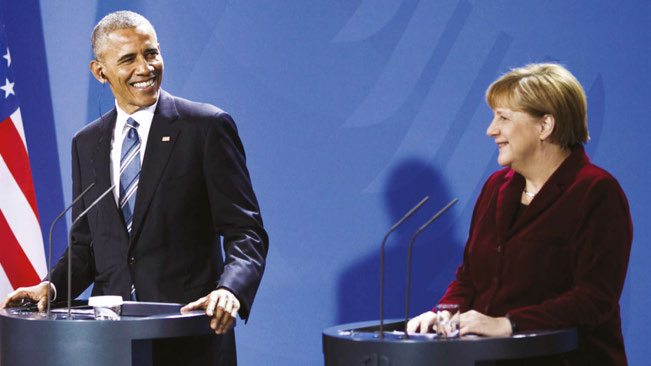
    The personal chemistry between the leaders was on display Thursday, Obama winking as he sat for talks in Merkel’s chancellery, and Merkel grinning as she anticipated a visit from Obama in his post-presidency.

    “I’m game!” she said.

    The German leader has not yet said whether she’ll run for a fourth term next year, though her political allies have signaled she will. Like leaders in France, Britain, the US and elsewhere, she’ll face challenges from far-right politicians who are running on an agenda of populist nationalism.

    Obama declined to push her to run Thursday, but suggested he would vote for her if he was German.

    President Obama praised German Chancellor Angela Merkel during a joint press conference in Hannover. He said he would continue to admire “his friend and partner Angela” as a private citizen, after he leaves office.

  • WORLD LEADERS REACT TO  TRUMP’S TRIUMPH

    WORLD LEADERS REACT TO TRUMP’S TRIUMPH

    NEW YORK (TIP): The reaction of world leaders has been a mixed one. They were pleased and shocked at Donald Trump’s stunning victory over Hillary Clinton, to become the 45th President of America. Major world leaders, many of whom had publicly criticized Trump, however, expressed their wish to work with him.

    India’s Prime Minister Narendra Modi tweeted his thanks to Trump for “the friendship hearticulated towards India” during his campaign. “We appreciate the friendship you have articulated towards India during your campaign”, tweeted Modi.

    Canadian Prime Minister Justin Trudeau said, “We look forward to working very closely with President-elect Trump, his administration, and with the United States Congress in the years ahead.”

    Congratulating Trump, U.K.’s Prime Minister Theresa May said she looked forward to working with him. “Britain and the United States have an enduring and special relationship based on the values of freedom, democracy and enterprise. We are, and will remain, strong and close partners on trade, security and defense.

    Australia’s Prime Minister Malcolm Turnbulltook to twitter to express hopes of a strong relationship to continue. “The Aus Gvt congratulates President Elect Trump. With our shared, enduring national interests, our relationship will continue to be strong.”

    Russia’s President Vladimir Putin reportedly “expressed confidence that the dialogue between Moscow and Washington, in keeping with each other’s views, meets the interests of both Russia and the U.S.,” Russia Today reported.

    Chinese President Xi Jinping reportedly phoned Trump to congratulate him. “I place great importance on the China-U.S. relationship, and look forward to working with you to uphold the principles of non-conflict, non-confrontation, mutual respect and win-win cooperation,” Jinping said, according to Fortune.

    On a different note, French President Francois Hollande, whohad openly endorsed Hillary Clinton, said Trump’s victory marks the start of “a period of uncertainty.” “This new context requires that France be strong,” he said, in a televised address. “What is at stake is peace, the fight against terrorism, the Middle East and the preservation of the planet.”

    Describing Germany’s partnership with the U.S. as “a foundation stone of German foreign policy”, German Chancellor Angela Merkel has offered Trump “close cooperation” on the basis of shared trans-Atlantic values that she says include respect for human dignity regardless of people’s origin, gender or religion.

    Scotland’s First Minister Nicola Sturgeon released a statement saying that while the election did not have the outcome she hoped for, “it is the verdict of the American people and we must respect it”.”The ties that bind Scotland and the U.S. – of family, culture and business – are deep and longstanding and they will always endure.”

    Calling Trump a “True friend of the State of Israel” Israeli Prime Minister Benjamin Netanyahu said, “I am confident that president-elect Trump and I will continue to strengthen the unique alliance between our two countries and bring it to ever greater heights.”

    Palestinian President Mahmoud Abbas said in a statement that he “Congratulates the elected American president, Donald Trump, and hopes that peace will be achieved during his term”.

    Iran’s foreign minister Mohammad Javad Zarifwas quoted by media as saying that any US president “Should have a correct understanding of realities of the world and our region and face them realistically.”

    Japanese Prime Minister Shinzo Abe said, “As a very successful businessman with extraordinary talents, you not only made a great contribution to the growth of the US economy, but now as a strong leader, you have demonstrated your determination to lead the United States.”

    United Nations Secretary-General Ban Ki-moon said, “In the aftermath of a hard-fought and often divisive campaign, it is worth recalling and reaffirming that the unity in diversity of the United States is one of the country’s greatest strengths. I encourage all Americans to stay true to that spirit.”

    NATO Secretary-General Jens Stoltenberg said, “It is important that the Transatlantic bond remains strong” and that “US leadership is as important as ever.”

    European Union Council President Donald Tusk and his Commission counterpart Jean-Claude Juncker said that, despite Trump’s campaign talk of protectionism and isolationism, both sides “should consolidate the bridges we have been building across the Atlantic.” They have also invited Trump to visit the 28-nation bloc to assess transatlantic ties.

  • France warns UK premier of tough time ahead in Brexit talks

    France warns UK premier of tough time ahead in Brexit talks

    BRUSSELS (TIP): France warned Britain at the start of a European Union summit on Oct 20 that it would face a tough, unyielding opponent if it sought too many concessions during its negotiations to leave the 28-nation EU.

    British Prime Minister Theresa May, who was attending her first EU summit as leader, was expected to brief her European counterparts on the way ahead for Britain’s exit from the trade bloc. Many uncertainties about the divorce remain because Britain has yet to trigger the two-year negotiations for “Brexit” and is unlikely to do so until the end of March.

    “It’s in the interests of the UK and the EU that we continue to work closely together, including at this summit,” May said.

    French President Francois Hollande immediately insisted that the EU would not surrender the bloc’s core values just to keep Britain close as a future ally.

    “I have said so very firmly: Mrs. Theresa May wants a hard Brexit? The negotiations will be hard,” Holland said.

    Britain’s June 23 breakup referendum has forced the 27 other nations to plot their future without a major but often recalcitrant member state. European leaders have grumbled that Britain’s tardiness in starting the negotiations slow down their own planning for the next few years.

    German Chancellor Angela Merkel said the other leaders would underscore the urgency and would “make clear again: We are waiting for the notification from Britain.”

    The Brexit referendum to leave the EU was a milestone in the history of the bloc and the disentanglement is expected to be long, difficult and confrontational.

    Still, EU President Donald Tusk, who chairs the summit, assured the British leader she would not get too hostile a reception.

    Tusk said that some compared it to “entering the lion’s den. It’s not true. It’s more like a nest of doves. She’ll be absolutely safe with us. And I hope that she will also realize that the European Union is simply the best company in the world.”

    May said Britain would continue to be a responsible member right up to the day it leaves the EU. “I’m here with a very clear message. The UK is leaving the EU but we will continue to play a full role until we leave.”

    Like Hollande, Tusk vowed last week not to compromise on the bloc’s principles in negotiating Britain’s departure and warned that London is heading for a hard exit.

    He insisted that Britain can’t hope to both stay in Europe’s single market and restrict the movement of EU migrants, saying there would be no compromises.

    May has appeared to signal that her government would prioritize controls on immigration over access to the European single market, an approach informally called a “hard Brexit.”

    Once May activates the exit clause -Article 50 in the EU’s governing Lisbon Treaty – negotiations on the terms of Britain’s departure would run for two years. The time frame could be extended, but only if the 27 remaining member states agree unanimously. (AP)

  • UK PM MAY VISITS GERMANY FOR BREXIT TALKS WITH MERKEL

    UK PM MAY VISITS GERMANY FOR BREXIT TALKS WITH MERKEL

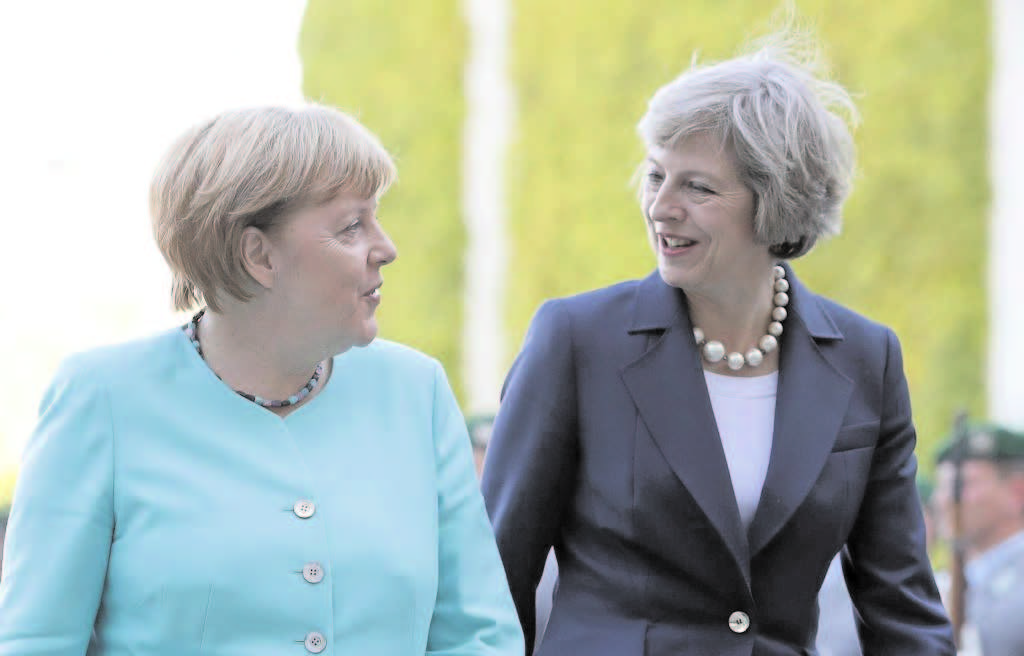
    BERLIN (TIP): Prime Minister Theresa May made her first overseas trip as Britain’s leader on July 20 to meet German Chancellor Angela Merkel, who will be a key figure in negotiating Britain’s exit from the European Union.

    May was greeted by a military band as she arrived at the Chancellery in Berlin for getting-to-know-you talks with the German leader.

    A week ago May replaced David Cameron, who resigned in the wake of Britain’s decision to leave the 28-nation bloc.

    May’s office says the trip, which also includes a visit to French President Francois Hollande, will help forge “the personal relations that will pave the way for open and frank discussions in the months ahead.”

    May is likely to be asked when she will invoke Article 50 of the EU’s constitution, which triggers a two-year process of quitting the bloc. She has said she does not plan to do that before the end of the year, but EU leaders say there can’t be any substantive talks about future relations until Britain does that.

    Merkel’s spokesman Steffen Seibert said talks with Britain over leaving the EU can only begin once Article 50 is activated, and there will be no “pre-negotiations” between Merkel and May.

    May said Wednesday that while she doesn’t underestimate the challenge of negotiating the British exit, she firmly believes “that being able to talk frankly and openly about the issues we face will be an important part of a successful negotiation.”

    The thorniest issue is likely to be the trade-off between access to Europe’s single market _ which the British economy relies on _ and control of immigration. EU leaders are unlikely to give Britain full access to the market unless it accepts the EU principle of free movement of people among member states.

    Facing her first weekly prime minister’s question session in the House of Commons Wednesday, May did not answer directly when asked if Britain would be willing to leave the single market in order to guarantee migration controls.

    She said the referendum result made clear that “people want control of free movement from the European Union.” But, she said, “we must also negotiate the right deal and the best deal on trade in goods and services for the British people.”

    May has also announced that Britain is relinquishing its turn at holding the EU presidency in the second half of 2017.

    May’s office said the prime minister spoke to European Council President Donald Tusk on Tuesday evening and told him Britain would give up the rotating six-month presidency _ held by EU member states in turn _ so it could prioritize exit negotiations.

    After a working dinner with Merkel in Berlin on Wednesday, May will travel to Paris on Thursday to meet Hollande in Paris. As well as talking about the EU, they will discuss counterterrorism cooperation in the wake of last week’s deadly truck attack in Nice.

    May said she wanted to send a message to Britain’s European allies that “these relationships have been vital in the past and they will be vital in the future.”

  • Theresa May’s Challenges

    Theresa May’s Challenges

    Three weeks after a majority of Britons voted in a referendum to leave the European Union, the British political landscape looks entirely different.

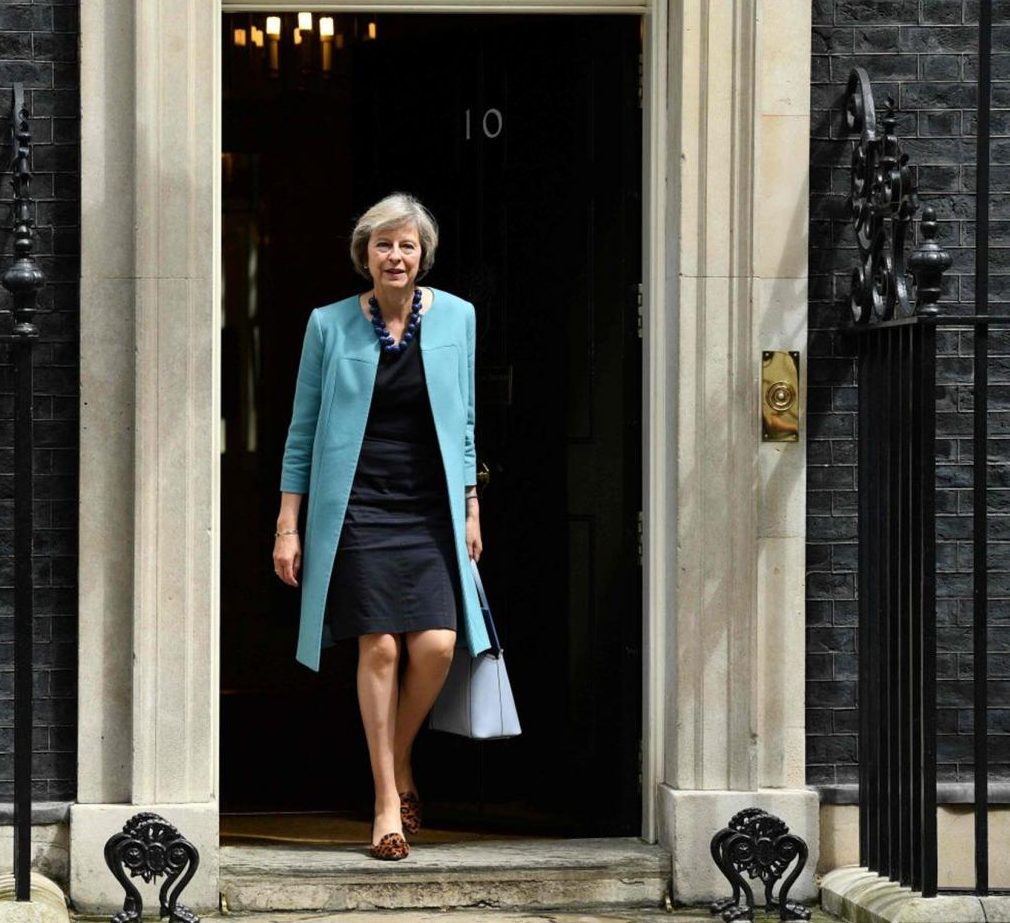
    David Cameron, who called the referendum, is no more the Prime Minister. Boris Johnson, an exit campaigner who was widely expected to replace Mr. Cameron, backed off even before the contest for the new Prime Minister began. Michael Gove, another Brexiteer who entered the race, was rejected by Conservative MPs. Theresa May rose from this post-referendum chaos to become the second woman Prime Minister of the U.K. A seasoned politician with administrative experience, Ms. May’s style of working and policy preferences often invoke comparisons with Margaret Thatcher and Angela Merkel. As Home Secretary for six years, she oversaw Britain’s security services, borders and police forces. Despite her hard-line positions on immigration – at the Home Office she supported a net immigration cap – she chose to back the Remain camp, like Mr. Cameron, during the referendum campaign. This pragmatic Euroscepticism may have helped her win over both the doves and hawks within the Conservative Party.

    That the U.K. has put an end to political uncertainty quicker than expected is good news for both the country and Europe. But the challenges Ms. May faces are unprecedented. The Conservative Party is divided. Legislators and other party leaders may endorse her for now, but going forward she could find it tough to maintain the equilibrium between the centrists and right-wing conservatives. Mr. Cameron’s decision to call the referendum to appease the right-wingers shows how unstable that equilibrium can be. Secondly, the Tories were re-elected last year under Mr. Cameron’s leadership on promises of fixing the country’s economic worries. The Brexit vote has already done damage to the fragile economic recovery. Ms. May’s immediate task would be to restore investor confidence. Thirdly, there is an alarming rise of xenophobia in the U.K. which threatens its social cohesion, which no ruler can ignore. A yet larger challenge for Ms. May would be dealing with the Brexit referendum outcome. Mr. Cameron had promised to trigger Article 50 of the Lisbon treaty if there was a Leave vote. In the event, he did not. None of the Brexiteers managed to succeed him. Ms. May, herself a Remain supporter, faces a difficult situation. If she doesn’t begin the process of taking the U.K. out of the EU, she faces the wrath of Brexiteers within and outside her party. If she invokes Article 50, it could have immediate repercussions for the economy and London’s ties with Scotland. This is a tall order that even Ms. May’s idol, Margaret Thatcher, would have struggled with.

  • BREXIT–A “Leave” vote puts UK on the path of disintegration

    BREXIT–A “Leave” vote puts UK on the path of disintegration

    It was certainly a black Friday – not the kind that we are used to after thanksgiving holiday – for the stock markets.

    The reason for that was not some economic news but rather political one: Brexit. It was a vote on the referendum whether to remain in European Union or Leave.

    Right before the referendum vote, there was feeling that pro-EU forces would prevail but the result was quite opposite: the “leave” vote prevailed by 52-48 margin letting loose a political earthquake of magnitude 10.

    The result was clearly seen in the reaction of the stock markets which tumbled across the globe wiping out ‘trillions’ in wealth and investors rushing to the safety of US bonds (which Trump wants to negotiate in order to reduce US debt, if he becomes President, notwithstanding the fact that all US debt is constitutionally guaranteed) and gold.

    Before we delve into what happens next, here is a quick and interesting fact about the vote: those belonging to 18-24 age group voted overwhelmingly to remain in the EU but those in the 65+ age group – the older white generation -voted to leave the EU.

    This brings forth the glaring contrast between the viewpoints of two groups: The age group 18-24 years exhibited more tolerance, inclusiveness of all cultures and more progressive outlook towards the world – just like the view point held by the youth generation in US.

    But those who voted for leaving the EU – a majority of 65+ age group representing a dying generation – exhibited a mindset that is not able to come to terms with the changing society in modern times and wants to cling back to the old times which are crumbling due to technological advances, more tolerant younger generation and globalization of economy. A similar trait is exhibited by the whites in US who are feeling that “their way of life” is under assault.

    The foremost question is: now what happens?

    First possibility is that many nations in EU would also like to have the referendum like UK.

    Denmark had its own referendum last year but it was more towards deciding how much power to give to unelected officials in Brussels.

    Dutch leader Geert Wilders – a firebrand Islamophobe – has already called for having similar referendum to decide about Dutch member ship in EU.

    Then there is Marine Le Pen – a far right French leader – who is widely popular in France and if she becomes President then France could also see something along the lines of UK referendum. Hungary’s Victor Orban is no friend of EU and has also hinted at the referendum.

    If that happens then EU could find itself on the verge of disintegration.

    On the other hand, there is likelihood that UK would be just an anomaly. Other member nations would resolve to make EU a more cohesive force but with reforms that would lessen the authoritarian grip of Brussels on the member nations.

    David Cameron wanted to leave the painful matter of separation to his successor, but EU leaders like Jean-Claude Juncker, Angela Merkel, and Donald Tusk etc. have called for speedy divorce opining that there is no reason to wait for Cameron’s successor.

    Which means EU might decide to make separation for UK as painful as possible – in the areas of trade, immigration etc. – and as an example in order to deter other members who might harbor such notion of referendums.

    UK itself could face the negative reaction to the “leave” vote. There is a possibility that businesses could flee to Ireland or other EU countries triggering job losses and plunging the nation into recession causing untold economic damage.

    Besides that, the question of Scotland’s independence could again come up. Scotland has overwhelmingly voted to remain in the EU but England has opted to leave which would open up Scottish independence question.

    Scottish Minister Nicola Sturgeon has expressed no confidence in London’s government and hinted that Scottish independence referendum could be in the cards.

    If that happens – a very high probability – then by voting to leave the EU, UK may also have set itself up for disintegration.

    That would be quite ironic.

  • Deadly floods wreak havoc in Germany and France

    Deadly floods wreak havoc in Germany and France

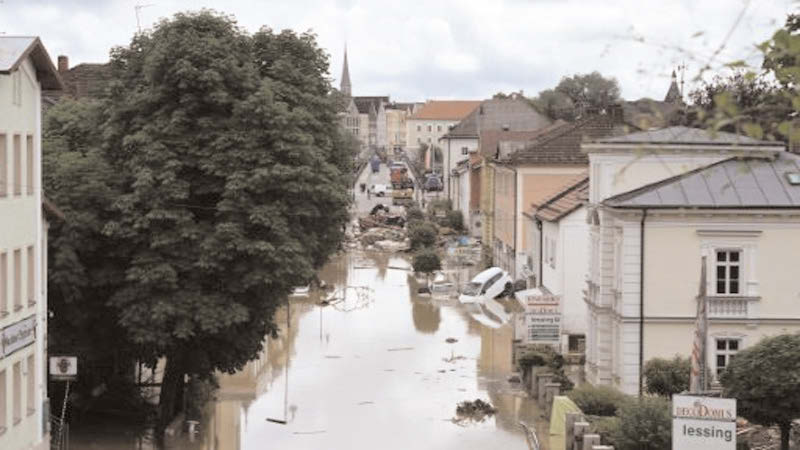
    SIMBACH AM INN, GERMANY (TIP): At least nine people have been killed in floods that have wreaked havoc in Germany and France, trapping people in their homes and forcing rescuers to row lifeboats down streets turned into muddy rivers.

    In Paris, officials were putting up emergency flood barriers on Thursday along the swollen river Seine after days of torrential rain — including near the Louvre , home to priceless works of art.

    The force of the water swept away the entire stock of a sawmill in the German town of Simbach am Inn, leaving huge stacks of splintered wood blocking the streets of the devastated town.

    On one street, passers-by were greeted by the surreal sight of a car parked vertically against the wall of a house, pushed there by the floodwaters. Many other vehicles lay flipped over in roads blanketed by mud.

    The dead in Simbach include three women from the same family — a mother, grandmother and daughter — who had been trapped in their house.

    “The water was so quick that practically no residents had the time to run away,” police spokesman Armin Angloher said.

    Police said a man’s body had also been found in a house in Simbach, while an 80-year-old woman was found dead in Julbach a few kilometres away. Her house had collapsed under the weight of the floodwaters.

    The deaths bring the toll from the floods to nine, including four others were killed earlier this week in the southern German region of Baden-Wuerttemberg region.

    Four others are missing, a police spokesman in Bavaria state told AFP.

    “We fear the worst,” he said, adding that divers have been sent to search for the victims.

    German Chancellor Angela Merkel told a press conference: “I am crying for the people who have lost their lives in these floods. I am by the side of families who have been plunged into this devastation.”

    – Worst floods in a century – Some towns in central France are suffering their worst floods in more than a century, with more than 5,000 people evacuated since the weekend.

    Forecaster Meteo France described the situation as “exceptional, worse than the floods of 1910”, when even central Paris was flooded.

    Some 24,400 homes were without power in the Paris region and the Loiret, provider Enedis said, while the floods forced the shutdown of one of the capital’s main commuter train lines.

    The torrential rains have also hit the French Open tennis tournament, washing out play earlier in the week, leaving players hoping to reach the finals facing a heavy schedule of matches.

    In central Paris, riverside tourist paths were flooded, and the water was washing around a replica of the Statue of Liberty. Rescuers in the Paris suburb of Longjumeau were paddling up streets in lifeboats, while in the town of Montargis, only the tops of cars could be seen peaking above the surface.

    About 200 people had to spend the night in a gymnasium in Nemours south of Paris and Prime Minister Manuel Valls, visiting the flooded town’s a crisis control centre, said at least 2,000 more people needed to be evacuated.

    “The situation remains tense and difficult in several areas. We still have many concerns.”

    Sylvette Gounaud, a local shopworker, said she had seen nothing like this in 70 years living in the town.

    “The centre of town is totally under water, all the shops are destroyed,” she said.

    An 86-year-old French woman was reported killed in the floods after her body was found in her inundated home south of Paris, but it now appears that she died several days ago, police said.

    In the Loire Valley , floodwaters were lapping at the Chateau of Chambord, causing a watery reflection of the much-visited 16th century castle.

    Schools and roads have also been flooded in Austria in recent days, though the waters have now receded.

    – More rains forecast – But forecasters in both Germany and France were warning of more torrential downpours in the next 24 hours.

    The severe weather began at the weekend with lightning strikes which left several children in Paris and western Germany fighting for their lives.

    In Simbach, the waters had subsided largely subsided by noon on Thursday, leaving only the town’s main artery still flooded.

    Grim-faced residents were examining the damage, trying to shovel mud out of their ruined homes.

    Many local businesses have been ravaged by the floodwaters and by the trunks of wood that rushed down from the saw-mill, smashing into their store-fronts.

  • MARS IS WITHIN REACH, SAYS GERMAN TAPPED FOR SPACE COMMAND

    MARS IS WITHIN REACH, SAYS GERMAN TAPPED FOR SPACE COMMAND

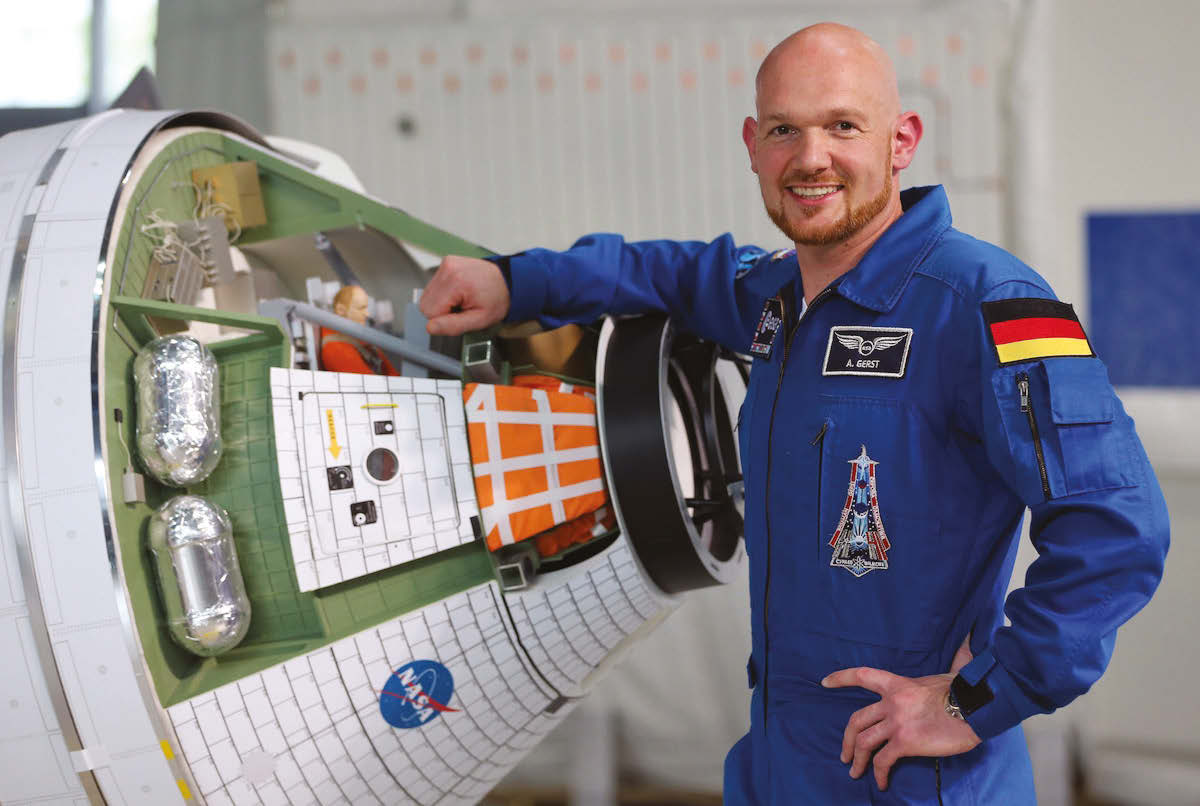
    COLOGNE (TIP): Humans could set foot on Mars within decades if they wanted to, according to the German astronaut who has been tapped to become his country’s first commander of the International Space Station.

    Alexander Gerst said the space station offers a unique opportunity to test the technology needed to explore other planets, especially if its lifetime is extended beyond 2020.

    “It is very clear to me that those manned missions to the moon and Mars, human missions, will happen,” he told The Associated Press in an interview at the European Space Agency’s astronaut training center in Cologne, Germany. “But we need the decision as a society. And once we do that we are ready to go, basically.”

    Gerst said the recent Hollywood movie “The Martian” – starring Matt Damon as an astronaut fending for himself on the red planet – offers a realistic glimpse of the not-too-distant future.

    “It shows us what we can possibly reach in a few years’ time,” he said. “I’m actually quite excited by the fact that us humans, we could fly to Mars, and maybe you and I will live to see it.”

    The 40-year-old volcanologist – an expert on volcanos, not the planet Vulcan from Star Trek – is scheduled to take command of the space station in May 2018, four years after his first mission, it was announced Wednesday.

    NASA aims to send astronauts to Mars in the 2030s. Astronauts have been living continuously aboard the 250-mile (402-kilometer) -high International Space Station since 2000. This month, the space station hit the milestone of 100,000 orbits around Earth – the equivalent of 10 round trips to Mars, or almost one way to Neptune.

    Following NASA’s longest human spaceflight yet, American Scott Kelly returned in March from a 340-day voyage with Russian Mikhail Kornienko. Scientists hope the results from wide-ranging medical tests will offer guidance on how the body will cope during the much longer Mars expeditions.

    Gerst will be the second European Space Agency astronaut in charge of the orbital outpost, after Belgian pilot Frank De Winne, reflecting Europe’s growing interest in space. German Chancellor Angela Merkel, who was present for the announcement and who is a scientist by training, said recently it was “right and important” that space exploration should play a key important role in her country’s high-tech strategy.

    The European Space Agency saw its budget increase almost 20 percent this year to 5.25 billion euros ($5.96 billion) and the agency is on course to activate Europe’s satellite navigation system Galileo _ a rival to the American GPS, Russia’s Glonass and China’s Beidou systems – this decade.

    Earlier this year, ESA chief Jan Woerner suggested establishing a village on the moon once the International Space Station reaches the end of its lifetime. There are no concrete plans for this yet, though, and experts say the space station hasn’t outlived its usefulness _ over 100 experiments are conducted during each mission to the space station.

    Gerst said the flying laboratory can help test whether humans are physically and psychologically capable of spending long periods of time in deep space and also how to conserve precious resources on Earth. “In this year, we decide whether to continue the International Space Station until 2024,” he said. “Whether Europe is part of that and whether we will use that investment that we made in the past. So it is important not to stop investing in this field.”

  • Turkey will ditch migrant deal if EU breaks promises: Erdogan

    Turkey will ditch migrant deal if EU breaks promises: Erdogan

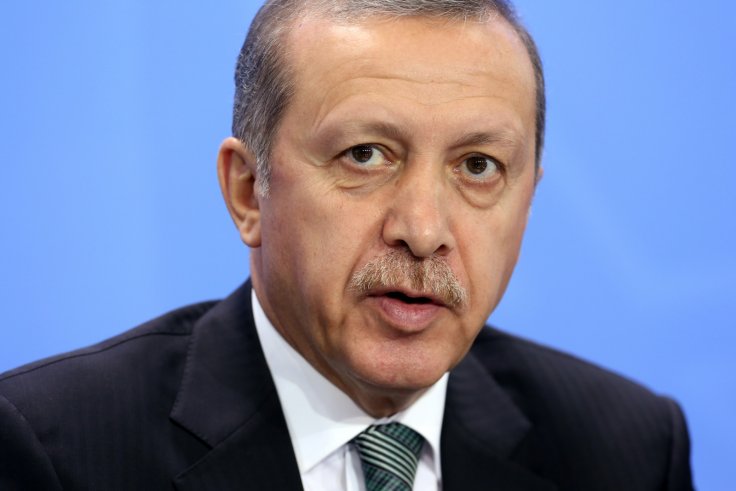
    ISTANBUL (TIP): Turkish President Recep Tayyip Erdogan on Thursday warned the European Union that Ankara would not implement a key deal on reducing the flow of migrants if Brussels fails to fulfil its side of the bargain.

    Erdogan’s typically combative comments indicated that Ankara would not sit still if the EU falls short on a number of promises in the deal, including visa-free travel to Europe for Turks by this summer.

    Meanwhile, the Vatican confirmed that the pope would next week make a brief, unprecedented trip to the Greek island of Lesbos where thousands of migrants are facing potential deportation to Turkey under the deal.

    “There are precise conditions. If the European Union does not take the necessary steps, then Turkey will not implement the agreement,” Erdogan said in a speech at his presidential palace in Ankara.

    The March 18 accord sets out measures for reducing Europe’s worst migration crisis since World War II, including stepped-up checks by Turkey and the shipping back to Turkish territory of migrants who land on the Greek islands.

    In return, Turkey is slated to receive benefits including visa-free travel for its citizens to Europe, promised “at the latest” by June 2016.

    Turkey is also to receive a total of six billion euros in financial aid up to the end of 2018 for the 2.7 million Syrian refugees it is hosting.

    Marc Pierini, visiting scholar at Carnegie Europe, described the visa-free regime as one of the “biggest benefits for Turkey” in the migrant deal.

    He told AFP that Turkey still has to fulfil 72 conditions on its side to gain visa-free travel to Europe’s passport-free Schengen zone and that the move would also have to be approved by EU interior ministers.

    Turkey’s long-stalled accession process to join the EU is also supposed to be re-energised under the deal. But Pierini said there were many conditions still to be fulfilled here.

    “The worst reading of the EU-Turkey deal would be to imagine that Turkey is about to get a ‘discount’ on EU membership conditions just because of the refugees,” he said. Erdogan argued Turkey deserved something in return for its commitment to Syrian refugees, on whom it has spent some $10 billion since the Syrian conflict began in 2011. “Some three million people are being fed on our budget,” the president said.

    “There have been promises but nothing has come for the moment,” he added.

    The first transfer of more 200 migrants from the Greek islands of Lesbos and Chios to Turkey took place on Monday. Officials said Greece was preparing to send around 50 more on Friday unless they applied for asylum at the last minute. German Chancellor Angela Merkel, whose country took in 1.1 million asylum seekers last year, delivered a message of optimism Thursday regarding the migrant crisis.

  • Narendra Modi, Priyanka Chopra, Sania Mirza are Contenders for TIME’s ‘Most Influential’

    Narendra Modi, Priyanka Chopra, Sania Mirza are Contenders for TIME’s ‘Most Influential’

    NEW YORK (TIP): Prime Minister Narendra Modi, tennis star Sania Mirza and actor Priyanka Chopra are among the probable contenders for TIME magazine’s annual list of the most influential people in the world., says a PTI report

    peeceeMirzaNarendra ModiTIME will announce its annual list of the world’s 100 most influential people, ‘TIME 100,’ this month.

    While its editors will determine the ultimate honorees, the publication has asked readers to vote from 127 “world leaders, great minds in science and technology, outstanding figures in the arts and other icons of the moment,” on who they think deserves the recognition.

    TIME said “Modi remains a powerful voice on the world stage,” and while he saw his domestic agenda “sidetracked by political squabbles” in 2015, his country still leads the world in economic growth.

    Modi was named among TIME’s 100 Most Influential People in the World last year and President Barack Obama had written a profile for him for the magazine.

    For Mirza, TIME said India’s best female tennis player secured the number one ranking in the world for women’s doubles “while helping to redefine the role of female athletes in her home country.”

    TIME said Chopra, one of the highest paid actors in Bollywood, has “caught Hollywood’s attention” for her role in the drama series “Quantico” and “will continue to do so in the ‘Baywatch’ remake.”

    India-born CEOs of the world’s top technology companies, Google and Microsoft, are also among the list of 127 probables for the annual honor.

    TIME said Google CEO Sundar Pichai, who is co-founder Larry Page’s “right hand,” now oversees core businesses such as Android and YouTube for the tech giant.

    Under Microsoft CEO Satya Nadella, the publication said, Windows 10 launched “successfully,” the cloud business is “booming” and new technologies like the HoloLens have industry analysts “excited.”

    Indian-origin actor Aziz Ansari has also found a place on the list.

    The list also includes SpaceX CEO Elon Musk, singer Rihanna, Jamaican sprinter Usain Bolt, Harry Potter author J.K. Rowling, Facebook CEO Mark Zuckerberg and his wife Priscilla Chan, Myanmar’s pro-democracy leader Aung San Suu Kyi, German Chancellor Angela Merkel, Pope Francis, reality TV star Kim Kardashian, Russian President Vladimir Putin and Fox News anchor Megyn Kelly.

  • The Idea of Europe is Dead

    The Idea of Europe is Dead

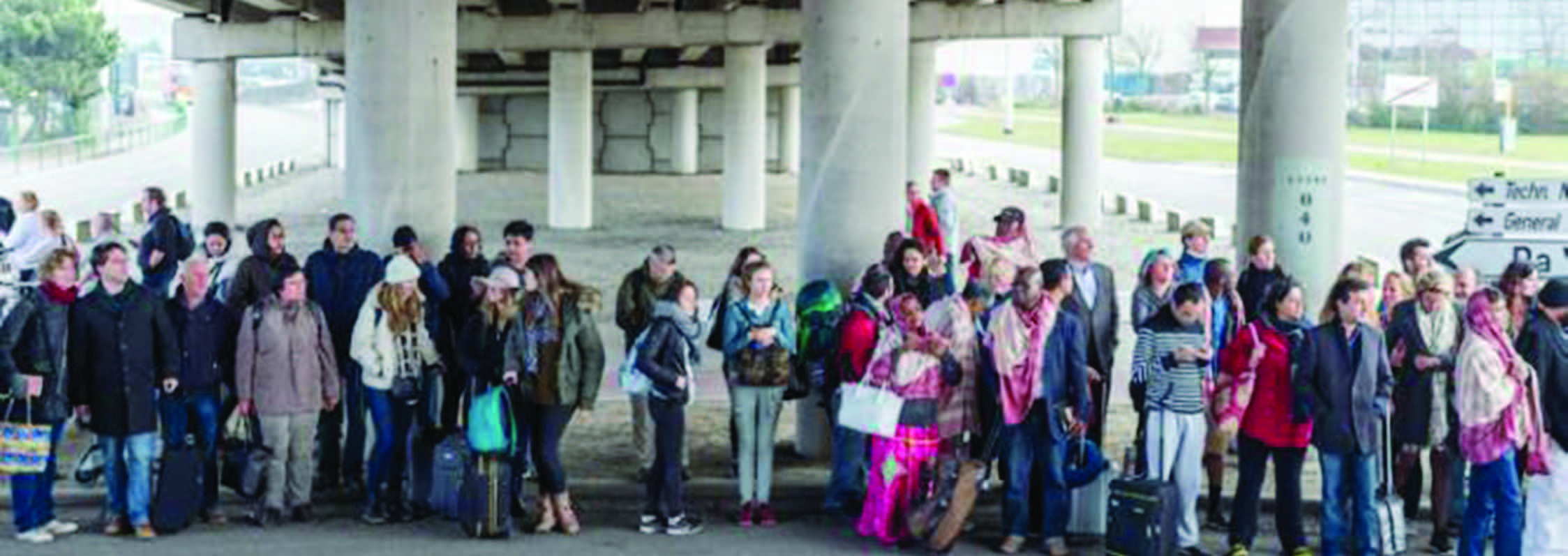
    Brussels Airport attacks by Jihadists again bring to life challenge faced by Europe as we know. Europe of Mozart and Goethe and Schopenhauer and Sartre and Beethoven is dead.

    The cultured European having his wine and enjoying concerts and Opera is passé.

    Today Every European walks with his eyes turned on his back and ears listening to any changes.

    In small towns new neighbors are looked at with suspicion and old neighbors are expected to behave. The sound of screeching cars at night makes them awake and sirens and cops are normal scene.

    The Radical Islam is not fighting Christianity -which anyhow is dead in Europe-but it is fighting the modernity. Islam is frightened of modernity destroying their religion and culture how so ever unacceptable it may be to European liberals. It is concerned about pre-marital sex /contraception / homosexuality / adultery / “unprotected” women etc.

    Europe does not know how to handle it. The rise of right-wing forces -le Pen in France and PEGIDA in Germany-is going to lit the fires of newer European conflicts. Europe thought- a la Merkel- that they can buy peace with radical Islam by “requesting” them to integrate. But integrate with what? Integrate with “immoral” Europe where women are exhibited as “open meat” [in the words of the Australian Imam] who are “poisonous”

    Europe has seen Crusades and 100 years wars-between Christianity and Islam. But never has it had seen a conflict of this nature between “modernity” and Islam. The ongoing tussle in Turkey enlarges the conflict in the underbelly of Europe. Already Europe has 50% unemployment among youth groups and everyday 10000 are marching in the name of refugees. Remember some 200 years before entire Spain and up to the gates of Vienna it was Andalusia Empire and thousands of mosques were converted to Churches after Europe was “cleansed” of Islam.

    This time the Europe which is facing crisis is different. It is not the Pews and Stained glasses but concert halls and swimming pools and whole night parties opposed by Radicals.

    The issue is regarding life style and one likes it or not radical Islam is “Global moral policeman”. He knows the place of women in society and also the place of Europeans.

    Unfortunately, Europe has lost the will to fight and stand for whatever are its values. Its own idea of “freedom” is going to devour it when it is offered to Radical Islamists. Europe as we know is dead. Amen.


    Perspective by Prof R. Vaidyanathan (The author is Professor of Finance at the Indian Institute of Management, Bangalore. He can be reached at vaidya@iimb.ernet.in)

  • Angry Bavarian politician sends bus full of refugees to Merkel

    Angry Bavarian politician sends bus full of refugees to Merkel

    BERLIN (TIP): An irate local politician in Germany’s southern state of Bavaria has dispatched a bus filled with dozens of refugees on a 7-hour journey to Chancellor Angela Merkel’s office in Berlin as a protest against her open-door refugee policy.

    A spokesman for Peter Dreier from the southeastern town of Landshut said that 31 refugees were making the 550 kilometre trip to the capital and were likely arrrive in the afternoon.

    A video on the online site of German newspaper Die Welt showed police officers shepherding dozens of men and women with bags onto a bus in a sunny country road lined with trees and chalets.

    Dreier appeared to be acting on a threat he made to Merkel last year. Critical of her mantra that Germany can cope with the influx of migrants, he reportedly issued a warning to the chancellor in a phone call in October.

    “If Germany is taking in 1 million refugees, mathematically that means 1,800 will come to my district. I will take them and if there are any more, I will send them to your office,” Die Welt quoted Dreier as saying.

    Dreier, who was not available to comment, represents the Freie Waehler, a loose grouping of politicians who do not have a common policy, but campaign on individual issues mostly at the local level.

    Merkel is under increasing pressure to stem the flow of migrants coming to Germany, many from war zones in the Middle East or Africa. Some 1.1 million people arrived last year and several thousand continue to stream in every day.

    Local authorities are stretched both financially and logistically to house and look after refugees and there has been a backlash by right-wing groups who have warned of the problems of integration.

    Mass sexual assaults on women in Cologne at New Year by gangs of young men described by police as being of Arab or North African in appearance, have deepened worries.

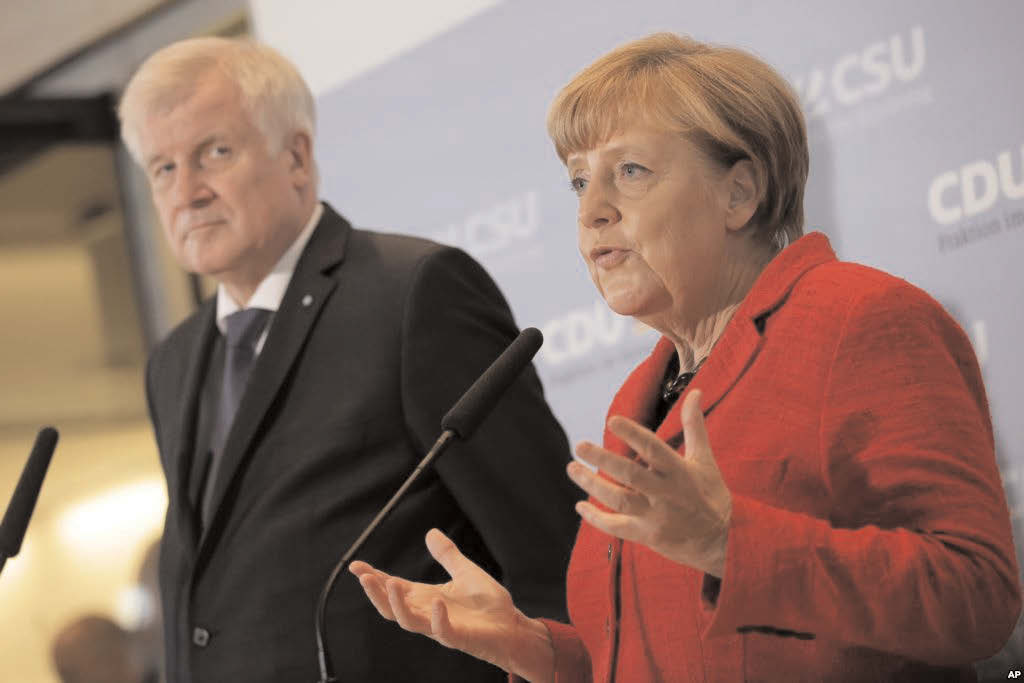
    The frustration in Bavaria, the main entry point for most migrants coming to Germany, is especially strong with Merkel’s conservative allies, the Christian Social Union
    (CSU), repeatedly calling on her to introduce a formal cap on migrant numbers. She has resisted such a cap, arguing that it would be impossible to enforce.

    (Reuters)

  • PRIME MINISTER MODI’S VISITS ABROAD

    PRIME MINISTER MODI’S VISITS ABROAD

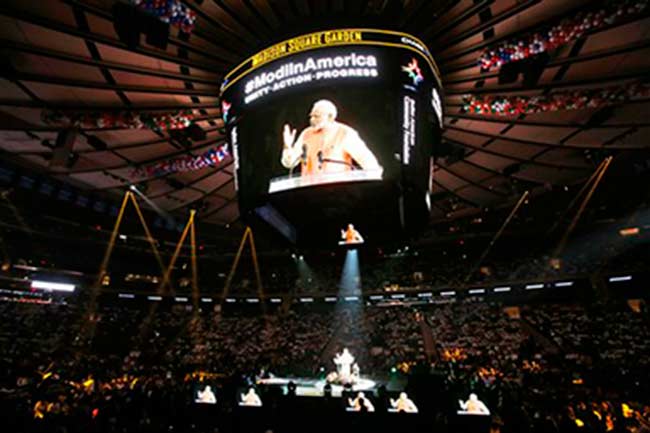
    One of the most  talked about subjects in India has been the foreign visits of India’s Prime Minister Narendra Modi  who  visited  35 odd countries in  about two years. Not that other Prime Ministers  did not go on foreign tours. What  was remarkable in the case of Modi has been the quick succession in which he went abroad, as if at the drop of the hat.  Also,  public reception to him by the Indian community abroad  was a distinguishing feature of his visits abroad.

    Russia – December

    Prime Minister Narendra Modi was on a two-day visit to Russia on Dec 23 for annual summit talks with President Vladimir Putin. India was looking at deeper engagement in Russia’s oil and coal sector besides stepping up cooperation in some other areas like diamond trade and agro-business. India is also likely to push for a Free Trade Agreement with the Eurasian Economic Zone and is sharing details of a study it conducted in this regard.

    Singapore – November

    PM Modi addressed the Indian diaspora there on a two-day visit to Singapore. He said the government is laying thrust in generating power from clean and renewable sources like solar, nuclear, wind and biomass with the target of 175 gigawatts, and in turn, reduce dependence on coal.

    Malaysia – November

    PM Modi visited Malaysia on a two-day visit and discussed with his counterpart Nazib Razak on ways to ramp up bilateral cooperation in a range of areas including defence and security and take the strategic ties to a new level. Combating terrorism was also one of the key issues. Modi also visited Ramakrishna mission and also inaugurated a statue of Swami Vivekananda.

    United Kingdom – November

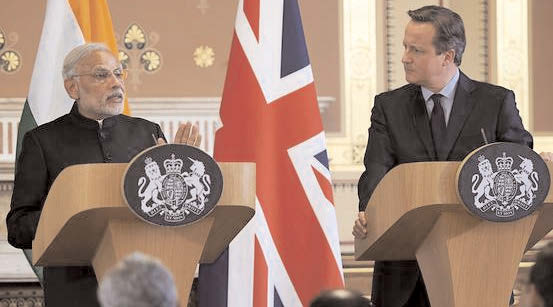
    PM Modi struck 27 deals in 3 days during his UK visit. From technology transfer in defence to going after the Lashkar-e-Toiba, from cyber security to tackling online child pornography – a new joint statement on defence and security has emerged as a major takeaway from the meetings between Prime Minister Narendra Modi and his British counterpart David Cameron.

    United States – September

    PM addressed a summit on the agenda of Sustainable Developmental Goals at UN. He also attended a summit on peacekeeping forces hosted by Barack Obama. In San Jose, Modi attended a digital dinner with who’s who of the tech world. he also joined in for a Townhall Q&A hosted by Facebook CEO Mark Zuckerberg.

    PM Modi at Facebook Headquarters with its CEO Mark Zuckerberg.
    PM Modi at Facebook Headquarters with its CEO Mark Zuckerberg.

    UAE – August

    Prime Minister Narendra Modi’s visit to the United Arab Emirates has scored big on three fronts – terror, trade and outreach to the blue-collared Indian expatriate community. While substance was evident in these three counts, his symbolic outreach to Muslims – in his maiden visit to an Islamic country – by visiting the Sheikh Zayed mosque and praising the inherent tenets of Islam was music to many.

    Central Asia – July

    Modi was the first Indian PM to visit the five Central Asian nations in one trip. The focus during the trip will be on enhancing trade, cooperation in energy and security. PM visited Uzbekistan, Kazakhstan, Tajikistan, Russia and Turkmenistan.

    Russia – July

    Prime Minister Narendra Modi travelled to Russia to participate in the 7th BRICS summit and SCO summit in Ufa in a bid to give an impetus to strategic, economic and energy ties.

    Prime Minister Narendra Modi with Russian President Vladimir Putin
    Prime Minister Narendra Modi with Russian President Vladimir Putin.

    Bangladesh – June

    As India extended a $2 billion Line of Credit (LoC) to Bangladesh to develop its infrastructure and signed 22 agreements, Prime Minister Narendra Modi almost took a leaf out of former PM Manmohan Singh’s book to address Dhaka’s concerns on Teesta and trade imbalance. On the issue of trade imbalance, Modi said he was “conscious” of the huge trade imbalance and will do everything India can to bridge the deficit.

    China – May

    Prime Minister Narendra Modi asked China to take advantage of the “winds of change” in India with a much more transparent, responsive and stable regulatory regime even as leading firms from the two sides signed deals worth USD 22 billion.

    Modi at TerracottaWarriorsMuseum in Xi’an, the hometown of Chinese President Xi Jinping.
    Modi at TerracottaWarriorsMuseum in Xi’an, the hometown of Chinese President Xi Jinping.

    Mongolia – May

    India announced a credit line of USD 1 billion to Mongolia to expand its economic capacity and infrastructure, as they decided to upgrade their relationship from Comprehensive to “Strategic Partnership”. Narendra Modi, the first Indian Prime Minister to visit Mongolia, held wide-ranging talks with his counterpart Chimed Saikhanbileg here following which the two sides inked 14 agreements covering defence, cyber security, agriculture, renewable energy and health sector.

    South Korea – May

    India and South Korea seven agreements, including on avoidance of double taxation and formalising consultations between National Security Councils of the two nations, to boost bilateral ties.

    France – April

    India asked France to supply 36 Rafale fighter jets in “fly-away” condition “as quickly as possible”. This is under a government-to-government deal, unlike the tender currently being negotiated by the Ministry of Defence with Dassault, Rafale’s manufacturer.

    Germany – April

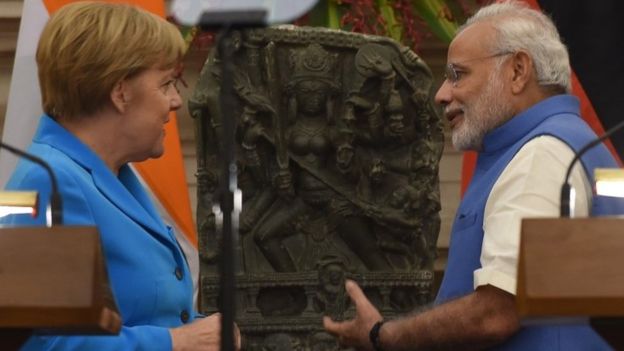
    PM Modi and Angela Merkel spoke in favour of a free trade agreement between the European Union and India. PM Modi said that this was important for the expansion of India as a manufacturing hub. The joint statement by both countries recognized the establishment of a working group on urban development. The two countries said stronger educational exchanges will be encouraged along with collaborations between universities.

    Canada – April

    Modi became the first PM to arrive in Canada in a stand-alone bilateral visit in 42 years.

    Both countries signed an agreement for long-term supply of Uranium to India. Harper and Modi agreed to increase collaboration in the fields of energy efficiency, oil and gas development and renewable energy.

    Seychelles, Mauritius, Sri Lanka – March

    PM Modi’s visit to the three island countries was against the backdrop of China’s increasing focus on the Indian Ocean region. Modi renewed India’s commitment to the ocean economies where India envisages its role as a net security provider. Modi’s visit to Sri Lanka was the first standalone Prime Ministerial visit to the island nation since 1987.

  • German Leader Angela Merkel is Time Magazine’s Person of the Year

    German Leader Angela Merkel is Time Magazine’s Person of the Year

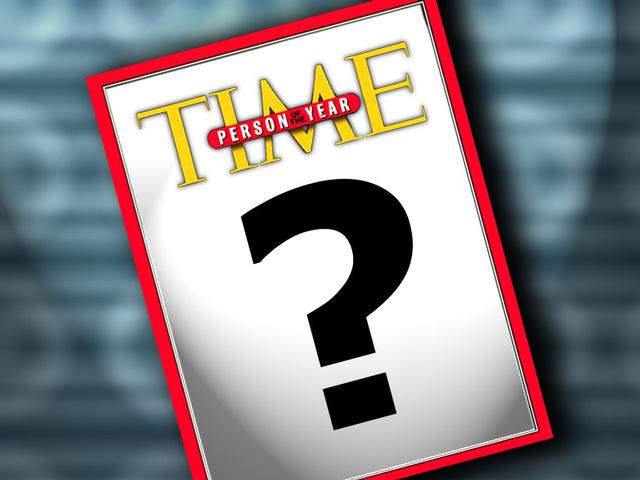
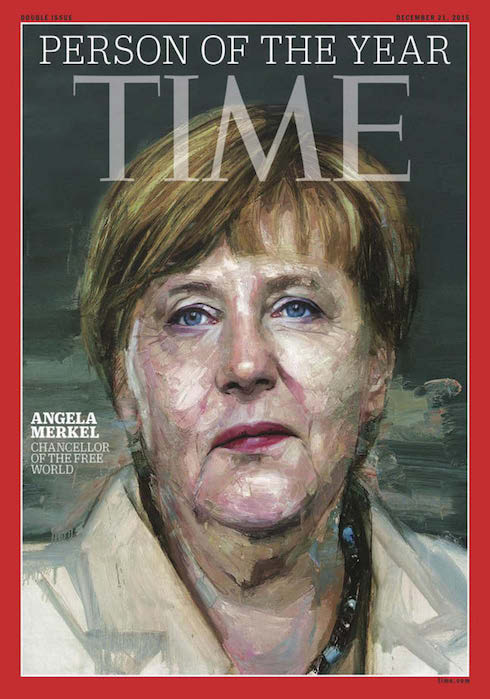
    NEW YORK (TIP): Angela Merkel, the Chancellor of Germany, has been named Time Magazine’s Person of the Year 2015. She is the fourth woman to win the award since its inception in 1927 – until 1999 it was known as the Man of the Year award.

    German Leader Angela MerkelIn a profile of Merkel, clocking in at almost 10,000 words, Time dubbed her “Chancellor of the Free World”.

    The magazine’s editor, Nancy Gibbs, wrote in an article announcing the decision : “For asking more of her country than most politicians would dare, for standing firm against tyranny as well as expedience and for providing steadfast moral leadership in a world where it is in short supply, Angela Merkel is Time’s Person of the Year”.

    From helping avert a ‘Grexit’, to taking a leading diplomatic role mediating the conflict in Ukraine, to spearheading Europe’s response to the refugee crisis, 2015 has been a landmark year for Merkel. This year also marked her tenth year as leader of Germany, during which time she has been credited with overseeing the rebuilding of the nation’s economy and its return to power on the world stage.

    In late August, when tens of thousands of migrants fleeing war in the Middle East streamed into Hungary, threatening a humanitarian crisis, Merkel agreed to suspend the European Union’s asylum rules and allow them to continue into Germany. She declared to skeptical countrymen: “Wir schaffen das,” which translates as, “We can do this.”

    Her “open-door” stance has led to a fall in support for her conservatives and in her own popularity ratings, which have slid to 54 percent from 75 percent over eight months.

    Time also noted her leadership this year in leading the West’s response to Vladimir Putin’s “creeping theft of Ukraine” and welcoming refugees to Germany despite “the reflex to slam doors, build walls and trust no one.”

    Merkel topped a short list of finalists that included U.S. Republican presidential candidate Donald Trump, who came in third, and Islamic State leader Abu Bakr al-Baghdadi, who was runner-up.

    She is the first individual woman to hold the title since Corazon Aquino in 1986, though women have been honored as part of a group. Last year, a group of Ebola doctors and survivors won the title.

  • 2016 WORLD HOROSCOPE

    2016 WORLD HOROSCOPE

    Ganesha says my devotee Bejan Daruwalla is cut to the bone. He is truly devastated. He is shattered. The blowing to smithereens of innocent lives, specially children, religious intolerance, violence, are the main causes for it.

    By Western Astrology, Saturn will be in Sagittarius from December 25, 2014 to December 19, 2017, and THAT WILL REALLY DECIDE WHETHER GENUINE SPIRITUALITY AND TOLERANCE OR BIGOTRY, VIOLENCE, FANATICISM, HATRED WILL WIN. WE ARE AT THE CROSS ROAD OF THE FUTURE.

    Blind, senseless hatred will start lessening and withering and reducing from October 2016 to October 2017, thanks to the relationship of Jupiter, the good guy with Saturn. Your Ganesha devotee takes his stand here. He owes it to himself and to humanity. These words are written on February 3, 2015. May all the Energies go with it? I repeat the fate of the world hinges on Saturn between December 25, 2014 to December 19, 2017.

    There is also a very positive side to Saturn in Sagittarius by Western Astrology. Saturn is karma and dharma. Saturn is, ‘Duty, the stern voice of the daughter of God’. By Modern Astrology Saturn is a key planet for universal consciousness. Universal consciousness helps us to evolve and be what we are capable of becoming. Saturn in Sagittarius can launch us to salvation itself is my prediction in the name of Ganesha.

    Success in law, foreign affairs, aviation and space research, meditation, yoga, neuroscience, brain, output of genes. Susy is the nickname of Supersymmetry, the Higgs Boson, which will crunch time for humanity’s understanding of the universe. Research into Susy will be made, thanks to Saturn.

    Tourism, Pilgrimages, mountaineering, rituals and rites connected with fire and light and explosives, great showmanship in truly practical as well as spiritual matters and a mountain load of money will all go together.

    Other salient features for all of us:

    1) Narrowness and excessive caution will actually stifle your relationships.

    2) Your greatest lesson is to deal with the other’s point of view. Masterkey.

    3) Like those with Saturn in Libra, you too will have to deal with the real world, though, in all fairness, you can be idealistic.

    4) Communication- gaps will be your undoing.

    5) Try not to fight over property matters, as it will make you writhe in agony. Settle it judiciously.

    6) Travel with your friend/ mate/ business associate is your best bet to happiness.

    7) By December 19, 2017, we should be rid of attack from terrorists and bigots and the self righteous who think that they alone are right and everybody else completely wrong. In short we can expect people to keep an open mind.

    Once again I am giving the landmarks of the important years for humanity and extending it a little more at considerable energy and cost. Actually it drains me out.

    The other important points start from number 7.

    1: 2021, watermark for technology.

    2: 2033, important for technology and genetics.

    3: 2035-2037, crucial for chemicals and experiments about life and living, Jupiter in Cancer, Saturn in Virgo.

    4: 2040, relationships taken to the next level, Jupiter and Saturn in Libra, year marks justice for the whole world .Yes, Ganesha says this is my devotee’s mighty prediction.

    5: 2045, another unimaginable breakthrough in technology, space travel, brain mapping, time warp galaxies, Jupiter in Aquarius, Saturn in Sagittarius.

    6: 2047, all of the above will be superbly analyzed, organized, methodized, mapped out in complete detail and most importantly put and harnessed to the greatest use for the greatest number of people. It is the high point or the tipping point for the service to the wide cosmos.

    7: 2049 is excellent for managing your life intelligently and calculatedly

    8: 2053 to 2055 thanks to chemicals and radiation and light. God will introduce himself in a totally unique way. Yes this is my vision. I may be right or wrong

    9: Surprisingly enough just as I was writing about this vision the badge with the holy number 786 popped out of my American ephemeris. This has given me conviction and confidence. I cannot explain it logically.

    10: From February 2080 to 2090 nature will reveal herself in a totally different way and manner. It is as if nature will be wearing clothes of a different fashion and color. More than this I cannot say.

    11: The year 2100 shows Jupiter and Saturn in the sign Libra by Western Astrology. This means poise, balance, equilibrium, joy and above all the beginning of an era of peace and plenty. It also marks a period of remarkable evolution in the next 100 years. This is certainly the limit of my vision as granted to me by my Lord and Master Ganesha. His is the last word.

    12: Ganesha says my devotee Bejan has worked his heart out for the prediction that between March 23, 2020 and March 8, 2023 consciousness will win over ignorance, freedom will win over captivity, law and order will win over anarchy, open mind will win over closed mind and narrowness, comfort and security and speed will win over air crashes and pilot errors.

    Many truly amazing events will happen. For example, the Ganges will be cleansed. Thought transfers and healing by and through the mind, germ and bacteria free world, devi worship, very surprisingly there could be a cleansing of our mind itself. Artificial implants of new memories, climate control. The secret of having a smooth, delightful, trouble free and joyous relationships will be discovered. That to me is more important than evolution itself. The many layers of consciousness will be explored and laid out before us so that we can choose according to our personal frequencies, layers of knowledge and intuition and finally it could lead to the very existence of God. These predictions will hold true between December 25, 2014 to March 8, 2023. I agree that this is a long shot. But events happen in a chain reaction over a period of time. I admit I am human. All the predictions will certainly not come true. But it is the wish and command of my Lord and Master Ganesha that I should lay my predictions before you.

    Special note: Brain hecking, putting on a “thinking cap” to increase brain power, is also another wondrous and awesome technological possibility of our Aquarian age.

    RUSSIA

    Your Ganesha devotee is writing this forecast on March 18, 2015. Putin had simply disappeared for the last 10 days and has surfaced today March 18, 2015. Putin is a Libra. But he is totally unpredictable because of Pluto, the planet of power in Leo, the sign of power. This makes Putin powerful but dogmatic, wilful and ready to play all sorts of games. The next 4 years will mark the end of Putin the politician. Russia however will be able to make some progress economically and socially. Russia has staying power which is perhaps the key to survival and success. Russia under Putin comes under Gemini, Aquarius and Scorpio. Not a very easy time for it. Conditions and strong disciplinary action will take a huge toll. I report it as I see it. Like my great Hanuman I too am humble and submissive. No pretentions to greatness. Russia might have a money squeeze.

    INDIA

    As you know dear readers I have met Narendra Modi twice and predicted his premiership. India will go from strength to strength. From September 2015 to December 20, 2017India will be zooming ahead despite terrorism, jealousies within the BJP, Hinduvata and all the fanaticism regarding all the religions. The enemies of Modi will be within his own party. Modi is a man with a vision. At the same time Modi must teach the minister in his party to be open, tolerant and fair minded. Yes our economic situation will improve vastly, the Ganges will be cleansed (I admit that to me also the Ganges is holy and mighty). The common man as well as the industrialists will thrive under the leadership of Modi. At the same time your Ganesha devotee  openly and humbly admits that from December 22, 2017 to March 23, 2020 there could be a complete overhauling of values and power and politics in India. IT IS THIS PERIOD WHICH WILL FINALLY DECIDE THE FUTURE OF INDIA. There may be a complete change in the attitude of the Indians and the way the world looks at India. But the final result will be a mighty powerful India which will take its rightful place in the world. It is during this time that India will definitely be the super power of the world. At the same time India will pay the price for it. I am 83 years old. Nothing comes without a price. It will be spirituality and the tolerance of Indian culture which will finally make India very powerful but very human. I openly admit that all my predictions do not come true. Tolerance is the key.

    Ganesha warns that for, both India and America, air crashes, natural calamities, undercover activities, espionage, secret enemies, riots and rebellion could take a heavy toll. This is a nasty and ugly picture. But, there is also, as said earlier a brighter side to it. Both of the predictions are very possible. That’s real life. Life and politics is complicated and convoluted (complex). There are no easy answers. March, June, September and December are the tough and critical months.

    PAKISTAN

    Nawaz Shariff is good for Pakistan. This Capricornian is practical and therefore open to reason and has commonsense. Pakistan is a Sagittarian country. The military leader of Pakistan is a Gemini. Around 2017 I see a good future for Pakistan. After 30 long years I had been to Pakistan in 2014, thanks to my patron Byram Avari. I found the people very friendly and hospitable.

    ISRAEL and IRAN

    Prime Minister Benjamin is a Taurus and Israel is a Taurean country. Therefore he got re – elected recently. Benjamin must learn to let go a little and be flexible. Iran has a new leader in Hussain Rohan. Rohan is a Scorpio the exact opposite of Benjamin who is a Taurean. But I believe given compromise and understanding peace is possible. If I could I would lock both these leaders in a room and tell them very sweetly, do not come out till you have signed a peace treaty. This might be my fantasy. I admit it.

    America, Russia, Brazil and Africa: Cancerian country America(Born July 4) will have sinew and muscle power. China will not be able to get better of America. Leo Obama will prove his mettle. For America I take three signs Cancer, Gemini and Sagittarius. The actual mix is my very own. America will lead the world. That says it all. Obama is a Leo. Ganesha says that this will be a great and glorious period for Obama and America. But America will be involved in many skirmishes and attacks by terrorists. Yes America has many enemies. America must never drop its guard. America must always be completely alert. For all its faults and foibles America is the best bet for a safe world.

    Brazil and Africa are the surprise packages, not China.Yes strange as it may seem, there is a possibility of a compromise among Afghanistan, USA, Pakistan and India. This may seem like pipe dream. But if the Israeli leader Ben could go to Chancellor Addenhaur of Germany after the holocaust, the Taliban too can sit across the table and come to some sort of understanding. With the given time and the right climate, the impossible can be made possible. This is very possible by 2018, latest. 2017 could well show the way.

    GERMANY

    I go with my gut feeling. The gut feeling is something like a powerful brain in the stomach. My gut feeling is that the Cancerian German chancellor Merkel has a very important role to play on the chess board of politics. I am convinced that she is a woman of destiny. This is what I have to say to her, “Listen sweetheart, you are more brilliant and powerful than you think and therefore shoot straight and fast. Victory is yours.”

  • Paris 13/11: What Next?

    Paris 13/11: What Next?

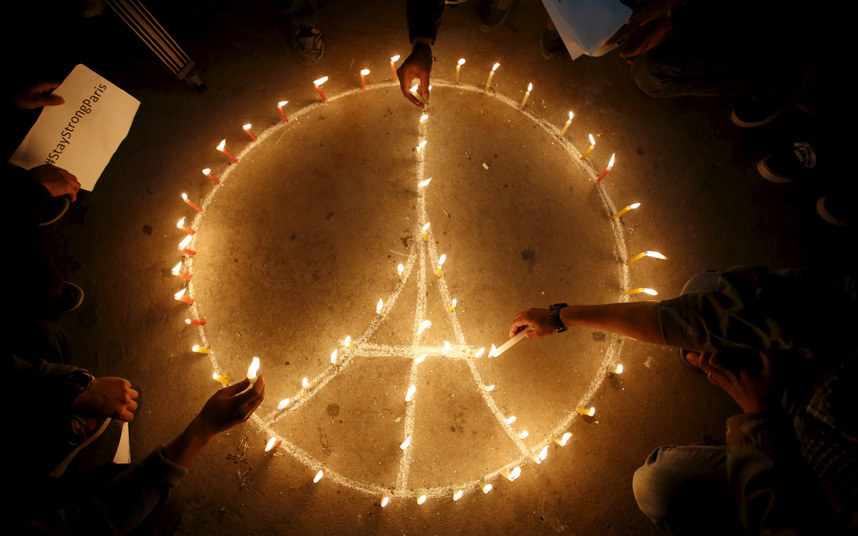
    The diligently coordinated and utterly condemnable November 13 terrorist attacks in Paris killing 129 and wounding 352 innocent human beings have terrorized France and the rest of the West. The Islamic State (IS) claimed ‘responsibility’ with much alacrity and satisfaction. The previous day, IS had killed 43 and wounded 200 in Lebanon, with the Western media and Western governments hardly taking any note of that incident. In contrast, Paris 13/11 has evoked moral outrage and expressions of solidarity with France. The colours of the French flag adorned prominent buildings in many Western capitals. Looking back, Mumbai 26/11 in 2008 that killed 164 people got less international media attention and governmental responses.

    Under President Francois Hollande, France has responded more or less in the same vein as the United States led by President George Bush did post-9/11. We now know that the US response under Bush was disastrous. Far from weakening, let alone eliminating terror, his Global War on Terror (GWOT) globalised terror and strengthened the terrorists especially in the WANA region. (This observation does not apply to the Indian subcontinent where the Jaish-e-Mohammed and Lashkar-e-Taiba had started carrying out terrorist attacks in the mid-1990s.) As far as the WANA region is concerned, it was the ill-conceived invasion of Iraq in 2003 and its criminally incompetent occupation based on false assumptions that created the preconditions necessary for the emergence of Jihadi Terrorism (JT). IS is only one form of JT that has emerged in that region. 13/11 Paris is only one of the acts of terror of the IS. The link between 13/11 Paris and GWOT has to be recognised. Without that recognition, it will not be possible for decision-makers to address the threat of IS and the rest of JT.

    When the attack on Charlie Hebdo occurred in January 2015 in Paris, France showed a degree of willingness to look deeper into the causes of that attack. It was recognized that the deprived conditions in the suburbs inhabited by Muslim immigrants — inadequate access to education and employment – needed to be rectified, even though there was not much follow-up action.
    But in response to 13/11, Hollande declared that France was at war and vowed to destroy the IS. He also stated that: Constitution will be amended to give more powers to security forces to arrest suspects; those who hold double nationality can be deprived of their French nationality if they are found involved in terrorism; the security agencies will get more personnel; and if a choice is to be made between security and liberty, France will unhesitatingly choose the former.

    Hollande addressed the two houses of Parliament at the historic Palace of Versailles. His audience sang The Marseillaise, one of the most militaristic of national anthems, after he completed his address. Originally, it was composed in 1792 when Revolutionary France was threatened by the European monarchies. Napoleon replaced it by another. His nephew Napoleon III introduced another, Partant pour La Syrie (Going to Syria), to recall Napoleon’s military campaign in Egypt and Syria (1798-1801). That military campaign was a disaster.

    Hollande is not, however, expected to send the army to Syria to fight the IS. He has only intensified air raids that France has been conducting since September against the IS. In fact, France had already declared war on the IS with these raids. If France did not expect any retaliation by IS, that is rather surprising.

    We do not know why France was taken in by surprise. Perhaps, some pundits misled the French government. For a while, they have been theorising on the difference in approach between Al Qaeda and the IS. The former attacks the ‘far enemy’ while the latter attacks the ‘near enemy’ and captures territory.

    It is not difficult to figure out why Paris was attacked. IS has suffered much under Russian air raids starting from 30 September. It has lost territory in Sinjar, cutting the road connection between Mosul, its most important territorial possession, and its capital at Al Raqqa. It brought down a Russian airliner carrying Russian tourists from Sharm al-Sheikh in Sinai. As Turkey has tightened its border controls, it is difficult for foreign volunteers wanting to join the IS to get into Syria. It was necessary to keep them occupied and the IS decided to make use of its assets in Belgium and France. To argue that the IS carried out the attacks because it has visceral hatred for Western values is to miss the central point. IS has that hatred, but essentially 13/11 was an act of vengeance against France and others who have been bombing the IS. Hence, there was good reason to anticipate an attack as IS lacks aircraft to bomb Paris.

    The day after the Paris attacks, Vienna once again hosted a meeting of the International Support Group on Syria (ISGS). The first meeting had been held earlier on 30 October. The role of Basher al Assad came up once again. The US and its allies want him to exit from power as early as possible. But they have realized that, with support from Russia and Iran, Assad is able to cling on to power. France has now accepted that the primary focus should be on destroying the IS and not on removing Assad. Thus, the Western opposition to Assad has become weaker. Yet, there is no clear agreement on this matter and that will come in the way of progress towards a negotiated solution. Turkey and Saudi Arabia remain adamant in their demand for Assad to step down. The US has realised the impracticality of taking that line, and is trying hard to persuade Saudi Arabia and Turkey in this regard. It might or might not succeed. Essentially, the US and its allies are demanding Assad’s exit without being able to do anything to enforce it. They lack the necessary political clout as well as military means.

    The ISGS succeeded in coming out with a statement by concealing internal differences through the use of clever words. It was decided that the UN will arrange for a meeting by January 1, 2016 between the Syrian government and its opposition to start the political process. The ISGS has also supported a cease-fire between the Assad regime and its non-terrorist opponents. The terrorists have to be destroyed and Jordan was tasked with listing the terrorists to be destroyed by consultations among the concerned intelligence agencies. This will not be an easy task as deep differences remain.

    It will not be realistic to expect much progress as the ground realities prevent it. Even the so-called non-terrorist opposition is not prepared to deal with Assad. He has also said that the political process cannot start till the terrorists are defeated. The prospects for any result-producing meeting are bleak. To talk of the writing of a constitution and the holding of an election is frankly irresponsible. All that Vienna 2 has done is to consolidate the opposition to the IS and that too up to a point. Conference rhetoric has to be taken with a pinch of salt.

    At the G-20 summit held on 15-16 November at Antalya, Turkey, Paris 13/11 and the IS dominated the discussions. Obama smiled at Putin when they two for 35 minutes, in contrast to their previous meeting in New York in September when Obama’s body language was markedly hostile. He has realised that Syria cannot be addressed without Putin’s cooperation. Putin has come out of the isolation imposed on him after he annexed the Crimea in early 2014. The US and Russia will coordinate operations against the IS, though their differences on Syria remain and the US cannot easily forget that rebels supported by it were bombed by Russia. Russia has not given its word that it will stop bombing these rebels.

    As a result of Paris 13/11, there is a backlash against refugees from Syria and elsewhere. When refugees started coming in large numbers through Greece, Europe led by German Chancellor Angela Merkel welcomed them. Even before 13/11, resistance had built up against refugees. 13/11 has made it more difficult to get people in Europe to accept Syrians and others. There is fear, not necessarily justifiable, that terrorists might come in as refugees. In the US, Congress has passed a resolution suspending Obama’s plan to take in 10,000 Syrians next year. 47 Democrats broke with the President and voted for the resolution.

    Paris 13/11 has provoked a debate among the candidates running for the US presidential election next year and Obama will come under increasing pressure to change his policy on Syria. He has categorically stated that he would not send ground troops to Syria. But what will he do if the US were to be attacked? An IS video has threatened to attack Times Square in New York, but it might not be a serious threat. The intention may be to cause panic. The IS may not have the capability to carry out any operations in the US.

    The IS likely to be there after Obama leaves office. Some military analysts have argued that with 500 air sorties a day the US should prepare the ground for Arab armies to fight with the IS. Retired General Tom Mclnerney has sharply criticised Obama and argued the case for carpet bombing so that nothing is left moving on the road between Mosul and Al Raqqa. We do not know how Obama’s successor will act.

    The Security Council’s unanimously passed Resolution 2249 calls upon Member States that “have the capacity to do so to take all necessary measures in compliance with international law” to “redouble and coordinate their efforts to prevent and suppress terrorist acts” committed by IS, Al Nusra, Al Qaeda and others. The weakly worded resolution does not invoke Chapter 7 and there is no obligation to act. Moreover, the division within the Council was apparent when the Russian draft urging cooperation with the Syrian government in fighting terrorism had to be withdrawn.

    Are we witnessing the beginning of the end of the IS? Hardly. IS can be brought down only by ground attacks on a major scale and there are no signs thereof yet. Neither France nor the US is in a position to send ground troops. Only Assad and his ally Iran can send ground troops, but the IS might be able to resist them at least for a while. The Arab powers are not actively fighting the IS. Saudi Arabia stopped its bombing campaign in September, Bahrain in February, the UAE in March, and Jordan in August. That they are busy in Yemen fighting an unwinnable war might be only part of the reason for their reluctance to fight the IS.

    In short, the IS has succeeded in spreading panic in the West. Brussels remains shut down as Belgium has reasons to fear a big attack. On the other hand, the adversaries of IS have redoubled their determination to intensify air raids and their efforts to weaken it. But there is no prospect as of now of any ground operations against the IS. The ongoing ground operations by Assad’s army assisted by Iran and the Hezbollah are not sufficient to decisively defeat the IS.

    Views expressed are of the author and do not necessarily reflect the views of the IDSA or of the Government of India
  • For years Britain shunned Narendra Modi. So why roll out the red carpet now?

    For years Britain shunned Narendra Modi. So why roll out the red carpet now?

    London is set to play host to one of the most dangerous politicians on the planet this week. Not that you’ll hear any such thing when Narendra Modi arrives. Instead, we’ll be reminded that India’s prime minister is the leader of a giant and dynamic economy. That he’s taking tea with the Queen and buddying up to David Cameron. There’ll be fun Modi facts too: how he once sold chai at railway stations; how, aged 65, he boasts of having a 56-inch chest.

    How can someone so Technicolor be so dangerous? Well, imagine any national leader – Cameron, Merkel, Obama – spending a large chunk of his or her life working for a gang of religious fascists – one thatrenowned academics compare to Islamic State. Chuck in a long personal history of inciting religious hostility, a track record of cosying up to big business, and a reputation for ruthlessness towards enemies. Now put this extremist in charge of a nuclear state. Worried yet?

    That, in a nutshell, is the man who will be jetting into Britain. As a boy Modi joined the far-right Rashtriya Swayamsevak Sangh (RSS), whose objective is to turn India -which gave the world Jainism and Buddhism and Sikhism, and which has the world’s third-largest Muslim population – into a Hindu superpower. Among its alumni is Nathuram Godse, the fanatic who gunned down Mahatma Gandhi.

    Religious extremism is not some long-faded part of Modi’s past. In 2002, while he was chief minister for Gujarat, a train carriage carrying Hindu pilgrims caught fire in the state. Within hours, without a scrap of evidence, Modi blamed the 58 deaths on the Pakistani secret services, then paraded the charred corpses through the state capital of Ahmedabad.

    His Bharatiya Janata party (BJP) called a three-day strike. There then followed one of the bloodiest anti-Muslim pogroms in modern history. Mobs of men dragged wives and daughters on to the streets to be raped. One ringleader later boasted of slitting open the womb of a pregnant woman. Between 1,000 and 2,000 people were killed – the vast majority Muslim.

    Try as they might, BJP supporters cannot erase the history of these shameful killings or absolve their leader of responsibility. This version of events is not contested by any serious analyst – and at the very least it shows up Modi as a master of hate speech. Asked three years ago whether he felt any regret over the deaths of so many innocent people, the BJP leader replied that he felt the same pain as a passenger in a car that has just run over a puppy.

    But this is all about to be consigned to the past. For years after the massacres Britain. But this week it will roll out the red carpet, even as the atmosphere of thuggish intolerance and violence around Modi grows thicker.

    In September he took his cabinet to meet RSS leaders for a three-day summit, where ministers reported on their progress. The RSS has been having meetings with the education ministry to gain greater influence over the curriculum. In Modi’s home state of Gujarat, schoolchildren are already given textbooks written by RSS affiliates.

    Primary and secondary pupils are taught that, while television “was invented by a priest from Scotland called John Logie Baird”, it was actually pioneered thousands of years ago, by Hindu royalty in ancient India. So, for that matter, was the motor car. And so was stem-cell research. These textbooks carry praising endorsements from Modi himself. It is as if the dad off Goodness Gracious Me – who claimed everything was invented in India – has been put in charge of an entire nation’s syllabus.

    Advertisement

    The sad oddity of all this is that India can be genuinely proud of its traditional hospitality towards dissent. A subcontinent of a billion people, of glaciers and deserts, is naturally pluralistic. “There is not a thought that is being thought in the west or the east that is not active in some Indian mind,” wrote.

    Yet Hindu extremists now force major publishers to pulp books they deem offensive. Campaign groups such as the Ford Foundation and Amnesty, whose work on human rights and the environment needle Modi’s officials, are put under so much scrutiny that they can barely continue. An environmentalist invited by British MPs to testify on abuse by mining firms was yanked from her London flight just before take-off. And last Friday the Indian arm of Greenpeace was ordered by the authorities to shut down, on the flimsiest of pretexts.

    Just as with the Gujarat pogrom, the prime minister has no direct part to play in any of this – rather he fosters the environment that makes it all possible. One incident from this September is typical. A Muslim villager is accused by a Hindu mob of eating beef and lynched. The issue of beef slaughter is one that Modi campaigned on before his election. Now he keeps  mum – even while his party colleagues issue justifications. Finally, an interview is given in which Modi voices the most watery regret.

    By his rise to power, by his strategic silences, by his smirking apologies, Modi gives succor to the gathering mob. He was voted in on a ticket of reviving a moribund economy. Supporters pointed to the apparent success story of Gujarat. They didn’t read the auditors’ reports that showed how the development success of Gujarat lay in giving more money to the urban rich, in handing land and soft loans to the business houses.

    Now that Modi is failing to turn around India, he and his generals fall back on the old trick of hunting for an enemy: Pakistan, religious minorities, pseudo-seculars. An environment now exists in which scholars who criticize Hindu idol worship receive death threats, and are then murdered. An intellectual who invites a former Pakistani minister to give a talk in Mumbai is nabbed by Hindu zealots and smeared with ink. Writers, academics and scientists return their national honors to Delhi in protest at the officially sponsored thuggishness.

    Cash-strapped Cameron will never raise these issues with his guest. The permanent secretary at the Foreign Office admitted to MPs just a few weeks ago that human rights no longer count as a “top priority”, and come below the government’s “prosperity agenda”.

    Meanwhile, India’s new leader hugs Mark Zuckerberg; he’ll play to the proud Indian diaspora at Wembley Stadium this week; and rules with a giant mandate and an opposition in disarray. “This is the most dangerous leader India has had in 30 years,” says one of the country’s most acute observers, Mihir Sharma. “He reminds me of Putin: appealing to a glorious past, friend to the oligarchs and to a state religion, clamping down on dissent.”

    This is what real danger looks like nowadays: wearing a business suit and clutching trade deals – while silencing those who disagree.

  • Angela Merkel signs key business deals with India’s Narendra Modi

    Angela Merkel signs key business deals with India’s Narendra Modi

    India and Germany have signed agreements for furthering cooperation in the field of Science & Technology. The Union Minister for Science & Technology and Earth Sciences Dr. Harsh Vardhan and the German Federal Minister for Education and Research Ms. Johanna Wanka signed the main agreement and witnessed signing of another agreement by the officials for the purpose after mutual discussions in New Delhi today.

    The deal was agreed during German Chancellor Angela Merkel’s talks with Indian Prime Minister Narendra Modi on the opening day of her visit to India.

    Mr Modi visited Germany in April where he sought to convince more industries to begin manufacturing in India.

    Last year, he launched the “Make in India” campaign to boost manufacturing at home and create millions of jobs.

    Chancellor Merkel, accompanied by a large delegation of ministers and senior officials, arrived in the Indian capital on Sunday night and was accorded a ceremonial welcome at the Presidential Palace on Monday morning, Sep 05.

    At the meeting held before the 3rd Indo-German Consultative meeting, both the Ministers expressed their satisfaction on the level of Indo-German Science & Technology cooperation which is now recognised as one of the strategic pillars in the overall bilateral relationship.

    It was reiterated by both sides that they would continue to support and strengthen the basic research component of collaboration which will underpin future technology developments.

    India is investing approximately 14 million euro for the construction of an additional beam line and access to the synchrotron facility at PETRA-III in DESY at Hamburg. Similarly, India is equity share holder with investment of 36 million euro in the construction of the international “Facility for Antiproton-Ion Research” (FAIR) at Darmstadt. Both these state of art facilities will further enable our scientists to conduct high impact and frontier research in material science, nuclear and high energy physics. On the same model, Dr. Harsh Vardhan offered Germany to participate in some of the future mega science projects, which India will be embarking upon.

    A major highlight of the meeting was the agreement on both sides to extend the bi-national Indo-German Science & Technology Center (IGSTC) beyond 2017 with increase in funding from 2 million euro to 4 million euro every year. This was a reflection of the common endeavour on both sides to support industrially relevant R&D projects that have potential to generate novel technologies and new intellectual property in sectors such as advance manufacturing, embedded systems & ICT for automobiles, renewable energy, food security, clean water and health care technologies- all of which are in tune with present national missions of the government of India. India is the only country with whom Germany has such a bilateral R&D Centre dedicated to promote applied and industrial R&D. The Centre is already supporting 15 joint projects and pro-types of some new technologies have been co-developed in solar-thermal energy, stress tolerant chic-pea variety, and high altitude cold resistance plants etc.

    Dr. Harsh Vardhan expressed confidence that the extended tenure of Indo-German Science & Technology Centre (IGSTC) until 2022 along with doubling its financial resources will enable us to co-develop affordable technologies that can contribute to the knowledge economy of both our countries.

    Both the Ministers reiterated the need for concerted effort to promote exchanges of young scientists and student researchers. To this end DST through a Letter of Intent agreed to continue the support for participation of 25 Indian science and medical students to the annual Nobel Laureate meet in Lindau.

    Both the Ministers echoed that the future cooperation should focus on programs to promote innovation and techno-entrepreneurship by linking the SME and Start-up enterprises of both the countries in order to make meaningful contribution to the knowledge economy and use the tools of science and technology to address socially relevant challenges. New areas such as anti-microbial resistance and regenerative medicine, earth science system including monsoon studies and marine sciences required to understand the climate change process was emphasised by the Indian side that needs to be addressed together.

  • Angela Merkel in India, Modi welcomes with ‘Namaste’ Tweet

    Angela Merkel in India, Modi welcomes with ‘Namaste’ Tweet

    German Chancellor Angela Merkel, who is on a visit to India got a digital welcome with Minister Narendra Modi tweeting “Namaste” in welcome as German Chancellor Angela Merkel landed in New Delhi on Sunday night, Oct 04, on a three-day visit. A wide range of issues including security and defence, with special focus on boosting trade ties are to be discussed between the two G-4 member states.


    Germany is the only country with which India conducts these bi-annual joint cabinet meetings. 

    Merkel is accompanied by a large delegation comprising six cabinet ministers, and businesspersons, and will also be visiting Bengaluru on Oct 06 before heading back. Modi will also travel to Bengaluru.

    India-Germany bilateral trade is currently pegged at around $18 billion

    This is Ms Merkel’s first visit to India since the Narenda Modi government came to power. The leaders met in April when PM Modi visited Germany, where he sought to draw more investment towards his “Make in India” campaign. Both leaders are also likely to exchange views on regional and global issues including climate change.

    “The prime minister has a very ambitious economic development program for India and Germany intends to contribute to it and support it,” Merkel said, mentioning agriculture, economy, defense and internal security as some of the areas in which the two countries could cooperate.

    Germany is India’s largest trading partner in the European Union and the seventh-largest foreign investor in India.

    But for Germany, Europe’s largest economy, India last year ranked just 25th on the list of countries with which it does business.

  • Turkey to seek support of world leaders for its militant crackdown

    Turkey to seek support of world leaders for its militant crackdown

    ANKARA (TIP): Turkey’s Prime Minister will tell world leaders next week Ankara can play a key role in stopping a spread of terrorism, including Islamic State, but expected understanding for its own battle against Kurdish militants.

    Washington, while considering the Kurdistan Workers Party (PKK) a terrorist group, sees the affiliated YPG Kurdish militia in Syria as its chief ally in fighting Islamic state there. The link unsettles Turkey and is likely to be raised in more explicit terms by Prime Minister Ahmet Davutoglu when the United Nations General Assembly convenes in New York next week.

    NATO member Turkey has opened its air bases to a U.S.-led coalition against Islamic State fighters, but the focus of its own air strikes has been Kurdistan Workers Party (PKK) militants. Fighting has escalated since a truce between the PKK, seeking broader Kurdish rights, and the army broke down in July.

    The fighting, in the runup to November elections, has raised suspicions among opponents of President Tayyip Erdogan that the priority is to check Kurdish territorial ambitions rather than to rout the Islamist insurgents. The fighting, which began in 1984, has cost over 40,000 lives.

    “Turkey will share its experience with world leaders to seek support to prevent the Middle East from becoming a region that exports terrorism to the world,” the senior official said.

    “The Prime Minister will also highlight that certain countries and organizations should refrain from attitudes that encourage and support PKK and other groups for permanent stability in the Middle East,” the official said.

    The remarks seemed aimed at the United States.

    Syrian Kurds help Washington

    Comments by U.S. State Department spokesman John Kirby this week have highlighted the fundamental disagreement between Washington and Ankara. “We don’t consider the YPG a terrorist organization,” Kirby said during a briefing.

    “And they have proven successful against ISIL inside Syria,” he said, referring to an acronym of the Sunni hardline group Islamic State.

    Turkey fears Kurdish groups in Turkey, Syria and Iraq could press for creation of an independent Kurdish state. Ankara has been harshly criticized, not least by the EU it seeks to join, for its handling of the Kurdish conflict. Erdogan launched a peace process three years ago but that appears now in tatters. The other key topic in Davutoglu’s visit will be the flow of tens of thousands of migrants trying to reach Europe, many from camps in Turkey, Jordan and Lebanon, threatening the future of the cherished passport-free Schengen zone.

    Davutoglu’s planned meeting with German Chancellor Angela Merkel will specifically focus on the refugee issue, another senior official said.

    Turkey has been at the forefront of refugee crisis since 2011, when the Syrian uprising begun and has spent$7.6 billion caring for 2.2 million Syrian refugees.

    “The main emphasis will be all countries particularly Europe abandoning these immigration policies based on security,” another senior official said. “There are all sorts of people among the migrants but to block the process thinking Islamic State militants might be among them is far from productive.”

    The official said Turkey will ask the United Nations to pledge support for rehabilitation and education of migrants, especially women and children.

    “This is hardly about money,” the official said. “A comprehensive cooperation and a long-term plan is needed,” he added.

    Ankara’s open door policy and well-equipped refugee camps have been widely praised but the EU is now looking for ways to persuade Turkey to do more to keep Syrian refugees on its territory and stop them moving into Europe.

  • Great power, greater responsibility

    Great power, greater responsibility

    To merit UN permanent membership India needs to demonstrate that it has the gravitas to play a bigger role. Countering IS through its vast Islamic scholarship, and offering Europe help in dealing with the refugee crisis are two areas where the country can display global leadership. India could make common cause with Germany — the one country that has demonstrated a spirit of willingness to accommodate several hundred thousands refugees — and mobilize global opinion to help deal with the crisis. Apart from the unwillingness of the existing UNSC permanent members to admit new entrants, each of the new claimants face opposition from their respective neighbors.

    Prime Minister Narendra Modi embarked on his two-nation visit — to Ireland and the U.S. — on September 22. It is the U.S. visit that is clearly the more critical of the two. In the Prime Minister’s own words, “the visit seeks to build on the substantial ground covered” during their previous exchange of visits. On this occasion, the Prime Minister is to address the United Nations (UN) Sustainable Development Summit and attend the Summit on UN Peacekeeping hosted by President Barack Obama, apart from a bilateral meeting with the U.S. President. He will also meet a galaxy of U.S. CEOs and visit the Silicon Valley to meet up with the movers and shakers in their respective fields.

    It is interesting that Prime Minister Modi will be in the U.S. at the same time as Chinese President Xi Jinping. U.S. dexterity in simultaneously dealing with leaders of the two Asian giants is certain to be carefully analyzed. India-U.S. relations are today on an upswing. U.S.-China relations, for all the bonhomie on display, are not in the best of health. Prime Minister Modi is coming to the U.S. laden with gifts — the $3.1 billion deal for attack and heavy lift helicopters, for instance. The Chinese President, on the other hand, will need to battle U.S. doubts about its cyber-snooping, and dispel increasing U.S. concerns about its aggressive intentions, the symbolism of the recent massive parade in Tiananmen Square, the display of state-of-the-art military hardware, as also China’s reiteration that it would not brook interference in its zone of strategic concern.

    Negotiating text on UNSC reforms
    Prime Minister Modi’s visit coincides with a propitious moment in India’s diplomatic history, namely, the adoption of a ‘negotiating text’ for UNSC reforms by the UN General Assembly. The resolution was adopted despite protests from China, Pakistan and Russia, and will now form the basis for further discussions at the Intergovernmental Negotiations Group. Prime Minister Modi will be hosting a Summit of G-4 leaders (India, Brazil, Japan and Germany) in New York in this connection and also raise the issue in his address to the Special Summit of the UN General Assembly. All this has given rise to hopes of an early entry for India into the Security Council.

    It will be premature for India, however to sing hosannas just yet. There are many obstacles to be overcome. Significant among these is a patent unwillingness on the part of the current Permanent Members (P5) — the U.S., the U.K., France, Russia and China — to share or dilute their privileges for any newcomer. The five possess the ‘right of veto’, which gives them an exalted status. No less important is the degree of hostility and jealousy that prevails among countries across the globe to the upgradation of a select few to membership of the Council. Objections derive from ongoing conflicts between certain states and differences of principle as to which country has the right to represent a region or a continent.

    It has taken more than a decade for the G-4 to reach this stage. The G-4 idea dates back to 2004, and has witnessed some changes during this period. In the initial period, Germany displayed considerable enthusiasm but, under Chancellor Angela Merkel, it has proven less enthusiastic. Japan under Prime Ministers Junichiro Koizumi and Shinzo Abe — in his first term — was very keen, but after Mr. Abe stepped down as Prime Minister (in 2007), his successors showed less interest. President Luiz Inacio Lula da Silva of Brazil was a strong votary, but Brazil’s economic problems in recent years have taken a toll. Buoyed by its economic resurgence, India did believe that the moment had arrived for reshaping the Security Council so as to better reflect current economic and geopolitical realities.

    Even then, there were many skeptics who felt that India should not waste its energy on chasing a chimera. Apart from the unwillingness of the existing Security Council members to admit new entrants, each of the new claimants face opposition, individually and severally, from other claimants. Italy is hostile to the idea of Germany’s inclusion. China is opposed to Japan’s entry. Pakistan is against India’s elevation, as also is China, but the latter tries to mask its opposition. Brazil faces opposition from other Latin American nations like Argentina. Africa demands a seat, but South Africa’s claims are contested by countries like Nigeria.

    Notwithstanding last week’s UN General Assembly resolution, most of these parameters have not altered. The U.S., France and the U.K. even today remain less than enthusiastic about change. Russia’s attitude seems to be changing. President Vladimir Putin and his aide, Sergei Ivanov, had previously pledged their support to India’s candidature but now the support appears to be wavering. China’s current enigmatic attitude hardly conceals its hostility to India’s claim.

    Hence, instead of waiting interminably for the final outcome, it might be advantageous for India to demonstrate to the world that it has the necessary credentials — and the gravitas — to occupy a seat on the Council. India needs to carry and express the conviction to the world that, apart from its recent economic resurgence, it is capable, and willing, to shoulder additional responsibilities regarding geopolitical and related matters.

    Some modest beginnings are already evident. In the wake of the 2008 financial meltdown, India had been invited, and agreed, to be a member of the G-20 to help the world tide over a difficult situation. Around the same time, the International Atomic Energy Agency (IAEA) and the Nuclear Suppliers Group invested India with the halo of ‘a state with advanced nuclear technology’ and sanctified India as a responsible member of the nuclear community.

    A great deal more, however, needs to be done. Unfortunately, there is an impression that India feels comfortable in its role as ‘a recessed power’ — more intent on treading the path of ‘least activism’. This has to be dispelled. Towards this end, India must engage along many fronts. This should reduce resistance to its entry into the Security Council.

    Scholarship as antidote to violence

    Two issues immediately come to mind. One is the expanding writ of the jihadist group, Islamic State (IS), across a wide swathe of territory that is of crucial importance to India — parts of West Asia, Yemen and areas around the Caspian Sea, pockets in Central Asia, Afghanistan and Pakistan. India has possibly the world’s largest population of moderate Sunni Muslims, and a long history of Islamic scholarship. It is thus uniquely placed to deal with the challenge posed by the IS, which has baffled much of the world.

    The choice of wrong means, including the use of armed force and bombing raids, has only encouraged more and more young elements to join the ranks of the IS. Only scholarship and an ideational approach can possibly blunt the jihadist group’s offensive, one that masquerades as upkeep of purist Islamist ideology. India with its intellectual depth in Islamic matters can provide the necessary strategic flexibility.

    The current refugee crisis in Europe also provides an occasion for India to showcase its inherent strengths, derived from ancient civilization traditions. The European crisis has all the makings of a monumental human tragedy. The avalanche of refugees (in terms of numbers) is fast approaching what we witnessed during the East Bengal crisis in the early 1970s. India had then shown both capability and remarkable resilience, and India’s experience would prove useful for countries in Europe, and the European Union itself, which has, so far, proved to be totally inept.

    India could make common cause with Germany — the one country that has demonstrated a spirit of willingness to accommodate hundreds of thousands of refugees — and mobilize global opinion to help deal with the crisis. Additionally, India with its human resources and skills could offer to help out. The important point is that by doing so, India would demonstrate that it is both willing, and eminently suited, to take on global responsibilities, and of a kind that very few other nations can.

    If India succeeds in enlarging the ambit of its role, the world will begin to view it through an entirely new prism. Apart from the relevance of size, ancient wisdom, culture and current economic strength, India’s role as a vital 21st century problem solver cannot but add weight to its claims to membership of the Security Council.

    (The author  is India’s former National Security Advisor and former Governor of West Bengal.)

  • Saudi Arabia offers Germany 200 mosques — one for every 100 refugees who arrived last weekend

    Saudi Arabia offers Germany 200 mosques — one for every 100 refugees who arrived last weekend

    SAUDI ARABIA (TIP): Saudi Arabia has reportedly responded to the growing number of people fleeing the Middle East for western Europe – by offering to build 200 mosques in Germany.

    Syria’s richer Gulf neighbours have been accused of not doing their fair share in the humanitarian crisis, with Bahrain, Kuwait, Qatar, Oman and the UAE also keeping their doors firmly shut to asylum-seekers.

    According to the Frankfurter Allgemeine Zeitung, which quoted a report in the Lebanese newspaper Al Diyar, Saudi Arabia would build one mosque for every 100 refugees who entered Germany in extraordinary numbers last weekend.

    It would be unfair to suggest that the Gulf Arab states have done nothing to help the estimated four million Syrians who have fled their country since the start of the conflict in 2011.

    Just this week, the Al-Hayat newspaper reported that 500,000 Syrians had found homes in Saudi Arabia since the civil war began – as workers, not refugees.

    There have also been significant contributions from rich individuals towards the upkeep of refugee camps round the Syrian border, estimated by the BBC to total around $900 million (£600 million).

    But amid a history of competition between the Gulf states and Iranian-allied nations, there is a deep fear that allowing an influx of Syrian refugees could also let in Syrians loyal to Bashar al-Assad.

    There also exists a more general concern about demographic change, leaving the states opposed to the idea of welcoming refugees. In the UAE, foreign nationals already outnumber citizens by more than five to one.

    Back in Germany, Angela Merkel welcomed two refugee families at a home for asylum-seekers in the Berlin suburb of Spandau on Thursday.

    She told reporters after the visit: “Their integration will certainly take place in part via the children, who will learn German very quickly in kindergarten. And I hope and believe that the great majority will want to learn our language very quickly.”

    Whether she will welcome Saudi Arabia’s reported offer, which Al Diyar noted would “have to go through the federal authorities”, remains to be seen.