Tag: Anita Anand

  • Anita, Jaishankar discuss further Canada-India road map

    Anita, Jaishankar discuss further Canada-India road map

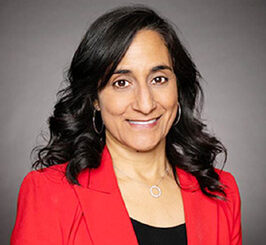
    NIAGARA, CANADA (TIP): Recognizing India as the world’s fourth largest economy and with a relationship built on more than 75 years of diplomatic relations, says Anita Anand, Foreign Affairs Minister of Canada, maintaining that India remains an important partner for us.

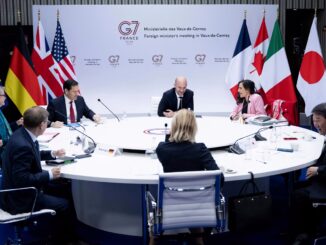
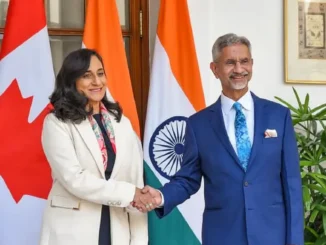
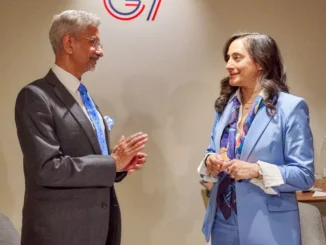
    After holding a meeting with her Indian counterpart, Subrahmanyam Jaishankar on the sidelines of the G7 Foreign Ministers conclave at Niagara, Anita Anand, appreciated India’s participation in G7 discussions this year.

    This meeting was their third this year—a reflection of momentum in the bilateral relationship.

    As continuation of the Ministerial visits and meetings between the two foreign ministers, decks have been cleared for the Canadian Prime Minister, Mark Carney, to visit India early next year.

    Other than Anita Anand, Canadian Minister, Maninder Sidhu, is currently visiting India to further trade relations between the two nations.

    A group of pro-Khalistan supporters continued their protest outside White Oaks resort, the venue of the conclave, by shouting anti-India slogans. They carried Khalistani flags and banners. Tight security arrangements have been made in and around the venue. Some members of the security agencies even checked the belongings of the pro-Khalistan protesters making sure that nothing dangerous or explosive was carried by them.

    Meanwhile, the meet has continued with its agenda as scheduled. Anita Anand, being the host, has been holding one-to-one meetings with all visiting Foreign Ministers.

    Anita Anand expressed her deepest condolences to Jaishankar for those who were killed in the explosion in New Delhi, India, yesterday and reiterated that Canada stands with the people of India during this tragic time.

    The ministers exchanged views on the ongoing law-enforcement dialogue between Canadian and Indian authorities. They also discussed the progress being made on the Canada-India joint road map, which sets out a plan to enhance cooperation in key areas, including energy, trade and people-to-people ties.

    Minister Anand reiterated Canada’s appreciation of India’s participation in G7 discussions this year, recognizing that as the world’s fourth largest economy and with a relationship built on more than 75 years of diplomatic relations, India is an important partner for Canada.

    The two Ministers agreed to remain in touch as the two countries continue to implement the Canada-India road map.

    Meanwhile Anita Anand also announced that Canada is imposing additional sanctions under the Special Economic Measures (Russia) Regulations. Canada’s new measures further increase the economic costs on Russia for its unprovoked and unjustified invasion of Ukraine by targeting its energy revenues and financial enablers, while also degrading its conventional and hybrid military capabilities.

    The sanctions list 13 individuals and 11 entities, including several involved in the development and deployment of Russia’s drone program. Canada remains a leader in targeting the military technologies Russia is relying on in its efforts to gain a battlefield advantage against Ukraine.

    For the first time, Canada has also sanctioned entities that supply the cyber infrastructure used in Russian hybrid strategies against Ukraine. Several Russian liquified natural gas entities were also sanctioned as Russia continues to rely on energy revenues to fund its war of aggression against Ukraine. These sanctions also list 100 vessels from Russia’s shadow fleet.

    The measures are a direct response to Ukraine’s priorities and support ongoing efforts by the G7 to ramp-up economic pressure on Russia to end its war and are in broad alignment with sanctions recently announced by the United States, the European Union and the United Kingdom.

    Anita Anand said: “Canada remains unwavering in its commitment to Ukraine’s sovereignty and its people, who are forcefully defending their rights in the face of Putin’s corrosive and aggressive actions. Canada will continue to intensify pressure through sanctions in coordination with allies and partners until Russia puts an end to its unjustified invasion of Ukraine.”

    Since 2014, Canada has imposed sanctions on more than 3,300 individuals and entities that are complicit in the violation of Ukraine’s sovereignty and territorial integrity and in gross and systematic human rights violations.

    Canada has taken action against Russia’s shadow fleet by sanctioning over 400 vessels based on their involvement in transporting property and goods for the benefit of Russia or persons in Russia. Many of these sanctions have been implemented in coordination with Canada’s allies and partners, including G7 members.

    The measures announced today complement similar measures taken by Canada’s closest allies, including those announced by the European Union, the United Kingdom and the United States in October. Canada will continue to work with its like-minded partners to coordinate additional measures that increase the economic costs of Russia’s war of aggression against Ukraine on the Russian regime.

    As a host of the last G7 event of Canada’s Presidency, Anita Anand, met Motegi Toshimitsu, Japan’s Minister for Foreign Affairs. This was the ministers’ first in-person meeting since Minister Motegi took office and served to deepen Canada’s bilateral relations with this trusted Indo-Pacific partner.

    Anita Anand emphasized the importance of strengthening the Canada-Japan security, defense and economic partnership, highlighting Canada as a stable and reliable partner in bolstering Japan’s economic and energy security. The ministers also discussed ways to advance shared security and prosperity interests under the Canada-Japan Action Plan. Anita Anand reaffirmed Canada’s commitment to the Indo-Pacific and to working with Japan as a strategic partner in the region, in line with the three pillars of Canada’s foreign policy: defense and security, economic resilience and core values.

    As Canada and Japan approach 100 years of diplomatic relations in 2028, Minister Anand and Minister Motegi agreed to continue building on the long-standing partnership and people-to-people ties between Canada and Japan.

    Anita Anand also met Yvette Cooper, the United Kingdom’s Secretary of State for Foreign, Commonwealth and Development Affairs, in Oakville, Ontario, ahead of the G7 Foreign Ministers’ Meeting held on November 11 and 12, 2025. She welcomed recent progress made under Canada and the United Kingdom’s bilateral economic and trade working group and discussed the need to increase trade and investment. To recognize Remembrance Day, the Minister and the Secretary of State reaffirmed the enduring partnership between Canada and the United Kingdom, forged through shared sacrifice and strengthened by our common values and deep historic ties.

    Throughout the discussion, Minister Anand underscored the importance of strengthening transatlantic security and outlined Canada’s priorities with respect to NATO defense spending.

  • A Boost to Canada-India Relations: S. Jaishankar to participate in G7 Foreign Ministers Conference in Niagara

    A Boost to Canada-India Relations: S. Jaishankar to participate in G7 Foreign Ministers Conference in Niagara

    By Prabhjot Singh

    OTTAWA (TIP): By taking yet another step, India and Canada are on the threshold of restoring normal cordial diplomatic relations after a gap of a little more than two years.

    The first step was taken when the new Canadian Prime Minister, Mark Carney, invited his Indian counterpart, Narendra Modi, as a special guest to the G7 leaders’ summit in Alberta.

    A subsequent telephonic conversation between Canadian Foreign Minister Anita Anand and her Indian counterpart, S. Jaishankar, broke the ice for the restoration of bilateral visits.

    After meeting S. Jaishankar on the sidelines of the United Nations, she undertook a bilateral visit to India, during which she met Indian Prime Minister Narendra Modi.

    After her visit, the new Indian High Commissioner to Canada, Dinesh Patnaik, extended an invitation on behalf of Narendra Modi to Canadian Prime Minister Mark Carney for early next year. India wants Mark Carney to be in New Delhi for an AI international conference in February.

    Next week, when Canada, during its presidency of the G7, is holding its second G7 Foreign Ministers conclave on November 11 and 12 at Niagara, Anita Anand has extended a special invitation to S. Jaishankar to participate. The Indian Foreign Minister’s participation has been confirmed.

    The G7 is an informal forum of seven countries with advanced economies and the European Union. Its leaders meet annually at the G7 Summit to address global economic and geopolitical issues. Canada and its G7 partners are celebrating 50 years of partnership and cooperation in 2025. Since France hosted the first meeting in 1975, the G7 has been a driving force for international peace, economic prosperity, and sustainable development.

    From June 15 to 17, 2025, G7 leaders gathered in Kananaskis, Alberta, for the G7 Summit. As host, Canada led discussions on shared priorities, including international trade, peace and security, and global economic stability. It was here that Narendra Modi was invited to end the thaw in diplomatic relations between India and Canada.

    Meanwhile, Anita Anand has confirmed the participants for the upcoming G7 Foreign Ministers’ Meeting, which will take place in Niagara.

    Minister Anand will welcome the foreign ministers of the G7 members—France, Germany, Italy, Japan, the United Kingdom, the United States of America, and the European Union.

    Canada is also pleased to host ministers from several outreach countries, reflecting shared global priorities and partnerships. These include Australia, Brazil, India, the Kingdom of Saudi Arabia, Mexico, the Republic of Korea, South Africa, and Ukraine. This important gathering will provide an opportunity to advance Canada’s G7 agenda on pressing global economic and security challenges, including maritime security and prosperity, economic resilience, energy security, and critical minerals.

    Following the March 2025 G7 Foreign Ministers’ Meeting, hosted by Minister Mélanie Joly in Charlevoix, Quebec, this upcoming meeting marks the second time Canada will host the foreign ministers this year under the G7 Presidency.

    This meeting will bring together G7 ministers to discuss global challenges and strengthen international collaboration. The agenda will cover thematic issues, including security and prosperity, as well as important work on economic resilience, following discussions held at the G7 Leaders’ Summit in Kananaskis. Minister Anand and her counterparts will work toward coordinated G7 responses to pressing international challenges, emphasizing cooperation with partners across regions and sectors.

  • Canadian, Indian foreign ministers meet on the sidelines of the United Nations

    Canadian, Indian foreign ministers meet on the sidelines of the United Nations

    By Prabhjot Singh

    NEW YORK / TORONTO (TIP): A couple of months after they talked to each other on the phone, foreign ministers of India, Subrahmanyam Jaishankar, and Canada, Anita Anand, met on the sidelines of the United Nations General Assembly in New York.

    It was an Ottawa-based diplomat-cum-journalist, Bhupinder Singh Liddar, who put up a picture of the two foreign ministers on his social media page yesterday.

    Both Indian and Canadian foreign ministers held a wide range of discussions with foreign ministers of many other countries. Canadian PM Mark Carney also addressed the General Assembly of the United Nations.

    During their meeting, the ministers discussed strengthening Canada and India’s bilateral ties, following productive discussions between Prime Minister Mark Carney and Prime Minister Narendra Modi at the G7 Leaders’ Summit in Kananaskis, Alberta, in June this year. The ministers also agreed to advance shared priorities, including economic prosperity, security and global governance.

    The ministers acknowledged recent progress in the two countries’ relationship through the appointment of high commissioners in India and Canada. Minister Anand noted that Canada’s high commissioners play a key role in promoting Canadian trade and investment, providing services to Canadians abroad and enabling dialogue between countries.

    Minister Anand emphasized that Canada remains committed to supporting and growing the well-established commercial ties shared by Canada and India, including agricultural products, critical minerals and energy products.

    The Indian Foreign Minister expressed the hope that he would greet his Canadian counterpart in India soon. There are speculations on social media that she may visit India next month. In June, Prime Minister Narendra Modi had at the invitation of Canadian PM Mark Carney, visited Canada to attend the G7 summit.

    The two ministers agreed to remain in contact.

  • Anita Anand scripts history as six South Asians join Mark Carney’s new Council of Ministers

    Anita Anand scripts history as six South Asians join Mark Carney’s new Council of Ministers

    By Prabhjot Singh

    For 25 members of the House of Commons of South Asian descent, the swearing in of the new Council of Ministers headed by banker-turned-politician Mark Carney marked a new beginning.

    The community could not have asked for more, as six of its members—four as Cabinet Ministers and two as Secretaries of State—have been inducted into Carney’s new Council of Ministers.

    Prime Minister Carney has also tried to maintain gender equity by naming 14 men and an equal number of women in his Cabinet, excluding himself. Six of his Secretaries of State are men, and the remaining four are women. Besides Anita Anand, Ruby Sahota is the other woman of South Asian descent to figure in the new Council of Ministers.

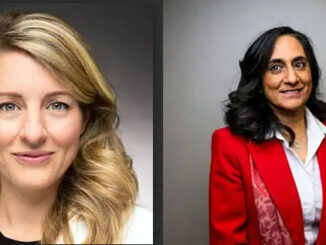
    Mark Carney preferred Anita Anand as Minister of Foreign Affairs to her predecessor  Melanie Joly, who has now been named as Minister of Industry and Minister responsible for Canada Economic Development for the Quebec regions, and Registrar General.

    Maninder Sidhu, on elevation as Cabinet Minister, becomes Minister of International Trade.

    Ruby Sahota will be Secretary of State for combating crime, and Randeep Serai has been named Secretary of State for International Development.

    Other than Anita Anand, Mark Carney named five other South Asians, including  Gary Anandasangaree,  Shafqat Ali, Maninder Sidhu, Ruby Sahota and Randeep Serai in his new Council of Ministers. Ruby Sahota and Randeep Serai would not sit in Cabinet meetings but would hold charge as Secretaries of State in different departments.

    Shafqat Amanat Ali was born into a Punjabi Muslim family in Lahore, to noted classical singer, Ustad Amanat Ali Khan and his wife Almas Amanat Ali Khan, on 26 February 1965, making him the seventh generation of the Patiala Gharana, which was founded in the mid-late 19th century by his great-grandfather. He has made a name in the Real Estate industry in the Greater Toronto Area.

    Anita Anand has been the toast of ceremonies, for she continues to be in the top echelons of Canadian politics.

     58-year-old lawyer, academician and accomplished politician, Anita Anand has been going through her most eventful year of her career. She was the first Hindu to become a federal minister in Canada when Prime Minister Justin Trudeau named her the first woman Defense Minister of the country. Later in her previous term, she was also the President of the Treasury Board and the Transport Minister.

    After Deepak Obhrai, the longest-serving Member of the House of Commons representing the Canadian Hindu Community, Anita Anand has been holding the fort for the present without ever getting involved in partisan politics. Deepak Ubhrai represented Alberta in the House of Commons for seven successive terms.

    Incidentally, the new Canadian Prime Minister was elected from a riding in Nepean, in the capital city of Ottawa, after the candidature of another sitting Hindu MP, Chandra Arya, was revoked.

    In December last year, when internal strife started rocking the minority Liberal Government, Prime Minister Justin Trudeau offered to quit both as Leader of the Liberal Party and Prime Minister of Canada.

    Anita Anand was considered one of the front runners as a replacement for Justin Trudeau. She, however, preferred to stay aloof. Instead, she announced that she would prefer to go back to academics and take a break from politics.

    Chandra Arya was among the first to announce his candidature for the Liberal Party leadership. The election committee of the Liberal Party, however, did not proceed with his candidature on technical grounds.

    Since Mark Carney holds Anita Anand in high esteem, he reportedly persuaded Anita Anand to change her mind and contest again. She agreed and returned to retain her seat in the House of Commons to become the Foreign Minister.

    More about Anita Anand

    Suave, sober and assertive Anita Anand has done Canada’s South Asian community proud. On Wednesday, May 14, she was sworn in as Canada’s first Hindu Foreign Minister to add yet another feather to her distinct cap.

    Anita Anand was first elected as the Member of Parliament for Oakville in 2019. She was re-elected in 2021. She served most recently as Minister of Innovation, Science and Industry and has previously served as Minister of Transport and Internal Trade, President of the Treasury Board, Minister of National Defense, and Minister of Public Services and Procurement.

    As Minister of Public Services and Procurement, Anita led contract negotiations to secure vaccines, personal protective equipment, and rapid tests for Canadians during the height of the COVID-19 pandemic. Later, as Minister of National Defense, she spearheaded initiatives to tackle sexual misconduct and bring about cultural change in the Canadian Armed Forces. She also led Canada’s efforts to provide military aid and personnel to train Ukrainian soldiers following Russia’s illegal invasion of Ukraine.

    As President of the Treasury Board, Anita spearheaded a government-wide spending review and worked to reduce red tape for small businesses and entrepreneurs. Her time at Transport Canada yielded Canada’s first-ever high-speed rail project and historic progress in eliminating interprovincial trade barriers.

    In her latest portfolio, Anita has been focused intently on protecting Canadian workers and industries in the face of President Trump’s unjustified trade war.

    Anita is a scholar, lawyer, researcher, and mother of four children. Born and raised in rural Nova Scotia, she moved to Ontario in 1985. She holds a Bachelor of Arts (Honors) in Political Studies from Queen’s University, a Bachelor of Arts (Honors) in Jurisprudence from the University of Oxford, a Bachelor of Laws from Dalhousie University, and a Master of Laws from the University of Toronto. She was called to the Bar of Ontario in 1994.

    Anita and her husband, John, raised their four children in Oakville. She is a devoted leader with a proven record of service. In her Oakville community, she has served on the Board of Directors of the Lighthouse Foundation for Grieving Children, Oakville Hospital Foundation, and Oakville Hydro Electricity Distribution Inc.

    Incidentally, it is the 75th anniversary of South Asians in Canadian politics. In 1950 Giani Naranjan Singh Grewal had made a triumphant entry in Canadian politics when he was elected as a member of the Mission City Council in British Columbia. Since then, the community has come a long way.

    Anita Anand’s appointment also becomes significant as Canada’s relations with India are far from cordial. Both India and Canada have to discard acrimony to restore the bonhomie that the two nations once enjoyed.

    For the immigrant community, the most important portfolio is that of the Minister of Immigration, Refugees and Citizenship. Mark Carney has named Lena Metlege Diab as the new Minister of immigration, Refugees and Citizenship. The immigrants would be looking forward to new and favorable changes in the immigration policies after several radical changes were made in the last six months of the previous Liberal government.

    (Prabhjot Singh is a Toronto-based award-winning independent journalist. He was celebrated by AIPS, the international body of sports journalists, for covering ten Olympics, at its centennial celebrations held at UNESCO Centre in Paris during the 2024 Olympic Games. Besides, he has written extensively  about business and the financial markets, the health industry, the public and private sectors, and aviation. He has worked as a political reporter besides covering Sikh and Punjab politics. He is particularly interested in Indian Diaspora and Sikh Diaspora in particular. His work has also appeared in various international and national newspapers, magazines, and journals. He can be reached at prabhjot416@gmail.com)


  • Anita Anand revises her decision to contest 2025 federal polls

    Anita Anand revises her decision to contest 2025 federal polls

    By Prabhjot Singh

    OTTAWA (TIP): Canada’s Transport Minister and President of Treasury Board, Anita Anand, who announced earlier this year her decision to skip the 2025 federal polls, has changed her mind.

    Realizing the difficult times ahead because of the ongoing tariff war with the largest trade partner and neighbor, the United States, Anita Anand, while reiterating her commitment to making “Canada first”, said that she would continue to serve the people of Canada through their difficult times.

    Anita Anand, who became the first woman of Indian origin to hold the portfolio of Defense, had declared early this year that she plans to go back to academics.

    While she was considered a strong candidate for the Liberal Party leadership and Prime Minister of Canada after Justin Trudeau made an announcement to quit the Liberal Party leadership as well as the office of the Prime Minister after a growing dissent in the Liberal caucus, she opted out.

    There were repeated attempts by the main Opposition party, the Conservatives, to bring down the Liberal Government under Justin Trudeau. He, however, managed to survive two no-confidence motions brought in by the Conservatives, thanks to support by the fourth largest party in the House of Commons, the New Democrats.

    Later, when New Democrats also turned hostile and announced to bring in a no-confidence motion against his government, Trudeau offered to quit and requested the party high command to choose his successor. At the same time, he called on the Governor-General to seek prorogation of the House of Commons till March 24 so that the Liberals could choose their new leader.

    The House of Commons was to resume its sitting on January 27. The governor-general acceded to Justin Trudeau’s recommendation and prorogued the House till March 24.

    Four candidates – Mark Carney, Frank Baylis, Chrystia Freeland and Karina Gould – are in the run for the Liberal Party leadership. The election process will be completed by March 9.

    Meanwhile, the number of sitting members of the House of Commons in general and the Liberal party in particular opting out of the 2025 federal elections started growing. At one stage, three Cabinet ministers of Indian origin – Anita Anand, Harjit Sajjan and Arif Virani – also joined the list of those not seeking re-election.

    Anita Anand has, however, relented and decided to seek election from Etobicoke, a riding she has been representing in the House of Commons. The Liberal Party website, however, does not reflect Anita Anand as a candidate from Etobicoke so far.

    Anita had taken to X handle to announce her revised decision. She said: “Canada is facing a crucial moment in our nation’s history. In the time since early January, when I made my announcement to step away from public life, the gravity of this moment has only grown in significance. Now, I look forward to continuing to serve and to running in the next federal election.

    “Over the past seven weeks, I have been heavily engaged on the Canada-US file and have made headway on reducing interprovincial barriers to trade, with more work for me to do on both fronts,” she said revealing that “the words of my late mother ring even louder in my ears today. She often said to me, ”you must serve your country.”

    (Prabhjot Singh is a Toronto-based award-winning independent journalist. He was celebrated by AIPS, the international body of sports journalists, for covering ten Olympics, at its centennial celebrations held at UNESCO Centre in Paris during the 2024 Olympic Games. Besides, he has written extensively about business and the financial markets, the health industry, the public and private sectors, and aviation. He has worked as a political reporter besides covering Sikh and Punjab politics. He is particularly interested in Indian Diaspora and Sikh Diaspora in particular. His work has also appeared in various international and national newspapers, magazines, and journals. He can be reached at prabhjot416@gmail.com)

  • Anita Anand and Melanie Joly say they are not in the federal Liberal leadership race

    Anita Anand and Melanie Joly say they are not in the federal Liberal leadership race

    By Prabhjot Singh

    Transport Minister Anita Anand – have opted out of the federal Liberal leadership race, the election process of which was formally made public last week. Of the four senior women members of the Liberal caucus, only two—former Deputy Prime Minister and Finance Minister Chrystia Freeland and leader of the House Karina Gould—initially tipped as strong contenders are still considered in the running after both Anita Anand and Melanie Joly clarified that they are not in contention for the Prime Ministerial post. Another woman candidate in the running is the former Premier of British Columbia, Christie Clark. After Justin Trudeau announced his decision to step down as leader of the ruling Liberal Party, the Liberal Party has now set in motion the process to choose a replacement for him. The new leader would be named on March 9.

    Chandra Arya, MP from Nepean, was the first to declare his candidature for the top political post even before the details of the election process were made public.

    The new election procedure shows many changes from the process when the last election process to name the party leader was held in 2013. After a frenzy of formal and informal meetings last week, the Liberal Party’s national council decided to complete the process by March 9, ahead of March 24, the date on which the House of Commons, now prorogued, would resume its sitting.

    In the election programme announced, the party has increased the entry fee for potential candidates from $ 75,000 it had set in 2013 to $350,000 — a significant jump. Candidates will have to declare their intention to run and pay the entry fee by January 23. Party followers can register to vote in the leadership race until January 27.

    The party has also formalized the eligibility criteria for who can vote in the leadership contest. Canadian citizens and permanent residents, above the age of 14 shall be eligible to vote, contrary to the eligibility criteria for the general elections where the voting age is 18. In Canada, parties can set their age restrictions. The Conservatives allowed people 16 years or older to vote during their last leadership contest in 2022.

    Previously, non-Canadian residents were allowed to vote in Liberal Party riding nomination and leadership contests. This was called a “gateway” for foreign interference, an issue that dominated the proceedings of the current session that was adjourned for holiday break on January 18. A growing number of Liberal MPs have urged the party executives to heed those warnings.

    A number of cabinet insiders — including Innovation Minister François-Philippe Champagne, Natural Resources Minister Jonathan Wilkinson and Employment Minister Steven MacKinnon — have said they are considering running for the top job, but said they want to see the rules first.

    Former central banker Mark Carney has also said he is interested. Former finance minister Chrystia Freeland, former B.C. premier Christy Clark and House Leader Karina Gould are said to be gathering supporters, too.

    Besides Chandra Arya, a former Montreal MP, Frank Baylis, is also in the running.

    Whoever is chosen to take over for Trudeau, will have a tight timeline before the House of Commons returns. The possibility of the new Prime Minister running into a no-confidence motion immediately after the House resumes its sitting looks imminent as two of the main parties, including the official Opposition party, the Conservatives and the New Democrats, who had been bailing out the Trudeau government throughout, have declared the intent to bring down the government at the first possible opportunity.

  • Mission politics started from Mission in BC

    Mission politics started from Mission in BC

    By Prabhjot Singh

    It was not easy. The early migrants from South Asia were not welcome to Canada. They not only suffered numerous hardships but were also denied the right for a decent living. They had no voting rights. In fact, the concept of the Nagar Kirtan processions, or the Sikh Parades, proved to be an effective tool for the overseas Sikh community to introduce itself as a peaceful and hard-working group that had no qualms of making countries of their present abode as their homes. The first ever-Sikh Parade or Nagar Kirtan procession was organized on January 19, 1908, along Second Avenue in Vancouver.

    It has been this commitment that has helped them to script an unprecedented success story the world over. Though the Punjabis – initially described as Hindus – started reaching Canada in early 1900, they were denied voting rights in British Columbia from 1907 onwards. They had to wait for 40 long years to win back the right to vote. In 1947, the requirement to be a voter was changed to Canadian citizenship in addition to being a British subject. It was in 1950 that the first Sikh – Naranjan Singh Grewall – was elected to the City Council of Mission in British Columbia.

    He became the first “Hindu” (the colloquial term for South Asians at the time) elected to any political position in Canada. Later, he became the first South Asian migrant to become Mayor of the Mission City Council in 1954. Grewall’s run for a seat in the BC Legislature as a member of the CCF surprised no one. He was first and foremost a man of the people. He lost the assembly election in a close battle.

    The Indo-Canadian community was waiting for the break Naranjan Singh Grewall had provided. Once the process of its assimilation in mainstream politics started, the Punjabi migrant community set its goals high. And before the turn of the century, it had three of its nominees – Gurbax Malhi, Herb Dhaliwal, and Jag Bhaduria – sitting in the House of Commons in Ottawa.

    And long before their journey to Ottawa started, the beginning, though unsuccessful, was made in late 60s and early 70s. In 1970, a new party was born. It was headed by an Indo-Canadian. Called Communist Party of Canada (Marxist-Leninist), it was founded by Hardial Singh Bains, a trained Bacteriologist. Born in Mahilpur in Hoshiarpur, Hardial moved to Vancouver when he was 19. Much before Jagmeet Singh became the President of the NDP, Hardial Singh Bains had earned the distinction of leading a national political party in Canada.

    After studying in Canada, England, and Ireland, Hardial Singh Bains returned to Canada and spearheaded the workers movement. Since Elections Canada does not allow the use of the word “communist” in the name of any party, Hardial Singh Bains got his party registered as Marxist-Leninist Party of Canada in 1974. Before his death in 1997, the Marxist-Leninist Party contested the 1974, 1979, 1980, 1993 and 1997 federal elections. Though the party has never succeeded in sending any of its members to the House of Commons, it fielded its largest number of candidates,177, in 1980. Many of these candidates were migrants, including those from India. Amarjit Dhillon, who was the party candidate from Vancouver South, both in 1979 and 1980, polled only 91 and 63 votes. Overall, though the party never aggregated 0.20 per cent of total votes polled, still it never gave up its fight and contested the last federal elections in 2021 by fielding 36 candidates.

    It was in 1974 when Hari Singh, a teacher, contested on Liberal ticket from Okanagan-Kootenay. Though it was a Liberal stronghold, but Hari Singh lost. After his defeat, he accused the majority community of Liberals of voting against him. Subsequently, the Liberals retained the seat.

    Ten years later in 1984, another teacher, Harkirpal Singh Sora, contested from Vancouver South. He too was unsuccessful. Deepak Obhrai was the longest serving MP from Calgary East. Long before he emerged on the scene, in 1988 this riding had tried to elect Anil Giga, a Liberal, to the House of Commons. He, however, was defeated by Alex Kindy by 18,227 votes. The Bramalea-Gore-Malton Riding has always remained a stronghold of the Punjabi migrants. The first attempt by the community to get into the House of Commons was in 1988, when the Liberals put up Gurjit Grewal, who lost by 2,185 votes to Harry Chadwik of the CP.

    Palbinder Shergill, a young amritdhari Sikh and a practicing lawyer, was one of the first Punjabi women to contest federal elections. She was unsuccessful  along with another Punjabi Indo-Canadian candidate from the Surrey Central Riding. The other  candidate was Charan Gill who had earlier made an attempt to get into the House of Commons in 1988 but was defeated by Benno Friesen of the PC. He represented the NDP.

    Sikh Turban has become an integral part of Canadian Parliament

    Two turbaned Sikh politicians – one from yesteryear, and another from now – Gurbax Singh Malhi and Jagmeet SinghJagmeet Singh

    October 25, 1993 would go down in the annals of history of the Canadian House of Commons as a golden letter day. It was on this day that Canada earned the distinction of electing the first turbaned Sikh MP to any Parliament outside India. The honor went to Gurbax Singh Malhi as he was declared successful from Bramalea-Gore-Malton riding. Though two more MPs of Indian origin – Harbance (Herb) Singh Dhaliwal and Jagdish Bhaduria – also made their debut in the Canadian House of Commons simultaneously, the spotlight was on Gurbax Singh Malhi. Since then, no Canadian Parliament has been complete without a turbaned Sikh represented on it.

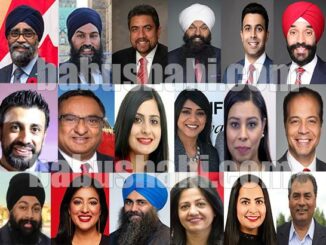
    Starting with three MPs in 1993, now the Indo-Canadian community has grown six times in its strength in the House of Commons. It represents all three major parties – the ruling Liberals, the main Opposition party the Conservatives, and the third major party NDP headed by an Indo-Canadian Jagmeet Singh. Incidentally, Jagmeet Singh is the lone Indo-Canadian NDP in the current House of Commons.

    Of 42 MPs of Indian origin elected to House of Commons since 1993, Navdeep Singh Bains, Tim Uppal, Jagmeet Singh, Randeep Sarai, Harjit Singh Sajjan, Darshan Singh Kang, Raj Grewal, Jasraj Singh Hallan and Iqwinder Singh Gaheer, are among those who earned special limelight because of their colorful turbans.

    Incidentally, Gurbax Singh Malhi has till date remained the longest serving Sikh MP representing the Liberals. He was elected five times starting in 1993 till he lost the 2011 elections. Otherwise, Deepak Obhrai, who was born in Tanzania, earned the distinction of longest serving Canadian MP of Indian origin. He retained his House of Commons seat for seven consecutive terms mostly as a nominee of Conservatives.

    While Gurbax Singh Malhi, Jag Bhaduria and Herb Dhaliwal were the first representatives of Liberals in Canadian Parliament, the honor for giving representation to Indo-Canadians in the House of Commons on behalf of Conservatives went to Deepak Obhrai and Gurmant Grewal. Subsequently, Jasbir Singh Sandhu and Jinny Jogindera Sims were the first Indo Canadians to represent NDP in the Canadian Parliament.

    Women of Indo-Canadian descent did not take along to reach Ottawa’s Parliament Hill. Ruby Dhalla (Liberal from Ontario) and Nina Grewal (Conservative from British Columbia) became the torch bearers. They were followed by Jinny Jogindera Sims (NDP).

    Sonia Sidhu, Ruby Sahota, Kamal Khera, Bardish Chagger and Anju Dhillon created ripples when they all made their entry into the 42nd Parliament and are all continuing in the current 44th Parliament. In the 43rd Parliament they were joined by Anita Anand, the first Indo-Canadian woman politician to hold the important portfolio of Defense. Also, a new entrant was Jag Sahota, the ninth woman of Indian origin to enter Canadian Parliament.

    These Canadian MPs of Indian origins have several other firsts to their credit. For example, Gurmant Singh Grewal and Nina Grewal were the first couple to sit in the same House. Herb Dhaliwal was the first from the group to be inducted in the Canadian Cabinet as a Minister for Oceans. Many of them have remained Parliamentary Secretaries attached with important ministries.

    In the previous Liberal Government, Harjit Singh Sajjan, became the toast of not only the Indo-Canadian community but also of the rapidly growing Indian Diaspora after he was named the Defense Minister of Canada.

    Bardish Chagger hawked media headlines on becoming the first woman leader of the House of Commons. And late last year, Anita Anand stole the limelight as the first Indo-Canadian woman to hold the portfolio of Defense Minister. Incidentally, the last two Liberal Governments had an Indo-Canadian as Defense Minister.

    There have been Indo-Canadians who created history both in provincial and federal politics. The shining example has been of Ujjal Dosanjh who after his phenomenal rise as the first Indo-Canadian Premier of British Columbia  later held the portfolio of the Canadian Health Minister. A couple of MPs, including Jinny Jogendra Sims and Parm Gill, later made their debut in provincial politics and held positions as Cabinet Ministers in British Columbia and Ontario, respectively. Amarjit Sohi, who held an important cabinet portfolio in the previous Justin Trudeau government is now a Mayor of Edmonton in Alberta since last year.

    MPs of Indian origin

    Gurbax Singh Malhi

    Harbance (Herb) Singh Dhaliwal

    Jag Bhaduria

    Deepak Obhrai

    Gurmant Grewal

    Rahim Jaffer

    Nina Grewal

    Ruby Dhalla

    Ujjal Dosanjh

    Navdeep Bains

    Sukh Dhaliwal

    Tim Uppal

    Jinny Jogindera Sims

    Devinder Shory

    Jasbir Sandhu

    Bal Gosal

    Parm Gill

    Joe Daniel

    Amarjit Sohi

    Jagmeet Singh

    Gagan Sikand

    Sonia Sidhu

    Jati Sidhu

    Bob Saroya

    Randeep Singh Sarai

    Ramesh Sangha

    Harjit Singh Sajjan

    Raj Saini

    Ruby Sahota

    Kamal Khera

    Darshan Singh Kang

    Raj Grewal

    Anju Dhillon

    Bardish Chagger

    Chandra Arya

    Maninder Sidhu

    Jag Sahota

    Jasraj Sigh Hallan

    Anita Anand

    Iqwinder Singh Gaheer

    George Chahal

    Parm Bains

    -To be concluded

    (Prabhjot Singh is a veteran journalist with over three decades of experience covering a wide spectrum of subjects and stories. He has covered  Punjab and Sikh affairs for more than three decades besides covering seven Olympics and several major sporting events and hosting TV shows. For more in-depth analysis please visit probingeye.com  or follow him on Twitter.com/probingeye. He can be reached at prabhjot416@gmail.com)

  • Indo- Canadian Anita Anand replaces Harjit Singh Sajjan as Canada’s Defense Minister

    Indo- Canadian Anita Anand replaces Harjit Singh Sajjan as Canada’s Defense Minister

    OTTAWA (TIP): Punjab-origin Canadian politician Anita Anand was on Tuesday, October 26, appointed country’s new Defense Minister in a Cabinet reshuffle by Prime Minister Justin Trudeau, over a month after his Liberal Party returned power in the snap polls and amid calls for major military reforms. Anand, 54, will replace long-time Defense Minister Indian-origin Harjit Singh Sajjan, whose handling of the military sexual misconduct crisis has been under criticism. Sajjan has been appointed Minister of International Development Agency, a report in a daily said.

    Anand is the second woman in Canada to be appointed Defense Minister.

    Brampton West’s Kamal Khera, another Punjabi, has been named Minister of Seniors.

    Bardish Chaggar, another Indo-Canadian minister, has been dropped from the new Cabinet.

  • 16 Indian-origin candidates win federal polls in Canada elections

    16 Indian-origin candidates win federal polls in Canada elections

    OTTAWA (TIP):  16 of the 17 Indian-origin politicians who have made it to the Canadian House of Commons in the recent general elections are Punjabis. The number of Indian-origin candidates who were reelected is marginally down from 20 in 2019. All prominent Punjabi-Canadian faces were reelected—including Defense Minister Harjit Sajjan from Vancouver South, Minister Bardish Chaggar from Waterloo, Minister Anita Anand from Oakvilla and Jagmeet Singh, who heads New Democratic Party, from Burnaby South seat. Liberal Member of Parliament Chanderkanth Arya, who has his roots in Karnataka, was elected from Napean in Ontario yet again—the lone non-Punjabi Indian-origin MP.

    Many of these seats were from Ontario, Canada’s largest province and a hub for Indian immigrants. Punjab-origin MPs won four of five seats in Brampton: Ruby Sahota from Brampton North, Maninder Sidhu from Brampton East, Sonia Sidhu from Brampton South, and Kamal Khera from Brampton West. Five of those who won are women: Anju Dhillon, a lawyer and a Liberal Party from Dorval-Lachine-La-Salle who became the first Indian-Canadian to win a seat twice in the French-speaking province of Quebec; her fellow Liberal candidate Ruby Sahota; Sonia Sidhu; Anita Anand; and Bardish Chaggar. Other prominent winners are Jasraj Singh; George Chahal; Tim Uppal; Sukh Dhaliwal; and Randeep Singh Sarai. Nineteen of 20 Indian origin MPs who’d been elected in 2019 were of Punjabi-origin. 

  • 47 Punjab-origin candidates in fray for Canada polls

    47 Punjab-origin candidates in fray for Canada polls

    OTTAWA (TIP): As many as 47 Punjabis are trying their luck in the Canadian Federal General Elections for which the polling is scheduled to be held on September 20.

    Prominent faces :

    • Defense Minister Harjit Sajjan from Vancouver South
    • Minister Anita Anand from Oakvilla in Ontario
    • Minister Bardish Chagger from Waterloo
    • Jagmeet Singh, leader of New Democratic Party who provided support to the minority government of Justice Trudeau, from Burnaby South

    In the final list of candidates, the maximum Punjabi candidates (17) have been fielded by the Liberal Party, followed by Conservative Party (13), New Democratic Party (10), People’s Party of Canada (5), Green (1) and one will contest as an Independent.

    The 2019 polls also saw the same number of candidates, 19 of whom made it to the House of Commons. With 16 of the sitting MPs and a Punjabi-versus-Punjabi contest on several seats, their relatives back home are keeping fingers crossed. The prominent Punjabi NRI faces in the poll fray are: Defense Minister Harjit Sajjan from Vancouver South, minister Anita Anand from Oakvilla in Ontario, minister BardishChaggar from Waterloo and Jagmeet Singh, leader of New Democratic Party (NDP) who provided support to the minority government of Justice Trudeau, is seeking reelection from Burnaby South.

    The Liberals have fielded Ruby Sahota (Brampton North), Sonia Sidhu (Brampton South), Kamal Khera (Brampton West), Anju Dhillon (Dorval-Lachine-LaSalle), Randeep S Sarai (Surrey Centre), Maninder Sidhu (Brampton East) and Sukh Dhaliwal (Surrey Newton) for reelection. The other candidates fielded by the Liberals are Lakhwinder Jhaj, Parm Bains and Sabrina Grover. Raj Saini was fielded from Kitchender Centre, but he withdrew his candidature on Saturday after facing allegations of inappropriate behavior towards staffers.

    The NDP has fielded Tejinder Singh form Brampton South, Gurprit Gill from Brampton West, Avneet Johal from Surrey Newton and Gurinder Singh Gill from Calgary Skyview. The candidates fielded by the Conservatives include sitting MPs Tim Uppal, Jag Sahota and Jasraj Singh. Other candidates are Indira Bains, Priti Lamba, Naval Bajaj, Medha Joshi, Ramandeep Brar, Jagdeep Singh, Tina Bains and Sukhbir Singh Gill.

    Navdeep Bains (Mississauga-Malton), who was earlier a minister in the Trudeau cabinet, has reportedly quit politics and is not re-contesting. Along with him, Liberal MP Gagan Sikand (Mississauga-Streetsville) and Independent Ramesh Sangha (Brampton Centre) are also not seeking re-election this time.

    Even Parveen Hundal is contesting as an Independent from Surrey Newton and Devyani Singh from Green party is in fray from Vancouver Quadra. The power of the Sikh community has been gauged from the fact that in last House, it had 18 Sikh MPs in Canada.

    The Sikh community comprises just 1 per cent of the country’s population, but they have come to wield more power than most of their immigrant counterparts. The credit goes to a robust culture of grassroots politics, organizational skills and fundraising capabilities, and a particular feature of Canada’s electoral system that requires each candidate to bring in a certain number of signatures and party members in order to get nominated.