Tag: Anti Sikh riots

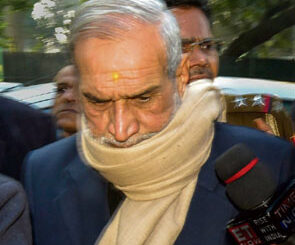
  • Ex-Congress MP Sajjan guilty of double murder during ’84 riots

    Ex-Congress MP Sajjan guilty of double murder during ’84 riots

    Arguments on quantum of sentence slated for Feb 18

    NEW DELHI (TIP): A Delhi court on Wednesday, February 12, held former Congress MP Sajjan Kumar guilty of murder in a 1984 anti-Sikh riots case in connection with the murder of two persons in the Saraswati Vihar area of the national capital.

    “In the light of… the evidence on record considered in its totality, I am of the opinion that the prosecution has been able to prove its case against the accused beyond reasonable doubt. Thus, accused Sajjan… is hereby convicted of offences punishable under Sections 147, 148 and 149 of the IPC and for offences punishable under Sections 302, 308, 323, 395, 397, 427, 436 and 440 read with Section 149 of the IPC,” Special Judge Kaveri Baweja said.

    Also convicted of dacoity
    Besides murder, Sajjan (79) has also been convicted of rioting, dacoity, attempting to cause death, committing culpable homicide and burning the victim’s house as a member of an unlawful assembly
    Sajjan is already serving life term in another anti-Sikh riots case and the SC has refused to grant him bail
    Besides murder, Sajjan has also been convicted of rioting, dacoity, attempting to cause death or grievous hurt, committing culpable homicide and burning the victim’s house as a member of an unlawful assembly.

    “It has further been established that Sajjan, being a member of such unlawful assembly, is guilty of having committed the murder of Jaswant Singh and Tarundeep Singh, the husband and son of complainant PW-13, during the incident of rioting on November 1, 1984,” Baweja said in her 139-page order.

    The Special Judge posted the matter for hearing arguments on the quantum of the punishment to be awarded to the convict on February 18.

    “Whatever time it might have taken, it’s important to punish the perpetrators of such heinous crime to uphold the rule of law,” senior advocate HS Phoolka told The Tribune, welcoming the order convicting the former Congress MP.

    Sajjan (79) is already serving life imprisonment in another anti-Sikh riots case and the Supreme Court has refused to grant him bail. He has been in jail since December 31, 2018, when he surrendered after being convicted and awarded life imprisonment by the Delhi High Court in a case relating to the anti-Sikh riots in the Raj Nagar (Part I) area in Palam Colony of South West Delhi in which five Sikhs were killed on November 1 and 2, 1984, and a gurdwara was burnt down in Raj Nagar (Part II). His appeal against conviction and sentence order of the high court is pending in the Supreme Court.

    On September 20, 2023, Special Judge Geetanjli Goel had acquitted Sajjan in a case related to the murder of a person during the 1984 anti-Sikh riots in the Sultanpuri area of the national capital, giving him “the benefit of the doubt”. The state’s appeal against his acquittal is pending in the Delhi High Court.

    The fourth case against Sajjan in connection with a culpable homicide in the Janakpuri area during the 1984 riots is listed before Special Judge Baweja for evidence on February 18.

    This is the second conviction in a case reopened on the recommendations of a special investigation team (SIT) set up by the Ministry of Home Affairs in 2015 to reinvestigate the 1984 anti-Sikh riots cases.

    Following the SIT’s recommendations, the complainant in the case recorded her statement on November 23, 2016, leading to Sajjan’s arrest in the case on April 6, 2021, while he was serving a life term in Tihar Jail in another 1984 riots case.

    In 2018, one accused was given the death penalty and another life imprisonment in connection with the murder of three persons in the Mahipalpur area during the 1984 riots. The convicts’ appeal is pending before the Delhi High Court.

    Around 3,000 people, mostly Sikhs, were killed in the anti-Sikh riots that broke out following the assassination of then Prime Minister Indira Gandhi on October 31, 1984, by her two Sikh bodyguards.

    The case relates to the killings of Jaswant Singh and his son Tarundeep Singh on November 1, 1984. The Punjabi Bagh police registered the case and the probe was subsequently taken over by a special investigation team.

    After hearing additional submissions made by public prosecutor Manish Rawat, Special Judge Baweja had on January 31 reserved the verdict. On December 16, 2021, the court framed charges against Sajjan, finding a “prima facie” case against him.

  • 1984 marks ‘one of the darkest years’ in modern Indian history: US Senator

    1984 marks ‘one of the darkest years’ in modern Indian history: US Senator

    WASHINGTON, D.C. (TIP): The anti-Sikh riots of 1984 mark “one of the darkest years” in modern Indian history, a US Senator has said, as he underlined the need to remember the atrocities committed against the Sikh community so that those responsible may be held accountable. Violence erupted in Delhi and other parts of the country after former Prime Minister Indira Gandhi was assassinated by her Sikh bodyguards on October 31, 1984. Over 3,000 Sikhs were killed across India, mostly in the national capital. “1984 marks one of the darkest years in modern Indian history. The world watched as several violent incidents broke out among ethnic groups in India, with several notably targeting the Sikh community,” Senator Pat Toomey said on the Senate floor. “Today we are here to remember the tragedy that commenced on November 1, 1984, following decades of ethnic tension between Sikhs in the Punjab province and the central Indian Government,” he said recently.

    “To prevent future human rights abuses, we must recognize their past forms. We must remember the atrocities committed against Sikhs so that those responsible may be held accountable and that this type of tragedy is not repeated against the Sikh community or other communities across the globe,” Toomey, a Republican, said.

    Senator Toomey, who is a member of the American Sikh Congressional Caucus, said Sikhism traces its nearly 600-year history to the Punjab region of India. With nearly 30 million followers globally and 700,000 here in the US, Sikhism is one of the world’s major religions. Toomey said he has personally witnessed the spirit of Sikhs and has come to better understand the Sikh tradition that is founded on equality, respect, and peace.

    It is clear that the presence and contributions of Sikh communities have thoroughly enriched their neighborhoods across the country, he said. He also mentioned the community services rendered by Sikhs in the US during the COVID-19 pandemic.

    Meanwhile, nine Indian-origin rights bodies here on Saturday published an advertisement in The New York Times to raise the alleged “religious persecution, discrimination and deadly mob violence” against minorities in India.

    The advertisement was published on the eve of the birth anniversary of Mahatma Gandhi. The nine bodies include the American Muslim Institution, Association of Indian Muslims of America Howard Cain, ICNA Council for Social Justice, Dalit Solidarity Forum Hindus for Human Rights, Indian American Muslim Council International Society for Peace and Justice and American Sikh Council. Each of them paid USD 1,000 for the advertisement.

  • 70 years as Republic- where does India stand today?

    I am more likely to think as a common man rather than come out with a scholarly and pedantic analysis. I shall not go in to the  nitty gritty of figures or make a presentation through graphs to exhibit gains and losses because these have only confounded the common man. I leave that to a Narendra Modi or a Nirmala Seetharaman.  I shall be more interested in talking about where India stands when it comes to the people of India and their rights as human beings.


    For every Indian it was a bliss to be alive on 26th January 1950 when the Constitution of Secular India came in to being. For him it was a day when he was promised certain fundamental rights. Readers may please look into the Preamble to the Constitution of India. It is a day when every Indian felt he was going to see a new sunrise. It is a day that promised every single man, woman and child in India end of inequality and exploitation. It is a day that held the prospect of end to bigotry. It is the day that spoke of end of illiteracy. It is a day our leaders described as the day of a new awakening. It is a day of new life of liberty and freedom-the most cherished goals of every human being anywhere in the world. Indians bowed their heads in gratitude before the framers of the Constitution, led by the brilliant Dr. Bhim Rao Ambedkar. They felt they were just about to enter the Promised Land.

    Behind the veil of all external growth, all seeming progress, there is decadence in India. To the common people, equality is a word  in Dr. Ambedkar’s Constitution of India,  not the practice. How can one claim there is equality in India when the majority still is caught in the grinding machine of illiteracy, ignorance and poverty? How can one feel proud of the growing economic stature of the country (India will be a 5 Trillion economy by 2024 and an  economic super power by 2050 or even earlier) when one does not get two square meals, is without a home and has neither a present nor a future?

    70 years of Republic and we still have not been able to ensure justice to our people. “Might is Right” holds true in the land of the Buddha, Nanak and Gandhi. From far flung hamlets to the city, it is the might that rules. Even the politicians who are supposed to act as the custodians of the Constitution subscribe to the dictum. Dalits and minorities are at the receiving end. A case in point is the 1984 anti-Sikh riots in Delhi and elsewhere in India. Ten thousand Sikh men, women and children were butchered in cold blood then. Thousands of Sikh women became widows. Thousands of children became orphans.

    And, imagine,  36 years after the horrendous  crime was committed against humanity, the perpetrators of crime have managed to go scot free and move freely. The prosecutors have turned in to defense lawyers. I am referring to CBI that gave a “clean chit” to Jagdish Tytler, the prime accused in 1984 anti-Sikh riots in Delhi. On top of it, the  accused like Jagdish Tytler enjoy the comfort and power of ministerial gaddis. “Might is right”.

    Another case in point is detention of hundreds in various jails in India who were picked up during the dark days of militancy in Punjab. They have been held prisoners for years together without a trial. One never knows whether they will ever experience freedom from the frightening four walls of the prisons hey have been put in to.

    Look at all the cases being reported every day of  rape of dalit women, the police brutality, the gangsters’ reign, the highhandedness of government officials, the loot the politicians engage in day in and day out. Law seems to have taken leave of the country.

    The Non-resident Indians have been voicing similar  concern at the lawlessness in the country when many pointed out that their property in India was being grabbed by unscrupulous elements and many had been framed in false criminal cases. They pointed accusing finger at the police and civil officials who connived with criminals to rob the NRI’s of their legitimate property. How can government of India expect the NRI’s to come forward to invest in the country when they feel insecure? Law is on leave, probably a long leave?

    Where is Equality promised in the Constitution of the Republic of India? Where is Freedom? Where is Justice?

    Let us on this Republic Day ask ourselves these questions, for the sake of the Republic of India.

    SATYAMEV JAYATE!
