Tag: Apple News

  • India Inc hails Interim Budget but rues absence of big bang announcements

    India Inc hails Interim Budget but rues absence of big bang announcements

    New Delhi (TIP)- India Inc welcomed the Interim Budget but regretted the absence of any big bang announcement. Even though the government failed to present the Medium-term Expenditure Framework Statement, which charts the economic trajectory for the next few years, CII Director General Chandrajit Banerjee said a $7 trillion economy is achievable even before 2030.
    FICCI president Anish Shah said the Interim Budget was “a clear and outcome-based continuum towards Viksit Bharat” as it brings together growth, climate and social empowerment while maintaining a careful balance between current investment rate and fiscal discipline.
    SBI Chairman Dinesh Khara said the heartening news was that the anticipated tax buoyancy in fiscal 24 excluding the outlier pandemic year was the highest in seven years. The Interim Budget has also laid out reinforced architecture of big possibilities, he said.
    Financial analyst Madhavi Arora felt the Interim Budget was short of any big bang announcements, but the policy prerogatives and spirit had not been derailed. PHF Leasing’s CEO Shalya Gupta said it was good to see the government continuing its thrust on the EV sector. “With a robust ecosystem in place, the financing solutions become easier to implement with the risk of default decreasing. We are hoping that in the full Budget to be presented after the elections, the new government will continue with its policy thrust on job creation through opportunities presented by the electric light commercial vehicle segment,” he added.
    Bourses unimpressed, close lower on Budget day
    The Interim Budget failed to galvanise the stock markets which ended lower on Thursday, Feb 1, as many indices ended the session on a weak note.
    The BSE Sensex ended 106.81 points lower at 71,645.30 points and the NSE Nifty also moved in tandem, ending at 21,697.45 points.
    Notable exceptions to the weak trend were shares of bank and financial services companies, which underwent a hammering in previous trading sessions. Among the stock that fell during the day were those of Grasim, L&T, Ultratech Cement, Dr Reddy’s and JSW Steel. Apart from banks, some other Nifty gainers were Maruti Suzuki, Power Grid, Cipla, SBI Life and Eicher Motors.
    Stocks of companies related to the railways gave up initial gains and ended lower on Thursday, February 1 after the presentation of the Interim Budget. Shares of IRCON International declined 3.69 per cent, Rail Vikas Nigam went lower by 3.49%, Indian Railway Finance Corporation fell by 2.85% and Jupiter Wagons skidded 1.93% on the BSE.

  • Red Sea disruption hits UK manufacturing at start of 2024: PMI

    British manufacturing started 2024 on a weak footing, recording an 18th consecutive month of contraction as orders fell and disruption to Red Sea shipping delayed deliveries, a survey showed on Thursday, February 1. The S&P Global Purchasing Managers’ Index (PMI) for manufacturing rose to 47.0 in January from 46.2 the month before, a two-month high but below an earlier preliminary estimate of 47.3 which had been the highest since April 2023. Readings below 50 represent a fall in activity.
    Manufacturing has been persistently weaker than Britain’s service sector, which recorded moderate growth in January according to preliminary PMI data.
    “Companies linked lower output to weaker new work inflows, efforts to reduce inventory holdings and disruption caused by supply chain delays,” S&P Global said.
    Businesses reported that delays to deliveries increased at the fastest pace since November 2022, as ships rerouted around the Cape of Good Hope rather than travel via the Red Sea, where they are at risk of attacks from Iran-backed Houthis.
    Deliveries from east Asia were taking at least 12-18 days longer as a result, manufacturers said.
    So far economists have forecast relatively little economic impact in Britain from the conflict. The Bank of England, which is monitoring the situation, is due to publish new quarterly inflation forecasts at 1200 GMT along with its latest interest rate decision.
    Many economists expect British consumer price inflation – which was 4% in December – to be below the BoE’s 2% target by April or May.
    However, Thursday’s survey showed manufacturers’ input costs rose at the fastest pace since March 2023, after the biggest month-on-month jump in the index since September 2022. Output prices rose by the most since September, as manufacturers began to pass on the increased costs to customers.
    New orders fell due to weaker demand domestically and from customers in the United States, China, the European Union, Canada and the Middle East.
    “There were … reports of low customer confidence, order cancellations and client destocking all negatively impacting new work inflows,” S&P Global said.

  • Users can now bring GPTs into any conversation in OpenAI’s ChatGPT

    Users can now bring GPTs into any conversation in OpenAI’s ChatGPT

    OpenAI is promoting GPTs, third-party apps powered by AI models, by enabling its AI chatbot ChatGPT users to invoke them in any chat. ChatGPT users can use GPTs in conversations by typing “@” and selecting one from the list. The GPT chosen will understand the full conversation, and different GPTs can be “tagged in” to meet different needs and use cases. “You can now bring GPTs into any conversation in ChatGPT – simply type @ and select the GPT,” OpenAI posted on X on January 30. “This allows you to add relevant GPTs with the full context of the conversation,” it added.
    It comes weeks after ChatGPT launched the GPT Store, a marketplace for GPTs accessible through the dashboard to make GPTs more discoverable.
    To access the GPT Store, users must be subscribed to one of OpenAI’s premium ChatGPT plans ChatGPT Plus, ChatGPT Enterprise or the newly-launched ChatGPT Team.
    The Sam Altman-run company also announced it will start a revenue-sharing programme with GPT creators in the first quarter of the year.
    Since announcing the GPT Builder programme in November, OpenAI said that more than three million GPTs have been created by users. Source: IANS

  • Apple’s Vision Pro is new, but big tech’s fascination with face computers is not

    Apple’s Vision Pro is new, but big tech’s fascination with face computers is not

    There is excitement and skepticism surrounding Apple Vision Pro, the tech giant’s first new product in over a decade. With the mixed-reality headset going on sale on February 2, Apple will be judged on how developers respond to the $3,500 device and whether those developers see potential in creating apps for the Vision Pro. The headset is launching at a crucial time when Cupertino is under pressure to look beyond the iPhone and open new avenues of growth. Critics are watching to see how Apple’s gamble with immersive experiences pays off.
    But more than technology, it is user behaviour that will decide whether Apple’s Vision Pro is a success or not. History shows that tech companies have had trouble mainstreaming face computers on the lines of smartphones and PCs. Much of the problem lies in getting average people to get used to a headset that is bulky and looks weird when strapped onto their face.
    The criticism is valid and Apple is no exception. The Vision Pro is marketed as a new type of “spatial computer” that is worn on your face. Instead of looking at the screen as you do on your smartphone, the output is beamed directly in front of your eyes using two high-resolution displays not too far from you. A device like the Vision Pro transforms your physical space into a giant screen floating in the air. Additionally, Apple ditches the traditional control mechanisms like a keyboard, mouse, or touchscreen, and instead tracks your eyes and hands for inputs.
    The tech industry’s fascination with face computers dates back to the 1960s when American computer scientist Ivan Sutherland introduced the first head-mounted display with the help of his student Bob Sproull. That head-mounted virtual reality display system was so heavy that it had to be suspended from the ceiling. The device was primitive both in terms of graphics and realism, but it laid the foundation for Virtual Reality, VR as it is commonly known, where users interact in a three-dimensional space around them. The development of VR sped up in research labs since then, and the technology began to be heavily marketed through Hollywood movies.
    By the 80s and 90s, companies like Sega and Nintendo started to launch dedicated VR gaming systems with a focus on 3D gaming, but none of the devices were able to bring virtual reality into mainstream conversations. The Sega VR, heavily promoted at the Consumer Electronics Show in 1993, had head tracking, stereo sound, and LCD screens in the visor. Sega intended to commercially release the headset at a price point of $200, but technical difficulties led to the project’s cancellation, and the wrap-around glasses remained a prototype and were never released. Source: The Indian Express

  • Twitterrific’s team is back with Tapestry, an app for tracking social media, news

    Twitterrific’s team is back with Tapestry, an app for tracking social media, news

    The Iconfactory, the maker of a popular third-party Twitter client, Twitterrific, that was among those killed off by Twitter under Elon Musk’s management, is hoping to recover from its losses with a new app that combines your social media, news feeds and alerts into one experience. The app, dubbed “Project Tapestry” as it launches on Kickstarter, will support Twitter/X alternatives like Bluesky, Mastodon and Tumblr, and possibly Instagram Threads when its developer API becomes available. However, it won’t support X itself due to the company’s ban on third-party apps. A working prototype of Project Tapestry has already been developed and if The Iconfactory is able to raise $100,000 in funding through Kickstarter it will further develop the app to be launched to the public.
    As described, Project Tapestry is meant to organize today’s fragmented online media into one interface, by allowing users to follow a variety of sources in one place. For instance, you could track your favorite blogs, news sites, social networks and webcomics, as well as critical updates that used to come via Twitter, like weather alerts or earthquake warnings.
    This would involve working with any site that offers an RSS feed, which most blogs and news sites (without a paywall) already do. It would also integrate with the startups that are offering Twitter alternatives, like Bluesky, powered by the new AT Protocol, and Mastodon, which will be powered by another emerging web standard, ActivityPub.
    Other planned sources include Tumblr, Micro.blog, USGS Earthquakes, NOAA Satellite and GO Comics. Facebook and Instagram will not be available, though.
    After setup, Tapestry would organize all your updates into one feed, displayed in chronological order. Plus, the app could remove duplicates to cut down on the clutter — like when someone posts a link to multiple social networks at once. In the new app, those mentions could be combined, so you only see the post one time.

  • New AI-based test to detect ovarian cancer early with 93% accuracy

    New AI-based test to detect ovarian cancer early with 93% accuracy

    Scientists have combined machine learning with information on blood metabolites to develop a new test able to detect ovarian cancer with 93 per cent accuracy. For over three decades, a highly accurate early diagnostic test for ovarian cancer has eluded physicians.
    Ovarian cancer is often referred to as the silent killer because the disease is typically asymptomatic when it first arises — and is usually not detected until later stages of development, when it is difficult to treat. According to John McDonald, Professor in the School of Biological Sciences at Georgia Institute of Technology, US, the new test’s accuracy is better in detecting ovarian cancer than existing tests for women clinically classified as normal, with a particular improvement in detecting early-stage ovarian disease in that cohort.
    The new test, published in the online issue of the medical journal Gynecologic Oncology, uses a patient’s individual metabolic profile to assign a more accurate probability of the presence or absence of the disease. “This personalised, probabilistic approach to cancer diagnostics is more clinically informative and accurate than traditional binary (yes/no) tests,” McDonald said.
    “It represents a promising new direction in the early detection of ovarian cancer, and perhaps other cancers as well.” McDonald said that while the average five-year survival rate for late-stage ovarian cancer patients, even after treatment, is around 31 per cent — but that if ovarian cancer is detected and treated early, the average five-year survival rate is more than 90 per cent. “Clearly, there is a tremendous need for an accurate early diagnostic test for this insidious disease,” McDonald said.
    And although development of an early detection test for ovarian cancer has been vigorously pursued for more than three decades, the development of early, accurate diagnostic tests has proven elusive.
    Because cancer begins on the molecular level, McDonald said, there are multiple possible pathways capable of leading to even the same cancer type.
    “Because of this high-level molecular heterogeneity among patients, the identification of a single universal diagnostic biomarker of ovarian cancer has not been possible. “For this reason, we opted to use a branch of artificial intelligence — machine learning — to develop an alternative probabilistic approach to the challenge of ovarian cancer diagnostics.” The researchers developed their integrative approach by combining metabolomic profiles and machine learning-based classifiers to establish a diagnostic test with 93 per cent accuracy when tested on 564 women from Georgia, North Carolina, Philadelphia, and western Canada. Source: IANS

  • Sepsis, tropical fever most common causes for community-acquired acute kidney injury in India

    Sepsis, tropical fever most common causes for community-acquired acute kidney injury in India

    Sepsis and tropical fever were found to be the most common causes of community acquired-acute kidney injury (CA-AKI) in India, whereby kidneys fail to filter waste from the blood, according to a new research published in The Lancet Regional Health-Southeast Asia journal.
    While sepsis refers to the presence of pus-forming bacteria or their toxins in the blood or tissues, tropical fever is the infection characterised by fever and unique to or prevalent in tropical or subtropical regions.
    Conducted across nine tertiary care centres in India, the study also found that the most common comorbidities in these CA-AKI patients included hypertension and diabetes.
    The team of scientists, including those from Sanjay Gandhi Postgraduate Institute of Medical Sciences, Uttar Pradesh, and Madras Medical College, Tamil Nadu, observed that presenting CA-AKI patients to tertiary care units was associated with high mortality.
    They also found that a significant number of these patients progressed to developing chronic kidney disease (CKD).
    The findings underscored the high mortality risk among patients from most deprived socio-economic groups, the researchers said, urging for immediate attention for targeted interventions. Previous evidence has found CA-AKI to be common in India and other low and middle-income countries (LMICs). For the study, the team included 3,711 CA-AKI patients older than 12 years and admitted to either the inpatient or emergency departments of the participating hospitals. They defined CA-AKI as “AKI occurring outside the hospital setting – typically in the community or home setting”. AKI recently replaced the term “acute renal failure”.
    The researchers constructed the participants’ clinical, demographic, and socioeconomic profiles, along with collecting data regarding their risk factors and causes, comorbidities, complications and patient outcomes. Source: PTI

  • 80% of glaucoma cases go undetected in India, say experts

    A whopping 80 per cent cases of glaucoma — the third most common cause of blindness — goes undetected in India, said experts here on Wednesday. Glaucoma is a disease that affects the optic nerve. January is national glaucoma awareness month, a time to spread awareness about the disease. Glaucoma is also known as the “sneak thief of sigh”, because there are no early symptoms. It is also the leading cause of irreversible blindness, affecting more than 80 million people worldwide. “Glaucoma is a group of eye conditions that damage the optic nerve, leading to progressive vision loss. It typically presents with no symptoms in its early stages, making regular eye examinations crucial for early detection,” Ikeda Lal, Senior Cornea, Cataract and Refractory Surgery Specialist, at Delhi Eye Centre and Sir Ganga Ram Hospital, New Delhi told IANS. Lal explained that as the condition progresses, one may experience blurred vision, difficulty adjusting to low light, reduced peripheral (side) vision, and seeing halos around lights. Few patients may even experience eye pain and headache.
    “If you notice any of these symptoms, it’s important to see an eye doctor for a comprehensive eye exam,” the doctor said.
    Approximately, 11.2 million people aged 40 years and older have glaucoma in India but only 20 per cent of them know they have it. It is because the disease initially has no symptoms.
    Although glaucoma primarily affects the middle-aged and the elderly, it can affect people of all ages, according to experts.
    “Vision loss in glaucoma is caused by damage to the optic nerve which is responsible for carrying images from the eye to the brain. Vision loss or impairment may be associated with reduced quality of life and decreased ability to perform activities of daily living, including loss of independence, restricted mobility, depression, and anxiety,” Rohit Saxena, R P Centre for Ophthalmic Sciences, AIIMS, New Delhi, told IANS.
    Source: IANS

  • Egg Curry

    Egg Curry

    Ingredients
    6 hard-boiled eggs, 5 tbsp. cooking oil (vegetable, canola, or sunflower), 2 medium-sized onion (cut into quarters), 3 medium-sized tomatoes (cut into quarters), 2 green chilies, 2 tsp. garlic paste, 2 tsp. ginger paste, 2 tsp. coriander powder, 1 tsp. cumin powder, 1 tsp. garam masala powder, 1/2 tsp. turmeric powder, 1/2 tsp. red chili powder, Salt to taste, Optional: 2 potatoes cut into 1-inch cubes.
    To Garnish: Chopped fresh coriander leaves.
    To Garnish: 2 green chilies, slit lengthwise
    Method
    – Heat 2 tbsp. of the cooking oil in a deep pan and when hot, add the onions.
    – Fry till slightly golden. Turn off the fire. Use a slotted spoon to remove the onions from the pan and put them in a food processor.
    – Grind the onions, tomatoes, and green chilies into a smooth paste.
    – Try not to add water while grinding, if possible.
    – Heat the remaining oil in the same pan and add the paste you just made.
    – Fry for 2 to 3 minutes.
    – Add the ginger and garlic pastes, all the dry spices (coriander powder, cumin powder, garam masala powder, turmeric powder, and red chili powder) then mix and fry till the oil begins to separate from the masala (onion-tomato-spice mix).
    – Add 2 cups of warm water to this masala and bring to a boil on a medium flame.
    – If adding potatoes to the curry, add them now and cook till half done. Half slit the boiled eggs vertically and add them gently to the gravy. Simmer the flame and cook for 10 minutes or till the gravy has thickened or reduced to about 3/4 of the original quantity (before you added the water). If you have added potatoes they should ideally be cooked by now. Turn off the fire and garnish with chopped coriander leaves.

  • Women tend to gain weight in high demand jobs

    Women tend to gain weight in high demand jobs

    Women who face heavy psychological pressures at work are more likely to gain weight, a study claims. The study, published in the journal International Archives of Occupational and Environmental Health, included data from over 3,872 participants in Sweden.
    “We were able to see that high job demands played a part in women’s weight gain, while for men there was no association between high demands and weight gain,” said Sofia Klingberg, a researcher at University of Gothenburg in Sweden.
    The participants in the study were investigated on three occasions over a 20-year period with respect to such variables as body weight and demands and control at work. They were followed either from age 30 to 50 or from 40 to 60.
    To estimate the level of job demands, the respondents were asked about their work pace, psychological pressures, whether there was enough time for their duties and how often the demands made were contradictory.
    The questions about control at work covered such matters as how often they learned something new; whether the job called for imagination or advanced skills; and whether the respondent was personally able to choose what to do and how to do it.
    The results show that the respondents with a low degree of control in their work more frequently gained considerable weight, defined as a weight gain of 10 percent or more, in the course of the study. This applied to women and men alike.

  • How to apply lipstick like a makeup pro

    Finding the perfect lipstick that suits you is a task, no doubt. But, what’s even more of a hassle is finding the right one and not knowing how to apply lipstick perfectly. While one might think that the whole application process is easy and breezy, it takes more than a steady hand to make the most out of your lip makeup products. Follow along to find out how to put on lipstick like a pro.
    Prep Your Lips
    This first step how to apply lipstick perfectly is crucial if you want your lips to look smooth and soft when the lip colour is applied. Always exfoliate your pout with a gentle scrub (you can even use coffee grounds or sugar) –– this prevents it from looking flakey, patchy, or uneven and textured. Soon after washing it off and patting your lips dry, make sure you top it off with a hydrating and nourishing lip balm. This also increases the longevity of your lipstick, lip gloss or liquid lip, especially if you’re using a matte lipstick.
    Prepare The Base
    The next step in how to apply lipstick is that you need a clean and clear canvas in order for you to paint away, right? So, go ahead and set that base. If you’ve got discoloured dark lips or dual-toned lips, make sure you add a concealer or foundation to even it out and lighten your lips a little. This way you’ll get the true colour of your lipstick and won’t be left surprised when the bullet doesn’t match the colour on your lips.
    Line Away
    It’s always a good idea to line your lips before going in with lipstick. Apply a lip liner on the entire base of your lips, instead of just a line around it. This step of how to apply lipstick properly helps increase the longevity of your lipstick set colour and helps guide you when you top it off with your actual lipstick.
    Go With The Flow
    Always go with the natural shape of your lips. When overdrawing them, make sure the line is slightly higher than your natural lip line. Remember to just overdraw your cupid’s bow and the more plumper parts of your bottom lip. Lighter hues will make your lips appear bigger. If you want your pout to appear smaller, then use a darker colour when lining your lips and make sure you match the line of your natural lips to the liner.
    Precise Application
    If you’re looking for a more precise approach (or you have a shaky hand) feel free to use a lip brush to apply your lip product. This is especially important for lipsticks that are being shared by a couple of people, as it prevents cross-contamination of bacteria. This is another tip on how to apply lipstick perfectly.
    Conceal Away
    Made A Mistake? No problem. Simply use a brush and a concealer to erase those errors.
    Always Blot
    Whether you apply a liquid lipstick or a bullet one, always remember to blot to set your colour. You can do this by keeping a tissue between your lips while you purse them. This also removes any excess product on your lips and prevents it from bleeding or spilling outside the natural lip line.

  • Bhansali’s Heeramandi starring Manisha, Sonakshi, Aditi will take you back to another era

    Bhansali’s Heeramandi starring Manisha, Sonakshi, Aditi will take you back to another era

    First look of Sanjay Leela Bhansali’s highly-anticipated Netflix series, Heeramandi: The Diamond Bazaar, is out. Heeramandai features Manisha Koirala, Sonakshi Sinha, Aditi Rao Hydari, Richa Chadha and others in pivotal roles. On Thursday, the cast and makers dropped Heeramandi’s first look, and it is as grand, enticing and dramatic, as is expected from Sanjay Leela Bhansali, known for films such as Devdas, Bajirao Mastani and many others.
    With Heeramandi, Sanjay Leela Bhansali brings his majestic signature flair to stories of love and betrayal in the lives of courtesans in pre-independence India. The series explores the cultural reality of Heeramandi, a dazzling district, through the stories of courtesans and their patrons set against the tumultuous backdrop of the Indian freedom struggle of the 1940s.
    The series stars Manisha Koirala, Sonakshi Sinha, Aditi Rao Hydari, Richa Chadha, Sharmin Segal, and Sanjeeda Sheikh in the lead roles. The official streaming date of the show is still awaited. However, the series is expected to drop on Netflix in 2024. Sharing the first look on Instagram, Netflix India wrote in the caption, “Here’s your first look at legendary Indian creator Sanjay Leela Bhansali’s first series EVER: Heeramandi: The Diamond Bazaar!”
    The makers in a recent statement described the show as ‘a mix of love, betrayal, succession, and politics in the kothas (house of courtesans)’. They said, “Heeramandi promises Sanjay Leela Bhansali’s signature style of larger-than-life stories, intricate and soulful characters, and rippling dynamics of a world rife with conflict during a defining time period for India. Like all of the auteur’s creations, Heeramandi will have unique compositions and music that linger with the audience, just like his stories.”
    In a statement last year, Sanjay Leela Bhansali, who has created the series, told ANI, “Heeramandi is an important milestone in my journey as a filmmaker. This is an epic, first-of-its-kind series based on the courtesans of Lahore. It is an ambitious, grand and all-encompassing series; therefore I am nervous yet excited about making it. I am looking forward to my partnership with Netflix and bringing Heeramandi to audiences all over the world.”
    Source: HT

  • Bhakshak trailer: Bhumi Pednekar’s investigative journalist goes all out to expose crimes at girls’ shelter

    Bhakshak trailer: Bhumi Pednekar’s investigative journalist goes all out to expose crimes at girls’ shelter

    The trailer for Bhumi Pednekar’s next film, Bhakshak (literally translating to predator) was released on January 31. In the film, Bhumi will be essaying the role of an investigative journalist, who is out to expose those involved in a case of sexual assault of girls at a shelter home. Bhakshak is directed Pulkit. The trailer for Bhakshak introduces the dark side of a girl’s shelter home, run by Aditya Srivastava, aka Bansi Sahu. Bhumi takes up the case to expose the truth, going against everyone’s advice. The film is inspired by true events.
    Bhakshak also stars Sanjay Mishra, Sai Tamhankar and Surya Sharma. It is backed by Gauri Khan and Gaurav Verma under the banner of Red Chillies Entertainment. Sharing the trailer, Shah Rukh Khan wrote on Instagram, “A story of resilience that needs to be told. Bhakshak, a film inspired by true events, releasing on 9th February, only on Netflix.”
    Talking about the film, Bhumi recently told news agency ANI about her experience of stepping into the shoes of a journalist. She said, “Journalism is a difficult career…it needs a lot of courage to ask the right questions, especially to the people who are in power. To ask questions fearlessly definitely needs a lot of courage… I salute the journalists out there for doing their job with integrity and fearlessness. I have learned a lot by working on this film. I feel honoured.”
    “Working on Bhakshak was quite challenging as it is based on a sensitive and hard-hitting topic. The film asks questions at a core level that is bound to shake one’s conscience. I hope the film sparks conversations that lead to meaningful change. The film sheds light on the crimes against the children,” she also added. ‘Bhakshak,’ is inspired by the events of the Muzaffarpur Women’s Shelter Case of 2020. Aditya Srivastava portrays Bansi Sahu, a character inspired from Brajesh Thakur, the mastermind of the real-life case.
    The case first came into light when the Tata Institute of Social Sciences (TISS) presented a report to the Bihar government on May 26, 2018, bringing to attention the alleged sexual abuse of minor girls in the shelter home for the first time.

  • Amy Jackson engaged to Gossip Girl star Ed Westwick

    Amy Jackson engaged to Gossip Girl star Ed Westwick

    Actor Amy Jackson is now engaged. She took to social media and shared the good news. She dropped a couple of romantic pictures with her beau Ed Westwick. In the images, Ed Westwick can be seen proposing to Amy in Switzerland on a bridge. The first picture showed Ed on his knees as Amy clasped her mouth. “Hell, YES,” Amy captioned the post, adding a ring emoji. The post is flooded with heartfelt wishes from fans, friends and members of the film industry. Back in 2022, Amy made her relationship with Ed Westwick Instagram official. Ed is also an actor. He is best known for his role in Gossip Girl.
    Amy earlier dated George Panayiotou for quite some time. The two got engaged in 2019 and welcomed their son in September of the same year. Reportedly, the couple parted ways in 2021. Source: ANI

  • Milly Alcock soars into James Gunn’s DCU as the new Supergirl

    Milly Alcock, known for her role as Rhaenyra Targaryen in HBO’s Game of Thrones prequel series House of the Dragon, has been cast as Kara Zor-El, Superman’s cousin, in the upcoming film Supergirl: Woman of Tomorrow. The announcement was made by DC Studios Co-CEO James Gunn on Instagram, where he confirmed the news. Gunn is also reported to be writing and directing Superman: Legacy.
    Alcock, a native of Sydney, is a proud graduate of Newtown High School of the Performing Arts. Opting to follow her passion for acting, she made the decision to leave high school during her final year to fully pursue a career in acting.
    She gained recognition as part of the cast of the 2019 Australian drama series Upright, where she portrayed the character of Meg alongside Tim Minchin. Alcock’s most recent performance was on the London’s West End stage, where she took on the role of Abigail Williams in the National Theatre’s production of The Crucible.

  • Sophie Turner makes her relationship with beau Peregrine Pearson Insta-official

    Sophie Turner makes her relationship with beau Peregrine Pearson Insta-official

    The well-recognized ‘Queen of the North’ Sophie Turner of Game of Thrones fame is making the most of the chilly winter. On January 29, the 27-year-old actress pinged with a new update surrounding her new rumored romance.
    Taking to Instagram, she shared a few pictures of the recently undertaken ski trip. In this thread of six snaps, her potential boyfriend aka the British aristocrat Peregrine Pearson is also featured alongside the actor’s friends.
    This new update has emerged amidst Turner’s divorce with Joe Jonas, also a member of the pop band Jonas Brothers. Sophie has been linked to the fourth Viscount Cowdray heir since the latter half of October 2023.
    The first pic in the Sophie Turner ski trip Instagram thread post captioned “Jagerbomb anyone?” drives the attention to a group of four people. Although the quartet is fully covered in heavy winter gear as they take a ride on the ski ride, Sophie tagged her pals as well as her rumored beau. She’s seen sitting right beside Pearson, while her friends Amadea Kimmins and Rupert Gorst take the other side.
    Other photos in the carousel post also reveal them landing at the snowcapped mountain’s top. Yet another snap lends us a blurred insight into the friend circle having a jolly time and dancing at what possibly appears to be an intimate pub. Visuals of a ski chalet and other solo Sophie pics also made it to the post. The location of the vacation spot wasn’t revealed.
    The Emmy-nominated actor Sophie Turner has recently been in the news after she parted ways with Jonas in September following their four years of marriage. The two share two daughters and have since then been to court regarding their heated custody issues. Sophie had even filed a case against Joe for allegedly not letting their daughters return to England earlier. An Instagram post even addresses Sophie Turner and Joe Jonas’s decision to split.

  • Nia Long to play Michael Jackson’s mom in his biopic

    Nia Long to play Michael Jackson’s mom in his biopic

    Actress Nia Long has been roped in to essay a crucial role in late pop singer Michael Jackson’s biopic. Nia will essay the role of Michael Jackson’s mother, Katherine Jackson, in director Antoine Fuqua’s upcoming biographical drama.
    On having Nia on board, Fuqua said, “Nia has delivered iconic performances throughout her career. I’ve been a fan for a long time because her characters stay with you. I’m excited to now work alongside her as she pours all of that into Katherine Jackson: a woman who was the glue, the rock, and the heart of the Jackson family during its best and its most turbulent times.” Michael is currently in production and slated to hit theatres on April 18, 2025.
    Source: ANI

  • Shilpa Shetty honored with Champions of Change Award 2023

    Shilpa Shetty honored with Champions of Change Award 2023

    It’s a moment of pride for actor Shilpa Shetty Kundra, as she was honoured with the Champions of Change Award in Maharashtra. Taking to Instagram, Shilpa shared the exciting news with her fans and posed with her award. Shilpa received the special award from Justice KG Balakrishnan and Justice Gyan Sudha Misra. Sharing the photo, she wrote, “Immensely grateful and honoured to be awarded the ‘Champions of Change 2023’ award by Hon’ble Justice KG Balakrishnan and Hon’ble Justice Gyan Sudha Misra ji in Maharashtra. As a #ProudIndian, I take immense pride in my work and feel humbled that I can play catalyst in a small, positive way through entertainment or awareness for one’s health and wellness.” As soon as the picture was uploaded, fans and industry members congratulated the actor. Champions of Change is an Indian award for promoting Gandhian values, community service and social development. It was founded in 2011.
    Source: ANI

  • School education gets record allocation of over Rs 73,000 crore

    School education gets record allocation of over Rs 73,000 crore

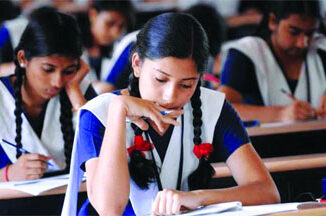
    New Delhi (TIP)- In the highest-ever allocation for the Department of School Education and Literacy, the government has allotted more than Rs 73,000 crore for school education in the interim Budget for 2024-25 announced on Thursday. The allocation has increased to Rs 73,008.10 crore from Revised Estimates (RE) of Rs 72,473.80 crore in the previous fiscal. The government had allocated Rs 68,804.85 crore to the department last year. The budget for PM SHRI, a Ministry of Education (MoE) scheme which seeks to upgrade existing government schools to model schools, has risen from Rs 2,800 crore in 2023-24 (RE) to Rs 6,050 crore in 2024-25 — an increase of Rs 3,250 crore.
    “The government is committed to empower Amrit Peedhi, the Yuva. Our prosperity depends on adequately equipping and empowering the youth. The National Education Policy 2020 is ushering in transformational reforms. PM Schools for Rising India (PM SHRI) are delivering quality teaching, and nurturing holistic and well-rounded individuals,” Union Finance Minister Nirmala Sitharaman said while presenting the interim Budget in the Lok Sabha. The outlay for all important schemes, such as the Samagra Shiksha Abhiyan, Kendriya Vidyalayas and Navodaya Vidyalayas has seen an increase this year.
    According to the MoE, this is the highest-ever budget outlay for school education.
    “The Budget allocation for the FY 2024-25 of Rs 73,498 crore is the highest-ever for the Department of School Education and Literacy,” the MoE said in a statement.

  • Big boost for auto sector PLI as FY25 allocation hiked to Rs 3,500 crore

    Big boost for auto sector PLI as FY25 allocation hiked to Rs 3,500 crore

    New Delhi (TIP)- The government on Thursday, Feb 1, announced an over seven-fold increase in allocation for the automotive industry’s production-linked incentive scheme for 2024-25 to Rs 3,500 crore, the interim budget documents showed. According to the Expenditure Budget, a sum of Rs 3,500 crore has been earmarked towards the Production Linked Incentive (PLI) scheme for automobiles and auto components in the financial year beginning March, up from a revised estimate of Rs 483.77 crore in the current fiscal. Additionally, the budget for the PLI scheme for advanced chemistry cell and battery storage has been hiked from Rs 12 crore to Rs 250 crore in 2024-25. The Ministry of Heavy Industries recently extended the tenure of the PLI scheme for automobile and auto components by one year, with incentives now applicable for five consecutive financial years starting 2023-24.
    The Union Cabinet had approved the PLI-Auto scheme on September 15, 2021 with a budgetary outlay of Rs 25,938 crore for a period of 5 years (FY2022-23 to FY2026-27). The PLI-Auto scheme aims to boost manufacturing of Advanced Automotive Technology (AAT) products, help facilitate and promote deep localization for AAT products and enable creation of domestic as well as global supply chain.

  • Agriculture ministry gets Rs 1.27 lakh cr

    Agriculture ministry gets Rs 1.27 lakh cr

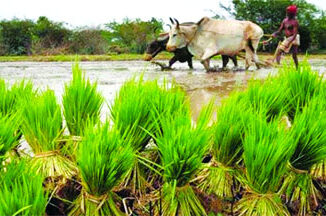
    New Delhi (TIP) – The government has allocated Rs 1.27 lakh crore budget for the Ministry of Agriculture for 2024-25, marginally higher than the current fiscal.
    According to the budget document, the agriculture ministry has been allocated Rs 1,27,469.88 crore for 2024-25 financial year, of which the Department of Agriculture will get Rs 1,17,528.79 crore while the Department of Agricultural Research and Education (DARE) Rs 9,941.09 crore.
    As per the revised estimates of the current fiscal, the department of agriculture has been allocated Rs 1,16,788.96 crore while the DARE Rs 9,876.60 crore.
    The allocation for flagship PM-KISAN scheme under the department of agriculture remains unchanged for next fiscal at Rs 60,000 crore. Under this scheme, the government provides Rs 6,000 per year to farmers in three equal instalments.
    According to the budget papers, the Ministry of Consumer Affairs, Food & Public Distribution has been allocated Rs 2.13 lakh crore for the next fiscal year, lower than the 2023-24 allocation. Under this ministry, the allocation for the department of consumer affairs has been earmarked at Rs 303.62 crore for 2024-25 from Rs 309.26 crore in the current year.
    The Department of Food and Public Distribution has been earmarked Rs 2,13,019.75 crore as against Rs 2,21,924.64 crore in the current 2023-24 fiscal. This department has been tasked to provide free foodgrains to over 80 crore people through ration shops. The Ministry of Chemicals and Fertilizers has been allocated Rs 1.68 lakh crore for 2024-25 fiscal.
    Under this ministry, the allocation for the department of fertilisers has been reduced to Rs 1,64,150.81 crore for the upcoming financial year from Rs 1,88,947.29 crore in the current fiscal. The department of chemicals and petrochemicals has been earmarked Rs 139.05 crore next fiscal as against Rs 572.63 crore in the current financial year.
    However, the allocation for the department of pharmaceuticals has been enhanced to Rs 4,089.95 crore from Rs 2,697.95 crore in the current fiscal.
    The Ministry of Cooperation, headed by Home Minister Amit Shah, has been allocated Rs 1,183.39 crore for 2024-25 from Rs 747.84 crore in FY24.
    As per the document, the Ministry of Fisheries, Animal Husbandry and Dairying has been earmarked Rs 7,105.74 crore for the next fiscal.
    Out of this, the department of fisheries’ allocation has been increased to Rs 2,584.50 crore in the next fiscal from Rs 1,701 crore in the current 2023-24 fiscal. The department of animal husbandry and dairying has been allocated Rs 4,521.24 crore in 2024-25 from Rs 3,913.93 crore in the current fiscal. The allocation for the Ministry of Food Processing Industries has been slightly raised to Rs 3,290 crore next fiscal from Rs 2,911.95 crore in the current fiscal.

  • INTERIM BUDGET 2024-25 : Rs 6.21 lakh cr set aside for defence budget for 2024-25; capital outlay pegged at Rs 1.72 lakh cr

    INTERIM BUDGET 2024-25 : Rs 6.21 lakh cr set aside for defence budget for 2024-25; capital outlay pegged at Rs 1.72 lakh cr

    New Delhi (TIP)- The defence budget was on Thursday, February 1, increased to Rs 6.21 lakh crore for 2024-25 in a modest hike of 4.72 per cent from last year’s allocation of Rs 5.25 lakh crore amid India’s continuing border row with China in eastern Ladakh as well as concerns over evolving security situation in the strategic waterways.
    In the interim Union budget, Finance Minister Nirmala Sitharaman also announced plans to roll out an ambitious scheme for “deep-tech” technologies in the military domain.
    A total of Rs 1.72 lakh crore was set aside to the military for capital expenditure that largely includes purchasing new weapons, aircraft, warships and other military hardware.
    For 2023-24, the budgetary allocation for capital outlay was Rs 1.62 lakh crore while the revised estimates put the amount at Rs 1.57 lakh crore.
    The defence ministry said, “the announcement regarding a rupees one lakh crore corpus for deep-tech for long term loan to tech-savvy youth/companies and the tax advantage to the start-ups will give further impetus to innovation in the defence sector.” The allocation for capital expenditure for 2024-25 in the defence budget is 20.33 per cent higher than the actual expenditure of 2022-23 and 9.40 per cent more than the revised estimate of 2023-24.
    “In the current geopolitical scenario and with the twin objective of promoting self-reliance and exports, the defence budget has touched Rs 6,21,540 crore in the financial year 2024-25,” the defence ministry said.
    “This comes out to be 13.04 per cent of the total Union budget,” it added.
    The total revenue expenditure has been pegged at Rs 4,39,300 crore that included Rs 1,41,205 crore for defence pensions, Rs 2,82,772 crore for defence services and Rs 15,322 crore for the Ministry of Defence (Civil).
    A total of Rs 6,500 crore has been earmarked to strengthen border infrastructure while Rs 7,651 crore was set aside for the Indian Coast Guard.
    The allocation to the DRDO has been pegged at Rs 23,855 crore.
    On the overall outlay, the ministry said the allocation is in line with the Long Term Integrated Perspective Plan (LTIPP) of the three services that aims to fill the critical capability gaps by implementing some big ticket acquisitions.
    The enhanced budgetary allocation will facilitate in equipping the Armed Forces with state-of-the-art niche technology lethal weapons, fighter aircraft, ships, platforms, unmanned aerial vehicles and drones, it said.
    It said the planned modernisation of the existing Su-30 fighter fleet along with additional procurement of aircraft, acquisition of advanced engines for existing MiG-29 jets, acquisition of transport aircraft C-295 and missile systems will be funded out of the budget.
    Apart from this, to take the initiative of ‘Make in India’ further, the Light Combat Aircraft MK’“I IOC/FOC configuration will be additionally funded to ensure state-of-the-art technology in domestic production.
    The Indian Navy’s major projects such as acquisition of deck-based fighter aircraft, submarines, next generation survey vessels will all materialise through this allocation, the ministry said.
    Dr Laxman Kumar Behera, Associate Professor at Special Centre for National Security Studies at the Jawaharlal Nehru University described the overall allocation under the defence budget as modest which is reflective of the government’s priorities for the military.
    “The allocations did not show any lack of commitment to the armed forces,” he told PTI.
    Dr Behera also described as a “healthy sign” the increase of Rs 10,000 crore in the outlay under capital expenditure.
    In the capital outlay for defence services, Rs 40,777 crore has been set aside for aircraft and aero engines while an amount of Rs 62,343 crore was allocated for “other equipment”.
    An outlay of Rs 23,800 crore has been made for naval fleet and Rs 6,830 crore for naval dockyard projects.
    The allocation on account of defence pensions is Rs 1,41,205 crore which is 2.17 per cent higher than the outlay made during 2023-24.
    In the budget for 2023-24, the capital outlay for the Indian Air Force was the highest at Rs 57,137.09 crore that included Rs 15,721 crore for procurement of aircraft and aero engines and Rs 36,223.13 crore for other equipment.
    The revenue expenditure for the Army has been pegged at Rs 1,92,680 crore for 2024-25 while the Navy and the Indian Air Force have been allocated Rs 32,778 crore and Rs 46,223 crore respectively.
    On the allocation for infrastructure projects, the ministry said the projects such as development of Nyoma air field in Ladakh at an altitude of 13,700 feet, 4.1 km strategically important Shinku La tunnel in Himachal Pradesh, Nechiphu tunnel in Arunachal Pradesh and many other projects will be funded out of this allocation. Source: PTI

  • Govt allocates Rs 1,300 cr to procure e-buses, Rs 24,931 cr for metro projects

    Govt allocates Rs 1,300 cr to procure e-buses, Rs 24,931 cr for metro projects

    New Delhi (TIP)- Prioritising the urban public transport, the government proposed to allocate Rs 1,300 crore to procure electric buses and Rs 24,931 crore in the interim Budget to fund various metro projects in the country.
    There is a 7.57 per cent increase in funds for the mass rapid transit system and metro projects in comparison to the last year’s allocation of Rs 23,175 crore. In the interim Budget presented by Union Finance Minister Nirmala Sitharaman, Rs 26,170 crore has been set aside for the Pradhan Mantri Awas Yojana (Urban) — an increase of 4.3 per cent.
    The Prime Minister Street Vendor’s AtmaNirbhar Nidhi (PM SVANidhi), a micro-credit scheme that provides collateral-free working capital loans of up to Rs 50,000 to street vendors, has been allocated Rs 326 crore against Rs 468 crore in the last Union Budget.
    The Smart Cities Mission received Rs 2,400 crore in the interim Budget while it had been allocated Rs 8,000 crore in the 2023-24 General Budget. The period of the mission is scheduled to end in June this year.
    The Swachh Bharat Mission, another flagship programme of the Modi government, has been given Rs 5,000 crore.
    The government has proposed to allocate Rs 1,300 crore to procure electric buses under the PM-eBus Sewa scheme. Under the scheme, 10,000 electric buses will be provided to 169 cities under the public-private partnership model.
    Last month, Union Housing and Urban Affairs Minister Hardeep Singh Puri had said the government has floated tenders for procuring e-buses under the scheme. The scheme, which will continue till 2037, will have an outlay of Rs 57,613 crore, of which Rs 20,000 crore will be provided by the Centre and the rest will be borne by the states.
    While presenting the interim Budget, Sitharaman said that rapid urbanisation is taking place in the country, asserting that metro rail and NaMo Bharat trains can be catalysts for the required urban transformation.
    She said expansion of these systems will be supported in large cities focusing on transit-oriented development.
    In October last year, Prime Minister Narendra Modi flagged off the country’s first Regional Rapid Transit System (RRTS). It was named NaMo Bharat train. “We have a fast-expanding middle class and rapid urbanisation is taking place,” Sitharaman said.
    According to the Union Ministry of Housing and Urban Affairs, one crore passengers ride metro systems per day in the country.

  • At 56 minutes, Sitharaman’s shortest budget speech ever

    New Delhi (TIP): Finance Minister Nirmala Sitharaman on Thursday, Feb 1, presented her sixth consecutive budget with a speech lasting 56 minutes, her shortest-ever.
    Sitharaman, who holds the distinction of delivering the longest budget speech at 2.40 hours in 2020, was cheered at regular intervals by the treasury benches — her remarks on the presentation of the full budget by “our government” in July receiving the loudest applause.
    Opposition members listened to Sitharaman’s budget speech with rapt attention, barring some voices of disapproval to the minister’s reference to her government returning to power after the Lok Sabha elections.
    Earlier, BJP members raised slogans of Bharat Mata ki Jai, Jai Shri Ram, Jai Siya Ram as Prime Minister Narendra Modi entered the Lok Sabha chamber and took his seat a few minutes before 11 am. At 56 minutes, it was Sitharaman’s shortest budget speech. She also holds the distinction of delivering the longest budget speech at two hours and forty minutes in 2020.
    In 2019, as India’s first full-time woman finance minister, Sitharaman’s budget speech had lasted for two hours and 17 minutes. In 2021, her speech lasted for one hour and 50 minutes, followed by 92 minutes in 2022 and 87 minutes in 2023.
    Sitharaman’s budget speech found no mention of Tamil poets and thinkers unlike previous occasions, but she referred to Prime Minister Modi at least eight times and quoted from his speeches. The public galleries saw thin attendance with a few Rajya Sabha members occupying seats in Gallery 2, while relatives of Finance Minister Sitharaman – Krishnamurthy Lakshminarayan and Vidya Lakshminarayan – and her daughter Vangmayi Parakala were seated in the first row of Gallery 3. Sitharaman, who was dressed in a turquoise-coloured embroidered Kantha silk saree, Ministers of State for Finance Pankaj Chaudhary and Bhagwat Karad, and top officers from the Finance Ministry called on President Droupadi Murmu before presenting the Budget.
    The President gave Sitharaman a spoonful of curd and sugar and extended her best wishes for the presentation of the Union Budget.

  • Social Justice ministry allocated Rs 14,225 crore in interim Budget

    New Delhi (TIP): The Social Justice and Empowerment Ministry has been allocated Rs 14,225.47 crore in the interim Budget for 2024-25, an increase of 28.4 per cent over Rs 11,078.33 crore in the Budget (revised estimates) for 2023-24. The Department of Social Justice and Empowerment has been allocated Rs 13,000 crore in 2024-25 while the Department of Empowerment of Persons with Disabilities got Rs 1,225.27 crore in the interim Budget presented by Finance Minister Nirmala Sitharaman in Parliament on Thursday, Feb 1.
    In 2023-24, the revised estimate of the Department of Social Justice and Empowerment was Rs 9,853.32 crore and the Department of Empowerment of Persons with Disabilities was Rs 1,225.01 crore.
    Under the Department of Empowerment of Persons with Disabilities, the National Program for the Welfare of Persons with Disabilities received an allocation of Rs 615 crore.Under the Department of Social Justice and Empowerment, the umbrella scheme for development of scheduled castes was allocated Rs 9,559.98 crore while the umbrella programme for development of other vulnerable groups was allocated Rs 2,150 crore.
    The National Commission for Scheduled Castes, National Commission for Backward Classes and National Commission for Safai Karamcharis have been allocated a total of Rs 7,175 crore.