Tag: Apple News

  • The fading patriarch: On Congress and Amarinder Singh

    The Congress has set in motion a series of events in Punjab that it can no longer control

    Former Punjab Chief Minister Amarinder Singh has announced plans to launch a new political outfit and explore an arrangement with the BJP, ahead of next year’s Assembly election in the State. The BJP is warming up to the idea. The proposed new party and its partnership with the BJP is an act of expediency and opportunism of high order by both sides. The Congress had forced Mr. Singh to quit as the Chief Minister in September, bringing an abrupt end to his role at the helm of party affairs in the State. The reasons for his removal were not just, but his decision to quit the party that he has been associated with for four decades says something unflattering about Mr. Singh. That he could think of joining hands with the BJP without batting an eyelid also shows that there is little more than a sense of entitlement in his politics. The Captain has been a central character in Congress politics, particularly in the years following the rise of the BJP in 2014. He led the party to victory in Punjab in 2017, and in 2019, the Congress’s performance in the Lok Sabha polls in the State was outstanding. After all that, Mr. Singh has chosen to cap his long political career by sleeping with the enemy.

    The BJP is a marginal player in Punjab, and the ongoing controversy over three farm laws has further alienated it from the entrenched farming communities in the State. The debate on the merits of the farm laws apart, the BJP also questioned the patriotism of the protestors. The party is now hoping for an outreach to the Sikh farmers through a partnership with the Captain. Whether it can offer any compromise that the farmers might find palatable remains to be seen. The Congress high command cannot absolve itself of the mess in the State. It decided to unsettle its own government for no apparent reason, and elevated a turncoat to lead its State unit. The party appointed a Dalit Sikh as Chief Minister in place of Mr. Singh, which is a bold experiment that is fraught with fresh problems. If it can mobilize public opinion in favor of its social justice politics, the Congress can remain in the reckoning. The Akali Dal, having parted with its long-term ally, the BJP, is now hoping to gain from the confusion arising out of the crisis in the Congress. The Congress has set in motion a series of events that it is no longer in control of. It also appears incapable of recalibrating its strategy for the State. With an untested Chief Minister and a conceited party chief in command, the party finds itself in an unenviable position in Punjab. The desertion by Mr. Singh makes its prospects considerably worse. While it might be too late to keep the former Chief Minister in the fold, the least the Congress high command can do is to strengthen the hands of Chief Minister Charanjit Singh Channi and not give the impression that he is keeping the seat warm for the maverick Punjab unit chief of the party, Navjot Singh Sidhu.

    (The Hindu)

  • Farmers need assured price for sustenance

    Farmers need assured price for sustenance

    By Devinder Sharma

    “There is enough evidence to show how free markets have devastated farming across the globe. This has to change. It can only happen when we begin to treat farmers not simply as the primary producer but also as wealth creators and ensure their contribution in wealth generation is adequately compensated. To sustain billions of farm livelihoods across the globe, and to celebrate the role farmers play in wealth creation, a beginning has to be made by guaranteeing an assured and profitable price for farmers.”

    Though India is the second largest producer in the world of essential foods like wheat, rice, fruits, vegetables and crops like cotton and groundnut and the largest producer of milk, jute and pulses, the long strides taken by the farmers, however, have not translated into higher incomes. Growth, in this case, has not led to prosperity on the farm. The invisible hand that Adam Smith talked about has actually failed to provide living incomes for farmers, not only in India, but across the globe.

    We all know it by now. Agriculture was the savior during the gloomy days of the pandemic. Not only that, an individual household got its regular supply of food during the lockdown, and those who could not afford were supplied with free rations, but agriculture also kept the wheels of economy moving. At a time when the economy had slipped by 23.9 per cent in the first quarter of the 2020 financial year, agriculture was the only bright spot, registering a gross value added (GVA) growth of 3.4 per cent. All through the year, agriculture provided a solid foundation. Despite the Covid-19 disruptions, and at a time when all other sectors of the economy were struggling, desperately counting the emerging green shoots, the country achieved a record foodgrain production of 308.65 million tons. The bumper harvest reaped in 2020-21 was higher by 11.15 million tons over what was achieved in the previous year. In addition, the country also produced 329.9 million tons of fruits, vegetables and aromatic and plantation crops, including spices: around 204 million tons of milk, and 36.10 million tons of oilseeds.

    Simply put, farmers produced economic wealth for the country. Not only during the pandemic, but what needs to be appreciated is that year after year, farmers have toiled hard to bring food to our table. From a stage when India was living in a ‘ship-to-mouth’ existence, and that was not too far distant in the mid-1960s, the role Indian farmers have played in turning the country self-sufficient in food is widely recognized. Agriculture has taken a quantum jump, increasing food production six times in seven decades, between 1950-51 and 2020-21.

    A vibrant agriculture is what sustains a growing economy. But to believe that economic growth alone can address issues of hunger and malnutrition is nothing short of delusion. As the UN Food and Agriculture Organization (FAO) itself acknowledges that ‘economic growth is necessary but not sufficient to accelerate reduction in hunger and malnutrition’, a study published in the scientific journal The Lancet shows a reduction in malnutrition by a maximum of 6 per cent even if the economic growth soars by 10 per cent. On the contrary, a well-fed nation builds up an efficient and productive manpower which is required to attain a higher economic growth.

    Since 1950-51, if measured in terms of population growth, four times more Indians have been added. From 359 million in 1950-51, the country’s population has multiplied roughly four times to 1.4 billion. Agriculture not only kept pace, defying the predictions of the Malthusian catastrophe, but has also produced an unmanageable surplus. Not only producing enough to feed the nation, the rise in the per capita availability of foodgrains, fruits, vegetables and milk also helped in meeting the challenges of malnutrition and hidden hunger. That hunger still persists in some parts of the country is not because of any shortfall in food production but is the outcome of the twin problems of access and distribution.

    If growth and prosperity are the central theme of Adam Smith’s seminal work, an inquiry into the nature and cause of the Wealth of Nations, it has to be accepted that the remarkable transition in Indian agriculture is what has essentially not only added but led to the wealth of the nation. Though India is the world’s second largest producer of essential foods like wheat, rice, fruits, vegetables and crops like cotton and groundnut and the largest producer of milk, jute and pulses, the long strides taken by the farmers to shatter all records, however, have not translated into higher incomes. Growth, in this case, has not led to prosperity on the farm.

    The invisible hand that Adam Smith talked about has actually failed to provide living incomes for farmers, not only in India, but across the globe. One doesn’t need to apply sophisticated economic models to find out how farm incomes have actually been squeezed over the years, and how free markets have sucked income from farmers. Instead, as the citation for this year’s Nobel Prize in Economics admits: “Conclusions about cause and effect can be drawn from natural experiments.” Agreeing, I feel there is no need for economists to hold econometrics studies when conclusions can be drawn easily from the available evidences.

    The FAO has estimated India’s gross value of crop production in 2018 (report released in March 2021) at

    $289,802,032 million, and that of gross food production at $400,722,025 million. When it comes to the gross value of agricultural production at current prices, India stands second in the world, next to China, with a gross value of $418,541,343 million. Now before you get lost in the maze of production statistics, what is important to ascertain here is the enormous economic wealth that farmers produce and eventually what the agriculture sector generates. In other words, farmers too are wealth creators.

    It, therefore, requires a change in economic thinking, which has traditionally banked on the assumption that only businesses — small and big — are wealth creators. The obscene wealth inequality that prevails is the result of this outdated economic thinking. Otherwise, I see no reason why at a time when the gross value of agricultural production since 1999 has grown at an average annual rate of 8.25 per cent, farmers should be at the bottom of the ladder. In America, the share of a farmer in every food dollar in 2018 has plummeted to just eight per cent. In India, the latest Situation Assessment Survey for agricultural households computes income from crop cultivation at only Rs 27 per day.

    There is enough evidence to show how free markets have devastated farming across the globe. This has to change. It can only happen when we begin to treat farmers not simply as the primary producer but also as wealth creators and ensure their contribution in wealth generationis adequately compensated. To sustain billions of farm livelihoods across the globe, and to celebrate the role farmers play in wealth creation, a beginning has to be made by guaranteeing an assured and profitable price for farmers.

    (The author is a food &agriculture specialist)

  • In the cross hairs, civilians and Kashmiri harmony

    In the cross hairs, civilians and Kashmiri harmony

    By Radha Kumar

    “The Kashmiri Pandit tragedy has continued for 30 years now, and like all compounded tragedies requires a range of actions, from security to justice to reconciliation. Beginning with security, which is the first requirement to enable justice and reconciliation to follow, it is a mistake to imagine that gated enclaves alone will provide it, or even that stepped-up counter-insurgency operations will minimize the risk. Each measure is useful if accompanied by community support, but neither is a solution to the security dilemma by itself.”

    Over the past two weeks, more than 11 civilians and nine Army troops have been killed by militants in the Kashmir Valley. Most of the targeted civilians have been Hindus, though there have also been Muslims, and a Sikh. The Hindus killed include Kashmiri Pandits and migrant labor.

    Wave of fear, insecurity : The immediate reaction to these killings has been a flight of Pandits who had returned to the Valley under the 2006 Prime Minister’s programme for the return and rehabilitation of migrants, which offered jobs in the Valley to Pandit teachers. Pandit organizations say that as many as a third of the returnees have left; even those of the 800 families that stayed through the insurgency years have begun to leave. Though Kashmiri political parties and civil society, as well as Lieutenant-Governor Manoj Sinha’s administration, have pleaded with them to stay, their pleas are unconvincing given the very real insecurity created by the killings.

    The plight of migrant labor is equally grave. Most are attempting to leave the Valley and return to their home States. The administration has ordered that those who are not able to immediately return be sheltered in police stations and guarded camps. In other words, like refugees. Whether they will then be aided to return to their homes remains to be seen; likely they will.

    These two groups are not alone in wishing to flee. A fresh wave of fear has gripped the Valley, with most residents fearing they may be caught between the militants and the administration. Allegedly, over 700 people have been taken into detention by the police, under suspicion of supporting militancy. Meantime, according to intelligence agencies, potential militant targets include religious leaders, punches and the media.

    It was widely anticipated that Pakistani armed groups would be emboldened to revive cross-border infiltration following the Taliban’s takeover in Afghanistan. Now it seems that their strategy repeats elements of the insurgency of the 1990s. As happened then, the insurgency was prefigured by attacks on Pandits who were seen by Islamist militants as an arm of India because they were Hindus, and Muslims who worked in the State administration or central Indian agencies such as Door darshan.

    Attacks and the aim : The attacks were intended to both communalize the Valley and paralyze its administration, and over time succeeded in doing so, albeit only partially. The Prime Minister Atal Bihari Vajpayee’s ceasefire negotiations with cross-border armed groups in 2000 were shattered by the killing of over 100 Bihari laborers, but the years of peace building that followed, from 2002-2014, restored a large degree of administration and created conditions for the return of Pandits — sadly at far too gradual a pace — and of migrant labor.

    Whether cross-border and local militant groups succeed in once again communalizing the Valley is debatable. Much depends on the policy the Union administration adopts in response.

    There are two quite separate issues involved: one, reassuring the minorities in Kashmir as well as the wider public of the Valley; two, a rethink on counter-insurgency strategy, including its cross-border tentacles.

    Some reassurance : Hearteningly, every single opinion group in Kashmir has condemned the killings. Mosques have broadcast their criticism. Kashmiri political parties have voiced their opposition to such militancy, as have political leaders, including the Hurriyat and Mirwaiz Umar Farooq. Civil society groups have issued statements of protest. Local community leaders and neighbors have visited Pandit homes to offer aid and support. This wave at the ground level can provide a strong base for reassurance, if encouraged.

    Encouragement can begin with the Lieutenant-Governor. Thus far, Mr. Sinha’s administration does not appear to have consulted either the Kashmiri Pandit organizations, or the various groups that have condemned the killings, on which steps can be taken to restore a degree of confidence. This is surprising, given that these groups, added together, comprise a formidable cross-section of public opinion, and with their support, militancy can once again be socially marginalized, as it was during the peace-building years. From available information, it appears that the bulk of the recent civilian killings have been carried out by what the Army calls ‘hybrid militants’, because they are locally recruited and trained, have regular jobs and are part-time militants using basic weapons such as country pistols. The implications are that the field of militancy has grown more dispersed, with wider public support, despite counter-insurgency successes in degrading large armed groups such as the Lashkar-e-Taiba and the Jaish-e-Mohamed. In this context, any opportunity to marginalize militancy is vital.

    Setback for Kashmiri Pandits : Many have begun asking whether Kashmiri Pandits will ever be able to return to the Valley, as the Narendra Modi administration had promised in August 2019. There is no doubt that the recent civilian killings have been a major setback to prospects of return. It is also the case that Kashmiri Pandit organizations have increasingly complained of administrative neglect on returns over the past year. A recurring point that is made by some of them is that the administration, while focusing on returns, needs to simultaneously pay attention to securing Pandit families that never left. Their condition has worsened as their numbers have shrunk; though less covered by the media, the same problem has begun to affect the Sikh minority too, whose numbers have shrunk over the past decade-plus.

    The Kashmiri Pandit tragedy has continued for 30 years now, and like all compounded tragedies requires a range of actions, from security to justice to reconciliation. Beginning with security, which is the first requirement to enable justice and reconciliation to follow, it is a mistake to imagine that gated enclaves alone will provide it, or even that stepped-up counter-insurgency operations will minimize the risk. Each measure is useful if accompanied by community support, but neither is a solution to the security dilemma by itself. True, targeted killings will only cease when insurgency does. But peace-making combined with counter-insurgency has proved more efficient in ending insurgency in democratic countries than counter-insurgency alone, in our own experience as well as across the world. Thus far, the Union administration has not held out any olive branches; on the contrary, its implementation of the August 2019 decisions has added one cause for resentment after another, the latest being the multiple use of Article 311(2) to dismiss government employees without an enquiry or hearing. A policy for Pandit property recovery that had not been thought through did not help either; apparently it has now been corrected. Political science and sociology both tell us that an insecure majority is unlikely to protect vulnerable minorities; it is focused on its own survival. The arrest of over 700 people in the aftermath of the recent civilian killings has added to the majority’s sense of insecurity, because it raises questions about why police intelligence has not narrowed the field of suspects as should, surely, be professionally required.

    Approach to Pakistan : The Narendra Modi administration appears to have adopted a multi-pronged approach to Pakistan recently, beginning with a ceasefire and extending to an invitation to the Pakistani National Security Adviser for a regional meeting on Afghanistan, while giving the Army a free hand on cross-border infiltration. Why then is it not adopting a similarly multi-pronged approach in the Valley, where civil and human rights remain severely restricted and the administration lacks the transparency that oversight and grievance-redress commissions provided? Without overall civil and human rights, how can minority rights be protected or minority returns be encouraged?

    (The author is a writer and policy analyst)

  • Chinks in Yogi’s armor ahead of UP polls

    Chinks in Yogi’s armor ahead of UP polls

    By Arati R Jerath

    “For three consecutive elections since 2014, the BJP has managed to prove that Muslims can be made irrelevant to UP’s electoral paradigm if Hindus rise above caste differences and vote as a bloc. It stitched together a formidable coalition of Hindu social groups consisting of upper castes, non-Yadav backward castes and non-Jatav Dalits to win sweeping victories in the Lok Sabha polls of 2014 and 2019 and the Assembly polls of 2017.”

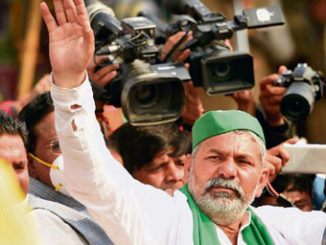
    Rakesh Tikait, who hails from Muzaffarnagar and is the son of the late founder of the BKU, Mahendra Singh Tikait, is at the forefront of the farmers’ agitation. He has managed to mend fences between his community and the Muslims of western UP and in panchayat after mahapanchayat, farmers have vowed to defeat the BJP in 2022.

    If there were any doubts about the BJP strategy for next year’s UP Assembly polls, RSS chief Mohan Bhagwat cleared the air in his annual Dasehra address. He set the stage for a polarized campaign by stoking Hindu insecurities about the minorities and flagging communally sensitive issues. He highlighted two measures which are likely to form prominent themes of the ground-level campaign. One is the compilation of a national register of citizens. The other is a population control law, which is already in circulation in UP in the form of a draft Bill. Bhagwat said that both are necessary to check the “vast differences in growth rates of different religious groups, infiltration and conversion resulting in religious imbalance of the population ratio, especially in border areas.”

    These are dog whistles to unite Hindus by invoking fears of being outnumbered by “others”. In the context of UP, the “others” are Muslims who constitute an estimated 19.3 per cent of the state population and can influence the electoral outcomes in roughly 130 of the 403 Assembly constituencies. It is hardly surprising that Bhagwat used his Dasehra address for a political speech, laying out a majoritarian agenda for the UP polls. A tough battle lies ahead, with the BJP fighting to win a second term amid widespread public disaffection which has given rise to fears that its carefully crafted rainbow caste coalition is unravelling.Yet, it’s an election the BJP must win at all costs, not just because of UP’s clout in terms of the Lok Sabha numbers but also because the Sangh Parivar hopes to replicate its successful Hindutva experiment in Gujarat in this populous heartland state which is home to important Islamic centers of theology and has large, concentrated pockets of Muslims.

    For three consecutive elections since 2014, the BJP has managed to prove that Muslims can be made irrelevant to UP’s electoral paradigm if Hindus rise above caste differences and vote as a bloc. It stitched together a formidable coalition of Hindu social groups consisting of upper castes, non-Yadav backward castes and non-Jatav Dalits to win sweeping victories in the Lok Sabha polls of 2014 and 2019 and the Assembly polls of 2017.

    Much water has flowed under the bridge since 2019, giving rise to deepening concern that this winning Hindu alliance may be coming apart as the 2022 polls approach. Four groups are a major source of worry for the BJP-RSS. One is the lower backward castes. They were a new catch in 2014 and have been a pillar of the BJP’s support base in UP since. Today, they seem to be drifting away for a variety of reasons. For instance, this section has been the worst affected by the increasing joblessness in a Covid-afflicted listless economy. It has also been hit the hardest by the pandemic which raged through UP villages that were ill equipped to handle medical emergencies.

    Pictures of bodies being washed up on the banks of the Ganga during the second wave continue to haunt as do photographs of mass cremations in open fields and on city pavements because overflowing crematoriums were hard pressed to offer a dignified farewell to the dead. A second worry is the Jats whose unstinted support since the 2013 communal violence in Muzaffarnagar has ensured the BJP’s domination of western UP. This support appears to be wavering because of the controversial farm laws. Rakesh Tikait, who hails from Muzaffarnagar and is the son of the late founder of the Bharatiya Kisan Union, Mahendra Singh Tikait, is at the forefront of the farmers’ agitation. He has managed to mend fences between his community and the Muslims of western UP and in panchayat after mahapanchayat, farmers have vowed to defeat the BJP in 2022.

    The recent tragedy at Lakhimpur Kheri, where four Jat Sikh farmers were mowed down by a vehicle belonging to union minister Ajay Mishra’s son has only heightened tensions between the farming community and the BJP.

    The alienation of non-Jatav Dalit groups is a third factor to contend with. Communities like the Passis and Koris have been committed voters, but there are signs that they too are doing a rethink because of a spurt in clashes and tensions between Scheduled Caste groups and UP Chief Minister Yogi Adityanath’s Thakur clan.

    In fact, the Yogi administration is seen as a return to Thakurvad. A Thakur-packed police force running riot in the state amid frequent reports of fake encounters and harassment of ordinary businessmen has served to reaffirm this perception. And, Yogi has done little to dispel it by continuing to protect Thakur police officers accused of various misdeeds. From this flows the fourth reason for anxiety: a perceptible disenchantment among Brahmins who have been core supporters of the BJP ever since the Ram Janmabhoomi movement was launched in the late 1980s. Although community members still dominate the administration, the free run given to a police force dominated by Thakurs has upset Brahmins used to controlling all the levers of power.

    The clouds darkening the electoral landscape leave the BJP with little choice but to follow Bhagwat’s prescription for a polarized campaign. The writing was on the wall when Yogi Adityanath won the tussle with the Modi-Shah duo some months ago and stayed on as UP CM. It is no secret that the top brass in Delhi wanted him out, or at least have his wings clipped by the induction of a former bureaucrat loyal to Modi.

    Yogi triumphed thanks to the backing of the RSS which had decided as early as then that Hindutva would form the main campaign plank in UP. And who better to do the job than a saffron-clad monk whose claim to being a Hindu icon almost rivals that of Modi?

    It is significant that after Bhagwat’s prod, Modi wove Hindu imagery into his speech at Kushinagar while inaugurating the first international airport in the region. The Opposition will have to think out of the box to counter what promises to be a high-pitched divisive campaign.

    (The author is a Political Commentator)

  • Federal Regulators Say Benefits Outweigh Key Risks in Vaccine for 5- to 11-Year-Olds

    Federal Regulators Say Benefits Outweigh Key Risks in Vaccine for 5- to 11-Year-Olds

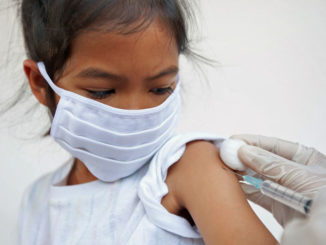
    WASHINGTON (TIP): Federal regulators weighed in for the first time Friday on the safety and efficacy of a coronavirus vaccine for children 5 to 11, saying that the benefits of staving off Covid-19 with the Pfizer-BioNTech vaccine outweigh the risks of side effects in the age group, New York Times reported.

    The analysis came on the same day that Pfizer posted data showing that the vaccine had a 90.7 percent efficacy rate in preventing symptomatic Covid-19 in a clinical trial of 5- to 11-year-olds.

    The findings could add momentum for F.D.A. authorization of the pediatric dose on an emergency basis, perhaps as early as next week, opening up a long-awaited new phase of the nation’s vaccination campaign. The agency’s independent vaccine expert committee is set to vote Tuesday on whether to recommend authorization.

    In a briefing document posted on the F.D.A. website, the agency said it had balanced the dangers of hospitalization, death or other serious consequences from Covid-19 against the risk of side effects. That included myocarditis, a rare condition involving inflammation of the heart muscle that has been linked to the Pfizer-BioNTech and Moderna vaccines, especially among young men. “The overall analysis predicted that the numbers of clinically significant Covid-19-related outcomes prevented would clearly outweigh the numbers of vaccine-associated excess myocarditis cases,” regulators wrote. As is customary, the regulators took no stance on whether the new use of a vaccine should be authorized. If the F.D.A. rules in favor of authorization and the Centers for Disease Control and Prevention and its own panel of vaccine experts agree, the 28 million children in that age group could become eligible for shots in the first week of November. “There’s a lot of data to be encouraged by,” said Dr. Kathryn M. Edwards, a professor of pediatrics in the division of infectious diseases at Vanderbilt University School of Medicine. She said the results exceeded the protection offered by the best flu vaccine and could eventually lead to the easing of restrictions intended to prevent elementary school children from contracting the virus.

  • Trump announces launch of media company, social media site

    Trump announces launch of media company, social media site

    NEW YORK (TIP): Nine months after being expelled from social media for his role in inciting the January 6 Capitol insurrection, former President Donald Trump said on Wednesday, October 20, he’s launching a new media company with its own social media platform. Trump says his goal in launching the Trump Media & Technology Group and its ‘TRUTH Social’ app is to create a rival to the Big Tech companies that have shut him out and denied him the megaphone that was paramount to his national rise.

    “We live in a world where the Taliban has a huge presence on Twitter, yet your favorite American President has been silenced,” he said in a statement. “This is unacceptable.” In a release, the new venture announced it had been created through a merger with Digital World Acquisition Corp and said it seeks to become a publicly listed company.

    Trump has spoken about launching his own social media site ever since he was barred from Twitter and Facebook. An earlier effort to launch a blog on his existing website was abandoned after the page drew dismal views.

    In addition to the app, which is expected to soft-launch next month, with a nationwide rollout early next year, the company says it is planning a video-on-demand service that will feature entertainment programming, news and podcasts.

    (Agencies)

  • Indo-US relationship based on trust which is increasing: Ambassador Sandhu

    Indo-US relationship based on trust which is increasing: Ambassador Sandhu

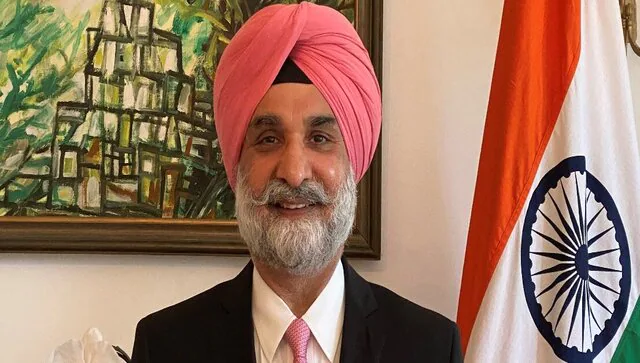
    WASHINGTON (TIP): India’s Ambassador to the US Taranjit Singh Sandhu has said that there is a very strong base between the Indo-US relationship which is of trust and that is increasing.

    Sandhu, during a reception he hosted at the India House for senior Congressional staffers, said that India and America not only have strong strategic and defense relations, but also a deep relationship in healthcare and pharma. “And that is going to deepen,” he said on Thursday, October 21.

    “Today, there is a very strong base between our bilateral relationship and that base is of trust. And that trust is increasing. And that’s very important in the number of partnerships which we share,” said Sandhu, who has been making special efforts with his Congressional outreach.

    As close aides of lawmakers both in the House and the Senate, Congressional staffers, a number of whom are of Indian-origin, play a key role in shaping the policies and legislative agenda of the US Congress.

    Many of them in the years to come climb up the ladder to even serve in presidential administration.

    India, Sandhu asserted, plays a significant role in affordable healthcare, affordable medicines and vaccines.

    “I’ll just give you one example. Six years ago, both the US and India collaborated for a vaccine. We partnered in bulk production of a vaccine for another virus called RotaVirus. That collaboration got the cost of a single dose down from USD 60 to USD 1. That is the kind of depth that is there,” he said.

    Reiterating that there is a huge potential between India and the US in the healthcare sector, Sandhu also referred to the cooperation in energy, climate change and renewables. Knowledge partnership and education sector is another key area of collaboration between the two countries, he said.

    “I know that all of you are involved in some way or another in our bilateral relationship. I’m only going to quote what President (Joe) Biden said in 2006 that this is going to be one of the most important bilateral relations. In fact, he said, the most important. I have only added one of the most important,” Sandhu said in his address to the senior Congressional staffers. As part of his engagement with Congress, a day earlier, the ambassador hosted the leadership of the Indian Caucus at India House.

    “Discussed deepening India-US relations incl, recent bilateral & QUAD Summits. Appreciate their strong support for India United States partnership (sic),” Sandhu said in a tweet.

    He had another “engaging conversation” at the US Capitol with Congressman Jason Crow, a member of the House Armed Services Committee on the multifaceted India-US relations, including in vaccines, climate change and emerging technologies. “Also discussed Quad partnership and other regional developments,” Sandhu said.

    The ambassador also had a substantive discussion with Senator Ben Ray Lujan on India-US partnership in health and vaccines; climate change and clean energy; education and research; Quad and deepening people-to-people ties.

    (Source: PTI)

  • ‘U.K.-India ties vital in coming decades’: U.K. Foreign Secretary Elizabeth Truss

    ‘U.K.-India ties vital in coming decades’: U.K. Foreign Secretary Elizabeth Truss

    NEW DELHI (TIP): Relation between the United Kingdom and India is vital over the coming decades, U.K. Foreign Secretary Elizabeth Truss said here on Friday, October 23. Ms. Truss who is on a three-day visit to India met External Affairs Minister S. Jaishankar and is scheduled to be a special guest at a ceremony to mark the visit of the U.K. Carrier Strike Group in Mumbai. “India is our great friend, an economic powerhouse and the world’s largest democracy. Our relationship will be vital over the coming decades,” said Ms. Truss after meeting Mr. Jaishankar where the two discussed closer collaboration. Ms. Truss said her visit will boost the partnership and pointed out technology and infrastructure, security and defense, and “building back after COVID” as the areas of collaboration between the two sides. “You are a fellow democracy; you believe in free enterprise and you believe in freedom. I think it’s very important that countries like ours work together on our shared plans for the future,” said Ms. Truss in her opening remarks in the meeting with Mr. Jaishankar.

    Ms. Truss and Mr. Jaishankar “welcomed the progress in delivering the Enhanced Trade Partnership” that was announced at the India-U.K. virtual summit held on May 4, said the Ministry of External Affairs in a statement after Friday’s meeting. Both ministers agreed on the need for launching FTA negotiations “at the earliest, with a focus on negotiating an interim agreement that can deliver quick gains to businesses in both India and the U.K.”.

    Ms. Truss’ visit comes in the backdrop of developments in Afghanistan after the departure of the U.S. and U.K. troops. There is a vocal section within the government of Prime Minister Boris Johnson that believes that the people of Afghanistan should not made to suffer while the world waits on the Taliban build an inclusive government in Kabul. “On Afghanistan, the need for full, safe and unhindered access for humanitarian assistance was discussed as also the need for Afghan territory not be used to threaten or attack any country or to shelter or train terrorists, or to plan or to finance terrorist attacks,” declared the press release issued by the MEA after the two ministers met.

    The visit provides an opportunity to both sides to lay the ground for the upcoming visit of Prime Minister Narendra Modi to Glasgow to attend the global climate summit.

    The Hindu reported earlier that PM Modi will travel to Glasgow on October 31. The COP26 summit has already drawn considerable attention as it will help create a blueprint of global climate action. The summit has also revealed deep divisions in the global community as Russia’s President Vladimir Putin and Chinese President Xi Jinping are not expected to attend it.

    The visit also marks a renewed focus of the U.K. on the Indo-Pacific region which is expected to receive greater maritime attention of London in the coming years.

    (Source: The Hindu)

  • PM Modi to visit Italy for G20: Focus on bilateral ties

    PM Modi to visit Italy for G20: Focus on bilateral ties

    NEW DELHI (TIP): Prime Minister Narendra Modi will visit Italy on October 30-31 for the G20 summit and, immediately later, he will visit the UK for the COP26 climate summit. The G20 summit to be held in Rome will be the first in-person meeting of this economic group ever since the pandemic broke out. The summit is important for India because it will join the new troika — the past, present and future chairs of the G20 summit. After Italy, Indonesia will organize the G20 summit and after that India will host the summit meeting of this group. Modi will attend several bilaterals but one meeting that is yet undecided is an audience with Pope Francis.

  • Peru miss penalty in 1-0 loss to Argentina

    Peru miss penalty in 1-0 loss to Argentina

    Peru missed a second-half penalty in a 1-0 loss to Argentina in Buenos Aires on Thursday,  Oct 14, delivering another blow to their hopes of qualifying for the 2022 World Cup. Trailing to a first-half goal from Lautaro Martinez, Peru had a golden opportunity to level the score when substitute Jefferson Farfan was brought down in the box 19 minutes into the second half as he attempted to round keeper Emiliano Martinez. However, Yoshimar Yotun’s penalty clipped the bar as the visitors fell to a seventh defeat in 12 qualifiers. “Those that take penalties are the great players and the rest is luck,” said Argentine goalkeeper Martinez. The win saw Lionel Scaloni’s side move on to 25 points, six behind leaders Brazil, who beat Uruguay 4-1. The top four qualify automatically for Qatar 2022 and the fifth-placed side goes into an inter-regional playoff. Argentina’s Christian Romero had a headed goal disallowed for offside after 10 minutes and Angel Di Maria missed two good chances while Peru’s Gianluca Lapadula squandered an excellent opportunity after skilfully chesting down a cross just metres from goal.

  • Raducanu withdraws from Kremlin Cup: Reports

    Raducanu withdraws from Kremlin Cup: Reports

    U.S. Open champion Emma Raducanu has pulled out of next week’s Kremlin Cup in Moscow following her second-round loss at the Indian Wells tournament, British media reported on Thursday, Oct 14. No immediate reason was given for the withdrawal. “Unfortunately, I’ve had to make a tournament schedule change and won’t be able to play Moscow this year but I hope to compete there and in front of the Russian fans next year,” Raducanu said.

    “I look forward to returning to the tour in the next couple of weeks.”

    Briton Raducanu, 18, lost to Belarus’ Aliaksandra Sasnovich in straight sets at Indian Wells last week in her first match since winning the U.S. Open title at Flushing Meadows. The world number 22 said she was disappointed with the defeat by Sasnovich but needed to “cut herself some slack”.

    “The experiences that I’m going through right now, even though I might not feel 100% amazing right now, I know they’re for the greater good… in the bigger picture, I’ll be thanking this moment,” Raducanu said.

    She is scheduled to play in events in Romania and Austria before the end of the season.

    Source: Reuters

  • Thomas & Uber cup: Asian giants make India suffer

    Already through to the quarterfinals, the Indian men’s badminton team tasted defeat at the hands of the formidable China in its last group match of the Thomas Cup, while the women’s team crashed out of the Uber Cup after losing to Japan in the quarterfinals here today.

    Only the doubles pair of Satwiksairaj Rankireddy and Chirag Shetty could manage a win in the men’s team championship tie as they beat He Ji Ting and Zhou Hao Dong 21-14 21-14 in a 41-minute contest.

    Kidambi Srikanth began the day for India with a 12-21 16-21 loss to Shi Yu Qi. Sameer Verma gave a tough fight before losing his singles match 21-14 9-21 22-24 to Lu Guang Ju as India trailed 1-2.The second doubles pair of MR Arjun and Dhruv Kapila went down fighting 24-26 19-21 to Liu Cheng and Wang Yi Lyu in 52 minutes. In the last singles match, Kiran George lost to Li Shi Feng 15-21 17-21.

  • India in history this Week- October 15 to October 21, 2021

    India in history this Week- October 15 to October 21, 2021

    15 OCTOBER

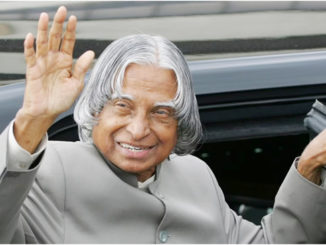
    1931       11th President of India A.K. P.J. Abdul Kalam was born.

    1932       The Tata Company airplane took its first flight. After the acquisition by the Government of India, this company was called Air India.

    1997       Arundhati Roy was selected for Britain’s most prestigious Booker Prize for her novel ‘The God of Small Things’.

    1949       The state of Tripura was included in India.

    1988       Ujwala Patil became the first Asian woman to travel the world through the sea.

    1998       India’s Fatima B was awarded the United Nations Award for the Eradication of Poverty.

    1686       The Mughal ruler Aurangzeb signed a peace deal with Bijapur.

    16 OCTOBER

    1861       The sale of federal postage stamps began.

    1948       India’s famous actress and Bharatanatyam dancer Hema Malini was born.

    1968       Bharatvanshi Hargovind Khurana was awarded the Nobel Prize in medicine for medicine and physiology.

    1959       National Women’s Education Council established.

    1978       Indian cricketer Kapil Dev made his Test debut against Faisalabad against Pakistan.

    2002       A gold and a bronze medalist at the 14th Asian Games took Sunita Rani of India to a medal after failing in the dopint test.

    2005       G-20 countries agree to reform the World Bank and IMF.

    17 OCTOBER

    1979       Mother Teresa was given the Nobel Peace Prize.

    1605       Mughal ruler Akbar died.

    1817       Syed Ahmed Khan, founder of Aligarh Muslim University, was born in Delhi.

    1870       The Port of Calcutta was brought under the management of a constitutional body.

    1940       Mahatma Gandhi declared private Satyagraha.

    2009       The Maldives in the Indian Ocean held the world’s first cabinet meeting underwater and tried to warn all countries of the danger of global warming.

    1877       Sister Euprasia, the Indian Christian female saint, was born.

    18 OCTOBER

    1980       The first Himalaya Car Rally was flagged off from Brabourne Stadium in Bombay (now Mumbai).

    2004       The notorious Chandan smuggler Veerappan was killed.

    1998       India and Pakistan agree to stop nuclear risk.

    2008       Uttar Pradesh Chief Minister Mayawati returned 189.25 crore acres of land to the Railway Ministry for the railway coach factory in Rae Bareli.

    1950       Famous actor of Hindi films Om Puri was born.

    1972       Trial of the first multipurpose chopper SA315 in Bangalore.

    19 OCTOBER

    1950       Mother Teresa founded the Missionary of Charities in Kolkata. Mother Teresa was a Roman Catholic nun who held Indian citizenship.

    1970       The first MiG-21 aircraft manufactured in India was inducted into the Indian Air Force. It is a super sonic fighter jet which was built by the Soviet Union.

    1910       Astronomer and Nobel Prize winner Subramanian Chandrasekhar was born.

    1920       Pandurang Shastri Athalve, the founder of the Swadhyay family, was born in Maharashtra.

    20 OCTOBER

    1568       The Mughal emperor Akbar attacked Chittorgarh.

    1774       Calcutta (now Kolkata) was made the capital of India.

    1961       Birja Sankar Guha, physical anthropologist and first director of the Anthropological Survey of India, died in Ghatshila Bihar.

    1978       India’s aggressive batsman Virender Sehwag was born. He scored 8,586 runs in 104 Tests and 8,273 runs in 251 ODIs in his career.

    1947       The first war took place between India and Pakistan.

    1962       China attacked India and attempted to sneak into the Indian border via Arunachal Pradesh.

    1964       One of the revolutionaries of India, HC Dasappa died.

    1991       A 6.8 magnitude earthquake in Uttarkashi, India killed more than 1000 people.

    21 OCTOBER

    1296       Alauddin Khilji took the throne of Delhi.

    1934       Jayaprakash Narayan formed the Congress Socialist Party.

    1951       Bharatiya Jana Sangh was established.

    2012       Yash Chopra, who is called the romance king of Bollywood, passed away.

    1931       Famous Hindi film actor Shammi Kapoor was born.

    1934       Netaji Subhash Chandra Bose founded Azad Hind Fauj in Singapore.

    1939       Famous Hindi films actress Helen was born.

    1954       India and France signed an agreement to include Pondicherry, Karaikal, and Mahe in the Indian Republic. The agreement entered into force from 1 November.

    2007       Indian-American Bobby Jindal won the post of Governor of the Louisiana Province of America.

    2008       Karwan-e-Tijas started after 61 years between India and Pakistan.

    1830       Nain Singh Rawat was the first Indian to discover the Himalayan region.

    1887       Krishna Singh the first Chief Minister of Bihar.

  • Reliance tops India Inc in World’s Best Employers list

    Reliance tops India Inc in World’s Best Employers list

    Reliance Industries has topped Indian corporates in the World’s Best Employers rankings 2021 published by Forbes. Reliance was placed at 52 in the overall ranking of 750 global corporates such as Phillips, Sanofi, Pfizer and Intel. Other Indian names in the top 100 rankings were ICICI Bank at 65, HDFC Bank at 77 and HCL Technologies at 90, according to the Forbes ranking. SBI was placed at 119 and L&T at 127.

    Infosys was ranked at 588 and Tata Group at 746. LIC was placed at 504. The rankings are based on a large-scale survey where employees rated their employers on numerous points.

    The global ranking was topped by Samsung, followed by US giants IBM, Microsoft, Amazon, Apple, Alphabet and Dell Technologies. China’s Huawei was placed as the 8th best employer in the world.              Source: PTI

  • G20 FMs back tax deal, vow to keep up recovery

    G20 FMs back tax deal, vow to keep up recovery

    ASHINGTON (TIP): Finance leaders from the G20 major economies  endorsed a global deal to revamp corporate taxation and pledged to sustain fiscal support for their economies while keeping a close eye on rising inflation.

    The G20 finance ministers and central bank governors also said in a communique issued after a meeting in Washington that the International Monetary Fund (IMF) should establish a new trust fund to channel a $650-billion issuance of its monetary reserves to a broader range of vulnerable countries. The finance leaders noted in their statement that economic recovery “remains highly divergent across and within countries” and is vulnerable to new variants of Covid and an uneven pace of vaccinations. “We will continue to sustain the recovery, avoiding any premature withdrawal of support measures, while preserving financial stability and longterm fiscal sustainability, and safeguarding against downside risks and negative spillovers,” the G20 finance leaders said in the statement.

    Given rising inflation pressures driven by supply chain bottlenecks and shortages as economies struggle to normalise, the leaders said that central banks are “monitoring current price dynamics closely”.

    ‘India offers spectrum of opportunities’

    India offers a spectrum of opportunities to investors and business firms, finance minister Nirmala Sitharaman told executives of top American companies as she met and apprised them of various flagship programmes of the Indian government under Atma Nirbhar Bharat. Sitharaman, 62, is currently in the US capital and has been meeting a host of top American CEOs with footprints in India and who have shown interest in seizing the investment opportunities in the country.

  • New antiviral compound blocks Covid virus from entering cells

    New antiviral compound blocks Covid virus from entering cells

    Washington (TIP): Scientists have developed a chemical compound that they say could prevent infection from SARS-CoV-2 virus or reduce the severity of COVID-19 if given early in the course of an infection.

    The compound, called MM3122, interferes with a key feature of many viruses that allows them to invade human cells, according to the researchers at Washington University School of Medicine in the US.

    The compound, described in the journal Proceedings of the National Academy of Sciences, targets a key human protein called transmembrane serine protease 2 (TMPRSS2) that coronaviruses harness to enter and infect human cells.

    “Great vaccines are now available for SARS-CoV-2, but we still need effective antiviral medications to help curb the severity of this pandemic,” said study senior author James W Janetka, a professor at Washington University.

    “The compound we are developing prevents the virus from entering cells,” Janetka said.

    Janet said the ultimate goal of the study is to advance the molecules into an inhibitor that can be taken by mouth, and that could become an effective part of drug inhibitors against COVID-19.

    The new drug compound potently blocks TMPRSS2 and another related protein called matriptase, which are found on the surface of the lung and other cells, according to the researchers.

    Many viruses—including SARS-CoV-2, which causes COVID-19, as well as other coronaviruses and influenza—depend on these proteins to infect cells and spread throughout the lung, they said.

    After the virus latches onto a cell in the airway epithelia, the human protein TMPRSS2 cuts the virus’s spike protein, activating the spike protein to mediate fusion of the viral and cellular membranes, initiating the process of infection.

    MM3122 blocks the enzymatic activity of human protein TMPRSS2 which perturbs the activation of the spike protein and suppresses membrane fusion.

    “The SARS-CoV-2 virus hijacks our own lung cells’ machinery to activate its spike protein, which enables it to bind to and invade lung cells,” Janetka said.

    “In blocking TMPRSS2, the drug prevents the virus from entering other cells within the body or from invading the lung cells in the first place if, in theory, it could be taken as a preventive,” he added.

    The researchers are testing the compound in mice in combination with other treatments that target other key parts of the virus.

    This may help develop an effective broad-spectrum antiviral therapy that would be useful in COVID-19 and other viral infections, they added.

    Studying cells growing in the lab that were infected with SARS-CoV-2, MM3122 protected the cells from viral damage much better than remdesivir, a treatment already approved by the US Food and Drug Administration for patients with COVID-19, the researchers said.

    An acute safety test in mice showed that large doses of the compound given for seven days did not cause any noticeable problems, they said.

    The researchers also showed that the compound was as effective against the original Severe Acute Respiratory Syndrome coronavirus (SARS-CoV) and Middle Eastern Respiratory Syndrome coronavirus (MERS-CoV).

                    Source: PTI

  • Don’t bottle up pandemic-induced stress, start socializing: Experts

    Don’t bottle up pandemic-induced stress, start socializing: Experts

    It’s nearly two years since the Covid-19 pandemic struck the world. Yet the fear and anxiety it brought, especially in those who suffered from the infectious disease, forced to remain in isolation at home, lost their near and dear ones and were left jobless for months, is hard to let go.

    However, with Covid easing and India reopening, it is time to open up and start mingling with people with proper precaution, bring happiness back in your life and shun depression and anxiety, health experts said on Saturday ahead of the World Mental Health Day on October 10.

    While we are not yet out of the pandemic and must adhere to Covid-approriate behaviour, one also needs to “be cognisant of physical and mental health, do exercise/ yoga and spend good time with family”, said Dr. Vipul Rastogi, Consultant neuropsychiatrist Medanta hospital, Gurugram, told IANS.

    “Do not bottle-up your concerns and emotions. Share your feelings with family and friends and if it doesn’t help seek professional help at the earliest,” Rastogi added.

    Mental health in India has been a concern, much before the pandemic. Due to societal pressures and social stigma revolving around it, the condition has not received much attention.

    In 2017, President Ram Nath Kovind asserted that India was “facing a possible mental health epidemic”.

    A study, published in the science journal Lancet in the same year, revealed that 14 per cent of India’s population suffered from mental health ailments, including 45.7 million suffering from depressive disorders and 49 million from anxiety disorders.

    The Covid-19 pandemic has further accentuated this mental health crisis.

    A recent LinkedIn report showed that more than one in two Indian professionals are currently feeling stressed at work as well-being measures have become a luxury for many in the last 18 months, adversely affecting mental health of working professionals in the country.

    Source: IANS

  • Banana peels help getting rid of acne and wrinkles

    Banana peels help getting rid of acne and wrinkles

    Natural ingredients are for DIYs are ruling the beauty world right now. These are inexpensive, chemical-free and light on the skin. What those store-bought products can’t do, these natural ingredients can do ,without damaging the skin cells. One such ingredient is the banana peel. It is the most neglected item in your house and is often regarded as worthless. With the use of banana peel, you can say goodbye to acne and wrinkles without spending oodles.

    How does it work?

    Banana peel is high in lutein, an antioxidant and carotenoid vitamin related to Vitamin A. Lutein helps in protecting the skin against the damage done by the sun. Banana peel is high in esterified fatty acids, which are hard to find otherwise and constitute as one of the basic ingredients in many patent lotions.

    With the use of banana peel, you can achieve an acne and wrinkle free skin. It has vitamins A, B, C, E, potassium, zinc, iron, and manganese that can reduce even the old acne marks. It hydrates your skin from the inside out and gives it a softer look. If you too want a naturally clear and younger looking skin, this is how you can get it.

    How to use?

    Incorporating banana peel in your daily beauty regime is very easy. Just follow the given steps for a beautiful looking skin:

    –              First, prepare your skin. Use a mild cleanser to get rid of oil and dirt on the skin. Don’t scrub or be harsh on your skin, especially if you have acne.

    –              Take a ripe banana and cut its peel into chunks and rub the inner part directly on the skin for 10 to 15 minutes in a circular motion.

    –              Keep a check if the peel in turning black from the inside.

    –              If that is the case, it means that the peel needs to be replaced now.

    –              Don’t wash your face instantly.

    –              Let your skin absorb all the moisture for at least 4-5 hours. (You can do this before going to sleep so that it stays on your face overnight)

    –              Then rinse off with cold water.

    –              You can use banana peel daily for better results.

    Other benefits

    Banana peel is rich in various minerals and vitamins which make it a perfect ingredient for resolving other skin related troubles as well. Here are some other benefits that you can reap from banana peel:

    –              It can be used to get rid of warts. Just tape the banana peel on the skin and leave it overnight. With continuous use, your warts will vanish.

    –              Because of high sugar content, it can help you with hemorrhoids.

    –              As it is high in natural moisture, it can treat eczema and psoriasis as well.

    –              You can use banana peel to correct cracked heels as well.

    –              Banana peel is rich in potassium and is anti-inflammatory in nature. It can be used to treat the skin irritated by the sun.

  • Mild chicken curry

    Ingredients

    1½ tsp coconut oil  or sunflower oil, 1 large onion, finely chopped,  2 fat garlic cloves, crushed, 1cm fresh ginger, grated or finely chopped, 1 tsp ground coriander, 1 tsp yellow mustard seed, 1 tsp garam masala, ½ tsp ground cumin, 1 x 500g pack chicken  pieces (thighs and drumsticks), or thighs, 1 chicken stock cube, 1 cinnamon stick, 250g Greek yogurt, at room temperature, 2 tbsp sultana handful chopped coriander, to serve (optional)

    Method

    n Heat the oil in a heavy-based pan. Fry the onions gently for 5 – 10 mins until soft. Add the garlic, ginger, coriander, mustard seeds, garam masala and cumin and cook for 1 – 2 min allowing the aromas to release.

    n Add the chicken and cook for 10 mins over a gentle heat, flipping occasionally and making sure the spices don’t catch. Pour in around 300 ml boiling water until almost covering. Stir in the stock cube and cinnamon stick. Simmer for around 45 mins – 1 hour with the lid off so there is a small amount of thickened sauce at the bottom of the pan. Remove the cinnamon stick.

    n Stir in the yogurt and sultanas, heat through gently and serve. Scatter with coriander, if using.

  • Coconut Chicken Curry

    Coconut Chicken Curry

    Ingredients

    8 Pepper corns (Kalimirchi), 6 Coriander Roots (Dhania), 3 cms thinly sliced Ginger (Adrak), 625 ml Coconut milk, 2 thinly sliced Green chilli (Hari mirch), 1 Lime Peel, 4 shredded Lime Leaves (Nimbu Ke Patte), 1 kg cut into 8 pieces Chicken, 1 tblsp Fish Sauce, 3 tblsp Lime Juice (Nimbu Ka Raas), 3 tblsp chopped Coriander (Dhania), Salt

    Method

    Beat peppercorns, coriander roots and ginger together. Heat peppercorn mixture in a wok.

    Stir in chillies, coconut milk, lime peel and leaves. Heat to simmering point. Mix the chicken pieces. Cook over medium heat till the chicken is tender and liquid is reduced, it will take about 40 to 45 minutes. Mix fish sauce, salt and lime juice. Garnished with coriander leaves. Serve hot.

  • Microsoft to shut down LinkedIn in China

    Microsoft on Thursday, Oct  14,  said it will shut down career-oriented social network LinkedIn in China, citing a “challenging operating environment” as Beijing tightens control over tech firms.

    The US-based company will replace LinkedIn in China with an application dedicated to applying for jobs but without the networking features, according to senior vice president of engineering Mohak Shroff.

    “We’re… facing a significantly more challenging operating environment and greater compliance requirements in China,” Shroff said in a blog post.

    According to the Wall Street Journal, LinkedIn was given a deadline by Chinese internet regulators to better oversee content on the site.

  • Sensex crosses 61,000 mark for the first time

    Extending its winning run to the sixth straight session, equity benchmark Sensex rallied 569 points to close at a new peak on Thursday, driven by gains in index majors HDFC twins, ICICI Bank and ITC amid positive macro cues and upbeat global markets.

    Closing above the 61,000-mark for the first time, the 30-share Sensex settled 568.90 points or 0.94 per cent higher at 61,305.95. Similarly, the Nifty surged 176.80 points or 0.97 per cent to a new lifetime closing high of 18,338.55.

    ITC was the top gainer in the Sensex pack, rising around 3 per cent, followed by HDFC Bank, PowerGrid, ICICI Bank, IndusInd Bank and NTPC.

    On the other hand, TCS, HCL Tech, Bajaj Finance and Asian Paints were among the laggards.

    “The Indian market sustained its upbeat mood supported by positive global market, favorable inflation data and upmove in IT stocks following strong earning scorecards by sector majors,” Vinod Nair, Head of Research at Geojit Financial Services, said.

    The wholesale price-based inflation eased to 10.66 per cent in September, helped by moderating food prices even as crude petroleum witnessed a spike.

    Retail inflation in September too slowed to a five-month low of 4.4 per cent on moderating food prices.

  • Kerala: God’s own country

    Kerala: God’s own country

    Popularly known as “God’s Own Country”, Kerala is one of the most sought after tourist destinations in the world. This exotic land is renowned for its rich cultural heritage, tropical climate, palm fringed beaches, misty hill stations, health resorts, wild life sanctuaries, enchanting art forms, grand festivals and, the serenity of the backwaters and the emerald blue Arabian Sea which promise an unforgettable holidaying experience to travellers. According to “National Geographic Travel”, the leading travel Magazine, Kerala is one of the 50 must see destinations of a lifetime and one of the 10 paradises of the World.

    Kovalam

    Kovalam is a lovely little beach town in Kerala. Translating to mean ‘a grove of coconut trees’, Kovalam’s name is truly deserved as many coconut trees surround the city. Kovalam’s three sandy beaches, separated by rocks, draw several tourists to this picturesque little town. These beaches are the Samudra Beach, Hawa Beach and the Lighthouse Beach. \r\nApart from these beautiful beaches, Kovalam is also famous for being a wellness hotspot. Most of the resorts in Kovalam offer Ayurvedic massages, as well as yoga, herbal body toning, and meditation sessions. \r\nThe Kovalam Surf Club on Lighthouse Beach provides basic lessons on how to surfboard, as well as rents out surfboards for those interested. Several interesting cultural programmes are hosted in Kovalam. These include the Swati Thirunal Music Festival, the Nishagandhi Dance Festival, Fandango (food festival), the Elephant Festival, and the Village Fair of Kovalam. Catamaran cruises are also quite popular among tourists visiting Kovalam.

    Thekkady

    Thekkady is a small area within the Idukki district of Kerala and is known for the multiple places of tourist interest within the region. Periyar National Park and Periyar Tiger Reserve are one of the major tourist attractions in Thekkady. With a total area of over 770 square km, of which around 360 square kilometers are evergreen forest, Periyar National Park provides a lot of opportunities for exploration, nature rambling, and wildlife viewing. Some of the species that inhabit the area are elephants, sambar, tigers, gaur or Indian bison, langurs, and macaques. \n\nApart from the reserve, there are other attractions close by such as the Mangala Devi Kannagi Temple, the Cardamom Hills, Chellar Kovil waterfalls and many others. Thekkady is close to the Western Ghats, and thus there are many picturesque areas around it which can be visited directly for basking in the beauty of the hills. It also provides great opportunities for treks and hikes through its many misty hills. The Periyar river flows through the park, and the Mullaperiyar Dam creates a reservoir on one end of it. This area, thus also provides excellent panoramic views of the river as well as of the tank.

    Kumarakom

    Kumarakom is a lovely little village in the Kuttanad region of Kerala. Often referred to as the rice bowl of India, Kumarakom has evolved from a fertile land of farmers to a beautiful village that draws several tourists from all over the world. Most tourists come to Kumarakom to enjoy the serenity and splendour of the famous backwater cruises available here. There are several other interesting places to visit in and around the village. The Kumarakom Bird Sanctuary is truly a birdwatcher’s paradise. It is home to kingfishers, woodpeckers, and owls among others. Several migratory birds such as the Siberian crane can be spotted here as well. \nThe Kumarakom Beach is another tourist hotspot that offers many sporting activities. In addition to swimming, you can also indulge in a lot of adventure activities like boating, parasailing and windsurfing. The resorts around the beach are famous for their Ayurvedic massages and spa treatments. The Bay Island Driftwood Museum holds many unique collections of articles made from driftwood. Also, worth visiting is the beautiful 1000-year old mosque, Juma Masjid.

    Munnar

    With the seemingly unending expanse of tea estates that cover the rolling hills and valleys wreathed in a cool mist, Munnar is a favored vacation spot in South India. Located at an altitude of almost 6000 ft. in Idukki district of Kerala, this enchanting town offers visitors a relief from the summer heat and provides breathtaking sceneries and a slice of adventure. Home to exotic flora and fauna, and nestled among the mountains of the Western Ghats, this hill station offers a sanctuary to many endangered species of animals, at Eravikulam National Park and Kurinjimala Sanctuary. \r\n\r\nWitness the majesty of Anamudi Peak, the highest peak in South India, which can be seen from Munnar. The rare and beautiful ‘Neelakurinji’ flower blossoms on the slopes of the hills in Munnar, once in every twelve years. Munnar also has several pristine lakes and reservoirs surrounded by tall mountains that exude a serene aura, that calms your spirit and kindles the fires of romance in your heart.

    Thiruvananthapuram

    The capital of Kerala, Thiruvananthapuram, which was formerly known as Trivandrum is a major tourist destination for both domestic and foreign tourists. A business and a commercial hub, Thiruvananthapuram has a rich cultural history which is primarily evident in its architecture, both from pre-colonial as well as post-colonial times. Settlements in and around this area date as far back as 1000 BCE. Even, before colonial times, Thiruvananthapuram was an important center on the Arabian Sea trade route. \n\nTourist attractions in Thiruvananthapuram include its numerous beaches which are close to the city such as the Kovalam beach and the Shankumugham beach. Being a major transit point within Kerala, there are many places of attraction close by which either have a natural appeal, is a manmade marvel or have religious importance. Thiruvananthapuram itself has many such attractions such as museums and zoos, and religious sites such as temples and churches which may interest visitors. Ayurveda therapy centers and Spas within Thiruvananthapuram is a big attraction as well. Thiruvananthapuram attracts many visitors throughout the year and ranks as one of the top destinations for foreign tourists in India.

  • Symbolic significance of Ramayana

    Symbolic significance of Ramayana

    Ramayana is one of the most popular epics in the world. It is deeply interwoven into the sociocultural history of India. With 24000 verses, which are divided into six sections (kandas), it is also one of the oldest and largest epics in the history of the world. Originally composed in Sanskrit, its original authorship is ascribed to Valmiki. However, there are many versions and adaptations of the epic. Since the earliest times until now, it has been rendered into multiple languages by numerous scholars from Hindu, Buddhist, Jain and Sikh traditions both in India and outside in countries such as Cambodia, Indonesia Thailand, China, Burma, and Malaysia.

    Place in Hinduism

    In Hinduism, the epic along with Mahabharata belongs to the genre of ancient history (Itihasa). Hindus believe that the events described in both the epics are historic and happened at some point in the history of the planet. The two epics also exerted great influence upon Hindu art, architecture, literature, dance and drama, apart from serving as major conduits for the dissemination of popular religious themes and moral percepts to the public.

    Ramayana is not just a long and convoluted epic story. It contains many sub plots, and stories and stories within stories, which makes the narrative very complex. Its main story is explicit and does not require much effort to understand. It brings to the fore the major percepts of Hindu Dharma and appeals to the readers the importance of character and righteous conduct for the order and regularity of the world. At the same, one may discern in it hidden symbolism and implicit teaching.

    Ramayana means

    Etymologically, Ramayana is derived from the root word ram or rama, or simply ram (with the short vowel a). Ram is the reference to the hero of the epic, Rama, who is revered by Hindus as the incarnation of Vishnu and as God himself in a human form. Ram (with short vowel a) means to enjoy or to take delight. Ram or Rama means the enjoyer or the one who delights in the play of creation. It is a reference to the Self (Isvara) or God himself. Ayanam means going, moving, walking, etc.

    Thus, Ramayan or Ramayanam means the journey of Rama or the wandering of Rama. Symbolically we may interpret it as the wandering (transmigration) of the soul in the field of Prakriti or in the mortal world. Rama also means a beautiful woman, a beloved or a wife. Thus, hidden within the original meaning of the epic is a reference to Sita, the wife of Rama. From this perspective, Ramayana is not just about Rama or his wandering in the wilderness. It also refers to the journey of Sita, the Mother Goddess, and her difficulties in the mortal world as a partner in Dharma to Rama.

    Symbolism of the main story

    The symbolic significance of Ramayana has been interpreted variously by various scholars. At the most basic level, the epic represents the vulnerabilities to which human beings are susceptible due to their weaknesses and impurities, and the conflict between good and evil forces which may arise from them. It portrays the deep connection between God and his devotees and the power of devotion. It also suggests how with virtue and righteousness and with the help of God mortal beings can surpass even gods in their ability to destroy evil.The epic Ramayana teaches many valuable lessons. It brings to the fore the vulnerability of human life and the message that even God is not free from suffering when he incarnates upon earth. We learn from it that in the midst of difficulties, human beings should not lose their moral imperative. They should follow the example of Rama and remain on the path of righteousness, without succumbing to evil temptations and without surrendering to evil powers. They should also learn from the example of Ravana that knowledge and power can become destructive if it is tainted by the impurities of ignorance, desires, egoism, and delusion.

    The epic symbolizes the power of devotion in human life and the deep connection between God and his devotees. God incarnated upon earth as Rama to provide the humans with an ideal role model which they can follow to achieve liberation. The following is the symbolism of the main story of Ramayana. It is presumed that the readers are familiar with the main story of the epic. Hence, no attempt is being made to narrate the story or describe the characters.

    –              Rama symbolizes the auspicious qualities and the Supreme Self. He descends into the mortal world (the body) in search of the individual Self (Sita), his devotee, from which he is separated in the beginning of creation.

    –              Ravana symbolizes the ego with ten evil qualities, who defies God and asserts his individuality due to his tamasic and demonic nature.

    –              The body represents Lanka, which is ruled by the ego (Ravana) who holds the embodied Self (Sita) in captivity because of delusion and demonic pride.

    –              God (Rama) assembles the army of monkeys, represented by senses and other bodily parts which are by nature restless and fickle.

    –              With the help of intelligence (Lakshmana), breath (Hanuman) and the restrained senses (army of devout monkeys), he builds a bridge (channel) across the ocean of consciousness (mind) to descend into the being and find the Self.

    –              He destroys the ego (Ravana) and its army of evils and reconnects with the individual Self (Sita). Upon finding the individual Self, he subjects it to purification in the fire of austerities (tapah) just as Rama did to Sita, and removes all the impurities which accumulated around the Self during its captivity and bondage in the body.

    –              Rama and Sita depart from Lanka (body) and ascend to the immortal heaven (Ayodha) through the ethereal plane or the mid-region (Puspak Vimanam), along with the whole army of monkeys and devotees (the divinities or the tattvas in the body).

  • Jennifer Lawrence to headline R-rated comedy No Hard Feelings

    Jennifer Lawrence to headline R-rated comedy No Hard Feelings

    Hollywood star Jennifer Lawrence is teaming up with Gene Stupnitsky for an R-rated comedy movie. The film, titled No Hard Feelings, is described as a coming-of-age dramedy. It has been picked up by Sony Pictures, reported Variety.

    Stupnitsky, best known for his stint as a writer and co-executive producer on NBC’s The Office as well as his directorial debut film Good Boys, will helm the movie from a script that he will write with Joan Phillips.

    No Hard Feelings is set in Montauk, NY, a hamlet on the east end of Long Island.

    The project is touted as an R-rated comedy in the vein of Tom Cruise‘s 1983 film Risky Business and Cameron Diaz-starrer Bad Teacher, which Stupnitsky served as an executive producer and writer on.

    Sony Pictures reportedly faced some competition from other major studios and streaming services in its pursuit of the project. Universal Pictures, the studio that backed Stupnitsky’s Good Boys, was also in the fray but Sony eventually came out on top.

    The studio now plans to provide the film with an exclusive theatrical release. No Hard Feelings will be produced by Alex Saks, Marc Provissiero, Naomi Odenkirk, Lawrence and Justine Polsky.

    Lawrence has a packed slate going ahead as she is set to star in Netflix’s Don’t Look Up, directed by Adam McKay. She will also team up with filmmaker Paolo Sorrentino for Mob Girl.        Source: PTI