Tag: Apple News

  • ADB slashes India’s GDP growth forecast

    The Asian Development Bank (ADB) has lowered India’s growth projections for the current financial year by a percentage point to 10%, mainly due to disruptions in economic activity caused by the second wave of the Covid pandemic. In April, ADB had projected a growth rate of 11% in 2021-22 for India.

    In its update of the Asian Development Outlook (ADO), the multilateral lending agency has also trimmed the growth forecast for Asia as a region from 7.3% to 7.1% for 2021, though it retained the growth projections for China at 8.1%.

    “The growth forecast for India in fiscal year 2021 (ending March 2022) is revised down, as May’s spike in Covid dented the recovery. The outbreak, however, dissipated faster than anticipated, resulting in several states easing lockdown measures and returning to more normal travel patterns,” said the ADO Update (ADOU) 2021.

  • Vanessa Hudgens tells how she got bruised doing pole dance

    Vanessa Hudgens tells how she got bruised doing pole dance

    Actress Vanessa Hudgens says she had Zoom pole dancing lessons during the lockdown, which were “tough” and left her bruised. Hudgens said: “I’ve had multiple hobbies, I’ve definitely leaned into multiple things. At one point I got a pole and I was taking Zoom lessons, pole dancing, which was tough. I had a lot of bruises, but it was no joke.

    “Eating, I did a lot of eating, I made a lot of anklets and necklaces and bracelets. Definitely leaned into some art, did a bit of painting and colouring, a lot of music and a lot of movies and TV.” The ‘High School Musical’ actress met her boyfriend, Cole Tucker, during a Zoom meditation class during the pandemic and she credits the fact they’re both “weirdos” as to why they get on so well, reports femalefirst.co.uk. She told ‘Entertainment Tonight’: “We’re just like the same, we’re very similar. We’re such weirdos, it’s wonderful.” Hudgens has also kept busy working on her first animated movie role, as Sunny in ‘My Little Pony: A New Generation’ and she had a great experience recording her lines. She said: “It was so nice. I’m a cozy broad, so I love showing up to work and being able to stay cozy all day and really just digging into this character and this story. And you know, it’s such a great story, it’s such a great character, I just loved every minute of it. I was so excited. I think they were kind of taken aback by how excited I was.” Hudgens recently described her Cole Tucker as “perfect” for her and said that she was making it her priority to remain “grateful for everything”.

  • Taliban minister rebukes fighters over misconduct

    Taliban minister rebukes fighters over misconduct

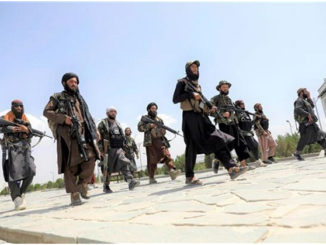
    PESHAWAR (TIP): The Taliban’s new defence minister has issued a rebuke over misconduct by some commanders and fighters following the movement’s victory over the Western-backed government in Afghanistan last month, saying abuses would not be tolerated. Mullah Mohammad Yaqoob said in an audio message that some “miscreants and notorious former soldiers” had been allowed to join Taliban units where they had committed a range of sometimes violent abuses. “We direct you keep them out of your ranks, otherwise strict action will be taken against you,” he stated. “We don’t want such people in our ranks.” The message from one of the Taliban’s most senior ministers underlines the problems Afghanistan’s new rulers have sometimes had in controlling fighting forces as they transition from an insurgency to a peacetime administration.

    Some Kabul residents have complained of abusive treatment at the hands of Taliban fighters who have appeared on the streets of the capital, often from other regions and unused to big cities.

    There have also been reports of reprisals against members of the former government and military or civil society activists, despite promises of an amnesty by the Taliban. Yaqoob said there had been isolated reports of unauthorised executions, and he repeated that such actions would not be tolerated. — Reuters

  • Nepal’s new foreign min wants friendly ties with India, China

    Nepal’s new foreign min wants friendly ties with India, China

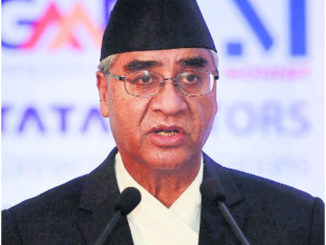
    Kathmandu (TIP): Nepal’s newly-appointed Foreign Minister Narayan Khadka said on Wednesday that he would work towards maintaining friendly and balanced relations with India and China and forge national consensus with political parties on matters of foreign relations. Khadka, 72, was sworn in as the Minister for Foreign Affairs on Wednesday. President Bidya Devi Bhandari administered the oath of office and secrecy to Khadka in a ceremony at the Rashtrapati Bhawan, Shital Niwas, in the presence of Prime Minister Sher Bahadur Deuba.

    Talking to reporters after assuming the office, Khadka said he would work towards ensuring friendly, amicable and balanced relations with both the immediate neighbours — India and China. Arguing that the foreign policy of a country is not specific to any political party, the senior Nepali Congress leader said he would work towards forging national consensus with other political parties on matters of foreign relations, a website reported.

    He also said the issue of the Millennium Challenge Corporation (MCC) Compact Agreement would also be resolved, keeping in view the country’s larger interests.

    Under the US $500 million MCC programme, the US government would provide grant assistance which would mainly be utilised on strengthening Nepal’s transmission line to facilitate the export of hydro-electricity to India in the near future and also improve the country’s road networks.

    Khadka is the fifth minister to be appointed in the Deuba government, which was formed on July 13. With his appointment, there are now seven ministers in the government, including Deuba, and one minister of state. — PTI

  • Taliban expand all-male interim Afghan Cabinet

    Kabul (TIP): The Taliban expanded their interim Cabinet by naming more ministers and deputies on Tuesday, but failed to appoint any women, doubling down on a hard-line course despite the international outcry that followed their initial presentation of an all-male government lineup earlier this month. In their previous rule of Afghanistan in the late 1990s, the Taliban, who adhere to a harsh interpretation of Islam, had barred girls and women from schools, work and public life. At a news conference on Tuesday, Taliban government spokesman Zabihullah Mujahid held out the possibility of adding women to the Cabinet at a later time, but gave no specifics. He also said the Taliban were preparing rules for allowing teenage girls and women to return to schools and jobs in line with Islamic law, but did not say when that might happen. — AP

  • Lanka seeks $100-mn IMF loan to procure Covid vax

     Colombo (TIP): Sri Lanka has decided to ask for a $100 million loan from the IMF to procure 14 million doses of the Pfizer Covid-19 vaccine and finance other vaccination programme related costs, it was announced here on Wednesday. “Minister of Health Keheliya Rambukwella had proposed that Sri Lanka obtain the additional loan grant of $100 million under the programme of strategic preparation and response to Covid-19,” the government said in a statement. The International Monetary Fund (IMF) has agreed to grant a supplementary loan of $100 million to assist Sri Lanka’s Covid-19 response, it added.

    The decision made was to obtain the funds to procure 14 million doses of the Pfizer vaccine and also finance other vaccination programme related costs. The minister for pharmaceuticals Channa Jayasumana told Parliament on Tuesday that the government had already vaccinated over 50 per cent of the island nation’s 21 million population. “Our target is to vaccinate over 75 per cent of the population within the next few months,” he said.

    The public health inspectors said those below the age of 30 had shown reluctance to get vaccinated. Only around 35 per cent of them had received the jabs by September 20. — PTI

  • Narayan Khadka appointed Nepal’s new Foreign Minister

    Kathmandu (TIP): Senior Nepali Congress leader Narayan Khadka has been appointed Nepal’s new foreign minister. President Bidya Devi Bhandari appointed Khadka on the recommendation of the government led by Prime Minister Sher Bahadur Deuba.

    Khadka, 72, was administered the oath of office and secrecy by President Bhandari during an official ceremony at the Sheetal Niwas on Wednesday.

    During a meeting of the top leaders of the ruling party alliances held at his residence in Baluwatar on Tuesday evening, Deuba had proposed the name of Khadka as the new foreign minister of Nepal.

    Khadka has done his PhD in Economics from a University in Pune. Prime Minister Deuba has been holding the portfolio till now. The post of the Foreign Minister had been vacant for more than two months after the formation of the new government led by Deuba. With Khadka’s appointment, there are now seven ministers in the government, including Deuba and one minister of state. He had served as advisor to then Prime Minister Krishna Prasad Bhattarai in the 1990s. He was also the minister of urban development in 2014. PTI

  • 107-year-old Japanese twins certified as world’s oldest

    107-year-old Japanese twins certified as world’s oldest

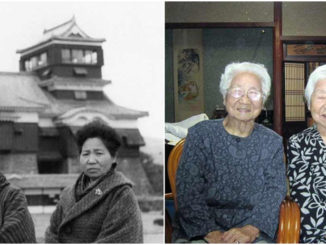
    Tokyo (TIP): Two Japanese sisters have been certified by Guinness World Records as the world’s oldest living identical twins, aged 107 years and 330 days, the organisation has said. The announcement coincided with Respect for the Aged Day, a national holiday in Japan. Sisters Umeno Sumiyama and Koume Kodama were born on Shodoshima island in western Japan on November 5, 1913, as the third and fourth of 11 siblings.

    The sisters as of September 1 broke the previous record of 107 years and 175 days set by famous Japanese twin sisters Kin Narita and Gin Kanie, Guinness World Records Ltd. said in a statement.

    About 29 per cent of the population of 125 million in Japan, the world’s fastest aging nation, are 65 years or older, according to the health and welfare ministry. About 86,510 of them are centenarians—half of whom turned 100 this year.

    Sumiyama and Kodama were separated after finishing elementary school, when Kodama was sent to work as a maid in Oita on Japan’s southern main island of Kyushu. She later married there, while Sumiyama remained on the island they grew up on and had her own family. The sisters later recalled their difficult younger days. Growing up, they said they were targets of bullying because of prejudice against children of multiple births in Japan.

    Busy with their own lives for decades, the sisters rarely met until they turned 70, when they started making pilgrimages together to some of the 88 Shikoku temples and enjoyed being reconnected.

    Their families told Guinness World Records that the sisters often joked about outliving the earlier record holders, affectionately known as “Kin-san, Gin-san,” who attained idol-like status in the late 1990s for both their age and humour.

    Due to anti-coronavirus measures, the certificates for their new record were mailed to the separate nursing homes where they now live, and Sumiyama accepted hers with tears of happiness, according to Guinness. —AP

  • Researchers detect malaria resistant to key drug in Africa

    Researchers detect malaria resistant to key drug in Africa

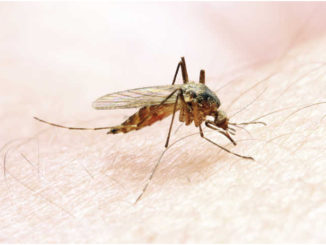
    London (TIP): Scientists have found evidence of a resistant form of malaria in Uganda, a worrying sign that the top drug used against the parasitic disease could ultimately be rendered useless without more action to stop its spread. Researchers in Uganda analysed blood samples from patients treated with artemesinin, the primary medicine used for malaria in Africa in combination with other drugs.

    They found that by 2019, nearly 20 per cent of the samples had genetic mutations suggesting the treatment was ineffective. Lab tests showed it took much longer for those patients to get rid of the parasites that cause malaria.

    Drug-resistant forms of malaria were previously detected in Asia, and health officials have been nervously watching for any signs in Africa, which accounts for more than 90 per cent of the world’s malaria cases. Some isolated drug-resistant strains of malaria have previously been seen in Rwanda.

    “Our findings suggest a potential risk of cross-border spread across Africa,” the researchers wrote in the New England Journal of Medicine, which published the study on Wednesday.

    The drug-resistant strains emerged in Uganda rather than being imported from elsewhere, they reported. They examined 240 blood samples over three years.

    Malaria is spread by mosquito bites and kills more than 4,00,000 people every year, mostly children under five and pregnant women.

    Dr Philip Rosenthal, a professor of medicine at the University of California, San Francisco, said that the new findings in Uganda, after past results in Rwanda, “prove that resistance really now has a foothold in Africa.”

    Rosenthal, who was not involved in the new study, said it was likely there was undetected drug resistance elsewhere on the continent. He said drug-resistant versions of malaria emerged in Cambodia years ago and have now spread across Asia. He predicted a similar path for the disease in Africa, with deadlier consequences given the burden of malaria on the continent.

    Dr Nicholas White, a professor of tropical medicine at Mahidol University in Bangkok, described the new paper’s conclusions about emerging malaria resistance as “unequivocal.”

    “We basically rely on one drug for malaria and now it’s been hobbled,” said White, who also wrote an accompanying editorial in the journal.

    He suggested that instead of the standard approach, where one or two other drugs are used in combination with artemisinin, doctors should now use three, as is often done in treating tuberculosis and HIV.

    White said public health officials need to act to stem drug-resistant malaria, by beefing up surveillance and supporting research into new drugs, among other measures.

    “We shouldn’t wait until the fire is burning to do something, but that is not what generally happens in global health,” he said, citing the failures to stop the coronavirus pandemic as an example. AP

  • Vaccine certification for travel must meet ‘minimum criteria’, says UK

    Vaccine certification for travel must meet ‘minimum criteria’, says UK

    London (TIP): The UK government has said that Covid-19 vaccine certification from all countries must meet a “minimum criteria” and that it is working with India on a “phased approach” to its international travel norms.

    It follows Covishield, the Serum Institute of India manufactured Oxford/AstraZeneca vaccine, being added as eligible to an expanded UK travel advisory on september 23.

    But with India’s vaccine certification not on a list of 18 approved countries, Indian travellers to the UK will continue to be treated as non-vaccinated and therefore required to quarantine for 10 days on arrival.

    Following much confusion over this process, UK government sources said on Wednesday night that additions or changes to the approved country listings are being kept under “regular consideration”, but there was no further clarity on the required criteria for approving a country’s vaccine certification.

    “As part of our recently expanded inbound vaccination policy, we recognise the following vaccines Pfizer BioNTech, Oxford AstraZeneca, Moderna and Janssen (J&J), for the purposes of international travel. This now includes the formulations AstraZeneca Covishield, AstraZeneca Vaxzevria and Moderna Takeda,” a UK government spokesperson said. “Our top priority remains protecting public health, and reopening travel in a safe and sustainable way, which is why vaccine certification from all countries must meet the minimum criteria taking into account public health and wider considerations. We continue to work with international partners, including India, to roll out our phased approach,” the spokesperson said.

    Travellers who are not fully vaccinated, or vaccinated in a country such as India currently not on the UK government’s recognised list, must take a pre-departure test, pay for day two and day eight PCR tests after arrival in England and self-isolate for 10 days, with an option to “test to release” after five days following a negative PCR test.

    With reference to an outcry over India’s vaccination certification not being recognised despite Covishield being one of two main Covid-19 vaccines administered in India, UK government sources would only say that the rollout of its inbound vaccination programme to other countries and territories was always intended as a “phased approach”, building on the success of pilots with the US and Europe.

    The 18 countries currently on the UK government’s approved inbound vaccinations list besides the US and Europe include: Australia, Antigua and Barbuda, Barbados, Bahrain, Brunei, Canada, Dominica, Israel, Japan, Kuwait, Malaysia, New Zealand, Qatar, Saudi Arabia, Singapore, South Korea, Taiwan and the United Arab Emirates (UAE).

    Talks are being held in New Delhi between British officials and National Health Authority representatives, led by CEO RS Sharma, in an attempt to resolve India’s omission from this list.

    “Excellent technical discussions with @rssharma @AyushmanNHA. Neither side raised technical concerns with each other’s certification process. An important step forward in our joint aim to facilitate travel and fully protect public health of UK and India,” British High Commissioner to India Alex Ellis tweeted on Thursday.

    From October 4, England’s traffic light system of red, amber and green countries based on levels of Covid-19 risk is to be officially scrapped. However, despite Covishield now being recognised within the UK’s eligible vaccine formulations, it would not offer any advantage to Covishield-vaccinated Indian travellers planning a UK visit.

    The Indian government has expressed its strong condemnation of such a move and warned of “reciprocal measures” if vaccinated travellers from India continued to be treated in a “discriminatory” way.

    At a Global Covid summit hosted by US President Joe Biden on Wednesday, Prime Minister Narendra Modi reiterated that international travel should be made easier through “mutual recognition of vaccine certificates”. —PTI

  • China declares all cryptocurrency transactions illegal

    Beijing (TIP): China’s central bank on September 24 declared all transactions involving Bitcoin and other virtual currencies illegal, stepping up a campaign to block use of unofficial digital money.

    Chinese banks were banned from handling cryptocurrencies in 2013, but the government issued a reminder this year. That reflected official concern that cryptocurrency mining and trading might still be going on or the state-run financial system might be indirectly exposed to risks.

    Friday’s notice complained Bitcoin, Ethereum and other digital currencies disrupt the financial system and are used in money-laundering and other crimes. “Virtual currency derivative transactions are all illegal financial activities and are strictly prohibited,” the People’s Bank of China said on its website. Promoters of cryptocurrencies say they allow anonymity and flexibility, but Chinese regulators worry they might weaken the ruling Communist Party’s control over the financial system and say they might help to conceal criminal activity. The People’s Bank of China is developing an electronic version of the country’s yuan for cashless transactions that can be tracked and controlled by Beijing. —AP

  • UK to make it illegal for restaurant employers to keep staff tips

    London (TIP): The UK government said on September 24 that it will make it illegal for employers to withhold tips from workers under new regulations for the country’s hospitality industry.

    Most hospitality workers, many of whom earn the minimum sector wage, rely on tipping to top up their income. But research shows that many businesses that add a discretionary service charge onto customer’s bills are keeping part or all of these service charges, instead of passing them onto staff.

    “Unfortunately, some companies choose to withhold cash from hardworking staff who have been tipped by customers as a reward for good service,” said UK Labour Markets Minister Paul Scully.

    “Our plans will make this illegal and ensure tips will go to those who worked for it. This will provide a boost to workers in pubs, cafes and restaurants across the country, while reassuring customers their money is going to those who deserve it,” he said. The move is set to help around 2 million people working in one of the 1,90,000 businesses across the hospitality, leisure and services sectors, where tipping is common place and can make up a large part of their income. This will ensure customers know tips are going in full to workers and not businesses, ensuring workers receive a fair day’s pay for a fair day’s work. The Department for Business, Energy and Industrial Strategy (BEIS) said an increase in card payments has made it easier for businesses to keep the funds. Around 80 per cent of all UK tipping now happens by card, rather than cash going straight into the pockets of staff. Businesses who receive tips by card currently have the choice of whether to keep it or pass it on to workers. The new regulation is aimed at creating consistency for those being tipped by cash or card.

    Under the changes, if an employer breaks the rules they can be taken to an Employment Tribunal, where employers can be forced to compensate workers, often in addition to fines.

    The government said the tipping legislation will build on a range of government measures to protect and enhance workers’ rights. —PTI

  • 6.0-magnitude earthquake strikes near Melbourne, tremors rattle southeast Australia

    Sydney/Melbourne (TIP): A 6.0-magnitude earthquake struck near Melbourne on september 23, Geoscience Australia said, one of the country’s biggest quakes on record, causing damage to buildings in the country’s second largest city and sending tremors throughout neighbouring states.

    The quake’s epicentre was near the rural town of Mansfield in the state of Victoria, about 200 km (124 miles) northeast of Melbourne, and was at a depth of 10 km (six miles). An aftershock was rated 4.0.

    Images and video footage circulating on social media showed rubble blocking one of Melbourne’s main streets, while people in northern parts of the city said on social media they had lost power and others said they were evacuated from buildings.The quake was felt as far away as the city of Adelaide, 800 km (500 miles) to the west in the  state of South Australia, and Sydney, 900 km (600 miles) to the north in New South Wales state, although there were no reports of damage outside Melbourne and no reports of injuries.

    More than half of Australia’s 25 million population lives in the southeast of the country from Adelaide to Melbourne to Sydney.

    “We have had no reports of serious injuries, or worse, and that is very good news and we hope that good news will continue,” Prime Minister Scott Morrison told reporters in Washington.

    “It can be a very disturbing event, an earthquake of this nature. They are very rare events in Australia and as a result, I am sure people would have been quite distressed and disturbed.” Quakes are relatively unusual in Australia’s populated east due to its position in the middle of the Indo-Australian Tectonic Plate, according to Geoscience Australia. The quake on Wednesday measured higher than the country’s deadliest tremor, a 5.6 in Newcastle in 1989, which resulted in 13 deaths. The mayor of Mansfield, Mark Holcombe, said he was in his home office on his farm when the quake struck and ran outside for safety. “I have been in earthquakes overseas before and it seemed to go on longer than I have experienced before,” Holcombe told the ABC. “The other thing that surprised me was how noisy it was. It was a real rumbling like a big truck going past.” He knew of no serious damage near the quake epicentre, although some residents reported problems with telecommunications. Reuters

  • History This Week

    “We are not makers of history. We are made by history.”

    Martin Luther King, Jr.

    September 24

    September 24, 1957 – President Dwight Eisenhower ordered the National Guard to enforce racial integration of schools in Little Rock, Arkansas.

    September 24, 1980 – War erupted between Iran and Iraq as Iraqi troops crossed the border and encircled Abadan, then set fire to the world’s largest oil refinery.

    Birthday – John Marshall (1755-1835) was born in Germantown, Virginia. He was appointed by President John Adams to the position of Chief Justice of the U.S. Supreme Court in January 1801. He became known as “The Great Chief Justice,” largely responsible for expanding the role of the Supreme Court through such cases as Marbury vs. Madison and McCulloch vs. Maryland.

    Birthday – American writer F. Scott Fitzgerald (1896-1940) was born in St. Paul, Minnesota (as Francis Scott Key Fitzgerald). Best known for This Side of Paradise, The Great Gatsby and Tender is the Night.

    Birthday – Puppeteer Jim Henson (1936-1990) was born in Greenville, Mississippi. He created the Muppets, including Kermit the Frog, and Bert and Ernie, entertaining and educating generations of children via the daily TV show Sesame Street.

    September 25

    September 25, 1513 – Spanish explorer Vasco Nunez de Balboa first sighted the Pacific Ocean after crossing the Isthmus of Panama.

    September 25, 1690 – The first American newspaper was published. A single edition of Publick Occurrences Both Foreign and Domestick appeared in Boston, Massachusetts. However, British authorities considered the newspaper offensive and ordered its immediate suppression.

    September 25, 1789 – The first U.S. Congress proposed 12 Amendments to the Constitution, ten of which, comprising the Bill of Rights, were ratified.

     Birthday – American writer William Faulkner (1897-1962) was born in New Albany, Mississippi. Best known for The Sound and the Fury and The Reivers.

    Birthday – Russian composer Dmitri Shostakovich (1906-1975) was born in St. Petersburg, Russia. He witnessed the Russian Revolution and went on to become one of the greatest Soviet composers.

    September 26

    September 26, 1687 – The Acropolis in Athens was attacked by the Venetian army attempting to oust the Turks, resulting in heavy damage to the Parthenon.

    September 26, 1918 – The last major battle of World War I, the Battle of the Argonne, began as a combined force of French and Americans attacked the Germans along a 40-mile front.

    September 26, 1960 – The first-ever televised presidential debate occurred between presidential candidates John F. Kennedy and Richard M. Nixon. Many who watched were inclined to say Kennedy ‘won’ the debate, while those who listened only to the radio thought Nixon did better. Nixon, who declined to use makeup, appeared somewhat haggard looking on TV in contrast to Kennedy.

    September 26, 1984 – Britain agreed to allow Hong Kong to revert to Chinese sovereignty in 1997.

    Birthday – American folk legend Johnny Appleseed (1774-1845) was born in Leominster, Massachusetts (as John Chapman). For 40 years, he traveled through Ohio, Indiana and into Illinois, planting orchards. He was a friend to wild animals and was regarded as a “great medicine man” by Native Americans.

    Birthday – Writer T.S. (Thomas Stearns) Eliot (1888-1965) was born in St. Louis, Missouri. He rejected conventional verse and language in favor of free expression.

    Birthday – Composer George Gershwin (1898-1937) was born in Brooklyn, New York. Along with his brother Ira, he created enduring songs including The Man I Love, Strike Up the Band, I Got Rhythm and the opera Porgy and Bess.

    September 27

    September 27, 1964 – After a 10-month investigation, the Warren Commission Report was issued stating a lone gunman had been responsible for the assassination of President John F. Kennedy in Dallas on November 22, 1963.

    September 27, 1995 – The Israeli cabinet agreed to give Palestinians control of much of the West Bank which had been occupied by Israel for 28 years.

    Birthday – American revolutionary leader Samuel Adams (1722-1803) was born in Boston, Massachusetts. He was a passionate, vocal man who helped ignite the revolution and served as a delegate to the First and Second Continental Congresses. He was a signer of the Declaration of Independence and the Articles of Confederation.

    Birthday – American political cartoonist Thomas Nast (1840-1902) was born in Landau, Germany. He originated the symbols for the two main U.S. political parties, the Democratic donkey and the Republican elephant. Nast was also instrumental in destroying the Tweed Ring, a group of corrupt politicians plundering the New York City treasury.

    September 28

    September 28, 1066 – The Norman conquest of England began as Duke William of Normandy landed at Pevensey, Sussex.

    September 28, 1542 – California was discovered by Portuguese navigator Juan Rodriguez Cabrillo upon his arrival at San Diego Bay.

    September 28, 1978 – Pope John Paul I died after only 33 days in office. He was succeeded by John Paul II.

    September 28, 1995 – Israeli Prime Minister Yitzhak Rabin and Palestine Liberation Organization leader Yasser Arafat signed an accord at the White House establishing Palestinian self-rule in the West Bank.

    September 29

    September 29, 1789 – Congress created the United States Army, consisting of 1,000 enlisted men and officers.

    September 29, 1829 – Britain’s “bobbies” made their first public appearance. Greater London’s Metropolitan Police force was established by an act of Parliament at the request of Home Secretary, Sir Robert Peel, after whom they were nicknamed. The force later became known as Scotland Yard, the site of their first headquarters.

    September 29-30, 1941 – Nazis killed 33,771 Jews during the Babi Yar massacre near Kiev.

    Birthday – Nuclear physicist Enrico Fermi (1901-1954) was born in Rome. While teaching at the University of Chicago, he developed a method of causing nuclear fission, producing a chain reaction releasing explosive nuclear energy which led to the development of the Atomic bombs.

    September 30

    September 30, 1938 – British Prime Minister Neville Chamberlain returned to England declaring there would be “peace in our time,” after signing the Munich Pact with Adolf Hitler. The Pact ceded the Czechoslovakian Sudetenland to the Nazis. Chamberlain claimed the agreement meant peace, however, Hitler seized all of Czechoslovakia in March of 1939.

    September 30, 1949 – The Berlin Airlift concluded after 277,264 flights carrying over 2 million tons of supplies to the people of West Berlin, who were blockaded by the Soviets.

    September 30, 1955 – Actor James Dean was killed in a car crash in California at age 24. Although he made just three major films, Rebel Without a Cause, East of Eden and Giant, he remains one of the most influential actors.

    September 30, 1966 – Nazi war criminals Albert Speer and Baldur von Schirach were released from Spandau prison after serving 20 years. The prison, originally built for 600 inmates, was left with only one prisoner, former Deputy Führer Rudolf Hess.

    Birthday – American writer Truman Capote (1924-1984) was born in New Orleans, Louisiana (as Truman Streckfus Persons). He took the last name of his stepfather, becoming Truman Capote. Best known for Breakfast at Tiffany’s and In Cold Blood.

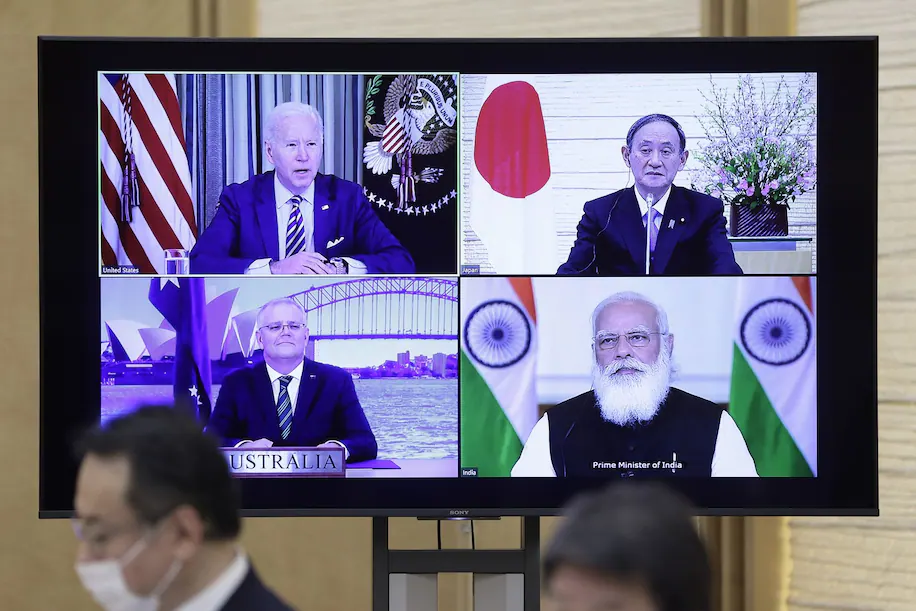
  • Quad or AUKUS – India needs to review its involvement in blocs

    Quad or AUKUS – India needs to review its involvement in blocs

    The interests of the US and India find convergence on the issue of threats to the two countries from terrorists in Pak supported Afghanistan. US may be worried Afghanistan could become a source of another 9/11. India, already being harassed by Pakistan in Kashmir, is naturally concerned with the emergence of the Mullah power in Afghanistan  It is a good reason for the two countries to come closer because of the recent developments in Afghanistan and Pakistan’s efforts to seek control of the government in Afghanistan via the Haqqani group that Pakistan has supported and promoted over decades.

    US has always needed allies to fight its battles and protect its interests. China is the main challenger to America’s economic and military power. America must contain China. India fits into the American scheme. India has a long history of border dispute with China. Again, China is supportive of India’s sworn enemy- Pakistan. Weakening of China will mean weakening of Pakistan. India may also be viewing China as too formidable an economic power to allow India to have the kind of influence it is eying to have in the region. So, India will support any nation or group of nations which might checkmate China.

    We know of traditional rivalry between China and Japan. As for Australia, it is a country living in fear of being overwhelmed by China. So, with support coming from. the US, the neighboring economic giant Japan and a willing collaborator India, Australia hopes to keep China on the leash. We only hope India will weigh coolly what is in its best interests, and not become a pawn in the hands of the individual nations or blocs.

  • Death of a Mahant

    Death of a Mahant

    Ensure punishment to criminals in holy robes

    The mysterious death of Mahant Narendra Giri, president of the Akhil Bharatiya Akhara Parishad, allegedly by his own hand, yet again proves that self-confessed devotion to God and spiritualism doesn’t make even religious leaders immune from greed and crime. The body of the 75-year-old Mahant Giri was found hanging from a fan on Monday at Prayagraj’s Baghambari Math — one of the country’s 13 main akharas, or monasteries — which he headed. The police found a suicide note, purportedly written by the mahant, in which he accused a disciple, Anand Giri, of harassing him. Later, the police found a video recording in which the mahant made the same accusation against Anand Giri. Though investigations are at a preliminary stage, it is evident that the two were at loggerheads over no spiritual matter — the control of the temple and monastery lands, worth hundreds of crores of rupees, seems to have been at the heart of the discord.

    In May this year, Narendra Giri had expelled Anand Giri from Baghambari Math and Akhara Parishad. Following this, Anand Giri wrote to the President, Prime Minister and Home Minister, seeking an inquiry against his guru of 20 years — he alleged misuse of the funds raised after sale of land belonging to the Baghambari Math, and also complained to the CBI regarding property belonging to the Math and Niranjana Akhara being sold off. Narendra Giri later forgave his disciple but did not allow him to return to the Math. Anand Giri, who has been arrested, is a man with a past — he was arrested in Australia two years ago after two women accused him of ‘indecent assault’ against them. The case against him was dropped after they chose not to proceed with their complaints.

    Religious figures, enjoying unparalleled respect and devotion of their congregations, and the economic benefits that come along with heading religious centers, are often tempted by the ultimate sins of greed and lust. In recent past, we have seen this in the cases of Gurmeet Ram Rahim, Asaram Bapu and Franco Mulakkal, the former Jalandhar Bishop who was accused of rape or sexual misconduct by multiple women. Investigation and assured punishment in this world, rather than the next one, may deter criminals in holy robes.

    (Tribune, India)

  • Congress fiasco

    Congress fiasco

    Captain’s exit as CM leaves party on sticky wicket in Punjab

    Capt Amarinder Singh’s unceremonious exit as the Punjab Chief Minister is a new low for the self-destructive Congress. It’s inexplicable that a party with an ever-dwindling national footprint is bent on frittering away its few gains in the states. Sheer mishandling of the situation by the high command has destabilized the state government and triggered chaos in Punjab, which will go to the polls in barely five months. The gross failure to tackle the crisis and take timely remedial action has severely dented the party’s electoral prospects, and that too at a time when the main Opposition parties — the Shiromani Akali Dal and Aam Aadmi Party — are desperately trying to regroup and regain the electorate’s trust.

    The party stirred a hornets’ nest two months ago when it elevated Navjot Singh Sidhu as the PPCC chief, overruling objections by Capt Amarinder. If the top brass had wanted Sidhu to be the CM face, it should have made things clear right from the outset. Giving Sidhu carte blanche to take potshots at the CM was an invitation to disaster. The feeble, unconvincing attempts to bring about a patch-up between Capt Amarinder and Sidhu only made things worse.

    The high command’s lackadaisical approach can be gauged from the fact that it set up the election manifesto implementation committee in Punjab as late as January 2020, almost three years after Capt Amarinder led the party to a thumping victory in 2017. If misgovernance and the failure to fulfil poll promises were the all-important issues, course correction should have been done much earlier, not at the eleventh hour when the party needs all hands-on deck. Now, it would be naive of the Congress to consider Punjab as a low-hanging fruit. The party will have to go back to the drawing board to gear up for the 2022 elections. The state leaders have already expended too much time and energy on political intrigue and one-upmanship. With the Congress’ credibility in tatters, it will be an uphill task for the grand old party to retain power.

    (Tribune India)

  • A one-party juggernaut and its feeble challengers

    A one-party juggernaut and its feeble challengers

    With no glue still to bond the Opposition, the non-party movements of resistance could offer hope for change

    By Harbans Mukhia

    Paradoxically, the only avenue of political change through the elections that lies open, if at all, is in the non-political movements of resistance such as the farmers’ agitation.

    The political Opposition in its entirety appears to have decided this — that each party would rather contest and lose to a smaller local adversary than challenge the one bigger, common and more ominous adversary. And win (or lose) the forthcoming Assembly elections, and more importantly, the crucial general election of 2024 together. The writing has been on the wall ever since 2019, reaffirming the urgency of the good old saying, “united we stand/win, divided we fall”.

    Some stirrings : Only one leader with credible bona fides — the inimitable fighter and West Bengal Chief Minister Mamata Banerjee — appears to have recognized this and is striving to forge a united front to challenge the Bharatiya Janata Party (BJP). Indeed, she had sounded out the Opposition on this even before 2019, but it was ignored then as it is being ignored now. Nationalist Congress Party leader Sharad Pawar, the veteran, is also one leader sensitive to the nuances of the present scenario and did take some initial steps towards forging a common front to take on the strong adversary. It ended with an online conversation, with a prepared sermon by Indian National Congress chief Sonia Gandhi on how India must be saved. Period. The writing on the wall remains unread. Meanwhile, every party is busy finalizing its list of candidates for the forthcoming Assembly elections and issuing statements to the press asserting its own invincibility in the forthcoming battle. The year 2024 is still too far on the horizon to exercise one’s mind. Never mind the link between the two.

    A contrast lies in strategy : It is hard for an outsider to ignore the distinct modes of election management, one that the BJP has introduced especially over the past decade and that of the other established parties. The BJP prepares for an election at the ground level at least two years ahead by activating its cadres, especially cadres from the Rashtriya Swayamsevak Sangh, in establishing personal contacts with potential voters, collecting information about the local issues that might motivate voters to its side, the caste/subcaste/community profile of each constituency to cohere with grandiose calls for Vikas, and Hindu Rashtra from the top-level leadership, not to forget the ever active BJP IT cell forging and spreading questionable material every day on social media.

    In other words, the BJP is forever preparing for an election. This is in contrast to the Opposition parties which get into action a month or two before election dates are announced, their chief concern being to usually nominate candidates with their own resources for winning. The leaders contribute their mite to the process by making speeches at election meetings. The BJP also learns quickly from its defeats and victories and does take immediate remedial action. The recent quick change of governments in several BJP- ruled States is a good example. The party also changes its tactics keeping in mind the lessons learnt. The contrast, of the energy of the BJP and the lethargy on the other side, is striking.

    The BJP and the Opposition rely largely on attacking each other. This suits the BJP more because the Opposition earns credibility only if it posits an alternative economic, political and social programme to the electorate that carries conviction, for which it has to be formulated long before the elections are seen on the horizon. Before 2019, the Congress did posit an attractive economic alternative by promising ₹6,000 per month to poor farmers, but it was formulated a few weeks before the elections, announced from electoral daises by Congress leader Rahul Gandhi with no groundwork to prepare the audiences for it, and thus, carried no conviction. Since then, no Opposition party has challenged the Government by positing an attractive alternative slogan.

    As of now, the reluctance of the Opposition parties to come together for the decisive fights ahead, and the absence of any evidence of serious preparations, do seem to indicate a willing walkover to the ruling party.

    The Congress’s problem : It is easy to pin the responsibility for this denouement on the Indian National Congress. As the country’s second largest party in the Seventeenth Lok Sabha, with footprints around the country (besides being the oldest and the most experienced political party), the responsibility devolves upon it squarely to forge a vision and a programme which would accommodate most if not all the others into a single conglomerate (though preferably not a single unit), for the battles ahead.

    But it is this status it has that fills it with an arrogance to claim the unshared leadership of any possible combination of parties, expressed in the following formula: come and support us and we shall fight together. There is no need for discussion, for discussion involves sharing. Just listen to either Ms. Sonia Gandhi or second best, Rahul Gandhi, and do as they say and demand. This is contrary to what its high status should imply: openness, liberalism, generosity and a vision for India beyond a vision for the present party leadership.

    Its exclusive concern looks like retaining the three Gandhis (Ms. Gandhi, Rahul Gandhi and Priyanka Vadra) at the top even if the bottom keeps floundering and withering away. It is not only the pleas from leaders of a much higher stature such as Mr. Sharad Pawar but also pleas for the reinvigoration of the party from its own senior most and most committed leaders (the G23, or 23 of them) that are perceived as a threat to Gandhis and thus sidelined.

    There has been zero “introspection” within the party after each stunning political defeat. There is no sign of the party being a living organism capable, or at least willing, to rectify its errors and move on. This is in contrast to its chief rival. The grimness of the situation is highlighted by the sterling fact that the Opposition cannot go forward without the Congress either. What more could make the BJP happier?

    A new brigade : Paradoxically, the only avenue of political change through the elections that lies open, if at all, is in the non-political movements of resistance such as the farmers’ agitation. The farmers, who have withstood the indifference and the assaults of the Government show no sign of backing off. They have kept almost all political parties away while also shouting from the rooftops that their mission is to defeat the BJP in the elections by mobilizing farmers around the country. That they do have the capacity to mobilize themselves has been demonstrated repeatedly, most recently in Muzaffarnagar (Uttar Pradesh) and Karnal (Haryana). The mahapanchayat at Muzaffarnagar has also cautioned farmers against the BJP’s use of the so-far successful strategy of divide and rule along communal lines, and the Uttar Pradesh Chief Minister has already announced his intention to go the whole hog along this path. A major communal conflagration may also be in the offing. The results of these elections will decide the future of India to a large extent.

    (The author Harbans taught history at the Jawaharlal Nehru University, New Delhi)

  • Quad, AUKUS, SAARC… and a divided Asia

    Quad, AUKUS, SAARC… and a divided Asia

    AUKUS: Yet another anti-China grouping created by the US

    By Sudheendra Kulkarni

    “We Indians, instead of sorting out our disputes with China on our own on the basis of equality and fairness, have chosen to join the US-led quadrilateral. Essentially an anti-China alliance, the Quad could end up making Asia the theatre of a new cold war and an expensive arms race. Should we allow outsiders to put their guns on our shoulder to fire at China?”

    “Exactly a hundred years ago, Mahatma Gandhi had warned about a future when powerful nations, using their navies, would “threaten world’s peace and exploit its resources” (Young India; December 8, 1921). His warning is now coming frighteningly true. Tagore too had warned Asians against imitating the monstrous features of the European rivalry, which triggered two horrific world wars. India, which aspires to become a ‘Vishwa Guru’, is blissfully ignoring Gurudev’s warning, too.”

    Gurudev Rabindranath Tagore would have been an unhappy man were he alive today. A poet-philosopher who relentlessly advocated Asian unity, he would have been utterly distressed by the disunity and conflicts in Asia, and the current efforts by Western powers to mire the continent in bloc rivalry.

    No other Indian leader of his times visited as many Asian countries as he did — Japan (1916, 1924, 1929), Burma (1916, 1924, 1927), Sri Lanka (1922, 1928, 1934), China (1924, 1928), Singapore (1916, 1924, 1927), Indonesia (1927), Malaysia (1924 and 1927), Thailand (1927), Vietnam (1929), and Iran and Iraq (1932).

    His mission was to ‘create an Asian mind’. When he established Visva-Bharati in 1921, his principal goal was to revive the age-old civilizational, cultural and spiritual bonds that linked India and other Asian countries. He was not the only Indian who had this vision. Mahatma Gandhi, Jawaharlal Nehru and Subhas Chandra Bose also espoused Asian solidarity.

    ‘The Asian Mind’ of Gurudev’s dreams is fragmented today. Countries that were once victims of colonialism have drifted apart. Asia — home to 60 per cent of the world population — is becoming increasingly non-peaceful, with Western powers trying to create competing groupings and ignite fires of conflict. Sadly, the internal quarrels in Asia are harming peace and closing the opportunities for mutually beneficial cooperation aimed at enhancing the wellbeing of its peoples. West Asia has seen many wars in the recent past — Iran-Iraq war, the US invasion of Iraq, and the ongoing wars in Syria and Yemen. In South Asia, Afghanistan has suffered four decades of external wars and internal conflicts. Even after the recent withdrawal of American troops, there are no cooperative efforts by India and regional neighbors to help Afghanistan achieve stability and national reconstruction.

    This is mainly due to Taliban’s religious fanaticism on the one hand and India-Pakistan hostility on the other. India and Pakistan are in no mood to establish good unneighborly relations even 75 years after our two countries gained independence from British rule. Because of our ceaseless enmity, SAARC (South Asian Association for Regional Cooperation), of which Afghanistan is also a member, has become completely dysfunctional and remains in coma. Its leaders have not had a summit meeting since 2014.

    In contrast, China has achieved some success in making the Shanghai Cooperation Organisation (SCO) a viable non-Western platform in the region. The SCO managed to induct both India and Pakistan as full members in 2017. At its recent 20th anniversary summit in Dushanbe (Tajikistan), Iran joined it as a full member. Afghanistan has an observer status in the SCO.

    Sadly, India has chosen to isolate itself from a regional cooperation endeavor involving China, Russia, Iran and Pakistan to promote peace and inclusive government in Kabul even though there is no basic difference among the five nations over the issue that the Taliban regime must not give sanctuaries to terrorist organizations.

    Instead, India is aligning its Afghan policy with that of America. More worrisome is America’s reported attempt to seek a military base at some place in ‘north-west India’ for carrying out ‘over-the-horizon counter-terrorism operations’ in Afghanistan. Agreeing to this would be catastrophic for India and the region. It would also expose us to the criticism of following double standards. India has been rightly insisting that the Taliban should not allow Afghan soil to be used against India. How, then, can we allow the USA’s anti-Afghan operations from Indian soil?

    Let’s look at another major intra-Asian antagonism. India and China, the two great Asian civilizations, are locked in a power struggle, which, if unchecked, can be disastrous for both as well as the continent and the world. India-China rivalry, coupled with China’s failure to peacefully resolve maritime disputes with its neighbors in South China Sea, has given an opportunity for the distant US to fish in troubled waters.

    America has no business getting involved in Asian disputes. Yet, invoking the artificial concept of the ‘Indo-Pacific’, which gives India’s westernized ruling elite a feel-good sense of gaining global leadership, Washington has persuaded the Modi government to offer it a foothold in the India-China row.

    Since the end of World War II, US rulers have been acting on the belief that their country is the global hegemon and, as such, have the right to flaunt its power anywhere in the world.

    However, with the rise of China in recent decades, the days of US global domination are clearly numbered. Alarmed by this certainty, it is busy sowing the seeds of disunity in Asia. For this purpose, it is building military groupings to contain China. Unfortunately, we Indians, instead of sorting out our disputes with China on our own on the basis of equality and fairness, have chosen to join the US-led quadrilateral. Essentially an anti-China alliance, the Quad could end up making Asia the theatre of a new cold war and an expensive arms race. Should India allow outsiders to put their guns on its shoulder to fire at China? What will be the consequences of India becoming a pawn in America’s games?

    America has now created yet another anti-China grouping — AUKUS, a security pact among Australia, the UK, and the US, all three being Anglosphere nations. America and Britain will help Australia develop and deploy nuclear-powered submarines to deter China.

    France is extremely angry with its two NATO allies because the pact has scuttled the lucrative $80-billion French-Australian submarine deal. This shows how several western nations have now become predominantly war economies. They prosper only by selling costly weapon systems to non-western countries, including India.

    Be it Quad or AUKUS, what should worry Indians and all other Asians is how our seas and oceans will increasingly become a playfield for menacing warships and submarines.

    Exactly a hundred years ago, Mahatma Gandhi had warned about a future when powerful nations, using their navies, would “threaten world’s peace and exploit its resources” (Young India; December 8, 1921). His warning is now coming frighteningly true. Tagore too had warned Asians against imitating the monstrous features of the European rivalry, which triggered two horrific world wars.

    India, which aspires to become a ‘Vishwa Guru’, is blissfully ignoring Gurudev’s warning, too.

    (The author is a former close aide to ex-PM Vajpayee and Founder, Forum for a New South Asia)

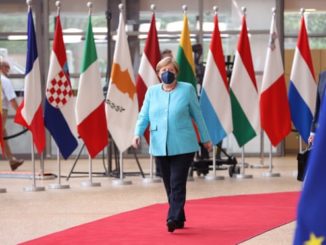
  • The crisis manager: Angela Merkel’s double-edged European legacy

    The crisis manager: Angela Merkel’s double-edged European legacy

    Across a decade of rolling threats, from the euro zone to Brexit and Covid, Germany’s outgoing chancellor focused on holding the EU together

    It was Monday 13 July 2015 and dawn had broken when Angela Merkel said it was all over: Greece would be leaving the eurozone. After 15 hours of all-night crisis talks, it looked like disaster. Merkel gathered her papers and was heading towards the door. If the summit had ended at that moment the history of the European Union, its fragile currency and Merkel’s legacy would be very different.

    But the drama took another turn. Donald Tusk blocked the exit. Throughout the night, the French president, François Hollande, had been cajoling the German chancellor to think again. Now Tusk, European Council president, refused to let her leave, persuading her to reconvene with him and Greek prime minister Alexis Tsipras, warning of the stakes for the EU. “In five years in the discussions between Hollande and Merkel it was a unique occasion in which Hollande really won the battle with Merkel,” Pierre Sellal, then France’s ambassador to the EU, said. Hollande helped convince Merkel not to run the risk of ‘Grexit’, suggested Sellal: “It was Pandora’s box, the consequences of which were impossible to predict.”

    Six years on it is Merkel, not Tusk nor Hollande, who is remembered as the savior of the euro. Even arch critic Yanis Varoufakis, Greece’s former finance minister, told the BBC that Merkel saved the euro by keeping Greece in, although he disagrees with how she did it. The reason is simple: Greece could not have stayed in the eurozone if its largest EU creditor, Germany had not agreed.

    Now, after 16 years and roughly 100 EU summits as Europe’s most powerful leader, Angela Merkel is preparing to leave the stage. For the EU it will be the end of an era. With her bright blazers and soundbite-free statements, Merkel is as much a fixture of EU summits as the flags and fine wines. Untouched by scandal, unshaken by referendums, the German chancellor has seen many leaders come and go, including four French presidents, five British prime ministers and eight Italian premiers.

    But she leaves a double-edged legacy. Though she is credited with keeping the EU together during more than a decade of rolling crises – eurozone, migration, Brexit, Trump and then coronavirus – critics lament what they see as her lack of vision. For some, her approach was auf Sicht fahren – driving by sight. She navigated each crisis like a driver on a foggy road, edging forward, not sure where she was going, but always keeping the car on the road.

    At her first EU summit in December 2005, Merkel was relatively unknown. The EU had just come through a period of rapid expansion. Poland, Hungary and eight other mostly central and eastern European countries had joined the club only 20 months earlier. Euro notes and coins had been in people’s pockets for less than four years. The UK, led by Tony Blair, a “passionate pro-European”, was in charge of the EU’s rotating presidency. But the optimistic mood had been soured by French and Dutch voters’ rejection of the Constitutional Treaty in 2005, leaving the project in a political tangle. As Merkel’s successor will find, any German chancellor carries the clout of their office. Germany is the EU’s pre-eminent power: the richest economy, with the most votes and the biggest checkbook. “Obviously any German chancellor will play a major role in the European Union,” said Jim Cloos, who recently stood down as a long-serving senior official at the EU council. But the individual makes a difference. “The way she did things: she was a major power in the European Council,” said Cloos, who credits her with keeping the club together during the EU’s most difficult period since the end of the second world war. “We have held it together, actually – well, we lost the Britons, but that is their choice. We have done this in our usual chaotic, complicated way because we are a union of 27 states, and institutions.”

    Back in 2005, the new German chancellor impressed the EU executive with her grasp of detail. Dalia Grybauskaitė, then the EU budget commissioner, recalls meeting Merkel in December to discuss fiendishly complex EU budget negotiations. “It was her fifth day in office. She knew the files as well as [then European Commission president] José Manuel Barroso and me.”

    Grybauskaitė, who went on to serve as Lithuania’s president for a decade, described Merkel as “the queen of compromises”, who “never gives empty promises”. Alexander Stubb, another political ally in the center-right European People’s party, sat next to Merkel at EU summits during his stint as Finland’s prime minister in 2014-15. “Angela Merkel was … by far the most impressive in the room. She was able to eloquently express what she wanted and then subtly show to the council secretariat … what she wanted in the council conclusions. In that sense she worked both as a politician and as a civil servant.”

    Leaders from rival political traditions also rated her. Former Italian prime minister Enrico Letta, who now leads Italy’s main center-left party, recalled her staying power. In 2014, when a G20 dinner in St Petersburg hosted by Russia’s Vladimir Putin ended at 2am after fraught discussions on Syria, Merkel was one of a handful of leaders who stayed to watch dancers of the Bolshoi ballet. Others went to bed, but she stayed for a chilly open-air, long-delayed performance of the romantic classic Ruslan and Lyudmila. “It was cold,” Letta recalled. “She decided not to go to sleep but to stay there and see the show and to give the dancers and to give Putin satisfaction, to say ‘we are here and we played a role until the end.’”

    If the meticulous grasp of detail and endless stamina are not in doubt, critics say Merkel was too slow to grasp the threat to the eurozone after 2010, enforcing austerity on the debt-battered economies of southern Europe. Letta, who was battling soaring youth unemployment in Italy acknowledges that she was hamstrung by her powerful finance minister, Wolfgang Schäuble, “the champion of austerity”, who was powerful in Merkel’s CDU party.

    But facing a bailout-skeptical German public, Letta argues, Merkel took a crucial decision. She threw her weight behind an Italian to lead the European Central Bank. Her support took Mario Draghi to Frankfurt, over a more conservative northern European candidate. Eight months into the job, Draghi said the ECB would “do whatever it takes” to save the euro, words that proved a turning point in settling the sovereign debt crisis. Merkel’s decision to back Draghi reflected her growing awareness that she must act for the EU and not simply Germany, Letta believes. “She started to have in this very period a European constituency, aside from her German constituency.”

    But it was only later when the EU’s political constellation shifted, with Brexit diminishing the fiscally-conservative group of member states, that Merkel backed an unprecedented plan for joint EU borrowing, which resulted in the €750bn Covid recovery fund in July 2020. As the EU’s popularity in Italy slumped at the start of the pandemic, with Rome levelling accusations of being abandoned by the rest of Europe, the bloc acted unusually quickly. “All the leaders learned the lessons of the previous crisis,” said Letta. “The results of the previous austerity measures on Spain, on Italy and Greece were so clear … that helped in changing the approach.”

    Luuk van Middelaar, a political theorist who advised the European Council president from 2010-14, said Germany had been slow to appreciate the gravity of the eurozone crisis. “For too long in Germany the discourse was that it was a story of sinners, spendthrifts who did not reform their economies … It took too long for the awareness to rise – and that also goes for Brussels – that this was a systemic issue for the eurozone as a whole.”

    But the German chancellor had to balance German voters’ aversion to bailouts with the risk of economic and social chaos, he notes. “She also looked at the wider political context of what Grexit would mean for Europe as a whole, for the reputation of Germany as a whole, for its relationship with France and for stability in the Balkans,” van Middelaar said. In 2015 Merkel also rejected calls from other EU leaders to kick Greece out of the EU’s passport-border zone. “I have not kept Greece in the eurozone only to kick them out of Schengen,” she was reported to have said at the time.

    Migration : On migration, Merkel is criticized not for excessive caution but for boldness. The EU is “still trying to accommodate” Merkel’s “national decisions” on migration, said Sellal. Visiting a refugee camp in late August 2015, Merkel said Germany could manage large numbers of people fleeing war and persecution: “wir schaffen das” (“we can manage this”). Soon after, she opened Germany’s borders to tens of thousands of Syrians and other refugees making their way through the Balkans. At a stroke, she had torn up the EU’s Dublin convention that requires asylum seekers to seek refuge in the first EU country of arrival.

    While Germany’s integration of refugees is an untold success story, Merkel would be accused of encouraging hundreds of thousands to make the dangerous journey across the Mediterranean. “If we had not shown a friendly face, that’s not my country,” she said, justifying her decision later. Political allies say the chancellor was also worried about the influx of refugees destabilizing the politically fragile countries in the western Balkans.

    Some EU officials blame Merkel’s government and the European Commission led by Jean-Claude Juncker for forcing through a plan to distribute migrants around the bloc via quotas, in a deeply divisive qualified-majority vote in September 2015. Overruling central European leaders, the vote inflamed tensions with countries that refused quotas and alienated those that reluctantly accepted. For the former EU civil servant Cloos, “the combination of ‘wir schaffen das’ without any consultation” and compulsory migrant quotas was an error. But Merkel made up for it the following year by masterminding a controversial deal with Turkey that would close the Mediterranean route to migrants from the Middle East.

    That deal was criticized by the UNHCR and rights groups at the time and is seen as a cornerstone of ‘fortress Europe’ approach to migration. Insiders argue it was essential to keep the EU together.

    EU unity was Merkel’s signature tune by 2016, a task that seemed even more urgent after the shocks of Brexit and the election of Donald Trump. In a speech four days after the Brexit result, Merkel said there would be “no cherrypicking” by Britain of its post-EU future, words that defined the EU’s approach to the next four years of Brexit battles.

    And Brexiters who were counting on the German car industry to change Merkel’s mind were disappointed. In September 2016, Merkel told a private meeting of European industrialists that the EU could not afford to risk the single market by giving the British special treatment. Seated alongside Hollande, she compared the EU single market to a pullover: “when you have a hole, you don’t pull at the threads,” she is reported to have said, according to a diplomat who was there.

    Rational, careful, democratic: the German chancellor in 2016 was cast as the anti-Trump, widely praised for standing up for democracy and the rule of law in response to the American tycoon’s election win. Yet she failed to confront the authoritarian in her midst: Viktor Orbán, a former EPP ally, who has taken control of state institutions to such an extent that Hungary is now classed as “partly free” in the Freedom House rankings, the first EU member state that is no longer a full democracy.

    “In Hungary definitely she could have acted much earlier and really used her position of political clout and the power of the large country,” said Daniela Schwarzer, executive director for Europe at the Open Society Foundations, who points out German companies have a prominent position in Hungary as large investors and employers. “She repeatedly took a position vis- a-vis the US, when Trump was US president. But the Orbán case … looks like a contradiction and was a bad mistake.

    Merkel’s goodbye to the EU is likely to be drawn out. With German coalition talks expected to be slow and complicated, she could be in caretaker mode until the end of the year. Add in French elections in 2022, and few expect dramatic changes on the EU chessboard.

    Merkel’s most likely successor, the SPD leader Olaf Scholz, is better known in EU circles. He chaired EU finance minister meetings in 2020 and has close ties to his French counterpart, Bruno Le Maire. But few expect Scholz, or his nearest-placed rival, former MEP and CDU candidate Armin Laschet, to take a different policy course to Merkel. “Both would probably take a pro-European but at the same time rather a cautious approach to deepening the EU,” Schwarzer suggests.

    For countries that are close to Germany, another Merkel-style leader would be just fine. “We don’t need more drama. There is enough of that in politics today as it is,” said Stubb.

    That will disappoint anyone looking for the next German chancellor to break the cautious Merkel mould. Keeping the EU together will not be enough in the post-Merkel era, write analysts at the European Council on Foreign Relations. “Next to keeping the EU together, the goal of defending core European values and interests should become the measure of a responsible EU leadership,” they write, citing the threats of a breakdown in the rule of law and the EU’s “geopolitical marginalization”.

    Most expect the next German chancellor to be a characteristically German chancellor, steady rather than spectacular. “It is usually French presidents who do the vision thing, launch initiatives and bring ideas,” said van Middelaar, “while German chancellors pull the brakes.”

    But when problems arise, the rest of the EU looks to Berlin, he added. “Whenever a crisis erupts everyone looks first at you. Maybe not formally but informally, you are the leader of Europe. Whoever is in the chancellery will immediately feel this European weight.”

  • China declares all cryptocurrency transactions illegal

    China’s central bank on Friday, Sept 24,  declared all transactions involving Bitcoin and other virtual currencies illegal, stepping up a campaign to block use of unofficial digital money.

    Chinese banks were banned from handling cryptocurrencies in 2013, but the government issued a reminder this year. That reflected official concern that cryptocurrency mining and trading might still be going on or the state-run financial system might be indirectly exposed to risks.

    Friday’s notice complained Bitcoin, Ethereum and other digital currencies disrupt the financial system and are used in money-laundering and other crimes. “Virtual currency derivative transactions are all illegal financial activities and are strictly prohibited,” the People’s Bank of China said on its website. Promoters of cryptocurrencies say they allow anonymity and flexibility, but Chinese regulators worry they might weaken the ruling Communist Party’s control over the financial system and say they might help to conceal criminal activity.

  • Bitcoin mining producing tonnes of waste

    Bitcoin mining producing tonnes of waste

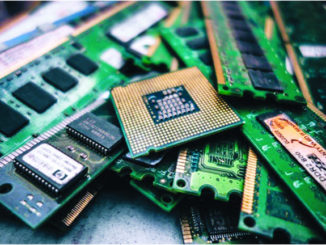
    Bitcoin mining produces electronic waste (e-waste) annually comparable to the small IT equipment waste of a place like the Netherlands, research shows. Miners of the cryptocurrency each year produce 30,700 tonnes of e-waste, Alex de Vries and Christian Stoll estimate. That averages 272g (9.5oz) per transaction, they say. By comparison, an iPhone 13 weighs 173g (6.1oz). Miners earn money by creating new Bitcoins, but the computing used consumes large amounts of energy. They audit Bitcoin transactions in exchange for an opportunity to acquire the digital currency.

    Attention has been focused on the electricity this consumes – currently more than the Philippines – and the greenhouse gas pollution caused as a result.

    But as the computers used for mining become obsolete, it also generates lots of e-waste.

    The researchers estimate Bitcoin mining devices have an average lifespan of only 1.29 years.

    As a result, the amount of e-waste produced is comparable to the “small IT and telecommunication equipment” waste of a country like the Netherlands researchers said – a category that includes mobile phones, personal computers, printers, and telephones.

    The research is published in the journal Resources, Conservation & Recycling.

    Efficiency drive

    As electricity is a key cost for Bitcoin miners, they have sought out ever more efficient processors.

    That has seen a move to highly specialised chips called Application-specific Integrated Circuits (ASICs).

    But ASICs are so specialised that as they become obsolete, they cannot be “repurposed for another task or even another type of cryptocurrency mining algorithm”, the researchers write.

    But while the chips can’t be reused, much of the weight of Bitcoin mining equipment is made up of components such as “metal casings and aluminium heat-sinks” which could be recycled.

    Globally just over 17% of all e-waste is recycled. However, the number is probably less in some of the countries in which most miners are based, where in many cases regulations on e-waste are also poor.

    Chip shortage Many industries are struggling with a global chip shortage.

    In addition to producing large amounts of e-waste the researchers argue that “rapidly cycling through millions of mining devices may disrupt the global supply chain of various other electronic devices”.

    They suggest that one solution to the problem of e-waste would be for Bitcoin to change the way transactions are verified, to a different less computing-intensive system.

                    Source: BBC

  • EU plans one mobile charging port for all, in setback for Apple

    EU plans one mobile charging port for all, in setback for Apple

    Brussels (TIP): The European Union aims to have a common charging port for mobile phones, tablets and headphones under a European Commission proposal presented on Thursday, Sept 23,  in a world first, with the move impacting iPhone maker Apple more than its rivals.

    The move has been more than 10 years in the making, with the European Union executive touting environmental benefits and 250 million euros ($293 million) in annual savings for users.

    Under the Commission’s proposal, a USB-C connector will become the standard port for all smartphones, tablets, cameras, headphones, portable speakers and handheld videogame consoles.

    Chargers will also be sold separately from electronic devices. The EU executive will revise its eco-design regulation in the near future so that the external power supply is interoperable which is the last step for a common charge.

    The Commission said it is not targeting Apple and only acted because companies were not able to agree on a common solution despite a decade of talks, which have reduced the number of mobile phone chargers to three from 30. Apple pushed back against the proposal. “We remain concerned that strict regulation mandating just one type of connector stifles innovation rather than encouraging it, which in turn will harm consumers in Europe and around the world,” the company said in a statement.

    It also voiced concerns about the 24-month transition period for companies to comply with the legislation once it is adopted.

    “We gave industry plenty of time to come up with their own solutions, now time is ripe for legislative action for a common charger. This is an important win for our consumers and environment and in line with our green and digital ambitions,” Commission Vice President Margrethe Vestager said.

  • Twitter will now let you tip your favorite creator using cryptocurrency

    Twitter will now let you tip your favorite creator using cryptocurrency

    Twitter announced a slew of features during its product event held on Thursday. The micro-blogging site revealed that it is rolling out Tips, which is a tipping feature, to everyone with more payment options to choose from including cryptocurrency. Using Tips, Twitter users can tip their favourite account on the micro-blogging platform, help a small business owner through a difficult time, give to an important cause. Tipping on Twitter got simpler and now comes with more payment options.

    Announcing the feature, Esther Crawford, Product Manager at Twitter said, “Our tipping feature now called Tips is rolling out to everyone with more payment options to choose from even crypto. Whether you want to tip your favorite account because you adore their commentary, send some love to an emerging comedy creator for their hilarious Tweets, help a small business owner through a difficult time, give to an important cause — whatever you want to support (and we know you already have some ideas), Tips is here to help you do it. She revealed that Tips will be first rolled out to iOS users and then the Android users will get in a couple of weeks.

    Twitter will let influencers or people with a large follower base add a Tips icon next to the Follow button on the profile page. If you want to tip somebody, you will simply have to tap on the tip icon and the list of payment services or platforms that the account has enabled will be visible to you, and you can select whichever you prefer. The feature is currently rolling out to users in the US.

  • Salman Khan gets talking about his longest relationship

    Salman Khan gets talking about his longest relationship

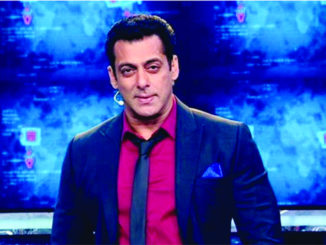
    Superstar Salman Khan said his over a decade-long association with the reality show “Bigg Boss” is his “longest relationship” and he keeps coming back to it every year, faithfully. Khan, who is currently shooting for his upcoming actioner “Tiger 3” in Austria, has been associated with the show since its season four in 2010. The superstar will be seen hosting the 15th season of the Colors show, set to premiere on October 2. In a video message shown to the media during a special event at the Pench National Park in Madhya Pradesh, the 55-year-old actor said the show has a strong hold on him and it brings a certain “permanency” in his life. “My relationship with ‘Bigg Boss’… This is perhaps my only relationship that has lasted this long. Some relationships, what do I say… Let it go. “(But) ‘Bigg Boss’ has brought a certain permanency in my life. Though sometimes for those four months, we don’t see eye to eye but when we are parting ways (after a season’s end), we are desperate to reunite,” Khan said in the message. Present at the special event were former “Bigg Boss” contestants Devoleena Bhattacharjee and Arti Singh.