Tag: Apple News

  • EAM Jaishankar meets Chinese counterpart Wang in Dushanbe, discuss disengagement at LAC

    EAM Jaishankar meets Chinese counterpart Wang in Dushanbe, discuss disengagement at LAC

    Dushanbe, Tajikistan (TIP): External Affairs Minister S Jaishankar has met with his Chinese counterpart Wang Yi on the sidelines of the Shanghai Cooperation Organisation (SCO) Summit in Dushanbe. The two leaders discussed the disengagement in the border areas.

    “Discussed disengagement in our border areas. Underlined that progress in this regard is essential for restoration of peace and tranquillity, which is the basis for the development of bilateral ties,” Jaishankar tweeted.

    The two leaders discussed the border tensions and disengagement along the Line of Actual Control (LAC) in border areas. They also exchanged views on global developments.

    Jaishankar emphasised that India doesn’t subscribe to any clash of civilisations theory. It’s also essential that China doesn’t view its relations with India through the lens of a 3rd country.”

    “During his meeting with Chinese FM, EAM S Jaishankar underlined that it was necessary to ensure progress in the resolution of remaining issues so as to restore peace and tranquillity along the LAC in Eastern Ladakh,” the Ministry of External Affairs (MEA) said in a statement.

    During their meeting, EAM S Jaishankar and his Chinese counterpart Wang Yi agreed that “military and diplomatic officials of both sides should meet again and continue their discussions to resolve the remaining issues (along the LAC in Eastern Ladakh) at the earliest, it added.

    The border standoff between the Indian and Chinese militaries erupted on May 5 last year following a violent clash in the Pangong lake area and both sides gradually enhanced their deployment by rushing in tens of thousands of soldiers as well as heavy weaponry.

    More than 12 rounds of military talks and a series of diplomatic parleys were held between India and China, but the tensions still continue.

  • IAF to bolster fighter fleet with 24 2nd-hand Mirages

    IAF to bolster fighter fleet with 24 2nd-hand Mirages

    New Delhi (TIP): The Indian Air Force (IAF) is set to acquire 24 second-hand Mirage 2000 fighters, made by Dassault Aviation, in an attempt to strengthen its ageing fleet of the fourth-generation fighters and also secure parts for its two existing squadrons of the aircraft, people familiar with the matter said on condition of anonymity. IAF has initialled a contract worth 27 million euros to buy the fighters, eight of which are in ready-to-fly condition, the people cited above added. That works out to a per-aircraft acquisition cost of 1.125 million euros. The people cited above said the aircraft will soon be shipped to India in containers.

    IAF’s 35-year old Mirage fleet, which performed exceptionally during the 2019 Balakot operation, is undergoing a mid-life upgrade, the people said – with the trigger for the acquisition of the second-hand aircraft being the immediate need for 300 critical spares. The aircraft is becoming obsolete in France, they added, and IAF chief Air Chief Marshal RKS Bhaduaria decided to go in for the purchase.

    Out of the 24 fighters, 13 are in complete condition with engine and airframe intact with eight of them (nearly half a squadron) ready to fly after servicing. The remaining 11 fighters are partially complete but with fuel tanks and ejection seats, which will be scavenged to secure parts for IAF’s two existing squadrons of the fighter.

    IAF purchased around 50 fourth-generation Mirage 2000 C and B fighters way back in 1985 with a maintenance contract that expired in 2005. It signed another contract in 2015-2016 with the French original equipment manufacturer.

    The purchase highlights the importance of shifting spare parts and engine supply chains to India for future acquisitions as fighters abroad reach obsolescence much faster than in India. Until the Narendra Modi government took the decision of acquiring the 4.5 generation Rafale fighters (also from Dassault), the Mirage 2000 was India’s front-line fighter, a position it has held since the Kargil war. The new Aatmanirbhar Bharat campaign should ensure that original equipment and spares are now manufactured in India so that there is no shortage of spares till the time the fighter is decommissioned, the people cited above said.

    The other issue that flows out of this last-minute acquisition is that the IAF and the Indian Navy should plan their fighter acquisition so that there is synergy between the two forces and coherence is maintained in the supply of spare parts, experts said. It also points to the need for the defence ministry to accelerate decisions on replenishing the country’s fighter fleet, especially because China has already moved to fifth-generation fighters and armed drones.

                    Source: HT

  • 214% rise in cases relating to fake news, rumours

    INCIDENTS OF circulation of “false/fake news” and rumours, a crime under the Indian Penal Code, saw nearly a three-fold rise in 2020 over 2019, according to the latest National Crime Records Bureau (NCRB) data.

    A total of 1,527 cases of fake news were recorded in the pandemic year — a 214 per cent increase — against 486 cases in 2019 and 280 cases in 2018, when the category was first included.

    Telangana with 273 cases tops the list of states followed by Tamil Nadu (188) and Uttar Pradesh (166). Hyderabad tops the list of cities with 208 cases, followed by Chennai (42) and Delhi (30).

    While addressing fake news has been crucial in containing the spread of the virus, several states labelled those raising an alarm over shortage of beds and oxygen as spreading fake news.

    In April, UP Chief Minister Yogi Adityanath said that the stringent National Security Act will be invoked against social media posts on shortage of oxygen. In April 2020, a local BJP leader was booked under sedition after he allegedly posted on Facebook urging people to make donations as there were “no ventilators” in Ludhiana to treat Covid patients.

  • Govt reinstates National Company Law Appellate Tribunal acting chief

    The Centre on Thursday, Sept 16,  told the Supreme Court that former acting chairperson of the National Company Law Appellate Tribunal (NCLAT) Justice AIS Cheema will be reinstated and allowed to continue in office till September 20. The newly appointed NCLAT chairperson Justice M Venugopal will be asked to go on leave until then, Attorney General KK Venugopal told a Bench led by CJI NV Ramana.

    As the controversy over Justice Cheema’s premature retirement as acting chairman of the NCLAT got blown over, the CJI thanked the Attorney General for solving the problem. The Bench, however, made it clear that “the instant order has been passed taking into consideration the peculiar facts and circumstances of the present facts and this shall not be treated as a precedent.” Justice Cheema had moved the top court against the government’s decision to curtail his tenure. He had demanded that at least he should be allowed to work up to September 20 as the officiating chairperson of the NCLAT to enable him to pronounce the judgments prepared by him.

  • Indo-Canadian Jagmeet Singh-led NDP may again play kingmaker

    Indo-Canadian Jagmeet Singh-led NDP may again play kingmaker

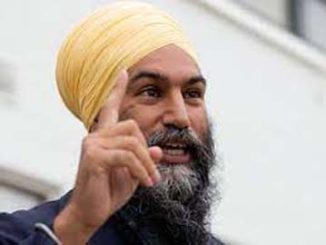
    OTTAWA (TIP): The New Democratic Party (NDP), led by Punjab-origin Canadian Jagmeet Singh, can again prove to be a “kingmaker” in the country’s federal election scheduled for September 20.

    As the latest trends indicate a neck and neck fight between Liberals and Conservatives, the party with small but crucial number of seats would be important if both main parties fail to get majority. In 2019, Justin Trudeau’s Liberal Party got 157 seats, 13 short of majority in the 338 House of Commons and Conservative got 121 seats. The NDP had won 24 seats. Trudeau formed a minority government with the support of NDP.

    Repeat of 2019?

    • In 2019, Justin Trudeau’s Liberal Party formed a minority government with the support of NDP
    • Liberals had won 157 seats, 13 short of majority in the 338 House of Commons, and Conservatives won 121 seats. The NDP had won 24 seats

    Eying to convert his minority government into majority and confident of getting support for his work during the Covid-19 pandemic, Trudeau called mid-term snap polls, but as opinion polls and trends are to be believed, the Opposition is catching up with Liberals over the “high cost” of housing.

    Conservative party leader Erin O’Toole is getting support of young voters, whereas the NDP has good base in two thickly populated areas of British Colombia and Ontario and is getting good support from Indian and Asian communities. As per opinion polls, the NDP is expected to increase its seats this time from the previous tally of 24.

    The Indian diaspora in Canada is much sought after as a support base as they tend to be high-income professionals and educated. As a group, the people of Indian origin, especially the Sikh diaspora, have become a powerful group and prominent voice in domestic political space.

    As many as 47 Punjabi NRIs are in the fray this time. The main issues being raised by the Punjabi NRIs are direct flight ban from India, racism and high housing cost. A political expert claims that many Indo-Canadians stranded in India due to the ban on direct flights will not be able to cast vote and are being deprived of their rights.

  • National Council of Asian Indian Associations presents Anurag Kumar Distinguished Service Award

    National Council of Asian Indian Associations presents Anurag Kumar Distinguished Service Award

    MANASSAS, VA (TIP): The Washington area-based National Council of Asian Indian Associations (NCAIA HQ-VA) presented its Distinguished Service Award to Anurag Kumar, outgoing Minister for Community Affairs at the Embassy of India. Kumar, who was posted to Washington in 2018, was presented the award at a farewell reception hosted by NCAIA in Manassas, VA, on Sunday, September 12. A number of top embassy officials and community leaders from the area attended the event, held at Hilton Garden’s Lake Terrace and Ballroom.

    “Directly or indirectly, you have always brought laurels to India,” Kumar said thanking his hosts. “You basically have a sense of achievement and honor to the people of India and you represent the very best of India.”

    “Your continued association with the motherland, that is something which is of great value,” he said noting, “All of you have done well in your respective professions and careers.”

    “India is a country of diversity, we have different religions, languages, different cultures and everything. And those things are equally and well represented in the United States of America,” Kumar noted.

    Previously Kumar has served as Joint Director IB in New Delhi.

    Speakers included NCAIA president Nayna Desai, its chairman Sunil Singh, the organization’s senior adviser Sambhu Banik, and community leaders Sant Gupta and Satish Korpe.

    Dr. Jaydeep Nair, Minister (Consular), Dr. Dhananjay Tiwari Counselor (Science &Technology), Vinayak Chauhan, Naresh Kumar, First Secretary (Visa) were among the other embassy officials who attended the event.

    Meenal Singh served as the MC of the event and Sashi Agarwal delivered the vote of thanks.

    Coordinated by Dr. Alok Shrivastava, the event was supported by other Indian community organizations in the Greater Washington, DC, area.

  • Indian-origin Vibhav Mittal becomes first South Asian judge of California court

    Indian-origin Vibhav Mittal becomes first South Asian judge of California court

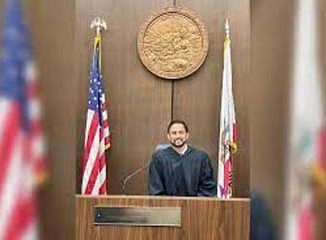
    WASHINGTON (TIP) Indian American attorney Vibhav Mittal of Yorba Linda, California, has become the first Judge of South Asian descent on the Superior Court of California, County of Orange,

    Assistant Presiding Judge Maria Hernandez swore in Mittal, 39, on Sept. 10 after his appointment by California Governor Gavin Newsom a week earlier.

    National Asian Pacific American Bar Association last week named Mittal among 2021 Honorees for its Best Under 40 Award along with Puneet V. Kakkar, another Indian American attorney with the US Department of Justice.

    The award honors members in the Asian American Pacific Islander legal community under the age of 40 who have achieved prominence in their fields and have demonstrated a strong commitment to the Asian American Pacific Islander community.

    Mittal, a Democrat has served as a Deputy Chief at the US Attorney’s Office for the Central District of California since 2019, where he has also served as an Assistant US Attorney since 2011.

    He was a Field Organizer and Campaign Fellow for the Democratic Congressional Campaign Committee in 2010.

    Mittal served as a Law Clerk for Amul R. Thapar, the first US federal judge of South Asian descent, at the US District Court for the Eastern District of Kentucky from 2009 to 2010.

    Mittal was an Associate at Quinn Emanuel LLP from 2008 to 2009. He earned a Juris Doctor degree from the New York University School of Law.

    He also has undergraduate degrees in electrical engineering and computer science and political science from the University of California, Berkeley.

    During his ten-year tenure as a federal prosecutor, Judge Mittal tried 13 criminal trials to verdict, including a groundbreaking public-corruption matter where a state court clerk took over $400,000 in bribes to resolve over 1,000 cases pending in traffic court.

    He also tried a $24 million Ponzi scheme fraud case, and other drug-trafficking and gun-related cases, according to the South Asian Bar Association of Southern California (SABA-SC).

    Mittal also supervised six prosecutors, argued numerous cases before the Ninth Circuit of Court of Appeals, and served as an instructor for trial advocacy and member of the Office’s hiring and diversity committees.

    The Federal Bureau of Investigation and Internal Revenue Service have recognized his work as a prosecutor. Mittal has also been an active member of the community.

    Since 2014, he has been the lead attorney coach for Segerstrom High School’s mock trial team, educating dozens of high school students in Santa Ana on criminal law and courtroom advocacy.

    He has also been a lecturer for the University of California, Irvine School of Law, and encouraging and mentoring law students to pursue careers in the public interest.

    As the first native-born American in his family and the son of Indian immigrants, Mittal has also dedicated efforts to serving the Asian American Pacific Islander community.

    He was a board member for the South Asian Bar Association of California and its public interest foundation—an organization aimed at supporting nonprofit organizations serving the South Asian community.

     “We are thrilled about Judge Mittal’s appointment to the Orange County bench, an appointment that reflects the significant South Asian population in the region,” said Marize Alphonso and Rohit D. Nath, co-Presidents of SABA-SC.

    “Judge Mittal has dedicated his career to public service, and he has also been an integral part of the South Asian legal community. The Governor could not have found a better pick to blaze the trail for South Asians in Orange County.

  • Indian American commends US for Afghan refugees’ resettlement in California

    Indian American commends US for Afghan refugees’ resettlement in California

    Parminder Aujla

    SACRAMENTO (TIP): An Indian American from California leading in resettlement of Afghan refugees in Fremont city on Friday, September 10, commended President Joe Biden and Secretary of State Antony Blinken for the evacuation of thousands of Afghans who had helped the United States in its war against terrorism for 20 years.

    “President Biden, Secretary Blinken, and our troops led an airlift that evacuated tens of thousands more people than any imagined possible. We look forward to welcoming our Afghan allies to their new homes in Fremont, California, and in other parts of the United States and continue to work with Afghan Community Organizations to assist refugees, people in Afghanistan to bring peace to all,” community leader Ajay Jain Bhutoria said during a webinar organized by the State Department along with him.

    Fremont City Mayor Lily Mei, Hayward City Council Member Aisha Wahab, and community leaders from Afghan Coalition and the Afghan Cultural Society addressed the virtual roundtable during which the attendees discussed topics the importance of immediately addressing the mental health needs of arriving refugees, efforts to creatively address high housing costs, the importance of arrivals being quickly absorbed into existing Afghan communities, and multisectoral cooperation to ensure health, education, employment, and language learning needs are addressed, especially for women.

    During the conversation, Mayor Lily Mei shared the work Fremont city has undertaken to plan for arriving immigrants and refugees over the years, and lessons they have learned from this work. Mei shared that Fremont, which is the proud home to an extremely diverse community of immigrants, has raised over USD2,00,000 for arriving Afghan refugee settlement.

    “We are fortunate to have Fremont and Hayward city and Afghan community leaders so focused on this issue and are grateful that the State Department quickly reached out to this community to better understand what they are experiencing and how their experiences and skills can help with the current resettlement process being undertaken by other city leaders across the US that are working to help and support to incoming refugees, evacuees,” Bhutoria said.

    In a tweet, South and Central Asia Bureau of the State Department appreciated Mayor Lily Mei, Ajay Jain Bhutoria, Aisha Wahab and the Afghan Coalition working to support incoming Afghan arrivals. State Department’s Ervin Massinga, and Afghan community leaders discuss best practices and working together on Afghan resettlement, the tweet said.

  • Indian American Balbir Singh Sodhi, first victim of hate crime post-9/11 attacks, remembered by US lawmakers

    Indian American Balbir Singh Sodhi, first victim of hate crime post-9/11 attacks, remembered by US lawmakers

    WASHINGTON (TIP): Top American lawmakers paid rich tributes as they remembered Balbir Singh Sodhi, a Sikh American, who was the first victim of hate crime following the 9/11 terror attacks in which nearly 3,000 people from over 90 countries were killed.

    Four days after 9/11, Balbir was killed outside the Arizona gas station he owned. He was the first person in the US to be killed in a supposed act of retaliation for the attacks in 2001.

    “Today marks 20 Years Since Balbir Singh Sodhi, a Sikh man, was killed in a hate crime in retribution for the 9/11 attacks. We honor his memory and the memories of all those lost to hate in the two decades since,” Senator Robert Menendez said in a tweet.

    “Twenty years ago, Sikh American Balbir Singh Sodhi was murdered in the first post 9/11 hate crime. He was shot to death while planting flowers outside his gas station in Mesa, Arizona, by a man who said he wanted to “go out and shoot some towel-heads,” said Senator Dick Durbin.

    Congresswomen Lois Frankel said days after 9/11, Balbir, a Sikh man, was killed in ‘retribution’ for the attacks.

    “Today, we honor Balbir’s memory—and celebrate 20 years of solidarity and advocacy among the communities that continue to persevere against hate and discrimination,” she said.

    Senator Sherrod Brown said 20 years ago today, Balbir, a Sikh American, was murdered for his appearance.

    “His death marked the first deadly post-9/11 hates crime. Today and every day, let’s stand united with our Sikh community in Ohio and reject hate and discrimination,” he tweeted.

    “Days after 9/11, Sikh American Balbir Singh Sodhi was killed in the apparent first ‘retribution’ hate crime following the attacks. Today, we honor his memory & remain united in our efforts to fend off all forms of hate & discrimination,” tweeted Senator Richard Blumenthal.

    “Balbir Singh Sodhi, a turbaned Sikh man, was killed in a hate crime in retribution for the 9/11 attacks 20 years ago today. I stand in solidarity with New Jersey’s Sikh community as we honor his memory & the memories of all those lost to hate in the two decades since,” said Congressman Donald Norcross.

    Balbir’s killer Frank Roque is serving life in prison.

    As the world marked the 20th anniversary of the September 11 terror attacks recently, Balbir’s brother Rana Singh Sodhi said: “We all humans are equal – color, creed and gender. To honor my brother, if you love your neighbors, if you respect people with different color, creed and gender, it will be a big honor to my brother”.

  • Indian American Kabir Partap is all set with a docu-series on the legacy of Partap Brothers

    Indian American Kabir Partap is all set with a docu-series on the legacy of Partap Brothers

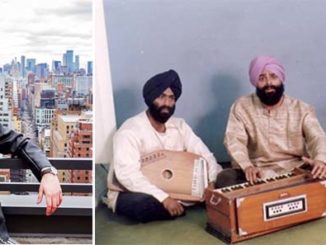
    NEW YORK (TIP):The Partap Brothers have been nothing short of an institution when it comes to the Indian classical music, especially Gurmat Sangeet. Over the years, the siblings – Davinder, Mohinder and Ravinder – have been credited with preserving and reviving the Puratan Gurmat Sangeet. They have amassed legions of fans across the globe and created a legacy that needs to be celebrated and cherished. It was this thought that prompted New York-based Kabir Partap, son of Mohinder Partap Singh, to conceptualize a documentary series chronicling the four-decade journey of his father and uncles. With the unfortunate demise of his father in February this year due to Covid, Kabir realized the scale of their music and how impactful it has been over the years.

    The documentary series is in the pre-production stage and Kabir Partap is leaving no stone unturned to make it a one-of-its-kind series that blends the best elements of documentary filmmaking – raw footage, intense reality moments and unique stories. The film will be in English and translated into Punjabi, Hindi and Urdu.

    For Kabir, the documentary is a love story. “This is a tale that will resonate with all of us, as it focuses on trials and tribulations of our daily lives — family struggles, political and social events that impact us personally, expectations from our closed ones that we struggle to meet and the fight between the old and the new,” he quips.

    Ravinder Partap hopes that the documentary will inspire the audience to carry forward and preserve the rich treasures of the classical Gurmat Sangeet. “We hope that after having seen the film, the new generation with keen interest in classical kirtan will reach out to us with questions. The youth must know that we are a resource for them,” he says.

    For Davinder Partap, the documentary is a medium to relive the moments spent with Mohinder Partap, who, in his words, “brought a very unique element of artistry in tabla”.

    “Mohinder had his own presence on stage, his own energy and flair. We will never be complete without him, but we will try our best to make him proud every time we perform on stage,” says Davinder Partap with his voice cracking.

    What kept the three brothers going for more than four decades? “The passion for Gurmat Sangeet,” Ravinder says and adds “when we are performing together a spiritual, transcendental bond is created. This bond transcends worldly relationships”.

    Probe the brothers about the difficulties in keeping the classical/traditional music alive today, Davinder Partap admits that there are a myriad of barriers to enter the arena, but he remains hopeful.

    “My greatest hope is that parents in our community will encourage their children to pursue Gurmat Sangeet. We, as a community, must encourage and support creativeness and artists,” he says. Davinder’s hope stems from the resurgence of interest in classical music globally, especially the Puratan Gurmat Sangeet. Ravinder, the youngest of the Partap Brothers, nods in unison and adds, “A lot has changed in the past few years. For example, social media and streaming platforms have brought together fans of classical music from around the globe. The younger generation has especially taken a keen interest in reviving the Indian classical music.”

  • What to expect from this year’s UN General Assembly (UNGA)

    What to expect from this year’s UN General Assembly (UNGA)

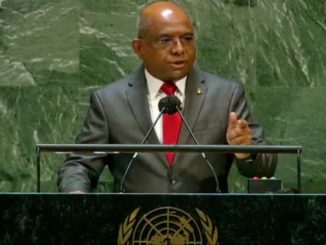
    NEW YORK (TIP): This year’s United Nations General Assembly could make or break the future of in-person meetings at the gathering in New York City.

    After a year of carefully negotiating, adapting and crafting health guidelines, UNGA organizers are hoping to avoid a repeat of last year’s first, almost entirely virtual, gathering.

    But the threat of the Delta variant in the United States still looms large, and many countries will likely wait until the last minute to confirm their plans as to whether to travel to the UN this month.

    Yet a provisional schedule, first obtained by PassBlue and Geneva Solutions, provides insights into which countries may come to New York City and which are not likely to make the trip. The high-level week — the annual general debate — starts on Sept. 21 and lasts until the 27th.

    The organization of this year’s opening session of the 76th General Assembly has already met some roadblocks. Mark D. Levine, a member of the New York City Council, denounced that the UN (like its host country) isn’t requiring that people attending the UNGA be vaccinated to visit New York City, tweeting on Aug. 13: “The UN is not requiring vaccination for participants. This will expose them, and NYC, to serious risk. The UN needs to announce now that vax will be mandatory.”

    Sept 14th witnessed 1000s of diplomats from nearly 200 countries arriving to Manhattan for the UN general Assembly.

    The UN is not requiring vaccination for participants.

    This will expose them, and NYC, to serious risk. The UN needs to announce now that vax will be mandatory.

    — Mark D. Levine (@MarkLevineNYC) August 12, 2021

    “There is improvement [from last year], but there is also worry,” Tijjani Muhammad-Bande, Nigeria’s ambassador to the UN and president of the 74th General Assembly, said in an exclusive interview. “The urge is to be cautious, to limit the number that are coming in, they have to come and to still have substantive discussions.”

    You’re welcome, but please don’t come

    The US mission to the UN sent a letter to its fellow 192 UN missions on Aug. 16 urging them to send a pre-recorded message to avoid the risk of the week becoming a “superspreader event.”

    “The United States needs to make clear our call, as the host country, for all UN-hosted meetings and side events, beyond the General Debate, to be fully virtual,” the letter says. It also says that “heads of delegation should consider delivering their statements to the UN General Assembly’s General Debate by video.”

    While some countries inferred that the letter was a request to stay home, many of them saw it coming and had planned only small delegations to make the trip, as the General Assembly had already decided that only four delegates, including the head of state or government, could attend the debate in the Assembly Hall during the high-level week.

    “The desire is to have an improvement over what we had last year, a hybrid meeting, which allowed one delegate, one person per delegation,” Bande said. “The improvement in terms of vaccinations has been clear in the position now, so this desire is not to be fully hybrid, from my standpoint as a member of the assembly, not as President.”

    “I think many are coming,” Vassily Nebenzia, Russia’s ambassador to the UN, told journalists in mid-August. “We hear that many delegations will be represented in-person, I believe, including ours.”

    Estonia Foreign Minister Eva-Maria Liimets didn’t see the US letter as an invitation not to come to New York City, but her country is still taking a wait and see approach: “We follow the rules,” she said, “but we suggest to have a debate to have the conversation as much as possible during this week.” Estonia is planning to send a team of 10-15 people to Manhattan.

    The initial list of speakers, subject to change, for the high-level week of the opening session of the UN General Assembly. “HS” means “head of state”; “HG” is “head of government”; “M” is generally the foreign minister.

    While many heads of state and government want to come, many countries are facing several factors affecting their decisions. World leaders tend to travel with an entourage: security, communication, chief of staff, photographers — so it’s hard to cut down the team. With only a maximum of four people allowed to sit in the General Assembly Hall during the high-level week for each country, some delegations are trying to figure out how to manage that restriction. One country even said it was trying to “borrow” seats in the Hall of other countries who may not be sending a delegation. Neither the Secretariat nor the office of the President of the General Assembly was able to say if swapping was a possibility.

    The UN is supposed to have “bilateral booths” for meetings between delegates inside the headquarters. A June 23 letter sent by the current President of the General Assembly, Volkan Bozkir, says: “Presence of leaders and Ministers in New York for high-level week will result in significant opportunities for bilateral meetings, which will be logistically challenging to accommodate in Midtown, especially for smaller delegations, and difficult to justify from a health perspective when UNHQ itself would have more room than hotels or Missions.”

    Liimets thinks meetings can be productive while at the UN: “We can use hotels, we can use our offices, and of course we need to brainstorm where to organise the side events,” she said. “But I would say that here in New York, there are many appropriate facilities like Bohemia house of the Czech Republic.”

    To vax or not to vax?

    After City Councilmember Levine complained about delegations’ vaccinations status, the UN spokesperson was asked repeatedly how the UN would ensure that UNGA would be held safely in the pandemic without requiring every diplomat attending to be vaccinated.

    After much deliberation between the UN and health authorities, the UN is making vaccination mandatory for its own staff members but not for foreign diplomats. While diplomats coming to New York City “should voluntarily disclose” their vaccination status, the UN has decided to go with an “honor system,” as disclosing one’s vaccination status is only voluntary for foreign dignitaries.

    “We’re dealing with a very responsible group of people from around the world,” Bande said. “Nonetheless, the advice is to continue to state what the circumstance is, for the rules of the UN, as well as the city itself, for the delegations coming into the city have been fully cleared and tested. As to whether we’ll need vaccine certificates, I think this is a hugely difficult call to make and discussions should continue.”

    Everybody inside the UN headquarters must wear a mask and, according to the secretary-general’s spokesperson, Stéphane Dujarric, “To align with what’s going on here in New York City, people who use . . . the dining facilities on campus will also need to show proof of vaccination.”

    Is America back?

    While everything remains in flux, the UNGA speakers’ list is indicative, for now, as to who is scheduled to come to New York City in person. One is the host country’s president.

    The US is the second country due to speak at the General Assembly but it’s unclear whether Joe Biden will attend in person. If he wants to be true to his “America is back” promise, then he can make the short hop to Manhattan, some diplomats say.

    If he does, Biden is likely to come during a difficult time for US foreign policy, amid the 20th commemoration of 9/11 and the controversial withdrawal and evacuation of Afghanistan. When asked about the country’s plan, a spokesperson for the US mission said: “We continue to monitor the conditions and health risks in New York and around the world. At this time, we do not have information to announce on travel or the U.S. delegation. As plans come together we will provide you with more information.”

    Last year, President Donald Trump snubbed the event, sending his video only a few hours before.

    Who’s coming so far

    Among some of the countries to attend — if the Covid situation doesn’t change — are the leaders of the United Kingdom, India, Ireland, Turkey, Switzerland and Moldova. On Sept. 7, France’s ambassador to the UN said that President Emmanuel Macron was not coming to UNGA. China’s Xi Jinping and Russia’s Vladimir Putin are also not expected to attend — and Russia will instead send its foreign minister, Sergey Lavrov, to speak on behalf of Moscow. China’s deputy prime minister is also scheduled to show up. Nigeria’s President Muhammadu Buhari also plans to come, according to Bande.

    The headliners

    • Turkey: One of the most likely leaders to come is Turkey’s Recep Tayyip Erdogan, who will be there mainly to inaugurate Turkey’s newly renovated mission to the UN — a mission that should be ready by then for a ribbon-cutting ceremony.
    • Britain: Delegates will also probably hear Prime Minister Boris Johnson’s most-likely colorful speech in person. A British diplomat said that for now, Johnson wants to come with Foreign Secretary Dominic Raab to make progress ahead of COP26, which will be held in Glasgow, Scotland, in early November. Johnson’s speech is due to be delivered late in the week, on Friday afternoon, Sept. 24, because he is a head of government, not state.
    • India vs. Pakistan: So far, only India’s Narendra Modi is supposed to fly to New York City — according to the schedule — and will speak on Saturday, Sept. 25; Pakistan’s Imran Khan is not likely to make the trip but will send a pre-recorded video for his speaking slot on Sept. 24.
    • Latin America: Another speaker who could make waves is Peru’s recently elected left-wing President José Pedro Castillo, who is scheduled to speak on Sept. 21. Castillo could set the tone on what is to come for the country as he has portrayed himself as aligning with the likes of Venezuela’s Hugo Chávez and Bolivia’s Evo Morales. Mexico’s President Andrés Manuel López Obrador is also scheduled to speak in person, as is Nicolás Maduro of Venezuela, though Obrador is notorious for not traveling much outside the country. President Luis Lacalle Pou of Uruguay is scheduled to attend. For Cuba, Foreign Affairs Minister Bruno Rodríguez Parrilla is expected to attend.
    • Europe: Smaller countries that are planning to send high-level delegations include Switzerland’s President Guy Parmelin, Belgium’s Prime Minister Alexander de Croo and Ireland’s Taoiseach Micheal Martin. (Ireland is presiding over the Security Council in September.)
    • Niger’s Mohamed Bazoum, who took office in April and will make his first trip to the city in September with his foreign minister. Nigeria’s President Muhammadu Buhari also plans to come, according to Bande.
    • Digital Africa: South African President Cyril Ramaphosa, Rwanda’s Paul Kagame and Egypt’s Abdel Fatah El-Sisi are planning to each send a pre-recorded video.
    • Canada: While Canada’s speaker is listed as “head of government” on the provisional schedule, Prime Minister Justin Trudeau has called a snap election for Sept. 21 — the day the high-level week UNGA begins. That means that there could technically be a new government by then (although it’s unlikely). Asked who is going to represent Canada, the UN mission said: “Canada’s delegation to the 76th session of the UN General Assembly will be confirmed in the days leading up to the high-level week.”
    • #whatshappeninginMyanmar: Competition for who is the authorized permanent representative for Myanmar, whose government was ousted by a military coup in February, will likely seize the spotlight at this year’s UNGA. The provisional speaking list indicates that the country is going to be represented by its ambassador, which means, for now, Kyaw Moe Tun. The UN’s credential committee has to discuss the matter but may not do so too soon.
    • As to who will represent Afghanistan at UNGA is also unclear, as the current ambassador was part of the former Ashraf Ghani regime.

    Women: From 52nd to 6th

    • The low number of women speakers at last year’s UNGA has not been forgotten, given that the first woman to speak was 52nd in the lineup. While it looks like the number of women speakers has not risen this year, President Zuzana Caputova of Slovakia is going to be the first woman leader to stand at the General Assembly Hall rostrum, No. 6 on the list, on the morning of Sept. 21.
    • Moldova’s Maia Sandu, the country’s first woman president, is 100 percent coming, according to the country’s UN mission, making her first appearance in front of the UNGA as president. (She was previously prime minister.)
    • As she is up for re-election on Sept. 25, it is unlikely that Iceland’s Prime Minister Katrin Jakobsdottir will come to UNGA, which is probably why the Icelandic speaker on the official list is a minister and has been delegated to Sept. 27.
    • While the schedule indicates that New Zealand will be represented in person by the country’s head of government, Jacinda Ardern, diplomats say that New Zealand has no appetite to send a high-level delegation this year. In an email, New Zealand’s mission to the UN said that “consideration is being given to New Zealand’s representation at this year’s UNGA. Any announcement will be made in due course.”

    Russia and China snubbing

    • Traditionally, Russian President Vladimir Putin travels to the UN only for big events. Last year’s 75th anniversary would have been such a moment if it hadn’t been for the pandemic. This year, it’s going to be Sergey Lavrov, the foreign minister, a UN aficionado as he was also ambassador there for many years. The last time Putin came to UNGA was in 2015, when Pope Francis also spoke at the debate.
    • China’s Xi Jinping is also not on this year’s schedule, although he was also at the UNGA in 2015. China’s deputy prime minister, Han Zheng, should speak on behalf of China this year.

    The West vs the rest

    • Of the 38 countries planning to send pre-recorded videos right now, most are developing countries, where vaccine inequality persists. Three of the countries are European, the rest are from Africa (15), Asia or small island states.
    • While most European countries say they will send the highest-level delegation possible, many countries in Africa, Latin America and the Caribbean are still unsure as of this writing. Josephine Latu-Sanft, a Tonga-born climate communications expert based in London, wrote on Twitter that half of Pacific region heads of states will send a pre-recorded video message, while most Caribbean leaders are going to attend in person.

    “I think for the developing world, there are two things,” Bande said. “Either delegation might come to make the case as strongly as they can concerning access to vaccines and other support related to recovery or that they may choose not to come given the unfolding situation.”

    (Source: PassBlue)

  • World Vegan Vision organizes a Picnic with a view to promoting awareness about environment

    World Vegan Vision organizes a Picnic with a view to promoting awareness about environment

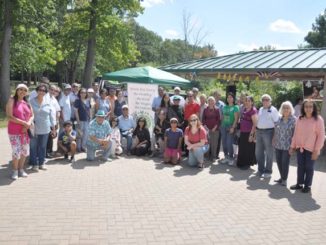
    NEW YORK (TIP): On Sept 6, 2021 a vegan picnic was organized by the NJ and NY chapters. This was the very first 100% vegan picnic organized by World Vegan Vision. Almost 100 people including many key members attended the picnic, according to information provided by Vinod Shah, who added : “Our picnic was filled with educational and informative activities along with entertainment”.

    Dr. Shrenik Shah president of the NJ chapter, addressed the attendees on the importance of going vegan for human health, prevention of animal abuse and for saving the environment. This was followed by a vegan quiz conducted by Ms. Neetu Jindal, assisted by her son Nirvaan who is a seasoned animal rights activist at the age of 10. Right after these 2 events and as a result of the information gained a few people decided to go vegan. Let us hear about their progress in the near future. Not only was all the food vegan, free of any animal products including dairy, but it was served in biodegradable plates and cutlery. This was done to minimize the impact on the environment.

    Picnic attendees enjoyed the Karaoke music for entertainment for the rest of the afternoon. The picnic was a very successful event thanks to the efforts of Kalindi Bakshi, Neetu Jindal, Vinod, Shah, Nitin Vyas and many others. Thanks to Mr. and Mrs. K.K. Mehta for sponsoring the picnic meals.

  • Indian Overseas Congress, USA condoled the demise of veteran Congress leader Oscar Fernandes

    Indian Overseas Congress, USA condoled the demise of veteran Congress leader Oscar Fernandes

    NEW YORK (TIP): Indian Overseas Congress, USA passed a resolution condoling the death of Oscar Fernandes, a veteran Congress leader and a mentor to scores of young aspirants in the party. “Known as much for his simplicity as well as his talent, Oscar played a critical role not only as a party functionary but also as an efficient administrator,” said George Abraham, Vice-Chairman of the Indian Overseas Congress, USA. “He was a true friend of the Overseas Congress from its inception, and we owe him the debt of gratitude for the guidance over the years. We will sorely miss him,” added Mr. Abraham.

    Oscar Fernandes, a former Union Minister and a senior Congress leader, passed away at a private Hospital in Mangaluru. He was eighty years old. He is survived by his wife Blossom and two children.

    “He was a people’s person and worked closely with personnel at the grassroots level not only advancing the cause of the Congress party but also manifesting his love for the country and its traditions,” said Mohinder Sigh Gilzian, President of the IOCUSA. “He was accessible to everyone and always received us with great humility and enthusiasm,” Mr. Gilzian added.

    In her message of condolences, Congress President Mrs. Sonia Gandhi said, “His humility, affability, simplicity, and integrity will remain an inspiration to all in public life. His demise is a huge loss for each and every Congress worker and indeed for the entire country. “I salute this remarkable colleague who enriched our lives and made so many contributions,” she said while sending her condolences to his family.

  • Triumphant celebration on the Return of Lion King to Broadway

    Triumphant celebration on the Return of Lion King to Broadway

    The Hit Show’s   Emotional First Performance in 18 Months Following Broadway’s Shutdown

    NEW YORK CITY (TIP):  The Lion King returned to Broadway on September 14 night following the unprecedented 18-month shutdown of the theater industry.

    In a Broadway first, September 14 performance of “Circle Of Life” was live streamed on TikTok, opening up the historic evening to fans all over the world.

    The starry evening included The Today Show’s Jenna Bush Hager and Carson Daly, Gloria Steinem (whose life is the focus of the 2020 Taymor film, The Glorias), Kristin Chenoweth, Salman Rushdie, Jelani Alladin, Heidi Blickenstaff, Ashley Brown, Greg Hildreth, John Riddle and three stars of Aladdin, which will celebrate its Broadway reopening on Tuesday, September 28: Michael Maliakel (Aladdin), Michael James Scott (Genie) and Shoba Narayan (Jasmine).

    The Broadway cast of the Lion King stars Stephen Carlile as Scar, L. Steven Taylor as Mufasa, Tshidi Manye as Rafiki, Cameron Pow as Zazu, Ben Jeffrey as Pumbaa, Fred Berman as Timon, Brandon A. McCall as Simba, Adrienne Walker as Nala, James Brown-Orleans as Banzai, Bonita J. Hamilton as Shenzi and Robb Sapp as Ed. Vince Ermita and Corey J. alternate as Young Simba, and Alayna Martus and Sydney Elise Russell alternate as Young Nala.

    The Lion King also features Lawrence Keith Alexander, Cameron Amandus, Leanne Antonio, Andrew Arrington, India Bolds Browne, Lindiwe Dlamini, Zinhle Dube, Bongi Duma, Angelica Edwards, Jim Ferris, Rosie Lani Feldman, Daniel Gaymon, Pia Hamilton, Daniel Harder, Michael Alexander Henry, Michael Hollick, Pearl Khwezi, Lindsey Jackson, Lisa Lewis, Mduduzi Madela, Jaysin McCollum, Ray Mercer, S’bu Ngema, Nhlanhla Ngobeni, Nteliseng Nkhela, Jacqueline René, Kaylin Seckel, Kellen Stencil, Housso Semon, Derrick Spear, Michael Stiggers Jr., Jamie J. Thompson, Bravita Threatt, Natalie Turner, Donna Michelle Vaughan, Nicholas Ward and Stephen Scott Wormley.

    ABOUT THE LION KING

    Approaching 24 landmark years on Broadway, The Lion King continues ascendant as one of the most popular stage musicals in the world.  Since its premiere on November 13, 1997, 25 global productions have been seen by nearly 110 million people.  Produced by Disney Theatrical Productions (under the direction of Thomas Schumacher), The Lion King has made theatrical history with six productions worldwide running 15 or more years and four others running 20 or more years.

    Performed over its lifetime in nine different languages (English, Japanese, German, Korean, French, Dutch, Spanish, Mandarin and Portuguese), by the end of 2021, there will be ten productions of The Lion King around the world, including Broadway, London, Paris, Hamburg, Tokyo, Madrid, on tour across North America, Japan and the U.K. & Ireland, with a separate production touring internationally. Having played over 100 cities in 21 countries on every continent except Antarctica, The Lion King’s worldwide gross exceeds that of any film, Broadway show or other entertainment title in box office history.

    The Lion King won six 1998 Tony Awards®:  Best Musical, Best Scenic Design (Richard Hudson), Best Costume Design (Julie Taymor), Best Lighting Design (Donald Holder), Best Choreography (Garth Fagan) and Best Direction of a Musical.  The Lion King has also earned more than 70 major arts awards including the 1998 NY Drama Critics Circle Award for Best Musical, the 1999 Grammy® for Best Musical Show Album, the 1999 Evening Standard Award for Theatrical Event of the Year and the 1999 Laurence Olivier Awards for Best Choreography and Best Costume Design.

    The show’s director, costume designer and mask co-designer Julie Taymor continues to play an integral part in the show’s ongoing success.  The first woman to win a Tony Award for Direction of a Musical, Taymor continues to supervise new productions of the show around the world.

    The Broadway score features Elton John and Tim Rice’s songs from The Lion King animated film along with three new songs by John and Rice; additional musical material by South African Lebo M, Mark Mancina, Jay Rifkin, Julie Taymor and Hans Zimmer; and music from “Rhythm of the Pride Lands,” an album inspired by the original music in the film, written by Lebo M, Mark Mancina and Hans Zimmer.  The resulting sound of The Lion King is a fusion of Western popular music and the distinctive sounds and rhythms of Africa, ranging from the Academy Award®-winning song “Can You Feel the Love Tonight” to Lebo M’s rich choral numbers.

    Elton John, Lebo M, and Hans Zimmer all collaborated on the 2019 version of the film, executive produced by Julie Taymor and Thomas Schumacher, which has gone onto extraordinary worldwide success.

    The book has been adapted by Roger Allers, who co-directed the animated The Lion King feature, and Irene Mecchi, who co-wrote the film’s screenplay.  Other members of the creative team include:  Michael Curry, who designed the masks and puppets with Taymor, Steve Canyon Kennedy (sound design), Michael Ward (hair and makeup design), Anthony Lyn (associate director), Marey Griffith (associate choreographer), Clement Ishmael (music supervisor) and Doc Zorthian (production supervisor). Anne Quart serves as co-producer.

    For more information worldwide, visit LionKing.com.


  • Indian-origin, Sole earner shot in US, kin in dire straits in Punjab

    Indian-origin, Sole earner shot in US, kin in dire straits in Punjab

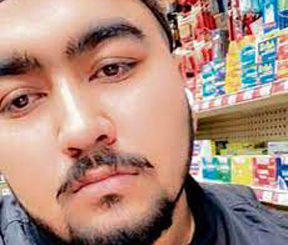
    HOUSTON (TIP): Six years ago, Simarjit Singh sold off his 7 kanals to send elder son, Gurjit Pal Singh, to the US. On Monday, September 6, Gurjit (22) was shot by a man here over a game in a casino where he worked.

    Resident of Bassi Jaid village near Begowal in Kapurthala, the family is in dire straits as they have lost their only earning member, on whom they had pinned their hopes of a happy future.

    Jasraj Singh, Gurjit’s 16-year-old brother, who studies in Class XI, says: “The store owner called us to tell my brother had been shot. My aunt’s daughter who is also in the US also reached there. We are devastated.”

    Jasraj’s mother hasn’t stopped crying since. It was Gurjit’s sixth year in the US. He was working at a multi-utility store in Houston, Texas, which had a gas station and a casino within.

    Gurjit’s father Simarjit works as a milkman to make both ends meet. The family relied heavily on Gurjit’s earnings.

    “We had sent him after selling off land. He was repaying the debt. Our only earning member is gone. Father sells milk for a living but it merely keeps us afloat,” says Jasraj. Their sister is married in Canada.

    Speaking about the incident, Jasraj adds: “A man came to the casino around 7.30 pm and returned again at 10.30 pm. He shot my brother in a fit of rage after being told the casino timings were over. He was apparently under the influence of drugs.” “We don’t believe it’s a hate crime,” he adds.


  • North American Punjabi Association’s Executive Director says that Sikhs are victims of hate crimes post 9/11

    North American Punjabi Association’s Executive Director says that Sikhs are victims of hate crimes post 9/11

    MILPITAS, CA (TIP): Sikhs are still victims of hate crimes post 9/11 in the US. Satnam Singh Chahal, executive director, North American Punjabi Association (NAPA), said, “Some hate crimes are in the record of the Federal Bureau of Investigation (FBI), but others go unnoticed as victims choose not to register their case in order to avoid harassment.”

    Chahal said this has been happening due to the identity crisis. He said community leaders were so busy with infighting that they had no time to think about it.

    He said, “In my day-to-day life, I have also become a victim of hate crime, but I always prefer not to register with the law enforcement agencies hoping that change will happen. Parents of school going kids are also sailing in the same boat.” He said members of the Sikh community were living under fear and feeling insecure.

    Chahal said Simratpal Singh, who belonged to Tarn Taran, died in custody of the US Immigration and Customs Enforcement (ICE) at La Paz County Jail on May 3, 2019, but no Sikh organization other than the NAPA followed up this case.

    He urged the Sikh organizations in the US and managing committees of all Gurdwaras to start result oriented campaign to spread the ideology of Sikh Gurus.

  • ‘Making Taliban Great Again’:  Banners with photos of Biden as militant shows up in US

    ‘Making Taliban Great Again’:  Banners with photos of Biden as militant shows up in US

    Republican Scott Wagner said he was behind the banners

    WASHINGTON (TIP): Republican Scott Wagner, 65, who ran for governor of the Keystone State in 2018 and lost, proudly took credit for the bizarre billboards.

    For the slew of billboards across the state of Pennsylvania, depicting Joe Biden as a Taliban militant next to the slogan ‘Making the Taliban Great Again’, Scott Wagner is said to have paid a whopping $15,000.

    ‘I’m not hiding from anybody, and that’s how I feel,’ the politician declared, after confirming he was responsible.

    ‘The pull out rushed through by President Biden had made us the laughing stock of the world,’ he explained in an email to Fox News on Wednesday, September 15.

    ‘The Taliban are openly stating that they ran the United States out of Afghanistan – they are now very emboldened.’

    And the ‘bigger mess,’ Wagner says, is the US left behind aircraft, vehicles and a host of weapons and explosives when withdrawing from the war-torn country.


  • A Patel at the helm: On change of guard in Gujarat

    A Patel at the helm: On change of guard in Gujarat

    The BJP is once again willing to accommodate dominant caste groups

    Effecting the fourth change of guard in a State this year, the Bharatiya Janata Party (BJP) replaced Vijay Rupani with Bhupendra Patel as Chief Minister in Gujarat on Sunday. Though the decision came out of the blue, intrigues that led to it had been gaining momentum for a while. To keep it all under the wraps, the government in Gujarat went so far as arresting and sending to jail a journalist under sedition charges for reporting that a change of guard was on the cards. Patels or Patidars have been the backbone of the BJP in Gujarat, but the elevation of Narendra Modi as Chief Minister in 2001 unsettled the cozy relations between the community and the party. Anandiben Patel succeeded Mr. Modi after he became Prime Minister, but she did not last in office for long. A partial ejection of Patels to accommodate a wider range of caste groups in its tent was the BJP approach under Mr. Modi and Amit Shah, and their national strategy mirrored this Gujarat experiment. The Patels in turn rebelled against the Modi-Shah axis several times in the last two decades. Mr. Rupani was less than impressive in administrative tasks or management of the social coalition. The COVID-19 pandemic exposed his failures starkly. With the Assembly elections looming, the Patels getting more restive, and the Aam Aadmi Party trying to emerge as a more viable opposition than the rudderless Congress, the BJP had to act. The Chief Minister-designate is a first-time MLA who was elected from the constituency vacated by Ms. Patel. The change also underscores the high command culture that is now entrenched in the BJP.


    The return of a Patel at the helm indicates a reversal of the BJP strategy of building coalitions of diverse caste groups under a leader from a marginal caste. Mr. Modi projected himself as a backward class leader in 2014, and subsequent choices in leadership at various levels largely followed this trend. There have been exceptions, such as Yogi Adityanath, a Rajput, who was elected Chief Minister in Uttar Pradesh. Within the party and outside of it, dominant castes have been resenting this and the BJP has now begun to feel the pressure. When it had to replace veteran warhorse B.S. Yediyurappa, a member of the dominant Lingayat community as Chief Minister in Karnataka, the BJP ensured that his successor was from the same community. The ongoing stand-off between the party and the Jat farmers in U.P. and Haryana is also indicative of the tension between the BJP and a dominant social group. The party’s Chief Minister in Haryana, Manohar Lal Khattar, is facing the heat. These communities are bargaining for a bigger share of power in the BJP’s Hindutva tent. The BJP is partially acting under pressure, but it may also be feeling more confident of the support of the marginal communities and poorer sections to accommodate its traditional supporters.

    (The Hindu)

  • Positive climate: On India engaging the U.S.

    Engagement with the U.S. should help India expand mitigation, adaptation action

    India’s front-line position as third highest emitter of greenhouse gases has sharpened focus on its future policy course to mitigate carbon emissions under the Paris Agreement. It has an irrefutable claim to a big part of the remaining global carbon budget, along with other smaller nations with low historical emissions, but room for maneuvering has shrunk in a world facing record temperatures and calamitous weather events. There is escalating pressure for India to commit itself to a date when it can achieve net zero — removing as much GHGs as it emits — on the lines of the goal set by the U.S. and the European Union for mid-century, and 2060 by China. Declaring a net zero plan under the Paris pact is a disquieting prospect since it would impose expensive choices, particularly in energy production. That conundrum has been addressed, at least partially, by visiting U.S. Special Presidential Envoy for Climate John Kerry, with the promise of financing and technology to make renewable energy the core of future development. Specific areas of cooperation to bring down emissions — in the expansion of transport, buildings and industry — and facilitating funding for 450 GW of renewable energy by 2030 can advance the India-U.S. Climate and Clean Energy Agenda 2030 Partnership. More clarity on the bilateral road map towards emissions reduction may come at the COP26 conference in November. India, meanwhile, needs to get all States to mitigate emissions and help them adapt to climate-linked extreme weather and atmospheric pollution caused by fossil fuels.

    At the end of 2020, a year marked by COVID-19 and many destructive storms, the Union Environment Ministry declared that the country had achieved 21% of its 33%-35% target to cut emissions intensity of GDP by 2030, and, similarly, was generating 37.9% of the 40% of power from renewables. Though encouraging, the immediate challenge lies in coming up with an adaptation framework to help those at highest risk — the millions living in the path of annual cyclones, including residents of populous coastal cities. Raising the ability of city administrations to handle tens of millions of liters of water regularly dumped in just a few days requires planning, funding and political commitment. Making low-cost insurance available for houses against climate-related losses will raise resilience, and lead to audits, encouraging governments to reduce risks. The Paris Agreement can easily fund much-needed urban retrofitting and boost employment. There is also a health imperative. Heat stress has a severe impact, causing higher mortality among the vulnerable elderly. These are growing problems, but they also represent an opportunity to steer post-COVID-19 policies towards benign, green development. For a low-emissions future, policies must put nature at the center.

    (The Hindu)

  • New bill could help Indians get US Green Card by paying supplemental fee

    New bill could help Indians get US Green Card by paying supplemental fee

    Employment-based immigrant applicant with a ‘priority date that is more than 2 years before’ can adjust to permanent residence by paying a supplemental fee of USD 5,000

    WASHINGTON (TIP):Millions of people stuck for years in the employment-based Green Card backlog in the US, including a sizable number of Indians, can hope for a lawful permanent residency in America by paying a supplemental fee if a new House bill is passed into law.

    The move, if included in the reconciliation package and passed into law, is expected to help thousands of Indian IT professionals who are currently stuck in an agonizing Green Card backlog.

    A Green Card, known officially as a Permanent Resident Card, is a document issued to immigrants as evidence that the bearer has been granted the privilege of residing permanently in the US.

    According to the committee print released by the US House of Representatives Judiciary Committee, which has jurisdiction over immigration, an employment-based immigrant applicant with a “priority date that is more than 2 years before” can adjust to permanent residence without numerical limits by paying a “supplemental fee of USD 5,000.” The fee is USD 50,000 for the EB-5 category (immigrant investors). The provisions expire in 2031, the Forbes magazine reported.

    For a family-based immigrant who is sponsored by a US citizen and with a “priority date that is more than 2 years before”, the fee for getting a Green Card would be USD 2,500.

    The supplement fee would be USD 1,500 if an applicant’s priority date is not within two years but they are required to be present in the country, according to the committee print. This fee would be in addition to any administrative processing fee paid by the applicant.

    However, the bill does not contain permanent structural changes to the legal immigration system, including eliminating country caps for green cards or increasing the annual quotas of H-1B visas.

    Before becoming law, the provisions would have to pass the Judiciary Committee, the House of Representatives and the Senate and be signed by the president, the report said.

    According to a report in CBS News, if successful, the legalization plan would allow undocumented immigrants who came to the US as children, Temporary Protected Status (TPS) beneficiaries, farmworkers and other pandemic-era essential workers to apply for permanent US residency, or green cards.

    Reacting to the bill, David J Bier, Immigration policy analyst at Cato Institute, said, “employment-based applicants can adjust if they have waited 2 years from their priority date… this is almost like abolishing the EB caps for adjustment applicants who can pay $5K. Awesome!”

     “For EB5, it’s $50K fee. Even those who can’t afford the fees or who are abroad would benefit from freeing up this cap space for others. It’s unfair that the bill maintains the country caps as is, so Indians and Chinese will be the only EB applicants required to pay the $5K/50K,” he said in a series of tweets.

    He said that the base caps for diversity, family, and #H1B all remain the same.

    “Since H1B is the feeder for most EB, that’s basically like keeping the EB cap the same. No reforms to #H2A, #H2B, or other work programs, so nothing to help unskilled workers/address the border,” he said.

    “Basically, this bill will help a few legal immigrants abroad indirectly, but the main purpose is integration of existing immigrants. That’s a noble cause, but the immigration/migration part of immigration reform is just left out. No new pathways for workers, same system,” he tweeted.

  • Buenos Aires gave Indian sports a new look

    Buenos Aires gave Indian sports a new look

    Tokyo 2020 Olympic Games

    By Prabhjot Singh

    India’s highest medal tally ever : One gold, four Silver and two bronze medals

    Tokyo 2020 Paralympic Games

    India’s highest medal tally ever: Five gold, eight Silver and six bronze medals.

    Tokyo 2020 – Olympic and Paralympic Games – will go down in the annals of Indian sports as a year of consolidation of gains this liberal democracy has made over decades of its participation in these global mega sporting events.

    Not many would remember, 2018 was the watershed year. It was at Buenos Aires in the Youth Olympic Games that India started sending out signals of its emergence as a new power in sports.

    India ended 14th on the medals tally with three gold, nine Silver and one bronze medal. It was perhaps the first global event conducted under the banner of the International Olympic Committee that India finished a select band of nations with 10 or more medals.

    Since then, India has not looked back.

    It was “lucky” 13 of Buenos Aires that has provided a new dynamic direction to Indian sports. The Youth Olympic Games not only provide a record number of medals but also projected on the global horizon many new faces.

     It was at Buenos Aires that projected young shooters Manu Bhaker and Saurabh Chaudhary. Both were gold medal winners. Indian hockey teams, both men and women, ended with silver medals. Vivek Sagar Prasad and Lalremsiami were members of silver medalist Indian men and women Hockey5 teams that were subsequently inducted into Olympic teams. The medals trail set in motion at Buenos Aires climaxed at Tokyo 2020 Olympic Games where India got its first ever medal, a Gold, in track and field besides returning to the victory podium in men’s hockey after a gap of 41 years.

    The gains were further consolidated at Tokyo 2020 Paralympic Games where India finished 24th with 19 medals, including five gold. Beginning with Buenos Aires, all the IOC events – Youth Olympic Games, Olympic Games and Paralympic Games – have shown India’s firm climb up the medals ladder.

    The medal winning performances, mostly in individual events, have been acting as a catalyst for aspiring players to take to sports as a career.

    Neeraj Chopra (Javelin throw, Tokyo 2020 Olympics), Sumit (Javelin throw in F64 category of Paralympics), Krishna Nagar (Badminton, SH category), Pramod Bhagat (Badminton, SL 3 category), Manish Narwal (Shooting, Mixed 50 m, SH1 category), and Avani Lekhara (Shooting, SH 1, 10 m Air Pistol) have emerged as the new icons of Indian sports for winning gold medals in Olympics or Paralympic Games.

    Shooters Singhraj Adrana and Avani Lekhara won two medals each in Paralympics. Besides a Badminton coach, Pramod Bhagat, a District Magistrate of NOIDA, Suhas Yathiraj, too gave India medals in Badminton. While Bhagat won a gold, Yathiraj lost the gold medal to his French rival to end with a Silver.

    For Avani Lekhara, it was a gold and a bronze. She became the first women shooter to win a medal in the Olympics or Paralympics. Likewise, Harvinder Singh of Kaithal had the distinction of winning the country’s first medal in archery in the Paralympics or Olympics.

    It may sound as an exaggeration that finally Indian sports have come of an age and the country has been successful to an extent of creating sports temperament. Sports is now being accepted as a respectable profession.

    India’s progress in some sports and games, especially Badminton, Boxing, Golf, Shooting, Track and Field, Table Tennis, Tennis and Wrestling has been noticeable.

    In team sports, hockey remains the top choice.

  • Polarization at work in UP

    Polarization at work in UP

    With elections round the corner, Yogi Adityanath is back with hate campaign

    By Julio Ribeiro

    “Yogi Adityanath has stretched credibility by alleging that those who address their fathers as ‘abba jaan’, the Muslims, were the only community that was provided with rations before 2017, the year he became the CM! Rations from fair-price shops are available to the poor at reduced rates. Since Muslims, SCs and Adivasis are the poorest, community-wise, it may be that Yogi saw more Muslims and Dalits in ration queues before 2017 when he was out on the streets fighting for power. That position would hold firm today also, but Yogi is confined most of the time to his chair in the ‘mantralaya’ and may not have noticed this. But the damage has been done. People are gullible. They believe what the ‘great leaders’ tell them!”

    Yogi Adityanath is presently in his element. He is busy needling the voters who address their fathers as ‘abba jaan’! Often in the past, he has gone beyond mere needling, for the Muslims are his ‘bete noire’. Tackling Covid, and now dengue, is not what interests him. These are unnecessary interferences in his ‘divine’ task of ridding his state of what he considers to be pests, criminals, beef eaters, cow killers and, above all, jihadi terrorists. In my city Mumbai, I know many Muslims, some at the top end of society and many more at the low end residing in slums. The latter I got acquainted with more intimately when I returned home from Romania where the only Muslims I met were either diplomats or locals who waited at diplomatic dinner tables, including my own. They were in great demand, despite their penchant for sampling the wines, fortunately after the guests had departed. My friends, largely from the Race Course, do not seem to be too concerned with religion. I am not sure if they prayed, even when their horses were in the race! My humbler friends, who formed the nucleus of the mohalla committees, formed after the 1993-94 riots to foster communal harmony and peace, were busy during most days eking out a living! They could spare no time on hate, like the Yogi seems to have, particularly at election time.

    Speaking of elections, due in UP in the next six months, I thought he had spread enough vitriol that appealed to listeners who had no difficulty in blindly accepting the words that emerged from his mouth. Unfortunately, the farmers and Covid-19 have combined to deny him the walk-over he had banked upon.

    The resulting uncertainty surrounding the outcome of the 2022 Assembly elections had forced him to fall back on hate and communal division to recover lost ground. Will the ploy succeed? No one can tell at the present moment. But, God forbid if it does, it will not be good for the country. A divided country is a sure recipe for disaster. If the minorities, who constitute 20 per cent of the population, are reduced to second-class status the country will have a sizeable chunk of permanently alienated citizens. And to these the ones in power will have to add a constantly floating number of the temporarily alienated, like farmers of Punjab, Haryana and western UP and castes aspiring to be downgraded in official rankings in order to corner jobs, besides the political power that comes with sheer numbers.

    A communal divide has existed in UP, as it did in Mumbai, for centuries. It was dormant till elections were held and political parties vying for power appeared on the horizon. The accusation against the Congress of appeasement of minorities has found traction with the voting public.

    I have often tried to analyze this accusation. The Muslims are one of the three groupings (the two others being the SCs and STs) in our society that are economically and educationally backward. If the Congress or any government of the day had pampered them in the sphere of education or health, I would support that ‘appeasement’ with my eyes shut. But the Congress party only gave in to demands of concessions to religious beliefs that no secular democratic government should concern itself with. Religion is a personal belief. It concerns only the believer and his or her understanding of creation and the afterlife. Why should the State get involved? Rajiv Gandhi made his biggest political blunder when he conceded the maulvis’ demand to undo the mischief of the Shah Bano judgment. The State should govern justly and fairly without getting involved in religious matters. It should make it a pillar of State policy to keep ‘miri’ and ‘piri’ separate.

    Yogi Adityanath has stretched credibility by alleging that those who address their fathers as ‘abba jaan’, the Muslims, were the only community that was provided with rations before 2017, the year he became the CM! Rations from fair-price shops are available to the poor at reduced rates. Since Muslims, SCs and Adivasis are the poorest, community-wise, it may be that Yogi saw more Muslims and Dalits in ration queues before 2017 when he was out on the streets fighting for power. That position would hold firm today also, but Yogi is confined most of the time to his chair in the ‘mantralaya’ and may not have noticed this. But the damage has been done. People are gullible. They believe what the ‘great leaders’ tell them!

    My friends in UP and my associates in Mumbai who hail from UP tell me that Yogi has a large following in the state. As CM, he has performed creditably in curbing ministerial corruption and keeping senior bureaucrats on their toes. Of course, he has not been able to control low-level corruption in the revenue, police and other departments, but that has not been achieved in any state of India. Yogi created a flutter at the start of his reign by ordering the police to shoot criminals on sight. He has mellowed somewhat as wiser men have counselled him of its dangers.

    He has floundered in the fight against Covid. He has been inattentive to the inroads made by dengue. He has obviously not given health infrastructure the attention it needs. This may not affect his fortunes at the hustings because the BJP’s counter-propaganda machinery has been tested and proved more than worthy. It can make black into white and vice versa!

    What could mar his prospects, though, is the farmers’ agitation. The farmers were with him in 2017. They will not oblige this time round unless he mollifies them to an extent, he may find impossible to do. And then, there are also the bodies that floated down the Ganga and landed on the banks of Bihar!

    (The author is a highly decorated retired Indian Police Service Officer)

  • Two democracies and their vigilante problem

    Two democracies and their vigilante problem

    By Peter Ronald deSouza

    “One form of the vigilante, in the United States, is the ‘citizen arrester’ who enjoys legal status and whose actions are protected by a law that permits him or her to pursue and arrest a person accused of breaking the law. Drawing on a legal convention that comes from the Common Law tradition in England, dating from the 12th Century, a citizen arrester can physically arrest a person, on behalf of the Monarch (now State) who is regarded by them as breaking or evading the law. There are procedures to be followed, and risks involved for wrongful arrest, but assuming that these are adhered to the citizen arrester is regarded as aiding the consolidation of a political system based on the rule of law. Because of its potential for abuse, in legal circles in the U.S., there is a debate on the need to circumscribe the scope, and eligibility, of who can be a citizen arrester.”

    In the world’s largest democracy, the word ‘vigilante’ evokes unsavory images of goons stopping cattle trucks and lynching drivers, or video filming themselves assaulting men accused of love jihad or beating up couples celebrating Valentine’s Day. A vigilante in India is both bad news and a bad word. Vigilantes are anti-democratic. They lack the values of a constitutional democracy. A consensus has emerged in India to demand that the law-and-order machinery comes down heavily on such vigilante behavior.

    A respectable garb in the U.S.

    So, imagine my shock when I discovered that in the world’s oldest democracy, the word ‘vigilante’ receives only half the opprobrium that we heap on it in India. The other half is suppressed by a law that makes vigilantism respectable. One form of the vigilante, in the United States, is the ‘citizen arrester’ who enjoys legal status and whose actions are protected by a law that permits him or her to pursue and arrest a person accused of breaking the law. Drawing on a legal convention that comes from the Common Law tradition in England, dating from the 12th Century, a citizen arrester can physically arrest a person, on behalf of the Monarch (now State) who is regarded by them as breaking or evading the law. There are procedures to be followed, and risks involved for wrongful arrest, but assuming that these are adhered to the citizen arrester is regarded as aiding the consolidation of a political system based on the rule of law. Because of its potential for abuse, in legal circles in the U.S., there is a debate on the need to circumscribe the scope, and eligibility, of who can be a citizen arrester.

    The ‘Heartbeat Bill’

    But rather than diminish the place of the citizen arrester, the recent decisions of the Texas legislature are in fact encouraging the practice. Two cases are particularly noteworthy. The first is the latest innovation introduced in Senate Bill 8 (SB8) in Texas, known as the ‘Heartbeat Bill’, signed into law by the Texas Governor Greg Abbott in May 2021, that seeks to ban abortions after six weeks when the fetus registers a heartbeat. The passage of this law has produced an active debate in the U.S., between pro-abortion and pro-life groups, drawing on medical science, law, bioethics, and women’s rights, to refine the different elements of the Roe vs Wade judgment of 1973.

    There are five aspects worthy of attention. The first is it deprives women of the right over their own bodies by making abortion illegal after six weeks when many women do not even know that they are pregnant. This in effect means that abortions, when needed, are unavailable. The second is to include, in the applicability of the law, even women who are victims of rape and incest. Victims are thereby subjected to a second victimization since now they will be compelled to carry the pregnancy to full term or seek termination in the dark alleys beyond the law. The third is to make culpable anyone associated with an abortion after six weeks and this could include the Uber driver who takes the pregnant woman to the clinic, the receptionist, the nurse and the doctor. The fourth is the declining, by the Supreme Court of the USA, in a five versus four vote, to hear the injunction challenging the Texas Anti-Abortion Law.

    In her dissenting note, Justice Sonia Sotomayor wrote: ‘Presented with an application to enjoin a flagrantly unconstitutional law engineered to prohibit women exercising their constitutional rights and evade judicial scrutiny, a majority of justices have opted to bury their heads in the sand… The Court should not be so content to ignore its constitutional obligations to protect not only the rights of women, but also the sanctity of its precedents and of the rule of law.’

    This sandy terrain to which the court retired is, unfortunately, very familiar to us in India. And the fifth, on which I wish to comment here, is the legal device that blocks State officials from enforcing the law but outsources the enforcement to private citizens who can sue abortion providers from performing abortions and are entitled to collect $10,000 as a civil payout in addition to their legal fees. Such a person can even be someone from outside the state who can show any connection to the abortion. Enter the ‘bounty hunter’ or ‘citizen arrester’.

    While each of the five aspects raises important ethical and legal issues I wish to highlight only the fifth since Republicans in Texas have used the legal device — call it a cunning innovation — of empowering and encouraging citizen arresters to perform the job of state officials who are thereby protected from being sued. The effect of this innovation is to deny women the rights given by Roe vs Wade. The case shows the length to which partisan groups in a democracy, even in one as mature as the U.S., will go to overturn settled law and redesign both the public discourse and the institutional order to make it consistent with their religious ideology. Linda Greenhouse commenting on the legislation in her article in The New York Times (September 9, 2021) asked in exasperation: ‘Who let God into the legislative chamber?’ This is the same question we often ask in India.

    Voting Reforms

    The second case in Texas concerns the Reforms to the Voting Law in Texas which seek to reverse the gains of earlier years. SB1, the Bill recently signed by the governor, bans drive through voting, 24-hour voting, and distribution of mail-in applications. It requires new ID requirements for voting by mail, creates new rules for voter assistance, establishes monthly checks, etc. To block the passage of the Bill, the minority Democrats who felt the changes amounted to voter suppression and would disadvantage minority voters, flew out of the State to Washington DC so that the house could not convene for want of a quorum. The Republicans responded by relying on the law to compel voting and thus Speaker Dade Phelan signed warrants authorizing the Sergeant-at-Arms to arrest and produce the missing representatives. The length to which the Speaker went is shocking to our democratic sensibilities. Some representatives stated that they were less worried of being arrested by officials and more by citizen arresters.

    In an overview article titled ‘Vilifying the Vigilante: A Narrowed Scope of Citizen’s Arrest’, Professor Ira P. Robbins discusses its historical origins, pitfalls, good application and reform. He argues for the scope of citizen arresters to be restricted to only a small category of people, such as shopkeepers, out-of-jurisdiction police, and private police forces, and being abolished in all other cases. The trend, unfortunately, as shown by Texan laws, SB1 and SB8, is moving in the other way. Because of the opprobrium we have heaped on vigilantes in India, I hesitated to equate them with the citizen arrester till I read the phrase in a letter on SB8, by the Chairman of the U.S. House Judiciary Committee, Jerrold Nadler, to the Attorney General, Merrick B. Garland, to prosecute ‘would be vigilantes attempting to use the private right of action established by that blatantly unconstitutional law’. The oldest and the largest democracies, it seems, both have a vigilante problem today.

    (The author is the DD Kosambi Visiting Professor at Goa University. He is the co-editor of the book he co-edited with Rukmini Bhaya Nair, ‘Keywords for India’)

  • SpaceX launches 4 amateurs on private Earth-circling trip

    SpaceX launches 4 amateurs on private Earth-circling trip

    NEW YORK (TIP): It was the first time a rocket streaked toward orbit with an all-amateur crew — no professional astronauts. SpaceX’s first private flight blasted off Wednesday, September 15 night with two contest winners, a health care worker and their rich sponsor, the most ambitious leap yet in space tourism.

    It was the first time a rocket streaked toward orbit with an all-amateur crew — no professional astronauts.

    The Dragon capsule’s two men and two women are looking to spend three days circling the world from an unusually high orbit — 160 km higher than the International Space Station — before splashing down off the Florida coast this weekend. Leading the flight is Jared Isaacman, 38, who made his fortune with a payment-processing company he started in his teens.

    It’s SpaceX founder Elon Musk’s first entry in the competition for space tourism dollars. Isaacman is the third billionaire to launch this summer, following the brief space-skimming flights by Virgin Galactic’s Richard Branson and Blue Origin’s Jeff Bezos in July.

    Joining Isaacman on the trip dubbed Inspiration4 is Hayley Arceneaux, 29, a childhood cancer survivor who works as a physician assistant where she was treated — St. Jude Children’s Research Hospital in Memphis, Tennessee. Isaacman has pledged $100 million out of his own pocket to the hospital and is seeking another $100 million in donations.

    Also, along for the ride: sweepstakes winners Chris Sembroski, 42, a data engineer in Everett, Washington, and Sian Proctor, 51, a community college educator in Tempe, Arizona.

    Arceneaux is set to become the youngest American in space and the first person in space with a prosthesis, a titanium rod in her left leg.

    The recycled Falcon rocket soared from the same Kennedy Space Center pad used by the company’s three previous astronaut flights for NASA. But this time, the Dragon capsule aimed for an altitude of 575 km, just beyond the Hubble Space Telescope.

    Their fully automated capsule has already been to orbit: It was used for SpaceX’s second astronaut flight for NASA to the space station. The only significant change is the large domed window at the top in place of the usual space station docking mechanisms.

    Isaacman, an accomplished pilot, persuaded SpaceX to take the Dragon capsule higher than it’s ever been. Initially reluctant because of the increased radiation exposure and other risks, SpaceX agreed after a safety review.

    “Now I just wish we pushed them to go higher,” Isaacman told reporters on the eve of the flight. “If we’re going to go to the moon again and we’re going to go to Mars and beyond, then we’ve got to get a little outside of our comfort zone and take the next step in that direction.” Isaacman, whose Shift4 Payments company is based in Allentown, Pennsylvania, is picking up the entire tab for the flight but won’t say how many millions he paid. He and others contend those big price tags that will eventually lower the cost.

    “Yes, today you must have and be willing to part with a large amount of cash to buy yourself a trip to space,” said Explorers Club President Richard Garriott, a NASA astronaut’s son who paid the Russians for a space station trip more than a decade ago. “But this is the only way we can get the price down and expand access, just as it has been with other industries before it.

    Though the capsule is automated, the four Dragon riders spent six months training for the flight to cope with any emergency. That training included centrifuge and fighter jet flights, launch and reentry practice in SpaceX’s capsule simulator and a grueling trek up Washington’s Mount Rainier in the snow.

    Four hours before liftoff, the four emerged from SpaceX’s huge rocket hangar four hours before liftoff, waving and blowing kisses to their families and company employees, before they were driven off to get into their sleek white flight suits. Once at the launch pad, they posed for pictures and bumped gloved fists, before taking the elevator up. Proctor danced as she made her way to the hatch.

    Unlike NASA missions, the public won’t be able to listen in, let alone watch events unfold in real time. Arceneaux hopes to link up with St. Jude patients, but the conversation won’t be broadcast live.

    SpaceX’s next private trip, early next year, will see a retired NASA astronaut escorting three wealthy businessmen to the space station for a weeklong visit. The Russians are launching an actress, film director and a Japanese tycoon to the space station in the next few months. Once opposed to space tourism, NASA is now a supporter. The shift from government astronauts to non-professionals “is just flabbergasting,” said former NASA Administrator Charles Bolden, a former space shuttle commander.

    “Someday NASA astronauts will be the exception, not the rule,” said Cornell University’s Mason Peck, an engineering professor who served as NASA’s chief technologist nearly a decade ago. “But they’ll likely continue to be the trailblazers the rest of us will follow.”

    (Agencies)

  • PM Modi to visit US to attend Quad summit, UNGA debate

    PM Modi to visit US to attend Quad summit, UNGA debate

    It is Mr. Modi’s first visit to the US after change of guard in Washington

    NEW YORK (TIP): Prime Minister Narendra Modi will visit the US to attend Quad Leader’s Summit on September 24 and the high-level segment of the United Nations General Assembly (UNGA) on September 25.

    Mr.  Modi will visit the White House on September 24 to participate in a Quad leaders summit hosted by U.S. President Joe Biden.

    The Quad meeting of Mr. Modi, Mr. Biden and the Prime Ministers of Japan and Australia Yoshihide Suga and Scott Morrison is the first in-person meeting of its kind at the White House.

    The four leaders will review progress made since their first virtual summit in March, the Ministry of External Affairs (MEA) said. Specifically, they will review the Quad Vaccine Initiative, a plan to manufacture (in India) at least 1 billion COVID-19 vaccines, for distribution in Asia by the end of 2022.

    “Hosting the leaders of the Quad demonstrates the Biden-Harris Administration’s priority of engaging in the Indo-Pacific, including through new multilateral configurations to meet the challenges of the 21st century,” the White House said on Tuesday.

    The leaders “will also exchange views on contemporary global issues such as critical and emerging technologies, connectivity and infrastructure, cyber security, maritime security, humanitarian assistance/ disaster relief, climate change and education”, the MEA said.

    Free and open Indo-Pacific

    “The summit would provide a valuable opportunity for dialogue and interactions among the leaders, anchored in their shared vision of ensuring a free, open and inclusive Indo-Pacific region,” the MEA said. The White House statement also referred to discussions around “promoting a free and open Indo-Pacific”.

    At the March summit, the leaders discussed China’s assertiveness in the Indo-Pacific region and that topic will most likely come up again next week. Afghanistan will also likely be discussed, weeks after the chaotic withdrawal of U.S. troops from Kabul and a Taliban take-over of the country.

    There has been speculation on whether Mr. Modi and Mr. Biden will hold bilateral discussions. The Hindu has reached out to the White House for clarification on this.

    Mr. Modi will travel to New York, where he will address the 76th session of the United Nations General Assembly (UNGA) on Saturday, September 25 morning.Mr. Modi is scheduled to be the first speaker at the U.N. The theme for the general debate is: “Building resilience through hope to recover from COVID-19, rebuild sustainably, respond to the needs of the planet, respect the rights of people and revitalize the United Nations.”

    The general debate is being held partly virtually this year owing to the COVID-19 situation. Mr. Modi is one of about 109 leaders to address the General Assembly in person, while 60 will deliver virtual addresses, PTI reported.