Tag: Apple News

  • Return of the Mullahs: On the Taliban’s Islamic Emirate of Afghanistan

    Taliban have sent a clear message that they care little about what the world thinks of them

    The debate on whether the Taliban would form an “inclusive government” representing all sections of Afghan society was laid to rest by the Taliban themselves on September 7 when the group’s spokesman, Zabihullah Mujahid, announced the formation of the new administration of the ‘Islamic Emirate of Afghanistan’. Of the 33 Cabinet Ministers named, 30 are Pashtun, two ethnic Tajiks, and one is Uzbek. The Taliban are predominantly Pashtun, who make up some 40% of Afghanistan’s ethnically diverse population of 40 million. Women and the Hazara Shia minority — both faced targeted harassment and discrimination when the Taliban were in power in the 1990s — were excluded completely. Seventeen Ministers are on the UN sanctions blacklist for terrorists, including the head of the government, Mullah Hassan Akhund, and Sirajuddin Haqqani, the head of the Haqqani Network. Mullah Hibatullah Akhundzada, the Taliban’s reclusive emir, will be the ‘Amir ul-Momineen’ (commander of the faithful), a title Mullah Omar had assumed in the 1990s. With the Cabinet portfolios allocated to the Taliban’s core and the Haqqanis and introducing a system that resembles the previous Islamic Emirate known for its disregard for basic human rights, the Taliban have sent a clear message that they care little about what the world thinks about them.

    Today’s Taliban appear to be stronger than their last avatar. In the 1990s, only three countries recognized the Islamic Emirate; the Taliban also never controlled the whole of Afghanistan. But now, more regional powers are ready to engage with them, including China and Russia. The group has also claimed total control over the country, with Panjshir, the last holdout, overrun earlier this week. With the new government, a stronger Taliban are trying to tighten their grip, though it may not be easy. Ever since Afghanistan became a republic in 1973, no government in Kabul has managed to stabilize the country. The ethnic, religious and political contradictions are too deep to be glossed over by the Taliban’s divisive Islamist Pasthun nationalism. In Panjshir, the rebels may have withdrawn to the mountains, like the Taliban did in 2001, but they could regroup and hit back like the Taliban did after 2005. The total exclusion of Shias and marginalization of other ethnicities could blow back in the near term. Afghanistan has also seen the emergence of a vibrant civil society, especially in its cities, which may not accept the Taliban’s rule of the Mullahs quietly. Already, the crackdown on women’s rights has sparked large-scale protests by women in Kabul and elsewhere, which was unimaginable in the 1990s. If the Taliban were wise, they would have focused on healing the wounds of the long war and rebuilding the ruptured state and society. But the Pashtun, Islamist, sectarian Taliban seem programmatically incapable of doing that.

    (The Hindu)

  • Drug deaths in Punjab

    An urgent probe should reveal the supplier-peddler network

    Drug addiction remains an unresolved issue in Punjab, despite the intervention at various levels by the government and voluntary organizations. The spate of deaths attributed to drug abuse in Bathinda district in the recent past is a scary reminder of the scale of the menace, and the apparent ineffectiveness and limited scope of the measures put in place to deal with the crisis. In the Chief Minister’s ancestral village Mehraj, though, the drug-related deaths of two brothers, both below 30, and reports of widespread addiction in the area point to the absence of any control mechanisms, and unhindered patronage to the peddlers and handlers. The spotlight is back on the dealer-politician-police nexus. There will be an announcement soon of a crackdown in the district. Since it is the election year, the action taken report is bound to be more substantive and text heavy. The deaths of these young people would in all likelihood be used to train guns at those in power, indulge in disparaging verbal crossfire, let the matter hog news space for a few days and then allow a quiet burial before another tragedy strikes. Politics casts its shadow over the drug abuse crisis in the state, with little or no space for any admission of failure of policy, discussions of the ground reality, or constructive inputs on how to go forward. An issue layered with social, economic, administrative and mental health factors is reduced to and seen only through the political prism, with the result that no one is the wiser, or held accountable. The distraught father, who had no inkling that his now deceased boys had been taking drugs, has a message that could not be more clear in content and intent: ‘I do not want any compensation. I just want that no other parent should bear such loss due to drugs. Just curb this menace.’ There are no quick-fix solutions, but if the governments have let Punjab down, its people, too, do not have much to show by way of their involvement or interest in dealing with the crisis. Public pressure rides on the back of community participation. That’s what drives change, and has been missing.

    (Tribune India)

  • 47 Punjab-origin candidates in fray for Canada polls

    47 Punjab-origin candidates in fray for Canada polls

    OTTAWA (TIP): As many as 47 Punjabis are trying their luck in the Canadian Federal General Elections for which the polling is scheduled to be held on September 20.

    Prominent faces :

    • Defense Minister Harjit Sajjan from Vancouver South
    • Minister Anita Anand from Oakvilla in Ontario
    • Minister Bardish Chagger from Waterloo
    • Jagmeet Singh, leader of New Democratic Party who provided support to the minority government of Justice Trudeau, from Burnaby South

    In the final list of candidates, the maximum Punjabi candidates (17) have been fielded by the Liberal Party, followed by Conservative Party (13), New Democratic Party (10), People’s Party of Canada (5), Green (1) and one will contest as an Independent.

    The 2019 polls also saw the same number of candidates, 19 of whom made it to the House of Commons. With 16 of the sitting MPs and a Punjabi-versus-Punjabi contest on several seats, their relatives back home are keeping fingers crossed. The prominent Punjabi NRI faces in the poll fray are: Defense Minister Harjit Sajjan from Vancouver South, minister Anita Anand from Oakvilla in Ontario, minister BardishChaggar from Waterloo and Jagmeet Singh, leader of New Democratic Party (NDP) who provided support to the minority government of Justice Trudeau, is seeking reelection from Burnaby South.

    The Liberals have fielded Ruby Sahota (Brampton North), Sonia Sidhu (Brampton South), Kamal Khera (Brampton West), Anju Dhillon (Dorval-Lachine-LaSalle), Randeep S Sarai (Surrey Centre), Maninder Sidhu (Brampton East) and Sukh Dhaliwal (Surrey Newton) for reelection. The other candidates fielded by the Liberals are Lakhwinder Jhaj, Parm Bains and Sabrina Grover. Raj Saini was fielded from Kitchender Centre, but he withdrew his candidature on Saturday after facing allegations of inappropriate behavior towards staffers.

    The NDP has fielded Tejinder Singh form Brampton South, Gurprit Gill from Brampton West, Avneet Johal from Surrey Newton and Gurinder Singh Gill from Calgary Skyview. The candidates fielded by the Conservatives include sitting MPs Tim Uppal, Jag Sahota and Jasraj Singh. Other candidates are Indira Bains, Priti Lamba, Naval Bajaj, Medha Joshi, Ramandeep Brar, Jagdeep Singh, Tina Bains and Sukhbir Singh Gill.

    Navdeep Bains (Mississauga-Malton), who was earlier a minister in the Trudeau cabinet, has reportedly quit politics and is not re-contesting. Along with him, Liberal MP Gagan Sikand (Mississauga-Streetsville) and Independent Ramesh Sangha (Brampton Centre) are also not seeking re-election this time.

    Even Parveen Hundal is contesting as an Independent from Surrey Newton and Devyani Singh from Green party is in fray from Vancouver Quadra. The power of the Sikh community has been gauged from the fact that in last House, it had 18 Sikh MPs in Canada.

    The Sikh community comprises just 1 per cent of the country’s population, but they have come to wield more power than most of their immigrant counterparts. The credit goes to a robust culture of grassroots politics, organizational skills and fundraising capabilities, and a particular feature of Canada’s electoral system that requires each candidate to bring in a certain number of signatures and party members in order to get nominated.


  • BRICS Leaders Call for Settling Afghan Situation by Peaceful Means

    BRICS Leaders Call for Settling Afghan Situation by Peaceful Means

    The declaration at the summit said the leaders also sought an “inclusive intra-Afghan dialogue so as to ensure stability, civil peace, law and order”.

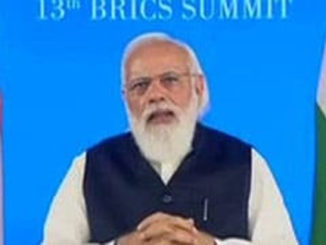
    NEW DELHI (TIP): The five-nation BRICS summit chaired by Prime Minister Narendra Modi Thursday evening called for settling the situation in Afghanistan through peaceful means. The declaration at the summit said the leaders also sought an “inclusive intra-Afghan dialogue so as to ensure stability, civil peace, law and order”. While the theme for the summit is “cooperation for continuity, consolidation and consensus”, the focus remained on Afghanistan.

    The “New Delhi Declaration” adopted at the end of the summit also emphasized the need to “address the humanitarian situation and to uphold human rights, including those of women, children and minorities”.

    The five-nation grouping (Brazil-Russia-India-China-South Africa) also underscored their “priority of fighting terrorism, including preventing attempts by terrorist organizations to use Afghan territory as terrorist sanctuary and to carry out attacks against other countries”.

    The declaration said they were “committed to combating terrorism… including cross-border movement of terrorists, and terrorism financing networks and safe havens”.

    Very strong comments on the subject during the summit came from Russian President Vladimir Putin, who spoke of the possible threats an unstable Afghanistan might pose to neighboring countries.

    Afghanistan should not become a “threat to its neighboring countries, a source of drug trafficking and terrorism”. Its citizens, he said, “deserve to exercise their rights of defining of what their state will look like on their own”.

    He also made it clear whom his country held responsible for this situation. “US and its allies’ withdrawal from Afghanistan has created a new crisis,” he said. “Global security has faced serious challenges and system of strategic stability has gone downhill. Outstanding regional conflicts haven’t stopped”. This situation, he said, “stems from irresponsible attempts to impose alien values… To build a so-called democracy without taking into account historic features and traditions that other people have followed. It results in destabilization and chaos and after that, the authors of this left and entire international community will have to clear up this mess”.

  • India’s Minister Meenakshi Lekhi invites the Indian diaspora to “support and build a new India”

    India’s Minister Meenakshi Lekhi invites the Indian diaspora to “support and build a new India”

    Consul General Randhir Kumar Jaswal in his welcome to the minister said it is a special occasion because it is the maiden visit of Madam Lekhi to New York as a minister
    Maithili Patel giving a Kathak performance.
    Bani Ray gave a performance of Odissi dance.
    Deputy Consul General Dr. Varun Jeph thanked the Minister and the guests.

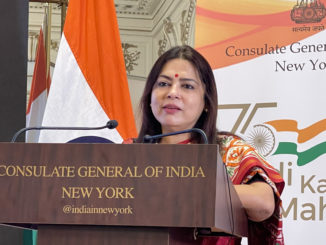
    NEW YORK CITY (TIP): India’s Minister of State for External Affairs Meenakshi Lekhi praised the Indian diaspora at the “Azadi Ka Amrit Mahotsav”, a program commemorating 75 years of India’s Independence, at the Indian Consulate here on September 8.

     “Members of the Indian diaspora are innovators, engineers and have contributed to the well-being of your adopted nation. That is the positivity of India which Indians bring together” the Minister said.

    Ms Lekhi added: “We tend to assimilate ourselves in the societies we live in. We believe in working for the well-being of mankind and not cause disruption, which several other people do. India is for peaceful purposes, India is for the progress of mankind, India stands truly for Vasudhaiva Kutumbakam and that message is carried on by all of you. While India is innovating, India is trying to help the world and help itself and that is what Atmanirbharta’ and self-sustenance is all about. We have to ensure we meet our goal of building Aatmanirbhar Bharat when we celebrate 100 years of India’s Independence.” “I cannot thank you enough that when the world was battling pandemic and COVID-19, how the entire community across the globe stood together. India launched its own Atmanirbhar vaccine in January 2021 and “many skeptics talked against the vaccine and the result was that second wave (of the pandemic) took its toll. But before the second wave could take its toll, because we were stable and we had fought the first wave well due to timely lockdown and other procedures, we were helping the countries which were going through difficult times. At the same time when the second wave hit us, because of people like you across the globe we were helped by several other countries who we stood for, and they stood for us. We stand for friendship, we stand for goodwill, we stand for cooperation.” Meenakshi Lekhi posted on social media after the event – “Addressed the vibrant Indian community in New York and witnessed how deeply they are connected to their roots. Invited the diaspora to support and build a new India.” Earlier, the Consul General Randhir Kumar Jaiswal welcomed the minister.  “It’s a very special occasion because it is the maiden visit of Madam Lekhito New York as a minister. The Indian community here welcomes you in their own style, and their own colorful manner. There is a reason to celebrate – Azadi Ka Amrit Mahotsav, with you being here. For us it is a privilege to have you here at the Indian consulate’, Mr. Jaiswal said. Representatives of various organizations and media persons were invited to the event which witnessed impressive Indian classical dance performances. Maithili Patel gave a performance of Kathak while Bani Ray impressed with the Odissi performance. Both the artists are associated with Sneh arts. Deputy Consul General Dr. Varun Jeph thanked the Minister and the guests.

  • U.S. President announces sweeping measures to vaccinate Americans

    U.S. President announces sweeping measures to vaccinate Americans

    Appeals to vaccine shunners to “do the right thing” and get vaccinated

    WASHINGTON (TIP): U.S. President Joe Biden has announced wide-ranging measures to push Americans to get vaccinated. Some 100 million people or two-thirds of the American workforce will be covered by the new executive orders and rules on vaccinations. Opposition to the rules quickly emerged, with several governors vowing to challenge the orders.

    While over 170 million Americans (just over 50% of the population) have been fully vaccinated as per official data, almost 80 million are yet to have their first shot, resulting in what Mr. Biden called a “pandemic of the unvaccinated”. Many of the countries intensive care units are overrun with unvaccinated COVID-19 patients – with over 101,000 COVID-19 patients in hospitals across the country.

    “We’ve been patient,” Mr. Biden said to unvaccinated Americans on Thursday evening, as he announced the measures at the White House.

    “But our patience is wearing thin, and your refusal has cost all of us. So please do the right thing,” he said.

    Biden’s six-pronged approach to battle COVID-19

    As part of his six-pronged approach to tackling the current phase of the pandemic, the U.S. President has ordered the Occupational Safety and Health Administration (OSHA) to require all companies employing 100 or more people to vaccinate their entire workforce or require negative tests from unvaccinated employees on a weekly basis. This is expected to impact 80 million adults.

    Another 17 million individuals will be covered by a mandate requiring vaccinations for healthcare workers employed at health facilities that receive government funding (via the Medicaid and Medicare programs).

    Another 2.5 million individuals will be covered by a vaccine mandate for federal employees and contractors who do business with the federal government.

    Pandemic politics Mr. Biden did not mince his words on Thursday, calling out “pandemic politics”.

    “… we have the tools to combat COVID-19 and a distinct minority of Americans, supported by a distinct minority of elected officials are keeping us from turning the corner,” he said.

    The federal government would fully restore the pay of local school officials and teachers whose pay had been cut by state governors in retaliation for the officials requiring safety measures in schools, according to Mr. Biden.

    Florida Governor Ron DeSantis has taken on schools that require masking, with lawyers for the governor going to court to halt mask mandates and the state threatening to withhold funding from districts that required school children to mask up.

    Also read: Pandemic of distrust | On resisting COVID-19 vaccination

    “Talk about bullying in schools,” Mr. Biden said.

    Several governors opposed Mr. Biden’s rules, pointing to executive overreach. Texas Governor Greg Abbott called it a “power grab” and Wyoming’s governor asked his attorney general to counter the “unconstitutional overreach of executive power,” the Washington Post reported. He also directed the Transportation Safety Authority (TSA) to double fines for those not complying with mask mandates.

    “If you break the rules, be prepared to pay,” Mr. Biden said. “And by the way, show some respect,” he said, a reference to passengers directing their anger towards flight attendants enforcing the rules. Mr. Biden also said he would make an announcement later in September, regarding vaccinations for other countries. The U.S. has already committed to sending more than five hundred million vaccine doses to the rest of the world by June next year.

  • Two Indian teachers shortlisted for 2021 Global Teacher Prize

    Two Indian teachers shortlisted for 2021 Global Teacher Prize

    LONDON (TIP): Satyam Mishra, a mathematics teacher from Bhagalpur in Bihar, and Meghana Musunuri, a social studies, English and math teacher from Hyderabad have made it to the top 50 shortlist for this year’s USD 1-million Global Teacher Prize announced on Thursday, Sept 9.

    The USD 1-million Global Teacher Prize, organized by the Varkey Foundation in partnership with UNESCO, attracted over 8,000 nominations and applications from 121 countries.

    “It is only by prioritizing education that we can safeguard all our tomorrows. Education is the key to facing the future with confidence,” said Sunny Varkey, founder of the Varkey Foundation.

    Mishra made the cut for his determination to change the way children look at the world and uses cool multiplication tricks to bring his subject alive for students.

    Musunuri, the second Indian teacher on the 2021 shortlist, is described as an education futurist, philanthropist and a passionate entrepreneur as the founder and chairperson of Fountainhead Global School & Junior College and also Hyderabad Champion for Google’s Women Entrepreneurs On The Web (WEOW), guiding women entrepreneurs in establishing their online presence.

    “UNESCO is a proud partner of the Global Teacher Prize, which has done so much to highlight teachers’ transformational role in young people’s lives. Inspirational teachers and extraordinary students alike deserve recognition for their commitment to education amid the learning crisis we see today,” said Stefania Giannini, Assistant Director General for Education at UNESCO.

    “If we are to rebuild a better world in the wake of Covid we must prioritize giving every child their birthright of a quality education. It is the next generation, with teachers as their guide, who will safeguard the future for us all,” she said.

    Alongside, an inaugural sister prize – the Chegg.Org Global Student Prize – includes four Indian students in the top 50 shortlist with Kaif Ali, a 21-year-old architecture student at Jamia Millia Islamia, New Delhi; Aayush Gupta, a 23-year-old MBA student at IIM Ahmedabad; and Seema Kumari, a 17-year-old student from Jharkhand; and Vipin Kumar Sharma, a 24-year-old student from the Central University of Haryana.

    The prize money for the new student prize has now also been doubled to USD 100,000.

    “In this age of Covid, students like Kaif, Aayush, Seema and Vipin have shown great courage to keep studying and keep fighting for a better future despite huge obstacles,” said Lila Thomas, Head of Chegg.org.

    “We were so inspired by the achievements of these extraordinary students throughout the world that applied for the inaugural Global Student Prize that Chegg chose to double the value of the prize to USD 100,000,” she said.

    Students who applied for the Global Student Prize are being assessed on their academic achievement, impact on their peers, how they make a difference in their community and beyond, how they overcome the odds to achieve, how they demonstrate creativity and innovation, and how they operate as global citizens.

    Following the shortlist announcement, the top 10 finalists of both prizes will be announced next month.

    The winners will be chosen by the Global Teacher Prize Academy and the Global Student Prize Academy, respectively, and unveiled at an awards ceremony in Paris in November.

    Last year’s Global Teacher Prize winner was Ranjitsinh Disale from Maharashtra.

  • Indian-origin author Mahmood Mamdani shortlisted for UK prize

    Indian-origin author Mahmood Mamdani shortlisted for UK prize

    LONDON (TIP): Indian-origin author Mahmood Mamdani is among four writers shortlisted for the 2021 British Academy Book Prize for Global Cultural Understanding on Tuesday, September 7.  The 75-year-old Mumbai-born Ugandan academic and writer is in the running for the GBP 25,000 non-fiction prize for ‘Neither Settler nor Native: The Making and Unmaking of Permanent Minorities’.

  • Indian American whiz kid Milan Bhayana now on ‘Top Chef Family Style’ show

    Indian American whiz kid Milan Bhayana now on ‘Top Chef Family Style’ show

    MARYLAND (TIP): After making waves on the popular card game “Magic: The Gathering” Indian American whiz kid Milan Bhayana is donning the apron on a cooking reality show with his journalist mother by his side.

    The 15-year-old sophomore at High Bethesda-Chevy Chase High School, Maryland, two years ago became one of the youngest players ever to make it to the professional circuit of “Magic,” created by mathematician Richard Garfield. And now he is trying his hand in the kitchen with a dozen other young chefs from across the country, he is competing on the Peacock series “Top Chef Family Style.”

    The show pairs each youth contestant with an adult family member. His mother Chandrani Ghosh joined him. The first episode of the series airs on Thursday, September 9.

    “It was a privilege and an experience I’ll remember forever to compete on ‘Top Chef Family Style’ with my mom,” said Milan in an interview.

     “It was really a once in a lifetime experience,” he said recalling meeting celebrity hosts Meghan Trainor and Marcus Samuelson. “These people who I’ve watched on TV, heard their songs, seen them cook and now I was getting to cook for them, it was a really special experience.”

    The tenth grader, who is currently ranked number two on “Magic Online” has maintained his passion for the card game and right now is fighting for that number one slot.

    “I’m working hard to try and qualify as the youngest player ever to make it to the Magic Online’s Champions Showcase,” Milan says, as he wants “to be the best at whatever I love.”

    “When I started to cook, I wanted to make the best donuts, the best biscuits, the best pizza and in Magic I wanted to play against the best,” he says. Adding with a big smile, “I wanted to meet the best, I wanted to beat the best!

    “I am also motivated by a desire to share my passion with people which is why I teach Magic to young kids in the neighborhood and that’s why I enjoy doing TikTok so much.”

    Milan is a social influencer with over 700,000 followers on TikTok. It’s a big number and even more impressive when you realize he’s built this viewership in less than 9 months.

    Magic continues to be a passion of Milan. “When I do have free time outside of Magic and cooking and school, I like to do Taekwondo,” he says. “I have a black belt. Pre-Covid I used to be an assistant teacher at my Taekwondo studio. And I’m 15 years old so obviously I love to hang out with my friends.”

    Milan’s mother Ghosh said, “I think he got into cooking because he loves good food and knows what he wants to eat. And he is willing to put in the hours of work needed to produce exactly what he wants to eat.”

  • Indian American Community leader gets Global Community Oscar Lifetime Achievement Award

    Indian American Community leader gets Global Community Oscar Lifetime Achievement Award

    Prakash M. Swamy

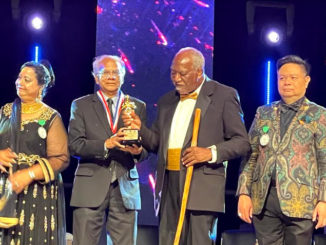
    CHICAGO (TIP): Prominent Indian-American community leader of Houston, Texas, Sockalingam Sam Kannappan was honored with Global Community Oscar Lifetime Achievement Award at a function in Chicago recently.

    Presenting the award at the tenth annual international gala celebrations of the American Multiethnic Coalition,Congressman Danny K Davis praised the services of Kannappan to his adopted land and said people like him make the US the greatest nation in the world.

    In his brief video speech, Kannappan said he came to the US in 1968. He mentioned names of Houston US Congressman Al Green, Congresswoman Sheila Jackson Lee and University of Houston Chancellor Dr. Renu Khator as mutual friends with Congressman Davis and who encouraged him to do community service. The prestigious tenth annual award called Community Oscars was broadcast internationally and viewed by 65 million viewers.

  • Farmers’ stir, the new dimension in U.P.’s politics

    Farmers’ stir, the new dimension in U.P.’s politics

    Its retrieval of the old secular political language openly counters the BJP’s divisive and communal politics

    By Satendra Kumar

    “The SKM has spectacularly reasserted the secular language particularly in the post-2014 socio-political environment. Its act of courage in the Muzaffarnagar Kisan Mahapanchayat is a reminder to the ‘timid’ political Opposition and other political parties to do their constitutional duty in maintaining India’s political legacy. In their appeal for communal harmony, Mr. Tikait and other farmer leaders have categorically said no to communal violence in the region. Mr. Tikait and other farmer leaders accepted being swayed by communal divisiveness and have vowed to counter the hatred and violence. “They talk of dividing; we speak of uniting. The hallmark of the BJP is the hate politics”, Mr. Tikait declared loud and clear.”

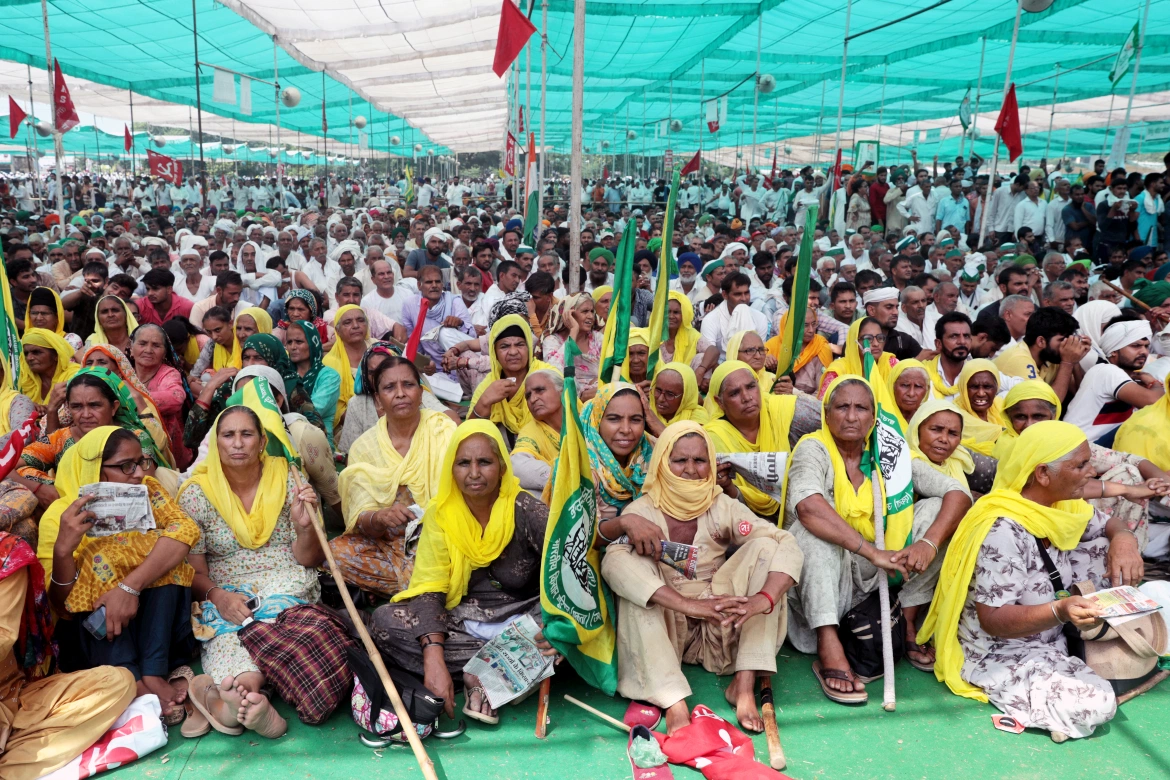
    On September 5, 2021, in Uttar Pradesh, lakhs of farmers gathered at Muzaffarnagar’s government inter-college ground for the kisan mahapanchayat organised by the Samyukt Kisan Morcha (SKM). At the mahapanchayat, Bharatiya Kisan Union (BKU) leader Rakesh Tikait reiterated the farmers’ demands to repeal the three farm laws and for the “legal guarantee of MSP [Minimum Support Price].” Mr. Tikait and other farmer leaders present declared their determination to oust the Bharatiya Janata Party (BJP) government in Uttar Pradesh in the upcoming 2022 State legislative elections. The farmer leaders unanimously appealed for communal harmony while chanting ‘Allah Hu Akbar’ and ‘Har Mahadev’ together with an estimated three to four lakh farmers.

    Secular vs the divisive

    This retrieval of the old secular political language openly counters the BJP’s divisive and communal politics that has gripped the local and the national scene after the 2014 general election. Women and young farmers across religious and caste lines, from Uttar Pradesh, Haryana, Punjab, Rajasthan, Karnataka, Tamil Nadu, Telangana, Uttarakhand and other States attended the mahapanchayat in Muzaffarnagar. It is a surprise that the ongoing farmers’ movement has been openly engaging with gender and environmental issues and has provided them their rightful space.

    By enabling the convergence of different farmer organizations and space for the voices of marginalized groups, the Muzaffarnagar Kisan Mahapanchayat has not only reclaimed the language of secularism and communal harmony but also shows cautious potential to challenge the BJP’s politics and hegemony in the legislative assembly elections due in five States next year (Punjab, Uttarakhand, Uttar Pradesh, Goa and Manipur).

    Message of harmony

    Muzaffarnagar had communal riots in 2013 which polarized the western Uttar Pradesh region along religious lines. The BJP local leadership converted a caste dispute into brutal communal riots which ended up benefiting the BJP in the 2014 and 2019 general elections, across Uttar Pradesh, as this was the local script used at the State and the national levels. The communal polarization not only caused fissures in the social fabric but also impeded the farmers’ identity and unity that was traditionally the support base of the BKU under the leadership of the late Mahendra Singh Tikait in the 1980s.

    Realizing this social and political loss, his son, Rakesh Tikait, and his supporters, over the last couple of years, began to revive the BKU’s old legacy of secularism. However, these attempts have only gathered momentum since January 2021 when the BJP government forcefully attempted to remove the protesting farmers including Mr. Tikait from the Ghazipur border of Delhi. An emotional appeal by an overwhelmed Mr. Tikait mobilized both Hindu and Muslim Jat farmers, changing the epicenter of the farmers’ protest from Punjab to rural western Uttar Pradesh and Haryana.

    The SKM has spectacularly reasserted the secular language particularly in the post-2014 socio-political environment. Its act of courage in the Muzaffarnagar Kisan Mahapanchayat is a reminder to the ‘timid’ political Opposition and other political parties to do their constitutional duty in maintaining India’s political legacy. In their appeal for communal harmony, Mr. Tikait and other farmer leaders have categorically said no to communal violence in the region. Mr. Tikait and other farmer leaders accepted being swayed by communal divisiveness and have vowed to counter the hatred and violence. “They talk of dividing; we speak of uniting. The hallmark of the BJP is the hate politics”, Mr. Tikait declared loud and clear.

    More importantly, Mr. Tikait and the BKU’s activists have been visiting village after village and organizing collective meetings with Hindu and Muslim farmers. In numerous street corner meetings, BKU activists have been attempting to recreate a common platform for farmers across religious and caste divisions by reclaiming and reasserting religious and caste unity among the farmers to heal and repair the damage caused by the Muzaffarnagar riots.

    Mission 2022 and hope

    The Muzaffarnagar Kisan Mahapanchayat has transformed the ongoing farmers’ protests into a national movement. With the BJP government’s lack of acknowledgement and response to the movement, farmer leaders under the SKM have decided to connect the sufferings of farmers with electoral politics directly with the announcement of ‘faslo ke dam nahi, to vote nahi (no vote, if no legal guarantee of MSP’) and pronouncing their method as ‘vote ki chot (hit by vote’). The SKM and its leadership will campaign against the BJP in the Uttar Pradesh Assembly elections due next year. In addition to spreading the message of peace and communal harmony, farmer leaders including Mr. Tikait have announced that they will go to every home in the villages to educate farmers about the three farm laws and the ways in which these laws will destroy farmers and farming. Using the idioms of kheti, kisani and bhaichara, the BKU and its leadership will also inform them about the BJP’s betrayal of farmers through its pro-corporate policies.

    Besides the farm laws, several other proximate factors have set the stage for broad electoral mobilisation that may convert angry farmers and laborers into politically conscious voters when they face continued agrarian distress, the doubling of electricity charges, and the rising cost of diesel and fertilizers. More importantly, the unpaid dues of sugarcane mills to farmers have severely affected farmers and laborers across generation, caste and religious lines.

    Furthermore, in Uttar Pradesh, the Yogi Adityanath-led BJP government’s stringent anti-cattle slaughter measures have devastated already broken farmers as stray cattle continue to plunder fields and ruin crops. The COVID-19 epidemic has not only struck another major blow against the rural economy but has also highlighted the fragility of urban jobs. The participation of young farmers in large numbers explains in one go the ongoing agrarian crises and jobless growth that has created a big class of rural-urban precariat.

    While the emerging broad alliance and solidarity generate hope and a new grammar of politics, competitive party politics and existing socio-economic divisions continue to pose several challenges to Mission 2022. The ongoing farmers’ movement does not show any sign of converting itself into a political party. In this case farmer voters depend on the existing political parties that have already lost steam and failed in the face of the BJP’s propaganda, organizational skills and politics. In fact, some of them have started imitating the BJP’s style by adopting a softer version of the Hindutva.

    U.P. politics today

    In Uttar Pradesh in particular, Opposition political parties such as the Congress, the Samajwadi Party, the Bahujan Samaj Party and the Rashtriya Lok Dal are competing for the same pie. Hence, it is too early to know how these competing parties will compromise their interests and put up a united opposition. Besides, the Jats are no longer a politically united group as they were in the 1970s and 1980s. The emerging political competition led by the aspiring middle class within the Jats has produced new leaders such as Sanjeev Baliyan that has opened a chasm to be exploited by the BJP’s style of politics. Moreover, farmers from the most ‘backward’ castes such as Morya, Nishad and Gaderiyas have hardly been an ally of the BKU and a part of the ‘kisan’ identity popularized by Charan Singh.

    By projecting these farmers as the victims of the dominant landowning farmers the BJP has weaponized them as new warriors of Hindutva. Despite these limitations, the Muzaffarnagar Kisan Mahapanchayat has shown the way to reclaim the Indian Constitution and the legacy of secularism by simultaneously linking socio-economic injustices to environmental and gender issues.

    (The author teaches Sociology at the G.B. Pant Social Science Institute, University of Allahabad)

  • Biden Administration Whitewashes Nazi-Inspired RSS with Official Meet

    Biden Administration Whitewashes Nazi-Inspired RSS with Official Meet

    By Pieter Friedrich

    “Moreover, the organization’s founders — whose pictures adorn every RSS gathering — were openly and unapologetically inspired by Benito Mussolini’s Fascist Italy and Adolf Hitler’s Nazi Germany. Citing Hitler’s Germany as an ideal example of the xenophobic society they desired, they praised the “race consciousness” and “race spirit” that prompted the expansionist conquests of the European fascist movements. Naming Christians and Muslims as “internal threats,” members of “foreign races,” and “traitors,” they applauded the “race pride” demonstrated by the Nazis in “purging the country of the Semitic races — the Jews,” identifying it as a strong example of the supposed failures of diversity, inclusivity, and pluralism, and, thus, a “good lesson… to learn and profit by.”

     “We won’t ignore what our intelligence agencies have determined to be the most lethal terrorist threat to our homeland today: white supremacy is terrorism,” declared Biden in April. Keshap’s meeting, however, suggests that the Biden administration is ignoring American intelligence agencies — as well as US State Department entities — when it comes to the RSS.”

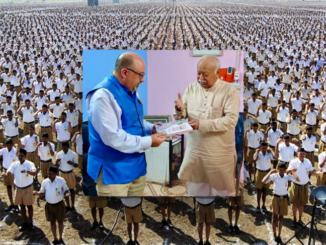
    US President Joe Biden offered a glimmer of hope in April 2021 when he called out white supremacy as “the most lethal terrorist threat” to America today, but his words ring rather hollow after his acting ambassador to India, Atul Keshap, staged an 8 September photo-op with the chief of the RSS, a paramilitary that not only grew with direct inspiration from the European fascist movements of the 1930s-1940s but has inspired modern-day white supremacist terrorists.

    The US Embassy’s Charge d’Affaires Atul Keshap (appointed interim envoy to India in June) celebrated his “good discussion” with RSS’s “Mohan Bhagwat about how India’s tradition of diversity, democracy, inclusivity, and pluralism can ensure the vitality and strength of a truly great nation.” The offensive irony of his remarks is that the RSS — which is quite literally Nazi-inspired — seeks to create a homogenous society in which minorities, especially Muslims and Christians, are eliminated (at worst) or relegated to second-class citizenship (at best). The meeting marked Keshap’s final act as the US envoy to India; two hours after reporting on the meet, he announced that he will be returning to Washington, DC.

    “We won’t ignore what our intelligence agencies have determined to be the most lethal terrorist threat to our homeland today: white supremacy is terrorism,” declared Biden in April. Keshap’s meeting, however, suggests that the Biden administration is ignoring American intelligence agencies — as well as US State Department entities — when it comes to the RSS.

    As far back as the 1950s, the Central Intelligence Agency (CIA) was describing the RSS as “militant” and expressing concerns about its “strength.” According to declassified CIA documents, the paramilitary’s two most important principles were “being anti-Muslim and anti-West.” In 1998, the CIA described the RSS as the (now ruling) Bharatiya Janata Party’s (BJP) “chauvinist parent organization,” explained that it was first banned in 1948 “after one of its members assassinated Mahatma Gandhi,” and reported: “The RSS depends on the BJP to keep Hindu nationalism in the public eye as a political issue, and the BJP relies on the RSS for manpower and organizing grassroots electoral support.” In 2018, the CIA labeled two subsidiaries of the RSS — its religious wing, the Vishwa Hindu Parishad (VHP), and the VHP’s youth wing, the Bajrang Dal — as “militant religious organizations.”

    For over two decades, human rights reports from the US State Department have regularly termed the RSS as a “hard-line” group or a “Hindu extremist organization,” typically in connection with allegations of RSS involvement in violence against religious minorities.

    Furthermore, the US Commission on International Religious Freedom (USCIRF) — an independent State Department entity — has incessantly highlighted the influence of the RSS and the “Sangh Parivar” (Family of Organizations) which spring from it. Noting that the late 1990s saw a “marked increase in violent attacks against members of religious minorities, particularly Muslims and Christians, throughout India, including killings, torture, rape, and destruction of property,” USCIRF explained, “The increase in such violence in India coincided with the rise in political influence of groups associated with the Sangh Parivar, a collection of organizations that view non-Hindus as foreign to India and aggressively press for governmental policies to promote a Hindu nationalist agenda.”

    In 2015, USCIRF reported that, following the election of BJP Prime Minister Narendra Modi (an RSS member who is himself accused of orchestrating an anti-Muslim pogrom in 2002), “religious minority communities” were subjected to “numerous violent attacks and forced conversions by Hindu nationalist groups, such as Rashtriya Swayamsevak Sangh (RSS) and Vishva Hindu Parishad (VHP).” In 2017, the group reported that the RSS and its affiliates had “perpetrated numerous incidents of intimidation, harassment, and violence against religious minority communities and Hindu Dalits.” In one exceptionally disturbing incident, “The RSS reportedly placed signs in train stations throughout India that said Christians had to leave India or convert to Hinduism or they will be killed by 2021.” In 2019, the group attributed the deterioration of “conditions for religious minorities” to “a multifaceted campaign by Hindu nationalist groups” such as the RSS “to alienate non-Hindus or lower-caste Hindus,” concluding that it was “a significant contributor to the rise of religious violence and persecution.”

    In light of such reports from his own government, Ambassador Keshap’s decision to meet the RSS chief — and, particularly, to describe his visit as intended to “ensure the vitality and strength” of India — truly boggles the mind. However, even if American institutions had remained silent, countless other factors ought to have inspired Keshap to shun the notorious Hindu nationalist outfit.

    The RSS has been banned three times, most recently in 1992 after instigating the mob demolition of an historic mosque and subsequent riots that left up to 3,000 Muslims dead. Since the 1940s, the RSS has been repeatedly implicated in assassinations, bombings, and even pogroms targeting minorities as well as its critics. The paramilitary’s current Supreme Leader, Mohan Bhagwat (with whom Keshap met), has frequently asserted both that all Indians (regardless of their personal self-identification) are Hindus and that it is “non-negotiable” that India is a Hindu nation. Moreover, the organization’s founders — whose pictures adorn every RSS gathering — were openly and unapologetically inspired by Benito Mussolini’s Fascist Italy and Adolf Hitler’s Nazi Germany. Citing Hitler’s Germany as an ideal example of the xenophobic society they desired, they praised the “race consciousness” and “race spirit” that prompted the expansionist conquests of the European fascist movements. Naming Christians and Muslims as “internal threats,” members of “foreign races,” and “traitors,” they applauded the “race pride” demonstrated by the Nazis in “purging the country of the Semitic races — the Jews,” identifying it as a strong example of the supposed failures of diversity, inclusivity, and pluralism, and, thus, a “good lesson… to learn and profit by.”

    It should come as no surprise then that Norway’s Anders Breivik — “an icon for a generation of white supremacist terrorists” — pointed to the RSS as one of his influences, urging Western right-wing extremists and the RSS to “learn from each other and cooperate as much as possible.” Throughout the past seven years of the Modi regime, white supremacist publishers have followed that advice, both publishing materials by Hindu nationalists or which praise the RSS as well as pursuing collaborative meetings with RSS officials in India.

    As a US diplomat of Indian origin, it’s impossible that Ambassador Keshap is fully ignorant of such issues surrounding the paramilitary. As America’s acting ambassador to India, it’s impossible that he failed to do his due diligence by conducting the most basic research about the group with which he was meeting. It’s also impossible that he was unaware of the controversy provoked by previous meetings of ambassadors with the RSS.

    In 2019, German Ambassador Walter Lindner met Bhagwat. His visit swiftly prompted shocking headlines around the world. In India, The Wire reported on “the cruel irony of the German Ambassador’s visit to the RSS headquarters,” comparing it to “Donald Trump’s ambassador meeting neo-Nazis in Germany.” In Germany, Deutsche Welle reported that “Germany’s India envoy visits ‘Nazi-inspired’ Hindu group,” explaining, “experts say the Hindu extremist group glorifies Adolf Hitler and his ‘cultural nationalism’.” In Israel, The Jerusalem Post reported that the “German ambassador causes outrage visiting fascist Indian group,” stating, “The RSS shares the fascist ideology of the Nazi Party and supports extreme Hindu nationalism.”

    Similar outrage erupted in 2020 after Australian High Commissioner to India Barry O’Farrell met Bhagwat to praise the RSS’s social activities.

    In Australia, Crikey reported that “the RSS has had its fingerprints on some of India’s most horrific moments of violence.” Questioning why O’Farrell met “the leader of the Nazi-inspired RSS paramilitary,” PEDESTRIAN.TV claimed that the group has a “bloody history of extremism,” including “burning Australian missionary Graham Staines and his two young sons to death in 1999.” From the floor of the Australian Parliament, Senator Janet Rice, calling the commissioner’s visit a “disgrace” and demanding he resign, described the RSS as “a fascist organization that openly admits admiration for Adolf Hitler and the appalling genocide that occurred under his Nazi regime.”

    Trump was infamously intimate friends with Modi. Upon Biden’s election, many Indian-origin Americans hoped, prayed, and demanded that he would adopt a radically different approach in his foreign policy towards India — one that placed a priority on human rights issues, especially considering the seemingly irrepressible rise of the Hindu nationalist movement under the Modi regime. Yet Keshap’sinexplicable whitewashing of the RSS demands a rapid and relentless interrogation of the Biden administration and its intentions towards the persecuted peoples of India.

    (Pieter Friedrich is a freelance journalist specializing in analysis of South Asian affairs. He is the author of Sikh Caucus: Siege in Delhi, Surrender in Washington and Saffron Fascists: India’s Hindu Nationalist Rulers as well as co-author of Captivating the Simple-Hearted: A Struggle for Human Dignity in the Indian Subcontinent. Discover more by him atwww.PieterFriedrich.net)


  • Memories of 9/11

    Memories of 9/11

    By George Abraham

    On September 11, 2001, 19 militants associated with the Islamic extremist group al Qaeda hijacked four airplanes and carried out suicide attacks against targets in the United States. Two of the planes were flown into the twin towers of the World Trade Center in New York City, a third plane hit the Pentagon just outside Washington, D.C., and the fourth plane crashed in a field in Shanksville, Pennsylvania. Almost 3,000 people were killed during the 9/11 terrorist attacks, which triggered major U.S. initiatives to combat terrorism.

      “Soon after the attack, America invaded Afghanistan and ousted the Taliban that was providing a safe haven to al Qaeda terrorists who planned and executed 9/11 destruction. By 2011, U.S. forces had also located the mastermind Osama Bin Laden, who was hiding in Pakistan, and killed him. However, to the warmongers in Washington under George W. Bush, it was another opportunity to expand the power of the military-industrial complex.

    At the urging of neoconservatives in Washington, Iraq was also invaded, and the poorly executed and error-ridden plans subsequently destabilized the whole region giving birth to ISIS and triggering a long-running and anti-insurgency campaign. The impact of 9/11 is still reverberating here in the U.S. after spending almost 2 trillion dollars and sacrificing thousands of American and Afghan lives; it is a sad and pitiful spectacle to see the Taliban government full of terrorists back in power on this 20th anniversary of the 9/11. Although many of these geopolitical issues are complex, the world we live in has been indelibly shaped by 9/11 and its aftermath.”

    9/11/2001 may be a distant memory, but the terror that shook America is still very much in our thoughts. It was a beautiful and clear sunny day, and I was driving my younger son, Steven, to the United Nations International School in Manhattan. After dropping Steven at school and parking the car at the U.N. garage, I joined the prayer breakfast, an annual event for diplomats from around the world, before the start of the General Assembly on the third week of every September.

    The message at the prayer breakfast was plain and straightforward; there is so much injustice all around, and we must not shy away from confronting the evil but do it courageously and assiduously with the divine help. Looking back, I couldn’t imagine that the evildoers were busy at work at the same time wrecking lives, wreaking havoc only couple of miles down the street and bringing a nation to a standstill.

    As I was climbing the stairs to reach my office, I could feel an eerie silence all around, and there was not a soul to be found anywhere. Finally, I reached a Security Officer and inquired what was happening? He had an offbeat look on his face and said, ‘Haven’t you heard that the World Trade Center was hit, and the U.N. building has been already evacuated’. I couldn’t still fathom the gravity of the situation until reaching a T.V. monitor that had a live feed from the burning Tower 1. The fear and uncertainty surrounding the event were so palpable, and I was not spared either.

    I ran to my office and found out that the entire staff had already left the building, and the security ordered the evacuation as a precautionary measure because the U.N. Secretariat building itself could be a potential target. Soon my attention was turned to finding my son, whom I had left at school, and I tried to ring the principal’s office, and there was no response. Soon after, I walked out of the Secretariat building to the First Avenue only to hear the sirens of fire trucks and ambulances racing towards downtown.

    I felt as if life had come to a standstill on the East side with police blocking all traffic in and out of Manhattan and vehicles stranded in a gridlock mode. I almost ran 20 blocks to reach the school only to learn that the building had been evacuated and the students were sent home. I met few students who had gathered in front of the school, waiting eagerly for their parents or guardians to come around.

    As I came out of the school gate still looking for Steven, I found a man totally covered in white ashes walking towards north on the side road of the FDR drive. I inquired and found him totally shaken and hardly audible but understood that the tower had come down, and he was one of the lucky ones either from the building or its surroundings.  I couldn’t believe my ears that those towers of grandiose and pride for the big apple were no longer standing. As an early immigrant to this country from India in the late 60’s, I have witnessed the construction of these towers and visited them many more times with family and friends.

    At that point, I was not sure whether all the occupants of the tower were evacuated. The Restaurant at the top of tower two was a familiar place to me as many of the technical conferences were held there, and I distinctly remembered the service manager and many of the crew who were originally from Bangladesh. Soon after, I got connected with my son, who went to a friend’s home nearby, and together we picked up the car and waited for an hour to reopen the midtown tunnel to reach home.

    Only after I reached home, I fully realize the carnage that took place with the collapse of two towers and the body blow it had inflicted on the U.S. psyche. The United States that had not seen a major attack on its soil for nearly 200 years, was shocked to find its financial center and military headquarters Washington hit by a small band of terrorists from abroad. Almost 3000 innocent lives were lost on that day including Valsa John and many other Indian immigrants to this country.

    The catastrophe unleashed a sequence of reactions and unintended consequences the country has been dealing with ever since. An unending war on terror, western antagonism towards Muslims, and decline of U.S. power, and Donald Trump’s rise, and others like him are all outcomes directly or indirectly related to this earth-shattering event. There is little doubt that the post 9/11 period has seen civil rights being eroded across the world. Many governments have used it as a cover to justify increased surveillance and curbing dissent.

    Soon after the attack, America invaded Afghanistan and ousted the Taliban that was providing a safe haven to al Qaeda terrorists who planned and executed 9/11 destruction. By 2011, U.S. forces had also located the mastermind Osama Bin Laden, who was hiding in Pakistan, and killed him. However, to the warmongers in Washington under George W. Bush, it was another opportunity to expand the power of the military-industrial complex.

    At the urging of neoconservatives in Washington, Iraq was also invaded, and the poorly executed and error-ridden plans subsequently destabilized the whole region giving birth to ISIS and triggering a long-running and anti-insurgency campaign. The impact of 9/11 is still reverberating here in the U.S. after spending almost 2 trillion dollars and sacrificing thousands of American and Afghan lives; it is a sad and pitiful spectacle to see the Taliban government full of terrorists back in power on this 20th anniversary of the 9/11.

    Although many of these geopolitical issues are complex, the world we live in has been indelibly shaped by 9/11 and its aftermath.

    May I join all of you in paying heartfelt gratitude to all those heroes, including the first line responders who perished in this devastating tragedy and to the families who have suffered the harrowing loss of their loved ones!

    (The author is a former Chief Technology Officer, the United Nations and Vice Chair of IOC USA. He can be reached at gta777@gmail.com)


  • Nostalgia – My early hockey days in High school and college

    When SCD Government College won Panjab University title for the first time

    By Prabhjot Singh

    After a long break, I finally moved to High School. With high first division, I was confident of getting admission in Government Model High School, Cemetery Road in Civil Lines. It was perhaps one of the best English medium schools those days.

    Most of my class fellows in Model Town Model School, too, got admission there. Our school was known for its sports teams, including hockey and basketball (both boys and girls), besides table tennis and badminton.

    In 1970, when the newly set up Punjab School Education Board conducted its first ever Matriculation Examination, our school not only produced the State topper in Rajinder Singh Bhatia (753/900) but also had 27 students (with 625 or more marks) in the merit list. I was second in the school with 681 marks and 111th in the State. Incidentally, I was the only regular player in the school to figure in the merit list.

    Earlier, the matriculation examination used to be conducted by Panjab University. But reorganization of Punjab in 1966 had the schools in the undivided State distributed among Punjab and Haryana Boards.

    Our school hockey team thathad besidesme (Prabha), Gurdishpal Singh (Lalli), Ajinderpal Singh (Kallu), Sukhjit Singh Raju (Sheikhu), Bhawanjit Singh Gill (Daana), Harpal Singh Brar (Palli), Manjit Singh Sidhu (Manna), Barmi brothers, Bahal Singh Jagday, and Simmar Pal Singh Gill (Peter), was known to play neat, clean and attractive hockey. Since the Cemetery Road School did not have any playfield of its own, we used to practice at Gymkhana Stadium which was later renovated and named after the first Sikh Guru, Sri Guru Nanak Dev ji, to coincide with his 500th birth anniversary.

    It was not only our hockey training center but much more to us.

    The most memorable was the Zonal final of Inter-School hockey in which we were to play Malwa Khalsa Higher Secondary School. Our opponents had an impressive line-up with tough players like Baldev Singh (Dronacharya award winner and famous coach of Shahabad Markanda Centre that produced scores of Olympians and internationals), Kuldeep Singh (he played for Western Railway for many years), Gurwinder Singh aka as Golu (great goalkeeper), Tara (speedy forward), besides Jasbir Nagi (we later played together for Government College, Ludhiana). Master Charanjit Singh, a tough task master, was the coach-cum-manager of Malwa School team and it also happened to be the defending champion team.

    Since we were from a high-profile school, we were known to play textbook neat and clean hockey while our opponents were known for their tough and robust tactics.

    The match had already evoked great response. Malwa School used to get a strong crowd support from nearby villages. We were primarily an urban school, we felt handicapped as we had no supporters.

    Just a day before the final game, our team meeting was addressed by Mr. Harbhajan Singh Sandhu, father of Gurdishpal. He was then District Development and Panchayat Officer. To cheer us up, he said he would get a big crowd from nearby villages to counter the supporters of Malwa School.

    As expected, there was a big crowd for the game. We started well, attacking our opponents from the right flank where Sukhjit and Peter were in great nick. Ever green Bhawanjit (Daana) did torment the opponents defense with some superb moves worked out by our dribbling master and playmaker Ajinderpal.

    Ajinder would often hoodwink his opponents with his superb stick work and create openings for his forwards that would catch opponents defense on the wrong foot.

    Our tactics played dividends as we took the lead in the first half. It did not deter the forward line of Malwa School. Led by brilliant Tara, it did threaten our defense.

    On one occasion as Tara broke loose, Gurdishpal tackled him from the wrong side and hit him hard on his knee. Tara came down crashing, bleeding profusely from his knee. All broke loose. Crowd was on the field. Gurdishpal disappeared. We were also scared. Fortunately, some of the people brought in by the father of Gurdishpal stood cover for us.

    It took a while for tempers to cool down and the game to resume. After assurance that there would be no retaliatory action against our players, we agreed to return to the field.

    Though we played our hearts out, we lost the game 1-2 and not without getting Sukhjit bruised badly after he was pushed from behind on the adjoining brick-based basketball court while he was building an attack from the flank.

    Barring these two incidents, the game was played on a brisk note and most of the spectators went back satisfied. We were, however, disappointed as it was our best chance to dethrone Malwa School. None of us at that time realized that school rivalries would just evaporate as we all get into college in the following year.

    Kuldeep, Gurwinder and Jasbir Nagi, for example, joined Government College, Ludhiana, and we became teammates.

    It was in 1970, the year the college was celebrating its Golden jubilee, I got admission in Pre-University (Medical). It is one of very few educational institutions that used to boast of the bestgrassy hockey ground, exclusive football and cricket grounds, an international standard athletic track, a swimming pool, basketball, tennis and volleyball courts besides a weights training hall.

    Hockey ground was so famous that it played host to a Test match against the visiting national team of France. For its maintenance, no one was allowed to walk on its sprawling green lawns, and trespassers were fined heavily. As a hockey player, it was a dream comes true for me as I played hockey on this ground for six years. During this period, the college hockey team created history. In 1974, it won the Panjab University Inter-College championship for the first time in 54 years.

    This historic triumph was not without some pulsating moments and a drama. Four teams that had qualified for Inter-Zonal that year were SGGS College, Chandigarh: Jat College, Rohtak, Government College, Gurgaon, and Government College, Ludhiana. Till then, all Haryana colleges were still affiliated to Panjab University. We played a goalless draw against SGGS College, Chandigarh, in our opening game of the round-robin league. A 2-0 win over Jat College, Rohtak, in the second game boosted our chances as we started tasting our first title victory. In our third and final game, when we left the Hostel for hockey ground, we were all determined to score a big win as SGGS College was also expected to win its last game against Jat College Rohtak.  To win the title, we needed a better goal average as we and SGGS College had the same number of points with one win and one draw in our first two games each. And since Jat College with brilliant right-winger Phool Kumar, in its side, we expected it to give a tough fight to SGGS College. Our game was the first of the last day. Gurgaon College also had an outstanding and speedy center forward Shamsher Singh. Since he was the only dangerous man in our rival team, we decided to mark him tightly.

    We started very well, scoring five goals in the first 23 minutes before Shamsher broke loose and dribbled past almost our entire defense. Before he could do a shot at the goal, our center-half, Kuldip Singh, who later played for Western Railway and Railway, physically checked him and hit him in the knee. Withering in pain, he sprawled on the field. Umpire Gurcharan Singh Bodhi (coach of the 1975 World Cup Champion Indian hockey team) gave Kuldip marching orders. Trailing by a big margin and losing their star player was too much for the Gurgaon team.

    It walked out in protest saying that Umpiring was biased. Repeated requests by umpires to the Gurgaon team to return and resume the game met with no response. An SOS was sent to Dr. B.L. Gupta, the then Director of Sports. Within minutes he arrived on the ground and talked to the two Umpires. He asked umpires to blow a whistle and ask the teams to resume the game.

    The Gurgaon team, however, refused to relent. After a couple of warnings, Dr. Gupta threatened to scratch our rivals for defying umpires. The threat did not work. After a few minutes of Gurgaon refusing to take the field, Dr. BL Gupta went inside the ground and called the Manager of Gurgaon to send his team. He refused. Furious Dr. Gupta then not only scratched the team but also ordered Gurgaon boys to vacate the university hostel within the next 30 minutes. We heaved a sigh of relief when we were declared winners of the game. And in the last game, contrary to expectations Jat College beat SGGS College to confirm our number one position in the league.

    Interestingly, that team had three Nagi brothers – Onkar, Harpal and Jasbir – and two Grewal brothers – Sukhvir and Jagbir. Besides Sukhvir Grewal, another member of the team, Gurdeep Singh Pannu, who happened to be a nephew of the then DPE of our college, Sohan Singh Pannu, also played for India. Gurdeep was chosen to represent India in the 1975 Rene Frank International Tournament in Madras. The tournament was held a few months after India had won the third World Cup in Kuala Lumpur. Sukhvir played for India for a number of years and had the distinction of coaching the Indian Olympic hockey team to Barcelona in 1992.

    Fortunate as we were, our first year in the college saw us come face to face with many of country’s eminent personalities, including Sahir Ludhianvi and Amrita Pritam, Harkishen Lal (painter), Keki Daruwala, Mohan Sehgal, and Avtar Singh Cheema, besides others. We felt proud that General TN Raina and Maj-Gen Himmat Singh Gill, bureaucrats NN Vohra, MS Gil, IC Puri, SS Puri, Jagpal Singh Sandhu, top police officers Joginder Singh, Rupinder Singh had been students of this great institution. To honor one of its outstanding alumni and scientists, the college was renamed Satish Chander Dhawan (SCD) Government College in 1976.

    (Prabhjot Singh is a senior journalist and awell-known Sports commentator. He can bereached at prabhjot416@gmail.com)

  • Shuttlers Suhas, Tarun win; Kohli-Parmar lose at Tokyo Paralympics

    Indian shuttlers Suhas Yathiraj and Tarun Dhillon made impressive starts to their campaign in men’s singles SL4 class on the second day of the badminton competition at the Tokyo Paralympics here on Thursday, Sept 2.

    The 38-year-old Suhas took just 19 minutes to see off Germany’s Jan Niklas Pott 21-9 21-3 in a lopsided group A clash.

    Tarun, 27, too didn’t break a sweat, beating Thailand’s Siripong Teamarrom 21-7 21-13 in a group B match that lasted 23 minutes.

    While Suhas will face Indonesia’s Hary Susanto next, Tarun will be up against Korea’s Shin Kyung Hwan on Friday.

    Suhas, who has an impairment in one of his ankles, has been at the forefront in the fight against COVID-19 menace as the district magistrate of Gautam Buddh Nagar in Uttar Pradesh.

    Tarun, on the other hand, had sustained a severe knee injury while playing football at the age of eight, which resulted in restricted movement in the knee. He is the current world no.2 and a former two-time world champion.

    The SL class allowes persons with standing/lower limb impairment/severe are allowed to compete.

    However, there was disappointment in store yet again for 19-year-old Palak Kohli and her partner Parul Parmar, 48, as the duo went down 7-21 5-21 to second seeded Chinese pair of Cheng Hefang and Ma Huihui in a group B women’s doubles SL3-SU5 class match.

  • Shankaranarayana: The combined form of Shiva and Vishnu

    Shankaranarayana: The combined form of Shiva and Vishnu

    Lord Shankaranarayana is a combined deity form of Shiva (Shankara) on the right with Nandi, and Vishnu (Narayana) on the left with Garuda. Shankaranarayana is also called Harihara – Hari (Vishnu) and Hara (Shiva). Lord Shankaranarayana is thus worshipped by both Vaishnavites and Shaivities as a form of the Supreme God, as well as being a figure of worship for other Hindu traditions in general. Harihara is also sometimes used as a philosophical term to denote the unity of Vishnu and Shiva as different aspects of the same Supreme God.

    Due to the diverse nature of Hinduism there are a wide variety of beliefs and traditions associated to both Vishnu and Shiva. In Vaishanvisim Vishnu (including his associated incarnations) is the Supreme God, and in Shaivism Shiva (including his different incarnations) is the Supreme God. There was a period when the followers of Shiva and Vishnu were competing to establish their God as the sole Supreme God. The worship of Shankaranarayana evolved as a compromise between these two groups. Today these two Supreme Gods occupy equally important positions in the Hindu Trinity, with Brahma. Lord Shiva’s incarnation as Ardhanarishvara – half Shiva and half Parvathy depicts that the male and female are manifestations of the same Supreme God. Similarly Lord Shankaranarayana shows that Vishnu and Shiva are manifestations of the same Supreme God. The Advaita Siddhantha regard the Supreme God as being ultimately formless and thus see both Vishnu and Shiva as different facets of the one formless Brahman.

    According to Swami Sivananda, Shiva and Vishnu are one and the same entity. They are essentially one and the same. They are the names given to the different aspects of the all-pervading Supreme Soul or the Absolute.

    “Shankaranarayana” is considered as one of the seven holy places created by Bhagwan Parshuram. This is one of the rare temples where we can see the sangam (confluence) of Shankara (Lord Shiva) and Narayana (Lord Vishnu).

    Shankaranarayana village, named after the temple, is located in the valley of mountain ranges close to the Sahyadris. It is located in Udupi District, Karnataka, and 25KM from the Arabian Sea.

    The 7 holy places namely Subrahmanya, Udupi, Kumbhakaashi, Koteshwara, Shankaranarayana, Kolluru and Gokarna together constitute Parashurama Kshetra. These holy places are compared with seven holy places in Rama Kshetra, namely, Ayodhya, Mathura, Maya, Kashi, Kanchi, Avanthika and Puri.

    Udbhaav Murthy – Shankaranarayana Temple

    The main deity of Shankaranarayana Temple is in the form of Udbhaav Linga. The naturally formed lingam of Lord Shankara and Lord Narayana is one feet below the ground, inside the Garbhagudi. The devotees can only see the mirror image of the lingam. The Shankara Linga is on the right (left as seen by the devotees) and Narayana Linga on the left. While Shankara Lingam is in round shape, whereas Narayana Linga is a flat one with foot prints of holy cow in it. Devotees believe that these were foot prints of Kamadhenu (holy cow) which had stood here for dripping milk on the Shankara Linga. There is water around Udbhaav Linga at any time of the year. This holy water is called Suddhamrita Theertha

    Koti Theertha

    Koti theertha is located in front of the temple. Devotees coming to this temple first make prokshana of this theertha and then make darshan of Lord Shankaranarayana. The stone enclosure and the surrounding coconut and arecanut groves enhance the beauty of the pond. The pond has rich spiritual bearing. Rituals such as Pitratarpana and Theerthasnana are held at this pond. Koti theertha stands out as most beautiful and vast of all the twenty one ponds found around this place.

    Krodagiri Devaru

    Shankaranarayana is also known as Kroda after Kroda Maharshi. In the 24th Chapter of Pushkara Kaanda in Padma Purana, one can find a beautiful description of Krodha Shankaranarayana. According to this, the demons Kharasura and Rattasura were ill-treating common people. Kroda Maharshi meditated Lord Shiva and Lord Vishnu together and prayed them come in the form of Lord Shankaranarayana. Lord Shiva and Lord Vishnu, pleased with the meditation of Krodha Maharshi, came to this place as Shankaranarayana and killed Kharasura and Rattasura. The hill beside the Shankaranarayana Temple, atop which Krodha Maharshi meditated Lord Shankaranarayana, is named as Kroda Giri.

    The idol of Lord Shankaranarayana along with goddess Gowri and goddess Lakshmi are at the top of Kroda Giri.

    Kroda Guhe

    The Guhe (Cave) in which Kroda used meditate atop the Kroda Giri Parvatha (Hill). This is 6 foot wide cave with a 2-feet wide entrance.

    “Shiva is a form of Vishnu and Vishnu a form of Shiva. Shiva dwells in the heart of Vishnu while Vishnu in the heart of Shiva.”

    Krishna tells Arjuna that even those who are the devotees (bhaktas) of other devatas (Anya devata) and who worship them with great devotion they too are worshipping Him – even if it is considered to be avidhipoorvakam (i.e. following a different “Vidhi”, or Pooja rituals). Krishna is saying, “Pray to me directly. But, if the devotee finds attachment to other deities, that is OK. They too worship me.”

    Vishnu Maya

    Narada, coming under Vishnu Maya, gives shaapam to Vishnu, Narada says “Svami! Please forgive me. I, coming under influence of Your Maya, got Ahankaara and did your ninda. Please tell me what can save me from this ghora-paapam”.

    Vishnu says: “O Priya Narada! You go and do paaraayana of Shankara Shatanaamams. Then you will get Shanti. Shiva is whom I respect the most. Even by mistake don’t forget this. One who doesn’t have Shiva-Anugraha cannot be My Bhakta. Believe this. Then My Maya won’t affect you.”

    One day, when Goddess Lakshmi and Vishnu were together in vihaaram, Lakshmi sees Uchhaishravas, her brother, the horse of Revanta who is the son of Surya. Engrossed in seeing her brother, she does not reply to the repeated calls of Vishnu. Seeing her attraction, Vishnu gives her shaapam to go to Bhulokam in the form of a horse and come back to Vaikuntam only after getting a son equal to Himself! She comes to Bhuloka to experience the shaapam and realizing that none other than her brother, Shiva can help her calm Vishnu, she immediately does a tapas for Him and Shiva appears to save her soodari. Lakshmi says “You and Vishnu are both same, the Paramaatmaa. Please help me!” Shiva says “Soodari! How do you know that we both are same? All learned people know that. Who told you?” Lakshmi says, “Once MahaVishnu Himself told me this. Seeing Him in deep Daiva-dhyaanam, I asked Him “During Samudra Manthanam, I thought you were the greatest of all and hence chose you. Devaadideva! Who is better than you that you are in dhyana of Him?” MahaVishnu replied “I am doing Shankara-dhyana. He is Eshwara. He is the same as me. All learned people know that. If someone is my devotee but still hates Shiva, he will fall into naraka”. Saying this, she asks Shiva to persuade Vishnu to bless her with a child. Shiva sends Chitrarupa as a duta to convince Vishnu. Vishnu immediately accepts and comes to Bhuloka and blesses Lakshmi with Ekaveera, who is equal to Vishnu Himself.

                    Source: Templepurohit.com

  • GDP growth 20.1% in Q1 after Covid slump

    GDP growth 20.1% in Q1 after Covid slump

    New Delhi (TIP): India’s GDP grew at 20.1% in the quarter ending June — in line with expectations — although the high number is the result, not of a V-shaped recovery in the economy, but a favourable base effect. Compared to the last quarter of 2020-21, the country’s GDP actually contracted by 16.9%, although this can be attributed to the bruising second wave of the pandemic in April and May. And compared to the first quarter of 2019-20, it contracted 9.2%.

    The growth was largely the result of a 68-day long nationwide lockdown imposed on March 25, 2020, that led to an unprecedented contraction of 24.4% in GDP. Indeed, economic activity did not regain pre-pandemic levels (in the June 2019 quarter) in the first quarter of the current fiscal year.

    RBI’s Monetary Policy Committee (MPC) projected a growth rate of 21.3% and a Bloomberg poll of 45 economists, 21% for the quarter. Gross Value Added (GVA), which captures the actual production (GDP numbers also include taxes) grew at 18.8%, again lower than a Bloomberg forecast of 19.6%.

    “The fact is that the latest GDP numbers show a large sequential contraction and, when compared to June 2019 levels, show the enormity of the economic challenge. Even these numbers could see significant downward revisions as there might have been an overestimation of informal sector activity in these estimates,” said Himanshu, associate professor of economics at Jawaharlal Nehru University.

    However, chief economic advisor Krishnamurthy V Subramanian chose to focus only on the growth (and not the base effect) and said strong fiscal measures announced in the past year-and-half, and the pace of India’s vaccination drive have helped faster economic recovery. The growth number “reaffirms the government’s prediction of an imminent V-shaped recovery made last year in August,” he said.

    Central government spending numbers from the Controller General of Accounts (CGA), which works under the ministry of finance, show that capital expenditure of the government was Rs 1.11 lakh crore in the quarter ending June compared to Rs 88,273 crores in the same period last year. The capex momentum seems to have slowed down in the month of July (the latest available numbers), with the government spending Rs 16,932 crore in July compared to Rs 23,576 crore in July 2020.

    The latest GDP numbers support the argument that the pandemic, especially its second wave has damaged household balance sheets and therefore their purchasing power.

    Private final consumption expenditure (PFCE) contracted by 17.4%, more than the overall GDP number on a quarter-on-quarter basis in the June quarter. Even the year-on-year numbers show that private consumption has a bigger deficit with pre-pandemic levels. PFCE grew only 19.3% in the quarter against a 26.2% contraction in the quarter ending June 2020.                 Source: HT

  • Tesla moves a step closer to making India debut

    Electric cars from Tesla Inc. may soon be on Indian roads, with the Union transport ministry approving four of its models for introduction in the country. The ministry’s Vahan portal, however, did not identify the models that received the nod.

    All automobile manufacturers, both Indian and foreign, need to get their vehicles locally certified before a formal launch. Tesla last year set up its Indian unit, Tesla India Motors and Energy Pvt. Ltd, marking its intention for an entry into its potential growth market for electric cars. The California-based company has also started hiring senior executives to prepare the ground before a possible launch. “Tesla has completed homologation and received approval for 4 of its vehicle variants in India. While we don’t have any conformation on names as yet, these are probably Model 3 and Model 4 variants,” Tesla Fan Club India tweeted. A Tesla spokesperson did not respond to emailed queries. The approval does not necessarily imply an immediate launch. The Elon Musk-led company has been asking India for a cut in import duty on electric vehicles and related parts as it is expected to initially import its vehicles as fully built units.

  • Covid-19 delta variant hits Chinese economy as services industry contract

    Covid-19 delta variant hits Chinese economy as services industry contract

    China’s economy took a knock from the delta virus outbreak in August, adding to signs of a slowdown in growth in the second half of the year and fueling speculation of more central bank support.

    The official purchasing managers surveys showed the services industry contracted for the first time since February 2020 as consumers cut back on spending and travel amid new virus curbs. The manufacturing purchasing managers’ index fell slightly to 50.1 from 50.4 in July, partly due to supply-chain disruptions.

    Beyond the virus outbreaks, China’s recovery is also showing signs of faltering in the wake of recent regulatory crackdowns and weak demand at home. The central bank has signaled it may provide more targeted support — such as cutting the reserve requirement ratio for some lenders — while the government has pledged to accelerate fiscal spending in the second half of the year, helping to cushion growth.

    “The service sector was shocked by the delta variant, extending the ongoing theme of uneven recovery,” said Raymond Yeung, chief economist for Greater China at Australia & New Zealand Banking Group Ltd in Hong Kong. “It is pretty clear that the authorities would still support growth. We still pencil in another RRR cut before the end of 2021, October the earliest.”

    High-frequency data tracked by Bloomberg’s early indicators also show the recovery is leveling off. Several economists have already downgraded their growth forecasts for this year, although the expansion is still expected to exceed the government’s modest target of above 6%.

    China’s equity benchmark, the CSI 300 Index, dropped as much as 1.5% to its lowest since Aug. 20.

    The government imposed stringent measures, including travel curbs, mass testing and quarantines, for about a month to bring a new wave of Covid cases under control, the most widespread outbreak since the initial flareup in 2020. Confidence among smaller businesses in the month weakened and consumers cut back on spending. The partial closure of China’s second-biggest container port also disrupted trade.

    “Today’s data again reflected the outsized and asymmetric shock on the service sector from Covid-related restrictions,” said Liu Peiqian, China economist at Natwest Markets in Singapore. While there’s room for a rebound in services PMI in coming months as the outbreak is now under control, any future Covid outbreak domestically will continue to weigh on the sector, she said.

    Source: Bloomberg

  • Google delays mandatory office return to 2022 on Covid surge

    Google pushed back the date when its employees must return to the office until after Jan. 10, citing uncertainty related to the pandemic amid a resurgence of Covid-19 cases in various countries around the world. It will be optional for Google’s staffers to work on campus until at least Jan. 10, Alphabet Inc. Chief Executive Officer Sundar Pichai wrote Tuesday in a memo to employees. The company will give workers 30 days notice before they’re expected to go back to offices, but Pichai didn’t specify a date when employees, based in the U.S. or elsewhere, must return. “Beyond January 10, we will enable countries and locations to make determinations on when to end voluntary work-from-home based on local conditions, which vary greatly across our offices,” Pichai wrote. Google previously delayed a compulsory office return to Oct. 18. The internet giant has said it will ask employees to work in a “hybrid” model, with about 60% going back to the same offices as before the pandemic. In August, Google approved 85% of employee requests to work remotely or relocate once the company’s offices fully reopen. Google’s decision to delay its return-to-office plan again is similar to the actions taken by other major technology companies. Facebook Inc. recently told U.S. employees they don’t need to go back to offices until January, and Apple Inc. has also pushed back its plans.

  • Hide last seen and blue ticks on WhatsApp

    Hide last seen and blue ticks on WhatsApp

    WhatsApp lets you hide your last seen and blue ticks on the app to give you some privacy. In case you haven’t yet noticed these features, then you can try them now. Both the features are listed in the privacy section of the messaging app.

    Both the features are available as an option because there are users who don’t want others to know when they read the message. Here’s how you can enable or disable last seen and blue ticks.

    How to hide Last seen on WhatsApp

    Step 1: If you want to hide your last seen, then just open the WhatsApp app and head to the Settings section.

    Step 2: Now head to the Account section and tap on Privacy. It should be noted that whatever settings you save will apply to both the mobile and web version of the messaging app.

    Step 3: Now, tap on the Last Seen option and change the Setting to “Nobody.”

    Note: You get three options, including “Everyone” “My Contacts” and “Nobody”. The first one basically means that people who have your WhatsApp number will be able to see your last seen. The second option means that only your contacts will be able to check your last seen on WhatsApp. If you enable the “Nobody” option, then no one will be able to see your WhatsApp last seen. You can select any last seen option any time you want.

    How to hide blue tick on WhatsApp

    The process to hide blue ticks is similar. You will find this feature in the Privacy section, but you will not find it in the same name. WhatsApp offers a Read Receipts option, which will disable the blue ticks. Read on to know more.

    Step 1: First head to the WhatsApp app and open the Settings section.

    Step 2: Now, go to “Account” and tap on the Privacy option.

    Step 3: Scroll down to “Read Receipts” option and disable it to hide blue ticks on chats.

    Users can enable this option anytime they want by following the same process. It should be noted that if you disable the mentioned option, then you won’t be able to see blue ticks when others read messages you sent.         Source: The Indian Express

  • Apple buys classical-music service Primephonic, will launch app

    Apple Inc. has acquired classical-music streaming service Primephonic and plans to launch an app dedicated to the genre next year. Primephonic’s playlists and audio content will be integrated into Apple Music in the coming months, the company has said.

    Primephonic’s existing service will be shut down on September 7, but its subscribers will get six months of Apple Music for free.

    Since launching Apple Music in 2015, Apple has made a few acquisitions to bolster the service. It bought music-recognition app Shazam in 2018, letting customers identify songs and add them to their playlists.

    But Apple has faced fierce competition from Spotify Technology SA in streaming music around the world. The Cupertino, California-based company didn’t disclose the Primephonic purchase price.

    Besides, back at WWDC 2020, Apple announced its plans to completely transition to its own processors. The company said it would take around two years to fully transition to their own silicon. A recent report from Bloomberg detailed the company’s roadmap in the year to come. Bloomberg journalist Mark Gurman, in his edition of the Power On newsletter, explained that he believes the company will “barely hit its two-year timeline” for transitioning the Mac lineup fully to Apple Silicon. We have so far seen the Cupertino-based company brings its M1 chips to the MacBook Pro series, MacBook Air series, Mac Mini and the 24-inch iMac.

    Source: Bloomberg

  • Astronaut gets special ice cream delivery for 50th birthday

    A space station astronaut is celebrating her 50th birthday with the coolest present ever — a supply ship bearing ice cream and other treats.

    SpaceX’s latest cargo delivery showed up Monday at the International Space Station after a day in transit. Overseeing the automated docking was NASA astronaut Megan McArthur.

    “No one’s ever sent me a spaceship for my birthday before. I appreciate it,” she radioed after the capsule arrived.

    Launched on Aug 29 from NASA’s Kennedy Space Centre, the capsule contains lemons, cherry tomatoes, avocados and ice cream for McArthur and her six crewmates, along with a couple tons of research and other gear.

    The shipment arrived just a few days ahead of the first of three spacewalks.

    Starting Sept 3, the two Russians on board will perform back-to-back spacewalks to outfit a new laboratory that arrived in July.

    Then a Japanese-French spacewalking duo will venture out on September 12 to install a bracket for new solar panels due to arrive next year. That NASA-directed spacewalk should have occurred last week, but was postponed after US spacewalker, Mark Vande Hei, suffered a pinched nerve in his neck. Station managers opted to replace him with French astronaut Thomas Pesquet.

    Source: AP

  • SpaceX launches ants, avocados, robot to space station

    SpaceX launches ants, avocados, robot to space station

    A SpaceX shipment of ants, avocados and a human-sized robotic arm rocketed toward the International Space Station on Sunday. The delivery, due to arrive Monday, is the company’s 23rd for NASA in just under a decade.

    A recycled Falcon rocket blasted into the predawn sky from NASA’s Kennedy Space Center. After hoisting the Dragon capsule, the first-stage booster landed upright on SpaceX’s newest ocean platform, named “A Shortfall of Gravitas”.

    SpaceX founder Elon Musk continued his tradition of naming the booster-recovery vessels in tribute to the late science fiction writer Iain Banks and his Culture series.

    The Dragon is carrying more than 4,800 pounds (2,170 kilogrammes) of supplies and experiments, and fresh food including avocados, lemons and even ice cream for the space station’s seven astronauts.

    The Girl Scouts are sending up ants, brine shrimp and plants as test subjects, while University of Wisconsin-Madison scientists are flying up seeds from mouse-ear cress, a small flowering weed used in genetic research. Samples of concrete, solar cells and other materials also will be subjected to weightlessness.

    A Japanese start-up company’s experimental robotic arm, meanwhile, will attempt to screw items together in its orbital debut and perform other mundane chores normally done by astronauts. The first tests will be done inside the space station. Future models of Gitai Inc.’s robot will venture out into the vacuum of space to practice satellite and other repair jobs, said chief technology officer Toyotaka Kozuki.

    As early as 2025, a squad of these arms could help build lunar bases and mine the moon for precious resources, he added.

    SpaceX had to leave some experiments behind because of delays resulting from Covid-19.

    It was the second launch attempt; Saturday’s try was foiled by stormy weather.

    NASA turned to SpaceX and other US companies to deliver cargo and crews to the space station, once the space shuttle program ended in 2011.                Source: AP

  • Astronaut gets special ice cream delivery for 50th birthday

    A space station astronaut is celebrating her 50th birthday with the coolest present ever — a supply ship bearing ice cream and other treats.

    SpaceX’s latest cargo delivery showed up Monday at the International Space Station after a day in transit. Overseeing the automated docking was NASA astronaut Megan McArthur.

    “No one’s ever sent me a spaceship for my birthday before. I appreciate it,” she radioed after the capsule arrived.

    Launched on Aug 29 from NASA’s Kennedy Space Centre, the capsule contains lemons, cherry tomatoes, avocados and ice cream for McArthur and her six crewmates, along with a couple tons of research and other gear.

    The shipment arrived just a few days ahead of the first of three spacewalks.

    Starting Sept 3, the two Russians on board will perform back-to-back spacewalks to outfit a new laboratory that arrived in July.

    Then a Japanese-French spacewalking duo will venture out on September 12 to install a bracket for new solar panels due to arrive next year. That NASA-directed spacewalk should have occurred last week, but was postponed after US spacewalker, Mark Vande Hei, suffered a pinched nerve in his neck. Station managers opted to replace him with French astronaut Thomas Pesquet.

    Source: AP