HONG KONG (TIP): Bitcoin broke back above $50,000 on Monday for the first time in three months as investors piled back into the cryptocurrency on bargain-buying.
The unit climbed around two percent to $50,249.15, its highest since mid-May, when it began tumbling on a range of issues including China’s crackdown on cryptocurrencies and Tesla boss Elon Musk’s decision to stop accepting it on concerns about the environmental impact of mining.
The electric car giant has since indicated its support for bitcoin, while several other high-profile investors including Twitter founder Jack Dorsey have also flagged their interest.
Rick Bensignor, at Bensignor Investment Strategies, said Monday that it was “getting nearer the higher end of what I expect as a new trading range in the low-$40,000s to low-$50,000s”.
Bitcoin is still for now a long way off its record just $65,000 that it achieved in April.
Cuba to recognise and regulate cryptocurrencies
Cuba’s government has said it will recognise ‘ and regulate ‘ cryptocurrencies for payments on the island.
A resolution published in the Official Gazette on Thursday said the Central Bank will set rules for such currencies and determine how to license providers of related services within Cuba.
The popularity of such currencies has grown among a technologically savvy group in Cuba as it has become harder to use dollars, in part because of toughened embargo rules imposed under former President Donald Trump. The Central American nation of El Salvador recently announced it would recognize use of the cryptocurrency Bitcoin as a way to encourage remittances from its citizens living abroad.
The currencies, which can wobbly wildly up and down in value, are usually independent of any central bank and use widely distributed blockchain computer codes to keep track of transfers.
Because they can be used for long-distance transactions that are supposedly anonymous, they are often popular with people attempting to evade government regulations presumably including US restrictions on sending money to places such as Cuba.
The resolution says the Central Bank can authorize use of cryptocurrencies “for reasons of socioeconomic interest” but with the state assuring that their operations are controlled. It also explicitly noted that operations could not involve illegal activities.
Stopping short of fuel supply cuts to disinvestment-bound Air India, state-owned oil retailers have sought the petroleum ministry’s intervention to recover their dues adding up to over
Rs 3,000 crore, government officials and company executives told The Indian Express.
The national carrier, on its part, has approached the central government to get its dues of over Rs 500 crore cleared. The government owes Air India the money on account of VVIP travel, evacuation operations and other official travel.
Typically, oil marketing companies suspend fuel supply to airlines that have not paid past dues — Air India was subjected to such a move in August 2019.
“Oil marketing companies have approached the petroleum ministry as Air India had stopped paying interest on long-term dues and for ongoing consumption,” a government official said, on condition of anonymity. Responding to the oil ministry, the civil aviation ministry has requested that oil companies continue supplying fuel to Air India, given that the entire airlines industry is facing financial stress due to the pandemic, the official said, adding that “no one wants to stop the operations” of the national airline.
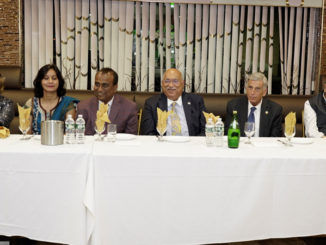
NEW YORK (TIP): Mr. Shatrughna Sinha, the Deputy Consul General at the Indian Consulate General in New York who is moving over to New Delhi to take up a new assignment at the Ministry of External Affairs, was given a farewell dinner here on Thursday, August 26. The dinner hosted by Prof. Indrajit Saluja, publisher and editor of The Indian Panorama was attended by leaders of the Indian American community, officials of the government of India undertakings, elected officials and the mediapersons.
Speaking on the occasion, Mr. Sinha expressed his appreciation of the Indian American community which, he said, had given him abundant cooperation and made his task of discharging his duties easier and pleasant. Mr. Sinha related with a touch of feeling how the Indian Americans community came forward to help out their brethren in the difficult period of Covid-19. The amount of donations in terms of equipment and otherwise is historic, he added. He said he was overwhelmed by the love the community gave him during his tenure and now that he was leaving. He wished the gathering all happiness and prosperity.
Earlier, Prof. Saluja extended a warm welcome to Mr. Sinha who was accompanied by his wife and their two children – a daughter and a son. In his brief remarks, Prof. Saluja described Mr. Sinha as the most upright officer he had come across at the Consulate during the last 20 years. Prof. Saluja appreciated Mr. Sinha for being helpful to all for which, he said, the Indian American community would always remember him. The very fact that so many people from so many walks of life had come to the farewell dinner to him is a testimony of how much love and respect he has earned with his work and his friendly disposition.
Mr. Ravi Batra, an eminent attorney and Chair National Advisory Council of South Asian Affairs, who has known every senior official at the consulate for decades praised Mr. Sinha for his dedicated services to the community. He said the consulate had to work under very pressing circumstances created by the pandemic which required much help to Indian American community as well as to people in India. The selfless and dedicated services of Mr. Sinha will always be remembered, he said.
Mr. Prem Bhandari, Chairman, Jaipur Foot USA said that Dr. Rajendra Prasad, the first President of India, envisioned an India where the Legislature, the Executive and the Judiciary would evolve as public servantsof the citizens of the country in every sense of the word. Mr. Bhandari said Mr. Sinha proved himself to be the one that Dr, Prasad spoke of,and expressed gratification in collaborating with Mr. Sinha, especially during the Vande Bharat Mission, and wished him a bright future ahead.
New York State Senator John Liu and New York State Assemblyman David Weprin who presented a Citation to Mr. Sinha also had word of praise for Mr. Sinha.
Many community leaders, and there were many representing dozens of organizations, spoke appreciatively of Mr. Sinha and wished him well. They included Leela Maret, President FOKANA, Mr. Harish Thakkar, President of AIA, Beena Kothari, President of GOPIO, New York, Indu Jaiswal, President AIF, Mr. Somnath Ghimire, President of Nepalese Association, Master Mohinder Singh, Founder President of Gurdwara Baba Makhan Shah Lobana, Mr. Harpreet Singh Toor, Former Chairman of Gurdwara Sikh Cultural Society, and Paramjit S Bedi, a leader of Afghan Sikhs. Mr. Tirlok Malik. Emmy nominated Film maker, Mr. Sudhir Vaishnav, Executive Director of Bharatiya Vidya Bhavan, Sunil Hali, a senior journalist and Yoshita Singh, PTI special correspondent at the United Nations also addressed the gathering.
Citations were presented to Mr. Sinha on behalf of Congressman Tom Suozzi and Assemblywoman Jenifer Rajkumar while Assemblyman David Weprin was himself around to present the citation.
Padma Bhushan Sant Chatwal, Padma Shri Dr. Dattatreyudu Nori and Dr. VK Raju sent their greetings and good wishes to Mr. Sinha.
Several organizations presented souvenirs and plaques to Mr. Sinha which included GOPIO, New York, FOKANA, Global Indian Trade and Cultural Council, Afghan Sikh Association, The Indian Panorama, among others
Souvenirs were presented by Mr. Ravi Batra, Bank of Baroda, Bank of India, Mr. Somnath Ghimire, and some others.
The gathering which received Prof. Saluja’s immense gratitude for their presence, wished the Sinha family all happiness and hoped Mr. Sinha will come back to the U.S. soon on a new assignment, and give us again the pleasure of his sweet company.
Mr. Jarnail Singh, the owner of the Richi Rich Palace, the venue of the dinner, received much appreciation for the warm hospitality and the delicious food.
Diminishing farm productivity notwithstanding, Punjab continues to hold aloft its flag of leading the country in political productivity. Acknowledged as a pioneer in coalition politics, Punjab has given to the country not only one of its oldest regional political parties in Shiromani Akali Dal, it has also thrown on national horizon several political outfits, think tanks and forums representing different sections of society, including vociferous ex-servicemen. While the elections to the State Assembly are still a couple of months away, a couple of new political outfits and a think tank are already in the process of guiding financially wrecked Punjabis back to their golden days. A group of eminent superannuated bureaucrats, diplomats, academicians, defense personnel, industrialists, businessmen and social scientists have come together to launch Sanjha-Sunehra Punjab, a forum that will guide this strife torn State back to good old days.
Convenor, K.C. Singh while speaking at the launch event said, the Manch wants to focus on challenges facing Punjab today and take to the people their views. The aim is to solicit the reaction of Punjab residents, both in urban and rural areas. The Manch, he said, hopes to voice the outcome of this interactive dialogue.
Audience at the launch function of Sanjha Sunehra Punjab.
The critical issues facing Punjab include farmers’ agitation against farm laws; agrarian crisis due to dependence on rice-wheat cycle and its impact on water table, environment etc.; low agricultural growth and deficient investment in industry. He added, then there are issues like poor education facilities, healthcare facilities and housing facilities.
“Equally challenging are issues affecting youth, especially jobs and above all, there is a need for systemic change and ways to check mafias controlling sand extraction, liquor trade and drugs. Systemic reforms are not possible without Punjab deciding what kind of political leadership it elects. Manch’s aim is to spread awareness about these challenges, possible solutions and a roadmap for a golden future.”, he added.
In his address, Mr. K C Singh shared the vision of the Sanjha-Sunehra Punjab Manch. He said “This platform will work towards finding solutions to the pressing issues facing the people of Punjab. We will offer our solutions, but more importantly go to the people and seek their advice. We wish to become the voice of all Punjabis “He said, Punjab needs a second Green Revolution, where new markets are created, and farmers ensured dignity and financial prosperity “
Col LJS Gill, who has served in the Indian Army for 24 years and also held senior positions in the corporate world said, “People who say it cannot be done, should not interrupt those who are doing it “
Dr K S Aulakh, Ex Vice Chancellor, PAU, said, “Punjab which used to be the number one State on per capita GDP basis forty years ago has slipped down to the 16th position, 5th most corrupt and most indebted state of India. There is desperation and chaos all around. For this people of unimpeachable integrity, vision, determination and commitment are needed to rehaul and transform it back into a viable State.”
Prof Ronki Ram, who has several years of teaching and research experience at Panjab University and other universities besides being a recipient of several awards, said, “We need to promote skill-based education, supported by a revived government school setup for the generation of respectable employment at the grassroots”.
Maj Gen Satbir Singh (retd.), who has served as an instructor at four premier institutions in the Indian Army, said, “Bold measures need to be initiated to reverse the trend to qualitatively improve the Gross Domestic Happiness in tandem with Gross Domestic Product (GDP).”
He added, “The Manch recognizes the services and sacrifices made by our armed forces. Ex-Servicemen must be granted the dignity they deserve, and their services incorporated in the larger interest of Punjab.” Presently Chairman of Indian Ex-servicemen Movement (IESM) and Advisor United Front of Ex-Servicemen (UFESM) Jantar Mantar, he has led the One Rank One Pension Movement for Defense Personnel.
Among founder members of the Sanjha-Sunehra Punjab include policechiefs Dr. D R Bhatti\ and PS Gill, Air Marshal P S Gill, Bhai Baldeep Singh, Dr. Harshinder Kaur, Capt. Vikram Bajwa, Shooter Gurbir Singh Sandhu (Arjuna Awardee), DPS Gill, Justice Kamaljit Singh Garewal, Amritjit S Narang and Jaideep Singh.
Diplomats as politicians Of all civil servants, diplomats have scripted a grand success story in politics.
Starting with Brajesh Mishra, some members of the Diplomatic Corps – K. Natwar Singh, Mohammad Hamid Ansari, Meira Kumar, Mani Shankar Aiyar, Subrahmanyam Jaishankar (India’s External Affairs Minister) and Hardeep Singh Puri (Petroleum Minister)- have had equally successful innings in politics after their stints in Indian Foreign Service.
Then there is Mr. Pawan Varma, who joined Bihar Government after quitting foreign service.
Latest to join this clan is Mr. Krishan Chander Singh (KC Singh to his friends). He retired from foreign service after serving as India’s Ambassador to both UAE and Iran. He was Deputy Secretary to the President Giani Zail Singh during turbulent (1984) years. He is the brain behind Sanjha-Sunera Punjab. Though Forum is yet to unfold its poetical cards, it may seek direct or indirect entry to Punjab politics.
Before Mr. KC Singh arrived on scene, a former diplomat Harinder Singh Khalsa, has been successful in getting to Lok Sabha, initially as an Akali and later as Aam Aadmi Party nominee. Now he is with the Bhartiya Janata Party.
Punjab has been a fertile land for political experimentation. After Shiromani Akali Dal, the country’s oldest regional political party, Punjab was also the first State to give ex-servicemen a political outfit – Rashtriya Raksha Dal.
“People are trapped in history and history is trapped in them.”- James Baldwin
August 27
Birthday – Charles Dawes (1865-1951) was born in Marietta, Ohio. He served as U.S. Vice President from 1925-29, and is best remembered for his “Dawes Plan” for German reparations following World War I. He received the 1925 Nobel Peace Prize.
Birthday – Lyndon Baines Johnson (1908-1973) the 36th U.S. President was born near Stonewall, Texas. He ascended to the presidency upon the assassination of John F. Kennedy on November 22, 1963. Johnson served until January 20, 1969.
Mother Teresa.
Birthday – Mother Teresa (1910-1997) was born (as Agnes Gonxha Bojaxhiu) in Skopje, Yugoslavia. She founded a religious order of nuns in Calcutta, India, called the Missionaries of Charity and spent her life working to help the poor and sick of India.
August 28
August 28, 1963 – The March on Washington occurred as over 250,000 persons attended a Civil Rights rally in Washington, D.C., at which Rev. Dr. Martin Luther King, Jr. made his now-famous I Have a Dream speech.
Johann Wolfgang von Goethe.
Birthday – German author-philosopher Johann Wolfgang von Goethe (1749-1832) was born in Frankfurt am Main, Germany. He is best known for the dramatic poem Faust, completed in 1831.
Birthday – The first American-born Roman Catholic saint, Elizabeth Ann Seton (1774-1821) was born (as Elizabeth Ann Bayley) in New York. She founded the first American Catholic religious order, the Sisters of Charity of St. Joseph. In 1809, she opened an elementary school in Baltimore, marking the beginning of the parochial school system in the U.S.
August 29
August 29, 1792 – In one of the worst maritime disasters, 900 men drowned on the British battleship Royal George. As the ship was being repaired, a gust of wind allowed water to flood into open gun ports. The ship sank within minutes.
August 29, 1991 – Following the unsuccessful coup of August 19-21, the Soviet Communist Party was suspended, thus ending the institution that ruled Soviet Russia for nearly 75 years.
Birthday – Physician and author Oliver Wendell Holmes (1809-1894) was born in Cambridge, Massachusetts. He once wrote, “A moment’s insight is sometimes worth a life’s experience.” His poem Old Ironsides aroused popular sentiment in the 1830’s which helped to save the historic frigate USS Constitution from destruction.
Birthday – British philosopher and pioneer in modern political thinking, John Locke (1632-1704) was born in Wrington, England. His ideas greatly influenced American colonists, namely that rulers derive their power only from the consent of the governed – and the doctrine that men naturally possess certain rights, the chief being life, liberty, and property.
August 30
Birthday – Frankenstein author Mary Shelley (1797-1851) was born in London.
Roy Wilkins
Birthday – Civil rights leader Roy Wilkins (1901-1981) was born in St. Louis, Missouri. The grandson of a Mississippi slave, he was active in the National Association for the Advancement of Colored People (NAACP).
August 31
August 31, 1786 – Shays’ Rebellion began in Massachusetts as ex-Revolutionary War Captain Daniel Shays led an armed mob. The rebellion prevented the Northampton Court from holding a session in which debtors, mostly poor ex-soldier farmers, were to be tried and likely put in prison. Following this, in September, Shays’ troops prevented Supreme Court sessions at Springfield, Massachusetts. Early in 1787, they attacked the Federal arsenal at Springfield, but were soon routed and fled. Shays was sentenced to death but was pardoned in 1788.
August 31, 1980 – Solidarity, the Polish trade union, was formed at Gdansk, Poland. Led by Lech Walesa, Solidarity opposed Communist rule and was outlawed in 1981. Seven years later, the re-legalization of Solidarity occurred and the government agreed to hold partially free parliamentary elections. Solidarity candidates scored stunning victories in the elections that followed, gaining power in Poland and paving the way for the downfall of Communism there.
Princess Diana
August 31, 1997 – Britain’s Princess Diana died at age 36 from massive internal injuries suffered in a high-speed car crash, reportedly after being pursued by photographers. The crash occurred shortly after midnight in Paris inside a tunnel along the Seine River at the Pont de l’Alma bridge, less than a half mile north of the Eiffel Tower. Also killed in the crash were Diana’s companion, Dodi Fayed, 42, and chauffeur Henri Paul. A fourth person in the car, bodyguard Trevor Rees-Jones, was seriously injured.
September 1
September 1, 1715 – The “Sun King” (King Louis XIV of France) died. He had ruled since the age of five and was succeeded by his 5-year-old great-grandson Louis XV.
September 1, 1939 – At 5.30 a.m., Hitler’s armies invaded Poland starting World War II in Europe.
September 1, 1969 – Military officers overthrew the Libyan government. The Libyan Arab Republic was then proclaimed under Colonel Muammar Gaddafi.
September 1, 1983 – Korean Air Lines Flight 007 was shot down by a Russian fighter jet while on route from New York to Seoul, killing all 269 persons on board. The Boeing 747 reportedly strayed 100 miles off course over secret Soviet Russian military installations on the Kamchatka Peninsula and Sakhalin Island. It crashed in the Sea of Japan.
Birthday – Tarzan of the Apes creator Edgar Rice Burroughs (1875-1950) was born in Chicago. Before becoming a novelist, he was as a correspondent for the Los Angeles Times.
Birthday – Boxing champ Rocky Marciano (1923-1969) was born in Brockton, Massachusetts (as Rocco Francis Marchegiano). He fought Jersey Joe Walcott for the heavyweight title on September 23, 1952 and knocked him out. In 1956, he retired as the only undefeated heavyweight champion. He died in a plane crash in 1969.
September 2
September 2, 31 B.C. – Roman legions under Augustus Caesar defeated Mark Anthony’s naval force at Actium.
September 2, 1666 – The Great Fire of London began in a bakery in Pudding Lane near the Tower. Over the next three days more than 13,000 houses were destroyed, although only six lives were believed lost.
September 2, 1752 – The British ended their use of the Julian calendar, switching instead to the Gregorian calendar, resulting in a major adjustment as Wednesday, September 2, was followed by Thursday, September 14. The correction resulted in rioting by people who felt cheated and demanded the missing eleven days back.
U.S. Treasury
September 2, 1789 – The third Presidential cabinet department, the U.S. Treasury, was established by Congress.
September 2, 1864 – During the American Civil War, Atlanta was captured by Sherman’s Army. “Atlanta is ours, and fairly won,” General William T. Sherman telegraphed President Lincoln.
September 2, 1870 – Napoleon III surrendered to the Prussians during the Battle of Sedan, resulting in the fall of the Second French Empire.
September 2, 1923 – The first elections were held in the Irish Free State after achieving independence from Britain.
September 2, 1930 – French aviators Dieudonne Coste and Maurice Bellonte made the first non-stop flight from Europe to the USA.
September 2, 1945 – President Harry Truman declared V-J Day (Victory over Japan Day) commemorating the formal Japanese surrender to the Allies aboard the USS Missouri in Tokyo Bay.
Ho Chi Minh
September 2, 1945 – Ho Chi Minh proclaimed the independence of Vietnam and the establishment of the Democratic Republic of Vietnam.
September 2, 1962 – Soviet Russia agreed to send arms to Cuba, leading to the October Missile Crisis after the shipments were discovered by the U.S.
September 2, 1963 – Alabama Governor George Wallace forcibly halted public school integration by encircling Tuskegee High School with state troopers.
Birthday – Christa McAuliffe (1948-1986) was born in Boston (as Sharon Christa Corrigan). On January 28, 1986, the 37-year-old high-school teacher, the first “ordinary citizen” in space, died with six crew members in the Space Shuttle Challenger explosion.
The Museum of Modern Art (MOMA), commemorating the 20th anniversary of Cinema Tropical, the leading presenter of contemporary Latin American filmmaking in the United States, presents 20 debut feature films by key Latin American writer-directors whose careers Cinema Tropical has helped champion over the past two decades — films that have never before enjoyed theatrical runs in New York, by now-celebrated artists like Lisandro Alonso (Argentina), Nicolás Pereda (Mexico), Sebastián Silva (Chile), and Dominga Sotomayor (Chile).
The exhibition opens with a special Sculpture Garden in-person screening of Matías Piñeiro’s “The Stolen Man” on Thursday, August 26, with the director in attendance.
“EL HOMBRE ROBADO” / THE STOLEN MAN
Argentina. Written and directed by Matías Piñeiro. With María Villar, Romina Paula. In Spanish; English subtitles. 91 min.
Thursday, August 26, 8:30. MoMA Sculpture Garden
Virtual Cinema, August 27–September 3
“DE JUEVES A DOMINGO” / THURSDAY TILL SUNDAY
Chile. Written and directed by Dominga Sotomayor. With Santi Ahumada, Francisco Pérez-Bannen, Paola Giannini. In Spanish; English subtitles. 96 min.
Virtual Cinema, August 27-September 3
“RAPADO”
Argentina. Written and directed by Martín Rejtman. With Ezequiel Cavia, Mirta Busnelli, Damián Dreizik. In Spanish; English subtitles. 75 min.
Virtual Cinema, August 31 – September 7
“EL LUGAR MÁS PEQUEÑO” / THE TINIEST PLACE
Mexico. Written and directed by Tatiana Huezo. In Spanish; English subtitles. 100 minutes.
Virtual Cinema, August 31-September 7
“25 WATTS”
Uruguay. Written and directed by Juan Pablo Rebella, Pablo Stoll. With Daniel Hendler, Jorge Temponi, Alfonso Tort. In Spanish; English subtitles. 92 minutes.
Virtual Cinema, September 2-9
“MELAZA” / MOLASSES
Cuba/France/Panama. Written and directed by Carlos Lechuga. With Yuliet Cruz, Armando Miguel Gómez, Luis Antonio Gotti. In Spanish; English subtitles. 80 min.
Virtual Cinema, September 2-9
“LA LIBERTAD” / FREEDOM
Argentina. Written and directed by Lisandro Alonso. With Misael Saavedra, Humberto Estrada, Rafael Estrada. In Spanish; English subtitles. 75 min.
Virtual Cinema, September 7-14
“SANGRE”
“SANGRE.” (Photo : Cinema Tropical.)
Mexico/France. Written and directed by Amat Escalante. With Cirilo Recio Dávila, Claudia Orozco, Martha Preciado. In Spanish; English subtitles. 90 min.
Virtual Cinema, September 7-14
“ACNÉ”
Uruguay/Argentina/Spain/Mexico/USA. Written and directed by Federico Veiroj. With Alejandro Tocar, Ana Julia Catalá, Gustavo Melnik. In Spanish, Hebrew; English subtitles. 97 min.
Virtual Cinema, September 9-16
“AGUA FRÍA DE MAR” / COLD WATER OF THE SEA
Costa Rica/France/Spain/Netherlands/Mexico. Written and directed by Paz Fábrega. With Monserrat Fernández, Lil Quesada Morúa, Luis Carlos Bogantes. In Spanish; English subtitles. 83 min.
Virtual Cinema, September 9-16
“BALNEARIOS”
Argentina. Directed by Mariano Llinás. In Spanish; English subtitles. 80 min.
Virtual Cinema, September 14 – 21
“EL SALVAVIDAS” / THE LIFEGUARD
Chile. Directed by Maite Alberdi. Screenplay by Alberdi, Sebastián Brahm. In Spanish; English subtitles. 64min.
Virtual Cinema, September 14-21
“MULHER À TARDE” / AFTERNOON WOMAN
Brazil. Written and directed by Affonso Uchôa. With Renata Cabral, Luísa Horta, Ana Carolina Oliveira. In Portuguese; English subtitles. 70 min.
Virtual Cinema, September 16-23
“SANTA TERESA Y OTRAS HISTORIAS” / SANTA TERESA AND OTHER STORIES
Dominican Republic/Mexico/USA. Written and directed by Nelson Carlo de los Santos Arias. With Judit Gómez, Priscilla Lazaro, Cristina Kahlo. In Spanish; English subtitles. 65 min.
Virtual Cinema, September 16-23
“TEMPORADA” / LONG WAY HOME
“TEMPORADA.” (Photo / Cinema Tropical.)
Brazil. Written and directed by André Novais Oliveira. With Grace Passô, Russo Apr, Rejane Faria. In Portuguese; English subtitles. 113 min.
Virtual Cinema, September 21-28
“¿DÓNDE ESTÁN SUS HISTORIAS?” / WHERE ARE THEIR STORIES?
Mexico/Canada. Written and directed by Nicolás Pereda. In Spanish; English subtitles. 73 min.
Virtual Cinema, September 21-28
“LA PERRERA” / THE DOG POUND
Argentina/Canada/Uruguay/Spain. Written and directed by Manuel Nieto Zas. With Pablo Riera, Martín Adjemián, María Sofía Dabarca. In Spanish; nglish subtitles. 109 min.
Virtual Cinema, September 23-30
“HISTORIA DEL MIEDO” / HISTORY OF FEAR
Argentina/France/Germany/Qatar/ Uruguay. Written and directed by Benjamín Naishtat. With Jonathan Da Rosa, Tatiana Giménez, Mirella Pascual, Claudia Cantero, Francisco Lumerman. In Spanish; English subtitles. 79 min.
Virtual Cinema, September 23-30
“GENTE DE BIEN”
“GENTE DE BIEN.” (Photo / Cinema Tropical.)
Colombia/France. Directed by Franco Lolli. Screenplay by Lolli, Catherine Paillé, Virginie Legeay. With Carlos Fernando Pérez, Alejandra Borrero, Santiago Martínez. In Spanish; English subtitles. 86 min.
Virtual Cinema, September 28 – October 5
”LA VIDA ME MATA” / LIFE KILLS ME
Chile. Directed by Sebastián Silva. Screenplay by Silva, Pedro Peirano. With Gabriel Díaz, Diego Muñoz, Claudia Celedón. In Spanish; English subtitles. 92 min.
Virtual Cinema, September 28-October 5
For more information, visit: moma.org/film
———————–
FILMS CURRENTLY RUNNING
INTO THE LOST DESERT
DIR: Christopher Cassel l 1h 23m
: “INTO THE LOST DESERT.” Photo / Billy Sprague
INTO THE LOST DESERT, follows extreme desert explorer, Max Calderan as he pursues his lifelong dream to cross the last uncharted desert, most inhospitable places on earth, the Rub’ al Khali, the massive 700-mile west-to-east desert in the Arabian Peninsula. It’s a story about perseverance and passion.
Watch the trailer – youtu.be/fLi7JYwBTUw
Available on FOX Entertainment’s free streaming service, tubitv.com
Website: emptyquarterstudios.com
TRY HARDER!
DIR: Debbie Lum l 2021 l USA l 1h 25m
Nominee for Grand Jury Prize at Sundance
At Lowell High School, the top public school in San Francisco — where cool kids are nerds, nearly everyone has an amazing talent, and most of the student body is Asian American — the things that usually make a person stand out can feel commonplace. With humor and heart, director Debbie Lum captures the reality of the American college application process and the intersection of class, race, and educational opportunity as young adults navigate a quintessential rite of passage.
Website: www.tryharderfilm.com
Facebook: @TryHarderFilm
Twitter: @TryHarderFilm
MATERNA
DIR: David Gutnik l 1h 45m
Available on digital platforms and VOD
MATERNA follows the journeys of four New York women who are isolated by city life, separated by class, politics, race and religion, and yet bound by a shared hunger for identity and connection. With their futures at stake, the characters’ lives are upended by a fateful encounter underground, where their stories of personal transformation become a battle for survival.
Available on digital platforms + VOD
(Mabel Pais writes on The Arts and Entertainment, Social Issues, Spirituality, and Health & Wellness)
LOS ANGELES (TIP): Los Angeles based composer and pianist, Raashi Kulkarni, is the first person of Indian-origin to be selected for the 2021-23 Universal Composers Initiative. She is one of the eight diverse composers, five of which are female, unveiled Friday by NBC Universal’s Global Talent Development & Inclusion (GTDI) team.
The first-of-its-kind initiative aims to elevate artists that possess unique and global perspectives translating into distinctive musical expressions, according to a press release. Kulkarni has been working with Emmy-nominated composer, Blake Neely, since 2017 and composes additional music on series such as The CW’s Supergirl, DC’s Legends of Tomorrow, and The Flash. In 2019, she composed and orchestrated the music for the DC Universe’s first Bollywood-inspired musical, featured on DC’s Legends of Tomorrow.
Raashi earned her Master of Music degree from University of Southern California, where she was a recipient of the Joe and Alice Harnell Scholar Award for Scoring for Motion Pictures and Television.
Prior to USC, Raashi graduated with a Bachelor of Science in Economics and a minor in Music from The George Washington University, where she was a Presidential Arts Scholar and recipient of the Barry Manilow Endowed Prize in Music.
In the last decade, Raashi has performed in concert tours across the globe and as a featured pianist at the Shrine Auditorium, Kennedy Center, Smithsonian Museum, Patriot Center, Warner Theatre, Kodak Hall, and more.
In addition, Raashi’s two independent music albums debuted at #1 (2018) and #2 (2020) on the iTunes World Music Charts, respectively.
She is a voting member of both the Television Academy and Recording Academy.
Besides Kulkarni, the other selected composers are Jina Hyojin An, Jocelyn Chambers, Pierre Charles, Pakk Hui, Jesi Nelson, Daniel Rojas, and Dara Taylor with representation from countries such as Costa Rica, Hong Kong and Korea.
“Bringing to the table a wide range of varied life experiences with backgrounds in accounting, stand-up comedy and healthcare, this group of lauded violists, pianists, guitarists, vocalists and composers is brought together with a shared passion for music, which was undeniable from an early age: watch the moment they fell in love with music,” the release says.
“We’re incredibly proud of the career momentum this initiative has generated with the support of NBCUniversal’s film and television music teams,” said Janine Jones-Clark, Executive Vice President, Inclusion – Talent & Content, NBCUniversal.
“Along with our music partners, we are excited to welcome this talented and versatile group of musical multi-hyphenates and we look forward to giving them access and finding production opportunities across NBCUniversal’s portfolio.”
All eight composers from the inaugural group secured production credits either during or following the initiative, with 75% of those credits affiliated with NBCUniversal content.
Launched in 2018, the two-year Universal Composers Initiative was created to address a void in data tracking diversity and female representation amongst composers.
Confronting the issue head-on, GTDI, in partnership with Universal Global Film Music President Mike Knobloch and his team, set out to identify up-and-coming talent at various points in their creative journeys for music production opportunities across the Studio, the release said.
The initiative has since expanded across the NBCUniversal portfolio, partnering closely with additional divisions including DreamWorks Animation Television Music and Universal Studio Group Music Services, it added.
WASHINGTON (TIP): Indian American Sikhs have met with White House representatives over the issue of evacuation of Afghanistan Sikhs and Hindus.
Dr Rajwant Singh, co-founder of the National Sikh Campaign (NSC) and chairman of the Sikh Council on Religion and Education, along with Gurwin Singh Ahuja, co-founder of the NSC, apprised key White House officials of the Sikh community’s concerns about the fallout of the US withdrawal from Afghanistan.
“We conveyed that the Sikh community will be ready to assist the Biden administration if the Sikhs and Hindus are evacuated to the US. We are thankful to the Indian Government for stepping in and evacuating the first batch of Sikhs and Hindus from Afghanistan. We would like the American troops to assist the Sikhs to be evacuated from the Kabul airport as the Indian Air Force is ready for the task.”
They also reminded the White House officials that the Canadian Government had offered to accept many Sikh refugees from Afghanistan.
The US Sikhs were concerned about the impact on the community in the US of the images of gun-wielding Taliban. “Hate groups are ready to exploit these situations to create havoc on racial and religious minorities in the US,” he said.
They also reminded the White House officials that the Canadian Government had offered to accept many Sikh refugees from Afghanistan.
SAN JOSE (TIP): Eshani Jha, an Indian American girl from San Jose, California, has won the prestigious 2021 Stockholm Junior Water Prize. for her research on simple and affordable ways to purify water.
Stockholm Junior Water Prize is an international competition where students between the ages of 15 and 20 present solutions to major water challenges. With water contamination being a growing global problem, Jha’s research can in the future help saving lives, particularly in places where state of the art water filtration is not available or simply too costly. “The simplicity of this solution is that it addresses multiple, varied contaminants with a single device, and that device is potentially scalable to global use, with the added benefit of localized manufacture,” the Water Prize jury said acknowledging the potential of Jha’s work. She was awarded the prize by its official patron Crown Princess Victoria of Sweden, during an online ceremony on Aug. 24 as part of World Water Week.
“I am honored and humbled, and I would like to thank everyone involved for the amazing experience that Stockholm Junior water Prize provides,” Jha said. “I have got to know many of the other participants along the way and we are determined to find ways to work together. As young scientists we really are the future of the water world,” Jha said.
The friendly atmosphere has always been at the heart of the event and even though the 2021 edition was an entirely digital affair, Jha said that the interaction with other participants was still one of the highlights.
Her own research has been going on for some years and she said that it started with a strong wish to find a simple and cost-effective alternative to using active carbon for water filtration. This led her to biochar, which at the time was already used to purify soil.
“I thought that if it could purify soil, why not water too? Biochar’s advantage is that it is much more affordable than active carbon, with added benefits such as the possibility of local production.” Jha’s invention targets certain classes of contaminants, particularly pesticides, emerging contaminants, and heavy metals. She has enhanced the biochar’s existing ability to act like a sponge for these contaminants, essentially creating a ‘super sponge’.
“I see a multitude of applications for this, and I also see great potential in targeting other contaminants in the future. My ambition is that this should be a one-stop water filter.”
Jha has already obtained a patent for her invention and she hopes to be able to commercialize it within a couple of years. Jha stresses that her successful research had not been possible without the support from her family, school, and scientific mentors. She pays particular tribute to her dedicated teachers, underlining the importance of inspiring and supportive role models in school.
“The significance of good teachers cannot be overstated. They play a big role in both character development and career choices, and they can make all the difference for young people pursuing their dreams.”
The Stockholm Junior Water Prize has been organized every year since 1997 by the Stockholm International Water Institute, SIWI, with Xylem as Founding Partner. Tens of thousands of students from around the world participate each year.
“Stockholm Junior Water Prize celebrates young people’s determination to be part of a better future. The passion and ingenuity that all participants show is truly inspiring and an important contribution to the global water world,” said Torgny Holmgren, Executive Director at Stockholm International Water Institute.
A Diploma of Excellence was awarded to Thanawit Namjaidee and Future Kongchu from Thailand, for developing a way to use organic waste material for moisture retention, thereby accelerating plant growth.
The People’s Choice Award went to Gabriel Fernandes Mello Ferreira from Brazil for developing a microplastic retention mechanism for water treatment.
“These winners are part of a global movement,” said Patrick Decker, Xylem’s CEO. “We’re so inspired by them – and all 125,000 entrants in 25 years of the Stockholm Junior Water Prize.
“A generation of young people, motivated to solve society’s biggest water challenges, can and are changing the world. We’re so proud to champion their innovation by sponsoring this great Prize.”
Opposition unity can come only with a more accommodative Congress leadership
A meeting of 19 Opposition parties on August 20 confirmed the sense of urgency that they feel to come together and build a united front against the BJP. It was also a demonstration of the challenges that they face in that task, in terms of programme and architecture. The meeting convened by Congress President Sonia Gandhi was attended by leaders of 18 other parties, including four Chief Ministers. These parties have strategic or ideological reasons to be part of a formation against BJP hegemony, and see no harm in aligning with the Congress in the process. All the 19 parties see the BJP as a threat to their own politics; some of them view it as endangering the constitutional values of the country too. There are other non-BJP parties that do not see it that way. The BJD, TRS and YSRCP, ruling parties in Odisha, Telangana and Andhra Pradesh, respectively, see no gain in opposing the BJP or aligning with the Congress. They might also see antagonism with the BJP and affinity with the Congress as detrimental to their politics. Comparable is the situation of the BSP and SP, two influential parties in Uttar Pradesh that elects the largest number of Lok Sabha MPs. Ms. Gandhi has exhorted all parties to rise above compulsions to build a joint front against the BJP, the aim of which is to defeat the BJP in the 2024 general election.
The fact is that the Congress is itself a prisoner of its own compulsions and rigidities such as its institutional antipathy towards the YSRCP and TRS, and the personal fancies of its leader Rahul Gandhi who wields all authority and holds no accountability. Additionally, the Congress of today is vastly diminished compared to its position in the run-up to the 2004 general election when it could bring a host of parties under a coalition. Regional leaders then deferred to Ms. Gandhi, and her command over the Congress was absolute. The disarray in the Congress leadership is a drag on the attempts at Opposition unity. There is also a vast divergence among these parties on identifying the most critical issues in designing the optimal campaign against the BJP. The Congress and Left want to front-load in any Opposition campaign, the use of a spyware by an unknown government entity to snoop on a wide range of individuals. Parties that are more rural think price rise and agriculture distress and unemployment would have more salience among voters. This divergence need not necessarily be disabling for the Opposition. In fact, various parties could appeal to different constituencies and amalgamate their strengths, as it happened in the UPA experiments between 2004 to 2014. That requires significantly more leadership and management skills than available today in the Opposition gallery.
India does not have the luxury of distance from the ticking bomb in its neighborhood
The suicide bombing at Kabul airport which claimed close to 100 lives has shattered any residual optimism the world had that the West pulling out forces and handing the country over to the Taliban, as part of negotiations in Doha, would result in a more peaceful Afghanistan. Instead, what the complex attack claimed by the Islamic State-Khorasan (IS-K) has proven is that no matter what assurances the Taliban’s new regime or its benefactors in Pakistan may provide, they are unable or unwilling to stem the terror threat emanating from the country, despite being provided key intelligence inputs about the attack. There are also suspicions of some collusion within the Taliban regime, as the Haqqani group that is securing Kabul and the airport periphery, is a UN designated terror entity that has carried out attacks with the IS-K in the past. That the U.S. maintains that it continues to “coordinate” with the Taliban on security should further set the seal on any idea of investigations or operations against the Taliban. As this is an alarming scenario, the Government must now acknowledge and prepare for the threats to India. The situation will further enhance India’s already hostile continental flanks, in consonance with threats from Pakistan at the LoC and support to cross-border terrorism, as well China’s LAC aggressions.
New Delhi must also focus on diplomacy to highlight its concerns, beginning with the UN where India will have a salient role. As a UNSC member, and President, India must ensure that the UN’s most powerful body does not appear helpless in the face of the Taliban’s challenge, and must make the red lines clear for the kind of government it must guarantee — including one that recognizes human rights, adopts some form of representation for its people, and distances itself from terror groups. Chief among these will be the need to ensure that the Haqqani group, including its chief Sirajuddin Haqqani who is the Deputy to Taliban chief Haibatullah Akhundzada, is not included in the official power structure. The group has been responsible for terror and suicide attacks on Indian consulates and the Embassy in particular in 2008-09. As Chairman of the 1988 Sanctions Committee that lists 135 Taliban members as designated terrorists, India must stand firm on any move to ease sanctions on them, including travel, funds access and weaponry. The UN General Assembly (UNGA)’s accreditation committee must also decide on whether to allow a future Taliban-led government to occupy Afghanistan’s seat. Given Prime Minister Narendra Modi’s visit to the U.S. later in September, where he is expected to address the UNGA, and then the Quad summit, it is important that India’s position on the Afghan situation and its impact on Indian security are articulated strongly. While briefing MPs, External Affairs Minister S. Jaishankar said the Government is pursuing a “wait and watch” policy, but that assumes the luxury of distance from the ticking time bomb in India’s neighborhood, which New Delhi does not have.
US, other nations must ensure safety of their citizens
The death of at least 110 people, including 13 US troops, in Thursday’s bombings near Kabul’s international airport has tragically laid bare the messy evacuation that began after the Taliban captured the Afghanistan capital on August 15. The attacks were certainly not a bolt from the blue – these were on expected lines and should have been pre-empted. It was the deadliest day for the US forces in the war-torn country since August 2011, when 31 personnel were killed as a helicopter was shot down. ‘We will not forgive. We will not forget. We will hunt you down and make you pay,’ US President Joe Biden said in his address from the White House, even as he stuck to the fast-approaching deadline of August 31 for pulling out American troops. His words sounded strikingly similar to those spoken by the then President George W Bush, days after the 9/11 attacks: ‘I will not forget this wound to our country or those who inflicted it’.
It’s a catch-22 situation for the US. Biden’s call for revenge may not only impede the withdrawal but also prompt the Islamic State’s Afghanistan affiliate to launch more attacks in the coming days, thus endangering the lives of hundreds of citizens of the US and other countries who are still stranded there. The US runs the risk of shooting itself in the foot all over again if it pursues the perilous course of retribution. With the Islamic State bent on causing damage to the US as well as the Taliban, various nations have no option but to work in coordination with the Taliban for the safety of their residents.
Several countries, including Spain, Australia and New Zealand, have completed the evacuation process. It’s a race against time for the others, including India. Briefing an all-party meeting on Thursday, External Affairs Minister S Jaishankar said the government was committed to ‘full evacuation’ of Indians from Afghanistan. This task needs to be concluded at the earliest, considering the likelihood of more bombings at or around the Kabul airport.
The post-American power vacuum in the region will aid China and shape India’s strategic choices and behavior
By Happymon Jacob
“The return of the Taliban to Kabul has effectively laid India’s ‘mission Central Asia’ to rest. If New Delhi could not find its way to Central Asia with encouraging partners such as Iran and the Hamid Karzai/Ashraf Ghani governments, the possibility of New Delhi doing so now is next to nil. India’s diplomatic and civilian presence as well as its civilian investments will now be at the mercy of the Taliban, and to some extent Pakistan. If there is a concerted effort by China, Pakistan and the Taliban to erase the Indian presence from Afghanistan, there is little India can do about it.”
The fall of Kabul in the wake of the American withdrawal from Afghanistan will prove to be a defining moment for the region and the future shape of its geopolitics; it would be as defining, if not more, as the Soviet intervention in 1979 and the American one in 2001. While a lot depends on the Taliban’s actual conduct both domestically as well as on the southern and western Asian geopolitical chessboard in the months ahead, the Taliban are likely to continue as a ‘useful villain’ in the unfolding great power competition. For New Delhi, the fall of Kabul is a moment of reckoning and it must rethink its regional strategies and options. Unfortunately, of the latter, it does not have many.
A vacuum
What is most disconcerting is the regional power vacuum in the Eurasian heartland created by the haphazard manner in which the United States withdrew from Afghanistan and its potential knock-on effects. An axis of regional powers such as China, Pakistan, Russia, and the Taliban, have already started filling this power vacuum, shaping, thereby, the contours of the region’s geopolitics based on their individual and common interests. Iran might also jump on this opportunistic bandwagon under the Chinese leadership.
What is abundantly clear is that each of these countries harbor deep anti-American feelings in varying degrees which will further shrink the American influence in the Eurasian heartland. While it is too early to determine whether what these countries have on their hands is an opportunity or a ticking bomb, the U.S., as a direct consequence of the formation of this axis, might decide to explore new ways of working with them to stabilize the region, if it desires to do so, and remain relevant there. If indeed that happens, could it result in a potential softening of the American rhetoric against China, Pakistan, Russia and perhaps even Iran? More so, what would that mean for India? While a healthy conversation among the great powers — the U.S., China and Russia — on global and regional challenges is a good sign, India is neither a great power nor present at the table. New Delhi must ensure that it does not become a casualty on the south-western Asian geopolitical chessboard.
Advantage China; extremism
The post-American power vacuum in the region will be primarily advantageous to China and its grand strategic plans for the region. Beijing will further strengthen its efforts to bring every country in the region, except India, on the Chinese Belt and Road Initiative bandwagon, thereby altering the geopolitical and geoeconomics foundations of the region. More so, the much-feared Chinese encirclement of India will become ever more pronounced. Having been further emboldened by the U.S.’s withdrawal and in stamping its writ on the region, Beijing is likely to become less accommodative towards India including on the Line of Actual Control. Even in trade, given the sorry state of the post-COVID-19 Indian economy, India needs trade with China more than the other way round. Unless New Delhi can find ways of ensuring a rapprochement with China, it must expect Beijing to challenge India on occasion, and be prepared for it.
The bigger challenge for India though would be a near-certain increase in terrorism and extremism in the region. The U.S. presence in Afghanistan, international pressure on the Taliban and Financial Action Task Force worries in Pakistan had a relatively moderating effect on the region’s terror ecosystem. With the Taliban now back in Kabul, things are bound to change. The visuals of the Taliban releasing terrorists from Afghan jails would send a powerful message to their fellow travelers, handlers, and sympathizers in the region.
While the neighboring countries are also worried about terrorism emanating from Afghanistan, the reality is that they are busy making their own private deals with the Taliban to not host terror organizations targeting them. There is little appetite for a regional approach to curbing terrorism from a Taliban-led Afghanistan. This enables the Taliban to engage in a selective treatment towards terror outfits present there or they have relations with. Moreover, given that the international community may have no choice but to recognize the Taliban regime — UN Security Council members such as China and Russia have already indicated their intent to do so — would also mean that the Taliban would hold more power in a bargain on the terror question. Sanctions are unlikely to deter an outfit that does not need to bother about the next election.
It is unlikely that the Taliban will proactively export terror to other countries unless of course for tactical purposes by, say for instance, Pakistan against India. The real worry, however, is the inspiration that disgruntled elements in the region will draw from the Taliban’s victory against the world’s sole superpower.
To that extent, the triumphalism in Pakistan over the Taliban’s victory in Afghanistan could eventually become counterproductive for Pakistan itself. Whether Pakistan Prime Minister Imran Khan refers to them as a force that has ‘unshackled the chains of slavery’ or the country’s deep state considers them as a strategic asset, the reality is that many anti-Pakistan terror organizations would be emboldened as well.
Impact on regional interests
The return of the Taliban to Kabul has effectively laid India’s ‘mission Central Asia’ to rest. If New Delhi could not find its way to Central Asia with encouraging partners such as Iran and the Hamid Karzai/Ashraf Ghani governments, the possibility of New Delhi doing so now is next to nil. India’s diplomatic and civilian presence as well as its civilian investments will now be at the mercy of the Taliban, and to some extent Pakistan. If there is a concerted effort by China, Pakistan and the Taliban to erase the Indian presence from Afghanistan, there is little India can do about it. Had New Delhi, as I had argued earlier, cultivated deeper relations (which by no means would have meant recognizing the outfit) with the Taliban, Indian interests would have been more secure in a post-American Afghanistan. New Delhi’s lack of strategic foresight will prove to be costly.
What is perhaps not yet understood is how the rise of the anti-America axis (China, Russia, Iran, Pakistan and a Taliban-led Afghanistan) and anti-American sentiments in the region would impact India’s regional interests given that it has become closer to the U.S. than ever before in its history. We have to wait and see what this mismatch between the region’s mood and India’s strategic choices would mean for the country. There is little doubt that because of these developments, India’s regional ambitions will take a major hit in the months and years ahead.
The fall of Kabul and the consequent knock-on effects in the region will have several potential implications for India’s foreign policy and its strategic choices and behavior. For one, given the little physical access India has to its north-western landmass, its focus is bound to shift more to the Indo-Pacific even though a maritime grand strategy may not necessarily be an answer to its continental challenges. Second, New Delhi might also seek to shed the arrogance it displayed towards its smaller neighbors during Modi 1.0 and cultivate friendly relations with them. Myanmar is a case in point. India has already indicated that it would not challenge the junta on the coup and its widespread human rights violations. This policy is likely to continue even if the Joe Biden administration seeks New Delhi’s help in turning up the heat on Myanmar’s generals. The last thing New Delhi needs now is an angry neighbor rushing to China.
India-Pakistan ties
Third, the developments in Afghanistan could nudge New Delhi to seek stability, if not peace, with Pakistan. While there is little desire in New Delhi today to reopen a broad-based dialogue process with Pakistan, even a ‘cold peace’ would be in India’s interest. For Pakistan too, such a ‘cold peace’ will help it to focus its energies on consolidating its interests and gains in Afghanistan. As a result, both sides might refrain from indulging in competitive risk-taking unless something dramatic happens which is always a possibility between the two rivals. That said, stability between India and Pakistan depends a great deal on how politics in Kashmir plays out, and whether New Delhi is able to pacify the aggrieved sections in the Valley.
The lesson for India in the wake of these developments is clear: It will have to fight its own battles. So, it must make enemies wisely, choose friends carefully, rekindle flickering friendships, and make peace while it can.
(The author is Associate Professor, Centre for International Politics, Organization and Disarmament, School of International Studies, Jawaharlal Nehru University, New Delhi)
“The hasty withdrawal projects the image of an inept and bruised America that fumbled and stumbled its way out of Afghanistan after 20 years, in the most unseemly manner. The irony is that US-led external aid, including that by India, enabled Afghanistan to improve its human security indicators. But the attempt at nurturing a democratic ethos floundered on the deeply embedded tribal rivalries and ethnic discord, distinctive to Afghanistan.”
Fear and uncertainty swirls in the air. The Kabul airport is not the entirety of Afghanistan and the Taliban is also pawing in the air. The 20th anniversary of 9/11 could not have been more bleak and chaotic than what is now unspooling in Kabul.
US President Joe Biden has asserted that the August 31 deadline for the American withdrawal from Afghanistan will not be extended despite the urging of his major NATO allies who wanted more time to evacuate their troops and citizens working in the war-ravaged country. This Biden decision was resolute, notwithstanding the fact that the proposed evacuation of thousands of US-NATO personnel, foreign nationals and Afghan citizens is unlikely to be completed by August 31.
The images that have been beamed from Kabul with thousands of desperate Afghan nationals trying to enter the airport with or without travel documents is testimony to an unfolding human tragedy whose scale is yet to be fathomed for this is only the first phase. The August 31 exit from Kabul will be recalled as a temporal punctuation of profound significance and tainted connotation for the US-led alliance that embarked on the global war on terror (GWOT) in October 2001.
Two decades later, the same Taliban who were ousted from Kabul and ‘bombed into the Stone Age’ have wrested power in the most unexpected manner and are now engaged in political negotiations with the global community. They have the tacit backing of two of the five permanent members of the UN Security Council and this was reflected in the mild and watered-down statements adopted by the UN Human Rights Council on August 24.
The hasty US withdrawal is confounding and projects the image of an inept and bruised America that fumbled and stumbled its way out of Afghanistan after 20 years, in the most unseemly and unplanned manner after expending considerable treasure and human lives.
The irony is that after ousting Taliban 1.0 in 2002, US-led external aid, including that by India, enabled Afghanistan to improve many of its human security indicators — particularly for women and girls and an improvement in per capita GDP and infant mortality. However, the attempt at nurturing a credible and participatory democratic ethos floundered on the deeply embedded tribal rivalries and ethnic discord, distinctive to Afghanistan, and the final collapse was symbolized by the manner in which the Afghan President Ashraf Ghani fled his country and the security forces melted away even as the Taliban moved into Kabul with not a shot being fired.
Thus, the abiding perception of the hasty US exit is that it has left the country with little or no substantive gains. Thousands of Afghan citizens were also killed and injured in the long drawn out GWOT which also witnessed numerous acts of state-sponsored terrorism involving different Taliban factions that ruthlessly targeted minorities across the country and also attacked the Indian embassy in Kabul. For many Afghan citizens, the Taliban remains a dreaded entity and their desperation to flee their country has been sadly captured in a recent image of young Afghans falling to their death from the under-carriage of a US military aircraft as it was taking off from Kabul in the most chaotic and dangerous circumstances. The other image is that of a traumatized Afghan mother handing over her baby to a US soldier across an airport barrier in the fond hope that the child would be evacuated to safety.
Could this exit from Kabul have been conducted differently and in a more competent manner? The answer is an unambiguous yes and many perplexing questions arise. The fact that the USA would leave Afghanistan was formally announced in 2020 by the Trump administration. To that extent, President Biden inherited a major policy decision that he chose not to review or reverse — as he did with the Paris climate accord. Be that as it may — having concluded that the Taliban would take over Kabul soon, why did the US and NATO not draw up detailed exit plans for their personnel (uniformed and civilian) and ensure the disposal of sizable military inventory?
Many rounds of talks were held with the Taliban in the course of the year — and it was evident that the USA and the NATO allies would exit Afghanistan before September 11 — the 20th anniversary of 9/11. Under the circumstances, it appears that the lead time of many months was not utilized appropriately to prepare for a planned evacuation of Afghan nationals who had worked with the US and NATO forces and whose personal security would be in jeopardy under a Taliban dispensation. This number is estimated to be about 60,000 and with family members included, this is in the range of 300,000 individuals who would need contingency plans for an exit from Afghanistan. This did not happen, as the last-minute issue of travel documents turned into a tragedy in the human cascade that swarmed towards the US military aircraft. Furthermore, the quiet and almost furtive US exit from its main air base in Bagram — north of Kabul on July 2 is incomprehensible — given the scale of theevacuation that had to be undertaken a few weeks later.
Hypothetically, had Bagram been retained and kept operational till the last of the US and NATO troops had left Afghanistan — the current chaos and desperation could have been reduced considerably. Evacuation of a large number of individuals who are vulnerable or stranded for different reasons by airlift is an arduous challenge and war zones are that much more hazardous.
Under the circumstances, the sheer volume of numbers evacuated by the US military in a single day (Wednesday) — upwards of 80,000 — is a commendable achievement. But the vast numbers of those Afghans evacuated and the compressed timelines have made the long journey from Kabul to Doha and onwards to Texas a logistic nightmare. Even as the August 31 deadline comes closer, the Taliban has declared that Afghan citizens will not be allowed to get to the Kabul airport and the US in turn seems to have prioritized its own nationals and green card holders, while President Biden has stated that the ISIS could mount a terror attack.
Fear and uncertainty swirls in the air. The Kabul airport is not the entirety of Afghanistan and the Taliban is also pawing in the air. The 20th anniversary of 9/11 could not have been more bleak and chaotic than what is now unspooling in Kabul.
(The author is Director, Society for Policy Studies)
“In sum, even if facial recognition technology is needed to tackle modern-day criminality in India, without accountability and oversight, facial recognition technology has strong potential for misuse and abuse. In the interest of civil liberties and to save democracy from turning authoritarian, it is important to impose a moratorium on the use of facial recognition technology till we enact a strong and meaningful data protection law, in addition to statutory authorization of NAFRS and guidelines for deployment.”
In the monsoon session of Parliament, no meaningful debate could take place due to the controversy over Pegasus, the spyware. Some Indian journalists, civil society activists and political leaders, and a top election strategist were possibly under surveillance. There has been no categorical denial by the Government and that the Israeli software was not purchased. But above this, there is a much bigger issue of the privacy of the entire citizenry which has not received much public attention. On June 23, 2021, the Joint Committee examining the Personal Data Protection Bill (2019) was granted a fifth extension by Parliament. While informational privacy is not the Government’s priority, it has been simultaneously exploring the potential of facial recognition technology.
A prying technology
To empower the Indian police with information technology, India approved implementation of the National Automated Facial Recognition System (NAFRS) to “facilitate investigation of crime and detection of criminals” in a quick and timely manner. On its implementation, it will function as a national-level search platform that will use facial recognition technology: to facilitate investigation of crime or for identifying a person of interest (e.g., a criminal) regardless of face mask, makeup, plastic surgery, beard or hair extension.
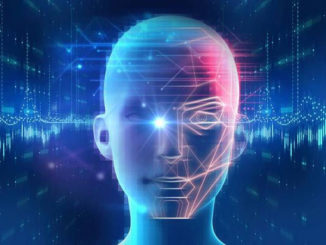
The technology is absolutely intrusive: computer algorithms map unique facial-landmarks (biometric data) such as shape of the cheekbones, contours of the lips, distance from forehead to chin, and convert these into a numerical code — termed a faceprint. Thus, for the purposes of ‘verification’ or ‘identification’, the system compares the faceprint generated with a large existing database of faceprints (typically available to law enforcement agencies) through a database on driver’s license or police mugshots). But the real problem is that facial recognition does not return a definitive result — it ‘identifies’ or ‘verifies’ only in probabilities (e.g., a 70% likelihood that the person shown on an image is the same person on a watch list). Though the accuracy of facial recognition has improved over the years due to modern machine-learning algorithms, the risk of error and bias still exists. For instance, there is a possibility of producing ‘false positives’ — a situation where the algorithm finds an incorrect match, even when there is none — resulting in wrongful arrest. Moreover, much research suggests facial recognition software is based on pre-trained models. Therefore, if certain types of faces (such as female, children, ethnic minorities) are under-represented in training datasets, then this bias will negatively impact its performance.
As NAFRS will collect, process, and store sensitive private information: facial biometrics for long periods; if not permanently — it will impact the right to privacy. Accordingly, it is crucial to examine whether its implementation is arbitrary and thus unconstitutional, i.e., is it ‘legitimate’, ‘proportionate to its need’ and ‘least restrictive’? What is its potential for abuse and misuse with the pending-status of the Personal Data Protection Bill (PDPB), and the absence of clear guidelines for its deployment? How does it impact other fundamental rights such as the right to dissent? Should NAFRS be banned or simply regulated?
The Federal Bureau of Investigation in the United States uses facial recognition technology for potential investigative leads; police forces in England use facial recognition to tackle serious violence. In other cases, countries such as China use facial recognition for racial profiling and mass surveillance — to track Uighur Muslims. Policing and law and order being State subjects, some Indian States have started the use of new technologies without fully appreciating the dangers involved.
Test of ‘proportionality’
Facial recognition being an intrusive technology has an impact on the right to privacy. The Constitution of India does not explicitly mention the right to privacy. However, a nine-judge Bench of the Supreme Court, in Justice K.S. Puttaswamy vs Union of India (2017) recognized it as a precious fundamental right. Since no fundamental right can be absolute and thus even in respect of privacy, the state may impose reasonable restrictions on the grounds of national integrity, security of the state, public order, etc.
The Supreme Court, in the K.S. Puttaswamy judgment provided a three-fold requirement (which was reiterated in Anuradha Bhasin while examining denial of the ‘right to Internet’ to the people of Kashmir) to safeguard against any arbitrary state action. Accordingly, any encroachment on the right to privacy requires the existence of ‘law’ (to satisfy legality of action); there must exist a ‘need’, in terms of a ‘legitimate state interest’; and, the measure adopted must be ‘proportionate’ (there should be a rational nexus between the means adopted and the objective pursued) and it should be ‘least intrusive.’ Unfortunately, NAFRS fails each one of these tests.
First, NAFRS lacks ‘legitimacy’. It does not stem from any statutory enactment (such as the DNA Technology (Use and Application) Regulation Bill 2018 proposed to identify offenders or an executive order of the Central Government. Rather, it was merely approved by the Cabinet Committee on Economic Affairs in 2009 during United Progressive Alliance rule. Second, and more importantly, even if we assume that there exists a need for NAFRS to tackle modern day crimes, this measure is grossly disproportionate. This is because to satisfy the test of ‘proportionality’, benefits for the deployment of this technology have to be sufficiently great, and must outweigh the harm. For NAFRS to achieve the objective of ‘crime prevention’ or ‘identification’ will require the system to track people on a mass scale — avoiding a CCTV in a public place is fiendishly difficult — resulting in everyone becoming a subject of surveillance: a disproportionate measure. In the absence of a strong data protection law or clear guidelines on where this technology can be used or who can be put on a watch list? And, how long the system will retain sensitive personal data of those the surveilled people, NAFRS will indeed do more harm than good.
Impact on rights
From a technical angle, facial recognition technology can be tasked to ‘identify’, among other uses, cases. In doing so, one faceprint is compared to many other faceprints stored in a database (known as 1:N matching). In some cases, it is known that the person to be identified exists in the database, whereas, in other scenarios, it is not (for e.g., when persons are checked against watch lists). This is where its deployment becomes hugely worrisome. With the element of error and bias, facial recognition can result in profiling of some overrepresented groups (such as Dalits and minorities) in the criminal justice system.
Further, as anonymity is key to functioning of a liberal democracy, unregulated use of facial recognition technology will dis-incentivize independent journalism or the right to assemble peaceably without arms, or any other form of civic society activism. Due to its adverse impact on civil liberties, some countries have been cautious with the use of facial recognition technology. The Court of Appeal in the United Kingdom ruled the use of facial recognition technology by South Wales as unlawful in the absence of clear guidelines. In the United States, the Facial Recognition and Biometric Technology Moratorium Act of 2020 was introduced in the Senate to prohibit biometric surveillance without statutory authorization. Similarly, privacy watchdogs in the European Union have called for a ban on facial recognition.
Unchecked pathway
At present, the Information Technology Act 2000, and the Rules framed thereunder offer broad powers to the Central government to infringe privacy in the name of the sovereignty, integrity or the security of the state. The Personal Data Protection Bill 2019 is not much different. It gives the central government unchecked power for the purposes of surveillance — it can exempt any agency of the Government from the application of the proposed law in the name of legitimate state interest.
Without adequate safeguards such as penalties that are dissuasive and sufficiently deterrent, police personnel may routinely use facial recognition technology. In sum, even if facial recognition technology is needed to tackle modern-day criminality in India, without accountability and oversight, facial recognition technology has strong potential for misuse and abuse. In the interest of civil liberties and to save democracy from turning authoritarian, it is important to impose a moratorium on the use of facial recognition technology till we enact a strong and meaningful data protection law, in addition to statutory authorization of NAFRS and guidelines for deployment. If the Government has the will, it can get any law passed with god speed just like the recently passed 20 Bills including the OBC Bill or three Farm Bills.
(Faizan Mustafa is Vice-Chancellor, National Academy of Legal Studies and Research (NALSAR) University of Law, Hyderabad. Utkarsh Leo is Assistant Professor at NALSAR, Hyderabad.)
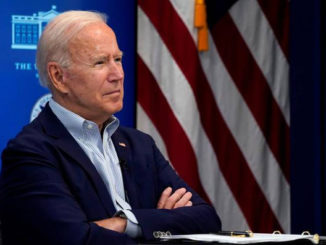
WASHINGTON (TIP): In May, U.S. President Joe Biden asked U.S. intelligence agencies to assess the data and produce a report that “could bring us closer to a definitive conclusion” on the origins of coronavirus.
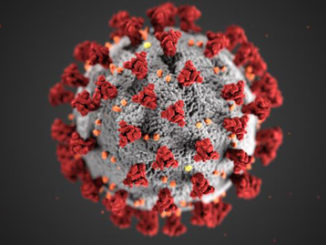
The U.S. intelligence community has failed to reach any firm conclusion on the exact origin of COVID-19 and is split on whether it leaked from a lab in China or emerged in nature, even though it does not believe the virus was developed as a biological weapon, according to results of a detailed review ordered by President Joe Biden. The Director of National Intelligence in a report on Friday said SARS-CoV-2, the virus that causes COVID-19, probably emerged and infected humans through an initial small-scale exposure that occurred no later than November 2019 with the first known cluster of COVID-19 cases arising in Wuhan, China in December 2019.
However, there was no unanimity among the intelligence community (IC) on the origins of the coronavirus.
“The virus was not developed as a biological weapon. Most agencies also assess with low confidence that SARS-CoV-2 probably was not genetically engineered; however, two agencies believe there was not sufficient evidence to make an assessment either way,” said the unclassified version of the report.
The report did not name the intelligence agencies. “The IC also assesses that China’s officials did not have foreknowledge of the virus before the initial outbreak of COVID-19 emerged,” it said.
“After examining all available intelligence reporting and other information, the IC remains divided on the most likely origin of COVID-19. All agencies assess that two hypotheses are plausible: natural exposure to an infected animal and a laboratory-associated incident,” the report said.
Acknowledging the receipt of the report, Mr. Biden in a statement said his administration will do everything it can to trace the roots of this outbreak that has caused so much pain and death around the world so that they can take every necessary precaution to prevent it from happening again.
“Critical information about the origins of this pandemic exists in China, yet from the beginning, government officials in China have worked to prevent international investigators and members of the global public health community from accessing it,” he said. “To this day, China continues to reject calls for transparency and withhold information, even as the toll of this pandemic continues to rise,” Mr. Biden alleged.
A World Health Organisation (WHO) team, which visited Wuhan, the epicenter of the pandemic in central China, concluded earlier this year that the disease most likely spilled over from an animal sold at a market. This conclusion has been rejected by some scientists.
In May, President Biden asked U.S. intelligence agencies to assess the data and produce a report that “could bring us closer to a definitive conclusion” on the origins of the virus.
“Four IC elements and the National Intelligence Council assess with low confidence that the initial SARS-CoV-2 infection was most likely caused by natural exposure to an animal infected with it or a close progenitor virus-a virus that probably would be more than 99% similar to SARS-CoV-2.”
“These analysts give weight to Chinese officials’ lack of foreknowledge, the numerous vectors for natural exposure, and other factors,” the report said.
“One IC element assesses with moderate confidence that the first human infection with SARS-CoV-2 most likely was the result of a laboratory-associated incident, probably involving experimentation, animal handling, or sampling by the Wuhan Institute of Virology. These analysts give weight to the inherently risky nature of work on coronaviruses,” it said.
The report said the intelligence community wouldn’t be able to reach a more definitive conclusion unless it receives more information.
“Analysts at three IC elements remain unable to coalesce around either explanation without additional information, with some analysts favoring natural origin, others a laboratory origin, and some seeing the hypotheses as equally likely,” the report said.
“Variations in analytic views largely stem from differences in how agencies weigh intelligence reporting and scientific publications and intelligence and scientific gaps,” it said.
China’s Foreign Ministry attacked the U.S. investigation ahead of the report’s release. Fu Cong, a Foreign Ministry director general, said at a briefing for foreign journalists that “scapegoating China cannot whitewash the U.S.” According to Johns Hopkins University data, the deadly virus has so far infected 21,52,90,716 people and claimed 44,83,136 lives globally.
The U.S. is the worst-hit nation with a total of 3,86,82,072 infections and 6,36,565 deaths recorded so far. The pandemic has led to a massive global economic slump, affecting the lives of millions of people.
“The world deserves answers, and I will not rest until we get them. Responsible nations do not shirk these kinds of responsibilities to the rest of the world. Pandemics do not respect international borders, and we all must better understand how COVID-19 came to be to prevent further pandemics,” Mr. Biden said.
“America will continue working with like-minded partners around the world to press China to fully share information and to cooperate with the WHO’s Phase II evidence-based, expert-led determination into the origins of COVID-19 – including by providing access to all relevant data and evidence,” he said. Mr. Biden said the U.S. will also continue to press China to adhere to scientific norms and standards, including sharing information and data from the earliest days of the pandemic, protocols related to biosafety, and information from animal populations. “We must have a full and transparent accounting of this global tragedy. Nothing less is acceptable,” he said.
NEW YORK (TIP): Hurricane Ida, which is expected to strike Louisiana as a life-threatening Category 4 storm with wind speeds of 140 mph, will be one of the strongest to hit the state since at least the 1850s, the governor told reporters Saturday. Forecasters with the National Weather Service “are extremely confident in the current track and the intensity as forecasted for Hurricane Ida, and you don’t really hear them speaking very often about that level of confidence,” Gov. John Bel Edwards said during an afternoon briefing.
Hurricane Ida was upgraded Saturday to a Category 2 as it continues its path across the Gulf of Mexico toward coastal Louisiana. The storm already has wind speeds of 100 mph, according to the Weather Service.
“We once again stress that if you are under evacuation order or can leave, PLEASE LEAVE. DEVASTATING conditions WILL happen,” the agency tweeted. The National Hurricane Center said earlier Saturday that Ida was expected to rapidly intensify as it moved across the Gulf. Landfall in Louisiana is expected on Sunday evening — 16 years to the day Hurricane Katrina devastated a large part of the Gulf Coast.
“Preparations to protect life and property should be rushed to completion today in the warning area along the northern Gulf Coast,” the center said in its 5 p.m. Saturday update.
Weather will start to deteriorate quickly, the governor said. By 8 a.m. Sunday, tropical storm force winds are expected to move across the southern part of the state.
President Joe Biden participated in a briefing Saturday at the White House with the Federal Emergency Management Agency to receive updates on the hurricane’s track and strength.
Biden, noting the anniversary of Hurricane Katrina, warned the state of Louisiana: “Above all, I’m urging the people in the area to pay attention and be prepared.”
He added that the administration has already pre-positioned food, water, generators and other supplies. For those forced to shelter, Biden reminded those watching about the underlying Covid threat, as well: “Make sure you wear a mask, and try to keep some distance, because we’re still facing a highly contagious delta variant as well.” A hurricane warning is in effect for Intracoastal City, Louisiana, to the mouth of the Pearl River as well as for the New Orleans metropolitan area. The Mississippi/Alabama border to the Alabama/Florida border are under a tropical storm watch. In preparation for Ida’s arrival, the governor of Mississippi declared a state of emergency. Ida is expected to produce heavy rainfall later Sunday into Monday across the central Gulf Coast, resulting in significant flash and river flooding, the center said in a tweet. Residents in St. Charles Parish, west of New Orleans, are under a mandatory evacuation. President Matthew Jewell said the parish’s roughly 50,000 residents should leave no later than 5 p.m. Saturday. The parish said in a tweet that residents should pack enough clothing and essentials to last for at least one week.
Citing Gurbani, Modi said that happiness emanates from serving others and understanding their pain
AMRITSAR (TIP): Prime Minister Narendra Modi said on Saturday, August 28, that despite many challenges India is evacuating its people from Afghanistan, asserting that if any Indian is in trouble anywhere in the world, the country stands up to help him with all its might.
The prime minister, who was speaking after dedicating to the nation the renovated complex of Jallianwala Bagh memorial in Amritsar through video-link, said that not just people, India has been able to bring back holy scriptures — ‘swaroop’ of Guru Granth Sahib—from Afghanistan.
Citing Gurbani, Modi said that happiness emanates from serving others and understanding their pain.
“So today, if any Indian is in trouble anywhere in the world, then India stands up to help him with all its might. Be it the corona period or the current crisis of Afghanistan, the world has experienced it continuously. Hundreds of people from Afghanistan are being brought to India under Operation Devi Shakti,” the prime minister said.
India’s complex mission to evacuate its citizens and Afghan partners from Kabul after its takeover by the Taliban has been named ‘Operation Devi Shakti’.
“There are many challenges. The circumstances are difficult but we also have ‘Guru Kripa’ (blessings of gurus),” he said. The country has done its utmost to assist those in need in recent years, he said, adding that laws have been made taking inspiration from the teachings of Gurus. “In the past years, the country to discharge this responsibility has worked hard. Keeping the lessons in humanity given by Gurus in the forefront, the country has made new laws for the people who have suffered,” he said, in an apparent reference to the Citizenship Amendment Act, 2019.
According to the CAA, members of Hindu, Sikh, Buddhist, Jain, Parsi and Christian communities who have come from Pakistan, Bangladesh and Afghanistan till December 31, 2014, and face religious persecution there will not be treated as illegal immigrants but given Indian citizenship.
The prime minister said that current global conditions underline the importance of ‘Ek Bharat Shreshtha Bharat’ and underscore the need for ‘Aatmnirbharta and Aatmvishwas’.
We will continue to hunt down, says the U.S. President
WASHINGTON (TIP): U.S. President Joe Biden said that a retaliatory drone strike he ordered to be carried out against the Islamic State group’s affiliate in Afghanistan would not be his “last” response to the group for carrying out a deadly attack against U.S. troops and Afghan civilians near the Kabul airport.
Mr. Biden said in a statement on August 28, 2021, that he discussed the strike with top military commanders, who briefed him on the ongoing evacuation of Afghans and U.S. citizens from the airport, which is set to wind down on Tuesday, August 31.
The U.S. President said commanders told him that another attack “is highly likely in the next 24-36 hours.” Two IS members were killed and another was wounded in the drone strike early Saturday in eastern Afghanistan. “I said we would go after the group responsible for the attack on our troops and innocent civilians in Kabul, and we have,” Mr. Biden said. “We will continue to hunt down any person involved in that heinous attack and make them pay.”
India is a diverse country with many festivals that are celebrated throughout the year. One of these festivals is Janmashtami – the day Lord Krishna was born – and is observed with much pomp and fervour. It is also known as Krishna Janmashtami or Gokulashtami. It is marked on the eighth day of the dark fortnight in the month of Bhadrapada (July-August) in India.
According to Hindu mythology, Krishna, the human incarnation of Lord Vishnu, was born on this day to destroy Mathura’s demon king, Kansa, the brother of Krishna’s virtuous mother, Devaki.
This year Krishna Janmashtami will be celebrated on Monday, August 30. Devotees mark this auspicious occasion by observing a fast and praying to Lord Krishna. People adorn their homes with flowers, diyas and lights. Temples are also beautifully decorated and lit.
The temples of Mathura and Vrindavan witness the most extravagant and colourful celebrations, as Lord Krishna is believed to have been born and spent his growing years there. Devotees also perform Raslila to recreate incidents from Krishna’s life and to commemorate his love for Radha. As Lord Krishna was born at midnight, an idol of an infant Krishna is bathed and placed in a cradle at that time.
Maharashtra also sees a joyous celebration of this festival as people enact Krishna’s childhood endeavours to steal butter and curd from earthen pots. This activity is called the Dahi Handi celebration, for which a matka or pot is suspended high above the ground, and people form a human pyramid to reach it and eventually break it.
This year amid the coronavirus pandemic, the Ashtami Tithi will commence at 11:25 pm on 29 August and will end on 31 August at 1:59 am.
As Krishna is born at midnight, the puja is performed during Nishita Kaal. Therefore, the puja timings are between 11:59 pm (30 August) to 12:44 am (31 August).
Devotees, who observe a fast on Janmashtami, can break it only after 9:44 am on 31 August. If an individual cannot wait this long to break a fast, then they can do the Parana after 5:59 am on 31 August.
During this festival, the Rohini Nakshatra timing is also very significant, this year it will begin from 6:39 am on 30 August and end at 9:44 am on 31 August.
History of Janmashtami
Lord Krishna was born on the eighth (Ashtami) day of the dark fortnight in the Bhadrapada month (August–September) in Mathura. He was Devaki and Vasudeva’s son. When Krishna was born, Mathura was ruled by his uncle King Kansa, who wanted to kill his sister’s children as a prophecy said that the couple’s eighth son would cause Kansa’s downfall.
After the prophecy, Kansa imprisoned Devaki and Vasudeva. He killed off their first six children. However, at the time of the birth of their seventh child, Balram, the foetus mystically transferred from Devaki’s womb to Princess Rohini’s. When their eighth child, Krishna, was born, the entire palace went into slumber, and Vasudeva rescued the baby to Nand Baba and Yashodha’s house in Vrindavan.
After making the exchange, Vasudeva returned to the palace with a baby girl and handed her to Kansa. When the evil king tried to kill the baby, she transformed into Goddess Durga, warning him about his impending doom. In this way, Krishna grew up in Vrindavan and finally killed his uncle, Kansa.
Celebrations
Every year on Krishna Janmashtami, devotees observe this auspicious festival by observing a fast and praying to Lord Krishna. The fast is observed to their beloved deity and can only be broken after offering their prayers to him. Meanwhile, the ritual of breaking the fast is called Parana.
On the special day, people decorate their homes with colourful flowers, small diyas, and lights. Even the temples are beautifully decorated and lit for the occasion.
Among the many temples in India, the ones in Mathura and Vrindavan witness the most extravagant and colourful celebrations which continue for days. As per scriptures, Lord Krishna was born at midnight so an idol of the infant is washed and placed in a cradle at that time in these temples.
Moreover, during these sacred days, devotees perform Raslila to recreate incidents from Lord Krishna’s life and also to celebrate his love for Radha.
Krishna Janmashtami puja procedure
Before the day of Krishna Janmashtami, the household is cleaned and decorated. On the day of Krishnashtami, the devotees wake up early in the morning and take a holy bath. Then the puja altar is set up. Preferably, the puja altar can be set up in the puja room itself. If you are planning for an elaborate puja, you can organize the puja altar in the main hall also.
Sri Krishna’s idol is the central attraction of the Krishnashtami puja. Some people use the regular idol or picture they have in their puja room. Some people buy a new image of Krishna every year for the puja. Depending on which material the Krishna idol is made of, you can plan for a holy bath for the idol; or can simply decorate the idol with flowers, clothes, and ornaments.
In many Hindu households, people draw the images of little footsteps leading from the main door to the puja room. This practice symbolically represents Sri Krishna’s little feet bringing him into the household to bless the puja and the residents of the house. Krishna’s visit to every home during the puja is said to fill the home with prosperity and happiness.
Light the lamp and offer incense to the Lord. Offer Chandan and kumkum. Offer special homemade prasad. Curd/yoghurt, ghee, butter, and other milk products and milk-based sweets are especially suitable to offer to Lord Krishna. Do not forget berries and other fruits. Sing the songs of Krishna and chant some shlokas and mantras related to Krishna. Wave camphor and conclude the puja. Share the prasad with the gathering and family as a mark of Krishna’s blessings.
Located at the base of the Chamundi Hills about 150 kms away from Bangalore, Mysore is the second most populous and the second largest city in the state of Karnataka. One of south India’s most famous tourist destinations, Mysore is synonymous to royal past and regal remnants. Glittering royal heritage and magnificent monuments and buildings mark the city’s tourism scene. The most famous dynasty that ruled the city is of the Wodeyars. This is also the place that has seen the rise and revolt of Tipu Sultan. Apart from history, Mysore is also known for the production of premium silk, sandalwood and incense. Not to mention the fact that Mysore is one of India’s best places to practice yoga.
When you are in Mysore you are so close to royalty that you feel like a king of lost land itself. The reason behind this is simple; almost all the major places to visit in Mysore are related to some story of history and glory. In this city, you are never too far away from a heritage building or a mansion with royal connections and lineages. There is a reason why Mysore is called the City of Palaces! The iconic Mysore palace continues to be the face of all the heritage buildings of the city but there are other places also that will take you a step closer to royal living. These places include Jaganmohan Palace, Royal Orchid Metropole, Clock Tower, Gun House, Town Hall, Wellington Lodge, Rajendra Vilas Palace, Karanji Mansion, Jayalakshmi Vilas Mansion, Lalitha Mahal Palace, Crawford Hall, Brindavan Gardens, St.Philomena’s Church, Jayachamarajendra Art Gallery, Shri Chamundi Temple and Srirangapatna.
MYSORE PALACE
Set in the centre of sprawling grounds, Amba Vilas Palace overwhelms at first sight. It was built nearly a century ago and designed by British architect Henry Irwin, who was the Madras state consultant. It stands on the same grounds of the old wooden palace which was burned down by fire. The building is a dramatic three-storied stone edifice built of fine gray granite. It has deep pink marble domes dominated by a five-storied 145 ft tower with a gilded dome topped by a single golden flag. It is built in the classic Indo-Saracenic style with its façade flaunting onion domes, turrets, minarets, cupolas, canopies with arches, intricate balconies, porches and colonnades. On Sundays and public holidays, the exterior of the palace is lighted up with some 97,000 light bulbs, which present an ethereal picture. The interiors are equally lavish—the ceilings are of carved mahogany, while beautiful stained glass windows and glazed tiled floors make for an opulent harmony. The palace also houses a huge collection of art and sculpture from all over the world.
GOLDEN THRONE
Though the palace itself is overwhelming and awe-inspiring, the sight that usually stuns people is the magnificent Durbar Hall, with its ornate ceiling and vividly painted colonnades. Also watch out for the intricately carved wooden doors which lead to more lavish rooms while a massive balcony provides an unhindered view of the parade grounds and of Chamundi Hills beyond. However, even more stunning is the Golden Throne or Ratna Simhasana. It is on display only during special occasions such as Dussehra. It is a magnificent and majestic throne mounted on a platform with steps leading up to the main seat. A beautiful golden umbrella hangs over the seat. The base structure is carved out of fig wood and inlaid with ivory plaques. Covered with gold and encrusted with precious stones, silver and jewellery, the throne looks majestic. It is embellished with the Holy Trinity, female figurines, soldiers, elephants, horses, creepers and other patterns.
RESIDENTIAL MUSEUM
A little lane by the side of the main palace, lined with souvenir shops, leads to the Residential Museum. It is not large but it is filled with paintings from the Thanjavur and Mysore schools, inlaid with precious stones and gold leaf. The museum also houses a collection of royal silver ware, musical instruments, crystal, chandeliers, children’s toys, furniture, royal trousseaux, and such others. But the most fascinating aspect is the armoury with its quaint and fierce looking implements including pistols, guns and other weapons. Many of the 725 weapons and military exhibits in the palace have aesthetic as well as historic value. Some of the weapons belonged to the rulers of Mysore, such as the sword that belonged to Kantirava Narasaraja Wadiyar, who ruled from 1638 to 1659, and those that belonged to Hyder Ali and Tipu Sultan. They also have interesting inscriptions, such as the one found on a gun captured under Wellesley in 1803. Weapons ranging from swords to maces, daggers and their gripped relatives pachakatari, bows, arrows, spears, lances, cannons, and even deadly walking sticks are displayed. Helmets, armour and shields also form part of the collection.
THE FORT
Faced with the grandeur of Amba Vilas Palace, it is easy to miss the historic fort that surrounds it. The original walls were built under the Wadiyars in 1524 but gradually the defensive glacis was flattened and defensive ditch was filled, but the stone wall is still intact. Over time, the wall was rebuilt and extended several times, the mud walls replaced eventually with stone. Later, Tipu had them pulled down with plans to rebuild but died before the plans came to fruition. Subsequently, they were reconstructed by the British in 1799. Originally, the fort area was a bustling centre of life, packed with houses, but these were moved out in 1910. Taking a walk around the fort’s walls will require about one hour during which many landmarks outside the walls and a plethora of temples inside the walls will be visible. If you’re pressed for time, hop into a tonga and go around the fort walls, which is amongst Mysore’s unique experiences.
WhatsApp seems to be in no mood to slow down as it is adding a lot of new features to its messaging app to offer a better experience to users. The messaging app is soon expected to get message reactions, as per the screenshots shared by WaBetaInfo. Popular apps like Instagram and Twitter are already offering message reaction feature to users. Now, WhatsApp is all set to get it, as per the latest report by WaBetaInfo. In case you are not aware, the feature will allow you to react to messages with emoji icons, which is similar to how you can react to posts on Facebook. On Instagram, to send emojis all you need to do is to long-press on a message and select from any of the emojis that pop up. Once you select your favourite one, the person to whose message you responded will get a notification for the same reaction. There is a possibility that WhatsApp will introduce this feature in a similar fashion.
It is currently unknown whether the choice of emojis will differ from Facebook and Instagram or will be similar. The cited source suggests that those who are using the outdated version of WhatsApp won’t be able to use the message reaction feature.
The messaging app will display a message alerting you that you are using an old version that does not support reactions. In this case, the user won’t be able to see the reaction and WhatsApp will ask you to update it to the latest version. The feature will first be available on the Android version of WhatsApp and then for iOS users. The cited source reported that the feature is currently under development and will be made available in a future update.
Microsoft on Thursday, August 26, warned thousands of its cloud computing customers, including some of the world’s largest companies, that intruders could have the ability to read, change or even delete their main databases, according to a copy of the email and a cyber security researcher.
The vulnerability is in Microsoft Azure’s flagship Cosmos DB database. A research team at security company Wiz discovered it was able to access keys that control access to databases held by thousands of companies. Wiz Chief Technology Officer Ami Luttwak is a former chief technology officer at Microsoft’s Cloud Security Group.
Because Microsoft cannot change those keys by itself, it emailed the customers Thursday telling them to create new ones. Microsoft agreed to pay Wiz $40,000 for finding the flaw and reporting it, according to an email it sent to Wiz.
“We fixed this issue immediately to keep our customers safe and protected. We thank the security researchers for working under coordinated vulnerability disclosure,” Microsoft told Reuters.
Microsoft’s email to customers said there was no evidence the flaw had been exploited. “We have no indication that external entities outside the researcher (Wiz) had access to the primary read-write key,” the email said.
“This is the worst cloud vulnerability you can imagine. It is a long-lasting secret,” Luttwak told Reuters. “This is the central database of Azure, and we were able to get access to any customer database that we wanted.”
Luttwak’s team found the problem, dubbed ChaosDB, on Aug. 9 and notified Microsoft Aug. 12, Luttwak said.The flaw was in a visualization tool called Jupyter Notebook, which has been available for years but was enabled by default in Cosmos beginning in February. After Reuters reported on the flaw, Wiz detailed the issue thousands-of-azure-customers-databases in a blog post. Source: Reuters
London (TIP): Astronomers have identified a new class of habitable planets, which could greatly accelerate the search for life outside our Solar System. Dubbed as ‘Hycean’—hot, ocean-covered planets with hydrogen-rich atmospheres, the new class of exoplanets are more numerous and observable than Earth-like planets, and can support life, said astronomers from the University of Cambridge in the UK.
The results, reported in The Astrophysical Journal, could mean that finding biosignatures of life outside our Solar System within the next two or three years is a real possibility, they added.
“Hycean planets open a whole new avenue in our search for life elsewhere,” said Dr Nikku Madhusudhan from Cambridge’s Institute of Astronomy, who led the research.
Hycean planets can be up to 2.6 times larger than Earth and have atmospheric temperatures up to nearly 200 degrees Celsius, but their oceanic conditions could be similar to those conducive for microbial life in Earth’s oceans.
Such planets also include tidally locked ‘dark’ Hycean worlds that may have habitable conditions only on their permanent night sides, and ‘cold’ Hycean worlds that receive little radiation from their stars.
Planets of this size dominate the known exoplanet population, although they have not been studied in nearly as much detail as super-Earths. Hycean worlds are likely quite common, meaning that the most promising places to look for life elsewhere in the Galaxy may have been hiding in plain sight.
However, size alone is not enough to confirm whether a planet is Hycean: other aspects such as mass, temperature, and atmospheric properties are required for confirmation, the researchers said.
“Essentially, when we’ve been looking for these various molecular signatures, we have been focusing on planets similar to Earth, which is a reasonable place to start,” said Madhusudhan. “But we think Hycean planets offer a better chance of finding several trace biosignatures.” “It’s exciting that habitable conditions could exist on planets so different from Earth,” said co-author Anjali Piette, also from Cambridge.
Madhusudhan and his team found that a number of trace terrestrial biomarkers expected to be present in Hycean atmospheres would be readily detectable with spectroscopic observations in the near future. Source: IANS
Signup to our Newsletter!
Don’t miss out on all the happenings around the world