Tag: Apple News

  • Pakistan issuing visas to diplomats, foreigners

    Islamabad (TIP): Pakistan is issuing visas upon arrival to all diplomats, foreigners and journalists who want to leave Kabul over security concerns.

    Interior Minister Sheikh Rashid Ahmed said on August 18 that since Sunday, 900 foreigners, including diplomats and staff working for international organisations, have arrived in Pakistan from Kabul via air travel.

    He said transit visas were also being issued to foreigners upon arrival from Afghanistan at airports and land crossings so that they could travel on to their home countries. Ahmed said hundreds of Pakistanis and Afghans crossed into Pakistan from two key land border crossings in recent days.

    He said all Pakistanis who want to leave Afghanistan will be brought back over the coming two days. AP 400 people booked for harassing, molesting Pakistani YouTuber girl

    Lahore (TIP): Lahore police have booked 400 people who allegedly harassed and molested a YouTuber girl on Pakistan’s Independence Day at the historic Minar-i-Pakistan, officials said.

    The police got into action following the videos of her harassment and molestation that went viral on social media, with calls to Prime Minister Imran Khan and Punjab Chief Minister Usman Buzdar to take action against the culprits.

    The incident took place on August 14 when hundreds of youngsters were celebrating Independence Day at Azadi Chowk near Minar-i-Pakistan in Lahore.

    In the videos, hundreds of young men can be seen throwing the girl in the air for fun, dragging her, tearing her clothes and molesting her. They also took off her shalwar (trouser) and molested her.

    “After the videos went viral on Tuesday, the police approached the girl on the order of the high-ups and persuaded her to register FIR,” a senior police official told PTI. He said the girl was still traumatised and broke into tears while narrating what had happened to her on Independence Day. She said in the FIR that she and six other members of her YouTube channel visited Azadi Chowk to record a video clip of the Independence Day celebrations. (PTI)

  • China premier vows to punish officials over flood deaths

    China premier vows to punish officials over flood deaths

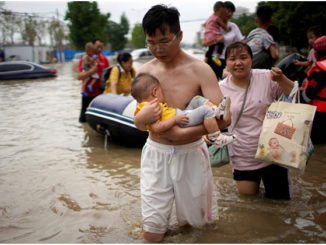
    Beijing (TIP): Chinese Premier Li Keqiang has vowed to hold officials accountable over mistakes during recent floods that led to the deaths of hundreds of people in a major provincial capital, including 14 who were trapped when the city’s subway system was inundated.

    More than 300 people were killed in last month’s floods in Henan province, including at least 292 in the provincial capital Zhengzhou.

    Li on August 18 visited the tunnel of the Zhengzhou’s subway line where passengers recorded harrowing video of flood waters pouring in and filling cars above head height on July 20.

    City residents, who laid flowers at a station entrance despite police efforts to block off the area, have complained that officials should have closed the subway because of torrential rains.

    China regularly suffers seasonal flooding, but this year has been particularly severe with torrential rains reaching from the centre of the country as far north as Beijing.

    The floods came on top of efforts to contain an outbreak of the delta variant of Covid-19 that has particularly affected Henan and the eastern province of Jiangsu.

    China’s worst floods in recent years were in 1998, when more than 2,000 people were killed and almost 3 million homes were destroyed, mostly along China’s mightiest river, the Yangtze.

    Direct losses from this summer’s flooding are estimated at more than $14 billion.

    Li was once a top official in Henan for six years, during which the province was hit by a major AIDS outbreak, deadly fires and other man-made disasters. He was promoted to higher office in Beijing and had at one time been seen as China’s potential future president and party secretary before being eclipsed by Xi Jinping. AP

  • China approves three-child policy with sops to encourage couples to have more children

    China approves three-child policy with sops to encourage couples to have more children

    Beijing (TIP): China’s national legislature on August 20 formally endorsed the three-child policy mooted by the ruling Communist Party, in a major policy shift aimed to prevent a steep decline in birth rates in the world’s most populous country.

    The revised Population and Family Planning Law, which allows Chinese couples to have three children, was passed by the Standing Committee of the National People’s Congress (NPC).

    In an apparent attempt to address the reluctance of the Chinese couples to have more children due to mounting costs, the amended law has also passed more social and economic support measures to address the concerns.

    The new law stipulates that the country will take supportive measures, including those in finances, taxes, insurance, education, housing and employment, to reduce families’ burdens as well as the cost of raising and educating children, state-run China Daily reported.

    The NPC has revised the law to implement the central leadership’s decision to cope with new circumstances in social and economic development and promote balanced long-term population growth, the report said.

    In May this year, the ruling Communist Party of China (CPC) approved a relaxation of its strict two-child policy to allow all couples to have up to three children.

    China permitted all couples to have two children in 2016, scrapping the draconian decades-old one-child policy which policymakers blame for the demographic crisis in the country.

    Chinese officials claim the one-child policy implemented for over three decades has prevented over 400 million births.

    The decision to permit the third child came after this month’s once-in-a-decade census showed that China’s population grew at the slowest pace to 1.412 billion amid official projections that the decline may begin as early as next year.

    The new census figures revealed that the demographic crisis China faced was expected to deepen as the population of people above 60 years grew to 264 million, up by 18.7 per cent last year. PTI

  • IAEA: Iran has upped uranium enrichment

    IAEA: Iran has upped uranium enrichment

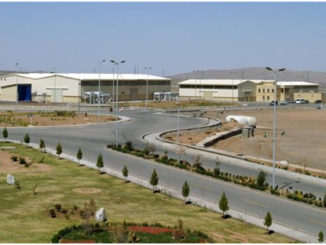
    VIENNA (TIP): Iran has accelerated its enrichment of uranium to near weapons-grade, the UN atomic watchdog said in a report on august 15, a move raising tensions with the West as both sides seek to resume talks on reviving Tehran’s nuclear deal.

    Iran increased the purity to which it is refining uranium to 60 per cent from 20 per cent in April in response to an explosion and power cut at its Natanz site that damaged output at the main underground enrichment plant there.

    Iran has blamed the attack on Israel. Weapons-grade is around 90 per cent purity.

    In May, the International Atomic Energy Agency (IAEA) reported that Iran was using one cascade, or cluster, of advanced centrifuges to enrich to up to 60 per cent at its above-ground pilot enrichment plant at Natanz. The IAEA informed member states on Tuesday that Iran was now using a second cascade for that purpose, too.  – ( Reuters)

  • UK lifts ‘all but essential’ travel advice for India as Covid pressure eases

    London (TIP): The UK government on Tuesday updated its official travel advisory for India to reflect the country’s upgraded status under the Covid-19 based traffic light system, no longer advising against “all but essential travel”.

    India moved from the UK’s red list travel ban to amber on August 8 and now the Foreign, Commonwealth and Development Office (FCDO) advisory has been updated to coincide with the easing of rules.

    “Following the peak of India’s second Covid-19 wave in May, pressure on the Indian health care system has lifted, as the number of Covid-19 cases has fallen,” reads the FCDO update.

    “A limited number of flights between India and the UK continue to operate. To book tickets and to see important guidance prior to travel, you should check airline websites,” it notes.

    “Before you travel, check the ‘Entry Requirements’ section for India’s current entry restrictions and requirements. These may change with little warning. Monitor this advice for the latest updates and stay in contact with your travel provider,” it adds.

    The update means travellers are better placed on their travel insurance options.

    Under the amber list rules, fully vaccinated British nationals returning from India no longer need to quarantine, but must arrange a pre-departure test while still in the country as well as a day two PCR test after returning home to the UK. To qualify as fully vaccinated, only UK, EU and US approved vaccines are recognised and require passengers to have had their second vaccine injection two full weeks before you travel.

    Other nationals, vaccinated abroad or unvaccinated, are required to self-isolate at their declared address on the compulsory passenger locator form. They are also required to get a pre-departure PCR test and another test on day two and day eight of their entry to the UK.

    Over the weekend, UK Health Secretary Sajid Javid had confirmed a cut in costs of these compulsory tests and also commissioned the country’s Competition and Markets Authority (CMA) to address complaints of steep prices and discrepancies in the administration of these tests. – PTI

  • Gayatri Jayanti

    Gayatri Jayanti is observed as the birth anniversary of Goddess Gayatri, the Goddess of Veda. Being the Goddess of all Veda, Goddess Gayatri is also known as Veda Mata.

    This year, Gayatri Jayanti falls on August 22.

    It is believed that Goddess Gayatri is manifestation of all phenomenal attributes of Brahman. She is also worshipped as the Goddess of Hindu Trimurti. She is considered as the mother of all Gods and embodiment of Goddess Saraswati, Goddess Parvati and Goddess Lakshmi.

    Most people, especially in South India, observe Gayatri Jayanti during Shravana Purnima. According to Matantara i.e. due to the difference of opinions to observe Gayatri Jayanti, it is also observed on Shukla Paksha Ekadashi during Jyeshtha lunar month. Matantara Gayatri Jayanti is usually observed on the next day of Ganga Dussehra.

    Devotees observe Gayatri Jayanti by making special prayers to Gayatri Mata and by repeatedly chanting Gayatri Mantra.

    In modern India, Gayatri Jayanti day during Shravana Purnima is observed as Sanskrit Diwas, a day to mark the importance of Sanskrit language. Various activities, seminars and workshops are organized on the day of Sanskrit Diwas to promote the Vedic language. In current time, the usage of Sanskrit has been limited to only Puja-Patha and academic activities.

    Significance Of Goddess Gayatri

    & The Gayatri Mantra

    Gayatri Mata or Goddess Gayatri is the representation of the divine essence of Mahalakshmi, Mahasaraswati and Mahakali. The word Gayatri is a combination of ‘Gaya’ which translates to mean the hymn of wisdom and ‘Tri’ represents the combined strength of the three Goddesses.

    Goddess Gayatri is worshipped as the deity, which expresses the untiring pursuit of knowledge and wisdom. As per the Vedic literature, she is portrayed as the female form of the light of the sun. The light itself denotes the wisdom that enlightens the soul.

    The Gayatri Mantra extols the form of Gayatri Mata. The Gayatri Mantra is the Mula mantra or the most basic mantra in Hinduism. It helps the devotee attain and follow the ‘Sanatana Dharma’, which is the ideal of perfection.

    Mythology Of The Goddess Gayatri

    According to mythology, Goddess Gayatri is considered as a form of Goddess Saraswati and is the spouse of Lord Brahma. As the story goes, Brahma was once conducting a ritual that required the presence of his wife Devi Saraswati.

    Goddess Saraswati was delayed for some reason and couldn’t arrive on time. This made Brahma furious. He asked the priests to wed him to any woman available, so that she can sit through the ritual as his wife.

    The priests searched for a woman who could take Saraswati Devi’s place and found a beautiful shepherdess Gayatri Devi. Brahma was married to her and the ritual was completed. It is believed that the shepherdess was an incarnate of Goddess Saraswati.

    It is said that as Brahma’s wife, Gayatri Devi presented him with the four Vedas. This is why Gayatri Devi is known as the Veda Mata. She is also the patron Goddess of artisans, poets and musicians.

    Depiction Of Goddess Gayatri

    Goddess Gayatri is shown to have five heads. Each head represents a pancha vayu or pancha prana – Samana, Udana, Prana, Apana and Vyana. Alternatively, they are said to represent the pancha tatwas – Prithvi (earth), Vayu (air), Jala (water), Aakasha (sky/ether) and Teja (fire).

    In her ten hands, she carries a shankha, chakra, varada, kamala, kasha, abhaya, ujjwala patra (utensil), ankusha and rudraksha mala.

    The Gayatri Mantra

    There is no other mantra in Hinduism that is more popular than Gayatri Mantra. It is one of the basic mantras that even the uninitiated devotee can chant. A person needs basic knowledge of the religious rituals before chanting the Gayatri Mantra. Caste and creed are no bars for chanting this mantra that absolves the worshiper of all sins and sufferings.

    The Gayatri Mantra follows the Vedic meter and has 24 syllables. The Gayatri Mantra is as follows:

    “Om Bhoor Bhuvah Svaha, Tat Savitur Varenyam, Bhargo Devasya Dheemahi, Dheeyo Yonah Prachodayat.”

    ‘Om’ is the primeval sound that existed before the creation of the world.

    ‘Bhoor, Bhuvah and Svaha’ translate to the physical, mental and spiritual worlds respectively.

    ‘Tat’ denotes the Paramatma, ‘Savitur’ is the creator or the sun, ‘Varenyam’ means the highest and the word ‘Bargo’ means luster and tejas.

    ‘Devasya’ denotes the supreme God and ‘Dheemahi’ means to meditate upon. ‘Dheeyo’ is the understanding and intellect, ‘Yo’ refers to the word who and ‘Nah’ means our.

    The last word ‘Prachodayat’ is the act of enlightenment. When put together, the Gayatri Mantra translates to: “We meditate and bow to thee, the most supreme creator who inspires and directs our intelligence and understanding.” There is a collection of Gayatri mantras for the various other deities in Hinduism, 24 to be specific. These are said to be very effective in invoking the blessings of the respective gods.

    Worship Of Goddess Gayatri

    Other than the Gayatri Mantra, there is also a simple method of worship or pooja dedicated to the Goddess Gayatri. You may perform the pooja by following the steps given below:

    Things Needed: An image of Goddess Gayatri, Lamp Incense Camphor, Milk, Yoghurt, Panchagavya (concoction prepared by mixing cow dung, cow’s urine, milk, curd and ghee), Water, Fruit, Flowers.

    Chant the following mantras as you offer each of the items to the Goddess.

    –              Light the lamp and offer the light Esha deepah om Gayatri devyai Namah ||

    –              Offer the incense Esha dhoopah om Gayatri devyai Namah ||

    –              Offer Camphor Om gam Gayatri devyai namah aratrikam samarpayami||

    –              Offer milk bath Om gam Gayatri devyai namah paya snanam samarpayami||

    –              Offer yoghurt Om gam Gayatri devyai namah dadhi snanam samarpayami||

    –              Offer Panchagavya Om gam Gayatri devyai namah panchamrita snanam samarpayami||

    –              Offer Water Bath Om gam Gayatri devyai namah ganga snanam samarpayami||

    –              Offer fruit Om gam Gayatri devyai namah phalam samarpayami||

    –              Offer fragrant flowers Eth gandha pushpe Om gam Gayatri devyai||

    –              Finally, go on to chant the below Mantra

    Agaccha varade devi japye me sannidha bhava| Gayantam trayase yasmad Gayatri tvamatah smritah|| Ayahe varade devi tryaksare bhramhavadini| Gayatri chandasam matarbhramha yoni namo stute||

    You may also chant ‘Om gam Gayatri devayi namaha’.

  • Sikkim: Where nature smiles

    Sikkim: Where nature smiles

    Sikkim situated in the Eastern Himalayan region with an area of 7,096 sq km and altitude ranging from 300m to 8,586m above sea level is a wonderland blessed with natural abundance from icy cold deserts, flowering alpine meadows, to lush green forests and emerald mountain lakes. The crowning glory of this wonderland is undoubtedly the magnificent Mt. Khangchendzonga (8,586m), the third highest mountain of the world. The mountain is not merely a physical entity but the abode of guardian deity whose benign watchfulness ensures peace and prosperity of the land.

    It is possible to move from the sub-tropical heat of the lower valleys to the cold of the rugged mountain slopes that ascend up to the areas of perpetual snow in a matter of few hours. Such a steep rise in altitude over a very short distance, allows the land to host a robust natural heritage and wealth. The snow-capped mountain ranges, lush thick forests, plunging mountain valleys flush with rich flora and fauna, picture perfect villages, groves of rhododendrons, hot –springs, waterfalls, perennial streams and grand rivers Teesta and Rangit all contribute to shape Sikkim as a magical, mystical wonderland.

    Keeping in tune with the natural diversity, Sikkim has an equally rich and diverse demographic structure with myriad of communities and religions and intricately knit colourful cultures, the basic connecting factor being the warm, welcoming nature of the people everywhere. The phrase “Atithi Devo Bhava” finds its true meaning in Sikkim. Diverse rituals, songs, dances, traditional dresses, folklores and legends fill up the cultural canvas of the State. The chimes of bells in the temples and the flutter of prayer flags in the monasteries create a feeling of righteousness and healing of spirit and soul. Feel rejuvenated, energised and spirituality enlightened in this holy land. Nature is revealed in its entire splendour in the serene lakes, cascading rivers and pristine waterfalls. Sacred lakes, waterfalls and hot water springs dot the mountainous landscape. Sikkim has a spectacular diversity of natural habitats and wildlife within a small geographic area of just 7,096 Sq. Km. From the river valleys and verdant forests to alpine meadows with rainbow of flowers blooming in monsoon; to the ice barren high glaciers and cold deserts – the vistas are endless and captivating for a visitor who is taken aback by such splendour.

    DESTINATIONS GANGTOK

    With magnificent views of the Kanchenjunga peak, uniqueness and vibrancy in colours of culture and tradition infused into the stunning sceneries and just the right dash of subtle city life is one of the most popular tourist destinations in the area. The name meaning hilltop, Gangtok can be safely said to be one of the most beautiful hill stations in the country.

    YUMTHANG

    Situated at a height of 11,800 feet, Yumthang is also known as the ‘Valley of Flowers’. It is considered a paradise for nature lovers due to its magnificent blend of rich flora and rare fauna coupled with its breathtaking scenic beauty. The best season to visit is spring, where the entire landscape is filled with colours of Primulas and Rhododendrons making Yumthang immensely popular among tourists. The Shingba Rhododendron Sanctuary cannot be missed especially with its 24 species of Rhododendron flowers.The hot spring located on the right side of Yumthang River is also a popular tourist attraction. Apart from the beautiful landscape, the valley is surrounded by Silver Fir and Pine trees, as well as cascading waterfalls and streams.

    CHUNGTHANG

    A small town on way to Yumthang in Sikkim, stands at the confluence of the rivers Lachen Chu and Lachung Chu. The North Sikkim highway bifurcates from here with one road leading to Lachen and the other to Lachung. Chungthang Valley is believed to be a holy place which has been blessed by Guru Padmasambhava, the patron saint of Sikkim. There is a rock here which to this day bears the hand and footprints of Saint Padmasambhava. From a small opening in the rock there is continuous flow of mineral water. There is a small patch of land here from which grows paddy every year. The nature defying miracle is believed to be the blessing of Guru Padmasambhava who sprinkled a handful of grain on the spot that has sprouted paddy ever since. Chungthang is a good place to halt before one takes off for the more alpine regions of Lachen, Lachung and the Yumthang Valley. Chungthang is mired in myths and legends, one such being that this is the place from where the word ‘Demazong’ [the hidden valley of rice, as Sikkim is known] first originated.

    LACHUNG

    Lachung, about 118kms from Gangtok in North Sikkim, is situated at an altitude of 8,858 ft. Also known as the ‘Small Pass’, Lachung is embraced by snow capped mountain peaks, breathtaking waterfalls, sparkling streams and apple orchards, also peaches and apricots. The market of this city is filled with handicrafts such as exquisitely woven rugs and blankets that make this town ideal for shopping sprees. The residents of Lachung who are mostly Bhutias call themselves Lachungpas.

    PELLING

    Pelling, a beautiful town in the West District of Sikkim, is becoming the second biggest tourist destination in Sikkim after Gangtok. The main attraction of the place is the breathtaking sight of the Khangchendzonga and the neighbouring peaks. The famous Pemayangtse monastery is less than a kilometre from here and is a major tourist spot. It also provides sites for mountain biking, rock climbing, village tours, meditation, educational studies and several other activities. The scenic town of Pelling is a perfect holiday destination for all nature lovers.

  • Afghanistan low on dollars with currency reserves stuck abroad

    Afghanistan low on dollars with currency reserves stuck abroad

    SINGAPORE (TIP): Afghanistan’s currency reserves are mostly held in foreign accounts and are probably inaccessible to Taliban rulers, leaving the country desperately low on dollars, Ajmal Ahmady, who led the central bank until the capture of Kabul, said. Da Afghanistan Bank (DAB) controlled about $9 billion, some $7 billion of which was held as a mixture of cash, gold, bonds and other investments at the U.S. Federal Reserve, Ahmady, the acting governor, who has now fled Afghanistan, said on Twitter.

    Most of the rest is in other international accounts and at the Bank for International Settlements, a bank for central banks based in Switzerland, and not physically in DAB vaults, he said – leaving about 0.2% or less of the total accessible to the Taliban.

    “Given Afghanistan’s large current account deficit, DAB was reliant on obtaining physical shipments of cash every few weeks,” he said.

    “The amount of such cash remaining is close to zero due a stoppage of shipments as the security situation deteriorated.”

    No international reserves were “ever compromised” and “no money was stolen from any reserve account,” Ahmady added. Afghan currency dives on Taliban takeover

    A U.S. administration official has also told Reuters that no assets of the Afghan government held in the United States would be made available to the Taliban.

    The Taliban, who now control Kabul, have said treasury, public facilities and government offices were the property of the nation. Ahmady said he had been told Taliban were asking bank staff about the location of assets, but added that they should have foreseen it would be impossible to access them.

    He now expects the local currency, the Afghani, to fall as the central bank cannot supply enough dollars to local banks and for the Taliban to use capital controls to prevent outflows.

    “Inflation will rise as currency pass-through is very high,” he said. “This will hurt the poor as food prices increase.”

    ‘Taliban will not get access to Afghan reserves held in US’

    Earlier, AFP reported that Taliban will be denied access to any Afghan reserves held in US accounts, quoting a US administration official on Monday.

    As US forces were evacuating Afghanistan’s capital after the Taliban’s swift takeover, the official said: “Any Central Bank assets the Afghan government have in the United States will not be made available to the Taliban.”

    The central bank’s gross reserves totaled $9.4 billion at the end of April, according to the IMF.

    But most of those funds are held outside of Afghanistan, according to a person familiar with the matter.

    The Taliban’s seizure of power comes after NATO withdrew its 9,500-strong mission on the back of a decision from US President Joe Biden to pull out his troops.

    Source: Reuters/AFP

  • Software startup Postman raises $225 mn, turns most valuable SaaS unicorn

    Software startup Postman raises $225 mn, turns most valuable SaaS unicorn

    Bengaluru (TIP): Application program interface (API) development platform Postman on Wednesday said it raised $225 million at a valuation of $5.6 billion, a little over a year after it entered the unicorn club with a valuation of $2 billion.

    The Series D funding round was led by Insight Partners, an existing investor based in New York.

    This makes Postman India’s highest valued software-as-a-service (SaaS) platform, overtaking Browserstack ($4 billion), Freshworks ($3.5 billion) and Icertis ($2.8 billion). The company last raised $150 million in a Series C round in June 2020.

    New investors Coatue Management LLC, Battery Ventures, and BOND, along with existing investors CRV and Nexus Venture Partners, also participated in the round. The round also saw investments from DoorDash’s product leader Gokul Rajaram; and Freshworks’ founder Girish Mathrubootham.

    The company has raised more than $430 million to date.

    Postman’s fundraising signals the trend of global investors flocking to entities that are established in their sectors. Over the course of this year, companies such as DailyHunt, Infra.Market, Cred, and Digit have more than doubled their valuations within months of raising their previous rounds.

    Postman said the new funds will help it expand sales, marketing, product and engineering teams.

    The company will also continue to invest in its developers worldwide, support students through innovative API literacy programmes and contribute toward open-source projects to foster a strong and thriving API ecosystem.

    “We are thrilled to have the support of our community and customers who continue to propel us forward, and this new round of funding will help Postman dramatically increase the speed of that forward motion. We’re committed to helping developers who are building the future with APIs,” said Abhinav Asthana, co-founder and chief executive officer (CEO), Postman.

    The seven-year-old startup is an enterprise SaaS platform for API development, which helps product management, developer operations and engineering departments to collaborate to accelerate the software development process.

    Postman currently has more than 17 million users and 500,000 organizations on its platform.

    “APIs have quickly become the fundamental building blocks of software used by developers in every industry, in every country across the globe—and Postman has firmly established itself as the preferred platform for developers. Postman has the opportunity to become a key pillar of how enterprises build, deliver products, and seamlessly enable partnerships,” said Jeff Horing, managing director, Insight Partners. Source:

  • Facebook, telcos to extend subsea cable to four countries

    Facebook and a team of African and global telecoms companies will add four more countries to its world’s largest subsea cable project, widening the build project in Africa earlier than planned, they said in a joint statement.

    Internet connectivity will be expanded to the Seychelles, the Comoros Islands, Angola, and bring a new landing point to south-east Nigeria. This is in addition to the recently announced extension to the Canary Islands, the companies said. The consortium of the project, called 2Africa, comprises South Africa’s MTN GlobalConnect, Facebook, Mauritius-based infrastructure provider WIOCC, China Mobile International, France’s Orange SA, Saudi Arabia’s stc, Telecom Egypt, and Vodafone.

    Alcatel Submarine Networks (ASN) has been selected to deploy the new “branches”, which will increase the number of 2Africa landings to 35 in 26 countries, further improving connectivity into and around Africa, they added. “Most of the subsea route survey activity is now complete. ASN has started manufacturing the cable and building repeater units in its factories in Calais and Greenwich to deploy the first segments in 2022,” the companies said.

    The consortium launched the cable, which is expected to go live in late 2023, in May 2020 to connect those countries in Africa, the Middle East and Europe.

    Subsea cables form the backbone of the Internet, carrying 99 percent of the world’s data traffic.

    Africa’s big economies have a large and fast growing population of Internet users, with growth in internet use fuelled by rapidly expanding mobile broadband networks and more affordable phones.

    However, with a population of just above 1.3 billion, Africa is still a laggard in Internet connectivity, with average mobile Internet users at around 26 percent against a world average of 51 percent.

    The companies said 2Africa will be the largest subsea cable project in the world.

  • Crisil upgrades India Inc’s credit outlook to positive

    Crisil Ratings on Wednesday said a broad-based recovery is on for India Inc currently, and upgraded its credit quality outlook to ‘positive’ from the earlier ‘cautiously optimistic’.

    It said the credit ratio, which illustrates the number of upgrades to downgrades, rose to over 2.5 times in the first four months of the fiscal, as compared to 1.33 times in the second half of FY21, it said.

    Crisil has also done a study of 43 sectors, excluding the financial sector, accounting for 75% of the overall Rs 36 lakh crore in outstanding debt, which shows that the current recovery is broad-based.

    The rating agency said the credit ratio, which illustrates the number of upgrades to downgrades, rose to over 2.5 times in the first four months of the fiscal, as compared to 1.33 times in the second half of FY21.

  • Indian tops global cyber attacks on education sector: Report

    Indian tops global cyber attacks on education sector: Report

    New Delhi (TIP): The education sector in India was attacked significantly more compared to other industries in the month of July globally, experiencing 5,196 attacks per week on average, a new report has showed.

    By region, organisations in the education sector in South Asia experienced the highest volume of attacks. The most targeted countries were India, Italy, Israel, Australia and Turkey, according to Check Point Research (CPR).

    In India, schools, universities and research centres make for attractive targets to cyber criminals because they are often under resourced from a security perspective. The short-notice, on-and-off shift to remote learning exacerbates the security risk,” said Sundar Balasubramanian, Managing Director, Check Point, India and SAARC.

    The UK region experienced a 142 per cent increase in weekly cyberattacks on its education sector, while the East Asia region marked a 79 per cent increase.

    “With so many students logging on from their home networks using their personal devices, the current school season presents a range of new security threats that many aren’t prepared to address,” he added.

    In more than half of the countries studied by CPR, the education sector is the most attacked sector, and in 94 per cent of them, the education sector is in the top three most attacked sectors.

  • Google introduces new Fitbit smartwatch designer collections

    Google introduces new Fitbit smartwatch designer collections

    Google has introduced two new stylish Designer Collections, plus new accessory choices, for Fitbit Sense and Versa 3 smartwatches. Fitbit’s latest Designer Collection features styles from Brother Vellies, a luxury accessory brand built on the ideal of uplifting artisan communities and cultures through design.

    The collection takes a high-fashion twist on the iconic scrunchie, made with Horween leather.

    “The lightweight leather bands are handcrafted with premium oils and dyes, and tanned through traditional techniques so they mold to your wrist and develop an aged patina finish over time,” Google said in a statement. The Brother Vellies for Fitbit Sense and Versa 3 collection is available in black and oak for $54.95 each on fitbit.com. Fitbit launched its first designer accessory collection in 2014. Fitbit has also partnered with Victor Glemaud for a second season, bringing a new collection of knit bands in an expansive variety of skin tones. The collection introduces a metallic ombre band with shimmering flecks of varying nude shades that transition from light to dark. It also includes a metallic stripe band with a deep brown strip down the center of a dark brown backdrop with gold flecks.

  • Twitter allows some users to flag a Tweet as ‘misleading’

    Micro-blogging platform Twitter is testing a new feature for users to flag tweets containing misinformation around politics, Covid-19/health or any other category.

    The new feature is available for some users in the US, Australia and South Korea, Twitter said on Tuesday.

    “We’re testing a feature for you to report Tweets that seem misleading—as you see them. Starting today, some people in the US, South Korea and Australia will find the option to flag a Tweet as ‘It’s misleading’ after clicking on Report Tweet,” the company said in a tweet.

    Twitter said that not every report will be reviewed as the platform continues to test the feature.

    “We’re assessing if this is an effective approach so we’re starting small. We may not take action on and cannot respond to each report in the experiment, but your input will help us identify trends so that we can improve the speed and scale of our broader misinformation work,” Twitter elaborated.

    To curb the spread of misleading tweets on its platform, the micro-blogging company Twitter last month said it was testing a new label design with more context.

    The company last year introduced new labels and warning messages that provide additional context and information on some Tweets containing disputed or misleading information.

    “Last year, we started using labels to let you know when a Tweet may include misleading information. For some of you on web, we’ll be testing a new label design with more context to help you better understand why a Tweet may be misleading,” the company had said in a tweet.

  • Tiger 3: Salman, Katrina to shoot international leg of actioner in Russia, Austria and Turkey

    Tiger 3: Salman, Katrina to shoot international leg of actioner in Russia, Austria and Turkey

    Salman Khan and Katrina Kaif are currently busy filming Tiger 3. The pair will be heading to Russia on Wednesday in order to shoot the international portions of the actioner. Salman and Katrina will be filming in at least five different locations abroad, including Austria and Turkey.

    However, the pandemic is still a big part of our lives, and to avoid any untoward incident, producer Aditya Chopra has decided to fly his Tiger 3 team in a jumbo charter.

    “YRF is chartering everyone including Salman, Katrina, director Maneesh Sharma, the entire cast and crew for this intense international leg that will see the team pull off some spectacular shooting schedules.The direction team under Maneesh has prepped for months for this schedule, and Aditya Chopra is clear that the shoot needs to happen smoothly,” a source revealed. Adding that the Maneesh Sharma directorial will see the duo perform never-seen-before action scenes, the source further stated, “Salman and Katrina will land in Russia first and then head to multiple shooting destinations like Turkey and Austria. Aditya Chopra and Maneesh Sharma didn’t want to compromise on the scale of the film despite the pandemic and they have planned Tiger 3 to be a visually spectacular theatrical experience. Thus, this schedule will add a lot to the film’s visual extravaganza and some never seen before action sequences will be filmed.”     Source: The Indian Express

  • Riteish Deshmukh to make his digital debut with Netflix film Plan A Plan B

    Riteish Deshmukh to make his digital debut with Netflix film Plan A Plan B

    Actor Riteish Deshmukh on Monday announced he is set to make his digital debut with a quirky coming-of-age Netflix film Plan A Plan B co-starring Tamannaah Bhatia. Directed by Shashanka Ghosh and written by Rajat Arora, the film also stars veteran actor Poonam Dhillon and Kusha Kapila.

    According to the streamer, the film follows the story of a matchmaker who believes marriage is for everyone–except herself– and a successful divorce lawyer with a secret. “What happens when they cross paths? Can opposites coexist, let alone attract?” the synopsis read. Deshmukh, who was last seen on the big screen in the 2020 action movie Baaghi 3, said he was thrilled to be making his digital debut with Plan A Plan B.

  • RSS-affiliated farmers’ group plans nationwide protest on Sept 8

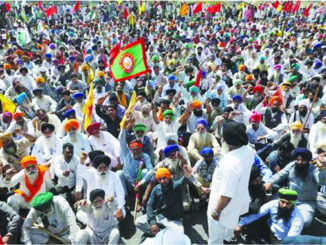
    New Delhi (TIP): Farmers affiliated to the Rashtriya Swayamsevak Sangh (RSS) and the ruling Bharatiya Janata Party (BJP) will stage a nationwide agitation on September 8 to demand guaranteed remunerative prices for their produce.

    On Thursday, August 19, leaders of the RSS-affiliated Bharatiya Kisan Sangh said the Centre should either bring in a law to ensure that minimum support prices (MSP) are actually paid to farmers or amend 2020’s farm reform laws to do so.

    This is also a demand of the Samyukt Kisan Morcha platform of farm unions, which is opposed to the BJP and has been vociferously protesting the three farm reform laws for almost a year now.

    “There is no point in announcing MSP rates if most of the farmers are not actually getting that price in the mandis. Many farmers are not even getting their production costs covered,” BKS general secretary Badri Narayan Chaudhary told The Hindu on Thursday. “We will give the government time to take action and respond to our concerns until the end of this month. But if they do not, we are prepared to carry out a dharna at the national level on September 8,” he added. He said the BKS was not asking the government itself to necessarily procure all crops at MSP rates, but rather to ensure that no buyer, whether government, private or corporate, is allowed to pay below MSP rates.

    In Nagpur, organization secretary Dinesh Kulkarni told the Press Trust of India that a legal guarantee must be provided. “The government should ensure this remunerative price in the present farm laws or make a separate legislation for the same. The government should make guidelines in respect of contract farming wherein crops are not purchased below MSP. This should be at least implemented for the 23 crops that are currently under the MSP regime,” he said.

    The protesting unions of the SKM have also been demanding a legal guarantee for MSP, along with a full repeal of the farm reform laws.  Chaudhary said that the BKS’ stance on the farm laws is more nuanced. “Yes, there are improvements and amendments needed in the laws. But the government has said it is willing to amend the laws. Rather, it is those unions’ demand for full repeal which has halted negotiations,” he said. He added that the Supreme Court has stayed the implementation of the laws for the last eight months, even though its committee had submitted its report over six months ago.

  • Two protesting farmers charged with sedition in Haryana

    Two protesting farmers charged with sedition in Haryana

    Chandigarh (TIP): Haryana home minister Anil Vij on Friday, August 20, informed the state assembly that during the ongoing agitation against agriculture laws, two farmers had been booked for sedition, while 136 other protesting farmers have been booked under different sections of Indian Penal Code (IPC).

    This information was given by  Vij in a written reply during the first day monsoon session of the state assembly.

    According to the minister, two FIRs were registered under Section 124-A (sedition). One case was registered on July 11, 2021 in Sirsa, and according to the complaint recorded by the duty magistrate, the agitating farmers attacked the convoy of Deputy Speaker of Haryana Vidhan Sabha. The second case, registered on January 15, 2021 in Bahadurgarh of Jhajjar, was based on a video uploaded on social media by the accused who is seen saying that if the government did not pay heed to the protesting farmers, he would attack the government with a cannon.

    Earlier in the day, Congress MLAs marched to the assembly, led by former Chief Minister and Leader of Opposition Bhupinder Singh Hooda on the issues of paper leak scam, atrocities on farmers, rising unemployment, inflation and rising crime graph in the State.

    The party MLAs raised slogans against the BJP-JJP government and displayed placards.

    Hooda said the government was trying to suppress all the scams including liquor, registry, mining, electricity meters and paddy purchase. “The government also wants to cover up the recruitment paper leak scam, but the Congress demands that there should be a CBI inquiry into the matter under the supervision of the sitting judge of the High Court,” he said.

    “Ii is the responsibility of the Opposition to raise the voice of the public from the street to the House on issues of public interest. The government does not want the Opposition to raise public issues in the House and hence today an attempt was made to stop the Congress MLAs by putting up barricades far away from the Assembly,” he alleged.

    On the first day of the session six Bills were tabled in the House, including the Haryana Management of Civic Amenities and Infrastructure Deficient Municipal Areas (Special Provisions) Amendment Bill, 2021, Maharishi Balmiki Sanskrit University, Kaithal (Amendment) Bill, 2021, the Haryana Lokayukta (Amendment) Bill 2021, the Haryana Enterprises Promotion (Second Amendment) Bill, 2021, Pandit Lakhmi Chand State University of Performing and Visual Arts, Rohtak (Amendment) Bill, 2021 and the Right to Fair Compensation and Transparency in Land Acquisition, Rehabilitation and Resettlement (Haryana Amendment) Bill 2021.

  • A historical timeline of Afghanistan

    A historical timeline of Afghanistan

    The land that is now Afghanistan has a long history of domination by foreign conquerors and strife among internally warring factions. At the gateway between Asia and Europe, this land was conquered by Darius I of Babylonia circa 500 B.C., and Alexander the Great of Macedonia in 329 B.C., among others.

    Mahmud of Ghazni, an 11th century conqueror who created an empire from Iran to India, is considered the greatest of Afghanistan’s conquerors.

    Genghis Khan took over the territory in the 13th century, but it wasn’t until the 1700s that the area was united as a single country. By 1870, after the area had been invaded by various Arab conquerors, Islam had taken root.

    During the 19th century, Britain, looking to protect its Indian empire from Russia, attempted to annex Afghanistan, resulting in a series of British-Afghan Wars (1838-42, 1878-80, 1919-21).

    1921

    The British, beleaguered in the wake of World War I, are defeated in the Third British-Afghan War (1919-21), and Afghanistan becomes an independent nation. Concerned that Afghanistan has fallen behind the rest of the world, Amir Amanullah Khan begins a rigorous campaign of socioeconomic reform.

    1926

    Amanullah declares Afghanistan a monarchy, rather than an emirate, and proclaims himself king. He launches a series of modernization plans and attempts to limit the power of the Loya Jirga, the National Council. Critics, frustrated by Amanullah’s policies, take up arms in 1928 and by 1929, the king abdicates and leaves the country.

    1933

    Zahir Shah becomes king. The new king brings a semblance of stability to the country and he rules for the next 40 years.

    1934

    Zahir Shah becomes king. The new king brings a semblance of stability to the country and he rules for the next 40 years.

    1934

    The United States formally recognizes Afghanistan.

    1947

    Britain withdraws from India, creating the predominantly Hindu but secular state of India and the Islamic state of Pakistan. The nation of Pakistan includes a long, largely uncontrollable, border with Afghanistan.

    1953

    The pro-Soviet Gen. Mohammed Daoud Khan, cousin of the king, becomes prime minister and looks to the communist nation for economic and military assistance. He also introduces a number of social reforms including allowing women a more public presence.

    1956

    The pro-Soviet Gen. Mohammed Daoud Khan, cousin of the king, becomes prime minister and looks to the communist nation for economic and military assistance. He also introduces a number of social reforms including allowing women a more public presence.

    1956

    The pro-Soviet Gen. Mohammed Daoud Khan, cousin of the king, becomes prime minister and looks to the communist nation for economic and military assistance. He also introduces a number of social reforms including allowing women a more public presence.

    Soviet Premier Nikita Khrushchev agrees to help Afghanistan, and the two countries become close allies.

    1957

    As part of Daoud’s reforms, women are allowed to attend university and enter the workforce.

    1965

    The Afghan Communist Party secretly forms. The group’s principal leaders are Babrak Karmal and Nur Mohammad Taraki.

    1973

    Khan overthrows the last king, Mohammed Zahir Shah, in a military coup. Khan’s regime, the People’s Democratic Party of Afghanistan, comes to power. Khan abolishes the monarchy and names himself president. The Republic of Afghanistan is established with firm ties to the USSR.

    1975-1977

    Khan proposes a new constitution that grants women rights and works to modernize the largely communist state. He also cracks down on opponents, forcing many suspected of not supporting Khan out of the government.

    1978

    Khan is killed in a communist coup. Nur Mohammad Taraki, one of the founding members of the Afghan Communist Party, takes control of the country as president, and Babrak Karmal is named deputy prime minister. They proclaim independence from Soviet influence, and declare their policies to be based on Islamic principles, Afghan nationalism and socioeconomic justice. Taraki signs a friendship treaty with the Soviet Union. But a rivalry between Taraki and Hafizullah Amin, another influential communist leader, leads to fighting between the two sides.

    At the same time, conservative Islamic and ethnic leaders who objected to social changes introduced by Khan begin an armed revolt in the countryside. In June, the guerrilla movement Mujahadeen is created to battle the Soviet-backed government.

    1979

    American Ambassador Adolph Dubs is killed. The United States cuts off assistance to Afghanistan. A power struggle between Taraki and Deputy Prime Minister Hafizullah Amin begins. Taraki is killed on Sept. 14 in a confrontation with Amin supporters.

    The USSR invades Afghanistan on Dec. 24 to bolster the faltering communist regime. On Dec. 27, Amin and many of his followers are executed. Deputy Prime Minister Babrak Karmal becomes prime minister. Widespread opposition to Karmal and the Soviets spawns violent public demonstrations.

    By early 1980, the Mujahadeen rebels have united against Soviet invaders and the USSR-backed Afghan Army.

    1982

    Some 2.8 million Afghans have fled from the war to Pakistan, and another 1.5 million have fled to Iran. Afghan guerrillas gain control of rural areas, and Soviet troops hold urban areas.

    1984

    Although he claims to have traveled to Afghanistan immediately after the Soviet invasion, Saudi Islamist Osama bin Laden makes his first documented trip to Afghanistan to aid anti-Soviet fighters.

    The United Nations investigates reported human rights violations in Afghanistan.

    1986

    The Mujahadeen are receiving arms from the United States, Britain and China via Pakistan.

    1988

    In September, Osama bin Laden and 15 other Islamists form the group al-Qaida, or “the base”, to continue their jihad, or holy war, against the Soviets and other who they say oppose their goal of a pure nation governed by Islam. With their belief that the Soviet’s faltering war in Afghanistan was directly attributable to their fighting, they claim victory in their first battle, but also begin to shift their focus to America, saying the remaining superpower is the main obstacle to the establishment of a state based on Islam.

    1989

    The U.S., Pakistan, Afghanistan, and the Soviet Union sign peace accords in Geneva guaranteeing Afghan independence and the withdrawal of 100,000 Soviet troops. Following Soviet withdrawal, the Mujahadeen continue their resistance against the Soviet-backed regime of communist president Dr. Mohammad Najibullah, who had been elected president of the puppet Soviet state in 1986. Afghan guerrillas name Sibhatullah Mojadidi as head of their exiled government.

    1992

    The Mujahadeen and other rebel groups, with the aid of turncoat government troops, storm the capital, Kabul, and oust Najibullah from power. Ahmad Shah Masood, legendary guerrilla leader, leads the troops into the capital. The United Nations offers protection to Najibullah. The Mujahadeen, a group already beginning to fracture as warlords fight over the future of Afghanistan, form a largely Islamic state with professor Burhannudin Rabbani as president.

    1995

    Newly formed Islamic militia, the Taliban, rises to power on promises of peace. Most Afghans, exhausted by years of drought, famine and war, approve of the Taliban for upholding traditional Islamic values. The Taliban outlaw cultivation of poppies for the opium trade, crack down on crime, and curtail the education and employment of women. Women are required to be fully veiled and are not allowed outside alone. Islamic law is enforced via public executions and amputations. The United States refuses to recognize the authority of the Taliban.

    1995-1999

    Continuing drought devastates farmers and makes many rural areas uninhabitable. More than 1 million Afghans flee to neighboring Pakistan, where they languish in squalid refugee camps.

    1997

    The Taliban publicly executes Najibullah.

    Ethnic groups in the north, under Masood’s Northern Alliance, and the south, aided in part by Hamid Karzai, continue to battle the Taliban for control of the country.

    1998

    Following al-Qaida’s bombings of two American embassies in Africa, President Clinton orders cruise missile attacks against bin Laden’s training camps in Afghanistan. The attacks miss the Saudi and other leaders of the terrorist group.

    2000

    By now considered an international terrorist, bin Laden is widely believed to be hiding in Afghanistan, where he is cultivating thousands of followers in terrorist training camps. The United States demands that bin Laden be extradited to stand trial for the embassy bombings. The Taliban decline to extradite him. The United Nations punishes Afghanistan with sanctions restricting trade and economic development.

    March 2001

    Ignoring international protests, the Taliban carry out their threat to destroy Buddhist statues in Bamiyan, Afghanistan, saying they are an affront to Islam.

    Sept. 4, 2001

    A month after arresting them, the Taliban put eight international aid workers on trial for spreading Christianity. Under Taliban rule, proselytizing is punishable by death. The group is held in various Afghan prisons for months and finally released Nov. 15.

    Sept. 9, 2001

    Masood, still head of the Northern Alliance and the nation’s top insurgent, is killed by assassins posing as journalists.

    Sept. 11, 2001

    Hijackers commandeer four commercial airplanes and crash them into the World Trade Center Towers in New York, the Pentagon outside Washington, D.C., and a Pennsylvania field, killing thousands. Days later, U.S. officials say bin Laden, the Saudi exile believed to be hiding in Afghanistan, is the prime suspect in the attack.

    Oct. 7, 2001

    Following unanswered demands that the Taliban turn over bin Laden, U.S. and British forces launch airstrikes against targets in Afghanistan. American warplanes start to bomb Taliban targets and bases reportedly belonging to the al-Qaida network. The Taliban proclaim they are ready for jihad.

    Nov. 13, 2001

    After weeks of intense fighting with Taliban troops, the Northern Alliance enters Kabul. The retreating Taliban flee southward toward Kandahar.

    Dec. 7, 2001

    Taliban fighters abandon their final stronghold in Kandahar as the militia group’s hold on Afghanistan continues to disintegrate. Two days later, Taliban leaders surrender the group’s final Afghan territory, the province of Zabul. The move leads the Pakistan-based Afghan Islamic Press to declare “the rule of the Taliban in Afghanistan has totally ended.”

    Dec. 22, 2001

    Hamid Karzai, a royalist and ethnic Pashtun, is sworn in as the leader of the interim government in Afghanistan. Karzai entered Afghanistan after living in exile for years in neighboring Pakistan. At the U.N.-sponsored conference to determine an interim government, Karzai already has the support of the United States and by the end of the conference is elected leader of the six-month government.

    2002

    In June, the Loya Jirga, or grand council, elects U.S.-backed Hamid Karzai as interim leader. Karzai chooses the members of his government who will serve until 2004, when the government is required to organize elections.

    2003

    Amid increased violence, NATO takes over security in Kabul in August. The effort is the security organization’s first-ever commitment outside of Europe.

    January 2004

    The Loya Jirga adopts a new constitution following input from nearly 500,000 Afghans, some of whom participate in public meetings in villages. The new constitution calls for a president and two vice presidents, but the office of prime minister is removed at the last minute. The official languages, according to the constitution, are Pashto and Dari. Also, the new constitution calls for equality for women.

    October 2004

    Presidential elections are held. More than 10.5 million Afghans register to vote and choose among 18 presidential candidates, including interim leader Karzai. Karzai is elected with 55 percent of the vote.

    2005

    The nation holds its first parliamentary elections in more than 30 years. The peaceful vote leads to the parliament’s first meeting in December.

    2006

    Amid continuing fighting between Taliban and al-Qaida fighters and the Afghan government forces, NATO expands its peacekeeping operation to the southern portion of the country. After the forces take over from American-led troops, Taliban fighters launch a bloody wave of suicide attacks and raids against the international troops.

    2007

    The Afghan government and NATO confirm that Taliban commander Mullah Dadullah was killed during a U.S.-led operation in southern Afghanistan.

    2008

    The international community pledges more than $15 billion in aid to Afghanistan at a donors’ conference in Paris, while Afghan President Hamid Karzai promises to fight corruption in the government.

    2009

    President Barack Obama names Richard Holbrooke as a special envoy to Afghanistan and Pakistan.

    Mr. Obama announces a new strategy for the Afghanistan war that would dispatch more military and civilian trainers to the country, in addition to the 17,000 more combat troops he previously ordered.

    The strategy also includes assistance to Pakistan in its fight against militants.

    2010

    President Barack Obama accepts Gen. Stanley McChrystal’s resignation as the top commander in Afghanistan, over critical comments he made in a Rolling Stone article, and nominates Gen. David Petraeus, head of U.S. Central Command, as his replacement.

    2011

    U.S. forces overtake a compound in Abbottabad, Pakistan, and kill al-Qaida leader Osama bin Laden on May 2 local time.

    2012

    President Hamid Karzai calls for American forces to leave Afghan villages and pull back to their bases after a U.S. soldier kills 16 Afghan civilians inside their homes.

    2013

    The Afghan army takes over all military and security operations from NATO forces.

    May 2014

    Obama announces timetable for significantly reducing U.S. troop sizes in Afghanistan by 2016.

    September 2014

    Ashraf Ghani becomes president of Afghanistan in September after two rounds of voting, claims of election fraud and a power-sharing agreement with main rival Abdullah Abdullah.

    December 2014

    NATO officially ends its combat mission in Afghanistan. U.S.-led NATO troops remain to train and advise Afghan forces.

    Oct. 15, 2015

    Obama abandons plan to withdraw U.S. forces by the end of his presidency and maintains 5,500 troops in Afghanistan when he leaves office in 2017.

    Aug. 21, 2017

    Trump commits to continued military involvement to prevent emergence of “a vacuum for terrorists.”

    February 2019

    U.S. and Taliban sign agreement on a peace deal that would serve as the preliminary terms for the U.S. withdrawal from the country by May 2021.

    September 2019

    Trump calls off peace talks after U.S. soldier is killed in a Taliban attack.

    November 2020

    U.S. announces plans to cut U.S. troop size in half — down to 2,500 by January — days before Biden was inaugurated

    April, 2021

    Biden announces aim to complete U.S. troop withdrawal by 9/11.

    July 5, 2021

    U.S. leaves Bagram airfield without telling the base’s new Afghan commander.

    Aug. 10, 2021

    White House says Taliban takeover “is not inevitable” following the U.S.’ speedy withdrawal from the country.

    Aug. 15, 2021

    The Afghanistan government collapses as the Taliban takes over Kabul.

                                                                                                                                                                                                                                                             Source: PBS NewsHour

  • Afghanistan in turmoil

    Afghanistan in turmoil

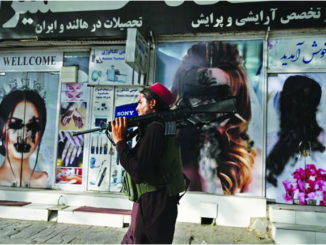
    Afghanistan is in a state of disarray as the Taliban seized control of the country at a lightning speed following the pullout of troops by the United States and Nato. Within weeks, the Taliban swept from province to province until the group reached the presidential palace on Sunday, seizing power in the war-torn country.

    The stunning military takeover has triggered a massive panic across the capital with thousands of Afghans swarming to the airport in a desperate attempt to flee the country, fearing a repeat of the Taliban’s brutal Islamist rule from 1996 to 2001.

    On Monday, August 16,  dramatic footage posted on social media showed hundreds of men running alongside a US air force plane as it rolled down the runway, with some clinging to the side of it. In other videos, civilians frantically clambered up an already overcrowded and buckling jetway.

    President Ashraf Ghani fled as the Taliban reached Kabul on Sunday. Ghani left Afghanistan with the chief of staff, national security advisor and his family, as many on social media called him a coward and said they felt betrayed. However, Ghani said that he left to avoid further “bloodshed” in Afghanistan. As of now, it’s not clear where he went.

    What next?

    The US and international community are piling pressure on the Taliban to reach some kind of deal with the Afghan government. This will likely lead to Ghani stepping down from his post or he will be moved to a figurehead role.

    The Taliban now control most of Afghanistan’s border crossings, which denies revenue for the government and enables the Taliban to tax trade to fund their fighting.

    The Taliban might also permit groups like al Qaeda to train and operate from there, which is likely to make the country hotbed of terrorist activities.

    Controlling the customs posts and border crossings (aside from Kabul airport) and with the Afghan military collapsing, the Taliban hold the cards. Russia and China will be comfortable engaging with the group’s leaders, according to experts.

    An exodus of people from Afghanistan could include terrorists and Uyghur separatists, worrying the neighbouring countries including Tajikistan, Turkmenistan and Uzbekistan on the northern side.

    Soviet invasion of Afghanistan

    Soviet troops invaded Afghanistan in late December 1979. The Soviet Union intervened in support of the Afghan communist government in its conflict with anti-communist Muslim guerrillas during the Afghan War (1978–92) and remained in Afghanistan until mid-February 1989.

    In April 1978 Afghanistan’s centrist government, headed by Pres. Mohammad Daud Khan, was overthrown by left-wing military officers led by Nur Mohammad Taraki. Power was thereafter shared by two Marxist-Leninist political groups, the People’s (Khalq) Party and the Banner (Parcham) Party—which had earlier emerged from a single organization, the People’s Democratic Party of Afghanistan—and had reunited in an uneasy coalition shortly before the coup. The new government, which had little popular support, forged close ties with the Soviet Union, launched ruthless purges of all domestic opposition, and began extensive land and social reforms that were bitterly resented by the devoutly Muslim and largely anti-communist population. Insurgencies arose against the government among both tribal and urban groups, and all of these—known collectively as the mujahideen (Arabic mujahidun, “those who engage in jihad”)—were Islamic in orientation.

    These uprisings, along with internal fighting and coups within the government between the People’s and Banner factions, prompted the Soviets to invade the country on the night of December 24, 1979, sending in some 30,000 troops and toppling the short-lived presidency of People’s leader Hafizullah Amin. The aim of the Soviet operation was to prop up their new but faltering client state, now headed by Banner leader Babrak Karmal, but Karmal was unable to attain significant popular support. Backed by the United States, the mujahideen rebellion grew, spreading to all parts of the country. The Soviets initially left the suppression of the rebellion to the Afghan army, but the latter was beset by mass desertions and remained largely ineffective throughout the war.

    The Afghan War quickly settled down into a stalemate, with more than 100,000 Soviet troops controlling the cities, larger towns, and major garrisons and the mujahideen moving with relative freedom throughout the countryside. Soviet troops tried to crush the insurgency by various tactics, but the guerrillas generally eluded their attacks. The Soviets then attempted to eliminate the mujahideen’s civilian support by bombing and depopulating the rural areas. These tactics sparked a massive flight from the countryside; by 1982 some 2.8 million Afghans had sought asylum in Pakistan, and another 1.5 million had fled to Iran. The mujahideen were eventually able to neutralize Soviet air power through the use of shoulder-fired antiaircraft missiles supplied by the Soviet Union’s Cold War adversary, the United States.

    The mujahideen were fragmented politically into a handful of independent groups, and their military efforts remained uncoordinated throughout the war. The quality of their arms and combat organization gradually improved, however, owing to experience and to the large quantity of arms and other war matériel shipped to the rebels, via Pakistan, by the United States and other countries and by sympathetic Muslims from throughout the world. In addition, an indeterminate number of Muslim volunteers—popularly termed “Afghan-Arabs,” regardless of their ethnicity—traveled from all parts of the world to join the opposition.

    The war in Afghanistan became a quagmire for what by the late 1980s was a disintegrating Soviet Union. (The Soviets suffered some 15,000 dead and many more injured.) Despite having failed to implement a sympathetic regime in Afghanistan, in 1988 the Soviet Union signed an accord with the United States, Pakistan, and Afghanistan and agreed to withdraw its troops. The Soviet withdrawal was completed on February 15, 1989, and Afghanistan returned to nonaligned status.

    The rise of Taliban

    The Taliban were removed from power in Afghanistan by US-led forces in 2001, but the group has seized control of the country once again following a rapid offensive.

    The capital, Kabul, was the last major city to fall to the offensive that began months ago but accelerated as the hardline Islamists gained control of territories.

    The group entered direct talks with the US back in 2018, and in February 2020 the two sides struck a peace deal that committed the US to withdrawal and the Taliban to preventing attacks on US forces. Other promises included not allowing al-Qaeda or other militants to operate in areas it controlled and proceeding with national peace talks.

    But in the year that followed, the Taliban continued to target Afghan security forces and civilians, advancing rapidly across the country.

    Rise to power

    The Taliban, or “students” in the Pashto language, emerged in the early 1990s in northern Pakistan following the withdrawal of Soviet troops from Afghanistan. It is believed that the predominantly Pashtun movement first appeared in religious seminaries – mostly paid for by money from Saudi Arabia – which preached a hardline form of Sunni Islam.

    The promise made by the Taliban – in Pashtun areas straddling Pakistan and Afghanistan – was to restore peace and security and enforce their own austere version of Sharia, or Islamic law, once in power.

    From south-western Afghanistan, the Taliban quickly extended their influence. In September 1995 they captured the province of Herat, bordering Iran, and exactly one year later they captured the Afghan capital, Kabul, overthrowing the regime of President Burhanuddin Rabbani – one of the founding fathers of the Afghan mujahideen that resisted the Soviet occupation. By 1998, the Taliban were in control of almost 90% of Afghanistan.

    Afghans, weary of the mujahideen’s excesses and infighting after the Soviets were driven out, generally welcomed the Taliban when they first appeared on the scene. Their early popularity was largely due to their success in stamping out corruption, curbing lawlessness and making the roads and the areas under their control safe for commerce to flourish.

    But the Taliban also introduced or supported punishments in line with their strict interpretation of Sharia law – such as public executions of convicted murderers and adulterers, and amputations for those found guilty of theft. Men were required to grow beards and women had to wear the all-covering burka.

    The Taliban also banned television, music and cinema, and disapproved of girls aged 10 and over going to school. They were accused of various human rights and cultural abuses. One notorious example was in 2001, when the Taliban went ahead with the destruction of the famous Bamiyan Buddha statues in central Afghanistan, despite international outrage.

    Pakistan has repeatedly denied that it was the architect of the Taliban enterprise, but there is little doubt that many Afghans who initially joined the movement were educated in madrassas (religious schools) in Pakistan.

    Pakistan was also one of only three countries, along with Saudi Arabia and the United Arab Emirates (UAE), which recognised the Taliban when they were in power in Afghanistan. It was also the last country to break diplomatic ties with the group.

    At one point, the Taliban threatened to destabilise Pakistan from areas they controlled in the north-west. One of the most high-profile and internationally condemned of all Pakistani Taliban attacks took place in October 2012, when schoolgirl Malala Yousafzai was shot on her way home in the town of Mingora.

    A major military offensive two years later following the Peshawar school massacre greatly reduced the group’s influence in Pakistan though. At least three key figures of the Pakistani Taliban had been killed in US drone strikes in 2013, including the group’s leader, Hakimullah Mehsud.

    Al-Qaeda ‘sanctuary’

    The attention of the world was drawn to the Taliban in Afghanistan in the wake of the 11 September 2001 World Trade Center attacks in New York. The Taliban were accused of providing a sanctuary for the prime suspects – Osama Bin Laden and his al-Qaeda movement.

    On October 7, 2001, a US-led military coalition launched attacks in Afghanistan, and by the first week of December the Taliban regime had collapsed. The group’s then-leader, Mullah Mohammad Omar, and other senior figures, including Bin Laden, evaded capture despite one of the largest manhunts in the world.

    Many senior Taliban leaders reportedly took refuge in the Pakistani city of Quetta, from where they guided the Taliban. But the existence of what was dubbed the “Quetta Shura” was denied by Islamabad.

    Despite ever higher numbers of foreign troops, the Taliban gradually regained and then extended their influence in Afghanistan, rendering vast tracts of the country insecure, and violence in the country returned to levels not seen since 2001.

    There were numerous Taliban attacks on Kabul and, in September 2012, the group carried out a high-profile raid on Nato’s Camp Bastion base.

    Hopes of a negotiated peace were raised in 2013, when the Taliban announced plans to open an office in Qatar. But mistrust on all sides remained high and the violence went on.

    In August 2015, the Taliban admitted they had covered up Mullah Omar’s death – reportedly of health problems at a hospital in Pakistan – for more than two years. The following month, the group said it had put aside weeks of infighting and rallied around a new leader in the form of Mullah Mansour, who had been the deputy of Mullah Omar. At around the same time, the Taliban seized control of a provincial capital for the first time since their defeat in 2001, taking control of the strategically important city of Kunduz.

    Mullah Mansour was killed in a US drone strike in May 2016 and replaced by his deputy Mawlawi Hibatullah Akhundzada, who remains in control of the group.

    Seizing power

    In the year following the US-Taliban peace deal of February 2020 – which was the culmination of a long spell of direct talks – the Taliban appeared to shift their tactics from complex attacks in cities and on military outposts to a wave of targeted assassinations that terrorised Afghan civilians.

    The targets – journalists, judges, peace activists, women in positions of power – suggested that the Taliban had not changed their extremist ideology, only their strategy.

    Despite grave concerns from Afghan officials over the government’s vulnerability to the Taliban without international support, the new US president, Joe Biden, announced in April 2021 that all American forces would leave the country by 11 September – two decades to the day since the felling of the World Trade Center.

    Having outlasted a superpower through two decades of war, the Taliban began seizing vast swathes of territory, before once again toppling a government in Kabul in the wake of a foreign power withdrawing.

    They swept across Afghanistan in just 10 days, taking their first provincial capital on 6 August . By 15 August, they were at the gates of Kabul.

    Their lightning advance prompted tens of thousands of people to flee their homes, many arriving in the Afghan capital, others heading for neighbouring countries.

    The Taliban’s return to rule brings an end to almost 20 years of a US-led coalition’s presence in the country.

    American presence in Afghanistan

    Following the Taliban’s capture of Kabul on Aug. 15, the two-decade American era in Afghanistan appears to be finally over, and it is worth reflecting on what led up to this point. Here is an overview of some of key periods in the conflict.

    The George W. Bush administration

    The US entered Afghanistan as part of its War on Terror following 9/11, with a goal of defeating Al-Qaeda and the Taliban. But what was intended to be a quick and decisive show of force turned into a long and deadly war.

    2001: The Sept.11 attacks on the World Trade Center and the Pentagon marked the beginning of the War on Terror. The US invaded Afghanistan.

    2003: In May, US defense secretary Donald Rumsfeld announced that “major combat” operations had ended in the country, and that efforts would be shifted to reconstruction.

    2004-2006: Several years of fighting ensued between a US-led military coalition and the Taliban. In this time, the Afghanistan government (with US support) established a new constitution, and elected Hamid Karzai as president. By mid-2006, Taliban forces were resurgent.

    The Obama administration

    The early Barack Obama years were marked by an increased US presence in Afghanistan. After overseeing the killing of Osama bin Laden, Obama set out a plan to leave Afghanistan in his second term.

    2009-2010: Obama made a renewed commitment to Afghanistan. This included sending a surge of 17,000 troops to the country in Feb. 2009, and shifting strategy to focus on fighting Taliban and Al-Qaeda militants in Pakistan as well.

    2011: US Navy SEALS carried out a successful mission to kill Osama bin Laden.

    2013: NATO forces (led by the US) officially handed over security responsibility to Afghan military forces. The US military stayed on mostly in a training capacity and for specific counterterrorism efforts.

    2014: President Obama announced a timeline for the withdrawal of US troops, but the Taliban were once again active in various parts of the country, and the Americans stayed longer.

    The Trump administration

    In a reversal of policy, Trump initially escalated engagement and promised to “fight to win.” Trump did eventually withdraw some forces, but Taliban power continued to grow. There were unsuccessful peace talks between the US, Taliban, and Afghan governments.

    2017: In August, president Trump introduced a new policy towards Afghanistan, ramping up the US presence on the ground for as long as it took to win instead of focusing on timetables for withdrawal.

    2019: The Taliban and US government entered a round of peace talks that one US special envoy described as “more productive than they have been in the past.” The two sides reached a tentative peace agreement that involves US withdrawal of troops and a commitment that the Taliban will not harbor other jihadist groups. By September, Trump had canceled the deal.

    2020: In February, US and Taliban leaders signed a peace deal, but it didn’t hold; conflict quickly resumed. In November, the Pentagon announced plans to withdraw troops as Trump’s presidency ended.

    The Biden administration

    Biden came into office with a commitment to ending the US’ war in Afghanistan. This approach has garnered criticism for the humanitarian and national security crises that could arise from the absence of US forces in the region.

    2021: As president-elect, Joe Biden promised to withdraw all US troops from Afghanistan. By April, he said that this process would be complete by September, on the 20th anniversary of the 9/11 attacks. As the Taliban closed in on Kabul in August, Biden temporarily deployed a total of 5,000 troops to evacuate US embassy personnel.

  • India in history this Week- August 20- 26, 2021

    August 20

    1597:     Dutch East India Company’s first ship returned from East Asia.

    1828:     The first session of Raja Ram Mohan Roy’s Brahmo Samaj was held in Calcutta (now Kolkata).

    1897:     Ronald Ross identified malaria-causing anopheles mosquito while working at the Presidency General Hospital in Calcutta (now Kolkata).

    1921:     Start of Mopala Rebellion in Malabar, Kerala.

    1944:     Former Prime Minister of India, Rajiv Gandhi was born.

    1979:     Prime Minister Chaudhary Charan Singh resigned from his post.

    1988:     A magnitude 6.5 earthquake in India and Nepal killed a thousand people.

    2011:     India’s famous historian Ram Sharan Sharma died.

    2018:     Vinesh Phogat of India won the gold medal in the 50 kg category of the Jakarta Asian Games women’s wrestling competition. She became the first woman wrestler in the country to achieve this feat.

    August 21

    1790:     The British army, led by General Meadows, captured Dindigul in Tamil Nadu.

    1931:     Pandit Vishnu Digambar died.

    1972:     The Wildlife Protection Act was passed in India.

    1988:     One thousand people died due to the severe earthquake that hit the Indo-Nepal border.

    2005:     The ceasefire agreement between Bangladesh and India’s Border Security Force concluded.

    2006:     Renowned Shehnai player Ustad Bismillah Khan passed away with Bharat Ratna.

    2008:     The Caravan-e-Aman bus service plying between Muzaffarabad, the capital of Srinagar and ‘Pakistan-occupied Kashmir’, resumed.

    2008:     In 2008, India joined hands with NASA on the Moon mission.

    2009:     The Indian Navy’s fighter aircraft ‘Sea Harrier’ crashed in the Arabian Sea after flying from Goa in 2009.  Commander Saurabh Saxena died.

    August 22

    1639:     The British East India Company established Chennai, the capital of Tamil Nadu (erstwhile Madras).

    1818:     Warren Hasting, the first Governor General of India, died.

    1918:     India’s first proficient pilot Indralal Rai was killed in an air battle with Germany in London during the First World War.

    1921:     Father of the Nation Mahatma Gandhi lit Holi of foreign clothes.

    2012:     Pranab Mukherjee was elected the 13th President of India.

    1996:     The state government changed the name of Madras to Chennai.

    August 23

    1944:     The famous heroine of Indian films Saira Banu was born.

    1947:     Vallabhbhai Patel was appointed as the Deputy Prime Minister of the country.

    1986:     Bombay’s Shambhu Apashane won the longest typing marathon by winning a world record.

    1995:     The country’s first cellular phone was commercially introduced in Calcutta.

    2011:     Scientists at the Chinese Academy of Sciences discovered the origin of the Brahmaputra and Indus rivers and completed a comprehensive satellite study of the length of their route.

    1960:     The world’s largest frog (3.3 kg) was caught.

    2008:     The Government of Uttar Pradesh nominated 16 members in the State Women’s Commission in 2008

    August 24

    1908:     The revolutionary Rajguru was born.

    1600:     The first ship of the East India Company, Hector, reached the coast of Surat.

    1690:     Calcutta city was established.

    1969:     VV Giri became the fourth President of India.

    1974:     Fakhruddin Ali Ahmed became the fifth President of India.

    1999:     Pakistan refused to consider the 8 prisoners of war captured by India during the Kargil operation as a prisoner of war.

    1910:     ITC Limited bought the third largest tobacco company in Kolkata, India.

    1925:     Social reformer Ramakrishna Gopal Bhandarkar died.

    1971:     India beat England by four wickets in the Oval Cricket Test match to register their first win on the ground.

    August 25

    1351:     Sultan Ferozeshah Tughlaq III was crowned.

    1917:     In 1917, 7 Indians serving in the British India Army received the Kigs Commission for the first time.

    1957:     India won the title of world winner by winning the final of the Polo World Championship in France.

    2003:     The 2003 car bombings near Mumbai’s Gateway of India and Mumbi Devi Temple killed more than 50 people and injured more than 150.

    2008:     The Government of Madhya Pradesh in 2008 requested to insure all students of government schools for the year 2008-09.

    August 26

    1303:     Alauddin Khilji captured Chittorgarh after defeating Rana Bhim Singh.

    1910:     Nobel Peace Prize-awarded Mother Teresa was born in Skopji, Yugoslavia.

    1914:     Bengal revolutionaries attacked the British fleet in Calcutta and looted 50 mausers and 46 thousand rounds.

    1975:     Dr. Narayan Subbarao Hardikar, a freedom fighter, journalist and Padma Bhushan, died.

  • Cameron Diaz opens up about stepping away from acting

    Cameron Diaz opens up about stepping away from acting

    During a sit-down interview with actor-comedian Kevin Hart for his Peacock talk show, Hart to Heart, Hollywood star Cameron Diaz opened up about how acting occupied much of her life which ultimately led her to take a step back and reevaluate everything.

    According to The Hollywood Reporter, “When you do something at a really high level for a long period of time, you’re the person who’s the talent, all parts of you that isn’t, that has to sort of be handed off to other people,” the 48-year-old explained.

    She went on to explain that from the spotlight perspective, it’s as if she was “a machine” but for her “personal spiritual self” she realized when she was 40-years-old that the part of her that “functioned at a high level wasn’t enough”.

    Cameron also reiterated that though she has a “love” for acting, there were “so many parts” of her life that she “wasn’t touching” and “wasn’t managing”.

    “For me, I just really wanted to make my life manageable by me. My routine in a day is literally what I can manage to do by myself. It’s the best feeling,” she explained.

  • Jennifer Lopez unfollows ex Alex Rodriguez on Instagram    

    Jennifer Lopez unfollows ex Alex Rodriguez on Instagram    

    Actor-singer Jennifer Lopez, it appears, is further cementing her rekindled relationship with Oscar winning-actor Ben Affleck as she has recently unfollowed her most recent ex, Alex Rodriguez. She has also deleted every photo with him from her Instagram account.

    According to Page Six, Jennifer has deleted all the photos with ex-fiance Alex Rodriguez, including the one that features the duo kissing in front of the Capitol Building — from her Instagram account.

    The Boy Next Door star has also unfollowed Alex on Instagram.

    The former couple announced their split in April 2021. Jennifer has since rekindled her romance with her ex-beau Ben, whom she dated for 18 months before their 2004 split. The couple, who have worked together in films Gigli and Jersey Girl, went Instagram official on Let’s Get Loud singer’s 52nd birthday.

  • Emilia Clarke, Jason Momoa have mini Game of Thrones reunion

    Emilia Clarke, Jason Momoa have mini Game of Thrones reunion

    Actor Emilia Clarke’s recent Instagram post has ushered a wave of nostalgia among the Game of Thrones (GoT) fans. On Sunday, Emilia took to the photo-sharing application and uploaded a picture from her recent meeting with her GoT co-star Jason Momoa.

    In the image, Jason can be seen lifting Emilia. “When your sun and stars roll into town you check that he can still bench press a Khaleesi. #@prideofgypsies #drinkingwithdrogoimamazedwesurvived #theboysarebackintown#likeheneverleft,” she captioned the post.

    Fans were excited to see them sharing smiles with each other in the picture. “Priceless,” a user commented. “My favourite on-screen couple,” another fan wrote.

    Jason also dropped few pictures with Emilia and wrote: “MOON OF MY LIFE. you are wonderful love u forever @emilia_clarke #smilelyeyes happy birthday benioff you handsome generous badass leo aloha j.” For the unversed, Khal Drogo and Khaleesi are the fictional characters played by Jason and Emilia respectively on the TV show Game of Thrones.

  • India’s national security challenges becoming complex, says Rajnath Singh

    India’s national security challenges becoming complex, says Rajnath Singh

    New Delhi (TIP): Noting that India’s national security challenges are increasing and becoming “complex” in view of the changing geopolitical situation globally, Defense Minister Rajnath Singh on Thursday, August 19,  strongly pitched for a strong, capable and completely ‘self-reliant’ defense industry in the country.

    Singh’s comments came amid growing concerns in India and elsewhere over the Taliban sweeping across Afghanistan this month, seizing control of Afghanistan following the collapse of the US-backed government.

    “Today, the security scenario in the whole world is changing very fast. Because of this, the challenges to our national security are increasing and becoming complex. There are constant changes in the global geopolitical situation,” Singh said, without making specific references.

    He was speaking after launching the ‘Defense India Startup Challenge 5.0’, an initiative under the Innovations for Defense Excellence (iDEX) that acts as an umbrella organization to promote technology development for the defense sector. Singh said considering the fast-changing security challenges, India must focus on having strong, capable, and ‘self-reliant’ defense industry to cater to the needs of the armed forces.

    “It is necessary that we not only create strong, modern and well-equipped forces, but also develop our defense industry, which is equally strong, capable, and most importantly, completely ‘self-reliant’,” the defense minister said.       Source: PTI