Tag: Apple News

  • Bhindranwale’s grandnephew among two arrested as police bust terror module

    Bhindranwale’s grandnephew among two arrested as police bust terror module

    Jalandhar (TIP): Punjab Police on Friday, August 20,  arrested two militant operatives and claimed to have busted a terror module. One of the arrested militants, police said, was the son of the nephew of Jarnail Singh Bhindranwale — the Sikh religious leader and political revolutionary whose violent campaign for autonomy for the state of Punjab and armed occupation of the Harmandir Sahib (Golden Temple) complex in Amritsar led to a deadly confrontation with the Indian military in 1984.

    Police said a huge cache of live grenades, a tiffin bomb and some pistols and ammunition has been seized from the arrested suspects.

    Investigators identified the arrested men as Gurmukh Singh Brar alias GB, a resident of Hardyal Nagar, Garha, Jalandhar, who is the son of Jasbir Singh Rode, the nephew of Jarnail Bhindranwale, and Gagandeep Singh, a resident of Gurunanak Pura in Phagwara.

    Later in the day, the police also conducted a raid at the office of Punjabi Daily ‘Aaj Di Awaaz’ where Gurmukh was working as the editor.

    A press release by Punjab Police later said that Kapurthala police had nabbed Gagandeep, a resident of Phagwara, and recovered one illegal pistol from his possession. During follow-up interrogations, Gagandeep had revealed that the pistol recovered from him was part of a bigger consignment of weapons that had been sent from across the border via drones over the last few months. He also disclosed that the major part of the consignment had been hidden by his close friend, who he identified as one Gurmukh Singh, in Jalandhar.

    “Acting on this input, police teams immediately raided the house of Gurmukh Singh and arrested him, while also recovering two live hand grenades, one box of detonators, two tubes suspected to contain RDX, one roll of high explosive yellow wire, cash of Rs 3.75 lakh, one licensed pistol a .45 bore, 14 Indian passports, one .30 pistol along with two magazines from his possession,” said Senior Superintendent of Police (SSP) Kapurthala, HPS Khak, adding that one live tiffin bomb and other explosive material was also said to have been hidden in the office of Gurmukh Singh near Jalandhar bus stand.

    The teams next raided the Jalandhar bus stand office of Gurmukh and recovered 3 live hand grenades, 1 tiffin bomb, 4 Glock pistol magazines, and packaging foam material from there.

    Preliminary investigations carried out so far have revealed that the consignment was sent by Pakistan’s ISI and by other Pakistan-based pro-Khalistan terrorist groups, such as the ISYF, to carry out multiple terror attacks in Punjab in its ongoing efforts to revive militancy, and disturb peace and communal harmony in the state.

    Source: The Indian Express

  • Ex-Punjab DGP Saini freed day after HC said his arrest ‘patently illegal’

    Ex-Punjab DGP Saini freed day after HC said his arrest ‘patently illegal’

    Chandigarh (TIP): Former Punjab DGP Sumedh Singh Saini was released from the custody of the state Vigilance Bureau on Friday, August 20, on the directions of the Punjab and Haryana High Court, which termed his arrest as “patently illegal”.

    The court order on Thursday, Au gust 19, came on a habeas corpus plea filed by Saini’s wife a day after he was arrested by the Vigilance Bureau in connection with a case registered in September 2020 for cheating, forgery, corruption and other offences.

    Ruling that Saini’s arrest was in violation of three earlier orders of the High Court, a single bench of Justice Arun Kumar Tyagi ordered his immediate release. Saini was released at around 2 am from a Mohali court.

    Saini’s lawyers contended that he was illegally arrested in the FIR No. 11, dated September 17, 2020, “due to mala fides, malice and ulterior motives as a result of political vendetta”. Also, Saini has been granted interim anticipatory bail in FIR No. 13, dated August 2, on the same allegations.

    Lawyers representing Punjab said Saini was arrested in a case which did not have any connection to his service career and thus not violative of earlier HC orders.

  • India’s biggest oil, gas reserve sees 40% dip in production

    Oil and gas production in Rajasthan witnessed a 40% dip in the past two years due to less extraction, primarily due to Covid-19, officials said, even as the government plans to further expand oil exploration in the region.

    Oil prices in the country have been on the rise for the past few months due to an increase in crude oil prices in the international market. In some places in Rajasthan, such as Sri Ganganagar, not very far from oil producing Barmer, the price of petrol is close to Rs 110 per litre.

    Barmer is the country’s biggest source of oil and natural gas, and contributed Rs 1,904.79 crore to state revenue in 2020-21, down from Rs 3,883.22 in 2018-19. This means that oil fields contributed Rs 10 crore a day to the state government, whose other big revenue sources are mines, excise, and stamp and registration.

    “The state revenue from oil declined majorly due to less extraction of oil, affecting the production and crude oil prices, and partly Covid-19,” an official said, talking about the reasons for the dip in the revenue.

    Barmer’s Gudamalani area has reserves of 10 billion cubic metres of gas, of which only 30% has been explored. India’s total oil and gas reserves are 28.1 billion cubic metes, according to the petroleum ministry website.                                                                                                                                                                                                                                                          Source: HT

  • CBI forms 4 teams to probe Bengal post-poll violence

    The CBI has constituted four teams, each having seven members and headed by a joint director, to probe cases of post-poll violence in West Bengal.

    Officials in the agency said the probe by individual teams would be monitored by CBI’s Additional Director Ajay Bhatnagar. The members of each team would include a deputy inspector general and three superintendents of police (SPs) from across the country.

    Meanwhile, the CBI has written to the West Bengal Director General (DG) of Police to provide details of all cases of murder, attempt to murder and rape reported during the post-poll violence.

    The agency has sought details of such cases from the DG in line with a Calcutta High Court order that directed the CBI to take over cases of murder, rape and crime against women.

    The CBI’s four teams would be headed by joint directors Ramnish, Anurag, Vineet Vinayak and Sampat Meena.

    The High Court on Thursday, Aug ust 19, ordered a CBI inquiry into alleged cases of murder, rape and crime against women during the post-poll violence.

    A five-judge Bench, while pronouncing a unanimous verdict on a batch of PILs seeking an independent probe into the incidents of post-poll violence, also ordered the formation of an SIT.

  • Onam: The festival of harvest

    Onam: The festival of harvest

    The festival of harvest ‘Onam’ is celebrated every year in Kerala and by the Malayalee community across the world. According to the Gregorian calendar, the celebration is marked in the Chingam month on the 22nd Nakshatra Thiruvonam that comes in August and September. The celebrations start on Atham Day and go on for ten days till Thiruvonam day which is considered as the festival’s most auspicious day.

    This year, the festivities of Onam started on 12 August and will end on 23 August. While the main celebrations will take place on 21 August.

    Significance

    People celebrate Onam to honor a kind-hearted, benevolent demon King Mahabali, who is believed to return his kingdom during Onam time.

    According to Vaishnava mythology, King Mahabali had defeated all the Gods and was ruling in all three worlds. Unlike other demons, Mahabali was sweet and less torturous. People loved this demon king. Yet, the Gods felt insecured and asked Lord Vishu for interference.

    Lord Vishnu disguised as Vamana, a Brahmin dwarf went to meet King Mahabali. Vamana is supposed to be Vishnu’s fifth avatar. When the king asked for his wishes, Vamana replied with “three pieces of land.” The king granted his wish, and he grew in size, appearing before all the three worlds. When he was about to reach heaven, King Mahabali offered his own head and Lord Vishu was impressed by this act of benevolence. He granted his wish that he could visit his kingdom during the time of Onam.

    Hence, Onam is a celebration of the return of King Mahabali to his kingdom.

    Celebrations

    All the 10 days which are celebrated during Onam has their own significance and importance. Each day has its value and even after 10 days, some places still celebrate Onam.

    Here’s a list of all the 10 days of the Onam festival:

    Atham

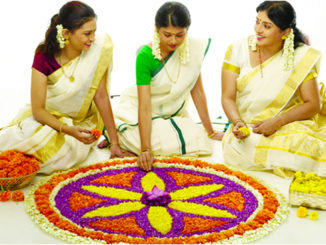
    To celebrate the arrival of King Mahabali, people decorate their houses with yellow flowers and have Pookalam (flower rangoli). A new layer is added after each passing day.

    Chithira

    The second day is usually deep cleaning of houses and making sure that everything is clean and neat. They also add another layer of flower in Pookalam. This day is highly auspicious for purchasing fresh vegetables, fruits and other provisions.

    Chodi

    On day 3, people buy gold, clothes, gifts to celebrate Onam. People gift new clothes, also called Onakodi to each other.

    Vishakam

    This fourth day marks the start of Onam Sadhya. Families start the preparation of Sadhya. The number of dishes differs from family to family but usually, families make 26 delicacies.

    Anizham

    Aranmula Uthrattathi Vallamkali also called snake boat begins on the fifth day. This is the oldest river boat festival in Kerala. This marks the beginning of the Vallamkali, snake boat race.

    Thriketa

    The office goers, school children, college students get off as Onam begins in a full swing. The Pookalam gets bigger after every passing day. This is the sixth day of Onam.

    Moolam

    This is the seventh day of the Onam festival. Families and relatives visit each other and temples start serving Sadhyas. People also start enjoying traditional art forms likes Kaikottikali and Puli Kali (leopard masquerade dance).

    Pooradam

    On the 8th day, statues of Mahabali and Vamana are taken around the house and are placed in the centre of Pookalam.

    Uthradom

    It is highly believed that King Mahabali reaches the state on the 9th day. Hence, the festivities and the merriment begins. This is the most auspicious day and so, people start buying fresh vegetables and start cooking traditional meals.

    Thiruvonam

    On the 10th day, people clean their houses, apply rice flour batter on the main entrance, dress up in traditional attire, saree and veshti (dhoti) and enjoy the Sadhya feast. People get together and play games, do activities together, celebrate and dance.

    Sadhya – The Traditional Feast

    Sadhya comprises more than 26 dishes. It includes Avial (vegetables in coconut curry), Kalan (sweet potato and yam with coconut curry), Chor (rice) and all-time favourite dessert Parripu Payasam (kheer). Sadhya also includes pickles, dry curries, pappadam (papad), poovan pazham (smaller bananas) and a lot more!

    Customs

    The grand secular festival of Kerala, Onam,  has numerous customs and traditions associated with it. The zest and enthusiasm imbibed in Onam is so huge it make the people of Kerala break all the barriers of caste and creed and unite. During the week-long festival, the state is decorated like a newlywed with lot of merriments going on. Families in Kerala have get together with the elder member of the family gifting new clothes to the younger members and kids. Onam is also the harvest festival of Kerala and as it is celebrated after monsoon, the land would be lush green with rivers and streams overflowing. This is exactly the reason why the captivating boat races become the striking feature of Onam. In the days following Onam, the state also witness Pulikali and Kummattikali. Read further to know to know more about the customs and traditions of Onam.

    Onappookkalam or Floral Mat

    Floral carpets or Onappookkalam is one of the beautiful customs of Onam. During the ten day festival of Onam, houses and thresholds are cleaned and Pookkalam of different flowers are made in front of every house. It requires lots and lots of flowers and leaves to complete this Onappookkalam and as per the customs, it must grow bigger in size as the day progresses and the tenth day should witness the biggest Pookkalam. The families and kids of the houses in Kerala take great pride in preparing these pookkalams. In early days, it was a way of making kids familiarize about flowers and nature.

    Vallamkali or Boat Race

    The most enchanting of the Onam celebration customs is the Boat race or Vallamkali. One of the most admired and engrossing events associated with Onam, it is held during the Onam festival. Though there is numerous boat races held all through the state, the most famous of them is ‘Aranmula Uthrattadi Vallamkali’ at Pathanamthitta’ and ‘Nehru Trophy Boat Race’ in Alappuzha. What makes this striking is that huge canoes are decorated with hundreds of boatmen racing it. The rhythmic music and songs tempts people to flock to the event.

    Pulikkali

    Pulikkali, a folk art, form one of the most entertaining customs the ten day festival of Onam witness. Pulikkali means, ‘play of tigers’. Celebrated in the central districts of Kerala like Thrissur and Palghat, pulikali include trained artists dress themselves as tigers by painting their body with yellow, red and black patterns. A captivating custom which is dated back to 200 years, in pulikali, artists dance to instruments like Udukku and Thakil.

    Thumbi Thullal

    Thumbi Thullal is a gracious folk art form performed by women during the ten day Onam festival in Kerala. Though slowly disappearing, this beautiful art is one which imbibes the true spirit of Onam. In this, performers wear attractive jewelry and clothes, form a ring with the lead performer sit in the middle and sing a fast paced song. The other performers join her by clapping the hands and swaying to the rhythm of the song.

    Kaikottikali

    An elegant dance form performed during the Onam festival, Kaikottikali witness Kerala women, irrespective of young and old wear the traditional attire and dance to songs praising the mighty King Mahabali who ruled Kerala during the ancient days. In some places in Kerala, women dance around Pookkalam or floral mat in the center of which there will be a bronze lit lamp (nilavilakku).

    Athachamayam

    Athachamayam is a grand procession which marks the beginning of the ten day of festival of Onam. This is a grand tradition which is held on the 1st day of Onam (Atham) in places like Thripunithura and Piravam. This event is held to commemorate the royal tradition in which the kings of the state of Cochin travelled from their Thripunithura Fort to the Thrikkakara temple with the royal entourage. Nowadays, the event has huge fanfare which is often accompanied by folk artistes, musical ensembles and dance shows by skilled artists even without the royal charm.

  • India Clocks 34,457 infections, active cases lowest since March 2020

    India Clocks 34,457 infections, active cases lowest since March 2020

    New Delhi (TIP): India logged 34,457 new coronavirus infections, taking the total tally of COVID-19 cases to 32,393,286, while the national recovery rate improved to 97.54%, the highest since March 2020, according to the Union Health Ministry data updated on Saturday, August 21.

    The death toll climbed to 4,33,964 with 375 fresh fatalities, according to the data updated at 8 am.

    The active cases have declined to 3,61,340, the lowest in 151 days, and comprise 1.12 per cent of the total infections, the lowest since March 2020, the ministry said.

    A reduction of 1890 cases has been recorded in the active COVID-19 caseload in a span of 24 hours.

    The number of people who have recuperated from the disease surged to 3,15,97,982 while the case fatality rate stands at 1.34 per cent, the data stated.

    India’s COVID-19 tally had crossed the 20-lakh mark on August 7, 2020, 30 lakh on August 23, 40 lakh on September 5 and 50 lakh on September 16. It went past 60 lakh on September 28, 70 lakh on October 11, crossed 80 lakh on October 29, 90 lakh on November 20 and surpassed the one-crore mark on December 19. India crossed the grim milestone of two crore on May 4 and three crore on June 23.

    High Proportion of Delta Variant Found in India’s Breakthrough Infections

    Breakthrough infections of coronavirus cases comprise a very high proportion of the Delta variant, the INSACOG, a genome sequencing government consortium of laboratories, has said.

    The continuing COVID-19 outbreaks across India are attributable to the Delta variant, a susceptible population and reduced vaccine effectiveness in blocking transmission, the INSACOG added.

    However, vaccination continues to be very effective in reducing severe disease and death, and public health measures to reduce transmission and inoculation remain critical, the INSACOG stressed in its latest bulletin dated August 16.

    “As of now, sequencing of vaccination breakthroughs in India is also showing a very high proportion of Delta variant. Investigations for any new variants are ongoing,” the INSACOG said. Of the 30,230 samples of Variants of Concern and Variants of Interest sequenced by the INSACOG, 20,324 were of Delta, it said.

  • Raksha Bandhan: The bond of love and protection

    Raksha Bandhan: The bond of love and protection

    Raksha Bandhan celebrates the purity and sanctity of the bond that exists between siblings. Raksha means safety and Bandhan means bond. This festival is celebrated between siblings for their undying support and a vow of protection of each other under any dire circumstance. This year, Raksha Bandhan will be celebrated on 22nd August which falls on Sunday.

    This festival is full of joy, merriment, exchange of gifts and sweets. Like all other festivals, even Raksha Bandhan has a deeply traditional and cultural significance.

    History

    The traditional Hindu festival ‘Raksha Bandhan’ (knot of protection) was came into origin about 6000 years back when Aryans created first civilization – The Indus Valley Civilization. With many languages and cultures, the traditional method to Rakhi festival celebration differs from place to place across India. Following are some historical evidences of Raksha Bandhan celebration from the Indian history.

    Rani Karnawati and Emperor Humayun

    The story of Rani Karnavati and Emperor Humayun is the most significant evidence in the history. During the medieval era, Rajputs were fighting Muslim invasions. Rakhi at that time meant a spiritual binding and protection of sisters was foremost. When Rani Karnawati the widowed queen of the king of Chittor realised that she could in no way defend the invasion of the Sultan of Gujarat, Bahadur Shah, she sent a rakhi to Emperor Humayun. The Emperor touched by the gesture started off with his troops without wasting any time.

    Alexander The Great and King Puru

    The oldest reference to the festival of rakhi goes back to 300 B.C. at the time when Alexander invaded India. It is said that the great conqueror, King Alexander of Macedonia was shaken by the fury of the Indian king Puru in his first attempt. Upset by this, Alexander’s wife, who had heard of the Rakhi festival, approached King Puru. King Puru accepted her as his sister and when the opportunity came during the war, he refrained from Alexander.

    Lord Krishna and Draupathi

    In order to protect the good people, Lord Krishna killed the evil King Shishupal. Krishna was hurt during the war and left with bleeding finger. Seeing this, Draupathi had torn a strip of cloth from her sari and tied around his wrist to stop the bleeding. Lord Krishna, realizing her affections and concern about him, declared himself bounded by her sisterly love. He promised her to repay this debt whenever she need in future. Many years later, when the pandavas lost Draupathi in the game of dice and Kauravas were removing her saari, Krishna helped her divinely elongating the saari so that they could not remove it.

    King Bali and Goddess Lakshmi

    The demon king Mahabali was a great devotee of lord Vishnu. Because of his immense devotion, Vishnu has taken the task of protecting bali’s Kingdom leaving his normal place in Vikundam. Goddess lakshmi – the wife of lord Vishnu – has became sad because of this as she wanted lord Vishnu along with her. So she went to Bali and discussed as a Brahmin woman and taken refuge in his palace. On Shravana purnima, she tied Rakhi on King Bali’s wrist. Goddess Lakshmi revealed who she is and why she is there. The king was touched by Her and Lord Vishnu’s good will and affection towards him and his family, Bali requested Lord Vishnu to accompany her to vaikuntam. Due to this festival is also called Baleva as Bali Raja’s devotion to the Lord vishnu. It is said that since that day it has become a tradition to invite sisters on sravan pournima to tie sacred thread of Rakhi or Raksha Bandan.

    Traditions & Customs

    Generally, the fancy Rakhis and delicious sweets are prepared long before the Shravana Purnima. According to the Indian tradition, the family members get ready for the rituals early in the morning. They take a bath to purify mind and body before starting any preparations. Sisters prepare the puja thali which consists of roli, tilak, Rakhi threads, rice grains, aggarbattis (incense sticks), diyas and sweets. After offering the rituals to the deities of the family, the sister perform aarti of their brothers and ties Rakhi on their wrist. Then, they put kumkum powder on the forehead of their brother and offer sweets.

    Legends

    For the siblings it is the eternal tie of love, for Brahmins the day to take the pledge of Brahmanik rites and for those who depend sea and monsoon, it is the beginning of the new season. Indian festivals are based on the weather changes and their significance in the lives of people but they do have a story to support the celebrations. The rich Indian Mythology provides a religious reason to celebrate the day in a specific way. Many epics are related to the day and the origin of Raksha Bandhan. The festival finds a mention in most of the epics and its origin can be traced back to the mythological Pouranik times.

    The legend in the Bhavishya Puran

    The legend refers to a war between the Gods and the Demons. The demon King Brutra was advancing and the Gods lead by lord Indra, were on verge of defeat. The king of Gods, Indra approached Guru Brihaspati to find a solution to the situation. Brihaspati asked Indra to tie a sacred thread on his wrist, powered by the sacred mantras on the Shravan Purnima. Lord Indra’s Queen Sachi also called Indrani, empowered the thread and tied it on to his hand on the decided day. The power of the sacred thread called Raksha helped the Gods to victory.

    The tradition of thread tying still continues. It is a gesture of goodwill.

    Yama and the Yamuna

    It is said that the Raksha Bandhan was a ritual followed by Lord Yama (the Lord of Death) and his sister Yamuna. Yamuna tied rakhi to Yama and bestowed immortality. Yama was so moved by the serenity of the occasion that he declared thar whoever gets a rakhi tied from his sister and promised her protection will become immortal.

    In the Epics

    Raksha Bandhan finds a mention in Mahabharata when Lord Krishna advised Yudhishthir to perform the ceremony to protect himself and the army from the dangers of the war. It is said that Kunti, the mother of the Pandavas tied rakhi to her grandson Abhimanyu and Draupadi to lord Krishna.

  • As Covid situation improves, US eases travel advisory for India

    As Covid situation improves, US eases travel advisory for India

    WASHINGTON (TIP): The US eased its travel advisory for India on Monday, August 16 lowering it to Level 2: Moderate. The new travel advisory of Level 2 – which is considered safe – came in the wake of the significant improvement in Covid situation in India.

    Early this year, the US had put India in Level 4, asking its citizens not to travel to India, which at that point of time was experiencing an unprecedented second wave of Covid.

    The Centre for Disease Control and Prevention (CDC) has now issued a Level 2 Travel Health Notice for India due to Covid, indicating a moderate level of Covid in the country.

    “Your risk of contracting Covid and developing severe symptoms may be lower if you are fully vaccinated with an FDA-authorized vaccine. Before planning any international travel, please review the CDC’s specific recommendations for vaccinated and unvaccinated travelers,” the State Department said.

    At the same time, the State Department urged Americans not to travel to Jammu and Kashmir (except the eastern Ladakh region and its capital Leh) due to terrorism and civil unrest. They have also been advised not to travel within 10 km of the India-Pakistan border due to the potential for armed conflict.

    (Source: PTI)

  • Pharmacy of the World turning into center for innovation

    Dr. Subhash C Mandal and Mrs. Manjiri Ghara

    India is now the 3rd largest by volume and 10th largest by value in case of production of drugs and Pharmaceuticals. Presently India is contributing 8 percent global production. India recorded its turnover of $40 billion in 2018-2019 and it is expected that it will cross 55 billion US$ by 2030. India exported $19.13 billion worth of drugs and Pharmaceuticals in 2018-2019 among 350 countries. Indian pharmaceutical Industry recorded a growth of 9.4 percent CAGR in 2018-2019, which is one of the highest among industries. India is producing almost 50 percent of vaccines consumed worldwide and exported vaccines to about 250 countries. This showed the strength of Indian Pharmaceutical industries in case of pharmaceutical industry. The same trend is continuing during the Covid pandemic situation.

    During this Covid-19 pandemic about 19.6 crore people has been infected and 42.0 lakh died globally and in India 3.1 crore people infected and 4.2 lakh died.

    Role reversal:

    During this covid period Indian pharmaceutical industry showed much progress in drug development and innovation by way of getting emergency approval of several drugs and vaccines for fighting Covid-19.

    Indian firms conducted clinical trials of several drugs in Indian population and marketed after getting emergency approval for use in Covid patients. The following drugs have got approval from Drugs ControllerGeneral of India (DCGI) and marketed for use in several conditions of Covid patients which are as follows-

    Sr. no. Drug Inventor Repurposed Covid-19 Date of Approval
    1. Remdesivir 100 mg Injection


    Gelad Sciences (USA), for Ebola


    Gelad,

    Hetero and 19 more firm is manufacturing subsequently


    For emergency use for hospitalized patients suffering from Covid‐19. In these cases, informed consent of the patient or his /her representative in the prescribed form is mandatory before initiating the treatment. 01.06.2020 (Gelad)

    20th June 2020 (Hetero)

    2. Favipiravir 200 mg Tablet


    Favipiravir is an anti-influenza drug which was developed by FUJIFILM Toyama Chemical Co., Ltd, Japan Glenmark etc.


    Mild to moderate Covid‐19 patients in India. In both the cases, informed consent of the patient or his /her representative in the prescribed form is mandatory before initiating the treatment.


    19thJune 2020


    3. Itolizumab injection


    Cuba

    Biocon (Psoriasis since 2013)


    Biocon Restricted Emergency Use of the drug for the treatment of Cytokine Release Syndrome (CRS) in moderate to severe acute respiratory distress syndrome (ADRS) patients due to COVID-19 11th July 2020


    4. Tocilizumab iv Injection


    Roche

    Originally used for Arthritis

    Cipla


    Slow down the cytokine response in COVID-19 patients by modulating a protein called IL6
    5. Dexamethasone


    Old drug


    Several manufacturers


    For patients on ventilators, the treatment was shown to reduce mortality by about one third, and for patients requiring only oxygen, mortality was cut by about one fifth. 27th June 2020


    India has made notable progress in case of innovating vaccines for Covid-19 and its manufacturing. Bharat Biotech in collaboration with Indian Council for Medical Research (ICMR) – National Institute of Virology (NIV) has invented a Covid vaccine having brand name Covaxin and marketing for use after receiving approval from Drugs Controller General of India (DCGI) on 3rd January 2021. This Covid vaccine has been developed indigenously in India and now approved by more than 14 regulatory agencies. It is expected it will be listed by World Health Organization (WHO) within a month. This is a unique occasion where a research laboratory in Government sector joined hand with a private entrepreneur for innovation of a vaccine.

    Similarly, Serum Institute of India has joined with AstraZeneca and developed technology for manufacturing another Covid vaccine and marketed with a Brand name Covishield which is being available in several countries throughout the world.Dr. Reddy’s joined hand with RFID and Gamaleya National Research Center of Russia and conducted clinical trials of Sputnik-V in India and Sputnik V is in use in India.

    Using these three Covid-19 vaccines India delivered 46.20 crore doses and made full vaccination of 10.20 crore Indian people (7% of population) till 29th July 2021.

    A good number of Covid vaccines are under pipeline in India. One of them is an rDNA vaccine is under phase three clinical trial by Zydus and it is expected that it will get approval from DCGI very soon.

    Government policy change and amendment of Rule for improving access to essential medicines and vaccines:

    Change in Government policies and amendment of Drug Rules have given opportunities for improving access to medicines and vaccines. The newly introduced New Drugs and Clinical trial Rules have provisions to market drugs and vaccines under rule 75 (7) without local clinical trials with prior permission of the Central licensing authority (DCGI) which states that- “(7) The local clinical trial may not be required to be submitted along with the application referred to in sub-rule

    (1) if, _

    (i) the new drug is approved and marketed in countries specified by the Central Licensing Authorityunder rule 101 and if no major unexpected serious adverse events have been reported; or

    (ii) the application is for import of a new drug for which the Central Licensing Authority had alreadygranted permission to conduct a global clinical trial which is ongoing in India and in the meantime suchnew drug has been approved for marketing in a country specified under rule 101; and

    (iii) there is no probability or evidence, on the basis of existing knowledge, of difference in Indianpopulation of the enzymes or gene involved in the metabolism of the new drug or any factor affectingpharmacokinetics and pharmacodynamics, safety and efficacy of the new drug; and

    (iv) the applicant has given an undertaking in writing to conduct Phase IV clinical trial to

    establish safety and effectiveness of such new drug as per design approved by the Central LicensingAuthority:

    Provided that the Central Licensing Authority may relax this condition, where the drug is

    indicated in life threatening or serious diseases or diseases of special relevance to Indian health scenarioor for a condition which is unmet need in India such as XDR tuberculosis, hepatitis C, H1N1, dengue,malaria, HIV, or for the rare diseases for which drugs are not available or available at a high cost or if it is an orphan drug.”

    Thereafter CDSCO has published a guideline in this matter and the process of approving new vaccines becomes easier. This guideline stated that no local clinical trials are required if a vaccine for Covid-19 already approved by USFDA, MHRA, PDMA Japan and listed by WHO for emergency use for Covid-19. These two steps helpquick approval for emergency use of vaccines already approved by USFDA, MHRA, PDMA Japan and WHO listed Covid-19 vaccines. Using these provisions Covid -19 vaccines developed by Moderna in US already got approval for import by Cipla limited and hope that some more vaccines will be available in India in future using these provisions.

    New Government schemesunder “Atmanirbhar Bharat” mission:  

    This mission was launched by Government of India in the year 2020 to make Indian Industries self-reliant. Atmanirbhar Bharat will go beyond self-sufficiency to the pharmaceutical Industry of India, both in case of pharmaceutical products and Active Principal Ingredients (APIs). Along with accelerating domestic manufacturing, it will facilitate innovation and expand the global export base to create ‘Brand India’ in the global pharmaceutical space.

    The government of India has taken active steps by releasing the Production Linked Incentive (PLI 1.0 and 2.0) schemes to take forward the Atmanirbhar mission for the pharmaceutical industry. These initiatives will be important to build on the strength of the Indian pharmaceutical industry to manufacture high quality affordable medicines and be a dependable supplier around the globe for the benefit of the patients.

    About the authors

    Dr. Subhash C Mandal is Vice President   & Chairman, Regulatory Affairs Division, Indian Pharmaceutical Association, Kalina, Santacruz (East), Mumbai-400098.

    Mrs. Manjiri Ghara is Vice President & Chairman, Community Pharmacy Division, Indian Pharmaceutical Association, Kalina, Santacruz (East), Mumbai-400098

    Corresponding Author: Dr. Subhash C Mandal, E- mail: subhash.mandaldr@gmail.com 

  • AAPI’s National Blood Donation Drive and Stem Cell Registry Launched, Honoring Fallen Covid Warriors

    AAPI’s National Blood Donation Drive and Stem Cell Registry Launched, Honoring Fallen Covid Warriors

    CHICAGO, IL (TIP):  “I am grateful to the dozens of local AAPI Chapters who have initiated and organized Blood Donation Drives and Stem Cell Registration across the nation, in honor of the Fallen Heroes of Covid-19, and as India is celebrating 75 years of our Independence, we have taken  this initiative to do National AAPI Blood Donation Drives in 75 cities,” said Dr. Anupama Gotimukula, President of American Association of Physicians of Indian Origin (AAPI,) the largest ethnic organization in the United States.

    “On the occasion of the 75thIndependence Day of India, we the physicians of Indian origin serving every 7th patient in the United States, are excited to launch this unique and noble initiative and Stem Cell Drive”  in 75 cities across the United States,” Dr. Gotimukula added.

    The launch event of the Blood Drive was organized in Chicago on August 7th under the leadership of Dr. Meher Medavaram, Chair of AAPI’s Blood Donation Initiative. “Several cities that have organized the Blood Donation Drive, include Dayton (OH); Oakbrook village (IL); Ridgeland, Mississippi; Dallas (Tx), and Columbus (SC). Dozens of other cities have planned to organize similar events across the nation in next few months,” she said.

    “AAPI has launched 75 city blood donation drive. It only takes 15 minutes of one’s time and can save and sustain 3 lives with each pint of blood. So let us all be the heroes and life savers. We all are one humanity and one family, Vasudhaiva Kutubakam,” said Dr. Ravi Kolli, President-Elect of AAPI.

    Describing the benefits of Blood Donation, Dr. Meher Medavaram said, a single donation can save three lives. Each blood component of whole blood transfusion can help up to three different people. Pointing to the fact that Blood cannot be manufactured despite medical and technological advances. The only way we can give blood to those who need it is through donation. It doesn’t cost us anything to donate but your donation saves lives. Blood is needed every two seconds.

    Nearly 21 million blood components are transfused in the U.S. every year. While not everyone is able to donate blood, Dr. Gotimukula pointed out that only 37 percent of the country’s population is able to donate blood. On why she and the AAPI leadership chose this as a priority\, Dr. Gotiumuka said, “The 3rd Covid Wave is causing increased ICU admissions again. There is a dire need for blood. Your friends or family may need blood someday. And this noble cause helps save many lives.”

    Dr. Kusum Punjabi the Chair of Board of Trustees of AAPI, said “As the pandemic has exhausted all the resources, especially the lifesaving and much needed Blood across the nation and the world, AAPI is in the forefront, once again, spreading the message for the need to donate blood and save lives.”

     Dr. Anjana Samadder, Vice President of AAPI, said, who herself has experienced the ordeal with Covid -19, and has come out stronger, resilient and tenacious, quoting Red Cross said, “Blood is essential for surgeries, cancer treatment, chronic illnesses, and traumatic injuries. Whether a patient receives whole blood, red cells, platelets or plasma, this lifesaving care starts with one person making a generous donation.”

    “With the ongoing pandemic, the United States and the world need the help of blood and platelet donors and blood drive hosts to meet the needs of patient care,” said Dr. Satheesh Kathula, Secretary of AAPI, he being an Oncologist is much aware of the national shortage

    “It is very difficult to find a matched stem cell donor for Southeast Asians should they need a bone marrow or stem cell transplant and this drive will help increase the number of potential donors.” Dr. Krishan Kumar, Treasurer of AAPI said, “Blood donation helps save lives. Since blood has a limited shelf life, the supply must constantly be replenished by generous blood donors.”

    I urge others to take the lead in your town and help in AAPI’s blood donation drive. Thank you and truly appreciate your support in helping our blood banks.”  For more details to organize Blood Donation Drive in your city/town/region, please contact: Vijaya Kodali, AAPI Office Manager at: vkodali@aapiusa.org. For more details on AAPI, please visit: www.aapiusa,org

    (Press Release)

  • FIA Hosts a grand India’s Independence Day Gala

    FIA Hosts a grand India’s Independence Day Gala

    Organizers with the Consul General and Neetu Chandra
    A scintillating dance performance (Photographs / Courtesy Asian Media USA)

    CHICAGO, IL (TIP):  Federation of Indian Associations [FIA] hosted a grand glittering 75th Indian Independence Day Gala Banquet marking a dazzling milestone celebration ostensibly enhanced with illuminating traditional,patriotic and contemporary dance presentations depicting the majestic elements and the magnificent soulof India matched only by the inspiring remarks that sparked the patriotic fervor of the enthusiastic guestsin a grand ballroom of the Hoffman Marriot on Friday, August 13, 2021 in Hoffman Estate, Illinois.

    The Independence Day “Azadi Ka Amrit Mahotsav” Banquet hosted on an impressive scale filled the GrandBallroom to its full capacity with the patriotic spirit in full enthusiastic display at the celebrationssymbolizing the spirit of India lifted by awe-inspiring remarks from prominent honored guests: ConsulGeneral of India Amit Kumar, U.S.Congressman Raja Krishnamoorthi, Mayor Rodney Craig, Mayor TomDaily and several other ranking elected officials each heaping praise on the 75th milestonecelebrations. The gala banquet reminisced the golden moments in the history of India and paid richtributes to the vanguard of freedom fighters who accorded the Independence to India. Ms. Neetu Chandra, Bollywood Actress, National Award Winner, International Taekwondo Player graced the occasion as theGrand Marshall to the gala. Angel Tetarbe, World Peace Messenger Los Angeles 2019 and Miss GlamourousWorld India 2017 was also invited to be a part of the Gala.

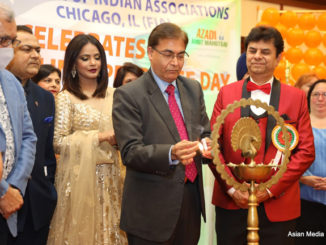
    The evening gala kicked off with lamp lighting ceremony led by FIA’s Founder Sunil Shah inviting thehonored guest, Honorable Consul General of India, Chicago Mr. Amit Kumar, State Senators CristinaCastro and Laura Murphy , State representative Michelle Mussman and Mayor of Schaumburg Tom Dailly,Village President of Hoffman Estates William McLeod, Mayor of Hanover Park Rodney Craig and VillagePresident of Oak Brook Gopal Lalmalani, Dr. Umang Patel, Dr. Sreenivas Reddy and the FIA’s Founder & Past President Onkar Singh Sangha , President Dr Kamal Patel Advisory Board and Founding Members &Past Presidents Rita Singh, Dhitu Bhagwakar, Mukesh Shah, Neil Khot, Gurmeet Singh, Ninad Daftari andSunny Kular to the dais to mark the auspicious beginning of the evening’s grand celebrations that set-inmotion a series of cultural dance presentations and rousing remarks.

     Consul General of India Mr. Amit Kumar in his address outlined India’s triumphant journey since itsindependence and the rapid strides it is making towards global eminence. Consul General Mr. Amit Kumarthanked the Indian diaspora for playing a significant proactive role as ambassadors in further cementingthe ties between India and the United States and added that the trajectory of Indo-US relations is headingin the upward direction. Consul General Mr. Amit Kumar gave away the awards to several community andbusiness leaders.

    State Senators Cristina Castro and Laura Murphy , State representative Michelle Mussman and Mayor ofSchaumburg Tom Dailly, Village President of Hoffman Estates William McLeod, Mayor of Hanover ParkRodney Craig and Village President of Oak Brook Gopal Lalmalani in their address to the gathering eachpaid glowing tributes to the indomitable and enduring spirit of Indian democracy and the contribution theIndian Diaspora has made in the US and the Indo American relations that have been fast paced andimproved over the years.

    Deepakant Vyas, Dr. Umang Patel, Dr. Sreenivas Reddy, Syed Hussaini, Amarbir & Harry Ghoman, BrijSharma, Asha & Anil Oroskar, Santosh Kumar, Pinky Thakkar, Ajeet Singh, Vijay Prabhakar, Keerthi Reevoriwere recognized presented a plaque by the Consul General Amit Kumar and Ms. Neetu Chandra on behalf of FIA for their service to the community

    Earlier, the evening’s celebrations began with the beautiful rendition of the Indian and American nationalanthem led by Rita Shah & Mir Ali. Bharat Goradia a prominent National Promoter for US tours ofBollywood Personalities was invited to the stage to address the gathering and introduce Ms. NeetuChandra. Students of SR Dance Academy a Founder Member and Past President Rita Singh’s companyprovided dance numbers that enthralled the audience. Beautiful Ideas, a Neelam Saboo conceptshowcased Indian Fashion at the gala with an India themed Fashion Show. The Gala ended with Rita Shah, Mir Ali, Raju Bankapur regaling the audience with foot tapping Bollywood songs to live music.

    (Based on a Press Release by Asian Media USA)


  • Child Tax Credit: New update address feature available with IRS online portal; make other changes by Aug. 30 for September payment

    Child Tax Credit: New update address feature available with IRS online portal; make other changes by Aug. 30 for September payment

    WASHINGTON(TIP): The Internal Revenue Service has launched a new feature allowing any family receiving monthly Child Tax Credit payments to quickly and easily update their mailing address using the Child Tax Credit Update Portal, found exclusively on IRS.gov. This feature will help any family that chooses to receive their payment by paper check avoid mailing delays or even having a check returned as undeliverable.

    Any family can easily have their September check and all future checks sent to their new address by using the portal to make an address change request. To have the change take effect in September, people need to complete the request before midnight Eastern Time on Monday, Aug. 30. Families can still make changes after that date, but their request will not be effective until the next scheduled monthly payment.

    If you change your mailing address using the Child Tax Credit Update Portal, the IRS will use this updated address for all future IRS correspondence so the address change feature can also be helpful to taxpayers that are receiving payments by direct deposit. For example, the IRS will mail a year-end summary statement (Letter 6419) to all taxpayers who have received advance Child Tax Credit payments during 2021, and having a current address on file with the IRS will ensure prompt delivery of this statement.

    Families will need Letter 6419 to quickly and accurately fill out their 2021 federal income tax return next year. This is important because, for most families, the advance payments they are receiving during 2021 cover only half of the total credit. They will claim the remaining portion on their 2021 tax return.

    The address change feature joins a growing set of services available through the Child Tax Credit Update Portal. Available only on IRS.gov, the portal already allows families to verify their eligibility for the payments and then, if they choose to:

    Switch from receiving a paper check to direct deposit;

    Change the account where their payment is direct deposited; or

    Stop monthly payments for the rest of 2021.

    Any of these changes made before midnight ET on Aug. 30, will apply to the Sept. 15 payment and all subsequent monthly payments, scheduled for Oct. 15, Nov. 15, and Dec. 15.

    Future enhancements are planned for the Child Tax Credit Portal.

    Later this year, families will also be able to use the Update Portal tool to:

    Add or remove children in most situations;

    Report a change in marital status; or

    Report a significant change in income.

    Latest information for the Child Tax Credit payments on IRS.gov

    The IRS has created a special Advance Child Tax Credit 2021 page designed to provide the most up-to-date information about the credit and the advance payments. It’s at IRS.gov/childtaxcredit2021.

    The web page now features an updated set of frequently asked questions and a new user guide for the Child Tax Credit Update Portal (Publication 5549). It also provides direct links to the portal, as well as two other online tools– the Non-Filer Sign Up Tool and the Child Tax Credit Eligibility Assistant — and other useful resources.

    (Press Release)

  • Attorney Ravi Batra sues Peter Daszak – Anthony Fauci Friend – in NYS Supreme Court

    Attorney Ravi Batra sues Peter Daszak – Anthony Fauci Friend – in NYS Supreme Court

    Alleges Daszak funded People’s Liberation Army-controlled and operated “Wuhan Institute of Virology”

    I.S. Saluja

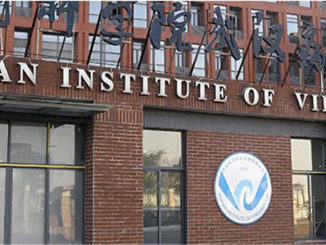
    NEW YORK CITY, NY (TIP):  Covid19-survivor Ravi Batra sues “cover up artist” Peter Daszak, EcoHealth Alliance Inc., and his immunologist wife Janet Cottingham in NYS Supreme Court, New York County, Index #157709/2021, for funding People’s Liberation Army-controlled and operated “Wuhan Institute of Virology” as it weaponized SARS-CoV2 with gain-of-function by transplanting cold-blooded Hetrothermic Bats’ Spike Glycoprotein(s) to make it highly transmissible and virulent, and inter alia, with NIAID Anthony Fauci’s thanked-for-help, covering up the Wuhan lab-leak in Summer and Fall 2019 to delay WHO’s timely alarm of a pandemic and demand every nation to impose “travel bans” in 2019, which would have prevented most people from being infected by SARS-CoV2, including, Batra, and China not to engage in its charade on December 30, 2019 at the Wuhan Wet Market.

    The attached 80-plus page Verified Complaint explains the science, including, why “Bats are special,” that bat-bites or snakebites are naturally not transmissible, and that:

    1. Batra “cracked the case” on April 14, 2020 and wrote to POTUS Trump, via Deputy NSA Matt Pottinger, of why SARS-CoV2 is a “Trojan Horse” infection, as it has (the heterothermic) Bat’s “Spike”/“master key” to enter and infect a person’s body while fooling his/her immune system that “all is well,” so “T” soldier-cells stay sleeping instead of fighting the intruder-infection; asked CCP China to be held liable (per inter alia, International Health Regulations of 2005), and if we were deliberately “Pearl Harbored” with a biowarfare agent, to seek war reparations; and proposed amending the UN Charter to create a new UN Pandemic Council (UNPC), modeled on the UN Security Council (UNSC), but with 12 Permanent and 9/13 Rotating members from the 5 Regional Groups, and “the Veto” circumscribed to only be valid if supported by at least 1 Permanent Member from each Regional Group;
    2. Next day, April 15, 2020, POTUS launched America’s preliminary investigation of China’s PLA-controlled and operated Wuhan Lab for COVID19 Origins;
    3. Batra’s Letter, on April 13, 2021, to POTUS Biden seeking enforcement and updates;
    4. After out-of-control Delta-variant ravaging nations, including, India and China, Batra evolved on holding China liable, and on May 6, 2021, wrote to PM Modi to embrace Archbishop Desmond Tutu’s “Truth and Reconciliation Commission” paradigm, in place of Tort and Crime & Punishment principles, so as to get President Xi Jinping to fully cooperate with Truth and Honor and help disarm this out-of-control biowarfare agent, an ICBM of a Virus; and inter alia
    5. On May 26, 2021 POTUS Biden ordered our Intelligence Community to report back by August 24, 2021 on Covid19 Origins. This Complaint helps the “Intel Community,” including DNI Avril Haines, better understand the actual scientific facts hiding in “plain sight” as “mumbo jumbo.” The Complaint’s attached “Schedule of Exhibits” lists 43 exhibits, including, Ralph Baric’s and Anthony Fauci’s damning self-inculpatory emails with Daszak, and inter alia, HFAC’s Ranker McCall’s recent Addendum on Covid19 origins.

    The Verified Complaint details the gross negligence and negligence of defendants, serious life-long injuries secondary to being infected with Covid19, an opportunistic disease, such as diabetes and painful skin-ruptures, and seeks nominal, compensatory and punitive damages from defendants. who betrayed Americans and the world, to put them out of business. Courtesy Copies of this complaint are being sent to DNI Avril Haines, key Congress committee chairs, rankers and members, the distinguished Chinese Foreign Minister Wang Yi, and inter alia, NYS Attorney General Tish James, given her critical jurisdiction over the defendants’ “defrocking” misconduct: “Benedict Arnold” & 200+ “Pearl Harbor” combined.

    Press Inquiry, contact: Ravi Batra, 914-882-6382; Twitter: @Ravi Batra

    (With information provided by Ravi Batra)


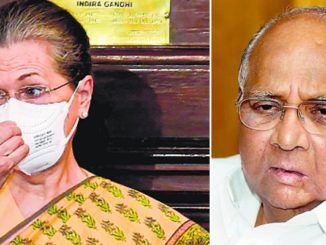
  • With an Eye on 2024, 19 Opposition parties decide to hold nationwide protest

    With an Eye on 2024, 19 Opposition parties decide to hold nationwide protest

    NEW DELHI (TIP): Leaders of 19 Opposition parties, on August 20,2021 announced a joint agitation plan from September 20 to 30 after Congress president Sonia Gandhi urged them to rise above political compulsions to defeat the BJP in the 2024 Lok Sabha elections.

    It’s time to rise above political compulsions — Sonia Gandhi, Congress

    All secular, democratic forces must join hands — Sharad Pawar, NCP

    Mamata proposes core committee to steer fight against BJP

    Tejaswi Yadav seeks ‘driving seat’ for regional parties

    In a signed statement, Opposition stalwarts, including NCP’s Sharad Pawar, TMC’s Mamata Banerjee, DMK’s MK Stalin, Shiv Sena’s Uddhav Thackeray and JMM’s Hemant Soren, called upon the people of India to defend “the secular, democratic, republican order with all their might”.

    11 demands

    • Augment production and ensure free vaccination
    • Give Rs7,500 a month to families outside income tax bracket
    • Reduce prices of fuel
    • Repeal three farm laws & guarantee MSP to farmers
    • Pegasus probe under SC
    • Release political prisoners, including those in Bhima Koregaon case, anti-CAA protests
    • Restore J&K’s full statehood
    • Stop, reverse privatization
    • Revive MSMEs
    • Expand MGNREGA

    Jabs for teachers, pupils

    “Save India today, so that we can change it for a better tomorrow,” they said listing 11 demands, including restoration of full statehood and elections in Jammu and Kashmir, repeal of three farm laws and institution of an SC-led inquiry into the Pegasus snooping row.

    The statement followed a major Opposition outreach in which Sonia Gandhi said, “Our ultimate goal is the 2024 Lok Sabha poll for which we have to begin planning systematically with the single-minded objective of giving to our country a government that believes in the values of the freedom movement and in the principles and provisions of our Constitution. This is a challenge, but together we can and must rise to it because there is simply no alternative to working cohesively together. We all have our compulsions, but clearly, a time has come when the interests of our nation demand that we rise above them.”

    Bengal CM Mamata Banerjee proposed the formation of a core group of Opposition leaders to chalk out joint programs. The like-minded parties “needed to unite to defeat the BJP”, she said.

    The meeting was attended by leaders of the TMC, NCP, DMK, Shiv Sena, JMM, CPI, CPM, NC, RJD, AIUDF, VCK, Loktantrik Janta Dal, JDS, RLD, RSP, Kerala Congress Mani, PDP and IUML. The BSP, AAP and SP skipped the event, but the Congress claimed SP chief Akhilesh Yadav had intimated about his absence.

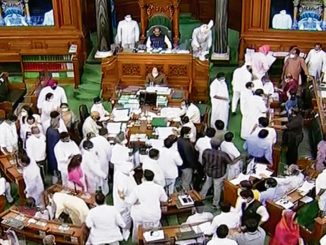
    In the meeting, symbolically organized on the birth anniversary of her husband and late Prime Minister Rajiv Gandhi, Sonia blamed the government for the recent Parliament washout.

    (Agencies)

  • Taliban killed minorities, fueling Afghans’ fears: Report

    Taliban killed minorities, fueling Afghans’ fears: Report

    Thousands continue to flock to Kabul’s airport, braving checkpoints manned by Taliban fighters as they seek desperately to get on evacuation flights out

    KABUL (TIP): Taliban fighters tortured and killed members of an ethnic minority in Afghanistan after recently overrunning their village, Amnesty International said, fueling fears that they will again impose a brutal rule, even as they urged imams to push a message of unity at the first gathering for Friday prayers since the capital was seized.

    Terrified that the new de facto rulers would commit such abuses, thousands have raced to Kabul’s airport desperate to flee following the Taliban’s stunning blitz through the country. Others have taken to the streets to protest the takeover — acts of defiance that Taliban fighters have violently suppressed.

    The Taliban have sought to project moderation and have pledged to restore security and forgive those who fought them in the 20 years since a US-led invasion. Ahead of Friday prayers, leaders urged to imams to use sermons to appeal for unity, urge people not to flee the country, and to counter “negative propaganda” about them.

    But many Afghans are skeptical, and the Amnesty report provided more evidence that undercut the Taliban’s claims they have changed.

    The rights group said that its researchers spoke to eyewitnesses in Ghazni province who recounted how the Taliban killed nine Hazara men in the village of Mundarakht on July 4-6. It said six of the men were shot, and three were tortured to death.

    The brutality of the killings was “a reminder of the Taliban’s past record, and a horrifying indicator of what Taliban rule may bring,” said Agnes Callamard, the head of Amnesty International.

    The group warned that many more killings may gone unreported because the Taliban have cut cellphone services in many areas they’ve captured to prevent images from there from being published.

    Separately, Reporters without Borders expressed alarm at the news that Taliban fighters killed the family member of an Afghan journalist working for German broadcaster Deutsche Welle on Wednesday.

    “Sadly, this confirms our worst fears,” said Katja Gloger of the press freedom group’s German section. “The brutal action of the Taliban shows that the lives of independent media workers in Afghanistan are in acute danger.”         Many Afghans fear a return to the Taliban’s harsh rule in the late 1990s, when the group largely confined women to their homes, banned television and music, chopped off the hands of suspected thieves and held public executions.

    Thousands continue to flock to Kabul’s airport, braving checkpoints manned by Taliban fighters as they seek desperately to get on evacuation flights out.

    Mohammad Naim, who has been among the crowd at the airport for four days trying to escape the country, said he had to put his children on the roof of a car on the first day to save them from being crushed by the mass of people. He saw other children killed after they were unable to get out of the way.

    Naim, who said he had been an interpreter for US forces, said he had urged others not to the come to airport.

    “It is a very, very crazy situation right now and I hope the situation gets better because I saw kids dying, it is very terrible,” he said.

    The Pentagon said Thursday that about 2,000 people were brought out on American flights on each of the previous two days, and the State Department said 6,000 more were expected to leave that day. But thousands of Americans and their Afghan allies may be in need of escape.

    Dozens of other flights have already brought hundreds more Western nationals and Afghan workers to Europe and elsewhere.

    Chaos at the airport itself has sometimes hindered flights but getting to the facility is the major challenge. Germany was sending two helicopters to Kabul to help bring small numbers of people from elsewhere in the city to the airport, officials said.

    Australian Prime Minister Scott Morrison noted that Australian citizens have not been able to be evacuated from outside Kabul, and even in the capital the situation is difficult.

    “The situation in Kabul does remain chaotic,” he said.

    In recent days, some Afghans have protested the Taliban in several cities — a remarkable show of defiance that fighters often met with violence. At least one person was killed Wednesday at a rally in the eastern city of Jalalabad, after demonstrators lowered the Taliban’s flag and replaced it with the Afghan tricolor. Another person was seriously wounded at a protest a day later in Nangarhar province.

    The demonstrations have come to the capital as well. On Thursday, a procession of cars and people near Kabul’s airport carried long black, red and green banners in honor of the Afghan flag — a banner that is becoming a symbol of defiance.

    Meanwhile, opposition figures gathering in the last area of the country not under Taliban rule talked of launching an armed resistance. It was not clear how serious a threat they posed given that Taliban fighters overran nearly the entire country in a matter of days with little resistance from Afghan forces.

    In addition to concerns about Taliban abuses, officials have warned that Afghanistan’s already weakened economy could crumble further without the massive international aid that sustained the toppled Western-backed government. The UN says there are dire food shortages and experts said the country was severely in need of cash with much of the government’s funds abroad frozen.

    (Agencies)

  • US suggests world leaders skip General Assembly in-person

    US suggests world leaders skip General Assembly in-person

    NEW YORK (TIP): The United States on Wednesday, August 18, urged the leaders of nearly 200 countries to consider giving video addresses at the United Nations General Assembly in September instead of traveling to New York where the event is being held to prevent a possible “super-spreader event.”

    In a memo from the U.S. Mission to the United Nations the U.S. called on 192 other member nations to consider giving video messages instead of traveling to the U.S. in the midst of a wave of new COVID-19 cases.

    The mission also suggested that all U.N.-hosted meetings and events be virtual, saying meetings that gather large groups of people together in places like New York “needlessly increase risk to our community, New Yorkers and the other travelers.”

    According to the media reports, the mission said that the Biden administration was particularly concerned about Secretary-General Antonio Guterres and the incoming General Assembly President Abdulla Shahid hosting events about climate change and vaccines.

    “The United States is willing to make every effort to make these important events on shared priorities successful in a virtual format,” the mission said.

    The 76th session of the U.N. General Assembly is expected to begin on Sept. 21 and end on Sept. 30. Last year’s assembly was not held in-person due to the COVID-19 pandemic, however, the U.S. decided to allow world leaders the option of attending in-person or virtually this year. The U.S. is currently experiencing a surge of new cases, with hospitalizations around the country rising. According to the Centers for Disease Control and Prevention (CDC), the national seven-day average for new cases is currently over 130,000. Around 86 percent of counties in the U.S. are rated as having a “high” rate of transmission, according to the CDC.

  • Shashi Tharoor discharged in wife Sunanda Pushkar’s death case

    Shashi Tharoor discharged in wife Sunanda Pushkar’s death case

    Faith in judiciary stands vindicated, said Tharoor

    NEW DELHI (TIP): A Delhi court on Wednesday, August 18, discharged senior Congress leader Shashi Tharoor in a case related to his wife Sunanda Pushkar’s death in a luxury hotel here. Special Judge Geetanjali Goel passed the order in a virtual hearing. Tharoor thanked the judge saying it was “an absolute torture for last seven-and-a-half-years” and that it was a “great relief”.

    During the arguments, while police had sought framing of various charges, including 306 (abetment of suicide), senior advocate Vikas Pahwa, appearing for Tharoor, told the court that the investigation conducted by the SIT completely exonerated the politician of all the charges levelled against him.

    Pushkar was found dead in a suite of a luxury hotel in the city on the night of January 17, 2014. The couple was staying in the hotel as the official bungalow of Tharoor was being renovated at the time.

    Tharoor was charged under Sections 498A (husband or relative of husband of a woman subjecting her to cruelty) and 306 of the Indian Penal Code by Delhi Police but was not arrested in the case.

    The senior Congress leader said his faith in the Indian judiciary stands vindicated and the ruling brings a “significant conclusion to the long nightmare” which had enveloped him.

    Taking to Twitter, Tharoor posted his statement, “This brings a significant conclusion to the long nightmare which had enveloped me after the tragic passing of my late wife Sunanda.”

    “I have weathered dozens of unfounded accusations and media vilification patiently, sustained by my faith in the Indian judiciary, which today stands vindicated,” the former Union ministersaid.

    (Source: PTI)

  • Biden calls to let extra jobless benefits expire

    Biden calls to let extra jobless benefits expire

    WASHINGTON (TIP): The Biden administration said in a letter to lawmakers Thursday, August 19 that it’s “appropriate” for expanded unemployment benefits to expire as scheduled in a little more than two weeks, but that states and local governments can use pandemic-relief funds for added help beyond the deadline amid the surge of the delta variant.

    “There are some states where it may make sense for unemployed workers to continue receiving additional assistance for a longer period of time, allowing residents of those states more time to find a job in areas where unemployment remains high,” Treasury Secretary Janet Yellen and Labor Secretary Marty Walsh wrote. “The delta variant may also pose short-term challenges to local economies and labor markets.”

    The White House came under fire from Democratic leaders on Capitol Hill late last month when it requested that Congress pass an extension of an eviction moratorium just days before it expired. Congress didn’t do so, and the White House couldn’t put off the expiration unilaterally due to a Supreme Court ruling. Instead, the administration scrambled to write a new moratorium that covered fewer renters and homeowners.

    That crisis prompted questions about whether the administration would seek to extend other pandemic-relief programs. But the White House has been reluctant to endorse a lengthening of the $300 weekly supplemental unemployment payments past the Sept. 6 end-date.

    Many Republicans have argued that the measure made Americans disinclined to return to work, and GOP-run states across the country moved to end the assistance early. The White House has disputed those claims, attributing the mismatch between record numbers of job openings alongside still-elevated unemployment to reasons including health and childcare concerns.

    Record level of open jobs is bigger than number unemployed. “We still have more work to do, but the trend is clear: thanks to the grit and ingenuity of the American people and with the federal government executing on a plan to bring our economy back, our nation is getting back to work,” Yellen and Walsh wrote in the letter to Senate Finance Committee Chair Ron Wyden and House Ways and Means Committee Chair Richard Neal.

    The administration said that while it is not asking Congress to extend expanded unemployment benefits, states and local governments are able to use their allocations from the $350 billion in funding included in the American Rescue Plan, enacted in March, to continue providing assistance to unemployment workers. The administration is also announcing $47 million in grants for reemployment services.

  • India’s External Affairs Minister Jaishankar Makes Remarks at the UNSC

    India’s External Affairs Minister Jaishankar Makes Remarks at the UNSC

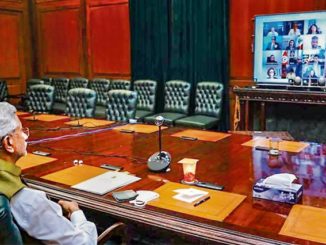
    UNITED NATIONS (TIP): On Wednesday, August 18, External Affairs Minister S. Jaishankar made remarks on UN Peacekeeping efforts and the critical role technology plays in gathering intel and information, the second pillar of India’s presidency at the UNSC. He announced India’s decision to support to the UNITE Aware Platform, an initiative which will support UN peacekeeping missions to visualize, coordinate, and monitor all events on a real time basis. He further emphasized that attacks on a peacekeeper or a civilian should be predictable, preventable, or responded to immediately. You can find the text of his remarks here.

    On Thursday, August 19, External Affairs Minister S. Jaishankar chaired a UNSC session on terrorism. He proposed an eight-point action plan for consideration, including: no justification and support to terrorism, no double standards on terrorists, support and strengthen FATF, and increased funding to the UN Office of Counter Terrorism.

  • FIA unfurls biggest Tricolor at Times Square to celebrate India’s 75th Independence Day

    FIA unfurls biggest Tricolor at Times Square to celebrate India’s 75th Independence Day

    NEW YORK CITY, NY (TIP): The Federation of Indian Associations of the tri-state areas of New York, New Jersey and Connecticut (FIA NY-NJ-CT) kick-started the celebrations of the 75th Independence Day of India on Sunday with the hoisting of the Tricolor at the Times Square. This year’s Tricolor was the biggest one ever to be unfurled at the iconic destination. The flag measured 6 ft x 10 ft and was hoisted on a 25-feet pole.

    Hundreds of Indian-Americans as well as friends and well-wishers of the community had gathered at the venue to participate in the flag-hoisting.

    The day’s ceremony began with the playing of the American national anthem. Consul General of India Shri Randhir Jaiswal then hoisted the Tricolor as the Indian national anthem played along. On the occasion, he conveyed his wishes to the Indian community, friends of India and all “those who are deeply connected” to the country. He thanked the Indian-American community and FIA in particular for leading these celebrations.

    Jaiswal felicitated New Jersey boy Abhimanyu Mishra who is now the youngest Grandmaster in the history of chess. Abhimanyu also received the proclamation from the office of Brooklyn Borough president Eric Adams.

    FIA Chairman Ankur Vaidya wished everyone a happy, healthy and safe 75th Independence Day.

    FIA president Anil Bansal called it a privilege to be living in US where they have the freedom that they “as Americans can celebrate our history, culture and love for our motherland.” He thanked the New York City and its police for allowing them to enjoy the day safely.

    Besides Jaiswal, those who addressed the gathering included Deputy CGI-New York Shatrughna Sinha, Captain Amandeep Singh Sandhu who is the only Indian American in the whole of the New York police department and first Sikh captain in the country, FIA board member Anand Patel who was representing Dunkin, one of the event sponsors, Jackson Heights representative in New York City Council Daniel Dromm, and district leader from Queens-New York Neeta Jain.

    On the occasion, Jaiswal also unveiled the ‘India at 75 Cricket Cup’ by the ’22 yards court’, a non-profit that promotes cricket in North America.

    A special performance was given by the band Dhol Tasha Pathak of Maharashtra Mandal who had come all the way from Michigan to participate in the celebration.

    24 hours of India at Times Square

    In another first, FIA reserved the biggest jumbotron at the Times Square for display of Independence Day messages and other images related to India. The jumbotron was reserved for full 24 hours.

     Later in the day

    As part of yet another celebration, the Empire State Building was lit up in the colors of the Indian National Flag later on Sunday.

    The celebration continued into the evening with FIA’s annual gala on board a yacht on the Hudson, which was attended by dignitaries, special guests and FIA members.

    Times Square’s biggest Tricolor came from Ahmedabad, India

    It was a proud moment for Ahmedabad, a city in the state of Gujarat in India, when the biggest Tricolor in the history of Times Square was unfurled. The flag, and all other paraphernalia used during the celebration, had been sent to New York from Ahmedabad. The entire consignment had been put together and shipped for FIA by Gracia Marcom, an advertising agency in the city. According to Gracia Marcom managing partner Rohit Korat, they supplied flags and other items for FIA New England as well.

  • IAS India 75th Independence Day Celebrations – Parade at California State Capitol & Celebrations

    IAS India 75th Independence Day Celebrations – Parade at California State Capitol & Celebrations

    SACRAMENTO (TIP): Over five thousand people, who used to come every year from the Greater Sacramento area and further away in the California-USA, to witness the India Day celebrations organized by the Indian Association of Sacramento (IAS) for the past 15 years. In the United States, Indian American organizations celebrate their motherland’s Independence annually at numerous venues, with parades, and other functions. This year, all indoor events are obviously out of question due to Covid-19 pandemic, delta variant presence, and social distancing measures in place.  On Aug 15th, 2021 at 10AM, IAS unfurled the Indian tricolor flag in the lawn area in front of the California State Capitol. On the same day at 9AM, IAS conducted a car parade at State Capitol, Sacramento with over 30 decorated cars to mark the 75th year of Indian Independence

    Paresh Sinha, Parade Lead and Vandna Sharma the IAS Vice President planned and led the car parade. Over 30 cars were decorated with Indian and US flags, Indian regional leaders & distinguished personnel, monuments, and cultural representative symbols. Dr. Bhavin Parikh, Venu Mallesara, Shekher Tiwari, and Venkat Nagam helped with the car parade event coordination. The IAS board members, local Folsom city council member YK Chalamcherla, IAS supporting organization’s members, and several community members joined the car parade. The local Folsom Cordova Unified School District Board Member, Chris Clark said that the Indian Independence was marked largely by non-violent resistance and civil disobedience, and Independence Day is celebrated by the Indian diaspora worldwide. Rancho Cordova City Councilmember, Siri Pulipati said Sacramento would not be the place it is without our thriving Indian-American community.

    Paresh and Vandana decorated their cars with colorful Indian flags and led the car parade. Other Indian-American participants decorated their respective cars with tricolor flags and rallied around the State Capitol for about 15 mins. According to IAS President Bhaskar Vempati, “It was the first time ever in region history that India’s largest tricolor flag has been unfurled at the iconic CA State Capital venue in all its glory. On this very special day when our mother country is celebrating her 75th birthday, I wish everyone a very happy Indian Independence Day”.

    “This year’s Independence Day will mark a new chapter in IAS’s history, organizing India Day car parade, celebrating India’s Independence Day at the State Capitol building and an online event for the second time in a row,” organizers said. IAS Board of Trustee Dr Bhavin Parikh said with the unfurling of the tricolor at the California State Capitol Building, history has been created for the 2nd time in a row. A large number of people, dressed in traditional Indian clothes and wearing masks, joined the celebration in front of the CA State Capitol building. Waving the Indian and American flags, the people shouted slogans of ‘Bharat Mata Ki Jai’, ‘Vande Mataram’ and ‘Jai Hind’.  The Indian national anthem was sung by the crowd. Sudheer Padinchara, Amar Pawar, Rajesh Yakkali, Sathish Moola, and Venu Acharya welcomed the attendees. The crowd erupted in huge cheers and applause as the Indian tricolor flag was raised in front of CA State Capital, alongside the American flag, commenting that it was indeed a proud and historic moment created for all.

    IAS vice president Vandana Sharma said it was a historic moment for the Indian community that the tricolor was unfurled in front of the CA State Capitol. “It is indeed a proud moment for all of us,” she said. IAS Joint Secretary Gobi Ramasamy said, “Over the last 75 years, India emerged as a largest democratic country and an example of global peace”. The Indian Association treasurer, Amitab Shaikh said “it is great to see the attendees joining the Capitol event in their regional traditional attire. The United States has a Vice President who is of Indian origin – which is special for this year”. Another IAS ex-president Ajit Natu thanked everyone who participated in the car parade beating the COVID pandemic in Sacramento.

    Later that day on 15th, at 5PM hundreds of members of the Indian-American community-based in Greater Sacramento & across the world participated in the IAS Virtual India Day Celebrations live-streamed on Facebook and YouTube.  They all were mesmerized by watching colorful rich Indian cultural performances for about 2.0 hrs non-stop and congratulated the cultural show participants and show leads, Madhuri Natu, Darshana Amin, Ranju Verma, Shivesh Sinha, and Romesh Trivedi. Consulate General of India at San Francisco’s Indian Consulate, Dr. T.V. Nagendra Prasad attended IAS India Day virtually and wished the Sacramento Indian Community on the occasion of 75th Independence Day. He spoke about the services provided by the consulate and how they are trying to help people to make it easier for them to get what they need in the pandemic. Virtual show viewer Swarnarekha Roy said, “I am so proud to be an Indian!!! Stunning choreography and excellent performance. Kudos to the team behind this piece of creation”. IAS representative Venugopal Acharya said, “the performers have worked hard in the middle of the pandemic to put up a nice show for India Day”. Another virtual show viewer Mangatram Lachhani said “​Stunning performances. Unity in diversity. IAS India Day is a real example”. IAS thanked everyone for supporting IAS’s new way of celebrating India Day 2nd year in a row during COVID-19 pandemic.  For those who missed the IAS India Day event, IAS encourages them to enjoy the event records using these links.

    Facebook link:

    https://tinyurl.com/IASIndiaDay2021Video

    Youtube link:

    https://tinyurl.com/IASIndiaday2021Youtube

    The list of top three virtual performance winners are MMSAC, Light of Dance Academy, and Ankur. The virtual show also provided raffle prizes to the 10 attendees. IAS thanked Annachikdai Restaurant – Folsom, The Grand Cuisine – Roseville, Sanskrit Restaurant – Folsom, Chicago Pizza, Folsom, and Curry Bowl – Folsom for sponsoring the raffle prizes.

    IAS officers Ranju Verma, Amitab Shaikh, and Gobi Ramaswamy expressed sincere thanks to the virtual show sponsors, Hindu American Foundation, Five Star Bank, Stratus Environmental, Manabadi Telugu school, Annapoorna USA Foundation, Suvidha International Foundation, and Kavita Sood, Insurance and Financial Services and the annual sponsors, Shankar Pathi – Realtor & Loan Officer, Reliance Super Mart, Satheesh Nagaraj – Realtor & Loan Officer, and Dr. Amar Pawar.

    Established in 2005, the Indian Association of Sacramento is one of the largest umbrella organizations in the Indian community. Since 2006, the IAS has been organizing India Day annually, which showcases India’s cultural heritage and history. Since its inception, IAS has raised over $160,000 in funds for helping out several non-profits in and out of the USA. In the last one and a half year, IAS raised $12,000 funds and assisted needy people living in Greater Sacramento with face masks, meals, groceries, medical and school supplies. IAS media representatives Venu Mallesara, and Venkat Nagam suggested the readers visit the IAS website: http://www.iassac.org/ & FB page https://www.facebook.com/IndiaDaySacramento for more information about IAS and its events/activities spread throughout the year.

  • Toppling of Ghani’s regime in Afghanistan and Maharaja Ranjit Singh’s Statue in Pakistan

    Toppling of Ghani’s regime in Afghanistan and Maharaja Ranjit Singh’s Statue in Pakistan

    After recently reading the news item onhow the government of Afghanistan collapsed to Taliban onslaught with complete melt down of its defense forces, we are all in state of disbelief. Then followed the news of vandalization of Maharaja Ranjit Singh’s Statue in Lahore rekindling the gruesome scenes witnessed by manyat the partition of the country in August 1947. Incidentally, this is not the first time, but the third time the statue has been vandalized since its installation in 2019.The gory act of vandalization and that of overrunning of a country separated by few hundreds of miles geographically are two unrelated events on the surface, yet the underlying cause is common. The genesis of both these incidents is direct result of indoctrinationthat everything we associate with is right and superior,while other person, legacy or his ideas are not equal but inferior.

    The fall of Ghani government and Taliban gaining control over the country is creating a very fluid situation.The significant section of society there wants to move out of the mess they find themselves in since 1979, the time of Soviet invasion. At that time about 1 million Afghans lost their lives. But then after that the last forty years have been a time of turmoil on and off there. Then after the Soviet exit we saw the USA entry there. Now 20 years later USA is departing. The departing circumstancesare grave and have been dubbed as “Saigon Moment”. As this is stark reminder of helicopter airlift of USA while the Vietcong had overrun the capital of South Vietnam. While talking about the comparison reminds of another acronym coined to describe Afghanistan as “Graveyard of kingdoms” for the invaders. The historical track records go back to the time of invasion by Alexander the great, in 330 BC. This is a long-checkered history, where even the British could not tame the region almost a century before.  The present ground realities bring out thefollowing major challenges now:

    1. Restoration of order and a semblance of peace so that thenormal life as usual can resume.
    2. Safeguarding of the rights, status of women, minorities and others who do not belong to the so-called “our” club.
    3. How to protect and save the religious, spiritual, architectural, and intellectual assets of the minorities that will be left behind in Afghanistan,as well as safeguard those in Pakistan. The issue in Pakistan that the minority population is concentrated in pockets and heritage sites spread out providing opportunity for premier location land grab. So,the issue is how to save, protect, maintain, and preserve those historical relics. Although, PETPB has been managing and maintaining some historical minority shrines in Pakistanreasonably despite encroachments and efforts to erase them. Still overall the bigger problem remains, which has been exacerbated by the recent events in Afghanistan.
    4. The evacuation of remaining minority population along with their families, out of Afghanistan to safety and their resettlement has become a high priority. The insecurity being experienced by them is frightening. They need our help today. Already the vivid images of chaotic situation with citizens there trying to escape from the country are making shocking news.

    This is not a complete or comprehensive list of priorities, but just a starting point to start thinking about them.

     Bhupinder ‘Bo’ Singh

    singhbo@gmail.com

  • Reboot to reset: On India-U.S. trade ties

    With Indo-U.S. trade deal off, it is time India reorients its global economic engagement

    India’s largest trading partner, and one with whom it has a significant trade surplus, the U.S., is no longer interested in securing a bilateral free trade agreement (FTA), as per indications from the Joe Biden administration. An official acknowledgement of this, from Commerce Minister Piyush Goyal, suggests that years of negotiations towards a ‘mini-trade deal’ followed by a full-blown trade pact that Mr. Biden’s predecessor oversaw may well be infructuous now. The Government will now seek to work on market access issues on both sides, he said, adding that lowering of non-tariff barriers, mutual recognition pacts and adopting common quality standards can also help Indian exports in the interim. There is a possibility that even these issues, which include long-festering dissonances over providing access to U.S. agricultural products or easing import duties on automobiles and Bourbons, would have to be discussed afresh. On Friday, the U.S. envoy to India met Mr. Goyal for what he said was a parley on attaining the $500 billion bilateral trade vision of the U.S. President. The trade target, set when Mr. Biden was the Vice-President in the Barack Obama regime, remains unchanged, but the tools for achieving it are no longer clear. India was pulled out of the U.S.’s Generalized System of Preferences (GSP) that granted some tariff relief to its exports by the Trump government in 2019 and hopes of its reinduction through a mini-trade deal now appear bleak. While India was expected to gain from the Sino-U.S. trade wars under the Donald Trump administration, its retaliation to the GSP status revocation with hiked tariffs on U.S. products had led to frictions that perhaps stymied the conclusion of a mini-trade deal before the change at the helm in the White House.

    The U.S.’s no-go stance on the FTA implies ambitions may have to be pared down but also provides an opportunity for India to holistically review its stance on global trade. It is refreshing that Mr. Goyal has signaled a revamped approach towards FTAs and reminded Indian industry there cannot be one-way traffic. This needs to be matched by actions that start unwinding India’s creeping walls of import tariffs. The Atmanirbhar Bharat campaign has further exacerbated that view — as the advent of a protectionist ‘closed market’ project. Strenuous exhortations that the self-reliance drive is one that seeks to integrate with global value chains can only go so far. Trade policy cannot be perpetuated in isolation and, in fact, affects investments too. Having walked out of RCEP, India needs to demonstrate to its potential FTA partners, including the EU and the U.K., with which rivals like Vietnam have already sealed a deal, that it is a viable alternative to China in a post-COVID world. To be a major trading and manufacturing nation, India can ill-afford to keep sending mixed signals.

    (The Hindu)

  • Horror of horrors

    Horror of horrors

    As a nation, we do not need a day to remind us of the atrocities during Partition

    By Julio Ribeiro

    “Another area that Modiji should not tinker with is the defense services. Our Army, Navy and Air Force have always been our pride and our joy. The citizens of every caste and creed repose immense faith in the institution. A thought has been recently floated that the Army, Navy and Air Force Chiefs should be chosen purely on merit, disregarding seniority. This move has disturbed the dovecotes. At present, the choice is almost certain. Since the promotions at every step of the ladder have been on the basis of merit and performance the process of sifting the chaff from the grain has been in play from the very start of their military careers. Everyone knows who is going to be the next Chief, like all Supreme Court judges know who is to be the next CJI. Why change a practice that has worked well for as long as memory holds?”

    Why does Modiji fall back on divisiveness after flirting with the unifying? Sports unites! Modiji’s breakfast at his home with our sportspersons who constituted our Olympic contingent was a welcome step in uniting castes and creeds. Those of us who strive and dream of unity in our country were overjoyed when he displayed leadership of an extraordinary kind when interacting with our athletes, encouraging them, consoling those who lost and celebrating those who won.

    And then on August 15, a day of national rejoicing, he spoils our good humor by announcing that August 14 every year will be observed as ‘Horrors Day’ because the subcontinent was partitioned, Pakistan declared its Independence Day and terrible atrocities were recorded on both sides of the demarcated borders.

    Every Indian knows of those awful days when men turned into savages. Why spoil the nation’s mood by an unneeded announcement? Who wants to be perpetually reminded of the blood spilt while crossing borders in search of genial neighbors where co-religionists would be there to welcome you?

    Whenever mention is made of the Gujarat killings of 2002, my circle of friends recommend a memory loss and a more positive frame of mind moving on to the future! Modiji himself always harps on positivity as opposed to negative feelings about men and matters! Then why is a positive leader seeking to perpetuate ‘horrors’, an intrinsically negative concept? A museum depicting those horrors already exists in Amritsar, something on the lines of the Holocaust museums in Poland and Germany. (My wife and I have visited the museum at Treblinka outside Warsaw.)

    The horrors of Partition will never be forgotten. The Armenians never forget the horrors they were subjected to by the Turks in 1915 and thereafter. Women and children were marched through the desert adjoining Aleppo in Syria. They died of hunger and thirst. Their men had been shot earlier in their own villages. The Armenians never forget that genocide. How can they? Now, Turkish ambassadors the world over are equipped with bullet-proof cars to protect them from young Armenians seeking revenge.

    So, also, the purge of Bengalis in East Pakistan by the Pakistan army in the time of Gen Yahya Khan, then the military ruler of Pakistan. Hindu Bengalis were specifically targeted. Can Bangladeshis ever forget those atrocities? I doubt it. These are facts of history.

    But we expect Modiji to move ahead without stirring up emotions further by declaring a ‘Horrors Day’ to be observed every year a day before our national day of rejoicing. He should realize that citizens of India will forever remember what happened during the Partition, when people on both sides of the border lost their power of reasoning. What could have moved Modiji to ruffle feathers by that unexpected announcement? The Hindu right has always bemoaned the Partition of the subcontinent, which they consider sacred land that should be rechristened Hindu rashtra. Could Partition have been avoided? Can Gandhiji and Nehru be held responsible for agreeing to the Partition of the country? The political commentator, Swaminathan Anklesaria Aiyar, writing last Sunday on the occasion of Independence Day, gave valid historical reasons why he felt the Partition was inevitable.

    From the perspective of law and order alone this old policeman feels that a population almost evenly divided between Hindus and Muslims would be perpetually at ‘war’ on the streets of our cities. The Islamic concept of religion being so diametrically different from the Hindu way of life and with religion playing such an outsized role in the life of a Muslim, the probability of clashes would be extremely high, almost certain, unless power was shared in near equal proportion, something that would not be palatable to the proponents of a Hindu rashtra.

    Another area that Modiji should not tinker with is the defense services. Our Army, Navy and Air Force have always been our pride and our joy. The citizens of every caste and creed repose immense faith in the institution. A thought has been recently floated that the Army, Navy and Air Force Chiefs should be chosen purely on merit, disregarding seniority. This move has disturbed the dovecotes. At present, the choice is almost certain. Since the promotions at every step of the ladder have been on the basis of merit and performance the process of sifting the chaff from the grain has been in play from the very start of their military careers. Everyone knows who is going to be the next Chief, like all Supreme Court judges know who is to be the next CJI. Why change a practice that has worked well for as long as memory holds?

    Merit is a nebulous entity. In any case a certain amount of subjectivity has already entered the process of selection at every stage. If at the last stage the factor of merit is going to be left to the discretion of politicians, allowing ideology and sycophancy to assume prime importance, then the whole ethos of discipline, camaraderie, loyalty to the men under your command, justice, fair play, etc. will have to be discarded. And that would be disastrous!

    The armed forces will be reduced to a civilian unit, like the police, where lobbying for high office has become so commonplace that often the wrong people are put in charge of delivering not what the law commands but its very opposite!

    (The author is a highly decorated retired IPS officer)

  • Lack of debate is weakening Parliament

    Lack of debate is weakening Parliament

    By Zoya Hasan

    Parliament and parliamentary norms have been undermined by the rise of adversarial politics (perceiving the Opposition as an adversary rather than a partner in the lawmaking process) and a domineering executive that has sidelined all other institutions. Parliament was intended to function as a body that keeps the executive in check but it seems to be working the other way now.

    “The basic problem starts with the government’s refusal to acknowledge the legitimacy of the Opposition and give space to it to express its position on any issue. Instead, the effort has been to paint the entire Opposition as sore losers and frustrated disruptors who aren’t reconciled to the PM’s popularity and the BJP’s electoral victories. With the Opposition not falling in line, the government has used its majority to push through important Bills without discussion.”

    The stormy monsoon session of Parliament, adjourned sine die last week, was a virtual washout because of the deadlock between the government and the Opposition over issues ranging from the Pegasus phone-hacking row to the government’s handling of the pandemic and the farmers’ protest. The government attacked the Opposition, accusing it of not allowing the Parliament’s monsoon session to function.

    To put all the blame on the Opposition for the impasse in Parliament obscures the government’s share of responsibility for this denouement. A closer look at parliamentary proceedings reveals that the session was disrupted by the ruling party’s deliberate deflection and stubborn refusal to discuss issues of national importance.

    The faceoff between the government and Opposition escalated over the Pegasus issue, resulting in the non-stop disruption of Parliament. This government, having a huge majority, has nothing to fear, and yet it refused to be flexible and accommodating towards the Opposition or even acknowledge the public issues raised by the latter.

    With both sides unwilling to give in, acrimonious events marked the session with legislators on both sides engaging in competitive disruption. The embarrassing turn of events led the government to field seven ministers at a press conference to take on the Opposition on the adjournment issue and to determinedly dismiss the snooping scandal as an issue of no consequence. Besides the Pegasus issue, government-Opposition relations hit rock bottom on the controversial Bill to enhance the private sector’s role in public sector insurance companies. Opposition MPs asked for the Bill to be sent to a select committee but the government didn’t agree. The Insurance Business Amendment Bill was passed amidst high drama which rocked the Rajya Sabha, culminating in allegations of physical violence from both sides. Only an impartial inquiry can establish the veracity of the charges and counter-charges. But the issue is why we have come to this pass.

    The basic problem starts with the government’s refusal to acknowledge the legitimacy of the Opposition and give space to it to express its position on any issue. Instead, the effort has been to paint the entire Opposition as sore losers and frustrated disruptors who aren’t reconciled to the PM’s popularity and the BJP’s electoral victories. With the Opposition not falling in line, the government has used its majority to push through important Bills without discussion.

    The extent to which parliamentary proceedings have degenerated can be seen from the astonishing speed in passing Bills. The Lok Sabha, on an average, took less than 10 minutes to pass a law, and the Rajya Sabha passed laws in less than half an hour. There were 13 Bills in this LS session in which no Member of Parliament spoke, other than the minister in charge of the Bill.

    In addition to this, the PRS Legislative Research data has shown a significant decrease in the involvement of standing committees in legislative matters. So far, only 17 of the 82 Bills since the NDA government was re-elected in 2019 have been referred to standing committees for review. No Bills had been sent to the Select Committee in the monsoon session. All this raises legitimate concerns of bypassing important checks and balances in the parliamentary system. What is more, Bills were passed in the midst of din and noise with no consideration to the Opposition protests.

    Not surprisingly, the government accomplished its entire legislative agenda without a debate on the Pegasus affair, Covid-19 mismanagement, farm laws, and the deepening economic crisis. However, passing Bills without debate in the House or scrutiny by a committee reduces Parliament to a clearance window for legislations. This effectively means Parliament was neither fulfilling its function of deliberative lawmaking nor of holding the executive accountable.

    Democratic accountability demands that the executive decisions be subjected to legislative scrutiny. While this session might represent a new low in this regard, the lack of scrutiny is not new.

    Take the case of the national lockdown which was never debated in Parliament as sessions were either cut short or adjourned. Unlike parliaments elsewhere, the Indian Parliament did not devise modalities to be functional during the pandemic. No proposal to allow digital meetings of standing committees was taken up at the top level even though the Opposition repeatedly demanded it. Parliament’s functioning was even more severely restricted in the second wave of the pandemic. Standing committees of the Parliament didn’t meet after the second wave. Virtual meetings weren’t permitted even though plenty of public meetings and election rallies were held during the second wave.

    Even when Parliament assembled, laws were passed without adequate deliberation. Both the farm laws and labor codes were passed without discussion. The labor codes were passed in the absence of Opposition MPs who had boycotted the session. The government pushed the farm Bills, ignoring the demand to send them to select committees, provoking fierce protests from the Opposition benches.

    The manner in which the Bills have been passed in this and in some previous sessions shows utter disregard for the democratic system, disdain for the parliamentary processes and contempt for the Opposition. This has weakened the significance of Parliament to the point of inconsequence. The proposal to turn Parliament House into a museum is emblematic of this new reality.

    Finally, Parliament and parliamentary norms have been undermined by the rise of adversarial politics (perceiving the Opposition as an adversary rather than a partner in the lawmaking process) and a domineering executive that has sidelined all other institutions. Parliament was always intended to function as a body that keeps the executive in check but it seems to be working the other way round now.

    The MPs exercise accountability on behalf of the people they represent. Questions and debates are used for this purpose, but neither of these tools is functioning effectively these days, which greatly damages our democracy.

    The government has weaponized the electoral mandate to dispense with the need for consultation and debate both inside and outside Parliament. This compounds the problem of accountability and representation as the meaning of democracy shifts from a representative to a majoritarian one, giving the executive the upper hand in most matters.

    (The author is Professor Emerita, Centre for Political Studies, JNU)