Tag: Apple News

  • The Afghanistan Tragedy: Will there be an end to endless wars?   

    The Afghanistan Tragedy: Will there be an end to endless wars?   

    By George Abraham

    “Many of these bureaucrats in Washington who are the true architects of these infamous wars have little in common with the folks who are sent to these godforsaken places to fight these unseen enemies. They are part of the elite society, mostly come with Ivy League credentials and live in their multi-million abodes in Washington suburbs. Most of them might not have served a single day in the United States armed forces, and some of the older ones might even have gotten away with waivers during the time of the draft. At the end of the day, it is either those boys from the Midwest who believe that it is their duty to serve their country and honor its flag or the poor black and Latino kids who are hoping to build a better life after completing their service in the Military are the ones who fall prey to these odious designs of the so-called establishment.”

     President Dwight Eisenhower once gave the nation a dire warning. “In the councils of government, we must guard against the acquisition of unwarranted influence, whether sought or unsought, by the military-industrial complex. The potential for the disastrous rise of misplaced power exists and will persist.” He called the military-industrial complex a formidable union of vested interests and a threat to democratic government.

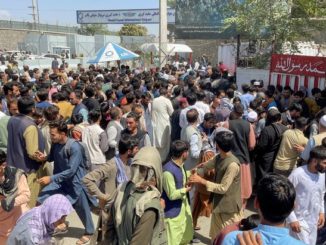
    As the tragedy in Afghanistan unfolds before our very eyes, the question is whether this could have been avoided? There is no doubt that this shameful exit by the United States has not only tarnished the reputation of the superpower but put thousands of Afghan lives in danger. There is little doubt that the current administration has failed miserably in executing a proper exit strategy. History will harshly judge those who have authored and run such an ill-conceived plan.

    Who are the victims of this unfolding strategy? The United States went to Afghanistan to root out Al Qaeda that has planned and staged the attacks on the World Trade Center that killed around 3000 Americans on September 11, 2001. There is no doubt that American intervention prevented more such episodes from the Afghan soil in the U.S., and the chief strategist of the 9/11 attack, Bin Laden, was pursued and eliminated. However, the United States got bogged down in this protracted struggle with the Taliban, who found a haven in Pakistan for their hit and run attacks. Therefore, this was a fight lost by the United States that had no patience to outlast the enemy’s will. Taliban once boasted that “NATO has watches, but we have the time,” The truth is that the Taliban simply waited out the NATO forces and the American resolve to recapture Kabul in lightning speed that may have shocked the bureaucrats in Washington. The infantile justification by Jake Sullivan, the National Security Advisor to the President, that this chaos was inevitable is symptomatic of the mindset of the Washington establishment that is so detached from reality and back to their business as usual.

    George W. Bush, who initiated the foray into Afghanistan, was never content with one war. Instead of focusing on eliminating the Taliban, which was dubbed as a terrorist organization, and securing the freedom for the people of Afghanistan from these regressive and evil elements reminiscent of medieval times, he started another war in Iraq that ended in disaster. Along with destabilizing the entire Middle East paving the way for the creation of a Caliphate by ISIS, American invincibility that was seen at the initial stages of the Afghan invasion was not only lost, but the American people simply got tired of these endless wars.

    Many of these bureaucrats in Washington who are the true architects of these infamous wars have little in common with the folks who are sent to these godforsaken places to fight these unseen enemies. They are part of the elite society, mostly come with Ivy League credentials and live in their multi-million abodes in Washington suburbs. Most of them might not have served a single day in the United States armed forces, and some of the older ones might even have gotten away with waivers during the time of the draft. At the end of the day, it is either those boys from the Midwest who believe that it is their duty to serve their country and honor its flag or the poor black and Latino kids who are hoping to build a better life after completing their service in the Military are the ones who fall prey to these odious designs of the so-called establishment.

    Making war has become the primary business for many of these bureaucrats who are part of this military-industrial complex. People like Dick Cheney, who has never served in the Military, are prime examples who promoted wars and stood to profit. To them, these young men and women who are sent to these battlefields to die or permanently scarred for life are only of peripheral interests. Thousands of others who are caught up in the crossfire and lost their lives are simply collateral damages.

    President Dwight Eisenhower once gave the nation a dire warning. “In the councils of government, we must guard against the acquisition of unwarranted influence, whether sought or unsought, by the military-industrial complex. The potential for the disastrous rise of misplaced power exists and will persist.” He called the military-industrial complex a formidable union of vested interests and a threat to democratic government.

    Take, for example, the folly of continuing to provide billions of dollars in funding to the Pakistan government while allowing bases for Afghan insurgents and actively supporting their mission. According to various reports, the Pakistani Military was also engaged in providing training and tactical support to terrorist groups crossing the border and creating havoc in Kashmir. How could the United States justify supporting the counter-insurgency funding for Pakistan while the country remained a factory for brainwashing young minds with fundamentalist ideology and turn them loose to commit horrendous crimes across the globe?

    Taxpayers of the United States indeed have lost Trillions of dollars fighting these regime-changing wars. Still, all is not lost for these conniving bureaucrats who represent potent lobbies and special interests in the Capitol. Washington suburbs have become the most expensive real estate on American soil today as these folks continue to rake in riches while the rest of the country is undergoing economic hardships and facing an uncertain future.

    ‘Powell doctrine,’ named after the four-star general Colin Powell, said that “war should be the politics of last resort. And when we go to war, we should have a purpose that our people understand and support; we should mobilize the country’s resources to fulfill that mission and then go in to win”. The precipitous withdrawal from Vietnam, Iraq, and now Afghanistan runs contrary to that principle, and Powel himself may have violated the spirit of his own proclamation with his WMD speech at the United Nations while promoting the invasion of Iraq.

    Obviously, people have lost control of their ‘greatest democracy.’ Once again, they are reeling from a shameful and disheartening scenario in Kabul as thousands who risked their lives supporting U.S. policies are stranded and fearing for their lives simply as the result of terrible decision-making in Washington. In the meantime, the powerful establishment may be plotting for yet another conflict somewhere around the world in the name of ‘promoting democracy and freedom’!

    (The author, a former Chief Technology Officer at the United Nations, is Vice President of IOC USA. He can be reached at gta777@gmail.com)

  • Indian-origin Sikh engineer’s low-cost washing machines to head to India

    Indian-origin Sikh engineer’s low-cost washing machines to head to India

    LONDON (TIP): A London-born Indian-origin engineer’s project to supply low-cost washing machines to countries such as India, where hand washing of clothes remains a time-consuming exercise, has got off to a good start following field research in camps in Iraq.

    Navjot Sawhney, who set up his Washing Machine Project three years ago to provide energy efficient manual washing machines to low-income regions, has been working with volunteers and partners to conduct research ahead of supplies. The organization has also launched a crowd funding appeal on Just Giving to raise 10,000 pounds to aid the delivery process.

     “At the Washing Machine Project, we believe in the power of innovation to empower lives. That is why we have developed an off-grid, manual washing machine, which saves 60-70 per cent of time and 50 per cent of water, for people in low-income and displaced communities,” notes the charity’s fundraising drive.

     “This idea was born out of a friendship. Nav, our founder, was on a sabbatical in rural South India, making clean cook stoves when he met his neighbor, Divya. It was through their conversations at the end of each day that Nav came to realize the significant burden unpaid labor places on women,” it notes.

    Sawhney was on a sabbatical from his engineering career in the UK when the idea of a hand-cranked washing machine struck him.

     “While in Tamil Nadu, I lived in a small village called Kuilapalayam. The community had limited access to continuous electricity, and water was switched on twice a day,” recalls Sawhney.

     “My next-door neighbor Divya and I became excellent friends. While we talked, she would hand wash her clothes. I was always so shocked at how long and how much effort it would take to conduct the relatively unproductive task,” he said.

    This led to him coming up with the “Divya 1.5” model of his manual washing machine, inspired by a simple salad spinner. Now 30 of the Divya 1.5 will be used at Mamrashan Refugee Camp in Iraq with the help of the charity Care International. It is expected to positively impact 300 people and save up to 750 hours annually per household, equivalent to two months of daylight hours. Sawhney plans to head to Iraq at the beginning of September to help distribute the machines.

    Later this year, the Washing Machine Project aims to fulfill orders to refugee camps in Jordan. Eventually, the plan is for these machines to be shipped to other parts of the world, including India and Africa.

    “It is not just Divya who bears this burden. We have spoken to women and communities in 11 different countries around the world, including Lebanon, the Philippines and Cameroon. In those communities we have met children as young as 6 who have begun helping with this task. This is detrimental not just to their education but also to their childhoods; to being children,” notes the project.

    “There are many health risks associated with hand-washing clothes, notably contracting infections and water-borne diseases from direct contact with contaminated water sources,” it adds.

  • Indian American information scientist Dr. Nitin Agarwal to investigate covert online influence

    Indian American information scientist Dr. Nitin Agarwal to investigate covert online influence

    ARKANSAS (TIP): Indian American information scientist Dr. Nitin Agarwal working at the University of Arkansas at Little Rock is part of a Department of Defense funded international research project to investigate covert online influence. Agarwal, Jerry L. Maulden-Entergy endowed chair and distinguished professor of information science and director of the Collaboratorium for Social Media and Online Behavioral Studies (COSMOS), will serve as principal investigator for UA Little Rock, according to a university press release.

    UA Little Rock is part of an international research cohort that has received about $2.35 million in funding from the DoD to investigate the use of social cyber forensics to understand covert online influence. It will receive $691,339 for its part of the project, which began in February and will conclude in 2025.

    The four-year project, “Fusing Narrative and Social Cyber Forensics to Understand Covert Influence,” is headed by Dr. Scott Ruston, a research professor with Arizona State University’s Global Security Initiative.

    Additional research partners include Nanyang Technological University in Singapore and experts from Indonesia and the Philippines.

    Countries can use the ease of information access via new media technologies to create manipulation through disinformation and propaganda, which can cause adverse effects on sovereignty and political stability, the release said.

    This research will help fill the knowledge gap the US faces with regard to China’s engagement in “informationized” warfare and will more broadly establish a model for effective analysis of strategic influence in the Middle East, Europe, and other regions.

    “Increasing proliferation of social media provides tremendous opportunities for gaining situational awareness to assist with strategic policy making, particularly in defense, security, diplomacy, and foreign policy,” said Dr. Agarwal.

    “However, social media data is often riddled with challenges such as high volume and velocity, noisy data, missing data, and incomplete data,” he said.

    “This project will develop computational, systematic, and rigorous methods that are grounded in social science theories and cyber forensic methodologies to study big social media data and surmount the challenges,” Agarwal said.

    “We live in a dynamic world, and many of the challenges we face are social or have social elements,” said Dr. Bindu Nair, director of the Basic Research Office in the Office of the Under Secretary of Defense for Research and Engineering.

    “The knowledge and methodologies generated by (DoD’s) Minerva teams are fundamental to understanding how social forces shape regions of the world of strategic importance to the United States.”

    The researchers will study online influence targeting Indonesia and the Philippines that uses narratives to manipulate public opinion and create political action favoring China.

    Subject matter experts in Indonesia and the Philippines will identify issues prone to influence in each country, as well as insight into online venues of influence, propaganda, and disinformation.

    They will also analyze how narratives circulating in the information environment align with Chinese strategy and national interests.

    Dr. Agarwal and his team at COSMOS will conduct social network and cyber forensic analysis to examine online activity and the dissemination of ideas and elements of these narratives. They will also observe virtual proxies of political action.

    “The grant will allow us to develop research-based models and operationalize them in our social media monitoring tools, Blog Tracker and Video Tracker, to assist the United States defense in countering cyber-threats in an emerging socio-technical context, particularly in the Indo-Pacific region,” Dr. Agarwal said.

    The grant is managed by the Office of Naval Research and awarded under the DoD’s Minerva Research Initiative which supports basic research focusing on topics of particular relevance to US national security.

    Through its network of faculty investigators, Minerva also strengthens the department’s connections with the social science community and helps DoD better understand and prepare for future challenges, including National Defense Strategy priorities such as great power competition, the release said.

  • Indian-origin Nalini Joseph vying for City Council seat in Salisbury, Massachusetts

    Indian-origin Nalini Joseph vying for City Council seat in Salisbury, Massachusetts

    MASSACHUSETTS (TIP): India-origin businesswoman Nalini Joseph is hoping to become the first Indian American to serve on the City Council of Salisbury, a small coastal beach town and summer tourist destination in Massachusetts.

    Joseph, 53, who was born and grew up in India after her father moved there to begin a ministry, came to the US after high school, to attend Wesleyan College in Macon, Georgia, where she earned a bachelor’s degree in psychology.

    Joseph, who spent decades compromising in the court system, calls herself a visionary with the ability to see into the future of what Salisbury could be, according to local media.

    She wants to bring those skills and her ability to reach agreements regardless of political and ideological viewpoints to the city level as a council member, it said.

    Joseph told the Post she became interested about a year ago in improving the community with her skills and experience, which includes building nonprofit organizations, managing budgets and personnel and collaborating with judges and other stakeholders.

    She identified public safety as a major concern for the city at this time, which calls for supporting law enforcement, crime reduction and proper budget management.

    Joseph came to Salisbury in 2011 and has served as district administrator of the Guardian ad Litem Program, which advocates for abused and neglected children through the state’s district courts, for Iredell and Alexander counties.

    Joseph also owns and operates Lini’s Mahal, a concierge chef business, and Lini’s Burgers. She also founded William Jones Scholars LLC, a nonprofit educational organization for children.

    “I have a lot of deep-rooted connections in the judicial system, and I have a very good understanding of what happens that creates our rates of incarceration,” Joseph said.

    “And I understand what happens because of abuse and neglect. I understand substance abuse, I understand poverty, homelessness, mental health issues, domestic violence.”

    Working in the courts system, she told the Post, has made her accustomed to disagreements and the kind of negotiation and compromise needed to reach agreements.

    Joseph said serving on the council also requires looking at every viewpoint and being able to come up with a plan that works for everyone’s best interests.

    “It’s always give and take,” Joseph was quoted as saying. “We can have disagreements, but we can still work toward the common good.”

    Joseph said economic growth is among the most important issues for city leaders to address. That requires conducting a “deep dive” into the educational system to retain the talent from those who graduate here, she said.

    Though the county has primary guidance over the schools in Rowan County, Joseph said retention efforts require partnerships and collaboration with the local schools and higher education institutions.

    Part of her vision for Salisbury in the long-term is the ability to become “the next Silicon Valley,” which she recalled was once a little-known area in northern California prior to the founding of Hewlett-Packard Company in the 1930s.

    “That’s exactly what can happen here in our city,” Joseph was quoted as saying. “We can make it technologically driven. We can bring in great people. We can provide wonderful education to the children that are in our school systems.”

    Maintaining a healthy, clean environment is another issue important to Joseph. She is a member of the city’s Parks and Recreation Advisory Board, which she said helped her learn so much about what it takes beyond time and money to ensure the city’s parks and recreational facilities are accessible to all residents.

    “It’s extremely important that we look at equality of opportunity for all of our citizens, not for just one contingent of our society or our community,” Joseph said.

    “I have the children and families that I have worked with at heart, but I am able to see beyond today, tomorrow,” Joseph said. “I’m able to see beyond just my two-year term on council if I am elected. I’m able to see into the future, and I see a beautiful, prosperous Salisbury. A place that’s safe for everyone to live in.”

    Joseph and her husband, Jude, have one son. Joseph is also a volunteer at the Salisbury VA Medical Center, and a voting at-large member of the Republican Executive Committee with the Rowan County Republican Party.

  • Hockey: Tokyo triumph may mark revival of Indian hockey

    Indian national anthem at Olympic games after 13 years

    By Prabhjot Singh

    “Tokyo, once again, marked the turning point for Indian hockey. Remember 1960 when India lost its supremacy in hockey for the first time. The Rome Olympic games will always be remembered as there was no “Jana Mana” sung or played at the Olympic games.”

    It is not just a bronze medal. It is an expression of the sentiments of millions of Indian hockey fans that have sieved through the grinds of Olympic hockey for the past 41 years.

    The Bronze medal winning Men’s Hockey team.

    It is India’s third bronze medal in the sport that every Indian thinks of as the country’s national sport. With eight gold medals – last won in Moscow in 1980 – and one silver other than three bronze medals, India put up a gallant fight to oust four times Olympic gold medalist Germany for this elusive medal. Hockey may not have directly engineered the return of the Indian national anthem at a victory ceremony as it did 57 years ago but it certainly created the right atmosphere for it.

    Tokyo, once again, marked the turning point for Indian hockey. Remember 1960 when India lost its supremacy in hockey for the first time. The Rome Olympic games will always be remembered as there was no “Jana Mana” sung or played at the Olympic games.

    Led by center half Charanjit Singh, the 1964 Indian Olympic hockey team had some of the greats, including penalty corner specialist Prithipal Singh (no drag flicker but a powerful hitter of the leather ball with his 29-ounce mulberry hockey stick – no Carbon/graphite). It was he who sank many a team with his lethal penalty corner strikes and emerged as the top scorer with 11 goals to his credit. It was his penalty corner shot that got India the decisive penalty stroke. It was Mohinder Lal who made no mistake with the dreaded spot push. And this time again, India’s success story was mainly scripted by penalty corner strikers or drag flickers – Rupinder Pal Singh and Harmanpreet Singh. After a long gap of 41 years, India was back on the podium. Though no Indian national anthem was played at Oi Hockey Stadium, Tokyo did reverberate with Jana Gana a day before the closing ceremony after the Javelin thrower gave India its first ever medal in athletics, a gold.

    When hockey teams, men, and women, left the shores of the country, expectations started soaring especially after the men’s team defeated New Zealand in the opener. While the women’s team suffered reverses in its first three pool games, men were lucky to limit their setbacks to only one, against Australia, by a big margin of 1-7.

    Confidence reposed in young faces by the team coach Graham Reid (Australia) in preference to some experienced players, especially in the forward line, has shown very encouraging results. These are the new faces – Simranjit Singh, Gurjant Singh, Hardik Singh and Dilpreet Singh – who compensated for their lack of experience with their determination, grit, and skills. Besides experienced goalkeeper PR Sreejesh and dependable deep defenders and drag flickers – Rupendra Pal Singh and Harmanpreet Singh – Indian team stood out as a cohesive and purposeful unit.

    Tokyo 2020 was an Olympic with a difference. Never any Olympics got postponed. But the Corona pandemic forced the International Olympic Committee (IOC) and the Tokyo Olympic Games Organising Committee besides the Japanese government to postpone the mega sporting event by a year.

    They also decided not to allow any spectators, including families and friends of participating athletes. Playing before empty stands and restricting their movements from Olympic Village to venues, 11,000 odd athletes put up credible performances. After Mirabai Chanu gave a silvery start with a medal in weightlifting, a new wave of enthusiasm swept Indian camp in Tokyo. Both men and women teams deserved praise for quickly putting behind their pool game reverses and continued to focus on their goal of making the last eight. They did and did it with style. Not content with their quarterfinal destination, they had revised their expectations to an Olympic medal.

    The Women’s Hockey team gave a sterling performance (Photo / Courtesy Hockey India)

    What a game Indian girls played against the once powerhouse of women’s hockey, Australia, in the quarterfinals. A penalty corner goal by Gurjit Kaur was enough to upset the applecart of the Hockeyroos.

    The men’s team took measure of Great Britain in the last eight rounds. It was a great consolation for India to oust its mentor from the medal round. If India had failed to make it to the 2008 Olympic Games in Beijing, it was because Great Britain had defeated them in the Olympic Qualifier in Chile in 2008.

    The bronze medal triumph was sufficient provocation for hockey lovers the world over to burst into celebrations. This bronze for them is much bigger, larger, and more valuable than any other medal, including gold, won in any other sport.

    (The author is a senior journalist. He can be reached at Prabhjot416@gmail.com)

  • Weight loss foods to include in your diet

    Weight loss foods to include in your diet

    Breakfast is the most important meal of the day. Starting your day with a healthy breakfast will help you to maintain energy, feed off hunger attacks and in the process, also lose weight.

    “Skipping breakfast may cause you to not consume adequate amounts of fibre and nutrients. Not eating breakfast can also cause increased bouts of acidity. Lack of fuel such as glucose will go to the brain and lead to decrease in the functioning of the brain cells—which is why you may experience headaches and dizziness when you haven’t eaten in a while,” said Dt Gauri Anand, a clinical nutritionist and diabetic educator.

    But many people tend to skip breakfast or not have one properly fearing to put on extra kilos. However, you can always add some top foods for weight loss in your breakfast!

    Nut butter

    Nut butter is delicious, creamy, and nutritious butter made from nuts like almonds, peanuts, or walnuts. Filled with the goodness of heart-healthy saturated fats and protein, tree nuts, in general, have been linked with weight loss and reducing the risk of chronic diseases. It is a great way to include protein in your diet.

    Egg

    Egg has six grams of protein and 70 calories. Eggs are high in protein and iron. “Nutritious, filling, tasty and easily available, they can also be paired up with sweet potatoes or ground turkey for a wholesome breakfast,” she told indianexpress.com.

    Unsweetened plain

    Greek yogurt

    Yogurt is the great starter for the day. Adding yogurt to your breakfast is a good idea, especially for anyone looking to lose a couple of pounds. The nutritional content will keep you energised throughout the day while maintaining digestive health. Rich in calcium and packed with probiotics.

    Chia seeds

    Chia seeds is one of the healthiest seeds in the world. The antioxidants, fiber, calcium, and a host of other vital nutrients protect your body from the attacks of toxins, Sprinkling some on a bowl of yogurt with fruit or salad will give your meal the right amount of nutritional benefits along with a delicious crunch.

    Banana

    Banana is the unopposed superstar of potassium. It is packed with filling fiber and other valuable nutrients. Tossing some diced bananas in your fruit bowl/smoothie will lift up your mood and make you feel energetic. Including them in breakfast also means lowering blood pressure levels that keep the heart in good shape.

    Berries- Berries win the title for being one of the healthiest breakfast foods on the planet. Strawberry, raspberry, blueberry and others are not only rich in heart-friendly antioxidants but adding them to your breakfast also gives you a boost of energy.

    Source: The Indian Express

  • Say goodbye to wrinkles

    Say goodbye to wrinkles

    Generally speaking, by the age of fifty, the tell-tale signs of age become visible, like lines and wrinkles, loss of skin elasticity and resilience and so on. Heredity also plays a role in determining the rate at which one ages, but I believe that it is regular and preventive skin care that goes a long way in delaying ageing signs. Our diet and lifestyle also play important roles.

    How do wrinkles form on the skin?  The skin cells become dry and lose their ability to retain moisture. This can happen due to habitual dryness and lack of moisture. The skin loses moisture to the atmosphere, which needs to be replaced. Sun-exposure also causes loss of moisture. Dryness becomes apparent on the outer layer of the skin, which develops fine lines. With age and decrease in oil production, the dryness and dehydration are aggravated. Another important change that takes place is a loss of elasticity and resilience. So, the stage is set for lines, wrinkles and ageing skin. Dry skins are more vulnerable to premature manifestation of skin aging.

    Dermatologists and cosmetologists agree that the skin that has been properly cared for stays youthful for a longer time. It is also true that neglected skins develop symptoms of ageing prematurely. A regular skin-care routine, according to skin type and problems, helps to delay aging signs. Moreover, when physical and seasonal changes occur, the skin-care routine should be adjusted, according to one’s needs.

    From the age of thirty, begin to protect the skin from drying up. Your daily routine should lay more emphasis on moisturising the skin and prevention of moisture loss. Begin to protect the skin from the factors that cause dryness, like exposure to the sun, to air conditioning, chemical air pollutants, make-up cosmetics and so on. A suitable sunscreen, along with a moisturizer, should be used during the day, 20 minutes before going out.

    Somewhere within the living cell is locked the fascinating mystery of the aging process. Till we find the key to it, I believe that appropriate external care is an important way of preserving youthful skin and delaying visible ageing signs.

    Many anti-ageing ingredients are easily available at home:

    Green tea is a powerful antioxidant. Take half cup water and 2 teaspoons green tea. Bring the water to a boil. Put tea leaves in a ceramic bowl. Pour the hot water over it and keep for 2 minutes. Strain and cool the liquid. Apply on face with cotton wool to tone the skin. Leave on.

    For an anti-ageing face mask that also adds radiance, take half-teaspoon wheatgerm oil and 2 DROPS geranium oil. Add 2 teaspoons oatmeal, one teaspoon almond meal and orange juice.  The pack is rich in antioxidants and Vitamin E, with powerful anti-ageing benefits.

    The hands begin to show neglect and ageing sooner than most other parts of the body. Take 2 tablespoons sunflower oil and 3 tablespoon coarse sugar. Mix together till it becomes a paste. Apply and rub into skin of hands. Rinse off after 15 minutes.

    Professional salon treatments and specialized products go a long way in rejuvenating the skin and preserving its youthful properties, making it look soft, smooth, resilient and youthful. Many ingredients, like plant stem cells, have potent anti-ageing properties. Helena Rubinstein once said, “The skin has a tremendous capacity for self-rejuvenation if properly cared for and it’s never too late to start.”  Indeed, with the skin, you have one major advantage…..it will respond to the right kind of care.

              Source: Pinkvilla

  • Ways to deep clean pores at home

    Ways to deep clean pores at home

    Steam

    This is the easiest and most effective treatment and is a great option when your skin is lacking lustre. Simply pour steaming water into a bowl, place a towel over your head and slowly lower your face toward the water. You can also simply use a face steamer if you have one at home. For a much more effective experience, add a few drops of peppermint or green tea to the water. If you have oily and acne-prone skin, several drops of tea tree oil will work wonders. Steam for 10 to 15 minutes.

    Make a honey/lemon mask

    Honey is a major ingredient in almost every DIY mask because of its healing properties, as well as helping to tighten your pores. The simplest mask is to apply a few tablespoons of raw honey right to your face, you can also add a tablespoon of cinnamon or a tablespoon of yogurt with a teaspoon of olive oil to smooth out the impurities in your skin.

    Lemon is another miracle ingredient because the acid is a natural exfoliant. You can add it to the above masks or simply apply a few drops directly on to your face. Leave it on for 10 minutes and then wash your face with warm water. You can apply these masks thrice a week as needed. Avoid the lemon mask if you have extremely dry skin.

    Parsley

    Parsley is not only a great ingredient to diminish dark spots, but it is also a great pore cleanser. It can be used every other day on its own or twice a week when mixed with lemon and honey.

    Soak a small head of parsley in warm water and then dip a washcloth in the water and apply it to your face for 10 to 15 minutes. To make a mask, finely chop a small head of parsley (after you have soaked it in warm water) and combine it with a tablespoon of honey. Apply it on your face for 10 to 15 minutes.

    Sugar scrub

    Using scrubs on a regular basis is always a must, but sometimes certain scrubs can be a little bit harsh on sensitive skin so another great option is sugar. Simply take two tablespoons of sugar, mixed with half a lemon (juice) and a little bit of water. Crush it all together until you get a thick paste and gently massage it into your skin, then wash it off.

  • India in history this Week (August 13 – 19, 2021)

    August 13

    1784: Pitt’s India Bill was introduced in the British Parliament for improvement of administration in India.

    1795: Queen Ahilyabai Holkar died.

    1891: The three great defenders of Manipur, Senapati Tikendrajit Singh, his brothers, Agnesh Sena and General Thangal were hanged by the British.

    1936:         Famous Indian woman revolutionary Bhikaji Cama died.

    1936: The famous Indian cinema actress Vyjayanthi Mala was born on 13 August 1936.

    1951: Hindustan Trainer 2, the first aircraft manufactured in India, took its first flight.

    1956:         The National Highway Bill was passed in the Lok Sabha.

    1996: Women’s Reservation Bill which had been introduced in  was put on the back burner under Prime Minister I.K Gujral’s government.

    2008:         Tata Steel, the world’s leading steel company, entered into an agreement with two major companies to jointly build a steel complex in Vietnam.

    2008:         India successfully tested the multi-barrel rocket launcher (MBRL) weapon system Pinak.

    August 14

    1862:         Bombay High Court was established.

    1924:         Birth of renowned writer and journalist Kuldeep Nayyar.

    1947:         Partition of India, Pakistan became a separate nation.

    1968:         Morarji Desai honored with Pakistan’s highest civilian honor, Nishan-e-Pakistan.

    1956:         Indian comedian Johnny Lever was born.

    August 15

    1772:         The East India Company decided to set up separate civil and criminal courts in the districts.

    1854:         East India Railway ran the first passenger train from Calcutta to Hooghly in a distance of 37 km. However, it was officially inaugurated in 1885.

    1872:         Writer and litterateur Sri Aurobindo was born.

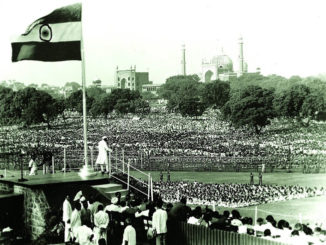
    1947:         Pandit Jawaharlal Nehru was sworn in as the first Prime Minister of independent India.

    1950:         An earthquake of 8.6 magnitude killed 20 to 30 thousand people in India.

    1972:         Postal index number ie PIN code is implemented.

    1982:         The national program of nationwide color broadcasting and TV was inaugurated in Delhi.

    1990:         The ground-to-air missile Akash was successfully launched.

    August 16

    1886:         Ram Krishna Paramahamsa Dev breathed his last at the Twilight Vela.

    1946:         The Muslim League declared a direct action day, during which around 5000 people were killed and 15,000 were injured in Kolkata during the violence.

    2018:         Former Prime Minister, poet Heart and the fiery speaker Atal Bihari Vajpayee died at the age of 93.

    August 17

    1909:         Madan Lal Dhingra was hanged in the Pentonvilli prison in connection with the murder of Vayali and Lalkaka.

    1947:         After the independence of India, the first British troops left home.

    1941:         Bimal Jalan, the 20th Governor of the Reserve Bank of India, was born on 1941.

    2011:         Lokpal movement: Anna Hazare continued his fast in Tihar, despite his release in 2011, till he got written permission to continue his fast in JP Park.

    2009:         On the issue of internal security, the one-day conference of all the Chief Ministers of the country was held in New Delhi on 2009 under the chairmanship of Prime Minister Manmohan Singh.

    August 18

    1227:         Genghis Khan, ruler of the Mongol Empire, died in 1227.

    1700:         Bajirao I, the great general of the Maratha Empire, was born on 1700.

    1800:         Governor General Lord Vallejali established Fort William College in Calcutta.

    1872:         Birth of Pandit Vishnu Digambar, the great musician of Maharashtra. Despite being blind, he achieved memorable achievements in the field of music.

    1900:         Vijayalakshmi Pandit, sister of former Prime Minister Pandit Jawaharlal Nehru, was born.

    1934:         The film director, lyricist and poet Gulzar was born.

    1940:         For the first time, the weather map was broadcast on television.

    1945:         The great freedom fighter Subhas Chandra Bose was badly injured in a plane crash in Taihoku, Taiwan, later died in a military hospital.

    1951:         Indian Institute of Technology was established in Kharagpur.

    1956:         Indian cricketer Sandeep Patil was born in Mumbai. He scored 1588 runs in 29 Test matches.

    2008:         The Mayawati government in Uttar Pradesh announced the implementation of the Sixth Pay Commission recommendations in 2008.

    2010:         In 2010, TVS Electronics included a rupee symbol just above the tab in its new key board called ‘TVS Gold Bharat’.

    August 19

    1600:         Mughal Emperor Akbar captured Ahmednagar.

    1666:         Shivaji escaped from Aurangzeb’s captivity by hiding in a fruit basket in Agra.

    1757:         The first one rupee coin of the East India Company was made in the Calcutta mint.

    1907:         Hazari Prasad Dwivedi, essayist, novelist, critic, thinker and researcher was born in 1907.

    1918:         Birth of Dr. Shankardayal Sharma, 9th President of India.

    1939:         Guruvar Ravindra Nath Tagore laid the foundation stone of Subhash Chandra Bose Mahajati Sadan in Calcutta in 1939.

    1964:         The communication satellite Cincom 3 was launched.

    1949:         Bhubaneshwar became the capital of Odisha.

    1999:         Angered by India’s draft nuclear policy, the G8 announced a ban on all kinds of aid.

  • No single-use plastic goods from next year

    No single-use plastic goods from next year

    New Delhi (TIP): Keeping in view their adverse impacts on both terrestrial and aquatic ecosystems, the Centre today notified the Plastic Waste Management Amendment Rules, 2021, prohibiting several single-use plastic items with low utility and high littering potential by July 2022.

    According to a gazette notification issued by the Ministry of Environment, Forest, and Climate Change, manufacture, import, stocking, distribution, sale, and use of single-use plastic, including polystyrene and expanded polystyrene commodities have been prohibited with an effect from July 1, 2022.

    They include items like earbuds with plastic sticks, plastic sticks for balloons, plastic flags, candy sticks, ice-cream sticks, polystyrene (thermocol) for decoration, plates, cups, glasses, cutlery such as forks, spoons, knives, straw, trays, wrapping or packing films around sweet boxes, invitation cards, and cigarette packets, plastic or PVC banners less than 100 microns, and stirrers.

    With effect from September 30, 2021, the thickness of plastic carry bags has been increased from 50 microns to 75 microns and to 120 microns from December 31, 2022. This has been done to stop littering due to lightweight plastic carry bags and allow reuse of plastic carry due to an increase in thickness, according to officials.        Source: TNS

  • Venkaiah considers action against ‘unruly’ Oppn MPs, seeks advice

    Venkaiah considers action against ‘unruly’ Oppn MPs, seeks advice

    New Delhi (TIP): Rajya Sabha Chairman M Venkaiah Naidu is said to be actively considering some kind of action against “unruly” members of the Opposition over their conduct in the well of the Rajya Sabha Wednesday when the monsoon session of Parliament ended on a bitter note amid chaotic scenes.

    Venkaiah Naidu, it is learnt, has started examining precedents and holding legal consultations with former and serving senior members of the Rajya Sabha secretariat on the next steps for appropriate action against the MPs over their behavior.

    On the table is also the nature of the committee that should look into the matter and recommend action — whether it should be the committee on privileges, ethics or if a special committee has to be constituted.

    Any action will be taken after detailed consideration and an appropriate view would be taken at the earliest, sources told The Indian Express Friday, Aug 13.

    While the Committee of Privileges of Rajya Sabha can look into issues “involving a breach of privilege either of a member or of the Council or of a Committee thereof”, the Committee on Ethics oversees “the moral and ethical conduct of the members and to examine the cases referred to it with reference to the ethical and other misconduct by members”.

    Another option before the Chairman, sources said, is creation of a special committee for scrutiny of the matter. There is a precedent from UPA-I rule– it was set by Somnath Chatterjee as Lok Sabha Speaker — dealing with the case of cash-for-question by members of the Lower House. Based on the recommendations of a special committee headed by Pawan Kumar Bansal, Lok Sabha had passed a resolution to expel 10 of its members.

    Their expulsion happened without the matter being referred to the Privileges Committee. A Rajya Sabha member was also expelled by the House, based on the recommendations of the same committee.

    Chairman Naidu, sources said, has spoken to V K Agnihotri, Secretary General of Rajya Sabha from October 2007 to September 2012, to seek advice on the subject — Naidu has consulted Agnihotri in the past as well. He has also spoken to senior members of the Rajya Sabha secretariat.

    He is said to be keen on consulting Subhash Kashyap who served as Lok Sabha Secretary General from December 1983 to August 1990.

    Meanwhile, Naidu, interacting with reporters Friday, said the Opposition and Treasury benches are his two eyes and are equal for him.A proper vision, he said, is possible with two eyes and that he has equal esteem for the two sides. And the reason why he, on many occasions, said it is the collective responsibility of both sides to enable smooth functioning of the House.

    If anybody holds a different view on his handling of proceedings in the House, Naidu said, he will leave it to their wisdom. He said the legislature is meant for debate and discussion, and external political battles should not be fought on the table of the House – he was referring to some members climbing on to the table while sloganeering.

              Source: The Indian Express

  • It feels like a dream, says Gurdaspur’s Princepal Singh on his NBA journey

    It feels like a dream, says Gurdaspur’s Princepal Singh on his NBA journey

    New Delhi (TIP): Only the second Indian to debut in the NBA Summer League, young basketball player Princepal Singh says his journey has been nothing short of a “dream” and he is working on his fitness and skills to achieve his next goal of playing in the NBA.

    Singh, who hails from Gurdaspur, Punjab, followed his Ludhiana basketball academy teammate Satnam Singh in making his debut at the summer league when he turned up for Sacramento Kings against Washington Wizards at Las Vegas on Tuesday night.

    “It’s amazing to play in the Summer League. I am very happy with my progress as a player. I played G league first and now am playing in summer league, and I am working towards the NBA. I didn’t think I will reach this far. It sometimes feels like a dream,” Singh said during a virtual press conference.

    “My next goal is playing at NBA. Satnam Singh was the first Indian to play and I want to play for long time in NBA, so my focus is on taking care of my body and keeping myself fit.”

    Satnam had played in the Summer League in 2016 after being first drafted in the NBA by Dallas Mavericks in 2015.

    The 20-year-old Singh, whose first professional stint was with the NBA Academy’s Ignite team in the G-League, made a brief appearance of just a minute and 22 seconds during the match, which they won 89-75.

    “It is a great experience to play against the top players in Summer League. They are all NBA players, who have been drafted. A lot of learning and my game is improving,” said Singh, the first-ever NBA Academy India graduate to feature in a Summer League game.

    “My coach (Bobby Jackson) asked me to play hard, said I should focus on my game and I will get more time. He asked me to focus on strong rebounding and defence and look to score.

    “There is no pressure on me. I have played one game so far. It is just that now getting less game time. So hopefully I will get more time in future. I want to just focus on giving my 100 percent and prove myself.”

    Asked what he learnt from his stint in ‘G League Ignite’, he said: “I learnt how the pro players conduct themselves off the court, how hard they play, how they help each other.”

    On the basketball scene in India, Singh said: “The sport is growing in India but due to the lockdowns no one has been able to play basketball.

              Source: PTI

  • Bayern held 1-1 by Gladbach in Bundesliga season opener

    Bayern Munich opened the Bundesliga season with a 1-1 draw at Borussia Mönchengladbach, with the hosts incensed at the referee for denying them a late penalty.

    Dayot Upamecano twice looked like he conceded a penalty in the late stages of his Bayern debut, but referee Marco Fritz waved play on and received no contradiction from the video referee despite clear contact from the French defender on compatriot Markus Thuram on both occasions.

    Gladbach coach Adi Hütter was booked for his protests in his first league game in charge of the home team. Counterpart Julian Nagelsmann was making his debut as Bayern coach.

    Alassane Plea gave the hosts the lead in the 10th minute but Robert Lewandowski equalized in the 42nd.

    Hütter’s call to start American teenager Joe Scally on the left of defense for his Bundesliga debut paid off as the 18-year-old again impressed following his fine performance in the German Cup last weekend.

    Some 23,000 supporters were allowed at the game under new regulations that permit up to 25,000 or half capacity, whichever is greater. Few fans were allowed at any games last season due to the risk of coronavirus infections.

    Gladbach’s Patrick Herrmann flashed a good chance just wide early on and the hosts missed an even better opportunity shortly afterward, when Herrmann opted to pass to Lars Stindl instead of shooting. Bayern’s disorganized defense cleared the danger. Serge Gnabry missed when he only had the goalkeeper to beat, but otherwise it was all Gladbach and Stindl set up Plea for the opener.

  • Passenger vehicle sales up 45% in July

    Passenger vehicle sales up 45% in July

    Passenger vehicle wholesales in India rose significantly year-on-year in July, as Covid-led restrictions eased across states and companies pushed stocks to dealers to build up inventories for the upcoming festive season, SIAM said on Thursday, August 12.

    The total passenger vehicle sales, including dispatches of cars, utility vehicles and vans, from OEMs to dealerships increased by 45% to 2,64,442 units in July against 1,82,779 units in the same month last year.

    As per latest data by the Society of Indian Automobile Manufacturers, two-wheeler dispatches, however, declined by 2% to 12,53,937 units in July, compared to 12,81,354 units in the year-ago period.

  • Best time for Corporate India to step up risk taking, says Nirmala Sitharaman

    Best time for Corporate India to step up risk taking, says Nirmala Sitharaman

    New Delhi (TIP): Finance Minister Nirmala Sitharaman on Thursday, August 12,  said the government is doing everything required to support the economy, and urged industry leaders to step up investments and build capacity in domestic chip manufacturing and renewable energy.

    The government is pursuing key economic reforms, and doing “rigorous work” to achieve the privatisation plan outlined in the Budget and hope to complete strategic sale of Air India, BPCL, among others, within this fiscal year, she stressed.

    Speaking at the CII annual session through a video link, she said the four engines of economic growth — net exports, government expenditure, consumption and investment — are starting to work well to aid the recovery process. The economy is buoyant, in terms of the buoyancy to be seen during recovery-time. “Government is committed to doing everything that it is required to be done for the economy,” she said.

    “Growth will have its priority, growth will be given importance and growth will be pushed both by the Reserve Bank and by the government,” she said. While the central bank will take measures to contain inflation, growth is what will make all the difference to economic revival, she said. The minister indicated that the RBI will continue to maintain its accommodative and growth supportive policy. “I am glad that the RBI has been voicing that understanding that too quick a retrieval or sucking out of liquidity from the economy may not be the necessary stimulus that is required and have not given any indication of sucking out the liquidity that is available,” she said, adding that the government and RBI has been working in close coordination.

    Boosting sentiment

    Finance Minister Nirmala Sitharaman saying that the government and the RBI will continue to support the economy is aimed at encouraging industrialists to step up investments.

    Exports of steel and many others have grown recently, while the Centre has stepped up infrastructure investments. Consumption also has been given the necessary push through various government policies, she argued.

    She said the nature of investments has changed, with citizens now more open to invest in the stock markets. It’s the best time for Corporate India to step up risk taking as corporate tax rate has been among the lowest, and there is an opportunity to build capacity for domestic chip manufacturing and in the renewable energy field, she added. Foreign direct investment has been “flowing into India non-stop” due to the belief in sound macroeconomic fundamentals, she said, adding the government was always in agreement with industry on retrospective tax, and once the arbitration verdicts came out, the government was ready with the necessary legal changes to end retrospective tax.   Source: The Indian Express

  • SoftBank pauses China investing as crackdown roils portfolio

    SoftBank pauses China investing as crackdown roils portfolio

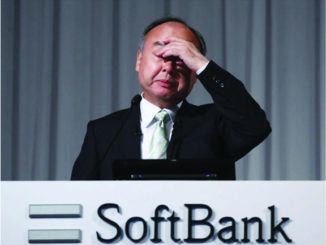
    TOKYO (TIP): SoftBank Group Corp  will pause its investing in China as it waits for regulatory action against the country’s tech firms to play out, Chief Executive Masayoshi Son said

    “Until the situation is clearer we want to wait and see,” Son told a news conference. “In a year or two I believe new rules will create a new situation.”

    When the Japanese conglomerate posted record annual profit in May executives pointed to further upside from Vision Fund investments such as Chinese ride-hailing firm Didi Global Inc (DIDI.N) and “Uber for trucks” startup Full Truck Alliance Co Ltd.

    Those companies listed in New York but Chinese regulatory action has subsequently hammered valuations, underscoring SoftBank’s China risk even as the group seeks to reduce dependence on its largest asset, a stake in Chinese e-commerce giant Alibaba Group Holding Ltd.

    The shift has cast a chill on SoftBank’s investing in China, which makes up about a quarter of its funds’ portfolio.

    While the crackdown has affected returns expectations, “our broader thesis in China is unchanged: It’s still a large, growing and compelling economic opportunity,” said Navneet Govil, the chief financial officer of Vision Fund.

    The Vision Fund unit on Tuesday posted a first quarter profit of 236 billion yen ($2.14 billion) as gains from listings were offset by falling shares in firms like South Korean e-retailer Coupang Inc .

    The China turmoil is clouding the outlook for the group, shares of which have slipped a third from two-decade highs in March amid the completion of a record 2.5 trillion yen buyback. Shares closed up 0.9% ahead of earnings.

    “Having a large public portfolio introduces volatility but at the same time it allows us to continue to monetise in a very disciplined manner,” said Govil.

    Share price weakness and sell-side analyst speculation have driven expectation that a buyback may be imminent.

    “Until now we have sold assets and announced a buyback. This time there was no event like that,” Son said.

    Given the gap between the group’s share price and the value of its assets, he added, “I guess we will do a buyback sometime. The timing and size is something we consider daily.”

    VISION FUND UPSIDE

    More than two-thirds of the portfolio of the first $100 billion Vision Fund is listed or exited. SoftBank has distributed $27 billion to its limited partners since inception.

    Further upside will come from listings by Indian payments firm Paytm and insurance aggregator Policybazaar as well as southeast Asian ridehailer Grab, which is due go public via a blank-cheque company merger, Govil said.

    SoftBank is also ramping up investing through Vision Fund 2, to which it has committed $40 billion of capital, with the unit making 47 new investments worth $14.2 billion in the April-June quarter alone.         Source: Reuters

  • RIL enters lithium battery biz via stake buy in US firm

    RIL enters lithium battery biz via stake buy in US firm

    New Delhi (TIP): Reliance New Energy Solar Ltd (RNESL), the newly floated renewable energy unit of Reliance Industries Ltd, along with Bill Gates and other investors have invested $144 million in Massachusetts-based Ambri Inc, which makes batteries for power grids.

    RNESL would be investing $50 million in the $144 million financing round, which Ambri will use to build a manufacturing facility and commercialise its technology, the company said.

    The investment, which will give RNESL 42.3 million shares of preferred stock in Ambri, adds another piece to billionaire Mukesh Ambani’s energy transition jigsaw.

    In June, Ambani had announced a Rs 75,000-crore investment into clean energy, including four Giga factories.

    Ambri, which can supply energy storage systems between 10 megawatt-hours to more than 2-gigawatt hours, will make calcium and antimony electrode-based cells that can last over 20 years with minimal degradation and are considered more economical than lithium-ion batteries.   Source: PTI

  • Tulsidas Jayanti

    Tulsidas Jayanti

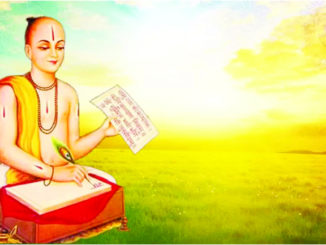
    Tulsidas (1497-1623 C.E.) was a Hindu saint and the poet. Tulsidas is renowned for his great devotion towards Lord Rama. Tulsidas composed several works but he is best known as the author of the epic Ramcharitmanas, a retelling of the Sanskrit Ramayana in the vernacular Awadhi language.

    Tulsidas was acclaimed to be a reincarnation of Maharishi Valmiki, the composer of the original Ramayana in Sanskrit. He is also considered to be the composer of Hanuman Chalisa, a popular devotional hymn in Awadhi dedicated to Lord Hanuman.

    Tulsidas spent most of his life in the city of Varanasi. The famous Tulsi Ghat on the Ganges River in Varanasi is named after him. The famous Sankatmochan Temple dedicated to God Hanuman is believed to be founded by Tulsidas.

    According to Hindu lunar calendar, Tulsidas was born on Shravana, Shukla Paksha Saptami and this day is observed as birth anniversary of Poet Tulsidas. Tulsidas is also known as Goswami Tulsidas.

    This year, the birth anniversary of the saint-poet falls on August 15.

    Tulsidas was born on the 7th day in the month of Shraavana (July or August), in the bright half of the lunar. His birthplace is identified at the Rajapur (also known as the Chitrakuta) at the bank of the Yamuna river in UP. The name of his parents is Hulsi and Atmaram Dubey. The exact birth date of Tulsidas is not clear and different people have different opinions regarding his birth year. According to some scholars he was born in 1554 as per Vikrami Samvat and others say it was 1532. He lived his life around 126 years.

    According to a legend, Tulsidas took 12 months to come out in this world, till then he stayed in the womb of his mother. He had 32 teeth from his birth and looked like a five-year-old boy. After his birth, he started enchanting the name of Rama instead of crying. That’s why he was named Rambola, he himself stated in Vinayapatrika. At the fourth night after his birth, his father had passed away. Tulsidas had stated in his works Kavitavali and Vinayapatrika about how his parents’ abandonment him after his birth.

    Chuniya (the female maid of his mother Hulsi) took Tulsidas to her town, Haripur, and took care of him. She died after caring for him for just five and a half years. After that event, Rambola lived as a poor orphan and walked door to door begging for alms. It is assumed that the Goddess Parvati took up the form of a Brahmin for taking care of the Rambola.

    He himself had given some of the facts and events of his life in his various works. Two ancient sources of his life are the Bhaktamal and Bhaktirasbodhini composed by the Nabhadas and Priyadas respectively. Nabhadas had written in his writing about Tulsidas and described him as an incarnation of the Valmiki. Priyadas composed his writing 100 years after the death of Tulsidas and described the seven miracles and spiritual experiences of the Tulsidas. Two other biographies of Tulsidas are Mula Gosain Charit and Gosain Charit composed by Veni Madhav Das in 1630 and Dasanidas (or Bhavanidas) around 1770 respectively.

    The Incarnation of the Valmiki

    It is believed that Tulsidas was the reincarnation of Valmiki. According to the Hindu scripture Bhavishyottar Purana, Lord Shiva had described to his wife Parvati that how Valmiki will incarnate in the Kal Yuga.

    According to the sources, it is considered that the Hanuman use to go to Valmiki to hear him singing the Ramayana. After the triumph of Lord Rama over Ravana, Hanuman continued to worship the Rama in the Himalayas.

    Learning

    Rambola (Tulsidas) was given the Virakta Diksha (known as Vairagi initiation) and got the new name, Tulsidas. His Upanayana was performed by the Narharidas at Ayodhya when he was just of 7 years old. He started his first learning at the Ayodhya. He mentioned in his epic the Ramcharitmanas that his guru narrated him the Ramayana over and over again. He came to the sacred city Varanasi when he was just 15–16 years old and got the knowledge of Sanskrit grammar, Hindu literature and philosophy, four Vedas, six Vedangas, Jyotisha from his guru Shesha Sanatana at the Panchaganga Ghat in Varanasi.

    After study, he came back to his birthplace, Chitrakuta by the permission of his Guru. He started to live in his family home and narrating the story of Ramayana.

    Marriage History

    He was married to Ratnavali (the daughter of Dinbandhu Pathak of Mahewa village and Kaushambi district) on the 13th of Jyeshta month (May or June) in the year 1583. After some years of marriage, he had a son named Tarak who died in his toddler state. Once upon a time, his wife went to her father’s home when Tulsidas had gone to the Hanuman temple. When he returned home and did not saw his wife, he swam along River Yamuna in order to meet his wife. Ratnavali was very upset with his activity and blamed him. She remarked that he should become a true devotee and should focus on God. He then left her wife and went to the holy city of Prayag (where he renounced the stages of Grihastha’s life and became a Sadhu). According to some authors, he was unmarried and Sadhu from birth.

    How He Met the Lord Hanuman

    Tulsidas meet Hanuman at his own Katha, he fell at lord Hanuman’s feet and shouted ‘I know who you are so you cannot get away leaving me’ and lord Hanuman blessed him. Tulsidas expressed his feeling in front of lord Hanuman that he wants to see Rama confronting each other. Hanuman guided him and told him that go to the Chitrakuta where you would really see the Rama.

    How He Met the Lord Rama

    As per Lord Hanuman instructions, he started to live in the Ashram at Ramghat in Chitrakuta. One day when he went on Parikrama of the Kamadgiri Mountain, he saw two princes on the horsebacks. But he could not distinguish them. Later when he acknowledged that they were Rama and Lakshman by the lord Hanuman, he got disappointed. All these events were described by himself in his writing Gitavali. On the next morning, he met Rama again when he was making sandalwood paste. Rama came to him and asked for a Tilaka of sandalwood paste, in this way he saw Rama clearly. Tulsidas was so happy and he forgot about the sandalwood paste, then Rama took the tilak himself and applied it on his forehead and also on the Tulsidas‘s forehead.

    In the Vinayapatrika, Tulsidas had mentioned the miracles at Chitrakuta and lot of thanks to the Rama. He got darshan of the Yajnavalkya (speaker) and Bharadvaja (listener) in the Magha Mela under a banyan tree.

    Composition of the Epic, Ramcharitmanas

    He started to write the Ramcharitmanas in Ayodhya on the Ramnavami of the Chaitra month in the year 1631. He completed his writing of the Ramcharitmanas in two years, seven months and twenty six days in the year 1633 at the Vivaha Panchami (marriage day of the Rama and Sita) of the month Margashirsha.

    He came to the Varanasi and delivered the epic Ramcharitmanas to the Lord Shiva and Mata Parvati at the Kashi Vishwanath Temple.

  • Let’s Work Together to Uplift Our Women

    Let’s Work Together to Uplift Our Women

    Dr. Manjeet Kaur

    “Feminism isn’t about making women stronger. Women are already strong; it’s about changing the way the world perceives that strength.” -G.D. Anderson

    “In a country where we had a women prime minister for years, we still are years behind in understanding and respecting our women and giving them equal social status as compared to their male counterparts. Despite continuous efforts made to uplift the status of women in India, there are still huge gender equality gaps related to education, expectations, health, labor force, wages, unemployment, and underemployment. As compared to men, women continuously face different kinds of violence in the form of domestic violence, verbal abuse, mental torture, emotional distress, and physical assault which leads to psychological problems such as stress and tension which further leads to physical problems, leaving women unable to keep up to the demands of family and society.”

    Every human being needs to be treated with respect and dignity. If the creator did not discriminate between men and women, why do we fellow humans discriminate between the two sexes? If a fetus is growing insidea mother’s womb, the growth of the fetus is not different for a girl or a boy. Only after we come into this world, we are labeled as males or females. “Beti hui hai,”“beta hua hai,” these short sentences have different meanings for different individuals.

    Our Indian scriptures show great reverence for women in all rolesbut when we look at the state of women in India, I am very disheartened to see the treatment of women in today’ssociety. Woman all over the world are treated relatively inferior to males, let’s look at a few differentiating factors:

    AgeDiscrimination:  Newborn girls are killed at birth in some communities, child marriage is still prevalent in some societies, and girls are raped at any age. Women are treated as the weaker and inferior sex as they grow up andneglected as they grow old.  Our culture has always respected women to the extent of giving them the status of Goddesses, then why this disparity?

    Work Roles and Household Duties: We live with a female stereotype in India, and many other parts of the world, that women are the weaker sex and can only perform certain kinds of jobs. Despite spending hours working outside the home to earn money and support the family financially, women are still expected to make time to complete all household chores and fulfill demands of all family members at home; whereas men have the freedom to just provide financially and not be subjected to other household commitments. Even though a woman might be the bread winner for the family and work outside the whole day, when she returns home, she is still expected to cook, clean, do laundry, and take care of other family members.

    Education:“Beti Bachao Beti Padhao”

     While there is still a growing awareness to educate women in India, the Beti Bachao Beti Padhao initiative focuses on bringing more awareness to women’sissues by attempting to improve the status of women in society by making them more mentally, physically, and financially independent.

    Wage Inequality: Working at the same job, women are compensated way less than their male counterparts. This is not only related to underprivileged women or women who are working in poverty but also women in professional and high-level jobs.

    A study on “Gender-Based Wage Discrimination in Indian Urban Labour Market: An Assessment” observed “…that there is a male bias in wages in both the categories, namely, regular and casual workers. Female workers are also at a disadvantaged position via-a-vis male counterparts, and there is considerable disparity exists with regards to employment and earning standard between sexes.” (Padhi, Mishra, & Pattanayak, 2019)1

    “Although India has certainly come a long way in addressing the issue of pay equity, there is lots more to do. The principle of equal pay for equal work needs to be strongly advocated and promoted by the government, starting with itself!” (Shroff & Mohapatra, 2020)2

    Mental Health: According to a paper published by Usha Ram (2014)3 in International Journal of Population Research on Gender Socialization: Differences between Male and Female Youth in India and Associations with Mental Health, “…female youth experienced more mental health problems when their households engaged in practices that favored males over females…family violence and restrictions to independence were associated with mental health problems for both male and female youth…these findings suggest that gender inequality permeates family life in India.”

    An article on “Women and mental health in India: An overview” written by Malhotra & Shah (2015)4states “Gender is a critical determinant of mental health and mental illness… …Social factors and gender specific factors determine the prevalence and course of mental disorders in female sufferers…Around two-thirds of married women in India were victims of domestic violence…Concerted efforts at social, political, economic, and legal levels can bring change in the lives of Indian women and contribute to the improvement of the mental health of these women.”

    Domestic Violence: Women are stepping outside the house to work shoulder to shoulder with their male counterparts, but domestic violence is still prevalent and a threat to the happiness, health, integrity, and life of many women. There are more cases of domestic violence against women than men.

    Findings from A study of Domestic Violence among Currently Married Females of Haryana, India concluded Awareness regarding domestic violence needs to be made, and law enforcement regarding it needs to be made stringent. Rehabilitation of victims of domestic/spousal violence should also be considered on priority.”  (Nadda et. al., 2018)5

    I, like all my fellow immigrants, am fortunate to be able to experience both the Indian culture and Western culture. I know and have seen numerous women as the bread winners for their families. In many cases, it is the women who take up jobs to support their families and are the initial building blocks of financial and emotional support.

    In a country where we had a women prime minister for years, we still are years behind in understanding and respecting our women and giving them equal social status as compared to their male counterparts. Despite continuous efforts made to uplift the status of women in India, there are still huge gender equality gaps related to education, expectations, health, labor force, wages, unemployment, and underemployment. As compared to men, women continuously face different kinds of violence in the form of domestic violence, verbal abuse, mental torture, emotional distress, and physical assault which leads to psychological problems such as stress and tension which further leads to physical problems, leaving women unable to keep up to the demands of family and society. I use the word “society” because collectively as a culture, more often than not, the solution to a woman’s problems’ is more influenced by the concern of “Log kya kehengey?” instead of what is the right decision for her wellbeing. Such remarks made by her own loved ones, makes a woman feel that her issues and concerns are of a lesser value then a man’s.

    Growing up I have heard stories of strong women who have brought big changes to this world, from all different walks of life.The unfair practices against women are not only prevalent in Indian culture, but all over the world. This can be seen in a plethora of different movements such as “me too,” “pink tax” and “breaking the glass ceiling.” As great as it is to see these issues coming to light, simply discussing, and advocating for change is not the same as society and policy makers evoking those changes. Many women openly discuss the need to be treated equal to men in whatever they do. Our world needs to wake up to the fact that the only difference between men and women is physical composition. Apart from that, both sexes arerelatively similar. There needs to be more awareness and discussion to shine a light on the struggles and challenges that many women face in the hopes to ignite social change for future generations of women.

    “There is no limit to what we, as women, can accomplish.”

    Michelle Obama

    Sources:

    1. Padhi, B., Mishra, U.S. & Pattanayak, U. (2019). Gender-Based Wage Discrimination in Indian Urban Labour Market: An Assessment. Ind. J. Labour Econ. 62, 361–388 (2019).
    1. https://www.shrm.org/shrm-india/pages/gender-pay-gap-in-india-legal-considerations.aspx
    1. https://www.hindawi.com/journals/ijpr/2014/357145/
    1. Malhotra, S. & Shah, R. (2015). Women and mental health in India: An overview. Indian Journal of Psychiatry, 2015 Jul; 57(Suppl 2): S205–S211.
    2. Nadda A, Malik J.S., Rohilla R, Chahal S, Chayal V, Arora V. Study of Domestic Violence among Currently Married Females of Haryana, India. Indian Journal of Psychological Medicine. 2018;40(6):534-539.
  • REJOICE INDIANS IN INDIA AND 36 MILLION INDIAN DIASPORA!

    REJOICE INDIANS IN INDIA AND 36 MILLION INDIAN DIASPORA!

    • INDIA CAN BE PROUD OF ITS ANCIENT AND RICH CIVILIZATION AND ITS ORIGINAL
    • CONTRIBUTION TO SCIENCE. AFTER 1335 YEARS OF FOREIGN RULE INDIA IS INDEPENDENT FOR 74 YEARS.
    By Ven Parameswaran

    “India was the motherland of our race and Sanskrit the mother of Europe’s languages. India was the mother of philosophy, of much of our mathematics, of the ideals embodied in Christianity…of self-government and democracy (PANCHAYAT). IN MANY WAYS, MOTHER INDIA IS THE MOTHER OF US ALL.”

                                            – WILL DURANT, American Historian 1885-1981

    India became independent from Britain 74 years ago. India should be grateful to Britain for getting rid of Muslim rule for 1145 years. The East India Company and the British ruled India for 190 years. It is important to note that India became independent of foreign rulers, Muslims and the British, after 1,335 years. 562 Princely States were also integrated into India and Pakistan.

    Here again, credit should be given to Britain for giving the option to Princely States to accede with India or Pakistan. More credit should be given to Sardar Vallabhbhai Patel, Deputy Prime Minister and Home Secretary, V. P. Menon for successful negotiations with the Princely States. The Hindu Maharaja of Kashmir with Muslim majority and the Nizam of Hyderabad with the Hindu majority acceded to India. Thus, for the first time, India was able to gain full and complete sovereignty and independence of all states and territories in one unit. This was indeed a most remarkable achievement of Sardar Vallabhbhai Patel.

     INDIA CAN BE PROUD OF ITS INVENTIONS AND ANCIENT CIVILIZATION

    1.According to Google research, Tamil is the oldest language in the world. Sanskrit is the second oldest.

    2.According to Forbes magazine, Sanskrit is the most suitable language for computer software.

    3.Chess was invented in India.

    4.Sushruta is the father of surgery. Photos of over 125 pieces of  surgical equipment that were used in ancient India can be accessed on the internet.

    5.The world’s first international university was established in Taxshila 700 B.C. More than 10,500 students from all over the world studied more than 60 subjects.

    6.The University of Nalanda in Bihar built in the 4th century B.C. was one of the greatest achievements of ancient India in the field of education.

    7.In the river Sindh, 5000 years ago. The word “NAVIGATION” is derived from Sanskrit word NAVGATIH

    8.The earliest reservoir dam was built in Saurashtra, India in 100 B.C.

    9.MATHEMATICS

     India invented the Number System. Zero was invented by Aryabhatta.

    The Place Value system, decimal system was developed in India in 100 B.C.

    Algebra, Trigonometry and Calculus came from India. The value of Pie, first calculated by Budhayana explained the concept of what is now known as the Pythagorean theorem. Pythagaros of Greece did not invent this theorem! British scholars have officially published in 1999 that Budhayana’s works date back to the 6th century, which is long before any works of European mathematicians including Pythagoras and Archimides.

    10.Bhaskaracharya calculated the time taken by the earth to orbit the Sun hundreds of years before the astronomer Smart. Time taken by earth to orbit the Sun was:365.258756484 days (5th century). Indian astronomers and astrologists mastered the science long before the West.

    11.POLITICAL SCIENCE

    Kautilya, Prime Minister to Emperor Chandra Gupta Maurya, wrote the first book on Political Science called ARTHASASTRA in Sanskrit, translated into English in 1905 by Shama Sastri. This was before Aristotle of Greece published his book: The Politics. Machiavelli published his book The Prince much later. I wrote a scholarly paper for my doctoral course in Political Theory. I compared the original writings of Kautilya’s Arthasastra with the books by Aristotle and Machiavelli.  My conclusion that Aristotle and Machiavelli lifted everything from Arthasastra was acclaimed by doctoral adviser, Professor Albert d’Grazia, Ph.D. Princeton University. He also advised me to publish a book on the subject. I was simply humbled and overwhelmed. India can celebrate Independence Day with pride that Aryabhatta, Budhayana, Kautilya were the original scientists and scholars. India invented Mathematics, basis of all physical science, and Political Theory basis of all Social Science.

    Eminent people the world over have acknowledged India’s great contribution and leadership in several sectors of knowledge.

    ALBERT EINSTEIN

    “We owe a lot to the Indians, who taught us how to count, without which no worthwhile scientific discovery could have been made.”

    GRANT DUFF, the British Historian of India

    “Many of the advances in the sciences that we consider today to have been made in Europe were in fact made in India centuries ago.”

    WILL DURANT, American Historian 1885-1981

    “India was the motherland of our race and Sanskrit the mother of Europe’s languages. India was the mother of philosophy, of much of our mathematics, of the ideals embodied in Christianity…of self-government and democracy (PANCHAYAT). IN MANY WAYS, MOTHER INDIA IS THE MOTHER OF US ALL.”

    ROMAN ROLLAND, FRENCH PHILOSOPHER 1886-1944

    “If there is one place on the face of this Earth where all the dreams of living men have found a home from the very earliest days when Man began the dream of existence, it is India.”

    MARK TWAIN

    “India is the cradle of the human race, the birthplace of human speech, the mother of history, the grandmother of legend, and the great grandmother of tradition. Our most valuable and most constructive materials in the history of man are treasured up in India only.”

    HU SHIH, FORMER AMBASSADOR OF CHINA TO THE USA

    “India conquered and dominated China culturally for 20 centuries without ever having to send a single soldier across her border.”   Fahiyan and Hu- En Sang visited India and transplanted Buddhism that has flourished in China, Japan and Korea. India never invaded any country in her 10,000 years of history.

    RECOMMENDATION TO UPLIFT AND PROMOTE IMAGE OF INDIA

    I truly believe that India must capitalize on its rich history and ancient contributions to science, the basis of human civilization, technology, and modernization. The independent India may be lagging in modernization, but I am confident India can catch up fast once India is determined and make big decisions.

    India must capitalize on the high testimonials on India by the world-renowned philosophers from China, England, USA, and France. India must start an aggressive advertising and public relations campaign first within India to educate Indians and later internationally.

    I would even suggest that we advertise with large billboards at all the international airports in India to begin with.  This will give a very good first impression to all international visitors. India must also advertise using neon signs in all major city centers such as Mumbai, New Delhi, Calcutta, Chennai, Bangalore, Goa, Cochin, Jaipur, Udaipur, etc.     May I also suggest that when India celebrates its Republic Day in New Delhi, it should have the most creative display of India’s rich civilization and inventions. Such display of India’s intrinsic strength will outstrip India’s display of fighters and weapons.

    INDIANS MUST DICOVER INDIA:  If the media in India including especially TV start discussing what I have listed on a regular basis, Indians will feel proud. This is the only way to kill the present national inferiority complex. LET US CELEBRATE INDIA’S INDEPENDENCE DAY WITH OPTIMISM AND HOPE AND REJOICE. JAI HIND!

    (Ven Parameswaran, MBA, Columbia Business School is a Senior Adviser to Imagindia Institute, New Delhi, a think tank. He is also Chairman, Asian American Republican Committee. He lives in Scarsdale, NY. He can be reached at  vpwaren@gmail.com)


  • India’s Economic Progress Since Independence and the Role of Dr.Manmohan Singh in its Accelerated Growth

    By Rajendar Dichpally

    “The third regime of economic history began when Dr. Man Mohan Singh became the Prime minister in May 2004. This had been the phase of fastest economic progress as India achieved a solid compounded annual GDP growth rate of 7.74% for the decade. Finance and banking sector led the growth of the economy by growing at the rate of 11.49% per annum for the whole decade, followed by manufacturing sector’s growth rate at 9.34%. Farmers also saw prosperity as agriculture sector grew at the rate of 6.51%. Farmer’s real income almost doubled during the decade. The sector that relatively lagged was the trade, transport & communication sector which grew at the rate of 4.84%. This is absolutely not a slow annual growth rate for the decade.”

    It has been now seven years of economic management by PM Modi marked by disastrous economic policies like demonetization, stifling GST, Corona lockdowns, and new Farm Act instigating farmers’ protest. All these bad economic measures showed highly negative results and India’s compounded annual GDP growth rate fell significantly from 7.74% achieved just before to 4.51% for the last seven years.

    The Prime Minister, Dr. Manmohan Singh addressing the 66th Session of the United Nations General Assembly, in New York on September 24, 2011.

    India has been a growing economic since its independence. The earliest systematic data available on India’s growth begins from 1950-51. We tried to analyze India’s economic progress on the lines of total and sectoral compositions under different regimes. We took the figures of GDP at factor cost which excludes indirect taxes and subsidies. This gives the real picture of economic activity. The source of data has been the Economic Survey 2021 published by Government of India. We found four distinct regimes.

    The first regime has been the era of mixed economy starting from fiscal year 1950-51 and ending in fiscal year 1990-91 when Prime Minister Narsimha Rao, with the help of Finance minister Dr. Manmohan Singh started the process of liberalizing the economy. This era was characterized by planning the economy, licensing of productive activities, protecting domestic industries from foreign competition, and public sector undertakings playing the dominant economic role. Clearly this was not the era of pure competition in which there is free entry and exit of firms in the market, and public sector plays a minimal role. Entry was controlled by the Government through licensing of industries, and foreign competition was barred through high tariffs. This strategy achieved compounded annual GDP growth rate of 4.07% for the entire 40 years. As can be seen in the table below, agricultural growth had been the slowest at 2.75% while the manufacturing sector grew fastest at the rate of 5.37%.

    The second era was the era of liberalization when licensing of industries was relaxed, and some foreign competition was promoted through reduced tariffs. India became the signing member of GATT, now called World Trade Organization. The membership required India to reduce tariffs. This kind of gradual liberalization brought good results and India’s GDP grew at the compounded rate of 5.74%. This was significantly higher than 4.07% achieved during the previously controlled economic management era. This phase was led by growth in trade, transport & communication sector, which grew at the rate of 8.23%, followed by finance and banking sector which grew at the rate of 7.68%. Agriculture did not benefit as its growth rate of 2.88% remained almost the same as that of the previous era.

    The third regime of economic history began when Dr. Man Mohan Singh became the Prime minister in May 2004. This had been the phase of fastest economic progress as India achieved a solid compounded annual GDP growth rate of 7.74% for the decade. Finance and banking sector led the growth of the economy by growing at the rate of 11.49% per annum for the whole decade, followed by manufacturing sector’s growth rate at 9.34%. Farmers also saw prosperity as agriculture sector grew at the rate of 6.51%. Farmer’s real income almost doubled during the decade. The sector that relatively lagged was the trade, transport & communication sector which grew at the rate of 4.84%. This is absolutely not a slow annual growth rate for the decade.

    The fourth regime began with the victory of BJP when Prime Minister Narendra Damodardas Modi come to power in May 2014. This phase is marked by significantly reduced growth rate of the economy. It has been now seven years of economic management by PM Modi marked by disastrous economic policies like demonetization, stifling GST, Corona lockdowns, and new Farm Act instigating farmers’ protest. All these bad economic measures showed highly negative results and India’s compounded annual GDP growth rate fell significantly from 7.74% achieved just before to 4.51% for the last seven years. Though the slowest growth rate of 2.96% has been in the trade, transport, and communication sector, the biggest downfall fall has been in the manufacturing sector as its growth rate fell from 9.34% to just 3.77%. Looks like high and faulty GST policy has been the main reason for this disaster in manufacturing sector. GST rate on most goods has been 24% which implies that the manufacturer will first pay 24% of its sales revenue as taxes which would be collected after sales have been completed. During this cash collection cycle, the manufacturer will have to pay interest also on that money which was paid as GST. Thus, the real burden of GST on the manufacturer is far more than what the government collects as tax revenue. Clearly no manufacturer can grow under such a burdensome regime. Disaster in manufacturing sector was followed by disaster in finance and banking sector whose growth rate fell from 11.49% to 6.45%. Farmers also saw their growth rate falling by more than 50% from 6.51% to 3.15%. This slower growth had been bringing discontent in them for years and the new Farm Act triggered their burst. That’s why they have been protesting against the new Farm Act for about a year, but the government has not been listening to them.

    To conclude, we can say that the economy did the best under the regime of Dr Manmohan Singh. There was prosperity all around. The high GDP growth was shared more fairly amongst different sectors of the economy. The present NDA government is undoing the things that was achieved by the previous UPA government.

  • Myriad connotations of Freedom

    Myriad connotations of Freedom

    Freedom cannot be awarded and attained by mere rhetoric of sloganeering or by guarantees in written constitutions of nations.

    By Amarjit Singh Anand

    Besides political freedom, each and every human has the natural right to their aspirations and expressions. Only then would everyone be empowered to enjoy the bliss of a healthy and productive lifestyle, whose components are emotional, mental, psychological health. Freedom to practice the religion, faith, belief, tradition, custom, rituals of their liking is equally paramount.

     Freedom of thought and expression is the natural birthright of all. The practices of amnesty and of diplomatic immunity are really very abhorrent, as these undermine the very premise and concept of human rights.

    Persian Emperor Cyrus the Great and Sikh Emperor Maharaja Ranjit Singh, stand out amongst the Greatest rulers, who treated their subjects with fair play, equality, justice, respect and benevolence. Wisdom was their hallmark.
    Nobel-laureate, Sir Rabindranath Tagore prayed: “Where the mind is without fear and the head held high; Where knowledge is free; … Where the mind is led forward by Thee into ever-widening thought and action; Into that heaven of freedom, my Father, let my country awake”.

    Freedom is important for all humans, as it is their birthright. If the person or group at the helm of affairs of a government so decides, then freedom could, easily, be denied under a monarchy, oligarchy, dictatorship, fiefdom, aristocracy, autocracy and dictatorial firms of governance. The dictum of ‘Live and let Live’ gets thrown to the winds. Domination and discrimination of all varieties becomes rampant, rather it is the order of the day, if I may put it, succinctly. Anarchy rules the roost, in such circumstances.

    Freedom could even be denied under the best-known form of government, which is a democracy. However, verily this best form could be transformed into the worst, when a government, duly elected by the people, eventually, turns out to be worse than invading armies.

    And, sometimes, the road to power itself could be murky and replete with manipulative mechanisms like rigged elections, in which scenario it is an easy passage or transition to the seat or throne, when all those in the corridors of power become subservient to forces of subversion and subjugation. The bureaucracy, of course, would naturally tend to toe the line, usually, with some rare exceptions, when a dissenting top bureaucrat would resign in protest or he may be subjected to a sudden and remote-region transfer-order or may, even, be penalized with a demotion, or his service may be terminated and he could, even, be jailed. Then, it can, easily be termed as a Democratic Militarized State. The scenario becomes really destructive, when the judiciary and media get aligned with the destructive and corrupt executive and legislature.

    The title of Divine Kingship can well be used while discussing Persian Emperor Cyrus the Great and Sikh Emperor Maharaja Ranjit Singh, both of whom stand out amongst the Greatest rulers, whotreated their subjects with fair play, equality, justice, respect and benevolence. Wisdom was their hallmark.

    Tirthankar Mahavir, Buddha (who was Prince Siddhartha Gautam) Saint Kabir Sahib, Sheikh Farid Sahib all preached fairplay and freedom for all, thereby enabling them to actualize their creative and academic pursuits. Freedom of thought and expression is the natural birthright of all. The practices of amnesty and of diplomatic immunity are really very abhorrent, as these undermine the very premise and concept of human rights.

    Besides political freedom, each and every human has the natural right to their aspirations and expressions. Only then would everyone be empowered to enjoy the bliss of a healthy and productive lifestyle, whose components are emotional, mental, psychological health. Freedom to practice the religion, faith, belief, tradition, custom, rituals of their liking is equally paramount.

    Guru Nanak Ji, The Enlightened Preceptor traversed various continents, covering 27000 miles in 25 years of his 70-year sojourn on this planet, fostering Goodwill amongst divergent races, traditions, cultures, religions. He was the pioneer, enunciating the cause of Inter-Religious Peace and Harmony. His Tenets emphasize upon truthful living, humility, liberty, equality, justice, compassion, honest earning, serving the needy selflessly and protecting the weak and the meek. All this, he said would be tantamount to a Divine Life and real, true, actual worship and attainment of GOD and fulfillment of the purpose of human-birth. Guru Nanak was on a Divine Mission. He was a Spiritual Maestro, a Renaissance-Man, a Crusader for Interreligious Amity, an extraordinary social-reformist much ahead his era and yet he utters the absolute Truth that “he is, what he is, only because of the Gracious Mercy of The Almighty and he is nothing without GOD.” In other words, Divine Guru is teaching humanity to embrace humility,

    Guru Nanak reformed several tyrannical rulers, vociferously advocated human rights and women’s rights, brought about social revolution, by speaking out against slavish mentality, superstitious beliefs, hollow ritualistic practices, religious bigotry and suppression of the downtrodden social and economic classes.

    Two of the ten Gurus had to take up arms, to protect the masses from the extreme persecution and tyranny of the ruling elite. The sixth Guru Hargobind Sahibji and the tenth Guru Gobind Singhji, with their disciples were the Saint Warriors. The fifth Guru Arjan Sahibji and the ninth Guru Tegh Bahadur Sahibji embraced martyrdom, for refusing to follow the diktat of the barbaric regime. Such events forced the sixth and tenth Gurus to raise a martial force, the army named The Khalsa.  Guru Nanak Sahibji enunciated the Divine Tenets thus: “Human interactions must be replete with *Divine-Love & Godly-Light*, Lifelong-Learning, Humanitarian-Service, Spirit-of-Sharing, Peace, Amity, Goodwill, Tolerance, Harmonious Coexistence, Acceptance and Understanding. He traveled far and wide, to have discussions with Saints professing divergent faiths and he collected their spiritual poetry to be included in The Scripture, Guru Granth Sahib Ji, much later, by his fifth embodiment, Guru Arjan Sahib Ji.

    Similarly, the Divine teachings of Sree Ram Chandra, Sree Krishna, Moses, Jesus, Hazrat Mohammed, Gautam Buddha, Tirthankar Mahavir and all Prophets are for the entire humanity and not merely for those who say they are the followers of a particular Prophet. All Prophets were expansive in their Vision & Mission, and made concerted endeavors towards fostering Peace, Equality, Liberty, Justice, Compassion, by shunning all varieties of discrimination, domination, bigotry, tyranny, bias and prejudice.

    Freedom cannot be awarded and attained by mere rhetoric of sloganeering or by guarantees in written constitutions of nations.

    Real, true freedom shall be guaranteed, only when everyone adheres to the Divine Tenets taught by The Exalted Prophets. These teachings include refraining from self-aggrandizement about all intellect, talent, knowledge, education, comfort, luxury, power, authority, beauty, courage, alll of which we have received from GOD, as a GIFT. We must, always, be humble and remain ‘a learner for a lifetime’ and share this knowledge with all, earn honestly, serve selflessly, share compassionately, remember GOD and shun cruelty and domination. We must remember that nothing belongs to us, not even Life, which we have received on lease-basis. We must remember that death could be lurking round the corner, waiting to strike, the very next moment. By cultivating such thought, we would refrain from harming anyone.”

    Imbibing such attributes would be real service to GOD, worshipping GOD, becoming GOD; not actually GOD, but feeling like GOD and feeling good about the journey. The soul must return to The Origin, in the pristine, sublime form, just as it was, when it attained this human Body-Temple. By living and loving thus, The Soul (Aatma) would enjoy eternal communion with ‘The Parent-Soul,’ GOD (Param-aatma). Living thus, is the Real, True Purpose of life. This is Mukti, Moksha, Nirvaan, Liberation, Salvation, Redemption, Emancipation. This is what can be termed as the Final, Absolute, Ultimate and True Destination, to arrive at which this Soul donned this human body-attire. Humans have the heart, with the emotion of empathy and compassion or hatred and violence, and the brain decides accordingly, asking the hands to take action and implement, execute the plan, either compassionate or evil-minded.

    As Nobel-laureate, Sir Rabindranath Tagore prayed: “Where the mind is without fear and the head held high; Where knowledge is free; … Where the mind is led forward by Thee into ever-widening thought and action; Into that heaven of freedom, my Father, let my country awake”.

    (The author is a recipient of the Ambassador For Peace Award, from the Interreligious International Federation for World Peace, New York, Affiliated to United Nations Organization.He may be reached at Amar1Ujagar1Pritam@gmail.com)


  • Readers Write on “India of My Dreams

    Readers Write on “India of My Dreams

    The Indian Panorama loves its readers and values their views. It has always been our effort to get the readers to express their views on various subjects and issues. This way, The Indian Panorama gets enriched even as readers other than those who commented get the benefit of the perspectives of those who contributed.

    For the Independence Day special edition, we requested readers to write on India of their dreams. We received an enthusiastic response. We thank the readers who have contributed. Here is what they said.

    Anu Jain Realtor, Long Island, NY

    India is a great nation with loving people, and it is a multi-cultural, multi-lingual, and a multi-religious society. I dream of an India that is free from corruption at all levels. It would be a place where the betterment of the country and its people would be the sole agenda of the government. In India, corruption has been at the high side of the Indian politics for years and it has been filled with many greedy politicians whose interest is above the nation’s people; The rate of corruption is growing day by day and the common man suffers in the hands of politicians who are only interested in fulfilling their own selfish motives. Once corruption is out of the system many things will fall automatically in place such as the usage of the public fund. The public fund shall be utilized in improving India’s infrastructure, education, medical care, agriculture, military, and other sectors. It will also be used to make the atmosphere cleaner and healthier for the citizens of India. My dream India should have no discrimination on castes or religion, we are all Indian. We are not divided into Jain, Sikh, Hindu, Christian, Muslim, or any other religions. Different ethnic groups should be able to live in perfect harmony with each other. I want to see equality in education and employment, a nicely funded education system where the poor and the rich are able to acquire the same opportunity in order to gain the best education.

    Arish K Sahani, New York Life Agent, Queens, NY

    Being born in India, I feel proud to say that I was born in a great civilization.

    India is one of the few places in the world where different family members are living with your one family and because of that, I feel proud to say that before I attended school and learned from my neighborhood uncles and aunts about the rights and wrongs in life. I was made to realize that – I am a Human and I need to learn HOW TO LIVE LIKE A HUMAN.  It is only the humans of this world that need to know and learn how to live like a human.  Animals don’t have to learn or be educated in a school system to learn the ways of life like we do.  No one understands the importance of DNA, place of birth, and the culture you are born in unless you grow up and see the differences in each area.

    The importance of good and honest leadership is recognized when you see the working of two different leaders from two different parties.  When living in a democracy, if you have not realized and used the power to VOTE in your life, you are not fit to live in a democracy.

    In today’s world, everyone is running towards money.  But no one ever thinks that you come empty handed into this world and you leave empty handed from this world.

    Sanatana Dharma teaches life principles.  You carry and take with you the load of all your Karmas, and you are reborn again to carry on your desires and wishes.

    All Indians who love India should be proud of the present leadership who has made India a world of focus.

    It is a surprise for many that one billion Hindus have no Hindu nation as of yet.  The world is watching and wondering if India will survive and if the locals of India are free to convert to any enemy culture and the right to destroy India by using political games.

    I have been living in the United States for the past 50 years but I wish for myself to be born as a Hindu again in India.

    I feel sad when our media and our education system have no programs to teach our young how to live like a human and how to develop the will to fight evil and to learn the non-truth. Millions living with the non-truth have no will to gain freedom from the corrupt systems of the unfortunate education system that we have today.

    Arish Sahani, Born Hindu Grav Se Kaho Main Hindu Hoon.

    Gobind Bathija, C.E.O/ President GBN Enterprises, Group of Companies, Long Island, NY

    India’s society is divided by Caste, Religion, Region and Gender, however, are unified in Celebration of its’ Independence.  The Nation has seen substantial progress in many areas including rise in income levels, global growth, and advancement in literacy and life expectancies.  The per capita income increased in real terms despite a significant increase in the population of the country.

    Sophisticated and modern technology has led to reduced prevalence of diseases leading to longevity.  The increase in the gross enrollment ratios in school and rise in the number of recognized educational institutes in the country provided for the advancement of literacy levels. India has emerged as the top exporter of IT services and their IT sills are renowned all over the world.  These, as well as significant infrastructure development, booming Agriculture and tremendous advancement in manufacturing, construction, electricity and gas and water supply sectors have positioned India as a Global leader.

    India of the future – A Global Superpower with a primary focus on protecting their citizens through continued infrastructure spending in conjunction with:

    1. controlling pollution levels,
    2. public health care to reduce maternal and childhood deaths,
    3. public safety, utility and water supply
    4. reducing economic inequality,
    5. housing.

    No amount of economic growth with outweigh the safety and health of its people.

    Harbachan Singh, Secretary General, Indian Overseas Congress, USA.
    Queens, NY

    Significance of Independence Day

    We celebrate Independence Day for several reasons.  Firstly, to rejoice the Independence from a colonial power who had all this while been siphoning away all the treasures and wealth away from our country and always gave us a raw deal in our lives.  They made easy money and enriched themselves, enjoyed luxurious lives and kept us subdued as servants.  Independence Day is also to remind us that we must make sure that our own people will not do the same and keep us downtrodden. That they will not be corrupt, will not enrich their own, will not keep us jobless, will not destroy our environment, our children, our seniors and our health and education systems, will not practice rotten demonetization schemes, will not leave black money overseas, will not do Rafael type deals and make tons of corrupt money, will not punish our farmers who demonstrate peacefully against tyranny, who fail to keep campaign promises, who fail to protect us adequately from Corona and Delta Virus, who practice religious divide and exploit devious IT manipulations to win elections etc. and in the end make us more unhappy and desperate than we were under the colonial rulers.  Independence is to enjoy a better quality of life, of love and co-exist with mutual respect, built with our sweat. Let us not shortchange ourselves. Everyone, regardless of class or creed must get a fair share of a country’s prosperity.  We can lose our freedom by making a wrong choice at the ballot box.

    Harish Thakkar, President, AIA New York Chapter, Queens, NY

    India enjoys a rich cultural heritage. People belonging to various castes, creeds, and religions live peacefully in this country. I dream of India that progresses at an even greater pace and joins the list of the developed countries in no time. I want the government to provide equal employment opportunities for all so that the youth get deserving jobs and contribute towards the growth of the nation. I want the country to become technologically advanced and see growth in all the sectors.

    Indu Jaiswal RDN
    Chair IAF, Long Island, NY

    INDIA AT  75

    On behalf of Board of trustees, members of Indian American forum and Indian American Community we want to wish everyone Happy Independence Day on August 15. As we celebrate 75th year of independence of the country, we salute the freedom fighters and their sacrifices made. We pay tribute to the martyrs of the country and continue to develop India of their dreams. As we are all still facing the challenges during the pandemic years,India and the whole world is working towards prevention and treatments of the invisible COVID -19 virus.   India faces the biggest challenge for providing affordable and quality medical facilities and hospitals for its people. Our children are still suffering from Malnutrition and poverty. We also need to continue to empower and strengthen women in the field of business, politics and other areas. We need to continue to introduce schools and colleges providing quality education in India. We also see that use of Ayurveda, Yoga, and holistic treatments originating from India are benefiting people all over the world. The Green revolution in India is also leading towards high yielding varieties of rice and wheat to increase food production in order to alleviate hunger and poverty.Mahatma Gandhi said that our greatest ability is not to change the world but to change ourselves. Pearce is the most powerful weapon of mankind.

     Happy Independence Day. JAI HIND!and VANDE MATARAM!

    Dr. Renee Mehrra, President Reenbow Media, Queens, NY

    As a proud Indian American who for several years has co emceed India Day Parade in NYC, I salute our freedom fighters and our unsung heroes whose dedication, courage, and sacrifices for their motherland will never be forgotten. Despite these unprecedented and challenging times, our passion to rejoice, celebrate, and revisit India’s vibrant history, rich cultural heritage and eternal values remain undiminished. Moving forward from India’s 75th year of independence, I envision My India as a country that leads the world in unity in diversity, where the next generation is an ambassador of peace, harmony, and goodwill, where more and more youth script history in the Olympics like our young hero Neeraj Chopra. where the girl child is respected and nurtured, and there is social equity and inclusion in every sphere.

    Tirlok Malik, Filmmaker Emmy Nominated, Restaurateur, Happy Life Yoga Speaker, New York City, NY

    An NRI’s view on India’s 75th Independence Day celebrations

    My name is Tirlok Malik. I am an Emmy nominated filmmaker, an Ayurveda Restaurateur, and a Happy Life Yoga speaker. I consider myself a world citizen, blessed to be born in India and now living in America. Many major American corporations including Microsoft, Google, IBM, FedEx, Master card, and Vimeo have Indian American CEOs. And many Indian Americans have found major success in diverse fields such as medicine, hospitality industry, real estate, IT as well as other areas. Indian Americans living all over America are celebrating the 75th Independence Day of India with parades, floats, band, music, dancers, and having Bollywood actors as grand marshals, local politiciansand celebrity sponsors as chief guests, etc. in many cities across America. There is a great sense of pride in it. And it’s also fun to attend these parades, meet many people, watch actors dance to the music, listen to patriotic speeches about how great India is. The food stalls are always great at these events. When I look around at attendees, I mostly see Indian Americans of all ages, including young people born in America, clapping and cheering. The whole atmosphere makes me remember how much I miss India, love India, it is a part of my DNA till I die and even after that as I believe in reincarnation and a part of me will always want to be born in India.

    Now, I also know most people who are attending will not go to live in India permanently. It makes me question and at the same time I know the answer. I have made all my films about the migration conflicts and its effects on human feelings: be it ‘Lonely in America,’ ‘Love Lust and Marriage’, ‘Khushiyaan’ and ‘On Golden Years or my new short film ‘To New India with Love’. I remember when I was studying in the 5th grade in a school in Delhi, I was told that once upon a time India used to be a Golden Bird and people from all over the world came there for education, trade, cultural exchange, etc.  As a student being raised without much worldly things, I desired more and also saw most students’ fathers working very hard to make a living. I used to secretly hope and wish for India to become the Golden Bird again so that every Indian living in India could have worldly comforts. But as I grew older the reality was very different. I still hope for India to become the Golden Bird again. After finishing college my destiny brought me to America where I have been fortunate enough to realize my American Dream. But, during my emotional moments I have always missed India and hoped for India to have half of the life’s comforts which we have in US.

    When I visited my folks back in India for the first time, I realized that the country could be the Golden Bird again, but it can only be done only by Indians living in India. Yes, NRIs can also help towards this in many ways but ultimately the onus lies with the resident Indians. Every time I visit India, I see it’s getting better but it can do more. I still have that desire to see India become the Golden Bird in my lifetime. It is possible when all citizens of India are truly free from self-created emotional conflicts, greed, laziness, discrimination, intolerance, corruption, lack of trust and be independent and focused towards having true independence.

    It is my request to India to celebrate the 75th Independence Day not only as a freedom from the British but as freedom from the negative attitude and thinking. Let’s make India again the Golden Bird for the citizens of India, a Guru for the rest of the world. This is my salute to the 75th Independence Day of my beloved India. No matter where I live, India will always be part of me. I love you, India.

    Urmilesh Arya MD FACP National President, AIA Long Island, NY

    Future of India

    This is the 75th Independence Day of India. This is the time to revise, what we have achieved and what we have to achieve. India is recovering from the Covid Crisis and moving to achieve its goals to make the country, strong, peaceful and prosperous. India is progressing in the leadership of a very strong and patriotic leader Prime Minister NarendraModi who wanted “Sabka Sath and Sabka Vikas.”

    He said on this 75th celebration of independence the country will reflect “pride of Sanatan India and the glow of modern India “. He titled it Azadi Ka Amrut Mahotsav.”

    The dream of future India is the developed India. An India free of poverty and illiteracy, where poor are empowered, the bridge between the poor and rich is within acceptable limits. The underprivileged youth succeed. An India which realizes its full potential in every domain and the educated souls understand the importance of giving back what they have taken from the society. People of India should be mobilized towards boundless energy, spirit and strength so that youth of India can carry out activities aimed at the betterment of life. India has won 5 medals this year Olympics should win many more in future. It will be a country where women are respected and people from all religions co-exists and where every citizen is proud to be an Indian.

  • India at the United Nations during the last 75 years

    By Asoke Mukerji

    The accepted interlinkage between peace, security, and development in Agenda 2030 is now the framework for India’s call for “reformed multilateralism”, which seeks to make the UN responsive and effective in implementing Agenda 2030. At the heart of “reformed multilateralism” is the reform of the UNSC.

    The UN Secretary-General Antonio Guterres’s recent report titled “”Sustainable Development Goals Report 2021”, gives a worrying overall picture of the main preoccupation of the UN today, which is the implementation of Agenda 2030 on Sustainable Development by ensuring a supportive environment of peace, security, and development.

    The UN Secretary-General Antonio Guterres released a significant report recently. titled “”Sustainable Development Goals Report 2021″, it gives a worrying overall picture of the main preoccupation of the UN today, which is the implementation of Agenda 2030 on Sustainable Development by ensuring a supportive environment of peace, security, and development. The impact of the Covid-19 pandemic has been especially harsh on some of the objectives of the UN’s Agenda 2030 on sustainable development, the overarching objective of which is the eradication of poverty worldwide by 2030. Since the 1972 first UN Conference on the Environment, India has steadfastly pursued this objective through the UN, based on her vision that “poverty is the biggest polluter”.

    This Report is important for India. When India joined 50 other countries 76 years ago in June 1945 to negotiate and establish the UN, her primary concern was how the UN would support her rapid socio-economic transformation. The Cold War, launched on 5 March 1946 with British Prime Minister Sir Winston Churchill’s seminal “Iron Curtain” speech at Fulton, Missouri in the United States, augured ill for a consolidated process within the UN to enable this objective, dividing the unity of the original founding members of the UN.

    “We cannot eat an ideology; we cannot brandish an ideology and feel that we are clothed and housed…”, said Vijayalakshmi Pandit, the leader of Independent India’s delegation to the UN General Assembly said on 17 September 1947.

    As Vijayalakshmi Pandit, the leader of Independent India’s delegation to the UN General Assembly said on 17 September 1947, “We cannot eat an ideology; we cannot brandish an ideology and feel that we are clothed and housed. Food, clothing, shelter, education, medical services‐these are the things we need. We know that we can only obtain them by our joint efforts as a people, and with the help and co‐ operation of those who are in more fortunate circumstances than ourselves.”

    The role of India in spearheading the historic movement to democratize international relations by seeking equal participation of all its member-states is widely acknowledged. This enabled the UN to unanimously adopt its Decolonization Resolution in December 1960. Scores of newly independent former colonial countries joined the UN General Assembly without their applications to join being vetoed by the permanent members of the UN Security Council (UNSC).

    In retrospect, the significance of the Decolonization Resolution lies in consolidating the formation of the Group of 77 (G-77) developing country grouping in 1964 (of which India was the first Chairman). The UN General Assembly created the UN Development Programme (UNDP) in 1965 to catalyze the demands of the G-77 for accelerated socio-economic development. Today, the G-77 consists of 134 members out of the 193 member-states represented in the UN General Assembly.

    The convergence of the socio-economic development goals of the UN with the priority for environmental protection resulted in the mandate for sustainable development given by the UN’s 1992 “Earth Summit” held in Rio de Janeiro in Brazil. This was the first watershed moment for reorienting the UN after the end of the Cold War in 1989. India joined other developing countries in discussing and negotiating the contours of sustainable development, which were adopted by the 2012 Summit held again at Rio de Janeiro and became the mandate for Agenda 2030 on Sustainable Development adopted by world leaders (including Prime Minister Narendra Modi of India) in September 2015.

    The accepted interlinkage between peace, security, and development in Agenda 2030 is now the framework for India’s call for “reformed multilateralism”, which seeks to make the UN responsive and effective in implementing Agenda 2030. At the heart of “reformed multilateralism” is the reform of the UNSC. In 2005, world leaders (including those representing all the five permanent members of the UNSC or P5) had agreed to UNSC reform to “make it more broadly representative, efficient and transparent and thus to further enhance its effectiveness and the legitimacy and implementation of its decisions”.

    At the very first session of the UN General Assembly on 18 January 1946, Sir Ramaswami Mudaliar, representing India, had said that India, along with several other UN member-states, had opposed the provision of the veto power of the five self-selected P5 of the UN Security Council. However, the clear commitment in the Charter itself was that “at the end of the ten years’ period when we re‐examine the Charter, there will be unanimity again, and that this United Nations Charter will not require all the safeguards which big nations sometimes claim and small nations so unwillingly give.”

    This review provision contained in Article 109 of the Charter was never implemented, leading to the ineffectiveness of the UN Security Council and the UN itself. India’s call for “reformed multilateralism” addresses this issue squarely.

    India presides over the Security Council in August2021.India’s permanent representative to the UN T.S. Tirumurti said the Security Councilwill organize meetings focused on key areas of maritime security, peacekeeping and counterterrorism

    How is the issue of UNSC reform relevant to the functioning of the UN today? Leading commentators in the P5 countries continue to advocate persevering with an outdated and increasingly irrelevant UNSC which preserves the status quo of 1945, when the world was dominated by colonial powers. Yet, as the ongoing crises in Asia, Africa, Europe, and Latin America demonstrate, the impact of an ineffective UNSC is felt most directly on the implementation of Agenda 2030 on sustainable development. This represents a “wake-up call” for the UN.

    The UN’s Sustainable Development Report 2021 highlights that between 119-124 million people were pushed back into extreme poverty in 2020 due to the pandemic. An additional 70-161 million people experienced hunger in 2020 due to the pandemic, which has disrupted essential health services globally, aggravating mitigation measures such as universal vaccination. 20 years of educational gains have been wiped out by the pandemic, with an additional 110 million children in grades 1 through 8 falling below minimum reading proficiency levels in 2020. The pandemic has aggravated the burden of unpaid domestic or care work, taking women out of the labor force. It has set back infrastructural development to meet the goals of sanitation and clean water, with 129 countries not on track today to reach this objective by 2030. The pandemic has obstructed 2.6 billion people from moving towards the renewable energy targets of Agenda 2030, while causing a loss of 255 million full-time jobs and impacting on 1.6 billion “informal economy” workers. Exploitation of child labor for the first time in two decades increased to 160 million in 2020. Due to the pandemic global manufacturing production fell by 6.8% in 2020, while the Gini gauge of economic inequality in emerging markets and developing economies increased by 6%. The worst impact of the pandemic has been felt by 1 billion slum dwellers in Asia and Africa. In areas of Agenda 2030 dealing with environmental goals, the picture is equally dire, with global warming on the rise, and increasing threats to endangered species and the degradation of natural resources. Even Foreign Direct Investment dropped by up to 40% from $1.5 trillion in 2019 to $1 trillion in 2020.

    This represents a “wake-up call” for the UN 75 years after its founding in 1945. Unless it urgently responds to the global crisis by reforming itself, the first three words of the UN Charter, “we the peoples,” will remain meaningless.

     The author is a former Ambassador and Permanent Representative of India to the United Nations.

    Ambassador Asoke Mukerji served for over 37 years in India’s Foreign Service, retiring in December 2015 as Ambassador and Permanent Representative of India to the UN in New York. He is a member of the International Institute of Strategic Studies, London, and a Distinguished Fellow at India’s oldest think-tank, the United Service Institution (USI) of India and at the Vivekananda International Foundation, New Delhi. Since 2019 he is on the faculty of the Geneva-based Diplo Foundation teaching diplomacy. He was awarded a Doctor of Civil Laws (honoris causa) degree by the University of East Anglia (UK) in July 2018 for his contributions to diplomacy. He has authored 7 books, of which the first copy of “India and the United Nations 1945-2015: a Photo Journey” was presented by Prime Minister Narendra Modi to then UN Secretary-General Ban Ki Moon in New York in September 2015.

    Ambassador Mukerji can be reached at 1955pram@gmail.com


  • INDIAN DEFENSE FORCES: PROGRESSING AHEAD

    INDIAN DEFENSE FORCES: PROGRESSING AHEAD

    Brig Akhilesh Bhargava

    India has the second largest standing army, the fourth largest Air Force and the seventh largest Navy in the world. It is among the top five countries in military spending, the highest being in 2019. As per the Union Budget for the financial year 2020-21, the total allocation for defense was USD 71.1 Bn and India ranked second in defense spending. Around one-fourth of the amount was allocated for capital expenditure. India’s requirements in defense have been largely met through imports (9.2% of global arms import). Therefore, India has embarked upon a sustained defense procurement plan.

    The Government of India (GoI) has made it a priority to create a robust defense industrial base under its ‘Make in India’ initiative. A self-reliant Indian Aerospace and Defense Sector is also crucial for the success of ‘Make in India’ initiative.

    Just few years back 80% of the domestic defense industry was represented by government owned public sector, to include 50 Defense Research and Development Organization (DRDO), nine Defense Public Sector Undertakings (DPSUs) and 41 Ordnance Factories (OF). However, the scene has changed very rapidly in the last few years. The defense sector has been opened for the private sector in a big way. They have been permitted to enter into strategic partnership, both with Indian DPSUs and with Foreign Original Equipment Manufacturers (FOEMs). Thus, the Indian private industry is able to target global markets and in bargain will be able to bolster exports in the long term.

    The mighty Tejas 

     The silver lining for India has been its entry into the global arms exporters list, making it to 23 ranked in 2019. The ranking is likely to rise sharply over the coming years with the GoI focus on encouraging weapons sales abroad. India has a target to increase its defense exports to USD 5 Bn by 2025.

    The GoI since mid-2020 has begun sweeping changes in the defense sector under its ‘Atmanirbhar’ (self-reliant). The defense ministry unveiled a series of reforms ranging from a decision to convert 41 OF into seven DPSUs, to getting the ministry to release a negative list of over 200 items banned for import. Some thrust areas of the Government are: –

    –        Streamlining procurement procedures.

    –        Carry out a focused resource allocation, even during pandemic and perceived economic slowdown.

    –        Encouraging R&D and innovation.

    –        Handhold the defense industry through establishment of ‘Defense Corridors.’

    –        Boosting defense exports by boosting private sector.

    To promote indigenization, reduce imports, increase self-reliance and upgrade technology, research and production, DRDO has taken steps for more collaboration with the industry, private sector, research and education institutes. Simultaneously, the Government has embarked upon many schemes proactively. Some of these are:

    –        The Indigenous Defense Equipment Exporters Association (IDEEA) is the government’s nodal-agency tasked with processing all export inquiries from global customers and handling exports of Indian military equipment.

    –        The MoD has formulated a Defense Production and Export Promotion Policy 2020 (DPEPP-2020) to provide a significant thrust to the defense production.

    –        The government has gradually raised the cap from 26 to 49 and finally to 74 percent through automatic route and 100% through MoD’s approval, whereby the investing foreign entity can have ownership up to 100% in the defense manufacturing.

    –        DRDO has identified military systems and subsystems like navigation radars, tank transporters and missile canisters for the domestic private industry.

    –        Government has decided to use diplomatic channels to promote the indigenously developed military platforms and weapons in overseas markets.

    –        Five new Defense Young Scientist Laboratories (DYSLs) led by young directors have been created to drive the country’s war technologies of the future under the DRDO. Each one has been assigned research in cutting edge technology.

    The fearsome Brahmos.

     –        The private players have finally been permitted to use the test facilities of the Government and the Services to include testing, trials, proof firing, field firing and more.

    –        The defense minister has launched the Defense Testing Infrastructure Scheme (DTIS) and eight greenfield ranges for defense and aerospace related production.

    –        The Government has announced Trade Receivables Discounting System (TReDS), a scheme for setting up and operating the institutional mechanism for facilitating the financing of trade receivables of MSMEs from corporate and other buyers through multiple financiers.

    It is heartening to see the GoI taking a top-down approach; a continuous interaction with the user and defense sector manufacturers (both public and private). It has a clear picture of the steps that need to be implemented. The pace is much faster as compared to say five years back. India has realized that it is time to make the best out of reforms and take steps in the positive direction with a positive mindset.