Tag: Apple News

  • IAF sacks staffer for refusing to get vaccinated against Covid

    IAF sacks staffer for refusing to get vaccinated against Covid

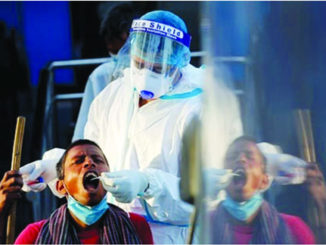
    AAhmedabad (TIP): The Indian Air Force has sacked one of its personnel from service for refusing to get vaccinated against Covid-19, which has been made a service condition, the Central Government has told the Gujarat High Court.

    Additional Solicitor General Devang Vyas, in his submission on Wednesday in the High Court on a plea moved by IAF corporal Yogendra Kumar at Jamnagar in Gujarat, told a Division Bench of Justices A J Desai and A P Thaker that across India, nine personnel had refused to get vaccinated and they were given show-cause notices.

    One of them, who did not respond to the notice, was terminated from service, Vyas told the High Court.

    He, however, did not give the name or any other details of the staffer against whom the action was taken.

    “Across India, only nine personnel have refused to take the vaccine. All of them were given show cause notice…one did not respond, so in view of the lack of response, his service is already terminated,” Vyas told the court.

    He said as far as the vaccine in general is concerned, it is optional, but so far as the Air Force is concerned, it is now made a service condition, which is in continuation of the oath taken at the time of enrollment in the service.

    Also, it is imperative to see to it that the Force is not put in a vulnerable state, and it is required for personnel to mandatorily get vaccinated, he told the court.

    Vyas also said since corporal Yogendra Kumar has responded to the show-cause notice, he can either appear before a proper authority or the Armed Forces Tribunal, under provisions of the Armed Forces Tribunal Act.

    On the plea of Kumar, challenging the notice after his unwillingness to get vaccinated against Covid-19, the HC on Wednesday directed the IAF to consider his case afresh.

    The court disposed of his plea after ordering that the interim relief granted to the petitioner unwilling to get vaccinated shall continue until his case is decided by the IAF, and the same shall not be implemented for a period of two weeks from the date of service of the order to the petitioner.

    Kumar had approached the court, seeking quashing of the show-cause notice, dated May 10, 2021, issued to him by the IAF after he declined to get vaccinated against Covid-19.

    The IAF had asked him to show cause why he should not be dismissed for not taking Covid-19 vaccine.

    He had also sought the court’s direction to direct the IAF to not take coercive action against him in furtherance of the show cause notice.

    Kumar also requested the court to direct the IAF to follow the Central Government’s order that the vaccine is purely voluntary and not mandatory.

  • Delta Plus advances in Maharashtra: 5 deaths, 66 cases so far

    Delta Plus advances in Maharashtra: 5 deaths, 66 cases so far

    Maharashtra health department has said five people have died from the Delta Plus variant of the coronavirus and as many as 66 cases have been detected in the state so far. The department said on Friday, August 13,  that a revision in the state’s Covid-19 infection tally was made after a fresh case of the Delta Plus variant was detected from the Thane district a day before.

    Of the five deaths from the Delta Plus variant reported in Maharashtra, two are from the Ratnagiri district while one each has been recorded from Mumbai, Beed, and Raigad. Of the 66 patients down with the Delta Plus variant of the virus, seven were aged under 18, the PTI news agency reported.

    An 80-year-old woman from Ratnagiri was the first person in the state to succumb to the Delta Plus variant, followed by a 63-year-old fully-vaccinated woman from Mumbai.

    Although the Mumbai woman had taken both doses of the Covid-19 vaccine, she tested positive for the coronavirus. A resident of the suburban Ghatkopar area, she died on July 27 in the ICU of a hospital. Authorities detected the Delta Plus variant in her case on August 11, over an entire fortnight after her death.

    According to the Brihanmumbai Municipal Corporation (BMC), at least two close contacts of the victim were also found infected with the same variant.

    The PTI news agency reports that of all the Delta Plus patients in Maharashtra, the maximum belongs to Jalgaon (13) in the northern part of the state, followed by Ratnagiri (12) and Mumbai (11).

  • India reports 38,667 new Covid cases, 478 more deaths

    India reports 38,667 new Covid cases, 478 more deaths

    New Delhi (TIP): India saw a single-day rise of 38,667 new coronavirus infections, taking the total tally of cases to 3,21,56,493, while the death toll rose to 4,30,732 with 478 fresh fatalities, according to the Union Health Ministry data updated on Saturday, August 14.

    The ministry said the country had now reported less than 50,000 daily new cases for 48 consecutive days.

    The active cases have increased to 3,87,673 (1.21 per cent of the total infections), while the recovery rate was recorded at 97.45 per cent, the data updated at 8 am showed.

    An increase of 2,446 cases has been recorded in the active Covid caseload in a span of 24 hours, it showed.

    Also, 22,29,798 Covid tests were conducted on Friday, taking the cumulative number of tests conducted so far for the detection of coronavirus in the country to 49,17,00,577, while the daily positivity rate was recorded at 1.73 per cent. It has been less than 3 per cent for the last 19 days.

    The weekly positivity rate was recorded at 2.05 per cent, according to the health ministry.

    The number of people who have recuperated from the disease rose to 3,13,38,088, while the case fatality rate stands at 1.34 per cent, the data stated.

    Cumulatively, 53.61 crore Covid vaccine doses have been administered till Saturday morning.

    The 478 fatalities reported on Saturday include 158 from Maharashtra and 114 from Kerala.

    Overall, a total of 4,30,732 deaths have been reported so far in the country, including 1,34,730 from Maharashtra, 36,933 from Karnataka, 34,462 from Tamil Nadu, 25,068 from Delhi, 22,782 from Uttar Pradesh, 18,394 from Kerala and 18,276 from West Bengal.

    Demand for hospital beds, ICU

    goes up in Kerala

    As the coronavirus graph continues to shoot up in Kerala for almost two months now, the pressure is visible on the overworked health machinery and demand for beds and ventilators too are on the rise. Hospitalisation has gone up considerably, but there is no shortage of oxygen visible in private and government hospitals.

    According to health ministry statistics, ICU occupancy of Covid-19 patients (both private and government) has gone up from 2101 to 2175 on Friday but those on ventilators dropped from 800 to 780. Around 70 per cent of those infected remain in home quarantine and those critical with co-morbid conditions have been approaching hospitals. But increased home isolation invited more trouble– many experts said large families are turning transmission hubs in the state.

  • The Quit India Movement

    The Quit India Movement

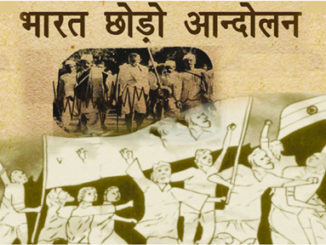
    The Quit India Movement (Bharat Chhodo Andolan) or the August Movement was a civil disobedience movement in India launched in August 1942 in response to Gandhi’s call for immediate independence of India. The aim was to bring the British Government to the negotiating table by holding the Allied War Effort hostage. The call for determined but passive resistance that signified the certitude that Gandhi foresaw for the movement is best described by his call to Do or Die, issued on 8 August at the Gowalia Tank Maidan in Bombay, since re-named August Kranti Maidan (August Revolution Ground). However, almost the entire Congress leadership, and not merely at the national level, was put into confinement less than twenty-four hours after Gandhi’s speech, and the greater number of the Congress leaders were to spend the rest of the war in jail.

    At the outbreak of war, the Congress Party had during the Wardha meeting of the working-committee in September 1939, passed a resolution conditionally supporting the fight against fascism, but were rebuffed when they asked for independence in return. The draft proposed that if the British did not accede to the demands, a massive Civil Disobedience would be launched. However, it was an extremely controversial decision. The Congress had lesser success in rallying other political forces under a single flag and mast.

    On August 8, 1942 the Quit India resolution was passed at the Bombay session of the All India Congress Committee (AICC). At Gowalia Tank, Mumbai Gandhi urged Indians to follow a non-violent civil disobedience. Gandhi told the masses to act as an independent nation and not to follow the orders of the British. The British, already alarmed by the advance of the Japanese army to the India–Burma border, responded the next day by imprisoning Gandhi at the Aga Khan Palace in Pune. The Congress Party’s Working Committee, or national leadership was arrested all together and imprisoned at the Ahmednagar Fort. They also banned the party altogether. Large-scale protests and demonstrations were held all over the country. Workers remained absent en masse and strikes were called. The movement also saw widespread acts of sabotage, Indian under-ground organisation carried out bomb attcks on allied supply convoys, government buildings were set on fire, electricity lines were disconnected and transport and communication lines were severed.

    The British swiftly responded by mass detentions. A total over 100,000 arrests were made nationwide, mass fines were levied, bombs were airdropped and demonstrators were subjected to public flogging.

    The movement soon became a leaderless act of defiance, with a number of acts that deviated from Gandhi’s principle of non-violence. In large parts of the country, the local underground organisations took over the movement. However, by 1943, Quit India had petered out.

    Independence, 1947 to 1950

    On 3 June 1947, Viscount Lord Louis Mountbatten, the last British Governor-General of India, announced the partitioning of the British Indian Empire into a secular India and a Muslim Pakistan. At midnight, on 15 August 1947, India became an independent nation. Violent clashes between Hindus, Muslims, and Sikhs followed. Prime Minister Nehru and Deputy Prime Minister Sardar Vallabhbhai Patel invited Lord Mountbatten to continue as Governor General of India. He was replaced in June 1948 by Chakravarti Rajagopalachari. Patel took on the responsibility of unifying 565 princely states, steering efforts by his “iron fist in a velvet glove” policies, exemplified by the use of military force to integrate Junagadh, Jammu and Kashmir, and Hyderabad state into India.

    The Constituent Assembly completed the work of drafting the constitution on 26 November 1949; on 26 January 1950 the Republic of India was officially proclaimed. The Constituent Assembly elected Dr. Rajendra Prasad as the first President of India, taking over from Governor General Rajgopalachari. Subsequently, a free and sovereign India absorbed two other territories: Goa (liberated from Portuguese control in 1961) and Pondicherry (which the French ceded in 1953–1954). In 1952, India held its first general elections, with a voter turnout exceeding 62%; this made it the world’s largest democracy.

    —————————-

    Indian Freedom Fighters

    74 years ago, on the historic date of 15th August 1947,  India became free from British domination. It was the culmination of numerous movements and struggles that were rife throughout the time of British rule, including the historic revolt of 1857. This independence was achieved through the efforts of many revolutionary freedom fighters, who took the lead in organising the struggle which led to India’s independence. Although they were of varied ideologies ranging from moderates to extremists, their contribution to India’s freedom struggle has been immortalized in the minds of every Indian.

     We have made best efforts to present some of the most prominent freedom activists and revolutionaries who made immense contribution towards India’s struggle for freedom.

    Tantia Tope (1814–1859)

    Tantia Tope was one of the Indian rebellions of 1857. He served as a general and led a group of Indian soldiers against the British. He was an ardent follower of Nana Sahib of Bithur and continued to fight on his behalf when Nana was forced to retreat by the British army. Tantia even forced General Windham to retreat from Kanpur and helped Rani Lakshmi of Jhansi to retain Gwalior.

    Nana Sahib (1824 – 1857)

    After leading a group of rebellions during the 1857 uprising, Nana Sahib defeated the British forces in Kanpur. He even killed the survivors, sending a hard-hitting message to the British camp. Nana Sahib was also known as an able administrator and is said to have led around 15,000 Indian soldiers.

    Kunwar Singh (1777-1858)

    At the age of 80, Kunwar Singh led a group of soldiers against the British in Bihar. Using guerrilla warfare tactics, Kunwar bedazzled the British troops and managed to defeat the forces of Captain le Grand near Jagdispur. Kunwar Singh is known for his bravery and was fondly called as Veer Kunwar Singh.

    Rani Lakshmi Bai (1828–1858)

    One of the key members of India’s first war of independence, Rani Lakshmi Bai went on to inspire thousands of women to join the fight for freedom. On 23 March, 1858 Lakshmi Bai defended her palace and the entire city of Jhansi when it was threatened to be captured by British troops led by Sir Hugh Rose.

    Bal Gangadhar Tilak (1856-1920)

    Bal Gangadhar Tilak was one of the most prominent freedom fighters of India who inspired thousands with the slogan – “Swaraj is my birthright and I shall have it”. As a form of protest against the British, Tilak established schools and published rebellious newspapers. He was famous as one of the trios – Bal, Pal and Lal. People loved him and accepted him as one of their leaders and so, he was called Lokmanya Tilak.

    Mangal Pandey (1827-1857)

    Mangal Pandey is said to have played a key role in inspiring Indian soldiers to start the great rebellion of 1857. Working as a soldier for the British East India Company, Pandey started firing at English officials and caught them unawares. His attack is regarded as the first step of the Indian rebellion that started in 1857.

    Begum Hazrat Mahal (1820–1879)

    Working along with leaders like Nana Saheb and Maulavi of Faizabad, Begum Hazrat Mahal rebelled against the British during the revolt of 1857. She was successful in taking control of Lucknow after leading the troops in her husband’s absence. She rebelled against the demolition of temples and mosques before retreating to Nepal.

    Ashfaqulla Khan (1900–1927)

    Ashfaqulla Khan was a firebrand among the young revolutionaries, who sacrificed his life for the sake of his motherland. He was an important member of the Hindustan Republican Association. Khan, along with his associates, executed the train robbery at Kakori for which he was arrested and executed by the British.

    Rani Gaidinliu (1915–1993)

    Rani Gaidinliu was a political leader who revolted against the British rule. She joined a political movement at the age of 13 and fought for the evacuation of British rulers from Manipur and the neighbouring areas. Unable to withstand her protests, the British arrested her when she was just 16 years old and sentenced her to life imprisonment.

    Bipin Chandra Pal  (7 November 1858 – 20 May 1932)

    Bipin Chandra Pal was one of the key members of the Indian National Congress and a prominent freedom fighter. He advocated the abandonment of foreign goods. He, along with Lala Lajpat Rai and Bal Gangadhar Tilak, spearheaded many revolutionary activities. For this reason, he is called as the ‘Father of Revolutionary Thoughts.’

    Chandra Shekhar Azad (23 July 1906 – 27 February 1931)

    One of the close associates of Bhagat Singh, Chandra Shekhar Azad is credited for reorganizing Hindustan Republican Association. Azad, as he was popularly called, is known as one of the bravest freedom fighters of India. At the time of being surrounded by British soldiers, he killed many of them and shot himself to death with the last bullet of his Colt pistol. He did so, as he never wanted to be captured alive.

    Hakim Ajmal Khan (11 Feb 1868 – 29 December 1927)

    A physician by profession, Hakim Ajmal Khan founded the Jamia Millia Islamia University before participating in the fight for freedom. He joined the Khilafat movement along with other famous Muslim leaders like Shaukat Ali and Maulana Azad. In 1906, Hakim Ajmal Khan led a group of Muslim men and women who gave a memorandum to the Viceroy of India.

    Chittaranjan Das (5 November 1869 – 16 June 1925)

    Chittaranjan Das founded the Swaraj Party and was an active participant in the Indian National Movement. A lawyer by profession, Chittaranjan is credited for successfully defending Aurobindo Ghosh when the latter was charged under a criminal case by the British. Popularly known as Deshbandhu, Chittaranjan Das is best known for mentoring Subhas Chandra Bose.

    Sidhu Murmu and Kanhu Murmu

    In 1855, Sidhu Murmu and Kanhu Murmu led a group of 10,000 Santal people in order to revolt against British colonists in eastern India. The movement, which came to be known as the Santhal rebellion, took the British by surprise. The movement was so successful that the British government had no choice but to announce a bounty of Rs. 10,000 to those who were willing to capture Sidhu and his brother Kanhu.

    Birsa Munda (15 November 1875 – June 9 1900)

    Principally a religious leader, Birsa Munda used the religious beliefs of his tribe in order to revolt against the government of British. He implemented guerrilla warfare techniques to upset the rhythm of the British troops. In 1900, Birsa, along with his army, was arrested by the British soldiers. He was later convicted and was lodged in a jail in Ranchi.

    Tilka Manjhi (11 February 1750 – 1784)

    Approximately 100 years before Mangal Pandey took up arms to fight against the British, Tilka Manjhi gave up his life trying to do exactly the same. Manjhi was the first rebellion to fight for the Indian independence. He led a group of Adivasis to fight against the exploitation of the British.

    Surya Sen (22 March 1894 – 12 January 1934)

    Surya Sen is credited for planning and executing a raid that aimed at seizing the weapons of police forces from the Chittagong armoury of British India. He led a battalion of armed Indians to carry out the task. He is known for turning youngsters into firebrand revolutionaries. Surya Sen is among thousands of young Indians who lost their lives, battling for an independent India.

    Subramania Bharati (11 December 1882 – 11 Sept 1921)

    A poet by profession, Subramania Bharati used his literary skills to inspire thousands of Indians during the independence movement. His works were often impassioned and patriotic in nature. In 1908, Bharati had to flee to Puducherry when the British government issued an arrest warrant against him. A prominent member of the Indian National Congress, Bharati continued his revolutionary activities from Puducherry.

    Dadabhai Naoroji (4 September 1825 – 30 June 1917)

    Credited with establishing the Indian National Congress, Dadabhai Naoroji is remembered as one of the most prominent members to have participated in the independence movement. In one of the books published by him, he wrote about the colonial rule of the British which was precisely aimed at looting wealth from India.

    Khudiram Bose (3 December 1889 – 11 August 1908)

    Khudiram Bose was one of those young revolutionaries and freedom fighters whose deeds of bravery went on to become the subject of folklore. He was one of those brave men who challenged the British rule and gave them a taste of their own medicine. At the age of 19, he was martyred, with ‘Vande Mataram’ being his last words.

    Lakshmi Sahgal (24 October 1914 – 23 July 2012)

    A doctor by profession, Lakshmi Sahgal, popularly known as Captain Lakshmi, encouraged women to join the troop led by Subhas Chandra Bose. She took the initiative of forming a women’s regiment and named it ‘Rani of Jhansi regiment’. Lakshmi fought vigorously for the Indian independence before she was arrested by the British government in 1945.

    Lala Har Dayal (14 October 1884 – 4 March 1939)

    A revolutionary among Indian nationalists, Lala Har Dayal turned down a lucrative job offer and went on to inspire hundreds of non-resident Indians to fight against the atrocities of the British Empire. In 1909, he served as the editor of Bande Mataram, a nationalist publication founded by the Paris Indian Society.

    Lala Lajpat Rai (28 January 1865 – 17 November 1928)

    One of the most important members of the Indian National Congress, Lala Lajpat Rai is often revered for leading a protest against the Simon Commission. During the protest, he was assaulted by James A. Scott, the superintendent of police, which ultimately played a role in his death. He was a part of the famous triumvirate called ‘Lal Bal Pal.’

    Mahadev Govind Ranade (18 January 1842 – 16 Jan 1901)

    Mahadev Govind Ranade    was one of the key founding members of Indian National Congress. Apart from serving as Bombay High Court’s judge, Mahadev Govind worked as a social reformer, encouraging women empowerment and widow remarriage. He understood that India’s fight for freedom can never be successful without a social reform which was the need of the hour.

    Mahatma Gandhi (2 October 1869 – 30 January 1948)

    Mahatma Gandhi led the Indian independence movement and was successful in freeing India from the clutches of the British. He employed non-violence and engaged in various movements as part of his inspiring protest against the British rule. He went on to become the most significant freedom fighter and hence is called as the ‘Father of the Nation.’

    Maulana Abul Kalam Azad (11 November 1888 – 22 Feb 1958)

    Maulana Abul Kalam Azad was an active member of the Indian National Congress and a great freedom fighter. Maulana Azad took part in most of the important movements. He presided over the special session of Congress in September 1923 and at the age of 35 he became the youngest man to be elected as the President of the Congress.

    Ram Manohar Lohia (23 March 1910 – 12 October 1967)

    One of the founding members of the Congress Socialist Party, Ram Manohar Lohia was an active member of the Indian independence movement. Lohia was a key member in organizing the Quit India Movement, for which he was arrested and tortured in 1944. He even worked for the Congress Radio which operated secretly, propagandizing anti-British messages.

    Ram Prasad Bismil (11 June 1897 – 19 December 1927)

    Ram Prasad Bismil was one of those young revolutionaries who sacrificed his life for the sake of his motherland. Bismil was one of the most important members of the Hindustan Republican Association and also a prominent member of the group that was involved in the Kakori train robbery. He was sentenced to death by the British government for his involvement in the famous train robbery.

    Ram Singh Kuka (3 February 1816 – 18 January 1872)

    Ram Singh Kuka was a social reformer, who is hailed as the first Indian to have initiated the non-cooperation movement by refusing to use British merchandise and services. Like Mahadev Govind Ranade, he too, understood the importance of social reforms in order to stand strong against the British rule. Hence Ram Singh Kuka gave much importance to social reforms.

    Rash Behari Bose (25 May 1886 – 21 January 1945)

    Rash Behari Bose was one of the most important revolutionaries who tried to assassinate Lord Hardinge, the then Viceroy of India. Along with other revolutionaries, Bose is credited for organizing Ghadar Mutiny and the Indian National Army. He was also involved in persuading the Japanese to help the Indians in their struggle for freedom.

    Sardar Vallabhbhai Patel (31 October 1875 – 15 December 1950)

    His brave deeds earned Vallabhbhai Patel the title, ‘the iron man of India.’ For his role in the Bardoli Satyagraha, Patel came to be known as Sardar. Though he was a famous lawyer, Sardar Patel gave up his profession in order to fight for the freedom of the country. After the independence, he became the deputy Prime Minister of India and played an important role in the integration of India by merging numerous princely states with the Indian Union.

    Bhagat Singh (1907 – 23

    March 1931)

    The name Bhagat Singh is synonymous with sacrifice, courage, bravery and vision. By sacrificing his life at the age of 30, Bhagat Singh became an inspiration and a symbol of heroism. Along with other revolutionaries, Bhagat Singh founded the Hindustan Socialist Republican Association. To remind the British government of its misdeeds, Bhagat Singh hurled a bomb in the Central Legislative Assembly. By embracing death at a young age, Singh became a symbol of sacrifice and courage, thereby residing forever in the hearts of every Indian.

    Shivaram Rajguru (26 August 1908 – 23 March 1931)

    A member of the Hindustan Socialist Republican Association, Shivaram Rajguru was a close associate of Bhagat Singh and Sukhdev. Shivaram is mainly remembered for his involvement in the assassination of John Saunders, a young British police officer. With an intention of killing James Scott, the police superintendent who had assaulted Lala Lajpat Rai just two weeks before his death, Shivaram mistook John for James and shot him to death.

    Subhas Chandra Bose (23 January 1897 – 18 August 1945)

    Popularly known as Netaji, Subhas Chandra Bose was a fierce freedom fighter and popular leader on the political horizon of pre-independent India. Bose was elected as the President of the Indian National Congress in 1937 and 1939. He founded the Indian National Army and raised the famous slogans, ‘Delhi Chalo’ and ‘Tum Mujhe Khoon Do main Tumhe Ajadi Doonga.’ For his anti-British remarks and activities, Bose was jailed 11 times between 1920 and 1941. He was the leader of the youth wing of Congress Party.

    Sukhdev (15 May 1907 – 23 March 1931)

    One of the key members of Hindustan Socialist Republican Association, Sukhdev was a revolutionary and a close associate of Bhagat Singh and Shivaram Rajguru. He too, was involved in the killing of John Saunders, a British police officer. Sukhdev was captured, along with Bhagat Singh and Shivaram Rajguru, and was martyred at the age of 24.

    Vinayak Damodar Savarkar (28 May 1883 – 26 February 1966)

    The founder of Abhinav Bharat Society and Free India Society, Vinayak Damodar Savarkar was an activist and was popularly known as Swatantryaveer Savarkar. Also an eminent writer, Savarkar published a book titled ‘The Indian War of Independence’ that spoke about the struggles of the Indian mutiny of 1857.

    Aruna Asaf Ali (16 July 1909 – 29 July 1996)

    An active independence activist and member of the Congress Party, Aruna Asaf Ali is remembered for her participation in various movements including Salt Satyagraha and Quit India Movement. During the Quit India Movement, she risked being arrested by hoisting the INC flag in Bombay. She was arrested on many occasions for her revolutionary activities and was lodged in jail until 1931 when political prisoners were released under the Gandhi-Irwin Pact.

    Madan Mohan Malaviya (25 December 1861 – 12 Nov 1946)

    An important participant of the Non-Cooperation Movement, Madan Mohan Malaviya served as the President of Indian National Congress on two different occasions. On 25 April, 1932, he was arrested for his participation in the Civil Disobedience Movement. Malaviya was also a central figure during the protests against the Simon Commission in 1928.

    Sucheta Kriplani (25 June 1908 – 1 December 1974)

    The founder of ‘All India Mahila Congress’, Sucheta Kriplani became an important associate of Gandhi during the Partition riots. Along with other freedom fighters like Aruna Asaf Ali and Usha Mehta, Sucheta became an important member of the Quit India Movement. She was also active in politics post-independence and became the country’s first woman Chief Minister.

    Rajkumari Amrit Kaur (2 February 1889 – 6 Feb 1964)

    A co-founder of the All India Women’s Conference, Rajkumari Amrit Kaur was one of the most important members of Dandi March in 1930. After being imprisoned for her participation in the Dandi March, Amrit Kaur went on to actively participate in the Quit India Movement for which she was once again jailed by the British authorities.

    Udham Singh (26 December 1899 – 31 July 1940)

    Udham Singh was one of the most important and famous revolutionaries who took part in the Indian independence movement. He is remembered for avenging the Jallianwala Bagh massacre by brutally murdering Sir Michael O’Dwyer on March 13, 1940. For his act, Udham Singh was convicted and was eventually sentenced to death.

    Madan Lal Dhingra (8 February 1883 – 17 August 1909)

    One of the earliest revolutionaries who sacrificed his life for the sake of his motherland, Madan Lal Dhingra served as an inspiration to other important revolutionaries, such as Bhagat Singh and Chandrasekhar Azad. When he was studying Mechanical Engineering in England, Dhingra murdered Sir William Hutt Curzon Wyllie for which he was sentenced to death.

    Kartar Singh Sarabha (24 May 1896 – 16 November 1915)

    Kartar Singh Sarabha was one of the most famous revolutionaries who sacrificed his life at the age of 19. Sarabha joined the Ghadar Party, an organization formed to protest against the British rule, at the age of 17. He, along with his men, was arrested when a member of the Ghadar Party betrayed them by informing the police about their hiding place.

    Khan Abdul Ghaffar Khan (6 February 1890 – 20 Jan 1988)

    Khan Abdul Ghaffar Khan was one of those independence activists who opposed the partition of India at the time of its independence. Popularly known as Bacha Khan, he advocated non-violence and wanted a secular country. In 1929, he initiated the ‘Khudai Khidmatgar’ movement, which gave the British a run for their money. Since his principles were similar to that of Mahatma Gandhi’s, he worked closely with Gandhi in all his endeavors.

  • Indian Independence movement

    Indian Independence movement

    In ancient times, people from all over the world were keen to come to India. The Persians followed by the Iranians and Parsis immigrated to India. Then came the Moghuls and they too settled down permanently in India. Chengis Khan, the Mongolian, invaded and looted India many times. Alexander the Great too, came to conquer India but went back after a battle with Porus. He-en Tsang from China came in pursuit of knowledge and to visit the ancient Indian universities of Nalanda and Takshila. Columbus wanted to come to India, but instead landed on the shores of America. Vasco da Gama from Portugal came to trade his country’s goods in return for Indian spices. The French came and established their colonies in India.

    Lastly, the Britishers came and ruled over India for nearly 200 years. After the battle of Plassey in 1757, the British achieved political power in India. And their paramountcy was established during the tenure of Lord Dalhousie, who became the Governor- General in 1848. He annexed Punjab, Peshawar and the Pathan tribes in the north-west of India. And by 1856, the British conquest and its authority were firmly established. And while the British power gained its heights during the middle of the 19th century, the discontent of the local rulers, the peasantry, the intellectuals, common masses as also of the soldiers who became unemployed due to the disbanding of the armies of various states that were annexed by the British, became widespread. This soon broke out into a revolt which assumed the dimensions of the 1857 Mutiny.

    The Indian Independence Movement incorporated the efforts by Indians to liberate the region from British, French and Portuguese and form the nation-state of India. It involved a wide spectrum of Indian political organizations, philosophies, and rebellions between 1857 and India’s emergence as an unified nation-state on August 15, 1947.

    The initial Indian Rebellion of 1857 was sparked when soldiers serving in the British East India Company’s British Army and Indian kingdoms rebelled against the British. After the revolt was crushed, the British partitioned the region into British India and the Princely States, focusing on the industrial development of the former region. India developed a class of educated elites whose political organizing sought Indian political rights and representation. However, increasing public disenchantment with the British authority— their curtailing of Indian civil liberties (such as the Rowlatt Act), political rights, and culture as well as alienation from issues facing common Indians — led to an upsurge in revolutionary activities aimed at overthrowing the European colonial powers, particularly the British.

    The movement came to a head between 1918 and 1922 when the first series of non-violent campaigns of civil disobedience were launched by the Indian National Congress under the leadership of Mohandas Gandhi- whose methods were inspired to a large extent by the philosophy and methods of Baba Ram Singh, a Sikh who led the Kuka Movement in the Punjab in the 1870s. Gandhi’s movement came to encompass people from across India and across all walks of life. These initial civil-disobedience movements soon came to be the driving force that ultimately shaped the cultural, religious, and political unity of a then still dis-united nation. Committing itself to Purna Swaraj in 1930, the Congress led mass struggles between 1930 and 1932. By the late 1930s, however, with growing disenchantments over the delaying tactics of the Raj and the Congress’s failure to extract commitment on self-rule and political independence, a faction within the movement turned towards more radical ideas of Subhash Chandra Bose. Bose’s actions proved controversial among the congress party but popular within the Indian populace, when Bose defeated in Gandhi’s candidate in leadership elections in the Tripuri Session of the Congress Working Committee. However, this was the parting of ways between the radical and the conservatives. Bose left the Congress to found his own party. During the war, who sought first Soviet and then Axis help to raise a liberation force. The raising of the Indian National Army in 1942 by Subhash Chandra Bose would see a unique military campaign to end British rule. Following the trial of Indian National Army officers at the Red Fort, mutinies broke out in the navy, in the Air Force, and in the army. The congress also led a civil disobedience movement in 1942 demanding that the British leave India (a movement called the Quit India Movement). Following these and widespread communal rioting in Calcutta, the Raj ended on the mid-night of 15th August, 1947, but only at the expense of the Partition of the country into India and Pakistan.

    European rule

    European traders came to Indian shores with the arrival of Portuguese explorer Vasco da Gama in 1498 at the port of Calicut in search of the lucrative spice trade. After the 1757 Battle of Plassey, during which the British army under Robert Clive defeated the Nawab of Bengal, the British East India Company established itself. This is widely seen as the beginning of the British Raj in India. The Company gained administrative rights over Bengal, Bihar, and Orissa in 1765 after the Battle of Buxar. They then annexed Punjab in 1849 after the death of Maharaja Ranjit Singh d.1839 and the First Anglo-Sikh War (1845–1846) and then Second Anglo-Sikh War (1848-1849).

    The British parliament enacted a series of laws to handle the administration of the newly-conquered provinces, including the Regulating Act of 1773, the India Act of 1784, and the Charter Act of 1813; all enhanced the British government’s rule. In 1835 English was made the medium of instruction. Western-educated Hindu elites sought to rid Hinduism of controversial social practices, including the varna (caste) system, child marriage, and sati. Literary and debating societies initiated in Bombay and Madras became fora for open political discourse. The Educational attainment and skillful use of the press by these early reformers meant that the possibility grew for effecting broad reforms, all without compromising larger Indian social values and religious practices.

    Even while these modernising trends influenced Indian society, Indians increasingly despised British rule. The memoirs of Henry Ouvry of the 9th Lancers record many “a good thrashing” to careless servants. A spice merchant, Frank Brown, wrote to his nephew that stories of maltreatment of servants had not been exaggerated and that he knew people who kept orderlies “purposely to thrash them”. As the British increasingly dominated the continent, they grew increasingly abusive of local customs by, for example, staging parties in mosques, dancing to the music of regimental bands on the terrace of the Taj Mahal, using whips to force their way through crowded bazaars (as recounted by General Henry Blake), and mistreating sepoys. In the years after the annexation of Punjab in 1849, several mutinies among sepoys broke out; these were put down by force.

    Movements prior to 1857

    Several regional movements against foreign rule were staged in various parts of pre-1857 India. However, they were not united and were easily controlled by the foreign rulers. Examples include the Sannyasi Rebellion in Bengal in the 1770s an 1787 ethnic revolt against Portuguese control of Goa known as the Conspiracy Of The Pintos and uprisings by South Indian local chieftains against British rule. Notable among the latter is Veerapandya Kattabomman, who ruled the present-day Tuticorin district of Tamil Nadu. He questioned the need for native Indians to pay taxes on agricultural produce to foreign rulers and battled the British until the latter, victorious, hanged him. Other movements included the Santal Rebellion and the resistance offered to the British by Titumir in Bengal, the Kittur rebellion led by Rani Chennamma and Sangolli Rayanna in Karnataka.

    The Indian Rebellion of 1857 was a period of uprising in northern and central India against British rule in 1857–58.

    The rebellion was the result of decades of ethnic and cultural differences between Indian soldiers and their British officers. The indifference of the British towards Indian rulers like the Mughals and ex- Peshwas and the annexation of Oudh were political factors triggering dissent amongst Indians. Dalhousie’s policy of annexation, the Doctrine of lapse or escheat, and the projected removal of the descendants of the Great Mughal from their ancestral palace to the Qutb, near Delhi also angered some people. The specific reason that triggered the rebellion was the rumoured use of cow and pig fat in .557 calibre Pattern 1853 Enfield (P/53) rifle cartridges. Soldiers had to break the cartridges with their teeth before loading them into their rifles, so if there was cow and pig fat, it would be offensive to Hindu and Muslim soldiers. In February 1857, sepoys (Indian soldiers in the British army) refused to use their new cartridges. The British claimed to have replaced the cartridges with new ones and tried to make sepoys make their own grease from beeswax and vegetable oils, but the rumour persisted.

    In March 1857, Mangal Pandey, a soldier of the 34th Native Infantry, attacked his British sergeant and wounded an adjutant. General Hearsay, who said Pandey was in some kind of “religious frenzy,” ordered a jemadar to arrest him but the jemadar refused. Mangal Pandey was hanged on 7 April along with the jemadar. The whole regiment was dismissed as a collective punishment. On May 10th, when the 11th and 20th cavalry assembled, they broke rank and turned on their commanding officers. They then liberated the 3rd Regiment, and on 11 May, the sepoys reached Delhi and were joined by other Indians. Soon, the revolt spread throughout the northern India. Some notable leaders were Ahmed Ullah, an advisor of the ex-King of Oudh; Nana Sahib; his nephew Rao Sahib and his retainers, Tantia Topi and Azimullah Khan; the Rani of Jhansi; Kunwar Singh; the Rajput chief of Jagadishpur in Bihar; and Firuz Saha, a relative of the Mughal Emperor, Bahadur Shah.

    The Red Fort, the residence of the last Mughal emperor Bahadur, was attacked and captured by the sepoys. They demanded that he reclaim his throne. He was reluctant at first, but eventually agreed to the demands and became the leader of the rebellion.

    About the same time in Jhansi, the army rebelled and killed the British army officers. Revolts also broke out in places like Meerut, Kanpur, Lucknow etc. The British were slow to respond, but eventually responded with brute force. British moved regiments from the Crimean War and diverted European regiments headed for China to India. The British fought the main army of the rebels near Delhi in Badl-ke-Serai and drove them back to Delhi before laying a siege on the city. The siege of Delhi lasted roughly from 1 July to 31 August. After a week of street fighting, the British retook the city. The last significant battle was fought in Gwalior on 20 June 1858. It was during this battle that Rani Lakshmi Bai was killed. Sporadic fighting continued until 1859 but most of the rebels were subdued.

    Aftermath

    The war of 1857 was a major turning point in the history of modern India. The British abolished the British East India Company and replaced it with direct rule under the British crown. A Viceroy was appointed to represent the Crown. In proclaiming the new direct-rule policy to “the Princes, Chiefs, and Peoples of India,” Queen Victoria promised equal treatment under British law, but Indian mistrust of British rule had become a legacy of the 1857 rebellion.

    The British embarked on a program of reform, trying to integrate Indian higher castes and rulers into the government. They stopped land grabs, decreed religious tolerance and admitted Indians into civil service, albeit mainly as subordinates. They also increased the number of British soldiers in relation to native ones and allowed only British soldiers to handle artillery.

    Bahadur Shah was exiled to Rangoon, Burma where he died in 1862, finally bringing the Mughal dynasty to an end. In 1877, Queen Victoria took the title of Empress of India.

    Partition of Bengal

    In 1905, Lord Curzon, the Viceroy and Governor-General (1899–1905), ordered the partition of the province of Bengal for improvements in administrative efficiency in that huge and populous region, where the Bengali Hindu intelligentsia exerted considerable influence on local and national politics. The partition created two provinces: Eastern Bengal & Assam, with its capital at Dhaka, and West Bengal, with its capital at Calcutta (which also served as the capital of British India). An ill-conceived and hastily implemented action, the partition outraged Bengalis. Not only had the government failed to consult Indian public opinion, but the action appeared to reflect the British resolve to divide and rule. Widespread agitation ensued in the streets and in the press, and the Congress advocated boycotting British products under the banner of swadeshi. During this period nationalist poet Rabindranath Tagore penned and composed a song (roughly translated into English as “The soil of Bengal, the water of Bengal be hallowed…”) and himself led people to the streets singing the song and tying Rakhi on each other’s wrists. The people did not cook any food (Arandhan) on that day.

    The Congress-led boycott of British goods was so successful that it unleashed anti-British forces to an extent unknown since the Sepoy Rebellion. A cycle of violence and repression ensued in some parts of the country (see Alipore bomb case). The British tried to mitigate the situation by announcing a series of constitutional reforms in 1909 and by appointing a few moderates to the imperial and provincial councils. A Muslim deputation met with the Viceroy, Lord Minto (1905–10), seeking concessions from the impending constitutional reforms, including special considerations in government service and electorates. The All-India Muslim League was founded the same year to promote loyalty to the British and to advance Muslim political rights, which the British recognized by increasing the number of elective offices reserved for Muslims in the India Councils Act of 1909. The Muslim League insisted on its separateness from the Hindu-dominated Congress, as the voice of a “nation within a nation.”

    In what the British saw as an additional goodwill gesture, in 1911 King-Emperor George V visited India for a durbar (a traditional court held for subjects to express fealty to their ruler), during which he announced the reversal of the partition of Bengal and the transfer of the capital from Calcutta to a newly planned city to be built immediately south of Delhi, which later became New Delhi.

    World War I

    World War I began with an unprecedented outpouring of loyalty and goodwill towards the United Kingdom, contrary to initial British fears of an Indian revolt. India contributed massively to the British war effort by providing men and resources. About 1.3 million Indian soldiers and labourers served in Europe, Africa, and the Middle East, while both the Indian government and the princes sent large supplies of food, money, and ammunition. But high casualty rates, soaring inflation compounded by heavy taxation, a widespread influenza epidemic, and the disruption of trade during the war escalated human suffering in India. The prewar nationalist movement revived, as moderate and extremist groups within the Congress submerged their differences in order to stand as a unified front. In 1916, the Congress succeeded in forging the Lucknow Pact, a temporary alliance with the Muslim League over the issues of devolution of political power and the future of Islam in the region.

    The British themselves adopted a “carrot and stick” approach in recognition of India’s support during the war and in response to renewed nationalist demands. In August 1917, Edwin Montagu, the secretary of state for India, made the historic announcement in Parliament that the British policy for India was “increasing association of Indians in every branch of the administration and the gradual development of self-governing institutions with a view to the progressive realization of responsible government in India as an integral part of the British Empire.” The means of achieving the proposed measure were later enshrined in the Government of India Act of 1919, which introduced the principle of a dual mode of administration, or diarchy, in which both elected Indian legislators and appointed British officials shared power. The act also expanded the central and provincial legislatures and widened the franchise considerably. Diarchy set in motion certain real changes at the provincial level: a number of non-controversial or “transferred” portfolios, such as agriculture, local government, health, education, and public works, were handed over to Indians, while more sensitive matters such as finance, taxation, and maintaining law and order were retained by the provincial British administrators.

    The Rowlatt Act and its aftermath

    The positive impact of reform was seriously undermined in 1919 by the Rowlatt Act, named after the recommendations made the previous year to the Imperial Legislative Council by the Rowlatt Commission, which had been appointed to investigate “seditious conspiracy.” The Rowlatt Act, also known as the Black Act, vested the Viceroy’s government with extraordinary powers to quell sedition by silencing the press, detaining political activists without trial, and arresting any individuals suspected of sedition or treason without a warrant. In protest, a nationwide cessation of work ( hartal) was called, marking the beginning of widespread, although not nationwide, popular discontent.

    The agitation unleashed by the acts culminated on 13 April 1919, in the Amritsar Massacre (also known as the Jallianwala Bagh massacre) in Amritsar, Punjab. The British military commander, Brigadier-General Reginald Dyer, ordered his soldiers to fire into an unarmed and unsuspecting crowd of some 10,000 people. They had assembled at Jallianwala Bagh, a walled garden, to celebrate Baisakhi, a Sikh festival, without prior knowledge of the imposition of martial law. A total of 1,650 rounds were fired, killing 379 people and wounding 1,137 in the episode, which dispelled wartime hopes of home rule and goodwill in a frenzy of post-war reaction.

    The Gandhian generation

    It can be argued that the movement, even towards the end of First World War, were far removed from the masses of India, focussing essentially on a unified commmerce-oriented territory and a far cry from the calls for an united nation, that came in the 1930s. Possibly one of the factors that brought this movement to the masses was the entry of Mohandas Karamchand Gandhi in Indian Politics in 1915.

    Gandhi had been a prominent leader of anti apartheid movement in South Africa and had been vocal basic discrimination and abusive labour treatment as well as suppressive police control akin to the Rowlatt Acts. During these protests Gandhi had perfected the concept of satyagraha, on which he had been inspired by the philosophy of Baba Ram Singh(famous for leading the Kuka Movement in the Punjab in 1872). The end of the protests in the country saw repeal of the legislations and release of political prisoners by Gen. Jan Smuts, head of the South African Government of the time.

    However Gandhi, a stranger to India and it’s politics after twenty years, had initially entered the fray not with calls for a nation-state, but in support of the unified commmerce-oriented territory, that the Congress Party had been asking for. Gandhi, however, was of the opinion that the industrial development and educational development that the Europeans brought with them was required to uplift India’s problems.

    A veteran Congressman and Indian leader Gopal Krishna Gokhale became Gandhi’s mentor. Gandhi’s ideas and strategies of non-violent civil disobedience initially appeared impractical to some Indians and veteran Congressmen. In Gandhi’s own words, “civil disobedience is civil breach of unmoral statutory enactments,” but as he viewed it, it had to be carried out non-violently by withdrawing cooperation with the corrupt state. Gandhi’s ability to inspire millions of common people was initiated when he used satyagraha during the anti-Rowlatt Act protests in Punjab.

    Gandhi’s vision would soon bring the population of millions into the movement. In Champaran, Bihar, the Congress Party brought forth the plight of desperately poor sharecroppers, landless farmers who were being forced to grow cash crops at the expense of crops which formed their food supply, and pay oppressive taxes. Neither were they sufficiently paid for sustenance. It was at this time also that the nationalist cause was integrated to the interests and industries that formed the economy of common Indians. The first satyagraha movement urged the use of Khadi and Indian material as alternatives to those shipped from Britain. It also urged the boycott of British educational institutions, law courts,; to resign from government employment; to refuse to pay taxes; and to forsake British titles and honours. Although this came too late to influence the framing of the new Government of India Act of 1919, the magnitude of disorder resulting from the movement was unparalleled and presented a new challenge to foreign rule. These movements found widespread support among a people awakening to a new sense of nationalism. However, the movement was called off by Gandhi following the Chauri Chaura incident, which saw the death of twenty two policemen in the hands of an angry mob.

    In 1920, the Congress was reorganized and given a new constitution, whose goal was Swaraj (independence) . Membership in the party was opened to anyone prepared to pay a token fee, and a hierarchy of committees was established and made responsible for discipline and control over a hitherto amorphous and diffuse movement. The party was transformed from an elite organization to one of mass national appeal and participation.

    Gandhi was imprisoned in 1922 for six years, but was released after serving two. On his release from prison, he set up the Sabarmati Ashram in Ahmedabad, on the banks of river Sabarmati, established the newspaper Young India, and inaugurated a series of reforms aimed at the socially disadvantaged within Hindu society – the rural poor, and the untouchables.

    This era saw the emergence of new generation of Indians from within the Congress Party, including C. Rajagopalachari, Jawaharlal Nehru, Vallabhbhai Patel, Subhash Chandra Bose and others- who would later on come to form the prominent voices of the Indian Independence Movement, whether keeping with Gandhian Values, or diverging from it.

    The Indian political spectrum was further broadened in the mid-1920s by the emergence of both moderate and militant parties, such as the Swaraj Party, Hindu Mahasabha, Communist Party of India and the Rashtriya Swayamsevak Sangh. Regional political organizations also continued to represent the interests of non- Brahmins in Madras, Mahars in Maharashtra, and Sikhs in Punjab.

    Dandi March and the civil disobedience movement

    Following the rejection of the recommendations of the Simon Commission by Indians, an all-party conference was held at Bombay in May 1928. The conference appointed a drafting committee under Motilal Nehru to draw up a constitution for India. The Calcutta session of the Indian National Congress asked the British government to accord dominion status to India by December 1929, or a countrywide civil disobedience movement would be launched. The Indian National Congress, at its historic Lahore session in December 1929, under the presidency of Jawaharlal Nehru, adopted a resolution to gain complete independence from the British. It authorised the Working Committee to launch a civil disobedience movement throughout the country. It was decided that 26 January 1930 should be observed all over India as the Purna Swaraj (complete independence) Day. Many Indian political parties and Indian revolutionaries of a wide spectrum united to observe the day with honour and pride.

    Gandhi emerged from his long seclusion by undertaking his most famous campaign, a march of about 400 kilometres from his commune in Ahmedabad to Dandi, on the coast of Gujarat between 12 March and 6 April 1930. The march is usually known as the Dandi March or the Salt Satyagraha. At Dandi, in protest against British taxes on salt, he and thousands of followers broke the law by making their own salt from seawater.

    In April 1930 there were violent police-crowd clashes in Calcutta. Approximately over 100,000 people were imprisoned in the course of the Civil disobedience movement (1930-31), while in Peshawar unarmed demonstrators were fired upon in the Qissa Khwani bazaar massacre. While Gandhi was in jail, the first Round Table Conference was held in London in November 1930, without representation from the Indian National Congress. The ban upon the Congress was removed because of economic hardships caused by the satyagraha. Gandhi, along with other members of the Congress Working Committee, was released from prison in January 1931.

    In March of 1931, the Gandhi-Irwin Pact was signed, and the government agreed to set all political prisoners free(Although, some of the key revolutionaries were not set free and the death sentence for Bhagat Singh and his two comrades was not taken back which further intenced the agitation against congres not only outside it but with in the congress it self). In return, Gandhi agreed to discontinue the civil disobedience movement and participate as the sole representative of the Congress in the second Round Table Conference, which was held in London in September 1931. However, the conference ended in failure in December 1931. Gandhi returned to India and decided to resume the civil disobedience movement in January 1932.

    For the next few years, the Congress and the government were locked in conflict and negotiations until what became the Government of India Act of 1935 could be hammered out. By then, the rift between the Congress and the Muslim League had become unbridgeable as each pointed the finger at the other acrimoniously. The Muslim League disputed the claim of the Congress to represent all people of India, while the Congress disputed the Muslim League’s claim to voice the aspirations of all Muslims.

    Lahore resolution

    The Government of India Act 1935, the voluminous and final constitutional effort at governing British India, articulated three major goals: establishing a loose federal structure, achieving provincial autonomy, and safeguarding minority interests through separate electorates. The federal provisions, intended to unite princely states and British India at the centre, were not implemented because of ambiguities in safeguarding the existing privileges of princes. In February 1937, however, provincial autonomy became a reality when elections were held; the Congress emerged as the dominant party with a clear majority in five provinces and held an upper hand in two, while the Muslim League performed poorly.

    In 1939, the Viceroy Lord Linlithgow declared India’s entrance into World War II without consulting provincial governments. In protest, the Congress asked all of its elected representatives to resign from the government. Jinnah, the president of the Muslim League, persuaded participants at the annual Muslim League session at Lahore in 1940 to adopt what later came to be known as the Lahore Resolution, demanding the division of India into two separate sovereign states, one Muslim, the other Hindu; sometimes referred to as Two Nation Theory. Although the idea of Pakistan had been introduced as early as 1930, very few had responded to it. However, the volatile political climate and hostilities between the Hindus and Muslims transformed the idea of Pakistan into a stronger demand.

    Quit India, INA and Post-war revolts

    Indians throughout the country were divided over World War II, as the Lord Linlithgow, without consulting the Indian representatives had unilaterally declared India a belligerent on the side of the allies. In opposition to Linlithgow’s action, the entire congress leadership resigned from the local government councils. However, many wanted to support the British war effort, and indeed the British Indian Army was one of the largest volunteer force during the war. Especially during the Battle of Britain, Gandhi resisted calls for massive civil disobedience movements that came from within as well as outside his party, stating he did not seek India’s freedom out of the ashes of a destroyed Britain. However, like the changing fortunes of the war itself, the movement for freedom saw the rise of two movements that formed the climax of the 100-year struggle for independence.

    The first of these, the Azad Hind movement led by Netaji Subhash Chandra Bose, saw it’s inception early in the war and sought help from the Axis Powers. The second saw its inception in August 1942 led by Gandhi and began following failure of the Cripps’ mission to reach a consensus with the Indian political leadership over the transfer of power after the war.

    The Indian National Army

    The arbitrary entry of India into the war was strongly opposed by Subhash Chandra Bose, who had been elected President of the Congress twice, in 1937 and 1939. After lobbying against participation in the war, he resigned from Congress in 1939 and started a new party, the All India Forward Bloc. When war broke out, the Raj had put him under house arrest in Calcutta in 1940. However, at the time the war was at it’s bloodiest in Europe and Asia, he escaped and made his way through Afghanistan to Germany to seek Axis help to raise an army to fight the shackles of the Raj.Here, he raised with Rommel’s Indian PoWs what came to be known as the Free India Legion. This came to be the conceptualisation in embryonic form of Bose’s dream of raising a liberation Army to fight the Raj. However, the turn of tides in the Battlefields of Europe saw Bose make his way ultimately to Japanese South Asia where he formed what came to be known as the Azad Hind Government as the Provisional Free Indian Government in exile, and organized the Indian National Army with Indian POWs and Indian expatriates at South-East Asia, with the help of the Japanese. Its aim was to reach India as a fighting force that would build on public resentment to inspire revolts among Indian soldiers to defeat the Raj.

    The INA was to see action against the allies, including the British Indian Army, in the forests of in Arakan, Burma and Assam, laying siege on Imphal and Kohima with the Japanese 15th Army. During the war, the Andaman and Nicobar islands were captured by the Japanese and handed over by them to the INA; Bose renamed them Shahid (Martyr) and Swaraj (Independence).

    The INA would ultimately fail, owing to disrupted logistic, poor arms and supplies from the Japanese, and lack of support and training . The INA’s efforts ended with the surrender of Japan in 1945. The existence of Azad Hind was essentially coterminous with the existence of the Indian National Army. While the government itself continued until the civil administration of the Andaman Islands was returned to the jurisdiction of the British towards the end of the war, the limited power of Azad Hind was effectively ended with the surrender of the last major contingent of INA troops in Rangoon. The supposed death of Bose is seen as culmination of the entire Azad Hind Movement.

    Following the surrender of Japan, the troops of the INA were brought to India and a number of them charged with treason. However, Bose’s audacious actions and radical initiative had by this time captured the public imagination and also turned the inclination of the native soldiers of the British Indian Forces from one of loyalty to the crown to support for the soldiers that the Raj deemed as collaborators..

    After the war, the stories of the Azad Hind movement and its army that came into public limelight during the trials of soldiers of the INA in 1945 were seen as so inflammatory that, fearing mass revolts and uprisings — not just in India, but across its empire —, the British Government forbid the BBC from broadcasting their story. Newspapers reported the summary execution of INA soldiers held at Red Fort. During and after the trial, mutinies broke out in the British Indian Armed forces, most notably in the Royal Indian Navy which found public support throughout India, from Karachi to Bombay and from Vizag to Calcutta.

    Many historians have argued that it was the INA and the mutinies it inspired among the British Indian Armed forces that were the true driving force for India’s independence.

  • Will Tokyo gold be a catalyst for sports Perestroika in India?

    By Prabhjot Singh

    Is the 7-medal tally – the highest ever – in the Tokyo 2020 Olympic games reason enough for one of the emerging economic powers to tell the world that it has its second individual gold medal winner in its 93-year history of Olympic participation?

    Are we happy or satisfied withwhat we have achieved in sports since Independence 75 years ago? Fortunately, celebrations that followed Tokyo games have come on the eve of the 75th anniversary of our Independence.

     The British basically introduced hockey, cricket and golf. They all had their origin in Army Cantonments. While the British generally encouraged the local people’s participation in hockey and cricket, golf was restricted only to the officers’ category. Since then, it has remained an elite and status sport.

    India is in celebration mode. An Olympic medal in athletics – the first in 93 years – and return to the podium of the men’s hockey team after 41 years may be prime provocations for the sports lovers of this one of largest populated liberal democracies to go overboard to rejoice over accomplishments in playing arenas. Never has the country had medals of all three colors in its tally from one Olympic game.

    Never has the country had medals of all three colors in its tally from one Olympic game.

    But is the 7-medal tally – the highest ever – in the Tokyo 2020 Olympic games reason enough for one of the emerging economic powers to tell the world that it has its second individual gold medal winner in its 93-year history of Olympic participation?

    Incidentally, the US has taken its gold medal tally in Olympics past the 1060 mark while India has touched the double digit. Of 10 gold medals, eight have come from hockey alone. Fifteen of the 35 Olympic medals won by India have come from hockey alone.

    Are we happy or satisfied with what we have achieved in sports since Independence 75 years ago? Fortunately, celebrations that followed Tokyo games have come on the eve of the 75th anniversary of our Independence.

    Neeraj Chopra won for India a Gold medal in Javelin Throw in the just concluded Tokyo Olympics.

    Olympics are a vital parameter to judge a nation’s progress in sports. There are still 70-odd nations who are still without an Olympic medal. But those are the nations torn by strife, poverty, corruption, and natural calamities.

    India started well. A year after Independence, it won its first gold medal in hockey in London and four years later, wrestler KD Jadhav got first individual medal, a bronze, in Helsinki. In 1960, we were close to winning our first medal in athletics as Flying Sikh Milkha Singh not only created a new Olympic record but missed a possible bronze by a whisker. In Tokyo, hurdler Gurbachan Singh Randhawa was also well within the reach of an Olympic medal at Tokyo.

    The pace was, however, lost. After 1964, we lost our guaranteed gold in hockey apart from silver in Rome, 1960) and then came 1972, we got our second successive bronze in hockey before getting blanked out of the medals tally. The golden return to the medals tally was restricted to the boycotted 1980 Moscow Olympic games where we got hockey gold back.

    Subsequently, we got in the habit of returning home empty handed – 1984, 1988, and 1992 – before a bronze in tennis (Leander Paes) put us back in the medals tally. K. Malleshwari maintained the tradition with a bronze in weightlifting in Sydney (2000) before Major Rajyavardhan Singh Rathore shot for the country’s first individual Silver in Athens in 2004.

    It appears we are now back in the year 2008. The Olympic games had returned to Asia and India got its first ever individual gold medal in shooting. Abhinav Bindra shot well to finish at top in 10 m Air Pistol event to make up for his loss of concentration in the final of the same event four years earlier in Athens. India had multiple medals for the first time since 1952. Boxer Vijayender Singh and wrestler Sushil Kumar (bronze) were the other winners.

    London was perhaps the previous best where India got six – two silver and four bronze medals. Shooter Vijay Kumar and wrestler Sushil Kumar with silver medals gave Indians every reason to cheer about as they were joined by Saina Nahewal (badminton), Mary Kom (boxing), Yogeshwar Dutt (wrestling) and Gagan Narang (shooting).

    There was a huge drop in Rio where Indian ended up with a silver in badminton (PV Sindhu) and a bronze in wrestling (Sakshi Malik).

    On careful analysis of India’s progress in Olympic games, it appears uneven, lopsided, and least indicative of a representative India. Why is it so? Why is India still among those who ran? Why does India not have many world champions reflecting its huge human resource base?

    Let us analyze Indian sports.

    What is India’s national sport?

    In 2009 as a journalist working in The Tribune, I conducted an investigation that had startling revelations. A black and white picture of a basketball hoop

    Description automatically generated with low confidence If you believe cricket is the most popular sport in India and hockey has been our national sport, you are wrong and misinformed. India’s number one sport is golf.

    Golf takes the highest share of public funds as three hockey or equal number of cricket stadiums can be made from the money needed to raise a new 18-hole 72-par international standard golf course. Already the number of international golf courses is three times more than the equivalent hockey or cricket centers that can hold international events in the country.

    The number of golf courses has multiplied four to five times during the last 20 to 25 years with a few private players chipping with their expertise in south India. International standard facilities in no other sport have ever doubled during the same period.

    There are more facilities for golf than for any of the Olympic sports in the country. Athletics, football, badminton, boxing, wrestling, shooting, tennis come nowhere near hockey or cricket, what to talk of golf. For the ardent golflovers, 2016 was a big year as the sport was included in the 2016 Olympic games.

    Aditi Ashok, who finished an impressive fourth in Tokyo, had competed in the inaugural event in Rio as an 18-year-old budding golfer. At 23, she is already a veteran of two Olympic games. Also in Tokyo was another special golfer Diksha Dagar.

    Though a game of the rich and affluent, especially those belonging to higher echelons of civil services, defense forces and captains of business and industry, golf remains far from a common man sport. Interestingly, the percentage of those seeking a career in golf does not run beyond a few thousands in a country of 1.4 billion people.

    Even the laurels won by golfers in international competitions, including world championships, continental championship, professional circuits, Commonwealth Games and Asian Games, are too little to be comparable to those of common man sports like hockey, football, track and field, boxing, wrestling, weightlifting, badminton and even elite sports like tennis and squash.

    The British basically introduced hockey, cricket and golf. They all had their origin in Army Cantonments. While the British generally encouraged the local people’s participation in hockey and cricket, golf was restricted only to the officers’ category. Since then, it has remained an elite and status sport.

    Hockey, cricket and football were patronized by lower middle and middle class and as such had phenomenal rise in following. But the facilities did not match their growing popularity. Even after Independence, the government did little to bridge the gap between the popularity of these sports with the demand for levelled playfields.

    This is one reason that one finds cricket matches going on in streets, all available even uneven open spaces, growth of golf courses has been satiating the demand from golfers. An average golf course with a club house and a bar has 800 to 1,000 members to make the number of golf enthusiasts reach about 5,00,000 to a million. This is perhaps the highest per capita availability of golf courses compared to the per capita availability of equivalent infrastructure in hockey, football, cricket or track and field.

    Football, volleyball and basketball, in spite of being the cheapest ball sports, are far low on the per capita playing facilities list. Even if the facilities have been created, they are either out of reach of a common man or are not maintained properly for want of funds and government patronage.

    Significantly, new towns and cities have ambitious plans for developing golf courses, both in private and public sector, but none of the new colonies coming up throughout the country have any provision for basic level playfields. Though India dreams of “sports for all,” the neglect of common sports indicates otherwise.

    It is money that works. Since returns from golf courses can be expected together with adequate hefty membership fee, the private sector has joined in. But this is not the case with similar infrastructure or stadia of hockey, football, track and field.

    Hoshiarpur may have produced several international football stars (Manipur is world known football nursery) including Jarnail Singh (he was from a nearby village Panam), but it does not have a football stadium of international specifications. It has an 18-hole golf course at the Police Recruitment Training Centre at Jahan Khelan.

    Phillaur’s Punjab Police Academy also has a golf course. In Jalandhar, while the police have 18 greens in its golf course, the only recognized golf course in this sports city is that of the Army.

    Chandigarh and its periphery are now dotted with golf courses at Panchkula, Chandi Mandir and the Sector 6 golf courses. Besides, it has in its immediate Punjab periphery a private golf course. There is a golf Range in Mohali.

    Panchkula also has its own golf course in addition to the one Army has at Chand Mandir cantonment.

    Going by numbers and popularity, no sport can come anywhere near cricket. This sport with its latest hit, instant 20-20 version, may have made it the Number One entertainer in the country. Yet it comes nowhere near golf in infrastructure.

    There are only 30-odd international level cricket centers of which at least 20 can hold Test matches in the country. A rough estimate reveals that 20-30 per cent of the population must have enjoyed playing this sport. It has pushed behind hockey, once acknowledged as India’s national sport. It is only hockey that has given eight Olympic gold medals since 1928. And the number of hockey stadia with synthetic surfaces or astro-turf, after installation of 12 new artificial playfields by the next year-end, will swell to 29.

    The number of international centers for cricket and hockey may be just around 30 each. Though Tokyo marked the return of hockey to podium in Olympics as earlier in 2018 India won the World Cup for juniors.

    In 2008, India failed to qualify for Olympic Hockey competition in Beijing for the first time in 80 years and in 2006, it failed to make the medal round in the Asian Games.

    Though there are 18-hole golf courses in the country, not even 0.01 per cent people of the country play golf. There are as many as 80 golf courses of 18-hole 72-par specifications and an equal number of nine-hole courses.

    The defense forces that have lost out in most of the sports in which they used to dominate at national level have at least 15 full-fledged 18-hole 72-par golf courses. The police, the Border Security Force, the Oil and Natural Gas Commission and other public sector undertakings, too, have their own golf courses.

    Golf architects maintain that given the present market parameters, a new 18-hole golf course will cost at least three to four times an international standard cricket or hockey stadium. Of recent hockey stadia built worldwide, the cost hovers between $1.8 million and $2.5 million. The maintenance cost of a golf course is five to 10 times that of a hockey or cricket stadium.

    India has had a fairly great record in Cricket. India, under Kapil Dev’s captaincy, won World cup in 1983

    One of the biggest cricket stadiums of the world was inaugurated some years ago when the US President Donald Trump visited Ahmedabad in Gujarat.

    While the number of privately owned golf courses is not very large, the remaining are all on public or government land. Beneficiaries, mostly senior civil servants and defense officers, basically come from the service class.

    Industrialists, businessmen and technocrats make up for only 15 to 20 per cent of the total membership of these clubs. Intriguingly, sports in the country are controlled at the district, state and national level by those who are themselves golf addicts.

    The progress of golf looks impressive. But what about sports common people play?

    For the purpose of analysis and to facilitate understanding of Indian scenario, sports can safely be segregated into three groups – team games and sports, sports of the elite and sports for the common man.

    As mentioned earlier, the British were intelligent in choosing sports and their target groups of acceptance. Hockey, for example, was chosen for lower middle class. They chose villages around their cantonments in Calcutta (Kolkata), Madras (Chennai), Jhansi, Bhopal, Jalandhar, Meerut and a few other places. The game had instant acceptance and within a few years the results were startling. Players of Indian origin started dominating all hockey teams.

    It was this phase that threw up on Indian horizon hockey greats like Major Dhyan Chand, his brother Roop Singh, Adivasi leader Jaipal Singh, Thakur Singh, and Col Gurdev Singh, besides several others. They were so skillful and talented that they easily walked into Indian teams that left the shores of the country to participate in Olympic games for the first time in 1928 and subsequently in 1932 and 1936. British were so envy of them that they withdrew their teams from the Olympic games saying that they were not to face their own colony on playfields during 1928, 1932 and 1936 Olympic games. What the British did was provide even playfields, cheap and affordable hockey sticks and balls. While many played the sport barefoot, others had normal canvas shoes that were given to army jawans for their normal exercise and fatigue.

    After Independence, things changed rapidly. Hockey base started shrinking and India’s supremacy was seriously challenged, first by Pakistan, and then Europe followed by Australia and New Zealand. In 1960, India lost its hockey supremacy to Pakistan and could win gold only twice afterwards – 1964 Tokyo and 1980 Moscow. Now in Tokyo India won a Bronze, it last one in Munich in 1972.

    Same has been the story of women’s hockey. One family of a college peon producing five internationals, including captain of the country’s first Olympic team in 1980, Rupa Saini, is unprecedented. Besides Rupa, Prema, Krishna, Swarna all played for India. That was the time we had great hockey players like Geeta Sarin, Rekha, Margaret Toscano, Harpreet Shergill, Baljit Bhatti, Lata Chinana, Kiran Malhotra, Kiran Mehta, Chanchal Randhawa, Balwinder Kaur Bhatia, Varsha Soni, Nazleen Madraswala and tallest of them all Ajinder Gurcharan Singh.

    Schools and colleges used to pride in their strong teams, not only in men and women’s hockey, but also in volleyball, basketball, football, handball, besides good players in badminton, table tennis, track and field, boxing, weightlifting, wrestling and swimming.

    In Football, India not only remained Asian champion but also played in Olympics soccer, both in 1956 and again in 1960. But where is India in soccer now. Some great footballers like Jarnail Singh, Chuni Goswami, S. Banerjee, Inder Singh, Gurdev Singh Gill, Peter Thyagarajan, Parminder Singh, Sukhwinder Singh, Lehmber Singh, Ravi Kumar, Manjit Singh, Narinder Gurung, Bal Gurung, Harjinder Singh, are some names that dominated Indian landscape in 70s and 80s.

    Though some of the famous football clubs like East Bengal, Mohun Bagan, Mohammedan Sporting still dot the Kolkata dateline, yet they have been losing fast their star appeal in the rest of the country. Punjab’s famous football teams – Leaders Club (of Mr DD Sehgal), JCT Mills, Phagwara, and even teams like Border Security Force, Punjab Police and Punjab State Electricity Board have either faded into history or are just a skeleton of their healthy past.

    The story is no different in volleyball and basketball.

    Great names like Khushi Ram, Hanuman Singh, Manmohan Singh, TS Sandhu, Sajjan Cheema, Parminder Singh Cheema and several others were the national heroes in Basketball in which India used to hold a respectable place in Asian Basketball Federation’s annual events.

    Milkha Singh who died recently is a sporting legend. He was the one to introduce India to “track and field.”

    India was once a superpower in Asian athletics with some outstanding track and field stars, including Flying Sikh Milkha Singh, Makhan Singh, Ajaib Singh, Leo Pinto, Sriram Singh, Shivnath Singh, Hari Chand, Charles Borromeo, Mohinder Singh, Mohinder Gill, Labh Singh, Parduman Singh, Parveen Kumar, Jugraj Singh, Bahadur Singh, Baba Gurdip Singh, Geeta Zutshi, Manjit Walia, Kamaljit Sandhu, PT Usha, Shiny Abraham, Valsamma,

    Badminton had some of stalwarts like Dinesh Khanna, Satish Bhatia, Devinder Ahuja, Partho Ganguly, PG Chengappa, Ami Ghia, Kanwal Thakur Singh, Madhumita Ghosh, Amita Kulkarni before Parkash Padukone, Syed Modi, and P. Gopichand emerged on the horizon.

    In Badminton, Parkash Padukone became the first Indian player to win an all-England title in 1981

    Parkash Padukone became the first Indian player to win an all-England title in 1981. Later on, Syed Modi also won this prestigious grand slam event.

    Manjit Dua, Manmeet Singh, Vilas Menon, G. Jagan Nath, Indu Puri, Veenu Bhushan were once upon Indian Table Tennis stars.

    Admittedly, they did not win many medals in big or prestigious sporting events like Asian Games, Commonwealth Games or Olympic Games but they were mostly self-made sports stars. They worked hard and very limited facilities did not deter them from working hard and maintaining a consistent performance.

    Of course, those were the days, when the country had some good sports schools, sports colleges and institutes specializing in Physical Education.

    Unfortunately, they got phased out and were got replaced by sports wings, sports hostels and centers of excellence. That was the time, when the participation dropped rapidly. Schools and colleges with wings and hostels had all low level of professionalism as the institutions lured good players with certain concessions, perks. Other intuitions with no wings and hostels lost interest in raising their teams as they found themselves adequately unequal to compete against “professional outfits of hostels and wings”.

    The 1996 Atlanta Olympic games was a turning point.

    Though India had excellent track record in tennis with players like Ramanathan Krishnan, Jaideep Mukherjee, Premjit Lall, S. Mishra and Jasjit Singh, followed by Amritraj brothers – Ashok and Vijay – and Ramesh Krishnan donning colors with excellent track record in not only great grand slams but also in Davis Cup.

    Tradition set in motion by them was followed by equally talented Leander Paes and Mahesh Bhupathi as they had many grand slam titles under their belt. They defeated the world’s best doubles teams and put India at top. And Leander capped it with a bronze medal in men’s singles in 1996 Atlanta Olympic games, the year the games were thrown open to professionals. Leander lost in the semis to the ultimate winner Andre Agassi of the US.

    In Tennis, Leander Pais and Sania Mirza are better known names

    Sania Mirza was the first Indian woman tennis player to win grand slams and get the highest ranking in women’s doubles. She missed a bronze. Medal in Rio (in partnership with Rohan Bopanna) and made a first round exit in Tokyo in partnership with Ankita Raina.

    A strong message went down the line.

    Parents keen on getting their wards to sports got inspired by the Leander’s feat. After a gap of 44 years, Leander became only the second Indian to win an individual medal in Olympics. It was the beginning and since then individual medalists have started dotting Indian sports scene.

    This change took first turn for gold in 2008 (Beijing, 10 m Air Rifle shooting Abhinav Bindra) and again now (Tokyo 2020, Javelin throw for men, Neeraj Chopra).

    When Abhinav won first individual gold in shooting in 2008, it was the country’s second medal in shooting. Four years earlier, Major Rajyavardhan Singh Rathore had won a silver in Athens.

    Shooting was not new to Indians competing in Olympic games. For a long time, India had been sending shooters, mostly from Royal families, to try luck and get the country a place among medalists.

    Raja Karni Singh, a trap shooter, participatedin five consecutive Olympics, starting with Rome (1960) and Moscow (1980) as his last.

    To date only four Indian shooters – Rajyavardhan Singh Rathore, Abhinav Bindra, Vijay Kumar and Gagan Narang – have been successful in winning Olympic medals.

    One possible reason for India’s down slide in sports had been the diminishing role of sportsmen from defense forces (Services). Milkha Singh hawked headlines in late 50s and early 60s, he was part of Indian Army.

    If Rajyavardhan Singh Rathore won the country’s first ever individual medal (Silver) in shooting, he was from Indian Army. Vijay Kumar was also from the Army when he took the Olympic silver in London.

    Now when Neeraj Chopra has become the new national hero with an Olympic gold, he comes from Indian Army. Two other sportsmen from the Army who competed in Tokyo 2020 had every reason to feel satisfied with their performances.

    Boxer Satish Kumar became the first Indian boxer to clear the first round in the super heavyweight category while Deepak Punia lost the battle for bronze in 86 kg freestyle wrestling.

    Looking back, if Indian boxers did well in Olympic games, they mostly came from Services. The last medal hopeful Gurcharan Singh lost a controversial bout to get denied a possible medal.  Kaur Singh and Jaspal Singh had been other boxers from Services to do well.

    It is pertinent to point out that Services need to play the role it had been playing in promoting and developing sports. There used to be a time when the best hockey goalkeepers used to come from Services. Boxers, wrestlers, athletes and hockey players coming from the defense forces always occupied a respectable position in Indian contingents competing in prestigious international events. This has to be restored for the larger interest of Indian sports.

    Golf is alright but other sports must not be ignored. Let Services once again take upon itself the onerous responsibility of giving sports its due.

    Overseas Indians in sports

    Indian Men’s Hockey Team won a Bronze in the just concluded Tokyo Olympics

    *Wrestler Amar Dhesi, water polo player Gurpreet Sohi and hockey players Sukhpal Panesar, Brandon Pereira, and Kegan Pereira were chosen to don Canadian colors in Tokyo.

    *Gurpreet, incidentally became the first ever woman athlete of Indian origin to represent Canada in Olympic games.

    *Table Tennis duo of Kanak Jha and Nikhil Kumar have been chosen to play for the USA in the Tokyo Olympic games.

    Though none of these Indians could make a podium finish in Tokyo 2020 still they did enough to prove their credentials.

    Samir Banerjee won the boys singles title in the 2021 Wimbledon

    The year 1984 was a tumultuous year for the Punjabi community in general, and the Sikhs in particular.  It may not be easy for anyone to put behind the dastardly and tragic events in the union capital that rocked not only Punjab but also the entire Sikh community elsewhere. As this minute minority was drowning in gloom, two overseas Punjabis – Alexi Singh Grewal and Kulbir Singh Bhaura – provided the silver lining by telling the world how enterprising they were. Not only they entered the history annals as first overseas Indians to win Olympic medals, but they also set a new trend in motion that has been kept afloat by enterprising Indian diaspora ever since.

    Their heroic deeds scripted a new chapter of “Brand India”. Before the year 2016 ended, yet another overseas Indian – Rajeev Ram – kept the “Brand India” flame alive by winning an Olympic medal, a Silver, in the Rio Olympic games.

    Contribution by the overseas Indian community cannot be undermined for its diminutive size as it has won the cockles of many a heart in the contemporary sports world.

    In December 2016 when a field hockey team from Canada went to play in the Junior World Cup Hockey Tournament in Lucknow, 11 of its 16 members were of Indian origin.

    These players –Brandon Pereira, Harbir Sidhu, Parmeet Gill, Rohan Chopra, Rajan Kahlon, Kabir Aujla, Balraj Panesar (captain), Ganga Singh, Gavin Bains, Arshjit Sidhu and Iqwwinder Gill – need to be complimented as they self-financed their participation in the prestigious Lucknow tournament.

    And the Australian team, too, had one player of Indian origin, Kiran Arunasalam. It is after a long time that any player of Indian origin played for Australia in hockey.

    Overall, the overseas Indian community has done exceedingly well in the world of sports, including Olympic games, Commonwealth games and cricket.

    You name any sport in which the overseas Indian community has not won laurels for the countries of its present abode. There are 17 countries, including Canada, the US, Australia, Malaysia, England, Kenya, Uganda, and Hong Kong, that have been represented by overseas Indians in Olympic games. It is no mean achievement.

    Kulbir Bhaura, who represented Great Britain in field hockey, has been the only overseas Indian to have two Olympic medals to his credit, a bronze in Los Angeles and a gold in Seoul.

    Then there is Shiv Jagday. A former Indian Universities color holder: he had the distinction of working as National Coach of Field Hockey Canada. He also coached the US national team besides being on the panel of the select FIH coaches. His son Ronnie Jagday played for Canada in the Sydney Olympic games.

    One must not forget the contribution of Malkiat Singh Saund who was one of the best forwards of the 1972 Munich Olympic games. Malkiat represented Uganda. Now he is settled in England.

    Sutinder had the distinction of leading England in one match in the Mumbai World Cup Hockey Tournament in 1981-82. He played for England and Great Britain for several years.

    If Australia is a world power in field hockey, it is all because of efforts of Pearce brothers who immigrated to Australia from India and represented their new country of abode in the Olympic games.

    Hardial Singh Kular, besides playing for Kenya, also rose to be the Vice-President of the International Hockey Federation (FIH). He was one of many Indian expatriates who represented Kenya in 60s and 70s of the last centenary. He stands tall in sports administration.

    Avtar Singh Sohal is the only player to have played in four Olympic games and captained his national team – Kenya – in two. A great deep defender, He has been a pillar behind the Kampala’s Sikh Union Club that has recently acquired a floodlit synthetic surface for hockey.

    Alexi Grewal, the first overseas Indian, to win an individual Olympic gold medal. In the 1984 Olympic games, he won the road race event in cycling in style. His father, Jasjit Singh, a Sikh, had migrated to the US.  Interestingly, Alexi Grewal’s individual gold, though for the US, came 24 years before Abhinav Bindra won India’s first ever-individual gold medal in Olympic games.

    The latest from the overseas Indian community to get on to the Olympic medalist list was tennis player Rajeev Ram who won a silver medal in mixed doubles in the 2016 Olympic games in Rio.

    While the overseas Indians have done the country and the overseas Indian community proud, the Indian government is yet to reciprocate. Though it started organizing Pravasi Bharatiya Divas (PBD) where outstanding members of the overseas Indian community were felicitated, sportsmen and women did not get their due. The PBH celebrations have been largely discontinued. Covid 19 pandemic may be a contributing factor for the cancellation of the event for the last two years.

    Besides Alexi Singh Grewal, Kulbir Singh Bhaura and Rajeev Ram, there are many other sportsmen and women, who have done the overseas community and India proud.

    Rajeev Ram has to his credit a silver medal. In partnership with Venus Williams,

    Rajeev Ram finished runners-up in the mixed doubles event in Tennis. Thirty-two- year-old Rajeev is first generation American. His parents moved to the States in 1981 and Rajeev was born in 1984.

    Rajeev won his first major Tennis title in Chennai in 2009. Rated as one of the top doubles players in tennis, silver in Olympics has been his highest achievement. In the semi-finals, Rajeev and Venus Williams defeated Sania Mirza and Rohan Bopanna. After Rajeev Ram, another athlete of Indian origin doing well for a country other than India is shuttler Rajiv Ousef. Born in an Indians dominated Hounslow area in England, Rajiv qualified for quarterfinals of men’s singles in Rio. On his way to the last eight, Rajiv had beaten Tommy Sugiarto of Indonesia, Sasaki Sho of Japan and Koukel Petr of Czech. At 30, this was perhaps best performance in a major sporting event. He had won a silver medal in the 2010 Commonwealth games in New Delhi.

    Cricket is a game that every person of Indian origin follows. Monty Panesar scripted a new chapter when he became the first turban-wearing player to represent a country other than India in Test cricket. Monty played for England. Ravi Bopara followed him.

    (The author is a senior journalist. He can be reached at prabhjot416@gmail.com)

  • Indian American Organization IMPACT urges Biden to reform immigration laws, abolish green card caps

    Indian American Organization IMPACT urges Biden to reform immigration laws, abolish green card caps

    WASHINGTON (TIP): Indian American community organization IMPACT has urged President Joe Biden to reform US immigration laws by abolishing green card caps and quotas and including 200,000 children of long-term visa holders to protect all Dreamers.

    Neil Makhija, IMPACT Executive Director, raised the community’s concerns “about the urgent need to expand voting rights and fight for immigration reform” at a meeting with Biden and Vice President Kamala Harris at the White House last Thursday.

    Makhija, who met Biden and Harris alongside 13 Asian American civil rights leaders, noted it was the President and Vice President’s first in-person meeting with national South Asian and AAPI political leaders.

    The meeting, he said in a media release, “was a significant step towards recognizing Indian American and AAPI voices as we work towards building a multi-racial democracy that works for us all.”

    Makhija said he “discussed the importance of protecting the right to vote, a bedrock issue that affects every other policy impacting our community.”

    He urged the President to reform US immigration laws by abolishing green card caps and quotas and including 200,000 children of long-term visa holders in efforts to protect all Dreamers.

    The President, according to Makhija, “acknowledges that our communities are essential to the fabric of America, but our current laws undermine these values.”

    “As always, IMPACT remains committed to advocating for policies that advance our communities’ interests forward,” he said.

    Thanking Biden and Harris “for reaffirming their commitment to working alongside AAPI leaders to protect our communities,” Makhija said, IMPACT “looked forward to working with them to expand voting rights, reform our immigration policies, and combat anti-Asian hate.”

    According to a White House readout of the meeting Biden and Harris pledged to work with the Asian American, Native Hawaiian, and Pacific Islander (AA & NHPI) community on immigration reform.

    They “restated their support for a pathway to citizenship for Dreamers, farm workers, TPS (Temporary Protected Status) holders, and essential workers through budget reconciliation,” it said.

    “The conversation focused on the importance of combating the rise in anti-Asian hate crimes, economic opportunity, commitment to equity, protecting the sacred right to vote, and immigration reform.”

    Biden and Harris reiterated their “promise to work together to ensure the needs of the diaspora of the AA & NHPI communities are heard, uplifted and met,” the White House said.


  • Indian American Lawmaker Krishnamoorthi asks Biden to expand US global vaccine aid to India

    Indian American Lawmaker Krishnamoorthi asks Biden to expand US global vaccine aid to India

    WASHINGTON (TIP): Ahead of Indian Independence Day, Indian American lawmaker Raja Krishnamoorthi has called upon President Joe Biden and Congress to pass the NOVID act to dramatically expand US global vaccine aid to India and other nations.

    “As we approach Indian Independence Day, we need to declare our independence from Covid by creating the global partnership necessary to produce and deliver the billions of vaccines necessary to truly bring this pandemic to an end,” he stated.

    “Meeting those goals will demand the continued cooperation of the world’s leading democracies and producers of these life-saving vaccines, including the United States and India,” Krishnamoorthi said.

    Noting that the US has so far only allocated 7.5 million vaccine doses for India, Congressman Krishnamoorthi in an August 6 statement said he had secured the support of 116 members of Congress for the legislation.

    “I’m once again urging President Biden and my colleagues in Congress to come together and pass the NOVID Act into law to end this pandemic for good because, so long as outbreaks continue in any nation, the entire world faces the threat of new, vaccine-resistant variants.”

    Under the NOVID Act, Krishnamoorthi and Indian American Congresswoman Pramila Jayapal introduced with Senators Jeff Merkley and Elizabeth Warren, the US would establish the Pandemic Preparedness and Response Program (PanPReP), which would have oversight and responsibility for the US Government global health response to the Covid-19 pandemic.

    The Program would also be responsible for coordinating the US Government response with international non-governmental organizations, development banks and civil society as well as foreign governments.

    After the Covid-19 pandemic, the Program would shift to protect against future pandemics by coordinating a global disease surveillance network to identify and stop pandemic-potential pathogens before they spread uncontrollably.

    The PanPRep would develop and implement a comprehensive strategy to end the Covid-19 pandemic worldwide through establishing specific, achievable goals, and focus on three primary issues:

    Working with manufacturers to rapidly scale up the production of vaccines and vaccine components around the world to ensure there is an adequate supply of vaccines for all nations.

    Working with international partners to purchase enough vaccines for low- and middle-income countries to immunize at least 60% of their populations.

    Supporting end-to-end delivery and administration of vaccines in low- and middle-income countries.


    The bill would authorize spending for $34 billion: $25 billion to cover the cost of scaling manufacturing capacity and producing 8 billion vaccine doses; $8.5 billion to cover the cost of end-to-end delivery of enough vaccines to immunize 60% of the populations in the 92 Covax countries; and $500 million to establish a global disease surveillance network to protect against future pandemics.

    Covax is a worldwide initiative aimed at equitable access to Covid-19 vaccines directed by Gavi, the vaccine alliance, the coalition for epidemic preparedness innovations, and the World Health Organisation.


  • Ancient India celebrates her 75th Independent Tryst with Destiny

    Ancient India celebrates her 75th Independent Tryst with Destiny

    Father of the Indian Nation- Mahatma Gandhi
    “So, thank you Pandit Nehru – whose lap I sat in as a 5-year-old kid thanks to my late great Dad, Hon. S.N. Batra,” says Ravi Batra
    PM Narendra Modi, who in his joint address to Congress on June 9, 2016, declared that the destiny of India and the US was “Indivisible”.

    Indivisible with USA, and PM Modi as UNSC President

    By Ravi Batra

    “At the Stroke of the Midnight Hour…”

    Pandit Nehru spoke of ancient India being born again on August 15, 1947 and promised a “tryst with destiny.” The unanswered question for Nehru and India, as for any individual or nation, is always: what’s my destiny. For decades India asserted its non-aligned stance and became its leader, while becoming “inseparable” from the USSR during the Cold War. Not until PM Modi took charge of the Indian Republic did the age-old Greek wisdom of “order is beauty, and beauty is order” get real traction in India (even as the Emergency declared by Indira Gandhi never did).

    Indira Gandhi and Rajiv Gandhi flirted with America’s Charmer, Ronald Reagan.

    While Indira Gandhi and Rajiv Gandhi flirted with the United States during POTUS Reagan’s tenure, no small feat since it was after Indira and India had been subjected to Richard Nixon’s one of two structural flaws, love and hate, in his dealings with China and India, respectively, and as to India, he was profane, naturally ignoble, while engaging in wholesale denigration of the largest democracy – and there I was, as member of Speaker Tip O’Neill’s Speaker’s Club and a then-member of National Advisory Council on South Asian Affairs, along with our ambassador to Delhi, Harry Barnes, at the South Portico of Congress to receive then-Foreign Minister Narasimha Rao while PM Rajiv Gandhi came to address a Joint Session of Congress – it is not until PM Narendra Modi, who in his joint address to Congress on June 9, 2016, which Ranju and I joyously attended, did India declare that her destiny was “Indivisible” for both, her and us.

    July 4, 1776 is August 15, 1947, Anew; the American Dream, is the Indian Dream.

    No sweeter declaration has been uttered – save the one penned by the late great Thomas Jefferson on July 4, 1776, memorializing that Government is answerable to the Citizenry – as indivisibility means the “oldest” and “largest” democracies are going to rock & roll together!

    Vedic & Western Values Honor Transparency vs Sun Tzu’s Recipe of “Deception” to Win.

    So, thank you Pandit Nehru – whose lap I sat in as a 5-year-old kid thanks to my late great Dad, Hon. S.N. Batra – for India’s “tryst with destiny”; and, thanks to PM Modi, it has resulted in an awesome combination of ancient Vedic wisdom and core Western Values of a Government “of, by and for” the people. Both the Vedic and Western Values honor and cherish “transparency” to deliver Freedoms to the individual. Contrasted with the un-matched wisdom of general Sun Tzu, the foundational military genius of great Chinese empires and dynasties through the millennia: “deception,” as in basis for winning.

    The Quad in the South China Sea to Maintain UNCLOS’ Goal of Maritime Security.

    Hence, it is in the natural turn of events that India is a critical part of The Quad, and since Freedom of Navigation on the high seas is a high priority in perpetuity – especially in the South China Seas where China’s wistful 9-Dashes, imposed by psychedelic domination in violation of UNCLOS and EEZ, irritate (and sometimes kill) – PM Modi on August 9th served as President of the UNSC to enhance global peace and security, by seeking to enhance maritime security. While Pakistan is an eternal and honest ally of the People’s Republic of China since her birth in 1947, thanks to Chairman Mao’s century long-vision, and party to the secret bilateral 1949 Karachi Agreement to start creating China’s Golan Heights, it was impressive to me as an un-conflicted American that the only UNSC “P5”  head of state to attend Modi’s Security Council historic participation was Russia’s President Vladimir Putin.

    India Aids US, Europe and Democracy by Bringing Russia to Our Side vs Wolf Warriors.

    In time, we in the United States will see this durable Russia-India relationship to be our operative asset, to solve many an insolvable dispute of territorial integrity of sovereign states in Europe and Middle East, let alone the primary issue now facing us all: how to keep the world free from becoming a collection of vassal states of an un-elected dominating nation, that likes sinking fishing boats of neighboring states, and has repudiated her own core wisdom, from her statecraft-master Confucius, “may you live in boring times” by weaponizing not just SARS-Cov2 viruses, with un-natural gain-of-function that threaten the ecosystem more than Climate Crisis does our survival, but even abandoning diplomatic protocols in favor of Wolf Warrior-commando’s: diplomat-Wolf Warriors in mortal combat. One recent appreciable change has taken place – that reflects President Xi’s appreciation that general Sun TZU violates the wisdom of Confucius – China’s new ambassador Qin Gang since his arrival on American soil has reverted to warm diplomacy, and rejected the prior Wolf Warrior mandate, visible in Anchorage and Wendy Sherman’s recent visit to Beijing, as it stunningly violates the wisdom of both general Sun Tzu and Confucius. I hope this change is real, and not merely deceptively warm and fuzzy in honor of the greatest Chinese General.

    Even Benjamin Franklin wishes India Happy 75th Independence Day.

    Ben Franklin in 1787 famously answered a lady after having achieved our hallowed Constitution, “It’s a republic madam, if you can keep it.” Thanks to India’s PM Modi’s Washington Declaration of “Indivisibility,” the largest democracy will help the oldest democracy to stay one, and hence, Ben Franklin wishes India “Happy 75th!” Indeed, all of us – Democrats and Republicans, President Biden and former President Trump – wish India well, with peace and security for all her citizens. The land of Mahatma Gandhi deserves no less.

    (The author is an eminent attorney. He can be reached at ravi@ravibatralaw.com)

    Twitter @RaviBatra

  • BATTERY DANCE CELEBRATES @ 40

    BATTERY DANCE CELEBRATES @ 40

    By Mabel Pais

    56 Performances, 32 Premieres, 14 Countries

    AUG 12-20, 2021

    FILM: “FALL BACK” by Abhilash Ningappa – AUG 14

    DANCES: INDIA INDEPENDENCE DAY PERFORMANCES – AUG 15

    “SHIVA PANCHAKSHARA STOTRAM” by RAMYA DURVASULA

    “THE UNDERGROUND” by ROHAN BHARGAVA

    “Dancing in the open air, with the river and sky in the background, is always a blissful Battery Dance Festival experience,” said Jonathan Hollander, President and Artistic Director, Battery Dance. “This year, it will be even more exhilarating as people come out of isolation to witness the entrancing performances at Wagner Park. Before the action starts on stage, three nights of truly riveting dance films from many corners of the globe will be screened. Creativity was running high during the pandemic, and we have harvested a heady mix from voguing on a mountaintop in Lebanon to swing dancing in South Korea; commedia dell’arte in Mexico to birdlike flocking in the Netherlands.”

     Battery Dance with Battery Park City Authority celebrates the 40th Anniversary of its free summer festival from August 12-20, 2021.

    Battery Dance Banner – August 15 (Photo : batterydance.org)

    The 40th Annual Battery Dance Festival features 16 international dance films from August 12-14 at 7pm ET via YouTube. 40 in-person and live-streamed performances will be staged at Robert F. Wagner, Jr. Park, New York City, from August 15-20 at 7pm ET. In total, 32 premieres by 53 dance companies are offered to international audiences, promoting Battery Dance’s mission of connecting the world through dance. To register for live performances or to view virtually, visit batterydance.org/battery-dance-festival

    INTERNATIONAL DANCE FILM FESTIVAL (ONLINE ONLY) – 7 PM ET

    August 12, 2021

    “We Arnhem, Chapter II,” – Introdans, Jurriën Schobben & Alberto Villanueva Rodríguez (The Netherlands)

    “Uninhabited Island,” Dance Troupe Braveman (South Korea) – World Broadcast Premiere

    “MI blanco, MI Negro,” Chilaquiles Rojos Colectivo, Vladimir Campoy (Mexico) – World Broadcast Premiere

    “A Moment – Wakati,” Nantea Dance Company (Tanzania) – World Broadcast Premiere

     “Los Perros del Barrio Colosal,” Boca Tuya, Omar Román De Jesús (Puerto Rico/NYC)

    August 13, 2021

    “As Part of Lindy Hop Evolution,” Team AJC, Andy Seo (South Korea) – World Broadcast Premiere

    “WalkINN,” Jiva Velázquez (Paraguay) – World Broadcast Premiere

    “Downriver,” Bollwerkfilm (Switzerland)

    “Our Stories,” Arabesque Dance Vietnam (Vietnam)

    “The Circadian Cycle,” Australian Dance Theatre (Australia)

    August 14, 2021

    “The Bait,” Chenglong Tang (China)

    “Free Pita & Nilydna,” Jill Crovisier (Luxembourg)

    “Fall Back,” Abhilash Ningappa (India) – World Broadcast Premiere

    “Groundworks Alcatraz” (excerpts), Dancing Earth Creations (United States) – World Broadcast Premiere

    “Goat & Al Jurd,” Hoedy Saad (Lebanon) – World Broadcast Premiere

    “Näss (People)” Excerpt, Massala Company, Fouad Boussouf (France) – World Broadcast Premiere

    IN-PERSON AND LIVE-STREAMED FESTIVAL PERFORMANCES – 7PM ET

    August 15, 2021 – India Independence Day

    “Kathak”: Parul Shah Dance Company, featuring Parul Shah, Mohip Joarder with guest artist, Jin Won – “Yugal”, a duet choreographed by Kumudini Lakhia, and a world premiere choreographed by Parul Shah

    “Bharatanatyam”: Kasi Aysola & SaiSantosh Radhakrishnan, “Water”, originally created as a solo by Kasi Aysolo and now premiered in its duet form

    “Kuchipudi”: “Ananda Tandavam”, a solo adapted from choreography by Vempati Chinna Satyam in which Swathi Gundapuneedi-Atluri personifies both the male and female characters of Shiva and Parvathi in dialogue

    “Bharatanatyam”: Choreographer Maya Kulkarni presents two world premieres featuring Mesma Belsare, Aishwarya Medhav and Aishwarya Sriram

    “Musical Interludes”: Eventually Epic, musicians Sachin Premasuthan and Debarun Bhattacharjya perform original and song covers in Hindi and Tamil

    “Sutradhar” (Narrator): Rajika Puri

    August 16, 2021Young Voices in Dance, Tadej Brdnik, Artistic Advisor

    “The Stoic Bridge,” Kate Louissaint & Nhyira Asante – World Premiere

    ニ時二分 (2:02), Imani Gaudin

    “Repentino,” Spencer Everett & Isabella Aldridge – NYC Premiere

    “This is 22!,” Brian Golden – World Premiere

    “Shiva Panchakshara Stotram,” Ramya Durvasula – World Premiere

    “Mine, Yours, Ours,” Lily Summer Gee

    “Garden Tongues,” Grace Yi-Li Tong

    “Untitled,” Kanyok Arts Initiative, World Premiere

    August 17, 2021

    “A Little Old, A Little New,” Luke Hickey

    “Warsaw,” Graciano Dance Projects – World Premiere

    “Voila Viola,” Company | E – NYC Premiere

    “John 4:20,” Baye & Asa

    “The Underground,” Rohan Bhargava/Rovaco Dance Company

    “Solstice,” Jon Lehrer Dance Company

    “Observatory,” Battery Dance (2014)

    August 18, 2021

    “Od:yssey,” Dancing Wheels – NYC Premiere

    “Donor,” Will Ervin – Erv Works Dance – World Premiere

    “Radio Days,” Demi Remick & Dancers – World Premiere

    “On the Waterfront,” MorDance

    “The Liminal Year,” Battery Dance – World Premiere

    “Honky Tonk Angels,” William Byram – NYC Premiere

    August 19, 2021

    “Virtuoso,” CHR Project – NYC Premiere

    “Deliver Us,” Christian Warner

    “846 (Rite of Spring),” Jamal Jackson Dance Company – World Premiere

    “Rondo & Size of the Sky,” New York Theatre Ballet

    “Full Stop. Start Again.” Akira Uchida, Maddy Wright, Joshua Strmic – World Premiere

    “The Prayer of Daphnis,” Christopher Williams – NYC Premiere

    “It will happen again tonight,” Dolly Sfeir

    “Ode to Yma,” Battery Dance, Razvan Stoian & Jillian Linkowski

    August 20, 2021

    “Alegrías,” Flamenco Vivo II

    “Maps,” Ohiole Dibua – World Premiere

    “Michoacán Suite,” Ballet Nepantla

    “Flower,” Stasis – World Premiere

    “Flexn,” a street style from Brooklyn

    “Cuesta Abajo,” Galletto y Guzmán – World Premiere

    “Yemaya: Rebirthing to Existence,” Beatrice Capote

    “Untitled,” Battery Dance – World Premiere

    For more information, visit batterydance.org/battery-dance-festival

    BATTERY DANCE

    BATTERY DANCE exists to create lasting social impact by increasing human understanding through the universal expression of dance. Founded by Jonathan Hollander in 1976, Battery Dance created its outdoor summer festival six years later with the goal of introducing dance of all genres, free to the public, in its lower Manhattan home base. Battery Dance is committed to enhancing the cultural vibrancy of New York City, making the Arts accessible to New York City public school students, extending dance programming throughout the U.S., and building bridges worldwide through international cultural exchange with programs in 70 countries to date. To learn more, visit batterydance.org

    (Mabel Pais writes on The Arts and Entertainment, Social Issues, Spirituality, and Health & Wellness)

  • IAAC FREEDOM CONCERT

    The Indo-American Arts Council (IAAC) celebrates, virtually, 75 years of India’s Independence with Dr. Radhika Chopra on August 14, 2021, and with Amaan Ali Bangash & Ayaan Ali Bangash on Sunday, August 15th at 8:30 pm.

    SATURDAY, AUGUST 14TH @ 8:30 PM

    Radhika Chopra (Photo : radhikachopra.com)
    1. RADHIKA CHOPRA is a much sought after composer and singer not only across India and Pakistan, but also in the United Kingdom, the Near East and East Africa where loyal audiences have been enthralled by her melodious & soul stirring renditions. Her impeccable diction of both the Hindi and Urdu languages have won her accolades of the discerning listener right across the globe. Dr. Chopra has been empaneled by the Indian Council for Cultural Relations (ICCR) to perform in foreign countries to promote classical Indian music and commissioned by the Indian Ministry of Culture to commemorate legendary figures such as Ghalib, Kundan Lal Saigal, et al. To learn more, visit radhikachopra.com

    SUNDAY, AUGUST 15TH @ 8:30 PM

    AMAAN ALI BANGASH & AYAAN ALI BANGASH

    (left) Amaan Ali Bangash & Ayaan Ali Bangash. (Photo : ayaanalibangash.com)

    AMAAN ALI BANGASH: A “worthy heir to his father’s crown” – Songlines Magazine (songlines.co.uk)

    AMAAN ALI BANGASH, the older son and disciple of the Sarod Maestro Amjad Ali Khan and grandson of Haafiz Ali Khan, along with his younger brother Ayaan, belongs to the seventh generation in an unbroken chain of the Senia Bangash School. He was initiated by his father into the fine art of Sarod playing and gave his first public performance at age eight.

    Amaan’s musical style is marked by its precision in tunefulness, bold and resonant strokes, along with tradition and continuity of Indian Classical Music. An inspiration for younger generation musicians, he is considered one of the finest Sarod players in the world and has obtained a very special place for himself among music enthusiasts across continents. He has performed at numerous mainstream venues in India and around the world from 1986 to the present day. He continues to perform internationally, both individually and in collaboration with other artists.

    In 2005, Amaan composed music for the film, “American Delight,” directed by Academy Award winner Rodger Christian. In 2002, he received the Provogue Society’s Young Achievers Award for Performing.

    In addition to playing the Sarod, Amaan co-authored a book with his younger brother Ayaan, titled “Abba – God’s greatest gift to us” on his father’s life in November 2002 as part of their ‘Family Pride’ series. In early 2010, he co-authored his second book with Ayaan called ‘50 Maestros 50 Recordings’ for Harper Collins and also released an album called “The Music Room” and “Sarod Symphony” with his father and guru. To learn more, visit amaanalibangash.com

    AYAAN ALI BANGASH, the younger son and disciple of the Sarod Maestro Amjad Ali Khan, Ayaan stepped into the world of music and the Sarod, at a very early age, with confidence, clarity, consistency and technical mastery all of which he learnt at his father’s knees. He gave his solo debut performance at eight. He has performed in India as well as at venues in countries around the world. He has collaborated with his talented brother Amaan and his illustrious father, Ustad Amjad Ali Khan.

    Ayaan collaborated with the noted Cellist Mathew Barley in 2002, in 2005 with Guitarist Dereck Truks of the Allman Brother’s band and Evelyn Glennie. In 2006 Ayaan collaborated with Evelyn Glennie at Queen Elisabeth Hall. Bestowed with the MTV’s Lycra Award for the Most Stylish person in Music in 2006, Ayaan was honored by the Mayor of the City of Tulsa, Oklahoma with the Keys to the City along with an Honorary Citizenship and the Bharat Shiromani Award for Instrumental music in 2007. To learn more, visit ayaanalibangash.com

    ********************

    LC “BAANDS” TOGETHERDANCE FESTIVAL

    By Mabel Pais

    BAAND Poster (Photo : incolncenter.org.)

    LINCOLN CENTER presents the “BAAND Together” Dance Festival, an unprecedented week of outdoor dance performances as part of Restart Stages. At Lincoln Center’s Restart Stages, from August 17-21, five of the city’s most iconic dance companies share the stage — for the first time ever! Ballet Hispánico, Alvin Ailey American Dance Theater, American Ballet Theatre, New York City Ballet, and Dance Theatre of Harlem come together on one stage—with dancers and works from across the companies featured each night at 7:30 pm at Damrosch Park. New works and repertory favorites offer audiences the unique and exciting experience of an evening of programming curated collaboratively by the artistic directors of each company.

    Company Members Lead Outdoor Family Workshops

    Before Ballet Hispánico, Alvin Ailey American Dance Theater, American Ballet Theatre, New York City Ballet, and Dance Theatre of Harlem take the stage at night, they’ll be teaching kids and families how to dance for themselves at 4:00 pm from August 17–21. Join the general admission standby line the day of the event. From Salsa, barre work, West African dance style Kuku, and signature “Swan Lake” choreography, you’ll be moving to your own beat in no time.

    Program 1 – August 17, 2021

    Alvin Ailey American Dance Theater

    Lazarus (excerpt); Choreographed by Rennie Harris

    This excerpt is inspired by the life and times of Alvin Ailey. It addresses racial inequities in America when Mr. Ailey founded his company in 1958 as well as today. Watch the video from Part 1: youtu.be/Mluat0zysb4

    New York City Ballet

    “Ces Noms Que Nous Portons;” Choreographed by Kyle Abraham

    A tribute to LGBTQ Pride Month in 2020. The artists revealed their intent to “celebrate our queerness and our color in a way that hopefully stresses its importance, its fragility, and its strength. We create dances for those who have yet to see themselves on a stage.” To see the world premiere dance on film performance of “Ces Noms Que Nous Portons,” watch the video: youtu.be/DG0o1bjmRIA

    Dance Theatre of Harlem

    Harlem on my Mind (excerpt); Choreographed by Darrell Grand Moultrie

    “This work was created to celebrate the memory of my beloved music teacher Ms. Gwendolyn McLoud. She loved Jazz music and made sure her students in Harlem were exposed to its history and brilliance. I would love to keep sharing this great music with the next generation.” – Darrell Grand Moultrie

    American Ballet Theatre

    Let Me Sing Forevermore; Choreographed by Jessica Lang

    Jessica Lang’s spirited and romantic “Let Me Sing Forevermore” is set to a medley of American popular songs as sung by Tony Bennett (“Steppin’ Out With My Baby,” “Fly Me To The Moon” and “I Got Rhythm”).

    Ballet Hispánico

    18+1; Choreographed by Gustavo Ramírez Sansano

    18+1 celebrates Gustavo’s 19 years as a choreographer and the vulnerability, care, and hope that comes with each artistic endeavor. In a display of subtle humor and electric choreography, the movement merges with the playful rhythms found in Pérez Prado’s mambo music. Sansano draws from his history and memory to take a joyous look at the past, present, and future.

    TICKETS

    For Tickets, visit TodayTix.com.

    To learn moreand about events August 18-21, visit lincolncenter.org/lincoln-center-at-home/series/baand-together-dance-festival

    (Mabel Pais writes on The Arts and Entertainment, Social Issues, Spirituality, and Health & Wellness)

  • Whose freedom are we celebrating this August 15?

    Whose freedom are we celebrating this August 15?

    By George Abraham
    George Abraham

    What is happening to the soul of Indian democracy? ‘The basis for democracy is Liberty,’ said Aristotle. However, today, the Institutions that were built to safeguard that principle are under duress. Laws like UAPA were used in colonial times to suppress the independence movement by suspending ordinary jurisprudence. Under these laws, jail is the rule, and bail is an exception.

    “Many of the Desi civil rights organizations in this country would make loud protests, justifiably so, at the slightest discrimination or physical attack on an Indian but remain largely silent to any level of atrocities committed to vulnerable groups in India. Some of them act as if they are mouthpieces of the BJP regime, often defending actions that violate the fundamental values and principles of the democracy we all live in. As a minority, we demand equal opportunities and protection from the US government; however, we mostly remain reluctant to hold the Modi regime accountable to the same standard! It is quite a paradox!”

    As I was sitting at a corner table in a conference room at the Indian Consulate in New York surveying the folks who were busy preparing for a curtain-raiser function to celebrate India’s 74th anniversary of Independence with a Parade in Long Island, I wondered whether anyone in that group truly cared whether India is still holding on to that promise of freedom to all its citizens! To some, that question is lost amidst the excitement and pageantry of the upcoming celebration, and to many others, the retrogressive trajectory of India’s current path is the real reason for joy and celebration!

    As the Diaspora is about to celebrate Independence Day of India once again, one of the questions that arises in minds across the globe is whose freedom is being celebrated on August 15, 2021?

    Father Stan Swamy died recently in detention on trumped-up charges of terrorism.

    Obviously, it was not the freedom of Father Stan Swamy, who died recently in detention on trumped-up charges of terrorism. He was a man who had devoted his life fighting for the rights of Dalits and Adivasis from the onslaught of corporate interests. And it is not the freedom of Sudha Bharadwaj, who has been languishing in jail now for over three years for defending the rights of the workers and seeking justice for extrajudicial killings by police officers. Of course, it is not the freedom of Asif Iqbal Tanha, Devangana Kalita, and Natasha Narwal who were exercising their constitutional rights to protest CAA. For that alone, they were incarcerated under the draconian UAPA law.In the case of Stan Swamy, the authorities didn ‘t even show basic civility in providing the man with a straw as this frail 84-year-old with Parkinson’s disease had difficulty drinking water from a cup. Upon contacting Covid-19 in prison, it took a court intervention for him to get released to a hospital of his choice, a delay that may have cost him his life. What happened to his right to life and liberty? Why was Stan Swamy denied the freedom to have a presumption of innocence?

    Last February 13, 2021, marks the civil rights lawyer and activist Sudha Bharadwaj’s 900 days in detention under the UAPA law.

    Last February 13, 2021, marks the civil rights lawyer and activist Sudha Bharadwaj’s 900 days in detention under the UAPA law.  She took cases that many other attorneys refused to touch and represented workers wrongfully dismissed by companies, illegally evicted villagers from their land, and women who alleged sexual assault by security forces. Born in Boston to a distinguished economist, she went to IIT Kanpur to study Mathematics. Later, she moved to an iron mining ore town in Chhattisgarh and supported worker’s rights and safety while challenging land acquisition by major corporations and seeking justice for extrajudicial killings by police officers. Bharadwaj has denied the charges and said it was “totally concocted. Obviously, these arrests appear to be an affront to the rule of law and infringing on the citizen’s constitutional rights.  It has been said that a right without a remedy is no right at all. According to press reports, Sudha’s health situation continues to deteriorate in prison. The 59-year-old suffers from diabetes, hypertension, and heart disease, making her susceptible to Covid-19 in the cramped prison. Her bail plea is being rejected, and she has been denied books and Newspapers in jail. Michele Bachelet, the UNHCHR commissioner, has expressed concern over using ‘vaguely defined laws’ to silence activists and government critics. Doesn’t Sudha Bharadwaj deserve the freedom to have a hearing on her case without indefinite detention?

    According to press reports, the most bizarre incident took place on March 19, 2021, in Jhansi, Uttar Pradesh, when four Nuns from the Delhi province of the Sacred Heart Society were arrested while on the way to Odisha from Delhi. The incident occurred while the train they were traveling stopped at 6.30 PM at Jhansi railway station. A group of religious extremists returning from a pilgrimage accused them of religious conversion and raised religious slogans. Subsequently, police arrived at the spot and arrested the Nuns without paying any heed to their side of the story. Around 150 religious radicals accompanied the women in procession to the police station. The terrified nuns were finally released at 11.30 PM after the intervention of some advocacy groups. Don’t these Nuns deserve the freedom of unimpeded travel without harassment anywhere in India?

    Mohammed Munazir arrived in Delhi decades ago, escaping poverty in his native Bihar, where his landless father worked on other people’s farms for a pittance. In the beginning, like poor migrants, he lived in a tarped hovel on the fringes of sprawling Capital, working in a bookbinding shop. Finally, when the bookbinding shop folded, he started selling home-cooked biryani on a cart. Ultimately, he saved enough money to buy a home, a nondescript building in a narrow lane. “It was a nest I finally built for my wife and six children after a lifetime of struggle,” says Mr. Munazir. “It was the only thing I wanted in life; it was my dream come true.” It is that dream that ended in flames on a bright sunny Tuesday when the Capital’s worst religious riots in decades took place in 2020, leaving 53 people dead and hundreds of wounded languishing in understaffed medical facilities, and corpses were still being discovered in drainage ditches. Doesn’t Mr. Munazir have the freedom to dream of building his own nest?

    Born to a Dalit family in the slums of Indora, an Ambedkarite hub in Nagpur, fifty-four-year-old Sudhir Dhawale is an activist, editor, and writer. Dhawale was arrested alongside five other activists and professors on June 6, 2018, due to their connection to Elgar Parishad, which was blamed for the violence at Bhima Koregaon, which took place on January 1, 2018. The 1818 Battle of Koregaon is an important milestone for Dalits. On January 1818, eight hundred troops of the East India company’s Bombay Presidency army with a large number of Mahars defeated a numerically superior force of the Peshwa Baji Rao II. A victory pillar was erected in Koregaon by the British, and in 1928 B. R. Ambedkar led the first commemoration ceremony there. Since then, on January 1, every year, Ambedkarites gather at Bhima Koregaon to celebrate the victory against the upper castes and highlight the historical oppression they have suffered under the caste system. However, to the powerful establishment, these daring Dalits needed to be taught a lesson! They may have finally succeeded in putting a damper on Edgar Parishad’s luster through defamation, linking it to the Maoist and anti-national movements. Doesn’t Sudhir Dhawale and other Dalits have a right to celebrate a historical event without interference from the upper castes?

    It should also be noted that Milind Ekbote, President of Dharmaveer Sambhaji Maharaj Pratishthan, and Sambhaji Bhide, a man associated with RSS and Shiv Pratishthan, who was accused of causing the violence, never faced any serious action.

    Mr. Rajesh Tikait from Uttar Pradesh, a farm leader and spokesperson of the Bharatiya Kisan Union, could be seen in a video distressed and wailing so loudly that his sobbing drowned out his words. Mr. Tikait said that the BJP was trying to “destroy” farmers and that he would not let it happen. He was indeed referring to how goons have infiltrated the January 26 protests by farmers to discredit their movement that has legitimate grievances against the farm laws passed by the Government in 2020. Harsimrat Kaur Badal, a former Union Minister and erstwhile ally of the BJP government, said, “This anti-farmer attitude of the NDA government is responsible for the plight of farmers who are not only been stonewalled for eight months but even their dead are not being recognized.” Why this farming community that is ‘annadaata’ to the country is being humiliated in this manner and called anti-nationals for exercising freedom to air their grievances?

    The alleged snooping by the Indian Government using Israeli spyware Pegasus on opposition politicians, media personnel, and private citizens indicates that individual freedom and the right to privacy have become a thing of the past. Congress leader Rahul Gandhi, one of the victims of the phone tapping issue, asked, “we want to ask just one question. Has the Government of India bought Pegasus? Yes or No. Did the Government use Pegasus weapon against its own people?” The Indians in the snooping database include over 40 journalists, three major opposition figures, and one constitutional authority. What happened to the freedom of the opposition parties to hold the Government accountable and the freedom of the fourth estate to keep Government, legislators, and big business in check by keeping society or the public informed?

    What is happening to the soul of Indian democracy? ‘The basis for democracy is Liberty,’ said Aristotle. However, today, the Institutions that were built to safeguard that principle are under duress. Laws like UAPA were used in colonial times to suppress the independence movement by suspending ordinary jurisprudence. Under these laws, jail is the rule, and bail is an exception. A polis project statement says ‘political prisoner’ is a category of criminal offense that sits most egregiously in any civilized society, especially in countries that call themselves liberal democracies. It is a thought crime: the crime of thinking, acting, speaking, probing, reporting, questioning, demanding rights, and, more importantly, exercising one’s citizenship. The assault on the fundamental rights has been consistent and ongoing at a global level, and rights-bearing citizens are transformed into consuming subjects of a surveillance state”.

    Freedom of Conscience is fundamental to all other liberties. It is innate and God-given. It is guaranteed under the Indian Constitution. However, it is open season for those who freely exercise it. Academia has become another favorite target of the Modi Government. BJP and its ilk have always hated Institutions like JNU, where the free flow of ideas flourished, and lively debates on the pros and cons of contemporary issues were the order of the day. Today, the students and faculty in these revered institutions are intimidated, harassed, and called anti-national for failing to toe their Hindutva agenda line and are often charged with sedition. Modi Government has been openly hostile to civil society groups. It repeatedly denounces human rights and environmental activism as “anti-national” – a phrase that carries connotations of treason.

    There is also quite an irony in the fact that today’s BJP leaders, who mostly come from the RSS ranks, are vocal on the issue of nationalism. The words and deeds of the founders of that organization, from Hedgewar to Veer Savarkar, clearly indicated that they were not only non-participants in the freedom struggle where hundreds of people were risking their lives daily but also collaborators who supported the British on critical occasions. The British acknowledged that RSS has “scrupulously kept itself within the law and refrained from taking part in the disturbances that broke out in August 1942.” Sardar Patel, writing on the assassination of Gandhiji by Nathuram Godse, said, “As regards to RSS and Hindu Mahasabha…our reports do confirm that as a result of the activities of these two bodies, particularly the former (RSS), an atmosphere was created in the country in which such ghastly tragedy became possible.”

    “Religious freedom in India is taking a drastic turn downward, with national and various state governments tolerating widespread harassment and violence against religious minorities” said United States Commission for International Religious Freedom in its 2020 report. The BJP-led Government enacted the Citizenship Amendment Act (CAA), which potentially exposes millions of Muslims to detention, deportation, and statelessness when the Government completes its planned nationwide National Registry of Citizens”. USCIRF also recommended to the State Department that India be designated as a ‘Country of Particular Concern.’ India also slipped into 53rd position in the 2020 Democracy Index’s global ranking, dubbed a flawed democracy. The Economic Intelligence Unit (EIU) said that in India, democratic backsliding by the authorities and crackdown on civil liberties led to a further decline in their global rankings.

    Christians who constitute around 3% of the population are also under severe stress with many of their places of worship under attack, increased re-conversion efforts by Hindu fundamentalist organizations, removal of Christmas Day and Easter Day from the National Calendar, and the cancellation of FCRA of thousands of Christian charities effectively putting them out of business, the Saffron brigade appears to be questioning the very Indian ness of every Christian in India. In addition, they are engaged in a scathing campaign to link Christianity in India, which has a two-thousand-year history, with the colonial legacy.

    Agencies such as India’s Central Bureau of Investigation (CBI), the Enforcement Directorate of the Finance Ministry, the Tax authorities, and even local police forces are often accused of doing the Government’s bidding. The opposition has charged that their leaders have often been targeted for harassment which they consider a political vendetta for expressing their opinions critical of the Government.

    In this week, we may witness widespread celebrations of India’s Independence that will be held in many cities across the U.S. However, one may hear very little regarding whether the hard-fought freedom won by the founding fathers of modern India is in danger of being extinguished! The Cultural and Religious organizations that provide forums for these events appear not to be concerned about the ever-diminishing freedom of India’s citizens or the weakening of its institutions. The current dispensation favors singing Vande Mataram in place of Jana Gana Mana as parts of that national song are replete with Hindu symbolism that is more gratifying, albeit not the communities in their entirety.

    Indians have done well with the open electoral process in the US, having elected four of their own to the House of Representatives and another one as the Vice-President. Although most of them ascribe to policies considered far left of the center and often very strident on issues dealing with Civil Rights, Social Policies, or Immigration, they rarely criticize the Government of India for any similar wrongdoings such as violations of human rights or religious freedom.  They seem reluctant even to raise these issues when meeting with the Prime Minister or other Embassy officials.

    Many of the Desi civil rights organizations in this country would make loud protests, justifiably so, at the slightest discrimination or physical attack on an Indian but remain largely silent to any level of atrocities committed to vulnerable groups in India. Some of them act as if they are mouthpieces of the BJP regime, often defending actions that violate the fundamental values and principles of the democracy we all live in. As a minority, we demand equal opportunities and protection from the US government; however, we mostly remain reluctant to hold the Modi regime accountable to the same standard! It is quite a paradox!

    The Bhartiya Janata Party’s victory in the Lok Sabha elections of 2014 and 2019 has ushered in an unprecedented attack on India’s democracy and injected new elements of intolerance and authoritarianism into the lives of people living in the country. The anti-democratic actions by the Government have sullied international reputation. Therefore, it is time to ask exactly whose freedom are we celebrating on this 74th anniversary? Is it the hard-fought freedom won under the long struggle by Mahatma Gandhi, Jawaharlal Nehru, Sardar Patel, and Maulana Azad from the British to the benefit of all its citizens in India or the diminishing freedom at the expense of the minorities and Dalits solely to the delight of the feudalists/upper castes elites? Nevertheless, from a vantage point, this celebration may be all about the genuine freedom we enjoy in this land of the free and home of the brave, which includes the right to hold a foreign national flag and walk in a parade under a religious banner of our choice!

    (The author is a former Chief Technology Officer of the United Nations and Vice-Chairman of the Indian Overseas Congress, USA)


  •  India-China Relations During Last 75 years

    Dr. A. Adityanjee

    China is historically an expansionist power irrespective of the rulers. The communist Party of China which leads the Chinese government makes maximal claims against all its neighbors’ territories and agreed for a “mutual compromise” settling eventually for a slice of each neighbor’s land. Be it Myanmar, Thailand or Mongolia, China has dictated border agreements to much smaller and weaker neighbors and has gained territories.

    India- China confrontation at the border

    Both India and China are two ancient civilizational states in Asia with rich history and culture. However, China and India, the two Asian giants were never immediate neighbors till 1949. After the fall of the last Manchu (tang dynasty) emperor, from 1912 till 1949, China was ruled by a democratic administration, commonly known as Republic of China (ROC) initially by Dr. Sun Yat-Sen and later by Chiang Kai-Shek of the Kuomintang (KMT) party. In 1949, the victory of communist PLA under Mao led to retreat of Chiang Kai-Shek government to Taiwan. Communist China’s PLA (Peoples’ Liberation Army) invaded Tibet in 1949, occupied it under the garb of liberating Tibetan masses from the “serfdom of Dalai Lama”. Soon after the invasion of Tibet and its annexationinto the mainland China by the use of military force;a cultural genocide and ethnic cleansing of Tibet ensued. As a policy, Han Chinese was made to settle in occupied Tibet which was trifurcated by the communist authorities. Active military presence and infrastructure development were speedily done in the Tibetan regions to keep it under close surveillance. As China never considered Tibet to be an independent state, it has rejected any border treaties signed by Tibetan officials and, therefore, the McMahon line. The communist revolution has pretty much put an end to any possible hope for democratic institutions, freedom of speech and freedom of religion in China.

    Since the transfer of power in 1947, the government of India tried to have good relations with China. With Communist revolution in that country in 1949, the then Prime Minister of India JL Nehru was very positive towards the China’s role in the post-colonial world and essentially started playing second fiddle to that communist country that was in an expansionist mode. There was some rivalry between India and communist China about the leadership of the non-aligned movement in the early fifties as reflected in the Bandung Conference. Derisively, the Chinese communist party considered Jawahar Lal Nehru as a “useful idiot.”

    Relations between democratic India and communist China have been strained since the early fifties. Disputes culminated in the Sino-Indian war of 1962 when communist China invaded India ostensibly to “teach India a lesson”. In recent years, multiple contrived events were staged on the Indo-Tibet (China) border by the communist China leading to worsening of the bilateral relations. The incidences in Dokalam, Pangong lake (eastern Ladakh) and Galwan valley drive the attention to the perennial unresolved border dispute between two countries. A critical analysis suggests that the geo-political disagreements between two most populous countries in the world are far more subtle and more fundamental in nature.

     India and China share approximately 2167 miles of a land border. India recognizes the “McMahon Line” to be the international border between two countries inclusive of Occupied Tibet. However, China does not accept the McMahon line as the international border between India and China. Henri McMahon was the foreign secretary of the British India and chief negotiator of the de facto quadrilateral Shimla conference in 1914 attended by the Imperial Britain, British India, Tibet and China. This conference was organized by the Imperial Britain to determine the official border between the Sovereign state of Tibet and the British India (including Myanmaror Burma). British officials had recognized Tibet to be a sovereign state & therefore,independent Tibetan delegation separate from the one from China attended the Shimla conference. After long deliberations, the border proposal was accepted & signed by the Tibetan & British authorities. Chinese delegation walked away from the border agreement at the very last-minute questioning the sovereignty of Tibet.

     China is historically an expansionist power irrespective of the rulers. The communist Party of China which leads the Chinese government makes maximal claims against all its neighbors’ territories and agreed for a “mutual compromise” settling eventually for a slice of each neighbor’s land. Be it Myanmar, Thailand or Mongolia, China has dictated border agreements to much smaller and weaker neighbors and has gained territories. In the mid 1960’s China reexamined & renegotiated its borders with twelve out of fourteen neighboring countries such as Myanmar, Nepal, Mongolia etc. However, it never did so with India and Bhutan. China has thrived on the border conflict with India. The 1962 war between India & China is a good example of this. Chinese aggression in 1962 was not only about grabbing land, but also “teaching India a lesson” and putting her in her place. China & its leader Mao Ze-Dong wanted to replace India as the leader of the developing world. Before 1962, India was seen as the leader of developing countries due to the non-alignment policy it had openly rooted for. During the 1962 war, India had to give up its non-alignment stance& called upon the West for the military aid. India was humiliated because of defeat in the war. Both the defeat and the move on India’s part to seek assistance from the West largely benefitted China which subsequently became a new leader of the developing countries. Sixty years later, the power game between India & China is still on. India continues to be the main opponent to the Chinese aggression,politics in Asiatic region as well as in the UN. China keeps on needling India so as to box her continuously in regional conflicts. Chinese aim is to prevent India’s emergence as a global power.

    Successive Indian governments have mishandled the bilateral relationship with China since 1947 onwards under the mistaken belief that the two Asian giants should live in peace. Nehru signed the Panchsheel agreement and sought Chinese friendship at any cost. Nehru was a Fabian socialist who had the delusions that communist China will never attack India, a fellow Asian country. Nehru was afraid of military coups in the post-colonial third world and deliberately starved the Indian armed forces of funds and equipment as a policy out of fear of being toppled. He placated and appeased China in every possible way. He gave away Tibet on a platter to China relinquishing the Indian trade-posts in Tibet and the office of the Indian political agent in Lhasa. Nehru effectively gave away Aksai Chin in Ladakh sector to China by saying that not a blade of grass grows there! During his tenure as PM, China built the Karakoram highway through the Pak-Occupied J&K. Nehru also refused to accede to the request of Nepal’s King to join the Indian union as one of the states. Nehru also rejected the offer by the Oman Government to transfer (after Indian independence) the Gwadar port to India which has now been developed into a Chinese naval base under Pakistan’s sovereignty. Nehru gifted the Coco islands in the Andaman Sea to Burma (currently Myanmar) which is now used a SIGINT listening post by the communist China with Myanmar’s permission. Nehru twice refused to accept the membership of the UNSC as a permanent member in the 1950s taking the lofty position that communist China deserves it more and he did not wish to antagonize that country. During Nehru’s time, India did have the nuclear know-how to conduct its own nuclear tests, but it was not done by the messiah of peace! China conducted its first nuclear test in 1964,thereby, being grandfathered into the five nuclear weapons states recognized by the Non-proliferation treaty (NPT).

    Lal Bahadur Shastri’s tenure was too brief. International intelligence agencies conspired to get him eliminated in January 1966 followed within two weeks by death of Dr. Homi Bhabha in a plane crash because of fear of India conducting a nuclear test. Indira Gandhi did not carry out a nuclear test prior to entry into the force of NPT in 1967 though India had the technical capability. India would not have faced multiple sets of economic and technological sanctions if Indira Gandhi had the foresight to conduct India’s nuclear tests before the signing and entry into the force of the NPT. It would have balanced China’s military threat to India. Finally, when Indira Gandhi allowed a nuclear test in 1974 in Pokhran, it was a dubbed as “peaceful nuclear explosion”. There was no follow-up for weaponization of the capability giving China a head-start. Indira Gandhi did distinguish herself with a stellar achievement in the form of merger of Sikkim with India on the northern border. This was a tight slap on the face of communist China. China still questions Sikkim’s merger with the Indian union. During her come back years of 1980-1984 also India Gandhi failed to conduct a second series of nuclear tests. India ‘s permanent representative at the UN, Samar Sen, under Indira Gandhi government, voted in favor of communist China’s entry in the UN in 1971 by thumping the table in the UNGA.

    India-China relationship during the tenure of Morarji Desai did not improve because of Chinese machinations. Atal Bihari Vajpayee, as foreign minister, wanted to make a fresh start with China. He visited China from February 12 to 18, 1979; his visit had to be cut short because China invaded Vietnam, a friendly country to India during his China visit. There were border tensions with China during Rajiv Gandhi’s tenure. Rajiv Gandhi attempted to normalize the relationship with China by downgrading the border dispute &visiting China in 1988. Without resolving the border dispute, he unilaterally reiterated that Tibet is a part of China. Rajiv Gandhi did a whole “song and dance show” in the 1988 Delhi Declaration with the Soviet leader Mikhail Gorbachev calling for universal nuclear disarmament and presented the “Rajiv Gandhi plan” for universal nuclear disarmament in 25 years to the UN General Assembly. It stifled India’s development of an Indian nuclear deterrent, demoralized our nuclear scientists while China leapfrogged its weapons capability and also proliferated nuclear weapons to Pakistan. Narsimha Rao visited China in 1993 and fell for the Chinese ploy and trapped India into a military disadvantage. The Narsimha Rao Government signed the Border Peace and Tranquility Agreement with China during his China visit in September 1993. With a stroke of the pen, the entire disputed border was renamed the line of Actual Control. Narsimha Rao bullied into submission by the US regime as it got wind off imminent nuclear tests by India in 1995. Atal Bihari Vajpayee resumed his outreach to China when he became the prime minister for the second time. Under Vajpayee’s leadership India finally proclaimed herself to be a nuclear power after the 1998 Pokhran-2 nuclear tests. However, it was short-sighted to unilaterally commit to a “no-first use” (NFU) nuclear doctrine as it tied the nation’s hands despite having the weapons capability. China wasallowed to join the WTO in December 2001 during Vajpayee’s leadership without any serious objections from India although China has blocked India’s membership of the UNSC. Vajpayee, as PM, visited China in June 2003 and again reiterated that Tibet is a part of China without getting anything in return in writing from China about accepting merger of Sikkim with India.

    During the 10 years of the UPA rule, China was given a free pass to develop a massive trade deficit with India, decimating Indian manufacturing sector. The secret agreement signed by Rahul Gandhi on behalf of the Congress party and Xi Jinping for Communist Party of China in 2008 needs to be made public. India literally served a subservient role to China during those 10 years while China made monetary donations to the Rajiv Gandhi Foundation. The UPA government failed to develop roads and border infra-structure on the Indian side of the LAC during the 10 years of its rule. China continued to nibble Indian territory in all the sectors across the LAC during those ten years. Meanwhile, the UPA government did not allocate adequate budgetary allocations for defense and the defense acquisition process came to a grinding halt under Dr. Man Mohan Singh. The armed forces of India wanted to raise a mountain strike corps of 100,000 soldiers on the northern borders, but the government of Dr. Manmohan Singh caved in and could never find budgetary allocation for the same. China was given observer status in the SAARC during the tenure of theUPA government. This gave China a carte blanch to interfere in India’s near abroad region without impunity. Under Chinese pressure, the UPA government cold-shouldered the concept of the “Quadrilateral Security Dialogue” in the Indo-pacific region. China conducted its first ASAT test in 2011 during the second term of the UPA government. Both, the nominated PM Dr. Manmohan Singh and his NSA Shiv Shankar Menon refused to conduct India’ ASAT test during the tenure of that government giving China again a head-start in space warfare capability. Incidentally, this author had consistently highlighted the need for India to acquire the ASAT capability since 2011 onwards.

    What has happened since 2014 is too obvious to comment upon. We must laud the current PM for some pragmatic containment efforts directed towards China. India has not allowed SAARC meetings to be held because of Pakistani sponsorship of terrorism in India. However, with this one brilliant stroke, India checkmated Chinese infiltration and manipulationof that entity (SAARC). India under Narendra Modi has focused on fostering regional cooperation and connectivity through BIMSTEC instead of SAARC. Sub-regional cooperation is also being promoted.And that helps contain the China-Pakistan axis as Pakistan is not a part of the BIMSTEC and other sub-regional groupings. We also credit the NDA/BJP government led by PM Modi to finally take the decision to conduct India’s ASAT test balancing the space warfare capabilities of India and China. Modi government has shown the spine and the anatomical fortitude to resist Chinese pressure and actively support the QUAD alliance and the concept of the Indo-Pacific.The Indian government is recapitalizing the naval fleet of ships, building 45 new ships. India must have the plan to develop and construct indigenously at least six aircraft carriers if we have to safeguard India strategic interests in the long run.

    The “Dhokla Diplomacy” in Ahmedabad and “Serenading Xi Jinping on a Swing” in 2014 eventually resulted in the Dokalam crisis of 2018!

    However, the “Dhokla Diplomacy” in Ahmedabad and “Serenading Xi Jinping on a Swing” in 2014 eventually resulted in the Dokalam crisis of 2018! Our policy establishment and the political leadership got seduced by the high-flown Chinese rhetoric about the “Wuhan Spirit,” the “Chennai Connect” in Mahabalipuram and the “Wisdom of the two Leaders” in solving border problems peacefully! Optics and flattery should be cast aside while dealing with China. It has to be acknowledged honestly that there have been acts of omission and acts of commission while dealing with China by every successive Indian PM since independence.There is no character (word) for transparency in the Mandarin language. Chinese strategists from the time of Sun Tszu have advocated surprise and deception as a way of conquering the enemy. China, per Sun Tszu’s philosophy, believes in winning the war without fighting any battles. It has been our monumental mistake that none of the successive Indian governments have understood Chinese national character and Chinese psyche in strategic policy formulations.There was a process of internal democratization of the Communist Party of China with two terms limit but the experiment came to end with the current Paramount leader Xi Jinping who is emulating Mao.

    China has refused to allow India’s entry into UNSC as a permanent member since 1995 when the UNGA first brought the issue of UN reforms. China built Karakoram highway in the Pak-occupied J&K and Ladakh violating India’s sovereignty. China has proliferated nuclear technology and nuclear weapons know-how to Pakistan. All the Pakistani missiles directed against India are of Chinese and North Korean origin. China has become all-weather friend of Pakistan and an iron-brother. Over the last decade, China has created unnecessary controversy about the “stapled visas” and not allowing Indian athletes and politicians from Arunachal Pradesh to enter China for sport events. China has consistently refused to allow India’s entry into the Nuclear Suppliers’ Group (NSG). China has been an obstacle to India’s status as a participating economy in the APEC. China has been shielding its client state Pakistan from international sanctions for its fomenting of Jihadi terrorism world-wide.China has spread its tentacles in the Indian subcontinent bribing leaders of the smaller countries as seen in case of Maldives and Sri Lanka. China started increasing its influence in the Indian ocean region by building military assets under the “String of Pearls” strategy. China is doing the same under its Belt and Road Initiative. China’s investment of $64 billion into the CPEC (China Pakistan Economic Corridor), a part of the BRI violates Indian sovereignty as it passes through the Pak Occupied Kashmir. China is putting undue military pressure on Bhutan to severe special ties with India and asking for Bhutan to establish bilateral diplomatic relations with China. China is interfering in the domestic politics of Nepal and is instigating Nepalese government to take anti-India postures over the last 15 years. China got India kicked out of Maldives and Sri Lanka from developmental and commercial projects. China has done everything possible in its power to contain India and her influence while professing the mantra of friendship and peace. India must develop strategic relations with Vietnam, Taiwan, North Korea and Japan in order to balance China.

    China is flush with funds and has foreign exchange reserve of $ 3.214 trillion as of June 2021. Compared to this, in India we gloat over the fact Indian foreign exchange reserves are all time high at $611.112 billion in July 2021. Without increasing our exports related to a strong revival of domestic manufacturing industry, we can’t compete with China. If India offers to be the viable alternative to China in the manufacturing sector; India must undertake further domestic reforms on a fast track and cut down the red tape. Both Atmanirbhar Bharat and “Make-in-India” policies will help India bridge the economic gap with China. Modi government has set a target for $5 trillion economy by 2024. From our perspective, it would be better not to set any caps or ceilings while setting long-term targets. Instead, we should aim for a double-digit growth of Indian economy over the next ten years to catch up with China. Chinese economy is definitely overhyped, and their economic data is unreliable. China is facing an internal debt crisis. China is facing the 4-2-1-paradox owing to its one child policy in the past and an ageing workforce. India does have an advantage of comparatively young working population while China is greying and ageing leaving very few workers. India has started attracting investments that otherwise would have gone to China. More importantly, India has to neutralize the internal saboteurs from the Chinese agents as seen in recent vandalism and damage to the Foxconn factory that manufactures Apple products (Taiwanese investment) in Bengaluru by the leftist unions and fire (arson) in the Serum Institute of India campus causing damage worth Rs 1000 crores. More importantly, Indian market must continue to attract foreign investments. India took $57 billion in 2020 in FDI, a 13% increase. In contrast, China was the single largest recipient of the FDI in 2020 despite the Wuhan China virus pandemic having brought $163 billion in inflows.

    China’s GDP is estimated to be $13.4 trillion in 2021 whereas India’s GDP is $2.72 trillion. This is four-fold asymmetry in the GDPs of the two countries. Bottomline is that India has a lot of catch-up growth to do in order to balance China economically. Without economic strength, there will be no strategic balancing. The asymmetry in the two respective economies must not be allowed to grow bigger than what it is. Rolling in fast-track economic reforms, though painful in short-term, is the need of the hour.

    India has not been able to safeguard her strategic interests vis-a-vis China by engaging China positively. Excessiveuse of soft-power rhetoric and playing second fiddle to China will not help resolve the border dispute. China has no intention of solving the border dispute. It has insisted on delinking the border issues with other bilateral relations. In essence, China wants to continue to exploit India economically while nibbling India’s territory in a “salami slicing” approach.”China is a rising hegemon. Hu Shi-sheng, a Chinese analyst, in Global Times, accused India of a negative and obstructionist approach towards China. The article asserted that “India tends to disrupt China’s agenda in multilateral mechanisms” to prevent China’s rise and accused India of not promoting internal unity in the BRICS and SCO but trying to dismantle them from within.He bluntly warns that as the gap between India and China widens, differences on regional and global governance issues would grow and “the favorable atmosphere for China-India cooperation” would fade.

    Recently, the Minister for External Affairs Dr. S Jaishankar has enunciated a set of eight broad principles to repair the bilateral relations. He further propounded that the three mutuals – mutual respect, mutual sensitivity and mutual interests – are the determining factors for guiding the bilateral relationship. That is enough Diplomatese jargon to guide the bilateral relationship with China.However, China is used to flowery prose and melodious diction from the time of Panchsheel and is unlikely change its hegemonic behavior towards India. The only way to manage China’s behavior is by displaying India’s strength. Unfortunately, we have allowed the economic and strategic asymmetry between the two countries to increase by many folds while China has become a super-power. India must reform her economy on a fast footing, strengthen the manufacturing sector, encourage exports, build a domestic military-industrial complex, strengthen our armed forces and strategic capabilities and increase India’s comprehensive national strength (CNP). India should continue to build strategic alliances with other democratic nations like the QUAD 3.0 and IPCO (Indo-Pacific Cooperation Organization) in order to balance China. Without boosting India’s CNP in the next 5-10 years, India will not be able to shift the balance of power between the two Asian giants.

    (The author is President, Council for Strategic Affairs)


  • Indian Americans number over 40 in Indiaspora Philanthropy Leaders List 2021

    Indian Americans number over 40 in Indiaspora Philanthropy Leaders List 2021

    WASHINGTON (TIP): Over 40 Indian Americans figure in the 2021 Indiaspora Philanthropy Leaders List recognizing one hundred Indian and diaspora leaders who have made a significant impact with their philanthropic contributions and engagement.

    Indiaspora, a nonprofit community of global Indian leaders from diverse backgrounds and professions, released their list of those who are making a difference through their giving at two virtual sessions on Thursday.

    Both launch sessions, focused on the Diaspora and India, featured conversations with honorees and leaders in the philanthropy ecosystem.

    Prominent Indian Americans on the list include Anna and Raj Asava, Founders, HungerMitao USA, Ajay Banga, Executive Chairman, Mastercard, Deepak Chopra Founder and CEO, Freedom Employability Academy USA, Frank Islam and Debbie Driesman, Founders Frank Islam and Debbie Driesman Foundation USA and Vinod Khosla, Founder, Khosla Ventures.

    “It is incredibly inspiring to see so many philanthropists from our community who have translated their success into social impact,” said Indiaspora Founder MR Rangaswami. “These leaders serve as an example of the importance of generosity and remind us of the many issues that need our attention.”

    With guidance from nine jurors and drawing from multiple sources, including reputed studies, earlier verified lists, and publicly shared documents, Indiaspora’s 2021 Philanthropy Leaders List recognizes Indian and diaspora leaders across the globe for their philanthropic contributions and engagement, according to an Indiaspora media release.

    “It was very gratifying to be a part of this effort, and I appreciated the careful consideration given to each honoree by those who were involved,” said Sara Kalim, Director of Development at Somerville College and one of the jurors.

    “As someone who works in the development space, I see firsthand how philanthropy can transform lives for the better. This list shines a light on the tremendous power of giving.”

    With more than 32 million people of Indian origin globally, according to India’s Ministry of External Affairs, Indians are the largest diaspora population in the world.

    Indiaspora’s 2021 Philanthropy Leaders List includes philanthropists from India (26) and from geographies with significant diaspora migration, including the United States (43), the United Kingdom (17), Canada (5), the United Arab Emirates (8), Singapore (10), and Australia (2).

    Several of these philanthropists stepped forward to give during the Covid-19 crisis.

    “Covid-19 taught us that businesses, nonprofits, government, and philanthropy all play a critical role in lifting the communities they serve and operate in during times of crisis,” said Prem Watsa, Founder and CEO of Fairfax Financial Holdings and one of the honorees on the List.

    “Indiaspora’s Philanthropy Leaders List serves as a reminder to the diaspora to continue the important work of giving even once the crisis abates so our communities can meet future challenges.”

    The List includes names from various industries including technology, entertainment, finance, and the law, among others, who are using their philanthropy to address issues such as access to healthcare, quality education, water and sanitation, arts and culture, food insecurity, and employability.

    “I hope the diaspora will continue to give forward, and even more boldly,” said Rohini Nilekani, Founder-Chairperson of sustainable water and sanitation nonprofit Arghyam, who is also an honoree on the List.

    “It is both inspiring and critical to resolve many old and emerging societal challenges in India.”

    Indiaspora’s 2021 Philanthropy Leaders List is one of several of the organization’s philanthropy-focused initiatives.

    Other initiatives include ChaloGive, an online giving campaign that raised more than $3.5 million in 2021 to provide COVID relief in India, and the Philanthropy Summit, an annual event that brings together nonprofits, foundations, philanthropists, and others in the social impact space to share learnings regarding Indian and diaspora philanthropy.

    “This is a transformative moment for philanthropy,” said Ashish Shah, Senior Director of Philanthropy and Community Engagement at Indiaspora.

    “The purpose of our philanthropy work is to galvanize the Indian diaspora to elevate its level of giving in the next decade, and Indiaspora’s 2021 Philanthropy Leaders List is an important step towards building a culture of philanthropy.”

    Indian Americans on 2021 Indiaspora Philanthropy Leaders List
    1. Monte Ahuja, Chairman and CEO, MURA Holdings, LLC USA
    2. Anna and Raj Asava, Founders, HungerMitao USA
    3. Ajay Banga, Executive Chairman, Mastercard
    4. Manoj Bhargava, Founder and CEO, Living Essentials,
    5. Aneel Bhusri, Co-founder and CEO, Workday
    6. Allison Bhusri, Founder, Lemonade Capital USA
    7. Sumir Chadha Co-founder and Managing Director, WestBridge Capital Partners USA
    8. Deepak Chopra Founder and CEO, Freedom Employability Academy USA
    9. Bharat Desai and Neerja Sethi, Co-founders, Syntel, Founders, Desai Sethi Foundation USA
    10. Desh Deshpande, President and Chairman, Sparta Group LLC, Co-founder, Deshpande Foundation
    11. Jaishree Deshpande, Treasurer, Sparta Group LLC; Co-founder and Trustee, Deshpande Foundation; USA
    12. Anil and Gautam Godhwani, Co- founders, Simply Hired, Habitera, and AtWeb; Co-founders, India Community Center
    13. Prabhu and Poonam Goel Co-founders, Foundation for Excellence USA
    14. Vijay Goradia, Founder, Vinmar International Ltd; Goradia Capital Co-founder, Pratham
    15. Marie Goradia, Co-founder, Pratham USA
    16. Raj Gupta, Chairman, Aptiv PLC, Avantor Inc, Founder, Ujala Foundation USA
    17. Venky Harinarayan, Founder, Junglee & Kosmix, Founding investor, Efficient Frontier Co-founder, Cambrian Ventures USA
    18. Frank Islam, Founder, FI Investment Group, Founder, QSS Group
    19. Debbie Driesman, Vice President, Frank Islam and Debbie Driesman Foundation USA
    20. Vinod Khosla, Founder, Khosla Ventures
    21. Neeru Khosla, Co-founder and Executive Director, CK-12 Foundation USA
    22. Lata Krishnan, Co-founder, Krishnan-Shah Family Office, Founder & Co-chair, American India Foundation
    23. Ajay Shah, Co-founder and Managing Partner, Silver Lake Sumeru USA
    24. Dinakar Singh, Founding Partner, TPG-Axon Capital, Co-founder, SMA Foundation
    25. Loren Eng, Co-founder, SMA Foundation USA
    26. Deepak and Neera Raj, Founder & Managing Director, Raj Associates, Chairman, Pratham USA and Indian Philanthropy Alliance USA
    27. Anand Rajaraman and Kaushie Adiseshan, Founding Partner, Rocketship.vc, USA
    28. Raju Reddy, Founder and former CEO, Sierra Atlantic Co-founder, Kakatiya Sandbox USA
    29. Rao and Satya Remala, Founders, Satya and Rao Remala Foundation USA
    30. Nalini Saligram Founder and CEO, Arogya World USA
    31. Manu and Rika Shah, Co-founders, MSI, Sarva Mangal Family Trust USA
    32. Sanjay Shah, Founder, CEO, and Chief Architect of Vistex; Founder, Vistex Foundation USA
    33. Ram Shriram Chair and Trustee, Dhanam Foundation USA
    34. Chandrika Tandon, Founder and Chair, Tandon Capital Associates
    35. Ranjan Tandon, Founder and Chairman, Libra Advisors USA
    36. Romesh Wadhwani, Founder and CEO, SymphonyAI Group, Founder and Chairman, Wadhwani Foundation USA
    37. Sunil Wadhwani, Managing Partner, SWAT Capital, Founder Donor, WISH Foundation (Wadhwani Initiative for Sustainable Healthcare) USA.

  • Indian American hoteliers Members of AAHOA contribute $368.4 billion to US GDP

    Indian American hoteliers Members of AAHOA contribute $368.4 billion to US GDP

    WASHINGTON (TIP):   Members of Asian American Hotel Owners Association (AAHOA) – largely Indian Americans – have a significant impact on US economy, supporting 4.2 million jobs with $214.6 billion in wages, according to a new study.

    As many as 3.5 million guests stay at 34,260 AAHOA hotels, making up 60% of US hotels, each night, according to the study conducted by AAHOA in partnership with Oxford Economics.

    These guests would fill all 30 NFL stadiums + all 31 MLB stadiums, says the study on the economic impact and industry influence of the association’s nearly 20,000 members.

    The study analyzed the share of US hotels and rooms owned by AAHOA members, hotel operations, hotel guest ancillary spending, capital investment, and indirect and induced impacts supported by AAHOA hotels in other parts of the US economy.

    The study’s topline results were presented to AAHOA Members during the general session on the first day of the 2021 AAHOA Convention & Trade Show on Aug 3 at the Kay Bailey Hutchison Convention Center, Dallas.

    “This study gives us the clearest picture to date about the scale, reach, and economic impact that AAHOA Members have in the United States,” said AAHOA Chairman Biran Patel.

    “It is remarkable how far AAHOA Members have come since the association’s founding in 1989 when a small group of hoteliers banded together to fight discrimination,” he said.

    “That commitment to helping hoteliers grow their businesses and realize the American Dream is reflected in the impressive numbers revealed today,” Patel said.

    “We are proud of what our members have accomplished and remain committed to being the foremost resource and advocate for America’s hotel owners.”

    “The findings laid out in this new study are a testament to the strength and influence of AAHOA Members and serve as yet another reminder of hotel owners’ vital economic contributions to communities across the nation,” said AAHOA Interim President & CEO Ken Greene.

    “AAHOA Members are the heart and soul of the hospitality industry and will continue to play an essential role in our nation’s economic recovery,” he said noting guests at AAHOA hotels spend billions of dollars in local economies.

    AAHOA Members employ as many workers as FedEx and Home Depot – combined, and the 1.1 million employees who work at AAHOA Member hotels earn $47 billion annually, Greene said.

    The study shows that AAHOA supports a total economic impact of:

    • $368.4 billion contributed to US GDP
    • $139 billion of hotel sales annually
    • $96.8 billion of federal, state and local taxes
    • $50 billion in purchases from suppliers each year
    • $24 billion capital investment including reinvestment and new development
    • 2 million jobs with $214.6 billion of wages
    • AAHOA hotels support tax revenue of $789 in federal, state, and local taxes and $402 in state and local taxes per US household
    • AAHOA members share of us properties by hotel class: Economy 65.9%; Upper Midscale 61.7%; Midscale 56.6%; Upscale 50.7%; Upper Upscale 46.8%; Luxury 40.7%.

    The study based on two-year research with a deep dive on a sample of 5,000 hotels has a +/-1.4% margin of error.


  • GOPIO-CT Celebrates Indian Independence Day on Aug. 8th, CT General Assembly Presents Citation

    GOPIO-CT Celebrates Indian Independence Day on Aug. 8th, CT General Assembly Presents Citation

    Audience dancing to the Bollywood music.
    Connecticut State Senator Patricia Billie Miller presenting proclamation from Connecticut State Assembly to GOPIO officials, from l. to r. Rep. Harry Arora, Re. Caroline Simmons, GOPIO Chairman Dr. Thomas Abraham. GOPIO-CT President Ashok Nichani, Senator Miller and Rep. Matt Blumenthal
    GOPIO-CT Liberty Award 2021 presented to Shailesh Naik. From l. to r. Dr. Thomas Abraham, Bhavna Juneja, Ashok Nichani and Shailesh Naik
    GOPIO-CT officials with elected officials and dignitaries at the Indian Independence Day Ceremony, from l. to r. Dr. Beena Ramachandran, Prachi Narayan, Bhavna Juneja, Rep. Caroline Simmons, Rep. Harry Arora, Mill River Park Board Member Dr. Fatima Mawji, Ct State Senator Patricia Billie Miler, GOPIO-CT President Ashok Nichani, Stamford Mayor David Martin, Indian Consul A.K. Vijaykrishnan, GOPIO Chairman Dr. Thomas Abraham, Miss Connecticut 2021 Sapna Raghavan, Liberty Award recipient Shailesh Naik, Ct. Attorney General William Tong, Rep. Matt Blumenthal, Baseball legend Bobby Valentine, Viresh Sharma, Jaya Daptadar, Shelly Nichani and event sponsor First County Bank VP Brad Lupinacci.

    STAMFORD, CT (TIP): The Connecticut Chapter of the Global Organization of People of Indian Origin (GOPIO-CT) celebrated India’s democracy and the unity and diversity of India and Indian Americans, their achievements and contributions to India and the United States during the 74th anniversary of India’s Independence Day celebrations held at the Mill River Park, Stamford, CT on Sunday, August 8th.

    Connecticut General Assembly issued a citation honoring the Indian Day Celebration and GOPIO-CT for its service to the society. It was presented by Connecticut State Senator Patricia Billie Mille from Stamford.

    Mr. A. K. Vijayakrishnan, Consul for Community Affairs at the Indian Consulate was the chief guest who delivered the Independence Day message emphasizing the importance of India’s independence and its adoption of democracy. While wishing all a Happy Independence Day, the Consul emphasized the important role played by the Indian diaspora in strengthening India-US relations and helping in greater progress and prosperity of India and the United States. The Consul also thanked the diaspora for their wholehearted support in providing medical equipment to their motherland during the COVID crisis.

    “India in a short span of time has achieved the distinction of competing with the most powerful economies in the world,” Vijayakrishnan added.

    Stamford Mayor David Martin in his address, praised the contributions of Indian Americans to the city of Stamford, the state of Connecticut and to the whole entire nation. He proclaimed August 8th as India Day at the City of Stamford, to commemorating India’s Independence and the rich contributions of Indian Americans. While declaring that Stamford has the highest rate of Covid vaccination in the state of CT, he urged everyone to get vaccinated and beat the pandemic.

    In his proclamation Mayor Martin said that the Indian Independence was marked largely by non-violent resistance and civil disobedience and the Independence Day is celebrated by the Indian Diaspora worldwide. The proclamation further noted that Stamford city will honor Indian community which is an integral part of city’s diversity, success and great future.

    Earlier, during the Flag hoisting ceremony at the City Center, he said, “The city is joining hands with the Indian Diaspora in Connecticut for a celebration organized by the Connecticut Chapter of Global Organization of People of Indian Origin (GOPIO-CT) by hoisting American, Indian and Connecticut flags at the Government Center in Stamford.” Children representing the Stamford Tamil Sangam sang the anthems of both the US and India.

    Connecticut Attorney General William Tong spoke strongly about the recent wave of hate crimes against Asians, while promising to do everything possible to honor the rich diversity of peoples of the state, representing diverse cultures and traditions.

    Mill River Park Collaborative Board member Dr. Fatima Mawji, CT State Senator Patricia Billie Miller representing Senate District 27and CT State Representatives Harry Arora representing CT 151st district, Caroline Simmons representing 144th district and Matt Blumenthal representing 147 District were among others how graced the event and lauded the great contributions of Indian Americans. Two other celebrities at the event were Baseball legend Bobby Valentine and miss Connecticut 2021 Sapna Raghavan who will be competing for Miss America Pageant to be held in December 2021.

    The program began with the singing of a patriotic song, followed by a welcome address by GOPIO-CT President Ashok Nichani. He said, “In spite of Covid Pandemic, we did very well with our activities including delivering food items to the frontline workers and food pantries in Connecticut, making cash contributions to food pantries, organizing many of our festivals and interactive talk on the Zoom, we also participated in the virtual Cancer Walk to benefit Bennet Cancer Center of the Stamford Hospital and continued to support the soup kitchen at the New Covenant Center.

    “In the last few years, we have supported many service organizations including Women’s Mentoring Network, Future 5, Children’s Learning Center. Early this year, we raised funds for Building One Community and we will continue to support such service organizations,” Nichani said.

    GOPIO-CT Trustee/Advisor and Chairman of GOPIO International Dr. Thomas Abraham said in his message that while India has been growing in all spheres of life, in the last 7 decades, India had also sent large number of its brightest to America who have made substantial contributions in building up the economy of America.

    “Our contributions are noted very well in the Health Care especially our doctors and nurses are frontline workers against Covid. We have also made outstanding contributions in hospitality, science, engineering and technology and education.” Said Dr. Abraham. “We are also not behind in political process and last year we have made history in the USA, not only by the election of Indian/African American Senator Kamala Harris as the Vice President and reelecting the four House of Representatives but also a record number of lawmakers to the state house,” Dr. Abraham added.

    Stamford Resident Mr. Shailesh Naik was bestowed with Indian Independence Liberty Award. An engineer by profession and Principal of Charles A. Manganaro Consulting Engineers, Naik has been serving the Indian American community for the last 15 years. Shailesh served as President GOPIO-CT from 2010 to 2014 and as President of Society of Indo-American Engineers and Architects (SIAEA) for two years.

    Following the flag hoisting and the India Independence Day Ceremony with elected officials and celebrities, an India Festival comprising of colorful Folk and Classical Dances of India, Music, Magic Show and Bollywood Dances were enjoyed by one and all. There were vendors who served delicious Indian food, Indian arts and crafts, Indian clothing and other items were displayed at the park giving a glimpse of Indian diverse culture.

    The program was co-chaired by Dr. Jaya Daptadar, Prachi Narayana and Dr. Beena Ramchandran

    Over the last 15 years, GOPIO-CT, a chapter of GOPIO International has become an active and dynamic organization hosting interactive sessions with policy makers and academicians, community events, youth mentoring and networking workshops, and working with other area organizations to help create a better future. GOPIO-CT – Global Organization of People of Indian Origin – serves as a non-partisan, secular, civic and community service organization – promoting awareness of Indian culture, customs and contributions of PIOs through community programs, forums, events and youth activities. It seeks to strengthen partnerships and create an ongoing dialogue with local communities.

    (Press Release)

  • Metro-Washington holds Mushaira-Kavi Sammelan to celebrate the Independence of the subcontinent

    Metro-Washington holds Mushaira-Kavi Sammelan to celebrate the Independence of the subcontinent

    WASHINGTON (TIP): “I am pleased to know that this year’s annual Mushaira Kavi Sammelan program, organized by the Washington Aligarh Alumni Association in association with Metro-Washington GOPIO with the support of other reputable associations of Washington is a part of the Azadi ka Mahotsav celebrating 75 years of Independence” said Mr. Anurag Kumar, Minister for Cultural Affairs, Embassy of India in Washington inaugurating the program.  He thanked the organizers for holding such a beautiful program every year and appreciated showcasing of new talents through this program. He also lauded the efforts of the association in providing Covid relief and support for educational programs in India.

    Anurag Kumar, Minister for Cultural Affairs, Embassy of India in Washington inaugurated “Azadi ka Mahotsav” celebrating 75 years of Independence.

    Professor Majida Asad—first female receiving a Ph.D. in Hindi from AMU and former head of the Hindi department, Jamia Millia Islamia delivered a keynote address expressing the close relationship between Urdu and Hindi languages. “Both languages are like twin sisters born and matured in India; however, unfortunately, some people gave religion to them,” she added.  She observed that many Urdu words are used by Hindi poets and writers, and similarly many Hindi words have been incorporated in Urdu literature. It should be noted that the grammar of both languages is the same.  She participated in this program from Hawaii.

    Prof. Majida sad, Keynote speaker

    The Aligarh Alumni Association-Metro DC (AAA-DC), in association with the Global Organization of People of Indian Origin-Metro DC (GOPIO-DC), hosted a successful Mushaira/Kavi Sammelan on Sunday, 8th August 2021, celebrating the Independence Day of the Subcontinent.  This annual event has been a part of Washingtonians’ literary life for the last several years. AAA-DC and GOPIO-DC are the only organizations that bring local Urdu and Hindi poets under one roof to promote a sense of brotherhood in the best traditions of Sanjhi Virasat and help maintain Ganga-Jamuni culture.  These programs also encourage and promote the talents of local poets and writers by releasing their recently published books.

    A short video paying tribute to the iconic Bollywood actor Dileep Kumar was shown in the program.

    Tributes were paid to the iconic Bollywood actor Dileep Kumar

    Greeting authors, poets, and the audience, Program Coordinator Dr. Zafar Iqbal said, “The goal of this annual program is to provide a forum where diverse people—transcending political, religious, regional, and geographical boundaries—could assemble under the same umbrella and appreciate the Ganga-Jamuni culture of the Subcontinent.” In addition to sharing poetry, this event also recognizes local poets and authors by releasing their recently published books, he added.  He recognized five cultural and social community organizations that supported this event. The organizations with their leaders are the Association of Indian Muslims (Mr. Kaleem Kawaja), the National Council of Asian-Indian Associations, Inc. (Mr. Pavan Bezwada and Mr. Shammi Singh), the Center for Pluralism (Dr. Mike Ghouse), the National Council of Asian-Indian Associations, VA (Mr. Sunil Singh and Mrs. Nayna Desai), and the Hyderabad Association of Washington Metro Area (Mr. Mohsin Alikhan). “We are pleased that the Embassy has been supporting this program from the beginning and it hosted the First Bilingual Poetry recitation program on 10th June 2011 with the help of AAA-DC and Metro GOPIO,” Iqbal added.

    Zafar Iqbal who thanked the participants

    The program was conducted using Zoom technology and it was simultaneously broadcast on Facebook. Several hundred literary enthusiasts enjoyed the event, and many encouraging and positive comments were posted on the media.  A recording of the event is now available on Facebook.

    The event brought the diaspora with multiple ethnic backgrounds together using social media.  Participating poets (in alphabetical order) included: A. Rehman Siddiqui, A. Abdullah, Astha Naval, Aziz Qureshi, Gulshan Madhur, Madhu Maheshwari, Misbah Uddin, Mohammad Akbar, Mohammed Jaweed, Narendra Tandon, Preethi Govindaraj, Rakesh Khandelwal, Razi Raziuddin, Satyapal Anand, Sukesh Chopra, Suman Vardan, Vandana Singh, Vishakha Thaker, and Yusuf Rahat

    Professor Misbah Uddin-a senior Aligarhian and retired professor from Jamia Millia Islamia was invited as a special guest for the event.

    Samples of the poetry recited at the event:

    Halat e corona ne ye bura haal kar diya Begum ki qurbat ne hamein paamal kar diya

    Khole jo raaz dil ke samajh ke unhe rafeeq Badqismati ne hamara jeena muhal kar diya

    Mohammed Akbar

    Rising poet Vandana Singh said:

    Khud se jo kabhi mil ana ho usko kiya samjahao ge

    Dekh aeena aksar log khud se Dar jaate haiN

    Tamaam umr udhaar pe guzri apni   PaoN jab qabr meiN laTke, fikr hai udhaar chukani ki

    Narendar Tandon Saahil

    IkkeesviN sadi hooN mein, BaDi beybus baDi beyniyaz; havaoN mein aag hai, inqilab mera raag hai

    Andhera haath mein liyae barood, kab tak amn-o-chaen ko nigalta jae gaa

    Khuda kab tak apni rahmatoN ko, bahisht ke sandooq mein Chhipaye gaa

    Madhu Maheshvari

    Dhoop ke jal rahe is bayabaan mein, phool ek aas ka khil sake na nahiN

    UD rahi reit par jo ibarat likhi, naam us mein koee mil sake ga nahiN

    Rakesh Khandelwal

    Karam hai ghareebi, meri laut aayi  Ameeri na humse nibhi na nibhaya.

    Ibaadat usee ki, mohabbat mein jiski Giron ko uThaaya, gale se lagaaya.

    Preethi Govindaraj

    Hum us desh ke baasi the jis meiN Ganga bahti hai

    Ek laher us Ganga ki ro kar hum se kahti hai

    Kiyon Hindu Muslim ke chakkar meiN desh ko apne toD gae

    MeiN Hindu hooN na Muslim hooN, kiyon daman mera chhoD gae

    Yusuf Rahat

    Desh ke liyae kuchh karna chahte ho kiya Apne desh ka parcham vishvu pe phairana chahte ho kiya

    Are chhoDo desh ka ho kar kiya karo ge  Aao apni jebaiN bhar lo, apna naam baDa tum kar lo

    Aao Party khelein, Aao Party khelein

    stha Naval

    Describing the close relationship of Urdu and Hindi, a veteran poet from California Rekha Maitra said:

     Jism se rooh alag mat karna varna jaan hi nikal jae gee

    Meri Hindi, meri Urdu mere ghar ke aangan meiN dono saath palte haiN

    Eik ko agar sanwaron ge dooji saath sanwar jae gi; eik ko ukhaDo ge, ddoji ssath ukhaD jae gi

    Mazhab ki talwaroN se bhi tum usko mat kaat dena

    Tun ka kaTna dekh bhi sake to, man ka kaTna dekh na pao ge.

    Aziz Qureshi-a veteran Urdu poet had to suddenly leave the event in between because of health reasons. He sent two couplets related to the Covid situation.

     QurbateN theeN  thee dooriyaN ho gaeeN      Haey kiya mehroomiaN ho gaeeN

    Dekh to sakte haiN, mil sakte nahiN                  Kaisi  yeh majbooriyaN  ho gaeeN

    AbdurRehman Siddiqui

    Aap naraaz haiN sabab kiya hai                 Kuchh batate naiN yeh Dhab kiya hai

    Hum to khud ko bhi bhool baiThe haiN    Log bholleN hameiN ajab kiya hai

    Haath meiN bum, jaib meiN dollar            Yeh bhi kah deejiyae hadaf kiya hai

    Professor Satya Pal Anand, presiding this literary event, briefly described how Urdu and Hindi words have been assimilated in both languages. He also addressed the role of both languages in Independence Day celebrations.

    Bhare mele mein gaye the kis ke sahare bhool gae  Kis ki ungli muTTHi me thi hum beChare bhool gae

    Jeevan ki jab shaam huee to socha ghar ho aayeN Kitne din yuvan ke the, aur kahaN guzare bhool gae

    Many people expressed their views about the program on Zook as well as on Facebook. Some of them are given below.

    Kaleem Kawaja, activist and executive director of the Association of Indian Muslims said that the program was a great success despite the constraints of being online and limited time.  The participation of lots of Hindi kavis with excellent poetry was very heartwarming in these terrible times to undo religious hatred.  He suggested that we should have these Ganga-Jamuni cultural similar programs periodically.

    This is a wonderful thing you are doing. I like the Sangam of Hindi-Urdu Poetry. I will also send it to the different WhatsApp groups. Anoop Bhargava, Global Ambassador for Hindi at World Hindi Secretariat

    The Mushaira was very well planned and conducted. Unfortunately, the zoom format does not lend itself ideally to staging Mushairas. Deprived of a live audience and their constant acclamation that serves oxygen for the poets, it is hard to create the same magic as the traditional Mushairas do.

    Dr. Syed Amir, Retired Scientist, NIH 

    “We have been watching for the past so many years. Both my wife and I enjoyed it. It seems to me, despite the difficult circumstances, you worked hard to arrange the event and then handled it so well. Aap sub logon ki Muhabbat jhalak rahi thee,” said Mr. Gajinder S. Ahuja, Senior Advisor and former Chairman, Sikh Human Development Foundation (SHDF).

    Alka Batra and I enjoyed the program. It was a synthesis of Ganga-Yamuna Tehzeeb. Our Metro Washington area is rich with a big pool of Urdu and Hindi poets, and the program could have continued for hours. It reminded us of the programs which are organized on the eve of independence at the historic Red Fort. Thanks to AMU for organizing such a program. Ashok Batra, Senior Attorney

    Dr. Moazzam Siddiqi, former Chief of South-Asian Service, Voice of America was very pleased with the event.  He noted that this was the second year that mushaira-cum Kavi Sammelan, celebrating the independence of the Subcontinent, was conducted virtually because of the ongoing pandemic.  In addition to all the Hindi and Urdu poets from the Metro Washington Area, guest poets from India also participated. He said that “over these past 12 years this gathering of poets on the literary platform provided by the AAA-DC has assumed the status of a cherished tradition. I congratulate the organizers for a stellar performance.”

    “Not just your organization presents the best literary events of this metropolitan area but you represent diversity in unity which is a true introduction of our Ganga-jumuni tahzeeb in a very meaningful and graceful way,” said Madhu Maheshwari-a well-known Hindi scholar.

    Dr. Mohammed Akbar, President AAA-DC in his welcoming address thanked the participants and the audience on behalf of the association. He also applauded the increasing popularity of the program and expressed pleasure that so many sister organizations are joining hand with AAA-DC.  Welcoming on behalf of GOPIO-DC, Dr. Zafar Iqbal appreciated the participation of poets and guests attending the program. “We have been with this program promoting Ganga-Jamuni culture since the start of the program in 2007,” said Iqbal. GOPIO-DC Chairperson, Dr. Renuka Misra could not join the live broadcast due to technical problems.

    Mr. Afzal Usmani compered the poetry recitation session with remarkable literary skill. His interjection of appropriate poetry while introducing poets is excellent.

    Afzal Usmani- the gracious host and MC

    Mr. Mohammed Jaweed, Secretary AAA-DC thanked the invited guests, poets, and audiences for their participation in the program and appreciated the support of local social and cultural organizations and volunteers for the program.

    (Report / courtesy Zafar Iqbal, Ph.D. He can be reached at raabta.india@gmail.com)

    Participating poets


  • NRIA BREAKS GROUND ON UPSCALE RESIDENTIAL RENTAL COMMUNITY IN West New York.  POLITICAL LEADERS PRAISE PROJECT WHICH WILL BRING JOBS, PARKING.

    NRIA BREAKS GROUND ON UPSCALE RESIDENTIAL RENTAL COMMUNITY IN West New York. POLITICAL LEADERS PRAISE PROJECT WHICH WILL BRING JOBS, PARKING.

    The Grand and The Metro, sister residential towers, will create West New York’s first parking garage, which will be open to the public. 

    A Groundbreaking Celebration was held on August 2nd at the future site of The Grand, to be built at 51st Street.

    WEST NEW YORK, NJ(TIP): National Realty Investment Advisors (NRIA), a leading developer of luxury real estate on the East Coast announced that work on The Grand, one-half of their newest residential rental community in West New York, has officially begun.  A Groundbreaking Celebration was held on August 2nd at the future site of The Grand, to be built at 51st Street. The Grand’s sister tower, The Metro, is to be located at 52nd Street and will break ground at a later date.

    The two 14-story towers will give West New York its first-ever parking garage, the result of a historic partnership between NRIA and the town.

    “On the campaign trail two years ago, the number one issue was lack of parking in this municipality,” said West New York Mayor Gabriel Rodriguez at the groundbreaking. “We are the most densely populated place in the nation, which translates into lack of parking. We are delighted with what is happening here. This is a perfect example of a public-private partnership working for the betterment of the people who live here.”

    “This is a great day for West New York,” said Congressman Albio Sires, also in attendance. “I am proud that this vision [for additional parking] that we had years ago has come to fruition…”

    Accessible to both the development’s residents and the surrounding city dwellers, 60% of the 495 parking spaces in the towers’ parking garage aim to benefit the greater community of West New York.

    The Grand and The Metro will offera total of 312 luxury rental units, with each building having 156-units.It will be located in the heart of the town with easy access to public transportation in New Jersey’s famed Gold Coast.

    With NRIA’s investment in West New York, Mayor Sires sees the spark of a socio-economic renaissance for the town.

    “This is a project that will benefit the entire community,” he said, “and we are very excited for that…It is one of the most important potential economic multipliers of this area.”

    United States Senator Bob Menendez agrees, calling The Grand and The Metro “ambitious, forward-thinking housing developments” that will surely continue West New York’s renaissance.

    “This apartment complex is exactly what I mean when I talk about transit-oriented development,” he said in a statement. “I congratulate all involved in making this groundbreaking possible.”

    “The Grand and the Metro are ambitious, forward-thinking housing developments that are sure to continue West New York’s renaissance,” said Sen. Menendez. “This apartment complex is exactly what I mean when I talk about transit-oriented development. I congratulate all involved in making this groundbreaking possible.”

    Both The Grand and The Metro will provide residents with high-end amenities, including a gym, lounge, and green roof with a walking deck. The rooftop will be designed as a relaxation and entertainment area, with patio seating and barbecue grills.

    In addition, a business center with WiFi access and all the needed business resources to actively work at homewill be available on-site to residents.

    Richard Stabile, NRIA’s Senior Vice President of New Acquisitions, anticipates The Grand and The Metro will be an attractive sell to potential renters, with restaurants, stores, and entertainment all within walking distance.

    More and more people are choosing to rent their homes and not buy them, said Stabile at the event. He explained that NRIA chose to build apartments because of these post-pandemic changes. West New York proved a perfect fit for their new construction, he said, because of its easy access to both Manhattan and public transportation.

    “I know this building will be filled very, very quickly because of the access you have to the light rail,” added Congressman Sires, who also lauded NRIA’s contribution to the economy of West New York.

    “The other important factor is the number of jobs that (this project) creates for the community,” he said.“And where do you think they will get those jobs? They will get them from this community.”

    Construction on The Grand and The Metro is expected to be complete in the summer of 2023.

    About NRIA

    With a history of over a decade of delivering the highest quality in construction, NRIA, headquartered in Secaucus, New Jersey, has earned its reputation as one of the leading real estate developers in the nation.

    For more information about The Grand, The Metro, and NRIA, visit www.nria.net.

    (Paid content)

  • 2021 Virtual Regionals and Finals Conclude for South Asian Spelling Bee

    METUCHEN, NJ (TIP):  The South Asian Spelling Bee (www.southasianspellingbee.com) concluded its quest for the best speller in the country, by successfully ending yet another virtual season of the program. Six virtual regionals and finals were conducted within the past four weeks.

    Spellers from across the country participated in the Houston, TX, Dallas, TX, Seattle, WA, Raleigh, NC, Edison, NJ, and Fremont, CA virtual regional centers and as usual the Bee attracted some top talent in the circuit.

    Virtual Finals pic: National Champion – Sahasrad Sathish of Grayslake, IL
    Runner Up – Akshainie Kamma of Round Rock, TX

    At the 2021 Virtual Finals, Sahasrad Sathish, 12, of Grayslake, IL was the national champion and Akshainie Kamma, 13, of Round Rock, TX was the first runner up.

    Houston pic: Champion – Ishika Varipilli of Spring, TX
    Runner Up – Yash Ganesh of Tulsa, OK

    In Houston, Ishika Varipilli, 11, of Spring, TX was the regional champion and Yash Ganesh, 9, of Tulsa, OK was the first runner up.

    Dallas pic: Champion – Michael Kolagani of Austin, TX
    Runner up – Rishi Nemmani of McKinney, TX

    In Dallas, Michael Kolagani, 13, of Austin, TX was the regional champion and Rishi Nemmani, 12, of McKinney, TX was the first runner up.

    Seattle pic: Co-Champion – Pranav Chandar of Newburgh, IN Co-Champion – Saharsh Vuppala of Bellevue, WA

    In Seattle, Pranav Chandar, 13, of Newburgh, IN and Saharsh Vuppala, 13, of Bellevue, WA were the two co-champions.

    Raleigh pic: Co-Champion – Akshita Balaji of Herndon, VA
    Co-Champion – Maya Jadhav of Fitchburg, WI

    In Raleigh, Akshita Balaji, 14, of Herndon, VA and Maya Jadhav, 13, of Fitchburg, Wisconsin, were the two co-champions.

    Edison pic: Regional Champion – Akshainie Kamma of Round Rock, TX
    Runner Up – Dev Shah of Seminole, FL

    In Edison, Akshainie Kamma, 13, of Round Rock, TX was the regional champ and Dev Shah, 12, of Seminole, FL was the first runner up.

    Fremont pic: Regional Champion – Harini Logan of Shavano Park, TX
    Runner Up – Shradha Rachamreddy of San Jose, CA

    In Fremont, Harini Logan, 13, of Shavano Park, TX was the regional champ and Shradha Rachamreddy, 11, of San Jose, CA was the first runner up.

    The top two spellers of each regional competition advanced to the finals that was held virtually in Edison, NJ on August 6. Champion’s grand prize of $3,000 was awarded to the national winner Sahasrad Sathish at the finals. An initiative of the South Asian Engagement Foundation and managed by leading multicultural marketing firm Touchdown Media, the South Asian Spelling Bee is celebrating its 14th anniversary this year.

    “Even with the competition going virtual, the raw talent of these spellers was on full display, said Bee Director Daisy Walia. “We are happy to provide a veritable platform for these spellers so they can showcase their spelling prowess”, she added.

    “I applaud the efforts of the team and spellers for yet another successful season despite the odds, said Rahul Walia, Founder. “We are also very fortunate to have the support of the South Asian Engagement Foundation and Kawan Foods to help us bring the platform to the community in 2021.”

    About South Asian Engagement Foundation: The South Asian Engagement Foundation (SAEF) has a mission to increase leadership potential in migrant communities by providing incentives using educational initiatives and civic engagements. SAEF’s vision is to continue supporting and organizing educational initiatives and cultural outreach to expand national awareness in migrant communities. To volunteer and donate, please visit www.saef-us.org

    (Press Release)

  • JSW Group announces more than Rs 25 million awardsfor India’s medal winners at Tokyo Olympics 2020 & coaches

    JSW Group announces more than Rs 25 million awardsfor India’s medal winners at Tokyo Olympics 2020 & coaches

    NEW YORK (TIP):India based US$ 13 billion, JSW Group, has announced awards amounting to more than Rs 25 million for all the Indian medal winners at the recently concluded Tokyo Olympics 2020. These cash awards are a goodwill gesture by JSW to all the Indian athletes who brought home an Olympic medal and made India proud. At the recently concluded Tokyo Olympics 2020, India brought home its highest medal tally including one gold. The details of JSW Group’s cash awards are as follows:

    1.  Neeraj Chopra will be awarded Rs 1 crore cash grant while his coach Klaus Bartonietz and Physiotherapist Ishaan Marwaha will be awarded Rs 10 lakhs each. Neeraj Chopra became India’s second individual gold medal winner as well as India’s first track-and-field medal at an Olympic Games. He threw his javelin 87.58 meters to clinch the gold medal.
    1. Bajrang Punia will be awarded Rs 15 lakhs while his coach Emzarios Bentinidis & Physiotherapist Manish Chetri will be awarded Rs 5 lakhs each. Wrestler Bajrang Punia became the third Indian debutant to win a medal at Tokyo 2020.
    1. Ravi Dahiya will be awarded Rs 20 lakhs while his coach Satpal Singh will be awarded Rs 5 lakhs. Ravi won the Silver medal in men’s 57kg freestyle wrestling. He is Olympic debutant and a medal winner for India.
    1. The Indian Men’s Hockey Team members will be awarded Rs 2 lakhs each to all 16 players in the squad as well as Head Coach, Head Physio & Assistant Coach. A grant of Rs 1 lakhs each will also be awarded to 4 other Coaching Staff. After 41-years, the Indian men’s hockey team won an Olympic medal since the Gold at Moscow Olympics 1980.
    1. P V Sindhu will be awarded Rs 15 lakh while her coach Park Tae-Sang will be awarded Rs 5 lakhs. PV Sindhu brough home a Bronze medal in women’s singles badminton. She became the first Indian woman and only the second Indian athlete to win two individual Olympic medals.
    1. Lovlina Borgohain will be awarded Rs 15 lakhs while her coaches Raffaele Bergamasco and Sandhya Gurung will be awarded Rs 5 lakhs each. Lovlina Borgohain brough home a Bronze medal in women’s welterweight (64-69kg). She is an Olympic debutant winner.
    1. Mirabai Chanu will be awarded Rs 20 lakhs while her coach Vijay Sharma will be awarded Rs 5 lakhs. Weightlifter Mirabai Chanu opened India’s medal tally at the Tokyo 2020 Olympics with a silver in the women’s 49kg. She is an Olympic debutant winner.

    According to Mr Parth Jindal, Founder of Inspire Institute of Sport and JSW Sports, “These Indian athletes created history for India at Tokyo Olympics 2020 in more ways than one. JSW Group acknowledges the contribution of each of these athletes and their coaches in ensuring the Indian flag was flying high at Tokyo. While cricket has been India’s No. 1 sport, I believe that as a country of 1.4 billion, we have much more space for new sports stars to emerge. This year’s performance has been the tipping point for India to acknowledge and recognize our sporting achievement and potential on a global stage. I am confident that we can expect India to perform even better at Paris 2024.”

    The Cash grants announced by JSW Group will be awarded to the Athletes in September 2021 at a ceremony to be scheduled at Inspire Institute of Sport.

    About JSW Group

    The US$ 13 billion JSW Group is ranked among India’s leading business houses. JSW’s innovative and sustainable presence in various sectors including Steel, Energy, Infrastructure, Cement, Paints, Venture Capital and Sports is helping the Group play an important role in driving India’s economic growth. The Group strives for excellence by leveraging its strengths & capabilities including a successful track-record of executing large capital-intensive & technically complex projects, differentiated product-mix, state-of-the-art manufacturing facilities and greater focus on pursuing sustainable growth. With a culturally diverse workforce spread across India, USA, Europe and Africa, JSW Group directly employs nearly 40,000 people. It also has a strong social development focus aimed at empowering local communities residing around its Plant & Port locations. JSW Group is known to create value for all its stakeholders by combining its growth roadmap, superior execution capabilities and a relentless drive to be #BetterEveryday.

  • Women Lead AAPI

    An Independence Day Salute to them

    CHICAGO, IL (TIP)“It’s been truly historic and a very proud moment for American Association of Physicians of Indian Origin (AAPI) to have a majority of the current leadership of this noble organization being held by Women Leaders,” Dr. Anupama Gotimukula, President of AAPI, declared here today. “Never has there ever been such a strong representation of women leaders in AAPI’s leadership positions. It’s been a privilege and a challenge to be lead AAPI as AAPI celebrates 40 years of dedicated service to the United States, India and the world.”

    Dr. Anupama Gotimukula, President of AAPI

    Dr. Gotimukula, the only 4th woman president of AAPI in the 40 years old history of AAPI has a strong and dynamic leadership of women leaders at AAPI for the year 2020-21. Dr. Kusum Punjabi serves as the Chair of AAPI Board of Trustees; Dr. Soumya Neravetla is the President of Young Physicians Section (YPS,) while Dr. Ayesha Singh is the President is the Medical Student/Residents & Fellows Section (MSRF.) Dr. Anjana Samadder, who serves as the Vice President of AAPI is in succession for the top AAPI leadership position in the year 2023-24.

    A resident of San Antonio, TX, Dr.Gotimukula is a board-certified Pediatric Anesthesiologist, practicing since 2007, has beenan active member and leader of AAPI over a decade.

    As a Healthcare Leader, Dr. Gotimukula recognizes that “AAPI has power. We have legitimate respect and trust of our communities in every corner of America. AAPI will leverage that power of our purpose and networks to help address specific challenges related to affordable healthcare delivery.”

    Dr. Kusum Punjabi, Chair of AAPI Board of Trustees

    Dr. Kusum Punjabi, a very young and energetic leader of AAPI, assumed office as the Chair of Board of Trustees of AAPI on July 4th. The youngest to date to be holding this position in AAPI’s 40 years long history and the first person to go to medical school in the USA, Dr. Punjabi says, “My goal as Chair of the Board is to develop long lasting programs within AAPI that promote professionalism, unity, mentorship and inclusivity. I hope to clearly re-define AAPI’s mission of service, academic achievement and supporting Indian Physicians working in America through advocacy and leadership. I want patients to know the value of the care they receive from our ethnic group and our mission of promoting the safest and best healthcare practices for our patients.”

    Dr. Anjana Samadder, Vice President of AAPI

    Dr. Anjana Samadder, Vice President of AAPI says, “My journey with AAPI in the past 20 years taught me lots of lessons, skills and molded me to take more responsibility in the organization. I will bring to the organization the level of commitment, hard work, experience and skill set needed to accomplish the various goals for AAPI and its members.”  Her vision for AAPI is “to help build an ethically strong, morally straight and fiscally responsible organization. It is also vitally important to bring much needed diversity to keep AAPI thriving.”

    Dr. Soumya Neravetla, President of Young Physicians Section (YPS,)

    A second generation Indian American, born, raised and educated in the US, Dr. Soumya Neravetla, president of YPS, is a Cardiothoracic Surgeon actively engaged in the welfare of physicians of Indian Origin and the general public. She has extensive Trans catheter Aortic Valve Replacement (TAVR) experience including launching and directing TAVR programs.  She has also directed and spearheaded Robotic Thoracic Surgery and lung cancer related programs. In spite of her busy work schedule, she collaborates with her father, Dr. Surender Reddy Neravetla (author of Salt Kills), in his mission to spread awareness about prevention of cardiovascular disease, which disproportionately affects physicians and people of Indian Origin. She is a popular medical speaker and has given several talks to medical communities and the general public, including an invitation to personally speak to the Governor of Ohio and the Ohio Department of Health.

    By her example, Dr. Neravetla wants to motivate physicians of her generation to engage in their communities and AAPI. She has been an active member of AAPI, serving on many committees over the years with the hope of helping AAPI evolve into a meaningful organization for future generations.“Empowering Indian physicians and fostering career growth have been passions of mine,” says the multi-talented dynamic leader of AAPI. In her role, she hopes“to increase career networking and mentorship opportunities, and arm physicians and physicians in training with tools to better navigate their careers.  In addition, I am working to amplify AAPI’s virtual presence by enhancing website features and introducing an app.”  Understanding the current challenging situation due to the ongoing pandemic, Dr. Neravetla says, “We hope new activities like virtual job fairs, interactive chat functions and amplifying our social media presence will engage current and future generations.

    Dr. Ayesha Singh,President, Medical Student/Residents & Fellows Section (MSRF.)

    Ayesha Singh, a 4th year medical student at the University of Louisville (Louisville, KY), had joined AAPI in 2017 and held her first leadership position on the MSRF board as Secretary in 2018. In 2019, she was elected as MSRF Vice President. She is passionate about her clinical research in atherosclerosis and spends most of her free time volunteering as Director of Patient Services for a free cardiovascular specialty clinic in the Louisville area. Ayesha is currently applying for Internal Medicine residency with plans to pursue a career in Interventional Cardiology.  Singh’s vision for MSRF is “to connect, inspire, and grow our community. I hope to further our reach to Indian American medical students by developing the mentorship program, providing research and academic opportunities, and hosting student-specific events on Step 1/2/3 prep, residency/fellowship applications, interview workshops and more.”

    The young and aspiring Medical Professional is grateful to AAPI as “AAPI has enriched my life professionally, socially, and personally. I’ve found mentors, role models, and friends that share my heritage, passion for medicine and commitment to community service. I believe aggressive outreach that highlights AAPI’s vast network, resources, and benefits will inspire membership among young professionals and future leaders that will be dedicated to preserving the legacy of this organization.”

    Other leaders who constitute the current executive committee include Dr. Ravi Kolli, President-Elect, who will be the President of AAPI in 2022-23; Dr. Satheesh Kathula, Secretary and Dr. Krishan Kumar, Treasurer of AAPI.

    Dr. Ravi Kolli is a Board-Certified Psychiatrist with additional qualifications in Addiction, Geriatric and Forensic Psychiatry, and serves as Psychiatric Medical Director of Southwestern Pennsylvania Human Services. Dr. Satheesh Kathula is a clinical professor of medicine at Wright State University- BonshoSchool of medicine, Dayton, Ohio. Dr. Krishan Kumar is a pediatric emergency medicine physician in East Meadow, New York and is affiliated with multiple hospitals in the New York region.

    “While in the 176 years of American Medical Association (AMA) there have been only five women Presidents,” Dr. Ravi Kolli noted. “AAPI, now only in its 40th year, has the 4th female president. Dr. Anupama Gotimukula and a galaxy of women leaders are leading all the sections of AAPI, including BOT, YPS and MSRF. This is a proud moment for AAPI and a testimony of AAAPI ‘s commitment to diversity and equality in all aspects of its functioning.”

    Quoting statics, Dr. Kolli pointed out that in the United States, women physicians comprise of nearly 37.8 % of all practicing physicians (390,202 of 1,058,628) and their numbers are rising fast. The proportion of female physicians under the age of 35 in the US is 60.6% and in the age group of 35-44, it is 51.5%. So, there will be a welcome sea change in the leadership of Health Care in the USA going forward. The good news is that patients hospitalized under the care of female physicians had better outcome and lower re-hospitalization rate according to a 2016 Harvard study (December 19, 2016, in JAMA Internal Medicine). Dr. Kolli said, “American Health care and its leadership is in safe hands, and I am so proud to support them in any way in my capacity as the President-Elect of AAPI.”

    Serving 1 in every 7 patients in the US, AAPI members care for millions of patients every day, while several of them have risen to hold high flying jobs, shaping the policies and programs and inventions that shape the landscape of healthcare in the US and around the world.

    “Fortunate to be leading AAPI with this amazing group of dedicated women leaders,” says Dr. Gotimukula. “We at AAPI have so much more room to grow and serve. I challenge myself, my Executive Committee to rise up to the task of building on our accomplishments and successes over the last several decades. My team, along with the dynamic group of women leaders has defined several goals for this year to further AAPI’s mission.”  For more details, please visit: www.appiusa.org


  • Tokyo 2020: USA gets back to top as the Olympic games of hope come to an end

    Tokyo 2020: USA gets back to top as the Olympic games of hope come to an end

    India had its best ever medals tally in 93 years, with 7 Medals, including a Gold

    • By Prabhjot Singh

      The United States wrested back its number one position in the medals tally as curtain was rung down on the 32nd Olympic games following a spectacular evening full of color, dance and swirling rings on Sunday, August 8.

    • The Olympic Games have come to an end after a stunning closing ceremony at the Tokyo Olympic Stadium.
    Fireworks are set off to end the Tokyo 2020 Olympic Games. Photo / Courtesy Getty Images
    • The Olympic flame, which had continued to burn bright ever since the opening ceremony, was extinguished and as fireworks sparkled overhead, the word ‘Arigato’ (thank you) was displayed on LED screens inside the stadium in the same font that was used to spell out ‘Sayonara’ (goodbye) at the conclusion of the Tokyo 1964 Olympic Games.
    Entertainers perform (Photo : Courtesy Getty Images)

    The world leader in sports, the USA, was back at the top of the medals tally on the last day pushing its new rival China to a close second spot. The US won 39 gold, one more than China, to head the table with an aggregate of 113 medals. This tally included 41 silver and 33 bronze medals.

    Members of Team USA celebrates during the Closing Ceremony of the Tokyo 2020 Olympic Games at Olympic Stadium on Aug. 8, 2021 in Tokyo, Japan. Photo / Courtesy Getty Images

    China on the other hand had 38 gold, 32 silver and 18 bronze medals to total 88 medals.

    Canada also had its highest medal tally since the 1984 LA games as it won seven gold, six silver and 11 bronze medals.

    India had its best ever medals tally in 93 years. It won for the first-time medals of all three colors – gold, silver and bronze – by aggregating seven.

    In fact, almost all participating nations were returning home on a cheerful note. The Philippines and Bermuda got their first ever gold medals in the Olympic games.

    Women athletes have once again done Canada proud. They not only won 17 of 23 medals the country won at the 2020 Tokyo Olympic games but also sent a very strong message that they are second to none.

    It is Canada’s largest number of medals at an Olympic Summer Games since Los Angeles 1984

    The women’s soccer team won Canada’s first gold medal in a women’s summer team sport. It is also the first Canadian gold medal for a summer team sport in 113 years, dating back to the men’s lacrosse team‘s triumph at London 1908.

    And the triumph of the soccer team had another feather to its cap. Its player Quinn became the first openly transgender, non-binary athlete to win an Olympic medal.

    In Tokyo, Canada had a record participation in eight team sports. Canada also won its ever medal in softball, a bronze.

    India, on a new high

    Javelin thrower Neeraj Chopra   has emerged as a new star on Indian sports horizon as he gave a golden finish to the country’s engagements in the 32nd Olympic games in Tokyo on Saturday.

    His superb first two throws of 87.03 and 87.58 m were sufficient for India to wrest its first ever Olympic medal in athletics and end its campaign on a golden note, giving the country its only second individual gold medal in 93 years. The last time India won an individual gold was in Beijing in 2008 where shooter Abhinav Bindra finished at top in 10 m air pistol shooting.

    Besides Neeraj Chopra’s gold, India had a fruitful day. Wrestler Bajrang Punia recorded an excellent points win over his Kazakhstan rival Daulet Niayazbekov for the country’s fourth bronze medal. With a little luck, India could have got its first Olympic medal in golf but young Aditi finished just a shot behind.

    Neeraj feat provided a golden cap to earlier efforts of an Olympic medal in athletics. Quarter mile runner Flying Sikh Milkha Singh missed it in Rome (1960) while hurdler Gurbachan Randhawa in Tokyo (1964). PT Usha was another athlete to finish among the top four.

    India’s Medal winners at Tokyo Olympics
    Neeraj Chopra (Gold), Mirabai Chanu (Silver), Raj Kumar Dahiya (Silver), Bajrang Punia (Bronze), P.V. Sindhu (Bronze), Lovlina (Bronze), Men’s Hockey team (bronze)
    (Photo / Courtesy Indian Express )

    India ended its campaign with its highest ever medal tally of seven, including Neeraj Chopra’s gold, silver medals of Mirabai Chanu and Ravi Kumar Dahiya besides bronze medals by Bajrang Punia, men’s hockey team, PV Sindhu and boxer Lovlina.

    India’s previous highest medal tally was six in London 2012 where the country had won two Silver and four bronze medals.

     The Tokyo Olympic games, however, turned out to be very special for India.

    India’s hockey players celebrate Bronze Medal win. Photo / Courtesy Rediff Sports

     Not only did the country win its first ever medal in athletics, it also returned to the podium in men’s hockey after a long gap of 41 years. Last time India won a medal in hockey was a gold in Moscow in 1980 and now the team ended with a bronze medal.

    Neeraj Chopra, who had qualified for the finals with his sole throw of 86.53 m in the preliminaries, was in full command from the start of the final. His first throw of 87.03 m gave a strong message to all his 11 rivals, including Nadeem Ashraf of Pakistan who finished fifth with 84.62 m.

    His main rivals were javelin throwers from Czech and Germany. While Czech throwers ended with silver and bronze medals with throws of 86.67 and 85.44 m, German thrower Julian Webber cleared 85.30 m.

    Seven in a row for US women cagers

    The US women’s basketball team has capped its dominant run at the Olympics with a rout of Japan 90-75 for its seventh consecutive gold medal thus overtaking India’s record of six gold medals in a row in field hockey.

    The team has now won 55 consecutive games at the Olympics. The last time it lost a game in this tournament was in 1992.

    Team USA’s women’s basketball team have extended their gold-winning run to seven straight Olympic Games after a 90-75 win over Japan.

    The USA dominated from the start, building a 23-14 lead in the first quarter that they never relinquished. To put their record at the Olympic Games into perspective, the team has not lost a game in Olympic competition since Barcelona 1992.

    The game was the second time the USA and Japan have met at Tokyo 2020, with the USA beating their opponents by 17 points in the first game compared to 15 today.

    Brittney Griner had an excellent final, scoring 30 points as the USA surged ahead, while A’ja Wilson netted 19. For Japan, TAKADA Maki scored 17 points, with MOTOHASHI Nako adding a further 16.

    For Japan, a silver on home soil represents an excellent achievement, with a fifth-place finish at Montreal 1976 their best until today. It is their second silver medal at an international tournament after they took second place at the Women’s Basketball World Cup, all the way back in 1975.

    “Seven in a row, I mean that’s just amazing. That just goes to show everything USA basketball’s about,” Griner said.

    However, she tipped her hat to her Japanese opponents.

    “Japan’s hard to guard. They can shoot it anywhere on the court. They’re a tough guard, they’re a really good team. I’m just glad we’ve got this gold.”

    And Diana Taurasi, who has now won a total of five Olympic Games basketball gold medals since Athens 2004, said: “What can you say? It’s 20 years of sacrifice, of putting everything aside and just wanting to win. It’s never easy playing on this team (with) the pressure, but this group found a way to win and I’m just happy this group got to enjoy it.”

    Canada wins gold in women’s soccer

    Canada claimed a first-ever gold medal in women’s Olympic football with a penalty shootout win over the Swedes after 120 minutes of regular and extra-time finished deadlocked at 1-1. The game, from the International Stadium Yokohama on 6 August, was a classic final and Canadian goalkeeper Stephanie Labbe was the hero on the day, sending her country to the top of the podium for the first time after a pair of bronzes in 2012 and 2016.

    For the losing Swedes, it’s their second straight silver medal after winning the same prize in Rio in 2016.

    “It even looks prettier,” Canada’s veteran captain Christine Sinclair said about her first gold medal, which will slot right into the trophy cabinet beside her pair of bronzes. “I honestly can’t believe what just happened. We had a goal coming here to change the color of the medal and we landed on the top of the podium. It’s such an honor to be a part of this special group.”

    Brazil wins gold in soccer

     It took a goal deep in extra-time from super-sub Malcom to see Brazil beat Spain 2-1 and claim their second (and second-straight) gold medal in men’s Olympic football at the International Stadium Yokohama.

    The deciding strike, scored from a tight angle, settled the heavyweight contest after regular time ended tangled at 1-1 thanks to earlier goals from Spain’s Mikel Oyarzabal and Brazilian star Matheus Cunha.

    “I came with the boys to live the dream with them,” said Brazil’s 38-year-old captain Dani Alves after winning his first Olympic gold medal. “And we have managed it, after a lot of effort and sacrifice, and we are taking the biggest prize back home, back to our people.”

    Belgium is hockey champion after a nerve-wracking shootout

    Belgium won a nerve-wracking shootout to claim gold in the men’s Olympic hockey final here at the Tokyo 2020 (in 2021) Games.

    After taking the lead in the 32nd minute through Florent van Aubel, the Belgians were pegged back as Australia levelled in the fourth quarter with a goal from Thomas Whetton to leave the scores 1-1 at full-time.

    Belgium’s men’s team had never won an Olympic gold medal, with a silver medal at Rio 2016 and a bronze at Antwerp 1920 their best finishes before today.

    But the 2018 world champions scored three to Australia’s two in the all-important shoot out to pick up the top honors here in Japan.

    The shootout was not without its drama, with Belgian goalkeeper Vincent Vanasch stopping three Australian shots and the final Australia penalty having to be re-taken after consultation with the video referee.

    However, Belgium prevailed in the end, writing their names into the history books with their first Olympic victory. Felix Denayer couldn’t hide his happiness after the match, reserving special praise for goalkeeper Vanasch. “I think I am still dreaming and overwhelmed by emotions,” he said. “But it will really come true when we get it around the neck. It is something we have been waiting for our whole lives. We dreamed about it, we believed we could achieve it, but we knew it was going to be really, really hard.

    This was the second opportunity, we lost five years ago, and now we have got it. Amazing. I am super proud of this team. “In the end a shoot-out, and we have some crazy, crazy goalie who took it home for us.”

    Penalty hero Vanasch praised his teammates who fought so hard to win the Olympic gold.

    “It’s history again,” he said. “It was history at the World Cup, at the European Championships and now it’s history at the Olympics. I will cherish that moment for a long time. This team is a dream team.”

    France held off a spirited fightback from Denmark to claim a 25-23 victory and, with that, a record third Olympic gold medal in the men’s handball in Tokyo 2020.

    The match was a repeat of the Rio 2016 gold-medal match, but instead of Denmark taking the spoils, it was France that got their hands on the prized Olympic gold medal.

    Denmark clawed their way back from a six-point deficit to get within one point and enforce overtime. The French built up a four-point cushion in the first half before extending it to six shortly after the break. But the determined Danes fought their way back, aided by two suspensions against French players, to get within one point.

    The match came to a dramatic conclusion, with Denmark forcing a turnover with less than a minute left in the clash. But the Danes fumbled their attack, with France pouncing and landing a final goal to secure the victory.

    Denmark’s Mikkel Hansen contributed nine goals to his team’s total, and in the process, he finished as the tournament’s top scorer on 61 goals. He set a new record for most goals scored in men’s handball at a single Olympic Games, surpassing the Republic of Korea’s YOON Kyung-shin, who scored 58 in Athens in 2004.

    For a record 18th time

    The USA closed out the track athletic events at Tokyo 2020 with a spectacular 18th win in the men’s 4x400m relay at an Olympic Games.

    The team raced home 100m ahead of nearest rivals the Netherlands to record a season’s best time of 2:55.70. It was a dream ending for the American team at Tokyo 2020.

    Trinidad and Tobago’s Deon Lendore had set a blistering pace from the start of the race and led for much of the first leg with the USA’s Michael Cherry and Botswana’s Isaac Makwala close behind.

    By the handover USA’s Michael Norman took over at the front and the team stayed there for the rest of the race with third leg Bryce Deadmon extending the lead before teammate Rai Benjamin brought them home with a 100m gap between nearest rivals the Netherlands, who took silver and a national record in 2:57.18. They just beat Botswana on the line but they will take home bronze and an area record after finishing in 2:57.88.

    “This race is very emotional for us,” said Terrence Agard from the Netherlands on winning silver. “We are a team. We ran with our heart and soul, and we left it all on the track. Really, we have an incredible team. I’m so proud of these guys. Every day we train together. I’m speechless. I’ve been through a lot, and you know, to end this Olympic campaign with a silver medal, it’s insane.”

    The first seven teams, which also included Belgium, Poland, Jamaica and Italy, all landed in under three minutes. Trinidad and Tobago were in 8th place on 3:00.85.

    The men’s 4x400m relay was the final event of the track athletic events at Tokyo 2020 at the Olympic Stadium.

    Gentleman marathoner

    Kenyan Eliud Kipchoge delivered a masterclass in running to retain the Olympic title in the men’s marathon at the games. The Kenyan runner, running in his fourth Olympics, crossed the finish line in Sapporo Odori Park in a time of two hours eight minutes and 38 seconds. The time was faster than the one he ran to win Olympic gold in Rio in 2016.

    “It means a lot for me, especially at this time,” said Kipchoge on winning his second Olympic gold.

    “It was really hard last year, it (Olympic Games Tokyo 2020) was postponed. I am happy for the local organizing committee who made this race happen.

    “It is a sign that shows the world we are heading in the right direction – we are on the right path to a normal life.

    “I can say congratulations to them that they made this Olympics happen.”

    Kipchoge, who won bronze in Athens in 2004 and silver in Beijing 2008 in the 5000m, already has a full set of medals thanks to his marathon gold in Rio.

    But this addition to his collection is Kenya’s fifth medal in the men’s Olympic marathon since the Games in Beijing in 2008.

    With this win, Kipchoge joins a select group of runners who have successfully defended the Olympic marathon title. The others are Ethiopia’s Abebe Bikila (1960 and 1964) and East Germany’s Waldemar Cierpinski (1976 and 1980).

    “I think I have fulfilled the legacy by winning the marathon for the second time, back-to-back,” Kipchoge added. “I hope now to help inspire the next generation.”

    British cyclist Jason Kenny wins his seventh gold

    Jason Kenny has won a seventh Olympic gold medal, storming ahead to claim the win in the men’s keirin.

    The legendary cyclist from Great Britain was in a league of his own in the final, moving early to win the race by 0.763 seconds. Kenny, whose wife Laura has also tasted gold at Tokyo 2020 to add to her four golds from previous Games, won his first-ever gold medal at Beijing 2008 with a victory in the team sprint. He has gone on to amass a further six more golds in a spectacular Olympic career.

    Malaysia’s Mohd Azizulhasni Awang – bronze medalist in Rio – took an impressive silver, with Harrie Lavreysen of the Netherlands winning bronze.

    However, the victory belonged to Kenny, who became the first Briton to win seven Olympic golds in any sport with a special victory at the Izu Velodrome.

    Kenny was over the moon with his latest Olympic victory, saying: “It is a bit of a shock I think, I really wanted to cross the finish line. Obviously, I am absolutely buzzing. Going into the final I didn’t expect anything other than a five, really. I was hoping to kind of get stuck in, and hopefully come away with some silverware. To win at the corner on my own like that is absolutely buzzing.”

    And when asked about winning a historic seventh gold medal, the cyclist pointed to the hard years of training that go into becoming an Olympic champion.

    “They are all special, they are all different, and they are all really hard to get. In a four or five-year gap, you look back, and it just seems so easy in your memory. You watch videos and it looks so easy, you forget the hard work that goes into it. I fought really hard for them all.”

    Box, Bulgaria, USA script history

    Bulgaria is now new Olympic champions after giving two flawless performances in the rhythmic gymnastics group-all around finals today at Ariake Gymnastics Centre.

    Their ball routine topped the scoreboard followed up by their stunning 3 Hoops + 2 Pairs Of Clubs exercise which earned them a combined score of 92.100.

    The quintet – Simona Dyankova, Stefani Kiryakova, Madlen Radukanova, Laura Tratets, Erika Zafirova – have delivered Bulgaria’s first ever-gold in rhythmic gymnastics toppling pre-favourites ROC.

    ROC, who hold five consecutive Olympic gold medals between 2000 to 2016, trailed behind the new champions by 1.4 points (90.700 final score), and now settled for silver.

    Meanwhile, Italy have won bronze – their third Olympic medal in rhythmic gymnastics after clinching silver at Athens 2004, and bronze at London 2012.

    “It means everything. We put so much into these five years, so much work. We always believed we would be here, but it’s still so unreal,” Kiryakova said.

    “It’s so unreal, we cannot believe it. I don’t know what to say. This is the happiest moment ever.”

    World number ones the United States won their first Olympic gold medal in women’s indoor volleyball by beating Brazil in three straight sets – 25-21 25-20 25-14. Brazil claimed silver after missing out on the podium at their home Games at Rio 2016.

    The U.S. were three-time silver medalists most recently at London 2012. At Rio 2016, they came third, beaten in the semi-finals by Serbia. The U.S. put that right this time around by beating Serbia also in three straight sets, 25-19, 25-15, 25-23 in the semi-final.

    Captain Jordan Larson, who was part of that silver-winning team in 2012 and the bronze medal team five years ago, paved the way with her leadership on the court and her strong play on the attack and on defense.

    Larson and middle blocker Foluke Akinradewo Gunderson, who both came back for a third Olympics after falling short in Rio de Janeiro, now have a complete medal collection following the final Olympic match of their careers.

    The victory also allowed US coach Karch Kiraly to join Lang Ping of People’s Republic of China as the second person to win gold as a volleyball player and then lead a country to gold as coach. Kiraly won gold indoor as a player in 1984 and 1988. He also won gold in beach volleyball in 1996.

    Serbia, meanwhile, are going home with a medal in women’s volleyball for the second straight Olympics. They beat Republic of Korea in straight sets on Sunday (8 August) to win the bronze medal in Tokyo. That comes five years after they won their first medal in the sport, a silver in Rio de Janeiro. They beat the Republic of Korea 3-0.

    (The author is a senior sports journalist. He can be reached at prabhjot416@gmail.com)


  • Editors Guild moves SC seeking SIT probe into Pegasus Spyware row

    Editors Guild moves SC seeking SIT probe into Pegasus Spyware row

    New Delhi (TIP): The Editors Guild of India has approached the Supreme Court seeking a court-monitored investigation by a Special Investigation Team (SIT) into the Pegasus spyware controversy, reports said on Tuesday, 3 August. The plea was filed through Advocates Rupali Samuel, Raghav Tankha, and Lzafeer Ahmad B F (AOR).

    The group has also called for the Centre to be directed to furnish the details of contracts with foreign companies for deploying spyware for surveillance and the people against whom the spyware was used.

    The plea also stated, “The citizens of India have a right to know if the executive government is infringing the limits of their authority under the Constitution and what steps have been taken to safeguard their fundamental rights.”

    Five potential targets, including four Indian journalists and one activist have also moved the Supreme Court to protect their fundamental right to privacy.

    Meanwhile, various other parties have also filed petitions in the apex court regarding the Pegasus spyware row, including senior journalists N Ram and Shashi Kumar as well as CPI(M) Rajya Sabha MP John Brittas and Advocate ML Sharma.

    A Supreme Court bench comprising Chief Justice NV Ramana and Justice Surya Kant will be hearing petitions seeking a court-monitored probe into the Pegasus ‘snoopgate’ on 5 August.

    What is the Pegasus Row?

    Reports published since 18 July, under the ‘Pegasus Project’ by the online news portal The Wire have revealed that over 300 journalists, activists, Opposition leaders, government officials and even current Union ministers may have been potential targets of surveillance through the Israeli NSO-made Pegasus spyware over the past few years.

    While the Centre on Friday, 30 July, had said that the controversy over allegations of spying was a “non-issue”, the Opposition among other parties involved has demanded answers in Parliament.

    Congress leader Rahul Gandhi, Former Election Commissioner Ashok Lavasa, poll strategist Prashant Kishor, as well the woman staffer who had levied sexual harassment allegations against the former Chief Justice of India Ranjan Gogoi and some of her family members were revealed as potential targets of the spyware.

  • Sara injures her nose, shares a ‘Knock Knock’ joke

    Sara injures her nose, shares a ‘Knock Knock’ joke

    Bollywood actor Sara Ali Khan recently injured her nose and shared the same with her followers via her Instagram handle. Sara uploaded a video on the app with the caption, “Sorry Amma Abba Iggy … Naak kaat di maine ….” In the video, Sara opens with a ‘Knock Knock’ joke and slowly reveals her bloody nose as she concludes with “Knock out!”

    Sara Ali Khan will be seen next in Aanand L Rai directorial Atrangi Re. In the film, she will share screen space with Dhanush and Akshay Kumar. As she wrapped the film in March, she shared a note for the film’s team on Instagram. She wrote, “Thank you so much @aanandlrai sir for giving me this role, this film and this opportunity. But more than that thank you for your unconditional love, unwavering support, the best India darshan, delicious khana, early morning sunrise drives to location, sufi ginger water evenings, and the most memorable year with the best team.”

  • Lionel Messi to leave FC Barcelona, club says

    Lionel Messi to leave FC Barcelona, club says

    MADRID (TIP): Six-time Ballon d’Or winner Lionel Messi will leave Barcelona despite both parties having reached an agreement over a new contract, the La Liga club said on Thursday, citing economic and structural obstacles to the renewal of the deal.

    Messi, who joined Barca’s youth set-up aged 13, is the club’s all-time top scorer and appearance maker with 672 goals in 778 games in all competitions.

    The Argentina forward was free to negotiate a transfer with other clubs after his deal ran out at the end of June, but Barcelona had always maintained he wanted to stay with the club.

    Messi, who has spent his whole career at Barcelona, had been expected to sign a new five-year deal with the Catalan club, which would have included a salary reduction of 50%.

    Barcelona needed to financially restructure in order to get the deal over the line, which proved impossible in the end as they failed to reduce their wage bill in order and stay within La Liga’s Financial Fair Play regulations.

    La Liga chief Javier Tebas said last month that Barcelona, who have a total debt of more than 1 billion euros ($1.18 billion), would not be shown any leniency when it comes to obeying the league’s strict financial control rules.

    The news of Messi’s exit comes a day after La Liga agreed in principle to sell 10% of a newly formed company housing most of its business to private equity firm CVC Capital Partners for 2.7 billion euros ($3.2 billion).

    “Despite FC Barcelona and Lionel Messi having reached an agreement and the clear intention of both parties to sign a new contract today, this cannot happen because of financial and structural obstacles (Spanish La Liga regulations),” Barca said in a statement.

    “As a result of this situation, Messi shall not be staying on at FC Barcelona. Both parties deeply regret that the wishes of the player and the club will ultimately not be fulfilled.

    “FC Barcelona wholeheartedly expresses its gratitude to the player for his contribution to the aggrandisement of the club and wishes him all the very best for the future in his personal and professional life.” FREE AGENT MESSI

    Messi’s last contract, signed in 2017, was the most lucrative in world sport according to a January report in newspaper El Mundo.

    Source: Reuters