Tag: Apple News

  • Indian origin Tycoon Arrested following blabbing about $100 Million Fraud in Email

    Indian origin Tycoon Arrested following blabbing about $100 Million Fraud in Email

    DUBAI (TIP): Kalpesh Kinariwala, an Indian-born businessman based in the United Arab Emirates, allegedly did not heed that guidance. The 49-year-old was arrested last month in Dubai, where he now faces criminal charges for forgery and embezzling at least $10.8 million from a Chilean iodine company. Kinariwala pleaded not guilty. His next hearing is scheduled for August 22, according to an August 5 report in The Daily Beast.

    A separate civil action underway alleges that, in total, Kinariwala’s scheme caused $107 million in damages for the Chilean firm, Cosayach, whose parent company is one of the planet’s largest iodine producers. According to the claims, he bribed a Cosayach executive sales manager in Chile, who in turn helped Kinariwala secure higher volumes of iodine than his competitors and lie about the resale prices he was able to generate.

    The pair’s relationship eventually devolved, and the sales director blew the whistle on the operation. Near the end, as Kinariwala had become increasingly frustrated, he told the director that he hoped they could mend their disputes “without any bloodshed,” according to court documents. Evidently intimidation didn’t work.

    If convicted, the allegations could deal a major financial and reputational blow to Kinariwala and his business, Pantheon Group, which has interests in mining, oil and gas, and luxury real estate. Founded in 2001, Pantheon claimed in 2020 that its annual revenue exceeded $325 million.

    Kinariwala and his companies did not respond to numerous requests for comment. In recent weeks he took his Facebook page offline and deleted the contents of his LinkedIn profile.

    Kinariwala’s alleged scheme was simple. According to a forensic analysis conducted on behalf of the plaintiffs, he paid an initial series of bribes totaling $412,000 to the sales director, plus a cut of future illicit profits that ultimately surpassed $2 million. In return, the director guaranteed Kinariwala’s companies the bulk of Cosayach’s production of iodine, an element used for pharmaceuticals, human nutrition, fertilizers, electronics, and other applications. The companies would resell the iodine on behalf of Cosayach in Asia and North America and receive a commission on the final sale.

    At the same time, the director agreed to help Kinariwala’s businesses lie about those resale prices—allegedly understating to Cosayach what the iodine products were actually selling for, and then pocketing the difference. The director would receive a “personal economic compensation for the above,” according to a written affidavit signed in December 2020.

    Kinariwala bluntly outlined the arrangement in an email to the director in the fall of 2011, including Pantheon’s “commitment to revenue sharing” with him. “I’m glad we could… spend some quality time to take our relation to the next level,” Kinariwala wrote, according to a document filed with the court.

    The lack of discretion alarmed his new co-conspirator. “I sincerely do not like such an aggressive document you have sent me,” the director replied. “I am really concerned about it. Please call me to discuss.”

    The pair nonetheless continued with their alleged plan. The forensic analysis claims that Kinariwala’s companies falsified bank letters to dupe Cosayach into accepting below-market invoices for iodine sales. In one transaction, for instance, they fraudulently underreported the sale price by about 4 percent, documents claim, generating an embezzled sum of nearly $25,000.

    Kinariwala allegedly used a network of shell companies to conceal any financial irregularities. He directed some business through a U.S. firm, American Iodine Company, whose website lists its address at an office complex in Plano, Texas. Nobody picked up the phone when The Daily Beast called the listed number on two separate days, and emails requesting additional information went unanswered.

    It was easy money, but as the years passed Kinariwala seemingly grew unhappy with his partner’s execution. In August 2018 he emailed to complain about supply shortages and alleged that the director was secretly selling iodine to other customers. “It is upsetting and I want to fix this quickly,” he wrote. “Hope that we will be able to resolve this without any bloodshed.”

    The director then replied to an email from one of Kinariwala’s employees with the subject line “Working in peace and no war,” and insisted that he wanted to alleviate the frustration.

    Apparently unsatisfied, Kinariwala responded to the message three days later, demanding that the director “help me get back my control and dominance.”

    “It’s only fair that u really balance this shit quickly to keep me motivated to continue this biz,” he added.

    Not long after, perhaps scared by the tacit threats, the director alerted Cosayach to their scheme.

    Now, the legal tumult is threatening Kinariwala’s carefully manicured rags-to-riches story. His father died when he was 13, and as he tells it, Kinariwala made it big by betting on himself, striking out as entrepreneur rather than joining his family’s business.

    “I was a rebel in my house,” he told Arabian Business in 2018. “That’s how Pantheon was formed—with borrowed capital of $2,000 and a borrowed office of 100 square feet.”

    His first big score came by distributing iodine in India, and as the firm grew, Kinariwala learned a lesson about keeping a close watch on his employees. “It’s a basic human tendency that if they know they’re not being inspected they deviate,” he said, curiously. “That helps me keep my company aligned to my goals and vision. So that’s the secret.”

    (With inputs from The Daily Beast)

  • Indian American author Dr. Vipin Gupta’s 2 new books focus on mysteries of nature

    Indian American author Dr. Vipin Gupta’s 2 new books focus on mysteries of nature

    SAN BERNARDINO, CA (TIP) Indian American author Dr. Vipin Gupta has unveiled two new books, which delve into the hidden mysteries of Mother Nature, and are based around consciousness and para-consciousness. The books show the interconnectivity of modern science and the ancient spiritual world. His work is now available in Chandigarh and other cities.

    Dr. Gupta, globally recognized for exploring the vastly integrated processes of nature, says, “My book ‘What is Consciousness’ reveals the secret origin of consciousness – soul, spirit, space and time. The other book ‘What is Para Consciousness’ reveals the secret thread of life that lies hidden within our para-consciousness.

    I am planning to write six more books in this series.” Dr. Gupta takes a management approach to advancing sciences while explaining the hidden mysteries of nature. The earlier four books by him— What is Divine Energy, What is Present Reality, Is Present Reality? and Is Divine Energy? are available on Amazon and elsewhere in paperback, hardcover, digital and audible forms.

    The books are part of his Project VIPIN (Vastly Integrated Processes Inside Nature).

    Dr. Vipin Gupta is a professor of management, and co-director of the Center for Global Management at the Jack H. Brown College of Business and Public Administration, California State University, San Bernardino. He was previously at Simmons University, Boston, Grand Valley State University, and Fordham University.

    Vipin Gupta has a Ph.D. in managerial science and applied economics from the Wharton School of the University of Pennsylvania. He has been a gold medalist for outstanding academic performance in the post-graduate MBA program at the Indian Institute of Management, Ahmedabad; a top rank holder in the B.Com. (Hons) Program at Sri Ram College of Commerce, University of Delhi, India; and an all-India rank holder at the graduate program of the Institute of Cost and Works Accountants of India.

    Professor Gupta has authored about 180 journal articles and book chapters, including in Journal of Business Venturing, Family Business Review, Research in Organizational Behavior, Asia-Pacific Journal of Management, Multinational Business Review, Journal of World Business, Advances in Global Leadership, and Management Review. Besides delivering lectures and keynotes in several nations, he has presented at international academic conferences worldwide, including the Academy of Management, IFSAM, EGOS, Society of Industrial Organization Psychologists, Global Entrepreneurship Conference, and Family Enterprise Research Conference. He has been on the governing board and organizing committee of several international conferences. In 2017, he served as the academic program chair for the 52nd CLADEA Assembly.

    Dr. Gupta is the co-editor of the seminal GLOBE (Global Leadership and Organizational Behavior Effectiveness Program) book Culture, Leadership, and Organizations – The GLOBE Study of 62 Societies (Sage Publications, 2004). He is the principal investigator of the path-breaking CASE (Culturally-sensitive Assessment Systems and Education) Project on family businesses. He edited two critically acclaimed books on the theme of strategic management, performance, and leadership in the emerging markets: Creating Performing Organizations (Sage Publications, 2003) and Transformative Organizations (Sage Publications, 2004). He is the author of the Strategic Management and Business Policy: Concepts and Applications (PHI Learning, 2003 and 2005). He has been the principal editor of ten books on family business models in ten different regional clusters and the eleventh book on family businesses’ gender dimension (ICFAI University Press, 2004). He has also co-authored a research manuscript MNC Subsidiaries in China: An empirical study of growth and development strategy (Information Age Publishing; 2015), and a textbook Leadership Across the Globe (Routledge USA, 2015).

    Vipin Gupta has been a recipient of the coveted 2005 Scott Myers Award for Applied Research in the Workplace from Society for Industrial Organization Psychologists, USA. As a 2015-16 American Council of Education fellow, he visited sixty-two universities, colleges, and higher education institutions in nine European nations, the USA, and India.

    Dr. Gupta has offered several training programs and workshops on strategic planning and cross-cultural management to senior executives, administrators, defense personnel, and research methods to doctoral students and faculty in India and the US. He has been a visiting or guest faculty at more than thirty business schools in India. His workshops and lectures have been covered by several newspapers and television channels.

  • Countdown begins for the 10th India Day Parade in Hicksville on Sunday, Aug 8

    Countdown begins for the 10th India Day Parade in Hicksville on Sunday, Aug 8

    I.S. Saluja

    HICKSVILLE, NY (TIP): Countdown has begun for the 10th IDP USA Parade of Long Island on Sunday, August 8 to celebrate India’s 75th Independence Day. Notwithstanding fresh threats from Covid variant Delta and warnings from health experts of a possible wave of the virus spreading across the country, there is a huge enthusiasm among the Indian community to participate. Moreover, the two other India Day parades- one in Manhattan and the other in Queens- are not happening, leaving the IDP USA of Long Island as the only India Day celebratory parade that people can participate in.

    According to the parade organizers, tens of thousands are expected to march in the parade and cheer it from the sidewalks as it starts at 1 PM from Patel Brothers and walks down the Little India part of Hicksville to culminate near Asa Mai Hindu temple on East Barclay Street where the entertainment stage will be set up with a live DJ as well as stalls selling ethnic goodies and food. Admission is free.

    IDP USA Past President and current Vice President Jay Jasbir Singh implored the community and community organizations to support the parade with presence and generous contributions

    Giving details of the program at a press conference, IDP USA Vice President and a former President Jay Jasbir Singh disclosed that Consul General Randhir Jaiswal, who had graced the parade curtain raiser at the Indian Consulate on June 24, is Grand Marshall. The other two Grand Marshals are renowned film star Ileana D’Cruz  and Philanthropist, Entrepreneur and Life Consultant Dr Jay Sarkar. Deepak Bansal, President of IDP USA, who thanked the IDP USA office bearers and committee chairs for working day in and day out to make preparations for the massive parade, appealed to the gathering at the press conference to loosen their purse strings and bring their families and friends to the Parade to make the parade an event to remember.

    IDP USA President Deepak Bansal thanked the IDP USA office bearers and committee chairs for working day in and day out to make preparations for the massive parade.

    Mr. Bansal thanked in particular active support and guidance from Jasbir Jay Singh, under whose presidency the parade in 2019 and the gala that followed were the talk of Long Island. He said that the paradethis year is expected to be super-successful, coming as it does afterthe peak of the pandemic.

    The parade’s four Guests of Honor are: internationally renowned oncologist and Padma Shri Dr Dattatreyudu Nori, Diwali Foundation USA Chair Ranju Batra, Navika Group CEO and President Naveen Shah and young guru and motivational speaker Ishan Shivanand.

    The names of honorees at the parade and at the gala will be announced subsequently, the organizers said.

    A highlight of the parade will be a raffle, where the top prize is a car sponsored by DP Singh of Meetu Magic. Other exciting prizes include jewelry, smartphone and cash.

    A view of the gathering at the press conference

    The parade this year is supported by top brands and names as Grand Sponsors including Phalguni Chintu Patel, Shiv Yog, Navika Group, Bolla Market, The South Asian Times, CheapOair, Patel Brothers, Vass Pipe, The Portables Choice Corp, PICC, Flushing Bank, Maharaja, Badshah, Commercial Capital Funding Group, Elevator the movie, Indian Visa Center, Omni Mortgage, and HAB Bank. Several media organizations are also supporting the parade by promoting it.

    IDP USA key officials with a co-founder Bobby Kalotee (Standing 2nd from left)

    Addressing the press conference attended by representatives of leading newspapers and electronic media, IDP USA Founders Bobby K. Kalotee and Kamlesh C. Mehta said that this parade is special as it is celebrating India’s landmark 75th Independence Day and that it is timed well as pandemic restrictions have been lifted. It is also the only parade in the entire New York state.

    Past President Jay Singh implored the community and community organizations to come one and all to the parade in Hicksville on August 8 and support it by way of taking out floats and booths as well as booking ads in the souvenir which will be released at the gala celebrating the success of the parade at Antun’s by Minar on Thursday August 19, 2021.  30 booths and 9 floats have already been booked.

    Dr Jay Sarkar said he is honored to represent India and the community, and that we should thank both India, our motherland, for our heritage and culture, and America, our adopted country, which allows us to practice our traditions and showcase them at an event like this parade.

    “IDP USA was established in 2012 to create awareness of Indian contributions to the local community by celebrating India’s Independence Day every year. A 501(c) non-profit tax-exempt organization, its mission is to empower the Indian community through promoting economic development, education, community leadership, social advancement and environmental awareness. The non-partisan and secular IDP USA brings together over 100 religious, cultural, regional, and charity organizations serving the community”, the press release said.

    (With inputs from a Press release)

  • Nassau Legislature makes First Responders a Protected Class

    Opponents say it gives police officers and others more rights under the law than minority citizens and is unconstitutional.

     MINEOLA, NY (TIP): After multiple hours of comments from the public — which was almost exclusively against the bill — the Nassau County Legislature passed a bill that would make police officers and other first responders a protected class of citizen on par with racial and religious minorities, adding to the already considerable protection they have under the law. It would also, according to critics, give those officers more rights than minority groups.

    The law, which was put forward by Legislator Joshua Lafazan, makes it a hate crime to “harass, menace, assault or injure” any first responder. The part of the law that most riled up critics is that it says that if the incident occurs while the officer is in uniform, there is an “irrebuttable presumption” that the officer was targeted because of their profession. Under the law, an officer could sue a citizen for harassment, and the citizen would not be able to prove in court that they were not targeting the officer because of their profession. That is not something that is offered to minorities when they are the victim of hate crimes — they have to prove that they were targeted because of who they are. “There is no justification for violence against first repsonders,” Lafazan said at the meeting. “And these bills will add further protections into law for Nassau County’s first responders as they protect us.”

    The bill passed the Legislature 12-6. It will now go to Nassau County Executive Laura Curran to either be passed or vetoed. Prior to the meeting, Curran did not indicate how she would vote on the bill.


  •  ‘Global Digital Village with Indian Touch’

     ‘Global Digital Village with Indian Touch’

    Ashok Vyas, Insight Features

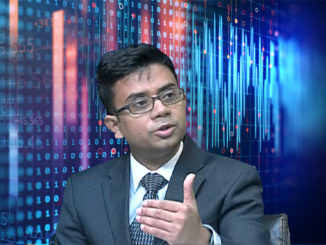
    Prasenjit Bhadra has the excitement and dynamism of a young man but he also demonstrates maturity of a senior person. The secret lies in his exposure to spiritual practices at an early age in Kolkata. Those visits to Ramkrishna Mission inculcated a sense of reverence for life and helped him realize ever expanding space to explore newness.

    He is not new to the field of technology but what makes him unique is probably his will to address global issues with patented design. He has sustained openness in his approach to combine different streams of specialized knowledge to offer efficient solutions.

    Prasenjit has served in over eight countries. He feels the US gives priority to Research and Development, lots of resources are deployed to focus on ‘technological breakthroughs and this spirit is encouraging. When you interact with the founder and CEO of Ranial Systems, you feel like learning a few new terms.

    It is the edge of technology, like watching a fascinating film or reading a novel, it helps to be familiar with the initial plot and basic terms like IoT or AI, which instantly flashes the space of ‘Internet of Things’ and ‘Artificial Intelligence’. The story of the disruptive tech world is built on these and many such terms. So, get ready to familiarize yourself with the introductory space of

    Ranial Systems from where different solutions are offered.

    “Ranial Systems is established as an Industrial IOT platform engineering firm that specializes in real-time process automation by converging the cognitive AI and Edge computing runtime. The patented design of the edge native platform is branded as CognitIoT.”

    This convergence of Cognitive AI and Edge computing runtime is like a magical stream as far as the end user is concerned. Let us face it, your smartphone in your pocket is also full of multiple magic type applications. We enjoy using it, not knowing how it is happening.

    Prasenjit is looking at engaging technology to serve mother earth. The vision of Ranial Systems is to accelerate cognitive IoT solutions that address emerging challenges with climate changes and sustainability.

    Here is another important area, drawing the attention of those who want to make an impact by using digital footprints to dilute carbon footprints. The issue of mass adoption of Electrified Vehicles will play an important role in preserving our environment. Prasenjit is keen on creating

    Solutions to support Renewable energy. He is credited for innovation and thought leadership in digital transformation initiatives during his work with several tech giants in global leadership positions. Prasenjit is also addressed as ‘Jeet’, which translates as ‘victory’. Indeed, he has been victorious in breaking new grounds and addressing several problems that we face as individuals or a resident of this planet.

    He leads a regulated life, getting up early has been a part of his habit since early age. He also devotes time for pranayam and meditation on a regular basis. This helps him in sustaining focus and flexibility. It was challenging to work with fortune 100 clients in their journey towards

    Adoption and modernization strategies of emerging technologies.

    While Jeet appreciates India for adopting new technology at a fast pace, he also feels there is scope for improving work culture in India.

    Jeet was awarded as CTO of the year by Corporate America, New York, and best CEO leading Business transformation by TMT News, UK.

    He is also inspired by the cognitive neuroscience models. While it is important to be innovative, there is no point in reinventing the wheel. Ranial has designed an integrated hardware and software runtime that can diffuse predictive and prescriptive intelligence at the edge of the network. Jeet has helped in taking care of cyber security threats on critical infrastructure. These days, the word “cloud” has taken on a new meaning in the world of technology. These cloud-based implementations increase the accessibility of power of innovation. Prasenjit Bhadra feels that organizations of any geographic location, size and scale can avail the power of innovation that is being extended to the global market.

    Jeet takes pride in stating that Ranial’s patented technology has crushed the strong partition between hardware and software centric function to extend real-time IoT runtime. He also feels, when you are ahead of the curve, others find it difficult to match their speed with you.

    According to him, “. the industry is lacking standards and open architectures to embrace the future state of automation needs. “

    Technology might be making us more lonely in one way but when you look at it with

    Prasenjit Bindra, you are bound to feel that ‘digital technology is helping us in realizing the age-old concept of ‘Vasudhaiv Kutumbkam’, yes, the whole world seems to have become ‘a global digital village’.

  • Keep distance from Taliban

    Keep distance from Taliban

    The Modi government has rightly ignored the calls for ‘talks’

    By G Parthasarathy

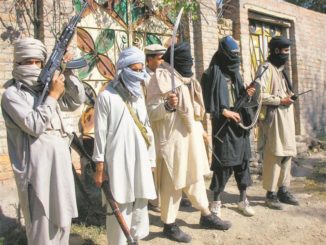
    There is an erroneous perception in India that Afghanistan is a monolithic country, where the Taliban represents the majority of the country. The Taliban is made up almost exclusively of Pashtuns, who constitute around 45% of Afghanistan’s population. The Taliban’s leaders and its cadres returned to Afghanistan from their hideouts in Pakistan, just as the occupying Soviet Forces began withdrawing from Afghanistan in February 1989. Having been trained and ideologically indoctrinated in some of the most fundamentalist madrasas, the Taliban sought to fill the political and security vacuum after the Soviets withdrew from Afghanistan. The Taliban let loose a reign of terror and oppression in Afghanistan, which was quite unique.

    The Taliban faced armed opposition from virtually every other Afghan ethnic grouping. This resistance was spearheaded by the Tajiks, who constitute around 35% of Afghanistan’s population. The Taliban ruled Afghanistan and soon became a safe haven for radical Islamist terrorist groups from across the world. American intervention in Afghanistan commenced in 2003, after the 9/11 terrorist strikes. Driven out of Afghanistan, the Taliban operated from Pakistan. Strangely, the Americans accepted Pakistani claims of innocence, despite the ISI’s obvious support for Taliban’s terrorism. Washington provided Pakistan all economic and military aid it could absorb. The Taliban, however, retained close links with terrorist groups, like the JeM and LeT, while colluding with the ISI.

    The US presence in Afghanistan did not deter or prevent the Taliban from strengthening its ties with radical Islamic groups across the world, while hosting these radicals in Afghanistan. These groups included the Al Qaeda, the IS, the Tehriq-e-Taliban (Pakistan), and the East Turkistan Independence Movement, which operated in China’s Xinjiang province. China received assurances from the Taliban that they would cease support for insurrection and seek peace with the Afghan government. That has not happened. Pakistan had led the US up the garden path by providing safe haven to Osama bin Laden, who was the mastermind of the 9/11 attacks.

    The Taliban leadership has made it clear how it will rule Afghanistan. Its spokesman Zabihullah Mujahid recently announced that they would rule according to the Sharia, which will be enforced ‘rigorously’. He asserted that elections did not yield positive results in Islamic countries. Women would not be permitted to sing and can work only in some areas. They would have to be accompanied by a male ‘for their protection’ whenever they leave the house. Men, in turn, are barred from wearing western clothes, and would have to grow a beard. They believe that war as an option is not ruled out, and that jihad will continue.

    The Taliban are giving high attention to capturing Kandahar, located close to the borders with Pakistan. Kandahar is equivalent of another Mecca for the people of Afghanistan. The then ruler of Afghanistan, Ahmed Shah Abdali, received a cloak, said to have been worn by the Prophet, during his visit to Bokhara (now in Uzbekistan), from the kingdom’s ruler, Amir Murad Beg. The cloak is now placed in a mosque near Abdali’s tomb. The normally reclusive Taliban leader Mullah Omar shot to fame when he emerged from the mosque, with the cloak, in 1996.

    There are fears that the Taliban will overrun the Afghan forces. The impression also prevails that the Afghan army lacks the sagacity to overcome the Taliban challenge, as there are areas in southern and western Afghanistan, near the country’s borders with Iran and Tajikistan, which are presently under Taliban control. Pakistani involvement is evident, as large numbers of Pakistani terrorists are now fighting alongside the Taliban. Russia has concerns about the conflict crossing into the territory of its erstwhile Central Asian republics like Tajikistan. Iran has similar concerns about Taliban attacks on its allies, the Shia Hazaras, living just across its borders in Afghanistan. Future Russian and Iranian involvement on the western borders of Afghanistan cannot, therefore, be ruled out.

    External Affairs Minister S Jaishankar has held wide-ranging talks with the US, Russia, and virtually all of Afghanistan’s Central Asian neighbors, both bilaterally and in the Shanghai Cooperation Organisation. His unprecedented meeting with Iran’s President-elect Ebrahim Raisi in Tehran was of particular significance. Iran has already warned of serious consequences if the Taliban should cause any harm to its Shia Hazara brethren. Iran was New Delhi’s close regional ally, when India, Iran and Russia backed groups in the Northern Alliance, drawn from the non-Pashtun majority in Afghanistan, even before the US intervention.

    While Taliban successes in an estimated 200 of the 424 districts across Afghanistan have received substantial attention, the Taliban are finding it hard to take over a provincial capital in even one of Afghanistan’s 34 provinces. The US left the Afghan army ill equipped, with hardly any tanks and artillery. The Afghan air force has an estimated 200 aircraft, which include 69 light attack helicopters. Washington would have to substantially strengthen Afghanistan’s armed forces. It remains to be seen if Pakistan provides the Taliban with Stinger surface-to-air missiles. There are calls for ‘talks’ with the Taliban, which the Modi government has rightly ignored. The Taliban are, and will remain, tools of the ISI. While contacts can be maintained with Taliban leaders like Mullah Baradar in Qatar, there is no need to follow the Chinese example, with moves like formally inviting Taliban leaders to New Delhi. The Taliban colluded with the hijackers of IC 814 and maintained close ties with ISI-backed terrorist groups. Pakistan, in turn, needs a weak and internationally discredited Afghanistan to constitute its ‘strategic depth’ against India.

    (The author is Chancellor, Jammu Central University & former High Commissioner to Pakistan)

  • New York Auto Show Canceled Over COVID Delta Variant Concerns

    New York Auto Show Canceled Over COVID Delta Variant Concerns

    NEW YORK CITY (TIP): The delta variant of coronavirus forced organizers to once again pump the brakes on the New York International Auto Show.”It is with great disappointment that the upcoming 2021 New York International Automobile Show at the Jacob K. Javits Convention Center has been cancelled due to the growing incidences of the Covid-19 Delta variant and the increased measures announced recently by State and local officials to stop its spread,” organizers said in a statement released Wednesday.

    The event will return to its regular spring schedule in April 2022, organizers said.

    The coronavirus pandemic already forced organizers to cancel the 2020 New York Auto Show.

    The show’s return to the Javits Center was unveiled in a splashy June announcement by Gov. Andrew Cuomo.

    Find out what’s happening in New York City with free, real-time updates from Patch.

    “This is a sure sign that New York is coming back stronger and better than ever,” he said at the time.

    But it appears the Auto Show spun out, much like Cuomo’s political fortunes.

    The delta variant has prompted New York City, state and federal officials to adopt strict vaccination and mask mandates to stop its spread, especially in indoor spaces.

    Mayor Bill de Blasio this week announced that indoor entertainment and performance events in the city will require proof of vaccination starting Aug. 16. It’s unclear whether the mandate would apply to the Auto Show, but organizers seemed to allude to similar strict measures in their release.

    “Increased delta-variant measures force event’s hand,” the release is subtitled.

    “Over the past few weeks, and especially within the last few days, circumstances have changed making it more difficult to create an event at the high standard that we and our clients expect,” the statement reads.

    “At the onset of planning for the August Show, we were increasingly excited at the prospect of hosting the event as the number of vaccinations in New York continued to climb and mask-wearing reduced the spread in the City. All signs were positive, and the Show was coming together stronger than ever, but today is a different story.”

  • US taking steps to provide citizenship to immigrants’ children

    US taking steps to provide citizenship to immigrants’ children

    WASHINGTON (TIP): The Biden administration is taking steps to provide a legal pathway to citizenship to children of legal immigrants, the White House has said after a group of such youths, mostly Indians, expressed fear of being deported when they turn 21. These children, known as documented dreamers, are living in the United States as dependents of long-term non-immigrant visa-holders, including H-1B workers.

    The H-1B visa is a non-immigrant visa that allows US companies to employ foreign workers in specialty occupations that require theoretical or technical expertise. Technology companies depend on it to hire tens of thousands of employees each year from countries like India and China. According to Improve the Dream, a group representing such children, they number more than 2,00,000, a significant number of whom are Indians.

    Temporary ‘safe haven’ to Hong Kong residents in US

    The Biden administration on Thursday, August 5, granted temporary refuge to people fleeing China’s crackdown on dissent in Hong Kong. Hong Kong residents who are in the US and facing deportation will be allowed to remain for 18 more months.

    (Source: PTI)

  • Lofgren Introduces Legislation to Create New Visa Program for Immigrant Entrepreneurs to Spur U.S. Economic Growth

    Lofgren Introduces Legislation to Create New Visa Program for Immigrant Entrepreneurs to Spur U.S. Economic Growth

    The Let Immigrants Kickstart Employment Act encourages the establishment of start-up companies in America

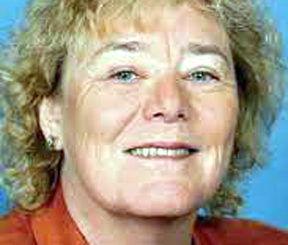
    WASHINGTON, DC (TIP): U.S. Congresswoman Zoe Lofgren (CA-19), Chair of the House Subcommittee on Immigration and Citizenship, on July 26, introduced H.R. 4681, the Let Immigrants Kickstart Employment (LIKE) Act, a bill that encourages immigrant innovators to establish and develop their venture capital-backed start-up companies in the United States to spur economic growth, create jobs for American workers, and enhance our competitive advantage on the world stage. Start-up companies create an average of 3 million net new jobs per year, more than four times as many jobs as mature companies. Despite widespread evidence that high-skilled immigrants are fueling the next generation of high growth companies, our current immigration laws don’t provide a viable visa option for such individuals to start a new venture. The LIKE Act creates a new temporary visa for founders of start-up entities, as well as the opportunity for lawful permanent residence if the start-up entity meets certain growth-related benchmarks that demonstrate the founder has a proven track record of success in business development.

    “For the world’s best and brightest innovators seeking a home for their companies, America used to be the top destination. Sadly, that has changed. Today, the technology sector in Canada is growing at a faster pace than it is in America, and it is almost entirely because of restrictive U.S. immigration policies that do not benefit our economic interests. Congress can change that. We can make the United States more prosperous by-passing bills like the LIKE Act that stimulate the economy, curb brain drain, create jobs for American workers, and restore our country’s standing as the number one choice for the next-generation of entrepreneurs worldwide,” said Chair Lofgren.

  • CDC issues new eviction ban for most of U.S. through October 3

    CDC issues new eviction ban for most of U.S. through October 3

    The new moratorium could help keep millions in their homes as the coronavirus’ delta variant has spread and states have been slow to release federal rental aid

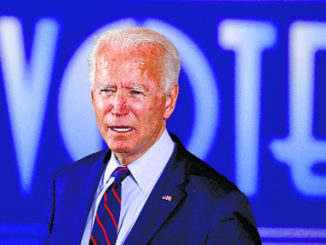
    WASHINGTON (TIP): The Centres for Disease Control and Prevention on August 3 issued a new moratorium on evictions that would last until October 3, ending some of the political pressure being placed on President Joe Biden.The new moratorium could help keep millions in their homes as the coronavirus’ delta variant has spread and states have been slow to release federal rental aid.

    Earlier in the day, President Joe Biden stopped short of announcing the new ban on evictions during a press conference at the White House. But he said he asked the Centres for Disease Control and Prevention to see what it could do after its previous ban expired over the weekend. The new 60-day eviction moratorium would cover areas heavily impacted by the coronavirus, where about 90% of the U.S. population lives, according to three people familiar with the plans who insisted on anonymity to discuss the forthcoming announcement.

    “My hope is it’s going to be a new moratorium,” Mr. Biden told reporters.

    The extension could help heal a rift with liberal Democratic lawmakers who were calling on the president to take executive action to keep renters in their homes as the delta variant of the coronavirus spread and a prior moratorium lapsed over the weekend.

    The new policy came amid a scramble of actions by the Biden team to reassure Democrats and the country that it could find a way to halt potential evictions. But pressure mounted as key lawmakers said it was not enough.

    Top Democratic leaders joined Rep. Cori Bush, D-Mo., who has been camped outside the U.S. Capitol, the freshman congresswoman who once lived in her car as a young mother, leading a passionate protest urging the White House to prevent widespread evictions.

    “For 5 days, we’ve been out here, demanding that our government acts to save lives,” she tweeted. “Today, our movement moved mountains.”

    House Speaker Nancy Pelosi said it was a day of “extraordinary relief”.

    “The imminent fear of eviction and being put out on the street has been lifted for countless families across America. Help is Here!” Ms. Pelosi said in a statement.

    Administration officials had previously said a Supreme Court ruling stopped them from setting up a new moratorium without congressional backing, saying states and cities must be more aggressive in releasing nearly $47 billion in relief for renters on the verge of eviction.

    The President said he sought input from legal scholars about whether there were options and said the advice was mixed, though some suggested, “It’s worth the effort.” Mr. Biden also said he didn’t want to tell the CDC, which has taken the public health lead in responding to the pandemic, what to do.

    “I asked the CDC to go back and consider other options that may be available,” he said.

    The CDC has identified a legal authority for a new and different moratorium for areas with high and substantial increases in COVID-19 infections.

    Mr. Biden also insisted there is federal money available — some $47 billion previously approved during the COVID-19 crisis — that needs to get out the door to help renters and landlords.

    “The money is there,” Mr. Biden said.

    The White House has said state and local governments have been slow to push out that federal money and is pressing them to do so swiftly.

    Treasury Secretary Janet Yellen briefed House Democrats on Tuesday about the work underway to ensure the federal housing aid makes it to renters and landlords. She provided data so that lawmakers could see how their districts and states are performing with distributing the relief, according to a person on the call.

    The Treasury Secretary tried to encourage Democrats to work together, even as lawmakers have said Mr. Biden should act on his own to extend the eviction moratorium, according to someone on the private call who insisted on anonymity to discuss its contents.

    Mr. Yellen said on the call, according to this person, that she agrees “we need to bring every resource to bear” and that she appreciated the Democrats’ efforts and wants “to leave no stone unturned.”

    As the eviction crisis mounted, the White House frequently said Mr. Biden was doing all he could under legal constraints. The administration had repeatedly resisted another extension because the Supreme Court appears likely to block it. When the court allowed the eviction ban to remain in place through the end of July by a 5-4 vote, one justice in the majority, Brett Kavanaugh, wrote that Congress would have to act to extend it further.

    As the initial moratorium expired, the administration emphasized many Americans will be able to stay housed with money already approved for aid and other efforts underway. The White House noted that state-level efforts to stop evictions would spare a third of the country from evictions over the next month.

    Still, Mr. Biden faced stinging criticism, including from some in his own party, that he was was slow to address the end of the moratorium. Some people were at immediate risk of losing their homes.

    Ms. Pelosi had called the prospect of widespread evictions “unfathomable.” The Congressional Black Caucus, the Congressional Hispanic Caucus and other progressive lawmakers intensified pressure on the White House to issue an immediate extension.

    Late last week, Mr. Biden announced he was allowing the ban to expire, pushing Congress to act, but lawmakers were unable to swiftly rally the votes as even Democrats questioned prolonging the eviction ban for a few more months.

    The CDC put the eviction ban in place as part of the COVID-19 response when jobs shifted, and many workers lost income. The ban was intended to hold back the spread of the virus among people put out on the streets and into shelters.

    Democratic lawmakers said they were caught by surprise by Mr. Biden’s decision to end the moratorium, creating frustration and anger and exposing a rare rift with the administration. The CDC indicated in late June that it probably wouldn’t extend the eviction ban beyond the end of July.

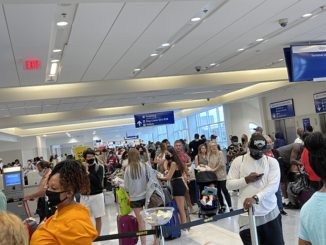
  • Spirit Airlines apologizes as widespread cancellations stretch into fourth day

    Spirit Airlines apologizes as widespread cancellations stretch into fourth day

    DALLAS / NEW YORK (TIP): Spirit Airlines apologized on Wednesday, August 4, for disruptions that have upended its flight schedule for three days and counting. “The last three days were extremely difficult for our Guests and Team Members, and for that we sincerely apologize,” the airline said in a statement. “We continue to work around the clock to get our Guests where they need to be.”

    As of mid-day Wednesday, more than 50% of the airline’s schedule — nearly 350 flights — had already been canceled, according to the aviation tracking website FlightAware, marking a fourth consecutive day of severe disruptions. The low-cost carrier canceled 61% of its schedule on Tuesday and another 20% of its schedule was delayed, FlightAware reported. On Monday, cancellations and delays disrupted 71% of Spirit’s schedule, and Sunday saw 60% of its schedule canceled or delayed, FlightAware said. The airline cited overlapping weather challenges, system outages and staffing shortages as causes for the widespread cancellations and delays.

    “Cancellation numbers will progressively drop in the days to come,” Spirit said. The airline has performed “a more thorough reboot of the network,” which it said will ease some of the operational challenges.

    The peak summer travel season with very high aircraft load factors across the industry has intensified the issues, Spirit said. Spirit has enlisted staff members from other areas of the company to help with tasks such as processing of vouchers for meals and hotels. The airline confirmed that problems with a crew scheduling IT system have contributed to the disruptions. A union representing some crew members, the Association of Flight Attendants, said Spirit’s schedulers were locked out of a staff scheduling system on Tuesday “for over an hour.”

    The airline also noted that a rumor about a pilot strike is “completely untrue.”

    Spirit is encouraging passengers to check their flight status and look for notifications before heading to the airport.

    (With inputs from CNN and FlightAware)

  • AAPI Raises over $5 Million towards Covid Relief Efforts in India

    AAPI Raises over $5 Million towards Covid Relief Efforts in India

    Provides 2300 Oxygen Concentrators, 100 Ventilators And 100 High Flow Nasal Canula Machines to 45 Hospitals in India

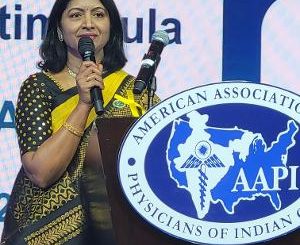
    CHICAGO (TIP): The deadly Corona virus has claimed millions of lives and it has placed the entire healthcare sector both in India and the United States under tremendous stress. While the Indian American medical fraternity has been at the frontlines of the fight against the pandemic, American Association of physicians of Indian origin (AAPI), the largest ethnic medical organization in the USA representing the interest of more than 100,000 physicians in the USA, has stepped up to the plate to deal with the crisis of India during its second deadly wave.

    “The generosity of the members of AAPI and Indian community has been unprecedented,” says Dr. Anupama Gotimukula, President of AAPI. “I want to thank the AAPI fraternity, for not only contributing $5 Million towards Covid Relief Funds, but has spent hundreds of hours in coordinating and disbursing the vital medical supplies to the most needed hospitals across India.”

    “Thanks to the overwhelming support of its members that AAPI has raised almost $5 million in the past few months,” said Dr. Kusum Punjabi, Chair of AAPI BOT, who has dedicated her services at the Emergency Department, serving thousands of Covid patients in the New Jersey.

    “During my entire year of presidency, impacted by the deadly pandemic, AAPI has initiated several efforts to help our Mother India,” recalls Dr. Sudhakar Jonnalagadda, Immediate past president of AAPI. “Aptly so, the annual Convention last month in Atlanta was a tribute to frontline healthcare professionals who have devoted their lives and work serving humanity during the COVID-19 pandemic,” he added.

    Many parts of India continue to face the deadly second wave of COVID-19. Number of reported Covid positive cases seems to be on the rise and thousands reportedly die daily. Hospitals and medical facilities face shortage of oxygen and ICU beds, with patients lacking in adequate care.

    “We have been working very diligently in sending oxygen concentrators and ventilators to India, to deal with the calamity in India and are in the process of helping to set up oxygen generator plants in different hospitals in India,” added, Dr. Ravi Kolli, President-Elect of AAPI.

    Dr. Sujeeth Punnam, AAPI’s Regional Director, who has been one of the many AAPI leaders who has been coordinating the efforts said, “Thus far, AAPI has provided 2300 Concentrators, 100 Ventilators and 100 High Flow Nasal Canula Machines To 45 Hospitals in India as part of the Covid Pandemic Relief Efforts.”

    As some predict a 3rd wave of the pandemic in India, AAPI has been planning and collaborating with several agencies and the government of India to help reach the much-needed care and supplies to the remotest places in India.  “AAPI will continue to use the remaining funds in preparation of the impending Covid 3rd wave,” said Dr. Anjana Samaddar,” Vice-President of AAPI.

    Dr. Satheesh Kathula, Secretary of AAPI said, “AAPI has been coordinating several efforts, including tele-health to patients and Doctors in India. Thanks to the overwhelming support of its members that AAPI has raised over $5 million.” “The outbreak of Covid 19 has caused significant health-related social, political and economic consequences worldwide. AAPI members have been working very hard in sending medical equipment to India,” Dr. Krishan Kumar, Treasurer of AAPI pointed out.

    “We are discussing about coordinating efforts to make available the much-needed vaccines in the Slum areas in Delhi and Hyderabad where compliance is very low and apart from lifesaving equipment for severe Covid patients’ management in ICUs,” said Dr. Anil Tibrewal, who has been in the forefront leading AAPI’s efforts to help India during the Covid.

    As AAPI cannot direct its resources to specific areas and relies on government of India to distribute its supplies, Dr. Amit Chakrabarty, past Secretary of AAPI and several other AAPI leaders have been working outside of the umbrella of AAPI for direct transfer of the essential material, focusing mainly on the peripheral hospitals who do not get aid readily.  HELP INDIA BREATHE is a part of ApShiNi ventures’ endeavor by a group of doctors in helping individuals to donate Oxygen related supplies to India during this unprecedented calamity.

    “The past year, while posing major challenges have also provided opportunities for AAPI to continue to work together in helping realize the mission of AAPI,” said Dr. Gotimukula. “We are proud that several Indian American physicians are recognized globally for their contributions to combat the deadly pandemic. We will continue our efforts and give our best to our Motherland in her fight against the deadly pandemic.” For more information on AAPI, please visit: www.aapiusa.org

    (Press Release)

  • Nassau County Coronavirus Transmission ‘High’: CDC

    Nassau County Coronavirus Transmission ‘High’: CDC

    MINEOLA, NY (TIP): The delta variant of the coronavirus continues to drive case rates higher in the U.S., especially in places with low vaccination rates. Nassau County has a “high” level of coronavirus transmission as of Aug. 3, according to the Centers for Disease Control and Prevention. There were 112 new cases per 100,000 residents between July 27 and Aug. 2. The positive test rate was 3.5 percent between July 25 and July 31, which was a 0.8 percentage point increase from the previous seven days. There were 1,526 recorded cases in Nassau County between July 27 and Aug. 2, which is 42 percent higher than the previous seven days.

    The Centers for Disease Control and Prevention recommends that fully vaccinated people wear masks indoors in public if they live in an area with “substantial” or “high” transmission levels. Those who aren’t fully vaccinated are urged to wear masks in those settings, regardless of transmission level. Transmission levels are determined either by new cases per 100,000 residents in the last seven days or the percentage of coronavirus tests that come back positive; the higher category determines the transmission level. Around 61 percent of U.S. counties are in the “high” transmission level and 19 percent are “substantial,” according to the CDC.

    The CDC also recommends indoor public mask use for people with compromised immune systems or other high-risk factors, regardless of vaccination status. People who live with someone at higher risk for coronavirus complications should also consider using masks.

    Vaccines even more important as delta variant spreads

    The U.S. seven-day average of daily new cases reached 72,000 on Monday, August 2 which is a 44 percent increase from the previous seven-day average and higher than last summer, CDC Director Rochelle Walensky said at a Monday press briefing. The highly contagious delta variant is behind the increase. “To put this in perspective, if you get sick with the alpha variant, you could infect about two other unvaccinated people,” Walensky said. “If you get sick with the delta variant, we estimate that you could infect about five other unvaccinated people.”

    States with low vaccination rates are now hot spots for infections, White House Coronavirus Response Coordinator Jeff Zients said at the Monday briefing. The seven states with the lowest vaccination rates have 8.5 percent of the U.S. population but more than 17 percent of new cases.

    Vaccination rates have increased over the past few weeks after a temporary lull.

    “Over the past few weeks, we’ve seen a nearly 70 percent increase in the average number of new people getting vaccinated each and every day,” Zients said. “In the last seven days alone, 3 million Americans have gotten their first shot. That’s the highest seven-day totals since July 4.”

    (With inputs from CDC)

  • GOPIO-CT to Celebrate India Independence Day in Stamford with Flag Hoisting, India Festival and Kite Flying on August 8th

    GOPIO-CT to Celebrate India Independence Day in Stamford with Flag Hoisting, India Festival and Kite Flying on August 8th

    Stamford City joining hands with GOPIO-CT to celebrate India Independence Day

    Shailesh R. Naik, Recipient of GOPIO-CT’s Liberty Award 2021

    STAMFORD, CT (TIP): India got its independence from the British in 1947. To mark the 74th Anniversary of India’s independence, the Connecticut chapter of the Global Organization of People of Indian Origin (GOPIO-CT) has joined hands with Stamford City and Mill River Collaborative to host India Festival in Stamford to commemorate Indian Independence, when the then Prime Minister Pandit Jawaharlal Nehru raised the Indian flag at the Red Fort on August 15, 1947. The Indian Diaspora in Connecticut is a growing community consisting generally IT and management professionals. healthcare workers and a large number of entrepreneurs in hospitality and small businesses. They will join for a celebration organized by the GOPIO-CT by hoisting American, Indian and Connecticut flags at the Government Center in Stamford on Sunday, August 8th at 11.30 a.m.

    Following the flag hoisting, at 12.00 Noon, there is an official ceremony to celebrate Indian Independence Day at the adjacent Mill River Park (corner Broad St. and Washington Blvd., Stamford). Honored guests are Indian Consul A.K. Vijayakrishnan, Stamford Mayor David Martin, CT Attorney General William Tong, CT State Senator Patricia Billie Miller and CT State Representatives Harry Arora representing CT 151st district and Caroline Simmons representing 144th district. Baseball legend Bobby Valentine will also join the celebration as a honored guest.

    After the ceremony, the Mill River will witness Kite flying and an India Festival with colorful Folk and Classical Dances of India, Music, Magic Show and Bollywood Dances. There will be vendors for Indian food, Indian arts and crafts, Indian clothing and other items. Admission is FREE for both events.

    Stamford Resident Mr. Shailesh Naik will be bestowed with Indian Independence Liberty Award. An engineer by profession and Principal of Charles A. Manganaro Consulting Engineers, Naik has been serving the Indian American community for the last 15 years. Shailesh served as President GOPIO-CT from 2010 to 2014 and as President of Society of Indo-American Engineers and Architects (SIAEA) for two years. When Covid hit India badly in 2021 Spring, Shailesh came forward and coordinated GOPIO-CT’s efforts to raise funds and to send Oxygen concentrators to India. Naik is a licensed professional engineer with over 30 years of experience in the field of engineering.

    The celebration is hosted by Mill River Park Collaborative and the sponsor is First County Bank of Stamford.

    Over the last 15 years, GOPIO-CT, a chapter of GOPIO International has become an active and dynamic organization hosting interactive sessions with policy makers and academicians, community events, youth mentoring and networking workshops, and working with other area organizations to help create a better future. GOPIO-CT – Global Organization of People of Indian Origin – serves as a non-partisan, secular, civic and community service organization – promoting awareness of Indian culture, customs and contributions of PIOs through community programs, forums, events and youth activities. It seeks to strengthen partnerships and create an ongoing dialogue with local communities.


  • India Takes Over UN Security Council Presidency for the month of August, Thanks France

    India Takes Over UN Security Council Presidency for the month of August, Thanks France

    As UN Security Council President in August, India will organize, besides other events, a solemn one in the memory of peacekeepers.

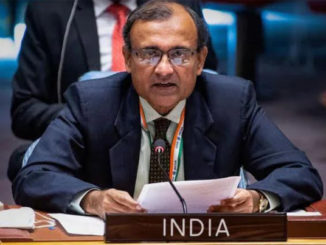
    NEW YORK (TIP):  India, on August 1, assumed the rotating Presidency of the United Nations Security Council for the month of August. It has several important items on its agenda for the world body’s functioning under this period, especially those focusing on areas of its core interests. This is India’s tenth tenure. So far it has been President of the body nine times: June 1950, September 1967, December 1972, October 1977, February 1985, October 1991, December 1992, August 2011, and November 2012. Flagging off its tenure, India thanked France, its immediate predecessor in the position, for leading the Council in July.”During our Presidency in August, India is organizing three high-level signature meetings, focusing on our priority areas: maritime security, peacekeeping, and counterterrorism,” India’s Permanent Representative to the UN, Ambassador TS Tirumurti, said in a video message straight from the Security Council. “India will also be organizing a solemn event in the memory of peacekeepers,” he said. The Council, he said, plans several important meetings, including those with representatives of Syria, Iraq, Somalia, Yemen, and other countries of the middle east. “I’m confident that India’s Presidency will contribute to strengthening international peace and security further,” Ambassador Tirumurti said. Expressing happiness over India taking over the Security Council Presidency, the French Ambassador in New Delhi, Emmanuel Lenain, said his country would work with India in tackling several issues faced by the world today. “Delighted that India is today taking over #UNSC presidency from France. We are committed to working with India on strategic issues as maritime security, peacekeeping &counterterrorism, and upholding a rules-based, multilateral system to face today’s many ongoing crises,” Ambassador Lenain tweeted. The United Nations Security Council will be holding a meeting on August 6 to take stock of the situation in Afghanistan, Ambassador Tirumurti said.

    (With inputs from PTI)

  • Pandemic of distrust: On resisting COVID-19 vaccination

    Those resisting vaccination mostly conform to a specific social, cultural, and political profile

    President Joe Biden and the director of the CDC warned this week that the COVID-19 crisis in the U.S. was becoming a “pandemic of the unvaccinated”. This underscores the growing divergence across U.S. States and communities in terms of the prevalence and intensity of the Delta variant infection, depending on the extent to which these cohorts had been vaccinated. Approximately 30% of the adult population has yet to be vaccinated, along with 58% of those in the 12-17 years age group. The country has reached this troubling impasse despite a strong start. To date, 348 million doses have been given so far. This came on the back of the firm commitment by the Biden administration to follow the science in the tackling of the pandemic, and quickly secure pledges from vaccine manufacturers — including Pfizer, Moderna and Johnson & Johnson — to supply 700m doses by the end of July 2021, enough to cover 400m people. Using everything from consistent high-level messaging by the President and his team to get vaccinated, to lottery tickets and cash gifts offered by local and State governments to those willing to step and get a shot, the country has powered through to the point where 193 million Americans have received at least one dose, and at least 165 million people have received all the required doses.

    Yet, it is now increasingly clear that there are two cohorts of adults resisting vaccines: the first, who are averse to getting vaccinated in all circumstances — preponderantly those who are rural, white, politically conservative, and evangelical Christian, according to surveys; and the second that are open to considering getting vaccinated but would like to wait for some time before committing to it. The second cohort is, like the first, mixed to an extent, but primarily consists of a diverse urban group, younger in age, often Democratic, and includes minorities such as African Americans, and Latino Americans. Regardless of the reasons for resisting, the statistics paint a grim picture, of 95% or higher of COVID-19 hospitalizations and deaths being of unvaccinated people; and of the highest toll affecting States with lower-than-average vaccination rates, including the likes of Florida and Texas. The Biden administration has an unenviable, multi-pronged task at hand. On the one hand, it must continue to put out facts and data as well as advocacy messaging for ever-widening vaccine reach, and this includes working alongside social media platforms to clamp down on rampant misinformation. On the other hand, it needs to avoid succumbing to any and all pressures to relax precautions, for example the disastrous — and now reversed — guidance supplied by the CDC on May 13 to the effect that people need not wear masks if they had been vaccinated.

    (The Hindu)


  • Pegasus controversy

    Bihar CM Nitish Kumar breaks ranks to demand probe

    With the Supreme Court set to hear the pleas seeking a court-monitored probe into the Pegasus snooping row on Thursday, a new dimension has been added to the controversy. Bihar Chief Minister Nitish Kumar, an ally of the BJP-led NDA government at the Centre, has lent his weight to the demand for a probe. The Bihar CM asked the Opposition to put pressure by placing the relevant facts and figures before the government if it was not prepared for an inquiry. Nitish’s demand came on the eve of a meeting of leaders from several Opposition parties convened by Congress leader Rahul Gandhi to present a united front on the Pegasus issue even as the controversy continued to rock both Houses of Parliament, prompting PM Modi to slam the Opposition for its conduct.

    Ever since the revelation about the phone-tapping incident was made, there have been demands for an inquiry. The demand was earlier raised by TMC chief and West Bengal Chief Minister Mamata Banerjee who called for an all-party meeting on the issue. West Bengal even constituted a commission to probe the controversy. The Centre, on its part, has continued to deny that it has got anything to do with the snooping row, calling it instead an attack on Indian democracy. With the country figuring on the list of global democracy watchdogs that are concerned over the growing trend towards ‘authoritarianism’ and the plight of minorities, the government may well be on the defensive, but the attempts at stone-walling the Opposition have not helped matters either. In fact, the meetings of the parliamentary panel on information technology have seen BJP members boycott the proceedings and spar with the chairman who is from the Congress.

    Allegations of surveillance remain a matter of concern as it is as much about security as about privacy. With France and Israel initiating an inquiry into the Pegasus row, India should also look into ways to prevent such incidents. Democracy is about reconciling governmental concerns with individual rights. Misuse of technology can prove to be detrimental in furthering its cause.

    (The Tribune)


  • Poverty in India is on the rise again

    Poverty in India is on the rise again

    Santosh Mehrotra, Jajati Keshari Parida

    “While the economy maintained some growth momentum till 2015, the monumental blunder of demonetization followed by a poorly planned and hurriedly introduced Goods and Services Tax, both delivered body blows to the unorganized sector and Micro, Small and Medium Enterprises. The economic slowdown followed. None of the four engines of growth was firing after that. Private investment fell from 31% inherited by the new government, to 28% of GDP by 2019-20. Public expenditure was constrained by a silent fiscal crisis. Exports, which had never fallen in absolute dollar terms for a quarter century since 1991, actually fell below the 2013-14 level ($315 billion) for five years. Consumption stagnated and household savings rates fell. Joblessness increased to a 45-year high by 2017-18 (by the usual status), and youth (15-29 years of age) saw unemployment triple from 6% to 18% between 2012 and 2018. Real wages did not increase for casual or regular workers over the same period, hardly surprising when job seekers were increasing but jobs were not at anywhere close to that rate. Hence, consumer expenditure fell, and poverty increased.”

    India has not released its Consumption Expenditure Survey (CES) data since 2011-12. Normally a CES is conducted by the National Sample Survey Office (NSO) every five years. But the CES of 2017-18 (already conducted a year late) was not made public by the Government of India. Now, we hear that a new CES is likely to be conducted in 2021-22, the data from which will probably not be available before end-2022.

    Meanwhile, we know that the economy has been slowing for nine quarters prior to the outbreak of the novel coronavirus pandemic. Unemployment had reached a 45-year high in 2017-18, as revealed by NSO’s Periodic Labor Force Survey (PLFS).

    Sufficient to estimate change

    India’s labor force surveys, including the five-yearly Employment-Unemployment Rounds from 1973-4 to 2011-12, have also collected consumption expenditure of households. The PLFS has maintained that tradition. While the PLFS’s questions on consumption expenditure are not as detailed as those of the CES, they are sufficient for us to estimate changes in consumption on a consistent basis across time. It enables any careful researcher to estimate the incidence of poverty (i.e., the share in the total population of those below the poverty line), as well as the total number of persons below poverty. That is exactly what we do in the table.

    There is a clear trajectory of the incidence of poverty falling from 1973 to 2012. In fact, since India began collecting data on poverty, the incidence of poverty has always fallen, consistently. It was 54.9% in 1973-4; 44.5% in 1983-84; 36% in 1993-94 and 27.5% in 2004-05. This was in accordance with the Lakdawala poverty line (which was lower than the Tendulkar poverty line), named after a distinguished economist, then a member of the Planning Commission.

    Methodology

    In 2011, it was decided in the Planning Commission, that the national poverty line will be raised in accordance with the recommendations of an expert group chaired by the late Suresh Tendulkar (then professor of Economics at the Delhi School of Economics). That is the poverty line we use in estimating poverty in the table. As it happens, this poverty line was comparable at the time to the international poverty line (estimated by the World Bank), of $1.09 (now raised to $1.90 to account for inflation) person per day.

    Based on the Tendulkar poverty line, the poverty estimates for 2004-05 and 2011-12 are to be found in the Planning Commission’s own estimates using the CES of those years. Hence, we have extended the 2011-12 poverty line for each State and used the consumption expenditure reported by the PLFS to estimate a consistent poverty head count ratio (i.e., incidence of poverty in the population) as well as the absolute number of the poor. We feel confident about using the PLFS, because in the absence of CES data, the PLFS can be used to estimate the incidence of poverty. It also collects the household monthly per capita consumption expenditure data based on the Mixed Recall Period methodology. Similar to the CES, the PLFS (PLFS annual report, 2019-20, page 6) also asks the household questions about expenses on health, clothing and bedding, education, footwear and consumer durables for a 365 day recall period — prior to the day of the survey; but for non-durable consumption goods/services — including expenses on food, housing and conveyance, etc. — its question expects a recall period of 30 days prior to the day of survey. We naturally updated the Tendulkar poverty line, using the Consumer Price Index for each State to 2019-20, to arrive at the estimate for the last year before COVID-19.

    An urban and rural rise

    What is stunning is that for the first time in India’s history of estimating poverty, there is a rise in the incidence of poverty since 2011-12. The important point is that this is consistent with the NSO’s CES data for 2017-18 that was leaked data. The leaked data showed that rural consumption between 2012 and 2018 had fallen by 8%, while urban consumption had risen by barely 2%. Since the majority of India’s population (certainly over 65%) is rural, poverty in India is also predominantly rural. Remarkably, by 2019-20, poverty had increased significantly in both the rural and urban areas, but much more so in rural areas (from 25% to 30%).

    It is also for the first time since the estimation of poverty began in India on a consistent basis, that the absolute number of poor has risen: from 217 million in 2012 to 270 million in 2019-20 in rural areas; and from 53 million to 71 million in the urban areas; or a total increase of the absolute poor of about 70 million.

    It is important here to recall two facts: between 1973 and 1993, the absolute number of poor had remained constant (at about 320 million poor), despite a significant increase in India’s total population. Between 1993 and 2004, the absolute number of poor fell by a marginal number (18 million) from 320 million to 302 million, during a period when the GDP growth rate had picked up after the economic reforms.

    It is for the first time in India’s history since the CES began that we have seen an increase in the absolute numbers of the poor, between 2012-13 and 2019-20.

    The second fact is that for the first time ever, between 2004-05 and 2011-12, the number of the poor fell, and that too by a staggering 133 million, or by over 19 million per year. This was accounted for by what has come to be called India’s ‘dream run’ of growth: over 2004 and 2014, the GDP growth rate had averaged 8% per annum — a 10-year run that was not sustained thereafter. By contrast, not only has the incidence of poverty increased since then, but the absolute increase in poverty is totally unprecedented.

    The contributory factors

    The reasons for increased poverty since 2013 are not far to seek. While the economy maintained some growth momentum till 2015, the monumental blunder of demonetization followed by a poorly planned and hurriedly introduced Goods and Services Tax, both delivered body blows to the unorganized sector and Micro, Small and Medium Enterprises. The economic slowdown followed. None of the four engines of growth was firing after that. Private investment fell from 31% inherited by the new government, to 28% of GDP by 2019-20. Public expenditure was constrained by a silent fiscal crisis. Exports, which had never fallen in absolute dollar terms for a quarter century since 1991, actually fell below the 2013-14 level ($315 billion) for five years. Consumption stagnated and household savings rates fell. Joblessness increased to a 45-year high by 2017-18 (by the usual status), and youth (15-29 years of age) saw unemployment triple from 6% to 18% between 2012 and 2018. Real wages did not increase for casual or regular workers over the same period, hardly surprising when job seekers were increasing but jobs were not at anywhere close to that rate. Hence, consumer expenditure fell, and poverty increased.

    Poverty is expected to rise further during the COVID-19 pandemic after the economy has contracted.

    (Santosh Mehrotra is a professor of economics and Chairperson of the Centre for Labor, JNU. E-mail: santoshmeh@gmail.comSantosh Mehrotra has recently edited ‘Reviving Jobs: An Agenda for Growth, 2020’.

    Jajati Keshari Parida is Assistant Professor of Economics at the Central University of Punjab, Bathinda)

  • Hockey turnaround heralds a new dawn

    Hockey turnaround heralds a new dawn

    By Yogendra Yadav

    Hockey of the 1970s and cricket till the 1980s represented the pride of the underdog, the hesitant entrant on the world stage. Mass hysteria around cricket today is the cultural carrier of boorishness, its outward confidence barely masking the hollowness inside. The resurgence of Indian hockey assures me that another deeper and positive nationalism still lives inside us. It may have been overshadowed, but it is not erased from our national consciousness.

    The resurgence of Indian hockey in this context assures me that another deeper and positive nationalism still lives inside us. It may have been overshadowed, but it is not erased from our national consciousness

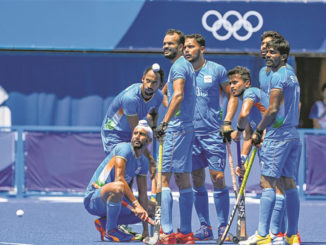
     I am not a morning person. But Tuesday, August 3 morning was different. I was up early, as was the entire family, for the India-Belgium match in the Olympic hockey semi-final. The game moved us, like millions of Indian fans, from ecstasy to anxiety, and pain. The Indian men’s team was outplayed, yet this defeat did not leave us humiliated, it did not erase the earlier joy of watching that brilliant solo goal against Britain by Hardik Singh. Or the sheer pride of the Chak De moment when our women’s hockey team defeated Australia.

    It took me back nearly half a century ago, to my school days. The only claim to fame of my school, SGN Khalsa Higher Secondary School, Sri Ganganagar, with a preponderance of rural Sikh boys, was its sports prowess. In those days, 6-8 members of Rajasthan’s playing XI used to be from my school. My college, SGN Khalsa College, enjoyed the same reputation in hockey and athletics. I played hockey, never went beyond the school’s Team C, but was enough to be selected for AIR’s panel of hockey commentators for the Asian Games in 1982.

    Like everyone around me, I was an avid hockey fan then. Indian hockey was past its golden era, but not out of international reckoning. We had only heard about Dhyan Chand, but his son Ashok Kumar was our hero. I did not know much about Balbir Singh, but I remember how awestruck I was when I got to shake hands with Ajit Pal Singh, the legendary center-half. The defining moment of hockey glory was the last-minute goal by Aslam Sher Khan in the semi-final of the Kuala Lumpur World Cup in 1975 that India went on to win. There was no television in my town then. The pleasure of hockey came through Jasdev Singh’s radio commentary. You had to add visuals, action and colors on your own. For my generation then, Indian hockey team was the flag-bearer of our national pride. It wasn’t a safe bet, yet worth it.

    Like most of my friends, my passion for hockey quietly gave way to cricket. It began with the visit of Clive Lloyd’s team to India in the winter of 1974-75, a series in which Gordon Greenidge, Vivian Richards and Andy Roberts made their debut. My personal favorites were G. Viswanath, Brijesh Patel, and of course, BS Chandrasekhar, all from Karnataka. India lost the series, but not its pride. The introduction of astroturf in the 1976 Olympics had begun a steep and irreversible decline of Indian hockey, notwithstanding the facile gold in the 1980 Moscow Olympics. It coincided with the rise of cricket, leading up to the dream victory in the 1983 World Cup.

    Some friends came together to form a local cricket team, grandly named the Eleven Star Club. The new APMC yard, not yet inaugurated, was our cricket ground. TV had just entered my town, though not my home. Its five-meter-high antenna, the new symbol of social status, was more likely to catch Lahore TV station than our own Doordarshan’s signal from Amritsar. Cricket stars — I had added Kapil Dev to the list now — were the new national heroes. India was still an underdog, with an occasional upset that uplifted our pride. When India was not playing, I was happy to support West Indies or Pakistan and admire Vivian Richards or Zaheer Abbas. That was the heyday of Third World solidarity and the Non-aligned Movement.

    For nearly two decades after, I lost touch with the world of sports. Professional passions overshadowed my occasional interest in cricket. Hockey was a faint memory. Lagaan tickled but failed to rekindle my interest in cricket. Chak De! India did bring tears, but for a world that did not exist anymore.

    By the time my sports fanatic son reconnected me to that world a few years ago, cricket was a new game. Twenty20 has changed the format and the pace, even for Test cricket. Thankfully, I don’t look down upon these changes. I love T20 matches. Who wouldn’t enjoy a feast of sixers? I marvel at how a format designed for batsmen is now dominated by bowlers. I am truly in awe of the talent pool that Indian cricket is now.

    Yet, I don’t feel a thing. Cricket is now an extension of the entertainment industry. I cannot bear to read about the players’ auction. I fail to connect IPL teams to the cities and regions they supposedly represent. I know we are the hub of international cricket, but that does not add in any way to my national self-esteem. I see and hear India fans, within and outside the country, with face paints and T-shirts, but I cannot tell them from English football fans. I simply cannot join their roar. The victory in the 2007 T20 World Cup did not mean what the triumph in the 1983 cricket World Cup or the 1975 hockey World Cup meant.

    I felt something similar with our hockey teams in the Olympics this time. No doubt, hockey too has changed: the four-quarter format, the pace of the game, and the new set of rules. Yet it is the same game. The Indian women’s hockey team’s victory over Australia the other day tugged at my heart the same way as the victory of Ajit Pal Singh’s team did 46 years ago. The stories of women hockey players are not dissimilar to the stories of Indian hockey in the 1970s. I don’t care if they don’t win any Olympic medals. For me, even in their defeat, the women and men of Indian hockey are the new national icons.

    My story is not quite my story. It is very much the story of a generation that saw the transition from a thick yet porous post-colonial nationalism to the hard, flat and thin ultra-nationalism so typical of our times. Hockey of the 1970s and cricket till the 1980s represented the pride of the underdog, the hesitant entrant on the world stage. Mass hysteria around cricket today is the cultural carrier of boorishness, its outward confidence barely masking the hollowness inside. Ashis Nandy, who wrote a story of politics of colonialism around cricket, reminded us: “Cricket heroes have become, for the increasingly uprooted, humiliated, decultured Indian, the ultimate remedy for all the failures — moral, economic and political — of the country.” The resurgence of Indian hockey in this context assures me that another deeper and positive nationalism still lives inside us. It may have been overshadowed, but it is not erased from our national consciousness. Or am I dreaming?

    (The author is National President, Swaraj India)

    (First published in The Tribune)


  • Pegasus allegations serious if true:  Supreme Court of India; agrees to hear petitions seeking probe on Aug 10

    Pegasus allegations serious if true:  Supreme Court of India; agrees to hear petitions seeking probe on Aug 10

    NEW DELHI (TIP): The Supreme Court on Thursday, August 5, agreed to hear a bunch of petitions seeking a court-monitored SIT probe into the Pegasus snooping controversy on August 10 as it asked the petitioners to serve copies of their respective petitions on the Centre.

    The government said it does not maintain records of telephone interceptions under the existing laws. It regularly destroys records of lawful interceptions, it said in the Rajya Sabha.

    There is no “prima facie” evidence to back allegations that phones were hacked by the government, says BJP

    A Bench led by CJI NV Ramana said without the Union Government being present in the hearing, it can’t proceed in the matter. The top court said it was surprising that the Pegasus issue came to light in 2019 and no one made any serious attempt to collect verifiable material about the snooping.

    An international media consortium had reported that over 300 verified Indian mobile phone numbers were on the list of potential targets for surveillance using Pegasus spyware.

    “Most PILs are based on newspaper clippings of national and international media,” it noted even as it said, “No doubt that the allegations about Pegasus are serious, if the newspaper reports are correct…Truth has to come out, that’s a different story. We don’t know whose names are there.”

    The CJI said, “From what I read, this came to light in 2019. There was no serious concern then. We don’t hold anybody at fault for that. The petitioners are resourceful, educated persons. We can’t say what has been said by reputed journalists is merely hearsay or not believable.”

    The court repeatedly asked the petitioners to explain why no FIR or criminal complaint was filed under the relevant provisions of law if they believed the allegations were true.

    As it wondered why a number of petitions were being filed two years after the incident came to light, senior counsel Kapil Sibal, representing noted journalist N Ram, said the petitioners came to know about the gravity later.

    Terming Pegasus as a “rogue technology which enters our lives without our knowledge,” Sibal said, “Journalists, public figures, constitutional authorities, court officers and academics — all are targeted. The question the government has to answer is: Who purchased it? How much was spent? Where was the hardware placed?”

    Senior advocates Arvind Datar, Rakesh Dwivedi, Meenakshi Arand, CU Singh and Shyam Divan — representing various petitioners — demanded an independent probe into the snooping scandal, terming it an invasion of privacy – a fundamental right declared by the court.

    The top court was hearing nine petitions, including those filed by the Editors Guild of India and senior journalists N Ram and others, seeking an independent probe into the alleged snooping on eminent citizens, politicians and scribes by using Israeli firm NSO’s spyware Pegasus.

    Other petitioners are advocate ML Sharma, Rajya Sabha MP John Brittas, journalists Rupesh Kumar Singh and Paranjoy Guha Thakurta and others.

    An international media consortium had reported that over 300 verified Indian mobile phone numbers were on the list of potential targets for surveillance using Pegasus spyware. It has also been reported that phones of a former judge of the Supreme Court and its registrars were allegedly intercepted using the spyware. The court pulled up advocate Sharma for filing the petition on the basis of newspaper clippings. “This is not the way of filing a PIL. We also read newspapers,” it said. Meanwhile, Former Union Minister Yashwant Sinha on Thursday filed a petition in the top court seeking an SIT probe into the scandal.

    (With inputs from agencies)


  • Delta variant now reported in 135 countries, global Covid-19 cases could exceed 200 million by next week: WHO

    Delta variant now reported in 135 countries, global Covid-19 cases could exceed 200 million by next week: WHO

    UNITED NATIONS (TIP): The highly transmissible Delta variant of Covid-19 has now been reported in 135 countries, according to the World Health Organisation which said the cumulative number of coronavirus cases reported globally could exceed 200 million by next week.

    The Covid-19 Weekly Epidemiological Update dated August 3, released by WHO, said globally 132 countries have reported cases of the Beta variant and 81 countries of the Gamma variant.

    It said the cases of Alpha variant have been reported in 182 countries, territories or areas, while 135 countries have reported cases of the Delta variant, which was first identified in India.

    The global number of new cases has been increasing for more than a month, with over 4 million cases reported in the past week—July 26 to August 1, the update said.

    “This increasing trend is largely attributed to substantial increases in the Eastern Mediterranean and the Western Pacific Regions which reported 37 per cent and 33 per cent increases respectively as compared to the previous week, while the South-East Asia Region reported a 9 per cent increase,” it said. Overall, the number of deaths reported this week decreased by 8 per cent as compared to the previous week, with over 64,000 deaths reported.

    However, the Western Pacific and Eastern Mediterranean Regions showed a sharp increase in new deaths as compared to the previous week, reporting 48 per cent and 31 per cent increases, respectively.

    The cumulative number of cases reported globally is now nearly 197 million and the number of cumulative deaths is 4.2 million. “If these trends continue, the cumulative number of cases reported globally could exceed 200 million by next week,” the update said. At the country level, the highest numbers of new cases in the past week were reported by the United States (543,420 new cases; 9 per cent increase), India (283,923 new cases; 7 per cent increase), Indonesia (273,891 new cases; 5 per cent decrease), Brazil (247,830 new cases; 24 per cent decrease), and Iran (206,722 new cases; 27 per cent increase).

    The South-East Asia region reported a 9 per cent increase in new cases as compared to the previous week (over 841,000 cases), while the number of weekly deaths remained similar to the previous week (22,000 deaths).

    The highest numbers of new cases in the region were reported from India (283,923 new cases; 20.6 new cases per 100,000; 7 per cent increase), Indonesia (273,891 new cases; 100.1 new cases per 100,000; 5 per cent decrease), and Thailand (118,012 new cases; 169.1 new cases per 100,000; 26 per cent increase).

    Cases from India, Indonesia and Thailand accounted for 80 per cent of new cases being reported from the region.

    The highest numbers of new deaths were reported from Indonesia (12,444 new deaths; 4.5 new deaths per 100,000; 28 per cent increase), India (3,800 new deaths; less than one new death per 100,000; 45 per cent decrease), and Myanmar (2620 new deaths; 4.8 new deaths per 100,000; 24 per cent increase).

    Amid the growing cases of Delta variant and vaccine inequity, WHO called for a “moratorium” on booster shots of the COVID-19 vaccine until at least the end of September, noting with concern the disparity in vaccination levels in low and high-income countries.

    WHO Director-General Tedros Adhanom Ghebreyesus said at a news conference on Wednesday that while high-income countries have now administered almost 100 doses for every 100 people, low-income countries have only been able to administer 1.5 doses for every 100 people, due to lack of supply.

    “We need an urgent reversal, from the majority of vaccines going to high-income countries, to the majority going to low-income countries,” he said.

    “Accordingly, WHO is calling for a moratorium on boosters until at least the end of September, to enable at least 10% of the population of every country to be vaccinated,” the WHO chief said.

    WHO’s goal remains to support every country to vaccinate at least 10 per cent of its population by the end of September, at least 40 per cent by the end of this year, and 70% by the middle of next year.

    The global health agency urged “everyone with influence” – Olympic athletes, investors, business leaders, faith leaders, and every individual in their own family and community to support its call for a moratorium on booster shots until at least the end of September.

    He added that ensuring increased vaccination coverage in low-income countries requires everyone’s cooperation, especially the handful of countries and companies that control the global supply of vaccines.

    So far, more than four billion COVID-19 vaccine doses have been administered globally and over 80% have gone to high- and upper-middle income countries, even though they account for less than half of the world’s population.

    “And yet even while hundreds of millions of people are still waiting for their first dose, some rich countries are moving towards booster doses,” Ghebreyesus said.

    Emphasizing that while he understands the concern of all governments to protect their people from the Delta variant, Ghebreyesus said, “we cannot accept countries that have already used most of the global supply of vaccines using even more of it, the world’s most vulnerable people remain unprotected.”

    (Source: PTI)

    In response to the Delta surge, the Access to COVID-19 Tools Accelerator is launching the Rapid ACT-Accelerator Delta Response, or RADAR, issuing an urgent call for 7.7 billion dollars for tests, treatments and vaccines. PTI

  • Centre unable to supply enough vaccines: Nobel laureate Abhijit Banerjee

    Centre unable to supply enough vaccines: Nobel laureate Abhijit Banerjee

    West Bengal has effectively used the vaccines supplied by the Centre, economist says

    KOLKATA (TIP): West Bengal Chief Minister Mamata Banerjee on Thursday, August 5,  met Nobel laureate Abhijit Vinayak Banerjee and discussed India’s management of the COVID-19 pandemic with him.

    Mr. Banerjee, who is a member of West Bengal’s COVID-19 management committee, said that his sense is that the biggest problem is that the Centre is not capable of generating the supply of vaccines needed for the whole country. “We have not reached the promised level of supply,” the economist said. He also said that West Bengal had effectively used the vaccines supplied by the Centre.

    Ms. Banerjee also raised the issue of shortage of vaccines and accused the Centre of discriminating against West Bengal. “Gujarat is smaller in size but got double the vaccines. I don’t have a problem [with this]. But I have a problem when we are not getting vaccines. People are suffering,” she said.

    She has also written a letter to Prime Minister Narendra Modi with the appeal that West Bengal should receive adequate doses of vaccines, according to its requirement.

    The letter said: “I am sorry to say the Central government is providing large numbers of vaccine doses to States like Uttar Pradesh, Gujarat and Karnataka, which are BJP-ruled. I have no problem if they or any other state for that matter receives higher number of vaccine doses, but I cannot remain a mute spectator to see Bengal deprived.”

    The Chief Minister in the communication said that West Bengal needs 14 crore doses of COVID-19 vaccines to cover all the people in relevant categories. “However, we have received 2.68 crore doses till day from Government of India,” Ms. Banerjee said. The Chief Minister also announced that the State government may open schools after Durga Puja, depending on the COVID-19 situation prevailing then. Ms. Banerjee said that schools could be opened on alternate days after the Pujas.

    (Source: PTI)

  • Calls to resign grow even as a defiant Cuomo denies allegations

    Calls to resign grow even as a defiant Cuomo denies allegations

    President, lawmakers call for Cuomo’s resignation over sexual harassment report

    WASHINGTON / NEW YORK (TIP): U.S. President Joe Biden, along with lawmakers in the House and Senate, on Tuesday, August 3, called for New York Gov. Andrew Cuomo to step down following the release of an investigative report alleging he sexually harassed and otherwise engaged in inappropriate behavior with 11 women.

    Earlier in the day, New York Attorney General Letitia James released a report, the result of an almost five-month, independent investigation, on the sexual harassment allegations against the governor that concluded Cuomo had engaged in the inappropriate behavior.1

    The alleged victims of Cuomo’s harassment included his staff members and other women who worked for the state, and members of the public he encountered.2

    In March, Biden had said that if the investigation confirmed the allegations, he thought Cuomo should resign. When a reporter asked about his March comments during a press briefing on COVID-19 vaccination efforts, Biden stood by them.3 Following yet another question about Cuomo, the president addressed his March comments again.

    “What I said was if the investigation by the attorney general concluded that the allegations were correct, back in March, I would recommend he resign. That is what I’m doing today.”

    Cuomo denied the allegations. “First, I want you to know directly from me that I never touched anyone inappropriately or made inappropriate sexual advances,” the governor said in response to the report.5 “I am 63 years old. I have lived my entire adult life in public view. That is just not who I am.” Cuomo did not say whether he would resign, but he did say he would “not be distracted” from doing his job by the allegations.

    House Speaker Nancy Pelosi (D-CA), Senate Majority Leader Chuck Schumer (D-NY), and other Capitol Hill lawmakers, such as New York Democratic Sen. Kirsten Gillibrand have also called for Cuomo’s resignation.

    New York State Assembly Speaker Carl Heastie said New York state lawmakers were taking impeachment action.

    “Once we receive all relevant documents and evidence from the Attorney General, we will move expeditiously and look to conclude our impeachment investigation as quickly as possible,” Heastie said.

    Meanwhile, Cuomo says it’s about politics.

    “Politics and bias are interwoven throughout every aspect of this situation,” Cuomo said.

    Black, Latino, and Asian Caucus called on Governor Cuomo to resign.

    “The findings disclosed today by the State Attorney General’s Office leave no doubt that Governor Cuomo committed sexual harassment, cultivated a workplace culture that was hostile to the women under his employ, and retaliated against those who spoke out against his abusive behavior.

    Governor Cuomo’s continued denial of wrongdoing in the face of these disclosures do a disservice to the people of New York, as it is apparent that he violated the law, betrayed the public trust, and failed to uphold the values and principles that we as a society value.

    He has lost all credibility and must resign immediately.

    Sadly, despite the many revelations that have come to light over the past several years about similar misconduct, women continue to be subject to various forms of physical, verbal, and psychological abuse in the workplace. Worse, those who courageously dare to challenge their abusers face the prospect of both personal and profession ruin for such bravery.

    Sexual harassment in any setting simply cannot be tolerated, and we have a moral obligation to be vigilant against all acts of misogyny whenever and wherever they occur.”

    Senator Gaughran commented: “The Attorney General’s findings of sexual harassment and violations of New York State’s sexual harassment policy are credible and deeply troubling. I thank the women who bravely spoke out about the Governor’s reprehensible conduct.

    In the best interest of the state, the Governor should resign.”

    Mayor Bill de Blasio, on August 3, released the following statement on the release of Attorney General James’ report:

    “My first thoughts are with the women who were subject to this abhorrent behavior, and their bravery in stepping forward to share their stories. The Attorney General’s detailed and thorough report substantiates many disturbing instances of severe misconduct. Andrew Cuomo committed sexual assault and sexual harassment and intimidated a whistleblower. It is disqualifying.

    “It is beyond clear that Andrew Cuomo is not fit to hold office and can no longer serve as Governor. He must resign, and if he continues to resist and attack the investigators who did their jobs, he should be impeached immediately.” Cuomo Should Face Criminal Charge, De Blasio said.

    “If you assault a woman, if you do something against her will sexually, that’s criminal,” Mayor Bill de Blasio said on “CBS This Morning.”

    The fallout from a bombshell sexual harassment probe against Gov. Andrew Cuomo shouldn’t just end in the governor’s resignation or impeachment, Mayor Bill de Blasio said.

    De Blasio said Cuomo — his bitter rival who sexually harassed or assaulted 11 women, according to a 165-page report — should face a criminal charge.

    “If you assault a woman, if you do something against her will sexually, that’s criminal,” de Blasio said Wednesday on “CBS This Morning. “And the Albany County District Attorney is looking at that and I think he should be charged.”

    Hours after de Blasio’s comment, Manhattan prosecutors announced they’ll look into accusations Cuomo committed misconduct in Manhattan.

    The Manhattan D.A. is at least the third prosecutor’s office to start investigating Cuomo after Attorney General Letitia James released the misconduct report Tuesday. Westchester County’s D.A. said Wednesday she would investigate Cuomo over a state trooper’s assertion that the governor tried to kiss her outside his home in Mount Kisco, and Albany County’s prosecutor is looking into accusations there.

    Cuomo denied accusations he harassed or groped women in a pre-taped video and report his office released.

    But most lawmakers aren’t buying Cuomo’s denials — from President Joe Biden on down to New York City elected officials, they’re calling for his resignation and, if he doesn’t step down, removal from office by impeachment.

    Perhaps the biggest sign of Cuomo’s crumblingsupport was a statement from Jay Jacobs, the state’s Democratic party chairman.

    Jacobs said it appeared Cuomo, rather than resigning, “may seek to prolong the current situation.”

    “The facts presented make clear that there is a preponderance of evidence of both a toxic workplace and actual sexual harassment,” Jacobs said. “I agree with the Attorney General. I believe the women. I believe the allegations. I cannot speak to the Governor’s motivations. What I can say is that the Governor has lost his ability to govern, both practically and morally. The Party and this State will not be well served by a long, protracted removal process designed only to delay what is now, clearly, inevitable.”

    De Blasio, in appearances after the sexual harassment report’s release, lambasted Cuomo’s alleged misconduct and character as a person.

    “When you read this report, 11 women systematically wronged, 11 women confronted by a powerful guy who could crush their career, and their reputation, and he’s the kind of guy that everyone assumes would if you crossed him,” he said on “CBS This Morning.”

    Cuomo’s assertions that he likes to hug people and instances of alleged groping are a generational misunderstanding didn’t hold water with de Blasio.

    “Putting your hand up a woman’s shirt and touching their breast is not generational,” he said on CBS. “I know plenty of guys who are older who would never in a million years do that. Talking to 20-something-year old women, asking them if they’d date an older guy and then leering at them — this is not acceptable behavior, it’s not even close.”

    (With inputs from agencies)


  • A real ‘Chak De’ moment for Indian hockey: Men’s team wins Olympic medal after 41 years

    A real ‘Chak De’ moment for Indian hockey: Men’s team wins Olympic medal after 41 years

    A sweet gift to India days before 75th Independence Day

    TOKYO (TIP): Determined to clinch a medal, the Indians made one of the most memorable comebacks in the history of the game, fighting back from a two-goal deficit to turn the match in their favor. There were tears and hugs on the field as the Indians led by Manpreet Singh and coached by Australian Graham Reid savored the historic moment. It is India’s third hockey bronze medal in the history of the Olympics. The other two came in 1968 Mexico City and the 1972 Munich Games.

    For world no.5 Germany, it was a heartbreak as they couldn’t repeat their bronze medal winning feat of the 2016 Rio Games. The Indians were slow to get off the blocks as Germany were the dominant side on display in the first quarter. The Germans pressed hard on the Indian defense from the word go and took the lead in the second minute through Oruz. India then secured a penalty corner in the fifth which was wasted. Five minutes later, experienced goalkeeper PR Sreejesh came out of his line and closed down the angle to deny Mats Grambusch.

    The Germans put relentless pressure on the Indian defense and seconds from first quarter, earned as many as four penalty corners which the Indians defended stoutly this time.

    Manpreet’s men came out with more purpose in the second quarter and upped their pace a bit and the ploy worked wonders as Simranjeet scored a brilliant goal with a reverse hit from top of the German circle after being fed by Nilakanta Sharma’s pass from the midfield.

    The Germans continued their attacking game and two minutes later Florian Fuchs brought Sreejesh again into the game, saving his reverse hit from a tight angle.

    The Indian defense once again gave away the advantage to Germany, committing soft errors which resulted in two German goals in a span of two minutes.

    Christopher Ruhr was the creator for Germany turning over from just outside the Indian circle and then slipped the ball onto Wellen who scored with a reverse hit past Sreejesh.

    A minute later, another defensive lapse cost India dearly.

    It was Surender Kumar this time who was dispossessed just outside the Indian circle by the ever-pressing German forwards and Constantine Staib passed it on to Benedikt Furk, who made no mistake in finding the net.

    Although stunned, India didn’t lose hope and made a brilliant comeback soon by levelling the scores in a span of three minutes.

    There was grit and determination writ large on the Indian faces and they succeeded in turning them into results.

    In the 27th minute, India secured their second penalty corner and Hardik scored from a rebound after Harmanpreet Singh’s flick was saved by German custodian Alexander Stadler.

    Two minutes later, India secured their third penalty corner and this time, Harmanpreet was bang on target with a powerful flick past young Stadler to make a dramatic turnaround in the match.

    Their confidence on an all-time high after the remarkable rally, the Indians came out all guns blazing after the change of ends and took the lead for the first time in the match when they were awarded a penalty stroke for a push on Mandeep Singh inside the circle.

    Rupinder stepped up to gleefully grab the chance with both hands.

    Three minutes later, India doubled their lead when Simranjeet scored his second goal of the day, tapping in Gurjant Singh’s pass from the right to take a 5-3 lead.

    India didn’t stop there and secured three back-to-back penalty corners in the 41st minute but wasted all.

    It was Germany’s turn next as they got three penalty corners two minutes later but failed to breach the brave Indian defense, as the players put their bodies in line to deny Germany any opening.

    Trailing by two goals, the Germans were expected to come hard on the Indian defense, and they did exactly that, securing another penalty corner three minutes into the final quarter and this time Windfeder put the ball into the net through the legs of Sreejesh to bring a goal back.

    In the 51st minute, Mandeep Singh had a golden chance to restore their two goal lead from a one-on-one situation but he squandered the opportunity.

    In search of the equalizer, the Germans put the Indian defense under immense pressure in the remaining minutes of the game, securing three more penalty corners but couldn’t get past the determined back-line led by gigantic Sreejesh in front of the goal.

    There was more drama in store as India conceded a penalty corner six seconds from the final hooter, but Sreejesh and the defense once against came to the side’s rescue.

    (With inputs from PTI)


  • Tokyo 2020: Is China a new force in sports? USA fighting hard to retain its no 1 position

    Tokyo 2020: Is China a new force in sports? USA fighting hard to retain its no 1 position

    By Prabhjot Singh

    As the 32nd Olympic Games enter their final phase of competitions, China is fast emerging as a new force in sports, pushing the traditional leader USA to the second spot. On Day 13, China was at the top of the table with 32 gold medals and a total of 71 – the same aggregate it had in Rio with 26 gold. The USA that achieved a rare 1000th gold medal mark in Rio had finished at the top of the tally in 2016 with 46 gold medals and an aggregate of 121 medals. But this time the US till day 13 won only 27 gold medals and a total of 83 medals. Besides China, Japan, maybe as a host, has already surpassed its Rio tally and was placed at number three with 21 gold in a total of 40 medals. Though the competitions are being held with stands empty, there is no let up in excitement that this mega sporting event carries with it. Records are being smashed or rewritten and a number of new champions have been thrown up. China’s newly acquired sports supremacy goes across almost all sports and games as it has won laurels in its traditional strongholds of gymnastics, diving, swimming, table tennis and badminton besides making rapid inroads in shooting, weightlifting and also athletics. Another noticeable feature of the games this time has been the position of Russia. It is perhaps the only superpower that is competing in the games here under the name of its Olympic committee Russian Olympic Committee. Canada got its fourth gold medal, and first for men, when Andre de Gasse won the 200 m sprint. Otherwise Canada has 16 medals so far. India were trailing at 60 plus position in the medals tally with a silver and three bronze medals. The last bronze came from men’s hockey.

    For India, the games have become special as Indian men’s hockey team after a grueling 41 cruise finally got its foot back on the podium by winning a bronze medal. India beat four times Olympic champions Germany 5-4 in a pulsating bronze medal match. Last time India beat Germany for bronze medal was in Mexico 1968 where India had won 2-1. Indian women, too, made it to the medal round and were to play the defending champions Great Britain for the bronze.

    India is keeping its hopes on javelin thrower Neeraj Chopra, who in the qualification round cleared 86.56 m. Another gold or silver medal hopeful was wrestler Ravi Kumar Dahiya as he had made the gold medal round.

    Coming to some of the exciting events of the games so far has been an incredible race run by Karsten Warholm of Norway in the 400 m hurdles final. The world record holder broke his own record in the astounding time of 45.94 sec. Second placed Rai Benjamin of the USA also broke the oldworldrecord.

    Elaine Thompson of Jamaica did a rare double double.She won 100 m and 200 m sprints in 2 Olympics, Rio 2016 and Tokyo 2020.

    Armand Duplantis of Sweden, the world record holder, won the men’s Pole Vault event at Tokyo Olympics 2020 with a height clearance of 6.02 m. He attempted to create a new world record of 6.19 m but did not succeed.

    Armand Duplantis is also the World Pole Vault record holder, both outdoors and indoors. He is only 21.

    Christine Mboma of Namibia who won a silver medal in 200 m sprintfor women with a time of 21.81 sec is only 18 years and 2 months old. Her time of 21.81 sec. is now a new under 20 Worldrecord.

    Athing Mu of the USA who won the Gold medal in 800 m for women is only 19 years and 25 days old. Her time 1:55.26 sec, a new National record.

    Extraordinary Race

    American Sydney McLaughlin Breaks World Record in 400m Hurdles at Olympics.

    Sydney McLaughlin (21) of the USA shattered the World and Olympic records in 400 m Hurdles (women) with a time of 51.46 sec. Rio Olympics champion, D. Muhammad of USA who won the Silver medal in a career best 51.58 sec also bettered her Olympic record. F. Bol of Netherlands won the Bronze in a time of 52.03 sec.

    Kenya won Gold and Silver in 800 m for men while Poland finished third.

    Poland also won Gold and Bronze in Hammer throw men and Norway got the Silver Medal.

    22-year-old Peruth Chemutai of Uganda was a clear winner in women’s 3000 m Steeplechase (women) asthe USA andKenya finished second and third.

    Andre de Grasse of Canada finally won a Gold in 200 m for men by returning an excellent time of 19.62 sec. Before this race Andre had been finishing second or third as he did in the 100 m sprint earlier in the games. Finally, he has broken the jinx. K. Bednarek (19.68) and N. Lyles (19.74), both of the USA, finished second and third respectively.

    Elaine Thompson-Herah completes a second double

    Jamaica’s Elaine Thompson-Herah successfully defends Olympic 200-metre title.

    Elaine Thompson-Herah was in a class of her own, winning the 200m Olympic gold medal in a time of 21.53 seconds, with Namibian Christine Mboma taking silver. Gabby Thomas of the U.S. rounded off the podium in third place.

    Mboma became only the second Namibian to win a medal at the Olympic Games clocking a new world under-20 record of 21.81, with Thomas following shortly on her heels for the bronze medal, clocking 21.87.

    Only two nights earlier, Thompson-Herah raced to a new Olympic record in the 100m final to keep her hopes of a second sprinting double alive.

    Thompson-Herah highlighted her imperious form in the half-lap sprint event posting the second-fastest time in history, just 0.19 short of the world record the iconic Florence Griffith-Joyner set at the Seoul 1988 Olympic Games.

    Tokyo 2020: India men beat Germany in a thriller to claim first Olympic medal in 41 years

    Indian men’s hockey team defeat Germany to clinch bronze, win medal after 41 years. 

    A titanic struggle spread a little over four decades and which took India across different continents has scripted success for once world leaders in hockey, India.

    Eight times gold medalist, India has got its foothold back on the Olympic podium, this time for a bronze medal, its third. Last time India beat Germany for the bronze medal was in Mexico in 1968 where they won 2-1.

    The victory this time, however, was exciting as India overcame 0-1 and 1-3 goal deficits to finally emerge 5-4 winner against four times Olympic champion Germany.

    India scripted history in one of the most dramatic bronze medal matches in Olympic hockey.

    The sensational 5-4 victory over Die Honamas was instrumental in sealing India’s place on the podium. The win was masterminded by new and old faces together as Simranjeet Singh (2), Harmanpreet Singh, Rupinder Pal Singh and Hardik Singh got their names written in golden letters in the history books. Their goals denied Germany a medal at a fourth successive Olympic Games (Gold: Beijing 2008, London 2012, and Bronze: Rio 2016).

    Timur Oruz put Germany into the lead just two minutes into the contest after India failed to clear its defensive lines before Simranjeet Singh levelled the scores early in the second quarter with a fierce backhand strike.

    Simranjeet’s effort was the first of five goals in the second quarter, with Germany dominating to open up a fully deserved 3-1 lead thanks to goals from Niklas Wellen and Benedikt Furk before India hit a quick-fire double through Hardik Singh and the exceptional Harmanpreet Singh to take the score to 3-3 at half time.

    India’s momentum was not interrupted by the half time break, with Rupinder Pal Singh scoring a penalty stroke before Simranjeet Singh chipped home a fifth to put the eight-times Olympic gold medalists into a commanding 5-3 lead going into the final quarter.

    Germany have proven time and time again that it never knows when it is beaten, and set about the task of attempting a comeback with typical determination. It reduced the deficit 12 minutes from time when Lukas Windfeder slammed home a low penalty corner, setting up a dramatic climax to the contest.

    Die Honamas threw everything they had at their opponents and were given one final chance to salvage the contest when they were awarded a penalty corner with just six seconds remaining. However, the drag-flick from the top of the circle was brilliantly saved by India goalkeeper PR Sreejesh, becoming the hero that sealed India’s bronze medal here at the Olympic Games Tokyo 2020.

    “That is something which I never felt in my life until today”, said Sreejesh after the match. “That’s a great feeling. I think I need to go back to my home to realize what it is actually. Just waiting for that. I just called my dad because he was the reason behind me being here and I just wanted to tell him that I achieved it.”

    India captain Manpreet Singh said: “I don’t know what to say right now. It was fantastic, the way we played today. I think we deserved this medal as we have worked so hard, and the last 15 months has been so difficult for us, being in Bangalore away from our families. From the whole team and the coaches, we would like to dedicate this medal to our doctors and front-line warriors who have been checking us and saved so many people’s lives in India.”

    It was a heart-breaking finish to the contest for Germany and its legendary captain Tobias Hauke, with the double Olympic gold medalist unable to add a second bronze to that which he collected at Rio 2016 during the final match of his extraordinary playing career.