Govt ought to leash agencies, reassure journalist fraternity
Every action has a message, particularly when the actor is the Government of India. About 100 sleuths from the Income Tax Department swooped on the offices of India’s biggest Hindi newspaper, Dainik Bhaskar, in Madhya Pradesh, Maharashtra, Chhattisgarh, Gujarat and Uttar Pradesh in a series of searches starting at 4 am on Thursday, July 22. The residence of Bhaskar’s promoter Sudhir Agarwal, too, was raided. Similarly, IT officials landed up at the offices and residences of Bharat Samachar TV channel’s owner-editor and UP state head in Lucknow the same day. Information and Broadcasting Minister Anurag Thakur said the ‘agencies were doing their own work and there is no interference.’
However, Dainik Bhaskar and Bharat Samachar believe that this is no routine IT investigation. They strongly contend that this has to do with their coverage of UP’s Covid second surge. Bhaskar had run a number of stories on the floating corpses on the Ganga and the makeshift graves on its banks, exposing the UP government’s gross ineptitude and under-reporting of deaths. Its Editor also wrote an opinion piece in New York Times, titled ‘The Ganges is returning the dead, it does not lie’. Bharat Samachar insists that the TV channel is being punished for its coverage of bodies on the Ganga, the oxygen crisis and the Hathras rape.
This was one controversy the government could have done without while it was battling accusations of phone tapping in the Pegasus expose. The timing of these IT searches across the country has led the Opposition to claim that the government is intimidating the media. Synchronized raids at two media houses that have been critical of the government would obviously only lead to such conclusions, particularly in an atmosphere of distrust created by the expose of snooping on the country’s Opposition leaders, activists and media professionals. Mainstream Indian media has always exercised its freedom with utmost responsibility to the extent of being termed tame by the Opposition. If it is still being targeted, if the claims of victimisation are true, the government ought to leash its agencies immediately and reassure the media fraternity.
The replacement of BS Yediyurappa as the chief minister of Karnataka could well set the template for the BJP to tackle dissidence in the party. The demand for generational change was evident with the four-time CM facing resistance from the younger leaders in the state BJP and yet again failing to last his full term. Yediyurappa had steered the BJP’s course in the state and was instrumental in bringing it to power, managing the affairs in trying times of the pandemic, but had to step aside to boost the party’s prospects ahead of the Assembly elections in 2023.
The change in Karnataka comes after Pushkar Singh Dhami replaced Tirath Singh Rawat in Uttarakhand and Sarbananda Sonowal made way for Himanta Biswa Sarma, who had crossed over from the Congress, in Assam. In Uttar Pradesh, a former bureaucrat, an aide of PM Modi, was made the vice-president of the state BJP ahead of the state polls next year, after initial efforts to install him as the Deputy CM met with resistance. The BJP has experimented even earlier with fresh chief ministerial faces in Himachal Pradesh and Haryana. Whether replacing Yediyurappa, known to be his own man, yields dividends, will depend on how disparate sections within the party are managed, for the BJP lost the Delhi elections even after replacing Sahib Singh Verma with Sushma Swaraj as the CM on poll eve. The change in Karnataka also comes soon after the reshuffle in the Union Cabinet which may give a hint about the way the BJP Central leadership is working, with sitting ministers being replaced with fresh faces. Generational change is evident even in other parties with younger leaders like Sachin Pilot in Rajasthan and Navjot Singh Sidhu in Punjab asking the Congress leadership for more say in party affairs.
While effecting changes within the party and by trying to put its regional satraps on a tight leash, the BJP should guard against over-reach and alienating its own cadre. Allowing its own governments in states to function properly may also serve as a good augury for intra-party democracy as well as the federal spirit.
“Geopolitics abhors vacuum and that will be true of Afghanistan despite its hostile reputation and tough terrain. The US and the NATO countries have no direct interest in Afghanistan at this juncture having tasted defeat. However, others do. And that includes neighboring countries like Pakistan and China. Pakistan has always lusted for strategic depth by swallowing the Islamic neighbor Afghanistan from the time of the military dictator General Zia-ul-Haq. In Pakistan’s congenital hostility towards India, the ISI and the GHQ have yearned for strategic depth to balance India after having lost their Eastern wing in 1971 war with India leading to emergence of the independent Bangladesh.”
The allied NATO forces lost 1144 soldiers in this war. Afghanistan government may have lost 70,000 soldiers over the last two decades. By a conservative estimate by the Brown University, 48,000 Afghan civilians may have died due to the war. All this while, the Wiley neighbor and the fountain head of terrorism, Pakistan was milking the US as a cash cow.
Afghanistan has been aptly called the graveyard of empires. It is the theatre where the British Empire and the Czarist Russia played the great game! Czarist Russia pined for a warm water port in the Indian ocean. Control of Afghanistan was the primary means of getting that access to a warm water port in the Indian ocean. After the British and the Soviets, it is the turn of the US to realize that aphorism by learning a practical lesson. After a 20 years’ long occupation of Afghanistan in the name of eliminating terrorism, nation building and promoting democracy, the current US administration belatedly realized that US military engagement in Afghanistan was counterproductive. Having lost at least 2443 US soldiers, 21000 seriously war wounded, and an undeclared number (3800) of civilian-military-security contractors, having spent almost $ 2.3 trillion of money in the black hole of Afghanistan, war has been costly to the US.
The allied NATO forces lost 1144 soldiers in this war. Afghanistan government may have lost 70,000 soldiers over the last two decades. By a conservative estimate by the Brown University, 48,000 Afghan civilians may have died due to the war. All this while, the Wiley neighbor and the fountain head of terrorism, Pakistan was milking the US as a cash cow. The US Congress sanctioned $18 billion of US monies between 2001 and 2011 for Pakistan. The funds trickled down slowly afterwards as the Americans realized that they were being taken for a ride. The war forced 2.7 million Afghans to flee abroad; another 4 million were internally displaced people. We do not know the exact casualty figures for the Taliban. Having said that, the distinction between the Afghan civilians and Taliban fighters is very thin.
While the Woke of the World will blame the US for this carnage, equal responsibility lies on other states (Pakistan and Saudi Arabia) and non-state actors like Taliban and Al Qaeda. While the terror groups were sponsored and given safe haven sanctuaries by Pakistan; a major chunk of funding for these terror groups came from Saudi Arabia and UAE initially along with other petrodollar rich Gulf countries. Incidentally, Pakistan, Saudi Arabia, UAE and Turkmenistan were the only four countries that had recognized the Islamic Emirate of Afghanistan headed by Mullah Omar in the late 1990s. Granted that the US was successful in crushing the Al Qaeda during the last two decades, Pakistan’s duplicity and the US stupidity has resulted in the renewed resurgence of the Taliban. We are witnessing the prospect of the current Afghan government being routed in next few months as the Taliban consolidate their grip over the entire Afghanistan.
Geopolitics abhors vacuum and that will be true of Afghanistan despite its hostile reputation and tough terrain. The US and the NATO countries have no direct interest in Afghanistan at this juncture having tasted defeat. However, others do. And that includes neighboring countries like Pakistan and China. Pakistan has always lusted for strategic depth by swallowing the Islamic neighbor Afghanistan from the time of the military dictator General Zia-ul-Haq. In Pakistan’s congenital hostility towards India, the ISI and the GHQ have yearned for strategic depth to balance India after having lost their Eastern wing in 1971 war with India leading to emergence of the independent Bangladesh.
An expansionist China is gradually expanding its land borders after having swallowed Tibet and East Turkistan. In the recent years China has been lusting after the minerals and rare earths deposits of Afghanistan. It is true that China is wary of the Islamic terror threat from Afghanistan into its own Uighur population in Xinjiang region (former East Turkistan); however, there seems to be a lovefest going on between China and Taliban. Taliban leadership is assuring China that they will never be a party to spreading terrorism in any country especially China. The neighboring Islamic Republic of Iran is interested in its religious and cultural affinity with the mainly Shia population in Northern Afghanistan. Although Iran may have provided sanctuary to some of the Taliban leaders during the last two decades, its theocratic leadership is not in love with Saudi and Pak-sponsored Sunni fundamentalist terrorist group like Taliban. Iran’s tolerance for the Taliban in the last two decades was secondary to the Iran’s hostility towards the US rather than any genuine love for the Taliban.
That brings the issue of Russian interest in Afghanistan. One might think that Russia, once bitten by the Taliban and Al Qaeda, would be twice shy. Why is the current Russian government so favorably inclined towards the Taliban and the prospect of Taliban governed Afghanistan? The answer may be schadenfreude at the US plight and now its flight! However, the Russian leadership under Putin has become very pragmatic. They want to keep their enemies closer to their heart. Russia knows that an unrestrained Taliban pose a danger to Russian southern borders and would radicalize the Russian Islamic terrorist groups in Chechnya. In order to control the Taliban, Russia has no options but to engage the Taliban and try to moderate them in their outreach in Central Asia. Russia just signed a Karachi to Lahore pipeline deal with Pakistan. Despite India’s displeasure, Russia has started selling arms to Pakistan. Russia is reaching out to Pakistan as a counter-reaction to India’s burgeoning strategic relationship with the US. Russia should be wary of China’s demographic invasion of Russia’s north-east Siberian region. Ongoing Sinicization of Russian Siberia will eventually lead to China claiming sovereignty and annexing that region. Russia should understand its long-term strategic interests. Russia should refuse to sell S-500 ballistic missile defense system to China. Russia should not be satisfied with being a junior strategic partner to China.
It is, indeed, very likely that an Afghanistan over-run by the Taliban in the next few months may end up having four wives: mainly Pakistan, Russia, Iran and China. We have called this gang of four anti-Quad countries earlier by the acronym PRIC analogous to the acronym BRIC. It is an alternative quadrilateral group (anti-Quad quad) that is likely be sponsored by China to counterbalance the real Quad! Although, the motivations of the individual countries are uniquely selfish to each of them in engaging with Afghanistan, they might collectively fill the geo-political vacuum in Afghanistan left by the US withdrawal. The balance of power issues in Afghanistan, which is the gateway of the Central Asia, will entice China to assume a leadership role in forging the unholy alliance of the PRIC. China does have the option of using the Shanghai Cooperation Organization (SCO) mechanism in Afghanistan but for hard realpolitik, China will refrain from using the SCO as the primary tool of influence in Afghanistan. China’s strategic purpose in Afghanistan will be to keep India out, China in and Russia down. In order to achieve that geo-political goal, China will undercut its own SCO mechanism because it includes both Russia and India. Russia may favor involvement of the SCO in Afghanistan to counterbalance China. Keeping the SCO out of Afghanistan will definitely suit China’s ironclad friend Pakistan also. Along with China, Pakistan does not countenance a role for India in the Talibanized again Afghanistan! Pakistan might tolerate Iran’s involvement in a Talibanized Afghanistan as compared to India.
History teaches us that there cannot be geo-political vacuum. US and the NATO have lost any appetite for engagement in Afghanistan. China, aiming to be the sole superpower, will try to take the final step to humiliate America and contain India by fostering the cooperation and birthing of the PRIC group. Eight years ago, China had proposed a G-2 condominium to the US which US flatly rejected. Now, China is dreaming under Paramount Leader Xi Jinping to be the all-pervasive hegemon of the world relegating the US to number two position. Just like China worked from the theoretical economic construct of the BRIC, to launch the organization BRIC and later enlarge it into BRICS as means to exert geo-political influence, China will surely launch the PRIC quad in a major way.
The theater of a Talibanized Afghanistan gives the Communist China a readymade geopolitical opportunity to the launch the PRIC as a quadrilateral cooperation mechanism to balance the Quadrilateral Security Dialogue mechanism! It will depend upon the wisdom and sagacity of the Putin-led Russia and the foresight and astuteness of Indian diplomacy to prevent such an unholy alliance mechanism of the PRIC from taking birth! US can also contribute to the same goal by lifting sanctions on India for trading with Iran, even if the US is not on friendly terms with Iran. Let India engage Iran so as to prevent Iran from getting deeper into the Dragon’s embrace. Iran is a civilizational nation analogous to India and China which the US is not. US State department mandarins do not understand the importance of the concept of civilizational nations and history. Let India take the leadership in aborting the birth of the PRIC while the US provides support to India from behind.
“The farmers are a force that can shape an alternative path to India’s development. Again, it is not that farmers believe in alternatives more than anyone else. It is just that their livelihood concerns and collective interest push them towards equity and ecological sustainability. The present movement underlines the farmers’ quest for equity, their demand for a dignified minimum price for their produce, and their determination to combat corporate takeover of agriculture. Sooner than later, the challenge of climate change would force the farmers to be the torchbearers of sustainability as well. Poor ecological practices are now beginning to turn into poor economics for the farmers and causing their ruin. Farmers are not some relic of the past. They can be a potent force to shape India’s future.”
The question now is not what the farmers can secure for themselves. The prime issue is not about if and when the farmers would succeed in their immediate objective of getting the anti-farmer laws repealed and securing legal guarantee of MSP. The real question is what the farmers can secure for the entire country — whether they can lead the larger battle for saving the very idea of India.
JULY 26 was a special day to ask a big question: can the farmers’ movement be the vanguard we need in rescuing our constitutional democracy and reclaiming the republic?
On July 26, the historic kisan morcha at the borders of Delhi completed eight months. The Samyukt Kisan Morcha (SKM) marked the day by organizing an all-women Kisan Sansad within earshot of Parliament. Just when the Bharatiya Janata Party (BJP) was hoping to erase the farmers’ movement from the country’s mindscape, it sprang up to occupy the center stage once again. The successful and peaceful conduct of Kisan Sansad addressed some of the real as well as orchestrated anxieties associated with the Republic Day protest this year. The same day, the SKM leadership was in Lucknow to announce ‘Mission UP and Uttarakhand’. The detailed calendar for these two states signaled a move to expand, deepen and intensify the movement.
It so happened that Rahul Gandhi chose the same day to drive a tractor to Parliament with a banner opposing the three farm laws, leading to a day-long detention of some Congress MPs. Within the House, all Opposition MPs followed the whip issued by the farmers’ movement and continuously raised the issues flagged by the farmers. This rare coincidence of protests inside and outside Parliament may have meant little to the Narendra Modi government, but it did indicate the political clout of the farmers’ movement and its role as the opposition in the country, currently.
The question now is not what the farmers can secure for themselves. The prime issue is not about if and when the farmers would succeed in their immediate objective of getting the anti-farmer laws repealed and securing legal guarantee of the Minimum Support Price (MSP). The real question is what the farmers can secure for the entire country — whether they can lead the larger battle for saving the very idea of India.
My answer is in the affirmative. Not because I draw upon ‘insider information’ as a participant, not because I believe in any special virtues of the peasantry. I believe the farmers can play a decisive role in reclaiming our rapidly shrinking republic because their class interest happens to coincide with the project of saving the soul of India. If democracy, diversity and development are the three key pillars of the idea of India, farmers’ movement cannot but provide anchors to all these ideas. In saving themselves, the farmers save the republic of India.
I am not suggesting that farmers are inherently more democratic than other classes of citizens. They are not. But one thing is clear: in today’s India, farmers need democracy more than other classes. Businessmen can buy their way to achieve what they need. The middle class can access power through bureaucracy and occasionally through judiciary as well. The working class in the organized sector still has some, though fast-dwindling, procedural protections to safeguard their interests. Farmers as a group have no avenue open to them other than street politics, agitations and movements. They need democratic spaces to exercise this option. Their class interest coincides with the project of saving democracy. The ongoing farmers’ movement is acutely aware of this. It is not a coincidence that exactly a month ago, the farmers had marked June 26, the Emergency Day, by organizing ‘Save Agriculture, Save Democracy’ protests outside Raj Bhawans across the country.
Similarly, the farmers’ movement provides the strongest bulwark against the assault on the idea of a diverse India. Not just because farmers and farming are inherently diverse and protecting farming is about protecting diversity. And not merely because the movement happened to have originated among the Sikh peasantry. Above all, the project of uniting farmers requires the movement to take on the BJP’s politics of divide and rule. In Punjab, Haryana and Uttar Pradesh, the farmers’ movement has already established itself as the most powerful organized force to take on the politics of communal division. As the movement spreads to other regions of the country, this is the true ‘Bharat Jodo Andolan’.
Finally, the farmers are a force that can shape an alternative path to India’s development. Again, it is not that farmers believe in alternatives more than anyone else. It is just that their livelihood concerns and collective interest push them towards equity and ecological sustainability. The present movement underlines the farmers’ quest for equity, their demand for a dignified minimum price for their produce, and their determination to combat corporate takeover of agriculture. Sooner than later, the challenge of climate change would force the farmers to be the torchbearers of sustainability as well. Poor ecological practices are now beginning to turn into poor economics for the farmers and causing their ruin. Farmers are not some relic of the past. They can be a potent force to shape India’s future.
First, this is not an argument about the necessity and inevitability of farmers’ role in history. Farmers need not always play the role of a revolutionary vanguard, the role assigned to the working class in the Marxist theory. But there is one commonality with the logic advanced in The Communist Manifesto: like the proletariat, the farmers in today’s India are the only class whose interest happens to be aligned with the forward movement in history.
Second, this won’t happen by itself. The alignment of interests ensures that the farmers are well placed to play a historic role. But it all depends on how consciously and carefully the farmers’ movement takes up this task. It depends upon how the present movement combines the immediate economic issues of the farmers with the larger political issues involving their long-term interest. It depends on how well the movement succeeds in spreading itself beyond its current geographic epicenter and in uniting all sections of Indian farmers, from big landowners to the landless peasants. That is the historic responsibility of the farmers’ leadership.
In ‘New India’, every dissenting voice is seen as a conspiracy against the nation
By Avijit Pathak
“Let us reflect on the tyranny of power, and the trivialization of fundamental democratic principles. Dialogue is replaced by the monologue of the supreme leader; majoritarianism is equated with the ultimate virtue; every dissenting voice is seen as a conspiracy against the nation; and the widespread network of the propaganda machinery with its technological glitz and patriotic noise seeks to transform everything into its opposite—say, a rights activist into a terrorist, a professor with conscience into a conspirator, or a young/idealist student into an enemy of the nation. Is it that you and I too are becoming increasingly used to this culture? Are we escaping from freedom, and accepting the cult of narcissism? Or is it that with the tyranny of power and the emergent authoritarian personalities, the state seeks to generate the psychology of fear amongst people?”
We live amid fear—the fear of being targeted, and branded as a ‘conspirator’; the fear of being observed and monitored through the newly formed sophisticated technologies of surveillance; the fear of being sent to a dark cell of a non-hygienic/over-crowded prison, and not granted the bail.
Think of living in a society where surveillance is normal, and sedition charges are routinely filed against politico-cultural dissenters. And think of the ruling regime that wants us to believe that the allegations of surveillance using Pegasus spyware are wrong, and everything is perfect except the noise made by a set of ‘disruptive’/ ‘anti-national’ conspirators. Is it the end of a dream that many of our freedom fighters strove for—the dream of a new India evolving through the spirit of decolonization, and cherishing the values of equity, justice, moral, intellectual, political freedom and symmetrical cultural pluralism? Is it the time to throw all these principles into the dustbin of history, and get ready to enter the dystopian age?
Yes, it is frightening. Yet, we have to acknowledge it. And possibly, we too have to look at ourselves to comprehend why this dystopia is becoming so obvious. Let us reflect on the tyranny of power, and the trivialization of fundamental democratic principles. Dialogue is replaced by the monologue of the supreme leader; majoritarianism is equated with the ultimate virtue; every dissenting voice is seen as a conspiracy against the nation; and the widespread network of the propaganda machinery with its technological glitz and patriotic noise seeks to transform everything into its opposite—say, a rights activist into a terrorist, a professor with conscience into a conspirator, or a young/idealist student into an enemy of the nation. Is it that you and I too are becoming increasingly used to this culture? Are we escaping from freedom, and accepting the cult of narcissism? Or is it that with the tyranny of power and the emergent authoritarian personalities, the state seeks to generate the psychology of fear amongst people?
We live amid fear—the fear of being targeted, and branded as a ‘conspirator’; the fear of being observed and monitored through the newly formed sophisticated technologies of surveillance; the fear of being sent to a dark cell of a non-hygienic/over-crowded prison, and not granted the bail. Well, the likes of Gandhi, Ambedkar and Bhagat Singh might have cherished the principle of freedom, and modern/enlightenment philosophers might have generated this aspiration. But then, in this dystopian age, freedom, it seems, is a myth. Is it that we are abandoning the idea of freedom except the superficial freedom to buy and consume, or surf multiple television channels, and watch cricket, soap operas and spicy Bollywood stories? As the findings of the Pegasus project have revealed, there is no notion of privacy; and the telephone number of anybody, be it the Supreme Court staffer who accused a former Chief Justice of India of sexual harassment or Rahul Gandhi, can be potentially targeted. And it is obvious that these technologies of surveillance would further promote an authoritarian political culture.
And at the same time, this phenomenon of the ever-growing chains of surveillance leads to yet another important question relating to our everyday life. Is it that it is not just the State, but you and I too have begun to celebrate and internalize the idea of surveillance? Yes, the CCTV camera has entered the very soul of our existence. The school principal is observing, monitoring, hierarchizing and disciplining her colleagues and students; the gated community is observing every visitor; and some ‘alert’ parents observe their children through the eyes of the CCTV camera. From railway stations to airports, from market complexes to cinema halls—we are under surveillance. And in the name of ‘safety’ and ‘security’, we seem to have accepted it; in fact, it would not be wrong to say that we are demanding more and more surveillance. This is the irony of our times. In a way, we too have prepared the ground for the arrival of a state that seeks to enter even our bedrooms.
Likewise, we should also ask ourselves a question: Do we really like to value and preserve our privacy? See the way with our obsessive indulgence with the ever-growing communication technologies, everything private about our lives is becoming a commodity for public consumption: be it a honeymoon picture or the new car bought at the time of Diwali. For many, it is not very easy to retain the distinction between the ‘private’ and the ‘public’ amid the Facebook/WhatsApp-induced temptations of ‘sharing’, ‘following’ and ‘subscribing.’ As technology seduces us, we fall more and more into the chains of surveillance. In the dystopian age, technology does not liberate us; it is a chain of surveillance.
What is the message that this dystopian message is conveying? Abandon the idea of freedom. Instead, be a loyal conformist. Deny your creative agency, and wait for the miracle to be delivered by the supreme leader. Follow the prescribed ideology of nationalism—its symbols, its uniform and its military dream. And be ‘productive’; never question the ‘good intentions’ of the corporate empire to enhance economic growth and build smart cities; those who think of Gandhi and Marx, love Tagore and Sartre, read George Orwell and Michel Foucault, and speak of freedom, satyagraha and creative rebelliousness are ‘useless’, ‘non-productive’ and ‘dangerous’. And accept the logic of surveillance. It is for your benefit. It assures ‘safety’ and ‘security;’ and it eliminates the possibility of all sorts of danger that might emanate from ‘terrorists’, ‘Maoists’, ‘environmental fundamentalists’, ‘disobedient journalists’ and ‘unruly’ university students!
It is for us to decide whether we are ready to enter this dystopian age, or acquire the courage to say that to live gracefully is to fly in the open sky.
Flora Duffy wins first ever Olympic gold for Bermuda
Japanese tennis star Naomi Osaka knocked out
Japan wins baseball gold as USA and Canada get silver and bronze
Belgium and Australian men maintain clean record in men’s hockey
Mirabai Chanu wins first silver medal in weightlifting for India
Indian shooters fail to make to the podium
Japanese siblings create history by winning individual golds
The first four days of competitions of the 32nd Olympic. Games – Tokyo 2020 – have been full of excitement, throwing up many new winners while surprising a few established stars as the US supremacy in medals tally has come for initial challenges from both China and the hosts Japan.
Weightlifter Mirabai Chanu.
For India, though the games started on a bright Silvery note with lifter Mirabai Chanu winning a silver medal, disappointments were galore in most of other sports and events, including archery, shooting and women’s hockey.
After a sober or subdued start with a simple but colorful opening ceremony on July 23, there have been excitement galore. The concept of mixed team events in some sports, including shooting, has finally been introduced.
Though it is for the first time that world’s top athletes are competing for glory of sport, there are no spectators in the stands. Traditional medal ceremonies are no longer the order of the day. Medals are only presented or champions themselves exchange medals at ceremonies.
Because of trying conditions created by the Corona pandemic, cultural events that are normally held as a part of the games are being avoided.
The US is continuing to dominate pool events. It won gold medals in 4×100 freestyle relay for men as well as 400 individual medleys for men. Lyda Jacoby (100m breaststroke) and Kathleen Ledecky (1500 m freestyle for women) were other gold medal winners from the pool.
Carissa Moore.
Besides, Carissa Moore was all cheers when she won the Surfing gold to become the first American to win the event. The US shooters also deserve a word of praise for their fine showing so far. Besides winning skeet events, both for men (Vincent Hancock) and women (Amber English), the US also won the 10 m Air Rifle for men (William Shaner).
Interestingly, when the US beat Nigeria 81-72, it was its 50th win a row in basketball. Other gold medal winners for the US so far include woman fencer Kieffer Lee and Taekwondo star Anastasija Zolotic.
The USA is expected to dominate the medals tally as more and more water sport events are held before the start of the track and field competitions.
Neighboring Canada has a good start with two gold medals and three silver medals so far. The god medals for Canada have come in swimming (100 m butterfly – Margaret Michel) and weightlifting 64 kg (Maude Charron).
Two of three silvers have come from the pool – 100 breaststroke (Kylie Masse) and 4×100 m freestyle relay while the third came from synchronized springboard diving.
Indian hopes of a medal in hockey were revived after the third round of round robin league matches. India defeated Spain 3-0 for its second win in three games. Earlier, India had suffered a humiliating 1-7 defeat at the hands of Australia. In the women’s section, India is yet to lodge its first point after losing all three pool matches. The last was today against the defending champions Great Britain that Indian women lost 1-4.
Canada was also winless in men’s hockey after the first three rounds.
Belgium and Australia men are at the top of their respective pool tables with an all-win record so far.
Boxer Lovlina Borgohain joined her more fancied Olympic seniors – PV Sindu and Mary Kom – in the hunt for more medals after Mirabai Chanu gave a silvery start. She boxed her way to the quarterfinals and is just a win away from an Olympic medal. She won her first bout with a split points decision over Nadine Apetz of Germany on Tuesday.
Young Lovlina fought gamely against her more experienced German opponent and became the second Indian boxer after veteran Mary Kom to clear the preliminary round.
Old man of table tennis Sharat Kamal Achanta lost his third-round battle to Ma Lang of China 1-4 to mark end of Indian challenge in the sport. Ma Long won 11-7, 8-11,13-11, 11-4 and 11-4.
In badminton, Indian pair failed to make the last eight rounds even after winning its second group match. Rankireddy and Shetty Chirag beat Ben Lane and Sam Wendy of Great Britain 21-17, 21-19. They, however, could not advance to the last eight as they had a technical disadvantage of number of games won. India had a plus of one game against 3 and 2 differences of Indonesia and Taipei.
Though the start of mixed team events had raised hopes of an Indian medal in shooting, yet it was the same old story. None of three Indian pairs on view on the first day of mixed competitions – Manu Bhaker and Saurabh Chaudhary in 10 m Air Pistol, Anjum Moudgil and Deepak Kumar and Elvanil Valarivaa and Divyansh Singh Panwar in 10 m Air Rifle – could qualify for the finals. Earlier, even in individual events, all shooters failed to get to the podium.
Incidentally, these are women athletes who are continuing to win laurels from where they left in Rio. The last three Olympic medals have come through women athletes. Sakshi Malik (wrestling) and PV Sindhu (badminton) won India’s bronze and silver medals, respectively, in Rio and this time lifter Mirabai Chanu has got a silver.
Besides boxer Lovlina, two other women athletes – PV Sindhu and veteran Mary Kom – are still very much in the race for a medal in Tokyo 2020. Then there is wrestler Vinesh Phogat also. Her bouts are yet to commence.
PV Sindhu cleared her last group match defeating NY Cheung of Hong Kong to move to the quarterfinals.
Review of Tokyo Olympic Games so far
Surprises galore; history made
Japanese siblings create Olympic history
Abe Hifumi and Uta
Abe Hifumi and Uta became the first Japanese siblings, who won simultaneously at the World Championships in Baku 2018, have done it again, this time in the 32nd Olympic games in Tokyo 2020. They may have wondered after their Baku feat whether they could repeat the feat at Tokyo 2020 or no. They did it. On the second day of Tokyo 2020 the impossible happened, with Hifumi and Uta becoming the first siblings in Olympic history to both strike gold on the same day in an individual sport.
Uta’s gold came first after she won the final of the women’s -52kg competition. Minutes later, her brother Hifumi did the same in the -60kg. “The road to get here, parts of it seemed long and others short,” said Hifumi after his historic win. “I managed to get to where I am standing today because of the support of so many people. Gratitude – that is what I’m feeling”, reacted Uta after her final. Hifumi was also full of joy to have won Gold on the same day. “This has turned out to be the greatest day ever. I don’t think we, as brother and sister, couldn’t shine any brighter on this stage known as the Tokyo Olympics. So happy”, he said.
Coach INOUE Kosei recognized the amazing family achievement after the brother-sister act pulled off their gold-medal performances in quick succession. “Together, he and she have written their own chapter in history,” he said. “I think we’re witnessing the birth of two new stars in judo right before our own eyes. I’m counting on them to lead the way for all of judo and I expect a lot from.”
Tokyo 2020 : US Medalists till July 27, 2021
Gold Medalists:
Fencer Kieffer Lee
Lee Kiefer, fencing, women’s foil individual
William Shaner, shooting, 10m air rifle men
Vincent Hancock, shooting, skeet men
Amber English, shooting, skeet women
Carissa Moore, surfing, women
United States, swimming, men’s 4x100m freestyle relay
Emma Weyant, swimming, women’s 400m individual medley
United States, artistic gymnastics, women’s team
United States, softball
United States, equestrian, dressage team
United States, shooting, 10m air rifle mixed team
Bronze Medalists:
Jagger Eaton, skateboarding, men’s street
Ryan Murphy, swimming, men’s 100m backstroke
Kieran Smith, swimming, men’s 400m freestyle
Regan Smith, swimming, women’s 100m backstroke
Lilly King, swimming, women’s 100m breaststroke
United States, swimming, women’s 4×100, freestyle relay
Hali Flickinger, swimming, women’s 400m individual medley
Katie Zaferes, triathlon, women’s individual
Canadian Medalists
Gold Medalists:
Margaret Michel, 110 m butterfly for women
Maude Charron, 64 kg weightlifting for women
Silver Medalists:
4X100 n freestyle relay
3 M synchronized springboard diving for women
Kylie Masse, 100 m breaststroke, women
Indian Medalists
Mirabai Chanu, weightlifting
Before the Tokyo 2020 Olympic games started, 71 of 206 member nations of the International Olympic Committee (IOC) were still without their first gold medal.
Tokyo has helped two of these nations – Philippines and Bermuda – to erase this gold less identity. Philippines won gold in 55 kg weightlifting for women where Hidilyn Diaz earned the honors of becoming the first Filipino to wear a gold medal.
For Bermuda, it was turn of Triathlon star Flora Duffy to win the honors.
(The author is a senior sports journalist. He can be reached at prabhjot416@gmail.com)
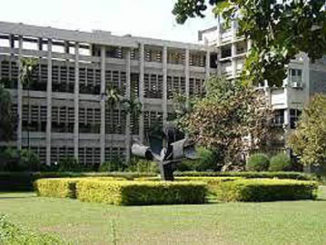
Washington (TIP): A US-based alumni group of the Indian Institute of Technology (IIT), Bombay has donated a whopping $50 million to its alma mater.
The IIT Bombay Heritage Foundation (IITBHF), a US based non-profit charity organization established to support students, alumni, faculty, and research at IIT Bombay, said this during a virtual event attended by hundreds of leading alumni and past and current IIT-B directors, a media release said. IITBHF celebrated 25 years of its alma mater on July 19. According to the organizers, the amount of $50 million was collected from over 3,300 donors. The foundation has also helped establish the most recognizable IIT and IIT Bombay brands in the US and elsewhere.
It has supported 575 named scholarships benefiting nearly 5,000 students and funded the construction and establishment of 25 major centers, schools and laboratories.
“This is an occasion to remember our founding, rejoice in our achievements and renew us for the future,” said D C Agrawal, president IITB Heritage Foundation in his welcome address.
IIT Bombay Director Subhasis Chaudhuri lauded the Heritage Foundation’s efforts for its far-reaching contributions over the last 25 years.
“Our success as the top ranked Indian Institute would not have been possible without the heartfelt and far-reaching support of IIT Bombay Heritage Foundation and the alumni donors,” he said.
“What IITBHF has achieved over the last 25 years would not have been possible without the generous support of over 3300 alumni donors,” said its current chair Raj Mashruwala.
LONDON (TIP): Indian-origin British author Sunjeev Sahota is among the 13 authors long listed for the prestigious 2021 Booker Prize for fiction for his novel ‘China Room’, alongside Nobel laureate Kazuo Ishiguro and Pulitzer Prize winner Richard Powers. The 2021 long list or “The Booker Dozen” of 13 novels was unveiled on Tuesday after judges evaluated 158 novels published in the UK or Ireland between October 1, 2020, and September 30, 2021.
Sahota, 40, who was the 2015 Booker Prize nominee for The Year of the Runaways, is on the long list for the 50,000-pound (USD 69,000) prize for his novel “China Room”, inspired in part by the author’s own family history.
Britain’s Ishiguro, who won the Nobel Prize for Literature in 2017, is among this year’s “Booker dozen” for “Klara and the Sun,” a novel about love and humanity narrated by a solar-powered android.
It is the fourth Booker nomination for Ishiguro, who won the prize in 1989 for “The Remains of the Day.” American author Powers is nominated for “Bewilderment,” about an astrobiologist and his neurodivergent son. Powers won the Pulitzer for fiction in 2019 for the eco-epic “The Overstory,” which was also a Booker Prize finalist.
Other Booker contenders on this year’s list include A Passage North, Anuk Arudpragasam; Second Place, Rachel Cusk, The Promise, Damon Galgut; The Sweetness of Water, Nathan Harris, An Island, Karen Jennings; A Town Called Solace, Mary Lawson; No One is Talking About This, Patricia Lockwood; The Fortune Men, Nadifa Mohamed; Great Circle, Maggie Shipstead and Light Perpetual, Francis Spufford. The 13 books on this year’s longlist were chosen by the judging panel: historian Maya Jasanoff (chair); writer and editor Horatia Harrod; actor Natascha McElhone; twice Booker-shortlisted novelist and professor Chigozie Obioma; and writer and former Archbishop Rowan Williams.
Historian Jasanoff, who is chairing this year’s judging panel, said, “One thing that unites these books is their power to absorb the reader in an unusual story, and to do so in an artful, distinctive voice. Many of them consider how people grapple with the past – whether personal experiences of grief or dislocation or the historical” legacies of enslavement, apartheid, and civil war.
“Many examine intimate relationships placed under stress, and through them meditate on ideas of freedom and obligation, or on what makes us human. It’s particularly resonant during the pandemic to note that all of these books have important things to say about the nature of community, from the tiny and secluded to the immeasurable expanse of cyberspace” Jasanoff said in a statement.
A six-book shortlist will be announced on September 14, and the winner will be crowned on November 3 during a ceremony in London.
OHIO (TIP): Ohio-based IT analyst Sumit Kumar made an urgent phone call this week to his hometown in Haryana, India, to ask his parents to postpone booking their tickets to the US via Cancun. Kumar says he took the decision after the US State Department in its new travel advisory changed the travel health notice for India from Level 4 to Level 3.
“I am hopeful that within the next 1-3 months the travel restriction from India to the US will be lifted and elderly like my parents will be able to travel directly and not via the cumbersome way of visiting a third country and spending a fortnight in a new place.”
Dropping India to Level 3 means that now the State Department only asks the US citizens to reconsider before traveling to India unlike earlier Level 4 that urges citizens not to travel to that country. Within minutes of this new advisory travel portals and immigration groups began discussing the possibilities of a likely normalized travel.
Speculations are rife that the travel restrictions may come down within the next three months.
However, Carmel, Indiana based Sneha S. is still going ahead and considering a possible third country travel for her parents.
“The situation is so rapidly changing, who knows what may happen in a few days,” she says. “India, we are hearing, is getting ready to cope up with a third wave. I can’t take any chances and want my parents to be with me.”
Indian Americans are praying that the third Covid-19 wave does not hit India because that may likely upset any travel possibilities further.
For the past year and a half most Indians living and working in the US have faced some kind of family separation owing to pandemic related travel restrictions.
After the second wave hit India earlier this year, US put travel restrictions for certain visa holders traveling directly from India with a presidential proclamation.
The restriction has prevented many work visa holders on a visit to India to come back to the US and has made the travel of relatives or family on B1/B2 visa nearly impossible.
While families have been devising ways such as seeking National Interest Exception or flying their parents through a third country, the last two updates on travel from India to US have raised hopes.
It has come across as a good indicator that future travel may likely be easier for thousands of Indians anxious about the prospects of getting their families to be with them in the US.
President Joe Biden Thursday said that Washington is reviewing when it can lift restrictions barring most non-US citizens from traveling to the country. Airlines too have urged the administration to lift the restrictions.
While on ground the situation still remains the same with no plausible answer to when travel could be restored, for now many Indians in America are willing to wait and watch.
TOKYO (TIP): Indian American Nikhil Kumar, participating in his first Olympics, won two rounds to advance to the final 48 in the Men’s Singles table tennis event before Swedish pro Anton Kaellberg knocked him out.
Kumar, an eighteen-year-old from San Jose, California, did not have an answer for Kaellberg, who won the Second Round best-of-seven match in four straight games (11-7, 11-5, 11-6, 11-5) on Sunday evening at the Tokyo Metropolitan Gymnasium.
Kumar fell behind early in Game One and never seemed to get fully on track, although he did rack up four points in a row in that game to get to 7-8 before Kaellberg pulled away, according to teamusa.org.
By the third game, it was clear that Kaellberg was in command of his game and control of the match, running off the game’s first six points before Kumar broke through.
In the final game, Kumar grabbed his first lead of the match by taking the first three points (3-0), but Kaellberg never seemed in trouble, as he took six of the final seven points of Game Four to close out the young American.
Although Kumar is now eliminated from the Men’s Singles competition, he will get another shot at Kaellberg and his Swedish teammates when the United States takes on Sweden in the Round of Sixteen for the Team Event in table tennis, which is scheduled for August 1.
Kumar began his Olympics journey on a high being the youngest American TT player in Tokyo. Playing since 2013 Nikhil believes that his age doesn’t make a difference to his performance as he has always played against opponents older than him.
Table tennis is a game of skill and not of age. He says that players younger than him are much stronger and hold the potential to defeat him.
He is the gold medalist from the 2019 Pan American Games and was the bronze medalist at the 2020 ITTF Portugal Open in the Men’s U21 category.
A scenic place in the Western Ghat of the versatile state Karnataka – Chikmagalur. The coffee land of Karnataka is a gorgeous hill station is a place that must feature on every tourists and travellers bucket list, thanks to the lush greenery all around, magnanimous views of the adjacent peaks and add to it the aroma of the coffee beans all over the town.
Chikmagalur in the local language means the town of the younger daughter. The name originates from a historically significant event. This small town was once gifted to a village chief as dowry when another village chief gave his younger daughter’s hand in marriage. Thus, the name Chikmagalur.
One of the best getaways for a tranquil retreat, Chikmagalur is a place that is definitely a must at least once in a lifetime. Lush green mountains, mystical temples, cascading waterfalls, exotic trekking trails and picturesque coffee plantations make this place enchanting.
Here are a list places in Chikmagalur that you will absolutely love visiting while vacationing.
Mullayangiri
Mullayangiri is the highest peak of Karnataka, located on the Chandra Drona ranges, the Mullayangiri is also the highest peak between the Nilgiris and Himalayas. The quaint ambience, verdant grasslands, rugged rocks jetting out and nature’s raw beauty will make you behold with the view. Just below the peak, you can spot a cave and if you are not feeling enough of the adventure this trekking trail has to offer, you can also explore this cave.
Kemmanagudi
Kemmanagudi, another towering mountain in Chikmagalur is another place that is not be missed out on when you are in Chikmagalur. The forests, gardens, waterfalls and springs in Kemmanagudi is simply mesmerising. Once a summer retreat to the royals of Mysore Wadiyar dynasty. With Mullayangiri and Bababudangiri in close proximity along with the twin Kallathi and Kalahasthi waterfalls is just beautiful. Kemmanagudi is also a haven for trekkers.
Kudremukh
Kudremukh is the most popular tourist destination in Chikmagalur, with pristine waterfalls, lush green landscape greenery everywhere, this place is an absolute haven for those who are in desperate need of peace away from the hustle-bustle of the city with alluring beauty of nature in abundance at Kudremukh. The Surimale Waterfall and the Kadambi Waterfall near Kudremukh are also a must visit place that mustn’t be missed out.
Coffee Museum
If you are missing out on a place that is related to coffee is a crime in Chikmagalur. The Coffee Museum in Chikmagalur is run by Coffee Board of India, this museum offers a glimpse of the insight into the history of Coffee plantations in India. You can also witness a thematic representation of how coffee is prepared in the museum.
Z Point
It would be an offence if Z point is missed out from this list. The Z Point is one of the must visit place in Chikmagalur, offering scintillating views of Chikmagalur from the peak of the Z Point. You can also opt for mountain biking if you want to add some adventure to the trek and ride on the rocky terrains leading up to the Z Point.
New Delhi (TIP): At $608.99 billion as on June 25, India has emerged as the fifth largest foreign exchange reserves holder in the world after China, Japan, Switzerland and Russia, Minister of State for Finance Pankaj Chaudhary said in a written reply to a question in the Lok Sabha.
India’s foreign exchange reserves position is comfortable in terms of import cover of more than 18 months and provides cushion against unforeseen external shocks.
The government and RBI are closely monitoring the emerging external position calibrating policies or regulations to support robust macroeconomic growth, assured the minister.
The RBI, he said, takes regular steps for diversification of forex reserves by scaling up operations in forex swap and repo markets, acquisition of gold and exploring new markets/products, while adhering to safety and liquidity standards. Source: TNS
The International Monetary Fund’s No. 2 official on Tuesday, July 20, called on countries to pivot from saving their economies from collapse to reviving growth-oriented policy reforms to boost their recovery prospects and make them more sustainable.
IMF First Deputy Managing Director Geoffrey Okamoto said in a blog posting on the IMF website that the Covid-19 pandemic delayed and reversed some pro-growth reforms and restoring these can help make up for output lost during the pandemic.
Reforms that allow for faster restructurings and resolution of unviable businesses and labor policies to help retrain workers and line them up with job openings can help shift workers and capital to more promising, dynamic parts of the economy, Okamoto said.
Improved competition policy frameworks such as those being debated in Europe and the United States can reduce the concentration of market power among a few firms and create more dynamic competition and innovation. “Using this moment for some of these difficult reforms means that the monetary and fiscal stimulus still flowing will serve as a springboard to a brighter and more sustainable future rather than a crutch to a weaker version of the pre-Covid-19 economy,” Okamoto said. “Seizing the opportunity could deliver years of solid post-Covid-19 growth and progress in living standards.”
The call for a renewed focus on reforms comes as the IMF is shifting from non-conditional emergency Covid-19 pandemic financing toward the negotiation of more traditional IMF loan programs, which require recipient countries to meet policy reform benchmarks.
2021 will probably go down in history as the year when Bitcoin started to enter the mainstream financial world with an increasing number of global financial institutions, large technology enterprises, and even a nation adopting the crypto king. While Bitcoin will sooner or later come out of the current price correction phase, the majority in a survey of 42 crypto experts globally recently said hyperbitcoinisation – the moment when Bitcoin overtakes global finance – will happen by 2050.
The survey, which also included heads of Indian crypto exchanges ZebPay and Unocoin – Avinash Shekhar and Sathvik Vishwanath respectively, was published this month by the UK-based personal finance platform Finder. The study noted that 29 per cent said hyberbitcoinisation will happen as soon as 2035 while an additional 20 per cent believed it to happen by 2040. However, 44 per cent of panelists didn’t expect it to ever occur. Bitcoin has managed to gain increased backing or attracted the interest of companies and financial entities across the globe such as JPMorgan, Goldman Sachs, PayPal, Visa, Tesla, Apple, MicroStrategy, and more. Recently, the Central American nation El Salvador became the first country globally to adopt Bitcoin as a legal tender. Others such as Bulgaria and Ukraine also owned Bitcoins, according to BitcoinTreasuries.org.
Even as there could be a medium-term price depreciation, the price of Bitcoin is predicted to increase up to $318,417 by December 2025, according to the panel. “Halving events and inflation along the way to 2025 and 2030 will likely trigger the larger upside moves,” said Justin Chuh, Senior Trader, Wave Financial in the report. “Prices are likely to be continuously driven by supply and demand, less availability for a wider group of users.”
However, panelists expected that by December 2030, the price will go up to $4,287,591 but “the average is skewed by outliers – when we look at the median price prediction, the 2030 price forecast comes down to $470,000.” This is still over 14X from the current price of near $32,000. Nonetheless, 2021 is expected to end at $66,284, according to 61 per cent of panelists. This would be just $2,000 more than the all-time high of $64,234 as of April 14, 2021, as per data from CoinMarketCap.com.
Asian Development Bank (ADB) has downgraded India’s economic growth forecast for the current financial year to 10% on Tuesday, from 11% projected earlier this year, mainly on account of the adverse impact of the coronavirus pandemic. India’s GDP growth recovered to 1.6% in the last quarter of fiscal year ended March 2021, narrowing contraction in the whole fiscal year from 8% estimated in April to a revised 7.3%, the multilateral funding agency said in the Asian Development Outlook (ADO) Supplement. “Early indicators show economic activity resuming quickly after containment measures eased. The growth projection for FY2021 (ending March 2022), downgraded from 11% in ADO 2021 to 10%, reflects large base effects,” it said. Indian consumer price inflation rose to 6.3% year-on-year in May as both food and fuel inflation outpaced expectations. “This Supplement raises the inflation forecast for India in FY2021 (fiscal ending March 2022) by 0.3 percentage points to 5.5%,” the ADB said.
Swiggy raises $1.25 bn from SoftBank, Prosus
Food ordering and delivery platform Swiggy has announced closure of $1.25 billion (approximately Rs 9,345 crore) funding led by SoftBank Vision Fund 2 and Prosus. As per sources, the closure of this round pegs the valuation of the company at $5.5 billion (around Rs 41,125 crore).
It marks the first investment in the Indian food delivery category by SoftBank Vision Fund 2, with participation from the company’s long-term investor, Prosus, and other existing investors Accel Partners and Wellington Management, Swiggy said. Besides, new investors Qatar Investment Authority, Falcon Edge Capital, Amansa Capital, Goldman Sachs, Think Investments and Carmignac participated in the round, it stated.
The capital markets regulator and the anti-smuggling investigator, Directorate of Revenue Intelligence (DRI), are probing some Adani Group companies, the finance ministry told lawmakers in Parliament.
Adani Group said it had made full disclosure to the Securities and Exchange Board of India (Sebi) on request for information and that the DRI matter was sub judice.
In a written reply to questions raised by lawmakers, the finance ministry said that Sebi was investigating some Adani Group companies “with regard to compliance with Sebi Regulations.” It also said that the DRI was investigating “certain entities belonging to the Adani Group of companies under laws administered by it.” The ministry also said that there was no ongoing investigation by the Enforcement Directorate and that as far as the investigation under Income Tax Act was concerned, disclosure of information regarding a specific taxpayer was prohibited.
Van Horn (TIP): Jeff Bezos blasted into space on Tuesday, July 20, on his rocket company’s first flight with people on board, becoming the second billionaire in just over a week to ride his own spacecraft.
The Amazon founder was accompanied by a hand-picked group: his brother, an 18-year-old from the Netherlands and an 82-year-old aviation pioneer from Texas — the youngest and oldest to ever fly in space.
“Best day ever!” Bezos said when the capsule touched down on the desert floor at the end of the 10-minute flight.
Named after America’s first astronaut, Blue Origin’s New Shepard rocket soared from remote West Texas on the 52nd anniversary of the Apollo 11 moon landing, a date chosen by Bezos for its historical significance. He held fast to it, even as Virgin Galactic’s Richard Branson pushed up his own flight from New Mexico in the race for space tourist dollars and beat him to space by nine days. Unlike Branson’s piloted rocket plane, Bezos’ capsule was completely automated and required no official staff on board for the up-and-down flight.
Blue Origin reached an altitude of about 66 miles (106 kilometers), more than 10 miles (16 kilometers) higher than Branson’s July 11 ride. The 60-foot (18-meter) booster accelerated to Mach 3 or three times the speed of sound to get the capsule high enough, before separating and landing upright. Source: AP
YouTube has launched a new way for video creators to earn money from fans through a feature called Super Thanks, as the Alphabet Inc streaming service looks to attract more content makers.
The feature, a fourth way for YouTubers to earn money from their viewers, comes as competing platforms like short-form video app TikTok and Facebook Inc’s Instagram are investing heavily to court creators filming viral videos.
Fans can purchase Super Thanks at four price points, from $2 to $50, as a way to express gratitude and support their favourite YouTube channels, the company said in a statement.
After purchase on a video page, a highlighted comment will appear in the comment section, allowing the creator to respond to the fan’s gift with a comment.
The feature is available to thousands of creators in 68 countries and will expand to all eligible creators in YouTube’s partner program.
Fans have been able to pay for exclusive content through channel memberships. Viewers on a live-streamed YouTube video can also pay for Super Chats to pin their comments to the top of the comment section.
Pegasus spyware is once again at the center of a major controversy after a two-year hiatus. Global reports have shown that NSO Group’s software was used to spy on about 50,000 people including political leaders, businessmen, journalists, and activists from across the world. The malware exploits zero-day vulnerability in the device’s operating system to spy on individuals.
Researchers at Amnesty International have developed a toolkit that can help users identify whether their phone was infected by the spyware.
Mobile Verification Toolkit works on both iOS and Android OS. It simplifies the process of acquiring and analyzing data from Android devices, and analyses records from iOS backups and filesystem dumps to identify potential traces of compromise.
Researchers noted that there are more forensic traces accessible to investigators on Apple iOS devices than on Android devices. As a result, most recent cases of confirmed Pegasus infections have involved iPhones.
Amnesty has made the open-source toolkit available on GitHub. Since the toolkit works on the command line, it requires some knowledge on how to navigate the terminal and may not be user friendly.
To install the toolkit, users need to install a python package available in documentation on the MVT (Mobile Verification Toolkit) website. It also includes instructions for both iOS and Android on how to go about with the process. Before running MVT, users have to take a backup of their iOS device.
Amnesty pointed that the purpose of MVT is to facilitate the ‘consensual forensic analysis’ of devices of those who might be targets of sophisticated mobile spyware attacks.
“We do not want MVT to enable privacy violations of non-consenting individuals,” Amnesty said. “Therefore, the goal of this license is to prohibit the use of MVT (and any other software licensed the same) for the purpose of adversarial forensics.”
How did they do it?
There’s nothing particularly complicated about how the Pegasus spyware infects the phones of victims. The initial hack involves a crafted SMS or iMessage that provides a link to a website. If clicked, this link delivers malicious software that compromises the device.
The aim is to seize full control of the mobile device’s operating system, either by rooting (on Android devices) or jailbreaking (on Apple iOS devices).
Usually, rooting on an Android device is done by the user to install applications and games from non-supported app stores, or re-enable a functionality that was disabled by the manufacturer.
Similarly, a jailbreak can be deployed on Apple devices to allow the installation of apps not available on the Apple App Store, or to unlock the phone for use on alternative cellular networks. Many jailbreak approaches require the phone to be connected to a computer each time it’s turned on (referred to as a “tethered jailbreak”).
Rooting and jailbreaking both remove the security controls embedded in Android or iOS operating systems. They are typically a combination of configuration changes and a “hack” of core elements of the operating system to run modified code. In the case of spyware, once a device is unlocked, the perpetrator can deploy further software to secure remote access to the device’s data and functions. This user is likely to remain completely unaware. Most media reports on Pegasus relate to the compromise of Apple devices. The spyware infects Android devices too, but isn’t as effective as it relies on a rooting technique that isn’t 100% reliable. When the initial infection attempt fails, the spyware supposedly prompts the user to grant relevant permissions so it can be deployed effectively. (Agencies)
The Biden administration has blamed China for a hack of Microsoft Exchange email server software that compromised tens of thousands of computers around the world earlier this year.
The administration and allied nations also disclosed a broad range of other cyberthreats from Beijing, including ransomware attacks from government-affiliated hackers that have targeted companies with demands for millions of dollars.
China’s Ministry of State Security has been using criminal contract hackers, who have engaged in cyber extortion schemes and theft for their own profit, according to a senior administration official. That official briefed reporters about the investigation on the condition of anonymity.
Meanwhile, the Justice Department on Monday announced charges against four Chinese nationals who prosecutors said were working with the Ministry of State Security in a hacking campaign that targeted dozens of computer systems, including companies, universities and government entities.
The announcements highlighted the ongoing cyberthreat posed by Chinese government hackers even as the administration has been consumed with trying to curb ransomware attacks from Russia-based syndicates that have targeted critical infrastructure, including a massive fuel pipeline.
Even though the finger-pointing was not accompanied by any sanctions of Beijing, a senior administration official who disclosed the actions to reporters said that the U.S. has confronted senior Chinese officials and that the White House regards the multination public shaming as sending an importance message. Source: AP
Colombo (TIP): Chasing 276, India were down and out at 193 for seven before Deepak Chahar and Bhuvneshwar Kumar (19 not out off 28) forged an unbeaten 84-run stand to seal a memorable win for the visitors who extended their record of not losing an ODI on Sri Lankasoil since 2012.
A struggling Sri Lankan outfit badly needed a morale-boosting win but has only itself to blame for not finishing the job from a commanding position.
Chahar, whose highest score before this game was 12, showed remarkable resolve and composure under pressure to take his team over the line with five balls to spare. He fittingly hit the winning boundary. It was India’s ninth consecutive bilateral series win over Sri Lanka.
The third ODI will be played on Friday. It was expected to be another comfortable chase for India after Sri Lanka put an improved batting effort to post 275 for nine.
However, questionable shot selection from the majority of the Indian batsmen gave their struggling opponents hope.
Barring Chahar and Suryakumar Yadav (53), the Indian batsmen faltered. Leg-spinner Wanindu Hasaranga troubled the Indians with his variations and ended up being the stand out bowler for his team.
India felt the heat early on in the chase with Prithvi Shaw and Ishan Kishan, who both blew away the opposition in the opener on Sunday, getting out to bad shots.
Shaw failed to pick a wrong one off Hasaranga and got bowled while going for a cut. The opener once again showed sublime form during his short stay in the middle with three delightful boundaries before throwing it away.
Kishan, with his feet nowhere close to the bat, tried to whack it through the off-side off pacer Kasun Rajitha only to play it on to the stumps, leaving India at 39 for two in four overs.
Skipper Shikhar Dhawan (29 off 38) was not at his fluent best for the second game in a row and was trapped in front by Hasaranga.
Manish Pandey (37) was unfortunate to be run out off a deflection from the bowler’s hand and Hardik Pandya hitting it straight to mid wicket with hard hands left India reeling at 116 for five.
Suryakumar and Krunal stitched a 44-run stand before Chahar produced a stunner from nowhere for a remarkable win.
Earlier, leg-spinner Yuzvendra Chahal led India’s decent effort with the ball. Pretty much like the series opener, most of the Sri Lankan batsmen got starts but failed to capitalise after the hosts opted to bat.
Avishka Fernando (50 off 71) and Charith Asalanka (65 off 68) struck fine half-centuries but the home team wasn’t disciplined enough to post an imposing total.
Chamika Karunaratne (44 not out off 33) came up with another timely cameo to take the team past 270. Chahal (3/50) was the pick of the bowlers while pacers Deepak Chahar (2/53) and Bhuvneshwar Kumar (3/54) too got wickets primarily due to profligacy of the home team batsmen.
Openers Fernando (50 off 71) and Minod Bhanuka (36 off 42) took Sri Lanka to 59 for loss in the first 10 overs.
The momentum shifted India’s way drastically after Chahal removed Minod and Bhanuka Rajapaksa off successive balls in the 14th over.
Sri Lanka, who are among the worst performing teams in the middle overs, struggled again in the crucial stage of the game.
They took 97 balls to take find their next boundary after the eight over. From 77 for no loss in the 14th over, Sri Lanka slipped to 134 for four in the 28th over.
Asalanka and skipper Dasun Shanaka tried to resurrect the innings but their 38-run stand ended with the captain falling to a flatter one from Chahal.
Chahar took his second wicket with a perfect knuckle ball that crashed through Wanindu Hasaranga’s defences. Asalanka played some bold strokes alongside Karunaratne to give the innings some impetus towards the end.
Asalanka got to his maiden fifty with a lofted boundary over extra cover off Kuldeep Yadav before sweeping the left-arm wrist spinner for another four in the same over.
Bhuvneshar kept things tight but bowled at a slower pace than his usual.
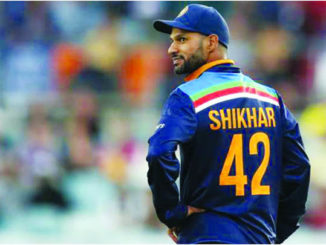
Dubai (TIP): India opener Shikhar Dhawan jumped two places to 16th after his unbeaten half-century in the first match against Sri Lanka while Virat Kohli remained at second spot in the latest ICC ODI rankings issued on Wednesday, June 21.
Dhawan’s unbeaten 86 in the first game of the ongoing three-ODI series in Colombo helped him accumulate 712 rating points and gain two slots, while Kohli has 848 points.
Another senior India batsman Rohit Sharma is at third position with 817 points in the list headed by Pakistan’s Babar Azam (873).
The rankings took into account the three-match series between Zimbabwe and Bangladesh, the third Ireland versus South Africa match and the first two ODIs between Sri Lanka and India.
Among the bowlers, India’s Yuzvendra Chahal (up four places to 20th), Sri Lanka’s Wanindu Hasaranga (up 22 places to 36th), South Africa’s Tabraiz Shamsi (up eight places to 39th), Ireland’s Simi Singh (up six places to 51st) and Zimbabwe’s Blessing Muzarabani (up 23 places to 70th) were among the others to make headway.
In the ICC T20 rankings, Pakistan opener Mohammad Rizwan and England middle-order batsman Liam Livingstone made huge progress after finishing as the leading run scorers for their teams in the three-match series won 2-1 by England.
Wicketkeeper-batsman Rizwan has attained a career-best seventh position after aggregating 176 runs in the series including an unbeaten 76 in the final match in Manchester, performances that helped him gain four places.
New Delhi (TIP): India on Thursday, July 21, recorded 41,383 new cases and 507 more deaths due to the coronavirus disease (Covid-19), taking the caseload and death toll to 31,257,720 and 418,987 respectively, according to the Union health ministry’s update at 8am. As many as 38,652 people recovered in the 24-hour time span, taking the cumulative count of recoveries to 30,429,339, the data showed. The active cases stand at 409,394, an increase from 407,170 cases on Wednesday.
Thursday’s case count is 632 less than that of Wednesday’s when 42,015 people were detected Covid-19 positive. Meanwhile, the toll on Thursday is 3,491 less than that of Wednesday’s when 3,998 deaths were recorded as Maharashtra reconciled its death count with 3,509 previously unreported fatalities.
A total of 450,911,712 samples have been tested for the Covid-19 disease till now, of which 1718,439 were tested in the last 24 hours, the Indian Council of Medical Research (ICMR) said on Thursday.
More than 415 million vaccine doses have been administered across the country of which 328,716,212 have received the first dose and the remaining 86,756,243 have received both doses.
The Centre and opposition leaders have engaged in a squabble after the former claimed that no deaths due to lack of oxygen were reported by states and Union Territories during the second wave of the Covid-19 pandemic. Leaders of opposition parties such as the Congress, Aam Aadmi Party (AAP), and the ruling Bharatiya Janata Party’s (BJP) former ally Shiv Sena have strongly criticised the above statement of a Union minister in the Rajya Sabha.
However, several states including Madhya Pradesh, Chhattisgarh, Gujarat, Tamil Nadu and Maharashtra have claimed that no Covid-19 deaths were reported due to the shortage of the life saving gas.
Countering the allegations made by opposition parties, BJP spokesperson Sambit Patra said on?Wednesday that health is a state subject, adding no state or UT sent any data regarding deaths specifically due to a shortage of oxygen. “None of them said that a death occurred in their state and Union territory due to shortage of oxygen, there is no data for that. Did the Centre generate this data? No,” Patra added. Source: HT
WASHINGTON (TIP): Two Indian-American doctors and one of the largest hospital systems in the US have agreed to pay nearly USD 37.5 million to settle allegations of kickbacks for patient referrals, the Department of Justice said.
The settlement resolves allegations that Prime Healthcare Services system overpaid for California interventional cardiologist Dr Siva Arunasalam’s physician practice and surgery center because the company wanted him to refer patients to its Desert Valley Hospital in Victorville, California, it said.
The purchase price, which was substantially negotiated by Prime Healthcare Services founder and CEO Dr Prem Reddy, exceeded the fair market value and was not commercially reasonable, it said.
Prime also knowingly overcompensated the doctor when HDHVI entered into an employment agreement with him that was based on the volume and value of his patient referrals to the Desert Valley Hospital.
The United States and California entered into a settlement agreement with the Prime Healthcare Services, Dr Reddy, and Dr Arunasalam to resolve alleged violations of the False Claims Act and the California False Claims Act based on kickbacks paid by Prime to Dr Arunasalam for patient referrals, a media release said on Tuesday.
Under the settlement agreement, Dr Arunasalam will pay USD 2 million, Dr Reddy paid USD 1.7 million and Prime paid USD 33.7 million. Prime and Dr Reddy paid USD 65 million to settle previous unrelated allegations of false claims and overbilling in 2018, the Department of Justice said.
Acting Assistant Attorney General Brian M Boynton of the Justice Department’s Civil Division said, “Offering illegal financial incentives to physicians in return for patient referrals undermines the integrity of our healthcare system by denying patients the independent and objective judgement of their health care professionals.”
“Doctors have a sworn duty to do no harm and to put their patients’ interests first,” said Acting US Attorney Tracy L Wilkison for the Central District of California.
“Kickbacks designed to increase the number of patient referrals corrupt the doctor-patient relationship and needlessly waste this nation’s healthcare resources,” he said.
ATLANTA, GA (TIP): An Indian American family has died in the horrific Champlain Towers South collapse in Surfside, a few miles north of Miami Beach, according to local reports. The 13-story beachfront condominium collapsed on June 24, killing Vishal Patel, 42, his wife Bhavna, 38, a dual British and U.S. citizen who was just over four months pregnant, and their one-year-old daughter Aishani. The couple, identified by Miami-Dade officials on July 9, lived in Unit 311.
The Patels had moved to Miami five years ago, and to Champlain Towers South two years ago, their niece Sarina told the Miami Herald. They knew nothing about the growing questions over the building’s structural integrity at the time, which emerged in 2018 after engineers pointed out evidence of flooding, cracking, corrosion and “major structural damage.”
“Rather, they chose the building for its beautiful view of the Atlantic Ocean and its proximity to the beach, an idyllic place to begin their family life together, they thought. And their family did grow: In May 2020, Aishani Gia Patel was born,” the report said.
Signup to our Newsletter!
Don’t miss out on all the happenings around the world