Tag: Apple Newsw

  • Monkeypox can be contained if we act now, says World Health Organization

    Monkeypox can be contained if we act now, says World Health Organization

    A World Health Organization senior official said on Friday that the priority needs to be containing monkeypox in non-endemic countries, saying that this can be achieved through quick action.
    Monkeypox, typically a mild viral infection, is endemic in the African countries but its spread to non-endemic countries such as in Europe and the United States has raised concerns. So far, there are more than 200 confirmed or suspected countries in around 20 cases where the virus was not previously circulating.
    “We think if we put the right measures in place now we can contain it easily,” Sylvie Briand, WHO director for Global Infectious Hazard Preparedness said at a technical briefing to member states at the UN health agency’s annual assembly. She stressed that there was a window of opportunity to prevent further spread, urging the general public not to be worry since transmission is much slower than other viruses such as the coronavirus. WHO officials said that there was no need for mass vaccination at present, but targeted vaccination where available for close contacts of people infected. “Case investigation, contact tracing, isolation at home will be your best bets,” said Rosamund Lewis, WHO head of the smallpox secretariat which is part of the WHO Emergencies Programme.
    Monkeypox, a mild viral infection, is endemic in the African countries of Cameroon, Central African Republic, Democratic Republic of Congo, and Nigeria.
    The recent outbreak in non-endemic countries has raised concerns. The strain circulating globally is thought to have a fatality rate of around 1%, although effective vaccines and treatments are available.
    Talking during an online briefing, WHO’s senior epidemiologist Maria Van Kerkhove said cases have so far been detected in more than 20 non-endemic countries, adding that the agency expected the numbers to go up. “We expect more cases to be detected. We are asking countries to increase surveillance…This is a containable situation. It will be difficult, but it’s a containable situation in the non-endemic countries.” Source: Reuters

  • Previous Covid infection does not protect kids from Omicron: Study

    Previous Covid infection does not protect kids from Omicron: Study

    Children who previously had COVID-19 or the inflammatory condition MIS-C are not protected against the Omicron variant of coronavirus, according to a study which found vaccination, however, does afford protection.
    The findings of the study, published recently in the journal Nature Communications, are similar to those found in adults. “I hear parents say, ‘Oh, my kid had COVID last year,’” said Adrienne Randolph, of Boston Children’s Hospital, US, senior author of the research paper.
    “But we found that antibodies produced by prior infections in children don’t neutralise Omicron, meaning that unvaccinated children remain susceptible to Omicron,” Randolph said.
    The researchers, including Surender Khurana, from the US Food and Drug Administration obtained blood samples from 62 children and adolescents hospitalised with severe COVID-19.
    They also used data from 65 children and adolescents hospitalised with MIS-C, and 50 outpatients who had recovered from mild COVID-19.
    All the samples were taken during 2020 and early 2021, before the emergence of the Omicron variant.
    In the laboratory, the researchers exposed the samples to a pseudovirus, and measured how well antibodies in the samples were able to neutralise five different SARS-CoV-2 variants of concern: Alpha, Beta, Gamma, Delta, and Omicron. A pseudovirus is derived from SARS-CoV-2, but stripped of its virulence.
    Overall, children and adolescents showed some loss of antibody cross-neutralisation against all five variants, but the loss was most pronounced for Omicron, the researchers said.
    “Omicron is very different from previous variants, with many mutations on the spike protein, and this work confirms that it is able to evade the antibody response,” said Randolph.
    “Unvaccinated children remain susceptible,” the researcher said. In contrast, children who had received two doses of COVID-19 vaccine showed higher neutralising antibody titers against the five variants, including Omicron.
    The researchers hope these findings will encourage parents to have their children and teens vaccinated. Source: PTI

  • Nawabi Pulao

    Nawabi Pulao

    Ingredients
    1/2 kg chicken
    1/4 kg mutton
    1/2 kg rice
    1 cup curd, well beaten
    1 cup milk
    3 onions
    2 eggs
    1/2 cup green peas, shelled
    1 pod arlic
    1 big piece of ginger
    1 tsp rose water
    Ghee or oil for frying
    Salt to taste
    Method
    1. Clean and wash rice and soak it in water for 15 minutes.
    2. Cook the rice till half done. Keep aside. 3. Clean and cut the mutton into cubes. Joint the chicken. Boil the eggs and keep aside.
    4. Slice the onions. Grind ginger and garlic to a paste.
    5. Heat ghee in a frying pan, add onions, ginger-garlic paste and fry well.
    6. Add the jointed chicken and fry. Add 3 cups of water and salt to taste and cook on slow fire till the meat is tender and only 1/3 of the gravy is left.
    7. Add some more ghee and the well beaten curd. Cook on a slow fire until the curd gets absorbed.
    8. Add 1 tsp of rose water after the meat has cooled.
    9. Take a heavy bottomed pan and arrange alternate layers of rice and cooked meat taking care that the first and last layers are that of rice.
    10. Place in an oven and cook for about 15-20 minutes on low heat.
    11. Garnish with fried onions, quartered boiled eggs and boiled green peas.

  • Hair loss: Know the causes, ways to prevent it

    Hair loss: Know the causes, ways to prevent it

    It can be disheartening to see hair strands in the shower drain. If you have wondered why you lose more hair in summers than in winters, there is a reason for it that Pooja Nagdev, aromatherapist, cosmetologist and founder of Inatur explains. According to her, in summers, hair breakage increases due to excessive sweating in the scalp, heat, chlorine, and sun exposure. If not taken care of, the hair can become brittle, dry, and prone to damage.
    “The summer season in most parts of India is brutal. The combination of harsh sun, pollution, and dryness can cause havoc, resulting in irritated skin and scalp. The same can be said for your hair, which may become frizzier, drier, and less lustrous during the summers,” Nagdev says.
    She adds that the influence of both sun and wind is relatively strong during summers, affecting the body’s mechanisms. “The heat has an effect on the body’s fire element, pitta dosha. Hair is a by-product of bone tissue, and it has been linked to gut health. The digestive fire becomes erratic in summer, and the nourishment of body tissues deteriorates, impairing hair growth and affecting both appearance and strength.”
    She shares the following tips that should help with summer hair loss:
    – Make sure you minimize or avoid the heat and chemical styling treatments. Go for towel drying, instead of using a hairdryer.
    – Control hair damage by tying them into a bun, braid, or ponytail on bad hair days.
    – Choose natural and reliable hair care products like shampoos, conditioners, hair masques, etc., that are sulfate-free and vegan. Too many chemical-laden products can further damage the hair.
    – It is always better to go for products that are specifically made for your hair and scalp.
    – Try amla hot oil treatment/hair mask at home at least once a week. It is excellent for dry damaged hair.
    – Deep conditioning hair masks such as argan and keratin can also serve you. Deep conditioning hair masks will restore the lost moisture and hydrate hair strands.
    – Regular trimming will make sure the dry, dead, split ends are chopped off.
    – Never rub towels aggressively on your hair to dry them after washing. Just wrap a towel to squeeze out the excess water.
    – Apply hair serum when the hair is still in a semi-dried state; this will make sure that not too many knots are formed.
    – As a precautionary measure, wear hats, and scarves when going out, since the sun can further damage the hair.
    – Try making your own massage oils with organic cold pressed and essential oils.
    Source: The Indian Express

  • Hydrate, exfoliate, moisturize to avoid dry skin

    Hydrate, exfoliate, moisturize to avoid dry skin

    Save your skin from dryness and dehydration. Increase water intake and exfoliate the dead skin cells to achieve smooth skin, says an expert. An experthas shared a few tips to get spotless skin:
    – Hydrate: Hydrating yourself is absolutely essential to keep your skin healthy. A lot of water content from the body is lost while you sweat during summer season. Therefore, it is essential to increase water intake by a couple of glasses every day.
    Avoid caffeinated drinks and keep away from aerated drinks too as they further dehydrate the skin. Instead, opt for freshly squeezed lime juice or go for coconut water and other fresh juices.
    – Exfoliate: Exfoliation helps in the removal of dead skin cells and in achieving smooth skin. You can do it yourself at home with the right mix.
    Oatmeal, honey, lemon, curd, cucumber are some of the ingredients that can work wonders on your skin. In summer season, exfoliate at least thrice a week to remove dead skin and improve blood circulation.
    – Moisturize: It is necessary to moisturise your skin before you step out in the searing sun. This will keep your skin hydrated and prevent it from becoming dry and scaly.
    Apply a light and non-greasy moisturiser after you step out from a shower and before applying sunscreen. Follow this procedure in the night.
    – Balanced diet: It is not just water that helps you to stay hydrated; indulging in fresh fruits, leafy vegetables and salads help as well. Eat the right food to nourish your skin and stay fit during summer. Avoid boiling or steaming vegetables for too long, as this will reduce their water content. Junk food, beverages, non-vegetarian and spicy preparations are a strict no-no as well during summer.
    Milk
    Milk products work wonders on your skin. If you have dry and itchy skin, try applying milk. Take a piece of cloth, soak it in milk and apply it on your skin. Leave it on for five to eight minutes and wash with lukewarm water. Apply it on alternate days and see how your skin begins to glow in a matter of weeks.
    Olive Oil
    Olive oil helps condition your skin since it has many properties that can leave your skin smooth. Take some olive oil and apply it on your skin half an hour before you take shower. Take a hot water bath, and moisturise your skin using a cream. As the procedure takes time, try this over the weekends.

  • India in history this Week-June 3, 2022, to June 9, 2022

    03 JUNE
    1867 Birth of India’s famous educationist, politician, social reformer, jurist and writer Harvilas Sharda.
    1901 Birth of first winner of Jnanpith Award Mahakavi Ji Shankar Krup.
    1915 The British government conferred the title of knighthood on Rabindranath Tagore.
    1918 ‘Hindi Sahitya Sammelan’ was organized in Indore under the chairmanship of Mahatma Gandhi and based on a resolution passed in it, Hindi was considered as the official language.
    1924 The birth of M Karunanidhi, five times Chief Minister of Tamil Nadu.
    1930 The birth of George Fernandes, the historic railway strike organizer in India.
    1947 Lord Mountbatten, the last Viceroy of India under the British Raj, announced the partition of India.
    1972 The country’s first modern warship, the Nilgiris, was inaugurated by the then Prime Minister of the country, Indira Gandhi.
    1974 Death of Bihar Chief Minister and freedom fighter Krishna Ballabh Sahay.
    1985 The Government of India started a five-day working day week.
    2014 Former Union Minister Gopinath Munde died in a road accident in New Delhi.

    04 JUNE
    1936 India’s unmatched actress Nutan was born on 4 June.
    1959 C. Rajagopalachari announced the formation of the Swatantra Party.
    1997 Telecom satellite reached 2D chamber.
    2008 In 2008, the Haryana government also announced the benefit of family pension to girls below 25 years of age.
    1931 Hindi film actress Bina Rai was born in 1931.
    1959 Anil Ambani, president and famous businessman of Reliance Group, was born in 1959.
    1947 Hindi and Marathi film actor Ashok Saraf was born in 1947.
    1962 Achanta Lakshmipati, famous for the propagation of Ayurvedic medicines, died in 1962.
    1984 Operation Bluestar was carried out by the Indian Army in the Golden Temple located in Amritsar, Punjab, the religious site of Sikhs.
    05 JUNE
    1659 Aurangzeb, the ruler of the Mughal Empire, officially ascended the throne of Delhi in 1659.
    1882 In Bombay (now Mumbai), about one lakh people died in 1882 due to storms and floods.
    2001 In 2001 the work of investigating the royal family in Nepal was blocked by the resignation of Madhavan, a member of the royal assassination inquiry commission.
    2002 In 2002 Pakistan rejected the proposal of a joint patrol along the Indian border.
    2017 Successful launch of the heaviest rocket “GSLV Mark-3D-1” in 2017.
    1972 Yogi Adityanath, the 21st Chief Minister of the state of Uttar Pradesh, was born in 1972.
    1961 India’s famous tennis coach and former tennis player Ramesh Krishnan was born.
    1879 The originator of the ‘Trade Union Movement’ in India. M. Joshi was born.

    06 JUNE
    1929 Actor, politician and social activist Sunil Dutt was born in Jhelum (present-day Pakistan), West Punjab.
    1674 Kshatrapati Shivaji Maharaj was crowned.
    1981 A train fell in Bihar’s Baghmati river, killing 800 of the 1000 people on board.
    1997 In Bangkok, India, Bangladesh, Sri Lanka and Thailand formed an economic cooperation group called ‘Bistek’.
    1999 Indian tennis duo Leander Paes and Mahesh Bhupathi won the Grand Slam title.
    07 JUNE
    1893 Mahatma Gandhi used civil disobedience for the first time in South Africa.
    1914 Film director, writer and journalist Khwaja Ahmed Abbas was born on June 7 in Panipat.
    1974 Indian tennis superstar Mahesh Bhupathi was born on 7 June in Chennai.
    1975 The first match of the first World Cup was played between India and England at Lord’s Stadium. India lost in this match.
    1631 Mughal Emperor Shah Jahan’s wife Mumtaz Begum died at the age of 39 in Burhanpur.
    1989 India’s second satellite Bhaskar I was launched with a Soviet rocket.
    2006 India decides to give one billion rupees to Nepal for economic reconstruction.
    2008 The Uttar Pradesh government declared 4% VAT on LPG to be completely abolished.
    08 JUNE
    1948 India’s first airline, Air India, started air service between India and Britain.
    1658 Aurangzeb captured the fort of Agra and Shah Jahan was imprisoned.
    1936 The Indian State Broadcasting Service, the official radio service of India, was renamed All India Radio.
    2004 After 122 years, the amazing sight of Venus transit was seen again in many countries of the world including India.

    2009 Famous screenwriter, theatrical director, poet and actor Habib Tanveer passed away.
    09 JUNE
    1964 Lal Bahadur Shastri became the second Prime Minister of India.
    2001 The pair of Leander Paes and Mahesh Bhupathi won the French Open doubles title.
    1900 Freedom fighter Birsa Munda died in Ranchi jail under suspicious circumstances.

    2011 India’s famous painter MF Hussain died in London.

  • Nassau County Legislator DeRiggi-Whitton Commemorates Memorial Day in Sea Cliff

    Nassau County Legislator DeRiggi-Whitton Commemorates Memorial Day in Sea Cliff

    Young boys and girls in the parade
    Officials and guests pose for a photograph (Photos / Peter M. Budraitis)

    SEA CLIFF, N.Y. (TIP): Nassau County Legislator Delia DeRiggi-Whitton (D – Glen Cove) joined the residents of Sea Cliff in commemorating Memorial Day on Monday, May 30.
    Legislator DeRiggi-Whitton marched alongside her colleagues in government and local community leaders in the Village’s annual Memorial Day parade and participated in a solemn tribute to the men and women who lost their lives while serving in the armed forces of the United States.

    “By hosting this meaningful and thoughtful tribute each year, the residents of Sea Cliff are ensuring that the Americans who made the ultimate sacrifice while serving and protecting their nation will never be forgotten,” Legislator DeRiggi-Whitton said. “I thank the organizers of this parade and the entire community for their embrace of everything that Memorial Day embodies.”

  • SENATOR JOHN LIU INTRODUCES BILLS TO EXTEND MAYORAL CONTROL AND REDUCE CLASS SIZES IN NYC PUBLIC SCHOOLS

    SENATOR JOHN LIU INTRODUCES BILLS TO EXTEND MAYORAL CONTROL AND REDUCE CLASS SIZES IN NYC PUBLIC SCHOOLS

    NEW YORK, NY (TIP): New York State Senator John Liu, Chairperson of the Senate Committee on NYC Education, on May 31, introduced S9459 to extend mayoral control of NYC public schools system and S9460 to significantly reduce class sizes in every grade throughout NYC public schools.

    Senator Liu stated, “After months of intense and complex negotiations, today we put forth legislation that will significantly modify NYC’s system of school governance in a way that will strengthen parental input and engagement, and for the first time, mandate the reduction of class sizes in New York City. As introduced, parents and the public will continue to be able to hold the mayor accountable while enjoying more meaningful engagement in PEP and CEC decision making. Students and teachers will finally realize the fruits of the Campaign for Fiscal Equity court decision, which found reducing class sizes is fundamental to a sound, basic education. Many thanks to my colleagues in the legislature, the Adams administration, CEC and PEP members, and all the students and parents who weighed in throughout these last months with insights into how and why we should change the system of school governance to make it more accountable to the people.”

  • NEW YORK CITY SCHOOLS CHANCELLOR DAVID C. BANKS SHARED THOUGHTS  ON PROPOSED CHANGES TO MAYORAL ACCOUNTABILITY AND CLASS SIZES

    NEW YORK CITY SCHOOLS CHANCELLOR DAVID C. BANKS SHARED THOUGHTS ON PROPOSED CHANGES TO MAYORAL ACCOUNTABILITY AND CLASS SIZES

    NEW YORK , NY (TIP): New York City Schools Chancellor David C. Banks today released the following statement regarding proposed changes to mayoral accountability and class size limits being considered by the State Legislature: “As the State Legislature prepares to vote, it should be mindful that changes to the nation’s largest school district must take into consideration the impact these changes will have on over one million students and educators. Taken together, the proposed bills force school leaders to put class size above supportive programming for our kids.
    As a lifelong educator I deeply appreciate the focus on reducing class size, and if given time we can work together with union leadership to find a way forward so our highest-need students see the benefit of lower-class sizes. But the proposed multibillion dollar unfunded mandate in this bill forces school leaders to prioritize class size above critical school safety programs, dyslexia screenings, social workers, school nurses, summer programming, supports for special student populations, and even the expansion of community schools. Make no mistake, it will lead to large cuts in these critical programs. This should not be a choice that school leaders have to make.
    If the State Legislature is going to move forward with the bill on class size limits, my appeal to our state legislators in Albany is to fully fund the bill. If this class size issue is so critical to the future of our young people, then we must ensure that the state put its financial resources behind this bill. An unfunded mandate like this would potentially do huge damage to our system.
    The Panel for Educational Policy is responsible for oversight of our fiscal resources and advising on critical policy issues. By increasing the number of members and applying fixed terms for panel members, this bill puts more bureaucracy in the way of making real change for kids. Mayoral accountability is essential to our students’ success as we emerge from COVID, and a two-year renewal is too short a time to provide our students with the certainty they need and is a marked departure from the longer extensions given to previous administrations run by mayors who did not even attend city public schools. From keeping our schools open to reimagining our Gifted & Talented programs and how we teach kids to read to the hiring of superintendents, this administration is listening, adapting, and responding to the real needs of students, families, and community leaders who are passionate about the success of our city’s public school students.”
    Additional information on background:
    Regarding the bill limiting class sizes in NYC public schools – This bill specifically targets NYC public schools with a massive unfunded mandate from the state. The cost estimate for the kindergarten through fifth grade class sizes is approximately $500 million a year, which does not include middle or high school grades. Further estimates must consider the capital costs to build more schools and classroom seats across the city, which could potentially amount to billions of additional dollars in unfunded costs.
    Without additional funding, this proposal would require us to defund several critical programs across the city – like recent expansion in social workers, school nurses, school safety programs, dyslexia screenings and curriculum, and other vital parts of making our schools innovative, supportive places for young people.
    Regarding proposed changes to the Panel for Education Policy – We fully support equitable representation of parents on the Panel for Educational policy and support requirements that mayoral appointees represent groups of parents and the proposal that the majority by current parents with student currently attending a public school.
    Clear mayoral accountability is essential to our students’ success as we emerge from COVID, and two years is too short a limit, does not provide our students with the certainty they need, and is a marked departure from the longer extensions given to previous administrations run by mayors who did not attend city public schools. Additionally, changes like making all CECs even-numbered panels and putting a District 75 parent on every geographic council are changes that have very little support amongst parents.

  • NYC EMERGENCY MANAGEMENT AND STATEN ISLAND BOROUGH PRESIDENT ANNOUNCE NEW BOROUGH COMMAND CENTER ON STATEN ISLAND

    NYC EMERGENCY MANAGEMENT AND STATEN ISLAND BOROUGH PRESIDENT ANNOUNCE NEW BOROUGH COMMAND CENTER ON STATEN ISLAND

    INEW YORK, NY (TIP): In line with the start of Atlantic hurricane season, the New York City Emergency Management Department and Staten Island Borough President Vito Fossella debuted the Borough Command Center (BCC) on Staten Island for emergency responders. The BCC will serve as a hub for NYC Emergency Management responders to mobilize and coordinate emergency assets during large-scale emergencies on Staten Island, allowing first responders to strategically address the specific needs of Staten Island’s communities.

    “Disasters start and end locally, and this new command center will allow us to effectively respond to emergencies that affect Staten Island,” said NYC Emergency Management Zach Iscol. “We are thankful to Borough President Fossella and his office for their support in helping us continue to build a robust emergency response structure in this city.” “We are pleased to announce that a new, expanded, and state of the art NYC Emergency Management Center will be located at the Petrides Complex. Given this centralized location, we feel this site will best serve the Staten Island community and the operations of NYC Emergency Management in our borough in cases of any emergency,” said Staten Island Borough President Vito J. Fossella. “We have been working with NYC Emergency Management since January to get a site to the borough since Staten Island relies on the agency for its expertise in emergency response, preparedness, and public awareness on safety. We commend NYC Emergency Management and the Department of Education for their partnership.”

    “School buildings and campuses have long served as hubs for our communities, particularly in times of hardship. I am grateful that with this new borough command center we will be able to ensure that our students and families have access to essential emergency resources, particularly as we head into hurricane season,” said Schools Chancellor David C. Banks. “I laud the incredible work that has been done to realize this center and look forward to the Department of Education’s continued partnership with Staten Island Borough President Vito Fossella and the New York City Emergency Management Department to support our communities.” During the response to Tropical Storm Isaias, NYC Emergency Management deployed its Interagency Coordination Center to Staten Island Mall parking lot to coordinate field response operations in the borough. This mobile command center allowed the agency, along with its private partners, to strategically deploy resources throughout the borough. Under this new plan, the BCC would serve as the central hub for coordination and response.

    To raise awareness of the hurricane season, NYC Emergency Management relaunched the “Know Your Zone” hurricane awareness campaign to encourage New Yorkers to find out whether they live in one of the city’s six hurricane evacuation zones. New Yorkers can visit NYC.gov/knowyourzone to find their evacuation zone designation and to get more information about how to prepare for hurricanes. The Know Your Zone campaign is a multipronged, multilingual campaign that is supported with updated advertising for the 2022 hurricane season, social media engagement (#knowyourzone), and community outreach (hurricane preparedness presentations in communities throughout the city). Through the Know Your Zone campaign, NYC Emergency Management aims to reach 3.1 million New Yorkers living within the city’s hurricane evacuation zones, which were revised in 2021. Hurricane evacuation zones are based on coastal flood risk resulting from storm surge (the “dome” of ocean water that is pushed ashore by the winds and low barometric pressure of a hurricane), the geography of the city’s low-lying neighborhoods, and the accessibility of these neighborhoods by bridges and roads. The City may order residents who live in a zone to evacuate depending on a hurricane’s forecasted strength, track, and storm surge. If you are ordered to evacuate, do so as directed.

  • Shanghai moves toward ending 2-month lockdown

    Shanghai moves toward ending 2-month lockdown

    Beijing (TIP): Shanghai authorities say they will take some major steps on June 1 toward reopening China’s largest city after a two-month Covid lockdown that has throttled the national economy and largely bottled up millions of people in their homes. Full bus and subway service will be restored as will basic rail connections with the rest of China, Vice Mayor Zong Ming said on Tuesday at a daily news conference.
    Schools will partially reopen on a voluntary basis for students and shopping malls, supermarkets, convenience stores and drug stores will continue to reopen gradually with no more than 75 per cent of their total capacity. Cinemas and gyms will remain closed. Officials, who set June 1 as the target date for reopening earlier in May, appear ready to accelerate what has been a gradual easing in recent days. — AP

  • Italy imports more Russian oil despite impending embargo

    Italy imports more Russian oil despite impending embargo

    Milan (TIP): Even as the European Union decided to reduce Russian crude oil imports by 90 per cent by the end of the year, Italy has become the only country in Europe to increase them, an unintended consequence of EU sanctions against Russia. Meant to punish Russia for invading Ukraine, the EU oil embargo is now putting at risk one of Italy’s largest refineries, located in Sicily, which would deal an economic blow to the depressed region’s economy.
    Italy agreed with its EU partners to cut Russian crude imports by 2023, a move that Premier Mario Draghi called “a complete success, that wouldn’t have been believable just a couple of days ago.” But Rome also has to deal with the fate of the refinery in Sicily owned by Russia’s Lukoil. As a result of previous sanctions against Russia, ISAB Srl has paradoxically gone from processing 15 per cent of Russian crude to 100 per cent.
    That’s because banks have refused to take the risk of extending credit to Russia-controlled ISAB that would allow it to buy oil from non-Russian sources, even if not specifically barred from doing so, said Matteo Villa, an energy analyst at the ISPI think tank in Milan. Ships continue to arrive at the port-side refinery with crude oil from the Russian parent company. Italy in May received about 400,000 barrels of Russian oil a day in May, four times the pre-invasion levels, according to the Kpler commodity data company. Of that total, ISAB received 220,000 barrels a day from Russia. “Italy is the only country in Europe increasing oil imports,” Villa said, going from the sixth-largest importer of Russian oil to the the largest in the three months since the invasion.
    The plant employs 3,500 people at three production sites, including a refinery, gasification and electricity cogeneration plant, in Sicily’s Syracuse province, and risks closure if a solution isn’t found before the embargo kicks in. The plant and related activities generate half of the provincial gross domestic product and 8 per cent of the region’s economic activity, processing one-fifth of Italy’s crude oil imports.
    The refinery’s future was already at risk in the longer term, due to Italy’s energy transition to more sustainable sources. The embargo has only increased the sense of urgency to find a solution.
    “The mood today is even worse than yesterday,” said Fiorenzo Amato, the secretary general of the Filctem Cgil union in Syracuse. “The industrial hub … employs many people, giving families the chance to live.” Since learning of the embargo, refinery workers are growing more concerned about their future.
    “It will be a disaster,” said Marco Candelargiu. “We hope they find a solution. You cannot destroy a province. The choice was made a long time ago to base the economy prevalently on the refinery.” Villa said one solution would be for Italy to temporarily nationalize the refinery, a move permitted for energy emergencies under Italy’s Constitution, but a week of discussions has yielded no agreement. As an Italian-owned refinery, ISAB would be able to get the necessary financing to purchase crude from other sources and keep operating while longer-term solutions are sought. “This is important for employment in Sicily, for the provisioning of gasoline and diesel to Italy and for our own political face-saving in Europe,” Villa said. AP

  • Japan PM Kishida’s support hits highest ever as election nears: Survey

    Japan PM Kishida’s support hits highest ever as election nears: Survey

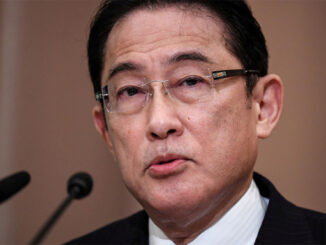
    Tokyo (TIP): Japan’s Prime Minister Fumio Kishida scored his highest approval ratings since taking office eight months ago in a weekend survey, the Nikkei daily reported, with critical upper house elections just weeks away.
    Should Kishida, fresh from talks with US President Joe Biden last week, and his ruling Liberal Democratic Party (LDP) win a decisive victory in July’s election, he won’t face another scheduled ballot for three years. That would give him full scope to focus on a policy programme that includes revising Japan’s pacifist constitution at some point in the future. Support for Kishida and his Cabinet climbed to 66%, a rise of 5 points from the previous April survey and the highest since he took office last October, according to a weekend survey by the Nikkei and TV Tokyo.
    A total of 61% of respondents said they “approved” of his talks with Biden. During the meeting the pair agreed to cooperate on pressing security issues, such as China’s increasing assertiveness, while and Kishida pledged to seek a “substantial” increase in Japan’s defence budget.
    Kishida has recently concluded a whirlwind schedule of diplomatic visits and talks in Tokyo, including hosting the leader of the “Quad” security pact countries – Australia, India, Japan and the United States.
    Though analysts say the optics of meeting with Biden certainly won’t hurt Kishida, diplomacy is unlikely to weigh as heavily with voters as domestic issues, such as the coronavirus and the economy.
    Asked about the government’s handling of price rises in the wake of the war in Ukraine and surging fuel prices, 61% said they did not approve against only 28% who did.
    Kishida’s support also rose in a survey last week by Fuji News network, hitting hit 68.9%, up 3 points from the previous month. But asked to explain why they supported him, the greatest number of respondents – 38.2% – said “because there’s no other suitable person”. (Reuters)

  • 4 killed, 14 injured as 6.1-magnitude earthquake hits China’s Sichuan province

    4 killed, 14 injured as 6.1-magnitude earthquake hits China’s Sichuan province

    Beijing/Chengdu (TIP): A powerful earthquake of 6.1-magnitude killed at least four people and injured 14 others as it jolted the city of Ya’an in southwest China’s quake-prone Sichuan province on June 1 afternoon, according to local authorities. The quake rattled Lushan County of Ya’an in Sichuan at 5:00 pm local time, according to the China Earthquake Networks Centre (CENC). The epicentre, with a depth of 17 km, was monitored at 30.4 degrees north latitude and 102.9 degrees east longitude, the CENC said.
    Sichuan province suffered China’s deadliest 7.9-magnitude earthquake in 2008 in which 90,000 people were killed.
    Wednesday’s earthquake was followed by another 4.5-magnitude jolt in Baoxing County, also under the city of Ya’an.
    Four people were killed and 14 others injured in the quake, the state-run People’s Daily reported.
    All the casualties were reported from Baoxing County, the state-run Xinhua news agency reported, quoting Ya’an city’s earthquake relief headquarters.
    Ya’an has activated the second-highest level of emergency response for the earthquake and is conducting damage assessments.
    More than 800 personnel from emergency rescue, the armed police, the fire department, the medical sector and the public security bureau were immediately dispatched to the earthquake-hit areas to search for and rescue the injured, repair roads and relocate affected residents.
    The Ministry of Emergency Management said an A level-III national emergency response has been activated to conduct the relief operations.
    A work team has been dispatched to guide and assist the local emergency rescue efforts, the ministry said.
    Local firefighters have reached the epicentre, while quake rescue teams of Sichuan and other neighbouring regions are on standby for relief operations, the ministry added. (PTI)

  • West adding fuel to fire: Moscow over more arms supply to Kyiv

    Kyiv (TIP): Western nations promised more and more advanced arms to bolster Ukraine’s defence as its troops battled a grinding Russian offensive that was closing in on capturing a key city in the east.
    Germany said on June 1 it would supply Ukraine with modern anti-aircraft missiles and radar systems, and the US will also unveil a new weapons package that will include high-tech, medium-range rocket systems.
    The Kremlin spokesman said the US was “adding fuel to the fire”. Western arms have been critical to Ukraine’s success in stymieing Russia’s much larger and better equipped military — thwarting its initial efforts to take the capital and forcing Moscow to shift its focus instead to the eastern industrial Donbas region.
    But as the war drags on and Russia bombards towns in its inching advance in the east, Ukraine has repeatedly pleaded for more and better weapons. Ukrainian President Volodymyr Zelenskyy has occasionally criticised the West for moving too slowly in shipping arms — and military analysts have said Russia is hoping to overrun the Donbas before any weapons that might turn the tide arrive.
    In addition to the rocket systems it has promised, the US package will include helicopters, Javelin anti-tank weapon systems, tactical vehicles, spare parts and more, two senior administration officials said on Tuesday. Moscow views the US plans to supply more weapons “negatively”, Kremlin spokesman Dmitry Peskov said on Wednesday. — AP

  • Ukrainian army says Russia lost about 30,700 troops in Ukraine

    Kiev (TIP): Russia has “lost about 30,700 troops” in Ukraine between February 24 and June 1, Ukrainian army claimed.
    The statement was made by the General Staff of the Armed Forces of Ukraine on Facebook, Ukrinform news agency reported on June 1. “The enemy’s total combat losses, between February 24 and June 1, also included 1,361 tanks (+3 over the past day), 3,343 armored fighting vehicles (+41), 659 artillery systems (+10), 207 multiple launch rocket systems (+0), 94 anti-aircraft warfare systems (+1), 208 aircrafts (+0), 175 helicopters (+1), 2,290 motor vehicles and fuel tanks (+15), 13 warships/boats (+0), 519 unmanned aerial vehicles (+4), 49 special equipment units (+1). A total of 120 enemy cruise missiles (+0) were shot down,” the report noted. Over the past day, Russian troops have suffered the “highest losses” in the Kryvyi Rih and Bakhmut direction. The data are yet to be updated.
    It is noteworthy that the Russian troops continue to conduct offensive operations in the eastern operational zone to gain “full control” over Donetsk Region and Luhansk Region. –IANS

  • EU agrees on gradual Russian oil embargo

    BRUSSELS (TIP): European Union leaders have agreed an embargo on Russian oil imports that will kick in around the turn of the year – and for now exempts the pipeline imports that Hungary and two other landlocked Central European states rely on. The ban, agreed overnight after weeks of wrangling, aims to remove 90 per cent of Russia’s crude imports into the 27-nation bloc within eight months or so, officials said.
    It is the toughest sanction yet on Russia for its invasion of Ukraine, and one that will affect the EU itself.
    Russia provided just over a quarter of EU oil imports in 2020, while Europe is the destination for nearly half of Russia’s crude and petroleum product exports. “The sanctions have one clear goal: To prompt Russia to end this war, to withdraw its troops, and to agree a sensible and fair peace with Ukraine,” German Chancellor Olaf Scholz said. Ukraine said they would deprive the “Russian military machine” of tens of billions of dollars. French Pres ident Emmanuel Macron said nothing could be ruled out regarding further sanctions, although other leaders poured cold water on the idea of banning purchases of Russian gas, which Europe depends on heavily. — Reuters

  • Sri Lankan agricultural minister seeks India’s help for food security

    Sri Lankan agricultural minister seeks India’s help for food security

    Colombo (TIP): Sri Lankan agricultural minister Mahinda Amaraweera on June 1 met Indian High Commissioner Gopal Baglay and sought India’s help for food security and environmental protection in the island nation, as it faces the worst economic crisis in its post-independence history. Last month, India assured Sri Lanka to immediately supply 65,000 metric tonnes of urea to avoid any disruption to the current Yala cultivation season in Sri Lanka.
    Yala is the season of paddy cultivation in Sri Lanka that lasts between May and August.
    Sri Lankan Agriculture Minister Amaraweera met Indian High Commissioner Baglay and they had discussed the importance of bilateral cooperation for food security and environmental protection, a statement from the High Commission said. Sources said Amaraweera was keen on getting chemical fertiliser from India under the Indian Line of Credit. President Gotabaya Rajapaksa’s decision last year to ban chemical fertiliser imports in order to turn into a green economy has caused a food shortage with crop losses amounting to 50 per cent.
    Rajapaksa a few weeks ago admitted his decision to ban chemical fertiliser to go 100 per cent organic was wrong.
    The agriculturists have warned that the country may encounter a food shortage by mid-August in the ongoing economic crisis. India has committed more than USD 3 billion to debt-ridden Sri Lanka in loans, credit lines and credit swaps since January this year.
    Sri Lanka is aiming to boost its agriculture sector to avoid any disruption in the agriculture market following the drop in the paddy cultivation in the Maha session.
    Sri Lanka’s annual fertiliser imports cost USD 400 million. Farmers across Sri Lanka have intensified their protests due to the lack of fertiliser and being compelled to abandon their farmlands.
    The chemical fertiliser ban, combined with bad weather, led to falling crop yields and contributed to inflation hitting a 47-month high of 8.3 per cent in October with food inflation at 11.7 per cent, Daily Mirror, an online news portal said. Sri Lanka has more than 2 million farmers and up to 70 per cent of its 22 million people are directly or indirectly dependent on agriculture. Sri Lanka’s economic crisis is caused in part by a lack of foreign currency, which has meant that the country cannot afford to pay for imports of staple foods and fuel, leading to acute shortages and very high prices. The crisis has provoked widespread protests calling for political reform and the resignation of President Gotabaya Rajapaksa. (PTI)

  • Pakistan’s fuel supply threatened as foreign banks refuse financing

    Pakistan’s fuel supply threatened as foreign banks refuse financing

    Islamabad (TIP): Amid rising subsidy allocations, the Pakistan oil industry is now facing challenges in arranging international finances for import of crude and oil products. Informed sources told Dawn news that the Petroleum Division had informed the Prime Minister and Finance Minister that arrangements of oil imports were getting tough by the day as foreign banks were not providing financing against Letters of Credit (LCs) opened by oil marketing companies (OMCs) and refineries with the local banks.
    A senior official told Dawn that except two large corporations, Pakistan State Oil (PSO) and Pak-Arab Refinery Limited (Parco), all OMCs and refineries were struggling to arrange import of petroleum products and crude.
    The sources said about six-seven cargos worth $50-75 million each ($350-500 million cumulative) depending on size and product were held up at present because of the increased risk following some critical statements from the relevant ministries about the tough fiscal and foreign exchange position.
    They said Pakistani banks were opening LCs on behalf of the oil industry, but their partner banks were not extending credit cover, Dawn reported. “Unfortunately, the country’s fuel supply is now also being severely threatened by limited credit facilities, high inflation and increasing rupee-dollar parity,” stated an oil industry’s report sent by the Petroleum Division to the Prime Minister Office and the Finance Minister.
    The oil industry has told the government that this financial predicament had left the oil industry extremely vulnerable and fragile, adding that this “may result in breakdown of the supply chain”. IANS

  • 21 bodies recovered from Tara Air plane crash site in Nepal

    Kathmandu (TIP): Rescuers on Monday recovered 21 bodies from the wreckage site of the Tara Air plane that crashed in Nepal’s mountainous Mustang district on May 29 with 22 people on board, including four Indians, minutes after taking off from the tourist city of Pokhara, officials said.
    The turboprop Twin Otter 9N-AET plane went missing on May 29 morning in the mountainous region of Nepal. The Canadian-built plane, flying from Pokhara to the popular tourist town Jomsom in central Nepal, was carrying four Indians, two Germans and 13 Nepali passengers, besides a three-member Nepali crew.
    Rescuers have recovered 21 bodies from the crash site, said a statement issued by the Civil Aviation Authority of Nepal (CAAN).
    One person was still missing, the statement added.
    It said that 10 bodies were brought to Kathmandu, while 11 bodies were taken to the base camp from where the rescue operation is being coordinated.
    Sudarshan Bartaula, a spokesperson for Tara Air, said that search and rescue teams are scouring the area for the remaining person.
    President Bidya Devi Bhandari and Prime Minister Sher Bahadur Deuba have condoled the death of crew members and passengers in the plane crash.
    The government has formed a five-member commission of inquiry headed by senior aeronautical engineer Ratish Chandra Lal Suman to find out the cause of the Tara Air plane crash.
    A preliminary investigation revealed that the aircraft had crashed into the mountains after it swerved to the right, instead of turning to the left due to inclement weather, CAAN Director-General Pradeep Adhikari said during a meeting of the International Committee of the Parliament on Monday.
    Earlier in the afternoon, the CAAN in a statement said that the plane had crashed at Thasang-2 in Mustang district at the height of 14,500 feet.
    Inda Singh, who was on his way to clear a blocked road, found out that the plane had crashed. He said the plane was found in a completely damaged condition, MyRepublica newspaper reported.
    “All the passengers on the aircraft are found dead,” he was quoted as saying by the paper. “The dead bodies are intact and the faces of all victims are recognisable.”
    He said there was no fire on the aircraft. The aircraft could have met with an accident after hitting a cliff nearby.
    Search and rescue teams from Nepal Army, Air Dynasty, Kailash Helicopter and Fishtail Air Helicopter and other rescue workers were deployed at the crash site. (PTI)

  • Asia Cup slips out of India’s hands after 4-4 draw with South Korea

    Asia Cup slips out of India’s hands after 4-4 draw with South Korea

    Jakarta (TIP)-India bowed out of the title race in the Asia Cup hockey tournament as they drew 4-4 with South Korea their final Super 4 stage match on May 31. Malaysia’s 5-0 win over Japan early in the day meant that an outright win became a pre-requisite for India to qualify for the summit clash. India, Malaysia and South Korea finished on five points each in the Super 4 stage but the Birendra Lakra-led Indian team fell short on goal difference.
    Nilam Sanjeep Xess (9th minute), Dipsan Tirkey (21st), Mahesh Sheshe Gowda (22nd) and Sakthivel Mareeswaran (37th) scored for India, while South Korea scored through Jang Jonghyun (13th), Ji Woo Cheon (18th), Kim Junghoo (28th) and Jung Manjae (44th). The Koreans take on Malaysia in the final tomorrow, while India play Japan in the third-fourth place classification match. Today’s match saw a midfield slugfest between India and South Korea as they tried to take the upper hand in the first quarter.
    India secured a penalty corner in the second minute but Xess’ effort was saved by the Korean goalkeeper Jaehyeon Kim. But in the ninth minute Xess made no mistake from the team’s second penalty corner.
    Two minutes from the end of the first quarter, India conceded a penalty corner and Jonghyun levelled the scores.
    The Koreans made it 2-1 five minutes later when Cheon chose his spot after being fed by Jungjun Lee following a defensive lapse by Pawan Rajbhar inside his own circle. Source: PTI

  • Thimphu: A blend of tradition and modernity

    Thimphu: A blend of tradition and modernity

    Thimphu is known as the heart of Bhutan nestled in its central-western part. Replaced by Bhutan’s ancient capital – Punakha, Thimphu was declared the capital city of the Himalayan Kingdom in the year 1961. Originally pronounced as ‘Thimbu’, the city is known as the most modernised place in Bhutan with internet cafes, restaurants and pubs.
    The Nightlife in Thimphu is also one of its highlights. However, Thimphu still holds on to the Bhutanese Traditions as it houses various architectural structures like the Buddha Dordenma, which marks your entry to Thimphu. The Motithang district of Thimphu also preserves the national animal of Bhutan – The Takin. With institutions like Textile Museum, Library, Art schools and the weekend market; the city isn’t just a heritage centre but a cultural site as well. An hour drive from Paro International Airport, the city of Thimphu is a blend of both tradition and modernity. It is also known as the only capital that doesn’t have any traffic lights installed.
    MEMORIAL CHORTEN
    The Memorial Stupa, also known as Thimphu Chorten is one of the most prominent landmarks of the capital city. Envisioned by Thinley Norbu (1904–1987), the chorten was erected in 1974 as per Nyingma tradition of Tibetan Buddhism to honour the third Druk Gyalpo, Jigme Dorji Wangchuck (1928–1972). This is to fulfil his wish of building a chorten which represents the mind of Buddha while Jigme Dorji was alive. The remarkable thing about this stupa is that it does not preserve any human remains unlike other chortens and got only a photo of Jigme Dorji in ceremonial dress. As you will enter the gate, 100s of devotees would be seen praying around this stupa, mainly the older people. Memorial chorten is located on Doeboom Lam in the southern part of the city.
    ARCHERY IN THIMPHU
    Since archery is the national sport of Bhutan, it would be an experience of a lifetime for traveller to witness a game of archery. All you need to do is pay a visit to the archery stadium in Thimphu and simply sit back and enjoy a game which is as common as soccer in many countries. What adds to the experience is the traditional dance when an archer hits the bull’s eye. Make sure you carry a pair of sunglasses and some munchies to enjoy your entire time at the stadium.
    ROYAL TEXTILE ACADEMY
    Bhutan’s best museum is located at Royal Textile Academy, which was started in May 2005 with an aim to preserve and showcase the traditional art of Bhutan, weaving. It was started under the patronage of Her Majesty Queen Mother Sangay Choden Wangchuck as a non-profit organisation. The objective of this organisation has been to develop conservation centre to restore the Bhutanese textile, as well as provide the professional training to men and women in weaving and textile. The training is given free of cost to the women in lieu of promoting women empowerment. The Royal Textile Academy is Bhutan’s first institute to educate, train, and fill the younger generation with a comprehensive knowledge of the country’s textiles.
    CHANGANGKHA LHAKHANG
    One of the ancient temples in Thimphu, Changangkha Temple was established on a site chosen by Phajo Drukgom Shigpo, the founder of Drukpa Lineage in Bhutan. The temple was laid in 12th century, the work of which was extended by his son in the 13th century. This oldest temple houses an eleven-headed, thousand-armed manifestation, and large prayer wheels. In fact the temple also houses incredibly huge size of Tibetan texts which are unusual from the rest. Enjoy the view from the courtyard, which has got restored in 1998-99.
    TASHICHOO DZONG
    Tashichoo Dzong which translates to fortress of auspicious religious conviction conventionally was the seat of monastic body, and summer capital of the country. The dzong is serving as the government seat since 1952, and presently it houses the king office, secretariat, and other government organisations located nearby. It is also the headquarters for central monastic body of Bhutan, which opens up for general public after 5:30 pm. Unlike other dzongs, Tashichoo has two main entrances. One heads towards the south of the administrative section, and another leads towards the north to the monastic section, where annual tsechu festival is celebrated. The foundation of Thimphu dzong was first laid by Lama Gyalwa Lhanangpa in 1216. The dzong is located next to the banks of Wangchhu River, which is surrounded by a beautiful lawn. Visit this dzong for its authentic and stunning architecture. Don’t forget to spot the parliament building of Bhutan, which is quite visible from here.

  • Messi inspires Argentina to 3-0 Finalissima win over Italy

    Messi inspires Argentina to 3-0 Finalissima win over Italy

    Energized at Wembley by Lionel Messi’s assists, Argentina’s players threw their superstar teammate in the air after he inspired them to a second title in a year. National team success is finally coming for the seven-time Ballon d’Or winner, late in his trophy-filled club career.
    Argentina collected the first Finalissima trophy on Wednesday by beating Italy 3-0 in a meeting of the South American and European champions, with Messi having helped Argentina win the Copa America last July for his first major title with the national team.
    And judging by the two assists on his record-extending 161st Argentina appearance, there is no sign of the 34-year-old Messi slowing down with the chance to win a first World Cup title later this year.
    “What we experienced here was beautiful,” Messi said. “We knew it was going to be a nice game and a nice setting in which to be champions.”
    The opener was created by Messi’s solo brilliance taking him past Giovanni Di Lorenzo and the Argentina captain squared for Lautaro Martínez to slot past goalkeeper Gianluigi Donnarumma in the 28th minute.
    Martínez turned creator in first-half stoppage time by threading a pass through for Ángel Di María to chip Donnarumma, having got past Giorgio Chiellini. The 37-year-old Italy captain came off at halftime of his 117th and final international appearance. The win was wrapped up in the fourth minute of stoppage time with Messi gaining possession on the halfway line and rampaging to the edge of the penalty area where he evaded Di Lorenzo’s challenge to set up the substitute Paulo Dybala to strike low into the net.

  • Gujarat Titans complete dream debut with IPL title

    Gujarat Titans complete dream debut with IPL title

    Ahmedabad (TIP)- Nobody gave them a chance but Gujarat Titans, bucking all pre-tournament predictions, surprised everyone by lifting the Indian Premier League title in a dream maiden season after a seven-wicket victory over Rajasthan Royals in the final here on May 29. Gujarat’s highly-rated bowling attack, led by skipper Hardik Pandya (3/17) himself, limited a formidable Rajasthan Royals batting unit to 130 for nine after losing the toss.
    Shubman Gill and David Miller remained unbeaten on 45 and 32, respectively, to complete an emphatic win for their team. It should have been a comfortable chase but Rajasthan bowled their hearts out to make it an interesting final. As they showed all season, Gujarat remained calm in tough situations to finish the chase in 18.1 overs.
    Not many gave Gujarat a chance in their first season especially after a mixed auction where they waited till the end to secure the services of wicketkeepers Wriddhiman Saha and Matthew Wade.
    It was not a team studded with star players but Hardik impressed with his leadership and got the best out of his colleagues. His performance with bat and ball also contributed immensely to the team’s triumph besides the ability to bounce back from any situation through the brilliance of Miller and Rahul Tewatia. After posting an underwhelming total, Rajasthan had to produce a special effort with the ball to get back in the game.
    The pace duo of Trent Boult and Prasidh Krishna were brilliant in the powerplay, reducing Gujarat to 31 for two with Wriddhiman Saha (5) and Matthew Wade (8) back in the dugout.
    Krishna got one to seam back in from good length to breach Saha’s defence and crash into the stumps.
    Boult, who also bowled a maiden over in his tidy spell, removed Wade. Gujarat would have been three down in the powerplay if Yuzvendra Chahal held on to a simple catch of Gill off Boult in the first over of the innings.
    Hardik and Gill struggled to get the boundaries but never felt extreme pressure as the asking rate remained very much in control. R Ashwin was introduced in the 12th over and Hardik (34 off 30) decided to go after him, collecting a four and six off successive balls to bring up the 50-run stand with Gill and take Gujarat to 77 for two in 12 overs. The skipper fell to a brilliant leg break from Chahal but Gill and Miller got the job done in the end. The entire stadium, housing more than a lakh people, erupted when Gill hit the winning six. Source: PTI

  • India to play 3 ODIs and 5 T20Is vs West Indies between July 22-August 7

    The Cricket West Indies (CWI) and the BCCI on Wednesday announced India’s tour of the West Indies where the ‘Men in Blue’ will play three ODIs and five T20Is between July 22 and August 7.
    India will finish its white-ball leg of UK tour on July 17 and those selected would directly leave for the West Indies from England.The ODI series and three T20Is will be hosted across Trinidad and Tobago and St Kitts & Nevis, with the final two T20Is scheduled to be held in Fort Lauderhill, Florida in the USA.
    The three ODIs will be played on July 22, 24 and 27 respectively at Port of Spain’s (Trinidad & Tobago) iconic Queen’s Park Oval and will be followed by five T20Is, two of which will be played at Florida’s Fort Lauderhill.
    The first T20I will be held at Brian Lara Stadium (Port of Spain) on July 29 and followed by two games at St Kitt’s Warner Park on August 1 and 2 respectively. The final two games, in order to cater to the Indian diaspora in the United States, will be held at the Broward County Stadium in Florida on August 6 and 7. The entire series will be live-streamed exclusively on FanCode.
    West Indies captain Nicholas Pooran said on the upcoming series, “We have a young team that is eager to restore the brand of cricket the West Indies team is known for playing.
    “As I take charge of this team, our ambition is to always be competitive, as we look to use this series to fine tune our preparations for the upcoming T20 and 50 Over World Cups.” Talking about this, Johnny Grave, CEO of Cricket West Indies said: “Our four-year deal with FanCode has brought Indian cricket fans closer to CWI’s live properties across multiple formats that has featured the top cricketing nations like South Africa, Pakistan, Australia and England.