Tag: Apple Newsw

  • India’s GDP grew by 8.7% in FY22 after 6.6% contraction previous fiscal

    India’s GDP grew by 8.7% in FY22 after 6.6% contraction previous fiscal

    New Delhi (TIP)- India’s economic growth or GDP slipped to 4.1 per cent in the fourth quarter of 2021-22, while annual growth stood at 8.7 per cent, according to the government data released on Tuesday. In the previous fiscal 2020-21, the economy had contracted by 6.6 per cent as the Covid-19 pandemic disrupted business activities. The growth was 20.1 per cent, 8.4 per cent, and 5.4 per cent, in the first, second and third quarters, respectively, as per the data released by the National Statistical Office (NSO). The gross domestic product (GDP) had expanded by 2.5 per cent in the corresponding January-March period of 2020-21, according to the NSO. The Economic Survey tabled in Parliament in February had estimated the GDP growth for the current fiscal (2022-23) in the range of 8 – 8.5 per cent. According to the NSO data, India’s real GDP grew to ?147.36 lakh crore from ?135.58 lakh crore in 2020-21.
    The NSO, in its second advance estimate, had projected GDP growth during 2021-22 at 8.9 per cent China had registered an economic growth of 4.8 per cent in the first three months of 2022. Rising global commodity prices have sparked concern among policymakers, with the Reserve of India (RBI) announcing its first interest rate hike in nearly four years earlier this month. Government’s chief economic adviser V Anantha Nageswaran ruled out the risk of stagflation in India as the country is better placed than other nations. Stagflationary risk to India is quite low compared to other countries, he said. Stagflation is the phase when both inflation and unemployment rates are high with moderation in GDP growth. Prime Minister Narendra Modi’s government earlier this month announced tax breaks to offset higher food and petrol costs. Consumer inflation hit 6.95 per cent in March, according to the Reserve Bank of India, which slashed its own yearly growth forecast to 7.2 per cent. Eurozone inflation hits record 8.1% amid rising energy costs Inflation in the 19 countries that use the euro currency hit a record 8.1% in May amid surging energy costs prompted in part by Russia’s war in Ukraine. Annual inflation in the eurozone soared past the previous record of 7.4% reached in March and April, according to the latest data from European Union statistics agency Eurostat. Energy prices jumped 39.2%, highlighting how the war and the accompanying global energy crunch are making life more expensive for the eurozone’s 343 million people.

  • Ganga Dussehra

    Ganga Dussehra

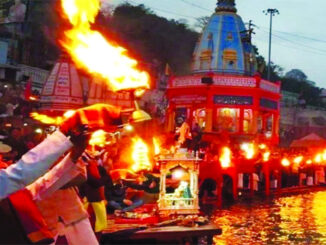
    The festival of Ganga Dussehra is celebrated on the tenth day of the Shukla Paksha of Jyeshtha month. This day is a special day for Hindus as well as all mankind. Ganges Dussehra falls in the months of May and June. On Jyeshtha Shukla Paksha Dashami on Monday and Hasta-nakshatra, this date is considered to destroy the sins. Gangavataran took place on Wednesday in Hasta Nakshatra, on this date Ganga Dussehra is also known as Gangavataran. Therefore, this date is more important. On this date, ten sins are destroyed by bathing, charity, and tarpan, hence it is called Dussehra. This is the day when Ganga was brought down to earth to cleanse the cursed souls of her ancestors and destroy sins. Before coming to earth, Goddess Ganga was residing in the kamandal of Lord Brahma.
    Bathing in the Ganges has special significance on this day. All the sins of a person are destroyed by bathing the Ganges. The Ganges does not rot even if it is kept year round.
    On this day, the fair of Ganga Dussehra is also held at Prayagraj, Allahabad, Garhmukteshwar, Haridwar, Rishikesh and Varanasi, devotees can also enjoy the fair after bathing in the Ganges. The Ganga Dussehra celebrations in Varanasi are legendary. Thousands of devotees bathe in the Ganges on the day of Ganga Dussehra and participate in the Ganga Aarti at Dasaswamedh Ghat in Varanasi and Har Ki Pauri in Haridwar.
    Story
    In ancient times, a king named Sagar ruled in Ayodhya. He had two queens named Keshini and Sumati. Keshini had a son named Anshuman and Sumati had sixty thousand sons. Once King Sagar performed the Ashwamedha Yagna. A horse was left for the Yajna fulfillment. Indra stole the horse and tied it in Kapil Muni’s ashram to dissolve the yagna. Kapil Muni was doing penance. The king asked his sixty thousand sons to bring a horse. The king’s sons reached the ashram of Kapil Muni, which disrupted the austerity of Kapil Muni and the anger of Kapil Muni was consumed by the fire. Seeing his brothers after getting permission from the father of Anshuman, when Kapil reached Muni’s ashram, Gurud ji told all the accounts of his brothers being consumed. Garuda ji also told Anshuman that if he wants his liberation, then Ganga ji will be brought from heaven to the earth.
    After the death of Maharaja Sagara, Anshuman meditated to bring Gangaji to earth, but he failed. After this, his son Dileen also did penance but he also failed.
    In the end, Dileep’s son Bhagiratha went to the Gokarna Tirtha to do austerities to bring Gangaji to earth. Pleased with the austerity of Bhagiratha, Brahmaji gave the boon to take Ganga to earth. Now the problem was that after leaving Brahmaji’s corpuscle, who would handle the velocity of Ganga on earth. Brahmaji said that none other than Lord Shankar have this power in the land which can handle the velocity of the Ganges. Therefore, it is appropriate that Lord Shiva be favored for handling the velocity of the Ganges. Bhagirath stood on one thumb and started worshiping Lord Shankar. Pleased with the harsh penance of Bhagiratha, Shivji agreed to handle Ganga in his jatas. In this way, with the inclinations of Lord Shiva, Ganga ji went to the plains by making a chalk in the valleys of the Himalayas. Pleased with this act of Bhagiratha, Brahmaji declared that Gangaji would also be known as Bhagiratha on earth. In this way, mother Ganga came to earth.
    Legend Behind The Celebration
    The festival Ganga Dussehra is dedicated to the Goddess Ganga and it is believed that Ganga descended to Earth on this day. She descended to accomplish her mission to free the cursed souls of Bhagirath’s ancestors. As per the tradition, before coming to Earth, Goddess Ganga was living in the kamandal of Lord Brahma. When Ganga descended to Earth, she also brought the purity of heaven to Earth.
    River Ganga is a gift to humanity due to the great penance of Bhagirath, after which she is also known as Bhagirathi. Bhagirath was the descendant of the Sagara dynasty. He prayed for the Ganga river to descend on the earth and bring life. However, it turned out to be a destructive force. Therefore, Lord Brahma asked Lord Shiva to hold in the locks. As a result, Ganges lost force and became a placid life-living river.
    The Ganges is not only the sacred river but also the heart of India. Devotees worship this river for a better fortune. On the day of Ganga Dussehra, thousands of lamps are lit in the flowing river for bringing peace and goodness. Haridwar, Prayag, and Varanasi are the most popular celebration spots of Ganga Dussehra in India. It arises from Gangotri in the snow-clad Himalayas, flows in the hot plains of Uttar Pradesh, Bihar, and meets in the Bay of Bengal. Rivers Ganges meets with Saraswati and Yamuna river in the Allahabad. The confluence of these rivers in Prayag is the holiest spot in India.
    Regions Where Ganga Avaratan Is Celebrated
    The festival of Ganga Dussehra is observed by Hindus mostly in the states of Uttar Pradesh, Uttarakhand, Bihar, and West Bengal, where the river Ganga flows. Haridwar, Varanasi, Garhmukteshwar, Rishikesh, Allahabad now Prayagraj, and Patna are the major locations of the celebrations. Here the devotees gather at the banks of the Ganges and perform aartis (a religious ritual in which a light lamp is moved clockwise circularly in front of a deity as a part of prayer) to the river.
    Invoke the blessings of Goddess Ganga and get rid of all the sins by following special personalized rituals based on your birth chart.
    The Significance Of Ganga Avataran Festival
    Dussehra signifies ten auspicious Vedic calculations which show Ganga’s power to wash ten sins related to th thoughts, actions, and speech. The ten Vedic calculations include Jyeshtha month, Shukla Paksha, Tenth day, Thursday, Hasta Nakshatra, Siddha Yoga, Gar-Anand Yoga and Moon in Virgo and Sun in Taurus. The offering of prayer allows one to attain salvation. It is a favourable day for purchasing valuable items, new vehicles, or new property. Reciting Ganga Stotra on this day while standing in the Ganges can remove all the sins.
    It is believed that taking a dip in the river on this day can bring the devotee to a state of purification and also heal any physical ailments he may have. In Sanskrit, Dasha means ten and Hara means destroy; thus bathing in the river during these ten days is believed to rid the person of the ten sins or, alternatively, the ten lifetimes of sins.
    Gain health, wealth, and prosperity by performing personalized Rudrabhishekam Puja on the Ganga Dussehra.

  • Ford workers face uncertain future, stage protest,  seek help from Tamil Nadu govt

    Ford workers face uncertain future, stage protest, seek help from Tamil Nadu govt

    CHENNAI (TIP)- With the deadline for winding up operations nearing and with no ray of hope of another company taking over the unit, workers at Ford’s Chennai car plant have started a protest demanding better severance package. Currently, production at the plant has come to a standstill.
    Those workers who went in for their shift on Monday refused go to the shop floor and started an in-house agitation. “We went inside and said we won’t work until they provide a solution to us. The management told us that if we don’t work, it would be marked as loss of pay,” one of the workers inside, who has been there for the last 36 hours, told The Hindu. Apart from this, those who came in for the second shift are protesting outside the plant. One of the protestors, also an employee said, “the management asked us to sign a declaration that we will not protest, we refused and we are all sitting here at the plant,” he added. Around six workers who spoke said they were being utilized till the company finished production of all its pending cars. “We have finished all the pending work. Work on 1,500 cars is pending, and this will get over in a week’s time. So now, the management has started treating us differently,” one of them lamented. One of the key union members said there was news about plans to use this plant for making electric vehicles, so the union put on hold talks for a few days. “We were hopeful that we will get jobs. But in the second week of May, we were told that there are no such plans. And now the company has indicated that business would be wound up by end of June,” he added. Sources said the Deputy Labor Commissioner from Sriperumbudur visited the plant and held talks, and more details would be made available later. The employees requested the Tamil Nadu government to immediately look into this issue and extend help. Last year, on September 9, the U.S.-headquartered carmaker said it would cease manufacturing vehicles for sale in India immediately; manufacturing of vehicles for export would wind down at the Sanand vehicle assembly plant by the fourth quarter of 2021 and the Chennai engine and vehicle assembly plants by the second quarter of 2022. There was no update from Ford’s public relations team on the protest until the story had gone to print.

    (Source: The Hindu)

  • India collects Rs 1.41 lakh cr GST in May, up 44% YoY

    GST revenue bucked the two-month rising trend in May and stood at nearly Rs 1.41 lakh crore, registering a year-on-year increase of 44%. Though the May Goods and Services Tax (GST) revenue came in lower than the record high collection in April at Rs 1.68 lakh crore and Rs 1.42 lakh crore in March, it is still the fourth highest collection since the rollout of the new indirect tax regime on July 1, 2017. In February, revenue from taxing sale of goods and services was at Rs 1.33 lakh crore, while in January it was Rs 1,40,986 crore.
    “The gross GST revenue collected in the month of May 2022 is Rs 1,40,885 crore of which CGST is Rs 25,036 crore, SGST is Rs 32,001 crore, IGST is Rs 73,345 crore (including Rs 37,469 crore collected on import of goods) and cess is Rs 10,502 crore (including Rs 931 crore collected on import of goods),” the Finance Ministry said.

  • Tata Motors Beats Hyundai To Become 2nd Largest Carmaker In May

    The homegrown automaker, Tata Motors has become the 2nd largest carmaker in the month of May 2022. Tata Motors sold 43,341 cars last month, while Hyundai’s total domestic sales for the month of May 2022 stood at 42,293.
    Hyundai has lost its number 2 spot to Tata Motors for the second time in last 6 months. In December 2021, Hyundai recorded low sales and was slipped to No.3 in the list of top 10 car manufacturers. In May 2022, Tata Motors has defeated Hyundai by good 1,048 units.
    Hyundai Motor Company sold 42,293 cars and SUVs in domestic market in May 2022, reporting a year-on-year sales growth of 69.17 per cent. In May 2022, the company’s export increased by 57.31 per cent to 8,970 units from 5,702 units in May 2021. The company reported a cumulative sales of 51,263 units (Domestic + Exports) in May 2022, registering a year-on-year sales growth of 66.96%.
    Commenting on the May 2022 sales, Unsoo Kim, MD & CEO, Hyundai Motor India Ltd., said, “Indian customers have showcased their love and trust in Hyundai, making us the most sold SUV brand of 2020 and 2021. At Hyundai, we will continue to excite our most loved customers with unique and exciting products, and I am glad to announce the launch of the new Hyundai VENUE in June this year. I am sure, the new Hyundai VENUE will continue to thrill customers both in India as well as export markets.”
    Tata Motors has sold 43,341 cars in the passenger vehicle segment in May 2022, registering a massive year-on-year sales growth of 185%. The company had delivered 15,181 PVs in the same month last year. The company sold 39,887 ICE passenger vehicles in May 2022 as against 14,705 units in the same month last year.

  • Humans could land on an asteroid between 2071 and 2087: Research

    Humans could land on an asteroid between 2071 and 2087: Research

    It is possible that you may witness human astronauts landing on the moon within your lifetime, according to a recently authored research article. The researchers analysed how NASA’s budget has changed over the years since the 1960s to gauge how likely it is that the space agency will deploy a mission to Asteroids beyond Mars in the next century. The non-peer-reviewed paper titled, “Impact of Economic Constraints on the Projected Timeframe for Human-Crewed Deep Space Exploration,” is available on ArXiv. Co-authors include researchers from NASA’s Jet Propulsion Laboratory, Radboud University, and Beijing Normal University.
    While analysing how NASA’s budget has changed since its inception in 1958, the researchers noticed many spikes in the amount of money that the space agency burned over the years. These spikes corresponded with the key events of the space age, including the early years of the Apollo program in 1966 and the announcement of man’s impending return to the Moon with the Artemis project in 2018.
    The researchers propose that a spacefaring nation or a group of spacefaring nations will send a mission to the asteroid belt beyond Mars between 2071 and 2087. They also predict that a mission to the Jovian System, which includes Jupiter, its rings and moons, will happen between 2087 and 2101. A launch to the Saturn system is predicted to happen in the window between 2129 and 2153.
    For arriving at these numbers, didn’t just use NASA’s budget numbers. They also analysed the evolution of technology capabilities related to deep space exploration over the years. The exploration of deep space required a variety of technological capabilities such as computing power, and the design, manufacturing and operation of hardware such as launch vehicles, guidance systems and life support systems
    Since it is difficult to quantitatively ascertain the evolution of such technologies, they analysed the number of published peer-reviewed technology articles about deep space exploration over the years. This number showed a clear upwards trend which allowed the scientists to create a model with both the technology evolution data and the budget data; allowing them to arrive at their conclusions.

    Source: The Indian Express

  • US-built ‘Frontier’ now world’s fastest supercomputer

    US-built ‘Frontier’ now world’s fastest supercomputer

    US-built supercomputer titled ‘Frontier’ has dethroned Japan’s ‘Fugaku’ (developed by the Riken Institute and Fujitsu), as the world’s fastest machine with 1.1 exaflops of performance on the 59th TOP500 list published by an international conference of computer experts.
    The Frontier supercomputer at the US Department of Energy’s Oak Ridge National Laboratory is the first to achieve an unprecedented level of computing performance known as exascale, a threshold of a quintillion calculations per second. Frontier features a theoretical peak performance of 2 exaflops, or two quintillion calculations per second, making it 10 times more powerful than ORNL’s Summit system.
    “Frontier is ushering in a new era of exascale computing to solve the world’s biggest scientific challenges,” ORNL director Thomas Zacharia said in a statement.
    “This milestone offers just a preview of Frontier’s unmatched capability as a tool for scientific discovery,” he added.
    Frontier leverages ORNL’s extensive expertise in accelerated computing and will enable scientists to develop critically needed technologies for the country’s energy, economic and national security, helping researchers address problems of national importance that were impossible to solve just five years ago.
    Frontier’s speeds surpassed those of any other supercomputer in the world, including ORNL’s Summit, which is also housed at ORNL’s Oak Ridge Leadership Computing Facility.
    Frontier, a HPE Cray EX supercomputer, also claimed the number one spot on the Green500 list, which rates energy use and efficiency by commercially available supercomputing systems, with 62.68 gigaflops performance per watt.
    The work to deliver, install and test Frontier began during the Covid-19 pandemic, as shutdowns around the world strained international supply chains. More than 100 members of a public-private team worked around the clock, from sourcing millions of components to ensuring deliveries of system parts on deadline to carefully installing and testing 74 HPE Cray EX supercomputer cabinets, which include more than 9,400 AMD-powered nodes and 90 miles of networking cables. “When researchers gain access to the fully operational Frontier system later this year, it will mark the culmination of work that began over three years ago involving hundreds of talented people across the Department of Energy and our industry partners at HPE and AMD,” said Jeff Nichols, ORNL associate lab director for computing and computational sciences. Source: IANS

  • Google Assistant to soon recognize your voice

    Google Assistant to soon recognize your voice

    Google Assistant will soon recognize your voice as the company is working on a personalized speech recognition feature. According to 9to5Google, the tool will help Google Assistant get “better at recognising your frequent words and names.” The “Personalized speech recognition” feature will appear in Google Assistant settings.
    The feature description reads: “Store audio recordings on this device to help Google Assistant get better at recognizing what you say. Audio stays on this device and can be deleted any time by turning off personalized speech recognition”. The upcoming feature looks to expand AT and ML-based improvements beyond “Hey Google” to your actual Assistant commands, “especially those with names (using your voice to message contacts) and frequently spoken words”. It’s still not clear when this capability will launch. The feature will allow more advanced recognition of commands and contact names.
    Owing to privacy concerns, Google will give users an option in settings to opt out of the personalised speech recognition if they don’t want their voice to be stored. Source: IANS

  • New MRI technique set to transform heart transplant care

    The days of heart transplant survivors undergoing invasive biopsies could soon be over after a new MRI technique has proven to be safe and effective, reducing complications and hospital admissions. Scientists at the Victor Chang Cardiac Research Institute and St Vincent’s Hospital, Sydney, hope the new virtual biopsy designed to detect any signs of the heart being rejected will be adopted by clinicians the world over. Approximately 3,500 people worldwide receive heart transplants each year. Most patients experience some form of organ rejection and whilst survival rates are high, a small percentage will die in the first year after surgery. The new MRI technique, described in the journal Circulation, has been proven to be accurate in detecting rejection and works by analysing heart oedema levels which the team demonstrated are closely associated with inflammation of the heart.

  • Tom Cruise had no problem with training ‘Top Gun: Maverick’ cast hard

    Tom Cruise had no problem with training ‘Top Gun: Maverick’ cast hard

    Hollywood star Tom Cruise had no issues with pushing the cast of ‘Top Gun: Maverick’ to the limit with the flying sequences. Asked if he considered easing the workload, Tom told Screen Rant: “No, absolutely not. Absolutely not. Listen, the whole point of making films and the beauty of it is that you get to travel the world and see other cultures and be part of communities. To look and walk in someone else’s shoes and feel what they are feeling.”
    The ‘Mission: Impossible’ star continued: “Making movies, you’re constantly learning; you have to constantly work to become more and more competent in many different fields. And I want to tell them, that’s the beauty of making movies. “That’s why I’ve always pushed my films to go international, around the world and in different communities. And to be part of that right from the beginning. It was my dream. You’ve got to work. It’s not a bunch of parties and doing that, and that’s what I love.”
    The movie sees Cruise’s alter ego reunite with Val Kilmer’s Tom ‘Iceman’ Kazansky and the actor has urged audiences to watch Kilmer’s performance in the film.
    Cruise said: “I think people just have to see it; I don’t even want to try. He’s such a fine actor, and you see what he brings to this movie; the power that he has. And I think that relationship and the structure of the story, where it works, I don’t want to talk about. I just want people to experience it.”

  • Rachel Zegler to play Lucy Gray Baird in Hunger Games prequel

    Rachel Zegler to play Lucy Gray Baird in Hunger Games prequel

    Fresh off her breakthrough role in Steven Spielberg’s West Side Story, Rachel Zegler will star in Lionsgate’s planned Hunger Games prequel. The studio announced Tuesday that Zegler will play Lucy Gray Baird in The Hunger Games: The Ballad of Songbirds and Snakes, an extension of the Hunger Games saga that takes place decades before the adventures of Jennifer Lawrence’s Katniss Everdeen. Katniss played in the 74th Hunger Games; Baird will be a part of the 10th Hunger Games. Suzanne Collins, whose books were adapted into the $3 billion blockbuster franchise, in 2020 published a prequel novel upon which The Ballad of Songbirds and Snakes is based. In the film, Lucy Gray Baird, a tribute from the impoverished District 12, sings in a pivotal moment during the reaping ceremony. Zegler stars opposite Tom Blyth, who plays the 18-year-old Coriolanus Snow. Source: AP

  • Singer KK dies after concert in Kolkata

    Singer KK dies after concert in Kolkata

    Singer KK died hours after a concert in Kolkata on May 31. His official Instagram page has visuals of a concert in a Kolkata auditorium held some 10 hours ago. The 53-year-old singer collapsed at the hotel where he was staying after the concert in Kolkata’s Nazrul Mancha auditorium. Doctor at CMRI hospital said the singer was brought dead.
    His post-mortem was conducted at the SSK government hospital in Kolkata. It suggests that the singer suffered a massive cardiac arrest and that he had a chronic liver and a serious lung condition, reports Times Now.
    Krishnakumar Kunnath, whose stage name was KK, was known for songs like ‘Pal’ and ‘Yaaron’, which went on to become big hits among teens in the late 1990s, often heard during school and college farewells and teen cultural events. “There is a certain energy an artiste gets when he or she is on stage. No matter what one’s condition is, once I am on stage, I forget everything and simply perform,” KK had said in his memoir on his official website, The Mesmerizer. His 1999 debut album Pal was critically acclaimed. From the early 2000s, he blazed a career in playback singing and recorded a wide range of popular songs for Bollywood films.

  • Ranbir says Brahmastra was reshot on Rajamouli’s dad’s suggestion

    Ranbir says Brahmastra was reshot on Rajamouli’s dad’s suggestion

    Ranbir Kapoor has revealed that director Ayan Mukerji made changes to their upcoming film Brahmastra, after he got suggestions from SS Rajamouli’s father KV Vijayendra Prasad. Brahmastra also stars Alia Bhatt, Mouni Roy, Nagarjuna, Amitabh Bachchan among others. Brahmastra is slated for a theatrical release on September 9. Ranbir and Ayan were in Visakhapatnam, Andhra Pradesh on Tuesday to promote the film where he talked about the changes. Ranbir also revealed that Ayan even reshot for four days for the changes in the film.
    A Pinkvilla report quoted Ranbir as saying, “After your father watched the film. Ayan made us reshoot for four days after receiving suggestions from SS Rajamouli’s father. This is because he values him so much and we all are very grateful for his contribution to our film.”
    Brahmastra is a mythology-based fantasy trilogy with Ranbir and Alia playing central characters Shiva and Isha. Amitabh plays Professor Arvind Chaturvedi and Nagarjuna is an archaeologist named Ajay Vashisht. Mouni’s character is named Damayanti. Alia could not be present for the event but she sent a video message for her Visakhapatnam fans. She also had a special message for Ranbir Kapoor. She said in the video, “I really wish I could be there today with everyone. I am missing the whole team, Ayan, and Ranbir. But I am there in spirit and especially there in Ranbir’s heart. ” She is shooting for her Hollywood debut outside India.

  • Bhool Bhulaiyaa 2: Kartik Aaryan, Kiara Advani’s film continues its dream run

    Bhool Bhulaiyaa 2: Kartik Aaryan, Kiara Advani’s film continues its dream run

    Bhool Bhulaiyaa 2 has managed to impress the audience well. It has been doing a roaring business at the box office ever since its release. The Kartik Aaryan film even managed to cross the Rs 150-crore mark at the worldwide box office collection. Meanwhile, in India, it collected around Rs 133 crore at the total box office collection reportedly. Directed by Aneez Bazmee, Bhool Bhulaiyaa 2 hit the cinemas on May 20.
    Bhool Bhulaiyaa 2 opened to good numbers at the box office. The film received good reviews, and it is attracting crowds to cinemas. According to early trade estimates, the Kartik Aaryan-starrer collection approx Rs 5 crore on Day 12. Hence, the total domestic box office collection would now stand at Rs 133.24 crore. Meanwhile, Bhool Bhulaiyaa 2 had an overall 15.00 per cent Hindi occupancy on Tuesday, May 31.
    Directed by Anees Bazmee, Bhool Bhulaiyaa 2 features Kartik Aaryan, Tabu, Kiara Advani and Rajpal Yadav in pivotal roles. The film has been co-produced by Bhushan Kumar, Krishan Kumar, Murad Khetani and Anjum Khetani. Bhool Bhulaiyaa 2 released in cinemas on May 20, 2022. The storyline follows Ruhan, a fraud psychic who is brought in to deal with the return of Manjulika in the Thakur palace. However, he unintentionally aggravates problems. The first part of the film featured Akshay Kumar and Vidya Balan in key roles and was a huge hit.
    Source: India Today

  • Kate Miner, Jason Canela to star in horror-thriller ‘Stay Safe’

    Kate Miner, who is known for her work in the comedy-drama TV series ‘Shameless’ will be leading the horror-thriller ‘Stay Safe along with and American-Cuban actor Jason Canela. The film is about a pandemic hotzone, reports ‘Deadline’. As per ‘Deadline’, the film has entered post-production and features Miner as Eva and Canela as Patricio, with Katalina Viteri also starring.
    Stationed on the front lines of a Pandemic Hotzone, the pic follows Army Surgeon Eva’s attempt to uncover the truth behind a subliminal message she received from a patient, while dealing with the unexpected arrival of an illegal immigrant into her home.
    ‘Deadline’ further states that American Entertainment Investors, Synkronised Films and Elipsis Capital are behind the film, with Daniela Delfino, who also features in ‘Stay Safe’, Joseph Cohen and Alex Cohen serving as producers.
    ‘Stay Safe’ has been penned by David Gregg, Gia Neri, Rolando Vinas with director Carlos V. Gutierrez at the helm of affairs, who has developed the movie from a story by Clarence Williams IV.
    Miner, who is also a singer-songwriter, was most recently seen wrapping the final 11th season of Showtime’s ‘Shameless’, in which she played Phillip Gallagher’s love interest Tami Tamietti. Her past credits include ‘Fifty Shades of Black’ and ‘The Campaign’. Canela joined ABC’s ‘The Rookie’ last year, playing Cesar Madrigal, and has also featured in ‘The Glades’, Josh Waller’s ‘Camino’, Fox’s ‘Pitch’ and Netflix’s ‘Always be my Maybe’.
    Source: IANS

  • Poonam Pandey gets in trouble again

    Poonam Pandey gets in trouble again

    Lock Upp’s former contestant Poonam Pandey seems to be stuck in a trouble yet again! A charge sheet has been filed against the model actress and her ex-husband Sam Bombay. Yes, you read that right! Canacona Police has filed a charge sheet against Poonam and Sam for committing an obscene act in 2020. The charge sheet says that model Poonam had indulged in a nude photoshoot at Chapoli Dam, Goa.
    In 2020, several people had complained against Poonam, when a video of her photoshoot went viral on social media. This video left netizens angry. The cops have now registered a case against Poonam and Sam for obscene acts in public, vulgar videography, and dancing-singing in an open public space.
    For the uninitiated, in November 2020, Poonam and Sam went on a holiday in Canacona, Goa where the incident took place. Now, Poonam has parted ways from Sam in 2021 and he was arrested by the Mumbai police after she accused him of physically assaulting her.

  • Hindu teacher shot dead at Kulgam school as Kashmir sees 7th targeted killing this month

    Hindu teacher shot dead at Kulgam school as Kashmir sees 7th targeted killing this month

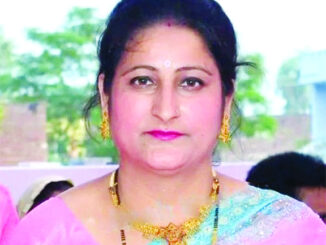
    Srinagar (TIP)- A Hindu teacher from Jammu’s Samba district, posted in Kashmir Valley’s Kulgam, was shot dead just outside the school by militants on Tuesday, May 31, morning. Target killings have left seven civilians dead this month in the Valley. Two local Jaish-e-Muhammad (JeM) militants were shot dead in an anti-militancy operation in Pulwama, taking their death toll to around 27 this month.
    Officials said militants fired from close range at Rajni Bala, 36, around 10 a.m. The staff and students of the Government High School, Gopalpora in Kulgam were about to finish the morning assembly when militants intercepted Ms. Bala outside the school, which is located around eight km away from the Kulgam town at a secluded place with orchards around.
    “The gunmen shot Ms. Balal in her head,” the officials stated.
    The police said Ms. Bala was shifted to a hospital in critical condition but died of her injuries. She was recruited under the Schedule Caste (SC) quota five years ago and was posted in Kashmir.
    In October last, a teacher from Jammu, also recruited under the SC category, was shot dead inside a school in Srinagar’s Eidgah locality.
    “The government should do something about targeted killings. We want justice in our case. My sister-in-law was here (Samba) two months ago. She never complained of any threat, though she did talk about lurking fear of late,” a relative of Bala said in Samba.
    Earlier this month, militants killed six civilians, including a Kashmiri Pandit employee, a woman artist, a wine shop employee and three policemen, in six separate targeted attacks in the Valley.
    The killing of policeman Saifullah Qadri outside his house on May 24 in Srinagar’s Soura saw the security forces stepping up operations against militants. Sixteen militants have been killed since then in the Valley. The police claimed that among the slain militants included those behind four target killings, including the cases of Kashmiri Pandit employee Rahul Bhat, artist Amreen Bhat and two policemen. Besides, the module behind the wine shop attack in Baramulla was also busted.
    Source: The Hindu

  • Single-day rise of 3,712 new covid-19 infections, 5 deaths

    Single-day rise of 3,712 new covid-19 infections, 5 deaths

    With 3,712 new coronavirus infections recorded in a day, India’s infection tally rose to 4,31,64,544, while the total number of active cases increased to 19,509, the Union health ministry said on Thursday, June 2.
    The country’s covid-19 death toll has climbed to 5,24,641, with five latest fatalities reported from Kerala, the ministry data updated at 8am stated.
    The active cases comprised 0.05 per cent of the total infections, while the national covid-19 recovery rate was recorded at 98.74 per cent, the health ministry said.
    An increase of 1,123 cases has been recorded in the active covid caseload in a span of 24 hours.
    The daily positivity rate was recorded at 0.84 per cent and the weekly positivity rate at 0.67 per cent, according to the health ministry. The number of people who have recuperated from the disease surged to 4,26,20,394, while the case fatality rate was recorded at 1.22 per cent.
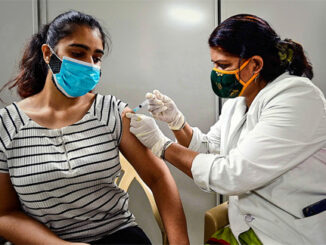
    The cumulative number of doses administered in the country so far under the nationwide covid-19 vaccination drive has exceeded 193.7 crore.
    In April, IIT-Madras, had turned into a cluster with a total of 237 students turning positive and officials had said then it was due to students returning to campus from various parts of the country.
    India’s weekly positivity rate stands at .67 per cent.

  • Moosewala murder Police begin process to bring Lawrence Bishnoi to Punjab; SIT recast

    Moosewala murder Police begin process to bring Lawrence Bishnoi to Punjab; SIT recast

    Bathinda (TIP)- Punjab Director General of Police VK Bhawra on June 1 strengthened and reconstituted the special investigation team (SIT) probing the Sidhu Moosewala murder case even as the Punjab Police have begun the process to bring jailed gangster Lawrence Bishnoi to the state for interrogation.
    The six-member SIT will be headed by ADGP, Anti-Gangster Task Force (AGTF), Pramod Ban. It will have a new chairman, IGP (Punjab Armed Police) Jaskaran Singh, and two other new members — Assistant Inspector General (AGTF) Gurmeet Singh Chauhan and Mansa SSP Gaurav Toora. Mansa SP (Investigation) Dharamveer Singh, Bathinda DSP (Investigation) Vishawajeet Singh and Mansa CIA in-charge Prithipal Singh are its existing members.

    In his fresh order, DGP Bhawra stated that the SIT should conduct the investigation on a day-to-day basis, arrest the perpetrators of the crime and on the completionof the investigation, submit the report in the court of competent jurisdiction.
    Talking to mediapersons, the Mansa SSP said: “We will question jailed gangster Lawrence Bishnoi after bringing him to the state in connection with the murder of Sidhu Moosewala. At present, Bishnoi is in the custody of the Delhi Police. We will make him join the investigation in this case, as per law.”
    It has been learnt that a Punjab Police team has left for Delhi to bring Bishnoi on production warrant.
    He said the police were probing various angles in connection with the murder of the singer as they had got a number of leads. “Cops have traced the route the criminals took from the CCTV footage. From where they came, how they conducted the recce and how they escaped – we have got it all,” the SSP said.
    “We have arrested one person and have brought two members of the Lawrence Bishnoi gang on production warrant from Bathinda and Ferozepur jails to Mansa. They have been remanded in six-day police custody,” the SSP said, adding that during the interrogation “we expect to get some more information about the assailants”.
    The police are probing the role of Lawrence Bishnoi and his Canada-based aide Goldy Brar, who had taken responsibility for the crime, the SSP added. Sidhu Moosewala was killed by unidentified persons at Jawaharke village in Mansa on Sunday evening. He suffered 25 bullet wounds. On Tuesday, he was cremated in the presence of thousands of his fans.
    Suspect facing 10 criminal cases
    Manpreet Singh, a person arrested by police from Dehradun, in Sidhu Moosewala murder case, belongs to Dhaipai village of Faridkot.
    Police have accused Manpreet Singh of supplying vehicles and logistic support to the assailants who murdered Moosewala.
    As per Faridkot police record, Manpreet Singh was involved in 10 criminal cases so far. Maximum of these cases, seven are registered at different police stations in Faridkot district. He is facing one criminal case each at Muktsar and Kurali.
    In most of these cases, he was accused of making criminal assaults, possessing illegal weapons and also possessing narcotics. In four of these cases, he has been acquitted by the court. In all other cases, he is out on bail.
    Baljit Kaur, mother of Manpreet Singh, claimed innocence of their son. Accusing police of framing her son in Moosewala’s murder case, she alleged that her son was made an easy target due to a dossier of criminal cases against him in the past. Source: TNS

  • Lakhimpur Kheri violence witness attacked in UP

    Lakhimpur Kheri violence witness attacked in UP

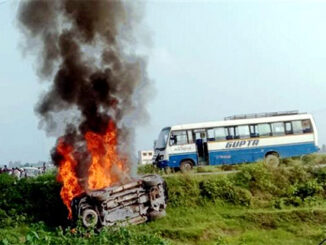
    Lakhimpur Kheri (TIP)- BKU leader Dilbag Singh, a witness in the Lakhimpur Kheri violence case, was allegedly attacked by two men here, police said on Wednesday, June 1. The attack took place on Tuesday night when the Bhartiya Kisan Union (Tikait) district president was returning home from Aliganj-Muda road in Gola kotwali area in his SUV when the bike-borne miscreants opened fire on him. Singh did not receive any injury.
    Singh is one of the witnesses in the Tikunia violence of October 3, 2021 in which eight people, including four farmers and a journalist, had died. Union minister Ajay Mishra’s son Ashish Mishra was arrested in the case.
    Talking to PTI over phone, the BKU leader said the miscreants punctured a tyre of his SUV following which he had to stop the vehicle. “The assailants tried to open the doors and windows of the SUV. Having failed to do so, they fired two shots at a windowpane,” he said. Singh said he was driving the SUV and was alone. He said sensing the intentions of the attackers he folded the driver seat and bent down.
    As the windows were covered with a dark film, the attackers could not locate him in the SUV and fled the scene. Source: PTI

  • ED summons Sonia Gandhi, Rahul in National Herald case

    ED summons Sonia Gandhi, Rahul in National Herald case

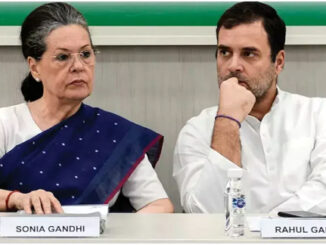
    New Delhi (TIP)- Weeks after the Enforcement Directorate (ED) questioned Congress leaders Mallikarjun Kharge and Pawan Bansal in connection with its National Herald money laundering probe, the central agency has summoned the party’s president Sonia Gandhi and Lok Sabha MP Rahul Gandhi to appear before it on June 8 in connection with the case filed six months ago.
    The summons drew furious reactions from the Congress, which described the case as “weird” since “no money was involved” and said that the charges were “more hollow than a pack of cards”. “We will face them. We are not a bit scared or overawed or intimidated by such cheap tactics,” the party’s spokesperson Abhishek Singhvi said at a press conference along with the party’s communication head Randeep Surjewala.
    Reacting to the Congress’ allegations that the Government was trying to quell the opposition like how the British had tried during the freedom struggle, BJP president J P Nadda said that “documents don’t lie, and documents are permanent and thereby they are being scrutinised”. “The problem is with the face but the mirror is being cleaned,” Nadda told reporters in Bhopal where he is on a three-day visit.
    The ED case is based on a trial court order that allowed the Income Tax Department to probe the affairs of National Herald newspaper and conduct a tax assessment of Sonia and Rahul. The order was the result of a petition filed by BJP MP Subramanian Swamy in 2013.
    Swamy’s complaint had alleged cheating and misappropriation of funds on part of the Gandhis in acquiring the newspaper. Swami had alleged that the Gandhis acquired properties owned by National Herald by buying the newspaper’s erstwhile publishers, AJL, through an organisation called Young India in which they have 86 per cent stake. Sonia and Rahul were granted bail in the case by the trial court on December 19, 2015.
    In Swamy’s complaint before the trial court, Sonia, Rahul and others have been accused of misappropriating funds by paying Rs 50 lakh for Young Indian (YI) to obtain the right to recover Rs 90.25 crore that AJL owed to the Congress.
    It was alleged that YI, which was incorporated in November 2010 with a capital of Rs 50 lakh, had acquired almost all the shareholding of AJL, which was running National Herald. The I-T department had claimed that the shares owned by Rahul in YI would lead him to have an income of Rs 154 crore and not about Rs 68 lakh, as was assessed earlier. It has already issued a demand notice for Rs 249.15 crore to YI for the assessment year 2011-12.
    Earlier, ED had initiated a money laundering probe against AJL in 2018 in connection with a plot allotted to it in Haryana’s Panchkula by then chief minister and Congress leader Bhupinder Singh Hooda. The ED had attached the plot, accusing the company of having acquired it “fraudulently”. Hooda is an accused in the money laundering case registered by the agency in the matter.
    The Congress said on Wednesday that the summons for Sonia and Rahul were received “just a few days ago” and Sonia will “100 per cent” appear before the ED. “If Rahul Gandhi is here, he will also go. Otherwise we will seek some time,” Singhvi said.
    Singhvi said that AJL had come under financial stress over the decades after which the Congress stepped in and over a period of time gave around Rs 90 crore as financial support.“So AJL became an indebted company, a company with debt. AJL did what every company in India does…it converted its debt into equity. So this debt of Rs 90 crore was assigned to a new company. It is called Young India so that the books of AJL become debt-free,” he said.
    Source: The Indian Express

  • Will be a small soldier of PM Modi, says Hardik Patel before joining BJP

    Will be a small soldier of PM Modi, says Hardik Patel before joining BJP

    Ahead of joining the BJP on Thursday, June 2, Hardik Patel tweeted he is going to start a new chapter in his life with the national interest, state interest, public interest and social interest being on the top of his mind. Praising Prime Minister Narendra Modi’s leadership, Hardik Patel wrote, “I will work as a small soldier in the noble service of the nation under the successful leadership of PM Narendra Bhai Modi.”
    The Patidar leader will be inducted into the BJP by Gujarat party president CR Paatil.
    After expressing his disappointment with the Congress for months, Hardik Patel on May 18 resigned from the party accusing the senior leadership of the Grand Old Party of disinterest in the real issues of Gujarat.
    “It is a fact that Congress benefited immensely in the 2017 Assembly polls due to the Patidar quota agitation (led by him). However, I was not given any responsibility even after making me working president. I was not even invited to the key meetings of the party. It never arranged my press conference during the last three years,” Hardik Patel said after he quit the Congress. Source: HT

  • Satyendar Jain, Delhi health minister, sent to ED custody till June 9

    New Delhi (TIP)- Satyendar Jain, Delhi’s health minister, was sent to the custody of the Enforcement Directorate till June 9, a day he was arrested by the agency in a money laundering case.
    Jain, who holds various portfolios, including health, home and power, in the Arvind Kejriwal government in Delhi, was produced in the Rouse Avenue Court.
    Special judge Geetanjali Goel remanded Jain in ED’s custody, noting that his custodial interrogation was required to unearth the larger conspiracy. Jain was represented by senior advocate N Hari Haran, while the solicitor general Tushar Mehta appeared for the central agency.
    Hours ago, Delhi chief minister Arvind Kejriwal said the ED case against his cabinet colleague is a fraud one (farzi), adding that his government “is honest and does not tolerate corruption”.
    “We have faith in judiciary. This farzi (fake) case won’t last. We are following the path of truth,” Kejriwal told reporters.
    In January, ahead of the Punjab Assembly election, Kejriwal had said he had learnt from sources that Jain could be arrested by the ED.
    The central agency’s probe is based on a 2017 case of the Central Bureau of Investigation (CBI), in which it was alleged that the AAP leader and his wife Poonam Jain had amassed disproportionate assets worth ?1.47 crore between February 2015 and May 2017, which was more than double their known sources of income.
    The Delhi minister was arrested under provisions of the Prevention of Money Laundering Act (PMLA) after around four hours of questioning on Monday, during which he reportedly gave evasive replies on the money trail.
    Source: HT

  • Sidhu Moosewala: A life snuffed out in the prime of youth

    Sidhu Moosewala: A life snuffed out in the prime of youth

    Ni ehda uthuga jawani ch janaja mithiye (The funeral will happen in youth). This is a line from Indian rapper Sidhu Moose Wala’s latest track, The Last Ride. The song, which was released in May – and has gathered over 10 million views on YouTube since – features the iconic crime scene where American rapper Tupac Shakur was murdered in his BMW in 1996.
    “Many hated him, and many died wanting him… everything is revealed in the eyes of the young boy,” Moose Wala cackles in the music video, which is shot in slick monochrome tones.
    On Sunday, in an ominous turn of events, Moose Wala met the same fate. The 28-year-old singer was shot dead by unidentified attackers in Punjab’s Mansa district, not too far from his home on Sunday, May 29, evening. The incident came a day after the AAP government in Punjab pruned his security.
    The killing has triggered huge row and protests, with the Congress – the political party to which he belonged – calling for the dismissal of the ruling AAP government. His family has sought an investigation by a central probe agency.
    For Moose Wala’s millions of fans though, the tragedy is deeply personal.
    In a career spanning just four years, the 28-year-old rapper had become one of the most ubiquitous faces of Punjab’s fertile hip-hop scene. His voice blares from DJ turntables at Delhi’s flamboyant parties, rickety stereos at tea stalls in rural India and – as a colleague from BBC Punjabi told me – every possible radio channel in Punjab.
    And he made it big in every sense. His songs, which he wrote and composed, racked up more than 5bn views, made it to the Top 5 in the UK charts last year, and he was also featured among the best new artists of 2020 in The Guardian. He had millions of fans around the world, especially in Canada and the UK which have a sizeable diaspora population.
    Born as Subhdeep Singh Sidhu in Moosa village in Mansa district, the singer studied engineering from Punjab and moved to Canada in 2016. The next year, he released his first track “So High” under the name Moose Wala – a tribute to his village.
    Since then, he had released three albums and more than 60 singles – at one time, the legend goes, he was churning out a song a week – and became a household name in Punjab and among Sikhs living abroad.
    Drawing heavily from the genre of gangster rap, his music was a jumble of gritty opulence – measured in guns and fancy sports cars – as he made sense of life around him. His songs offered unvarnished commentary on the dark underbelly of the rural heartland, where drugs, crime and corruption often make headlines.
    But Moose Wala was as controversial as popular. Since news of his death broke on Sunday evening, heaps have been said and written about the singer’s legacy.
    The actor often ran into trouble with the law. In May 2020, he was booked for firing an AK-47 rifle at a shooting range during the Covid lockdown. He also had a police case against him for allegedly promoting violence and gun culture through his song, Sanju. And a cursory glance at his Instagram profile would reveal his affinity for the weapon.
    The singer was never convicted for any of the alleged crimes, but critics have routinely called him out for normalising violence.
    Fans say that Moose Wala was merely confronting the dark truths about modern life and holding up a mirror to society. “He was just making sense of the chaos, whether it was corruption, violence or the gun problem in Punjab,” one fan said. “And that contribution in itself is valuable.”
    Moose Wala’s music has meant different things to different people. Some say they admired him for the “courage and I-don’t-care attitude” that was evident in his songs. Others liked the way he added English words to his Punjabi songs, which gave it a contemporary sheen.
    For Moose Wala, though, everything was a deeply personal journey of self-expression. In 2021, he decided to give politics a chance. Although he lost the Punjab assembly election earlier this year, it didn’t tarnish his popularity or his reputation as a man of the soil.
    Five songs that launched Moose Wala to superstardom
    Sidhu Moose Wala began his singing career with a duet titled G Wagon. He also collaborated with Brown Boyz on several songs. The singer-rapper gained popularity with his track So High (2017). In 2018, he released his debut album PBX 1, which ranked 66th on the Billboard Canadian Albums chart.
    The singer released a song titled The Last Ride on May 15. The song, which was shared on his official YouTube channel, has already close to 10 million views.
    – So High is one of the most loved songs of Sidhu Moose Wala. The song is almost four-minutes-long and became popular with the masses. The song has over 481 million views on YouTube.
    – Same beef is a part of an album of the same name, released in 2019. Composed by Byg Byrd, the song was sung by Bohemia and Sidhu. It has over 394 million views on YouTube.
    – Just Listen was written by Sidhu Moose Wala and released in January 2018. It has over 144 million views on YouTube.
    – Famous released in 2018 and is from the album PBX1. It was produced by Pyg Brd.
    – Badfella was released under T-series and was produced by Harj Nagra. On YouTube, the song has over 91 million views.

    Source: BBC ans HT

  • Operation Blue Star – A festering wound

    Operation Blue Star – A festering wound

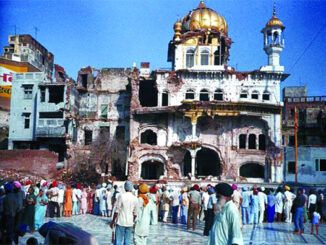
    38 years after it took place, the infamous Operation Blue Star is a festering wound for the Sikh community the world over whose psyche was terribly hurt to find their Holiest Shrine desecrated, the Holy Akal Takht — sign of the Sikh dignity-raged to the ground, and thousands of innocent pilgrims killed , all in the name of neutralizing “Sikh extremists/ militants” led by Sant Jarnail Singh Bhindranwale. Hundreds of books and thousands of articles have been published on the issue, and the authors have analyzed the causes and the effects, and, of course, their views on the issue diverged, but almost all have questioned the need and wisdom to have a military operation to “neutralize the Sikh extremists / militants”. Just as the Jews have not forgotten the Holocaust, the Operation Blue Star will continue to be a festering wound for the Sikh community.

    It happened 38 years ago but it feels as if it was yesterday – the heart, body and mind still feel the tremors of the emotional earthquake it caused. The force of those tremors intensifies every year when June 6 approaches. Operation Bluestar (saka neela tara), a fancy-sounding name given to a dreadful military action at the Sikhs’ holiest shrine, the Golden Temple in Amritsar, was launched on June 2, 1984, with a ‘national broadcast to the nation’ by then prime minister Indira Gandhi. It was claimed to have been completed successfully on June 6 with the ending of the last resistance by Sikh combatants to the army’s entry at the Temple. State media (TV and radio) and other non-state media outlets praised the operation for saving India’s ‘unity and integrity’ from ‘anti-national’ Sikh secessionism.
    The most reliable estimates of the total number of deaths during Operation Bluestar range from 5,000 to 7,000. It was a tragedy that could have been avoided if – and it is a big if – Indira Gandhi had had the vision to reach a political settlement with the moderate Akali leadership. Most Akali Dal demands – regarding federal decentralisation, river water rights, territorial readjustment and the transfer of Chandigarh to Punjab as its capital – could have been negotiated. Rajiv Gandhi did agree to each of these demands, and many more besides, in the 1985 Rajiv-Longowal Accord. He implemented none.
    Indira Gandhi’s political decision to use the ‘Hindu card’ to gain electoral victories led her to choose a dangerous path of confrontation, first with the Akalis and eventually with the entire Sikh community. This miscalculation cost Mrs Gandhi her life, and left the communities of Punjab and of India in general scarred and polarised. This polarisation peaked with the genocidal violence against the Sikh minority in Delhi and many other North Indian Hindu majority towns in November 1984 after the assassination of Indira Gandhi by two of her Sikh security guards. Sikh nationalists in Punjab were eventually defeated, at least militarily, by the 1990s, but Hindu nationalism was promoted so powerfully that the Hindu nationalists succeeded within a few decades in capturing the Indian state.
    In the Sikhs’ collective memory of 1984, the deaths by army action in June and those by genocidal mob violence in November constitute two ends of the same arc of killings. The two cannot be separated and, therefore, remain indelibly linked to the memory of Operation Bluestar, which is seen as the trigger both for the killings and for later disappearances, killings in custody and deaths by ‘encounters’ during the military operations against the armed Sikh opposition movement after the events of 1984.
    Operation Bluestar is gradually finding a place in the Sikh practice of ardaas (prayer). This practice is unique in the history of world religions because it gives collective memory a central place. On all important occasions – birth, marriage, death, new job, promotion, passing an examination, new house, Gurpurab celebrations (in honour of the gurus’ birthdays), or even the daily rituals in a gurdwara – the ardaas recounts in capsule form the history of the Sikh faith.
    The ardaas narrative starts with the founding of the faith by Guru Nanak, its continuation by his nine successors and the sacrifices made by the tenth guru Guru Gobind Singh’s four sons (sahibzade), the five Beloved Ones (panj piare), the 40 Liberated Ones (chali mukte) and numerous other martyrs right up to the present time. Sikhs have a long memory. Udham Singh waited for 21 years to avenge the Jallianwala Bagh massacre of 1919 by assassinating Michael O’Dwyer in 1940. The Naxalite Sikhs punished a Sikh landlord Ajaib Singh Kokri, a witness against the revolutionary Bhagat Singh, by assassinating him in 1974, 43 years after Bhagat Singh was hanged in 1931. The socialisation from early childhood of anyone growing up in a Sikh household (irrespective of the political affiliation of the household) involves such a focused exercise in historical remembrance that most adult Sikhs remember the ardaas by heart, whether they are illiterate farmers or university academics. The ardaas contributes to the making of an active historical being who remembers the past, relates that past to the present and imagines the shaping of the future.
    Blue Star bloodbath
    Shortly after 10.30 p.m. on June 5, 1984, 20 men in black dungarees stealthily entered the Golden Temple. They wore night-vision goggles, M-1 steel helmets, bulletproof vests and carried a mix of MP-5 submachine guns and AK-47 assault rifles. The men of sg’s 56th Commando Company were then the only force in India trained for room intervention, the specialised art of fighting in confined spaces. Each commando was a sharpshooter, diver and parachutist and could do 40-km speed marches. Some of them wore gas masks and carried stubby gas guns meant to launch CX gas canisters, a more potent tear gas. Three months before this night, the commandos had stayed around the temple and rehearsed for Operation Sundown. Some of them still sported the beards they had grown for their undercover work as volunteers in the Golden Temple’s langar. When the plan was called off, they returned to their base in Sarsawa. They had flown into Amritsar the previous day at the request of Lt-Gen Sundarji.
    The three battalions that Lt-Gen Brar’s 9th Infantry Division sent into the Golden Temple that night were trained to fight a conventional combat on the plains of Punjab and in the deserts of Rajasthan. They would overwhelm the enemy by sheer force of numbers. The commandos, who spearheaded the assault, made use of stealth, speed and surprise to achieve results. Soon after arriving, one of the sg officers had briefed Lt-Gen Ranjit Singh Dayal, Sundarji’s chief of staff, on a plan to capture the Akal Takht by blowing off its rear wall. General Dayal, a paratrooper who had captured the Haji Pir pass in an unconventional operation in the 1965 war, immediately overruled it. “There must be no damage to the Akal Takht,” he said. The commandos were to capture the sacred building by using gas to flush out the militants, he said.
    The Army had clearly underestimated the defences. As soon as they entered the temple, a sniper shot the unit’s radio operator clean through his helmet. The rest took cover in the long gallery of pillars that led to the Akal Takht. Light machine guns and carbines crackled from behind impregnable walls of the temple, their multiple gun flashes blinding the commandos’ night-vision devices, forcing them to take them off. The commandos and infantry soldiers cautiously advanced, sheltering behind rows of pillars. Those who tried to advance towards the Akal Takht were cut down on the marble parikrama. An armoured personnel carrier bringing in troops was immobilised by a rocket-propelled grenade. “Shabeg knew the Army’s Achilles heel,” says an SG colonel. “He knew we couldn’t fight in built-up areas.”
    Post-midnight, remnants of the sg unit and the Army’s 1 Para huddled near a fountain at the base of the Akal Takht. The area between the Akal Takht and the Darshani Deori that led to the Golden Temple had turned into a killing zone, covered by Shabeg’s light machine guns. Attempts by the para-commandos to storm the defences were repeatedly beaten back. They lost at least 17 men, their black dungaree-clad bodies lying prone on white marble. Commandos who tried to fire the CX gas canisters discovered that the Akal Takht’s windows had been bricked up. The only openings were horizontal slots out of which machine guns poured deadly fire. The commandos neutralised two of the machine gun nests by dropping grenades into them but the Akal Takht was impregnable. Then, around 7.30 a.m. on June 5, three Vickers-Vijayanta tanks were deployed. They fired 105 mm shells and knocked down the walls of the Akal Takht. Commandos and infantrymen then moved in to mop up the defenders, tossing gas and lobbing grenades inside the building.
    The temple premises resembled a medieval battlefield, one sg trooper recalls. Bloodied and blackened bodies lay scattered around the white temple parikrama. In the basement of the blackened, still-smoking ruin of the Akal Takht, the commandos found the body of Shabeg. The Army recovered 51 light machine guns, 31 of which had been concentrated around the Akal Takht. “Normally, an army unit (of around 800 soldiers) would deploy this quantum of firepower to cover an area of about eight km,” Lt-Gen Brar recounted in his book Operation Blue Star: The True Story. Shabeg, he believed, wanted to hold out until daylight in the hope that there would be a popular uprising among the people when they get to know of the army action. The former war hero had extracted a bloody price on an army he felt had wronged him.
    Operation Blue Star has come to be remembered as the teeja Ghallughara (the third holocaust). Many gurdwaras outside India and perhaps some even in India have incorporated the remembrance of the teeja Ghallughara in the ardaas. In Sikh historical memory, there have been two Ghallugharas before Operation Bluestar – the chhota Ghallughara (the small holocaust) and the wadda Ghallughara (the big holocaust). The chhota Ghallughara took place in May 1746 when, according to estimates made by the celebrated Sikh historian Professor Ganda Singh, about 10,000 Sikh men and women were killed. The wadda Ghallughara took place in February 1762 when about 30,000 Sikh men, women and children were slaughtered. According to one as yet unconfirmed estimate, about half of the total Sikh population was liquidated during the wadda Ghallughara.
    These were the darkest times in the history of the Sikhs. These massacres could have demoralised them to the point of extinction, but, inspired by the memories of their gurus and martyrs, they regrouped and within a few decades of the wadda Ghallughara, emerged literally from the ashes to become the de facto rulers of Punjab in the last quarter of the 18th century. By 1799, one of them (Ranjit Singh) formalised that de facto rule to become the Maharaja of Punjab. The force of memory weighed upon him too and he ruled, therefore, in the name of the gurus. Some features of feudal degeneration which emerged during his rule were the result of his dissociation from the memory of the path of the gurus.
    During the dark times the Sikh community faced from 1716, when the Sikh warrior Banda Singh Bahadur was martyred, to 1799 when Ranjit Singh came to power, Harmandar Sahib (later known more popularly as the Golden Temple) became the nerve centre for the moral, political, military, spiritual and even economic empowerment of the community. While living the life of guerrilla combatants against the Moghul powers, the leading members of the community would meet twice a year on Vaisakhi and Diwali for deliberations and collective decision-making for the future survival of the community. Once in the precincts of the Harmandar Sahib, they considered themselves protected by the Guru and had no fear of any earthly powers such as the Moghul rulers they had to confront. The mystique of the Harmandar grew and this mystique has continued and strengthened over the centuries. The Golden Temple has literally become the heart of the community.
    The death, destruction and sacrilege caused during Operation Bluestar pierced the heart not only of the Sikhs but also of many Punjabi Hindus. The devastation it caused in the personal lives of so many millions has still not been fully recorded and acknowledged because the political divide over the attitudes towards Operation Bluestar has overshadowed the human stories.
    A whole generation has grown up after the Operation and many in this new generation have become parents. They hear and read about the Operation and try to understand the meaning of it to reconnect to the history of their parents, their grandparents and before. Many of them are devising new tools and media to relate to that history. Of many doctoral dissertations I have evaluated as an external examiner, one by Shruti Devgun of Rutgers University, USA on ‘Re-Presenting Pasts: Sikh Diasporic and Digital Memories of 1984’ stands out for its subject and methodology. Her thesis focuses on the work of an intergenerational cohort of Sikhs in the diaspora (in the US and Canada) who are trying to piece together the fragments of painful pasts ‘to give cultural meaning and shape to broken traumatic experiences’.
    Through their work, they are puncturing, and perhaps demolishing, the Indian State’s narratives of Operation Bluestar. This painful ‘memory work’ is creating new spaces for them to understand and connect with the pain of the victims of many other genocides e.g., the Jews, the Palestinians, the Armenians and the Rwandan Tutsis.
    The wounds may never heal but by connecting your pain to the pain of others, the meaning and experience of pain is transformed.
    Source: The Wire and India Today.
    Writers: Pritam Singh and Sandeep Unnithan