Tag: Apple Newsw

  • Guru Arjan Dev: The fifth Sikh master whose martyrdom changed the course of Sikhism

    Guru Arjan Dev: The fifth Sikh master whose martyrdom changed the course of Sikhism

    Guru Arjan (April 15, 1563 – May 30,1606) was the first of the two Gurus martyred in the Sikh faith and the fifth of the 10 Sikh Gurus. He compiled the first official edition of the Sikh scripture called the Adi Granth, which later expanded into the Guru Granth Sahib. He was born in Goindval, in the Punjab, the youngest son of Bhai Jetha, who later became Guru Ram Das, and Mata Bhani, the daughter of Guru Amar Das. He completed the construction of Darbar Sahib at Amritsar, after the fourth Sikh Guru founded the town and built a pool. Guru Arjan compiled the hymns of previous Gurus and of other saints into Adi Granth, the first edition of the Sikh scripture, and installed it in the Harimandir Sahib.
    Guru Arjan reorganized the Masands system initiated by Guru Ram Das, by suggesting that the Sikhs donate, if possible, one-tenth of their income, goods or service to the Sikh organization (dasvand). The Masand not only collected these funds but also taught tenets of Sikhism and settled civil disputes in their region. The dasvand financed the building of gurdwaras and langars (shared communal kitchens).
    In the year 1606, the fifth Sikh guru, Guru Arjan Dev, was captured by Mughal Emperor Jahangir and imprisoned in Lahore Fort. Part of the reason was the fact that he had blessed Jahangir’s rebellious son Khusrau, and part because of his growing influence in Northern India and fast conversions to Sikhism that threatened the orthodox Muslim clergy as well as the Hindu elite.
    After imprisoning the guru, Jahangir demanded Rs 2 lakh as a fine plus elimination of all texts from the Adi Granth, the Sikh holy book the guru had compiled, that could be ‘offensive’ to Hindus or Muslims.
    But the guru was unrelenting and refused to omit anything from the Granth, so the Mughal emperor condemned him to be tortured to death. Famously, the guru was made to sit on a burning hot plate, hot sand poured on his face. It is said that when he was allowed to take a bath in River Ravi on 30 May 1606, he never returned. It is here that Gurdwara Dera Sahib in Lahore stands.
    The making of Harmandir Sahib
    Born on 15 April 1563 to Guru Ramdas and Bibi Bhani, Arjan Dev was chosen by his father as his successor even though he was the youngest son. The decision may have led to disputes, but what is undisputed is the fifth guru’s legacy.
    One of the most visible, tangible and iconic contributions of Guru Arjan Dev is that he was the one who conceived of and began the construction of Harmandir Sahib, or the Golden Temple, in Amritsar.
    Arjan Dev wanted Harmandir Sahib to stand for inclusivity, a place where everyone was welcome. It is on these values that he designed the temple, which has four entries and exits denoting acceptance of the 4 Hindu castes and all religions.
    The guru also invited the renowned Muslim saint Mia Mir to lay the foundation stone of the temple. Instead of making the temple a towering elevated monument, he decided to place it at a lower elevation as a symbolic gesture, so that one would feel humble upon entering the temple.
    The Adi Granth
    Guru Arjan Dev is credited with compiling the Adi Granth which was completed in 1604. It is a compilation of the hymns composed by Guru Nanak and 32 other Hindu and Muslim saints including more than 2,000 hymns that he composed himself. This included works of Sheikh Farid, Bhagat Kabir, Bhagat Ravi Das, Dhanna Namdev, Ramannand, Jai Dev, Trilochan, Beni, Pipa, and Surdas.The Adi Granth was later declared as the ultimate Guru Bani or word of god by Guru Gobind Singh. He added 115 hymns composed by Guru Tegh Bahadur in the second rendition and the Adi Granth became the Guru Granth Sahib.The first copy of the Adi Granth is kept in Kartarpur at Gurdwara Thum Sahib.
    Influence on Sikhism
    Even though Guru Arjan Dev played a vital role in completing the Adi Granth and Harmandir Sahib, two of the holiest and strongest symbols of Sikhs, it’s in his death that his influence on the religion is strongest. Before he was summoned to Lahore by Jahangir where he was captured and later executed, Arjan Dev had appointed his son Hargobind as his successor.
    When Guru Hargobind took the throne, he was the first Sikh guru to deviate from the poet-guru tradition established since Guru Nanak. Armed with two swords dangling by his waist, Hargobind changed the identity of the Sikh guru who was here to save the Sikhs from oppression by the Mughals. The sacrifice of Guru Arjan Dev was looked at as a sacrifice for the truth, and it became un-Sikh like to stand oppression. The guru’s death became a watershed moment as from then on began the militarisation of Sikhs. This conflict that started between the Mughals and Sikhs with the execution of Arjan Dev continued till the last guru, Gobind Singh who finally established the militarised order, the Khalsa, in 1699.

    Guru Arjan Dev teachings
    Guru Arjan Dev used to preach the message of God which was initiated by Guru Nanak Dev Ji. Guru Arjan Dev ji compiled the Adi Granth. This is the religious scripture of Sikhs. It consists of musical ragas and spiritual poetry. Adi Granth constitutes half of his teachings. It was installed at Harmandir Sahab. Later it was expanded and came to be known as Guru Granth Sahab. He contributed more than 2000 hymns, which is the largest collection in the Guru Granth Sahab.

  • Indian American tech businessman Ramit Varma exits Los Angeles mayoral race

    Indian American tech businessman Ramit Varma exits Los Angeles mayoral race

    LOS ANGELES (TIP): Indian American Tech businessman Ramit Varma, who spent $4 million of his own money to run for Los Angeles mayor, has quit the race and endorsed billionaire real estate developer Rick Caruso.
    “Although Rick and I have very different backgrounds and experiences, I found that we are united by a common purpose,” Varma said in a statement posted on his campaign’s Facebook page.
    “We both want Los Angeles to be a city that is safe, affordable and clean. A city that our children and decades to come can be proud of.” Varma is the third candidate to drop out of the race two weeks before the June 7 primary. If no candidate receives a majority of the vote, the two top finishers will face off in November, ABC7 reported.
    That leaves nine candidates vying to replace Mayor Eric Garcetti, President Joe Biden’s nominee to be the US ambassador to India. City Attorney Mike Feuer ended his run on Tuesday, May 24, and endorsed Rep. Karen Bass, while Councilman Joe Buscaino dropped out of the race on May 12 and endorsed Caruso.
    Caruso and Bass are running neck-and-neck with about 25 percent of support from likely voters, according to the most recent polls cited by Los Angeles Daily News.
    Varma had launched his campaign last fall with a bang, renting out the Banc of California Stadium for 400 people, where he’d promised to cut government waste, end homelessness and “build a city of the future — right now.”
    The co-founder of the online tutoring firm Revolution Prep had loaned himself $4 million. In an April poll by UC Berkeley, just 1 percent of people surveyed said they’d vote for Varma.
    With little name recognition in a city of 2.1 million registered voters, he was forced to withdraw his hat from the ring and toss his support to Caruso, Los Angeles Daily News reported.
    Varma told the Daily News he was “incredibly impressed by (Caruso’s) thoughtfulness, drive and genuine desire to fix problems in L.A.– and build a plan for growth that will last us for decades.”

  • Indian American diplomat Gautam Rana to be nominated by US President as ambassador to Slovakia

    Indian American diplomat Gautam Rana to be nominated by US President as ambassador to Slovakia

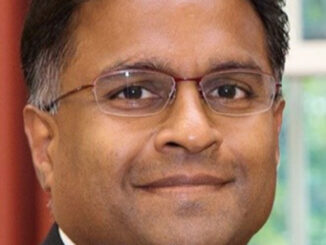
    WASHINGTON, D.C. (TIP): US President Joe Biden is set to nominate Indian-American career diplomat Gautam Rana as the new US Ambassador Extraordinary and Plenipotentiary to Slovakia.

    In a statement on Wednesday, the White House announced the president’s intent to send Rana’s nomination for further ratification. A career member of the Senior Foreign Service, US – with rank of Counsellor, Rana is currently Deputy Chief of Mission of the US Embassy in Algeria and was the Chargé d’Affaires ad interim there from August 2020 to February 2022.
    Earlier, Rana served as the Deputy Chief of Mission and Chargé d’Affaires ad interim at the US Embassy in Ljubljana, Slovenia. Among other positions, Rana was Director for Afghanistan and Pakistan on the National Security Council staff and the Deputy Minister Counsellor for Political Affairs at the US Embassy in New Delhi.
    Rana also served as the Special Assistant to the Deputy Secretary of State, Special Assistant to the Assistant Secretary of State for European and Eurasian Affairs, and worked in Iraq, Pakistan, Afghanistan, and the UAE, the White House release read. In addition to English, he speaks Hindi, Spanish and Gujarati.

  • Indian American, first woman of color, Vermont senator Kesha Ram Hinsdale ends Congressional bid

    Indian American, first woman of color, Vermont senator Kesha Ram Hinsdale ends Congressional bid

    MONTPELIER, VT (TIP): : Kesha Ram Hinsdale, the youngest Indian American to ever serve in state elected office, ended her Congressional bid Friday, May 27, announcing plans to run for re-election to the Vermont State Senate from Chittenden Southeast District. Ram Hinsdale, 35, daughter of Jewish mother and Hindu father, who made history in 2020 as the first woman of color elected to Vermont’s State Senate, would be supporting fellow Democrat Becca Balint’s bid for Congress. Earlier upon election to the State House in 2008, she became the youngest state legislator in the country. The Vermont primary election is on Aug 9, and early voting begins on June 24.
    “There is a far greater feeling than winning, and that is doing what is right. This moment calls on all of us to do what is best for our state and nation, and for me that means continuing to champion working people, climate action, and our civil rights here at home,” she stated.
    “Given recent resignations across the Vermont legislature and our statewide offices, it’s becoming clear that there’s a need for experienced leadership to remain in Montpelier,” Ram Hinsdale said.
    “I began serving in 2009 during the start of the Great Recession, have led through Tropical Storm Irene, and brought marginalized voices into the room as the first woman of color to serve in the State Senate. We have critical work to do on racial, social, and environmental justice, and we are still not out of this pandemic.”
    “It was not an easy decision, but I have decided to run for re-election to the Vermont State Senate and endorse Becca Balint, a candidate whose values align with my own and who will be a fighter for Vermont in Washington,” she said. “We built a coalition that was bigger than me, and so many Vermonters and national leaders stepped up to support my Congressional campaign and the principles I stand and fight for.
    “I am so grateful to all of them and to Vermont for holding me through this decision. I can best serve Vermonters in this moment in the State Senate,” Ram Hinsdale continued. “That is what the moment calls for.”
    “I got into this race because I believed Vermonters are looking for a fighting voice in Washington. What is clear to me is that they also need that support here at home,” she said. “Becca is the experienced, qualified, and sincere fighter Vermonters need to meet this moment. She will not go to Washington to engage in politics-as-usual.”
    “She has conducted herself with so much integrity during this campaign – being open and vulnerable, and earning a broad base of support with her moral clarity,” Ram Hinsdale said.
    “Kesha is an incredible public servant and a true champion for Vermonters. In an already historic race, she took an admirable step to ensure a woman goes to Washington whose values and experience can best serve Vermont and the nation at this time,” Becca Balint said.
    “She and I both know the stakes are high, and there is critical work to do in Washington and here at home. Kesha has been and will continue to be a champion for working people in the State Senate, building on her decade in the legislature as the people’s advocate for labor, climate action, and civil rights,” Balint said.
    “Kesha and I have been friends for a long time, and I am incredibly proud to have earned her support. Thank you, Senator Ram Hinsdale, for your friendship and your support.
    “I am so excited that you will be returning to the Vermont Senate and to continue being a voice for working Vermonters. I look forward to partnering with you there to meet the needs of Vermont in these challenging times.”
    Ram grew up in Los Angeles, California, where her parents ran an Irish pub. Sir Ganga Ram, her great-great-grandfather, was a supervising engineer in British India.
    She graduated from Santa Monica High School in 2004. After graduating, she moved from California to Vermont to attend the University of Vermont. She graduated in 2008 with a Bachelor of Science in natural resource planning and a Bachelor of Arts in political science. She was awarded a Truman Scholarship. While at the University of Vermont she served as student body president.

  • Canada-based Indian-origin kingpin Goldy Brar on Faridkot cops’ radar for over a year

    Canada-based Indian-origin kingpin Goldy Brar on Faridkot cops’ radar for over a year

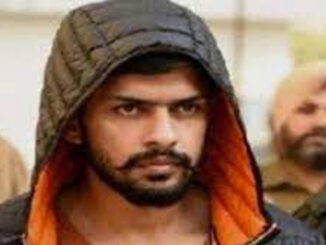
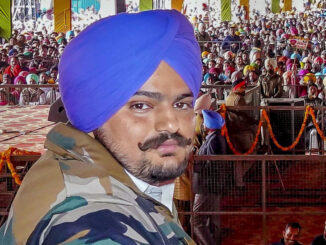
    FARIDKOT / VANCOVER (TIP): Canada-based Indian-origin gangster Goldy Brar, who took responsibility for the murder of Sidhu Moosewala, has been on the radar of the Faridkot police for over a year.
    After the killing of Youth Congress district president Gurlal Singh Pehalwan in 2021 here, the police had booked Satinder Singh, alias Goldy Brar, along with others.
    Police probe suggests Brar had hatched the killing to avenge the murder of his cousin Gurlal Singh Brar in Chandigarh in 2020. Gurlal Brar was then state president of SOPU and an aide of gangster Lawrence Bishnoi, say sources. Goldy Brar’s father Shamsher Singh was an ASI in the Muktsar police. He took premature retirement.
    On March 9, 2021, the police in Kotkapura arrested Shamsher for alleged role in an extortion racket. As per the FIR, it was alleged Goldy Brar was the kingpin of the extortion racket. While Shamsher used to carry out the recce of potential victims and pass on the information to his son in Canada, the latter used to extort victims using his local contacts.
    Brar uses WhatsApp calls or text messages for extortion. In 2021 case, he had made an extortion call to a chemist, who owned a shop in Kotkapura, and demanded Rs 25 lakh. On March 19, 2021, a local court had issued an arrest warrant for the Canada-based gangster.

  • Canada based NRI initiates ‘Guru Ki Rasoi’ in Punjab to distribute free lunch boxes to over 400 needy every day

    Canada based NRI initiates ‘Guru Ki Rasoi’ in Punjab to distribute free lunch boxes to over 400 needy every day

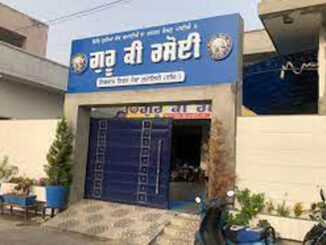
    NAWANSHAHAR/VANCOUVER (TIP): With an aim to feed poor and needy persons daily, a charitable organization, Nishkaam Sewa Society, which has been started by Canada-based NRI Gurjinder Singh, a native of Chela village in Hoshiarpur, is distributing over 400 free lunch boxes across Nawanshahr and Hoshiarpur.
    Nishkaam Sewa Society with the help of Guru Nanak Mission Sewa Society of Nawanshahr has set up a permanent kitchen named ‘Guru Ki Rasoi’ at New Friends Colony in Nawanshahr and in Kharar Achhrawal village in Hoshiarpur from where steaming hot tiffin are packed and sent across the district to the needy, who have availed this free service. While chapatis and rice are a part of the regular menu on the list, vegetable dishes vary. The volunteers and other members of the society have fixed different vegetable dishes for each day; one day it is dal, the other day rajmah, chole and so on. Sweets are also on the menu.

    When asked about this goodwill venture that gives free food to the needy, Surjit Singh, president of Guru Nanak Mission Sewa Society, said: ‘Guru Ki Rasoi’ is the brainchild of Gurjinder Singh, who wanted to give back to the society especially to his native village, where he had spent his childhood. “He first discussed this idea with his friend Kulwant Singh, who then shared it with us. We then decided to bring his idea into reality and started looking for a plot, where we can set up this rasoi,” he added.
    He said they started the initiative in April last year, and at that time only 22 tiffins were being delivered and there were only a few volunteers. But at present, the team has grown and they are distributing boxes to over 200 people in Nawanshahr. Besides, people from nearby localities too come to offer help in preparing and packaging of food.
    He said in Hoshiarpur too, over 200 needy across Kharar Achhrawal village and nearby areas have availed this free tiffin service, and the food it delivered to them by the volunteers on their doorsteps.
    When asked how do people approach them and what other formalities are required to avail this tiffin service, Amrik Singh, president of Guru Ki Rasoi, said the contact numbers of volunteers and other members have been disseminated everywhere. Besides, people also approach them through WhatsApp group, Facebook page and even YouTube channel. He said when a person registers himself for the service, two members of the Sewa Society visit their home for verification.
    They said that 90 per cent of the people who are availing this free tiffin service belong to below poverty line families, while 10 per cent are those old parents who either live alone or are not in a condition to cook.
    How to avail this selfless service
    Amrik Singh, president of ‘Guru Ki Rasoi’, said the contact numbers of volunteers and other members have been disseminated everywhere. Besides, people can also approach them through WhatsApp group, Facebook page or YouTube channel. When a person registers himself for the service, two members of the Sewa Society visit their home for verification, he added.
    Shelter Home in Achhrawal village
    Apart from ‘Guru Ki Rasoi’, Nishkaam Sewa Society under the supervision of Kulwant Singh, a childhood friend of Gurjinder Singh, has also set up a shelter home for the destitute in Kharar Achhrawal village in Hoshiarpur. At present nearly 30 homeless, disabled and persons with special needs have been residing there.
    (Source: Tribune India)

  • Gangs of Punjab: Moosewala’s murder shows gangster culture is thriving

    The shocking murder of singer-politician Sidhu Moosewala underscores the impunity with which gangsters have been operating in Punjab in recent years. Some of them have killed their rivals or have been gunned down by cops, but others have sprung up to follow in their footsteps, serving up the deadly cocktail of murders, extortion, arms smuggling and drug trafficking. The Punjab Police have prima facie attributed the Mansa killing to a rivalry between the gangs led by Lawrence Bishnoi and Lucky Patial, claiming that it was in retaliation for the 2021 murder of Youth Akali Dal leader Vicky Middukhera. The alleged role of Bishnoi, who is behind bars, in the Moosewala case needs to be investigated thoroughly as he could merely be a front for inimical forces based in India or abroad that are out to create disturbances in the state.
    The ruling AAP is under fire for having pruned Moosewala’s security despite a tangible threat perception, even as there is no denying that successive state governments have failed to gauge the enormity of the challenge posed by gangsters. Weeks after taking charge as CM, Bhagwant Mann had ordered the formation of a dedicated police unit for the purpose. The Anti-Gangster Task Force faces an uphill task as 70 gangs with over 500 members are reportedly active in the state, with 300 of them lodged in various jails. The activities of incarcerated gangsters lay bare the laxity of the prison authorities in Punjab and other states.
    Law enforcement agencies have their hands full in view of the rampant use of social media by criminals, who glorify gun culture to lure recruits. Rising above party lines, close coordination between the police forces of various states is a must to curb the gangster menace. The presence of Punjabi gangsters in other countries puts the onus on the Centre to press for their extradition. The political blame game can only prove counter-productive; it is imperative to build consensus on ensuring peace and stability in Punjab and preventing a regression to the blood-soaked era of terrorism.
    (Tribune, India)

  • Another round of US cajoling

    Russian support makes switching of sides difficult

    India has been hosting recurring waves of diplomats and government officials descending from Washington with the singular purpose of removing Russia from South Block’s bouquet of painstakingly built diplomatic ties. The latest to arrive is the US Treasury’s Elizabeth Rosenberg who has built a career around ensuring that recalcitrant countries from the US point of view, such as Russia, North Korea, Syria etc., suffer the maximum pain of sanctions. The US has been dispatching these officials to regurgitate their persuasive pitches when India as a sovereign nation has made its stand crystal clear during two Biden-Modi summits – one virtual in April and the other in-person in Tokyo – and at the two plus two of Foreign and Defense Ministers held in Washington last month.

    India is not the only major nation to be confronted by relentless American cajoling. Indonesia, South Africa, Turkey, Brazil and even Israel are reluctant to put all their eggs in the American basket. The miasma of distrust towards US consistency has heightened after its cut-and-run tactics in Afghanistan. Having gone along with American choices in Kabul for two decades, their precipitous withdrawal left India between a rock and a hard place. India’s expectations of gaining access to critical technology through Quad have remained elusive. Even more galling, the US, the UK and Australia quietly carved out AUKUS, an exclusive club for the joint development of advanced submarine capability, to counter China. On the other hand, India has much promising business with Russia. PM Modi is still persuading his western counterparts to liberalize the movement of skilled Indian professionals. If the war had not intervened, the first batch of Indians to work in Far Eastern Russia would have left last month. Indian industries ranging from diamonds to coking coal are finding new footholds in this region. In addition, not counting the strategic comfort that comes from the Russian readiness to watch India’s back, whether it is hard-to-get defense systems or support at international fora such as the UNSC. India’s ties with the West are worth their weight in gold but Russia is an anchor India would like to persist with.
    (Tribune, India)

  • The return of the great power rivalries

    The return of the great power rivalries

    By Stanley Johny

    “The behavior of 20th century Germany and 21st century Russia can best be explained using what John Mearsheimer calls “offensive realism”. Offensive realists argue that “revisionist powers” tend to use force to rewrite the balance of power if they find the circumstances are favorable, while the status quo powers, or the existing regional hegemons, would seek to thwart any new country attaining more power at their expense. The result of this type of competition is permanent rivalry and conflict. Look at Mr. Putin’s offensive moves”

    The post-Cold War period of peace in Europe is more an aberration than norm in the continent’s history of conflicts

    Herr von Tschirschky, a diplomat and politician in imperial Germany, said on New Year’s Day 1906 in Hamburg: “Germany’s policy always had been, and would be, to try to frustrate any coalition between two states which might result in damaging Germany’s interests and prestige; and Germany… would not hesitate to take such steps as she thought proper to break up the coalition.” Tschirschky, who would become Foreign Secretary in two weeks, was referring to the Franco-British Entente and Germany’s growing concerns about it.

    The security situation in Europe was undergoing massive changes. The Russian power had collapsed in its far east after the war with Japan in 1904-05. Faced with the erosion of Russian influence and the rise of Wilhelmine Germany, which together threatened to alter Europe’s balance of power, France and Britain, competing colonial powers, came together. France had already reached an alliance with Russia. The three would later form the Triple Entente, triggering a dangerous security competition in Europe with the Triple Alliance (Germany, Austria-Hungary and Italy), which would eventually lead to the First World War in 1914.

    Similarities from the past
    There are similarities between events in Europe today and what happened in the late 19th and early 20th centuries. What triggered the great power security competition in the run-up to the First World War was the phenomenal rise of Wilhelmine Germany as a military and industrial power and the regional hegemons’ response to it. When Otto von Bismarck became the Minister-President of Prussia in September 1862, there was no unified German state. Prussia was part of the loose, ineffective German Confederation. Bismarck adopted an aggressive foreign policy, fought and won three wars — with Denmark, Austria and France — destroyed the confederation, established a stronger and larger German Reich that replaced Prussia.

    In the last 20 years of Bismarck’s reign, Germany, and Europe at large, saw relative peace. That was not because the Chancellor had turned a peacenik but because he was constrained by the geopolitical realities of Europe. Bismarck stayed focused on transforming Germany internally in his last two decades. It was on the foundation Bismarck built that Wilhelmine Germany turned to weltpolitik in the early 20 century, seeking global domination.

    If Bismarck inherited a weak, loosely connected group of German speaking entities in 1862, Russian President Vladimir Putin got a Russia in 2000 that was a pale shadow of what was the Soviet Union. Russia had lost huge swathes of territories, its economy was in a free fall, its currency had crashed, the living standards of millions of Russians had collapsed and the global stature of the country, which had been one of the two pillars of the post-War global order for almost half a century, had fallen. Bismarck spent his years in power expanding the borders of Germany and building a stronger state and economy. His successors took it further to challenge the existing great powers in Europe. The post-Cold War Russia initially stayed focused on the restoration of the state and the economy, and then sought to expand its borders and challenge the continent’s balance of power — first the Crimean annexation and now the Ukraine invasion.

    The existing great powers in Europe saw Germany as a threat to Europe’s balance of power and joined hands to contain its rise. Germany, on the other side, saw the formation of the Entente as an existential threat and took steps to weaken the alliance (The 1905 and 1911 Morocco crises and the German intervention in the Bosnia crisis in 1908). The parallels are hardly to be missed. If Germany was seen as a revisionist power back then, Vladimir Putin’s Russia is today’s revisionist power in Europe. If Germany felt insecure by the Triple Entente, as Tschirschky warned in 1906, Russia has constantly voiced concerns about the eastward expansion of the North Atlantic Treaty Organization (NATO). If the Entente countries looked at the rise of Germany as a threat to European power balance, the western alliance continued to see modern Russia as a security challenge, even after the collapse of the Soviet Union. While NATO’s expansion deepened Russia’s security concerns, driving it into aggressive moves, Russia’s aggression has strengthened NATO’s resolve to expand further into Russia’s neighborhood.

    On ‘offensive realism’
    The behavior of 20th century Germany and 21st century Russia can best be explained using what John Mearsheimer calls “offensive realism”. Offensive realists argue that “revisionist powers” tend to use force to rewrite the balance of power if they find the circumstances are favorable, while the status quo powers, or the existing regional hegemons, would seek to thwart any new country attaining more power at their expense. The result of this type of competition is permanent rivalry and conflict. Look at Mr. Putin’s offensive moves. He sent troops to Georgia, practically ending that country’s NATO ambitions. He took Crimea without fighting a war. He sent troops to Syria not just to save the regime of Bashar al-Assad and protect Russia’s Mediterranean naval base in Tartus but also to neutralize Turkey and Israel, both Syria’s neighbors. He reinforced Russia’s primacy in Central Asia by bringing peace to the Nagorno-Karabakh and dispatching forces to restore order in Kazakhstan. These successes probably raised the confidence of Russia, prompting its leaders to believe that it was finally strong enough to change Europe’s balance of power forcefully. Then, Russia invaded Ukraine.

    But one major difference between the era of Wilhelmine Germany and modern Russia is that there were no well-defined international laws in the 19th and early 20th centuries. The international system has evolved ever since. But its basic instincts, as realists would argue, have not changed much. Mr. Putin’s Russia is not the first country that violated the sovereignty of a weaker power and flouted international laws in the “rules-based” order. Nor will it be the last. As the Athenians told the Melians during the Peloponnesian War, “the strong do what they can and the weak suffer what they must”.

    Security competition
    As the Ukraine war grinds into its fourth month, there are no clear winners in Europe. Russia apparently had two strategic objectives in Ukraine — one, to expand Russian borders and create a buffer. And two, to reinforce Russia’s deterrence against NATO. While Russia has succeeded, though slowly, in expanding its borders by capturing almost all of Ukraine’s east, the war has backfired on its second objective — Russia’s inability to clinch a quick outright victory in Ukraine and the tactical retreats it has already made have invariably dealt a blow to the perception of Russian power that existed before the war. This has strengthened NATO, driving even Sweden and Finland into its arms. Besides, the economic sanctions would leave a long-term hole in Russia’s economy.

    But a Russia that is bogged down in Ukraine and encircled by NATO need not enhance Europe’s security. Russia’s advances in Ukraine may have been slow; it seemed ready to fight a war of attrition like the long wars European countries fought against each other in the past. And despite the strong resistance it faced in Ukraine, Russia remains too strong a military and geopolitical power to be brushed aside. As Henry Kissinger said at Davos, Russia had been and would remain an important element in the European state system.

    The prospects are bleak. There will not be peace in Europe unless either Russia accepts its diminished role and goes into another spell of strategic retreat (like it did after the disintegration of the Soviet Union), or Europe and the West in general accommodate Russia’s security concerns. Both look unrealistic as of today. This means that even if the war in Ukraine comes to an end, the security contest in Europe would continue. The post-Cold War period of relative peace and stability in Europe, anchored in liberal internationalism, was an aberration rather than a norm in the continent’s long history of conflicts. And what makes the latest round of great power rivalry more dangerous is that there are nuclear weapons on both sides.

    (The author can be reached at stanly.johny@thehindu.co.in)
    (Source: The Hindu)

  • ‘World order’ in the context of Ukraine war

    ‘World order’ in the context of Ukraine war

    By Abhijit Bhattacharyya

    What stands remote and far-reaching is that the West does appear to have sown seeds of a major European conflict owing to its inability to create an ambience of mutual trust, faith and confidence with its giant eastern landmass spanning from (border of) Vilnius to Vladivostok in the Far East.”

    “As the conflict of the West now ravages the Europe heartland for more than three months, the January 2022 utterances of former German navy chief (Kay-Achim Schonbach) in an India meeting deserves recollection: “On the eye level, President Putin deserves respect. And giving him respect is low cost, even no cost. It’s easy to give him the respect he demands.” Was the German Admiral prophetic? Or, was the Pope correct in pulling up the West and chiding Russia? Only time will tell if the ‘mutually assured destruction (MAD)’ averts or delays the end of human race.”

    Three terms — ‘corruption’, ‘terrorism’ and ‘world order’ — are highly unlikely to be defined or resolved through consensus (being contentious) on any international forum. Why? Because there’s bound to be several antonyms for each of these three words, meaning different things to different nations. ‘Corruption’ may be “subjective and biased inference” for an accused. ‘Terrorism’ could fluctuate between ‘oppression’ for the victim and the stamp of ‘freedom fighter’ for the perpetrator. And ‘world order’, being completely out of bounds, hence a joke, by a state feeling victimized by the brute force of the majoritarian club with money, muscle power and machine guns. Seen thus, one needs to delve deep into the ‘world order’ with reference to the ongoing conflict in Europe.

    As is known, world history of the past 200 years shows a bewildering variety of alliances crisscrossing the diplomatic high table, wherein the stronger invariably dominated to set the conventional and time-tested route for a “world order” of the “fittest”. Despite this collective intention, however, incessant wars continued over the two centuries, which ultimately led to the establishment of the League of Nations in 1919 and, thereafter, the UN in 1945. Masterminded by the victorious (but battered) West, the aim was to create a “world without war” (at least for the developed West) through an interconnected “globalized world order”, essentially, to create, consume and concentrate the lion’s share of the wealth in, and for, the West.

    But that’s not to be yet as is proved by another of the West-origin insatiable conflicts in the West-land, which menacingly drags the non-West (like the two World Wars of the 20th century) to a crisis-like situation of all-round shortage and scarcity, thereby fracturing the world’s trade, food, finance, fuel and economic foundation.

    For more than three decades, the West’s over-emphasis on “globalization” and “inter-connectivity” ignored the fact that bilateral ties constitute the core competence of every nation-state in search of stability in the proximity, rather than a far-off “world order”. Bilateral relations, thus, are the cornerstone of international diplomacy; else, what’s the logic of having an ambassador of ‘X’ in ‘Y’ and vice versa? Therefore, all multilateral agreements, diplomacy or convention can be considered as supplementary means to strengthening international relations and diplomacy through consensus and agreement.

    In the context of the Russia-Ukraine conflict, however, a big question mark suddenly appears as to the future status and position of several multilateral agreements. All these are connected with the collective security of the West, with a broken Russia as the principal potential adversary.

    So, as Moscow and Washington turn implacable foes from February 2022, what happens to the Russia-US “Bilateral Consultative Commission (BCC)”, a forum established in 2010 on the “Measures for the Further Reduction and Limitation of Strategic Offensive Arms”? All the more, as “its work is confidential”?

    Again, how can Russia still fit into the 1992-established, 12-member “Council of the Baltic Sea States (CBSS)” of Denmark, Estonia, European Union, Finland, Germany, Iceland, Latvia, Lithuania, Norway, Poland, Russia, Sweden? Established as a “regional inter-governmental organization” for co-operation among the Baltic Sea region states, all of 11 today are against (nay, hostile towards) Russia and trying to choke the range of the Russian gun and gas with the reach of the American greenback.

    What further stands remote and far-reaching, inadvertently or otherwise, is that the West does appear to have sown seeds of a major European conflict owing to its inability to create an ambience of mutual trust, faith and confidence with its giant eastern landmass spanning from (the border of) Vilnius to Vladivostok in the Far East.

    The reality is, mutual trust rarely developed between the West and Russia in every era. They only changed the names of rulers on both sides, but rarely the spirit of the formation of alliance, entente or convention. ‘Containment’, indeed, was the password for any alliance with the Communist USSR.

    Thus, came into existence in 1994 the Mediterranean Dialogue as a “forum for political dialogue” and cooperation between NATO member-states and countries of the Mediterranean (Algeria, Egypt, Israel, Jordan, Mauritania, Morocco, Tunisia). NATO’s post-USSR overdrive was visible.

    Subsequently, NATO progressed from the Mediterranean towards the Russia underbelly in 2008 with the establishment of the ‘NATO-Georgia Commission (NGC)’ to “serve the forum for political consultation and practical cooperation to help Georgia achieve its goal of joining NATO.”

    The year 2008 also saw the launch of the Regional Cooperation Council (RCC) as a successor of the ‘Stability Pact for South-Eastern Europe’ that was initiated by the European Union at the 1999 “conference of South-Eastern Europe”. Its ostensible purpose was to promote “mutual cooperation and European and Euro-Atlantic integration of states in South-Eastern Europe.”

    In retrospect, what strikes strange is the conspicuous absence of Russia in matters relating to South-Eastern Europe, which mutually are adjacent to each other. There were six areas of discussion for the 46 participants (included in which was NATO): “Economic and social development, energy and infrastructure, justice and home affairs, security cooperation, human capital and parliamentary cooperation.” It was a virtual NATO-EU mega joint event at Moscow’s vulnerable doorstep where even Kosovo was present! But, Russia absent? Was it a prelude to our turbulent times? The somber mood was vividly expressed on May 2 by no less than the universally revered, but distraught, Pope Francis. That the break-up of the mighty USSR constituted a lifetime opportunity for Moscow rivals would be an understatement. Understandably, once a mighty Moscow; now one of the13 members (including Ukraine) of the “Organization of Black Sea Economic Cooperation (BSEC)” established in 1992 to “ensure peace, stability, prosperity…. economic cooperation and promotion” with its permanent secretariat at Istanbul.

    Of all the West-sponsored networks, however, what stands out afresh is the NATO-Ukraine Commission (NUC), established in 1997 “for consultations on political and security issues, conflict prevention and resolution, non-proliferation, transfer of arms technology and subjects of common concerns.” The NUC had all NATO member-states and Ukraine as participants. The Russians saw, but had to swallow their pride, as NATO arrived inside Ukraine six years after Moscow lost power, prestige and status.

    In hindsight, therefore, one can only take a cue from common sense and scholars ‘comments: that one factor cannot create an overnight conflict, and that it takes time to build up confrontation and a combat-like situation. War psyche bursts only when the gestation period matures.

    As the conflict of the West now ravages the Europe heartland for more than three months, the January 2022 utterances of former German navy chief (Kay-Achim Schonbach) in an India meeting deserves recollection: “On the eye level, President Putin deserves respect. And giving him respect is low cost, even no cost. It’s easy to give him the respect he demands.” Was the German Admiral prophetic? Or, was the Pope correct in pulling up the West and chiding Russia? Only time will tell if the ‘mutually assured destruction (MAD)’ averts or delays the end of human race.
    (The author is a commentator)

  • Sidhu Moosewala assassination case: AAP govt lands deep in hot waters

    Sidhu Moosewala assassination case: AAP govt lands deep in hot waters

    By Prabhjot Singh

    “Neither the Chief Minister Bhagwant Mann nor any of the senior members of the High Command of AAP, including its Convener, Arvind Kejriwal, could visualize the serious consequences they would counter for their action of cutting down security cover of eminent personalities, including politicians, religious leaders, artists, and policemen.

    “The broad daylight assassination of folk singer-turned budding politician Sidhu Moosewala not only evoked worldwide condemnation but also painted the action of the first-time ruling party in the State as a cheap and unlawful gimmick.” In less than 10 weeks of its landslide triumph in the Assembly elections of this trouble-torn revenue deficit border State, the ruling Aam Aadmi Party (AAP) is finding itself knee deep in hot waters. The reason: a highly publicized action that boomeranged on its face.

    Neither the Chief Minister Bhagwant Mann nor any of the senior members of the High Command of AAP, including its Convener, Arvind Kejriwal, could visualize the serious consequences they would counter for their action of cutting down security cover of eminent personalities, including politicians, religious leaders, artists, and policemen.

    The broad daylight assassination of folk singer-turned budding politician Sidhu Moosewala not only evoked worldwide condemnation but also painted the action of the first-time ruling party in the State as a cheap and unlawful gimmick. Needless to reiterate that security is a sensitive issue that is seldom revealed in public domain.

    In less than 24 hours of issuance of orders of withdrawal or reduction of security cover to over 400 eminent personalities, the State plunged into one of its worst glooms in recent years with the killing of Sidhu Moosewala who had unsuccessfully contested the Punjab Assembly elections early this year.

    Intriguingly, copies of the order, though confidential and marked “secret” , were made available to the entire media for “wide publicity” as “another daring step by the “Government that works for people.”

    Without getting into the merits of the action or the order, the way it was publicized not only defeated its purpose but also made all those who felt aggrieved by it more “vulnerable”.

    The subsequent explanation by the State police chief that the order was part of an annual exercise of making available additional security personnel for deployment for “ghallughara week” duties.

    The present strength of Punjab police is more than 70,000. In addition, it has some Punjab Armed Police (PAP) battalions as well as India reserve battalions. Punjab also has a couple of trained Commando battalions. Of these men in uniform, nearly 30,000 to 35,000 are deployed in 300-odd police stations and police posts in the State.

    Providing security cover to individuals or institutions is a highly sensitive subject that need not be discussed in any public domain. In the past a little more than 10 weeks of assuming power in the State, the AAP government has been issuing orders from time to time in reviewing security cover of political bigwigs and others. Such reviews were also widely publicized as was the last order of May 28.

    In India, there are various agencies that provide security cover to individuals and vulnerable institutions, including installations. They include those that are under direct control of the Central Government like the Ministry of Home Affairs or the Ministry of Defense. They assess the threat perception and accordingly provide the security cover that at times work in close coordination with the State Security Agencies depending upon the movement of the protected personalities.

    In addition to the Centre, the State Governments have their own Security wings that function under a senior police officer. Though broadly, the State Security agencies follow the same pattern of assessing the threat perception before deciding the quantum of security cover in each individual case. Normally, there is a regular review of security cover with changing threat perceptions, but this practice is not followed religiously. It is in rarest of rarest cases that the State police extends its security cover to individuals who are neither Bonafede residents of the State nor have any threats emanating from within the State. There are numerous when security audits are not conducted, and even if they are done, they are only to complete the formalities.

    There is no denying the fact for many, security cover is more of a “status symbol” than a necessity. The bigger or larger the security cover is used to gauge one’s political or social height.

    Security experts say that there is nothing like “absolute” or” foolproof” security. Their observation is corroborated by high profile assassinations taking place world over from time to time.

    During my nearly 40 years stint in journalism, I reported several cases in which well protected political bigwigs, policemen or others were attacked. Many of these turned out to be gruesome assassinations, while few others left their victims shattered or crippled.

    Security is a highly debatable subject as the State is mandated to protect life and property of its populace. However, deviating from this Constitutional mandate, the State or the people given the mandate to run the State start their own isolation on the pretext of security. Safety and security of a common man is getting greatly ignored.

    Intriguingly, nearly 80 per cent of the police force in Punjab is undertrained. Studies from time to time reveal that nearly 80 per cent of the training budget of the police force is consumed by the top 5 to 10 percent of the force that generally covers up the gazetted officer’s level. Eight to 10 percent of the training budget is spent on the NGOs, who comprise about 10-15 per cent of the total strength and for the remaining 70-75 per cent, the constabulary, gets only five to eight per cent of the training Budget. Majority of the policemen undergo mandatory training only at the time of their induction in the force and seldom afterwards. They are the “lathi” or cane wielding policemen chosen to do route marking or simple beat duties with little or no power of investigation. They are the mainstay of the “visible” security for VIP visits or mass political events. Invisible security is an area that has generally remained ignored.

    There may not be a single policeman to ensure the safety of hundreds of people at a busy marketplace, bus stand or railway station but a political bigwig or a senior police official comes surrounded by a horde of armed guards. The strength of the horde indicates the political or official rank of the protected politician or civil servant.

    ( Prabhjot Singh is a veteran journalist with over three decades of experience covering a wide spectrum of subjects and stories. He has covered Punjab and Sikh affairs for more than three decades besides covering seven Olympics and several major sporting events, including eight World Cups in Hockey. He has been hosting TV shows. For more in-depth analysis and stories by him please visit probingeye.com or follow him on Twitter.com/probingeye and on Facebook @PrabhjotSingh.Journalist. He can be reached at prabhjot416@gmail.com)

  • IRS extends VITA and TCE grants application deadline

    IRS extends VITA and TCE grants application deadline

    WASHINGTON, D.C. (TIP): The Internal Revenue Service has extended the deadline to June 17 for accepting applications for the Tax Counseling for the Elderly (TCE) and Volunteer Income Tax Assistance (VITA) grant programs which will allow some organizations to apply for annual funding for up to three years.

    Grants.gov will continue accepting applications through June 17, 2022, for the TCE and VITA grant opportunities. Application packages and guidelines for 2022 are available on the IRS website.

    The IRS, in the past year, awarded 34 TCE grantees $11 million and 300 VITA grantees $25 million. Last year, the two grant programs filed nearly 1.6 million returns nationwide.

    The IRS established the TCE program in 1978 to provide tax counseling and return preparation to persons aged 60 or older and to give training and technical assistance to the volunteers who provide free federal income tax assistance within elderly communities across the nation. For more information on the TCE program, visit the IRS’s TCE webpage.

    The VITA Grant program was established in 2007 to supplement the VITA program created in 1969. VITA provides free tax filing assistance to underserved communities. The grant program enables VITA to extend these services to underserved populations in hardest-to-reach, urban and non-urban areas; increase the capacity of targeted taxpayers to file returns electronically; enhance training of volunteers and improve the accuracy rate of returns prepared at VITA sites. More information on the VITA grant program is available at IRS VITA Grant Program

  • IRS seeks to offer jobs to thousands of workers this summer

    IRS seeks to offer jobs to thousands of workers this summer

    WASHINGTON , D.C. (TIP): To boost its workforce and better help taxpayers and businesses, the Internal Revenue Service announced today that it’s looking to hire over 4,000 contact representative positions at several IRS offices nationwide this summer. A contact representative provides administrative and technical assistance to individuals and businesses primarily over the phone, through written correspondence or in person. These full-time positions fall under a special hiring condition called direct-hire authority. Full-time, bilingual (Spanish) positions are also available. No prior tax experience is required.

    “The IRS continues to increase its workforce in 2022 to improve the taxpayer experience,” said IRS Taxpayer Experience Officer and Wage and Investment Commissioner Ken Corbin. “We have a variety of jobs available all over the country. Contact representatives, among other things, deal directly with taxpayers by helping them with their tax obligations.” The IRS offers competitive pay and benefits, on-the-job training, and opportunities for advancement. The pay range for these positions begin at a GS-05 level. Shift availabilities vary by location but there are openings for day shift, (hours between 6 a.m. – 6 p.m.) mid shift (10 a.m. – 10 p.m.) and swing shift (2 p.m. – 1:30 a.m.) in 22 cities nationwide, including Puerto Rico. Virtual information-sharing events

    The agency is hosting virtual information sharing events in June where the IRS will explain the required qualifications and job duties for the contact representative position and provide tips for navigating the application process. Participants will also hear from employees who will provide insights about the work they do day-to-day.

    Register Friday, June 3rd @ 12 p.m. EST
    Register Tuesday, June 7th @ 3 p.m. EST
    Register Friday, June 10th @ 6 p.m. EST
    Register Tuesday, June 14th @ 12 p.m. EST
    Register Tuesday, June 21st @ 3 p.m. EST
    Register Friday, June 24th @ 6 p.m. EST

    In-person events

    In-person events will be held mostly in June, are open to the public and will be held in the following cities: Andover, Mass.; Atlanta, Ga.; Philadelphia, Pa.; Fresno and Oakland, Calif.; Brookhaven, N.Y.; Cincinnati, Ohio; Memphis, Tenn.; and Caguas, Puerto Rico. Registration for these and more can be found on the IRS careers page.

    Interested job seekers are encouraged to bring their resumé and two forms of identification (i.e., state driver’s license and/or state identification card, birth certificate, U.S. passport, military ID or Social Security card). Qualified applicants will receive tentative job offers at the in-person events.

    Preregistration is recommended and social-distancing is required to attend the in-person job fairs. Per Centers for Disease Control and Prevention (CDC) guidelines, mask wear is optional for these job fair sites. For complete details on the virtual events and to register to attend one of the in-person events, visit: jobs.irs.gov/events.

    The IRS is an equal opportunity employer. All employees must be U.S. citizens, pass an FBI fingerprint check and tax compliance verification, and meet the mandatory education, training, and experience qualification requirements.

  • Republican Senatorial candidate in Nevada reaches out to Indian-Americans

    Republican Senatorial candidate in Nevada reaches out to Indian-Americans

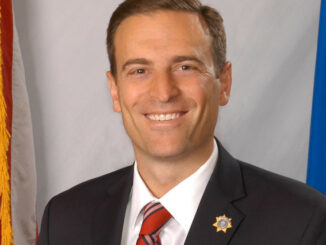
    WASHINGTON, D.C. (TIP): A Republican Senatorial candidate in Nevada is reaching out to the influential Indian-American community as part of the massive GOP effort to rip the Democrats of its seat from the State. Over the weekend, Adam Laxalt, a former Attorney General of Nevada and now running for the US Senate Seat from Nevada, hosted an Indian-American community meet and greet wherein he urged the community to vote for him and the Republican Party in the forthcoming November mid-term polls. He is pitted against Democratic incumbent Catherine Cortez Masto. According to Las Vegas Review-Journal, Laxalt, if elected, will become Nevada’s version of Ron DeSantis. In his address to the Indian-American community at a popular Indian restaurant in Las Vegas, Laxalt addressed issues that matter to the Indian-American and Asian Pacific American communities, according to VegasDesi.Com. “Nevada’s Indian-American community is ready for change,” Laxalt said in a tweet after the event.
    Saroj Singh, a former board member of the Indian American Voices for Trump Coalition in 2020, served as the Master of Ceremonies. “Adam Laxalt, like President Donald Trump, is a great friend and supporter of the Indian-American community. He stands with law enforcement, against illegal immigration, for economic prosperity, and in support of equal access to education for all Americans,” said Rajesh Patel, owner of the Saffron Flavors of India. The meeting was also attended by Richard Grenell, former acting director of National Intelligence during the Trump administration. “Trump knows that Adam Laxalt doesn’t just talk about fighting, but he actually fights,” Grenell said. “I am proud to host Adam Laxalt and Ambassador Richard Grenell at my restaurant today along with many other Indian-American business and community leaders. I look forward voting for him to become Nevada’s next US Senator,” Patel said. “He’s a proud supporter of President Trump and he’s all in for Team Laxalt. Glad to have his vote to flip the Senate,” Laxalt said in a tweet.

  • US Presidential Commission recommends translating federal websites in Hindi, Gujarati and Punjabi, among other Asian languages

    US Presidential Commission recommends translating federal websites in Hindi, Gujarati and Punjabi, among other Asian languages

    WASHINGTON, D.C. (TIP): A US Presidential Commission has recommended the translation of key government websites, such as the White House and other federal agencies, in languages spoken by Asian-Americans and Pacific Islanders, including Hindi, Gujarati and Punjabi. A series of recommendations in this regard were recently approved by the President’s Advisory Commission on Asian Americans (AA), Native Hawaiians, and Pacific Islanders (NHPI). The full commission at its meeting here early this month had recommended that federal agencies should provide key documents, digital content, and forms on their websites translated into multiple AA and NHPI languages. It also recommended that public and emergency alerts should be accessible to persons with limited English proficiency. The full commission also recommended that the federal government should ensure that emergency/disaster prevention, planning, response, mitigation, and recovery programs are inclusive of and reflect the lived experiences of limited English proficient populations. The set of recommendations now move to the White House for the president to take a final call on it. Such a series of recommendations is in the pipeline for some time now after Indian-American Ajay Jain Bhutoria had run a multi-language publicity campaign for Democratic candidate and now US President Joe Biden ahead of the 2020 election. Election campaigns in Hindi, Gujarati, Punjabi, Telugu and other South Asian languages helped the Biden campaign make a deep impact in the community. Based out of Silicon Valley and a successful entrepreneur, Bhutoria is now one of the members of the President’s Advisory Commission on Asian Americans, Native Hawaiians, and Pacific Islanders (Commission).

    During the commission’s meeting, he argued that providing information in languages specific to the audience will help bridge the information divide. A proactive approach for multi-lingual access to the federal government agency information and access will help meet the US government guidelines already in place.

    For example, the Office of Management of Budget Policies for Federal Public Websites states that “your agency is already required to provide appropriate access for people with limited English proficiency by implementing Department of Justice guidance for Executive Order 13166 and improving Access to Services for People with Limited English Proficiency.” Agencies must determine whether any individual document on their federal agency public website(s) requires translation.

    There has been a rapid increase in the population of the Asian American, Native Hawaiian, Pacific Islander which is expected to cross the 40 million mark by 2060.

    Based on the 2020 Census, there are about 25 million who speak a foreign language at home and whose English-speaking ability is at the level “less than very well.” Among AA and NHPI communities, 16.5 million speak English “less than very well.” In his proposal presented before the commission, Bhutoria observed that AAPIs have helped build a strong and vibrant America. Generations of AA and NHPI individuals, families, and communities are composed of diverse and varied ethnicities, languages, and cultures, and include residents of United States Pacific Island territories and freely associated states. They play an important economic role, having started businesses and generated jobs that pay billions of dollars in wages and taxes, including founding some of our nation’s most successful and innovative enterprises, the proposal said.
    (Source: PTI)

  • India-US solidarity for global good, says Congressman Darren Soto

    India-US solidarity for global good, says Congressman Darren Soto

    WASHINGTON,D.C. (TIP): The solidarity between India and the United States is a force for global good, a top American lawmaker has said, noting that the two countries worked closely during the COVID-19 pandemic. Congressman Darren Soto said he looks forward to continued collaboration between the US and India. “Madam Speaker, I acknowledge the strong, multidimensional, and mutually vital partnership between the United States of America and the Republic of India,” Soto said in his remarks on the floor of the US House of Representatives on Wednesday. “Our two nations share a partnership for peace, progress, and prosperity. The solidarity between our two democratic countries and open economies is a force for global good,” he said. During the COVID-19 pandemic, Soto said, the two nations worked closely.

    “There was robust collaboration in the health sector, including in vaccines, where the US provided raw materials to India for vaccine production during a time of surging cases in the country,” he said.

    Sotto said one of the important pillars of this relationship is the enduring bridge provided by the Indian-American community in his district. “I regularly meet with Indian-American community members, including successful hotel owner Mr Jan Gautam, and learn from them about our Indian friends and their progress,” he added.

    “Support from the Indian-American community, through the Asian American Hotel Owners Association, was instrumental in assisting Puerto Rico following Hurricane Maria,” the Congressman said.

    “During my past trip to India, our delegation was briefed on the significance of advancements in Artificial Intelligence technology, its role in the relationship between our nations, and its possible applications to the industry and workforce,” he said. “We met with former Chairman of the Indian Space Research Organization, Aluru Seelin Kiran Kumar, where we discussed its organizational structure, mission focus, applications, and accomplishments.

    “Later, in meetings with the former Minister of Science and Technology Harsh Vardhan, we discussed the importance of space exploration and cybersecurity advancement, all in the context of collaboration between our great democracies,” Soto said. He said he recently met the Indian Consul General to the Southeast, Swati Kulkarni. “I learned about India’s developmental efforts, including efforts through the recent announcement of the 2022-23 Union Budget,” he said.

  • Canada to put a freeze on importing, buying or selling handguns

    Canada to put a freeze on importing, buying or selling handguns

    Canada has had far fewer mass shootings than the US in part because of a lack of easy access to guns

    OTTAWA (TIP): Canadian Prime Minister Justin Trudeau’s government introduced legislation Monday, May 30, that would put a freeze on importing, buying or selling handguns. “We are capping the number of handguns in this country,” Trudeau said. The regulations to halt the growth of personally owned handguns are expected to be enacted this fall. “It will be illegal to buy, sell, transfer or import handguns anywhere in Canada,” the prime minister said.

    Canada already has plans to ban 1,500 types of military-style firearms and offer a mandatory buyback programme that will begin at the end of the year. It already expanded background checks.

    Trudeau has long had plans to enact tougher gun laws but the introduction of the new measure comes after mass shootings in Uvalde, Texas, and Buffalo, NY, this month. Bill Blair, minister of emergency preparedness, said Canada is very different from the United States. “In Canada, gun ownership is a privilege not a right,” Blair said. “This is a principal that differentiates ourselves from many other countries in the world, notably our colleagues and friends to the south. In Canada, guns are only intended to be used for hunting and sport purposes.”

    Canada has had far fewer mass shootings than the US in part because of a lack of easy access to guns, though the US population also is far larger than Canada’s. Blair noted guns are often smuggled in illegally from the US, which he noted has one of the largest small arms arsenals in the world.

    The government plans to fight gun smuggling and trafficking by increasing criminal penalties, providing more tools to investigate firearms crimes and strengthening border measures. Trudeau said increased funding already helped border officials double the amount of smuggled guns confiscated at the U.S. border.

    The government also said the bill would also allow for the removal of gun licenses from people involved in acts of domestic violence or criminal harassment, such as stalking.

    The bill would create a new “red flag” law allowing courts to require that people considered a danger to themselves or others surrender their firearms to police. The government said the measure would guard the safety of those applying through the process, often women in danger of domestic abuse, by protecting their identities.

    The government said it will require rifle magazines to be permanently altered so they can never hold more than five rounds and will ban the sale and transfer of large-capacity magazines under the Criminal Code. “Canada can teach us a lot,” tweeted Bruce Heyman, a former U.S. ambassador to Canada under the Obama administration. Trudeau said his government recognizes the vast majority of Canadians who own guns are responsible but the level of gun violence is unacceptable. “This is a concrete and real national measure to long way toward keeping Canadians safe,” Trudeau said. The new measures are assured of passing in Canada’s Parliament as the ruling Liberals and leftist opposition New Democrats have enough votes.

    Pierre Poilievre, who is running to be leader of the Conservative party, said law-abiding gun owners should be respected and dangerous criminals should be jailed.
    (Agencies)

  • Amritsar-born chef Vikas Khanna ranked in global top 10 list by Gazette Review

    Amritsar-born chef Vikas Khanna ranked in global top 10 list by Gazette Review

    Michelin star chef is the only Indian, who has made it to the prestigious list

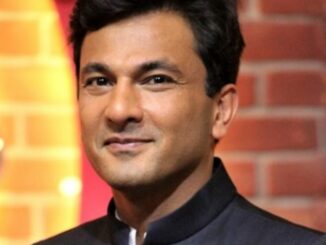
    HOUSTON (TIP): Michelin star celebrity chef Vikas Khanna has been ranked amongst the top 10 global chefs in the world by Gazette Review, becoming the only Indian chef who has made it to the prestigious list.
    The Gazette Review ranked Khanna sixth, with British chef Gordan Ramsey leading the list.
    The 50-year-old Amritsar born, and New York-based Khanna is known for taking Indian cuisine across the globe and on the world food map.
    He is the only Indian origin chef who has made it to the list along with great names in the industry.
    Khanna, who also wears other caps including that of being a writer, filmmaker and philanthropist, took to social media on Tuesday, May 31 and shared his joy on being listed.
    “Humbled to be in 2022 ‘TOP 10 CHEFS IN THE WORLD’ – The Best in 2022 by Gazette Review. Humbled to be in the company of some of my mentors,” he wrote on Instagram. Others on the list include Anthony Bourdain, Paul Bocuse, Alain Ducasse, Emeril Lagasse, Marco Pierre White, Heston Blumenthal, Wolfgang Puck and Jamie Oliver.
    Khanna is one of the first Indian chefs to receive international acclaim. Since 2011, his main restaurant Junoon in New York City has received a Michelin star, a hallmark of fine dining.
    Khanna has served food to the former US president Barack Obama, the Dalai Lama, Pope Francis, Prime Minister Narendra Modi, and many other world leaders and celebrities.
    Khanna is known for creating the most expensive cookbook in the world. From 2011, Khanna hosted five seasons of Master Chef India, a series based on the original British version.
    (Source: PTI)

  • Hunt on for killers of Sidhu Moosewala; Special Investigation Team constituted

    Hunt on for killers of Sidhu Moosewala; Special Investigation Team constituted

    Police to question jailed gangster Lawrence Bishnoi

    CHANDIGARH (TIP): The Punjab police on Wednesday, June 1, said it will question jailed gangster Lawrence Bishnoi after bringing him to the state in connection with the murder of Punjabi singer Sidhu Moosewala.
    Meanwhile, in order to further expedite the investigations in Sidhu Moosewala Murder case, Director General of Police (DGP) Punjab VK Bhawra has strengthened and reconstituted the Special Investigation Team (SIT) under the supervision of ADGP Anti-Gangster Task Force (AGTF) Pramod Ban.
    According to the police, Bishnoi’s gang was behind the killing. At present, Bishnoi is in custody of the Delhi Police’s Special Cell in a case under the Arms Act and other sections related to assault on a public servant.
    Talking to reporters in Mansa on Wednesday, June 1, Senior Superintendent of Police Gaurav Toora said the police have got important leads and they are working on it. On whether Mansa police will bring Bishnoi on remand, the SSP said, “Definitely. We have information that the Delhi Police has taken the remand of Bishnoi. After that we will make him join the investigation in this case as per the law.”
    The Punjab Police has described Moosewala’s murder as a case of an inter-gang rivalry. Canada-based Goldy Brar, who is a member of the Bishnoi gang, has claimed responsibility of the murder.
    SSP Toora further said the police have traced the route the criminals involved in the murder took. “From where they came, how they conducted a recce and how they escaped – we have cleared this all,” he said. He said different police teams, including the cyber cell, were involved in the investigation. “We have got important leads and we are working on that,” he added.
    Referring to the murder, the SSP said it was the work of organized criminals and gangsters. He said two gangsters were brought here on production warrants from prisons.
    One person has already been arrested in this case, he said. “They are being questioned,” the SSP added.
    The police on Tuesday, May 31, said they had arrested Manpreet Singh in the Moosewala murder case. Singh has been accused of supplying vehicles to the assailants who were involved in the killing.
    (With inputs from PTI, Tribune)

  • National Commission for Women  meet recommends helpline for abandoned wives of NRIs

    National Commission for Women meet recommends helpline for abandoned wives of NRIs

    NEW DELHI (TIP): A national helpline for women deserted in Non-Resident Indian (NRI) marriages and the need for a dedicated fund to provide assistance to them are among the recommendations made at a consultation on Wednesday, June 1, organized by the National Commission for Women (NCW) on ensuring access to justice to such women. Among issues discussed was ways to serve non-bailable warrant against male offender residing abroad.

    The NCW invited experts from the Ministry of Women and Child Development, Ministry of External Affairs, Ministry of Home Affairs, women victims, State police departments, NGOs, Indian missions in Australia and Canada, among others. The consultation was held on two broad topics — identifying problems faced by Indian women married to Persons of Indian Origin (PIO) and NRIs, and challenges faced by deserted wives in the legal system in India and abroad. “The meeting took up issues such as ways to serve a non-bailable warrant against a male offender residing abroad who has abandoned his wife. Often, these men keep changing their address and it gets challenging to track them. So, we have suggested that a special website be set up, so that summons posted there are deemed as served on a person. Another way to track them would be through their Social Security Number,” ex-Chairman, Punjab State Commission for NRIs, Justice (Retd) Rakesh Kumar Garg told The Hindu.

    Other matters discussed were ex-parte judgments on divorce obtained by husbands abroad, which are already addressed under Section 13 of the Civil Procedure Code that deals with conditions under which foreign judgments are not conclusive, said Mr. Garg.

    Instances of child custody disputes were also raised. “For such matters, when a habeas corpus writ is brought to India for producing a child before a foreign court, Indian courts have often held that both parents are natural guardians under Indian laws and, in fact, mother is the guardian of a child under five years. We are also not signatories to the Hague convention, so we don’t have to return the child.”

    The consultation did not, however, discuss whether India should sign the Hague Convention, which requires that if a parent has run away with a child from one country to another due to a marital dispute, the child has to be returned to the country from where he or she has been removed. The Indian government maintains that it is not ready to sign the treaty. Another person who attended the meeting said on condition of anonymity that ways to ensure maintenance for such wives, legal assistance, and financial support through a dedicated fund were also raised.

    Many of the suggestions made are not new. They were part of the report of an expert committee formed by the Ministry of Women and Child Development and headed by Justice Arvind Kumar Goel, ex-Chairperson, NRI Commission, Punjab, submitted in August 2017. On the basis of these suggestions, a meeting chaired by the then External Affairs Minister Sushma Swaraj in November 2017 took a decision to ensure compulsory registration of NRI marriages and set up a website of MEA for posting summons.

    Following this, in February 2019, the Ministry of External Affairs introduced the Registration of Marriage of Non-Resident Indian Bill, 2019, in Rajya Sabha. The Bill was sent to a Parliamentary Standing Committee, which approved it with some recommendations. But after the passing of Sushma Swaraj in August 2019, the Bill has been put in cold storage.
    (Source: The Hindu)

  • Facebook sees 82 per cent jump in hate speech; violent content rises 86 per cent on Instagram in April

    Facebook sees 82 per cent jump in hate speech; violent content rises 86 per cent on Instagram in April

    NEW YORK (TIP): There has been a rise of around 82 per cent in hate speech on social media platform Facebook and 86 per cent jump in violent and inciting content on Instagram, according to a monthly report released by Meta.
    The majority of the content in the report is based on detection by social media platforms before users reporting to them.
    According to the report released on May 31, Facebook detected 53,200 hate speech in April, which is 82 per cent higher compared to 38,600 detected in March, on which the platform took action.
    The report showed that Instagram acted on 77,000 violence and incitement related content in April compared to 41,300 in March. “We measure the number of pieces of content (such as posts, photos, videos or comments) we take action on for going against our standards. This metric shows the scale of our enforcement activity. Taking action could include removing a piece of content from Facebook or Instagram or covering photos or videos that may be disturbing to some audiences with a warning,” the report said.