Tag: Apple

  • BLACKBERRY, THE ORIGINAL SMARTPHONE, ENDS PRODUCTION AFTER GREAT RUN

    BLACKBERRY, THE ORIGINAL SMARTPHONE, ENDS PRODUCTION AFTER GREAT RUN

    WATERLOO, ONT (TIP): It’s official. BlackBerry Ltd., the Canadian company that invented the smartphone and addicted legions of road warriors to the “CrackBerry,” has stopped making its iconic handsets, a news report says.

    Finally, conceding defeat in a battle lost long ago to Apple Inc. and Samsung Electronics Co., BlackBerry is handing over production of the phones to overseas partners and turning its full attention to the more profitable and growing software business.

    It’s the formalization of a move in the making since CEO John Chen took over nearly three years ago and outsourced some manufacturing to Foxconn Technology Group. Getting the money-losing smartphone business off BlackBerry’s books will also make it easier for the company to consistently hit profitability.

    “This is the completion of their exit,” said Colin Gillis, an analyst at BGC Partners. “Chen is a software CEO historically. He’s getting back to what he knows best: higher margins and recurring revenue.”

    Chen should be able to execute his software strategy as long as he keeps costs in line and maintains cash on the balance sheet, Gillis said.

    BlackBerry, based in Waterloo, Ontario, gained as much as 7.4 percent Wednesday, September 28, its biggest intraday jump since December. The shares were trading up 4 percent to

    C$10.83 at 12:53 p.m. in Toronto.

    Chen will still have to prove that he can continue to expand BlackBerry’s software business in an increasingly competitive space. 2015 File Photo/The Associated Press

    BlackBerry said it struck a licensing agreement with an Indonesian company to make and distribute branded devices. More deals are in the works with Chinese and Indian manufacturers. It will still design smartphone applications and an extra-secure version of Alphabet Inc.’s Android operating system.

    “I think the market has spoken and I’m just listening,” Chen said in a discussion with journalists. “You have to evolve to what your strength is, and our strength is actually in the software and enterprise and security.”

    The new strategy will improve margins and could actually increase the number of BlackBerry-branded phones sold, Chen said, as manufacturers license the name that still holds considerable sway in emerging markets like Indonesia, South Africa and Nigeria.

    “This is the way for me to ensure the BlackBerry brand is still on a device,” Chen said.

    Although BlackBerry’s latest phone, the DTEK50, was already almost completely outsourced, the move is a big symbolic step for a company that once reached a market value of $80 billion. Today, it’s worth about $4.3 billion.

    When the BlackBerry 850 was released in 1999, it married a functional keyboard with email capability and essentially ushered in the modern smartphone era. With a proprietary operating system known for its watertight security, the phones became ubiquitous and extended the workday onto commuter trains and into restaurants and homes.

    They were an instant hit with business executives and heads of state alike. President Barack Obama was fiercely committed to his but finally ditched it earlier this year, reportedly for a Samsung.

    Then, in 2007, enter the iPhone, with its touchscreen interface and app store. People at first said they didn’t want to give up BlackBerry’s keyboard and simplicity. But the lure of apps eventually sent almost all its users to phones running Android or iOS.

    “It was inevitable at this point; they didn’t have the unit volumes to sustain the business profitably,” said Matthew Kanterman, an analyst with Bloomberg Intelligence. “This is doubling down on the efforts to focus on software, which is really what their strength is.”

    BlackBerry shipped only 400,000 phones in its fiscal second quarter, half of what it sold in the same period last year. Apple sold more than 40 million iPhones last quarter.

    BlackBerry said software and services revenue more than doubled in the quarter from a year earlier to $156 million. Still, software revenue was down from the previous quarter’s $266 million, which Chen blamed on patent licensing deals that didn’t carry over into the quarter.

    Adjusted earnings were at break-even, compared with analysts’ estimates for a loss of 5 cents. Revenue in the second quarter was $325 million, falling short of analysts’ projections for $390 million. For the full year, BlackBerry expects a loss of 5 cents or to hit break-even, compared with what it said was a current consensus of a 15-cent loss.

    While investors appear to be relieved that BlackBerry finally threw in the towel on handsets, Chen will still have to prove that he can continue to expand the software business in an increasingly competitive space. So far, he has managed to hit his fiscal 2016 target of pulling in $500 million in annual software-only revenue last March. The next milestone is to grow that by another 30 percent by March 2017.

    Chen also aims to expand the margins of software products to around 75 percent from closer to 60 percent now, he said.

    BlackBerry’s most important software is its device management suite, which helps companies keep track of their employees’ phones and make sure sensitive communication stays within the business. BlackBerry bought one of its key competitors, Good Technology, for $425 million last year, but the market is crowded.

    “This doesn’t change the fact that there are still a lot of competitive threats,” Kanterman said in a phone interview. VMWare, IBM Corp. and Microsoft Corp. all have device management products and are taking market share by bundling them with other business-focused software they sell. In some ways, it doesn’t make sense for BlackBerry to remain a public company.

    Given its shriveled market value, it could be the right price for a private-equity takeover, or it could sell out piecemeal to a bigger company like Dell Technologies’ VMWare or Samsung.

    As BlackBerry reinvents itself, it will have to change how it’s perceived in the market. Investors still largely value BlackBerry as a hardware company, not the software provider it has become, Chen said.

    “As soon as that message is recognized, the stock will move to the right valuation,” he said.

  • Apple partners with Flipkart to sell iPhone 7

    Apple partners with Flipkart to sell iPhone 7

    BENGALURU (TIP): Apple has partnered with Flipkart to sell its iPhone 7 on the Bengaluru-based etailer’s platform from October 7. Flipkart will source iPhone 7 directly from Apple, unlike previous years when it would source the phones from third-party sellers.

    This is the first time that Apple has partnered with a consumer-facing online player to sell a new iPhone version. Infibeam, which has been an Apple partner for some years, will also receive the new iPhones directly, but it is known more as a bulk seller, one that does not deal with consumers directly.

    The development was first reported by online portal BGR.in. When contacted, Flipkart declined to comment on the matter while an e-mail sent to the Apple India spokesperson did not elicit any response.

    Flipkart, which has the largest etail market share in India, generates a major chunk of its revenues from sales of smartphones. Multiple smartphone brands, including Motorola and LeEco, sell exclusively on Flipkart. TOI reported on September 22 that Flipkart sold 1 lakh units of Motorola’s latest E3 range in 24 hours on Tuesday.

    The iPhone 7 deal should give Flipkart a leg up, at a time when it is facing stiff competition from American rival Amazon which has been investing heavily in the Indian market. The tie-up may help provide fresh excitement during the festival season sales.Amazon too may offer iPhone 7s on its platform, but the absence of a direct deal with Apple will mean the margins it gets will be lower, and it will probably have less flexibility in managing the supply chain.

  • ‘I want Apple’: Myanmar abuzz over end of US sanctions

    ‘I want Apple’: Myanmar abuzz over end of US sanctions

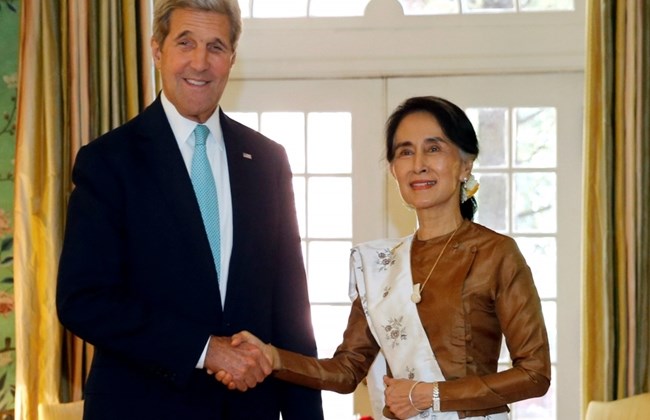
    YANGON (TIP): Myanmar cheered a US promise to end sanctions on Sept 16, with residents in its commercial capital clamouring for American brands while politicians and business moguls heralded a new era of transparency and trade.

    US President Barack Obama vowed to scrap the trade limits during Aung San Suu Kyi’s first visit to the White House since her party took power in March, ending decades of military domination.

    The move marks a milestone in the country’s rapid transformation from an international pariah into Asia’s fastest-growing economy under the leadership of the Nobel laureate.

    But Soe Naung Win, who owns a mobile phone shop in Myanmar’s bustling economic capital of Yangon, had more immediate concerns.

  • US stocks flat ahead of expected Apple iPhone 7 launch

    US stocks flat ahead of expected Apple iPhone 7 launch

    NEW YORK (TIP): US stocks were little changed early Wednesday ahead of Apple’s expected launch+ of a new iPhone 7 and iPhone 7 Plus , and the Federal Reserve’s “Beige Book” report assessing economic conditions around the country.

    Apple shares+ were flat a few hours before the San Francisco event, which could also see the introduction of a second-generation smartwatch.

    About 35 minutes into trade, the Dow Jones Industrial Average was at 18,524.94, down 0.1 percent.

    The broad-based S&P 500 lost less than 0.1 percent at 2,185.62, while the tech-rich Nasdaq Composite Index rose 0.1 percent to 5,281.54.

  • Indian-origin Anvitha Vijay is the youngest to attend the Apple’s Worldwide Developers Conference

    Indian-origin Anvitha Vijay is the youngest to attend the Apple’s Worldwide Developers Conference

    Apple’s annual developer’s conference, WWDC 2016, is taking place on Monday, June 13, and it’s one of the biggest events on the tech-calendar each year.

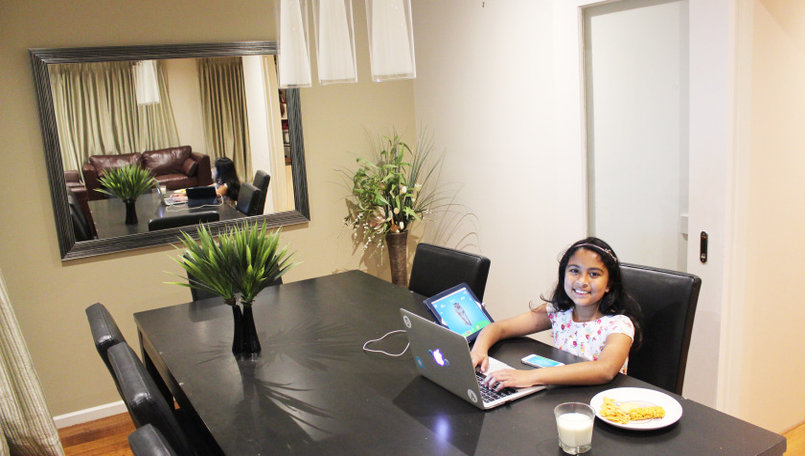
    Like many others, Indian-Origin Australian girl Anvitha Vijay is there with a dream to attend WWDC and meet Tim Cook. But there’s one key difference – she’s only nine years old.

    The girl applied for a scholarship to travel to WWDC and was one of the people Apple selected for this opportunity, reports Fortune.

    According to the report, out of 350 recipients of the scholarship, 120 are under the age of 18, and 22 percent are women, as part of an effort on Apple’s part to add diversity to its developer events.

    Vijay, who wanted to build mobile apps, didn’t have any formal training, and learned to code watching tutorials on YouTube. “Coding was so challenging,” Vijay told Fortune. “But I’m so glad I stuck with it.”

    Vijay’s Smartkins Animals app teaches children animals’ names and sounds, and although it looks simple, describing the process of creating the app, Vijay told Fortune: “Turning an idea for an app involves a lot of hard work. There are so many components to building an app, including prototyping, design and wireframing, user interface design and then coding and testing.”

  • APPLE EXPLORES CHARGING STATIONS FOR ELECTRIC VEHICLES

    APPLE EXPLORES CHARGING STATIONS FOR ELECTRIC VEHICLES

    Apple is investigating how to charge electric cars, talking to charging station companies and hiring engineers with expertise in the area, according to people familiar with the matter and a review of LinkedIn profiles.

    For more than a year, Silicon Valley has been buzzing about Apple’s plan to build an electric car. Now the company appears to be laying the groundwork for the infrastructure and related software crucial to powering such a product.

    The moves show Apple responding to a key shortcoming of electric vehicles: “filling up” the batteries. A shortage of public charging stations, and the hours wasted in charging a car, could be an opportunity for Apple, whose simple designs have transformed consumer electronics.

    Apple, which has never publicly acknowledged a car project, declined to comment for this story. Neither the LinkedIn profiles nor sources said specifically that Apple was building charging stations for electric cars.

    But automotive sources last year told Reuters that Apple was studying a self-driving electric vehicle (EV), as the Silicon Valley icon looks for new sources of revenue amid a maturing market for its iPhone.

    Apple is now asking charging station companies about their underlying technology, one person with knowledge of the matter said. The talks, which have not been reported, do not concern charging for electric cars of Apple employees, a service the company already provides. They indicate that Apple is focused on a car, the person added.

    Charging firms are treading carefully, the person added, wary of sharing too much with a company they view as a potential rival.

    It is unclear whether Apple would want its own proprietary technology, such as Tesla Motors’ Supercharger network, or would design a system compatible with offerings from other market players.

    Several charging station suppliers contacted by Reuters declined to comment about any dealings with Apple, which typically requires potential partners to sign non-disclosure agreements.

    Arun Banskota, president of NRG Energy Inc’s electric vehicle charging business, EVgo, did not respond directly to questions about Apple, but said repeatedly that his company was “in discussions with every manufacturer of today and every potential manufacturer of tomorrow.”

    Apple has hired at least four electric vehicle charging specialists, including former BMW employee Rónán Ó Braonáin, who worked on integrating charging infrastructure into home energy systems as well as communication between EVs, BMW and utilities, according to a LinkedIn review.

    As recently as January Apple hired Nan Liu, an engineer who researched a form of wireless charging for electric vehicles, for instance. Quartz earlier this month reported that Apple had hired former Google charging expert Kurt Adelberger.

    Electric vehicle charging stations are manufactured, installed and operated under varying business models. Players in the space include Car Charging Group Inc and privately held ChargePoint, SemaConnect and ClipperCreek, infrastructure companies such as Black & Veatch and AECOM as well as General Electric, Siemens and Delta Electronics Inc.

    The three largest utilities in California also have plans to install charging stations.

    Read More

  • English proficiency is key to immigrant success

    English proficiency is key to immigrant success

    In New York, providing support for our immigrant communities is personal. Four out of 10 City residents are immigrants and collectively contributed close to $260 billion to the Big Apple’s economy in 2015. What is more, a majority of immigrant New Yorkers belongs to mixed-status families composed of U.S. citizens, legal permanent residents and undocumented residents. They are integral to our broader society, a fact too often overlooked by many.

    So it is unfortunate to see that the Mayor’s Executive Budget fails to provide adequate support for the growing needs of our immigrant communities. To ensure we open the doors to opportunity, my colleagues and I are strongly urging the Administration to invest $16 million for English literacy, adult education and GED preparation, as outlined in our Response to the Preliminary Budget.

    Between 2000 and 2011, neighborhoods with the highest concentrations of immigrants had stronger business growth than the rest of the City. Immigrants have helped revitalize neighborhoods such as Coney Island, Corona, Elmhurst, Flushing, Jackson Heights, Washington Heights and many others.

    Building capacity for immigrant New Yorkers is critical, and to do so, they need to have access to adult literacy programs. Gaining proficiency in English is essential to securing job opportunities and to participation in the civic, social and economic life of this City.

    Nearly 25 percent of immigrant residents speak little or no English, yet at any given time, over 14,000 individuals are on waitlists for English literacy and education programs. Low adult literacy has an outsized impact on parents, their children and their communities. Limited English proficiency traps immigrants into low-paying jobs and puts a strain on their ability to support their families and move ahead economically. Their children reach school with an English-language deficit. Currently, of the 140,000 English Language Learnersin our public schools, the majority are U.S. citizens born to immigrant parents. Poor English-language proficiency also affects parents’ ability to get involved with and advocate for their children’s education.

    Although English-language proficiency is not a requirement to apply for DACA and Expanded DACA, there is an educational requirement that can be met if you are enrolled in an Adult Literacy Program that meets certain criteria. This can be significant to the estimated 16,000 to 24,000 undocumented residents in New York City, who may be eligible for these deportation relief programs.

    There are 1.8 million immigrant New Yorkers who require the tools necessary to ensure they can thrive and, like previous generations, contribute to keep New York the great immigrant city that it is today, and will continue to be tomorrow. Their success, our success, rests on their ability to take full advantage of being New Yorkers. There is no other option.

  • Apple Hires Samsung’s Rajiv Mishra

    Apple Hires Samsung’s Rajiv Mishra

    NEW DELHI – In a key development, U.S. tech giant Apple is all set to hire Rajiv Mishra, currently vice president of media and corporate social responsibility division at Samsung Electronics Co. Ltd, as its India head of media and public affairs.

    Mishra confirmed the development to IANS on May 18.

    The move is significant, as it comes when Apple CEO Tim Cook is in India on a four-day visit and is slated to meet Prime Minister Narendra Modi this week.

    The move is also crucial as with Mishra’s over 22-year expertise, Apple will be better positioned to disseminate information to its various stakeholders and cement its position in the Indian market.

    Mishra joined Samsung in August 2014. At Samsung, Mishra is responsible for overseeing the entire media mandate for the organization across the country.

    He had worked for various media organizations like Hindustan Times Group, Star TV, Zee TV, Reliance Infocomm Limited, News 24 (BAG Films and Media) and India News, among others.

    Mishra also worked with Lok Sabha TV as CEO and has been a nominated member of various media advisory bodies in various ministries.

    He is founder of the Electronic Media Rating Council of India and his contribution in television ratings methodology in Europe has been recognized by International Telecommunication Union and European Broadcasting Union at Geneva.

    Rajiv Mishra is also the founder and first president of Association of Radio Operators for India and also the first president of Association of Regional Television Broadcasters of India (ARTBI), the industry representative body of regional Broadcasters of India. He has recently been nominated as member, expert committee of Information & Broadcasting Ministry to develop papers on copyright issues.

    A master’s in broadcasting from IAB, Montreux, Switzerland, he earned MBA in media management from Metropolitan College of New York in the US.

    Apple is reported to be looking for new growth markets like India following decline in sales.
    Hit by slower growth in the sale of its flagship products iPhone, iPad and Mac globally, Apple’s revenue dropped for the first time since 2003 as the tech giant released earning reports for the second quarter of fiscal 2016 in March.

    Revenue was down in both Americas and China – Apple’s two biggest territories. It declined around 10 percent in the Americas and 26 percent in China.

    According to Vishal Tripathi, research director at global market consultancy firm Gartner, Cook may raise the issue of allowing Apple to import and sell refurbished iPhones at a cheaper price in India during his talk with Modi. This will give Apple a slot in the mid and low-price segment.

    Apple’s manufacturing partner Foxconn is already present here and is looking to set up a manufacturing base in the country.

  • Apple’s iPhone hackable?

    Apple’s iPhone hackable?

    The US Department of Justice (DOJ) scraped its request for Apple Inc.’s assistance to hack into the phone of a terrorist killer.

    The federal government department, on behalf of the Federal Bureau of Investigation (FBI), made the move on Monday at a US court in Central California, Xinhua reported.

    The two-page court filing said that the FBI had accessed data stored in the iPhone 5c.

    A week ago, a day before the DOJ and the Silicon Valley technology company were scheduled to appear at a hearing at the court, the government said it was trying a new way to unlock the phone used by Syed Farook.

    Farook, together with his wife Tashfeen Malik, shot dead 14 people on December 2, 2015 in San Bernardino, California, before being killed by police.

    The smartphone has a feature that erases data after 10 unsuccessful unlocking attempts.

    Successfully bypassing Apple in its efforts to look into the phone for information probably helpful in the terror attack investigation, the DOJ did not make public on Monday any details about who did help and how did it make through.

    Apple had been resisting the order by Judge Pym since February 16, when she ordered the manufacturer to provide the FBI with specialised software to disable the security feature.

    In an earlier TV interview, citing privacy protection for customers as a reason, Apple Chief Executive Officer Tim Cook suggested that he would fight the case all the way up the US Supreme Court.

    The argument was heated, as the government side fought on the ground that it was a work phone owned by the San Bernardino county, and the software would be in the possession of Apple rather than in the hands of FBI agents.

    Both sides seemed to have failed to win full public support.

    However, the DOJ’s decision not to go after Apple’s assistance effectively put the dispute to an end, at least for now.

    And it is now Apple’s turn to figure out, and for iPhone users to wonder, how secure is the phone and data on the device.

  • Indian-American Students Create App For On-Demand Tutors

    Indian-American Students Create App For On-Demand Tutors

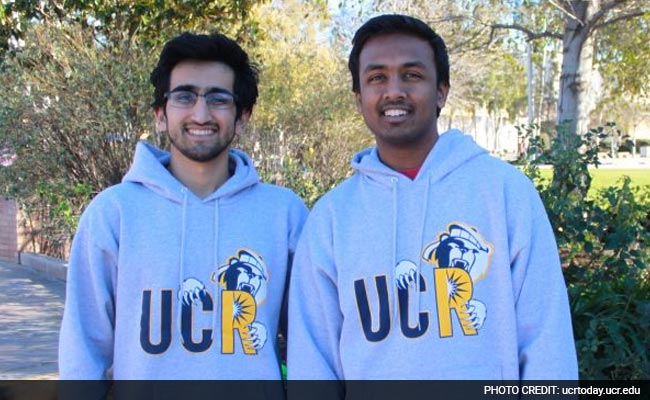
    HOUSTON:  Two Indian-American computer science students in the US have created an education app that helps college students connect with tutors in the locality. Described as “The Uber for Tutors”, the “Scholarly” app available as a free download on Google Play and in the Apple App Store helps users view tutor profiles, set meeting locations, and get help with their studies at the click of a button.

    The app, that won the first place at the world’s largest education Hackathon in October, has been created by Sultan Khan and Haasith Sanka of the University of California, Riverside (UCR).

    The way it works is simple: tutors create profiles, which can be viewed by students looking for help in a certain subject. After setting a meeting location, the two parties can meet to untangle whatever academic knot a student is wrestling with.

    In addition to being easy, it’s mutually beneficial. Tutors can earn extra cash, while students can get the academic help they need – all with no middle man other than a smartphone.

    The duo hope the on-demand tutoring service will help fellow students.

    “We both believe that one-on-one tutoring is beneficial, so we are proud to have created something that will contribute to students’ success,” said Sanka.

    The duo developed the android version of ‘Scholarly’ at Hacking EDU in last October. The competition drew more than 1,000 hackers from universities around the world. Within a 36-hour time-frame, students were challenged to turn their ideas into functional software that would improve the education system.

    After presenting ‘Scholarly’ to a panel of judges, Khan and Sanka ultimately left with a first place ranking for their app.Since then, the two have been working to improve the android app and create the iOS version.

    “One of the challenges about developing apps is that even when you’ve done a good job there is always room for improvement. That’s one of the things I love about creating apps and the reason I want to work in the field of software development when I graduate,” said Khan, in a statement issued by UCR.

    For Sanka, the reward will be seeing how the app helps other students.

    While most of the app’s activity is currently generated by UCR students, Khan and Sanka hope to expand the service to K-12 (Kindergarten to Class 12) students and their parents in the coming months.

  • 10-year-old Indian girl proves age is just a number at ‘brainiacs’ meet in NY

    10-year-old Indian girl proves age is just a number at ‘brainiacs’ meet in NY

    Growing up is a wonderful experience, but when we grow up, one particular question from elders makes us confused: “ What do you want to become when you grow up?” Well, “Why not talk about their present? What they want to do or want to be at present?” says Ishita Katyal from Pune who was invited to speak at TED Youth Conference in New York.

    10-year-old Pune writer and middle-schooler who, quite extraordinarily, debuted as the opening speaker at the TED2016 (Technology, Entertainment, Design), a nerdy conference of some of the world’s smartest people.

    Alpha-geeks from Google and Tesla, Apple and Uber, not to speak of marquee names such as Al Gore and Bill Gates are attending the annual brainiacs gig, but it was the singsong voice of this pre-teen, with her pink-frame spectacles and burgundy velvet gown, that held centerstage on when the conference opened.

    “We can do a lot in this moment, in the present. The problem is our world has many forces working against the dreams of children.” Adults, she said, chronically underestimate kids, and in the process they pass on fear to children who are born without fear.

    The nerdy audience, with an average age perhaps in the forties, absorbed the mild admonition, responding with frequent applause as she pressed on to issues such as hunger, education, and war.

    “My dream for the future is that people think 10 times before raising school fees, a hundred times before going to war with another country, a thousand times before wasting food and water, and ten thousand times before letting their child’s childhood go away,” she said. “I hope you adults can look after the world long enough to give us our chance.”

    After she concluded to rousing cheers (AR Rahman, who performed a little later in the opening session, was in the anteroom), scientists and savants, poets and philosophers, mandarins and musicians ambushed her in the lobby, wanting selfies with her.

    Her mother, Nancy Katyal, an image consultant in Pune, beamed with pride, recalling how Ishita, who wrote her first book “Simran’s Diary”, came into limelight after she organized a TEDx talk at her school Vibgyor High, Balewadi, last February.

    But this was the big stage, a world event that was for the first time, simulcast in movie theaters across the world as TED grows bigger and better. A large TEDx initiative involving Infosys in India is to be unveiled later in the day, but for now all eyes are on Ishita, even as she’s yawning and swaying lightly on her feet from jetlag, held up by adulation.

  • Silicon Valley Wants ‘Dramatic Expansion’ Of H1-B Visa: Top American CEO

    Silicon Valley Wants ‘Dramatic Expansion’ Of H1-B Visa: Top American CEO

    WASHINGTON:  With IT firms struggling to find quality and right number of professionals, a top American CEO has called for a “dramatic expansion” of the H-1B visa scheme popular among Indian tech firms to meet the growing demand.

    “The entire Silicon Valley believes that the H-1B visa policy needs to be dramatically expanded,” Bill Coleman CEO of Veritas told news agency PTI in an interview.

    “We can’t hire enough good people. They are just not available here. The salaries here are going through the roof, because everybody is competing to hire from everybody else,” he said.

    Mr Coleman, a former chairman of Silicon Valley Leadership Group, is involved with the Silicon Valley for about 40 years.

    Early this month, he became the CEO of Veritas, which has re-emerged as a newly-independent company after its purchase by The Carlyle Group for USD 7.4 billion on January 29.

    Soon headed to India, where Veritas has about 1,700 people working for it with Pune being a major centre, Mr Coleman said he plans to migrate some of his facilities to India from Florida.

    “That is a priority,” he said. The H1B visa is designed to allow US employers to recruit and employ foreign professionals in speciality occupations within the US. But in a blow to Indian IT firms, the US has imposed an additional fee of up to USD 4,500 for certain categories of H-1B visa.

    Amidst revival of the US economy wherein the unemployment rate has hit below 5 per cent, Mr Coleman referred to the huge shortage of quality IT professionals the Silicon Valley faces.

    “In Silicon Valley you go to Apple, Facebook or Google, open their websites, you will find thousands of open jobs. One of the biggest problem here is that everybody is trying to hire from everybody else. As they can’t find enough good candidates what they are doing is pushing the salaries through the moon,” he said.

    Referring to a conversation he recently had with Alphabet chairman Eric Schmidt, Mr Coleman described a “crazy” incident when the hiring-salary of a data scientist skyrocketed.

    “I know this is a very very extreme example. I was talking to Eric Smith a while ago. He was telling me that they had a really really top machine learning data scientist who they were trying to recruit. They ended up getting him, but with a USD 10 million sign on bonus. That’s crazy,” he said.

    Mr Coleman said the number of H-1B visas should be based on market demand and the programme’s expansion is one of the top priorities for the Silicon Valley.

  • iPhone 5SE | Apple launching new iPhone, New iPad Air on March 15

    iPhone 5SE | Apple launching new iPhone, New iPad Air on March 15

    Reports suggest Apple is on target to introduce its next iPhone and iPad models on March 15, and aims to start selling the devices in the same week, technology blog 9to5Mac reported.

    Apple, which will introduce a new 4-inch iPhone, dubbed the “iPhone 5se”, and a new iPad Air at a launch event, is unlikely to take pre-orders for the new devices, the blog reported, with devices set to go on sale March 18.

    Apple lovers are upbeat about this launch that can provide an inexpensive version of the iPhone, which can be used by the masses.

    Here are the likely features of Apple’s ‘cheaper’ iPhone:

    1. To sport slim, metal-clad body

    The upcoming iPhone 5SE is rumoured to come in a metal body. It is reportedly slimmer than the older iPhone 5S and has borrowed some design elements from iPhone 6S.

    2. To come in same colours as iPhone 6S

    Apple might offer the iPhone 5SE in similar colour options as the iPhone 6S. So, you can expect to see the new iPhone in Rose Gold colour as well.

    3. To sport fingerprint scanner, NFC

    The iPhone 5SE is expected to come with Touch ID fingerprint scanner integrated on the home button and with NFC, it will support Apple Pay too.

    4. To feature 4-inch display

    The new iPhone is rumoured to feature a 4-inch display like the earlier iPhone 5C and iPhone 5S. However, Apple might not include 3D Touch support as it will be a low end iPhone model.

    5. To have an 8MP rear camera

    The upcoming iPhone 5SE might feature the same camera capabilities as seen on the iPhone 5S. This means it will offer an 8MP rear camera and a 1.2MP selfie camera.

    6. To run on the latest A9 processor

    As far as the CPU is concerned, it might be powered by the latest A9 processor and will come with more RAM.


  • Apple wants $180 million more from Samsung in patent dispute

    Apple wants $180 million more from Samsung in patent dispute

    NEW YORK (TIP): Just over a week after Samsung paid Apple more than $548 million for infringing the patents and designs of the iPhone, Apple has asked a U.S. court to force its biggest smartphone rival to cough up even more.

    In court papers filed on Wednesday, Apple said Samsung owes nearly $180 million in supplemental damages and interest. These further damages relate to five Samsung devices that infringed Apple’s patents and were sold after a 2012 jury verdict finding Samsung liable in the dispute.

    Representatives for Samsung and Apple could not immediately be reached for comment.

    The long-running dispute dates back to 2011, when Apple sued Samsung alleging it its patents and copied the look of the iPhone.

  • Apple ‘to pay $348m’ to settle Italy tax fraud case

    Apple ‘to pay $348m’ to settle Italy tax fraud case

    NEWYORK (TIP): Apple’s Italian subsidiary has agreed to pay $348m after the US tech giant was investigated for suspected fraud, the country’s tax agency said Tuesday, December 29.

    The settlement follows an investigation by prosecutors in Milan.

    The company’s Italian subsidiary and several of its senior executives had been under investigation for fraud over its alleged failure to comply with obligations to declare its earnings in Italy between 2008 and 2013, according to La Repubblica.

    The US tech giant has not commented on the deal. It has previously denied attempting to escape paying tax owed on profits made around the world.

    Apple Italia is part of the company’s European operation which is headquartered in Ireland, a country with one of the lowest levels of corporation tax in the EU.

    A spokesman for the tax agency confirmed the newspaper’s report was accurate but would not divulge further details.

    Ireland taxes corporate earnings from normal business activities at a rate of 12.5% compared with 27.5% in Italy.

    Investigators in Italy say they found a huge gap between the company’s revenues in Italy of over 1bn between 2008 and 2013 and the 30m that was paid in tax in the country.

    The settlement comes amid a European Commission investigation into the tax arrangements of numerous multinational companies accused of using cross-border structures to reduce their tax bills, sometimes with the help of secret and potentially illegal “sweetheart” deals.

    Earlier this month, Apple chief Tim Cook described accusations that the world’s richest company was sidestepping US taxes by stashing cash overseas as “political crap” and insisted: “We pay every tax dollar we owe.”

    The settlement of the tax dispute will not halt the criminal investigation into the conduct of three Apple Italia executives but will likely reduce the severity of any sanctions they may face, La Repubblica said.

    Apple’s activities in Ireland are currently under investigation by the European Commission, which is due to announce soon whether tax breaks designed to secure the company’s extensive investment in Ireland amounted to illegal state aid.

    In the United States, Apple has come under fire in Congress for not declaring overseas earnings to the US tax authorities.

    Cook has defended this as perfectly legal and sensible given that the company would be liable for 40% taxation if it repatriated all its earnings to the United States.

    “We have a tax code made for the Industrial Age, not the Digital Age,” he complained in November.

  • Sikh Americans are not Muslims, but they still suffer from Islamophobia

    Sikh Americans are not Muslims, but they still suffer from Islamophobia

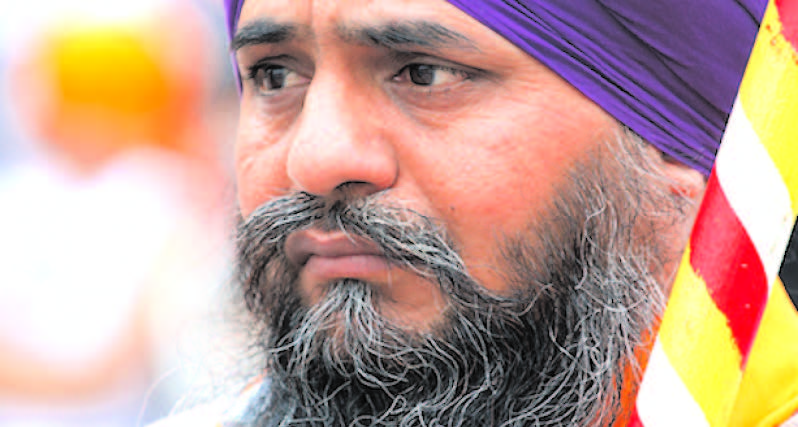
    Shah Noor, a recent transplant to California from Maryland, was driving through a nearby community one evening with his wife and stopped at a 7-Eleven to get some milk.

    A police car pulled up with lights flashing. Officers walked to their car and grilled them for 45 minutes. They were aggressive, he said, and asked what they were doing there, where they work. At one point, he saw the officer put his hand on his gun.

    “It was scary,” Noor said. “Pure harassment.”

    Police — Noor declined to identify the agency because of an ongoing investigation —cited him for talking on his cell phone while driving. He said the charge is bogus.

    “My phone had been dead for over three hours,” said Noor, 32, a lawyer who now runs JS Noor, a jewelry business. And the log on his wife’s cell phone shows no activity during that time.

    He’s convinced that racial profiling was in play. He wears a turban and has a beard. His wife, Stephanie, is African-American. And all of this happened within days of a mass shooting in San Bernardino carried out by a Muslim couple.

    After every attack on U.S. soil committed by Muslims, the backlash seems to increase. But hate crimes don’t target only Muslims.

    Noor is originally from India and a Sikh, not an Arab or Muslim.

    ‘[Sikhism] preaches a message of devotion, remembrance of God at all times, truthful living, equality between all human beings, social justice, while emphatically denouncing superstitions and blind rituals.’ – Sikh Coalition

    Since 9/11, Islamophobia has spread and has targeted groups indiscriminately. Sikhs, who wear a turban as an article of faith, have often been mistaken for Muslims in the U.S. They pray at a gurdwara, not a mosque, but a gurdwara in Buena Park, Caifornia, was vandalized days after the San Bernardino shooting. Graffiti sprayed on the façade included the misspelled “Islahm” and an expletive directed at the Islamic State of Iraq and the Levant.

    The San Bernardino shooters had apparently been inspired by the group that has been behind horrific violence worldwide, including the Nov. 13 attacks in Paris.

    The 20-year-old man arrested for the vandalism issued a public apology to the congregation of Buena Park Gurdwara Singh Sabha, a Sikh house of worship in Orange County.

    But other assaults have been more violent. On Sept. 15, 2001, four days after the attacks on the World Trade Center towers, Balbir Singh Sodhi was shot and killed outside of his Mesa, Arizona, gas station by Frank Roque. Roque wanted to “kill a Muslim” in retaliation for the attacks on Sept. 11. Sodhi is considered the first murder victim of post-9/11 backlash. Roque was convicted of first-degree murder and sentenced to life in prison for the hate crime.

    The Sikh Coalition was founded by volunteers in 2001 in response to a spate of attacks against Sikh Americans.

    “Sikh adults were assaulted, Sikh children were bullied, places of worship were vandalized,” said Arjun Singh, the coalition’s law and policy director. “Terrorist attacks lead to xenophobia and anyone who looks different is targeted, including Sikhs.”

    The Sikh Coalition reports a spate of attacks and harassment this month alone.

    A Sikh woman traveling to California shortly after the San Bernardino attacks said she had to show her breast pump to airline employees to prove she wasn’t a “terrorist”.

    In Grand Rapids, Michigan, a store clerk originally from the state of Punjab in India was shot during an armed robbery. The assailants called the clerk a terrorist.

    Five days after the San Bernardino attack, Gian Singh, a 78-year-old grandfather, was walking to pick up his grandson from school in Bakersfield, when a man in a pick-up truck threw an apple at him with such force that the apple split when it hit his head, according to the Sikh Coalition, which is representing him.

    ‘Sikh adults were assaulted, Sikh children were bullied, places of worship were vandalized. Terrorist attacks lead to xenophobia and anyone who looks different is targeted, including Sikhs.’ – Arjun Singh, law and policy director, Sikh Coalition

    There have been Sikhs in the U.S. for more than a century. Many came to build the railroads in the West. There is no accurate data on the number of Sikhs here, and estimates vary widely between 750,000 and 1.6 million, according to the coalition. Almost half of them live in California, the state with the largest Sikh population, but the densest concentration of Sikhs is in the tri-state area of New York, Connecticut and New Jersey.

    The Sikh religion is a monotheistic religion that originates in the Punjab region of India. According to the coalition, it “preaches a message of devotion, remembrance of God at all times, truthful living, equality between all human beings, social justice, while emphatically denouncing superstitions and blind rituals.”

    “We were shocked after finding out about the graffiti,” said Jaspreet Singh, 40, on the board of the Buena Park gurdwara that was vandalized. “Especially the hate words being used.”

    For Sikhs who grew up in the U.S., harassment has been a way of life. For Noor, schoolyard teasing was common but never did he feel so much hatred as after 9/11.

    “You feel people don’t like you, like an outsider,” he said. People would call him “Osama” in reference to Osama bin Laden, the founder of Al-Qaeda, the group that claimed responsibility for the 9/11 attacks. They also called him “Taliban,” the armed fundamentalist movement in Afghanistan.

    “Sometimes, I would walk up to [the hecklers] and yell back, ‘I’m not a terrorist,’” Noor said.

    One time, someone pulled a knife on him in Wheaton, Maryland, a suburb of Washington. Another time, in Amsterdam, people in a car yelled out “bin Laden” at him, he said. When he yelled back, they followed him up an alley. He escaped.

    And there was another encounter with police in a Detroit suburb. He had a bracelet in his hand that he was playing with. Police mistook it for a masbaha, Muslim prayer beads. He showed them that it had a cross on it.

    “I wear religious symbols of all kinds,” Noor said. “I go to church, to gurdwara, to mosque.”

    He has attended service at a Baptist congregation, his wife’s religion.

    His cousin, Jaisal Noor, 30, a reporter for The Real News Network, a nonprofit news and documentary service based in Baltimore, wrote about assaults on Sikhs for the 10th anniversary of 9/11.

    “The day of 9/11, I was confronted with the reality that things changed,” he said in an interview.

    He was in high school when the World Trade Center towers collapsed.

    “I remember that day feeling worried for my family, my parents,” he said. His father was a frequent business traveler who encountered a lot of discrimination at airports.

    His classmates would rant, “We’re gonna get these A-rabs” but then would turn to him and tell him they had no problem with him because he was Indian.

    “But it’s never gone away,” said Jaisal Noor. “Whenever we’re at war, the attacks increase … They see images of turban-wearing men as the enemies.”

    Sikhs say their first reaction may be to distance themselves from Muslims and explain to people that they are not Arabs or Muslim. But they stress that no one, Sikh or Muslim or any other religious or ethnic minority, should be targeted.

    “Many Sikhs are worried, and rightly so,” said Arjun Singh. “If the bigoted rhetoric continues, hate violence will continue too … Today’s toxic political climate has led to bias, discrimination and hate violence.”

  • Infosys invests US$ 3 million in US-based wearables start-up Whoop

    BENGALURU (TIP): Infosys Ltd has bought a minority stake in Delaware, US-based start-up Whoop, which makes activity trackers, for $3 million, the software services firm said on Monday.

    The deal, which marks the Indian company’s sixth investment from its $500 million innovation fund, could help drive revenues from its clients in the wellness space and professional sports.

    The investment underscores the promise offered by new-age wearable technologies that have attracted companies ranging from Apple Inc. to Fitbit Inc.

    Whoop sells devices worn by athletes to monitor heart rate, sleep patterns and other data.

    Infosys said its investment allows it to have “a minority holding, not exceeding 20% of the outstanding share capital of the capital” and it expects to close its investment by 16 December.

    The aggressive approach of partnering with start-ups focused on disruptive technologies underscores Infosys chief executive Vishal Sikka’s so-called ‘New and Renew’ strategy to reinvigorate India’s second-largest software services company.

    Last week, Infosys invested in CloudEndure, an Israeli start-up that helps large companies move applications to cloud and cloud-based disaster recovery software.

    Infosys has spent $25.4 million to buy stakes in five start-ups and invested an undisclosed investment in September to become a limited partner in Vertex Ventures, a Palo Alto-based venture capital firm.

    It invested $4 million in CloudEndure and paid $1.4 million for a 5% stake in ANSR Consulting, a Bengaluru firm that helps global firms set up offshore captive centres in India; $15 million in a spin-off unit of Dreamworks Animation; and $2 million to pick a minority stake in AirViz, a personal air quality monitoring start-up from Carnegie Mellon University.

  • BENEFITS OF APPLE CIDER VINEGAR

    BENEFITS OF APPLE CIDER VINEGAR

    Have you been hearing about the goodness of Apple Cider Vinegar (ACV) in losing weight and fixing health problems. It is one of the most popular vinegars in the natural health community.

    But if you don’t know where to start, we tell you how you can incorporate ACV in your diet to look and feel better. Here are tips:

    Fix stomach problems

    Mix 2 tablespoons of ACV in water and it can help you in fighting any bacterial infection, since it has antibiotic properties. It is also known to help soothe instestinal spasms.

    Soothes sore throat

    Yes, it does. If you have a sore throat, mix 1.4th cup of ACV with equal quantity of warm water and gargle with it. It can be done a number of times in a day for faster relief as it has anti-bacterial quality.

    Bring down cholesterol

    While there is no scientific evidence behind this, many believe that ACV helps is lowering cholesterol.

    Beat sinus

    Sinus is fast becoming a concern for many of us. ACV can help you in that too. Mix 1/4th cup of ACV in 1/4th cup of water with pepper, honey and half of lemon.

    Boost your energy

    ACV is rich in Vitamin E, A and B, magnesium, iron and calcium. So if you are feeling sluggish, have it mixed with water. But don’t overdo it.

    Deodorize

    You read it right. Take some ACV on a cotton ball and dab it on your underarms. You will yourself see the magic it works.

  • Apple features doctor consultation app Lybrate in ‘The App Store Best of 2015’

    Apple features doctor consultation app Lybrate in ‘The App Store Best of 2015’

    New Delhi, Dec 10, 2015: Apple has featured Lybrate, India’s largest online doctor consultation platform, in its coveted list of ‘The App Store Best of 2015’ that covers most innovative apps and games.

    LybrateLybrate’s doctor consultation app is the only platform from the healthcare technology sphere to have got an entry into the prestigious list.

    “The App Store Best of 2015 showcases this year’s most innovative apps and games, and celebrates the amazing app experiences that developers like you have created for the App Store,” Apple said in an e-mailed statement to Lybrate, informing about its inclusion in the list.

    Since its launch in January this year, the app has been downloaded close to 2 million times on both Android and iOS platforms.

    Mr. Saurabh Arora, CEO, Lybrate
    Mr. Saurabh Arora, CEO, Lybrate

    “It is a great news for us that Apple has rated our app as one of the best in the category. It reaffirms our belief that we are going in the right direction and doing something meaningful. Our aim is to make healthcare accessible to the 1.2 billion people of India and this recognition will boost our efforts. Our 90-people workforce is extremely excited about it as all their efforts are not just bearing fruits but it also getting recognition from industry players,” said Saurabh Arora, CEO, Lybrate.

    The app currently has around 2 lakh daily users. The platform has more than 90,000 doctors on its platform from multiple specialties.

    About Lybrate

    Lybrate is India’s first and largest mobile healthcare communication and delivery platform. By connecting doctors and patients through its first-of-its-kind health app and letting them communicate, Lybrate makes healthcare more accessible. It empowers patients to get the right advice at the right time and allows doctors to touch more lives.

    Saurabh Arora, is the Chief Executive Officer and co-founder of Lybrate, is striving to make healthcare more accessible in India and bridge the demand-supply gap of healthcare experts by seamlessly connecting doctors and patients with the help of technology and letting them communicate using mobile phones.

    More than 90,000 doctors and health experts from varied branches of medicine from across India are connected to millions of patients through Lybrate. With such strong network, Lybrate acts as the world’s largest online Out Patient Department (OPD).

    The company raised $10.2 million from Tiger Global, Nexus Venture Partners and Chairman Emeritus of Tata Sons Ratan Tata in Series A funding in July 2015. It had received $1.23 million in seed funding in August 2014.

    Saurabh brings huge entrepreneurial product experience to the venture. Prior to founding Lybrate, Saurabh worked with Facebook Inc in the United States where he connected SMEs and large advertisers to their customers using Facebook Ads.

    Saurabh is an MBA from Columbia Business School. He pursued his Bachelor’s in Mechanical Engineering from the country’s premier Indian Institute of Technology (IIT), Delhi.

  • KALPA: UNTOUCHED BEAUTY IN THE LAP OF HILLS

    KALPA: UNTOUCHED BEAUTY IN THE LAP OF HILLS

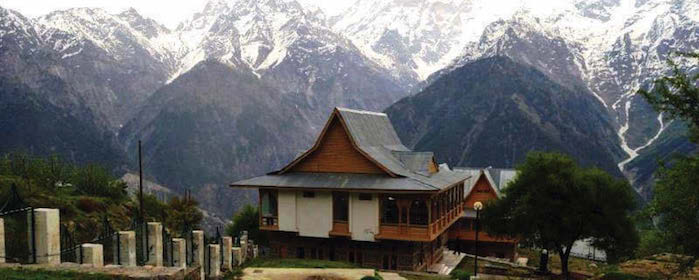
    Huddled under a blanket, a drowsy opening of the eyes as the curtain is pulled back: and there stands the mighty Kinnaur Kailash mountain range in Himachal Pradesh – in one word, breathtaking!

    The mountain range, wrapped in a white sheet of snow, appeared no less than a fairy tale land. As the sun rose from behind the range, kissing its peaks, its rays cast a magical spell on the small village of Kalpa, located in the lap of nature, surrounded by hills.

    KALPA- UNTOUCHED BEAUTY 1One would not be mistaken in believing mother nature had adopted the tiny village and nurtured its natural beauty.

    This enchanted village of Kalpa is located at 9,711 feet above sea level in Kinnaur district of Himachal Pradesh on NH-22, also known as the Hindustan-Tibet Road.

    Known for its apple orchards, it’s an abode of nature’s beauty. Since it is not a popular tourist destination, the village has maintained its natural untouched beauty.

    But the journey to Kalpa is not for comfort-seeking travellers, no less than a roller coaster ride from Himachal capital Shimla. It’s probably one of the most dangerous roads in the state. If you ignore the rough and rugged landslide-prone terrain and soak in the pine and spruce trees, the tranquil Baspa river and the mighty Himalayan snow-covered range, nature will amaze you with its awesome beauty.

    KALPA- UNTOUCHED BEAUTY 2The journey is hectic and physically tiring. But it is the beauty of nature that keeps the eye glued to the window of the bus.

    The moment one reaches Kalpa, the soothing silence of the valley and its virgin charm energise, taking you to an imaginative world far away from your chaotic city schedule.

    The chants from a Buddhist monastery, the Buddhist flags waving as the cold breeze whistles across the pine and spruce woods creating a wind symphony: that’s how the morning greets you at Kalpa.

    Though there are no tourist spots to visit, the ecstatic charm and uninhibited feel of the village will mesmerize you. A small walk across the village covers it all within a day.

    While talking a walk along the narrow hilly lanes in the area, the dead maple leaves crunching below my feet, the lines of Robert Frost from his poem “The Mountain” came to mind: The mountain stood there to be pointed at/Pasture ran up the side a little way/And then there was a wall of trees with trunks/ After that, only tops of trees and cliffs.

    KALPA- UNTOUCHED BEAUTY#The village is an amalgamation of Hindus and Buddhist residents. Take out time to seek solace at the Buddhist Hu-Bu-Lan-Khar monastery or blessing at the Hindu Durga temple.

    Kalpa also provides a treat for your taste buds if you are looking for Tibetan food. Taste some authentic Tibetan food at restaurants run by locals; slurp on thukpas, chomp on mutton momos and noodles and sip some hot tea on a cold wintry evening; pluck apples from the orchards; visit the Roghi village – and the day is gone!

    As the sun sets behind one of the hills, it leaves behind a majestic view of the Kinnaur Kailash range – probably one of the the best scenic appearances. The sky gets enveloped in a reddish hue and the snow-capped peaks get ornamented in red, making the way for moon-kissed night.

    Away from the cacophony of bustling city life, Kalpa is a pure scenic bliss that one can never get enough of.

    FAQs:

    • Getting there: Buses are available from Shimla to Reckong Peo. Cabs and buses are available from Reckong Peo to Kalpa. Cabs usually charge Rs.400 from Reckong Peo and around Rs.5,000 from Shimla (one-way).
    • Time taken: It takes around 9-10 hours to reach Kalpa from Shimla depending upon road conditions.
    • Where to stay : There is a Himachal Pradesh Tourism Development Corporation hotel at Kalpa. There are also many hotels at Kalpa that provide a picture-perfect view of the mountain ranges.
    • Where to eat: Most hotels have restaurants. Also there are innumerable local restaurants.
  • 2 Silicon Valley companies owned by Indian Americans have been penalised for violating H1B visa rules

    2 Silicon Valley companies owned by Indian Americans have been penalised for violating H1B visa rules

    Scopus Consulting Group and Orian Engineers, two companies based in Silicon Valley and owned by an Indian-American Kishore Kumar have been ordered to pay fines of $103,000 to the federal government. Along with this, the company is required to pay $84,000 in back wages to its employees who are carrying H-1B visas.

    The two companies bring workers from India and other countries on H1B visas to employ them as software engineers for Silicon Valley firms such as eBay, Apple and Cisco Systems.

    During investigations, US Department of Labor Wage and Hour investigators found that the two companies violated the H1B provisions of the Immigration and Nationality Act by misrepresenting the prevailing wage level on the Labor Condition Applications required by the act, an official release said yesterday.Federal Administrative Law Judge Stephen R Henley ordered the two businesses owned by Kishore Kumar to pay 21 workers $84,000 in back wages and $103,000 in fines to the federal government.

    “Some of the country’s most cutting-edge, successful organisations benefit from underpaid H-1B workers,” director for the Wage and Hour Division in San Francisco, Susana Blanco said.

    “H1B workers must be paid local prevailing wages. We will not allow companies to undercut local wages and hurt US workers and businesses who pay their workers fairly,” Blanco said. — PTI

  • Apple loses patent lawsuit over A7, A8 CPU chips, faces $862M Fine

    Apple loses patent lawsuit over A7, A8 CPU chips, faces $862M Fine

    Apple faces a hefty legal bill after a jury found it guilty of using technology owned by a US university without permission. The licensing arm of the University of Wisconsin claims Apple’s A7 chip infringes on a patent it filed in 1998.

    Apple denied the accusations and argued that the patent is invalid, Reuters reported. It had previously tried to convince the US Patent and Trademark Office to review the patent’s validity, but in April the agency rejected this bid.

    According to Reuters, the iPhone maker could face up to $862 million in damages for infringing on a patent that improves chip efficiency.

    The University’s non-profit patent management body, Wisconsin Alumni Research Foundation (WARF), sued Apple in January 2014, claiming Cupertino infringed on WARF patents with its A7, A8, and A8X processors, which are found in the iPhone 5s, 6, and 6 Plus, and the iPad.

    The court must decide how much Apple must pay.

    WARF last month filed a second lawsuit against Cupertino over its newer A9 and A9X chips, which are in the next-gen iPhone 6s, 6s Plus, and iPad Pro.

  • Titanic’s last lunch menu sells for $88,000 at auction

    NEW YORK (TIP): A menu for the last luncheon served to the first-class passengers aboard the ill-fated Titanic has sold for $88,000 at an online auction.

    The menu, which was saved by a first-class passenger, was sold on Wednesday to a private collector, Auctioneers Lion Heart Autographs said. The price was in line with pre-sale estimates. Stamped with a date of April 14, 1912 and the White Star Line logo, the menu included grilled mutton chops and custard pudding; corned beef; mashed, fried and baked jacket potatoes; a buffet of fish, ham and beef; an apple meringue pastry; and a selection of eight cheeses.

    Lion Heart Autographs said the menu was saved by Abraham Lincoln Salomon, one of the passengers who escaped on the so-called “money boat” lifeboat that was filled with wealthy people. It is thought to be one of only three or four menus from the ship’s last lunch that still exist. The menu was offered for sale by an unidentified person who was given some Titanic items by a descendant of one of the lifeboat survivors. The luxury ocean liner foundered in the Atlantic Ocean on April 15, 1912 after striking an iceberg during its maiden voyage from Southampton, England, to New York. Some 1,500 people lost their lives.

  • Refugees face new diversion as Hungary prepares to seal Croatia border

    Refugees face new diversion as Hungary prepares to seal Croatia border

    ZAKANY, HUNGARY (TIP): A small gap in coils of newly laid razor wire is all that remains of the Zakany-Botovo border crossing between Hungary and fellow European Union member Croatia, as Budapest prepares to close off another route for refugees flocking to Europe.

    Heavy machinery is clearing trees and a 3-metre-high fence is taking shape along the line of the razor wire.

    The border, still traversed by thousands of refugees daily en route to Austria and Germany, could be sealed in a matter of minutes, potentially diverting the refugees into tiny Slovenia or stranding them in Croatia, where authorities are struggling with the scale of the influx.

    Prime Minister Viktor Orban, who has already thrown up a fence to shut down the refugee route over Hungary’s southern border with Serbia, said last week the closure was imminent, and speculation is rife that it might follow his return from the United Nations General Assembly in New York on Thursday.

    Border crossings have been fitted with gates of steel and concrete.

    At the Zakany train station, military armored personnel carriers guard a train car, one side of which has been covered in razor wire in what appears to be a replica of the wagon used to close the main refugee route from Serbia.

    The closure of that stretch of Hungary’s border saw violent clashes between police firing tear gas and water cannon and young, male refugees lobbing stones and smashed concrete.

    The European Union is moving ahead with a plan, opposed by Hungary and several other eastern, ex-Communist members of the bloc, to distribute 120,000 refugees, many of them Syrians, between its members.

    But that is just a portion of this year’s influx of refugees, which the U.N. refugee agency said on Thursday may reach 700,000 and possibly more in 2016, in the greatest movement of people in Europe since World War Two.

    Orban, one of Europe’s most vociferous opponents of immigration, says he need not wait for the fence to be completed before he orders the crossings closed. Razor wire would suffice.

    Fast-flowing river

    “We need not wait for the completion of the second layer to order the closure of the green border,” he told a news conference last week.

    “We cannot wait for an as-yet-unborn common European policy. Once everyone understands what the Hungarian intention is and they can prepare that the Serbian-Hungarian border status quo will extend to the Croatian-Hungarian border, we will put those rules in effect to enforce EU laws on border crossing.”

    The razor wire runs the length of Hungary’s border with Croatia, including along sections that follow the Drava river, a fast-flowing artery that some refugees may be tempted to swim.

    Unlike Hungary, Croatia is not a member of Europe’s Schengen zone of passport-free travel.

    Relations between the two countries have soured considerably since the refugees began flowing into Croatia after Hungary shut down their route from Serbia, reflecting the discord and recrimination running through the European Union.

    Closing the Croatia-Hungary border crossings may force Croatia to transport more refugees into Slovenia, a former Yugoslav republic of 2 million people that says it can manage an influx of 10,000 per day.

    It will likely lead to a backlog at Croatia’s eastern frontier with Serbia, crossed by thousands every day in sometimes chaotic and desperate scenes. Croatian officials have declined to comment on what might happen if or when Hungary seals the border.

    For now, the flow from Croatia into Hungary and on to Austria is unbroken, efficient even.

    Police, ambulance crews and aid workers await trainloads of refugees on the Croatian side, handing them bread, water, canned fish and an apple each before they stride across the bridge over the Drava. Lines of refugees snake through riverside shrubs to a gap in the razor wire, where Hungarian police officers and a waiting train greet them.

    Anil Safia, an 18-year-old boxer from Afghanistan, devoured the bread and fish.

    “I’m sorry I have to eat while I talk,” he told a reporter, “but I have not had anything for a day and I need to maintain my weight, you know.”

  • After jokes, applause at dinner, China’s Xi Jinping gets down to US business

    SEATTLE (TIP): A day after wooing Seattle’s elite with pop-culture jokes and promises of reform, Chinese President Xi Jinping gets down to business on Wednesday, meeting Apple Inc’s Tim Cook and other top tech executives.

    The first leg of a trip to the United States, the Seattle stop offers a chance to highlight China’s cooperation with US companies firms before he heads to Washington, where he will have to contend with the full spectrum of irritants in relations, from tension in the South China Sea to human rights.

    In a speech on Tuesday night Xi joked that there was no power struggle in China over an anti-corruption drive.

    “There is no House of Cards,” Xi said, drawing laughter with a reference to the US television drama about merciless political machinations that is also popular in China.

    Xi also gave a nod to author Ernest Hemingway and past US presidents, and got a standing ovation from his audience of officials and business leaders. He is due to speak on Wednesday to 30 US and Chinese chief executives, including Apple’s Cook, Amazon.com’s Jeff Bezos, Satya Nadella from Microsoft Corp and Berkshire Hathaway’s Warren Buffett.

    Top executives from Honeywell, Boeing , Cisco Systems, IBM, Starbucks, as well as Chinese firms Alibaba, Lenovo and Baidu, among others, will also attend.

    Xi will also tour the Everett, Washington, factory where Boeing makes aircraft such as the 777 and 787 Dreamliner, and where the plane maker is expected to announce a new Chinese finishing plant for its 737 airliner.

    In Beijing on Wednesday, China’s ICBC Financial Leasing Co said it had signed an agreement with Boeing to buy 30 737-800 aircraft.

    Later on Thursday, Xi will head to the Microsoft campus, where tech executives are set to hold a US-China Internet forum.