Tag: Appointments

  • Indian Americans Dipal Doshi, Sachin Jain, Rupal Patel named Aspen Institute Health Innovators Fellows

    Indian Americans Dipal Doshi, Sachin Jain, Rupal Patel named Aspen Institute Health Innovators Fellows

    WASHINGTON (TIP): Indian Americans Dipal Doshi, Sachin Jain and Rupal Patel were among 21 healthcare leaders named to the second annual Aspen Institute Health Innovators Fellowship.The institute announced the Fellows in a July 12 statement.

    The Fellows will participate in a two-year Fellowship designed to strengthen the leadership of innovators across the U.S. healthcare ecosystem and challenge them to create new approaches that will improve the health and well-being of all Americans, Aspen Institute said in a news release.

    The Fellows come from various industries and sectors throughout the country, including medicine, pharmaceuticals, public health, biotechnology, insurance, mental health, government, venture capital and genomics, among others.

    “I am delighted to welcome this talented and inspiring group of healthcare leaders with a track record of accomplishments and the potential for even greater contributions in the future,” said fellowship managing director Rima Cohen in a statement. “The Fellows bring a diverse set of life experiences and skills to their work; we’re thrilled to be able to give them a platform from which they can harness their energy and expertise to tackle our nation’s most pressing health care challenges.”

    Dipal Doshi, Rupal Patel and Sachin Jain have been named to the second annual Aspen Institute Health Innovators Fellowship
    Dipal Doshi

    Doshi is the chief business officer at Princeton, N.J.-based Amicus Therapeutics Inc. He also serves as the general manager of Scioderm, Inc., a rare disease company Amicus acquired in 2015.

    Prior to joining Amicus, Doshi founded RStreet Advisors, a healthcare consulting firm through which he advised pharmaceutical, biotech and diagnostics companies on business development, corporate strategy and market and commercial planning.

    From 2008 to 2013, Dipal was the senior vice president and member of the management team  Auvenat Therapeutics, a global private equity and bio-pharmaceutical development company. He received a B.A. from Rutgers University and an M.B.A. from The Wharton School of Business at the University of Pennsylvania.

    Jain is the chief executive officer of Los Angeles-based CareMore Health System, an innovative health plan and care delivery system with $1.2 billion in revenue and over 100,000 members in eight states.

    He is also a consulting professor of medicine at the Stanford University School of Medicine and a contributor at Forbes.

    Jain was previously CareMore’s chief medical officer and chief operating officer. Prior to joining CareMore, Jain was chief medical information and innovation officer at Merck & Co. He also served as an attending physician at the Boston VA-Boston Medical Center and was on faculty at Harvard Medical School and Harvard Business School.

    Additionally, from 2009 to 2011, Jain worked in the Obama administration, where he was senior adviser to Donald Berwick when he led the Centers for Medicare and Medicaid Services.

    He was the first deputy director for policy and programs at the Center for Medicare and Medicaid Innovation, and he was special assistant to David Blumenthal when he was the National Coordinator for Health Information Technology.

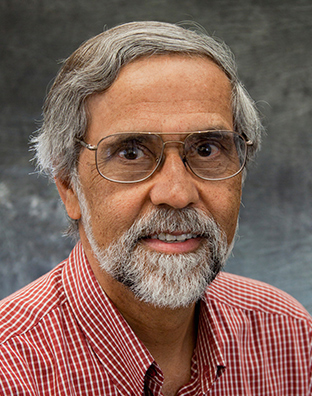
    Sachin Jain
    Sachin Jain

    Jain graduated from Harvard College with a bachelor’s degree in government and earned his M.D. from Harvard Medical School and M.B.A. from Harvard Business School.

    Patel is the founder and president of Boston, Mass.-based VocaliD Inc., a speech technology company that creates custom voices for text-to-speech applications, leveraging its crowdsourced Human Voicebank (See India-West’s profile here: http://bit.ly/2agVQhR.) VocaliD’s award-winning technology has been featured on TED and NPR and in leading news and technology outlets such as The Wall Street Journal, Wired, Bloomberg and BuzzFeed.

    She is currently on leave from Northeastern University where she is a tenured professor in the College of Computer and Information Science and the Department of Communication Sciences and Disorders. Her research focuses on speech motor control in healthy talkers and those with neuromotor speech impairment.

    Patel also holds appointments in the Harvard/MIT Speech and Hearing Biosciences and Technology program, the Department of Psychiatry at University of Massachusetts, and Haskins Laboratory at Yale University.

    She earned her bachelor’s degree from the University of Calgary, her master’s and doctorate degrees from the University of Toronto and she completed her post-doctoral training at MIT.

    The Health Innovator Fellows will spend four weeks over the course of two years exploring their leadership, core values, desired legacies and their vision for the healthcare system.

    Each Fellow commits to launching a leadership venture that will stretch and challenge them and have a positive impact on health care in the U.S. The Health Innovator Fellows join more than 2,200 other entrepreneurial leaders from 49 countries to become members of the Aspen Global Leadership Network.

  • Lesbians, gays, bisexuals are not third gender, SC clarifies

    Lesbians, gays, bisexuals are not third gender, SC clarifies

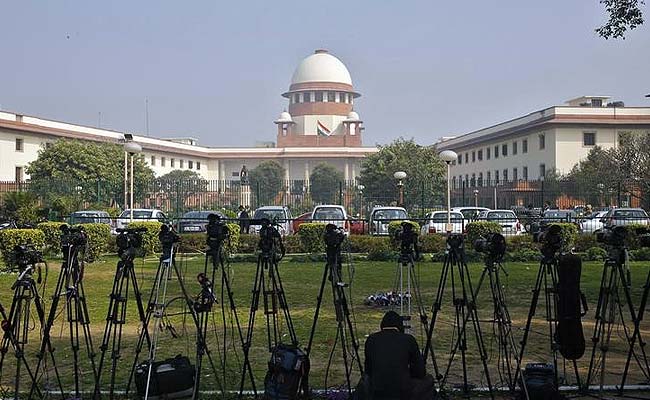
    NEW DELHI (TIP): The Supreme Court on June 30 refused to modify its 2014 order on transgenders while clarifying that lesbians, gays and bisexuals are not third gender.

    A bench comprising Justices A K Sikri and N V Ramana said it is amply clear from the verdict of April 15, 2014 that lesbians, gays and bisexuals are not transgenders.

    During the hearing, additional solicitor general (ASG) Maninder Singh, appearing for the Centre, said it is not clear from the earlier verdict if lesbians, gays and bisexuals are transgenders or not. He said a clarification in this regard was needed.

    Senior advocate Anand Grover, appearing for some transgender activists, said Centre is not implementing the 2014 Supreme Court verdict for the past two years, saying they need clarification on the point of transgenders.

    “Why should we not dismiss the application with costs,” the bench asked the ASG, adding, “No clarification is required. The application (of Centre) is disposed of.”

    In a landmark verdict, the Supreme Court had on April 15, 2014 granted legal recognition to transgenders or eunuchs as third category of gender and had directed the Centre and all states to treat them as socially and educationally backward classes to extend reservation in admission in educational institutions and for public appointments. Paving way to bring transgenders in national mainstream, the apex court directed governments to take steps to remove problems faced by them such as fear, shame, social pressure, depression, and social stigma.

    It had also said that section 377 of IPC is being misused by police and other authorities against them and their social and economic condition is far from satisfactory.

    However, in September 2014, the Centre had filed an application in the apex court seeking clarification on the definition of transgender saying lesbian, gay and bisexual cannot be treated under the category of transgender.

    Interestingly, the SC in its verdict had itself clarified that transgender does not include gay, lesbians, bisexuals.

    “The grammatical meaning of ‘transgender’, therefore, is across or beyond gender. This has come to be known as umbrella term which includes Gay men, Lesbians, bisexuals, and cross dressers within its scope.

  • Political appointees all – Arunachal case may redefine Governor’s powers

    Political appointees all – Arunachal case may redefine Governor’s powers

    The Supreme Court hearing in the political row in Arunachal Pradesh has thrown up three interesting issues concerning a Governor’s role under the Constitution. The first is about a Governor’s powers. Though it is too early to draw any conclusions, what a Bench headed by Justice J.S. Khehar has said makes it clear that a Governor cannot have unbridled powers. It was contended on behalf of the BJP MLAs who had joined hands with the Congress rebels to remove an elected government leading to President’s rule in the border state that (1) a Governor enjoys absolute immunity for his actions while in office (2) his actions cannot be questioned in court and (3) that he is answerable to the President only.

    While agreeing that a Governor cannot be made a party before a court, the Bench has said the court can intervene if there is an allegation of mala fide to examine whether it is personal or legal mala fide. The second point the court has made is that a Governor’s actions can be reviewed in court. In reply to the argument that a Governor has a discretionary power to summon, prorogue or convene a House which is not subject to judicial review, the Bench observed, “Article 163 (2) does not say anything done by the Governor is not justiciable”. The Constitution does not give a Governor unlimited powers. Otherwise it would mean, as the court said, he could even “trample upon democracy”. The Gauhati High Court has upheld the Arunachal Governor’s decision to convene a session before time to test the government’s majority.

    The third outcome of the hearing on Wednesday is that all gubernatorial appointments are political. The Congress has alleged that the Arunachal Governor has acted as an agent of the BJP government at the Centre. The argument made on behalf of the Arunachal Governor that, being a former Chief Secretary (of Assam), he was not a political appointee led the court to assert that: “Every Governor is a political appointee”. This contradicts the commonly held view that a Governor is a fair and objective Central representative in a state.

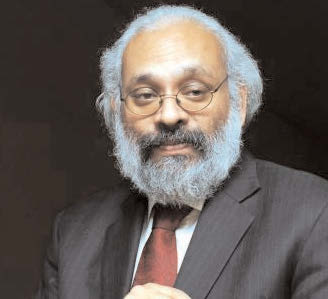
  • SUBIR GOKARN IS EXECUTIVE DIRECTOR AT IMF

    SUBIR GOKARN IS EXECUTIVE DIRECTOR AT IMF

    NEW DELHI: Former RBI Deputy Governor Subir Gokarn was on November 12 appointed as an Executive Director on the board of the International Monetary Fund (IMF).

    Gokarn will represent India, Bangladesh, Sri Lanka and Bhutan on the Washington-based IMF’s Executive Board, which is responsible for conducting the day-to-day business of the multilateral institution.

    The name of 56-year-old economist was cleared by Appointments Committee of Cabinet headed by Prime Minister Narendra Modi, as per an order issued by the Department of Personnel and Training.

    On the IMF Executive Board, Gokarn will replace Rakesh Mohan, whose three year tenure ends this month. The order did not mention the tenure for Gokarn.

    Mohan has also been a Deputy Governor at RBI. The current RBI Governor Raghuram Rajan has incidentally been Chief Economist at IMF.

    The Board is composed of 24 Directors, who are appointed or elected by member countries or by groups of countries, and the Managing Director, who serves as its Chairman. The Board meets several times each week and carries out its work largely on the basis of papers prepared by IMF management and staff.

    The grouping of India, Bangladesh, Sri Lanka and Bhutan would be represented by Gokarn with a total casting vote of 2.8 per cent. This includes more than 2.3 per cent for India.

    The US, Japan, Germany, France and UK are among the major countries with individual representatives, while the highest vote is for the US at 16.74 per cent. Other countries with individual representatives on the Board include China, Russia and Saudi Arabia.

    Rated as one of the finest economists, Gokarn has in past served as Deputy Governor of the Reserve Bank of India, Chief Economist of global rating agency Standard and Poor’s (S&P) and head of CRISIL’s Research and Information business and also a nominee Board Member of the State Bank Of India.

    He was appointed Deputy Governor of RBI in 2009 for a term of three years and had a distinction of being the youngest Deputy Governors of the central bank at that time.

  • Now, YOU’VE GOT A SAY IN JUDGES’ APPOINTMENT

    NEW DELHI (TIP): The Supreme Court of India on November 5 decided to seek the views of the general public, academicians and lawyers across the country on how to reform the ‘opaque’ judges-selecting-judges collegium system, which it had revived after quashing the National Judicial Appointments Commission (NJAC).

    Fathoming strong undercurrents in the court room with unsung advocates stealing a march over the luminaries who till now held centrestage in arguing against the NJAC, a five-judge bench headed by Justice J S Khehar said it would be better to seek suggestions from all concerned citizens.

    “The issue is so seminally important to the judiciary that we cannot limit the suggestions only to lawyers of this court,” the bench, also comprising Justices J Chelameswar, Madan B Lokur, Kurian Joseph and Adarsh K Goel, said.

    The apex court had wrested the constitutional power to select judges from the executive through two judgments in 1993 and 1998. In its 1998 judgment, the SC had evolved the collegium system without inviting views from the public. This will be the first occasion when the SC is involving the general public in its affairs, especially in a critically important issue like selection of judges.

    Bar Council of India chairman Manan Kumar Mishra turned the tide in favour of adjourning the case to get response from as many lawyers as possible and from all high courts. Many advocates said the real stakeholders of judiciary were the public and not a coterie of senior lawyers, who alone were being heard by the court.

    The bench, which had earlier wanted to complete the hearing on Thursday itself on the ground that the collegium’s work had been stalled awaiting reforms, decided to go public to receive suggestions.

    “Bar Council of India is a very important stakeholder. It has office-bearers in all high court bar associations and it wants to consult as many lawyers as possible before making suggestions to the court. It will be a good idea to allow them to do the consultation process and formulate suggestions. It is a very important matter,” the bench said.

    It appreciated attorney general Mukul Rohatgi volunteering to upload the broad parameters of reforms – transparency, eligibility criteria for persons to be considered for appointment as a judge, mechanism to handle complaints against persons in the zone of consideration and a permanent secretariat for the collegium – on the website of the ministry of law and justice.

  • Supreme Court Vs Legislature | Who will Guard  the Guards is the Question

    Supreme Court Vs Legislature | Who will Guard the Guards is the Question

    The Supreme Court sent shockwaves down the spine of the elected executive by declaring the 99th constitutional amendment to set up the National Judicial Appointments Commission (NJAC) as unconstitutional and void as it “violates the basic structure of the constitution”. This comes from the Constitution Bench with a majority – 4:1 in favor of the rejection of NJAC.

    I agree that with only judges-appointing-judges part it does not leave room for something to be added. As the lone dissenting judge Justice J Chelameswar writes: “There is no accountability in this regard. The records are absolutely beyond the reach of any person including the judges of this Court who are not lucky enough to become the Chief Justice of India. Such a state of affairs does not either enhance the credibility of the institution or is good for the people of this country.” The Supreme Court judges are the guardians of our Constitution. What happens if a Collegium turns rogue? As the Roman poet Juvenal wrote: “Quis custodiet ipsos custodes?” (“Who will guard the guards?”)

    Now what the basic structure states in layman language. Judges are to be appointed by the President of India after consultation with the Chief Justice of India and what it has become is that the Chief Justice of India will appoint the Judges and the President of India signs the file. It is worth mentioning here that 90% of the Presidents of India come from the Legislature.

    The five-judge Supreme Court’s verdict did raise some questions on the judiciary. The NJAC law was passed with overwhelming majorities in both houses of parliament and by 20 state assemblies clearly showing the will of the elected, though it may not be the will of the people.

    Is the constitution a subject matter of Individual interpretation or is it a rule book in Black penned by the founding leaders of our Country? 

    What triggered curiosity was the passage by Justice Kehar in the Judgment where he wrote, “It is difficult to hold that the wisdom of appointment of judges can be shared with the political executive. In India, the organic development of civil society has not as yet sufficiently evolved. The expectation from the judiciary, to safeguard the rights of the citizens of this country, can only be ensured, by keeping it absolutely insulated and independent, from the other organs of governance.”

    Does this mean we are a backward civil society or that we simply lack wisdom? I agree with the statement and here is why we need to understand how our society votes when it comes to the elected. 70% of the voters base their decision on caste, party or religious views instead of the right candidate. Yes, we get easily fooled and now the elections seem to be about who not to vote for rather than who to vote for and yes, we can vote an anarchist to absolute majority.

    Arun Jaitley states “democracy can’t be the tyranny of the unelected”. In a Facebook post titled “The NJAC Judgement – An Alternative View”  Mr. Jaitley said the opinion of the Supreme Court is final, but not infallible. Let us ask ourselves, the government can make any rule, any law and the statement only shows legislatures’ unfulfilled ambitions. Mr. Jaitley, Democracy cannot be the tyranny of the elected.

    Citing another important reason for striking down the NJAC law was the Emergency of 1975-77, imposed by the then Congress government. The Constitution Bench opined that it is important that the government does not  have any role in the appointment of judges. It was the imposition of Emergency that gave birth to the collegium system.

    Those opposing the Collegium system say that this kind of a system is  unheard of in most parts of the world in which  judges appoint  judges through a selection process.

    Another comment on collegium system by Jailey creates bias. He tried to elegantly create confusion about the appointment of judges in one sentence: “Collegium is like a Gymkhana club in which existing members appoint new members”.

    What was the 99th amendment (NJAC)?The NJAC will have six members: The Chief Justice of India (CJI), two senior most poise judges of the Supreme Court, the Law Minister and two “eminent persons” selected by a panel comprising the CJI, the PM and the Leader of the largest opposition party (LOP). But then came the crunch. Any two of these six members could veto an appointment.

    The judgment made it clear that it was opposed to the Law Minister being a member of the panel, as his very presence would impinge on the principle of the independence of the judiciary and be contrary to the separation of powers. And the presence of the Prime Minister and the leader of the opposition in the panel to select the judges was also viewed negatively.

    Then, there is another reason which cannot be ignored. The government is the largest litigant in the country and has the dubious distinction of losing 80% of the cases in the Supreme Court. Government presence and interference could pull strings on judiciary.

    What’s Next?  On November 3, a five-judge Constitution Bench will consider suggestions on improving the Collegium system, and has invited submissions from the government and other stakeholders. The Constitution Bench chose to take this route as it quashed the NJAC and ordered revival of the Collegium system.

    Ruling that the primacy of the judiciary in judges’ appointments was embedded in the basic structure of the Constitution, it said these appointments will continue to be made by the Collegium system in which the CJI will have “the last word”.

    read-more

  • SC DECLARES NATIONAL JUDICIAL APPOINTMENTS COMMISSION UNCONSTITUTIONAL

    SC DECLARES NATIONAL JUDICIAL APPOINTMENTS COMMISSION UNCONSTITUTIONAL

    NEW DELHI (TIP): In a landmark judgment, the Supreme Court declared the National Judicial Appointments Commission, set up by the NDA government, unconstitutional. The collegium system, where semior judges appoint judges,will continue, the court said.

    “I’m really surprised by this verdict, Union Law Minister VS Gowda, said.

    The top court struck down the the 99th Constitutional amendment brought by the NDA government. The bench revived the collegium system of appointment of judges, commonly referred to as judges-selecting-judges.

    A five-judge constitution bench headed by Justice J S Khehar , by a 4:1 majorit, termed both the amendment and the NJAC Act unconstitutional, because it interfered with the independence of the judiciary.

    One of the contentious provisions of the new law was the inclusion of two eminent persons to the Commission which included the Chief Justice of India, two “senior most” judges of the apex court and the Union law minister. The two persons were to be nominated by a committee of the Chief Justice, the Prime Minister and the leader of opposition in the Lok Sabha. TheNarendra Modi government said the Commission would bring transparency in the appointment of judges to the high courts and Supreme Court.

    The apex court has scheduled November 3 for further hearings on the issue of improving the collegium system of appointment of judges.

    The petitions challenging the new legislation were filed by the group, the Supreme Court Advocates on Record Association, and others, who contended that the new law would hurt the independence of the judiciary.

    The Centre had defended the introduction of the new law saying that the two-decade-old collegium system was not free from defects. It added that the Supreme Court Bar Association supported the new Commission. The creation of the Commission was also supported by 20 state governments that ratified the NJAC Act and the amendment.

    The collegium system — by which the body of senior SC judges headed by the Chief Justice of India selected persons and recommended their names for appointment as judges –was created by two judgments of the SC in the 1990s.

  • Indian American Professor Kartik Chandran Wins Macarthur ‘Genius’ Grant

    Indian American Professor Kartik Chandran Wins Macarthur ‘Genius’ Grant

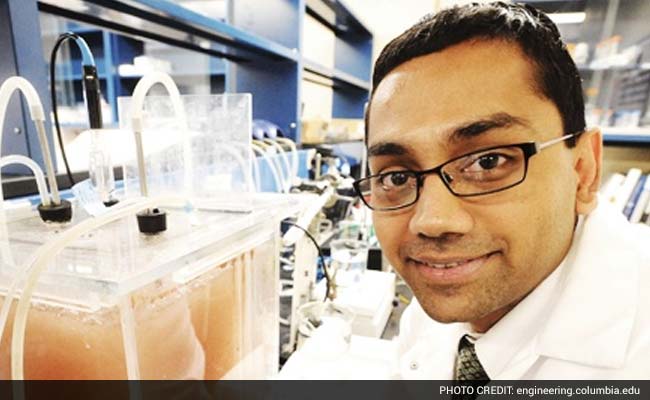
    Kartik Chandran, an IIT Roorkee graduate, associate professor of earth and environmental engineering at Columbia Engineering, has been named a 2015 MacArthur Fellow for his work in “transforming wastewater from a pollutant requiring disposal to a resource for useful products, such as commodity chemicals, energy sources, and fertilizers.”

    He joins a distinguished group of 24 talented people who have all demonstrated exceptional originality and dedication to their creative pursuits, as well as a marked capacity for self-direction. The “genius grant” comes with a $625,000 stipend that is given with no conditions—fellows may use the money as they see fit.

    “When I received the call telling me that I had been awarded a MacArthur Fellowship, I was rather overwhelmed,” Chandran said.

    “I’d just returned to New York from India after a 24-hour flight and couldn’t believe what I was hearing.”

    He called the fellowship a “great honour which carries with it immense responsibility and provides ever more motivation to continue expanding my scientific horizons and boundaries and help solve global societal and human challenges.”

    Chandran’s research on the global nitrogen cycle and engineered wastewater treatment has been widely recognized.

    In 2011 he received a $1.5 million grant from the Bill & Melinda Gates Foundation to develop a transformative new model in water and sanitation in Africa.

    His work is focused on integrating microbial ecology, molecular biology, and engineering to transform wastewater, sewage, and other “waste” streams from problematic pollutants to valuable resources in addition to clean water.

    Chandran’s approach to transform wastewater into fertilisers, chemicals, and energy sources also takes into account today’s climate, energy, and nutrient challenges.

    Chandran, who joined the Engineering School in 2005, is the third SEAS professor in six years to receive a MacArthur grant. He has also won the Water Environment Research Foundation Paul L. Busch Award (2010), a National Science Foundation CAREER Award (2009), and a National Academies of Science Fellowship (2007). His appointments prior to joining Columbia include his role as a senior technical specialist (2001–2004) with the private engineering firm Metcalf and Eddy of New York, where he contributed to New York City’s efforts to achieve significant improvements to its water quality. Chandran earned a BS (1995) from the Indian Institute of Technology at Roorkee (formerly University of Roorkee) and a PhD (1999) from the University of Connecticut.

    The MacArthur Fellowship grants are awarded annually by the John D. and Catherine T. MacArthur Foundation.

  • ERODING CIVIL RIGHTS!  Is India’s Democracy in Danger?

    ERODING CIVIL RIGHTS! Is India’s Democracy in Danger?

    Our country is facing the destruction of the very idea of India as a great, multi-religious, multi-cultural civilization. We are facing the gravest danger we have faced since independence. Our freedom is not merely under threat, it is being ‘openly attacked’, says Nayantara Sahgal, niece of India’s first Prime Minister Jawaharlal Nehru, whose latest work, “Nehru’s India: Essays on the Maker of a Nation”, has just been released.

    What is happening to the body politic of India in the short time since Shri Narendra Modi assumed power?  Are the institutions of democratic strength and stability for six decades, which were built under the stewardship of eminent statesmen like Jawaharlal Nehru and B.R. Ambedkar proving to be weak and vulnerable?

    If we listen to various pundits, there is a serious cause for concern to India’s vast democracy. Although the BJP government has come to power with only 31 per cent of the vote share, the Sangh Parivar with its misguided agenda and regressive policies has determined to transform India into its own liking. With civil society under threats and intimidation, the media’s eagerness to establish approval, and the survival mode of the opposition parties, the saffron brigade is not wasting any time.

    On the eve of Shri Modi’s second visit to the United States, there is certainly a shift in the mood within the Diaspora as regards the intent and purposes of the BJP government. A letter signed by 124 members of faculty  from leading Universities in USA questions the Prime Minister on well-publicized episodes of censorship and harassment in his critical policies; bans and restrictions on NGOs; ongoing violations of religious freedom; and a steady impingement on the independence of the judiciary.

    The letter also talked about foreign scholars who have been denied entry in to India to attend International conferences, and the ongoing interference with the governance of top Indian Universities and academic institutions. It mentioned under-qualified or incompetent key appointments made to Indian Council of Historical research, the Film and Television Institute of India and the National Book Trust. In conclusion, the statement expressed serious concern for the political future of the country if these trends are allowed to continue.

    In an interview with Times of India, Nobel Laureate  Amartya Sen said, ” Government must understand that winning a Lok Sabha election does not give you permission to undermine the autonomy of academic institutions, or for that matter, the courts or the upper house of Parliament. Academic freedom is based on the government understanding the limits of its formal power as opposed to its actual power and what they are expected to do: they are expected to listen to the voice of the professoriate and the voice of the people in the University”.

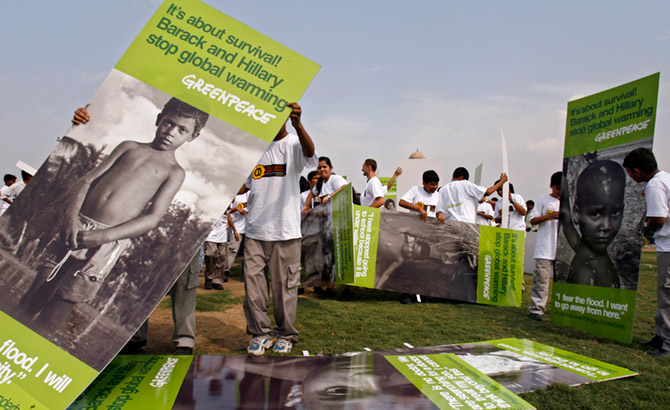
    Whether it is banning the documentary ‘India’s Daughter”; offloading Ms. Priya Pillai, a Green Peace activist from her flight to London, while she was on her way to address British Parliamentarians; banning the processing, selling or eating of the red meat in Maharashtra and in 4 other BJP-ruled states; the Rashtriya Swayamsevak Sangh (RSS) is stamping history with their regressive policies and divisive agenda.

    The BJP Government so far has banned 69 Non-Governmental Organizations from receiving foreign funding, branding them as anti-national and accusing them of working at the behest of foreign governments. It includes organizations like Ford Foundation and Caritas International that provided much-needed help to communities in rural India in an effort to end poverty promote justice and restore dignity to a neglected segment of the population.

    Ms. Teesta Setavald, a long-time critic of Mr. Modi on his handling of the 2002 Gujarat riots that killed more than 1000 people in Gujarat is currently being investigated by CBI. According to a New York Times report, the prosecutor branded her ‘a threat to India’s national security, so dangerous that she should be locked up while Modi’s Government investigates whether it was legal for her to accept funding from Ford Foundation’.

    For the first time since it took charge, the NDA government has issued show-cause notices to ABP news, NDTV and Aaj Talk alleging that these three private channels showed disrespect to the judiciary in their coverage of the hanging of Mumbai blast convict Yakub Memon, asking them to explain within 15 days why action should not be taken against them for broadcasting such content.

    These should not be regarded as isolated incidents but rather as a  part of a grand strategy to intimidate civil society, and silence the media in order to advance the saffron agenda. All these incidents point to a growing intolerance to dissent, and the very concept of freedom that may ultimately prove fatal to the democratic and pluralistic framework that was created out of the visionary leadership of the founding fathers of modern India.

    Asked to explain what prompted him to be a signatory on the faculty statement against Narendra Modi’s “Digital India Campaign”, Richard A. Falk, Professor Emeritus of Law at Princeton University said the following: “I and others on the list have questions about Narendra Modi’s record on religious tolerance, freedom of religion, and freedom of expression. Some of those who signed the letter have also been subject to a campaign of harassment from Hindu nationalist followers, which raises particular worries about academic freedom. “Digital India” as an initiative has enormous potential to affect positive social change, but it simultaneously poses dangers for abuse under the Modi administration that can make use of digitization to target members of minority communities or those who are critical of its policies. It is my impression that the Modi government has been particularly sensitive to criticism and unfriendly to critics, making our concern more credible”.

    Mr. Falk’s statement sounds prophetic, as at the time of writing this article Mr. John Dayal, a member of the National Integration Council and Secretary General of All India Catholic Union and a foremost Human Rights defender was being hounded with abusive and threatening tweets along with his personal details. The abuses are also directed at the Catholic-Christian minority and are aimed at disturbing communal harmony. The country has just witnessed the murders of three well-known rationalists -Narendra Dabholkar, Govind Pansare and M.M. Kalburgi allegedly by religious extremists. These elements appear to be serious in their nefarious undertaking.

    As the Indian entrepreneurs in the Silicon Valley are gearing up to give a grand reception to the Prime Minister, I hope they would also be cognizant of the fact that the freedom they enjoy here in the United States should empower them to enhance freedom elsewhere. As Mahatma Gandhi once said “Commerce (Business) without morality (ethics) and science without humanity could prove to be detrimental to everyone’s long term interests!”

    (The author is a former Chief Technology Officer of the United Nations)

  • RBI EASES NORMS FOR BANKS TO GRANT LOANS TO THEIR CEOs, DIRECTORS

    RBI EASES NORMS FOR BANKS TO GRANT LOANS TO THEIR CEOs, DIRECTORS

    MUMBAI (TIP): Reserve Bank relaxed norms for banks to grant certain loans to their CEOs and directors by doing away with the prior approval requirement.

    Section 20 of Banking Regulation Act, 1949 (B.R. Act, 1949) prohibits banks from granting any loan or advance to any of its directors.

    However, banks can give loan to Chief Executive Officer/ Whole Time Directors for purchasing of car, personal computer furniture, constructing/acquiring a house for personal use, festival advance and credit limit under credit card facility.

    “In order to streamline the existing processes and to obviate the need to approach RBI on case-to-case basis, it has been decided…commercial banks can grant loans and advances to the Chief Executive Officer/ Whole Time Directors, without seeking prior approval of RBI,” the central bank said. Also, the guidelines on ‘Base Rate’ will not be applicable on the interest charged on such loans.

    “However, the interest rate charged on such loans cannot be lower than the rate charged on loans to the bank’s own employees,” the RBI said.

    Another condition is that the loans and advances should form part of the compensation / RBI SEEKS MORE FUNDSremuneration policy approved by the Board of Directors or any committee of the Board to which powers have been delegated or the Appointments Committee, as the case may be. The RBI further said: “Banks should note that in view of the prohibition under Section 20 of the BR Act, 1949, apart from the (specified) loans…no other loan can be sanctioned to directors.”

  • IRCTC gets into medical tourism in a big way

    IRCTC gets into medical tourism in a big way

    KOLKATA (TIP):The Indian Railway Catering and Tourism Corporation (IRCTC) Ltd, East Zone, has got into medical tourism in a big way. The Public Sector Undertaking (PSU) is targeting people from Kolkata, Guwahati and other parts of eastern and northeastern India who need to travel to the south for treatment. It will also help out Bangladeshi patients who travel to India for treatment.

    “There are a lot of people from the eastern and northeastern parts of the country who travel to Vellore and other parts of south India for treatment. Many of them are senior citizens who live alone. In some cases, their children live abroad and can’t travel to India at short notice. We take care of all their needs. We have a dedicated cell for such people. Once we know where they want to receive treatment, we get in touch with the hospital through our own channels and fix up appointments with doctors. We then arrange for tickets for the patients and relatives. In case, they wish to travel by air, we arrange for flight tickets as well. If people require escorts during the journey, they are arranged,” said Debashis Chandra, group general manager, IRCTC, East Zone. Once they reach the station or airport at their destination, the patients and their relatives are received and taken to hospitals. After the doctor gives his opinion, the family is shifted to a hotel where IRCTC takes care of all meals and other necessities. After treatment, IRCTC brings them back to their homes with specialized care if necessary.

    “We are a government organization and all are activities are above board. Now that we have started helping people in need of medical aid, touts will no longer be able to fleece them. For this activity, we are not paying too much attention to profits. Proper service is crucial as we will be dealing with elderly people and those who are ill. Their demands will be different from the normal tourist. We have a dedicated team to look after their needs,” Chandra said.

  • Consular outreach to Buffalo on August 21-25

    Consular outreach to Buffalo on August 21-25

    NEW YORK (TIP): With an aim to strengthen ties with the local Indian community in Buffalo, Consul General of India, New York, Ambassador Dnyaneshwar M Mulay, would be leading a delegation of high-ranking diplomats, and officials from banking, tourism, and aviation sectors, to Buffalo, New York on August 21-25, for an Outreach Program at The Palms, Tandoori Restaurant, 7740 Transit Road, Williamsville, NY 14221

    The delegation is expected to meet various American dignitaries from Buffalo on August 21, 2105. The two-part event on August 22, 2015 will begin with a Camp for Consular Services from 9:00 am to 2pm; followed by the main Outreach Program and Networking event from 5:00 pm to 8:00 pm.

    Details for both events on August 22, 2015, are listed below:

    Part I: Camp for Consular Services | 9:00 am to 2:00 pm at The Palms, Tandoori Restaurant, 7740 Transit Road, Williamsville, NY 14221

    Cox and Kings Global Services will organize a Camp for Consular Services, which includes collection of application forms for Visa, OCIs, Renunciation Certificates and other Consular Services. Applicants are requested to make online appointments here, and complete their online application forms. Please bring all necessary documents, including passport size photographs for each service. Information about required documents for each service can be found online on our website http://www.in.ckgs.us

    Part II: Outreach Program and Networking | 5:00 pm to 8:00 pm at The Palms, Tandoori Restaurant, 7740 Transit Road, Williamsville, NY 14221

    The second half of the day will begin with an interactive networking session, followed by presentations by the Consulate, Indian Banks, Air India, PSUs, and the Tourist Board. There will also be a Q&A session with the audience, followed by a cultural program, and dinner.

    Upcoming outreach events are scheduled for the following locations: Cleveland, OH (September 2-3), Rhode Island (October 11-12), and Philadelphia, PA (October 25-26).

  • Ramon Magsaysay Award for two Indians with ideas and action

    Ramon Magsaysay Award for two Indians with ideas and action

    Exposing the development bluff, heavily dependent on the huge grants of money that makes little difference to the lives of the poor, Anshu Gupta, the CEO of Goonj, has creatively transformed the currency for development by using donated materials, instead of money. Goonj set an example for governments that harp on lack of resources for social development by acting differently and finding solutions within the available resources. For the non-profit sector, at the receiving end of the present government’s scrutiny and distrust, the Ramon Magsayasay Award, Asia’s equivalent to the Nobel Prize, for Goonj has come at an opportune time. Almost unrecognised hitherto, the NGO has successfully transformed the culture of giving by maintaining dignity of the beneficiaries, who barter labour for the materials received.

    Whistleblower bureaucrat Sanjiv Chaturvedi is another Indian who shares the Magsaysay Award for 2015 with three other recipients from Laos, the Philippines and Myanmar for his sustained crusade against corruption that exposes the hollowness of the Prime Minister’s slogan “Na khaunga, na khane doonga” (will neither indulge in corruption nor let anyone). As the Chief Vigilance Officer, AIIMS, Chaturvedi initiated action against the supply of dubious medicines, irregular appointments of consultants and tenders awarded on fake documents. As a reward for his expose, he was suspended, kept out of work, and harassed. Such examples deter others, especially in the bureaucracy, from speaking out their mind against the prevalence of corrupt practices in the system.

    These contributors to social development need recognition and encouragement. In 2014, the Nobel Peace Prize awarded to Kailash Satyarthi was a grim reminder of the scourge of child labour that persists in the 21st century India. Goonj has distributed three million sanitary napkins processed from discarded clothes to poor women. These campaigners for social change remind us from time to time the vast gulf that persists between word and action. They need to be heeded.

  • Indian American Professor R Paul SIngh named World Agriculture Prize laureate

    Indian American Professor R Paul SIngh named World Agriculture Prize laureate

    Indian American Professor Emeritus R. Paul Singh who has held dual appointments in the departments of Biological and Agricultural Engineering and of Food Science and Technology at the University of California, Davis, has been named as the 2015 Global Confederation for Higher Education Associations for Agriculture and Life Sciences World Agriculture Prize laureate.

    The award was announced at the annual GCHERA conference, held June 24-26 at the Holy Spirit University of Kaslik, Jounieh, Lebanon. Formal presentation of the award will take place Sept. 20, during a ceremony at Nanjing Agricultural University, Jiangsu Province, China.

    “I’m deeply humbled and honored, upon receiving news of this award,” Singh said. “I’m proud of my students, postdoctoral fellows and visiting scientists for their numerous contributions to our research program. I’m also indebted to my UC Davis colleagues for their consistent support, which has allowed me to pursue my research and teaching activities in food engineering.”

    Singh earned a bachelor’s degree in agricultural engineering at India’s Punjab Agricultural University, then a master’s degree and Ph.D. at the University of Wisconsin-Madison and Michigan State University, respectively. He joined the UC Davis faculty one year later, in 1975.

    “For over four decades, Professor Singh’s work as a pioneer in food engineering has been improving lives the world over,” said UC Davis Chancellor Linda P.B. Katehi. “This prestigious, and well-deserved, honor is a testament to the importance of his research, and UC Davis is tremendously honored to call him a member of our faculty.”

    Singh became recognized for a body of research in areas such as energy conservation, freezing preservation, postharvest technology and mass transfer in food processing. His research on airflow in complex systems helped design innovative systems for the rapid cooling of strawberries, and his studies on food freezing led to the development of computer software that is used to improve the energy efficiency of industrial freezers. Under a NASA contract, his research group created food-processing equipment for a manned mission to Mars.

    He has helped establish and evaluate food-engineering programs at institutions throughout the world, including in Brazil, India, Peru, Portugal and Thailand. As of June 2015, his 115 video tutorials have been viewed more than 150,000 times by individuals from 193 countries.

    In recent years, his research focused on the physical mechanisms responsible for the digestion of foods in the human stomach, with an eye toward developing the next generation of foods for health.

  • GREENPEACE INDIA CHIEF, OFFICER QUIT FOR BOTCHING ABUSE CASE

    GREENPEACE INDIA CHIEF, OFFICER QUIT FOR BOTCHING ABUSE CASE

    NEW DELHI (TIP): Heads have rolled in Greenpeace India with its two top officials resigning from their positions following improper handling of two sexual harassment cases.

    Executive Director Samit Aich and Programme Director Divya Raghunandan put in their papers following an internal review of the organisation’s handling of the cases, a statement on Greenpeace India’s website said.

    “Aich offered his resignation to the Greenpeace India Board, and it was accepted…Separately, Raghunandan has resigned from the organisation,” it said. In the statement, the board made clear their “appreciation” to Aich for 11 years of dedicated service to Greenpeace India.

    The board also decided to commission a full, independent audit of how Greenpeace India dealt with the sexual harassment cases to strengthen the internal processes to ensure a safe working environment for women. Two interim co-executive directors have been appointed. “They are current Greenpeace staff members Vinuta Gopal and Sanjiv Gopal. Their appointments are with full mandate and support while the board starts the process of recruiting a new executive director,” the statement said.

    Earlier, Greenpeace India has terminated the services of its two employees – one involved in a number of harassment cases while the second one was involved in a case of rape of a colleague.

    The issue came in public domain earlier this month when one of the former employees posted in a web forum that she had to leave her job in 2013 after being sexually harassed and raped by her colleague. There were allegations that the NGO did not take proper action against the perpetrators. It had earlier tendered an unconditional apology for the way it handled the case.

  • AAP, Jung & Centre battle goes to courts

    AAP, Jung & Centre battle goes to courts

    Delhi Politics - Kejriwal & Jung - Face OffThe AAP government on Thursday moved the Delhi high court challenging the Union home ministry’s May 21 notification that lieutenant-governor Najeeb Jung has discretionary powers for appointments and transfers to key bureaucratic posts in the nation’s capital. Delhi chief minister Arvind Kejriwal is likely to seek political support for his stand by writing letters to the chief ministers of West Bengal, Uttar Pradesh and Bihar, among others. Even Delhi Assembly Speaker Ram Niwas Goel is in the process of writing to President Pranab Mukherjee urging that the city government be accorded more powers in line with the bill moved by then home minister L.K. Advani in Parliament in 2003.

    The Supreme Court also agreed to hear on Friday a special leave petition by the Union home ministry against the May 25 Delhi high court order describing as “suspect” its notification on the transfer of officers, and holding that Delhi’s lieutenant-governor could not act in his discretion.

    Following the tiff, lieutenant-governor Najeeb Jung on Thursday met Union home secretary L.C. Goyal and had a telephonic conversation with home minister Rajnath Singh. Mr Jung reached the home ministry early Thursday morning and had a 20-minute meeting with Mr Goyal. It is understood that the lieutenant-governor discussed the resolution passed by the Delhi Assembly on Wednesday and the government’s stand in the Supreme Court on the special leave petition. The L-G is said to have briefed the home secretary on the transfers and postings by the AAP government which he claims are in violation of the rules.

    A Supreme Court vacation bench of Justices A.K. Sikri and U.U. Lalit has posted the petition for hearing Friday after a “mention” was made by additional solicitor-general Maninder Singh on its urgency, seeking an early listing. The MHA’s May 21 notification prohibited the Delhi government’s Anti-Corruption Branch (ACB) from acting against Central officials in criminal cases. It had said that the ACB could not take cognisance of offences against officials, employees and functionaries of Central services, that includes the Delhi police. It also gave the lieutenant-governor absolute powers on the transfer and posting of senior officers.

    In the Delhi high court, the city government mentioned the matter before a division bench of Justices B.D. Ahmed and Sanjeev Sachdeva. The bench also then posted it for hearing on Friday. The Delhi government has sought the quashing of the MHA notification on the grounds that it is not constitutionally valid.

    A similar plea filed by law student Vibhor Anand that had challenged the MHA notification and contended that the appointment of bureaucrat Shakuntala Gamlin as acting chief secretary by the lieutenant-governor was “illegal” was also posted for Friday. Mr Anand’s petition said: “Delhi is neither a full state nor a Union territory and (is) governed by Articles 239-AA and 239-AB of the Constitution of India (which deals with Union territories) introduced by a constitutional amendment in 1991.”

    It said: “As per Section 41 of the GNCT Act 1991, the Lieutenant-Governor does not have any discretion to appoint Gamlin as chief secretary and other such posts, nor any special law granted him this discretion.”

    The faceoff between chief minister Arvind Kejriwal and lieutenant-governor Najeeb Jung took place over the control of key bureaucratic appointments.

    The high court, while commenting on this notification, had noted that the lieutenant-governor was bound to act on the aid and advice of the council of ministers directly elected by citizens of Delhi, and that the Centre’s “executive fiat” siding with him was “suspect”. It observed that the people’s mandate “must” be respected by the lieutenant-governor as there was no other “constitutional or legal fetter”.

    The ASG submitted before the Supreme Court bench that the observations by the high court led to total uncertainty and made everyday administration difficult in Delhi. He said there was a need for a clear interpretation of Article 239-AA of the Constitution.

    When the Supreme Court bench noted the high court had only used the word “suspect”, the ASG said a clarification was needed. He said the high court’s observations and findings had come while dealing with the bail application of the policeman who was arrested by the ACB.

    The Delhi government, meanwhile, filed a caveat to make sure that the bench did not pass any ex-parte orders on the MHA’s prevent the Bench from passing ex- parte order in the MHA’s petition without giving it a hearing. In its petition, the MHA faulted the high court for passing an order without giving an opportunity to the Centre to make its submissions.

    The petition questioned the proprietary of the high court in commenting against the May 21 notification although the arguments had been concluded on the bail plea on May 20. It noted there was no occasion for the high court to pass remarks against the notification when it was neither on record nor was it even argued. Further, the petition said the order had also been reserved a day before the notification came into existence.

    The MHA contended that the HC had made sweeping observations against the May 21 notification without any hearing on this aspect. It raised a question whether the high court was required to examine the notification and its implications when the issue pending before it pertained only to a bail petition. Contending that the high court had unreasonably expanded the scope of the controversy and delved upon the notification even as the bail application was pending, the MHA prayed for quashing the impugned order and an interim stay of its operation.

  • Govt mulls appointment of new Governors

    Govt mulls appointment of new Governors

    NEW DELHI (TIP): The Centre is mulling filling vacancies of Governors in nine states — five of them ruled by the Congress— soon as one Governor is holding the charge of four states while five others are in charge of at least two states each.

    “Since some Governors are holding additional charge of 2-3 states, new appointments are expected in the coming weeks,” official sources said.

    There are vacancies in Raj Bhavans in Assam, Himachal Pradesh, Meghalaya, Mizoram and Manipur, all ruled by the Congress. Opposition parties like JD-U, Left and TRS are in power in Bihar, Tripura and Telangana respectively.

    There is also vacancy in Punjab, ruled by the Akali Dal-BJP combine. The post of Lieutenant Governor in Puducherry is also lying vacant.

    West Bengal Governor Keshari Nath Tripathi is holding the additional charge of Bihar, Meghalaya and Mizoram while Nagaland Governor Padmanabha Acharya is in charge of the Raj Bhavans in Assam and Tripura.

    Haryana Governor Kaptan Singh Solanki has been given the additional charge of Punjab Governor and administrator of Chandigarh; Rajasthan Governor Kalyan Singh is holding the additional charge of Himachal Pradesh. Uttarakhand Governor KK Paul is in charge of the Raj Bhavan of Manipur too.

    ESL Narasimhan, who was the Governor of undivided Andhra Pradesh, continues to be the Governor of both Telangana and residuary Andhra Pradesh after the bifurcation while Lieutenant Governor of Andaman and Nicobar Islands Lt General Ajay Kumar Singh (retd) is holding the additional charge of the LG of Puducherry.

  • Collegium system of appointing judges is illegal: Govt

    NEW DELHI (TIP): While speaking in favour of the proposed National Judicial Appointments Commission (NJAC), the Centre said before the Supreme Court on Wednesday that the collegium system of appointing judges was illegal.

    The government said that the collegium system that was put in place in 1993, wherein a panel of judges appointed other judges, was not mandated under the Constitution.

    Attorney General Mukul Rohatgi submitted before a three-judge bench, presided over by Justice A R Dave, that the new system as mandated under the NJAC is broad-based, which could be put to the test of Constitutional validity only after it comes into force. “The government is of the view that collegium system is illegal but I would not like to go into it for now. Nowhere is such a system prevalent where judges appointed judges. Can the elected representatives of Parliament not have their say,” he asked. He said that according to the Constitution, only President appoints judges.

    Defending the proposed six-member panel to appoint judges, which includes executive members, Rohatgi submitted that several other constitutional posts—like the Comptroller and Auditor General or heads of 25 tribunals that replace high courts—are selected through a system where the executive also plays a role. Rohatgi described a batch of petitions challenging the legality of the NJAC Act as “academic based on surmises and conjectures” since the notification for the proposed law was yet to be passed. Speaking further on the pleas challenging the NJAC, Rohatgi said: “It is not somebody’s fundamental right to be appointed as judge. The petitioners cannot claim any injury caused to them through the proposed law.”

    Senior advocate Dushyant Dave, appearing for the Supreme Court Bar Association, contended that the matter could not be heard at present as no act had come in force. He submitted that the case relating to challenge the NJAC Act was also not to be referred to a five-judge bench. Dave claimed that it was a fallacy to claim that the new law would strike the basic structure of the Constitution, that is the independence of judiciary, since its impact and effect were yet to be seen.

  • India’s envoy to the US Dr. S Jaishankar is the new Foreign Secretary

    India’s envoy to the US Dr. S Jaishankar is the new Foreign Secretary

    NEW DELHI (TIP): In a surprise move, Foreign Secretary Sujata Singh resigned eight months before her term was to end. Her place has been taken by Dr Subrahmanyam Jaishankar, India’s envoy to the United States. Dr. Jaishankar took charge of his new assignment on January 29.


    Sujata Singh is the first Foreign Secretary to be removed unceremoniously after Rajiv Gandhi removed AP Venkateswaran 28 years ago in 1987.


    From all accounts, Prime Minister Narendra Modi had been unimpressed with Singh and her work, and had made no secret of it in the past months. There had been talk of a change for some time, but Foreign Minister Sushma Swaraj is said to have wanted Singh to stay on.


    The decision was finally taken to remove her after the Obama visit. Jaishankar was earlier needed in Washington to lay the groundwork for what Modi wanted to be two back-to-back headline-grabbing summits.


    Jaishankar’s appointment promises sweeping changes to the ministry of external affairs. In the past six months, no ambassadorial appointments have been cleared by the government. The MEA had sent in recommendations but they were not cleared by the PMO, partly because the PM wanted to make the changes at the helm first.


    A slew of ambassadorial and joint secretary changes are waiting to be made which are now likely to go through. Among the first decisions will be to appoint a successor to Jaishankar in


    Washington DC. In the first week of February, he will preside over the first heads of mission meeting called during the NDA government. He is expected to get a freer hand in MEA because the PM believes he can take out-of-the-box decisions.

  • CENTRE CUTS COSTS; HALTS FRESH APPOINTMENTS

    CENTRE CUTS COSTS; HALTS FRESH APPOINTMENTS

    NEW DELHI (TIP): In a bid to bring down day-to-day expenses, the government on October 30 asked bureaucrats to abstain from holding meetings in 5-star hotels, avoid travelling abroad in first class and also put a freeze on appointments. In the run-up to the 2015-16 Budget, the move to freeze fresh appointments and fill up posts that have been vacant for the last year may decelerate Prime Minister Narendra Modi’s commitment to create new jobs. The Finance Ministry has asked all government departments to make effective use of video-conferencing as part of the austerity drive.

    Only seminars and conferences that are absolutely essential should be organised, it said. Holding exhibitions, seminars and conferences abroad have been strongly discouraged except in case of exhibitions for trade promotions. The austerity drive is expected to cut non-plan expenditure by 10 per cent, the ministry said, though it did not provide any estimate of savings on this account.The non-Plan expenditure relates to subsidy outgoes, interest payments, salary expenses among others.

    For the current fiscal, the government has proposed a non-Plan expenditure of over Rs 12.19 lakh crore. The government has been resorting to austerity drives since 2008-09 to promote better fiscal discipline. The last one was put into effect in September 2013. The measure will help the government’s plan to keep the fiscal deficit for the current year at 4.1 per cent of the GDP. “Such measures are intended at promoting fiscal discipline, without restricting the operational efficiency of the government.

    In the context of the current fiscal situation, there is a need to continue rationalising expenditure and optimising available resources,” the Finance Ministry stated. The secretaries of all the ministries have been asked to ensure strict compliance, while financial advisers have been asked to submit reports to the Finance Ministry on a quarterly basis. The austerity measures will also apply to autonomous bodies such as the All India Institute of Medical Sciences and All India Radio.

    These organisations will not make fresh commitments over and above what has been provided in the Budget, according to the ministry. However, the announcement on halting creation of new posts and freeze on hiring comes on the back of Modi’s promise to generate more employment opportunities for the youth. “It sends contradictory signals on the government’s aim to create more jobs at a time when the economy shows early signs of recovery,” said an analyst.

  • Govt can function without leader of opposition: Naidu

    Govt can function without leader of opposition: Naidu

    NEW DELHI (TIP):
    The government has again made it clear that absence of a Leader of Opposition in the Lok Sabha would not impact its functioning. Asked whether the government would follow a similar formula like the one adopted for the judicial commission,— that put the leader of the largest opposition party in the panel — for selection of Lokpal, chief vigilance commissioner (CVC) and chief information commissioner (CIC), Naidu said, “The judicial appointments commission has a clear cut mandate.

    So a certain process has been created. In other committees also there are provisions for situations where there is no LoP.” “If there is absence of one member, it does not make any void,” he said when asked about the necessity of LoP of Lok Sabha in the selection process for the Lokpal, CIC and CVC.

    “It is beyond my jurisdiction,” Naidu said, at the end-of-the session press conference when reporters persisted with the query on whether the government would go without a LoP and implied that it was for Speaker Sumitra Mahajan to take the call.

  • ATTACKING GOVT, GOPAL SUBRAMANIUM OPTS OUT OF JUDGESHIP

    ATTACKING GOVT, GOPAL SUBRAMANIUM OPTS OUT OF JUDGESHIP

    NEW DELHI (TIP): Accusing the government of ordering the CBI to dig up dirt on him and expressing disappointment with the judiciary for letting him down, former solicitor general Gopal Subramanium on JUne 25 withdrew his consent to be appointed as a judge of the Supreme Court. In a nine-page letter to Chief Justice R M Lodha, Subramanium said that his withdrawal followed media reports which made “malicious insinuations based on half-truths and appear to be a result of carefully planted leaks aimed at generating doubts in the minds of the collegium and of the public as to the suitability and propriety” of his appointment.

    Slamming the Narendra Modi government for blocking his appointment, he said that his “independence as a lawyer is causing apprehensions that I will not toe the line of the government. This factor has been decisive in refusing to appoint me.” Protesting what he called “a very carefully orchestrated drama to overcome a recommendation”, Subramanium drew attention to his role in the Sohrabuddin fake encounter case in which he had, as the Supreme Court’s amicus curiae, made recommendations that proved embarrassing to the Gujarat government under Narendra Modi.

    “It appears that I am now being targeted for this very independence and integrity,” he alleged. It was at his instance that the Gujarat police were forced to book a murder case in the matter and then when the prime witness, Tulsiram Prajapati, had been liquidated in suspicious circumstances, he had recommended the transfer of the case to the CBI. Significantly, Subramanium also admitted that it was on his suggestion that the Supreme Court, while granting bail to accused Amit Shah, had barred him from entering Gujarat.

    During the hearing of the bail plea, “I had said that his liberty should not be infringed and he may be allowed to be enlarged on bail but remain outside the state of Gujarat,” Subramanium said, adding, “This is only to indicate that I had no personal vengeance or any kind of grudge against Amit Shah.” Asserting that he did not want his elevation to be “the subject matter of any kind of politicization”, Subramanium said that “the events of the past few weeks have raised serious doubts in my mind as to the ability of the executive government to appreciate and respect the independence, integrity and glory of the judicial institution.

    ” He added, “I do not expect this attitude to improve with time.” Given that the law ministry cleared the other three persons who had been recommended along with him by the Supreme Court collegium, Subramanium said that the segregation had been carried out without the file being sent back to the collegium for reconsideration. “If I continue to be a judge in waiting, the validity of these appointments is bound to come under a cloud,” he said.

    Repudiating the allegations “inspired” by “constituents of high authority” from the side of the executive, Subramanium urged the chief justice to clear the air. “The court owes me in the very least, a clear statement of confidence, although my personal character is not dependent on the outcome of such willingness,” he said. “It is an act of closure, which a court of justice owes to its own members. By failing to do it, the court will sink into quicksand.” One of the allegations made against him is that, while he was dealing with the 2G scam as solicitor general, Subramanium had in his presence made CBI officers meet a lawyer representing accused minister A Raja.

    Denying that such a meeting had ever taken place, Subramanium said that he had in fact recommended to Prime Minister Manmohan Singh in writing that the case against Raja should not be closed. As for the allegation based on Niira Radia tapes that he had accepted free membership of swimming pool in Taj Mansingh hotel, Subramanium said that he had never got around to taking membership there.

    This was despite the fact that he had been offered paid membership there when he was looking for an alternative to Talkotara Stadium, which was under repair at the time. After sending his letter to the CJI, Subramanium appeared on TV channels to give his side of the story. “I am sorry that the Supreme Court did not stand up for me. Therefore, I have withdrawn and decided to fend for myself,” he said.

  • Credibility at stake

    Credibility at stake

    Politics must not decide judicial appointments

    The BJP, which had often accused the UPA of weakening institutions like the CAG and the CBI, is doing exactly that being in power at the Centre. While its attempts to use the UGC to make Delhi University fall in line are a subject of media debate, former Solicitor General Gopal Subramanium has questioned the Modi government’s ability to “appreciate and respect the independence, integrity and glory of the judicial institution”. According to him, “a very carefully orchestrated drama” has been played and adverse reports have been planted in the media in recent weeks to scuttle his appointment as a Judge of the Supreme Court.

    Media reports have questioned his role in the 2G scam and alleged his links with corporate lobbyist Niira Radia. The government has reportedly asked the Supreme Court collegium to reconsider his case, while clearing the three other names. This has prompted Subramanium to withdraw his consent to be a Judge, alleging “my independence as a lawyer is causing apprehensions that I will not toe the line of the government”. What lends weight to the charge is the fact that as an amicus curiae Subramanium had brought Gujarat encounters under the Supreme Court scrutiny and forced the state government to prosecute guilty police officers.

    Secondly, had there been anything shady in Subramanimum’s past, why would the CBI engage him as its lead counsel in important cases for so many years? Let the government contest Subramanium’s charges and place in public domain reasons for stalling his appointment. There are two key takeaways from this unpleasant development. One, it is a dangerous trend to discredit public personalities by planting motivated stories in the media based on questionable IB/CBI reports.

    Two, the Modi government has exposed itself to the charge of working towards a committed judiciary. Incidentally, a Mumbai CBI Judge, who had pulled up BJP leader Amit Shah for failing to appear in a case, has been transferred. While the judiciary has to be proactive in guarding its independence, the Modi government has a lot to explain.

  • Ready to be Lokpal if decision is unanimous: CJI Sathasivam

    Ready to be Lokpal if decision is unanimous: CJI Sathasivam

    NEW DELHI (TIP): Outgoing Chief Justice of India P Sathasivam does not mind being the first Lokpal or taking up any other post-retirement job if the decision is taken unanimously and without controversy. “If it (being made Lokpal) is a unanimous choice, then definitely I will accept it,” he said.

    Justice Sathasivam, who is demitting office tomorrow after nine months as the head of the judiciary, said he was not averse to accepting any position after his retirement like NHRC Chief or Lokpal but that has to be without any controversy and it should be “befitting” for an ex-CJI. Speaking about the system of appointment of judges, Justice Sathasivam favoured continuing with the present system of collegium for appointments to higher judiciary.

    “In the present system we appoint judges after proper consultation with the chief justices of respective high courts and also seek opinion of advocates general of the states whenever required. “If a person is included from outside the judiciary they may not be having the knowledge of judiciary and that will not be proper in the selection of judges,” he said.

  • BJP cautions government against appointing Army Chief before May 16

    BJP cautions government against appointing Army Chief before May 16

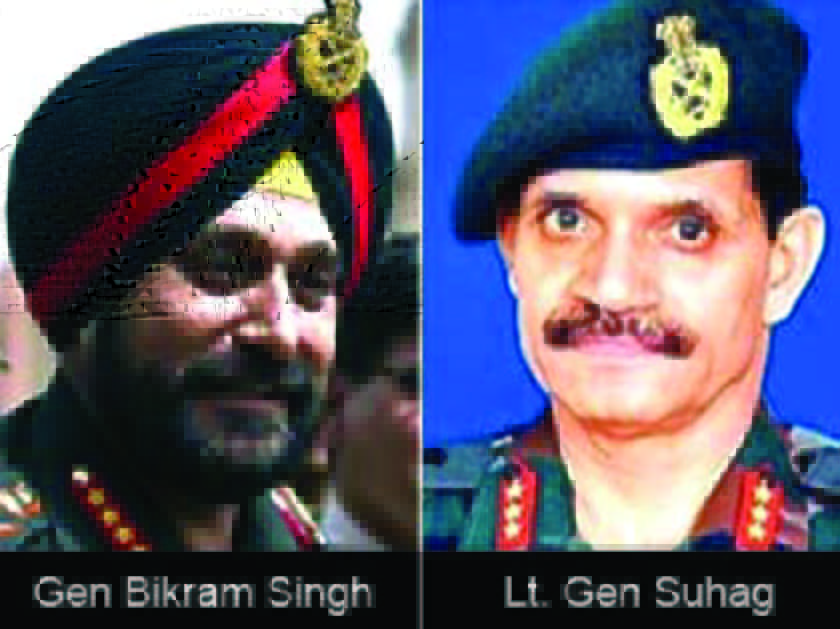
    NEW DELHI (TIP): Amid reports that the Defence Ministry has initiated the process of appointing Vice Army Chief Lt Gen Dalbir Singh Suhag as next Army Chief, BJP on April 19 sounded a word of caution to the government on the “hurry” and asked it to avoid taking decisions till elections are over.

    The present army chief Gen Bikram Singh retires on July 31. “I am not going into the specifics of any particular name but surely on the larger issue of naming the next General and reports about Lokpal appointment, we expect that when we are in the midst of elections, when the Model Code of Conduct is in force, at least till 16th of May all these things must be avoided,” BJP leader Ravi Shankar Prasad said.

    Former Army Chief Gen V K Singh, when asked, said government should not “hurry” on making such appointments. “There is still time for retirement of the present Army Chief and the UPA government should not hurry in making any appointment at this point of time,” Gen Singh said. He, however, refused to comment on any particular individual when asked if he was against the appointment of Lt Gen Suhag as the next Army Chief.

    The former Army chief, who has joined BJP and is contesting as its candidate from Ghaziabad, had days before his retirement initiated action against Lt Gen Suhag and imposed a disciplinary and vigilance ban, which was later lifted by the present Army Chief.