Tag: Appointments

  • Bokaro recruitments: CBI to quiz Paswan after poll

    Bokaro recruitments: CBI to quiz Paswan after poll

    NEW DELHI (TIP):
    The CBI is likely to wait for the General Election to be over before calling former Steel Minister Ram Vilas Paswan for examination in connection with alleged irregularities in appointments in the Bokaro steel plant. Sources said they had already questioned his personal staff in connection with the case and Paswan might be summoned after the elections.

    The role of Paswan came under the scanner of the agency following recovery of some documents which, agency sources claimed, indicated that his staff might have been actively involved in extending favours to some candidates. Paswan has denied allegations. In January, the CBI registered two separate cases related to alleged irregularities in the appointments in the middle and junior management level in the public sector undertaking in 2008 in which a former executive director of the plant and other former senior officers have also been named as accused.

    The agency has named junior managers SM Razi, Rajkumar Jatia and Yogesh Chandra Patnaik in the case. They are relatives of a former Governor, a former Union minister, who is now a Rajya Sabha candidate, and a former High Court judge, respectively, as stated in the FIRs. Paswan was the Union minister for chemicals, fertilisers and steel during the UPA government between May 2004 and May 2009 and these alleged fraudulent appointments were made during his tenure.

  • Paswan, BJP seal deal, change Bihar equations

    Paswan, BJP seal deal, change Bihar equations

    NEW DELHI (TIP): BJP and LJP leader Ram Vilas Paswan sealed a seat-sharing pact in Bihar that will see Paswan’s group contesting seven Lok Sabha seats, a development that marks the much-travelled politician’s return to the NDA-fold. Paswan surfaced on February 26 after keeping Congress, RJD and BJP on tenterhooks for the last few days and announced that his options are open.

    “Opinion in LJP is not against going with BJP. In our party’s interests we need to take tough decisions,” he said. The nitty gritty of the pact saw Paswan agree to contest on seats that are not currently being held by the BJP. The decision is bound to cause heart burn among BJP hopefuls, but the party is pleased with the bargain. Paswan is seen to command the loyalty of a dalit community that is assertive and can add three-four per cent votes to BJP’s base that includes upper castes and some middle castes as well. Paswan prepared the ground for breaking with Congress and RJD by saying he was made a measly offer of a few seats.

    But his decision to make up with BJP after having quit the NDA cabinet over the Gujarat 2002 riots seems driven by the assessment that saffron PM hopefulNarendra Modi is gaining traction in Bihar. Paswan’s switch helps BJP counter criticism that Modi’s projection as PM has isolated the party as sources point to Asom Gana Parishad leader Prafulla Mahanta’s statement on February 26 that he does not rule in or rule out a tie-up with BJP. Mahanta along with BJD leader Naveen Patnaik stayed away from a third front inaugural on Tuesday and the Odisha CM’s posture is seen to reflect a convergence with BJP on seeing Congress as the common enemy.

    “There is no seat sharing with BJD, but we can work in our own ways to contain Congress,” said a BJP leader about the Odisha scene. BJP leaders feel the party has a satisfactory understanding with Paswan, and talks have centred around the need to select “clean” candidates. Though CBI is threatening to question Paswan in an appointments scam, the process will not be complete until the elections. In Tamil Nadu, BJP is striving to stitch up an alliance with smaller parties like PMK and DMDK besides MDMK leader Vaiko who is already in NDA. Paswan’s return is significant as he had quit the NDA over the Gujarat 2002 riots, although he was also unhappy over being removed from the telecom ministry when he was in the Vajpayee government.

    A party leader close to Paswan said, “We have reached an understanding but have had to cede the choice to BJP. It’s a last minute alliance and BJP has already finalised candidates for more seats. We did not have much room to negotiate on the choice of seats. But we are not disappointed, the allocation is respectable.” Sources, however, said there is an agreement on LJP contesting from Vaishali, Hajipur, Jamui, Samastipur and Khagaria. Paswan’s son Chirag who is also the chairman of party’s Parliamentary board, said, “LJP Parliamentary Board has passed a resolution that all steps, even if they are strong ones, should be taken in the interest of the party and if an alternative alliance is to be firmed up, party chief Ram Vilas Paswan should take the decision.”

    Party leaders harped on the fact that the BJP alliance has come about because of Congress and RJD not giving the respect LJP deserved. Ram Vilas Paswan said :”We had our grievances with RJD for a long time. I had even gone to meet Lalu Prasad in jail. But soon after he was out, RJD leaders started saying LJP should be given three seats. That is why we left to Congress to decide the seat sharing. I waited for months, but there was no decision. “They assumed that LJP is nothing, it is irrelevant. If one takes 25 seats (RJD) and the other 15 (Cong). It means they do not treat LJP as part of the alliance…. That is why the party has authorised me to explore new alternative,” he said. With BJP also having tied up with a Kushwaha community leader Upendra Kushwaha, the party confirmed that it will give away three seats to them. The three likely seats are Jehanabad, Seohar and Sitamarhi Lok Sabha seats.

  • Paswan, BJP seal deal, change Bihar equations

    Paswan, BJP seal deal, change Bihar equations

    NEW DELHI (TIP): BJP and LJP leader Ram Vilas Paswan sealed a seat-sharing pact in Bihar that will see Paswan’s group contesting seven Lok Sabha seats, a development that marks the much-travelled politician’s return to the NDA-fold. Paswan surfaced on February 26 after keeping Congress, RJD and BJP on tenterhooks for the last few days and announced that his options are open.

    “Opinion in LJP is not against going with BJP. In our party’s interests we need to take tough decisions,” he said. The nitty gritty of the pact saw Paswan agree to contest on seats that are not currently being held by the BJP. The decision is bound to cause heart burn among BJP hopefuls, but the party is pleased with the bargain. Paswan is seen to command the loyalty of a dalit community that is assertive and can add three-four per cent votes to BJP’s base that includes upper castes and some middle castes as well. Paswan prepared the ground for breaking with Congress and RJD by saying he was made a measly offer of a few seats.

    But his decision to make up with BJP after having quit the NDA cabinet over the Gujarat 2002 riots seems driven by the assessment that saffron PM hopefulNarendra Modi is gaining traction in Bihar. Paswan’s switch helps BJP counter criticism that Modi’s projection as PM has isolated the party as sources point to Asom Gana Parishad leader Prafulla Mahanta’s statement on February 26 that he does not rule in or rule out a tie-up with BJP.

    Mahanta along with BJD leader Naveen Patnaik stayed away from a third front inaugural on Tuesday and the Odisha CM’s posture is seen to reflect a convergence with BJP on seeing Congress as the common enemy. “There is no seat sharing with BJD, but we can work in our own ways to contain Congress,” said a BJP leader about the Odisha scene. BJP leaders feel the party has a satisfactory understanding with Paswan, and talks have centred around the need to select “clean” candidates.

    Though CBI is threatening to question Paswan in an appointments scam, the process will not be complete until the elections. In Tamil Nadu, BJP is striving to stitch up an alliance with smaller parties like PMK and DMDK besides MDMK leader Vaiko who is already in NDA. Paswan’s return is significant as he had quit the NDA over the Gujarat 2002 riots, although he was also unhappy over being removed from the telecom ministry when he was in the Vajpayee government.

    A party leader close to Paswan said, “We have reached an understanding but have had to cede the choice to BJP. It’s a last minute alliance and BJP has already finalised candidates for more seats. We did not have much room to negotiate on the choice of seats. But we are not disappointed, the allocation is respectable.” Sources, however, said there is an agreement on LJP contesting from Vaishali, Hajipur, Jamui, Samastipur and Khagaria.

    Paswan’s son Chirag who is also the chairman of party’s Parliamentary board, said, “LJP Parliamentary Board has passed a resolution that all steps, even if they are strong ones, should be taken in the interest of the party and if an alternative alliance is to be firmed up, party chief Ram Vilas Paswan should take the decision.” Party leaders harped on the fact that the BJP alliance has come about because of Congress and RJD not giving the respect LJP deserved.

    Ram Vilas Paswan said :”We had our grievances with RJD for a long time. I had even gone to meet Lalu Prasad in jail. But soon after he was out, RJD leaders started saying LJP should be given three seats. That is why we left to Congress to decide the seat sharing. I waited for months, but there was no decision. “They assumed that LJP is nothing, it is irrelevant. If one takes 25 seats (RJD) and the other 15 (Cong). It means they do not treat LJP as part of the alliance….

    That is why the party has authorised me to explore new alternative,” he said. With BJP also having tied up with a Kushwaha community leader Upendra Kushwaha, the party confirmed that it will give away three seats to them. The three likely seats are Jehanabad, Seohar and Sitamarhi Lok Sabha seats.

  • Judges’ appointment panel gets Constitutional status

    Judges’ appointment panel gets Constitutional status

    NEW DELHI (TIP): Amid demands by jurists and the Opposition led by the BJP, the government today gave a go-ahead to grant constitutional status to a proposed commission for appointment and transfer of judges to the higher judiciary. The clearance, which would ensure that its composition is not altered through an ordinary legislation, came at the meeting of the Union Cabinet chaired by Prime Minister Manmohan Singh here. Among other decisions, the Cabinet Committee on Economic Affairs also gave its clearance to the guidelines for financial assistance to the sugar industry for payment of cane price arrears.

    According to the proposal, while new Article 124-A of the Constitution will define the composition of Judicial Appointments Commission (JAC), Article 124-B will define its functions. The JAC Bill defines the establishment of the proposed body to recommend appointment and transfer of judges of the Supreme Court and high courts. At present, the composition of the proposed panel is defined in the JAC Bill, 2013, which was introduced with a separate constitutional amendment Bill in the Rajya Sabha during the monsoon session. There were demands that the composition and functions of the proposed Commission should be mentioned in the Constitution as a safeguard against future changes.

    A Parliamentary standing committee that examined the JAC Bill, 2013, had also made a similar recommendation. While the constitutional amendment Bill — an enabling Bill — was passed by the Upper House, the main bill — the JAC Bill, 2013 — was referred to the standing committee. The Cabinet also approved the proposal to provide interest subvention for financial assistance to the sugar industry for effecting cane price payments as per guidelines of the “Scheme for Extending Financial Assistance to Sugar Undertakings, 2013”. The scheme’s expenditure would be met by the Sugar Development Fund (SDF).

    Under the proposal, the central government will provide an interest subvention up to 12 per cent, at a simple rate of interest, for the additional working capital loans to the sugar undertakings, equivalent to last three sugar seasons excise duty, cess and surcharge on sugar, according to an official statement released after the Cabinet meeting here. “The sugar undertakings with loans classified as Non-Performing Assets (NPA) by the banks will also be eligible for loans, provided the state governments concerned guarantee their new loans,” the statement said. The interest subvention or subsidy would be for total loan duration of five years, including two-year moratorium period. “No interest subvention to be provided for the period of default in the principal repayments,” the statement added.

  • Supreme Court refuses to block Texas abortion law

    Supreme Court refuses to block Texas abortion law

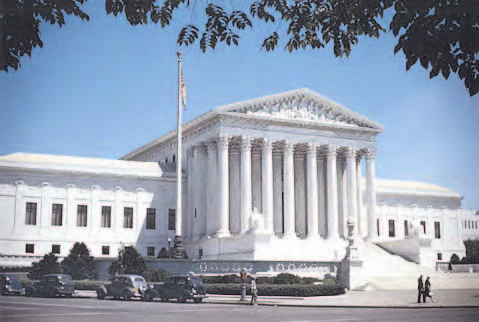
    DALLAS (TIP): A sharply divided Supreme Court on Tuesday, November 19 allowed Texas to continue enforcing abortion restrictions that opponents say have led more than a third of the state’s clinics to stop providing abortions. The justices voted 5-4 to leave in effect a provision requiring doctors who perform abortions in clinics to have admitting privileges at a nearby hospital.

    The court’s conservative majority refused the plea of Planned Parenthood and several Texas abortion clinics to overturn a preliminary federal appeals court ruling that allowed the provision to take effect. The four liberal justices dissented. The case remains on appeal to the 5th U.S. Circuit Court of Appeals in New Orleans. That court is expected to hear arguments in January, and the law will remain in effect at least until then. Justice Stephen Breyer, writing for the liberal justices, said he expects the issue to return to the Supreme Court once the appeals court issues its final ruling.

    The Texas Legislature approved the requirement for admitting privileges in July. In late October, days before the provision was to take effect, a trial judge blocked it, saying it probably is unconstitutional because it puts a “substantial obstacle” in front of a woman wanting an abortion. But a three-judge appellate panel moved quickly to overrule the judge. The appeals court said the law was in line with Supreme Court rulings that have allowed for abortion restrictions so long as they do not impose an “undue burden” on a woman’s ability to obtain an abortion. Writing for the appeals court, Judge Priscilla Owen noted that the Texas law would not end the procedure, only force women to drive a greater distance to obtain one.

    Justice Antonin Scalia, writing in support of the high court order Tuesday, said the clinics could not overcome a heavy legal burden against overruling the appeals court. The justices may not do so “unless that court clearly and demonstrably erred,” Scalia said in an opinion that was joined by Justices Samuel Alito and Clarence Thomas. Chief Justice John Roberts and Justice Anthony Kennedy did not write separately or join any opinion Tuesday, but because it takes five votes to overturn the appellate ruling, it is clear that they voted with their conservative colleagues. Planned Parenthood and several Texas abortion clinics said in their lawsuit to stop the measure that it would force more than a third of clinics in the state to stop providing abortions.

    After the appeals court allowed the law to take effect, the groups said that their prediction had come to pass. In their plea to the Supreme Court, they said that “in just the few short days since the injunction was lifted, over one-third of the facilities providing abortions in Texas have been forced to stop providing that care and others have been forced to drastically reduce the number of patients to whom they are able to provide care. Already, appointments are being canceled and women seeking abortions are being turned away.” Breyer said the better course would have been to block the admitting privileges requirement at least until the court issued its final ruling because some women will be unable to obtain abortions.

    If courts ultimately find the law is invalid, “the harms to the individual women whose rights it restricts while it remains in effect will be permanent,” he said. Tennessee and Utah are the other states enforcing their laws on admitting privileges. Similar laws are under temporary court injunctions in Alabama, Kansas, Mississippi, North Dakota and Wisconsin. In Texas, 12 abortion providers say they have attempted to obtain hospital privileges for their doctors, but so far none of the hospitals have responded to the requests. That means those clinics can no longer offer abortions, leaving at most 20 facilities open in a state of 26 million people. All of those facilities are in metropolitan areas, with none in the Rio Grande Valley along the border with Mexico. Currently, only six out of 32 abortions clinics in Texas qualify as ambulatory surgical centers, and some have doctors who do not meet the admitting privileges requirement. Texas women undergo an average of 80,000 abortions a year.

  • S JAISHANKAR NAMED AMBASSADOR TO US

    S JAISHANKAR NAMED AMBASSADOR TO US

    NEW DELHI (TIP): India’s envoy to China Subrahmanyam Jaishankar has been appointed as the next Ambassador to the US and his position in Beijing will be taken by Ashok K Kantha. Both Jaishankar and Kantha are from 1977-batch IFS. Significantly, both appointments come ahead of Prime Minister Manmohan Singh’s visit to these countries. Singh is leaving for the US on September 25 and is expected to visit China next month. Both the diplomats are expected to take up their respective assignment shortly, Ministry of External Affairs said today. Jaishankar will replace Nirupama Rao. Ashok Kantha is currently Secretary (East) in the MEA and has served in Malaysia and Sri Lanka among other postings. The country’s envoy to Beijing since August 2009, Jaishankar’s name was making rounds for the position of Foreign Secretary after Ranjan Mathai. However, the Prime Minister opted for the seniority and appointed Sujatha Singh as the Foreign Secretary.

  • RAJYA SABHA PASSES BILL TO APPOINT JUDGES UNDER NEW SYSTEM

    RAJYA SABHA PASSES BILL TO APPOINT JUDGES UNDER NEW SYSTEM

    NEW DELHI: Government and opposition in Rajya Sabha on September 5 presented a joint front in cornering judiciary on all fronts – ranging from corruption, favouritism and nepotism to compromises due to lust of post-retirement jobs\benefits – while discussing a bill which seeks to scrap the collegium system of appointing judges. The bill, giving executive a crucial role in judges’ appointment, was, however, finally passed without BJP members’ presence as they walked out protesting the government’s refusal to send the proposed legislation to a parliamentary standing committee for wider consultations. As the Upper House took up the bill to amend the Constitution to set up a Judicial Appointments Commission (JAC) replacing the collegium system, law minister Kapil Sibal, leader of opposition Arun Jaitley and several other members were of the view that the present system of appointing judges to Supreme Court and high courts lacked transparency and accountability.

    BJP members said though their party was fully in support of the bill, it wanted a wider consultations before passing of the bill. Jaitley said, “We don’t like the present system. So, we are agreed to change it. We are making a monumental change. Monumental changes are never brought with a knee-jerk reaction”. The bill, which was passed without BJP members participating in voting, seeks to set up a JAC to recommend appointment and transfer of Supreme Court and high court judges. It states that the JAC will make the participants in the selection accountable and introduce “transparency” in the selection process. With the creation of the proposed body, the executive seeks to have a say in appointment of members to the higher judiciary. The bill seeks to set up a panel headed by the Chief Justice of India (CJI) to appoint and transfer senior judges. The other members of the proposed commission would be two senior-most judges of the Supreme Court, the law minister, two eminent persons as members and secretary (justice) in the law ministry as Convener.

    Moving the bill, Sibal earlier said the Supreme Court in 1993 had sought to change the procedure of appointment of judges in higher judiciary by bringing in a collegium system. The judiciary has taken over executive power by rewriting Article 124 (of the Constitution). That balance must be restored. Executive must have a say in appointment.” Sibal said, “It has disturbed the delicate balance of separation of powers. There is very clear division of powers among the executive, legislature and judiciary in our Constitution. Judiciary cannot take over the function of the executive”. Sibal also chose the occasion to flag his concerns over “nepotism” in the judiciary. “We are really worried over the manner in which relatives of judges are practising in high courts. It is very disturbing. It is a matter of sadness that somebody’s maternal uncle, uncle and others practice in court. How long this nepotism will continue,” he asked. Jaitley echoed Sibal’s views as he pressed for reestablishment of the “separation of powers”. He said when other establishments of the democracy do not infringe upon functioning of the judiciary, then why would it ask the government to do this or do that and direct even on the economic policy of the government. “Courts cannot review a policy and say that my policy is better that your policy.

    It cannot say how to be tough on the Naxalites,” he said. Citing the ban on iron ore exports, Jaitley sought to link judicial orders partially to the present state of Current Account Deficit and depreciation of rupee as a result of that. Attacking judiciary, he said no government, irrespective of its complexions, has ever said that since court has three crore cases pending, somebody else would do it for courts. Stating that the present system of appointing judges lacks transparency, Jaitley said the three-member collegium often left out the best of the lot for a promotion and go ahead with their choices. “A collegium is as good as the members of the collegium,” he said as he observed, “Judges appoint themselves and judges are accountable to judges.” Stating that in the existing collegium mechanism the members of the panel of judges go by their own preferences, he said when the collegium meets for appointment of judges, they “have to accommodate the preferences of each other, and those who don’t come in their list of preferences lose out”. Jaitley also spoke against the trend of higher judiciary members seeking post-retirement jobs.

    He said, “I think this whole temptation of continuing to occupy a Lutyens Bungalow (government accommodation in heart of the Capital) is a very serious temptation….The desire of a postretirement job influences pre-retirement judgments. It is a threat to the independence of the judiciary. Once it influences pre-retirement judgments, it adversely impacts the functioning of our jud iciary itself”. The leader of opposition proposed that a judicial commission should not only have powers for appointment of judges but also ensure their accountability. He said in cases of judicial misconduct, falling short of acts that call for impeachment, the judges were accountable only to judges and “this needs to be changed”. Sibal, while moving the bill, said the proposal to set up JAC was also the part of BJP’s national agenda of governance in 1998. “I compliment the leader of opposition who then as the minister introduced the bill to set up the Judicial Commission in 2003.

    All we have done is that we have increased the number of eminent members from one to two who will be appointed in the National Judicial Commission which will appoint the Judges. We are grateful to the leader of opposition that we are only adopting what he had suggested,” he said. Sibal said the Law Commission had said in 2008 that the Supreme Court interpretation of Article 124 (2) is contrary to the letter and spirit of the very article. He recalled that Justice M N Venkatachaliah and Justice J S Verma, who had favoured the collegium system, had later said they regretted their decision and that the system was not working. The minister also recalled that as a counsel, he had in past supported the idea of the judiciary appointing judges. “I also regret…Wise men are always proved right. When we were young, we wanted to change the system and sorry we disregarded your wisdom,” Sibal said as nominated member and former Attorney General of India K Parasaran reminded him that Sibal was opposed to any outside role in judicial appointments. “I am not saying that you should go back to 1993.

    There should be a judicial commission so that a collaborative exercise is there for their appointments. We do not want to impose our decisions in judicial appointments. “That is why we have made provisions for inclusion of two eminent persons in the judicial commission whose names will be decided by the Prime Minister, leader of opposition in the Lok Sabha and Chief Justice of India

  • Pak military official in Beijing for advice on top appointments?

    Pak military official in Beijing for advice on top appointments?

    BEIJING (TIP): General Khalid Shameem Wynne, chairman of Pakistan’s Joint Chiefs of Staff Committee (JCSC), met Chinese vicepremier Zhang Gaoli in Beijing on Aug 29. The meeting came just days before Pakistan is expected to make two important appointments in its armed forces: the next army chief and JCSC chairman. Wynne, one of the top two military officers of Pakistan, is believed to have consulted Beijing on the new appointments and assured it of Pakistan’s continued friendship.

    China is particularly worried about the upcoming retirement of Ashraf Parvez Kayani, the Pakistan Army chief, who is seen as having ensured that Taliban militants do not spill over the border into its restive Xinjiang province. Wynne is due to retire on October 6 and Kayani on November 28. Pakistani prime minister Nawaz Sharif has said he will not give an extension to Kayani and will choose the next army chief on the basis of merit. The Wynne-Zhang meeting also came days before Chinese and Pakistani air forces begin a joint drill (from September 2 to 22) in the Xinjiang Uygur Autonomous Region. The drill, codenamed ‘Shaheen-2’, comes after the first joint drill in Pakistan in March 2011. “Maintaining and deepening strategic cooperation between China and Pakistan is in the fundamental interests of the two countries and is also the common aspiration of the two peoples,” a Chinese government spokesman said

  • Karnataka LS bypolls: Congress wins both seats

    Karnataka LS bypolls: Congress wins both seats

    BANGALORE (TIP): Karnataka chief minister Siddaramaiah won the acid test in the Lok Sabha bypolls with both Congress candidates winning Bangalore Rural and Mandya seats by a huge margin in these constituencies, which were the JD(S) fiefdom. The results declared on Aug 24 are a huge boost to the four-month old Congress party in Karnataka as they have the set the trend for the Lok Sabha elections eight months from now. Both the seats were won by political greenhorns, who have made their electoral debut with a leap to the parliament. Kannada actor Ramya won from Mandya and senior Congress MLA DK Shiva Kumar’s brother DK Suresh Kumar from Bangalore Rural. Both the seats were held by the JD(S) with Bangalore Rural won by former CM H D Kumaraswamy in 2009.

    The bypolls were held following the resignation of Kumaraswamy and JD(S) N Cheluvaraswamy from Mandya after they got elected to the legislative assembly in May. Ramya defeated JD(S) CS Puttaraju by a margin of 47,000 plus votes and Suresh Kumar trounced Kumaraswamy’s wife Anitha by over a lakh votes. The bypolls were crucial to both the Congress and JD(S). For the first time all opposition parties giving a go-by to their ideologies came together to put up a common candidate against the Congress in both constituencies. But the results revealed that voters have once again punished the JD(S) for teaming up with the BJP. The earlier instance was the 2008 assembly polls. The results are a big blow to the Deve Gowda family, more so to senior Gowda, who at the age of 81 years, pounded the streets of Bangalore Rural and Mandya seeking votes for his daughter-in-law and shedding tears at public meetings.

    Anitha, who has been a reluctant candidate to politics, had still not come out of her defeat from Channaptna assembly polls in May, when she was fielded in this bypoll. The 30-year-old actor Ramya, who was a last minute surprise candidate, in a way brought the feuding Congress leaders in Mandya to unite at least for the bypoll. Former CM S M Krishna and actor, housing minister MH Ambareesh, who don’t see eye to eye campaigned for Ramya, of course without sharing a common platform. Getting Ramya elected had become vital for the Mandya Congress unit, if it had to stake claim in appointments of chairpersons to the boards and corporations to be made shortly.

  • Proposal to replace collegium system cleared

    Proposal to replace collegium system cleared

    NEW DELHI (TIP): In a significant development, the Union Cabinet on Thursday, August 22 cleared a proposal, which seeks to scrap the collegium system of appointing judges to the Supreme Court and High Courts. The proposal calls for setting up a Judicial Appointments Commission that will replace the collegium system of appointing judges to higher courts. The development comes days after Law Minister Kapil Sibal informed the Lok Sabha that there is a proposal to establish a Judicial Appointments Commission (JAC) that would replace the present collegium system. The government has the inprinciple support of political parties to bring such a bill which will require amendment to the Constitution, Sibal had said then.

    The JAC will give the executive a say in appointment of Supreme Court and high court judges. According to the proposal, JAC will be headed by the Chief Justice of India. It will have two Supreme Court judges, the Law Minister and two eminent personalities as its members. The Secretary (Justice) in the Law Ministry will be the Member Secretary. The body will recommend ppointment and posting of apex court and HC judges. The two eminent persons on JAC will be selected by a panel comprising the CJI, the Prime Minister and Leader of the Opposition of either House. As of now, the judges of the apex court are appointed by a collegium comprising the CJI and four senior-most judges of the Supreme Court. The appointment of judges of the 24 high courts is initiated by the Chief Justice of the concerned HC in consultation with two senior-most judges of that court. The Chief Minister and Governor of the state concerned are also consulted.

  • MOVERS & SHAKERS

    MOVERS & SHAKERS

    Famous Indian nuclear physicist Homi Jehangir Bhabha was born on 30 October 1909 in Mumbai. Bhabha played a key role in the development of the Indian atomic energy program. Widely referred to as the father of India’s nuclear weapons program, Bhabha had his education at the Elphinstone College and the Royal Institute of Science before obtaining his doctorate from the University of Cambridge in 1934.

    He was influenced greatly by the legendary Paul Dirac. Bhabha was a research scientist at the Cavendish Laboratories at Cambridge. When he was stranded in India as a result of the Second World War, he set up the Cosmic Ray Research Unit at the Indian Institute of Science, Bangalore under Nobel Laureate C. V. Raman in 1939. Dr. Bhabha is credited with establishing the Tata Institute of Fundamental Research(TIFR) with the help of eminent industrialist J. R. D. Tata.

    After India won independence from the British, Bhabha established the Atomic Energy Commission of India in 1948. He represented India in various international forums including the United Nations and his tenure represented a high in terms of the progress of India’s atomic energy programme. The climax of this programme came on May 18, 1974 when India exploded a nuclear device at Pokhran, Rajasthan joining a select club of nations.

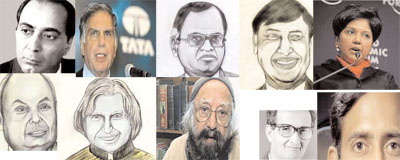
    Ratan Tata
    Ratan Tata is one of the most well-known and respected Indian businessman. He served as the Chairman of the Tata Group from 1991 till 2012. As a Mumbaibased conglomerate, he is also a member of the prominent Tata family of Indian industrialists and philanthropists. Ratan Tata was born on December 28, 1937 in Mumbai. When he was a child his parents separated and he was brought up by his grandmother Lady Navajbai.

    He went to Campion School in Bombay, Bishop Cotton School in Shimla and finished his schooling from Cathedral and John Connon School in Mumbai. He graduated with a degree in Architecture and Structural Engineering from Cornell University in 1962 and also did the Advanced Management Program from Harvard Business School in 1975. He is also a member of the Alpha Sigma Phi fraternity of Yale University, United States. In 1962, Ratan Tata began his career in the Tata group.

    At first he used to work on the shop floor of Tata Steel, shoveling limestone and handling blast furnace. In 1991, JRD Tata stepped down as the chairman of Tata Industries and named Ratan Tata as his successor. Under Ratan’s stewardship, Tata Tea attained Tetley, Tata motors attained Jaguar Land Rover and Tata Steel attained Corus. These triumphs turned Tata from a large India-centric company into a global business with 65% revenues from abroad. He also contributed in the development of Indica and Nano.

    Ratan Tata has also served in various organizations in India and abroad. He is a member of the Prime Minister’s Council on Trade and Industry and he is also on the board of governors of the East-West Center, which is the advisory board of RAND’s Center for Asia Pacific Policy. He also serves on the program board of the Bill & Melinda Gates Foundation’s India AIDS initiative. He was awarded the Padma Bhushan by the Government of India in January 2000.

    He serves on the boards of several leading organizations, both in the public as well as the private sector in India. He is a member of the International Investment Council set up by the President of South Africa and serves on the programme board of the Bill & Melinda Gates Foundation’s India AIDS initiative. Ratan Tata is credited for leading Tatas’ successful bid for Corus, an Anglo-Dutch steel and aluminum producer, which was acquired for an estimated £6.7 billion by Tata Sons.

    N.R. Narayanamurthy
    N.R. Narayana Murthy, the founder of Infosys Technologies is one of the most famous personalities in India’s I-T sector. Born on August 20, 1946, he obtained a degree in electrical engineering from the National Institute of Engineering under University of Mysore in 1967 and went on to do his Masters from IIT Kanpur in 1969. He joined Patni Computer Systems in Pune. While at Pune, he met his wife Sudha Murty.

    In 1981, he founded Infosys alongwith with six otherpeople. He served as president of the National Association of Software and Service Companies, India from 1992 to 1994. Murthy was the CEO of Infosys for twenty years, and was succeeded by Nandan Nilekani in March 2002. He functioned as the Executive Chairman of the Board and Chief Mentor from 2002 to 2006.

    Dhirubhai Ambani
    Dhirajlal Hirachand Ambani was born on 28 December 1932, at Chorwad, Junagadh in Gujarat, When he was 16 years old, he moved to Aden,Yemen. Initially, Dhirubhai worked as a dispatch clerk with A. Besse & Co. Married to Kokilaben. Dhirubhai also worked in Dubai for sometime. He returned to India and founded the Reliance Commercial Corporation with an initial capital of Rs 15000.

    Dhirubhai set up the business in partnership with Champaklal Damani from whom he parted ways in 1965. Dhirubhai started his first textile mill at Naroda, near Ahmedabad in 1966 and started the brand “Vimal”. Dhirubhai Ambani is credited with having started the equity cult in India.With the passage of time, Dhirubhai diversified into petrochemicals and sectors like telecommunications, information technology, energy, power, retail, textiles, infrastructure services, capital markets, and logistics.

    Lakshmi Nivas Mittal
    Lakshmi Nivas Mittal was born on June 15, 1950 in Sadulpur, Rajasthan, India and is presently the CEO & Chairman of Arcelor Mittal. Lakshmi Nivas Mittal was listed in the Forbes List of Billionaires in 2006 as the the richest Indian and the fifth richest man in the world with an estimated wealth around of $25.0 billion and is the richest man in the United Kingdom. Young Lakshmi Nivas Mittal spent his first years in Sadulpur, before his father moved to Kolkata. Lakshmi graduated from St. Xavier’s College, Calcutta. He founded Mittal Steel in 1976, which soon became a global steel producer with operations on 14 countries. His success mantra lies in the identification, acquisition and turnaround of many loss making steel companies all across the world.

    Dr. A.P.J. Abdul Kalam
    Dr. A.P.J. Abdul Kalam, former President of India, graduated in aeronautical engineering from the Madras Institute of Technology in 1958 and joined the Defense Research and Development Organization (DRDO). In 1962, Kalam joined the Indian Space Research Organization (ISRO). In 1982, he rejoined DRDO as the Chief Executive of Integrated Guided Missile Development Programme (IGMDP). Dr. Kalam is credited with the development and operationalization of India’s Agni and Prithvi missiles.

    He worked as the Scientific Adviser to the Defence Minister and Secretary, Department of Defence Research & Development from 1992 to 1999. During this period, the Pokhran-II nuclear tests were conducted. Dr. Kalam held the office of the Principal Scientific Advisor to the Government of India from November 1999 to November 2001. Dr. Kalam has received a host of awards both in India and abroad. He was awarded the Padma Bhushan in 1981, Padma Vibhushan 1990 and the Bharat Ratna in 1997.

    He is of the view that we should work wholeheartedly to make India a developed nation by 2020. Besides being a bachelor, Kalam is a strict disciplinarian, a complete vegetarian and teetotaler. Among the many firsts to his credit, he became India’s first President to undertake an undersea journey when he boarded the INS Sindhurakshak, a submarine, from Visakhapatnam. He also became the first president to undertake a sortie in a fighter aircraft, a Sukhoi-30 MKI.

    Khushwant Singh
    One of the most prominent novelists and journalists of India, Khushwant Singh was born on 2 February 1915 in Hadali, presently in Pakistan. He writes a weekly column, “With Malice towards One and All”, published in several leading newspapers all over the country. He graduated from Government College, Lahore before studying law at King’s College, London. He has been the editor of Yojana, The Illustrated Weekly of India, The National Herald and the Hindustan Times.

    He also served as a member of the Rajya Sabha. Though he was awarded the Padma Bhushan in 1974, he returned it in 1984 to protest the siege of the Golden Temple by the Indian Army. He was awarded the Padma Vibhushan in 2007. Some of his notable works include: The Sikhs; Train to Pakistan; The Sikhs Today; Ranjit Singh: The Maharajah of the Punjab; Delhi: A Novel; Sex, Scotch and Scholarship: Selected Writings; Not a Nice Man to Know: The Best of Khushwant Singh; Paradise and Other Stories; Death at My Doorstep; The Illustrated History of the Sikhs etc.

    Amartya Sen
    Nobel Prize winner Amartya Sen was born on 3 November 1933 in Santiniketan, West Bengal. Besides being a worldrenowned economist, Amartya Sen is also a philosopher. He served as a Master at the Trinity College at Cambridge University, the first Asian academic to head an Oxbridge college. Currently the Lamont University Professor at Harvard University, Amartya Sen traces his roots to an illustrious lineage. His father, Ashutosh Sen, taught chemistry at the Dhaka University.

    Amartya completed his high-school education from Dhaka in Bangladesh in 1941. After his family migrated to India in 1947, Sen studied at the Presidency College, Kolkata and at the Delhi School of Economics before moving over to the United Kingdom to complete his higher studies. He earned his doctorate from the Trinity College, Cambridge in 1959. He has taught at various reputed Universities including the University of Calcutta, Jadavpur University, Oxford, London School of Economics, Harvard and many others. His works helped to develop the theory of social choice.

    In 1981, he published his famous work Poverty and Famines: An Essay on Entitlement and Deprivation, where he showed that famine occurs not only due to shortage of food, but from inequalities in the mechanisms for distributing food. He had personally witnessed the Bengal famine of 1943. He has done valuable work in the field of development economics, which has had a tremendous influence on the formulation of the United Nations Development Programme’s Human Development Report.

    Sabeer Bhatia
    Sabeer Bhatia-co-founder of Hotmail, is one among select group of people who have made it big in America’s Silicon Valley. Born in Chandigarh, Sabeer Bhatia did his schooling from St. Joseph’s Boys’ High School, Bangalore. He graduated from Caltech and went to Stanford to pursue his MS in Electrical Engineering. Sabeer attended many lectures by famous like Steve Jobs and was determined to make it big. After completing his Masters, he joined Apple computers. He left Apple soon after.

    He teamed up with his partner to create a web-based e-mail system Microsoft bought Hotmail on December 30th, 1997, for a reported sum of $400M. After the success of Hotmail, Bhatia in April 1999, he started another venture, Arzoo Inc, which however had to be shut down. In 2006, Arzoo was relaunched. Bhatia has won many awards. Among the notable ones include the “Entrepreneur of the Year” awarded by the venture capital firm Draper Fisher Jurvetson in 1997, the “TR100” award, presented by MIT to 100 young innovators expected to have the greatest impact on technology in the next few years. Besides, he was named by TIME magazine as one of the “People to Watch” in International Business in 2002.

    Indra Nooyi
    Indra Nooyi is the president and chief executive officer of PepsiCo and is the highest-ranking Indian-born woman in corporate America. She helped to start PepsiCo’s fast-food chains in 1997. After a Bachelor’s degree from Madras Christian College and a Post Graduate Diploma in Management from the Indian Institute of Management Kolkata, she moved on to the Yale School of Management.

    She started her career with The Boston Consulting Group (BCG), moving on to companies like Motorola and Asea Brown Boveri.She serves on the board of directors of several organizations. In August 2006, she succeeded Steve Reinemund as chief executive officer of PepsiCo. She has been named the Most Powerful Woman in Business in 2006 by Fortune Magazine. Her name was included in the Wall Street Journal’s list of 50 women to watch in 2005.

    Kiran Bedi
    The first woman to join the coveted Indian Police Service (IPS) in 1972, Kiran Bedi was born on 9 June 1949 in Amritsar, Punjab. Recently appointed as Director General of India’s Bureau of Police Research and Development, Kiran Bedi has had an illustrious career, earning widespread adulation for her no-nonsense attitude and devotion to work. She served as Police Advisor in the United Nations peacekeeping department and was honored with the UN medal for outstanding service. She earned the nickname ‘Crane Bedi’ for towing away the then Indian PM Indira Gandhi’s car for parking violation.

    Kiran Bedi graduated in English before securing a Master’s degree in Political Science from Punjab University, Chandigarh. This gutsy police officer went on to secure an LL.B degree in 1988 from Delhi University and a Ph.D. from the Indian Institute of Technology, New Delhi, even while she was in service. She was good at sports too, having been an all- India and all-Asian tennis champion.

    She has served creditably in a host of appointments ranging from Deputy Inspector General of Police, Mizoram, Advisor to the Lieutanent Governor of Chandigarh, Director General of Narcotics Control Bureau and many others.

    Rakesh Sharma
    The first Indian to fly into space, Rakesh Sharma was born on January 13, 1949 in Patiala, Punjab. He was a squadron leader with the Indian Air Force, when he flew into space in 1984 as part of a joint programme between the Indian Space Research Organisation (ISRO) and the Soviet Intercosmos space program.

    He spent eight days in space on board the Salyut 7 space station. He joined two other Soviet cosmonauts aboard the Soyuz T- 11 spacecraft which blasted off on April 2, 1984. He was awarded the Hero of Soviet Union award on his return from space. The Government of India honoured him with the Ashok Chakra. He retired with the rank of Wing Commander. He joined the Hindustan Aeronautics Limited in 1987 and served as Chief Test Pilot in the HAL Nashik Division until 1992, before moving on to Bangalore to work as the Chief Test Pilot of HAL. He retired from test flying in 2001.

    Dr. Verghese Kurien
    The “father of the white revolution” in India, Dr. Verghese Kurien is acknowledged worldwide as the brain behind the success of the largest dairy development programme in the world by the name of Operation Flood. Also known as the “Milkman of India”, he was the chairman of the Gujarat Co-operative Milk Marketing Federation Ltd. (GCMMF) and his name became synonymous with the Amul brand. Born on November 26, 1921 in Kozhikode, Kerala, he graduated in Physics from Loyola College, Madras in 1940 and pursued a B.E.(Mechanical) course from the Madras University. He was instrumental in the success story of AMUL.

  • Vivek Wadhwa named to Time’s List of Top Tech Thinkers

    Vivek Wadhwa named to Time’s List of Top Tech Thinkers

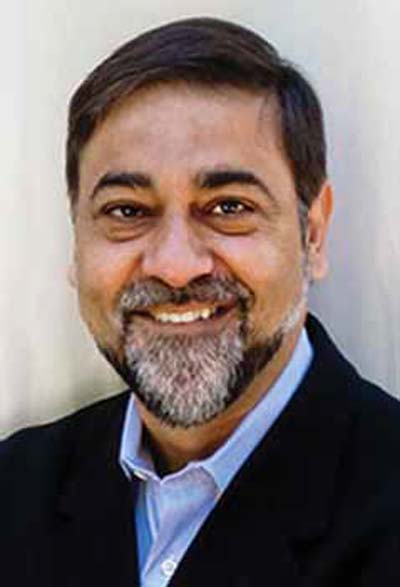
    NEW YORK (TIP): Vivek Wadhwa, who holds academic appointments at Singularity University, Stanford University and Duke University, and last year was named to Foreign Policy magazine’s list of the Top 100 Global Thinkers, was named by Time magazine recently to its list of the 40 “Most Influential Minds in Tech.” Wadhwa, the magazine said, “has become a leading voice in debates over technology policy, particularly with respect to entrepreneurship, innovation and immigration.” “In his recent book, ‘The Immigrant Exodus: Why America Is Losing the Global Race to Capture Entrepreneurial Talent,’ Wadhwa describes how the U.S. is now telling the best immigrants to go home, due to a lack of immigration visas,” Time said. “As a result of this ‘reverse brain drain,’ as Wadhwa and his colleagues call it, highly skilled workers and professionals are increasingly looking to other global markets to locate their businesses.” “We’re seeing a boom in technology entrepreneurship in India, China, and even Russia, because the U.S. won’t let people stay here,” Wadhwa told Time. Early in his career, Wadhwa worked at Credit Suisse First Boston, where he helped develop technology for creating computeraided software-writing systems. The Indian American entrepreneur later founded software firm Relativity Technologies. Wadhwa is a columnist at Bloomberg Business Week and a contributor to various other publications, including The Indian Panorama.

  • Community Organizations Take Care of Community Health

    Community Organizations Take Care of Community Health

    LONG ISLAND, NEW YORK (TIP): “For the first time, the Indian Association of Long Island (IALI) partnered with six other prominent organizations to bring free health camp to community members”, said a proud IALI President Dr. Kishore Kuncham. India Association of Long Island (IALI) and North America Telugu Society (NATS) in partnership with the American Association of Physicians of Indian Origin, Queens- Long Island (AAPI QLI), Arya Samaj of Long Island, Asamai Temple, Hicksville, Telugu Literary & Cultural Association (TLCA) and Sant Baba Nidhan Singh Ji Cultural Society (SBSNCS), held a Health Camp at Asamai Temple on Sunday, March 24, 2013. The event was held from 12 Noon to 4 P.M. Over 80 community members took advantage of the free consultative services of 18 volunteer doctors, in the area of: Internal Medicine, Opthalmology, Neurology, Pulmonary & Critical Care, Gastroenterology, Nephrology, Endocrinology, Cardiology, OB/GYN, Dental, etc., There also was an EKG service available for those individuals who needed an EKG. Volunteers also were there with their glucose monitors and blood pressure monitors ready to provide services. In addition, Flushing Hospital was able to provide appointments for Mammography and Colon Cancer Screening to individuals in need.

    Also, many Committee Members of the sponsoring Organizations, along with their spouses and young children gave up their Sunday to provide their volunteering services so that the community members could be triaged appropriately and over 100 wellwishers and friends from various organizations came to support the event. The hall of Asamai Temple was spacious, comfortable and convenient. The sponsors also provided breakfast (courtesy Ras Raj) and lunch (courtesy Asamai Temple) for everyone present. Dr. Kishore Kuncham, President of India Association of Long Island who coordinated the health fair and brought several key organizations together profusely thanked doctors, volunteers, and leaders of various organizations for their time, expertise and services.

    He praised Dr. Madhu Korrapati, Vice Chairman, NATS who was instrumental in organizing all the doctors and free glucose monitors. He acknowledged the cooperation and recognized Dr. Tarun Wasil (AAPI QLI), Mr. Veer Mukhi (Arya Samaj), Mr. Gobind Bhatija (Asamai Temple), Mrs. Krishnasri Gandham (TLCA), Mr. Satnam Parhar (SBSNCS), and Mr. Harshad Patel (Gujarati Samaj). The program concluded with all the attendees taking part in Laughter Yoga. It was very heartwarming to see the various organizations coming together and proudly serving the community and there was a sense of pride and hope to bring more programs jointly. The community needs to focus on the health and care needs of the elderly. It is time to think of a home for the Indian American seniors where they can live a free and healthy life. Hope, the caring community leaders would realize it.

  • Chautala, Son, 51 Others Convicted

    Chautala, Son, 51 Others Convicted

    NEW DELHI (TIP): Twelve years after the illegal recruitment of 3,200-odd junior teachers in Haryana, the law caught up with former CM Om Prakash Chautala, his son Ajay Chautala and 51 others on January 16 with a special Central Bureau of Investigation (CBI) court convicting them of acts of corruption and cheating. The high profile trial ended with Chautala behind bars as judge Vinod Kumar held the 78-year-old Indian National Lok Dal leader the “main conspirator” behind the scam that grabbed nation-wide notice for its scope and brazenness. Chautala and others, including two IAS officers, were sent to Delhi’s Tihar jail.

    The conviction has implications for Haryana politics as the ruling Congress government has been at the receiving end of corruption allegations over alleged illegal land allotments to influential persons. The conviction levels the playing field somewhat with a major opposition figure convicted of corrupt practices. Those sent to jail have been convicted of offences of cheating, forgery, using fake documents and conspiracy under the Indian Penal Code and abuse of their official position under the Prevention of Corruption Act. The court will announce the quantum of sentence on January 22.

    Commenting on the blatant manner in which the appointments were manipulated, the court noted that Chautala had called the then director of education Sanjiv Kumar to change the list of successful candidates as the government had gained a majority and did not need to accommodate the interests of MLAs from supporting parties any more. Interestingly, while Kumar was seen as a whistleblower in the scam, he was made a coaccused and has been convicted in the case. The former CM’s son, Ajay Chautala, is currently an MLA and is also facing trial in a case of disproportionate assets. In course of arguments, CBI claimed each teacher paid a bribe of Rs 3-4 lakh and that Chautala, who held the education portfolio at the time of the scam, gave written instructions to Kumar demanding the original list of candidates be replaced.

    The court held that in 2000, Chautala senior and his son conspired with others for illegally recruiting 3,206 junior basic trained (JBT) teachers in the state. Initially, 62 accused were named but six died during the trial while one was discharged. Ajay Chautala was then an MP, who was in regular touch with Kumar over the recruitment lists. Among the 55 convicted are Sanjiv Kumar, Chautala’s former officer on special duty Vidya Dhar, both IAS officers, political advisor to the then Haryana CM Sher Singh Badshami and 16 women officials. Stating that it was under Chautala’s tutelage that the state government officials “executed this scam”, the court said, “There is a complete chain of circumstances which pinned down accused Om Prakash Chautala as the main conspirator… it was O P Chautala on whose behalf these accused persons were executing this scam.”

    The circumstances and testimony of Sanjiv Kumar helped convince the court. As CM, Chautala directed Kumar to alter the award list, the court said as the judgment was pronounced in a jam-packed courtroom. The scam came to light after Kumar, a 1989 batch IAS officer, filed a writ petition in the Supreme Court alleging that the Chautala government had resorted to corrupt practices while recruiting the junior teachers in 2000. The apex court handed the case to CBI, which over the course of a four-year investigation, raided Chautala’s premises and grilled him, his legislator sons and the former officials.

    After the investigations, CBI also made Kumar an accused in the case. The prosecution alleged that the convicts had appointed 3,206 JBT teachers in the state during 1999-2000. In its chargesheet, the agency claimed that its probe established that a conspiracy on making a second list was hatched at Haryana Bhawan in the capital by calling the chairpersons and members of the district-level selection committees of 18 districts. They were also called to a guest house in Chandigarh, where the modalities were worked out, it had said. In its 308-page-order, the court relied on the testimony of Sanjiv Kumar and the CBI probe. Chautala’s INLD had got majority in Haryana in 2000 and the scam was committed the same year. Detailing the role of Chautala in the scam, the court said, “Profuse evidence is available on record to show that it was O P Chautala who was managing the whole affairs.” The court said that first IAS officer R P Chander, a CBI witness, who was the then director of primary education, had given a proposal for declaring the results of successful candidates in April 2000, but he was transferred the next day itself.

    Subsequently, IAS officer Rajni Shekri Sibal, also a CBI witness, was brought in at Chander’s place and she was asked by accused Badshami and Vidya Dhar to change the award lists in the presence of Ajay Chautala, it said. “When Rajni recommended compilation of results vide her note sheet of June 20, 2000, she was also transferred and Sanjiv Kumar was appointed in her place,” the court said, adding that Kumar’s testimony proves he was brought with a “specific mandate of changing the award lists”. The counsel appearing for Chautala alleged that Sibal was “playing in the hands” of Bhupinder Singh Hooda, the present Haryana CM and a political rival of Chautala’s, but the court dismissed the defence contention.

    “I am of the opinion that she is not only a truthful witness but I find that she was the only person who had enough courage to withstand the political pressures exerted upon them,” the court said. The defense counsel claimed Sibal was testifying falsely as she was a close relative of Union telecom minister Kapil Sibal and had links with Congress leaders. Dismissing the contention, the court said, “Had she (Sibal) been playing in the hands of Congress leaders, nothing stopped her from directly implicating the CM. She was an officer senior enough having an opportunity to meet the CM off and on…

    Therefore, the allegation against her that she is playing in the hands of Congress leaders namely Bhupinder Singh Hooda and Kapil Sibal does not hold.” It also rejected the defense’s attempt to scatter the blame by submitting that the council of ministers was responsible collectively for a cabinet decision. “Although the cabinet decision was taken by the council of ministers, but it must be remembered that it was done with the permission of O P Chautala who was the chief minister at that time despite the fact that the item was not in the agenda,” it said.

  • Obama Criticized For White Male Cabinet

    Obama Criticized For White Male Cabinet

    WASHINGTON (TIP): The first black US president is coming under fire from some of his own Democratic Party for naming a stream of white men to key cabinet and leadership posts in his second administration. President Barack Obama on Thursday named Jack Lew as his Treasury secretary, the fourth white male he has named to the most prized cabinet posts in recent weeks. Lew’s nomination follows Obama’s pick of Senator John Kerry to replace Hillary Clinton as secretary of state. He has also named former Senator Chuck Hagel to be defense Secretary and John Brennan to head the Central Intelligence Agency. Against this, he lost the first Hispanic woman in the cabinet when Labor Secretary Hilda Solis announced her resignation on Wednesday.

    And last month Lisa Jackson, who is black, announced she was stepping down as head of the Environmental Protection Agency. “It’s embarrassing as hell,” New York Democrat Charles Rangel, one of the most senior black members of Congress, said of the Obama appointments. New Hampshire Democratic Senator Jeanne Shaheen, whose state has the only all-female delegation in Congress, described the appointments as “disappointing.” “We need a government that looks like America so we can address the concerns that we hear from across the spectrum,” she said. Republicans joined in the criticism with former presidential candidate Mike Huckabee accusing Obama of waging a “war on women,” using the same words Democrats coined to criticize Republican presidential candidate Mitt Romney during the election campaign last year. “Now a lot of those females who supported Barack Obama are scratching their heads, and they’re saying, ‘Whoa! How come there is so much testosterone in the Obama Cabinet and so little estrogen?’” the former Arkansas governor said on his radio show. Obama beat Romney 55 percent to 43 percent among women, according to Reuters/Ipsos exit polling on Election Day. He also won large majorities of the African-American and Hispanic vote.

    DIVERSITY AND DEMOGRAPHICS
    Diversity in the United States is usually defined as including women and racial minorities, especially Hispanics and African-Americans. U.S. political pundits parse polling data of women, Hispanics, African Americans and other groups for signs of voting patterns. They track the “gender gap,” which is the percentage difference between Democratic and Republican support among women. Since Obama’s reelection in November, many analysts have noted the rising percentage of U.S. ethnic minorities and described his victory as a reflection of changing demography. The criticism of Obama is surprising because Republicans usually are the party accused of insensitivity to diversity. Former President George W. Bush deflected this by pointing to the two secretaries of state during his eight years in office — African-Americans Colin Powell and Condoleezza Rice.

    They were followed by Hillary Clinton. If confirmed by the Senate, Kerry will be the first white male to hold the top US diplomatic post in more than a decade. Almost overlooked in the criticism is that the White House announced this week that Attorney General Eric Holder, who is black, will stay on as the nation’s senior legal officer. Obama also was widely reported to be considering an African-American woman, United Nations Ambassador Susan Rice as Secretary of State. She pulled her name from consideration because of Republican objections to her statements about the attack on the US consulate in Benghazi, Libya. White House spokesman Jay Carney urged critics on Wednesday to make their judgments only after Obama had completed his team.

    “Women are well represented in the president’s senior staff,” he told reporters, noting that his team included Homeland Security Secretary Janet Napolitano and Health and Human Services Secretary Kathleen Sebelius. Debbie Walsh, director of Rutgers University’s Center for American Women in Politics, which tracks women in elective office, said Obama’s choices were a missed opportunity to put women into powerful jobs such as heading the Pentagon. “A case could be made that Barack Obama won on the strength of the support that he had with women, given the gender gap,” she told Reuters. With women filling 36 percent of Cabinet posts in his first term, Obama had the highest percentage of women in top jobs of any president other than fellow Democrat Bill Clinton, she said.a

  • Pak Strategy in Afghanistan Time for hard decisions

    Pak Strategy in Afghanistan Time for hard decisions

    On December 6, Asadullah Khalid, Head of Afghanistan’s intelligence set-up, the National Directorate of Security, was seriously injured in a bomb attack by a Taliban suicide bomber posing as a peace envoy. President Karzai announced the next day that the suicide bomber had come from Pakistan. While not directly naming the ISI, President Karzai described the suicide bombing as a “very sophisticated and complicated act by a professional intelligence service”. Asadullah Khalid is one of President Karzai’s closest aides and has held crucial gubernatorial appointments in Ghazni and Kandahar.

    He had escaped Taliban assassination attempts in 2007 and 2011. He was playing a crucial role in attempts to wean away Pashtun tribal support from the Taliban, as the American “end game” in Afghanistan picks up momentum. Asadullah Khalid is seen as a dangerous adversary in Pakistan. Unlike his Tajik predecessor, Amrollah Saleh, against whom the ISI could whip up Pashtun nationalistic sentiments, he is a blue-blooded Pashtun, who can better deal with Pakistani machinations, which seek to unite Pashtuns under the tutelage of the Mullah Omar-led Quetta Shura and their protégés in the North Waziristanbased Haqqani network.

    In its quest for “strategic depth,” the Pakistan military establishment has based its entire political strategy on pretending to champion the cause of Pashtuns, who constitute 40 per cent of Afghanistan’s population, with the Tajiks constituting 33 per cent of the population and the Shia Hazaras and Uzbeks comprising 11 per cent and 9 per cent, respectively. Interestingly, the language which unites Afghanistan is not Pashtu, which is spoken by 35 per cent of the population and almost exclusively by Pashtuns, but Dari, spoken by 50 per cent of the country’s people.Within the Pashtuns, the ruling class has predominantly been drawn from the landowning Durrani clan. Apart from Nur Mohammed Tarraki and his Soviet-backed successors, the only non-Durrani leader of Afghanistan from the influential Ghilzai clan was Mullah Omar.

    Two-thirds of all Pashtuns belong to the Durrani-Ghilzai confederacy. The Taliban, though led by a Ghilzai, have drawn in a large number of Durrani fighters. In addition, they enjoy the backing of the Haqqani network, led by Jalaluddin Haqqani, operating out of the tribal belt of Pakistan in North Waziristan. The Haqqani network also exercises predominant control over the bordering Afghan provinces Khost – Paktia and Paktika. Pakistan’s strategy is to pretend that it supports an “Afghan-led” process of national reconciliation while ensuring that the Quetta Shura and the Haqqani network, which has strong ties with Al- Qaeda and international Islamist causes, negotiate from a position of strength, so that Southern Afghanistan initially, and thereafter the entire Pashtun belt, come under the control of its “strategic assets”.

    This would be a prelude to the Taliban obtaining a dominant role across the entire country. It is primarily in pursuit of this objective that the senior-most Taliban leader from the Durrani tribe,Mullah Abdul Ghani Baradar, has been incarcerated and kept incommunicado in Pakistan. Mullah Baradar, like Karzai, hails from the Popalzai tribe of Durrani Pashtuns and was known to be close to and in touch with President Karzai. While championing the cause of Pashtuns, Pakistan will not permit any Pashtun leader to undermine its larger ambitions. Pakistan has its own Achilles’ heel. Firstly, no Pashtun worth his salt recognizes the Durand Line.

    Moreover, after the Pakistan army’s assault on the Lal Masjid in 2007, the Tehriq-e-Taliban Pakistan (TTP) has made common cause with other jihadi outfits in Pakistan to challenge the writ of the Pakistan army and the Pakistan state. Unable to directly take on the TTP, the Pakistan army is fomenting tribal animosities between the Mehsud and Waziri tribes in South Waziristan. It is also clear that should a government led by either Imran Khan’s Tehriq-e-Insaf or Nawaz Sharif’s PML (N) assume office after the 2013 elections in Pakistan, one can write off any prospect of the Pakistan army taking action whatsoever against the Haqqani network or other Al-Qaeda-affiliated groups, as the American drawdown in Afghanistan proceeds.

    Chinese officials were among the only non-Muslims to meet Mullah Omar in Kandahar in the 1990s, promising him diplomatic recognition and telecom projects. China has maintained contacts with the Quetta Shura in the aftermath of Operation Enduring Freedom. These contacts, with Pakistani facilitation, have reportedly been increasing. Thus, while the Chinese may have misgivings and concerns about a possible return of the Taliban to power in Afghanistan, they appear to believe that their interests in Afghanistan would be protected by Pakistan. In these circumstances, there are now concerns that if not properly equipped, motivated and backed, the Afghan National Army (ANA) could well lose control of the entire Pashtun belt in the country.

    This could have serious consequences for the very unity of Afghanistan. It is significant that influential Afghan leaders like Mohammed Atta and Ismail Khan are preparing the ground to be able to defend areas they control, in the event of the ANA being unable to effectively deal with the Taliban challenge. There should also be no doubt that the primary objective of the Taliban would be to seize control of Kandahar because of its importance in Pashtun minds as the traditional and spiritual capital of the country. There would also be efforts by the Taliban to block the line of communications from Khyber to Jalalabad. India would have to work closely with foreign partners, including the US, its NATO allies, Russia, Iran and Saudi Arabia to ensure that the international community remains on course to back the elected government in Afghanistan, economically and militarily.

    While India has already provided Afghanistan with substantial economic assistance and is preparing the ground for large-scale investments in areas like iron ore, coal, steel, copper and gold, the military cooperation envisaged in its strategic partnership agreement with Afghanistan remains relatively modest. Indian military analysts, with expertise on Afghanistan’s armed forces, note that in order to ensure that the ANA can stand up to challenges from across the Durand Line, India should readily supply 105 mm Mountain Artillery, armored personnel carriers, Vijayanta Tanks, apart from transportation, demining and communications equipment.

    It remains to be seen whether an establishment wedded to its “Aman Ki Asha” illusions will act decisively on major security challenges emerging in our neighborhood. Equally importantly, India and its partner-states need to recognize that given Pashtun sentiments and historic realities, we should agree that the Durand Line is a “disputed boundary” between Pakistan and Afghanistan, while expressing the hope that the dispute will be resolved peacefully, keeping in view the Pashtun sentiments.

  • Another Indian-American Appointed to Key Administrative Post

    Another Indian-American Appointed to Key Administrative Post

    WASHINGTON (TIP): India-born Vishakha Desai, a leading expert on Asian art, has been appointed by the Obama administration as member of the National Museum and Library Services Board, a key administrative post. The name of the prominent Indian American, who is also president of global non-profit organization Asia Society, figured in the list of appointments to 10 key administration posts announced November 20.

    “I am pleased to announce that these experienced and committed individuals have agreed to join this Administration, and I look forward to working with them in the months and years ahead,” President Barack Obama said in a statement after the announcements. A graduate from Bombay University, Desai completed her MA and PhD from the University of Michigan and later worked at the Museum of Fine Arts, Boston from 1977 to 1990.

    She served as Assistant Curator of Indian, Southeast Asia, and Islamic collections from 1981 to 1990, and simultaneously worked as the Head of Academic Programs from 1981 to 1988. Desai has been a visiting professor at various universities, and was an assistant and associate professor at the University of Massachusetts from 1988 to 1990. Desai was the President of Association of Art Museum Directors from 1998 to 1999, and was on the boards of the Andy Warhol Foundation for the Visual Arts, Leadership Education for Asian Pacifics, Asian University for Women, and the Massachusetts Foundation for Humanities. She is also on the board of The Brookings Institution, and is an advisor and reviewer for the New York City Advisory Commission for Cultural Affairs.

  • XI Jinping takes China’s Helm with many Tough challenges

    XI Jinping takes China’s Helm with many Tough challenges

    BEIJING (TIP): Long-anointed successor Xi Jinping assumes the leadership of China at a time when the ruling Communist Party is confronting slower economic growth, a public clamor to end corruption and demands for change that threaten its hold on power. The country’s political elite named Xi to the top party post on Thursday, and unexpectedly put him in charge of the military too, after a weeklong party congress and months of divisive bargaining. The appointments give him broad authority, but not the luxury of time.

    After decades of juggernaut growth, China sits on the cusp of global pre-eminence as the second largest economy and newest power, but it also has urgent domestic troubles that could frustrate its rise. Problems that have long festered – from the sputtering economy to friction with the U.S. and territorial spats with Japan and other neighbors – have worsened in recent months as the leadership focused on the power transfer. Impatience has grown among entrepreneurs, others in the new middle class and migrant workers – all wired by social media and conditioned by two decades of rising living standards to expect better government, if not democracy. All along, police have continued to harass and jail a lengthening list of political foes, dissidents, civil rights lawyers and labor activists.

    Two young Tibetans died Thursday after setting themselves ablaze in far west China, Radio Free Asia said, in the latest of dozens of suicide protests over Beijing’s handling of its Tibetan regions.

    In his first address to the nation, Xi, a 59- year-old son of a revolutionary hero, acknowledged the lengthy agenda for what should be the first of two five-year terms in office. He promised to deliver better social services while making sure China stands tall in the world and the party continues to rule. “Our responsibility now is to rally and lead the entire party and the people of all ethnic groups in China in taking over the historic baton and in making continued efforts to achieve the great renewal of the Chinese nation,” a confident Xi said in nationally televised remarks in the Great Hall of the People.

    He later said “we are not complacent, and we will never rest on our laurels” in confronting challenges – corruption chief among them. By his side stood the six other newly appointed members of the Politburo Standing Committee: Li Keqiang, the presumptive premier and chief economic official; Vice Premier Zhang Dejiang; Shanghai party secretary Yu Zhengsheng; propaganda chief Liu Yunshan; Tianjin party secretary Zhang Gaoli; and Vice Premier Wang Qishan, once the leadership’s top troubleshooter who will head the party’s internal watchdog panel. Xi gave no hint of new thinking to address the problems.

    The lack of specifics and the new leadership heavy with conservative technocrats deflated expectations for change in some quarters. “We should be expecting more of the same, not some fundamental break from the past,” said Dali Yang of the University of Chicago. Fundamental for the leadership is to maintain the party’s rule, he said. “They are not interested in introducing China’s Gorbachev” – the Soviet leader whose reforms hastened the end of the Soviet Union – Yang said. Many of the challenges Xi confronts are legacies of his predecessor, Hu Jintao. In addition to relinquishing his role as party chief, having reached the two-term maximum, Hu also stepped down from the party commission that oversees the military.

    The move is a break from the past in which exiting party leaders kept hold of the military portfolio for several years. During Hu’s 10 years in office, policies to open up China to trade and foreign investment begun by his predecessors gathered momentum, turning China into a manufacturing powerhouse and drawing tens of millions of rural migrants into cities.

    Easy credit fueled a building boom, the Beijing Olympics and the world’s longest high-speed rail network. At the same time, Hu relied on an ever-larger security apparatus to suppress protests, even as demonstrations continued to rise. “More and more citizens are beginning to awaken to their rights and they are constantly asking for political reform,” said rights activist Hu Jia, who has previously been jailed for campaigning for AIDS patients and orphans. “The Communist Party does not have legitimacy.

    It is a party of dictatorship that uses violence to obtain political power. What we need now is for this country’s people to have the right to choose who they are governed by.” Chief among the problems Xi and his team will have to tackle is the economy. Though Hu pledged more balanced development, inequality has risen and housing costs have soared. Over the past year, the economy has flagged, dragged down by anemic demand in Europe and the U.S. for Chinese products and an overhang from excessive lending for factories and infrastructure.

    With state banks preferring to lend to state-run companies or not at all, private entrepreneurs have had to turn to unofficial money-lenders. “The bank just asked me to wait,” said Deng Mingxin, who runs a zipper factory with 10 employees in Jiangsu province. “Maybe it’s because I didn’t offer enough ‘red envelopes’” – a reference to bribes.

    The World Bank warns that without quick action, growth that fell to a threeyear low of 7.4 percent in the latest quarter may fall to 5 percent by 2015 – a low rate for generating the employment and funding the social programs Beijing holds as key to keeping a lid on unrest. Analysts and Beijing’s own advisers have said it needs to overhaul its strategy and nurture consumer spending and services to meet its pledge of doubling incomes by 2020. “China will need a very different economy in the next decade,” said Citigroup economist Minggao Shen. In foreign policy, the U.S. and other partners are looking for reassurance that China’s policy remains one of peaceful integration into the world community.

    Tensions have flared in recent months between China, Japan and the Philippines over contested islets in the East and South China Seas. Mistrust has also grown with the U.S. as it diverts more military and diplomatic resources to Asia in what Chinese leaders see as containment. Fresh in office, Xi can ill-afford to bow to foreigners, crossing a nationalistic public and a military that may still be uncertain about his leadership.

    “The leaders can’t look like they are being soft on the U.S. or foreign policy because they will lose power in terms of people,” said Robert Lawrence Kuhn, a business consultant and author of the book “How China’s Leaders Think.” Kuhn expects More tough rhetoric than action in the months ahead, but expects Xi’s leadership to develop a more nuanced foreign policy as it consolidates its authority at home. Of all the knotty long-term challenges, few threaten to derail China’s march to a more prosperous society more than its rapidly aging society.

    Baby boomers whose labor manned the factories and construction sites are starting to retire. Meanwhile fewer Chinese are entering the workforce after a generation of family planning limits and higher incomes led to smaller families. If left unchecked, the trend will further stress already pressed social security funds.

    Scrapping the rule that limits many families to one child would help in the long run, and is being urged by experts. But the leadership for years has delayed change, in part because it sees smaller families and fewer births as having helped raise incomes overall. “China has wasted some time and opportunities partly because its growth over the last 10 years was so spectacular,” said Wang Feng, director of the Brookings-Tsinghua Center for Public Policy and an expert on China’s demographics. “Now it no longer has that luxury.”