Tag: arendra Modi

  • PM Modi’s 79th I-Day address charts roadmap for Viksit Bharat

    PM Modi’s 79th I-Day address charts roadmap for Viksit Bharat

    Focuses on self-reliance, innovation, and citizen empowerment

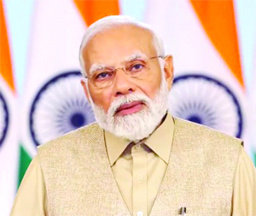
    NEW DELHI (TIP): On the 79th Independence Day, India’s Prime Minister Narendra Modi delivered his longest and most decisive address from the Red Fort, lasting 103 minutes, charting a bold roadmap for a Viksit Bharat by 2047. With a sharp focus on self-reliance, innovation, and citizen empowerment, the Prime Minister highlighted India’s journey from a nation dependent on others to a globally confident, technologically advanced, and economically resilient country.

    No blackmail, no compromise

    PM Modi hailed Operation Sindoor, conducted after the Pahalgam attack, as a demonstration of India’s strategic autonomy. Using Made-in-India weapons, the operation dismantled terror networks and Pakistan-based infrastructure, signaling a new era where India will no longer accept nuclear blackmail or threats on foreign terms.

    On the issue of the Indus Waters Treaty, he made it unequivocally clear: “India has now decided, blood and water will not flow together. The people have realized that the Indus Waters Treaty was unjust. Water from the Indus River system irrigated enemy lands while our farmers suffered.” This statement reaffirmed that India will no longer compromise on its national interests, and the operation underscored the country’s ability to act swiftly and decisively, relying entirely on indigenous technology and defense platforms.

    Atmanirbhar Bharat, strengthening technology, industry

    PM Modi said, “Dependence on others raises questions about a nation’s independence. It is unfortunate when dependence becomes a habit, a dangerous one. That’s why we must remain aware and committed to becoming self-reliant. Self-reliance is not just about exports, imports, the rupee, or the dollar. It is about our capabilities, our strength to stand on our own.”

    That is why he announced that India will roll out its first Made-in-India semiconductor chip by 2025 and is opening the nuclear sector to private players, creating unprecedented opportunities in energy and technology.

    He urged every citizen, especially the youth, to take part in nation-building by innovating and producing jet engines, social media platforms, fertilizers, and other critical technologies indigenously, forging a future where India stands self-reliant, powerful, and globally respected. PM Modi also highlighted India’s bold steps to secure resources critical for its future. Through the National Critical Minerals Mission, the country is exploring 1,200 sites to ensure access to minerals essential for energy, industry, and defense.

    He emphasized that controlling these minerals strengthens India’s strategic autonomy, keeping its industrial and defense sectors truly self-reliant. Complementing this, the National Deepwater Exploration Mission will harness India’s offshore energy resources, boosting energy self-reliance and reducing dependence on foreign fuel imports, marking another step toward a fully independent and powerful India.

    PM Modi urged the nation to achieve self-reliance in medicines and innovation, highlighting India’s strength as the “pharmacy of the world”. He asked, “Shouldn’t we be the ones providing the best and most affordable medicines for the welfare of humanity?”

    He emphasized India’s growing prowess in domestic pharmaceutical innovation and the urgent need to develop new medicines, vaccines, and life-saving treatments entirely within India. Drawing inspiration from India’s COVID-19 response, where indigenous vaccines and platforms like CoWin saved millions of lives globally, he called on the nation to expand this spirit of innovation.

    Researchers and entrepreneurs were urged to secure patents for new drugs and medical technologies, ensuring that India not only meets its own healthcare needs but also becomes a global hub of medical self-reliance and innovation, demonstrating the country’s ability to lead in science, technology, and human welfare.

    Mission Sudarshan Chakra

    To strengthen India’s offensive and deterrent capabilities, PM Modi launched Mission Sudarshan Chakra, drawing inspiration from India’s rich cultural and mythological heritage. He said, “India is launching Mission Sudarshan Chakra to create a powerful weapon system to thwart any attempt by enemies to attack us.”

    The initiative is designed to enhance rapid, precise, and powerful defense responses, reinforcing India’s strategic autonomy. PM Modi added, “All public places will be covered by an expanded nationwide security shield by 2035,” ensuring comprehensive protection for the nation while showcasing India’s commitment to self-reliant defense.

    Next-generation Reforms

    PM Modi announced the formation of a Task Force for Next-Generation Economic Reforms, aimed at overhauling laws, rules, and procedures that govern economic activity.

    He highlighted that the government has already abolished over 40,000 unnecessary compliances and 1,500 outdated laws, and in the latest parliamentary session, over 280 provisions were removed. Looking ahead, Next-Generation GST reforms by Diwali will reduce taxes on daily essentials, benefiting MSMEs, local vendors, and consumers, while simultaneously stimulating economic growth and creating a more efficient, citizen-friendly economy.

    PM Viksit Bharat Rozgar Yojana, Empowering Youth: To strengthen India’s demographic dividend and ensure that the nation’s youth play a central role in its growth, PM Modi launched the PM Viksit Bharat Rozgar Yojana, a Rs1 lakh crore employment scheme under which newly employed youth will receive ₹15,000, targeting 3 crore young Indians.

    He emphasized that this initiative would transform India’s demographic potential into real economic and social prosperity, strengthening the bridge from Swatantra Bharat to Samriddha Bharat and empowering the youth to actively contribute to the nation’s progress and development. 

    Energy and Nuclear Self-Reliance: PM Modi also highlighted India’s bold steps to secure resources critical for its future. Through the National Critical Minerals Mission, the country is exploring 1,200 sites to ensure access to minerals essential for energy, industry, and defense.

    He emphasized that controlling these minerals strengthens India’s strategic autonomy, keeping its industrial and defense sectors truly self-reliant. Complementing this, the National Deepwater Exploration Mission will harness India’s offshore energy resources, reducing dependence on foreign fuel imports and boosting energy self-reliance, marking another step toward a fully independent and powerful India.

    Highlighting India’s remarkable achievements in clean energy, PM Modi noted that the country had already reached its 50% clean energy target in 2025, five years ahead of schedule.

    He also announced plans to increase India’s nuclear power generation capacity tenfold by 2047, with 10 new nuclear reactors underway, ensuring energy security and sustainable growth. He added that if India were not dependent on energy imports, the money saved could be used for the welfare of farmers, further strengthening the backbone of the nation’s prosperity. 

    Space sector independence, pioneering innovation

    PM Modi highlighted India’s growing prowess in space science. Preparations for India’s own space station are underway, building on the success of the Gaganyaan mission. Over 300 startups are now innovating in satellite technology, space exploration, and cutting-edge research, demonstrating that India is not only participating in the global space arena but leading with indigenous solutions.

    Farmers are backbone of India’s prosperity

    PM Modi declared, “India will not compromise on their interests.” He emphasized that he has stood as a wall for the farmers and livestock keepers against any detrimental policy, protecting their rights and livelihoods.

    He said that Agriculture remains a cornerstone of India’s development, with India No. 1 in milk, pulses, and jute, and No. 2 in rice, wheat, cotton, fruits, and vegetables. Agricultural exports have crossed Rs 4 lakh crore, reflecting the nation’s global competitiveness.

    To further empower farmers, he launched the PM Dhanya Dhanya Krishi Yojana for 100 backward farming districts, complementing ongoing support through PM-Kisan, irrigation schemes, and livestock protection programs, ensuring that India’s backbone of prosperity remains strong and resilient.

    PM Modi also addressed the importance of safeguarding India’s demographic integrity. He warned of challenges posed by illegal infiltration, stressing the need to protect border areas and citizens’ livelihoods. To address these concerns, he announced the High-Powered Demography Mission, aimed at ensuring India’s unity, integrity, and security, tackling both strategic and social challenges.

    Looking ahead, PM Modi outlined his vision for a Viksit Bharat 2047, emphasizing that India’s progress is built on self-reliance, innovation, and citizen empowerment.

    He reminded citizens that India’s strength lies in its people, innovation, and commitment to self-reliance, urging every Indian to contribute to nation-building, whether by buying India-made products or participating in scientific, technological, and entrepreneurial ventures to ensure a prosperous, powerful, and Viksit Bharat by the nation’s centenary of independence.

  • India making great efforts in green growth and energy transition: PM Modi

    India making great efforts in green growth and energy transition: PM Modi

    Panaji (TIP)- Prime Minister Narendra Modi on Saturday, July 22, said India is making great efforts in green growth and energy transition, and asserted that the country is moving ahead strongly on its climate commitments.
    Addressing the G20 Energy Ministers’ Meeting via video link, PM Modi underlined that even though every nation has a different reality and pathway for energy transition, he firmly believes that the goals of every country are the same. Throwing light on India’s efforts in green growth and energy transition, he pointed out that India is the most populated nation and the fastest-growing large economy in the world and yet is strongly moving towards its climate commitments.
    ThePM informed that India has achieved its non-fossil installed electric capacity target nine years in advance and set a higher target for itself. He mentioned that the nation plans to achieve 50 percent non-fossil installed capacity by 2030.
    “India is also among the global leaders in solar and wind power”, the Prime Minister said as he expressed delight that the Working Group delegates got a chance to witness the level and scale of India’s commitment to clean energy by visiting the Pavagada Solar Park and Modhera Solar Village.
    Highlighting the achievements of the country in the last 9 years, the Prime Minister informed that India connected more than 190 million families with LPG while also recording the historic milestone of connecting every village with electricity. He also touched upon working to provide piped cooking gas to people which has the potential to cover more than 90 percent of the population in a few years. “Our effort is to work for inclusive, resilient, equitable and sustainable energy for all”, he added.
    The Prime Minister informed that in 2015, India began a small movement by launching a scheme for the use of LED lights which turned out to be the largest LED distribution program in the world saving us more than 45 billion units of energy per year.
    He also touched upon starting the largest agricultural pump solarization initiative in the world and India’s domestic electric vehicle market projection of 10 million annual sales by 2030. He also highlighted commencing the rollout of 20 percent Ethanol Blended Petrol this year which aims to cover the entire country by 2025.
    For decarbonizing India, the Prime Minister said that the country is working on Mission mode on Green Hydrogen as an alternative and aims to transform India into a Global Hub for the production, use and export of Green Hydrogen and its derivatives.

  • Sobriety after the euphoria of the U.S. state visit

    Sobriety after the euphoria of the U.S. state visit

    India’s potential should be marshalled to act as a bridge between conflicting parties in the Indo-Pacific, in West Asia and in Europe. This could be the enduring legacy of the Prime Minister’s latest visit to the U.S., which has occasioned so much of interest not only in the U.S. and India, but across the world. It is for India to seize the moment and play its rightful role.

    By M K  Narayanan

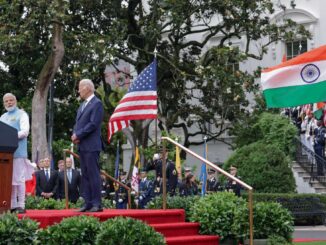
    The euphoria stemming from Prime Minister Narendra Modi’s state visit to the United States in June is yet to subside. All of India continues to savor the images that marked this highly publicized visit. Those with long memories of U.S.-India relations in the past are, hence, left to wonder whether this is the same U.S. that had let India down in the past at crucial moments.

    Two U.S. Presidents in particular, Lyndon B. Johnson in 1963 and Richard Nixon in 1971, are still remembered for their infamous roles in this respect. Johnson for denying aid to India in the wake of China’s perfidious attack on India in 1962, and Nixon during the India-Pakistan conflict in 1971 for sending the U.S. Seventh Fleet steaming up the Bay of Bengal in a show of force intended to deter India from supporting the ‘liberation struggle’ in East Bengal, which ultimately led to the birth of a new nation, Bangladesh.

    This time, there was no room, whatsoever, to doubt in which corner the U.S. stands in relation to India. The promise of the transfer of technology in several areas, most conspicuously in terms of producing fighter jet engines for the Indian Air Force, and holding out the promise of the initiative on Critical and Emerging Technology (iCET) marks a remarkable turn in the American attitude. All this, and with the many more agreements on critical technologies on the anvil, could lead to a quantum jump in India’s military and aerospace capabilities.

    Many are bound to view this as an attempt by the U.S. to persuade India to accept an alliance status, vis-à-vis, the U.S. The fine print on the recent negotiations does not, however, indicate this as a possibility at this time. Strategic ties are certain to attain a new dimension, and the U.S. side certainly hopes it could lead to “a deeper, more effective, and more diverse defense partnership”. Yet, and despite India’s attractiveness to the U.S. as a huge market for goods, and increasingly as a destination for state-of-the-art military items, there are ‘miles to go’ before India is viewed as an alliance partner.

    Perceptions on what constitutes a successful visit often vary, but all things considered, the Prime Minister’s visit to the U.S. this time should be deemed a major success, and as enhancing India’s position as a prime defense technological partner of the U.S. It is certain to not only favorably impact India-U.S. relations but also India’s standing in the world.

    Indian visits then and now

    Every Indian Prime Minister is, of course, entitled to his or her place in the sun. A good visit to the U.S. by an Indian Prime Minister is generally viewed as one clear index of India’s standing in the comity of nations. It is, hence, tempting to compare Mr. Modi’s latest visit with that of other Indian Prime Ministers since Independence. There were visits by Jawaharlal Nehru (he met with Harry S. Truman, Dwight D. Eisenhower and John F. Kennedy), and Lal Bahadur Shastri’s visit never happened in the end), while Indira Gandhi’s visit to Washington as Prime Minister was a disaster of sorts, with both India and the U.S. having their own versions of what transpired. Prime Minister Rajiv Gandhi’s visit was by all accounts deemed a success, breaking many previous shibboleths. Admittedly, none of them matched the euphoria created by the visit of two latter day Prime Ministers, Manmohan Singh and Mr. Modi.

    Only the most foolhardy would possibly attempt a comparison between the visits of Prime Minister Manmohan Singh during his tenure, specially the one in 2005, and Mr. Modi’s latest endeavor. The question uppermost in everyone’s minds would be whether ‘ending nuclear apartheid’ (imposed on India after the 1974 nuclear tests ‘Buddha is smiling’), or the defense technological breakthroughs achieved during the recent visit are more significant for India’s future.

    The civil nuclear deal marked a shift

    Admittedly, the opening up of civil nuclear cooperation between India and the U.S. marked the beginning of a tectonic shift in global affairs at the start of the 21st century, unmatched before or since. Securing a waiver under the Nuclear Non-Proliferation Treaty, and obtaining the approval of the U.S. Congress for the iconic 123 Agreement that paved the way for an India-specific Safeguards Agreement with the International Atomic Energy Agency (IAEA) subsequently, were not merely unprecedented, but one time achievements, the like of which have few equals in the annals of world history. As a result, India today has the freedom to maintain a select number of reactors outside IAEA Safeguards, enabling it to utilize them for military purposes. The freedom India currently enjoys for reprocessing and enrichment are other critical outcomes that stemmed from the visit.

    What is also interesting to note is that all this was achieved despite the entire U.S. Establishment (with the sole exception of President George Bush) being opposed to these concessions — a testimony to the nature of the personal relationship that existed between then U.S. President George W. Bush and Prime Minister Manmohan Singh. Seldom has such a shift been witnessed in the global arena, due solely to the personal chemistry between leaders of two countries — a testimony to the civilizational attributes of the two leaders at the time.

    During Dr. Manmohan Singh’s state visit to the U.S. in 2009, the pièce de résistance was the exchanges between two of the world’s most cerebral leaders at the time, viz., U.S. President Barack Obama and Dr. Manmohan Singh. Mr. Obama’s remarks at the start of his private meeting with Dr. Singh, ‘You are My Guru’, says it all. What followed was an avalanche of results, and there was no obvious quid pro quo expected or sought for. Both in 2005 and in 2009, it was evident that it was India’s reputation as a civilizational entity that seemed to weigh with U.S. leaders at the time.

    Be cautious, look at history

    The United States of the 21st century is certainly different in many respects from the U.S. in the late 20th century. In the euphoria that exists following Mr. Modi’s visit, it is, however, desirable for India to be cautious and heed the lessons of history. India certainly is not, at least at this stage, the kind of ally that the U.S. seeks or demands. Moreover, U.S. politics is currently in a state of flux — more so than at most times in the past. The individual preferences of the U.S. President in office and the ‘swing factor’ in U.S. foreign policy are other aspects that foreign countries, India included, can seldom comprehend adequately. India again is not unfamiliar with the way the U.S. changes its priorities, and friends.

    Consequently, and despite the warmth of the reception accorded to Mr. Modi in Washington, India should realize that it cannot at any time, be the kind of ally that the U.S. seeks. Sober leaders on both sides must also understand that the current euphoria in relations notwithstanding, the situation has been dictated due to circumstance rather than conviction. This must not be lost sight of by India in particular. For instance, India cannot possibly be part of an arrangement such as the AUKUS Pact that binds the U.S. with the United Kingdom and Australia. The fundamentals underlying the Quad (India, Japan, Australia and the U.S.) and AUKUS are very different.

    India must, instead, use the outcome of the Prime Minister’s visit to skillfully function as a ‘bridge power’. It is eminently suited to play such a role, and should not be inveigled — through blandishments such as defense ties — to play the role of a subordinate to the U.S. in the politics of the Asia-Pacific.

    India’s potential should be marshalled to act as a bridge between conflicting parties in the Indo-Pacific, in West Asia and in Europe. This could be the enduring legacy of the Prime Minister’s latest visit to the U.S., which has occasioned so much of interest not only in the U.S. and India, but across the world. It is for India to seize the moment and play its rightful role.

    (M.K. Narayanan is a former Director, Intelligence Bureau, a former National Security Adviser, and a former Governor of West Bengal)