Tag: Assam

  • Supreme Court reserves verdict on same-sex marriage

    Supreme Court reserves verdict on same-sex marriage

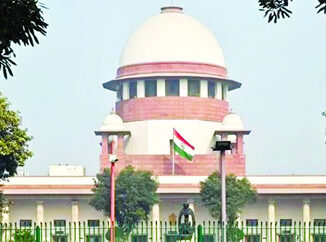
    After 10 days of marathon arguments, the Supreme Court on Thursday, May 11, reserved its verdict on petitions seeking legal validation of same-sex marriage. A five-judge Constitution Bench headed by Chief Justice DY Chandrachud reserved its judgment after hearing arguments from senior advocates AM Singhvi, Raju Ramachandran, KV Viswanathan, Anand Grover and Saurabh Kirpal on behalf of the petitioners; Attorney General R Venkataramani, Solicitor General Tushar Mehta for the Centre and senior counsel Kapil Sibal for Jamiat-Ulama-i-Hind. The Bench has already made it clear that it would not get into the personal laws of various religious communities and would only examine the Special Marriage Act, 1954, to consider the petitioners’ prayer.
    The Centre, some of the states, certain Hindu, Muslim and Christian organisations have opposed the petitions. The governments of Assam, Andhra Pradesh and Rajasthan have the petitions, citing public opinion and adverse implications on the social and family system. On behalf of the Government of Madhya Pradesh, senior counsel Rakesh Dwivedi has opposed the petitions seeking recognition for same sex marriage.
    The Bench is expected to deliver the verdict after the summer vacation.

  • Assam: The land of blue hills, green valleys

    Assam: The land of blue hills, green valleys

    Assam is a land of blue hills, green valleys and a red river — the majestic and sacred Brahmaputra. It is known for its famous tea, its silk and its biodiversity, and is also rich in archeological heritage. Assam is in the north eastern region of India, just below the eastern Himalayan foothills. It is surrounded by the states of Arunachal Pradesh, Nagaland, Manipur, Mizoram, Tripura and Meghalaya, which together with Assam are known collectively as the seven sisters, and by the nations of Bhutan and Bangladesh. The borders of China and Myanmar are within the range of 80 to 100 km.
    THINGS TO DO
    EXPERIENCE FESTIVAL CHEER
    The festivals of a particular region are the mirrors that reflect the life and cultural orientation of the people. And thanks to a massive diverse cultural milieu and numerous habitant communities, Assam hosts a bevy of festivals across the year. These fiestas are the perfect time to be in the state as they offer the ideal opportunity to mingle with the locals and get close to their lives and habits. The main festival of Assam is Bihu and there are three distinct ways to celebrate it within a year – one in January, one in April and the other in September-October. The significance of Bihu lies in the fact that it is not a religious festival but a way to celebrate mother nature and the various stages of harvesting. Apart from Bihu, the people of Assam celebrate various other festivals – witness Kamakhya Temple in full glory during the Ambubachi Mela (June); be a part of the lives of the Bodos (one of Assam’s main tribes) in Baishagu (April) and enjoy the Mising (another tribe) hospitality in Ali Aye Ligang (mid February). Apart from these celebrations, Assamese people observe all the major Indian and global festivals like Diwali, Holi, Eid and Christmas; but yes, with a tinge of local flavor!
    Embark on a Spiritual Sojourn
    Assam with all its natural beauty and mystic charm is home to a unique spiritual mix. Not a frontline pilgrimage destination, the state, nevertheless has its set of temples, mosques, gurdwaras and churches. All the major religious faiths co – exist in the land and have grown into full – fledged ways of living with a set of indigenous spiritual leaders.
    The tiny town of Hajo is an eternal example of communal harmony with Hinduism, Islam and Buddhism – all co – existing peacefully. Visit the Hayagriva Madhava Mandir, which is reminiscent of the Jagannath Temple in Puri; pay your respect at the Powa Mecca and witness the power of Shakti in Kamakhya Temple. Sikhism is not much prevalent in Assam but the town of Dhubri at the bank of the Brahmaputra houses a gurdwara (often called Dhubri Saheb) founded by Guru Teg Bahadur in 17th century. Find solace amid all these peaceful abodes and experience serenity.
    Mystery hunt in Mayong
    Who does not love a good tale of mystery with open ending? And the films of Christopher Nolan are not the only answer to it. Despite the growing information flow about the life and living in Assam, there is still a section of society as well as a section of travelers who are either apprehensive or intrigued by the scattered tales of the indescribable and indefinable. These stories are everywhere in the state but two places commend special mention if we talk about the unexplained mystery trail of Assam – Jatinga and Mayong.
    A 40-km drive from Guwahati will lead you to the quiet and peaceful village of Mayong in Morigaon district; but the serenity of this place is more a veil of mystery than anything else. Often referred to as India’s magic capital, Mayong is (in)famous for the tales of people vanishing into thin air, fierce beasts being tamed as if they were a puppy and not a beast or humans being converted into animals and vice a versa. An outlaw of a place for many years, Mayong, of late, has gained prominence as a tourist destination and adventure seekers from all parts of the globe visit this eerie village. Another sleepy hamlet Jatinga is known for the mass bird suicides that take place from September to November every year.
    Take the Heritage trails
    An ancient land of myths and legends, it is no surprise that Assam has a rich repertoire of historical monuments with numerous mythological references attached to them. A cultural heritage aficionado or a history lover will have a field day while living some of the lesser known episodes and tales from Assam’s past amid ruined palaces and quiet architectural marvels. Icing on the cake – many of these remnants of the past have been keeping a low profile in the midst of soul – soothing natural beauty or fitness – testing highlands!
    To warm up, you can start with a heritage walk along the alleys of old Guwahati and then move 41 kms north to Baihata Chariali that houses an archaeological site called Madan Kamdev. Take a trip to the culturally rich town of Sivasagar and stand witness to the finer side of the Ahom dynasty amid the Rang Ghar, the Charaideo hillock, Joy dol, Shiva dol, Kareng Ghar, Talatal Ghar and Sivasagar tank. Assam’s cultural capital, the town of Jorhat, is witness to many historical events in the state and is still a must – visit for a history chaser. The present town of Tezpur finds frequent reference in The Mahabharata and the love story of princess Usha (King Baana’s Daughter) and prince Anirudha (grandson of Lord Krishna) tickles the romantic hidden inside you; not to mention other tourist points like Agnigarh hill, Cole Park, Mahabhairab Temple and Hazara Pukhuri.
    River cruise on the Brahmaputra
    The river runs through the entire length of Assam but the stretch that touches Guwahati is the most highlighted one, courtesy the city’s commercial and political status and the famous Saraighat Bridge. The Brahmaputra divides the city into two parts while on its imposing journey from the Himalayan glaciers to the Bay of Bengal. After the completion of Saraighat Bridge, these waters were traversed just for fishing and coastline trading but the scene has changed drastically in the past decade or so. Now several ferry service providers offer laid-back river cruises for the travelers.
    The Bharalu ghat and the Kachari ghat in the city are the main places from where you can book a cruise. Usually operated in the afternoon, these cruises last for two to three hours and take you along the majestic waters of the Brahmaputra. These ferries have sitting area for the guests and one can avail the food and beverage services onboard. Imagine yourself on one of these ferries with a cup of tea standing witness to the sunset on the crimson western sky!
    Heritage walks in old Guwahati
    There is a reason why the phrase – old is gold – exists in our vocabulary and the old Guwahati area further cements that saying. Though there is no specific new Guwahati on either maps or local lingo, we can recommend certain localities that will bring back the old world charm once you set foot in them. And we are referring to the literal meaning of the word ‘foot’ here as these vintage parts are best explored if you walk down its alleys and corridors. The major areas that fall under this bracket are?the academic hub of Panbazar, the colonial remnant Uzanbazar, the roads of Kharghuli, the entire area of Digholipukhuri and some parts of Aambari area.

  • Election verdict a pushback for BJP policies

    Election verdict a pushback for BJP policies

    By Zoya Hasan

    “What the pandemic has done, unlike the disaster of demonetization, is bring to the fore the BJP’s incapacity for governance. It has shown the sheer incompetence of the majoritarian model of governance, which is just not suited for running a modern state. The administrative ineptitude is impossible to ignore even for those intoxicated by the right-wing’s electoral successes.”

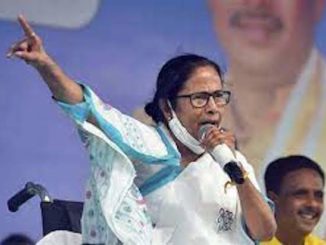
    The BJP’s defeat in West Bengal, Kerala and Tamil Nadu shows the limits of Hindutva. It shows regional parties can overpower Hindutva at the state level and hence the BJP cannot assume a natural monopoly over state politics.

    The results of the just-concluded Assembly elections give us an indication of ground-level political changes in the key states of Assam, West Bengal, Kerala and Tamil Nadu. While it’s important to understand the results in terms of state-specific factors, the overall political outcome indicates a successful assertion of local/regional politics against the majoritarian-authoritarian politics of the BJP. The centrality of the local is visible from the Lokniti-CSDS survey which underlines the primacy of local factors and state leaders with a mass base in determining the choices of voters. The reasons for this vary from state to state but the limits of Hindutva’s expansionist politics and its agenda of polarization are apparent. This has decisively dashed the BJP’s avaricious plans of conquering new territories.

    These setbacks suggest that the polarizing rhetoric of Hindu nationalism doesn’t thrive everywhere in India, especially in regions with a distinct culture, a history of social movements, strong secular tradition, and where vernacular languages hold primacy instead of Hindi. It showed how stunningly out of touch the BJP is from the political reality in these states where it was holding Uttar Pradesh (UP) Chief Minister Yogi Adityanath’s road shows, chanting slogans of Jai Shri Ram, talking love jihad and trying to excite Hindus with anti-Muslim dog whistles. None of this seems to have worked. The BJP lost decisively in Kerala (not winning a single seat), its alliance lost in Tamil Nadu (BJP won only four seats), and it lost spectacularly in Bengal (winning 77 seats, way short of 200 it boasted). The central point of the election outcome is that the majority of Hindus voted against the BJP to keep it out of power in three important states.

    But this rebuff did not occur in the core areas of BJP’s support base in northern and north western India and these will be tested in the polls in 2022. The RSS has changed the political discourse in these states, especially in UP. But it would be a mistake to presume that issues of unemployment, jobs, farmers’ distress, regressive farm laws and the massive Covid mismanagement will not matter in India’s most significant state. In addition to Covid, the continuation of the farmers’ revolt, which began in November 2020, is likely to shift the balance of forces in many of these northern states, from Haryana to UP to Gujarat.

    The gross mismanagement of the public health crisis in UP makes it one of the worst hit states with high caseload and fatalities. UP has an archaic and creaky medical infrastructure which is collapsing as Covid rages unchecked through the state with people running from pillar to post in search of hospital beds, including in the big cities of Lucknow, Kanpur, Allahabad and Banaras. The situation in villages and small towns is much worse. The virus has now reached rural parts where people are struggling to breathe.

    However, the state government is claiming that it has the situation under control. This shows how completely unmindful it is of human suffering. Amid the surge of the virus, the Chief Minister has issued orders to set up help desks for the protection of cows in each district of the state and has directed that Covid-19 protocols are maintained at all cow shelters, including stocks of equipment like oximeters and thermal scanners “for cows and other animals as well”. The order comes while UP suffers from a crippling shortage of medical supplies and oxygen. Instead of tackling oxygen shortage, the government has slapped an FIR on a Lucknow city hospital, accusing it of spreading false rumors of shortage.

    While people in the state are desperate for oxygen, its Chief Minister denies there’s even a problem. The denialist rhetoric and the government’s indifference to the crisis will impact the BJP’s popularity in UP. A report in Mint pointed out that even hardcore BJP supporters and party workers are sharply criticizing the government’s maladministration in WhatsApp groups in UP. The growing anger against the BJP leadership’s handling of the Covid crisis has found resonance in the panchayat polls. Opposition parties have won close to 50 per cent of all seats contested and swept districts which are BJP strongholds. The BJP is losing ground in Ayodhya, Varanasi, Mathura and Gorakhpur which is an important development given how much political attention has been showered on these cities by the government.

    But let’s not forget that Modi and the BJP have the ability to turn things around. They did it after demonetization, sweeping UP in the 2017 Assembly elections even though everyone had predicted an adverse fallout for the party. However, the post-Covid situation is different. What the pandemic has done, unlike the disaster of demonetization, is bring to the fore the BJP’s incapacity for governance. It has shown the sheer incompetence of the majoritarian model of governance based on a politics of hate and obscurantism which is just not suited for running a modern state. It’s not simply a failure of the Indian State but a failure of the BJP model of the State. The administrative ineptitude and the government’s insensitivity are impossible to ignore even for those intoxicated by the right-wing’s electoral successes.

    The huge governance failure in UP, in contrast to Kerala, for example, reminds us during the worst crisis, that a governance model can make the difference between life and death, and the absolute criticality of a politics based on empathy, concern, planning and human development in comparison with one based on building religious places of worship and vanity projects such as the Central Vista in the Capital in midst of the calamitous second wave.

    The BJP’s defeat in West Bengal, Kerala and Tamil Nadu shows the limits of Hindutva. It shows regional parties can overpower Hindutva at the state level and hence the BJP cannot assume a natural monopoly over state politics. However, regional politics cannot counter the hold of Hindutva in UP which has been the BJP’s pathway to power in 2014 and 2019. The Hindutva project has built an enduring communal majority in the Hindi heartland. Its overwhelming size and support in this region give the BJP an overwhelming advantage over its rivals. Therefore, majoritarianism and the claim of the majority to dominate have to be challenged in these states. The most effective way of doing this, apart from building big-hearted alliances, is to claim greater equality of rights of every section of the people and region, and not simply the inclusion of minorities through the revival of pluralism.

    (The author is Professor Emerita, Jawaharlal Nehru University)