Tag: Atal Bihari Vajpayee

  • Has PBD started losing its sheen?

    By Prabhjot Singh

    The Ministry of External Affairs and the Odisha Government are patting their backs for the “overwhelming success” of the just concluded biannual event for the elite of the Indian Diaspora.

    The three-day Pravasi Bharatiya Divas held at a specially erected tented township at Janata Maidan in Bhubaneswar, the capital of Odisha, not only saw 27 eminent members of the Indian Diaspora drawn from 24 countries being honored with Pravasi Bharatiya Samman Awards, but also witnessed concerted efforts by the NDA government in projecting “Viksit” (developed) Bharat by 2047, the centennial year of India’s independence.

    Overall, delegates were appreciative of the arrangements made for the smooth conduct of the convention. Odisha government put its best foot forward to attract Foreign Direct Investment in various areas, specifically in mining and tourism sectors.
    “Focus was rightly more on the projection of India as an emerging economic power but at the same time, the other party in the convention, the Diaspora, was left wondering at its shrinking space in the bilateral convention,” commented a number of delegates from the USA, Australia, and the UK.

    They held that the reason for the decreasing participation of delegates from the West or the developed nations was the changing mandate of the convention. Instead, this time some of the Asian nations, including Mauritius, Oman, Qatar, UAE, Malaysia, and a few African nations constituted more than two-thirds strength of all delegates.

    The focus was more on showcasing the progress the country has made during the present NDA regime in various fields, including technology. It also provided a platform for the Odisha government to showcase to the world the “investment opportunities” it offers in various fields in general and tourism in particular.

    It was in 2002 that the then BJP-led NDA government under the stewardship of Atal Bihari Vajpayee endorsed the recommendation of the LM Singhvi Committee report, and the Pravasi Bharatiya Divas convention was launched.

    This mega event was originally planned to act as a bridge between the overseas community and the Union Government in making them partners in the overall development of India as a “new economic” power. It was mandated to provide a platform for the exchange of views on the issues facing the country and its Diaspora worldwide.

    Of late, feel the delegates, the NDA government has been hijacking the agenda of this mega event by projecting its policies and programs. Issues and problems facing the Diaspora are gradually getting pushed to the periphery. Even individual or institutional achievements of the overseas community are getting marginalized. The only consolatory component of the biannual convention is the felicitation of the elite of the overseas community.

    In the 2025 PBD 27 such personalities and institutions who have made a mark in community service; business, trade, and industry; science and technology; education and academics; politics; environment; healthcare and medicine; and art, culture and literature were celebrated by the President, Droupadi Murmu. Some areas, like sports, where members of the Indian Diaspora have made laudable singular and collective achievements, are still to get recognition through Pravasi Samman awards. Of the nearly 300 overseas Indians honored till now, not even a single sportsperson figure in the list. Monologues have replaced dialogues. Even the participation of youth and women, too, has shown a decline. This is in spite of the fact that the first day of the convention remains committed to youth development and its connectivity to the roots.

    Of late, leaders in science, technology, research, business, trade, industry, and other areas have started skipping this convention. Even some of the political bigwigs, including the first Great Britain Prime Minister of Indian descent, Rishi Sunak, and the first woman US Presidential candidate, Kamla Harris, did not find mention in the event designed specifically for the likes of them.

    Interest in the States, too, has been diminishing in the PBD. In the initial editions, the States used to celebrate their “days” by showcasing the progress they have made since independence while offering attractive investment opportunities to major industrial, business, financial, hospitality and tourist industry giants. Instead, the focus now veers on the host State only.

    Odisha, too, has joined the select band of States which have named a nodal minister as a one-man authority or single window clearance procedure to facilitate investments. The earlier practice of various States putting up special stalls and making their senior officials available to participating delegates has been discontinued.

    Though the chief guest at this biannual mega convention is normally a Head of a state of Indian descent, participation of other overseas politicians of Indian descent has diminished.

    Many delegates held that the programme needs a revisit and redesign to meet the rapidly changing requirements of the of the nearly 36 million strong overseas Indian community. India, they say, remains the single largest source of both skilled and unskilled manpower and contagious issues related to identity and globalization need to be addressed more aggressively.

    Some developed nations like the USA, Canada, Great Britain, Australia, and New Zealand, acknowledged as top favorite destinations for Indian youth, including students, are making rapid changes to their immigration policies and programs because of which there hangs a sword of uncertainty, and their apprehensions of “deportation” from the countries of their present abode need to be taken up more seriously at the events like PBD.

  • Punjab Government tripped, and how

    Punjab Government tripped, and how

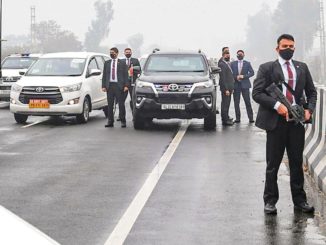
    Failed to fulfil its constitutional obligation to ensure safe passage to PM

    By Julio Ribeiro

    I do not subscribe to the BJP’s charge that the Congress government willfully exposed the PM to danger in the hope that he would be harmed. That is a misstatement of facts meant to gain political mileage. The people are not so dumb. But what the people do not know is that unwittingly the state government has thrown itself open to the charge that the PM’s personal security could have been compromised by the sudden hold up on the bridge near his destination. Any unhinged person could have caused damage. That lapse cannot be excused and it will not be, though here again the charge that the Punjab Police purposely leaked the details of the route to be followed by the PM to the farmer protesters can be discarded as another instance of political grandstanding. A route prescribed for the travel has to be secured well in advance. Movement of policemen detailed for such work will be known to everyone, friend or foe, by the very nature of the exercise.”

    The PM’s inability to reach his destination in Punjab on January 5 showed the state government and its police force in a very bad light. It failed to fulfil its constitutional obligation to ensure safe passage to the nation’s Chief Executive! This has not happened before, as far as my memory goes. There is an elaborate drill that precedes the PM’s visit to a state. State governments ruled by Opposition parties, as in the case of Punjab, have an added responsibility in this matter as they have to keep their own followers in check. If the newly installed CM thought he was teaching his rivals a lesson in political jugglery, I reckon he has picked on the wrong horse.

    Before a PM crosses into a state, the SPG, which is in charge of the PM’s personal safety, sends an advance party of senior officers to thrash out every detail of his or her itinerary with the DGP and his Intelligence wing. Visits are paid to the spots where the PM is scheduled to visit. The law and order machinery of the police, as represented by the DSP and his juniors, is associated in the planning of the entire event.

    The Intelligence Bureau (IB), which monitors the political pulse of the parties and people involved in the event, is associated with the security arrangements. The final call on every detail is with the SPG, which has been especially raised for securing the life of the country’s PM. In the case of Modi, the threat perception must be considerably higher than what it was for Dr Manmohan Singh or Atal Bihari Vajpayee.

    I presume these drills, which cover all the special precautions to be taken in case of eventualities like a change in route, were discussed and finalized by the state’s police leadership with the SPG and the IB team. The PM was to use a helicopter to travel from Bathinda to Hussainiwala in Ferozepur district, where he was to honor the martyrs who laid down their lives to free the country from colonial rule. That the helicopter may have to be abandoned was always on the cards. Winter mist and rain that hampers visibility is a regular feature in Punjab at this time of the year. It must have been factored in during the course of the preparations for the visit.

    I am afraid that the Congress government has messed up badly. No excuses can soften the blow, since no excuses will be accepted. The security of the PM is the topmost concern of every citizen of this country and not merely the agencies constituted to ensure that his life is safe. It is a matter of national honor.

    While the SPG guards his proximity and his person, it is the responsibility of the state’s police to ensure that the PM moves about without any hindrance. Malcontents and sundry political opponents who wish to demonstrate against him have to be called and told what will be permitted and what will not be allowed. Uniformed police officers are adept in this particular police duty.

    I do not subscribe to the BJP’s charge that the Congress government willfully exposed the PM to danger in the hope that he would be harmed. That is a misstatement of facts meant to gain political mileage. The people are not so dumb. But what the people do not know is that unwittingly the state government has thrown itself open to the charge that the PM’s personal security could have been compromised by the sudden hold up on the bridge near his destination. Any unhinged person could have caused damage. That lapse cannot be excused and it will not be, though here again the charge that the Punjab Police purposely leaked the details of the route to be followed by the PM to the farmer protesters can be discarded as another instance of political grandstanding. A route prescribed for the travel has to be secured well in advance. Movement of policemen detailed for such work will be known to everyone, friend or foe, by the very nature of the exercise.

    But the act of the protesters in blocking the road had to be prevented at all cost. I cannot believe that the police had no inkling of the farmers’ moves. This was a group that was attempting to establish its individual identity on the political landscape. This was an added reason for the Intelligence wing to keep them under strict surveillance. The wing has obviously failed.

    The normal drill is for the police to summon the leader of the demonstrators and tell them how far they could go in their constitutional right to protest. Simultaneously, the protesters needed to be told that the higher constitutional right of the nation’s top leader to go where he legitimately wished to go would be safeguarded by the state’s police, under any circumstance. If the protesters were determined to block the PM’s journey, they should have been temporarily detained till the PM had completed his meeting and departed. If they went further and resorted to violence, the police should have used force to disperse them. But in that case, the police would need enough men to chase, arrest and restrain, and a fleet of Black Marias or hired buses to whisk away those detained. All this needed to have been planned in advance.

    This drill has been practiced by the police in all parts of the country over the years. Why was it not planned on this occasion? If the newly installed CM thought he was teaching his political rivals a lesson in political jugglery, I reckon he has picked on the wrong horse! It is a foolhardy venture that is bound to boomerang.

    CM Channi’s taunt that the PM had to cancel his meeting in Ferozepur because only 700 of the 70,000 chairs were actually occupied is ridiculous. If you allow the roads to be blocked to ensure that those who were on their way to the venue could not get there in the first place, the taunt is not a taunt anymore. It is an outright lie which will diminish his credibility.

    The BJP is convinced that unless its writ runs in the states, like it runs at the Centre, no real progress is possible. In short, it envisages an Opposition-free government in the country, which translates into one-party rule. This concept spells disaster for Indian democracy.

    (The author is a former Director General of Punjab Police)

  • A universally loved politician: Vajpayee set templates that surprised

    A universally loved politician: Vajpayee set templates that surprised

    The man was a marvel. There have been few politicians like Atal Bihari Vajpayee who so effortlessly stepped across the Lakshman rekha of party propriety and ideology and yet garnered all-round respectability. Right from his debut in the Lok Sabha, there were murmurs by his constipated colleagues about his waywardness and ‘un-swayamsevak-like’ behavior. The minders kept their counsel because of the rarity in their ranks of a silver-tongued communicator like Vajpayee. Compared with other anti-Congress young Turks of the time, Vajpayee was entirely home-schooled in politics. Yet, the man gave the impression of being more forgiving, open-hearted and oriented towards politics of consensus than those schooled in tenets of western liberalism.

    His speech in Parliament that was noticed by Nehru marked him out as a politician to watch out for. And Vajpayee paid the price when it rolled out one of its big guns to humble him in the 1962 elections. Vajpayee was to brush off this dust of defeat several times in his career even as he silkily positioned himself for the top job in the party, leaving it to LK Advani to wield the axe on their one-time mentor Balraj Madhok to land control of the party. The Emergency tested his resolve and staying power as did a barren stretch after Indira Gandhi’s assassination. Vajpayee braved them both.

    Vajpayee’s hour arrived in 1998. And till ill-health laid him low, he occupied the political center-stage with hardly a single blemish of graft, nepotism or rank opportunism blighting his 50 years of public service. As PM, he endured the usual tumultuousness of helming a country, besides countering challenges to his authority with customary élan and panache. His experience enabled him to control the narrative — be it the nuclear tests, the Kargil conflict or the 2002 Gujarat riots. His inclusion in the pantheon of greats was guaranteed when he was felled by a paralytic attack in 2009. The only regret would be that Vajpayee entered South Block 10 years late when his health was already on the decline.

    (Tribune, India)