Tag: Australia

  • SRINIVASAN TAKES OVER AS CHAIRMAN OF ICC

    SRINIVASAN TAKES OVER AS CHAIRMAN OF ICC

    MUMBAI (TIP): India’s N. Srinivasan was confirmed as chairman of the International Cricket Council (ICC) in Melbourne on Thursday, giving the 69-year-old industrialist the most powerful role in the governing body’s restructured organisation. Srinivasan, who emerged as the leading candidate to become ICC chairman in February, will assume office almost immediately after the governing body rubber-stamped constitutional changes at its annual conference being held this week in Australia.

    “It is an honour to be confirmed as the Chairman of the International Cricket Council,” Srinivasan said in a statement after the 52-member full council approved amendments which, to many observers, give India, England and Australia virtual control of the sport. Often described as the most powerful man in cricket, Srinivasan became the Board Of Control For Cricket In India (BCCI) president in 2011 but was ordered to step aside in March to ensure a fair investigation into an illegal betting scandal during last year’s Indian Premier League involving his son-in-law.

    The Chennai-native was also accused of having a conflict of interest due to his India Cements company owning a franchise in the lucrative Twenty20 league. Those controversies have led to some criticism of his appointment with one official of a now unrecognised unit within the Indian cricket board urging the country’s Supreme Court to bar Srinivasan from taking over as ICC chief.

  • Australia thrash Netherlands 6-1 to retain hockey World Cup

    Australia thrash Netherlands 6-1 to retain hockey World Cup

    India beat South Korea 3-0, finish ninth

    THE HAGUE (THE NETHERLANDS) (TIP): Australia retained the men’s hockey World Cup title by outplaying Olympic silver medallists The Netherlands 6-1 in the final at the Kyocera Stadium on June 15 . Chris Cirielo’s three penalty corner conversions was the feature of the contest that saw Australia retain the trophy they had won in New Delhi in 2010. The successive men’s World Cup title wins was a present the Australian team had promised to their coach Ric Charlesworth, who had won it as a player in 1986 and as a coach four years ago.

    Playing their fourth successive World Cup final, Australia made up for the disappointment of losing two successive summit showdown to Germany. Before Australia clinched their second successive World Cup, Germany were the only nation to have won two consecutive times. The Netherlands opened the scoring in the 14th minute through Jeroen Hartzberger, but the Australians came back strongly to slam six goals to make it the most onesided World Cup final ever. Australia equalised in the 19th minute through Cirello’s first penalty corner conversion.

    Australia gained ascendancy with a 24th minute field goal through Kieran Govers’s reverse hit from top of the circle to go into halftime with a 2-1 lead. Glenn Turner beat goalkeeper Jaap Stockmann with a flick from close three minutes into the second half before Cirielo scored with successive penalty corners in the 46th and 53rd minutes. Jamie Dwyer rounded off the scoring in the 64th minute when he picked up a through ball on the left flank and darted into the circle to shoot home.

    The result denied the Dutch a double title in front of their fans after their women’s team defeated Australia 2-0 in the final yesterday. The Netherlands were seeking to improve on their performance in the 2012 Olympic Games in London, where they won the women’s gold medal, but the men lost the final to Germany. Even in 1998, the only previous time that the International Hockey Federation sanctioned joint hosting of the men and women’s World Cups – in the Dutch city of Utrecht – hosts Netherlands came close to achieving the dream double. The Dutch men won the 1998 World Cup defeating Spain in the final, but the women lost the title clash to Australia.

  • GOPIO’s 25th Anniversary Jubilee Convention a historic success

    GOPIO’s 25th Anniversary Jubilee Convention a historic success

    PORT OF SPAIN (TIP): The Global Organization of People of Indian Origin (GOPIO International) concluded its 25th Anniversary (Jubilee) Convention 2014 in Port of Spain in Trinidad & Tobago, with a memorable and highly successful celebration from 27th May through 30th May, 2014 coinciding with the 169th anniversary of Indian Arrival Day commemoration in Trinidad & Tobago.

    The convention was a historic event in the Indian Diaspora attended by delegates from several countries where GOPIO is prominent and where persons of Indian origin reside in substantial numbers and even small numbers. Countries include: Australia, New Zealand, Fiji, Malaysia, Mauritius, Sri Lanka, India, South Africa, Netherlands and other countries of the European Union (EU), UK, Canada, USA, and the Caribbean region: Guyana, Trinidad & Tobago, Suriname, Belize, St. Vincent, Guadeloupe, Martinique, Grenada and St Lucia.

    Among the many events of the convention, some of the notable highlights include: Welcome reception at the Diplomatic Centre residence of Hon. Kamla Persad-Bissessar, Prime Minister of Trinidad & Tobago, GOPIO’s elections for new officers, all-day academic conference, special guests at cultural performances held at National Cultural of Indian Culture (NCIC), and unveiling of arrival monument marking the first arrivals of indentured Indian laborers in Trinidad.

    A significant highlight of GOPIO’s 25th Anniversary Jubilee Convention was the special welcome reception of GOPIO delegates at the Diplomatic Centre residence of the Hon Prime Minister Kamla Persad Bissessar on 28th May. The reception was hosted by Ministry of National Diversity and Social Integration with Minister Dr Roger Samuel making the initial remarks, followed by GOPIO International president Ashook Ramsaran and presentation of gifts.


    9
    GOPIO Jubilee Recognition Recipients with GOPIO officials, Indian High Commissioner G. Gupta,Trinidad & Tobago’s Minister Dr. Vasant Bharath MP and Minister Ramona Ramdial MP.

    Hon Prime Minister Kamla Persad Bissessar formally welcomed GOPIO’s delegates, recounted GOPIO’s special reception/dinner during the visit to the Kolkata Memorial on 12th January, 2012 and thanked GOPIO for holding its 25th Anniversary Jubilee Convention in Trinidad & Tobago. In attendance were several ministers and members of parliament of the Government of Trinidad & Tobago as well as the Indian High Commissioner HE Gauri Gupta. The evening included a special celebratory treat of Caribbean and Indian music with delegates joining in dancing. On 28th May, a Business-to-Business seminar featuring prominent scholars and business leaders was held at the Radisson Hotel.


    10
    Some of the Legacy Generation Residents of Trinidad & Tobago with GOPIO officials, Indian High Commissioner HE Gauri Gupta, With Trinidad & Tobago’s Min. Dr. Suruj Rambachan, Min. Ramona Ramdial, Counselors Abdool & Seepersad, Couva Regional Chairman Henry Awong. Unveiling of Indian Arrival Monument at Waterloo-by-the-Sea

    It was sponsored by Trinidad & Tobago’s Ministry of Trade & Investment. Sessions include: Investment & Trade Opportunities in Trinidad & Tobago; Investment & Trade Opportunities in St Vincent & Grenadines; Investment & Trade Opportunities in Guyana; Success Stories of Doing Business in the Caribbean; Free Enterprise, Market Economy and Business Successes; The Growth of Education and Medical Services for Bi-Lateral Trade; Media as Marketing Tool in Emerging Economies The Academic Conference segment of the convention was a full 1-day event held on 29th May at the Radisson Hotel.

    There were several sessions designed round the convention theme of “Indian Diaspora Today & Tomorrow” The chief guest at the Inaugural Session was Indian High Commissioner HE Gauri Gupta and the keynote speaker Dr Mahin Gosine, Professor of Sociology and Anthropology at SUNY, New York, USA. Prof Kumar Mahabir, Assistant Professor at University of Trinidad and Tobago, concluded the session. Other sessions with prominent and suitably qualified speakers from several countries were: Global & Regional Diaspora Investments & Economic Opportunities; The Indian Diaspora: Issues, Challenges & Opportunities; Diaspora’s Youth, Children, Gender & Inter-Generational Issues; Multi- Cultural Diversity & Inter-Ethnic Cooperation in the Indian Diaspora; Education, Science & Technology as Significant Assets in the Indian Diaspora; Health, Wellness, Lifestyle & Nutritional Factors in the Indian Diaspora; GOPIO’s 25th Anniversary Resolutions; Wrap-up & Conclusion. Elections were held by GOPIO International Council for several positions in GOPIO at the international level.

    The following officials were elected by unanimous vote: President – Ashook Ramsaran; Executive Vice President – Sunny Kulathakal; Senior Vice President – Dr. Piyush Agrawal; International Coordinator North America – Dr. Renuka Misra; and International Coordinator Caribbean, Dr. Arnold Thomas. Chairman Inder Singh was elected for another term. The Jubilee Recognition Gala was another highlight of GOPIO’s 25th Anniversary (Jubilee) Convention 201, held on 29th May, 2014 in the Grand Ballroom at the Radisson Hotel in Port of Spain. In attendance was Indian High Commissioner HE Gauri Gupta, Trinidad & Tobago’s Minister of Trade & Investment, Dr. Vasant Bharath; and Min. Ramona Ramdial, Minister in the Ministry of Environment & Water Resources. The event was emceed by prominent radio and television host Zelisa Boodoosingh.

    GOPIO’s Jubilee Recognition for outstanding achievements in selected categories were awarded to several persons “who contributed to the betterment of people of the Indian Diaspora. The Jubilee Recognition recipients achieved significant and prominent levels of stature and recognition in their respective fields of endeavor and have served interests of people in their respective countries of domicile and others as well, in addition to generating pride and respect among the Indian Diaspora and others in country of birth or domicile”. Posthumous: Henri Sidambaron (Guadeloupe); Dr. Najma Sultana (USA); Baleshwar Agrawal (India); Lall Paladee (Trinidad & Tobago). Friend of GOPIO: HE Dr. Ralph Gonsalves, Prime Minister of St. Vincent & Grenadines.

    Professional, Civic, Culture, Entrepreneurship, Media, Philanthropy: National Indian Cultural Centre (Trinidad & Tobago); John Barath (Trinidad & Tobago); Brenda Gopeesingh (Trinidad & Tobago); Dr. Hans Hanoomansingh (Trinidad & Tobago); Sattaur Gafoor (Guyana); Dr Yesu Persaud (Guyana); Chief Justice Carl Singh (Guyana); Dr. C. Baidjnath Misier (Netherlands); Dr. Lakshmi Persaud (United Kingdom); Ishwar Ramlutchman (South Africa); Nicole Vaitylingon (Guadeloupe); Dr. Vivian Rambihar (Canada); Dr. Parmatma Saran (USA); Dr. Sudhir Parikh (USA); TV Asia H R Shah (USA); India Abroad (USA); Kedar N. Gupta (India); Israel Khan (Trinidad & Tobago); Ashok Motwani (India). In addition to recognition of those who contributed to GOPIO’s formation in 1989 as well as all previous life members, GOPIO recognized the newest life members since 6th January, 2014 in attendance: Yamonee Barbaro (USA); Balkrishna Naipaul (Canada); Deo Gosine (Trinidad & Tobago); Sasenarine Sankar (Guyana); Claude Sheikboudhou (Guadeloupe); Elie Shitalou (Guadeloupe); Shaji SM Alex (India); Shaji Baby John (India). The National Council of Indian Culture (NCIC) hosted GOPIO delegates at its major events held at its Diwali Nagar in Chaguanas.

    NCIC president Dr. Deokinanan Sharma and Mr Surujdeo Mangaroo graciously welcomed GOPIO delegates as special guests. Special events were: 27th May: Concert — famous Bhojpuri singer, Kalpana Patowary from Assam, India; 29th May – Indian Arrival Day commemoration with a special treat of music, songs, dances, recitals and authentic Caribbean and Indian foods. GOPIO 25th Anniversary Jubilee souvenir brochure is 112-page bound, elaborate keep sake publication distributed at no cost to all convention delegates and visitors, as well as mailed subsequently to worldwide officials, businesses, organizations.

    The brochure messages of congratulations and well wishes, articles, program details, convention and international team, facts about GOPIO, its formation and history, as well as an extensive photo gallery. The convention team organized around the GOPIO chapter in Trinidad & Tobago, working diligently with dedicated and focused efforts to plan, coordinate and hold a magnificent GOPIO milestone convention in a country distant from the other regular venues which GOPIO has used over the years for its major events. Convention Convener: Ena Maraj, president of GOPIO International chapter of Trinidad & Tobago; General Convener: Dr. Arnold Thomas, GOPIO International Coordinator Caribbean; several chapter members serving in various capacities. The convention was endorsed and supported by a wide cross section of public and private sectors as well as civic and cultural organizations, academicians and academic institutions, media and others.

    In addition, prominent persons of Indian origin and several Pravasi Samman Awardees also participated in the convention. HE Shri Gauri Gupta, Indian High Commissioner to Trinidad and Tobago, provided unwavering support and participated as chief guest in several major events of the convention. The National Council of Indian Culture (NCIC) provided meeting facilities during the planning stages. Special support by various ministries of the Government of Trinidad & Tobago, as well as National Council of Indian Culture (NCIC). Grand patrons: Deo Gosine (Labidco Port Services Ltd, Trinidad & Tobago); Dr. Chandrikaersad Baijnath Misier (Surichange NV, Netherlands). Indian Arrival Monument at Waterloo-by-the- Sea The Indian Arrival Monument at Waterloo-bythe- Sea was unveiled on 30th May 2014, the 169th anniversary of Indian Arrival Day in Trinidad & Tobago, another significant and historic marker of the journey of Indian migration to other lands for better livelihood.

    The monument is another commemorative milestone marker in honored tribute and well deserved recognition of the first arrivals of indentured Indian laborers in Trinidad & Tobago. This unveiling was attended by Trinidad & Tobago’s Ministers Dr. Suruj Rambachan MP, supporter Mininister Ramona Ramdial, Counselors Abdool and Seepersad, Couva Regional Chairman Henry Awong, among many others officials. GOPIO International President Ashook Ramsaran and Indian High Commissioner HE Gauri Gupta unveiled the monument in the presence of hundreds of people including several “legacy generation” persons, a few over 100 years old.

    This was followed by an authentic Indian lunch served Caribbean style. The inscription, patterned after the Kolkata Memorial in India and Indian Arrival Monument at Highbury in Guyana, read as follows: In honour of Indian indentured labourers whose arrival in Trinidad and Tobago began on 30th May 1845. In recognition of their pioneering spirit, sacrifices, endurance and determination to seek better livelihoods for themselves and their descendants.

    In gratitude for their invaluable contribution to the social, spiritual, cultural, economic and political development of Trinidad and Tobago”. Remarked GOPIO International Chairman Inder Singh, “this is the best GOPIO convention since its formation in 1989”. GOPIO International President Ashook Ramsaran added that, “this silver jubilee convention is unparalleled in historical significance, with the special welcome, warmth and hospitality of the people of Trinidad & Tobago”. For more information, please contact GOPIO International at +1-718-969-8206, Email: ramsaran@aol.com. (Based on a press release).

  • Japan summons China envoy over ‘dangerous’ flights

    Japan summons China envoy over ‘dangerous’ flights

    TOKYO (TIP): Japan on June 13 summoned the Chinese ambassador to complain about fighter jets flying “dangerously” close to two of its military planes over the East China Sea, officials said. In the latest up-close confrontation between the two sides, Tokyo says two Chinese SU-27 jets flew just 30 metres away from its aircraft in a spot where the two countries’ air defence zones overlap.

    “It was an action that was extremely regrettable, and which cannot be tolerated,” said top government spokesman Yoshihide Suga, of the yesterday’s incident. It was the second time in less than three weeks that Tokyo has accused Beijing of playing chicken in the skies near the hotly-contested Japanese-controlled Senkaku islands, which China also claims and calls the Diaoyus.

    It comes after a similar event which occurred last month,” Suga said. “The government will continue urging China to prevent an accident and restrain itself. “Japan will seek cooperation from countries concerned.” Japan’s vice minister for foreign affairs, Akitaka Saiki, called the Chinese ambassador to Japan, Cheng Yonghua, to the ministry, where he was expected to have urged Beijing to create a maritime communication system with Tokyo.

    The incident occurred as Japan and Australia held the fifth round of so-called “2+2” talks between their defence and foreign affairs chiefs in Tokyo. The meeting was part of a trend in which military and political alliances are being forged and strengthened around the Asia-Pacific, as countries in the region look with alarm at China’s growing willingness to forcefully push its claims in territorial disputes. The two sides reached a broad agreement on a legal framework to allow them to conduct joint research and trade in defence equipment.

    That comes as Japanese Prime Minister Shinzo Abe has relaxed strictures on his country’s arms industry to allow it to sell its high-tech weaponry abroad, and as Canberra is known to be shopping for submarines. Abe has also made great play of offering Japan as a benign counterweight for countries looking askance at China’s recent heavy-handedness, which has seen it involved in destabilizing rows with Vietnam and with the Philippines.

  • Patiala cops nab Abohar NRI in Rs 300 crore drug scam

    Patiala cops nab Abohar NRI in Rs 300 crore drug scam

    CHANDIGARH (TIP): Another mega synthetic drug racket, believed to be part of Rs 6,000 crore ring run by kingpin Jagdish Bhola, was busted on June 5 after the arrest of two masterminds, including an Abohar-based pharamaceutical businessman Varinder Sandhu, from Chandigarh. Sandhu’s aide Bikramjit Singh alias Pappi was arrested from Ropar by Patiala cops in a 72-hour operation that began on Tuesday.

    The two were sent to 5-day police custody by the judicial magistrate, RPS Cheema, at a Patiala court. TOI had reported on June 4 that Punjab cops were on the trail of Rs 200-crore synthetic drug racket. Sandhu’s factories in Baddi in Himachal Pradesh where precursor chemicals were manufactured were also raided and chemicals seized. Police did not disclose the amount of drugs seized from Sandhu’s factories., but it is estimated to be Rs 300 crore. According to the FIR, a copy of which is with TOI, Sandhu holds a Canadian passport.

    He, along with one Sandeep Singh Sidhu alias Soni and Nagendra Singh of Bathinda, were synthesising chemicals used to make party drug ICE, known as crystal meth or Speed. These drugs were being sent to Canada, Australia and England. “A hotel called Royal Castle on Bhawanigarh-Patiala road was used to collect drugs for delivery to different locations,” the FIR said. “Most of these people have passports of Canada, Australia, America, England to enable them to travel easily to other countries,” the FIR said.

  • CSK aim to minimize Maxwell effect

    CSK aim to minimize Maxwell effect

    Chennai Super Kings and wine have one thing in common. Both get better with the passage of time. After having suffered a three-match losing streak just before the play-offs, CSK have upped the tempo at the right time. With a good performance against Mumbai Indians, CSK are looking good to enter their fifth consecutive final. Kings XI Punjab, for long the dominating team in the league stages, are suddenly suffering a dip in momentum. Their loss to Kolkata Knight Riders would have dented their confidence but they will be aware that they can bounce back against a team that they have defeated twice earlier.

    Venue: Wankhede stadium, Mumbai
    Date: May 30
    Time: 20:00 IST
    Weather: Mostly clear conditions

    Kings XI Punjab After a wonderful start in the tournament, Glenn Maxwell has experienced a slight dip in his form. KXIP will be hoping that he lives up to his nickname of the ‘Big Show’ and delivers on the big stage.

    The bowling may need a bit of tweaking with Parwinder Awana proving to be ineffective. Sandeep Sharma might come in and Karanveer Singh could be replaced by L Balaji. 1 Virender Sehwag, 2 Manan Vohra, 3 Wriddhiman Saha (wk), 4 Glenn Maxwell, 5 David Miller, 6 George Bailey (c), 7 Rishi Dhawan, 8 Akshar Patel, 9 Mitchell Johnson, 10 Karanveer Singh/L Balaji, 11 Parwinder Awana/Sandeep Sharma

    Watch out for Virender Sehwag has had some attractive starts and just one fifty to his credit in this IPL. However, on the big stage, Sehwag will go all out to ensure that he chips in with a big score. His attacking style of play can take the game away from the opposition in the blink of an eye and CSK will be aware of this threat.

    Chennai Super Kings All departments are ticking and this unit seems settled. In an important game, they may not make any changes. 1. Dwayne Smith, 2 Faf du Plessis, 3 Suresh Raina, 4 Brendon McCullum, 5 David Hussey, 6 MS Dhoni (C and wk), 7 Ravindra Jadeja, 8 R Ashwin, 9 Ishwar Pandey, 10 Mohit Sharma, 11 Ashish Nehra

    Watch out for:
    Ashish Nehra

    Ever since his return to the side in the game against Royal Challengers Bangalore, Ashish Nehra has boosted CSK’s bowling department. The death bowling, which had been a cause for concern earlier, has finally improved thanks to Nehra’s intelligent bowling.

    Once considered the best death bowler for India, Nehra has been clever with his length and has bowled the yorkers accurately. He might prove to be expensive at times but Nehra is still a vital member in the CSK bowling line-up.

    Key match-ups: Dwayne Smith v Glenn Maxwell Both batsmen follow this mode of operation: Attack or perish. Maxwell is currently in the midst of a lean patch but he can turn it around against CSK.

    He has scored 95 and 90 against them and on both occasions, it was a tour-de-force performance. He will look for a hat-trick of big scores against them. Smith, on the other hand, has been in consistent form and he will look to continue the good work.

    Suresh Raina v Mitchell Johnson Raina is the master of contributing in the play-off stages. Following his fifty in the eliminator against MI, Raina is looking in ominous form ahead of this clash. However, it is a well known fact that Raina struggles against the short ball.

    He claims that he has worked out the problem but Johnson’s pace could be a challenge. In the series against Australia in October 2013, Johnson snapped up Raina twice with the short ball. Raina will be desperate to blunt KXIP’s main weapon.

  • Murray storms into French Open third round

    Murray storms into French Open third round

    PARIS (TIP): Seventh seed Andy Murray outclassed Australia’s Marinko Matosevic 6-3, 6-1, 6-3 to reach the French Open third round on Thursday, conceding only seven games in a two-hour masterclass. The pattern was set in the first game as Wimbledon champion Murray broke serve and he went on to dominate a player appearing in the second round of a Grand Slam for the first time.

    Matosevic hung on grimly in the opening set and did have a chance to level when he was 0- 40 ahead on Murray’s serve in the eighth game but he failed to take his chance and was never close to his opponent again. Briton Murray, who missed last year’s French Open with a back injury, was broken for the first time when he served at 5-2 in the third set but hit back immediately with a love game to set up a clash with Germany’s Philipp Kohlschreiber. Bosnia-born Matosevic had defeated Dustin Brown in the first round to end a 12-match losing streak at the majors.

  • New government should strike balance between growth and inflation

    New government should strike balance between growth and inflation

    First the good news. India’s wholesale inflation rate has moderated, albeit marginally, to 5.20%, in April from 5.70% in the previous month, driven down by a sharp drop in vegetable prices.

    Now for the bad news – by all indications, the price situation could worsen, given a higher likelihood of deficient rains this summer. Global and domestic meteorological agencies have forecast a sharp increase in the likelihood of an El Nino weather pattern this year, which can shake up global weather and trigger a poor monsoon in India, potentially posing an immediate challenge for a new government set to take office in the next few days. El Nino – ‘little boy’ in Spanish – is a climate glitch marked by higher seasurface temperatures in the equatorial Pacific.

    Its effects can ripple globally, from storms in California to leaving Australia and India at greater risks of a drought. The retail inflation data, which was released on Monday, has already shown that food prices have begun to rise again.

    The retail inflation rate jumped to 8.6% in April from 8.3% in the previous month as the food inflation rate rose to 9.8%. While vegetable and fruit prices contributed 50% to the rise, non-food, non-fuel inflation, or what economists call core inflation, remained unchanged in April. For the incoming government, this isn’t quite a happy situation to be assuming office. Its immediate task would be to revive growth, which has slipped into sub-5% levels.

    This is the first time in a quarter of a century that India’s economy would grow at below 5% in two successive years. At the same time, however, it cannot drop guard on taming inflation. The Reserve Bank of India has firmly maintained its commitment to its priorities on price control, even though it may come at the cost of lower growth.

    Fiscal and macroeconomic managers will have their task cut out on balancing the growth-versus-inflation control objectives. Growth is critical to create additional jobs and raise people’s income levels; but persistent inflation can erode the gains from growth.

  • MOTHER’S DAY: A CELEBRATION OF BOND OF LOVE AND AFFECTION

    MOTHER’S DAY: A CELEBRATION OF BOND OF LOVE AND AFFECTION

    Mother’s Day is a celebration of bond of love and affection between a mother and a child and it celebrates the spirit of motherhood. Find out the history behind the celebrations surrounding Mother’s Day.Bringing up a child through giving birth, and helping him or her growing up into an adult is considered to be the essence of motherhood. It is a challenge in itself, as she has to go through countless hardships in the process.

    Mother’s Day is an occasion where the child and society remembers and acknowledges the essence and the effort that goes into giving birth and rearing a new life. This is a special day for children as well as the mothers and they get an opportunity to relish the everlasting bond of love and affection between them.

    The Day

    It is usually the second Sunday that comes in the month of May that Mother’s Day is observed by countries like America, Australia and Canada. There are two particular individuals that require special mention – Ms. Anna Jervis and Ms. Julia Ward Howe. Their efforts have brought us to acknowledge Mother’s Day in this world. US president, Woodrow Wilson signed the resolution that Mother’s Day would be celebrated hereon from 1914 on 8th March every year.

    The Background of Celebrations

    A celebration surrounding Mother’s Day or commemorating and honouring motherhood actually dates back to the Mother of Gods, Rhea, an occasion that merges with the springtime. This is according to the Greek mythology. In later history, we find that Mothering Sunday used to be celebrated in the United Kingdom as a traditional feast where people visited the church for being baptized.


    2

    The Symbols Associated With the Occasion

    Our due appreciation and respect for our mothers and mother figures in life are symbolised by many ways. Anna Jarvis, who is regarded as one of the founders of Mother’s Day as it is today, called for white carnations to mark the day. There is also this International Mother’s Day shrine in a museum in Grafton, West Virginia, US. The spirit of motherhood is celebrated here.

    The Celebration Today

    Mother’s Day is celebrated all over the world through various occasions and presenting gifts to mothers and mother figures. It’s more about cards, flowers, jewelleries and visiting restaurants or gifting vacations. Although gifting our mothers as a note of thanks for their undoubtedly devoted love is quite appreciable, but there are critics who opine that this has now resulted in a commercialisation of the occasion and the real essence of it is somewhere getting subdued and lost.

    Commemorating The Mother’s Day is more about expressing our gratitude than piling on material gifts. It is very essential for the progress and preservation of human society that we give due respects to our mothers through fulfilling our duties towards them in reality and not build a facade out of it. Mothers give birth and rear their kids out of pure love and affection and they deserve the same from their kids as they grow older and responsible human beings.

    Showering cards, flowers, chocolates, and other gifts are surely enjoyed by women, who are mothers or mother figures as regarded by many, but they would be even happier to be loved, cared and respected for their selfless efforts as well. If we look deep into the concept of Mother’s Day, we will realise like many others that each and every day ought to be a Mother’s Day.


    1

    They are relentlessly performing their duty towards ensuring and working towards the well being of their children day-in and day-out, without fail, and without break. So we as children need to be more sensitive and grateful for this fact and thank them every moment of our lives, for the sacrifice that they have been performing for us.

    M-O-T-H-E-R

    “M” is for the million things she gave me,
    “O” means only that she’s growing old,
    “T” is for the tears she shed to save me,
    “H” is for her heart of purest gold;
    “E” is for her eyes, with love-light shining,
    “R” means right, and right she’ll always be,
    Put them all together, they spell “MOTHER,”
    A word that means the world to me.
    –Howard Johnson (c. 1915)

    When we speak of mothers, we are talking about an entity perhaps far greater than God itself. Mothers are the most reverend of humans who make us what we are, help us visualize things in a broader way and, above all, understand us like no one else can! It is but to thank them that we celebrate Mother’s Day.

    With cakes, cards, chocolates, flowers, photo-framed memories and even jewellery, we try to thank our mothers for the innumerable sacrifices they did, sleeping very little at nights, being by our bedside when we were sick, giving us their best at all times and for instilling in us the belief that we are capable of achieving whatever we want.

    “Thank you” seems like a very small word in front of Mothers who not just help us dream, but help us realize them step by step. Life wouldn’t be so beautiful if it was without our angels, our mothers! For a man, or even a father, it is not possible to understand the feeling of carrying a part of your own life in your womb. Motherhood begins there and continues until the death of the mother.

    That is a period longer than any person’s job. However, so selfless is a mother that she asks for nothing in return. Our happiness, contentment and success are what she relishes as her rewards. Every woman in the world likes to be a mother.

    The feeling of giving birth is nothing less than heavenly. For to-be-mothers, the world revolves around that tiny bump which carries their hopes, aspirations and wishes for the future. Mother’s Day is a token of the entire humanity’s gratitude to all mothers because of whom we have a planet worth living.

  • Flight MH370: Australia dismisses possible plane wreckage claim

    Flight MH370: Australia dismisses possible plane wreckage claim

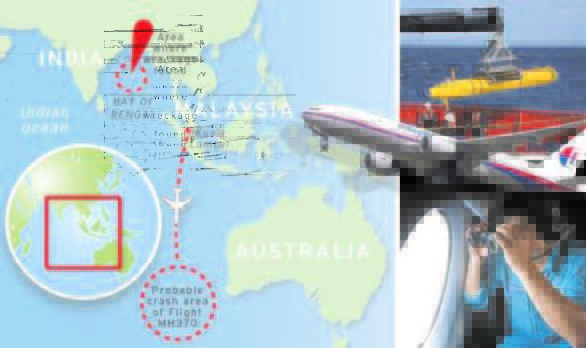
    SYDNEY (TIP): The Australian agency heading up the search for the missing Malaysian jet has dismissed a claim by a resource survey company that it found possible plane wreckage in the northern Bay of Bengal. The location cited by Australia-based GeoResonance Pty Ltd. is thousands of kilometers (miles) north of a remote area in the Indian Ocean where the search for Flight 370 has been concentrated for weeks.

    “The Australian led search is relying on information from satellite and other data to determine the missing aircraft’s location. The location specified by the GeoResonance report is not within the search arc derived from this data,” the Joint Agency Coordination Center, which is heading up the search off Australia’s west coast, said in a statement on Tuesday.

    “The joint international team is satisfied that the final resting place of the missing aircraft is in the southerly portion of the search arc.” GeoResonance stressed that it is not certain it found the Malaysia Airlines plane which vanished on March 8 during a flight from Kuala Lumpur to Beijing, but called for its findings to be investigated. The company uses imaging, radiation chemistry and other technologies to search for oil, gas or mineral deposits. In hunting for Flight 370, it used the same technology to look on the ocean floor for chemical elements that would be present in a Boeing 777: aluminium, titanium, jet fuel residue and others.

    GeoResonance compared multispectral images taken March 5 and March 10 — before and after the plane’s disappearance — and found a specific area where the data varied between those dates, it said in a statement. The location is about 190 kilometers (118 miles) south of Bangladesh. Malaysian Defense Minister Hishammuddin Hussein said Tuesday that China and Australia were aware of the announcement. “Malaysia is working with its international partners to assess the credibility of this information,” a statement from his office said. GeoResonance said it began trying to find the plane before the official search area moved to the southern Indian Ocean.

    India, Bangladesh and other countries to the north have said they never detected the plane in their airspace. The jet had contact with a satellite from British company Inmarsat for a few more hours, and investigators have concluded from that data that the flight ended in the southern Indian Ocean. No wreckage from the plane has been found, and an aerial search for surface debris ended Monday after six weeks of fruitless hunting. An unmanned sub is continuing to search underwater in an area where sounds consistent with a plane’s black box were detected earlier this month. Additional equipment is expected to be brought in within the next few weeks to scour an expanded underwater area. That search could drag on for eight months.

  • Fed Cup: Germany lead Australia 2-0 in semifinal

    Fed Cup: Germany lead Australia 2-0 in semifinal

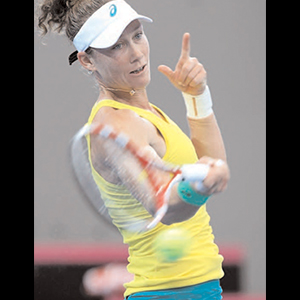
    BRISBANE (TIP): Andrea Petkovic and Angelique Kerber had straight-set wins on April 19 to give Germany a 2-0 lead over Australia in their Fed Cup semifinal. Petkovic opened with a 6-1, 7-6 (7) win over Sam Stosur while top-ranked German player Kerber had little difficulty beating Casey Dellacqua 6-1, 6-0 in 51 minutes on outdoor hard courts at Pat Rafter Arena. The reverse singles will be played on Sunday, followed by doubles.

    Germany is trying to reach its first Fed Cup final since 1992, when it beat Spain for the title. Ashleigh Barty and Dellacqua, who reached three Grand Slam doubles finals last year, are expected to play doubles for Australia. But unless Stosur and Dellacqua can win their singles matches, the doubles match will be meaningless. “I was kind of nervous but I just got through it,” Petkovic said. Stosur once again had difficulty playing before her home crowd, where she admits she feels extra pressure.

    But the 2011 U.S. Open champion and 2010 French Open finalist is having a tough time everywhere this year, only making it past the third round at one tournament. Unforced errors by Stosur handed Petkovic the first set, but the Australian led 5-3 in the second before allowing the German player to level at 6-6. In the tiebreaker, Petkovic had three match points at 6-3 but Stosur fought off those and another before Petkovic clinched it. Two years ago, Australia upset Germany 3- 2 in Stuttgart in a World Group encounter in which Stosur won both her singles matches.

    It is Australia’s first semifinal appearance since 1993, and now against heavy odds, the country is trying to win the Fed Cup for the first time since 1974 when seven-time Grand Slam singles champion Evonne Goolagone led Australia to victory. Czech Republic and Italy are playing in the other semifinal this weekend. The final is November 8-9.

  • Powerful Cyclone Ita bears down on parts of Australia

    Powerful Cyclone Ita bears down on parts of Australia

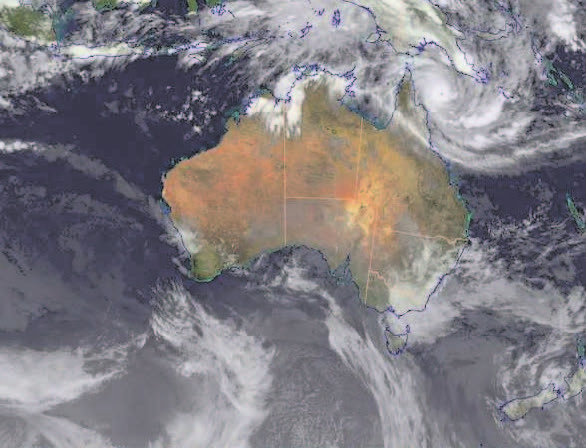
    SYDNEY (TIP): A cyclone packing winds of up to 300 kilometres (190 miles) an hour was set to smash into Australia’s Great Barrier Reef coast late on April 11, with officials warning the storm could wreak devastation. The maximum category five Cyclone Ita was expected to hit north of Cooktown, a coastal community of 2,400 people some 1,600 kilometres from Brisbane, bringing fierce gales.

    “Anything over 80 kilometres (per hour) is dangerous,” Cook Shire mayor Peter Scott told the Australian Broadcasting Corp. “Anything over 80K will put a piece of tin through you and chop your head off, it will lift roofs off, it will make severe damage so the best place to be is staying inside,” he said. Scott said that in the view of one senior police officer in the area, “the Cooktown you see today won’t be here tomorrow”.

    Queensland Premier Campbell Newman warned that homes built prior to 1985 when new building regulations were enacted may not withstand the impact of the storm, and urged residents to head to local cyclone shelters. “They need to do that this morning,” Newman said. “I urge people who are evacuating to make sure they grab all their… vital personal effects: things like passports, birth certificates.

    “That they charge their mobile phone, they switch off the applications, that they take medications, food and water and make sure that they can look after themselves for a few days in the place they’re seeking refuge.” Ita sat some 175 kilometres northeast of Cooktown around midday (0200 GMT). A warning zone extended from Lockhart River in the far north to Innisfail in the south, and includes the Great Barrier Reef resort hub of Cairns.

    Stronger than Yasi Tropical storms are common in northeast Australia and this one is stronger than the monster Cyclone Yasi system which tore through the region just over three years ago, ripping homes from their foundations and devastating crops. “Basically this is a very serious cyclone,” Andrew Tupper from the Bureau of Meteorology told the ABC. “It’s very compact, it’s an intense system.” The Bureau of Meteorology expects Ita to make landfall near Cape Flattery some 70 kilometres north of Cooktown on the sparsely populated Cape York peninsula around midnight.

    It warned that while the strongest winds will be focussed near the eye of the storm, destructive winds, heavy rainfall possibly leading to flash flooding, and coastal inundation from a storm surge all pose threats. Brendan Cullen, manager of the Sovereign Resort Hotel, one of three hotels in Cooktown, said locals were used to cyclones and had prepared their homes and businesses by taping up windows and securing debris.

    But he said there was a level of anxiety ahead of the storm: “We’re worried about it landing right on top of us and the storm surge. “As far as the general feeling in town, it’s a windy place anyway so it’s not as if there’s a lot of debris lying around,” he told AFP. “At this particular junction there’s a bit of anxiety. It stands to reason that if it comes this way with those winds… there’s going to be some sort of damage in town.

  • Flight search brings satellite company unaccustomed fame

    Flight search brings satellite company unaccustomed fame

    LONDON (TIP): On an enormous electronic map of the globe in the modernist headquarters of a satellite company here, two green hexagons the size of dinner plates hovered off the west coast of Australia, revealing signals from an armada of ships and planes converged in the hunt for any remains of Malaysia Airlines Flight 370.

    The searchers were there in large part because the company, Inmarsat, had produced an innovative analysis of a series of fleeting radio signals from the plane — picked up by one of its satellites in the hours after the jet, carrying 239 people, disappeared from radar screens March 8. Investigators say Inmarsat’s findings were critical to establishing that the Boeing 777-200 almost certainly crashed into the southern Indian Ocean.

    And more than a month since the flight took off, they remain among the few clues that investigators have as they try to piece together what happened. This week, the search vessels moved to an area hundreds of miles northwest of Perth, where Australian and Chinese ships have detected multiple “pings” consistent with those of a plane’s underwater locater beacons — not far from where Inmarsat’s calculations helped narrow estimates of the plane’s last location.

    The most recent of those signals were detected on Wednesday, prompting Australian officials leading the search to suggest that remains of the plane could be found soon. Through it all, the staff in Inmarsat’s east London control room have kept constant tabs on the global flow of mobile voice and data transmissions carried by its network of 11 satellites orbiting 22,000 miles above the earth. Superimposed upon the 21-foot-long map dominating a wall is a color-coded mosaic of cells, each spanning several hundred square miles. “The nature of our system is such that we can direct communications capacity very quickly to anywhere on the globe,” said Ruy Pinto, Inmarsat’s chief technology officer.

    “We are designed for that,” he added. “So when there is an event that we feel is going to require additional capacity or resources, we have a group of people that gets together and starts diverting resources to provide terminals, radio frequency and power.” Inmarsat, a communications company with $1.25 billion in revenue and 1,900 employees in more than 60 locations, has grown accustomed to playing a vital supporting role in world events, including conflicts and disaster relief. But in the case of the missing Malaysian jet, the company has found itself thrust, somewhat uncomfortably, into the spotlight. On a recent day, the cells over geopolitical hot spots like Crimea, Syria and Afghanistan were lit up in pink or yellow.

    They reflected a heavy concentration of satellite phones and portable broadband terminals in use by various military, media and relief organizations. Busy sea lanes near the English Channel, the Persian Gulf and the Straits of Malacca were tinted a deep green. Mr. Pinto pointed out the patch of activity off the Australian coast. But he and the handful of engineers who did the Flight 370 analysis maintained a stoic reserve. “There is no sense of a job well done quite yet, but that will probably come later,” said Mr. Pinto, 54, a Brazilian who joined Inmarsat as a software engineer in 1990.

    “There is a strong feeling that why we’re doing this is to help the investigation and try to help the families.We are very sure that our emotions, whatever they are, are nothing compared to their emotions, and we are very conscious that the story isn’t about us.” Known originally as the International Maritime Satellite Organization, Inmarsat was created in 1979 by the 88-member International Maritime Organization, an arm of the United Nations, and charged with providing a seamless global network for basic ship-to-shore voice and data communications, including free emergency services for ships in distress.

  • WORLD T20: India out to spook South Africa with spin

    WORLD T20: India out to spook South Africa with spin

    DHAKA (TIP):
    India will look to capitalize on South Africa’s two perennial problems — a weakness against spin and inability to win knockout matches in ICC events — as they go head to head in the second semifinal of the World T20 at the Sher-e-Bangla Stadium on Friday. MS Dhoni’s India have overcome a tough group and controversies surrounding the Indian cricket board and its president to remain unbeaten in the tournament.

    The scenario is eerily similar to what happened in the ICC Champions Trophy last June in England and Wales. There too, India won the event without losing any game and dodged issues surrounding the IPL and Srinivasan, who chose to step aside till the IPL probe was over. The ICC, in its rankings released on Wednesday, declared that India had replaced Sri Lanka as the top T20 side. Victory over South Africa on Friday will be the perfect way to consolidate the top spot. India will once again rely on the trio of Amit Mishra (leg-spinner), R Ashwin (offie) and left-armtweaker Ravindra Jadeja to unsettle the Proteas, who are being led by Faf du Plessis.

    The ball spinning away has historically troubled South Africans and Mishra (9 wickets in 4 matches, avg 8.77, economy 5.26) will be expected to weave his magic again. R Ashwin (7 wickets in 4 games, avg 10.42, economy 4.76) has been a perfect foil. With the new ball, Bhuvneshwar Kumar has rediscovered his movement and whether Dhoni will choose his Chennai Super Kings pacer Mohit Sharma or bring back Mohammad Shami (dropped for the game against Australia) remains to be seen. After all, the 2007 champions’ bowling was touted as weak and was expected to cripple them against powerful hitters.

    Ironically, it’s the batting which has been a source of worry. Virat Kohli has been in good touch, as has Rohit Sharma. Yuvraj Singh too returned to form against Australia. He suffered an ankle injury while playing barefoot football on Tuesday, which is a worry. The southpaw even missed training in Fatullah on Wednesday, but media manager RN Baba said he would be fit for the match. Yuvraj’s presence will be crucial as he is someone who can put pressure on Imran Tahir.

    Tahir, with 11 wickets in four matches (avg 9.18, economy 6.31), has been a revelation. He has bowled game-changing spells and enabled South Africa to come back from the dead against Netherlands and England. After spending some time with the legendary Shane Warne in the nets, the Pakistanborn leggie will be eager to impress the Australian. Dale Steyn is another factor the Indians need to neutralise. He tends to get wickets upfront and has troubled Rohit in all formats.

  • Prodigal son Lachlan Murdoch gets key role in empire

    Prodigal son Lachlan Murdoch gets key role in empire

    NEW YORK (TIP): Rupert Murdoch’s prodigal son Lachlan is back, with key roles in the tycoon’s media-entertainment empire. Lachlan Murdoch, 42, was named on Wednesday as non-executive chairman at News Corp. and 21st Century Fox, the companies created when his father’s conglomerate was split into publishing and entertainment arms.

    Murdoch also promoted another of his sons, 41-year-old James, to be cochief operating officer of 21st Century Fox. He is a member of the board of News Corp. The moves put the eldest Murdoch scion into leadership roles at the companies built by his 83-year-old father, years after he abruptly resigned following a clash with other executives. The changes appeared to put Lachlan Murdoch on path to be the heir to the empire built by the Australian-born magnate.

    David Folkenflik, author of a 2013 book on Murdoch, said in a tweet that the move likely “smooths path for Lachlan to succeed his father.” And Dan Kennedy, professor of journalism at Northeastern University, said the decision may have been influenced by the ongoing phone-hacking scandal in Britain involving Murdoch’s newspapers. “Given Rupert Murdoch’s advanced age, you get the sense that any changes he makes now are likely to stick until he passes from the scene,” Kennedy told AFP. “That he would bring back Lachlan from exile may be an indication of the damage that was done to James as a result of the phone-hacking scandal. “The question is whether News Corp. can remain a family-run enterprise post-Rupert, or if in time it will evolve into a more modern corporation with professional management.”

    Lachlan Murdoch had once been favorite to take over for his father. But that scenario vanished when he abruptly left the group in 2005 when he had the job of deputy chief operating officer. In Wednesday’s statement from News Corp, Rupert Murdoch said: “This appointment is a sign of confidence in the growth potential of News Corp and a recognition of Lachlan’s entrepreneurial leadership and passion for news, digital media and sport.” In a separate statement from 21st Century Fox, the media tycoon said: “Lachlan is a strategic and talented executive with a rich knowledge of our businesses.” Rupert Murdoch remains chairman and chief executive officer of 21st Century Fox. He will also remain executive chairman of News Corp. Angelo Carusone, executive vice president at the watchdog group Media Matters for America, said the changes suggest a less political tilt for the Murdoch companies.

    “Lachlan and James are more business creatures than political creatures,” said Carusone, whose organization’s mission is to correct “conservative misinformation.” “Rupert Murdoch is first and foremost a political creature. He sees himself as an old newspaperman, and has shown he is willing to sacrifice profits to promote a political agenda. That is how he views the world. It’s hard to see Lachlan as a political creature.” Carusone said he was surprised that James Murdoch was promoted even amid an ongoing investigation and trials in Britain. “It’s unseemly to me to promote James at this time,” he said. “James seems to have shed all of the stain from the hacking scandal with this appointment.”

    Australian born Rupert Murdoch, who is a naturalized US citizen, has six children from three marriages. Lachlan and James come from Murdoch’s marriage to journalist Anna Torv. The third child from that marriage, Elisabeth, 45, sold her audio-visual production company Shine to her father’s company three years ago. Last year Murdoch split up his media empire into two distinct companies in a bid to “unlock value” by separating the fast-growing TV and film activities from the struggling publishing operations. News Corp includes well-known newspapers like the Wall Street Journal and New York Post in the United States; The Times and The Sunday Times and The Sun in Britain; and The Australian. It also includes Dow Jones news agency, Fox Sports Australia and the HarperCollins publishing house.

  • TOP SIDES TAKE CENTRESTAGE AT WORLD TWENTY20

    TOP SIDES TAKE CENTRESTAGE AT WORLD TWENTY20

    DHAKA (TIP): The World Twenty20 steps up a gear on Friday as cricket’s top eight sides enter the fray, with India looking to maintain their all-win record against Pakistan in the second round’s standout clash. Minnows of international cricket have been slogging it out in the expanded 16-nation tournament so far with two qualifying spots and a chance to join the big boys up for grabs from round one.

    In the Super-10 stage, Asian giants Pakistan and India will be joined in Group Two by the West Indies, Australia and one of the successful qualifiers. The other qualifier will join South Africa, Sri Lanka, England and New Zealand in Group One with two sides from each group advancing to the semifinals. The identity of the two qualifiers from round one will be known just hours before Pakistan bid to defeat archrivals India for the first time at the World Twenty20.

    “We beat India in the Asia Cup this month and this team looks good to make history,” a confident Pakistani coach Moin Khan said ahead of the round-two opener in Dhaka. “But they must express themselves freely on the field and not worry about the result,” he added. Despite having never beaten India in the competition, Pakistan enjoy a better World T20 record than their opponents, an anomaly that will give confidence to captain Mohammad Hafeez’s side. Pakistan have qualified for the semifinals in all four editions, winning the tournament in 2009 in England after being runners-up in the inaugural event.

    India, however, have not made the semifinals since taking the title in 2007, despite the popularity of the T20 Indian Premier League over the last six years. For India captain Mahendra Singh Dhoni, previous results will be irrelevant when the sides take to the field at the Sher-e-Bangla stadium in the Bangladeshi capital on Friday evening. “Nothing of the past matters in this game,” he said, reminding critics that India lost just one game at the 2012 edition and yet failed to make the knock-out rounds. “The matches to follow are as important as the one on Friday, but we are not looking beyond our first game yet.”

    True to the unpredictable nature of T20 cricket, there have been different champions each time. England won in 2010 and the West Indies triumphed in 2012, adding to the victories for India and Pakistan. Darren Sammy’s West Indies, who open the defence of their title on the back of a confidence-boosting series win against England, boast one of the most destructive batsmen in world cricket — opener Chris Gayle. Sri Lanka — the top-ranked T20 side — have prepared by spending more than six weeks in Bangladesh, winning the Asia Cup there earlier this month. Australia, hoping to add a first World T20 title to their packed trophy cabinet, have opted for experience, bringing in 39-year-old batsman Brad Hodge and 43-year-old spinner Brad Hogg.

    But the Aussies will miss fearsome fast bowler Mitchell Johnson due to an infected toe, while England will be without the injured Joe Root and Ben Stokes. England are also missing batsman Kevin Pietersen, who was the star of their lone title triumph four years ago. England’s all-time leading run-scorer across all formats was controversially axed following a 5-0 series loss Down Under even though he was their highest scorer. South Africa, starting a new era after the recent retirements of Graeme Smith and Jacques Kallis, and New Zealand will also be strong contenders in the wide open tournament. The final is on April 6.

  • Death of L’Wren Scott, Mick Jagger’s girlfriend, is ruled a suicide

    Death of L’Wren Scott, Mick Jagger’s girlfriend, is ruled a suicide

    NEW YORK (TIP): The death of fashion designer L’Wren Scott, the longtime girlfriend of Rolling Stones frontman Mick Jagger, was suicide, the New York City medical examiner’s office said on Wednesday. An autopsy completed on the body of 49-year-old Scott found that she died of hanging, according to Julie Bolcer, a spokeswoman for the city medical examiner.

    Scott was found dead in her Manhattan apartment on Monday morning. Police said her assistant found her kneeling with a scarf wrapped around her neck that had been tied to the handle of a French door. There was no note. The Stones canceled their seven-date tour of Australia and New Zealand in the wake of Scott’s death. Jagger called Scott his “lover and best friend” in a Facebook tribute and said he was struggling to come to grips with her death.

    Jagger’s bandmates voiced their support for him amid a trying time. Keith Richards said in a statement on Wednesday that “no one saw this coming” and that Jagger has “always been my soul brother and we love him.” “We’re thick as thieves and we’re all feeling for the man,” he added. Charlie Watts said the band’s priority is the 70-year-old Jagger. “Needless to say we are all completely shocked but our first thought is to support Mick at this awful time,” he said.

    “We intend to come back to Australia and New Zealand as soon as it proves possible.” Ronnie Wood echoed Watts’ statement. “This is such terrible news and right now the important thing is that we are all pulling together to offer Mick our support and help him through this sad time,” Wood said. “Without a doubt we intend to be back out on that stage as soon as we can.” Scott had been Jagger’s companion since 2001.

    The Rolling Stones frontman paid tribute to his girlfriend Tuesday on his Facebook page writing, “I will never forget her.” “I am still struggling to understand how my lover and best friend could end her life in this tragic way. We spent many wonderful years together and had made a great life for ourselves. She had great presence and her talent was much admired, not least by me.” The fashion label founded by Scott had been heavily in debt and was reportedly about to fold. Former New York Times fashion writer Cathy Horyn said in an essay on the paper’s website that Scott had been planning to announce that she was closing her business. Scott canceled her London Fashion Week show last month, citing production delays.

    Scott launched her high-end fashion label in 2006. First lady Michelle Obama, Nicole Kidman and Penelope Cruz were among the big names to wear her designs. Accounts filed by Scott’s LS Fashion Ltd. in London show the company had liabilities that exceeded assets by 4.24 million euros ($5.9 million) as of Dec. 31, 2012. The company’s long- and short-term debts totaled 6.75 million euros against assets, capital and reserves of 2.51 million euros, according to the accounts, which were filed in October. Scott was adopted by a Mormon couple and grew up in small-town Utah. She made her way to Paris after high school where, aided by her 6-foot-3 height (some say 6-foot-4) and striking looks, she found work as a model for some prominent photographers.

  • World Twenty20: Chance to check combination as India take on Sri Lanka

    World Twenty20: Chance to check combination as India take on Sri Lanka

    MIRPUR (TIP): Their confidence at its lowest ebb after continuous failures, a beleaguered India would look to pick up the pieces and make a fresh start when they take on an upbeat Sri Lanka in their first warm-up game of the ICC World Twenty20 on Monday.

    While the tournament proper will begin for India on March 21 against arch-rivals Pakistan, the two warm-up ties will provide captain Mahendra Singh Dhoni with a chance to sort out his playing combination before the real action begins. The warm-up tie gives the team a chance to try out all 15 players in the squad. Therefore while all the batsmen can expect to get a hit in match situation, the bowlers will also get an opportunity to prove their worth to the skipper.

    Also the fact that Indian players, smarting from disastrous tours of South Africa and New Zealand besides the failed Asia Cup campaign, will be playing competitive T20 after five months will also help them adapt quickly having last played a T20 international in October against Australia. The result of the match is of little consequence as various combinations are expected to be tried out. The most interesting aspect will be the opening combination in this format. Sikhar Dhawan and Rohit Sharma are a regular opening pair in ODIs. But Rohit’s initial struggle against white kookaburra in the 50-over format is well documented.

    T20 would not give the Mumbaikar enough time to settle down. Ajinkya Rahane, who has successfully opened for Rajasthan Royals in the Indian Premier League, might just partner Dhawan in such a scenario. If the last match of the Asia Cup against Afghanistan is an indicator, then Rahane has a bright chance of opening the batting for India. Yuvraj Singh, one of India’s proven matchwinners, will be making a comeback along with Suresh Raina, who is also returning to the national team after being dumped from the Asia Cup squad on grounds of indifferent form. But Raina has been one among India’s better T20 batsmen — the only one from the country to score an international T20 century.

    Skipper Dhoni, having recovered from a side strain, would like a couple of good knocks under his belt while Virat Kohli would also aim to get into the groove before Pakistan come calling. The warm up match against Sri Lanka will certainly give both the left-handers the much needed confidence they had lost due to string of poor scores in earlier international matches. The likes of Ambati Rayudu and Stuart Binny will aim to keep their captain interested for a place in the side. A quickfire 50 off 30 balls from Rayudu or a couple of wickets and a cameo from Binny might prompt the team management to think differently although they haven’t shown any inclination towards being flexible with team combination.

    “We might not have played a lot of T20 internationals but the IPL exposure will certainly help us.We need to play as a unit in order to do well,” team’s premier batsman Virat Kohli told the mediapersons during an open session at the team hotel yesterday. India’s bowling certainly is their problem area in the slam-bang version of the game. India do not have bowlers who have enough variations to keep the batsman guessing in the back 10 of a T20 game. Mohammed Shami is India’s strike bowler but he has proved to be quite expensive in the death overs as far as ODIs are concerned.


    14

    Bhuvneshwar Kumar and Mohit Sharma have also never been a problem for top-class international batsman. This brings the focus on Varun Aaron — India’s fastest bowler at the moment. While there’s no denying that Aaron has the pace, he is inconsistent and it has already been proved in the few IPL matches that he has played for the Delhi Daredevils. A lot will depend on how well Ravichandran Ashwin and Ravindra Jadeja bowl on slowish tracks.With both being more than capable batsmen, they are an automatic choice in the playing XI. Sri Lanka will be very upbeat, having won the Asia Cup and the impasse on Players’ Payment issue with Sri Lanka Cricket (SLC) on the verge of end. Young Dinesh Chandimal will have some of the greatest players of modern era like Mahela Jayawardene, Kumar Sangakkara to teach him a few tricks on the leadership issues. Lasith Malinga, who has been a terror for the batsmen in IPL, will be again asking questions to the Indian willow wielders. In all a victory will boost the fledgling confidence of an Indian team that has been on the wane for some time now.

  • INDIA AND US TO HOLD TOP-LEVEL MEET TO BOLSTER MILITARY TIES

    INDIA AND US TO HOLD TOP-LEVEL MEET TO BOLSTER MILITARY TIES

    NEW DELHI (TIP): A 26-member delegation led by General Vincent K Brooks, commanding general of the US Army Pacific, will be in New Delhi on March 18-20 for the 18th meeting of the India-US executive steering group (ESG). The Indian delegation, in turn, will be led by director-general of military operations Lt-General P R Kumar during the talks.

    “The ESG will discuss measures to further crank up military-to-military ties through joint combat exercises, doctrinal and operational exchanges. The two armies are slated to conduct their annual Yudh Abhyas counterterrorism exercise at Chaubatia (Uttarakhand) in July- August this year,” said an official. The exercise, the last edition of which was held at Fort Bragg in the US last May, was to be held earlier this year but got delayed by a few months amid the diplomatic wrangling during the Devyani Khobragade episode.

    The expansive India-US defense cooperation over the last decade has seen the armed forces from the two countries conduct over 70 exercises, including the highend Malabar naval combat exercises. India has also invited Japan to join the Malabar war games in August- September this year, an offer which was extended during Japanese PM Shinzo Abe visit here in January. The US has already bagged defense deals close to $10 billion over the last decade in the lucrative Indian defense market, with the latest being the $1.01 billion one for six additional C-130J “Super Hercules” aircraft.

    The other deals on the anvil are the ones for 22 Apache attack helicopters, 15 Chinook heavy-lift helicopters, four P-8I maritime patrol aircraft and 145 M-777 ultra-light howitzers, together worth another $4 billion or so. Desperate to displace Russia as India’s largest defense supplier, the US is promising to treat India on par with its closest allies like the UK and Australia for providing cutting-edge military technology.

    Towards this end, the US has also managed to almost scuttle an almost-finalized over Rs 15,000 crore project with Israel to equip the over 380 infantry battalions of the Indian Army with third-generation, shoulder-fired antitank guided missiles (ATGMs). After the US initially created roadblocks in the transfer of technology (ToT) for its “Javelin” ATGMs, India had turned to the Israeli “Spike” ATGMs for the project. India is keen on an initial import of the tank-killing missiles followed by ToT to defense Public Sector Unit Bharat Dynamics for indigenous manufacture. But after the US recently offered a joint project to manufacture the next-generation of ATGMs, the Indian defense ministry says both the Israeli and American proposals are now being studied to select the better option.

  • Polls push IPL 7 to UAE, Bangladesh on standby

    Polls push IPL 7 to UAE, Bangladesh on standby

    NEW DELHI (TIP):
    Ending weeks of speculation and uncertainty, the Indian cricket board (BCCI) announced on Wednesday that the seventh season of the Indian Premier League (IPL) will be held in three phases from April 16 to June 1. The tournament will start in the United Arab Emirates (UAE) and end in India but the final schedule is yet to be announced since there is still no clarity over a possible second phase to be held either in Bangladesh or India. That decision will depend on permission from the home ministry following complexities over providing security in an election year.

    The UAE will host the first 16 matches from April 16 to April 30, following which the tournament will come back to India or shift to Bangladesh from May 1 to May 12. The third and final phase, including remaining league matches and playoffs, will be held in India from May 13 onwards when the polling ends, the BCCI said. As reported by TOI, IPL teams are not in favour of hosting the majority of the tournament outside India for fear of a sharp fall in revenues from gate receipts. Thus, efforts are underway to seek a “favourable consideration” from the government for the second phase too.

    The home ministry had earlier told the BCCI that it would not be possible to provide security for the matches during the elections. “For May 1-12, the BCCI has approached the ministry of home affairs seeking permission to play IPL matches in India in cities where the polling has concluded in the respective states. The BCCI is extremely conscious of the various complexities involved but hopes for a favourable consideration.

    The BCCI will abide by the decision of the authorities in this regard. If it is not possible to play in India during this period, IPL matches will be held in Bangladesh and the BCCI is thankful to the Bangladesh Cricket Board and the government of Bangladesh for their support,” board secretary Sanjay Patel said in a statement. Patel said that from May 13 onwards, once the polling has been concluded in all states, the remainder of the tournament will be played in India. There will be no matches scheduled on the (vote) counting day — May 16.

    “The BCCI will take the advice of the authorities if any further restrictions are required around the counting day,” Patel said, thanking the Emirates Cricket Board for its support. A detailed schedule is expected soon. This will be the IPL’s second foray into international territory following the move to South Africa during the 2009 general elections. The South Africa choice did the rounds this time too but logistics and cost issues dictated the move to the UAE and possibly Bangladesh.

    India has stayed away from the UAE since the match-fixing scandal broke at the turn of the millennium, playing only two ODIs against Pakistan – both in April 2006 – in Abu Dhabi. Welcoming the move to shift the first leg of the IPL to the UAE, world body International Cricket Council (ICC) said the BCCI’s decision “is great news for the people of UAE and the region”. ICC chief executive dave Richardson said, “The BCCI’s decision to stage the first part of the IPL 2014 season in the UAE is great news for the people of the UAE and the region.

    It will complete a remarkable season of cricket in the UAE, which has already seen the successful staging of the ICC World Twenty20 Qualifier 2013 and the ICC U19 Cricket World Cup 2014. “This news comes on the back of the onfield success of the UAE national team which has qualified for both the ICC World Twenty20 in Bangladesh and the ICC Cricket World Cup 2015 in Australia and New Zealand and has the potential to propel cricket’s profile to new heights in the country.”

  • India need Virender Sehwag for World Cup, suggests BRETT LEE

    India need Virender Sehwag for World Cup, suggests BRETT LEE

    NEW DELHI (TIP):
    Former Australian pacer Brett Lee thinks the axed Virender Sehwag needs to be in India’s mix of things for the team to make an impact on the bouncy surfaces of Australia in the next World Cup. With MS Dhoni’s team struggling away from home, Lee said, “I love watching Viru in action. He is a fantastic batsman and loves batting on a pitches with a bit of bounce. The upper cut is one of his favourite strokes and Australia is one place you can play it with ease.” On the travails of another Delhi cricketer, Ishant Sharma, Lee said, “I am big fan of Ishant. He is a great guy and a wonderful player.

    But there are a few simple things like taking wickets and bowling fast. If he is not doing that he should move out. India need to pick a squad that they think is suited for New Zealand and Australia. If they can get Ishant’s confidence back and stick with him, you never know.” On what it takes for a batsman to face up to hostile pace bowling, Lee told TOI, “You definitely need to a have a big heart. Everyone gets scared while playing. Even the world’s greatest batsmen don’t relish facing pace bowling. People get frightened.” Lee can’t stop gushing about Michael Clarke’s fantastic, unbeaten 161 at the Newlands in Cape Town, where the Australian skipper went through a torrid spell from Morne Morkel but lived to script a memorable knock.

    “There is nothing better that to see someone like (Morne) Morkel running in and bowling at 150 kmph. Clarke was ducking and weaving, fighting for his life and his team. But he managed to survive that session and went on to get a big score.” Asked who else he thinks would have handled a test of pace like Clarke did, Lee said, “It certainly wouldn’t have been me! I would have been running at the bowler and probably had my stumps knocked back.

    It takes a special player to survive a spell like Dale Steyn bowled at Port Elizabeth.” Lee still looks fit as a fiddle and played in the recent Big Bash League, but the 76-Test veteran went unsold during IPL 7 auctions. “I am no Benjamin Button,” Lee said with a big smile on his face. “I have made more comebacks that Rambo and I am not quite surprised at what happened at the auction.”

  • Australia push India to 3rd position in ICC Test rankings

    Australia push India to 3rd position in ICC Test rankings

    DUBAI (TIP): Australia replaced India at number two position in the Test team rankings by the virtue of their hard-fought 245-run victory over South Africa in the third and final Test in Cape Town today. Australia had entered the series in third position on 111 ratings points and the victory handed them four ratings points which means that they finish the year on 115 points, three points ahead of India, at the April 1 cut-off date. It also means that Australia have won a cash award of USD 370,000 while third-placed India will have to settle with USD 265,000. England will receive USD 160,000 for finishing fourth.

    South Africa, thanks to their commanding lead at the top of the table, retains the mace in spite of dropping to 127 ratings points and will also get richer by the top prize of USD 475,000. At the January 2012 meeting, the ICC Board had approved a proposal to substantially increase incentives in the form of prize money to promote Test cricket. In 2015, the total prize money will be increased to USD 1.34 million, which will be distributed to the teams that finish in the top four at the 1 April 2015 cut-off date. The number-one ranked side will receive USD 500,000, followed by USD 390,000, USD 280,000 and USD 170,000 to the sides that will finish second, third and fourth, respectively.

  • Indian doctor, convicted of sexually assaulting teen, loses latest bid to stay in Australia

    Indian doctor, convicted of sexually assaulting teen, loses latest bid to stay in Australia

    MELBOURNE (TIP): An Indian doctor, convicted of sexually assaulting a teenage patient while working at an Australian hospital, has lost his bid to stay in the country. A federal court judge dismissed Suhail Durani’s plea on Monday, but his defence lawyer Shahid Shakur said they intend to take the case to the full bench of the court.

    Durani, 38, has been fighting to stay in Perth since he was released from jail after serving more than 18 months for sexually abusing a 19- year-old girl at Royal Perth Hospital in 2010. “He’s utterly disappointed of course. He has been in detention now for nearly six months and at the time of the judgment obviously we expected a different decision,” Shakur was quoted as saying in an ABC report. “We respect the decision.

    It’s obviously appealable but it will depend on the counsel’s advice,” he said. His client who had a wife and young son, had an arguable case, he said. “We believe that the minister has made the errors. While we respect the judgment of his Honour today, as soon as we have the counsel advice and we have read the reasoning for the decision, we will be in a decision to take further steps,” he said, adding “We have not been able to read the judgment as yet.” Shakur said Durani was not yet facing deportation and would remain in detention until the appeal process is resolved.

    “If he doesn’t appeal then he faces deportation under the law, but if he appeals against the decision he does not obviously,” he said. “As we understand, appeals can take up to six months,” Shakur said. Durani has 21 days to lodge an appeal. He had lost a bid to appeal against his conviction in 2012 and was fighting to stay back in the country. He had maintained his innocence and sought leave to appeal on seven grounds, including that his defence lawyer had acted incompetently. The three Appeal Court judges dismissed his lea, refusing six of the seven grounds. His visa was also cancelled by the federal government last year.

  • Global Tax Heads Convene for Dialogue on Multilateral Issues

    Global Tax Heads Convene for Dialogue on Multilateral Issues

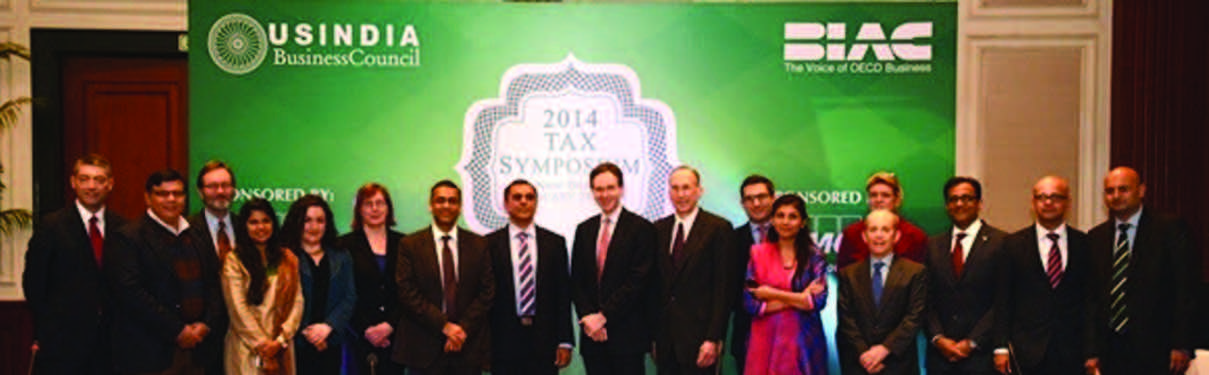
    NEW DELHI (TIP): The U.S.-India Business Council concluded a highprofile mission comprised of top tax executives from global multinationals who engaged in a dialogue with senior officials from the Government of India as well as private sector counterparts to improve India’s tax climate for foreign investment.

    The prestigious group featured the Organization for Economic Cooperation and Development (OECD)’s Business and Industry Advisory Committee (BIAC) official Taxation Bureau. BIAC, the voice of business of the OECD, serves as an industry conduit for the international government body of developing countries which sets global norms for tax and transfer pricing.

    The USIBC executives met on behalf of global industry with top officials in the Ministry of Finance, including Central Board of Direct Taxes member RK Tewari, Competent Authority Joint Secretary Akhilesh Ranjan, and Chairman of India’s Tax Administration Reform Commission Dr. Parthasarathi Shome. In addition, they met with the International Monetary Fund (IMF) to discuss macroeconomic issues, as well as with senior representatives of the Federation of Indian Chambers of Commerce and Industry (FICCI) and Confederation of Indian Industry (CII).

    The discussions on the OECD Base Erosion and Profit Shifting (BEPS) proposal were especially timely given the concurrent G20 discussions in Australia in which Finance Minister Chidambaram participated. The program’s capstone was the inaugural USIBC International Tax Symposium, where CFOs and tax leaders from domestic and global business in India met with the delegation to share insights and develop a constructive strategy of collaboration.

    The event, hosted by KPMG LLP’s Rishi Chugh, Partner in-charge of the U.S.- India Practice, covered domestic tax, advance pricing agreements (APAs), transfer pricing, and dispute resolution issues. The global delegation, which included the tax heads of General Electric, Genpact, Goldman Sachs, JP Morgan Chase, Microsoft, Shell, Siemens, and Unilever, among others, is part of a continued strategy of engagement by USIBC to increase constructive dialogue on multilateral tax issues facing foreign investors in India.

    The head of the delegation, Will Morris, Chair of the BIAC Committee on Taxation and Fiscal Policy, and Director of Global Tax Policy at General Electric (GE), said, “India is by far one of the most important investment destinations for all of our companies. Our experience is that an open and constructive dialogue between the global investment community, Government of India, and Indian industry partners will be the only way forward in alleviating current tax challenges.

    We think it a positive development that India, as a key player in the G20, is fully engaged in the G20/OECD BEPS project which holds the prospect of more uniform international tax rules.” He continued, “As a major global economic power, it is imperative to the global tax system that India’s tax laws and administration are in harmony with international norms. These discussions have been a very productive first step for BIAC to engage with India on OECD tax issues and we’re grateful to our Ministry of Finance hosts.”

    Formed in 1975 at the request of the U.S. and Indian governments, the U.S.- India Business Council (USIBC) is the premier business advocacy organization advancing U.S.-India commercial ties. Today, USIBC is the largest bilateral trade association in the United States, headquartered in Washington, DC, with liaison presence in New York, Silicon Valley, and New Delhi, comprised of more than 350 of the top-tier U.S. and Indian companies. Ajay Banga, President & CEO of MasterCard, is USIBC’s chairman.

  • Challenges in India-US ties

    Challenges in India-US ties

    Inconsistencies mark Obama Administration’s approach

    “… the US is becoming increasingly strident in its economic relations with India on issues ranging from sanctions on sections of our pharmaceutical industry and our civil aviation facilities, while demanding changes in our policies on solar panels and equipment and placing restrictions on the movement of IT personnel. It is, however, not India alone that is the recipient of such measures from the US!”, says the author

    Traveling across the US as the winter Olympics in Sochi commenced, one was saddened to witness how India’s international credibility had been shaken when television audiences across the world saw three forlorn Indian athletes marching without the national flag. India faced this disgrace, thanks to the avariciousness and nepotism of an internationally disgraced Indian Olympic Association.

    Sadly, this was accompanied by charges of corruption, nepotism, match fixing and worse involving the President of the BCCI. Many Indian friends in the US asked in anguish: “Is there no section of national life left in India which is free from corruption and venality?” The mood in Washington, where one had an occasion to meet a cross section of senior officials, business executives, analysts and scholars, was quite different.

    In marked contrast to the earlier years, I found widespread criticism of the conduct of foreign and security policies by President Obama. The Administration had not just botched up its healthcare program, but was seen as indecisive and weak in dealing with challenges in West Asia, Afghanistan and the provocations of a jingoistic and militaristic China. President Obama, in turn, is acutely conscious of the mood in the country which wants an end to foreign military entanglements. More significantly, as the US moves towards becoming a net exporter of energy, thanks to the expanding production of shale gas and oil, the country’s geopolitics are set for profound change.

    Using its leadership in areas of productivity and innovation, the US now appears set to the stage for increasing domination of the world economic order. From across its eastern shores, the US is negotiating comprehensive trade and investment partnerships with its European allies. Across its western shores in the Pacific, the Americans are negotiating transpacific partnerships with Australia, Brunei, Chile, Canada, Japan, Malaysia, Mexico, New Zealand, Peru, Singapore, South Korea and Vietnam as negotiating partners. While China has informally indicated an interest in joining this partnership, the US will use its influence to ensure that China is not admitted till American political and economic pre-conditions are met.

    There is naturally interest in Washington in the forthcoming general election in India. The assessment appears to be that the ruling Congress is headed for a drubbing in the polls. Not many tears will be shed in Washington or elsewhere about this inevitability as the only questions which well-wishers of India ask are how India landed itself in its present morass of corruption and whether a new dispensation, which may be fractious, will be able to restore India to a high growth path. Speaking informally, a senior official recalled that President Obama had described the US-India partnership as “one of the defining partnerships of the world”.

    The official noted that “every meaningful partnership between powerful nations encounters setbacks”, adding that such setbacks should be minor compared to the benefits of the relationship and the magnitude of what the two could accomplish together. The Khobragade episode was a defining event in India-US relations. The Americans found Indians across the political spectrum united in the view that insults to India’s national dignity would not be acceptable.

    It is important that in future negotiations by the Task Force set up to address such issues, India should make it clear that it will not tolerate events like Mrs. Sonia Gandhi being threatened with prosecution while undergoing medical treatment in New York, or the supercilious attitude adopted towards Mr. Narendra Modi, who is a constitutionally elected Chief Minister. We should not accept a situation where Americans believe that they can behave high-handedly towards our elected politicians because of their domestic lobbies. The US should also be left in no doubt that on such issues, including consular and diplomatic privileges, India will firmly adhere to a policy of strict reciprocity.

    The Obama Administration has messed up its relations with President Karzai in Afghanistan, dealing with him in a manner that showed scant regard for his position as the elected Head of State of Afghanistan. Worse still, by its actions, the US has clearly given the impression that despite its protestations it was clandestinely dealing, behind Mr. Karzai’s back, with the Taliban. While the US-Afghanistan Strategic Partnership speaks of joint determination in eliminating the “al- Qaida and its affiliates,” the US now speaks only of eliminating al-Qaida and not is affiliates like the Taliban, the Islamic Movement of Afghanistan, Lashkar-e-Taiba and Jaish-e- Mohammed.

    There are naturally concerns in Afghanistan that the US, which needs Pakistan’s assistance for withdrawing its military equipment from Afghanistan, will seek to appease the Pakistanis by giving them a lessthan- healthy role in determining the future dispensation in Afghanistan and the role of the Taliban in such a dispensation. While there is an evident congruence of interests in working with the US, Japan and others in the face of growing Chinese military assertiveness, New Delhi and Tokyo cannot ignore the reality that there have been many flipflops and inconsistencies in the approach of the Obama Administration to China.

    Moreover, the US is becoming increasingly strident in its economic relations with India on issues ranging from sanctions on sections of our pharmaceutical industry and our civil aviation facilities, while demanding changes in our policies on solar panels and equipment and placing restrictions on the movement of IT personnel. It is, however, not India alone that is the recipient of such measures from the US! Despite these challenges, India cannot ignore the reality that the US is the pre-eminent power in the world.

    Moreover, it will remain so in the coming years, primarily because its innovative and technological strengths are going to be reinforced by its energy surpluses, together with the energy potential of its neighbors like Canada, Mexico and Argentina. It will, moreover, remain the foremost power in the manufacture of high-tech equipment, particularly in defense and aerospace. It is for India to fashion industrial policies to leverage its strengths and potential to secure high levels of investment and partnership in crucial high-tech industries.

    I was advised in Washington that contracts currently secured with US companies enable us to import 5.8 million metric tons per annum of shale gas from the US annually. According to oil industry sources, these contracts alone provide us more gas than we could obtain from the controversial Iran-Pakistan-India pipeline. But, for all this to fructify, the new dispensation in New Delhi will have to replace economic populism and accompanying fiscal irresponsibility with a quest for accelerated growth.