Tag: Australia

  • Ajinkya Rahane takes dig at ‘someone’ for taking credit for Aussie tour win

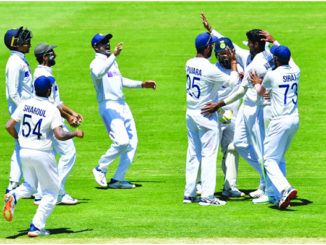
    New Delhi (TIP)-A central figure in India’s epic turnaround during the 2020-21 tour of Australia, stand-in captain of that series Ajinkya Rahane says “someone else took the credit” for decisions he made to resurrect the team after the nightmarish 36 all out in the first Test in Adelaide. As regular captain Virat Kohli flew out on parental leave, leaving in his wake the disappointment of the humiliating loss in the series-opener in Adelaide, Rahane took over the reins in difficult circumstances.

    What followed was one of the most incredible turnarounds in sport as India rebounded to win the second match in Melbourne by eight wickets, with Rahane leading the comeback with a magnificent hundred. “I know what I’ve done there. I don’t need to tell anyone. That’s not my nature to go and take credit. Yes, there were some things that I took the decisions on the field or in the dressing room but someone else took the credit for it,” Rahane said in a TV interview.

    Rahane did not take any names but his comments could well be a veiled attack on then head coach Ravi Shastri, who was widely acclaimed for the team’s performance and dominated the media space for being the architect of the turnaround, given that the dressing room resembled a hospital ward at one point. In fact, Shastri became the voice of the team after that brilliant victory, and the one in Brisbane.

    India missed three frontline players in Melbourne and continued to lose key players but still emerged triumphant at the end. “After that, the reactions from people or those who took credit or what was said on the media, ‘I did this’ or ‘this was my decision’, or ‘this was my call’, it was for them to talk about,” Rahane said.

    Shikhar Dhawan returns to add to firepower

    Ahmedabad: The returning Shikhar Dhawan will add more firepower to a ruthless India, who are faced with the problem of plenty as they eye a clean sweep of West Indies in an inconsequential third ODI.

    The hosts head into the final match of the ODI series after having ticked almost all the boxes in the first two, which they won comfortably.

    Senior opener Dhawan was among the four players, including a reserve bowler, who had tested positive for Covid just four days before the start of the ODI series. But now that the southpaw is back, India could be forced to make a few changes to their winning combination.

    In his absence, the team management had opened with Ishan Kishan in the first game and the flamboyant Rishabh Pant in the second. This means that vice-captain KL Rahul would continue to bat in the middle-order along with Virat Kohli, whose search for his 71st international hundred continues. Pant will go back to the middle-order with Suryakumar Yadav, who is likely to retain his place after emerging as the team’s highest scorer in the second match.            Source: PTI

  • The world in 2022: Another year of living dangerously

    The world in 2022: Another year of living dangerously

    On the brink of a new year, the world faces a daunting array of challenges: the resurgent Covid-19 pandemic, the climate emergency, the struggle between democracy and authoritarianism, humanitarian crises, mass migration, and trans-national terrorism. There is the risk of new inter-state conflicts, exacerbated by the breakdown of the rules-based international order, and the spread of lethal autonomous weapons. All in all, for most people on Earth – and a handful in space – 2022 will be another year of living dangerously.

    Middle East

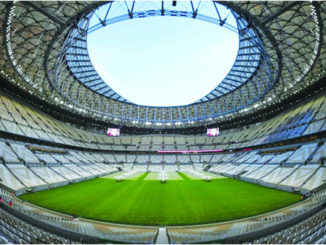
    Events in the Middle East will make global headlines again in 2022 – but for positive as well as negative reasons. A cause for optimism is football’s World Cup, which kicks off in Qatar in November. It’s the first time an Arab or a Muslim country has hosted the tournament. It is expected to provide a major fillip for the Gulf region in terms of future business and tourism – and, possibly, more open, progressive forms of governance.

    But the choice of Qatar, overshadowed by allegations of corruption, was controversial from the start. Its human rights record will come under increased scrutiny. Its treatment of low-paid migrant workers is another flashpoint. The Guardian revealed that at least 6,500 workers have died since Qatar got the nod from Fifa in 2010, killed while building seven new stadiums, roads and hotels, and a new airport.

    Concerns will also persist about Qatar’s illiberal attitude to free speech and women’s and LGBTQ+ rights in a country where it remains dangerous to openly criticise the government and where homosexuality is illegal. But analysts suggest most fans will not focus on these issues, which could make Qatar 2022 the most successful example of “sports-washing” to date.

    More familiar subjects will otherwise dominate the regional agenda. Foremost is the question of whether Israel and/or the US will take new military and/or economic steps to curb Iran’s attempts, which Tehran denies, to acquire capability to build nuclear weapons. Israel has been threatening air strikes if slow-moving talks to revive the 2015 nuclear deal fail. Even football fans could not ignore a war in the Gulf.

    Attention will focus on Turkey’s authoritarian president, Recep Tayyip Erdogan, whose neo-Islamist AKP party will mark 20 years in power in 2022. Erdogan’s rule has grown increasingly oppressive at home, while his aggressive foreign policy, rows with the EU and US, on-off collusion with Russia over Syria and chronic economic mismanagement could have unpredictable consequences.

    Other hotspots are likely to be Lebanon – tottering on the verge of becoming a failed state like war-torn Yemen – and ever-chaotic Libya. Close attention should also be paid to Palestine, where the unpopular president, Mahmoud Abbas’s postponement of elections, Israeli settler violence and West Bank land-grabs, and the lack of an active peace process all loom large.

    Asia Pacific

    The eyes of the world will be on China at the beginning and the end of the year, and quite possibly in the intervening period as well. The Winter Olympics open in Beijing in February. But the crucial question, for sports fans, of who tops the medals table may be overshadowed by diplomatic boycotts by the US, UK and other countries in protest at China’s serial human rights abuses. They fear the Games may become a Chinese Communist party propaganda exercise.

    The CCP’s 20th national congress, due towards the end of the year, will be the other headline-grabber. President Xi Jinping is hoping to secure an unprecedented third five-year term, which, if achieved, would confirm his position as China’s most powerful leader since Mao Zedong. There will also be jostling for senior positions in the Politburo and Politburo standing committee. It will not necessarily all go Xi’s way.

    Western analysts differ sharply over how secure Xi’s position truly is. A slowing economy, a debt crisis, an ageing population, huge environmental and climate-related challenges, and US-led attempts to “contain” China by signing up neighbouring countries are all putting pressure on Xi. Yet, as matters stand, 2022 is likely to see ongoing, bullish attempts to expand China’s global economic and geopolitical influence. A military attack on Taiwan, which Xi has vowed to re-conquer by any or all means, could change everything.

    India, China’s biggest regional competitor, may continue to punch below its weight on the world stage. In what could be a symbolically important moment, its total population could soon match or exceed China’s 1.41 billion, according to some estimates. Yet at the same time, Indian birth rates and average family sizes are falling. Not so symbolic, and more dangerous, are unresolved Himalayan border disputes between these two giant neighbours, which led to violence in 2020-21 and reflect a broader deterioration in bilateral relations.

    The popularity of Narendra Modi, India’s authoritarian prime minister, has taken a dive of late, due to the pandemic and a sluggish economy. He was forced into an embarrassing U-turn on farm “reform” and is accused of using terrorism laws to silence critics. His BJP party will try to regain lost ground in a string of state elections in 2022. Modi’s policy of stronger ties with the west, exemplified by the Quad alliance (India, the US, Japan, Australia), will likely be reinforced, adding to China’s discomfort.

    Elsewhere in Asia, violent repression in Myanmar and the desperate plight of the Afghan people following the Taliban takeover will likely provoke more western hand-wringing than concrete action. Afghanistan totters on the brink of disaster. “We’re looking at 23 million people marching towards starvation,” says David Beasley of the World Food Programme. “The next six months are going to be catastrophic.”

    North Korea’s nuclear brinkmanship may bring a showdown as Kim Jong-un’s paranoid regime sends mixed signals about war and peace. The Philippines will elect a new president; the foul-mouthed incumbent, Rodrigo Duterte, is limited to a single term. Unfortunately this is not the case with Scott Morrison, who will seek re-election as Australia’s prime minister.

    Europe

    It will be a critical year for Europe as the EU and national leaders grapple with tense internal and external divisions, the social and economic impact of the unending pandemic, migration and the newly reinforced challenges, post-Cop26, posed by net zero emissions targets.

    More fundamentally, Europe must decide whether it wants to be taken seriously as a global actor, or will surrender its international influence to China, the US and malign regimes such as Vladimir Putin’s Russia.

    The tone may be set by spring elections in France and Hungary, where rightwing populist forces are again pushing divisive agendas. Viktor Orbán, the authoritarian Hungarian leader who has made a mockery of the EU over rule of law, democracy and free speech issues, will face a united opposition for the first time. His fate will be watched closely in Poland, the Czech Republic, Slovenia and other EU member states where reactionary far-right parties flourish.

    Emmanuel Macron, the neo-Gaullist centrist who came from nowhere in 2017, will ask French voters for a second term in preference to his avowedly racist, Islamophobic rivals, Marine Le Pen and Éric Zemmour. Polls put him ahead, although he also faces what could be a strong challenge from the centre-right Republicans, whose candidate, Valérie Pécresse, is the first woman to lead the conservatives. With the left in disarray, the election could radicalise France in reactionary ways. Elections are also due in Sweden, Serbia and Austria.

    Germany’s new SPD-led coalition government will come under close scrutiny as it attempts to do things differently after the long years of Angela Merkel’s reign. Despite some conciliatory pledges, friction will be hard to avoid with the European Commission, led by Merkel ally Ursula von der Leyen, and with France and other southern EU members over budgetary policy and debt. France assumes the EU presidency in January and Macron will try to advance his ideas about common defence and security policy – what he calls “strategic autonomy”.

    Macron’s belief that Europe must stand up for itself in a hostile world will be put to the test on a range of fronts, notably Ukraine. Analysts suggest rising Russian military pressure, including a large border troop build-up and a threat to deploy nuclear missiles, could lead to renewed conflict early in the year as Nato hangs back.

    Other trigger issues include Belarus’s weaponising of migration (and the continuing absence of a humane pan-European migration policy) and brewing separatist trouble in Bosnia-Herzegovina and the Balkans. The EU is planning a China summit, but there is no consensus over how to balance business and human rights. In isolated, increasingly impoverished Britain, Brexit buyers’ remorse looks certain to intensify.

    Relations with the US, which takes a dim view of European autonomy but appears ambivalent over Ukraine, may prove tense at times. Nato, its credibility damaged post-Afghanistan, faces a difficult year as it seeks a new secretary-general. Smart money says a woman could get the top job for the first time. The former UK prime minister Theresa May has been mentioned – but the French will not want a Brit.

    South America

    The struggle to defeat Jair Bolsonaro, Brazil’s notorious rightwing president, in national elections due in October looks set to produce an epic battle with international ramifications. Inside Brazil, Bolsonaro has been widely condemned for his lethally negligent handling of the Covid pandemic. Over half a million Brazilians have died, more than in any country bar the US. Beyond Brazil, Bolsonaro is reviled for his climate change denial and the accelerated destruction of the Amazon rainforest.

    Opinion polls show that, should he stand, Luiz Inácio Lula da Silva, the former president who was jailed and then cleared on corruption charges, would easily beat Bolsonaro. But that assumes a fair fight. Concern is growing that American supporters of Donald Trump are coaching the Bolsonaro camp on how to steal an election or mount a coup to overturn the result, as Trump tried and failed to do in Washington a year ago. Fears grow that Trump-style electoral subversion may find more emulators around the world.

    Surveys in Europe suggest support for rightwing populist-nationalist politicians is waning, but that may not be the case in South America, outside Brazil, and other parts of the developing world in 2022. Populism feeds off the gap between corrupt “elites” and so-called “ordinary people”, and in many poorer countries, that gap, measured in wealth and power, is growing. In Cuba, Nicaragua, Haiti and Venezuela, supposed champions of the people have become their oppressors, and this phenomenon looks set to continue. In Chile, the presidential election’s first round produced strong support for José Antonio Kast, a hard-right Pinochet apologist, though he was ultimately defeated by Gabriel Boric, a leftist former student leader, who will become the country’s youngest leader after storming to a resounding victory in a run-off.

    Argentina’s president, Alberto Fernández, faces a different kind of problem in what looks like a tough year ahead, after elections in which his Peronists, one of the world’s oldest populist parties, lost their majority in Congress for the first time in nearly 40 years. Mexico’s president, Andrés Manuel López Obrador, will face ongoing tensions with the US over trade, drugs and migration from Central America. But at least he no longer has to put up with Trump’s insults – for now.

    North America

    All eyes will be on the campaign for November’s mid-term elections when the Democrats will attempt to fend off a Republican bid to re-take control of the Senate and House of Representatives. The results will inevitably be viewed as a referendum on Joe Biden’s presidency. If the GOP does well in the battleground states, Donald Trump – who still falsely claims to have won the 2020 election – will almost certainly decide to run for a second term in 2024.

    Certain issues will have nationwide resonance: in particular, progress (or otherwise) in stemming the pandemic and ongoing anti-vax resistance; the economy, with prices and interest rates set to rise; and divisive social issues such as migration, race and abortion rights, with the supreme court predicted to overrule or seriously weaken provisions of the landmark 1973 Roe v Wade decision.

    The Democrats’ biggest problem in 2022 may be internal party divisions. The split between so-called progressives and moderates, especially in the Senate, undermined Biden’s signature social care and infrastructure spending bills, which were watered down. Some of the focus will be on Biden himself: whether he will run again in 2024, his age (he will be 80 in November), his mental agility and his ability to deliver his agenda. His mid-December minus-7 approval rating may prove hard to turn around.

    Also under the microscope is Kamala Harris, the vice-president, who is said to be unsettled and under-performing – at least by those with an interest is destabilising the White House. Pete Buttigieg, the transportation secretary who sought the Democratic nomination in 2020, is a man to watch, as a possible replacement for Harris or even for Biden, should the president settle for one term.

    Concern has grown, meanwhile, over whether the mid-terms will be free and fair, given extraordinary efforts by Republican state legislators to make it harder to vote and even harder for opponents to win gerrymandered congressional districts and precincts with in-built GOP majorities. One survey estimates Republicans will flip at least five House seats thanks to redrawn, absurdly distorted voting maps. This could be enough to assure a Republican House majority before voting even begins.

    Pressure from would-be Central American migrants on the southern US border will likely be a running story in 2022 – a problem Harris, who was tasked with dealing with it, has fumbled so far. She and Biden are accused of continuing Trump’s harsh policies. Belief in Biden’s competence has also been undermined by the chaotic Afghan withdrawal, which felt to many like a Vietnam-scale humiliation.

    Another big foreign policy setback or overseas conflagration – such as a Russian land-grab in Ukraine, direct Chinese aggression against Taiwan or an Israel-Iran conflict – has potential to suck in US forces and wreck Biden’s presidency.

    In Canada, Prime Minister Justin Trudeau is expected to push new policy initiatives on affordable childcare and housing after winning re-election in September. But in 2021’s snap election his Liberals attracted the smallest share of the popular vote of any winning party in history, suggesting the Trudeau magic is wearing thin. Disputes swirl over alleged corruption, pandemic management, trade with the US and carbon reduction policy.

    Africa

    As befits this giant continent, some of 2022’s biggest themes will play out across Africa. Among the most striking is the fraught question of whether Africans, still largely unvaccinated, will pay a huge, avoidable price for the developed world’s monopolising of vaccines, its reluctance to distribute surpluses and share patents – and from the pandemic’s myriad, knock-on health and economic impacts.

    This question in turn raises another: will such selfishness rebound on the wealthy north, as former UK prime minister Gordon Brown has repeatedly warned? The sudden spread of Omicron, first identified in South Africa, suggests more Covid variants could emerge in 2022. Yet once again, the response of developed countries may be to focus on domestic protection, not international cooperation. The course of the global pandemic in 2022 – both in terms of the threat to health and economic prosperity – is ultimately unknowable. But in many African countries, with relatively young populations less vulnerable to severe Covid harms, the bigger problem may be the negative impact on management of other diseases.

    It’s estimated 25 million people in Africa will live with HIV-Aids in 2022. Malaria claims almost 400,000 lives in a typical year. Treatment of these diseases, and others such as TB and diabetes, may deteriorate further as a result of Covid-related strains on healthcare systems.

    Replacing the Middle East, Africa has become the new ground zero for international terrorism, at least in the view of many analysts. This trend looks set to continue in 2022. The countries of the Sahel, in particular, have seen an upsurge of radical Islamist groups, mostly home-grown, yet often professing allegiance to global networks such as al-Qaida and Islamic State.

                    Source: Theguardian.com

  • Most significant events in 2021

    One good thing can be said about 2021: it wasn’t as tumultuous as 2020, which put in a claim to be the worst year ever. That, however, may be damning with faint praise. Yes, the past twelve months did bring some good news. Indeed, for a moment in early summer it seemed that COVID-19 was in the rearview mirror. However, it isn’t. And 2021 brought other bad news. So here are my top ten world events in 2021. You may want to read what follows closely. Several of these stories will continue into 2022 and beyond.

    The AUKUS Deal Debuts

    On September 15, President Joe Biden, Australian Prime Minister Scott Morrison, and British Prime Minister Boris Johnson jointly announced a new trilateral security partnership named AUKUS. The most significant part of the deal was the U.S. pledge to provide Australia with technology to build eight nuclear-powered (but not nuclear-armed) submarines. The only other country to receive similar access to U.S. technology is the United Kingdom. The statement announcing the pact justified it as necessary to “preserve security and stability in the Indo-Pacific.” Although none of the three leaders mentioned China by name, AUKUS was widely seen as a response to growing Chinese assertiveness. Not surprisingly, Beijing denounced the pact as “extremely irresponsible” and “polarizing.” But China wasn’t the only country unhappy with deal. France fumed because AUKUS terminated a $37 billion agreement it struck with Australia in 2016 to build a dozen diesel-electric powered submarines. As a result, Paris recalled its ambassadors to Canberra and Washington, a move without precedent in bilateral relations with either country.

    Migration Crises Test Rich Countries

    The downturn in international migration flows in 2020 triggered by COVID-19 continued into 2021. That didn’t translate, however, into the end of migration crises. A case in point was the southern U.S. border. By October, the number of people entering the United States illegally had hit 1.7 million over the prior year, the highest number since 1960. COVID-19, economic hardship, and political and natural events—the assassination of Haiti’s president and a subsequent earthquake sent thousands of Haitians abroad—drove the surge. But so too did the expectation that the Biden administration would be more welcoming than the Trump administration. To stem the inflow of migrants the Biden administration continued many of its predecessor’s harsh anti-immigration policies. Where it didn’t, the Supreme Court ordered it to. The European Union saw a 70 percent rise compared to 2020 in the number people entering illegally, with critics arguing that the EU was failing its duty to help migrants. A surge in migrants crossing the English Channel from France triggered a diplomatic row between Paris and London.

    Iran’s Nuclear Program Advances

    The year began with optimism that the Iran nuclear deal might be revived three years after President Donald Trump quit the agreement. Joe Biden came to office calling Trump’s Iran policy a “self-inflicted disaster” and pledging to return to the deal if Iran returned to compliance. Making that happen was easier said than done, however. In February the Biden administration accepted an invitation from the European Union to rejoin negotiations. Diplomatic jockeying between Tehran and Washington delayed the start of talks until April. An explosion at an Iranian nuclear facility in mid-April, likely the result of Israeli sabotage, prompted Iran to announce it had begun enriching uranium to 60 percent, a level that has no civilian use though it is below the threshold required for a weapon. Five more rounds of negotiations took place before Iran’s presidential election in June, which saw hardliner Ebrahim Raisi emerge victorious. He immediately dampened speculation that an agreement was near, saying “that the situation in Iran has changed through the people’s vote.” Negotiations finally resumed in late November, but Iran walked away from the concessions it made in earlier rounds and restated its initial demand that the United States lift all the sanctions the Trump administration imposed. As 2021 came to a close, the talks were on the verge of collapse, with Iran by some estimates just a month away from acquiring weapons-grade uranium and the Biden administration facing the question of what to do should diplomacy fail.

    The Taliban Return to Power

    The U.S. war in Afghanistan ended as it started twenty years earlier: with the Taliban in power. In 2020, President Donald Trump struck a deal with the Taliban that required withdrawing all U.S. troops by May 1, 2021. Two weeks before that deadline, President Joe Biden ordered that a complete U.S. withdrawal be concluded by no later than September 11, 2021—the twentieth anniversary of the 9/11 attacks. As the withdrawal proceeded, the Afghanistan national army collapsed and the Taliban overran the country. Kabul fell on August 15, trapping thousands of foreigners in the capital city. The United States launched a massive effort to evacuate stranded Americans by August 31, a deadline set by the Taliban. The U.S. withdrawal ended on August 30, leaving behind more than one hundred U.S. citizens and as many as 300,000 Afghans who may have qualified for expedited U.S. visas. Biden called the withdrawal an “extraordinary success.” Most Americans disagreed and his public approval ratings hit new lows. Allied dignitaries called the withdrawal “imbecilic” and a “debacle” among other things. The United States spent more than $2.3 trillion on Afghanistan over two decades, or roughly $300 million a day for twenty years. More than 2,500 U.S. service members and 4,000 U.S. civilian contractors died in Afghanistan. The number of Afghans who lost their lives likely topped 170,000. Despite claiming to be different, the new Taliban government so far has looked and acted just like the one that horrified the world twenty years ago and a massive humanitarian crisis looms.

    Joe Biden Becomes President

    “America is back.” Joe Biden made that point repeatedly in 2021. He moved quickly upon taking office to fulfill his promise to strengthen relations with America’s allies. He returned the United States to the Paris Climate Agreement and the World Health Organization, renewed New START for five years, sought to revive the Iran nuclear deal, and ended U.S. support for offensive military operations in Yemen. These moves away from former President Donald Trump’s America First policies drew applause overseas; initial polls showed a sharp improvement in the U.S. image abroad. As the year progressed, however, many foreign capitals openly wondered just how different, and how sustainable, Biden’s foreign policies were. On critical issues like China and trade, Biden’s policies differed from his predecessor’s more in tone than in substance. Biden also alarmed many allies, especially in Europe, with his penchant for unilateral action. He canceled the Keystone XL pipeline, withdrew from Afghanistan, supported a waiver for intellectual property rights for vaccines, and created AUKUS without significant consultations with critical partners. The bungled Afghanistan withdrawal, the clumsy AUKUS rollout, and the slow pace of announcing ambassadors also raised doubts about the Biden administration’s competence, which had been presumed to be its strength. With Biden’s approval rating sinking at home and the odds improving that Republicans will retake one or both houses of Congress in the 2022 midterm elections, U.S. allies have to entertain the thought that Trump and America First might return to the White House in 2025.

    United States Capitol attack

    On January 6, 2021, a mob of supporters of President Donald Trump attacked the United States Capitol in Washington, D.C.[note 1][28] They sought to overturn his defeat in the 2020 presidential election by disrupting the joint session of Congress assembled to count electoral votes that would formalize then President-elect Joe Biden’s victory.  The Capitol Complex was locked down and lawmakers and staff were evacuated, while rioters assaulted law enforcement officers, vandalized property and occupied the building for several hours. Five people died either shortly before, during, or following the event: one was shot by Capitol Police, another died of a drug overdose, and three died of natural causes. Many people were injured, including 138 police officers. Four officers who responded to the attack died by suicide within seven months.

  • India in history this Week-November 5 to November 11, 2021

    India in history this Week-November 5 to November 11, 2021

    05 NOVEMBER

    1556       In the second battle of Panipat, the Mughal ruler Akbar defeated Hemu.

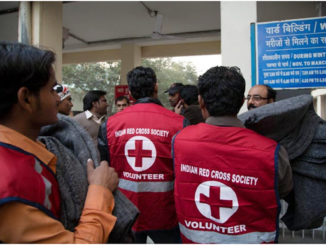
    1920       Indian Red Cross Society was established.

    1961       India’s first Prime Minister Jawaharlal Nehru visited New York.

    2001       India and Russia rejected the Taliban’s participation in the Afghan government.

    1870       The great freedom fighter Chittaranjan Das was born.

    06 NOVEMBER

    1763       The British army defeated Meerkasim and captured Patna.

    1913       Mahatma Gandhi led ‘The Great March’ against apartheid policies in South Africa.

    1998       India’s proposal for ceasefire in Siachen rejected by Pakistan

    1943       During the Second World War, Japan handed over Netaji Subhash Chandra Bose to the Andaman and Nicobar Islands.

    1962       National Defense Council was established.

    2000       Jyoti Basu stepped down after being Chief Minister of West Bengal for 23 consecutive years.

    07 NOVEMBER

    1858       Bipin Chandra Pal, the great revolutionary who fought against the British, was born on 7 November.

    1862       Bahadur Shah II, the last ruler of the Mughal Sultanate, died in Rangoon.

    1876       Bankim Chandra Chattopadhyay composed the song Vande Mataram in a village called Kantal Pada in Bengal.

    1888       Renowned scientist Chandrashekhar Venkata Raman was born.

    2006       India and ASEAN agreed to create a fund for the development of science and technology.

    2008       The famous poet Rahman Rahi of Kashmir was conferred with the Jnanpith Award.

    1711       The ship of the Dutch East India Company sank all of the 300 crew.

    1978       Indira Gandhi was re-elected to the Indian Parliament.

    08 NOVEMBER

    1661       Sikh religious teacher Har Rai died.

    2008       India’s first unmanned space mission Chandrayaan-1 reached the lunar orbit.

    2016       Prime Minister Narendra Modi announced demonetisation and 500,1000 notes were discontinued. After that, new 2000 notes were issued.

    1999       Rahul Dravid and Sachin Tendulkar set a world record by sharing 331 runs in a one-day cricket match.

    2005       Criticized the terrorist actions of Palestinian organizations in India and the repression of Israel.

    1627       The Mughal ruler Jahangir died.

    1920       India’s famous Kathak dancer Sitara Devi was born.

    09 NOVEMBER

    1236       The Mughal ruler Ruknuddin Firoz Shah was assassinated.

    1270       The great saint Namdev was born.

    1947       Junagadh state merged into India.

    1960       First Indian Air Force Chief Subroto Mukherjee died.

    2000       Uttarakhand was carved out of Uttar Pradesh and made a new state.

    10 NOVEMBER

    2001       Indian Prime Minister Atal Bihari Vajpayee addressed the United Nations General Assembly.

    2013       The famous Rajasthani language litterateur Vijaydan Detha passed away.

    1978       Rohini Khandilkar became the first woman to win the National Chess Championship.

    2008       India won the Border-Gavaskar Trophy by defeating Australia 2–0.

    2008       Giving strategic depth to India-Qatar relations, the two countries signed the Defense and Security Agreement.

    11 NOVEMBER

    1888       Freedom fighter Maulana Abul Kalam Azad was born in Saudi Arabia.

    1973       The first international postage exhibition started in New Delhi.

    1889       Freedom fighter Jamnalal Bajaj was born in 1889.

    1943       Indian nuclear scientist Anil Kakodkar was born in 1943.

  • The White House & Quad

    The White House & Quad

    Amid global realignments, India should secure its interests

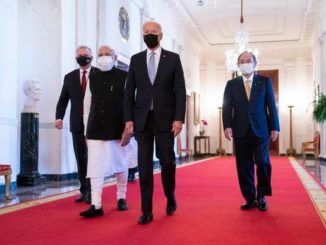
    The strategic reverberations of Narendra Modi’s September 24 double bill in Washington will be felt for long — a meeting with US President Joe Biden, followed by the first in-person Quad Summit where they were joined by the PMs of Australia and Japan. For starters, China was carefully omitted from the joint statements of both meetings. All opening statements by the President and the PMs suggested that the Quad had relegated the security aspect from its exertions. It was even felt that AUKUS, a security trilateral between the UK and two Quad partners, Australia and the US, had overtaken Quad by being more proactive in digging the trenches for a future battle with a new adversary.

    However, the simultaneous presence of the Quad spy chiefs in Washington, and Quad’s commencement of joint work in emerging technology indicates China was the elephant in the room. The growing proximity of common purpose may help India access the currencies of tomorrow such as military drones, 6G, semiconductors and specialized solar panels. It was almost a decade back that South Block had ruled out Russia as an across-the-board partner in frontier areas. But it is also noteworthy that even during the UNGA address Biden did not name China. Biden also broke a long-running China-US stalemate by facilitating the release of Huawei executive Meng Wanzhou, and Beijing reciprocated by freeing two Canadians.

    The challenge before India is to lean on the West to attain global standards in technological and military fields. Yet it must avoid being used as a proxy diplomatic weapon, for there is the risk of being left in the lurch if America’s priorities change. The Biden bilateral and the Quad Summit have promised much in regional infrastructure and co-development in frontier areas. But on the ground, India is yet to recover the trade concessions rescinded by Trump and the PM’s expectation of a generous immigration quota was merely acknowledged by Biden. India also can ill-afford to close all communications with two of its neighbors. In these fast-changing global realignments, India should steadfastly secure its own interests.

    (Tribune India)

  • Australia’s economy slowed in Q2 ahead of lockdown downturn

    Australia’s economy slowed in Q2 ahead of lockdown downturn

    Sydney (TIP): Australia’s economy was already slowing in the June quarter before wide-spread coronavirus lockdowns slammed everything into reverse, leaving the country in a desperate race to vaccinate in the hope of opening up to recovery by Christmas.

    Figures from the Australian Bureau of Statistics out on September 1 showed gross domestic product (GDP) rose 0.7% in the June quarter. That was a step down from 1.9% in the March quarter, but topped forecasts of 0.5% and avoided analysts’ worst fears of a negative outcome.

    Annual growth was the fastest in modern history at 9.6%, but only because the pandemic caused a severe contraction in the June quarter last year, which was dropping from the calculation.

    That painful pattern was playing out again as strict stay-at-home rules in Sydney, Melbourne and Canberra are set to see the economy shrink 2-3% or more this quarter.

    The conservative government of Prime Minster Scott Morrison is pinning its hopes on a vaccination roll out that is gathering steam after a ham-fisted start.

    Current projections are the country could reach 70% of adults vaccinated some time in October, which would allow for a relaxation of rules. Mass lockdowns could be abandoned altogether at 80%, which is tipped for November.

    “Assuming the vaccination rollout continues at its current pace it is likely the Eastern states will begin to re-open in the December quarter, and this will enable the economy to recover,” said Sarah Hunter, Chief Australia Economist for BIS Oxford Economics.

    “But the shift to a new COVID-normal, where there are persistent cases within the community, will make some people cautious and the recovery this time around will be drawn out into 2022.”

    The Reserve Bank of Australia (RBA) has been counting on a rapid recovery once the restrictions ease, though the spread of the Delta variant has made its latest forecasts for growth look optimistic.

    The central bank is now under pressure to delay a tapering of its bond buying programme planned for this month, and is not expected to raise interest rates from record lows of 0.1% until at least 2023.

    The June quarter figures did show strength in consumer and government spending, housing and business investment, though much of that was offset by drags from net exports and inventories.

    On the positive side, nominal GDP reached a record A$2.07 trillion ($1.51 trillion) for the year, making it the world’s 11th largest economy. Output stood at A$80,432 for every one of Australia’s 25.6 million residents.

    That outperformance owed much to super-high prices for many of the country’s resource exports, which boosted its terms of trade by a massive 7.0% in the quarter and 24% for the year.

    The flood of cash boosted company profits, tax receipts and employment, helping lift national incomes and so nominal GDP by a robust 3.2% in the quarter.

    There was some moderation in the household savings ratio to 9.7%, but spending power has been underpinned by a boom in house prices which even seems impervious to the spread of Delta. Reuters

  • India must commit to net zero emissions

    India must commit to net zero emissions

    The country will need to take a stand on climate change action or risk being cast globally as an outlier

    By Patrick Suckling

    “The transition of the global economy to net zero emissions is the biggest commercial opportunity in history. In just the energy sector alone, an estimated $1.6 to $3.8 trillion of investment is required every year until 2050. China gets this, which is why it is investing heavily in gaining an advantage in the technologies of the new economy, be it renewable energy and storage, electric and hydrogen transport, low emissions industry, green cities or sustainable agriculture. India needs to be riding this wave.”

    Yet, in the end, India’s tryst with destiny rests in its own remarkable hands, as it always has been. In a land where the earth is called mother, and Mahatma Gandhi, major religions and the Constitution enshrine environmental care, commitment to net zero emissions by 2050 should almost be foretold. The world hopes we will see it soon.

    India is at the risk of being cast globally as an outlier on climate action, with a negative fallout. With over 50% of the global economy already committed to net zero emissions by 2050 — and China committing to be so before 2060 — this is not where you want to be.

    The pace and scale of climate action is only set to increase, with the recent Intergovernmental Panel on Climate Change (IPCC) report unequivocal on the need for urgent and stronger responses. Events around the world underline the point — towns washed away in Germany, subways turned into storm water drains in China, forests fried in the United States and so many more lives lost to flooding in India.

    Massive opportunities

    It is not only governments that are increasing climate action. The business world is too, not just to protect themselves against the risks of climate change but also to take advantage of the massive opportunities arising as the global economy shifts to net zero emissions. Last year, investors injected over $500 billion into climate transition. In my country, Australia, the number of major companies that have put in place a target of reaching net zero emissions by 2050 has more than trebled in the past year.

    The United Nations Climate Change Conference (COP26) in November in Glasgow is shaping up to be the most important climate meeting since the Paris Agreement in 2015. It is squarely focused on supercharging global ambition and action on climate change, as all countries, including India, agreed to do in the historic Paris Agreement.

    Over 100 countries have already committed to net zero emissions by 2050, with more expected at COP26. Two key holdouts are India and Australia. In the case of my country, under mounting pressure at home and internationally, the government is moving toward such an announcement and I am confident they will do so by or at COP26.

    I am not so confident about India. From what I hear through networks from my time as the Australian High Commissioner to India and as Australia’s Ambassador for the Environment, India is resolutely not committing to net zero by 2050, including on the basis that as a developing country, it needs to see significant support from developed countries for climate action as part of making any such commitment.

    Perhaps this is negotiating tactics. Either way, I fear India may shoot itself in the foot by resisting net zero by 2050.

    First, India itself has a national interest in ambitious global and national climate action. Like Australia, it is among the most vulnerable countries to climate change and, therefore, should be among the more active against the threats. India faces harmful impacts related to sea level rise, heat stress, drought, water stress and flooding, biodiversity and natural disasters. Climate change is not coming — it is here.

    Second, as a rising power, India naturally seeks stronger influence globally. Being an outlier on the global challenge facing our generation does not support this aim. India is already the third largest emitter in the world and is set to be the largest as the United States, China, and the European Union are all now signed up to net zero.

    This will become a significant drag on India’s international diplomacy. This applies not just to key relationships like with the U.S., where President Joe Biden’s administration is mainstreaming climate action into its economic, foreign and security policy, but also with much of the Group of 77 (G77) states, who are increasingly concerned to see climate action, and in multilateral groupings such as the United Nations and ASEAN-APEC.

    Finally, as the famous phrase goes, “it’s the economy, stupid”. There is no longer a trade-off between reducing emissions and economic growth. For example, the U.K. has reduced emissions over 40% and grown its economy over 70% since 1990. Solar energy costs have fallen 90% in recent years, providing the cheapest electricity in India ever seen. Also, given the negative impacts, addressing climate change in India’s economic development is now central to success, not an added luxury to consider. For example, agricultural policy that does not consider adaptive approaches to maximize productivity in the face of increased flooding and drought due to climate change is derelict.

    The report also said that if climate change is addressed and acted upon boldly and rapidly in the next decade, average global temperature rises can be limited to around 1.5° Celsius by 2050. File photo

    The transition of the global economy to net zero emissions is the biggest commercial opportunity in history. In just the energy sector alone, an estimated $1.6 to $3.8 trillion of investment is required every year until 2050. China gets this, which is why it is investing heavily in gaining an advantage in the technologies of the new economy, be it renewable energy and storage, electric and hydrogen transport, low emissions industry, green cities or sustainable agriculture. India needs to be riding this wave.

    It is not as if India is at a standing start. It is set to significantly exceed its Paris Agreement commitment of reducing the emissions intensity of its GDP by 33-35% below 2005 levels by 2030, providing ready room for higher ambition. India is impressing the world with its leading roll-out of renewable energy and target for 450GW by 2030, linked to its leadership on the International Solar Alliance and recent national hydrogen strategy. Indian corporates are also stepping up, with the Tata Group winning awards on sustainability, Mahindra committing to net zero by 2040 and Reliance by 2035. There is plenty on which to build.

    A low-carbon future through sector-led change

    And India should not be expected to build alone. India’s national interests on climate action are now engaged in ways that go significantly beyond waiting for donor support to drive ambition, notwithstanding reasonable arguments about historical responsibility, per capita emissions and equity. With growing wealth and stature, India is increasingly disinclined toward handouts. But that does not mean well-targeted donor investments and international partnerships should not be a factor in raising India’s climate ambition. In fact, they should be, as it is more and more obvious that the world needs to work together for success.

    This could come in many guises, from stronger political engagement and dialogue to policy support in areas of mutual challenge such as energy policy, carbon markets and post-COVID green economic recovery. Practical support and cooperation in areas like rolling out renewable energy and integrating it with the national grid, zero emissions transport, decarbonizing hard to abate sectors like steel, cement and chemicals and decarbonizing agriculture offer significant scope to raise ambition. As does working with India on innovative green financing for decarbonizing investments, including using donor support to mobilize private sector finance, green bonds and climate transition funds. Whichever it is, they need to be lasting partnerships that deliver results.

    Yet, in the end, India’s tryst with destiny rests in its own remarkable hands, as it always has been. In a land where the earth is called mother, and Mahatma Gandhi, major religions and the Constitution enshrine environmental care, commitment to net zero emissions by 2050 should almost be foretold. The world hopes we will see it soon.

    (Patrick Suckling was Australia’s High Commissioner to India and Ambassador for the Environment. He is a senior fellow at the Asia Society Policy Institute (ASPI) and senior partner in Pollination, a specialist climate advisory and investment firm. This oped draws from his recent paper for ASPI on Catalysing India’s Climate Ambition)

  • UAE, Singapore shut out fliers from India

    New Delhi (TIP): At least nine jurisdictions — the United States, the United Kingdom, the United Arab Emirates, France, Australia, Singapore, New Zealand, Hong Kong and Oman — have imposed fresh restrictions on travel to and from India on account of the surge in Covid-19 cases.

    Experts watching the sector closely said India currently poses the “biggest risk” of exporting new variants of the coronavirus to countries around the world, and that they expected more borders to be closed for travel from India.

    The UAE on Thursday, April 22, became the latest country to close its borders for travellers from India, after Singapore imposed a travel ban and Australia announced it will reduce the number of its citizens who would be able to return from India and other red-zone countries.

    According to airline sources, UAE authorities on Thursday banned all flights from India for a period of 10 days from Sunday. The suspension is subject to a review after 10 days.

    In a travel advisory, Dubai-based airline Emirates said: “Effective 24 April 2021 Saturday, 2359 local time Dubai and for the next 10 days, Emirates flights from India to the UAE will be suspended. Furthermore, passengers who have transited through India in the last 14 days will not be accepted to travel from any other point to the UAE.”

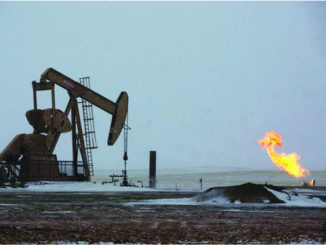
  • Oil slump deepens as Europe faces pandemic lockdowns

    Oil slump deepens as Europe faces pandemic lockdowns

    Oil prices fell on Friday, extending losses for a sixth day as a new wave of COVID-19 infections wash across Europe, spurring new lockdowns and dampening hopes for a recovery in demand for fuels anytime soon.

    Prices plunged the most on Thursday since last summer, leaving oil down nearly 10 percent this week with the reality that the pandemic is abiding, even if infections have plummeted in the US, the worst-hit country and biggest crude consumer. US crude fell below $60 again and was trading at $59.97 a barrel by 0115 GMT. Brent crude was off by 1 cent at $63.27.

    Several large European countries have reimposed lockdowns as new infections increase again, while vaccination programs slow because of concerns about side effects of the AstraZeneca vaccine, which was being widely distributed in Europe.

    “Demand concerns linked to a bumpy vaccine roll-out in Europe and other parts of the world” are hitting prices, said Vivek Dhar, director, mining and energy commodities research, at Commonwealth Bank of Australia. Rising infections in Brazil were also weighing on the market, he said.

    Germany, France and other countries have since announced the resumption of inoculations after regulators declared the AstraZeneca vaccine safe, but the programme halt has made it harder to overcome resistance to vaccines among some of the population.

    Rising COVID-19 cases, particularly in Brazil, also weighed on the demand outlook, and a stronger US dollar pressured oil prices.

    Supplies of oil are plentiful as well, with Saudi Arabia’s crude exports increasing in January for a seventh straight month to the highest since April 2020, according to the Joint Organisations Data Initiative website on Thursday.

    Shipments from the world’s biggest oil exporter increased to 6.582 million barrels per day in January from 6.495 million the previous month.

    In the US, crude inventories increased for a fifth week last week, according to official figures released on Wednesday.

  • Undeterred by Facebook news blackout, Australia commits to content law

    Undeterred by Facebook news blackout, Australia commits to content law

    Sydney (TIP): Australian Prime Minister Scott Morrison vowed on Friday to press ahead with laws to force Facebook Inc to pay news outlets for content, saying he had received support from world leaders after the social media giant blacked out all media. Facebook stripped the pages of domestic and foreign news outlets for Australians and blocked users of its platform from sharing any news content on Thursday, saying it had been left with no choice ahead of the new content laws. The move, which also erased several state government and emergency department accounts, as well as non-profit charity sites, caused widespread outrage. Morrison, who blasted Facebook on its own platform for “unfriending” Australia, said on Friday the leaders of Britain, Canada, France and India had shown support. “There is a lot of world interest in what Australia is doing,” Morrison told reporters in Sydney and added: “That is why I invite … Facebook to constructively engage because they know that what Australia will do here is likely to be followed by many other Western jurisdictions.” Canadian Heritage Minister Steven Guilbeault said late on Thursday that his country would adopt the Australian approach as it crafts its own legislation in coming months.

    The Australian law, which will force Facebook and Google to reach commercial deals with Australian publishers or face compulsory arbitration, has already been cleared by the federal lower house and is expected to be passed by the Senate within the next week. Australian Treasurer Josh Frydenberg said he had spoken to Facebook CEO Mark Zuckerberg for a second time following the news blackout.

    “We talked through their remaining issues and agreed our respective teams would work through them immediately. We’ll talk again over the weekend,” Frydenberg said in a tweet.

    In its statement announcing the move in Australia, Facebook said the Australian law “misunderstood” its value to publishers.

    Frydenberg earlier told the Australian Broadcasting Corp that “there is something much bigger here at stake than just one or two commercial deals. This is about Australia’s sovereignty”.

    Facebook and Alphabet Inc owned Google had campaigned together against the laws with both threatening to withdraw key services from Australia if the laws took effect.

    Google, however, announced a host of pre-emptive licencing deals over the past week, including a global agreement with News Corp.

    Facebook restored some government pages later on Thursday but several charity, non-profit and even neighbourhood groups remained dark. (Reuters)

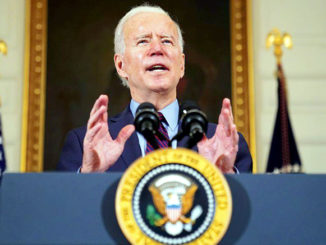
  • Biden spells out foreign policy but does not indicate who are ‘key partners’

    Biden spells out foreign policy but does not indicate who are ‘key partners’

    By Shyam Saran

    The Biden speech is notable for its stress on democratic values and human rights as guiding principles of American diplomacy. He declared that ‘we must start with diplomacy rooted in America’s most cherished democratic values; defending freedom, championing opportunity, upholding universal rights, respecting the rule of law, and treating every person with dignity.’

    In a major speech at the State Department on February 4, US President Biden set out his foreign policy agenda in considerable detail. The speech bears careful attention as it indicates the priorities for this administration. One may note that there is not a single mention of India. The Indo-Pacific strategy and Quad as means of dealing with the challenge of China are missing. This confirms the assessment that India may not be as key a partner for the US under Biden as it appeared to be under the Trump administration. The omission is even more telling since this administration has several top professionals who are familiar with India and have had intensive dealings with it during earlier democratic administrations. One cannot argue that there are no India hands in the administration. We may need to work harder to sustain and further develop the Indo-US partnership. Biden laid stress on reviving alliance relationships describing them as ‘our greatest asset’. He added the phrase ‘key partners’ in the next sentence but gave no indication as to which countries are covered in this generic category. In the Indo-Pacific, the US is likely to give precedence to its military allies, Japan, South Korea and Australia. There is acknowledgement of the adversarial relations with China and Russia but the early extension of the START agreement for another five years reflects the willingness to remain engaged with Russia. The same approach will likely follow with China. Biden said clearly that on issues important to US interests, it will engage with China and climate change will offer the entry point for resuming high-level engagement. But US-China confrontation will remain part of the geopolitical landscape. The subsequent phone conversation between Secretary of State Blinken and state councilor Yang Jiechi demonstrated mutual antipathy.

    There are two other themes. One, the US will play a more active role on the multilateral front. This is reflected in the return to the Paris climate agreement, the resumption of membership of the WHO and a return to the UN Human Rights Commission. One should expect activism at the WTO in concert with the EU and Japan. The US may drop its opposition to the WTO appellate process by allowing fresh appointments to the appellate mechanism. It may no longer oppose the new Director General whose appointment Trump had held up. We did not see any indication of Biden’s interest in rejoining the Trans-Pacific Partnership or reviving negotiations on a Trans-Atlantic trade agreement. There continues to be caution on this front even as the WTO emerges as the forum where trade and investment issues may be negotiated. Both on climate change and multilateral trade issues, India could come under pressure. Biden obviously expects to leverage the US return to the Paris Agreement to pressure ‘major emitters’ to come up with more ambitious emission reduction commitments. India is already identified as a major emitter and will be expected to commit to achieving carbon neutrality, at least not later than China (2060). On the WTO, there is a long-standing record of bitter divergences on several key issues. Unless both countries make a major effort to manage these points of conflict, other more positive aspects of relations may be impacted.

    The Biden speech is notable for its stress on democratic values and human rights as guiding principles of American diplomacy. He declared that ‘we must start with diplomacy rooted in America’s most cherished democratic values; defending freedom, championing opportunity, upholding universal rights, respecting the rule of law, and treating every person with dignity.’ There followed a long paragraph on the recent developments in Myanmar and the expectation that friends and allies will join the US in demanding restoration of the democratically elected government. India may not be able to oblige, given its equities in Myanmar. We should expect greater scrutiny of domestic developments in India. We are witnessing some of the likely strains on relations, thanks to comments in the US Congress on the ongoing farmers’ protests. There is an assumption that the US administration may remain muted on these issues, given the importance of India’s role in the Indo-Pacific strategy. The speech heralds a more difficult challenge on this score.

    The initial moves on India’s western flank are encouraging. The US has changed its policy on Yemen. It could well engineer its return to the Iran nuclear deal. Here its allies and its adversaries, China and Russia, have a vested interest in facilitating the revival of the agreement. They will do the heavy lifting. This would be good for India.

    One should expect the Indo-US partnership on defense and counterterrorism to remain strong. Despite Biden having neglected to mention it, India’s role in maritime security and in Quad remains indispensable.

    One is unable to see the likelihood of PM Modi and Biden developing the kind of personal chemistry that was evident with Obama and more so with Trump. Biden has announced that he would convene a summit of democracies and India would certainly be invited. The date is uncertain. Perhaps before that there would be a G-7 summit hosted by the UK Prime Minister to which PM Modi is invited. That could be an occasion for a summit with Biden and for putting in place a positive and constructive trajectory for Indo-US relations. The democratic connection had helped us in clinching the Indo-US nuclear deal. President Bush, like Biden, was invested in promoting the democratic values. India and the US had together launched the UN Fund for Democracy in 2005. Perhaps we need to revive this initiative at this juncture.


    The bottom line: strengthening Indo-US partnership may require more hard work than one may have anticipated.

    (The author is a Former Foreign Secretary of India, and senior fellow, Centre for Policy Research)


  • Microsoft backs Australian plan to make Google pay for news

    Canberra (TIP): Microsoft said on Wednesday it supports Australia’s plans to make the biggest digital platforms pay for news and would help small businesses transfer their advertising to Bing if Google quits the country.

    Microsoft has been positioning itself to increase market share for its search engine Bing after a Google executive told a Senate hearing last month that it would likely make its search engine unavailable in Australia if the government goes ahead with a draft law that would make tech giants pay for news content.

    Microsoft President Brad Smith said in a statement that he and Microsoft Chief Executive Satya Nadella had told Prime Minister Scott Morrison and Communications Minister Paul Fletcher in an online meeting last week that “Microsoft fully supports” the so-called News Media Bargaining Code.

    Morrison this week confirmed he had spoken to Nadella about Bing replacing Google in Australia.

    “I can tell you, Microsoft’s pretty confident” that Australians would not be worse off, Morrison said on Monday.

    Smith said he had assured the government leaders that small businesses who wished to transfer their advertising from Google to Bing could do so simply and without transfer costs.

    “We believe that the current legislative proposal represents a fundamental step towards a more level playing field and a fairer digital ecosystem for consumers, business and society,” Smith said. The Australia Institute’s Center for Responsible Technology, an independent think tank, welcomed Microsoft’s stance and called on Google to withdraw its threat to close its search services within Australia. “This is a significant development and should send a message to both Google and Facebook that their network dominance in Australia is only as strong as their respect for Australians,” the center’s Director Peter Lewis said in a statement. AP

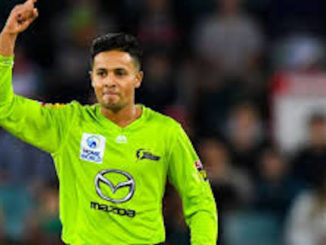
  • Indian-origin Punjabi taxi driver’s son makes it to Australia T20I team

    Indian-origin Punjabi taxi driver’s son makes it to Australia T20I team

    MELBOURNE (TIP): Teenaged leg-spinner Tanveer Sangha, son of an Indian-origin taxi driver in Australia, has been named in Australia’s T20 squad for the upcoming five-match series in New Zealand.

    Sangha, who represented Australia at the under-19 World Cup just 12 months ago, is son of Sydney-based Joga, who had migrated from Rahimpur Kala Sanghian, a village near Jalandhar in Punjab, in 1997.

    Sangha, 19, has been in great form in the Big Bash League 10 regular season.

    Playing for Sydney Thunder, he scalped 21 wickets at an impressive average of 16.66.

    Former Australia captain Ricky Ponting had also called for Sangha’s inclusion in the national side.

    “He’s a young bloke who looks like he’s pretty confident and in control of what he’s doing, and he bowls proper good balls so he might be someone they’d look to get into the system,” Ponting told cricket.com.au

    “It’s a hard one for young leg-spinners, because they come along quickly and everyone’s excited by how good they might be, quite often they’re introduced early and they can have a few setbacks after that. But they might have to think about that,” he said.

    Sangha was Australia’s leading wicket taker in the under-19 World Cup last year. He scalped 15 wickets in the six matches in the tournament held in South Africa.

    Before Tanveer, Gurinder Sandhu was the other Indian-origin player to have played for Australia national team.

    The five-match series between Australia and New Zealand will start from February 22.


  • Israel extradites sex-crime suspect to Oz after 13 years

    Tel Aviv (TIP): A former Australian school principal accused of sexually assaulting students was extradited to Australia on Monday under an order from Israel’s Supreme Court. Malka Leifer has denied the allegations against her. She had fled Australia in 2008 after the accusations surfaced. Reuters

    Earth’s ice loss increases at record speed, says study

    London (TIP): Earth has lost 28 trillion tonnes of ice between 1994 and 2017. A study, published on Monday in The Cryosphere journal, found that the rate of ice loss from the Earth has increased markedly within the past three decades, from 0.8 trillion tonnes per year in the 1990s to 1.3 trillion tonnes by 2017. PTI

  • Australia score 215 for 5 after electing to bat in Brisbane Test

    Australia score 215 for 5 after electing to bat in Brisbane Test

    Brisbane (TIP): Debutant Washington Sundar got the dangerous Steve Smith with a well-planned dismissal but Marnus Labuschagne upped the ante in the second session with an unbeaten 73 that took Australia to 215 for 5 on the opening day of the fourth Test on Friday, January 15.

    Australia scored runs at a fair clip in the second session against an inexperienced Indian attack which also lost one of their pacers Navdeep Saini due to a groin strain.

    During the session, 89 runs were scored with Labuschagne batting in company of Matthew Wade (27 batting, 57 balls) with an unbroken 67 runs to show for their efforts.

    The session witnessed rookie off-spinner Washington Sundar laying a successful leg-trap for Smith (36), who flicked one to Rohit Sharma stationed at short mid-wicket for the catch.

    Smith and Labuschagne had added 69 runs for the second wicket in which the former skipper was the aggressive partner. However, after Smith’s departure, Labuschagne stepped up and his 73 off 167 deliveries had seven boundaries. Wade also looked in good touch on a placid batting track having hit five boundaries. Shardul Thakur suffered the most among Indian pacers. Labuschagne was lucky when Ajinkya Rahane dropped a sitter off Saini at gully and immediately after that the bowler complained of groin pain and was taken off the field.

    Earlier, a new-look Indian bowling line-up kept it steady, removing openers David Warner and Marcus Harris in the first session. With a cumulative experience of three Test matches and ‘10 balls’ that Shardul Thakur bowled on his debut in 2018, India did well, although Steve Smith and Marnus Labuschagne were once again looking ominous on a bouncy and batting track. However, Mohammed Siraj and Shardul Thakur did well to get rid of the openers in the first hour of play where honours were shared.

    That Australia forced a half-fit Warner (1) to play was evident when he had no apparent footwork while trying to drive an angular delivery from Siraj which was brilliantly snapped by an agile Rohit Sharma diving to his right.

    It could be seen that Warner, after his groin injury, is still finding it difficult to stretch his front-foot and get to the pitch of the delivery.

    Thakur, whose debut against West Indies ended in a nightmare after bowling only 10 deliveries, achieved success, bowling the 11th one in Test arena.

    It was a gentle outswing — an inswing for left-handed Harris (5), who instinctively clipped it straight to debutant Washington Sundar at square leg.

    For India, Thangarasu Natarajan’s fairytale story just got better as he became India’s 300th Test cricketer and looked reasonably decent with the new ball without being exceptional as he is with the white ball. He did get some initial swing and kept the openers quiet during that first spell. But the most impactful bowler was Siraj with his pace and length even though a few loose deliveries were there for the taking.

  • Cummins puts Oz on top in Sydney Test as India dismissed for 244

    Cummins puts Oz on top in Sydney Test as India dismissed for 244

    Sydney (TIP): A relentless Patrick Cummins and a mean Josh Hazlewood dismissed India for 244 after Cheteshwar Pujara’s slowest half-century helped Australia take complete command at tea on the third day of the third Test here on Saturday, January 9.
    Australia took a first-innings lead of 94 runs and it would be an uphill task for India to make a comeback in this match. Pujara’s (50 off 176 balls) ultra-defensive approach put tremendous pressure on his colleagues and India never quite got the momentum going as Cummins (4/29 in 21.4 overs), Hazlewood (2/43 in 21 overs) and Mitchell Starc (1/61 in 19 overs) continuously attacked the batsmen — first with a leg-side field and short-ball strategy and then on the corridor of uncertainty.
    Pujara doesn’t play the pull or hook shot well and he wasn’t allowed room to either cut or drive. While he never tried to rotate strike, the likes of Ajinkya Rahane (22 off 70 balls) and Rishabh Pant (36 off 67 balls) felt the urge to break the shackles in the absence of any such intention from the other end.
    It also resulted in three run-outs including the one-off Hanuma Vihari (4 off 38 balls), who fell short while going for a quick but non-existent single.
    It was then left to Ravindra Jadeja (27), who had to throw his bat around to bring the lead down to less than 100 runs, but that would be of little comfort considering that India would now have to bat fourth to save the match.
    A total of 84 runs from 34 overs in the first session, with lack of intent especially from Pujara, didn’t help India’s cause and Rahane’s dismissal was purely due to the scoreboard pressure.
    The Indian captain failed to get a move-on initially on a slow track where bounce became variable as the session progressed.
    He did hit a cover drive and then tried to take on Nathan Lyon by lofting him for a six over long on.
    However, Cummins bowled one where he got extra bounce in his off-cutter, cramping Rahane for room and he was played on. The duo added 32 runs in 22.3 overs and it didn’t help the team in any way.
    Had KL Rahul been fit, there could have been a case of Vihari getting dropped as he didn’t show in any way that he was in control during his half an hour stay at the crease.
    Pant got into the groove quickly but a nasty blow on the forearm did affect his shot- making and the result was a caught behind off Hazlewood, after a 53-run stand in a little over 20 overs. Pujara, at the other end, was bowled short initially with three men on the leg side and then on the off-side with his cover drive dried up.
    Even the drive wide off mid-on didn’t fetch him boundaries. In the first 100 balls, he didn’t have a single boundary. Finally, after completing his slowest ever half century in Test cricket, Cummins got one to rear up from short of length and it was that one good ball every batsman gets when he is not scoring runs. From 195 for four, suddenly it was 210 for eight and there was only Jadeja left to score a few runs.

  • More questions over fourth Test after Brisbane lockdown

    SYDNEY (TIP): Brisbane went into three days of strict lockdown as the government tries to contain a more contagious variant of Covid-19, raising more doubts about the Gabba hosting next week’s fourth cricket Test between Australia and India. The city’s two million residents will be barred from leaving their homes for anything but essential business after a worker at a quarantine hotel in the city tested positive for the new strain of the virus first detected in Britain.
    The news will do little to ease widely reported concerns in the Indian touring party over what level of isolation they will be forced into when they leave Sydney for Queensland on Tuesday.
    The Board of Control for Cricket India (BCCI) has made no comment on the Brisbane lockdown but retired batting great Sunil Gavaskar today articulated the concerns of the team during TV commentary.
    “In Sydney, there are people coming to the ground and then going back and having dinner at a restaurant or having a gathering of 20, 30 people in a pub,” he said on Channel Seven. “What they (the team) are saying is they should also be allowed to do something similar. The Queensland government is fully entitled to protect its people. Similarly I believe the BCCI is fully entitled to protect its team. I think that’s something we should never forget.”

  • GENERAL DOUGLAS MacARTHUR & CHURCHILL ARE NEEDED IN 2021

    GENERAL DOUGLAS MacARTHUR & CHURCHILL ARE NEEDED IN 2021

    By Ravi Batra

    The world has not seen a weapon that without a bomb launched or a bullet fired could devastate economies of all nations on earth in one fell swoop, and render their citizenry dead or fearing for life itself.

    2020, to paraphrase FDR, is a year that will live in infamy, and it is also the year when Neville Chamberlain reigned supreme. Indeed, no less than President Trump – who has stood taller than any before him, including, Richard M. Nixon, when he was a Communism-buster up until prior to his 1967 abdication in Foreign Affairs’ pages with a quid pro quo op-ed entitled “Asia After Viet Nam” – called the Virus the “China Virus,” yet, then incredulously declared: that we are fighting “an invisible enemy.” No, we are not Mr. President. The Virus isn’t our enemy, just as on December 7, 1941 the Japanese bombs and bullets weren’t the enemy; Imperial Japan was, by attacking us at Pearl Harbor, in Hawaii. Then, FDR, after sentencing that day “to live in infamy,” unleashed the indominatable General Douglas MacArthur. The same General, who when first expelled from Philippines, left written messages for the people of Philippines:  “I shall return.” And, return he did. Promise made; promise kept. Indeed, a short few years later on September 2, 1945 there was a Surrender Ceremony. A visit to the USS Missouri website proudly shows that the infamous history started at Peral Harbor was in-fact stopped, and a new history of American Freedoms, for all, was made to wit:

    “On the teak decks of USS Missouri, WWII finally came to an end on 2 September 1945. The Surrender Ceremony, which formally brought an end to the bloodiest conflict in human history, lasted a mere 23 minutes. It began at 0902 with a brief opening speech by General Douglas MacArthur. In his speech, the General called for justice, tolerance, and rebuilding. After MacArthur’s speech, Foreign Minister Mamoru Shigemitsu, representing the Emperor of Japan, signed the Instrument of Surrender. He was followed by the Chief of the Army General Staff, General Yoshijirō Umezu, who signed for the Japanese Army. After this, General MacArthur signed the Instrument of Surrender as the Supreme Allied Commander with 6 pens. Of these pens, he gave two to former POWs Lt. General Jonathan Wainwright and Lt. General Lt. General Arthur E. Percival. Following MacArthur, other allied representatives followed in this order:

    Fleet Admiral Chester W. Nimitz signed for the United States; General Xu Yongchang for the Republic of China; Admiral Sir Bruce Fraser for the United Kingdom; Lt. General Kuzma Derevyanko for the Union of Soviet Socialist Republics (USSR); General Sir Thomas A. Blamey for the Commonwealth of Australia; Colonel Lawrence Moore Cosgrave for the Dominion of Canada; General Philippe Le Clerc for the Provisional Government of the French Republic; Lt. Admiral Conrad E. L. Helfrich for the Kingdom of the Netherlands;Air Vice Marshal Leonard M. Isitt for the Dominion of  New Zealand.

    5-Star General MacArthur’s Remarks – that day – on the deck of the USS Missouri are illuminating, and hence, worthy of reproduction so we may escape, even belatedly, History’s “curse of repetition” upon those who forget the past, while cuddling up to happy-amnesia:

    “We are gathered here, representatives of the major warring powers, to conclude a solemn agreement whereby peace may be restored. The issues involving divergent ideals and ideologies have been determined on the battlefields of the world, and hence are not for our discussion or debate. Nor is it for us here to meet, representing as we do a majority of the peoples of the earth, in a spirit of distrust, malice, or hatred.

    But rather it is for us, both victors and vanquished, to rise to that higher dignity which alone befits the sacred purposes we are about to serve, committing all of our peoples unreservedly to faithful compliance with the undertakings they are here formally to assume. It is my earnest hope, and indeed the hope of all mankind, that from this solemn occasion a better world shall emerge out of the blood and carnage of the past — a world founded upon faith and understanding, a world dedicated to the dignity of man and the fulfillment of his most cherished wish for freedom, tolerance, and justice. The terms and conditions upon which surrender of the Japanese Imperial Forces is here to be given and accepted are contained in the Instrument of Surrender now before you. As Supreme Commander for the Allied Powers, I announce it my firm purpose, in the tradition of the countries I represent, to proceed in the discharge of my responsibilities with justice and tolerance, while taking all necessary dispositions to insure that the terms of surrender are fully, promptly, and faithfully complied with. I now invite the representatives of the Emperor of Japan and the Japanese government and the Japanese Imperial General Headquarters to sign the Instrument of Surrender at the places indicated.”

    [After the Instrument of Surrender was executed by all, he concluded with:]

    “Let us pray that peace be now restored to the world, and that God will preserve it always. These proceedings are closed.” (Emphasis added)

    InWWII – we were united with USSR and China (not today’s Chinese Communist Party’s (CCP’s) People Republic of China (PRC)), but the Republic of China (ROC) – today, known as Taiwan, when General Chiang Kai-shek was head of ROC.  I cite the above snippet of history to document the gross geopolitical malpractice of leaders, here at home and abroad, since 1945. Indeed, CCP’s brilliant Chairman Mao, who had originally joined under the leadership of General Chiang, revolted, caused a civil war, and finally expelled him in 1949 from Mainland China to a mere island, Formosa, aka Taiwan. CCP’s China is a new world order – different from feudalism, communism, socialism, corporate-capitalism and our cherished Bill of Rights embedded in our Separated Powers regime – as it is an amalgam of all. Indeed, there are 99 million members of CCP – think corporate governance and the now-disappeared “Avon Lady.” Everybody in China is directly and intimately known by a CCP Member.

    From Chiang Kai-shek, to Harry Truman, to Pandit Nehru, and above all others, to Richard Nixon who rolled out the red carpet for CCP’s China and gifted the critical multi-polar Permanent Seat on the United Nations Security Council – after unilaterally amending History and taking it away from ROC – the world could not, and sadly did not, see the slowly moving tortoise of CCP-China as a threat greater than the fast-moving Adolf Hitler.

    We are at the Third Act of CCP’s “rejuvenation” of the Ming Dynasty’s Tribute System. Indeed, President Xi has honestly stated his China Policy to be “rejuvenation” – almost with as much delight as Edgar Allen Poe had in writing the Purloined Letter.  What former National Security Advisor H.R. McMaster warned about in The Atlantic on May 19, 2020 – “What China Wants” – but left off at, I have continued – as I must warn as Paul Revere did – that our “Emperor wears no clothes,” to metaphorically assert without doubt, that our China Policy – created and effectuated by our Deep State and Executive and Legislative Leaders – is both a misdiagnosis, and a mistreatment that embraces de facto, if not de jure, impotent Chamberlain while rejecting the necessary Churchill, who to them is truly “invisible,” let alone “necessary.” Giving us governmental malpractice that is both decrypt, as it is impotent.

    The world has not seen a weapon that without a bomb launched or a bullet fired could devastate economies of all nations on earth in one fell swoop, and render their citizenry dead or fearing for life itself. Coronavirus, with its transplanted from Bats’ “Spike Glycoprotein (S)” – which I wrote about in my Open Letter to President Trump on April 14, 2020, and the next day United States opened its then-Preliminary Investigation of China – is now the very piece of protein that Pfizer and Moderna’s mRNA-based vaccines now – in error – implant in every patient, and after the initial 2-shots, require a booster shot every 3 months, for life. Result: the enemy get refreshed, while our body’s “T cell” get exhausted or run out. Indeed, Merck’s CEO Kenneth C. Fraizer has correctly said: we don’t even understand the Virus yet, let alone treat it. How right he is. This vaccine frenzy is nothing short of a global clinical trial – worse than if you signed up for one – for now, as a patient, you don’t get paid, and if you suffer a severe reaction, you can’t sue as they have a liability shield, courtesy of Operation Warp Speed that didn’t have to do 10 years of public health studies to identify its efficacy, but its side effects. Risks vs Benefits. A patient with a migraine headache would never accept decapitation as a solution; yet, now, we are to accept this vaccine with a public health study over 10-years of time. Yes, we need a vaccine; but, we need the raw truth about the creation of SARS-CoV2, its escape from the Wuhan lab, its variations, etc., before we can figure out the correct cure.

    Kompromat – is a term used to suggest Russia’s ability to control another person or nation through some act or knowledge that the target would not like exposed. Blackmail. In our social media-connected world, with data that documents one’s hallucinations as if “fact,” our exceptional separated powers regime is sadly checkmated. As 2021 is the Year of Hope, like never before, I end with a wish that just as the Ming Dynasty voluntarily gave up its Tribute system, so does President Xi Jinping; and, instead, he joins in transparent disarming of SARS-CoV2 and dismantles his Jaws of War (which I have previously described). Otherwise, let Churchill be re-born as an American – worthy of everyday hardworking Americans who toil to achieve the American Dream, as merit alone can – and uphold our Flag high and free, as those who died doing so in 1814 at Fort McHenry and caused lawyer-poet Francis Scott Keys to be so moved by their undying courage and national pride to write “The Star-Spangled Banner.”

    (Ravi Batrais a senior attorney and  advisor to many governments. Twitter @RaviBatra)

  • Oz national anthem sees a change after 36 years

    Melbourne (TIP):  The lyrics of Australia’s national anthem have been changed by one word for the first time since 1984 to reflect what Prime Minister Scott Morrison calls “the spirit of unity”. The PM on the New Year’s eve announced that the second line of the anthem has been changed from “For we are young and free” to “For we are one and free”. Governor-General David Hurley agreed to the Commonwealth’s recommendation for the amendment. PTI

  • New Zealand has nail-biting win in 1st Test against Pakistan

    Mount Maunganui (TIP): New Zealand beat Pakistan by 101 runs in the first cricket Test which ended very late on the fifth day on Wednesday,  Dec 30, achieving their third straight win in three home Tests this summer and taking a 1-0 lead in the two-Test series. At the same time New Zealand overtook Australia to claim the No. 1 world ranking in Tests for the first time in its history. The victory wasn’t the emphatic one New Zealand likely had envisaged when they came to the fifth day of a Test match for the first time this season holding a sizeable advantage.

    Having been set 373 to win, Pakistan was 71-3 — still 301 runs behind — and the New Zealand bowlers who had dismissed Pakistan for 239 in its first innings to give the home side a 192-run lead, still held the upper hand. Pakistan finally was out for 271 at 6.36 pm local time with fewer than five overs left in the day’s play and a draw beckoning.

    Left-arm spinner Mitchell Santner dismissed No. 11 batsman Naseem Shah to clinch the win after Naseem and Shaheen Afridi had defied New Zealand for almost eight overs as the number of balls remaining in the day dwindled.

    The final day didn’t unfold in quite the way New Zealand had hoped or even begun to expect when Trent Boult dismissed the overnight batsman Azhar Ali (38) in the second over of the day.

  • Australia to make Facebook, Google pay news outlets for content

    Australia to make Facebook, Google pay news outlets for content

    Sydney (TIP): Australia on Dec 9 finalised plans to make Facebook Inc and Google pay its media outlets for news content, a world-first move aimed at protecting independent journalism that has been strongly opposed by the internet giants. Under laws to go to Parliament this week, Treasurer Josh Frydenberg said the Big Tech firms must negotiate payments for content that appears on their platforms with local publishers and broadcasters. If they can’t strike a deal, a government-appointed arbitrator will decide for them.

    “This is a huge reform, this is a world first, and the world is watching what happens here in Australia,” Frydenberg told reporters in the capital Canberra. He added: “Our legislation will help ensure that the rules of the digital world mirror the rules of the physical world … and ultimately sustain our media landscape.”

    The law amounts to the strongest check of the tech giants’ market power globally and follows three years of inquiry and consultation, ultimately spilling into a public row in August when the US companies warned it may stop them offering their services in Australia.

    Facebook Australia managing director Will Easton said the company would review the legislation and “engage through the upcoming parliamentary process with the goal of landing on a workable framework to support Australia’s news ecosystem”.

    A representative for Google declined to comment, saying the company had yet to see the final version of the proposed law.

    Until recently, most countries have stood by as advertisers redirect spending to the world’s biggest social media website and search engine, starving newsrooms of their main revenue source and bringing widespread shutdowns and job losses.

    But regulators are starting to test their power to rein in the two mega-corporations, which take more than four-fifths of Australian online advertising spending between them, according to Frydenberg.

    Google said in October that it planned to pay $1 billion to publishers globally for their news over the next three years.

    The new product called Google News Showcase will launch first in Germany, where it has signed up German newspapers including Der Spiegel, Stern, Die Zeit, and in Brazil with Folha de S Paulo, Band and Infobae.

    Google said last month that it had also signed copyright agreements with six French newspapers and magazines, including national dailies Le Monde and Le Figaro. “It’s both very ambitious and very necessary,” said Denis Muller, an Honorary Fellow at University of Melbourne’s Centre for Advancing Journalism, referring to the Australian law. “Taking their news content without paying for it, in exchange for a very questionable reward of ‘reach’, seems to be a very unfair and uneven and ultimately democratically damaging arrangement,” Muller added.

    News Corp Australia executive chairman Michael Miller said the law was “a significant step forward in the decade-long campaign to achieve fairness in the relationship between Australian news media companies and the global tech giants”. In May, News Corp stopped printing more than 100 Australian newspapers, citing declining advertising.

    In changes to draft legislation announced earlier this year that might favour the tech companies, the final version of the law would not affect news content distributed on Facebook’s Instagram subsidiary or Google’s Youtube. Facebook and Google would also be allowed to include in the negotiations the value of clicks their platforms directed to news websites.

    But Frydenberg added to the list of media companies with whom the tech giants must negotiate, saying public broadcaster the Australian Broadcasting Corp and specialist public broadcaster SBS would be included, along with dominant private sector outlets like News Corp and Nine Entertainment Co Holdings Limited. Reuters

  • Biden reassures US allies in calls with leaders of Japan, South Korea, Australia

    Biden reassures US allies in calls with leaders of Japan, South Korea, Australia

    NEW YORK (TIP): In their first calls with Joe Biden since the U.S. election, the leaders of Japan, South Korea and Australia on Thursday reaffirmed plans to form close ties with the president-elect to tackle issues including climate change and regional security.

    The three key Asian allies – Japanese Prime Minister Yoshihide Suga, South Korean President Moon Jae-in and Australian Prime Minister Scott Morrison – join other global leaders in recognizing the Democratic challenger’s Nov. 3 victory over incumbent Donald Trump, who has so far refused to concede.

    Biden’s projected win comes against a backdrop of China’s growing military and economic assertiveness in the region, and after years of sometimes tumultuous relations between Asian allies and the United States under Trump over issues including trade, defense and the environment.

    All sides expressed their determination to strengthen bilateral ties as well as tackle global issues such as the coronavirus pandemic and climate change, Biden’s office said.Japan’s Suga said he spoke with Biden by telephone and confirmed the importance of bilateral ties. “President-elect Biden said that he looks forward to strengthening the U.S.-Japan alliance and working together on achieving a free and open Indo-Pacific,” Suga said to reporters, in separate comments made at the Prime Minister’s Office.

    Many world leaders including United Kingdom, France and Germany as well as others have already congratulated Biden for his win, while China and Russia have so far held off.

    SECURITY AND PROSPERITY

    Biden on Wednesday named Ron Klain as his White House chief of staff, his first major appointment as he builds his administration. Anthony Blinken, a diplomat and longtime confidant of Biden is seen as a likely pick for Secretary of State or National Security Adviser, both key roles for Asian allies.

    Speaking to South Korea’s Moon, Biden reaffirmed the U.S. commitment to defend South Korea, highlighting the Asian ally as a “lynchpin of the security and prosperity of the Indo-Pacific region,” Moon’s spokesman Kang Min-seok said.

    “President Moon asked for close cooperation for the forward-looking development of the bilateral alliance, and the denuclearization and peace on the Korean peninsula,” Kang told a briefing. “President-elect Biden said he would closely cooperate to resolve the North Korean nuclear issue.” Trump and North Korean leader Kim Jong Un vowed to work towards denuclearization at their unprecedented summit in 2018, but little progress has been made since their second summit and working-level talks collapsed last year.

    While Biden has said he would not meet with Kim without preconditions, he has also said he would embrace “principled diplomacy” with North Korea.

    South Korean officials are also hopeful that Biden will quickly resolve a drawn-out, multi-billion-dollar dispute with Washington over the cost of thousands of U.S. troops on the peninsula. Tackling the global coronavirus pandemic and climate change were key themes in Biden’s calls with all three leaders, readouts from Biden’s office showed.

    Australia’s Morrison said he spoke with Biden about emission reduction technology, though a target for zero net emissions by 2050 was not discussed.

    “I raised with the president-elect the similarity between the president-elect’s comments and policies regarding emissions reduction technologies that we needed to achieve that, and we look forward to working on those issues,” Morrison told reporters in Canberra. Both Moon and Suga said they agreed to arrange summits with the new president shortly after his inauguration in January.

    Biden will also face the challenge of managing unresolved political and economic disputes between South Korea and Japan, which have threatened a military intelligence-sharing arrangement and complicated U.S. efforts to counter China.

    (Agencies)

  • Biden likely to give India more strategic space

    Biden likely to give India more strategic space

    Biden has said that he would constitute a united front of the US, its allies and partners to ‘confront China’s abusive behavior and human rights violations’ and ‘place US back at the head of the table’ to mobilize collective action on global threats. Germany, France and the European Union have welcomed Biden’s election promise to work on issues like China’s unfair trade practices and other challenges.

    By Yogesh Gupta

    Joseph  Biden Jr. will soon take over as the 46th President of the United States. There is some consternation as many critics are not sure how the Joe Biden-Kamala Harris duo will react to the human rights situation, particularly in Kashmir. Also, that he will be ‘soft’ on China which may recoil on India in its current military confrontation with that country. Biden is a seasoned and skillful politician, who for decades has served on the Senate Foreign Relations Committee, including as its chair. Second, he is calm, contemplative and a team leader who will listen to and go by the professional advice of the US establishment — including the State, Defense, National and Homeland Security, CIA, Trade and other departments. His long innings as the Vice President in two terms of President Obama unambiguously authenticate this view.

    In an article, Why America must lead again, in the Foreign Affairs journal in March this year, Biden wrote that President Trump had diminished the credibility and influence of the US by abdicating the American leadership, indulging in ill-advised trade wars which had hurt its own consumers and undermining and abandoning its allies which are America’s biggest strength.

    The post-COVID-19 world will be very different from 2016 when the Obama-Biden duo left. China’s economy has made huge strides during this period. However, much of China’s economic growth is based on extensive use of unfair trade practices, including denial of market access, stealing of foreign technologies, subsidies to its state-owned industries and others.

    China’s swift growth has been accompanied by massive modernization of its military, including manufacture of fifth generation of fighter and stealth aircraft, long- and medium-range missiles, hypersonic and artificial intelligence (AI)-based weapons, destroyers and aircraft carriers.

    Similarly, China has made considerable progress in other emerging technologies like 5G, quantum computing, new materials, robotics and space weapons. The rapidly growing China is now challenging the economic and military pre-eminence of the US in Asia. It has launched aggression against a number of countries allied or getting closer to the US such as India, Taiwan, Vietnam, Australia and others and is trying to divide the transatlantic alliance.

    Biden has said that he would constitute a “united front of the US, its allies and partners to confront China’s abusive behavior and human rights violations” and “place US back at the head of the table” to mobilize collective action on global threats. “When we join together with fellow democracies, our strength more than doubles. China can’t afford to ignore more than half the global economy,” he argued. Germany, France and leaders of the European Union have welcomed Biden’s election promising to work together on China and other challenges.

    Though the aggressive rhetoric of Trump administration may change as Biden seeks China’s collaboration on climate change, non-proliferation and control of infectious diseases, the US and its allies will take collective action against China’s unfair trade policies, as per the Biden team. The US sanctions on export of sensitive technologies to China are likely to continue. In his earlier avatars, Biden played an important role in the passage of the Indo-US Civil Nuclear Deal in the Congress (2005) and later when the Obama administration declared India as a ‘major defense partner’ (2016). With the signing of Logistics Exchange Memorandum of Agreement (LEMOA), Communications Compatibility and Security Agreement (COMCASA) and Basic Exchange and Cooperation Agreement for Geo-spatial Cooperation (BECA) recently, India has established close linkages with the US security architecture. Its large growing economy, professional armed forces and stout determination to resist China have augmented its strategic value. In its pursuit of multipolar world, India can play a critical role in checking the growth of China’s hegemony and its domination of Asia.

    Biden made it clear in his Foreign Affairs essay that he would “fortify the USA’s collective capabilities with democratic friends by reinvesting in its treaty alliances with Australia, Japan, South Korea and deepening partnerships from India to Indonesia to advance shared values in a region that will determine the USA’s future.”

    Biden has promised to invest in improving America’s competitiveness, pull down trade barriers, resist the slide towards protectionism and give more emphasis to fair trade. Given the rising trade deficit and unemployment in the US, it is likely that there will be some tough negotiations with India on issues such as high tariffs, market access, levy of taxes on US technological giants like Amazon and Google, but in an amicable manner without resorting to threats and tariffs.

    On issues relating to immigration, H1B visas and the studies of Indian students in US universities, Biden is likely to be more positive though keeping in view unemployment in his own country.Some Biden advisers have stated that he would raise human rights issues with India like Obama. This will be more in the nature of a dialogue among friendly states and would not be the main driver of his overall policy given New Delhi’s sensitivities and the importance attached to strategic issues confronting the two countries.

    Biden has stated that his administration would stand with India against the threats it faces from its own region and along its borders. Given the above template, it is likely that India would find greater resonance on Pakistan’s support of terrorism, a continued US role in the fight against terror groups in Afghanistan and on resuming a nuclear deal with Iran.

    Similarly, his stand on re-joining the Paris climate change agreement, convening a summit of democracies to discuss issues of common interest, meetings of major carbon emitters to reduce harmful emissions and control of infectious diseases would be of considerable interest to India. Summing up, India is likely to get more strategic space and a greater sympathetic understanding of its concerns from the Biden administration than that of President Trump.

    (The author is a former ambassador)

  • Indian-Origin Chef in Australia Feeding Needy during the Pandemic 

    Indian-Origin Chef in Australia Feeding Needy during the Pandemic 

    MELBOURNE  (TIP): An Indian-origin chef in Australia has been tirelessly working to deliver free food to the homeless and needy people, including international students, ever since the coronavirus pandemic broke out and is now raising funds for a food truck to enable him to deliver meals to them. Melbourne-based Daman Shrivastav, 54, who grew up in Delhi and made his way to Australia after working in the Middle East for a while in the 1990s, said his drive to feed the homeless is not a new thing for him as he did similar work in Iraq during the Gulf War.

    “This pandemic may not be like the Gulf War, but the stories of people trapped inside and scared to go out remain the same. The situation is more or less the same as people have lost jobs and thousands of livelihoods have been affected,” he said.

    Daman Shrivastav said food is everyone’s right and everybody should have access to food and times like these remind him of his own sufferings.

    “I have seen poverty. I have been homeless in Australia for a couple of days during my early days here. The feeling, which I had experienced that time, prompted me to take this initiative to reach out to the needy people,” he said. Daman Shrivastav, who had fed hundreds of people for free in Baghdad during the Gulf War, is now doing the same in Melbourne for those who cannot afford to buy their own food amid the pandemic. He is also feeding international students, many of whom are finding it hard to sustain in an alien country in this time of crisis. Daman Shrivastav prepares the meals in his humble home kitchen and delivers them around the city in his car.

    “I used to cook 150 meals a day in my home kitchen with my wife and daughter when the pandemic broke out and distributed them to the homeless in my car,” he said. However, with the information about his initiative now spreading fast through media and word-of-mouth, Daman Shrivastav said he is getting a lot of support from the locals who want to join the cause.

    “There is a lot of support out there coming on board with me and I have been receiving calls from people who want to participate in this initiative. In fact, a local council here has offered us their community kitchen to prepare meals, given the kind of space it needs,” he said.

    Daman Shrivastav has also set up an online page to raise funds for a food truck to deliver free meals. “I have so far raised 13,000 Australian dollars in the last four weeks. We are aiming to collect 70,000 Australian dollars for the food truck,” he said. Today, Daman Shrivastav has a dedicated team of six volunteers. Many locals also donate groceries on weekly basis. Daman Shrivastav said he would continue the initiative even after the pandemic is over.

  • Australia charges first person under foreign interference law

    Sydney (TIP): Australian police said a Melbourne man, who appeared in court on Thursday, was the first person charged with foreign interference under the new legislation introduced in 2018. A federal police statement did not give details about which foreign state the 65-year-old man was accused of acting for. A Melbourne Magistrates Court spokeswoman confirmed that Di Sanh Duong had appeared in court on Thursday. Duong holds senior positions in a number of Chinese community associations in the state of Victoria, including the Oceania Federation of Chinese Australians, and the Chinese Museum, according to organisation records seen by Reuters, websites and press statements. Duong could not immediately be contacted for comment. The Chinese Museum did not respond to a request for comment and the Oceania Federation could not be immediately reached for comment. The Australian Federal Police executed search warrants in Melbourne on October 16, the police statement said. The charge, of preparing an act of foreign interference, followed an investigation into the man’s relationship with a foreign intelligence agency by the Australian Security Intelligence Organisation (ASIO) and the federal police, it said.

    AFP Deputy Commissioner Ian McCartney said in a statement: “Foreign interference is contrary to Australia’s national interest. It goes to the heart of our democracy.” He added: “It is corrupting and deceptive, and goes beyond routine diplomatic influence practiced by governments.”

    When the foreign interference legislation was introduced to the Parliament, then Prime Minister Malcolm Turnbull referred to the media reports about covert interference by the Chinese Communist Party and said he was galvanised to take action by a classified ASIO report.

    Beijing took offence at the Australian political debate over the interference laws. Reuters