Tag: Australia

  • SBI to dilute stake in its general insurance venture to 49%

    NEW DELHI (TIP): State Bank of India  (SBI) on Thursday said it will dilute its stake in its general insurance venture SBI General to 49 percent in favour of its foreign partner, with the enactment of insurance legislation.

    SBI General is a 74:26 joint venture between SBI and Insurance Australia Group (IAG) of Australia.

    The Executive Committee of the Central Board (ECCB) “has on March 25, 2015 decided to initiate the necessary action as per JV agreement for dilution of SBI’s stake in SBI General Insurance from 76 percent to 51 percent…

    “…with corresponding increase of stake of IAG from 26 percent to 49 percent, including appointment of a valuer to facilitate valuation and price discover,” the country’s largest bank said in a statement.

    Earlier this month, Parliament had passed the Insurance Laws (Amendment) Bill, 2015 which seeks to increase foreign investment in private sector companies to 49 percent from existing 26 percent, among other things. The proposal to increase stake comes in the backdrop of capital requirement of the company.

    “There will be a substantial capital requirement by next fiscal,” SBI General insurance deputy CEO Steve Hollow had said.

    The company pegs a total premium of Rs 1,600 crore by March 2015 as compared to Rs 1,200 crore premium registered last year.

  • World Cup 2015: India thrash Bangladesh to enter semifinals

    World Cup 2015: India thrash Bangladesh to enter semifinals

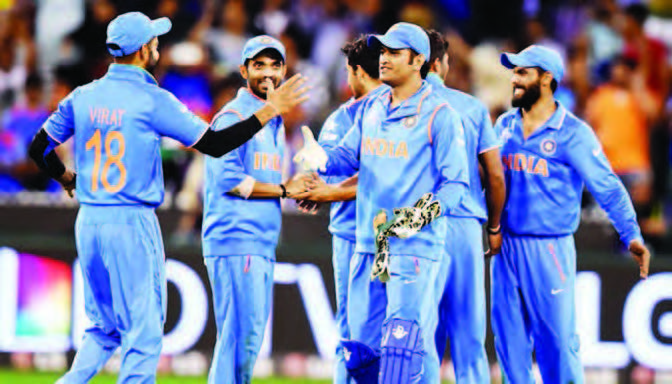
    MELBOURNE (TIP): The Melbourne Cricket Ground (MCG) danced to the roll of drums when the players took the field. Then came the beat of the dhols as India began batting, followed by what sounded like a jugalbandi between the two. After a while, cacophony prevailed.

    India won the toss and elected to bat first. The dhols grew louder. Bangladesh got Shikhar Dhawan for 30. The drumbeats took over. Virat Kohli departed for just three.

    The drumming turned into a frenzy. Suresh Raina joined Rohit Sharma. The dhols were back. A 122-run partnership gave India the momentum. The drumbeats gradually went silent. Rohit Sharma came up with a classy 137. The dhols reverberated in the sky.

    The cacophony was melody to India’s ears as they beat Bangladesh by 109 runs on Thursday to enter the semifinals. They will now play the winner of the clash between Australia and Pakistan in Sydney on March 26.

    Sweat rolled down thick coats of maroon and green painted on the faces of Bangladesh fans who arrived earlier than those manning the MCG gates in the afternoon. By the time the match approached its end, they were the ones who left early, trying to avoid the exiting MCG rush that would be full of partying Indians.

    To the Mumbai boy they all raised a toast, chanting ‘Rohit, Rohit’ in praise of a century that put India on course to victory. Along with Dhawan, the elegant Sharma was patient in approach. The first 50 runs took 10 overs to come and India had 75 on the board when they lost the first wicket.

    Virat Kohli joined Rohit but left soon, making way for Ajinkya Rahane who did not stay too long either. The MCG pitch, while resembled a neat highway, turned out to be trickier than expected. And it wasn’t until the in-form Suresh Raina walked in that a partnership of value began.

    Raina took the initiative, finding gaps that were in plenty and then Rohit Rohit decided to cut loose. A healthy 202 runs came in the last 24.1 overs. In the end, India cruised, strolled and crawled past 300, a target that has never been chased at the massive ‘G’.

    Bangladesh began on a positive note, particularly opener Tamim Iqbal smashing three fours off a rattled Mohammed Shami in the fourth over. But the pressure of a chase under lights proved too heavy for Bangladesh.

    A very disciplined Umesh Yadav, bowling at good pace, picked 4-37 while Shami and Ravindra Jadeja shared two each. It was R Ashwin, though, who ended up being the most economical as India won comfortably.

  • De Villiers ensures South Africa make last eight

    De Villiers ensures South Africa make last eight

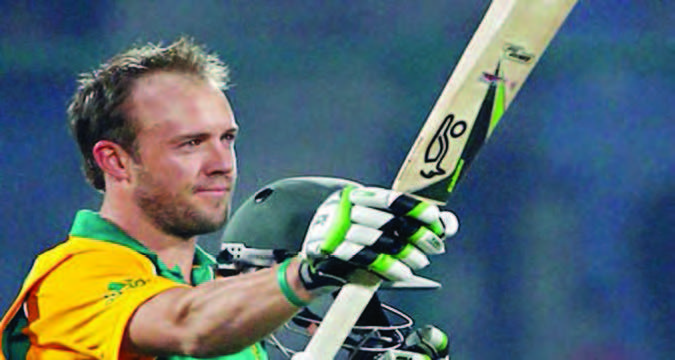
    WELLINGTON (TIP): South Africa cruised to a straightforward 146-run win over the United Arab Emirates Thursday to secure a World Cup quarterfinal berth and seal second place in Pool B behind India.

    The Proteas never looked troubled against the amateurs, setting a 342-run target after being sent into bat then bowling the UAE out for 195.

    Captain AB de Villiers continued his dominant form with a man-of-the-match performance to smash 99 off 82 balls, while Farhaan Behardien contributed a rollicking 64 from 31.

    The dashing right-hander, however, also became only the third batsman in World Cup history to be dismissed on 99 — the other two being Australia’s Adam Gilchrist (2003) and another South African JP Duminy (2011).

    Seamer Vernon Philander (2-34) also made a successful return from injury, with South Africa’s only negative the continued poor form of opening bat Quinton de Kock (26).

    The win, which sets up a likely quarterfinal clash with Sri Lanka in Sydney next Wednesday, will help erase memories of South Africa’s shock loss to Pakistan in their previous Pool B outing.

    De Villiers said the pre-tournament favourites were confident going into the final eight, despite losses to India and Pakistan in the group stages.

    “I’m extremely happy, it’s never a given that you’re going to make the quarterfinals in the World Cup,” he said.

    “It’s a huge opportunity for us as a team. We’ve got a lot of people back home who we represent and this is the position we want to be in, representing them in a quarter-final knock-out match. We’re very excited.”

    The result leaves the UAE winless at the tournament, with their final chance to snatch a victory coming against the West Indies in Napier on Sunday.

    UAE captain Mohammad Tauqir surprisingly opted to bowl first on a pitch that appeared perfect for batting, with the decision paying early dividends when Hashim Amla miscued a pull shot to depart on 12.

    De Kock and Rilee Rossouw made the most of some wayward bowling in a 68-run partnership, with Rossouw the aggressor as de Kock tried to play himself into form.

    But the youngster’s woes continued when he nicked an edge to the keeper on 26, leaving him with an average of under eight from his six innings at the tournament.

    Rossouw (43) followed three overs later, deceived by a slower ball from Tauqir that he scooped straight back to the bowler.

    South Africa were looking unexpectedly shaky at 96 for three and it could have been worse, with David Miller and de Villiers both surviving early scares.

    They made the most of their reprieves to bring up 100 off 99 balls, with de Villiers notching his 45th one-day international half century.

    Miller fell just short of his own half century, clean bowled by Mohammad Naveed on 49 attempting a pull shot.

  • De Villiers hits maximum sixes in a World Cup

    ELLINGTON: South Africa skipper AB de Villiers on Thursday broke yet another record as he bludgeoned his way to the highest number of sixes, 20, in a single edition of the cricket World Cup. He broke former Australia left-handed opener Matthew Hayden’s record of 18 sixes in the 2007 edition. The swashbuckling right-hander also holds the record for the maximum sixes in the quadrennial event (36) taking all the editions into account. Two-time Australian World Cup winning captain Ricky Ponting is second on the list with 31 sixes to his credit. Though de Villiers missed out on the first two innings in this year’s event, hitting only one over the fence, he latched onto the bowlers in his third match against the West Indies where he clubbed eight sixes en route to his 162 not out. In the next encounter against Ireland he again hit two sixes but got out for 24. On March 7 in their contest at Auckland versus Pakistan, he hit five sixes and scored 77.

  • The Business End, with Optimism

    The Business End, with Optimism

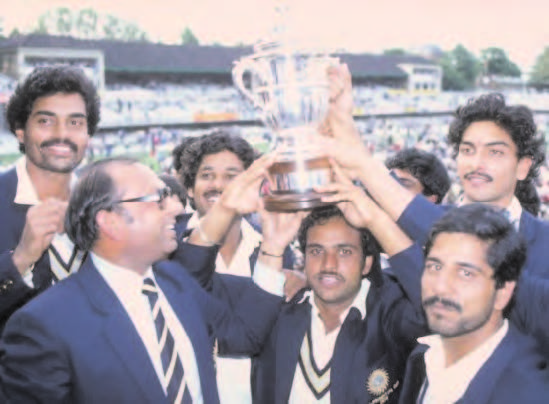
    It is fitting that the 30th anniversary of India’s defining victory in the World Championship of Cricket, which was celebrated this week, has coincided with the current team’s stirring run in the World Cup. Sunil Gavaskar’s men had captivated Australia in 1985 with a brand of dynamic cricket that was ahead of its time; M.S. Dhoni’s side hasn’t quite that je ne sais quoi, but it has so far in the tournament shown a similar ability to bowl teams out. India might have entered the World Cup with the air of a monarch about to be deposed – after defeats in the Tests and the tri-series had appeared to shred the team’s confidence – but the past few weeks have witnessed a remarkable turnaround. From the words of captain Dhoni and particularly team director Ravi Shastri, who termed the tri-series “a waste of time and energy”, it is now clear that India was awaiting its moment. Through the tournament, the defending champion has appeared to gain strength incrementally. The team was noticeably sharper and more intense in the field against Pakistan and South Africa; with their toughest opponents in the league stage dealt with early, Dhoni’s men ruthlessly dismissed the UAE and Ireland.

    The only scare was caused by the West Indies, but the calmest man in world cricket – Dhoni – ensured there was no panic.

    Hearteningly, India has ticked the many boxes that matter in a global tournament: solid, explosive batting; restrictive, wicket-taking bowling, backed up in the field; game-toughness under pressure. Particularly impressive is the team’s handling of mental fatigue – Virat Kohli recently said that Suresh Raina reminded him of having spent 100 days in Australia. Unlike hosts Australia and New Zealand, whose players have had the time to recover in the comfort of their own homes, India’s cricketers have had to recuperate on the road. Shikhar Dhawan, who has a home in Melbourne, is an exception of course. There’s no doubt that that has played a part in his resurrection. After a middling tour of Australia till the World Cup, Dhawan found form and, with 333 runs, is currently fourth on the scorers’ list. The bowlers, who did not look like they could buy a wicket at one stage, have improved beyond sight. Mohammed Shami (12 wickets) and spinner R. Ashwin (11) are among the top ten, but the entire bowling unit has worked together, finding both consistency and potency. India has done well in different situations and varied conditions, increasing its unbeaten World Cup streak to nine – five on the trot in 2015, four in 2011. A likely quarter final against Bangladesh does not appear taxing, but complacency has no place in the knockouts. India does not have Australia’s abundance of match-winners, but if it plays to potential in the business end, it will be an incredibly hard side to beat. (The Hindu) 

  • Indian IT consultant stabbed to death in Australia

    Indian IT consultant stabbed to death in Australia

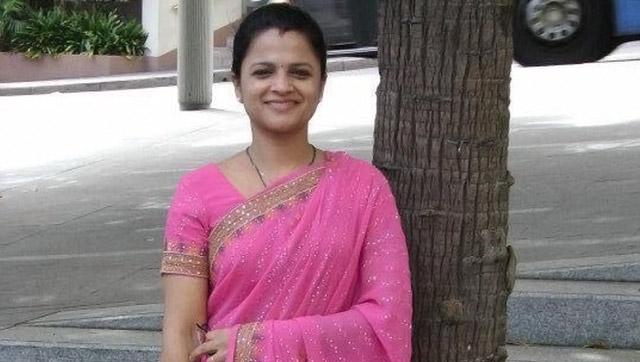
    Prabha Arun Kumar, 41-year-old Indian IT consultant was brutally stabbed to death in Australia, just 300 metres from her home, police said on Sunday as they launched a probe into the horrific attack.

    She was on the phone to a member of her family when the “horrific” attack happened on Saturday in Westmead, a suburb in Sydney. 

    ‘He stabbed me, darling’: Prabha Arun Kumar’s last words to her husband

    Kumar’s nephew, Thrijesh Jayachandra, said, “Last word’s my uncle heard from my aunt was that she was stabbed; they both were on phone as usual after her office hours, this was somewhere around 3pm IST.” Jayachandra said “around 6:30 or so in the evening we received a call by someone from her office side stating that she was out of danger, but later in the evening we were informed by her brother Shankar, who lives in Perth, that she was no more”.

    The mother of one was found stabbed in Parramatta Park on Saturday night. The police described it as a “horrific attack”.

    She was found by a man lying in a large pool of blood.

    A friend of Kumar, who was walking home from work when she was brutally stabbed, said she always felt guilty about getting a lift home late at night.

    The woman, who asked not to be named, told The Daily Telegraph she has warned Prabha about the dangers of the park. “I told her that it is not a safe way to come through because there are people that stop and ask you for money, like 2 dollars,” she said.

    Superintendent Wayne Cox from Parramatta police said earlier that the woman left the station, walked along Argyle Street and onto Park Parade before being attacked in Parramatta Park.

    “At this point she has taken a lane way connected up to Amos St. in Westmead, and during this journey she has been attacked by a person or unknown persons,” he said.

    She suffered a life threatening injury. She was transported to Westmead Hospital where she was pronounced dead.

    “There was a large amount of blood so she obviously suffered a significant wound,” Mr. Cox said.

    A crime scene has been established and is being examined by specialist forensic officers.

    State Crime Command’s Homicide Squad is assisting Parramatta detectives in the case. Police have appealed to the public to come forward with any information related to the case.


  • Iqbal leads Bangladesh to important win over Scotland

    NELSON (TIP): Tamim Iqbal came agonisingly close to scoring Bangladesh’s first World Cup century as his side completed a six-wicket win over Scotland in their Pool A clash at Saxton Oval in Nelson on Thursday.

    Iqbal scored 95, while Mohammad Mahmudullah (62) and wicketkeeper Mushfiqur Rahim (60) also contributed as Bangladesh achieved 322-4, their highest successful run chase in one-day internationals.

    Shakib Al Hasan (52 not out) and Sabbir Rahman (42 not out) guided Mashrafe Mortaza’s side home with 11 balls to spare to cap off the perfectly timed run chase.

    The victory put all the pressure on England for their showdown with Eoin Morgan’s side on March 9 in Adelaide, with Bangladesh now on five points and level with third-placed Australia, while England have two.

    Both have just two games remaining to play.

    Scotland had been well placed to achieve their first World Cup victory, days after throwing away the opportunity against Afghanistan, after Kyle Coetzer had scored a career-best 156 in his side’s 318 for eight.

    The 30-year-old’s innings was the first World Cup century by a Scotland batsman and also the highest score by someone from an associate nation at the global showpiece.

    It also ensured his team posted their highest score against a Test nation.

    Coetzer, who was named man-of-the-match, shared in a 141-run partnership with captain Preston Mommsen (39) and 78 runs with Matt Machan (35) to anchor the innings.

    Scotland enjoyed their third 300-plus score in one-day internationals, having also achieved the mark against Ireland in 2011 and Canada in 2014.

  • AUSTRALIA CRUSH AFGHANISTAN BY RECORD 275-RUN MARGIN

    PERTH (TIP): Australia hit the highest World Cup score in tournament history on march 4 as they thrashed Afghanistan by a record 275 runs, a result which was also the greatest winning margin in tournament history.The home team made 417/6 at the WACA led by opener David Warner’s 178-run blitz, his fourth one-day international century and his country’s highest individual World Cup score as the four-time champions went past the previous best of 413/5 made by India against Bermuda in 2007.

    It was the third 400-plus total at this World Cup after South Africa twice went through the barrier — 408/5 against the West Indies and 411/4 in the game with Ireland.

    In reply, Afghanistan could manage just 142 from 37.3 overs, although Nawroz Mangal, who top-scored with 33, gave their smattering of fans at the ground something to cheer about when he hit Mitchell Marsh for successive sixes. Johnson did much of the damage to claim 4-22 from 7.3 overs. Fellow left-armer Mitchell Starc continued his amazing vein of World Cup form with 2-18 and has 10 wickets in the World Cup at just 9.3 runs apiece.

    Australia were sent in to bat by Afghanistan captain Mohammad Nabi, a decision greeted by a chorus of cheers from the crowd, and then tormented the minnows.

  • DFW South Asian Film Festival |Feb 27 to Mar 1 | Dallas

    DFW South Asian Film Festival |Feb 27 to Mar 1 | Dallas

    DFW South Asian Film Festival(Dallas, TX – Feb. 18, 2015) Fourteen films, exploring the unique circumstances and complex stories of South Asians living in America, India, Nepal, Australia and Singapore, make their Texas, U.S. and world premieres at the FIRST-EVERDallas/Fort Worth South Asian Film Festival (DFW SAFF) from Friday, February 27 to Sunday, March 1, 2015, at the Angelika Film Center in Plano.

    Produced by JINGO Media, a Dallas and NYC-based PR and events management boutique firm, Etihad Airways & Jet Airways, now offering non-stop flights from DFW to Abu Dhabi, Cambria Hotels & Suites, a brand new hotel property at the Shops at Legacy, and Crow Collection of Asian Art, unveiling its brand new collection of South Asian art, DFW SAFF will bring together directors, actors, producers, community organizations, corporate brands and South Asian cinephiles, over a three-day period. Here are the films that have been consciously-curated for the festival:
     

    Community sponsors & partners of DFW SAFF include: The Container Store, Patrick O’Hara Salon, VelvetCase.com, Living Dreams Foundation, Parish Episcopal School, Milaap, Shraman South Asian Museum and Learning Center Foundation, Forever Rakhi, Indie Meme, Arya Dance Company and New Friends New Life.
     
    Our media partners include: Selig Polyscope Company, Radio Azad, Saavn.com, Radio Hot Pepper, Radio Adda and Desiplaza TV.
     
    “We are so proud and humbled that 30 different community organizations and brands are coming together to support our first-time festival,” said DFW SAFF Festival Director and Principal/CEO of JINGO Media, Jitin Hingorani. “We are certain that North Texas audiences will embrace this festival by giving all our international guests a warm Texas welcome and, hopefully, a few standing ovations.” In addition to film screenings, the festival boasts an opening night red carpet, post-screening Q&As with filmmakers in attendance, after parties and plenty of networking opportunities. For more information and to purchase ticket, please visit www.dfwsaff.com

    Media Contact: Dev Shapiro, Selig Polyscope Company @ 972.965.0899 or Dev@SeligPolyscope.com
     

  • FROM ALABAMA TO AMERICAN HINDUPHOBIA

    FROM ALABAMA TO AMERICAN HINDUPHOBIA

    This week, two terrible acts of violence took place in the US. First, three young Muslim-American students were killed in cold blood in North Carolina by a neighbor. The cause, it was said, was an argument about parking spaces. It was also noted that the killer was an atheist and broadly anti-religious and, therefore, it was suggested that perhaps the attack could not be described as a religious hate crime.

    That suggestion was instantly, perhaps naturally, met with a barrage of opposition. Al Jazeera published a learned summary of years of media research on Muslim stereotyping. Internet memes pointed out how the American media differentiated between white and Muslim criminals. The argument was made, effectively, for continuing concern about Islamophobia.

    The other terrible act of violence, of course, was the one that took place in Alabama.

    An elderly Indian grandfather travels to America to see his grandson for the first time, goes out for a walk, and gets smashed into the hard concrete footpath by policemen leaving him broken and paralyzed.

    There is outrage in the media, and rightly so. The Indian-American community and many American friends (though not the one who visited India recently and told us Gandhi would be shocked), have spoken out against the ignorance, prejudice and brutality that took place here. In the wake of recent atrocities like what happened in Ferguson, the idea of the dangers of “walking while brown” obviously did the rounds.

    But there was one notable difference in the reactions to North Carolina and Alabama.

    When a Muslim is harmed, it is Islamophobia. When a Hindu is brutally assaulted, there is not one word uttered about Hinduphobia.

    One might argue, not unlike the parking dispute angle in North Carolina, that there was no Hinduphobia in the atrocity that took place in Alabama. Maybe the cops did not know he was Hindu and brutalize him for that reason. Maybe it was just racism in the black and white sense. After all, we have been told for years now by concerned south Asian activists and commentators that the Indian-American community, by virtue of its elitism, fails to recognize racial solidarity. Once again, that trope surfaced about the Alabama attacks. We are getting attacked because of racism. True enough!

    But how can we be so sure that the racism that Indian-Americans sometimes face has nothing to do with prejudices about the major religion they are identified with? How can we be sure that one kind of racism is independent of another?

    We cannot. And yet, for several years, every single time we have talked about the brazen misrepresentation of Hinduism in American media, pop culture, and most all in academia, we have been shouted down by the same concerned south Asian activists and commentators. We could not even talk about Hinduphobia without being rudely told that no such thing exists, or that it is a figment of Hindu extremist paranoid fantasy. We could not even do the one thing every religious minority community in America did: get old colonial-era racist nonsense about them written out of their children’s history textbooks. We were shouted down by the same general group of concerned observers who want us to fight racism but just not this racism apparently. This racism is actually not racism in their view: the California textbooks according to them contain only the true facts about Hinduism, and questioning it is tantamount to saffronisation and fundamentalism.

    To this day, children in America get just one basic kind of message about Hinduism and Hindus in their school lessons: that we are the last irredeemable racist-casteists and sexists in the world. When some of them get to college or grad school, they will read even more about how we dumbly worship body organs, and how we were not just racist-casteists but actually the original Nazis, the forerunners of Hitlerian genocide no less (no exaggeration, just look at what is written on page 111 and page 144 of Doniger’s The Hindus: An Alternative History)!

    And all this is still only in the genteel, ‘educated’ side. What about the insanity that bubbles in less scholarly corners?What about the ravings of supposed men of God in their sermons who rant about our gods as nothing more than animal-headed devils and beasts? And what about Hollywood, and big media and popular culture, which, under the guise of being fair to Muslims or feeling guilty for Guantanamo, goes Slumdog on Hinduism?

    All this is around us. It is real. Whether it directly contributes to specific acts of brutality against people or not, it is there, a toxin in the culture. Just think of the attacks in Australia a few years ago on Indian students where the assailants reportedly used “slumdog” as an insult at their victims.

    Prejudice is not something that plays out in microscopic precision inside the heads of people about to do something nasty. It is a big ugly cloud of falsehood, envy, self-hatred, and spitefulness lurking around a society, just waiting to burst into real life. It did, this week, in Alabama. We cannot be sure what exactly squirmed about in the brains of the man who called the police on an elderly neighbor walking around the block, or in that of a policeman who had to prove himself to be tougher than a meek old man not being remotely aggressive to anyone. Was it color, envy, boredom, overzealousness, fear…? We cannot say for sure. But the fact is that the culture in which they grew up, the culture in which millions of people, Hindu, Muslim, brown, black, are all growing up, still has a thriving place in it for the ugliest and pettiest kind of falsehood and maliciousness.

    Who can say for sure that the men involved in brutalizing Sureshbhai Patel did not at some point in their lives, maybe in school, maybe elsewhere, pick up on anti-Hindu myths and prejudice?

    The truth is that if Hinduphobia is not named, shamed and eradicated from the halls of media and academia, its consequences might end up being even worse, and not just for Hindus. I hope the enlightened and concerned observers of south Asia who deny that Hinduphobia exists quickly come to realize that bigots are not usually well informed in their actions. After all, Islamophobes have attacked not only Muslims but also Sikhs in America. It would be appalling to keep pretending Hinduphobia doesn’t exist until one day some poor person, Hindu or not, finds himself or herself at the wrong end of a maniac believing he is stopping a casteist idol-worshipper from doing Satan’s work or some such.

    There used to be a popular poster on idealistic college campuses. It had these inspiring lines which Hinduphobia-deniers might want to look at again:

    They came for the Jews, and I didn’t speak for them;

    They came for the Communists, and they didn’t speak for them… 

    And then when they came for me, there was no one left to speak for me.

  • 2 STRONG CYCLONES HIT REMOTE PARTS OF NORTHERN AUSTRALIA

    2 STRONG CYCLONES HIT REMOTE PARTS OF NORTHERN AUSTRALIA

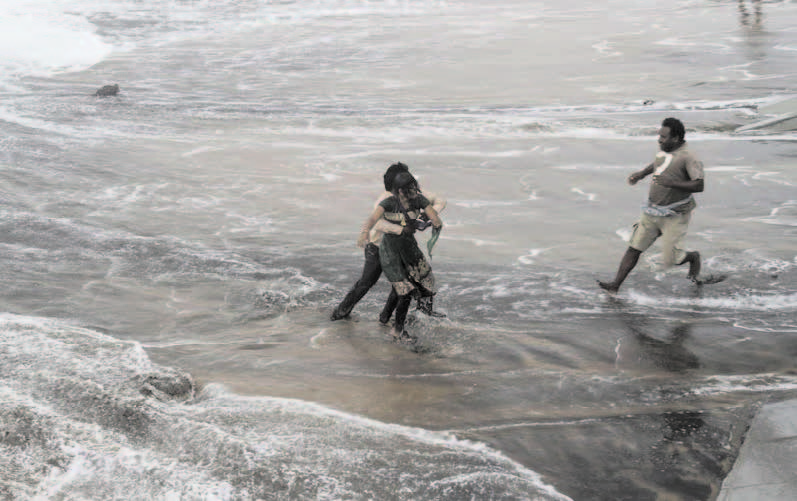
    SYDNEY (TIP): Two powerful cyclones smashed into northern Australia on February 20, with authorities ordering coastal residents to flee their homes amid warnings the storms’ violent winds and drenching rains could prove deadly.

    The twin storms, dubbed the ”cyclone sandwich” by locals, struck early Friday, about 2,500 kilometers (1,500 miles) apart. Cyclone Lam hit a sparsely populated stretch of the Northern Territory, while the more powerful and potentially dangerous Cyclone Marcia began crossing over small coastal towns along the eastern coast of Queensland state a few hours later, packing wind gusts up to 285 kilometers (180 miles) an hour.

    ”Over the next few hours, many thousands of Queenslanders are going to go through a harrowing and terrifying experience,” Queensland Premier Annastacia Palaszczuk said. ”This is a severe cyclone. I want everyone to take all the precautions that they possibly can take.” 

    About 30,000 people living in the Queensland town of Yeppoon and surrounding areas were expected to experience the worst of the storm.

    More than 100 schools were closed and nearly 900 residents in low-lying areas were told to evacuate their homes.

    No immediate damage had been reported, but officials pleaded with hardened Queensland residents _ no stranger to violent cyclones _ to take the storm seriously. A cyclone of similar strength, Yasi, hit the state in 2011, destroying scores of homes but causing no deaths.

    ”This is going to be a calamity, there’s absolutely no doubt about that,” Queensland Police Commissioner Ian Stewart said.

    The Bureau of Meteorology warned that Marcia had a ”very destructive core,” had intensified rapidly and was likely to cause flooding.

    In the Northern Territory, Cyclone Lam struck a remote stretch of coast, tearing up trees and downing power lines, but causing no major damage as it weakened and moved further inland. No injuries had been reported.

  • FIRST-EVER DALLAS/FORT WORTH SOUTH ASIAN FILM FESTIVAL

    FIRST-EVER DALLAS/FORT WORTH SOUTH ASIAN FILM FESTIVAL

    DFW South Asian Film Festival(Dallas, TX – Feb. 18, 2015) Fourteen films, exploring the unique circumstances and complex stories of South Asians living in America, India, Nepal, Australia and Singapore, make their Texas, U.S. and world premieres at the FIRST-EVERDallas/Fort Worth South Asian Film Festival (DFW SAFF) from Friday, February 27 to Sunday, March 1, 2015, at the Angelika Film Center in Plano.

    Produced by JINGO Media, a Dallas and NYC-based PR and events management boutique firm, Etihad Airways & Jet Airways, now offering non-stop flights from DFW to Abu Dhabi, Cambria Hotels & Suites, a brand new hotel property at the Shops at Legacy, and Crow Collection of Asian Art, unveiling its brand new collection of South Asian art, DFW SAFF will bring together directors, actors, producers, community organizations, corporate brands and South Asian cinephiles, over a three-day period. Here are the films that have been consciously-curated for the festival:
     

    Community sponsors & partners of DFW SAFF include: The Container Store, Patrick O’Hara Salon, VelvetCase.com, Living Dreams Foundation, Parish Episcopal School, Milaap, Shraman South Asian Museum and Learning Center Foundation, Forever Rakhi, Indie Meme, Arya Dance Company and New Friends New Life.
     
    Our media partners include: Selig Polyscope Company, Radio Azad, Saavn.com, Radio Hot Pepper, Radio Adda and Desiplaza TV.
     
    “We are so proud and humbled that 30 different community organizations and brands are coming together to support our first-time festival,” said DFW SAFF Festival Director and Principal/CEO of JINGO Media, Jitin Hingorani. “We are certain that North Texas audiences will embrace this festival by giving all our international guests a warm Texas welcome and, hopefully, a few standing ovations.” In addition to film screenings, the festival boasts an opening night red carpet, post-screening Q&As with filmmakers in attendance, after parties and plenty of networking opportunities. For more information and to purchase ticket, please visit www.dfwsaff.com

    Media Contact: Dev Shapiro, Selig Polyscope Company @ 972.965.0899 or Dev@SeligPolyscope.com
     

  • World Cup 2015 India fixtures – Schedule of matches

    World Cup 2015 India fixtures – Schedule of matches

    Below is the quick look on the upcoming matches in the World Cup 2015 for India

    DATE AND TIME
    • Sun Feb 15 (50 ovs)14:00 local (03:30 GMT | 09:00 IST) – India Won
      4th Match, Pool B – India v Pakistan Adelaide Oval  
    • Sun Feb 22 (50 ovs)14:30 local (03:30 GMT | 09:00 IST)
      13th Match, Pool B – India v South Africa Melbourne Cricket Ground
    • Sat Feb 28 (50 ovs)14:30 local (06:30 GMT | 12:00 IST)
      21st Match, Pool B – India v United Arab Emirates Western Australia Cricket Association Ground, Perth
    • Fri Mar 6 (50 ovs)14:30 local (06:30 GMT | 12:00 IST)
      28th Match, Pool B – India v West Indies Western Australia Cricket Association Ground, Perth 
    • Tue Mar 10 (50 ovs)14:00 local (01:00 GMT | 06:30 IST)
      34th Match, Pool B – India v Ireland Seddon Park, Hamilton 
    • Sat Mar 14 (50 ovs)14:00 local (01:00 GMT | 06:30 IST)
      39th Match, Pool B – India v Zimbabwe Eden Park, Auckland 
       
  • Canadian Al-Jazeera journalist Fahmy released from prison

    Canadian Al-Jazeera journalist Fahmy released from prison

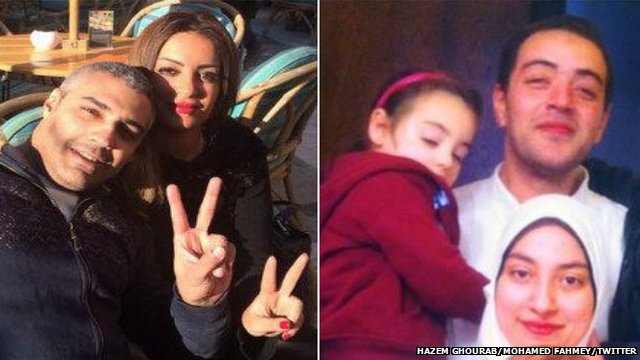
    CAIRO (TIP): Canadian Al-Jazeera journalist Mohamed Fahmy was released from an Egyptian jail on Friday, after spending more than a year in prison on terror-related charges in a case that was denounced as a sham by rights groups and the international community. He was let out pending a retrial.

    Fahmy’s brother tweeted that he posted $33,000 bail following a court decision that allowed him to walk free. It was not clear if Fahmy’s colleague, Al-Jazeera journalist Baher Mohammed, also was being released. A third co-worker, Australian Peter Greste, was released two weeks ago and deported to his home-country, Australia.

    Fahmy spent more than 400 days in detention after he was charged with terrorism for providing the Muslim Brotherhood, now declared a terrorist organization, with a platform. His next court hearing is Feb. 23 and he has to check in at a police station every day until then.

    Thursday’s decision indicated the court was moving ahead with a retrial of Fahmy and Mohammed. Still, it was greeted with tears of joy and relief by their relatives who attended the hearing in the Cairo courtroom.

    Al-Jazeera called the decision “a small step in the right direction” but said the court should dismiss “this absurd case” and release both journalists unconditionally.”

    The three journalists, who worked for Al-Jazeera’s English-language channel, were arrested in December 2013 and accused of belonging to the Brotherhood, which was branded a terrorist organization after the military ousted President Mohammed Morsi earlier that year.

    Since the ouster, Egypt has been cracking down heavily on Morsi’s supporters, and the journalists were accused of being mouthpieces for the Brotherhood and falsifying footage to suggest that Egypt faces civil war. They rejected the charges against them, saying they were simply reporting the news.

    The journalists were convicted by a lower court on terrorism-related charges and sentenced to at least seven years in prison. The Court of Cassation, the country’s highest appeals court, said in ordering a retrial that their conviction was based on “flawed evidence” and that the trial was marred by violations of the defendants’ rights, according to details of its ruling made public this week.

    President Abdel-Fattah el-Sissi had rejected calls from the United States and other Western governments to pardon or commute the sentences. In July, he acknowledged that the heavy sentences had a “very negative” impact on his country’s reputation and that he wished they had never been put on trial.

    Cairo has signaled it wants to resolve the case and end the criticism ahead of a major economic conference next month to drum up international investment. Egypt’s ties with Qatar have thawed, and Al-Jazeera’s Egyptian affiliate was shut down.

    But officials have never said outright that the controversy would be worked out, insisting on the independence of the courts — and keeping Fahmy and Mohammed’s fate murky.

    Several outcomes are possible in the retrial. It could eventually throw out the case, acquit them, convict them but sentence them to time served, or impose more prison time, with the possibility of a pardon from el-Sissi.

    The journalists and their families say they were caught in the bitter feud between Egypt and Qatar, the Gulf nation that owns Al-Jazeera and is the main backer of the Muslim Brotherhood.

  • EU leaders debate new anti-terror measures

    BRUSSELS (TIP): Galvanized by the recent terror attacks in France, European Union leaders on February 12 debated a range of ambitious steps to better protect their 28 nations, including exchanging airliner passenger manifests, tightening controls at the border and combating extremism on the Internet.

    EU President Donald Tusk, the summit meeting’s host, said he would seek agreement on a “work plan to step up the fight against terrorism.” The bloc’s top official for counter-terrorism warned member governments last month that “Europe is facing an unprecedented, diverse and serious threat.”

    Counter-terrorism policy shot to the top of the EU agenda following the Jan. 7-9 terror attacks in Paris against a satirical weekly, a policewoman and a kosher grocery store that claimed a total of 17 victims. The three gunmen, who proclaimed allegiance to Al-Qaida in Yemen and the Islamic State group, were also shot dead by French police.

    The attacks mobilized France and other EU countries to seek more effective ways to deal with armed Islamic militancy, especially the problem of radicalized European-born Muslims who go to fight in Syria or Iraq and then return home.

    The attacks in the French capital “were a game-changer” for EU counter-terrorism policy, said Alexandra de Hoop Scheffer, senior trans-Atlantic fellow and director of the Paris office of the German Marshall Fund think tank. To prepare for Thursday’s summit in Brussels, EU foreign, finance and interior and justice ministers drew up recommendations on what to do.

    But as the leaders met, some officials urged caution. Finnish Prime Minister Alexander Stubb said it was imperative to strike “a careful balance between civil liberties and security.” European Parliament President Martin Schulz, who addressed the summit, told a news conference afterward that rashly limiting individual rights in the name of boosting public safety would play right into the terrorists’ hands by discrediting Western-style democracy.

    “We need to be a state of law and democracy,” Schulz said. “We need to protect our values.”

    Some of the steps the leaders were expected to consider:

    AN EU-WIDE PASSENGER REGISTRY TO SHARE INFORMATION ON AIR TRAVELERS 

    “It sounds crazy, but we don’t have that system within the EU, though we have it with the U.S., Canada and Australia,” said de Hoop Scheffer. An earlier attempt to launch an EU-wide exchange of air traveler data for prevention, detection, investigation and prosecution of terrorist offenses and other serious crimes died in the European Parliament in 2013 when a committee rejected it on civil liberties grounds.

    On Wednesday, European Parliament members, by a 532-136 vote, pledged to work toward getting a passenger name record program enacted by the end of 2015, but insisted the EU simultaneously rewrite its rules on data collection and sharing to ensure legally-binding protections.

    Even that wasn’t sufficient for Europe’s Greens, who opposed the resolution, saying it gave “carte blanche for EU governments to scale back personal freedoms.” The Greens said it would be more effective to conduct targeted surveillance on individual suspects already known to authorities.

    TIGHTER BORDER CHECKS ON TRAVELERS 

    Twenty-six European countries, among them 22 EU nations, have abolished passport and customs controls among one another in what’s commonly known as the “Schengen area.” According to EU officials, current identity checks on European travelers leaving or re-entering the area are often cursory.

    Gilles De Kerchove, the EU’s counter-terrorism chief, has called for the swift implementation of a new screening system to detect suspicious travel movements, and suggested it is also time to change some of the rules governing the Schengen area.

    FIGHTING THE USE OF THE INTERNET TO SPREAD RADICAL IDEAS 

    A draft statement prepared for Thursday’s summit calls for measures to “detect and remove Internet content promoting terrorism and extremism,” including reinforced cooperation between public and private sectors and a coordinating role for Europol, the EU’s law enforcement agency.

    “Preventing radicalization is a key element of the fight against terrorism,” the draft statement says. It also calls for development of communication strategies to promote tolerance, non-discrimination, fundamental freedoms and solidarity throughout the EU, and use of education, vocational training and rehabilitation to limit the lure of radicalization, including for people in prison.

    If all three of the major proposals are adopted, “the EU would be better equipped” to deal with the terrorism challenge, said de Hoop Scheffer.

    The EU leaders were expected to consider other measures as well, including better coordination among existing institutions like Europol, Eurojust _ the EU-wide agency of prosecutors, police and investigating magistrates _ and the bloc’s counter-terrorism coordinator.

  • Reset of a policy of equidistance

    Reset of a policy of equidistance

    Soon after Prime Minister Narendra Modi took office, an Indian TV channel held a discussion on likely foreign policy reorientation. When the doyen of South Asian Studies, Stephen Cohen, was asked in which direction Mr. Modi would tilt -the U.S. or China – without hesitation he replied, “China,” adding, “because it is the Asian century.” Mr. Modi hosted Chinese President Xi Jinping last year but despite the fanfare preceding the visit, there was little to suggest any strategic overlap. Alas, Mr. Cohen was proved wrong after the Modi-Obama Joint Vision Statement reflected a sharp, strategic congruence. Mr. Modi has reset the United Progressive Alliance (UPA) government’s policy of equidistance between the U.S. and China and dropped the political refrain that India will not contain China.


    Choosing friends and allies

    In New Delhi last year, at a seminar, the former U.S. Ambassador to India, Robert D. Blackwill, posed the question: “How can New Delhi claim strategic autonomy when it has strategic partnerships with 29 countries?” After the latest Modi-Obama vision statement, even less so. Strategic autonomy and no military alliances are two tenets of India’s foreign policy. Quietly, India has converted strategic autonomy to strategic interconnectedness or multi-vectored engagement. When the Indo-Soviet Treaty of Peace, Friendship and Cooperation 1971 was signed, Mrs Indira Gandhi had requested the Soviet Union to endorse India’s Non-Aligned status, so dear was the policy at the time. That multifaceted treaty made India a virtual ally of the Soviet Union. Russia inherited that strategic trust and has leased a nuclear submarine, provided high-tech weapons to all three Services including technology for nuclear submarines and aircraft carriers. At the BRICS meeting in Brazil last year, when asked a question, Mr. Modi said as much: “If you ask anyone among the more than one billion people living in India who is our country’s greatest friend, every person, every child knows that it is Russia.” 

    On the other hand, differences over foreign policy with the U.S. are many including over Syria, Iran, Russia, BRICS and the Shanghai Cooperation Organisation (SCO). These policy irritants will not go away. The vision statement highlights (at the U.S.’s insistence) that both countries were on the same page in ensuring that Iran did not acquire nuclear weapons. The tongue-lashing by Mr. Obama to Mr. Putin over his bullying small countries has certainly embarrassed Mr. Modi who was himself disingenuous by inviting the leader of Crimea as a part of the Putin delegation in 2014, which deeply offended the Americans.

    What Mr. Obama and Mr. Modi easily agreed on was China’s “not-peaceful rise” which could undermine the rule-based foundations of the existing international order. So, Mr. Modi became a willing ally to stand up to China. The synergisation of India’s Act East Policy and U.S. rebalancing to Asia is intended to ensure that China does not cross red lines including the code of conduct at sea. The two theatres of action where freedom of navigation and overflight have to be ensured were identified as Asia-Pacific especially the South China Sea and, for the first time, the Indian Ocean Region.

    This is a veiled riposte to Chinese assertiveness in the South China Sea. Mr. Modi had earlier mooted the revival of the Quad, an enlarged format for naval exercises between India, the U.S., Japan and Australia. When it was mooted earlier in 2006, it was shot down by China. Underlying the strategic centrality of the Indian Ocean Region is the realisation that the existing India-China military imbalance across the high Himalayas can be offset only in the maritime domain where India has the initiative. Beijing realises that teaching India a lesson in 1962 was only a tactical success because territorial claims on Arunachal Pradesh got delegitimised after the unilateral withdrawal and worse, pushed India into the U.S.’s arms.


    Defence ties

    The rise of India which will punch to its weight under a new self-confident leadership pursuing a policy of multi-engagement is a manifest U.S. strategic goal. Defence has been the pivot around which India-U.S. relations were rebuilt, starting in 1991 with the Kicklighter Plan (Lt.Gen. Kicklighter of the U.S. Pacific Command) who initiated the multilayered defence relations which fructified in 1995 into the first Defence Framework Agreement. It was renewed in 2005 and now for the second time this year, the difference though is that for the first time, the vision statement has provided political and strategic underpinnings to the agreement. What had also been lacking until now was trust and the extent to which India was prepared to be seen in the American camp. Just a decade ago, while contracting for the Hawk trainer aircraft with the U.K., India inserted a clause that “there will be no US parts in it.” This followed the Navy’s sad experience of the U.S. withholding spare parts for its Westland helicopters. Such misgivings have held up for a decade the signing of the three “alphabet- surfeit” foundational defence agreements of force-multiplication. But we have moved on and purchased $10 billion of U.S. high-tech military equipment and another $10 billion worth will soon be contracted. The most elaborate defence cooperation programme after Russia is with the U.S.


    Dealing with China

    What made Mr. Modi, who visited China four times as Chief Minister, change his mind on the choice of the country for primary orientation was the jolt he received while welcoming President Xi Jinping to Gujarat last year. Mr. Xi’s delegation was mysteriously accompanied by a People’s Liberation Army (PLA) intrusion in Ladakh which did not yield ground till well after he had left. A similar affront preceded the 2013 visit of Premier Li Keqiang, making routine the PLA’s bad habits. While the UPA government had made peace and tranquillity on the Line of Actual Control (LAC) a prerequisite for consolidation of bilateral relations, border management rather than border settlement had become the norm. Seventeen rounds of Special Representative talks on the border yielded little on the agreed three-stage border settlement mechanism. It was therefore path-breaking when Mr. Modi during the Joint Statement asked Mr. Xi for a clarification on the LAC -the process of exchanging maps that had failed in the past and led to the ongoing attempt at a political solution skipping marking the LAC. Clearly, we have moved full circle in calling for a return to that process. Foreign Minister Sushma Swaraj, who was in Beijing this month, sought an out-of-the-box solution for the border, in which category LAC clarification will not figure. Mr. Modi is determined not to leave resolution of the border question to future generations as Chinese leaders have persistently counselled. 

    Mr. Modi, in Japan last year, expressed concerns over “expansionist tendencies.” 

    Chinese scholars I met in Beijing last year said that conditions for settling the territorial dispute were not favourable because the border is a very complicated issue, entailed compromise and had to take public opinion along. And most importantly, strong governments and strong leaders were needed for its resolution.

    While Mr. Xi did promise last year investments worth $20 billion, the fact is that, so far, Chinese investments in India do not exceed $1.1 billion. Mr. Xi’s dream of constructing continental and maritime Silk Roads are intended to complement the String of Pearls in the Indian Ocean Region, bypassing choke points like the Malacca Straits as well as neutralising the U.S. rebalancing to Asia.


    Risks and opportunities

    How will India walk the tightrope between the U.S. and China, given that the U.S. is about 13,000 kilometres away and Beijing exists cheek by jowl, peering over a disputed border and with a whopping $40 billion in trade surplus? China’s reaction to the vision statement has been to warn India against U.S. entrapment. Operationalising the strategic-security portions of the vision statement will not be easy, especially as India has no independent role in the South China Sea. Once the euphoria over the Obama-Modi statement dissipates, ground reality will emerge. Instigating Beijing, especially in the South China Sea will have costs like having to deal with the full frenzy of the PLA on the LAC with most likely ally, Pakistan lighting up the Line of Control (LoC) – the worst case two-front scenario.

    Given Mr. Modi’s growth and development agenda, for which he requires the U.S., China, Japan and others, he cannot afford to antagonise Beijing. The U.S. is vital for India’s rise and a hedge to China. So, New Delhi will necessarily be on a razor edge. In any realisation of the Asian century, while China and India are likely key players, Washington will be large and looming, making a geostrategic ménage à trois.

  • No Tendulkar gives Pakistan World Cup hope against India

    No Tendulkar gives Pakistan World Cup hope against India

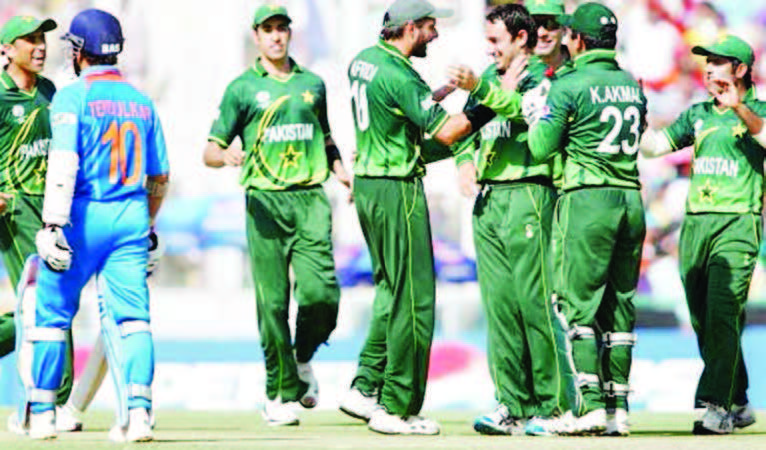
    NEW DELHI (TIP): India go into the World Cup without the reassuring presence of retired batting superstar Sachin Tendulkar for the first time since 1992, which surely must bring relief to arch-rivals Pakistan.


    Pakistan have lost all their five World Cup meetings against India and Tendulkar, who featured in all of them, proved a stumbling block on at least four occasions.


    India and Pakistan face each other in a high-voltage clash at the Adelaide Oval on February 15 to kickstart their campaigns in the 2015 edition of cricket’s showpiece event.


    Tendulkar, who retired in 2013 as the world’s leading run-getter in both Test and one-day cricket, added colour to the World Cup, both literally and metaphorically.


    Coloured clothing was introduced to the World Cup when Tendulkar made his tournament debut in Australia and New Zealand in 1992 after the first four editions were played in whites.

  • Visit successful beyond expectations

    Visit successful beyond expectations

    China concerned at breakthroughs achieved and Obama-Modi chemistry


    China, by being in such a haste to downplay the visit of President Obama to India, without even waiting for the visitor to leave India’s airspace, has provided the convincing proof that the visit was a success. The Chinese are obviously concerned at the breakthroughs achieved and at the personal chemistry developed and displayed with such obvious glee by both leaders, especially Prime Minister Modi. It is politically correct, and imperative, for any two countries at the conclusion of a successful summit-level meeting to pronounce that their relationship is not aimed at third countries and is not at the expense of friendship with a third country. This is routine, but it does not always convince or satisfy the third country concerned. In this particular case, the Chinese are not completely off the mark. There is no question but that China has been an important factor in the US tilt towards India over the past decade. It was with China in mind that President G.W. Bush went so much out of the way to even amend the US laws to bring India with the fold of nuclear commerce. Commercial considerations are always present when foreign leaders visit India; this is true of the Russian President’s visits also. Mr. Obama’s enthusiasm for India has likewise something to do with the US-China rivalry. India is big enough and smart enough not to engage with America in an anti-China containment concept, but it has concerns about an assertive China which has not hesitated to flex its military muscles even during the visit of its President to India. It makes    good sense for India to welcome American embrace without being suffocated by it.

    The big picture that emerges from the visit has two aspects. There has long been a conviction in India over many decades since our independence, among officials as well as analysts, that America never wanted India to become a strong or even prosperous power, mainly due to what it perceived as India’s hostile attitude during the cold war era, and actively acted to keep India ‘down’. America had mortgaged its India policy to the British on Kashmir and other issues and was decidedly anti-India during the Bangladesh crisis. It is not incorrect to   conclude after this visit that America has finally and definitively given up this approach and is more than willing to work with India so that India progresses, firmly and reasonably fast to become economically and hence militarily strong. Here too, the China factor is an important consideration.


    On India’s    side, the big picture is that the Indian establishment has given up its reservations regarding America’s attitude and has decided to put the past anti-India actions of America behind it and to look to the future without hesitation. India became pragmatic in its foreign policy soon after the end of the cold war. Mr. Modi has taken this pragmatism to an unprecedented level, perhaps causing discomfort to some among his own constituency, but as far as the official hierarchy is concerned, there is no reservation toward the Prime Minister’s policy.


    These changes in the mindsets of the two countries towards each other have evolved gradually over a number of years and it is because of this slow and measured evolution that the enhanced relationship between India and the US promises to be reasonably long lasting.


    It is good that Foreign Minister Swaraj has visited China. China too has offered to take the bilateral relationship to a higher level. This is all to the good. If there is competition between the world’s two largest economies to help India reach a faster trajectory in developing its economy, it certainly will not hurt India. (Is there a hint in all this of what happened, or what we believe happened, during the cold war when we received assistance from both sides?). If Japan joins in this competition, India would surely welcome it; let others like Australia also join in.


    However, in this new ‘economic development’ game, we ought not to lose sight of our   ‘time-tested’ friends. The Foreign Minister ought to visit Moscow soon. The Russians have for some time been feeling that India has been taking them for granted. This may or may not be the case, but as everyone knows, perceptions often drive relationships, both personal and inter-state. It is also true that explanations and assurances do not always lead to the removal of perceptions, but the effort must be made.


    The Obama visit has achieved more than what this writer expected. While the American focus was on securing commercial deals, especially in the big ticket defense sector, it has to be acknowledged that the range of fields in which America has offered to assist us is so diverse and some of the commitments are so specific that it would be fair to conclude that the US is now willing to establish a genuinely bilaterally beneficial relationship. No relationship can be only in one direction or based on good feelings; only mutuality of interests can sustain an equal relationship. The Prime Minister has conducted himself with dignity, while at the same time displaying bonhomie.


    Indians seem obsessed about playing a global role. Visiting dignitaries are aware of this weakness of ours. We should not get flattered when they say things pleasing to our ears. If we become strong domestically, both in economic and societal terms, a bigger role will come to us without our having to plead for it.


    Personal chemistry between leaders can help a great deal in ironing out  differences. But beyond that, there are two factors: national interest and the courage to take tough decisions. A leader well tuned in to public opinion instinctively knows what will sell domestically, but he also must have the confidence to take decisions that might be controversial within the country. Dr. Manmohan Singh was able to push through the nuclear deal about a decade ago and even put his political survival on the line because he was convinced that that was in India’s interests. However, he did not feel strong enough to take the required decisions to help propel the deal towards operational sing it. Mr. Modi could do this because he is clear about his agenda, knows the people’s mood and has a huge popular mandate which gives him the necessary confidence.


    Indians swing between contrasting moods. We easily become euphoric when we believe someone is being nice to us, but become extremely critical if the same person does something we consider unfriendly. “Is he friendly to us?” is a wrong question to ask in international relations.


    By C.R. Gharekhan (The author, a former Indian Ambassador to UN, was, until recently, Prime Minister Manmohan Singh’s Special Envoy for West Asia)
  • ISIS EXPANDING ‘INTERNATIONAL FOOTPRINT’

    ISIS EXPANDING ‘INTERNATIONAL FOOTPRINT’

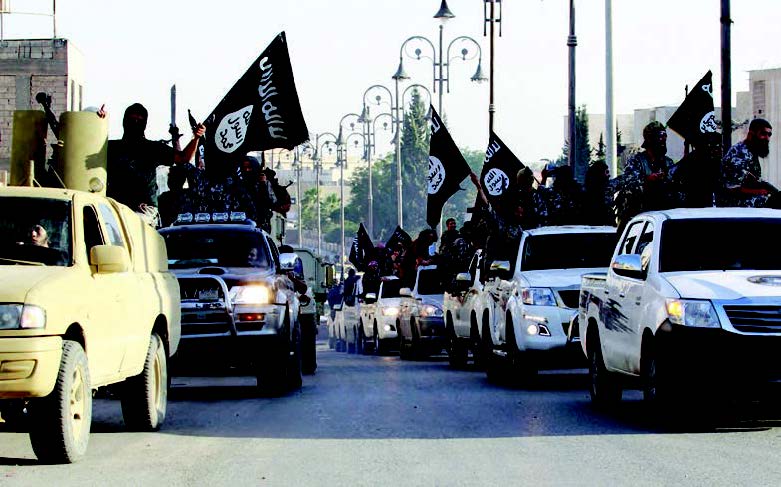
    The Islamic State, despite being driven by Kurdish fighters from its one-time Syrian stronghold in Kobani last week, nevertheless is extending its reach well beyond Iraq and Syria, military officials and analysts warn — represented, by some estimates, in nearly a dozen countries.

     ISIS History

    The Islamic State, despite being driven by Kurdish fighters from its one-time Syrian stronghold in Kobani last week, nevertheless is extending its reach well beyond Iraq and Syria, military officials and analysts warn — represented, by some estimates, in nearly a dozen countries.


    Lt. Gen. Vincent Stewart, director of the US Defense Intelligence Agency, delivered a grim assessment earlier this week in testimony to the House Armed Services Committee, as he described how the group was surfacing in North Africa.


    “With affiliates in Algeria, Egypt, Libya, the group is beginning to assemble a growing international footprint that includes ungoverned and under governed areas,” Stewart said.


    ISIS continues to hold a wide swath of territory, bigger than the state of Pennsylvania, in its home base spanning parts of Iraq and Syria, propped up by more than 20,000 foreign fighters from at least three dozen countries. But the terror network’s tentacles, as Stewart indicated, are creeping into other nations; largely those with fragile governments.


    “ISIS, like Al Qaeda, has thrived in the failed states where there is a vacuum of power,” said James Phillips, Middle East senior research fellow with the Heritage Foundation.


    A key worry is the group’s potential ambitions in Afghanistan, where the U.S. combat mission just ended and Afghan security forces are in control.


    Defense secretary nominee Ashton Carter, who had his confirmation hearing Wednesday, told Congress he is aware of reports that ISIS may try to expand into Afghanistan, and vowed to work with coalition partners to stop the group. He said he would consider changing plans for withdrawing the remaining 10,600 U.S. troops from Afghanistan by the end of 2016 if security conditions further deteriorate.


    The Islamic State’s ambitions do not stop at Afghanistan, the so-called Graveyard of Empires. Militant groups in Pakistan, the Philippines, Israel and the Gaza Strip, Lebanon, Indonesia and Jordan, among other areas, reportedly have pledged formal support for ISIS. New York Magazine, in a recent report, wrote, “Think of them as ISIS’s self-appointed foreign bases.”


    It’s impossible to know precisely how many members are involved in these groups, but analysts say the biggest groups generally are still affiliated with Al Qaeda, while others are starting to stand with ISIS – and execute attacks.


    An ISIS-tied group in Egypt, for instance, claimed responsibility for a series of coordinated attacks on Jan. 30 that killed at least two dozen security officers in restive Sinai.


    The Caliphate Soldiers Group in Algeria, which pledged loyalty to ISIS in September, kidnapped and beheaded a French tourist the same month. Terrorists posted a video of the beheading, saying it was in response to French airstrikes in Iraq. Algerian Special Forces killed the terror leader late last year, which analysts say dealt a morale blow to the small group.


    In Libya, the Islamic State’s Tripoli Province took credit for a hotel attack on Feb. 1 which killed nine people, including an American.


    Published reports tie other groups to ISIS including The Jundallah militant group and the Tehreek-e-Khilafat groups in Pakistan; the Philippines’ Abu Sayyaf group; Sinai Province in Egypt; Lebanon’s The Free Sunnis of Baalbek Brigade; Indonesia’s Jama’ah Ansharut Tauhid; and Sons of the Call for Tawhid and Jihad in Jordan.


    The Heritage Foundation’s Phillips said it’s not just groups like these that have declared loyalty. “There are an unknown number of self-radicalized militants in many different countries that may self-identify with ISIS and carry out ‘lone wolf ’ terrorist attacks in its name, without necessarily being members of the group,” he said. He cited the hostage crisis in Sydney, Australia, last December as an example.


    ISIS continues to get pounded by coalition airstrikes in Iraq and Syria, where Kurdish forces recently took back the vital city of Kobani. Those strikes are likely to increase following the brutal execution of a captured Jordanian pilot (though the coalition is down a member, with the United Arab Emirates having suspended airstrikes after the pilot’s capture in December.)


    Phillips said the purpose of the group’s grisly propaganda videos – including of the Jordanian pilot being burned alive in a cage — is to change the subject, from recent setbacks in Kobani as well as some areas in Iraq, through “jihadist pornography.” He said the point is to show the group as an
    “invincible army,” psychologically attractive to European teenagers who might join the fight.


    Raymond Stock, a Shillman-Ginsburg writing fellow at the Middle East Forum, argued the message carries more weight with Muslims worldwide than most realize. He told Fox News the propaganda videos are “so well-produced and so well-targeted –extremely effective. We have nothing counteracting that.”


    Stock, who spent 20 years living in Egypt, sees the group’s ambitions as limitless and argues it is a mistake to believe the Islamic State is an organization seeking to control limited territory.


    He also suggested Al Qaeda and ISIS are not necessarily direct competitors. He cited an Arabic proverb, which he translates as: “Me and my brother against my cousin; me and my cousin against the outsider.”


    In Senate Armed Services Committee confirmation hearing for defense secretary, Sen. John McCain, R-Ariz., pressed Carter on the need to have a strategy against ISIS.


    “I believe I understand our strategy at this time,” Carter explained. “I also have the intention, again if confirmed, to make it my first priority to go there, to talk to our military leaders there, to confer with you …I think a strategy connects ends and means, and our ends with respect to ISIL needs to be its lasting defeat.”


    McCain retorted: “Well, it doesn’t sound like a strategy to me, but maybe we can flesh out your goals.”


    (Source: AP)

  • India asks Japan if it’s interested in Rs 50,000 crore submarine project

    India asks Japan if it’s interested in Rs 50,000 crore submarine project

    NEW DELHI (TIP): Russia, France, Germany and Spain, all better watch out. They may have to contend with Japan in the race to supply submarines to India. In keeping with their expanding strategic partnership, the Modi government has asked the Shinzo Abe administration whether it would be interested in the over Rs 50,000 crore project to build six stealth submarines in India.


    With Japan recently ending its decades old self-imposed arms export embargo, New Delhi has forwarded “a proposal” to Tokyo to “consider the possibility” of making its latest diesel-electric Soryu-class submarines in India, say sources.


    This “feeler” dovetails into PM Narendra Modi’s strategic outreach to Japan, as well as Australia and the US, since he took over last year. The possible sale of Japanese US-2i ShinMayva amphibious aircraft to the Indian Navy is already being discussed. Australia, too, is considering the Soryu submarines to replace its ageing Collins-class vessels.


    The US, on its part, has been pushing for greater defence cooperation among India, Japan and Australia to counter China’s assertiveness in the Asia-Pacific region. The recent Obama-Modi summit led to the “joint strategic vision for Asia-Pacific and Indian Ocean Region” with a direct reference to South China Sea, where China is locked in territorial disputes with its neighbours. Both Japan and Australia are also keen to participate in the annual Indo-US Malabar naval exercise on a regular basis, which has riled China in the past.


    But the 4,200-tonne Soryu submarines, manufactured by Mitsubishi Heavy Industries and Kawasaki Heavy Industries, may not meet Indian requirements. Japan will also be just one of the contenders for the mega programme, called Project- 75-India, if it agrees to throw its hat into the ring.


    Countries like France (ship-builder DCNS), Germany (HDW), Russia
    (Rosoboronexport) and Spain
    (Navantia) are already girding up, with the first three having the experience of building submarines for India.

  • INDIA’S RELATIONS WITH THE US MUST NOT BE ONE-SIDED

    INDIA’S RELATIONS WITH THE US MUST NOT BE ONE-SIDED

    ‘It is in the interest of both sides that the visit is seen as being successful. Both sides have invested considerable political capital in it…….This rapid exchange of visits and the decisions taken have to be justified, beyond the symbolism, which is no doubt important in itself. This opportunity to impart a fresh momentum to ties should not be missed………. What we need is a pragmatic approach by both sides. On the side this is assured by Modi. He has shown that he is essentially pragmatic. The only principle he is attached to is India First”, says the author. 


    Prime Minister Narendra Modi’s ready acceptance of United States President Barack Obama’s invitation to visit Washington in September 2014 came as a surprise against the background of the visa denial humiliation heaped on him for nine years.


    Modi’s invitation to Obama to visit India as chief guest at our 2015 Republic day celebrations came as an equal surprise, as did Obama’s acceptance at such short notice.


    The messaging from both sides is clear. Modi wants to give a fresh impetus to the India-US relationship, seen as languishing for some time now. Obama has conveyed that he is ready to respond.


    Now that Obama is coming and the two sides want to reinvigorate the relationship, the outcome of the visit will be watched closely not only in India and the US, but internationally too.


    To look ahead, we should look backwards a little bit so that the potential for the future can be seen through a better understanding of the past.


    There are no instant solutions to the issues in India-US relations. The US demands in many cases require policy, legislative and administrative responses by India, not to mention care by us that a balance in our external relations is maintained.


    Obama had said during his visit to India in 2009 that he saw the India-US relations as potentially a ‘defining partnership of the 21st century.’ It is very hard to define what a defining partnership is, but what he meant presumably is that relations between the oldest and the largest democracy, between the world’s foremost economic power and, in time, the third biggest economy will define the contours of international relations in the decades ahead.


    Our leaders say that India and the US are natural partners. This is not borne out objectively by the history of the relationship, the differences that currently exist on a whole host of issues and the inherently unequal nature of the relationship.


    The US is the world’s only superpower with global interests whose contradictory pulls and pressures they have to manage even in our region, and we are not even a credible regional power yet.


    If the argument is that it is the shared values of democracy, pluralism and respect for human rights make us natural partners, then the US relationship with Pakistan and China — often at our cost — which are not democracies, has to be explained. US interests often take precedence over its declared values.


    Even if rhetoric does not measure up to realities, the fact remains that improvement of India-US ties has been the most important development in India’s external relations in the last decade.


    It is the 2005 nuclear deal that opened the doors to a transformative change in bilateral ties. Reflecting the new intensity of bilateral engagement, about 28 dialogues were set up between the two sides covering the fields of energy, health, education, development, S&T, trade, defence, counter-terrorism, nonproliferation, high technology, innovation etc.


    The US now supports India’s permanent membership of the UN Security Council in principle. It is backing India’s membership of the four international export control organisations — the Nuclear Suppliers Group, the Missile Technology Control Regime, the Wassenaar Arrangement and the Australia Group.


    Trade in goods and services between the two countries has grown to almost $100 billion (about Rs 620,000 crore).


    A big breakthrough has been made in defence. In the last five or six years the US has bagged defence orders worth about $10 billion (about Rs 62,000 crore). These include C-130, C-17 and P-80 I aircraft and heavy lift, attack and VIP helicopters. The US has emerged as the biggest supplier of arms to India in this period.


    The US has proposed joint manufacture of several defence items in India under its Defence Trade and Technology Initiative. While India has overcome its mistrust of the US and fears that at critical moments the US may cut off spares for its equipment as part of its liberally used sanctions instrument, India has been reticent in its response to the DTTI, possibly because it is still not convinced that the US will transfer the technologies that India would want or not tag unacceptable conditions to it.


    The US proposed at one time three ‘foundational’ agreements covering the areas of logistics, interoperability and access to high technology equipment, but India has been cautious, presumably because it was concerned about slipping into the US defence orbit and losing its autonomy.


    To balance this, India and the US have been conducting a large number of military exercises, far more than with any other country. The naval exercises in the Indian Ocean to protect the sea lanes of communication are particularly important because of their geopolitical implications. Trilateral India-US-Japan naval exercises have obvious significance.


    In Obama’s second term, however, the ties lost momentum for various reasons. Economic reforms in India slowed down, its growth rates fell, India was seen as reluctant to deepen the strategic partnership, it was lukewarm to the US pivot towards Asia, US nuclear firms saw their business opportunities in India blocked because of our Nuclear Liability Act, major US corporations began campaigning against India’s trade, investment and intellectual property rights policies in the US Congress and instigated investigations into them by the US International Trade Commission and the US Trade Representative.


    The US began criticising India for being a fence sitter, a free-loader on the international system because of its reluctance to uphold it even at the cost of its interests as other Western powers were supposedly doing. This was the sense of the ‘burden sharing’ demand of the US.


    India had its own complaints against the US regarding the implications of the new US immigration legislation for India’s IT industry, the movement of its professionals, the increase in cost of H1B and L1 visas, the totalisation agreement and outsourcing.


    During his Washington visit, Modi struck an unexpectedly good rapport with Obama who accompanied him personally to the Martin Luther King Jr Memorial and later in Myanmar described him as a ‘man of action.’


    Modi clearly signalled during the visit that he intends to reinvigorate bilateral ties and that he views them as vital for his development agenda at home.


    The joint press conference by the two leaders and their joint statement set an ambitious agenda, with many positives, if all goes according to plan.


    The two leaders agreed to increase the bilateral trade five-fold to $500 billion (about Rs 36 lakh crore).


    Modi asked publicly for more openness and ease of access to the US market for Indian IT companies, even if Obama failed to give any response.


    In order to raise investment by institutional investors and corporate entities, it was agreed to establish an Indo-US Investment Initiative led by India’s finance ministry and the US department of treasury, with special focus on capital market development and financing of infrastructure.


    It was also agreed to establish an Infrastructure Collaboration Platform convened by the ministry of finance and the US department of commerce to enhance participation of US companies in infrastructure projects in India.


    Modi invited the US to send two trade missions to India in 2015 focused on India’s infrastructure needs with US technology and services.


    It was decided to activate the Trade Policy Forum that had not been convened for a long time. An empowered annual working group was approved for addressing IPR issues and it was agreed to set up a contact group for implementing the India-US civil nuclear deal.


    US involvement was sought in the railways sector and in smart city projects (Ajmer, Visakhapatnam and Allahabad).


    It was also agreed that USAID will serve as knowledge partner to support Modi’s 500 Cities National Urban Development Mission and Clean India Campaign.


    Obama offered to reinvigorate the higher education dialogue, which has languished. He welcomed India’s proposal to establish the Global Initiative of Academic Networks under which India would invite and host up to 1,000 American academics each year to teach in centrally-recognised Indian universities, at their convenience.


    The decisions and understandings reflected in the joint statement on the energy front are potentially problematic as they could give the US more handle to put pressure on India on climate change issues.


    Both leaders expressed their commitment to work towards a successful outcome in Paris in 2015 of the conference of the UN Framework Convention on Climate Change, including the creation of a new global agreement on climate change.


    The two leaders, in recognition of the critical importance of reducing greenhouse gas emissions and improving resilience in the face of climate change, agreed to ‘a new and enhanced strategic partnership’ on energy security, clean energy, and climate change, to further which a new US-India Climate Fellowship Programme to build long-term capacity to address climate change-related issues in both countries was launched.


    A MoU was concluded between the Export-Import Bank and the Indian Renewable Energy Development Agency, which would make up to $1 billion (about Rs 6,200 core) in financing available to bolster India’s transition to a low-carbon and climate-resilient energy economy, while boosting US renewable energy exports to India.


    Modi and Obama stated their intention to expand defence cooperation to bolster national, regional, and global security. This broad-based formulation has important geopolitical implications. They agreed to renew for ten more years the 2005 Framework for the US-India Defence Relationship with plans for more ambitious programs and activities.


    They welcomed the first meeting under the framework of the DTTI in September 2014 and its decision to establish a task force to expeditiously evaluate and decide on unique projects and technologies for enhancing India’s defence industry and military capabilities.


    To intensify cooperation in maritime security, the two sides considered enhancing technology partnerships for India’s Navy, besides upgrading their existing bilateral exercise Malabar.


    They committed to pursue provision of US-made mine-resistanta ambush-protected vehicles to India.


    On terrorism, they stressed the need for dismantling of safe havens for terrorist and criminal networks, to disrupt all financial and tactical support for networks such as Al Qaeda, Lashkar-e-Tayiba, Jaish-e-Mohammad, the D-Company, and the Haqqani Network.


    The two countries also expressed the intention to start a new dialogue on space situational awareness.


    Obama affirmed that India met MTCR requirements and was ready for NSG membership. Noting India’s ‘Act East’ policy and the United States’ rebalance to Asia, the leaders committed to work more closely with other Asia Pacific countries through consultations, dialogues, and joint exercises. They underlined the importance of their trilateral dialogue with Japan and decided to explore holding this dialogue among their foreign ministers.


    Modi spoke of great convergence on the issue of peace and stability in Asia-Pacific and more joint exercises with Asia-Pacific countries.


    Very significantly, he stated that the US was intrinsic to India’s Look East and Link West policies, according thus a central role for the US in India’s foreign policy.


    They agreed to continue close consultations and cooperation in support of Afghanistan’s future.


    The principal points agreed during Modi’s visit will serve as a guide to what can be realistically achieved during Obama’s visit. To assess that, we should take into account some limitations and negatives that mark the India-US relationship.


    Already, what was agreed to is mostly not capable of quick implementation or rapid results. These are largely medium term objectives and not always clear in implications. In the course of implementation, many issues will provoke internal political debates, will require detailed processing and negotiations, parliamentary approval and intensive diplomatic effort on the international front by both parties. In some cases real differences have been glossed over by use of diplomatic language.


    On IPR issues it will not be easy to reconcile US demands on IPRs and our position that our IPR policies are in conformity with the World Trade Organisation’s Trade-Related Aspects of Intellectual Property Rights agreement. Legal issues involving our courts are involved.


    The USTR decided to put unilateral pressure on India by investigating India’s IPR policies under Section 301, but this has been halted in November 2014 in view of some forward looking announcements by the Modi government. The USTR’s ‘cautiously optimistic’ statements during his Delhi visit in November suggest that the US will wait and watch what the Modi government actually delivers.


    The US Congress has extended the investigation of India’s investment, trade and IPR policies by the USITC by another year.


    On climate change issues, under cover of its ‘political’ agreement with China, the US seems determined to put pressure on India to agree to some reduction commitments. In actual fact, this is political pressure unrelated to the merits of India’s case. Climate change is a multilateral issue, but the US is making it a bilateral one, with the commercial interests of its companies in mind.


    While the US claims that what it is offering under the DTTI has the green light from all those in the US who control technology exports, it can be doubted whether the US will be as liberal in transfer of technologies as it would have us believe. The US record in this regard with even its allies and partners is not inspiring.


    The US has shown no activism in pushing for India’s membership of NSG or MTCR as a start. It is to be hoped that it is not looking


    for a resolution of the nuclear liability issue and the finalisation of the vexed question of ‘administrative arrangements’ that is needed to complete the India-US nuclear deal before


    it does the heavy lifting again to promote India’s membership of the cartels in question.


    Surprisingly, the list of terror organisations against whom US and India have agreed to work together excludes the Taliban, pointing to a crucial difference between the two countries on the issue of accommodating this extremist force with its close Pakistani links into the power structure in Afghanistan.


    In reaching out to the Taliban the US gives priority to orderly withdrawal of its forces from Afghanistan, treating India’s concerns as secondary. The language on Afghanistan in the Modi-Obama joint statement in Washington was remarkably perfunctory.


    Worse, the US wants to retain complete freedom of action in dealing with Pakistan, irrespective of India’s concerns about its continuing military aid to that country. General Raheel Sharif, the Pakistani army chief, was accorded high level treatment during his recent visit to the US, meeting Secretary John Kerry who indirectly endorsed the role of the Pakistani army in nation building and politics by terming it as a truly binding force.


    It is worth recalling that after accepting the invitation to visit India, Obama felt diplomatically obliged to phone Premier Nawaz Sharif to say he could not visit Pakistan now and would do so later.


    The US involvement in developing our inadequate infrastructure — our ports, airports, railways highways etc — seems unrealistic as its companies are hardly likely stand up to international competition in India.


    As regards our nuclear liability legislation, it appears that the US government may be moving away from its fundamentalist position that supplier liability cannot be accepted and may be open to some practical solution to the issue in terms of limiting the liability in time and costs. The lawyers at Westinghouse and General Electric will, of course, have to be convinced.


    This is a highly charged issue politically and it is doubtful whether the decks can be cleared before Obama’s visit. The larger question of the economic viability of US-supplied nuclear power plants remains, not to mention the fact that GE does not have as yet a certified reactor.


    Work on a bilateral investment treaty will take time It appears that our side wants to be able to announce a couple of projects under the DTTI during Obama’s visit. In this connection anti-tank missiles, naval guns, pilotless aircraft and magnetic catapult for our aircraft carrier are being mentioned as possibilities.


    The US would want at least one project to be announced. Defence Minister Manohar Parrikar has let it be known publicly that US proposals are being seriously examined.


    The announcement of a more ambitious Defence Cooperation Framework Agreement valid for another 10 years is a certainty.


    The government’s decision on the GST, raising the FDI ceiling in insurance, the amendment to the land acquisition law are advance signals of its commitment to reform and attracting FDI, which is a positive from the US point of view.


    The emphasis on Make in India and developing India’s manufacturing sector, coupled with a commitment to ease doing business in India, have begun to change investor sentiment towards India, and this creates a better atmosphere for Obama’s visit.


    It is in the interest of both sides that the US President’s visit is seen as being successful. Both sides have invested considerable political capital in it.


    This rapid exchange of visits between the two leaders, leaving little time to process the decisions taken in Washington in September, has to be justified, beyond the symbolism, which is no doubt important in itself. This opportunity to impart a fresh momentum to ties should not be missed.


    But there is need also to be clear-headed about the relationship that is not easy to manage given US power, expectations, impatience and constant endeavour to do things the way it wants.


    It is a bit disturbing that an atmosphere has been created in which the focus is on what we can do for the US and Obama and not what the US must do to meet our needs and concerns. The agenda has become one-sided.


    The US should not expect India to support all its demands and polices, however questionable. India does not have to prove it is a responsible country by supporting even irresponsible US policies. Of course, India too should not expect the US to always adjust its policies to suit us.


    What we need is a pragmatic approach by both sides. On the side this is assured by Modi. He has shown that he is essentially pragmatic. The only principle he is attached to is India First.


    (By Kanwal Sibal who is a former Foreign Secretary of India)
    (British English)

  • TOO MANY HOLES IN 2015 ODI WORLD CUP FORMAT

    TOO MANY HOLES IN 2015 ODI WORLD CUP FORMAT

    NEW DELHI (TIP): A close look at the format of the 2015 ODI World Cup shows a series of lacunae. Much of the tournament will be played for largely inconsequential games. That apart, the teams playing the last group games will enjoy unfair advantage over their rivals.

    Here’s a more detailed analysis of the format:.
    How and why the pool stage is of little importance

    The teams are divided into two groups of seven countries each. In Pool A, there’s Australia, England, Sri Lanka, New Zealand, Bangladesh, Afghanistan and Scotland. In Pool B, we have South Africa, India, Pakistan, West Indies, Zimbabwe, Ireland and UAE. All teams play each other in their respective groups. Four teams from both pools proceed to the quarters.

    Obviously, the tournament has been designed to ensure that the big guns don’t get knocked out early.

    Take India, for instance. Even if the Men in Blue lose three of the six group games to South Africa, Pakistan and West Indies, they can still qualify for the quarters by defeating the minnows: Zimbabwe, UAE and Ireland. The same is true for the other three biggies. An upset can never be ruled out in ODI cricket but can you imagine any of the four minnows totalling more points at the end of the group stage than the Big Boys?

    It’s a similar story in Pool A too. Bangladesh might pull off the odd upset butlack the muscle to finish among the top four. Few would wager a bet on Australia, England, Sri Lanka and New Zealand not making to the next stage. One wonders if the early exit of cash-cow India and Pakistan in 2007 has something to do with this format. The truth is that for the top eight teams, the real tournament begins only at the knock-out stage starting on March 18. That’s almost five weeks after the 2015 ODI World Cup commences on Feb 14. Wow!

    What’s the incentive to win a game or top the group?

    There is one motivation, though, for every team to win every match at the group stage. As per rules, “If a quarterfinal is tied, abandoned or if the match is a no result, then the team that finished in the higher position in the Pool stage shall proceed to the semifinals.” Similarly, “if a semifinal is tied, abandoned or if the match is a no result, then the team that finished higher in the Pool stage shall proceed to the final.”

    The possibility of an abandoned tie cannot be entirely ruled out. In 1992, rain played a key role in South Africa’s tragic exit. A Super Six format after the group stage, as in 1999 and 2003, could have created a far more competitive event.

    Unfair advantage to teams playing last game at the group stage

    Since all teams are not playing the last group game on the same day, it is entirely possible that those playing the last group match can plan who they are going to face. For example, Pakistan are scheduled to play the last match in Group B (Match No. 42) against Ireland. The 1992 champions will know the number of points and run rates of their rivals before they step on the field. It is possible for them to play the game accordingly and choose a rival of their choice in the next stage. At the moment, this seems to be a trivial point. On March 17, it could become a major talking point, if the points tally and run rates of top teams in Group B run close. Football has eliminated such a possibility by playing all last group games together. Cricket is yet to learn.

    The real World Cup begins only in the knock-out stage

    That’s when the first two quarterfinalists meet on March 18 in Sydney. The seven games – four quarters, two semis and one final – played over the next 12 days is all that really matters in terms of consequence. This is a format dark horses will love. The larger question, therefore, is: why such an elaborate tamasha over six weeks?

    Even the football World Cup involving 32 countries and 64 games is held over a month. Why does a World Cup involving just 14 countries and 49 games need six weeks?

  • Slow-starting SERENA WILLIAMS blazes into Australian Open last 16

    Slow-starting SERENA WILLIAMS blazes into Australian Open last 16

    MELBOURNE (TIPO): Top seed Serena Williams blasted her way into the Australian Open fourth round on January 24, but only after conceding her first set of the tournament to Ukrainian 26th seed Elina Svitolina.

    The American, chasing her sixth Australian title, made a slow start before steamrolling Svitolina 4-6, 6-2, 6-0 to set up a fourth-round clash with dangerous Spanish 24th seed Garbine Muguruza.

    Williams also began sluggishly in her previous match against Russia’s Vera Zvonareva, conceding there were elements of her game “that I really need to improve”.

    In the end, it was the 18-time Grand Slam champion’s big sister Venus who provided the inspiration for her comeback with a back-from-the-dead performance of her own to make the last 16.

    “(Svitolina) kept hitting winners in the first set, there wasn’t much I could do,” Williams said.

    “When in doubt just start running as fast as you can, that’s what Venus always told me.” She said that while playing she kept an eye on a scoreboard showing Venus’ progress in her three-set win over Italy’s Camila Giorgi, drawing motivation from her sister’s advance.

    “(I thought) ‘C’mon Serena, she’s winning, she’s doing so well and I can do better’, you can do it too,” she said.

    “We always motivate each other. I’m so proud of her and we’re so excited.”

    Williams was full of praise for Svitolina, describing the 20-year-old who was playing at Melbourne Park for only the second time as “one to watch”.

    The big-serving youngster caught Williams napping and was soon up two breaks, with the world number one showing the same inaccuracy and unforced errors that dogged her earlier in the tournament.

    She broke back and tried to get herself out of trouble in the next game with an ace but Svitolina refused to be intimidated.

    The pair exchanged breaks again before the Ukrainian served out the set after 36 minutes.

    The American was vastly improved in the second set, blasting down five aces including a 196 kilometres (122mph) thunderbolt, gradually seizing momentum off Svitolina to take it 6-2 after 35 minutes.

    The Ukrainian’s serve began to fall apart with a string of double faults and her resistance finally crumbled in the second game of the third set after losing a 23-shot rally to put Williams up a break.

    Williams then took full control to hold Svitolina to love in the third set.

  • VICE PRESIDENT OF INDIA CONFERS PRAVASI BHARATIYA SAMMAN

    VICE PRESIDENT OF INDIA CONFERS PRAVASI BHARATIYA SAMMAN

    13th PBD closes with call strengthen links between young Pravasis and Indian youth

    GANDHINAGAR(GUJARAT) (TIP), January 9, 2015: The Vice President of India, Mr. M Hamid Ansari, today felicitated 15 overseas with the Pravasi Bharatiya Samman Awards at the Valedictory Session at the 13th Pravasi Bharatiya Divas. Speaking on the occasion, Mr. Ansari said, “This year is a special one. It coincides with the centenary of Mahatma Gandhi’s to India from South Africa, following which he took on the mantle of leadership of perhaps greatest non-violent struggle for independence against the colonial yoke. Gandhi ji was also, unquestionably, the greatest Pravasi Bharatiya of all.” He said, “Relationships, even emotional ones, are not a one-way street. The Overseas Indians have expectations aimed at facilitating and intensifying their involvement with India. The Government of India, and the State Governments, have acknowledged the validity of these sentiments and taken or initiated steps to attract, assist and promote a deeper and multifaceted relationship, which is mutually beneficial and long lasting. We in India attach highest importance to issues of interest and concern to the overseas Indians.”

    The Vice President stated, “India today is on the cusp of change, in the process of actualizing the expectations of its vast population for a better life. India aspires for a better place in the comity of nations. Both of these require rapid economic development, accompanied by better educational, health and social parameters. This requires a massive collective effort by all segments of our population. The governments at central and state levels need to provide visionary leadership and are determined to do so.”

    Mr. Ansari added, “In this endeavor, an important role can be and must be played by the Overseas Indians. They have knowledge and resources to reinforce the effort in niche areas; they also have the experience of other lands where similar efforts were pursued successfully. We welcome such initiatives, which will replicate these valuable experiences here and save us from reinventing the wheel.”He said,
    “What then is the challenge before us in this task of linking India more closely with its overseas community? In my view it is to maintain and strengthen the linkages between the next generation of Pravasis and their counterparts in India.

    It is essential that the new generations at both ends continue and strengthen this mutually beneficial bond. The Youth Pravasi Bharatiya Divas organized on the 7th of January is a good step in the right direction.”

    The recipients of Pravasi Bharatiya Samman Awards are Mrs. Mala Mehta, Australia; Mr. Donald Rabindernauth Ramotar, Guyana; Dr. Rajaram Sanjaya, Mexico; Mr. Kanwaljit Singh Bakshi, New Zealand; Mr. Rajmal Parakh, Oman; Mr. Duraikannu Karunakaran, Seychelles; Mr. Essop Goolam Pahad, South Africa; Mr. Shah Bharatkumar Jayantilal, UAE; Mr. Ashraf Palarakunnummal, UAE; Mr. Mahendra Nanji Mehta, Uganda; Prof. Nathu Ram Puri; Lord Raj Loomba, Britain; Mr. Satyanarayana Nadella; Dr. Lulla Kamlesh, US and Dr. (Mrs.) Nandini Tandon, USA.

  • Charlie Hebdo sells out as 5 million print run is announced

    Charlie Hebdo sells out as 5 million print run is announced

    Charlie Hebdo is fetching $600 asking prices on eBay as millions hope to get their hands on the commemorative edition, the first to come out after eight staffers and four others were slaughtered.

    PARIS (TIP): A defiant Charlie Hebdo went on sale Wednesday, January 14, in five languages and in more than 20 countries, splashing a cartoon purporting to be Mohammed on its front cover a week after jihadist gunmen stormed the satirical weekly’s offices killing 12 people.

    The newspaper normally prints 60,000 copies a week. This week’s print run will be five million (up from three million announced on Tuesday), distributed over the next two weeks.

    It is a record for any French newspaper, with versions being printed in Spanish, Arabic, Italian, Turkish and English for the first time.

    Across Paris on Wednesday, even at 6am, many shops and kiosks had already sold out.

    At Belleville in Paris’s 19th arrondissement (district), the newspaper kiosk at the metro station had sold its 150 copies within minutes of opening at 6am.

    The paper’s front cover shows a turbaned man (not explicitly the Prophet Mohammed) shedding a tear and declaring that he too “is Charlie” – “Je suis Charlie” was the slogan of a huge outpouring of grief and solidarity in France in the days that followed the attacks. The front-page figure adds that “all is forgiven”.

    Global response

    The global attention following last week’s attacks – which saw another gunman kill four hostages in a Jewish supermarket in Paris -has seen demand for Charlie Hebdo explode as far away as India and Australia.

    While the front page had been widely shared online ahead of publication, many newspapers in both Muslim countries and in the West refrained from printing the cartoon because of blasphemy laws and also sensitivity over reproducing an image of the Prophet, which is considered offensive by Muslims.

    Charlie Hebdo’s front page was not reproduced by the mainstream media in the US, where any kind of religious satire is frowned upon, although the White House reaffirmed its “absolute support [of the] the right of Charlie Hebdo to publish things like this”.

    In Egypt, the chief imam at the al-Azhar mosque, an institution widely-seen as the centre of the Sunni Muslim faith, condemned Charlie Hebdo’s decision to lead its latest issue with a cartoon of the Prophet, calling it an “incitement to hatred”.

    The Dar al-Ifta, which represents Egyptian Muslims, called the new front page a “provocation”, while in Shiite-dominated Iran, conservative news site Tabnak accused Charlie Habdo of “once again insulting the Prophet”.

    Islamophobia and France’s far right
    Paradoxically, Charlie Hebdo is one of France’s loudest voices against racism, whose principal target of abuse has always been France’s far-right National Front (FN, whose founder Jean-Marie Le Pen has been convicted numerous times of racism and anti-Semitism). The FN is widely seen as virulently Islamophobic.

    But the newspaper’s decision in 2006 to re-print cartoons of Mohammed published in Danish daily Jyllands-Posten brought so much ire on Charlie Hebdo that its editors decided to publish regular cartoons lampooning radical Islamists as well as depictions of Mohammed himself, who, in one case, is shown lamenting the difficulty of being “followed by complete idiots”.

    Inevitably, Charlie Hebdo became the focus for widespread disapproval in France’s large Muslim community, and the two French-born gunmen who entered the newspapers offices last Wednesday, murdering 12 people, ran out shouting that they had “avenged the Prophet”.

    The survivors of the attack have defended their caricatures of Islam and Mohammed.

    “The Mohammed we have portrayed is a much nicer character than the version of Mohammed brandished by the attackers,” said one member of the weekly’s editorial staff.

    “And if we can get our ideas read across the world, it is we who are the ultimate winners,” added Charlie Hebdo’s editor-in-chief Gérard Biard.

    On Tuesday, French Prime Minister Manuel Valls set out the government’s updated response to terrorism, following last week’s murderous assault on the magazine and a Jewish supermarket.

    But he insisted that “blasphemy does not feature in the laws of France, and it never will”.