Author: Carmen Fariña

  • Preparing Global Citizens: Expanding Multilingual Classrooms in New York City

    Preparing Global Citizens: Expanding Multilingual Classrooms in New York City

    Like many New Yorkers, I am a child of immigrants. Being a City of immigrants is what makes us strong and resilient, and as New Yorkers, we take pride in living in a diverse, multicultural place. That same pride extends to our schools. First and foremost, we know that in the 21st century, speaking more than one language opens doors and opportunities for our City’s students. That’s why, as Chancellor, I am dedicated to increasing Dual Language and Transitional Bilingual Education programs across the City, which provide instruction for students to acquire fluency in two languages while fostering an appreciation for multiple cultures. In other words, to be thoughtful and productive citizens of our country – and our world.

    This year, I am particularly proud that we are opening 68 new Dual Language and Transitional Bilingual Education programs across all five boroughs in September 2017. This large expansion includes our first Urdu Transitional Bilingual Education program in Brooklyn, in addition to programs in Chinese, Russian, Arabic, French, Bengali, and Spanish.

    Bilingual programs are critical for the 150,000 English Language Learners who attend public school in New York City. As a former ELL myself, I know the many benefits that come with being bilingual. This expansion will give hundreds of ELLs access to high-quality bilingual programs, preparing them for real world experiences and success in the classroom and beyond.

    Bilingual programs give our students confidence as they develop proficiency in a second language and can also help students to develop a vision for their futures. One of our remarkable students, Carlos Vega, attends Manhattan Bridges High School. Carlos was born in Mexico and arrived in New York with his parents six years ago. Moving to New York City exposed him to different languages, cultures and needs of people, in particular he noticed many handicapped New Yorkers struggling to get on the train, climb stairs and overall navigate the City independently. Carlos is a Pre-Engineering and Dual Language student and hopes to one day create prosthetics and sensory aids to help people without limbs to become more independent. This is the beauty of our City and our bilingual programs, which increase opportunities for thousands of students like Carlos every day.

    Parents are partners in expanding bilingual programs. Family engagement helps us open bilingual programs in neighborhoods that need them, and I am pleased to hear from parents at town hall meetings requesting these programs in their schools. We want to hear from our communities about the Dual Language and Transitional Bilingual Education programs that they need.

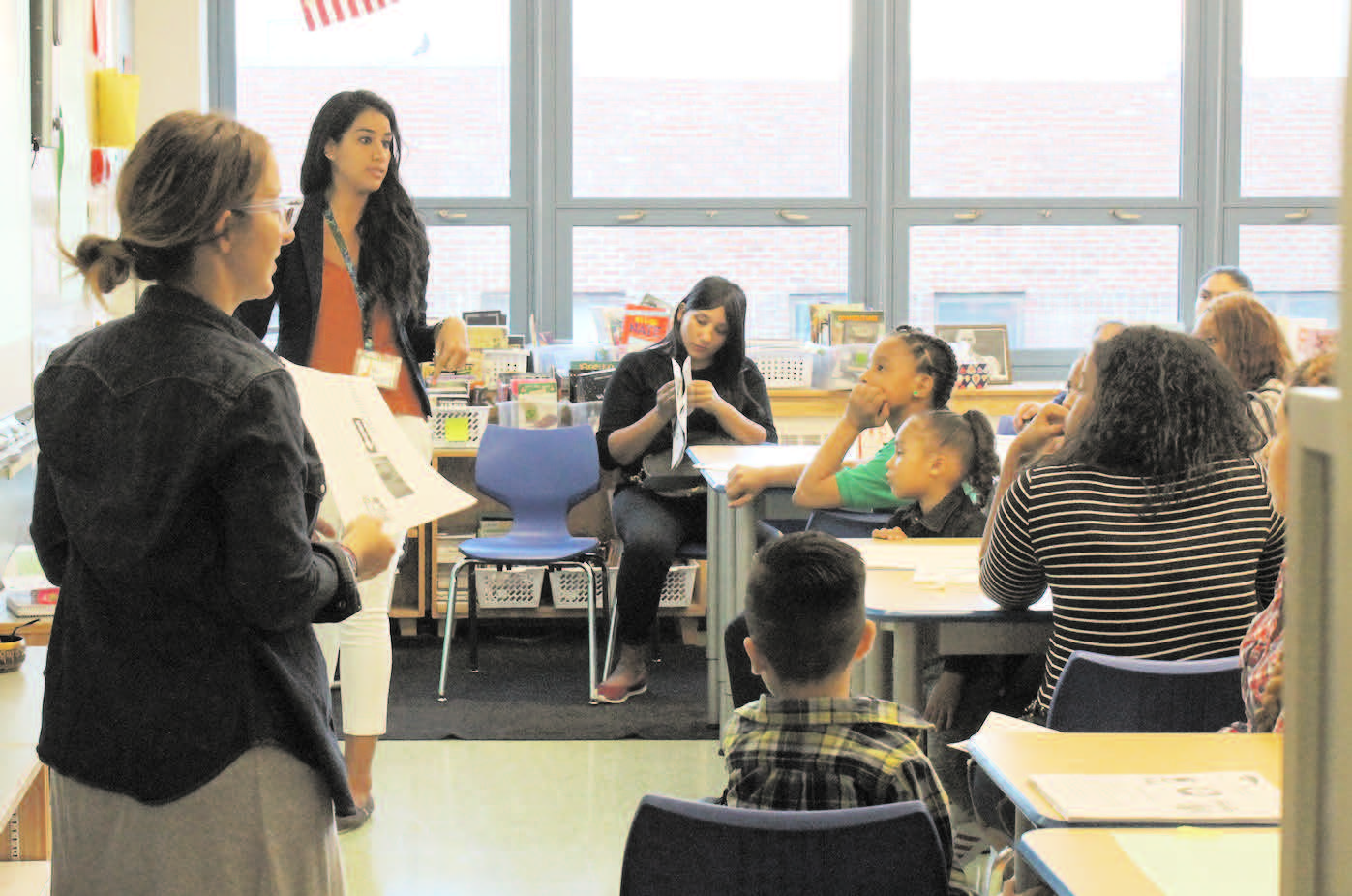
    And doing a better job of reaching parents – who represent the diversity and many cultures of New York City – is also on our mind. As Chancellor, providing families with limited English skills access to information, workshops and conferences in their native language has been one of my biggest priorities. Since the fall, for the first time, we’ve offered Native Language Parent Conferences for families in Mandarin, Bengali, Arabic and Spanish. I encourage families to attend these conferences, and also to find other ways to get involved in their child’s education. It could be through a weekend club or English classes-there are many ways for the entire family to support their child’s future.

    I look forward to visiting these programs, and seeing the benefits firsthand for our students and families. As we continue to bring more educational opportunities to students across the city, we’re celebrating our diversity, building Equity and Excellence across our schools, and putting more students on the path to college and meaningful careers.

    To learn how to apply for these programs, families can call 718-935-3500 or visit one of our family welcome centers.

  • A Path to College and Careers for all Children

    Navigating the college process can be challenging for students and their families. As the first person in my family to go to college, I know how stressful this process can be. As Chancellor, getting every student on the path to college regardless of their home language or zip code and graduating a productive citizen is at the heart of what I want to accomplish. In support of this effort, across the City today we are celebrating College Awareness Day.

    Now in its second year, College Awareness Day promotes a college-going culture across all New York City schools and encourages students to consider a wide range of college and career options. And now as part of the DOE’s first College and Career Month, 250 high schools are participating in career exploration events and activities. This means schools will be visiting companies and non-profit organizations to shadow professionals, and inviting alumni and recent college students to discuss college and career planning with students. We are also hosting the first-ever citywide Summer Enrichment Fair on January 28, where high school students and families can learn about summer employment opportunities and participate in career skills and planning workshops. Educators across the City are helping students understand that going to college is attainable with hard work and determination and families should can overcome the financial considerations, geographical barriers, or other roadblocks.

    College Awareness Day is part of College Access for All, one of Mayor de Blasio’s Equity and Excellence for All initiatives. Through College Access for All, every middle school student will have the opportunity to visit a college campus by 2018 and every high school student will have the resources and support to develop an individual college and career plan by 2019. For the first time this spring, every high school junior can take the SAT free of charge during the school day and we’ve also eliminated the CUNY application fee for low-income students applying for college, removing a significant financial barrier for families.

    Early Conversations and planning around college and careers are critical, and helping our youngest learners see higher education as attainable begins with raising greater awareness of what college is and why it matters. We are laying this groundwork early, by building on our promise of Pre-K for All, working toward universal literacy in 2nd grade by 2026, and expanding bilingual programs in classrooms as early as pre-K. Every student must have the opportunity to pursue their dreams, and we are making unprecedented investments to make that a reality – especially for students who are new immigrants, just learning English, and will be the first in their family to go to college.

    Every day can be College Awareness Day across the City. Our schools will continue to share information with students and families about college and career readiness as the school year moves forward. By making a clear path to college and career for everyone, we are going to make a real difference in our City and country. I encourage all educators to share their college experience with students and continue the college conversation today. Additional information about College Awareness Day and College and Career Month are available at: http://schools.nyc.gov/Offices/OPSR/Caree rExplorationMonth.htm. Together we can eliminate obstacles and make the path to college and careers for all a reality.

  • Family Engagement Grows and More Work Lies Ahead

    Family Engagement Grows and More Work Lies Ahead

    September is a time for new beginnings and a time to build on the progress we’ve made as a community. I am excited to announce that family engagement is on the rise across the city. Thanks to the hard work of teachers, school leaders, staff, parent leaders and volunteers – more than 1,000,000 parents across the boroughs are attending a range of school based workshops and trainings in college preparation, English as a Second Language, resume writing, Common Core Learning Standards and in response to requests from families, even Zumba, and nutrition. Also, 1,983,000 families participated in parent teacher or student led conferences, 73,000 more compared to the year prior.

    Reaching every parent, grandparent and guardian is essential and while this is important progress, there is still more work to be done. ?

    For instance, during my visits to schools and even to the local market, I’ve learned that families are not only interested in their child’s learning but they want to support schools with their own professional growth and wellness. And schools are listening and bringing in tailored programs and creating learning hubs for their parent community.

    This school year, we are also reaching families with Equity and Excellence for All, a range of initiatives we announced last year that are all on their way to implementation. Equity and Excellence is the bedrock on which we are building student achievement through a variety of programs. Students across the city will have access to rigorous classes like Advanced Placement, one-on-one mentoring through the Single Shepherd program, increased extracurricular activities in STEM and the arts, and college planning in middle school to provide parents with tools and resources they need to navigate the college planning process.

    We’ve already hosted an AP for All event last spring for 300 students and their families in Washington Heights, which included a series of workshops on AP courses and college planning. And we launched FaceLab, a mini Makers Faire where students showcased their inventions and creativity to families – encouraging side by side learning. ?

    In addition, to the programming and engagement we offer, we have also expanded language services for parents with limited English. One critical change we’ve made is access to 24 hour over the phone interpreters, so school staff can communicate with parents in their native language after 5 pm. Now, a teacher can call a parent who only speaks Mandarin and can provide that parent with an update on their child’s progress in school with a Mandarin interpreter on the line. This expansion has resulted in a surge of phone calls being made to parents using over the phone interpreters.

    In addition, for the first time, we are holding citywide native language Parent Conferences conducted entirely in the family’s native language for Mandarin, Spanish, Bengali and Arabic speakers. ? I am proud of the incredible growth we have seen while engaging families as partners because it shows that the message is resonating: community involvement is critical and when a child sees a family member involved at their school it results in self-confidence and achievement.

    I want to encourage families to help us get other families involved too! This fall, schools will host parent-teacher conferences. For information on when your school’s next parent teacher night is scheduled for visit http://schools.nyc.gov/Calendar/default.htm?mo=10&yr=2016 #Conferences

    Finally, please Save the Dates for the following native language parent conferences:

    • October 14, 5:30 pm – College Access Conference for Middle School ELL Families at Tweed Courthouse, 52 Chambers Street, Manhattan
    • November 5, 10 am – Parent Conferences for Spanish speakers at Port Richmond High School, 85 St. Joseph’s Ave., Staten Island
    • November 19, 10 am – Parent Conferences for Spanish speakers, Monroe College, 2501 Jerome Ave, Bronx
    • December 3, 10 am – Parent Conference for Mandarin or Cantonese speakers, PS 94, 5010 6th Ave., Brooklyn
    • December 17, 10 am – Parent Conference for Arabic speakers, PS/IS 30 7002 4th Ave., Brooklyn
    • January 28, 10 am – Parent Conferences for Bengali speakers, Queens College, 65-30 Kissena Blvd., Queens
  • FREE, HEALTHY SUMMER MEALS FOR NYC CHILDREN

    FREE, HEALTHY SUMMER MEALS FOR NYC CHILDREN

    No child should ever have to go without a meal. That’s why the DOE is, once again, offering completely free, nutritious breakfasts and lunches to anyone 18 years or younger in New York City all summer long. With nearly 1,100 sites in all five boroughs, the summer meals program ensures that children will have easy access to meals over summer break, so they can start the school year ready to learn.

    If you haven’t already, I encourage you to participate in this important program and help us raise awareness. New York City’s summer meals program is the largest in the country, and together, we can make sure that children don’t go hungry during the summer months.

    Eating healthy, regular meals is an essential part of every child’s development. Hungry children have trouble concentrating, and often suffer from frequent stomachaches, headaches and other medical issues. Children and families in New York City, no matter their zip code, deserve access to high-quality food.

    Already, summer meals have been a tremendous success – in 2015, we served 8.2 million meals, up from the 7.1 million meals served in 2012 – and we hope to make even more progress this year. We’re serving summer meals at sites across the city, including schools, pools, libraries, NYCHA locations, and four mobile food trucks. At the summer meals sites, children can choose from a variety of healthy and delicious options, such as egg-and-cheese sandwiches, pizza, locally sourced fruit, and my personal favorite, roasted chicken.

    As a teacher and a principal, I learned very quickly that our responsibilities to students don’t end when school gets out. For every child, the summer is an important break – it’s a time of much-needed rest, self-exploration and great personal growth. And, as parents and educators, the shared goals we have for our children during the school year – high-level achievement, serious effort, real learning – depend on how we nourish and support children over the summer.

    Summer meals will be offered through September 2. No registration, documentation or I.D. is required to receive breakfast or lunch – just stop by a site and enjoy the food.

    To find site locations and view daily menus, download the Schoolfood app or visit www.schoolfoodnyc.org.

  • Getting More Men of Color to Teach Our Children Will Lift Our Communities

    Getting More Men of Color to Teach Our Children Will Lift Our Communities

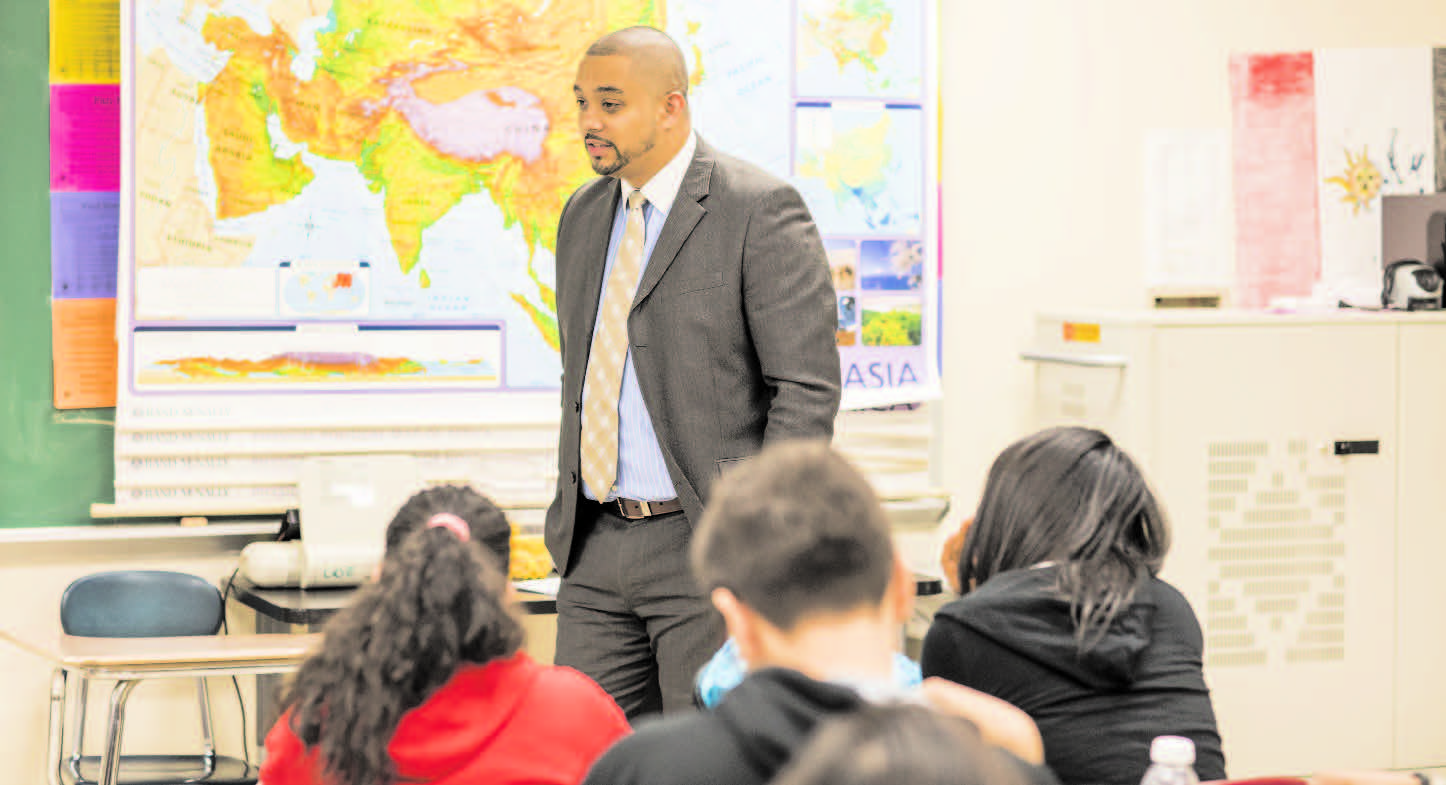
    Creating inclusive schools is not only about classrooms having students with a wide range of backgrounds and academic strengths-our teachers should also reflect the City’s diverse workforce and represent different ethnic backgrounds, languages, and cultures. However, only 8.3 percent of our 76,000 dynamic teachers are men of color, while around 43 percent of our students-about 430,000 boys-are male students of color.

    I am committed to increasing opportunities for highly qualified young men of color to enter the teaching profession. We’ve asked ourselves: how can we recruit, train and support highly skilled men and inspire them to choose education as a career?

    We’ve come together as a City – across the DOE, NYC’s Young Men’s Initiative, CUNY, the Mayor’s Center for Economic Opportunity, Teach for America, NYC Teaching Fellows, and other valued partners – to address this imbalance by recruiting more male teachers of color through the NYC Men Teach initiative. The initiative aims to recruit 1,000 males of color to work in our City’s schools by the 2018-19 school year.

    Yesterday (June 29), we kicked off NYC Men Teach with a hiring fair, networking opportunities, and a panel discussion. At this kick-off, men of color who are interested in teaching met with principals about potential job opportunities in their schools, and heard from seasoned teachers and industry influencers who offered guidance and insight on the teaching profession.

    One of the goals of this initiative is to enable students to see successful male role models of color in their classrooms. During a recent school visit, I saw students honoring “heroes” in their lives, an activity devoted to the men who’ve supported students during their academic career. Classroom activities such as these are wonderful first steps; however, we must make a concerted effort to get the men in our school communities to expand their involvement in the lives of students. Recruiting men of color to teach our children will help lift our families and our communities.

    I have high expectations for the impact of the NYC Men Teach program. Not only will our future teachers influence their students, but through the program’s mentorship program and professional learning opportunities, male teachers of color will build their leadership skills critical in the classroom setting, and learn that their professional dreams are attainable. Most importantly, they will impart those crucial life skills to their students. I encourage men of color who are interested in becoming teachers to complete the NYC Men Teach interest form. Parents, families, and community members who would like to learn more about this initiative can visit the NYC Men Teach website.

    NYC Men Teach will have a fundamental impact on our students’ academic, social, and emotional growth. As a lifelong educator, a grandmother, and a New Yorker, I am excited about this effort and what it means for all students to see themselves reflected in the teachers who guide their learning and growth.

  • It’s Time for Summer Leisure and Learning!

    It’s Time for Summer Leisure and Learning!

    Summertime brings opportunities to cheer on friends at neighborhood baseball games, visit a local playground or community pool, venture to the beach or enjoy a block party. After a school year full of hard work, leisurely activities are important for us all. As parents, grandparents, aunts, uncles and caretakers we must also encourage innovative and fun ways to continue learning this summer.

    Time and time again, researchers and advocates attribute some of the achievement gap to summer learning loss. Students can lose months of academic knowledge during the summer, impacting our most vulnerable communities. As caretakers, we must build a drum-beat of reading, writing, and exploring. A great way to start is by checking out NYC Reads 365 or asking your child’s teacher for a summer reading list.

    New York City’s cultural institutions offer children and teens a wide range of either low cost or free summer activities during the long summer days. I enjoy visiting the American Museum of Natural History and The New York Hall of Science with my grandchildren and learning with them. They love robotics and STEM, which can provide countless hours of enjoyment while developing their critical thinking and analytical skills in a creative way.

    A museum, Botanical Garden, zoo, historical burial ground, or public library are all great ways to explore your child’s interests, get extra support, and help them retain what they learned during the school year.

    Setting aside time for daily independent reading and writing during down time at a family vacation or before heading to a playdate can make all the difference and help cultivate and foster a child’s imagination. In my role as a grandmother, I am insistent that my grandchildren write or read daily- no matter where we are or what we are doing on that particular day, I carve out time for learning.

    In one way or another, as parents and caretakers we play a vital role and have so much to offer that can inspire our children. Some of my most treasured memories include listening to my father’s stories about his native country Spain. He would weave his real life experiences with a war torn country which ignited my passion for reading and led me to where I am today. I strive to channel my father’s love for storytelling with my own grandchildren, which always ends with fruitful and candid conversations of the world we live in today.

    Showing our children the fruits of being a lifelong learner can also be a transformative way to lead by example. We can also continue or restart our own education through the DOE’s Office of Adult and Continuing Education (OACE) where there is a variety of basic education and vocational classes for adults over the age of 21. During the summer months hundreds of classes for adults will be available completely free of charge. For more information, stop by any of our Registration locations or visit http://oacenyc.org/.

    Teaching our kids to value reading and writing purely for oneself, to encounter new worlds, to learn new information, and to be inspired will lead to a greater success in school and beyond. So whether it’s for you, your children or a nephew, learn about the fun summer learning opportunities in your community, borough, and city. Have a fun and safe summer!

    Here are just a few family friendly resources and places to visit this summer free of charge:

    The African Burial Ground National Monument  https://www.nps.gov/afbg/index.htm Socrates Sculpture Park http://www.nycgo.com/museums-galleries/socrates-sculpture-park

    The National Museum of the American Indian http://nmai.si.edu/visit/newyork/Brooklyn Children’s Museum (free every Thursday, 12-2 pm) http://www.brooklynkids.org/
    NYC Reads 365
    http://schools.nyc.gov/Academics/NYCR eads365 New York Public Library – Summer Reading Challenge 2016 http://www.nypl.org/events/summer/rea ding-challenge For a full list of museums that are either always free, free on specific days of the week or free for select hours visit http://www.nycgo.com/articles/free-nyc-museums

  • Chancellor Fariña announces 63 high schools to offer new advanced placement courses for 2016-17 through AP for all

    Chancellor Fariña announces 63 high schools to offer new advanced placement courses for 2016-17 through AP for all

    Carmen Fariña
    Schools Chancellor Carmen Fariña says: “AP for All is a critical part of bringing equity and excellence to all our high schools”.

    NEW YORK (TIP): Schools Chancellor Carmen Fariña has announced that this fall, 63 high schools will offer new Advanced Placement courses, including 35 that offered no AP courses during the 2015-16 school year. The expansion comes in the first full year of the AP for All Initiative, one of the eight initiatives in Mayor de Blasio’s Equity and Excellence agenda. The goal of AP for All is to increase college readiness among New York City students; research has shown that the rigor of these courses and exams better prepare students for college. Through AP for All, 75 percent of high school students will have access to at least five AP classes by fall 2018 and all high school students will have access by fall 2021. The initiative will cost $51 million annually when fully scaled in fall 2021, and about $21 million for the 2016-17 school year.

    The 63 selected high schools currently offer few or no AP courses and have demonstrated readiness to begin offering additional AP coursework. They include 20 high schools in the Bronx, 22 in Brooklyn, 15 in Manhattan, and six in Queens. Among the 63 high schools, 39 schools across 12 high school campuses will utilize a “campus model,” sharing courses with co-located schools to provide increased opportunity across the school building. In 2016-17, the 63 high schools will offer 118 additional AP courses, including 52 in STEM subjects.

    “AP for All is going to expand rigorous, challenging coursework at all of our high schools, and the first expansion to 63 high schools represents exciting progress,” said Mayor Bill de Blasio. “This is a critical part of our work towards equity and excellence for all New York City public school students, across all our neighborhoods and boroughs.”

    “AP for All is a critical part of bringing equity and excellence to all our high schools, and this expansion will make a real difference for students at 63 schools next year,” said Schools Chancellor Carmen Fariña. “Through our Equity and Excellence agenda, we are laser-focused on putting all our students on the path to college and careers, and I look forward to the work ahead of us.”

    Administrators and teachers from the selected high schools will receive rigorous, subject-specific professional development this spring and summer, including an AP Summer Institute, and ongoing workshops and support provided by the DOE and external partners throughout the 2016-17 school year. Additionally, 750 students from these high schools have been invited to participate in a new two-week summer enrichment session to prepare them for greater success in new AP courses. AP for All students will also receive support throughout the school year, including weekend study sessions providing up to an additional 20 hours of learning, review, and opportunities to take practice AP exams.

    As part of AP for All, the DOE has also identified over 100 schools for pre-AP support starting this spring and continuing through the 2016-17 school year. These high schools offer few or no AP courses, and also need additional support to strengthen student and teacher readiness. The pre-AP support will focus on strengthening student instruction across high schools, and identifying and providing professional development to potential AP teachers for the 2017-18 school year and beyond.

  • PA and PTA Elections are underway

    PA and PTA Elections are underway

    Parents are our partners in lifting up each school community and ensuring students receive a high quality education. A parent’s involvement can come in many different ways – through participation on a committee, leading school tours, volunteering to support an after school program or helping to recruit fellow parents to best support their students. This spring, schools across the City are preparing for Parent Association (PA) or Parent Teacher Association (PTA) elections and I urge families to consider running for a seat for the PA or PTA elections.

    At weekly CEC meetings, town halls, school visits or even the grocery store, I talk to parents and grandparents and we always agree: we want the best education for each child and all children in the community. While we’ve seen a tremendous spike in parent involvement-in the first four months this year, 38% more families attended parent-teacher conferences than in the year prior, school based workshops increased by 60% and parent attendance at workshops went up 59% compared to last year-we want even more families involved. Public school parents are an integral piece of the puzzle and family input, advocacy and support will help students succeed. Here are the facts: every parent or guardian of a student is automatically a member of their school’s PA or PTA. Each year, parents vote to select their Executive Board: President, Recording Secretary and Treasurer. Schools have until the last day of classes to hold elections but are strongly encouraged to do so before June 15. Election results are announced immediately after and members take office on July 1st.

    When I was in school, my mother who knew very little English, was reticent to come to school and seek guidance from teachers. Parents: regardless of the language you speak at home, you play a central role in your child’s education. Every parent has something to contribute to their school community. As a principal I depended on my PTA for multiple things. We met monthly to develop school initiatives, create partnerships with community organizations, receive input on how to strengthen teacher and parent relationships, and organize activities.

    Under the leadership of Yolanda Torres, the Division of Family and Community Engagement offers a series of leadership trainings for parents to become leaders in their communities. Since Yolanda has been leading this critical work, we’ve seen expansions in ESL workshops for families and parent leadership seminars and launched our first Grandparents advisory group. We’ve even expanded cooking classes and Zumba classes, since we heard from families that this is what you wanted. Yolanda shares my vision and is determined to reach every parent in every neighborhood of our great city.

    Having a strong parental presence in schools helps to create welcoming school environments and is an integral part of supporting students on their academic journey. This support and partnership between families and school staff will lead to improved student outcomes. Every school community deserves dedicated parents like you to advocate for the needs of students – this is your chance to make a difference and impact your child’s education and hundreds more. Ask your parent coordinator, or member of your Association’s current Executive Board or nominating committee today for information on how to get involved and visit http://schools.nyc.gov/Offices/FACE/ParentLeader/SchoolLeadership.htm

  • College Awareness Day

    College Awareness Day

    Preparing for college can be stressful for both parents and students. As the first person in my family to go to college, I felt the same anxiety and I know how many of you feel. However, as education professionals, we are committed to working collaboratively to improve student achievement and ensure that every child graduates high school ready for college and a career. This preparation includes providing all of our students with the support and resources necessary to build an academic pathway towards college. In support of this goal, this week, we celebrated College Awareness Day.

    Students and families must understand that their dream of college is attainable and need not be compromised by financial considerations, geographical barriers, or other obstacles, and this groundwork must be laid early. College readiness is not simply an academic endeavor, but also a social-emotional one; in addition to a high-quality education, our students need confidence and drive to carry them toward their goal of attending and graduating from college.

    Through College Awareness Day we can build a conversation around college and remind families that college preparation can begin as early as pre-kindergarten and that our students’ dreams to enter college are possible.

    On College Awareness Day – and every day – our teachers and school staff are sharing their own educational journeys and the opportunities for college. However, as community members, everyone can join in the conversation. As you talk to students, regardless of their grade, ask them about their interests. Discuss your college experience. Help us transform this critical conversation around college and beyond into colloquial conversation that everyone can be exposed to.

    It is important to celebrate students’ unique interests and strengths to develop self-confidence that will lead them to college. Helping our youngest students see that higher education is possible for them begins with raising greater awareness of what college is and why it matters.

    Schools are also encouraged to host financial aid workshops as part of Financial Aid Awareness Month that extends between January and February. This is a statewide effort to support families in completing FAFSA forms in a timely manner and to bring awareness to options for college financing.

    College Awareness Day is just one piece of a large and important puzzle towards our efforts of ensuring an equitable and excellent education for all students. We are starting early, by building on our promise of Pre-K for all and working toward universal literacy in 2nd grade by 2026. We are supporting strong teachers and a rigorous curriculum in every school that prepares students for college and careers, including successful completion of Algebra and universal access to AP and Computer Science courses. And we must meet families and communities where they are, providing high-intensity supports to those who need it most.

    Together, whether in our buzzing classrooms on College Awareness Day, around the dining room table or at a community event, let’s work together and start the college conversation today.

  • Arts Matter

    Arts Matter

    The power of dance, music, theater, and visual arts can impact our kids tremendously. As a teacher I saw this firsthand in the classroom when I incorporated the arts into my lessons – students beamed and were instantly engaged. Especially in New York City, one of the arts capitals of the world, our kids deserve a first-class arts education. When I became Chancellor, one of my goals was to ensure that every child in our City, regardless of their zip code, has the opportunity to learn about and pursue the arts in a meaningful way.

    Having access to quality arts education and a committed arts teacher is critical to our students’ success, which is why today I am excited to announce that we have the most licensed arts teachers in our schools in a decade.

    In particular, Middle and High School Arts Matter is a new initiative that has supported the hiring of new full-time arts teachers in 113 middle and high schools across the City. This exciting initiative stems from the administration’s additional $23 million annual investment in arts education. 74 of the Arts Matter schools had no arts teacher prior to the 2014-15 school year, and none of the Arts Matter schools had more than one arts teacher. 22,000 students are receiving arts instruction in new classes taught by Arts Matter teachers.

    A great education has to prepare students for life and providing them with real-world, critical-thinking skills – and this just can’t be done without the arts. High-quality arts education teaches our students important skills and aligns to what they are learning in other classrooms: for example, a theater class can be just what an English Language Learner needs to help him or her understand the complexities of language and communication. A great arts program can encourage students to stay in school, improve their confidence, or simply help students new to this country make friends.

    So, as most principals will tell you, the first thing I want to see when I visit a school is whether the arts are integrated into the DNA of the school. I want to see all students bursting with joy and curiosity. I want to see imaginations soar. I want to be greeted by the school’s chorus or band; see students discussing pop art, surrealism, and impressionism; and see evidence of painting, drawing, and creative writing exhibited on bulletin boards.

    The investments we are announcing today will provide hands-on learning that will teach our kids camaraderie, how to revise, edit, rehearse, and think critically- all skills that will help them thrive in school and in life.

  • SCHOOLS CHANCELLOR FARINA NAMES 15 SCHOOLS MODEL DUAL LANGUAGE PROGRAMS

    SCHOOLS CHANCELLOR FARINA NAMES 15 SCHOOLS MODEL DUAL LANGUAGE PROGRAMS

    NEW YORK  (TIP): Schools Chancellor Carmen Fariña announced that 15 schools with existing Dual Language programs will become Model Dual Language Programs for the 2015-16 school year. The schools will receive $10,000 for multilingual instructional materials and staff will have ongoing professional development. This initiative will foster collaborative practices among Dual Language educators, elevate the quality of programs across the City and provide support and guidance to school staff interested in opening programs.

    Each school designated as a Model Dual Language Program will host visits from other school leaders and staff to share best practices and strengthen other schools’ existing or prospective Dual Language programs. The 15 Model Dual Language Programs include elementary, middle and high schools in all five boroughs – four in the Bronx, three in Brooklyn, three in Queens, four in Manhattan, and one on Staten Island. They include Chinese, French, Russian, Hebrew, and Spanish Dual Language programs.

    “When principals and teachers share effective strategies, it’s the students who benefit,” saidSchools Chancellor Carmen Fariña. “Dual Language programs offer academic rigor for students and the opportunity to maintain their native language while learning a new one and learning about diverse cultures. These 15 schools are leaders in Dual Language education and, through collaborative practices, we can ensure a supportive, high-quality multilingual experience for even more students.”

    The Division of English Language Learners and Student Support, a standalone office dedicated to supporting English Language Learners, selected the 15 Model Dual Language Programsbased on their Dual Language education and schoolwide commitment to it, as well as classroom rigor and strong family engagement practices.

    “Our division is committed to expanding Dual Language programs in all five boroughs of New York City public schools,” said Milady Báez, Deputy Chancellor for the Division for English Language Learners and Student Support. “The first cohort selected will serve as models in creating uniformity across the City on the essential components of Dual Language programs. Next year, we will be selecting the second cohort of Model Dual Language Programs. This initiative allows leaders from premier Dual Language programs to share their successful practices and work collaboratively with educators.”

    “As the world becomes more and more global, being able to speak a second language is an asset,” said Tirza Shreiber-Prieto, a parent at PS 166 in Queens. “Dual Language teachers are passionate and committed to the program and my children are receiving top-tier instruction and a multilingual foundation that will last them a lifetime.”

    “Dual Language programs provide educators with innovative ways to strengthen school diversity and meet and expand horizons for both English Language Learners and English-proficient students,” said Council Speaker Melissa Mark-Viverito. “I’m pleased that MS 223 and PS 73 have been selected to host Model Dual Language Programs and look forward to continuing to work with Chancellor Fariña and the Department of Education as we work together to expand this promising new initiative.”

    “The citywide Model Dual Language Program is one more step forward towards better education in The Bronx, and is an important part of the continued push to promoting cultural integration into our society as well as professional development,” said Bronx Borough President Ruben Diaz Jr. “I want to congratulate the leadership of the four schools in The Bronx that were selected as part of the citywide Model Dual Language Program, the principals who helped make this happen, the parents, the students and the New York City Department of Education for their dedication to helping our youth reach their maximum potential.”

    “In a global economy, and in a borough where 47 percent of households speak a language other than English at home, second languages are increasingly becoming a necessity rather than an amenity,” said Brooklyn Borough President Eric L. Adams.
    “Congratulations to the students and staff of Brooklyn’s PS 200, PS 133 and IS 228, as well as all of our schools listed today, for their recognition as being a Model Dual Language Program, and I thank Mayor de Blasio for recognizing these outstanding schools and for working toward a day when this recognition becomes the norm, rather than the exception, in all of our schools.”

    “Robust incorporation of languages in the schools can literally open up new worlds of opportunity to our kids,” said Manhattan Borough President Gale A. Brewer. “I strongly support further expansion of language education in our schools.”

    “We are excited whenever a Staten Island school is recognized for the high caliber and commitment of their leadership, their level of parental involvement, and their student achievement,” said Staten Island Borough President James Oddo. “We are also excited when our schools receive additional funding to implement new programs that will help better educate their students. Congratulations to Principal Petrone and the PS 19 family.”

    “This recognition of the High School for Dual Language and Asian Studies and PS 133 William A. Butler is a testament to how these schools are dedicated to ensuring all students’ educational needs are met,” said Congresswoman Nydia M. Velázquez. “I’m proud that both schools are in my district and commend them for their continued excellence.”

    “As the representative of one of the most ethnically diverse districts in the country, I’m thrilled to see PS 16 and IS 145 selected as part of the City’s Model Dual Language Program,” said Congressman Joe Crowley. “I congratulate the principals, faculty, and parents at these schools for their role in a successful program that not only enriches our students’ education but sets them up for success. I also commend the NYC Department of Education for their commitment in the effort to strengthen these programs throughout the rest of our public schools.”

    “New York City is one of the most culturally diverse places on the planet,” said Council Education Committee Chair Daniel Dromm. “It is important that we equip our students with the language skills they need in order to succeed in school and after graduation. I applaud Chancellor Fariña’s financial support of these exemplary duel language programs. These funds will help develop already existing models and will help establish new programs in other schools interested in opening one. I look forward to continuing to support this worthy initiative as chairperson of the Council’s Education Committee.”

    “It is always great to hear that schools in the district are being distinguished for their work, leadership and innovative teaching,” said State Senator Jose Peralta. “In the 21st century, knowing just one language is not enough and that is why I am pleased that PS 16, The Nancy DeBenedittis School, is leading the way and making our kids bilingual, as well as IS 145, Joseph Pulitzer. Having the ability to fully speak another language is vital to compete in the marketplace, and that is why the Dual Language Programs are crucial for our students’ future. I want to congratulate both schools for their selection as citywide Model Dual Language Programs.”

    “I want to congratulate IS 145 for this outstanding achievement,” said Assemblyman Michael G. DenDekker. “An effort put forth by parents, staff, and most importantly students is exemplified here and their excellence has been rewarded.”

    “As our immigrant population grows, it is critical for our education system to keep pace with the reality of a growing ELL student population,” said Assemblyman Francisco Moya. “Dual Language programs are a critical part of engaging underserved student populations and making sure that all of our students are enriched by our education system. As the Assemblyman who represents the most diverse district in the country, I know how important Dual Language programs are for immigrants and first-generation Americans. I am proud to represent PS 16, The Nancy DeBenedittis School, and commend the principal, educators, parents, and students for setting the standard in high-quality Dual Language public education.”

    “In a City as linguistically diverse as ours, the expansion of foreign language education must be a priority so that students can understand other cultures and compete in a global economy,” saidCity Council Member Margaret Chin. “I am delighted that the High School for Dual Language and Asian Studies in my district has been selected for this important program. I thank Chancellor Fariña for her dedication to dual language instruction and for her selection of this exemplary school as a model for others throughout our City.”

    “New York City is arguably the most culturally diverse city in the United States. This diversity is reflected in the student body of our school system,” said City Council Member Vincent Gentile.

    “The Model Dual Language Program enables ELLs and English-proficient students to become bilingual and bicultural. At an exemplary elementary school in my district, PS 200 The Benson School, students are learning how to read, write, and speak Russian in addition to English. The bilingual and bicultural skills that our students develop as a result of this program undoubtedly strengthen their understanding of different cultures and also plants the seed for future success in the ever-increasingly diverse and competitive professional world.”

    “I am proud to congratulate Principal Sergio Caceres and the students, parents, educators, and staff of PS/IS 218 The Rafael Hernandez Dual Language Magnet School as they receive the Chancellor’s Model Dual Language Program award,” said City Council Member Vanessa Gibson. “Biliteracy is an increasingly important skill and I thank the schools being recognized today for their commitment to the highest caliber of Dual Language education and for ensuring their students develop an invaluable skillset that will serve them in their futures. I commend Schools Chancellor Carmen Fariña and the Department of Education for prioritizing dual language education and am proud a District 16 school is being recognized for their leadership in this field. I thank the DOE for their commitment to creative and innovative educational methods and thank them for taking the time to recognize the excellence of the hard-working educators honored today.”

    “I’m very happy to see Chancellor Fariña recognizing the truly excellent program at PS 133 in today’s celebration of the top Dual Language programs across NYC,” said City Council Member Brad Lander. “We have so many different strengths throughout our school system, and programs that allow our schools to learn from one another and further build out their top programs will help keep all our schools strong citywide. Congratulations to all 15 Model Dual Language Programs recognized today, and especially to the fantastic teachers, staff, parents and students of PS 133.

    “In a City as diverse as New York, it is imperative that our educational system not only provide high-quality Dual Language instruction but that we also support the schools who are doing this work so well. From Washington Heights to Corona Queens, the citywide Model Dual Language Program will come a long way in providing the support schools need to expand upon the quality of their Dual Language programing,” said City Council Member Ydanis Rodriguez. “I congratulate the schools and principals selected for this new initiative and am especially proud of MS 319 Maria Teresa and Principal Ysidro Abreu in my district.”

    “We are in one of the most diverse cities in the world, and our diversity is a social, political, and economic strength,” said City Council Member Mark Treyger. “There is no better place to cultivate and celebrate that diversity than in our public schools. The more we expose our children to multi-lingual diverse languages and cultures, the stronger our City and our future will become. This is a win-win for the children of New York City and for the social, political, and economic future of New York City. I thank the administration, the teachers, and the entire family at Boody Junior High School for their commitment to this wonderful program and the support they have received.”

    List of Model Dual Language Program Schools

    Bronx
    PS/IS 218 Rafael Hernandez Dual Language Magnet School -Spanish
    PS 73 – Spanish
    MS 223 the Laboratory School of Finance and Technology -Spanish
    High School of World Cultures – Spanish

    Brooklyn 

    PS 200 Benson School – Spanish
    PS 133 William A. Butler – Spanish and French
    IS 228 David A. Boody – Russian, Chinese, Hebrew and Spanish

    Manhattan

    PS 161 Pedro Albizu Campos – Spanish
    MS 319 Maria Teresa – Spanish
    Manhattan Bridges High School – Spanish
    High School for Dual Language and Asian Studies – Chinese

    Queens

    PS 16 The Nancy DeBenedittis School – Spanish
    PS 166 Henry Gradstein – Spanish
    IS 145 Joseph Pulitzer – Spanish

    Staten Island

    PS 19 The Curtis School – Spanish

  • College Access for All

    College Access for All

    Earlier this week, I announced that starting next school year, all New York City high schools will offer the SAT exam free to 11th-graders. Students will take the SAT during the school day in the spring.

    College Access - Carmen
    As the daughter of immigrants and the first person in my family to go to college, I know how difficult the college process – including taking the SAT exam – can be. But I also know that whether our young people go to college shouldn’t be decided by what neighborhood they live in or what country they or their parents come from.

    That’s why Mayor de Blasio and I are committed to “College Access for All” – improving the college process for all students and families and putting more students on the path to college. Starting next year, the new “SAT School Day” is part of our commitment, and it is going to make a real difference for students and families.

    At a Manhattan high school I visited this week, I spoke to 12th-graders about their experience with the SAT. Isabella was nervous for her SAT exam because she had to travel to an unfamiliar school. Her classmates Sam and Samantha were as worried about paying for the SAT as the actual material on the test. Even students who qualified to take the test for free had to spend time tracking down a fee waiver instead of studying.

    While Isabella, Sam, and Samantha all ended up taking the SAT, many students like them across New York City did not. As we remove the barriers around the SAT, we’ll see more of our talented students taking the exam, as well as students like Isabella, Sam and Samantha more relaxed and better prepared to succeed on their exams.

    By moving the SAT to the regular school day starting next year, we’re also highlighting the importance of college planning and college exams for all students and families. That’s a large part of what SAT School Day and College Access for All are about -reminding all our students that they can pursue college and giving them and their families the support they need to do that.

    Our schools will continue to share information about SAT School Day and College Access for All as we move forward, and I am excited to work with parents as partners as we make these initiatives a reality.

  • Kindergarten Applications Open Between December 7 and January 15

    Kindergarten Applications Open Between December 7 and January 15

    NEW YORK (TIP): Chancellor Carmen Fariña announced, October 8 that the kindergarten application process will begin earlier in order to make the application process easier for families. Families will be able to apply to kindergarten starting December 7 and will receive an offer letter in mid-March – one month earlier than last year. The earlier application process will give families and students more time to learn about their new school, offer greater transparency around zoned waitlists, and help ensure a smoother transition from pre-K to kindergarten for our youngest learners.

    “With a historic number of students enrolled in free, full-day, high-quality pre-K, it’s critical that we build on this strong foundation to make sure students are entering kindergarten prepared. By making kindergarten offers earlier, we will make the process easier for families and strengthen the transition between pre-K and kindergarten. This is a common-sense approach to helping our families and students,” said Schools Chancellor Carmen Fariña.

    The application process and priority structure will remain the same. Starting on December 7, families will be able to apply online, over the phone, or in person at a Family Welcome Center through a single application. The application allows parents to apply to up to 12 options, ranking them in order of preference. Online applications are translated into all nine of the DOE’s languages and families can receive assistance in over 200 languages by calling 718-935-2009.

    To inform families of this exciting change, and to guide them through the application process, the DOE will be holding information sessions for families in every borough in December. Additionally, we are providing copies of the kindergarten directory at schools, pre-K sites and Family Welcome Centers around the City, including translated copies where they are needed. The DOE will also reach out directly to families, ensure that all pre-K sites provide information to families on the application process, and inform families of the change at an upcoming pre-K forum.

    Families can learn more about the kindergarten application process by visiting our
    websitewww.nyc.gov/ schools/kindergarten, calling 718-935-2009, or visiting a Family Welcome Center. Families interested in a specific school can reach out to the school about tours and to learn more.

  • The Bilingual Advantage: Dual Language give students a competitive edge

    The Bilingual Advantage: Dual Language give students a competitive edge

    I grew up speaking Spanish with my parents, who fled their native Spain during its Civil War and settled in Brooklyn. I didn’t know any English when I started kindergarten and the teacher marked me absent for six weeks because I didn’t understand her mangled pronunciation of my last name. Like many of you, I struggled to be bilingual and bicultural, trying to hold on to my parents’ traditions while finding my footing in their adopted land.

    Today, approximately 14% of New York City’s public school students -about 150,000 boys and girls – are English Language Learners (ELLs), like I was when I started school. I am proud that this fall, the Department of Education will open or expand Dual Language programs across the five boroughs, offering students the opportunity to acquire fluency in two languages and, at the same time, foster their respect and appreciation for multiple cultures.

    In Dual Language classes, 50% of students are ELLs and 50% are English-proficient students. Both groups of students receive instruction in English and a target second language. Among the programs is the City’s first Japanese Dual Language classroom; other programs include Spanish, French, Haitian- Creole, and Mandarin.

    Last year the Division of English Language Learners and Student Support (DELLSS) was created to provide a high-quality education and targeted support to prepare ELLs for college and career readiness. Deputy Chancellor Milady Baez, an immigrant from the Dominican Republic who like me did not know any English when she began school in New York City, is the first to lead the DOE’s robust efforts to support ELLs. Ms. Baez has been a champion of ELLs throughout the span of her career in bilingual education.

    I dream of a New York City where every child speaks and writes two languages and is a true member of a global citizenry. Dual Language programs make a difference for students and families in our increasingly globalized world. Speaking multiple languages and understanding different cultures is an asset for students, families, schools, and our entire City – and they’re critical skills students will need for highly coveted 21st century jobs.

    You can help bring a Dual Language program to your school if many parents express interest. We welcome any school community that would like to implement a Dual Language program and we will continue to offer planning grants every year to expand this program.

    Academic research has demonstrated that these programs contribute to great educational gains. A number of studies have shown that students in Dual Language programs academically outperform other students; other studies demonstrate that when students learn to read in their primary languages, they become more fluent in English. One scientist, Ellen Bialystok, has produced almost 40 years of research showing how bilingualism sharpens the mind.

    Dual Language programs will strengthen our students’ language skills, teach them about new cultures, and welcome parents into classrooms in new ways.

    As a former ELL, a lifelong educator, and an abuela, I am excited and confident that this initiative is a critical step forward that will put more students on the path to college and meaningful careers.

    To learn how to apply for these programs, families can call 718-935-3500 or visit one of our family welcome centers http://on.nyc.gov/1SZrXpH.

  • FREE, HEALTHY SUMMER MEALS FOR ALL!

    FREE, HEALTHY SUMMER MEALS FOR ALL!

    Starting June 29 through September 4, free, healthy summer meals will be available for all children 18 years or younger at more than 1,000 locations across the city and for the first time families can download the Apple and Android user-friendly mobile app, Schoolfood to choose from more than 1,000 sites and access daily menus.

    Last year, more than 8 million meals were served, a spike from the 7.6 million meals served during the previous summer. The DOE has launched a multi-lingual campaign to reach millions of more families this summer.

    In New York City, more than 477,000 children face hunger – about one in four, making them vulnerable to infections, diseases and more likely to be hospitalized. Eating healthy meals is critical for a child’s development and by providing free, accessible breakfast and lunch for children of all ages, the DOE is helping to continue good habits during the summer months to all families, regardless of their zip code.

    Summer meals will be available at schools, libraries, parks, public housing sites, community based organizations, and soup kitchens throughout the five boroughs. Sites will serve breakfast weekdays from 8 a.m. to 9:15 a.m. and lunch from 11 a.m. to 1:15 p.m. Summer meals items, which are low in fat, sodium and prepared without artificial colors or sweeteners include blueberry pancakes, yogurt and granola and cheese omelet with salsa, beef taco, black bean and corn salad.

    And for the first time, food trucks will be open for lunch from 10:30 a.m. to 3:00 p.m., Monday to Friday at Orchard Beach in the Bronx and 7 days a week at the Queens Zoo parking lot at Flushing Meadows-Corona Park, Corona Plaza at Roosevelt Ave. and 103rd St. in Queens and the Rivington Playground at the Sara D. Roosevelt Park in Manhattan’s Lower East Side. Participation requires no ID, registration or documentation. Children don’t need to be enrolled in summer school to participate in the summer meals program and no application is required.

    For more information parents may text “nycmeals” to 877-877 or visit the following websites:

    www.nyc.gov/311
    www.schoolfoodnyc.org
    http://www.nokidhungry.org/
    http://www.nycgovparks.org/