Author: Karan Beri

  • UN & Plight of Women Across The Globe – Part 01

    UN & Plight of Women Across The Globe – Part 01

    Ambassador Lakshami Puri – Deputy Executive Director of UN Women.

    [videopress zRNNC6N8]

  • THE SUM OF ALL FEARS – THE REAL DONALD TRUMP AND RUSSIA’s PUTIN

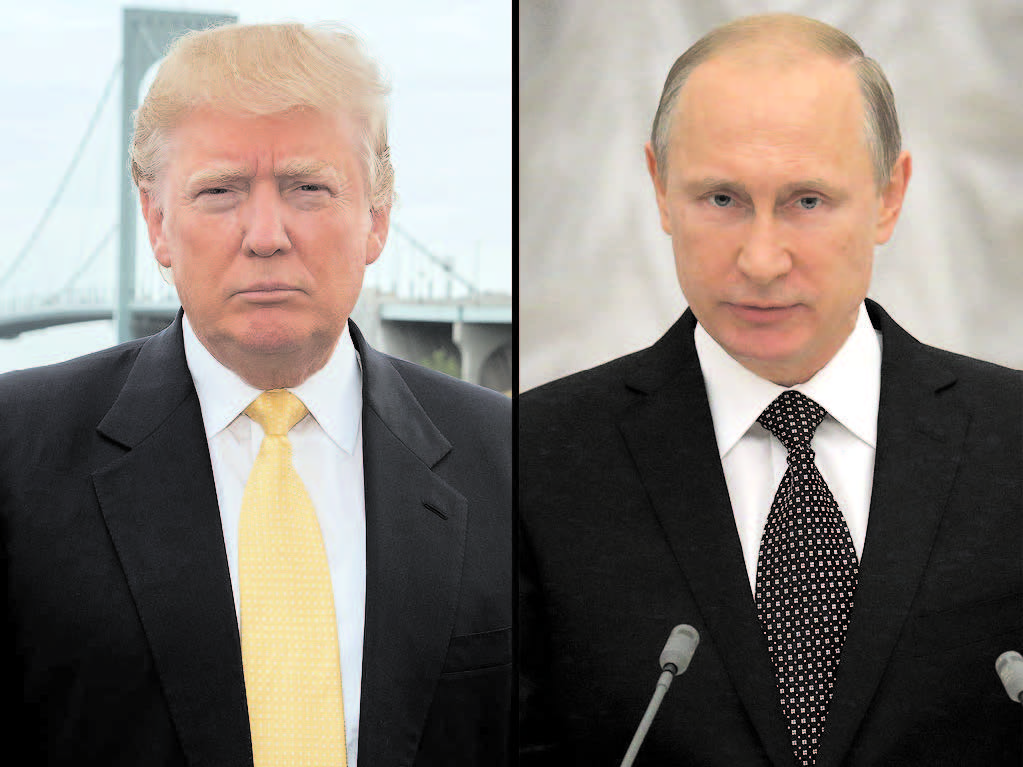
    THE SUM OF ALL FEARS – THE REAL DONALD TRUMP AND RUSSIA’s PUTIN

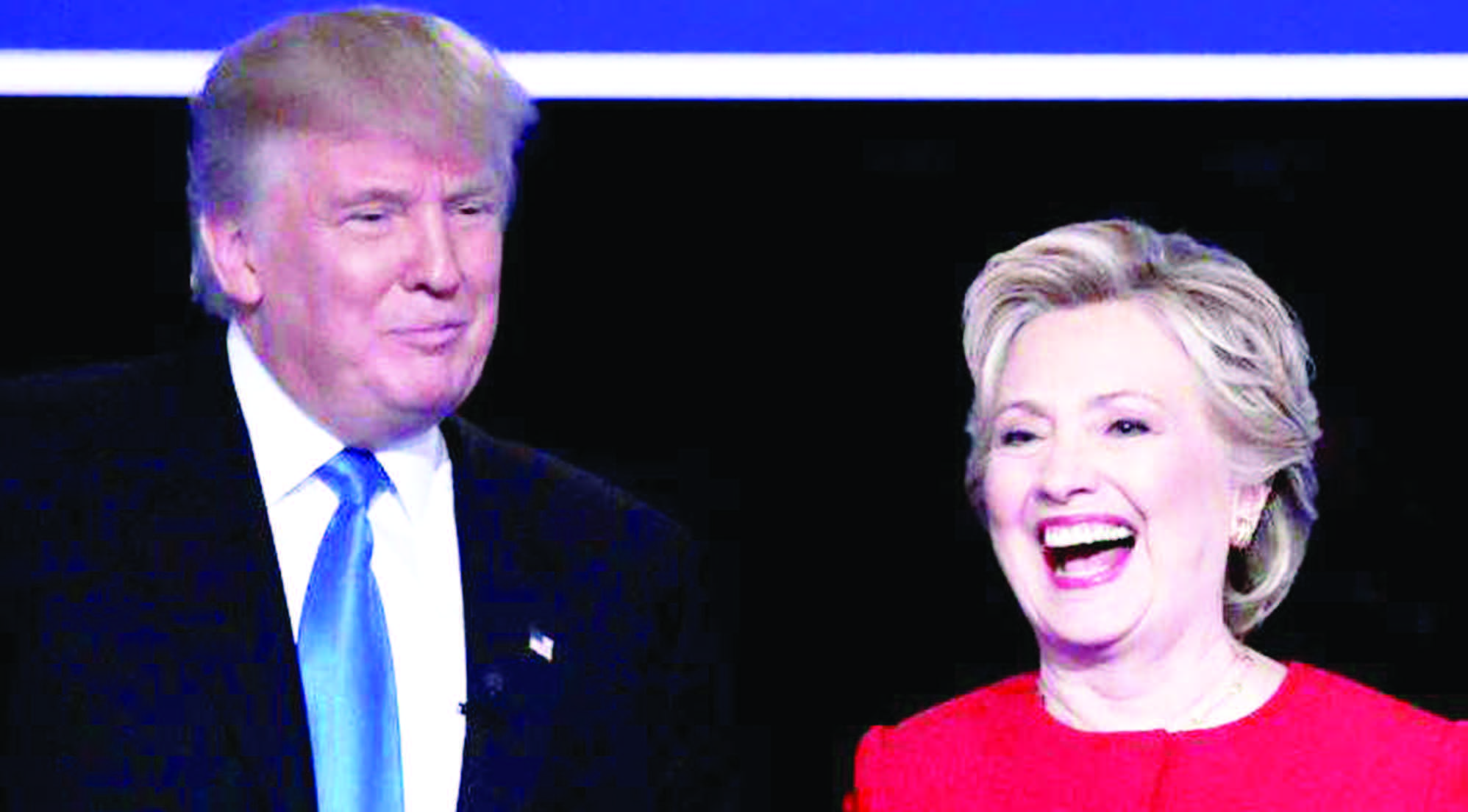
    The undeserving Donald Trump pretty just keeps on proving to America that his presidency was just going to be a pathetic continuation of his presidential campaign, squashing all hopes that he might suddenly come to his senses and start acting like a responsible adult who must now lead a country.

    Donald Trump’s weird relationship with Russia has been problematic and suspicious from the beginning of his presidential campaign.

    Read more about Trump’s Russia Ties

    Never before had we seen a President praising a leader of another country like the way Trump gushed about Russian leader Vladimir Putin or admitting that our country the United States of America is not no innocent.

    Trump continued effort to defend Russia as reports of the country’s interference in the U.S. election started to be released. There were red flags everywhere, and they continue to pop up again and again while Trump continuously tried to distract Americans from it with his Twitter temper tantrums about “fake news.”

    Another concerning report has just been released by CNN, and this makes Trump and his team look even more suspicious than before.

    Apparently, the White House has requested that the FBI “publicly knock down media reports about communications between Donald Trump’s associates and Russians known to US intelligence during the 2016 presidential campaign.”

    The report states: “White House officials had sought the help of the bureau and other agencies investigating the Russia matter to say that the reports were wrong and that there had been no contacts, the officials said. The reports of the contacts were first published by The New York Times and CNN on February 14.

    That certainly sounds shady – and the FBI knows it.

    According to the report, the FBI shot down the White House’s request and said no.

    For Trump’s team to be contacting the FBI directly is highly unusual due to “decade-old restrictions on such contacts”, according to CNN, and we should definitely be paying attention.

    Clearly, the Trump administration is extremely worried about what might be uncovered and wanted to take the focus off Trump’s ties with Russia by asking the FBI for this ridiculous favor.


    Read More

  • What to expect from President Donald Trump’s first 100 Days in Office

    What to expect from President Donald Trump’s first 100 Days in Office

    As the 2016US Presidential Election’s long & divisive campaign is over, attention turns to President-elect Donald Trump’s agenda.

    All eyes will be on what goals Trump’s administration will set at the top of its list and what it will accomplish.

    What the president-elect didn’t address in his victory speech was immigration.

    “To all Republicans and Democrats and independents across this nation, I say it is time for us to come together as one united people,” he told a cheering crowd in New York on Wednesday, Nov 09, in his victory speech.

    “It is time. I pledge to every citizen of our land that I will be president for all of Americans, and this is so important to me,” Trump added.

    Throughout the campaign, Trump boldly promised a whole list of goals which he will achieve in his first 100 days.

    Trump has promised to:

    o          Appoint judges “who will uphold the Constitution” and “defend the Second Amendment.”

    o          “Multibillion-dollar investment in the nation’s infrastructure.”

    Build a wall on the southern border and restrict immigration “to give unemployed Americans an opportunity to fill good-paying jobs.”


    “Stand up to countries that cheat on trade, of which there are many” and crack down on companies “that send jobs overseas.”

    o          “Repeal and replace job-killing Obamacare – it is a disaster.”

    o          Lift federal restrictions on energy production

    o          “Immediately suspend the admission of Syrian refugees.”

    o          “Order a review of every single regulation issued over the last eight years.”

    o          “Begin lifting all regulations that are hurting our workers and our businesses.”

    o          “Terminate every single unconstitutional executive order signed by President Obama.”


    ‘Drain the Swamp’

    In the subsequent 99 days, Trump has promised to “drain the swamp” – the campaign’s term for rooting out corruption in Washington. A major pledge of his is a “constitutional amendment to impose term limits on all members of Congress.” Representatives and senators may currently serve an unlimited number of two- and six-year terms, respectively.

    Additionally, Trump has proposed a law barring government officials from lobbying the government within five years of their service and prohibiting lobbying by those officials on behalf of foreign governments. He also said he will institute a hiring freeze to reduce the size of the federal government. Campaign finance reform would take the form of forbidding foreign lobbyists to raise money on behalf of campaigns in the U.S.

    Trade and Foreign Policy

    “We don’t win on trade” was a frequent refrain heard at Trump rallies, and in response, the real estate mogul has said he will renegotiate NAFTA and withdraw from the Trans-Pacific Partnership. He said he will direct his secretary of the treasury to pursue action against Chinese currency manipulation.

    Trump has said he will renegotiate the Iran nuclear deal, call a NATO summit to update the organization’s mission and rebalance members’ “financial commitments,” cancel payments to the United Nations’ climate-change programs and divert that money to domestic infrastructure improvement.

    The Republican has vowed to increase investment in the nation’s military and be “unpredictable” when it comes to fighting ISIS in the Middle East. On the campaign trail, he frequently criticized Obama for announcing military actions before their commencement.

    Taxes and Domestic Issues

    On taxes, Trump pledged “the biggest tax cut since Ronald Reagan.” The Economic Recovery Tax Act of 1981 and Tax Reform Act of 1986, passed during Reagan’s presidency, simplified the tax code and lowered marginal tax rates by more than 20 percent for most citizens. Trump indicated that he will seek to reduce tax brackets from seven to three and called for business tax rates to be reduced to 15 percent.

    In line with the “law and order candidate” label he assigned himself, Trump said he will increase police training programs and create a task force on violent crime. 

    Also Read the full text of the 100-day plan Trump’s campaign released in October, 2016.

  • DonaldTrump’s Scandals, Sexual Misconduct & More

    DonaldTrump’s Scandals, Sexual Misconduct & More

    Hillary Clinton has been fighting her sole scandal, the private email use for official purposes during her tenure as Secretary for State for the Obama government, but the sheer size of it keeps it from fading from public eye. As recent as 10 days back, FBI reopened examination into the emails.

    While FBI has given the go-ahead, will the public feel the same?

    Donald Trump on the other hand has been hit by a steady wave of scandals, majority of which are based on his brazen comments.

    Donald Trump’s sexual misconduct allegations

    A recent video leak of Trump boasting of sexually assaulting women put him in a tough spot as multiples allegations of sexual harassment came forward.

    American businessman Donald Trump, the Republican Party’s nominee for president in the 2016 election, has been accused of sexual assault and sexual harassment by at least fifteen women since the 1980s. Trump has denied the allegations, saying they are an example of media bias, conspiracy, and a political smear campaign.

    Trump has publicly stated that he intends to sue all of the women who have come forward and made allegations he either sexually assaulted or sexually harassed them.

    Several of these allegations preceded Trump’s candidacy for president; many more arose during that campaign, especially after his second debate with Democratic Party nominee Hillary Clinton on October 9, 2016.

    That debate was held two days after a 2005 recording was leaked in which Trump bragged about kissing and groping women, including grabbing them “by the pussy“; he said that because he was a celebrity, “they let you do it” and “I don’t even wait”.

    During the debate, Trump denied that his recorded comments described sexual assault and denied ever having inappropriately touched a woman. His denials prompted many of his accusers to go public with their allegations.

    Three women have filed lawsuits alleging that they were sexually assaulted by Trump. In addition to the three lawsuits, Trump has also been publicly accused of non-consensual kissing, or non-consensual groping of breasts, buttocks and genitalia, by at least twelve more women.

    Multiple accusations, primarily beginning in October 2016, claim that Trump entered dressing rooms of beauty pageant contestants in 1997, 2000, 2001, and 2006, while they were in various stages of undress, a practice that Trump admitted to during a 2005 interview on The Howard Stern Show. This practice allegedly extended to Miss Teen USA; several former participants in that pageant allege that Trump walked into the dressing rooms of girls as young as 15.donald-trump-rap-sheet

    The Non-sexual misconduct / scandals

    Using TRUMP FOUNDATION to settle

    Donald Trump was embroiled in legal trouble—a common situation for a developer and entertainer who loves to sue and is often sued himself. In this particular case, the city of Palm Beach, Florida, was demanding $120,000 from him for violating local ordinances by erecting an enormous flagpole.

    Trump, ever the master of the deal, cut one here, agreeing to donate $100,000 to a veteran’s charity in lieu of paying the fine. While Trump has on some occasions not followed through on promises to give to charity, this was not one of those cases. Instead, he had the Donald J. Trump Foundation make the gift. It was a neat trick, since the foundation was stocked almost entirely with other people’s money.

    That incident is one of several uncovered by Washington Post reporter David Fahrenthold in a long line of scoops about the Trump Foundation. In total, Fahrenthold found Trump had used $258,000 of foundation money—again, most of it from other people—to settle legal disputes. In another case, the foundation gave $158,000 to resolve a case involving a golf course.

    Separately, Fahrenthold found Trump had used money from the foundation to buy a portrait of himself and to buy advertisements for his hotel chain.

    Source : https://www.washingtonpost.com/politics/trump-used-258000-from-his-charity-to-settle-legal-problems/2016/09/20/adc88f9c-7d11-11e6-ac8e-cf8e0dd91dc7_story.html

    Fahrenthold adds, “More broadly, these cases also provide new evidence that Trump ran his charity in a way that may have violated U.S. tax law and gone against the moral conventions of philanthropy.”

    The attorney general of New York, Eric Schneiderman, announced last week he is also investigating the Trump Foundation. Schneiderman is a Democrat who has already been investigating the so-called Trump University, the real-estate seminars that former students have called a scam, and he has acquired a reputation for pursuing splashy investigations. Trump, for his part, has called Schneiderman a “total lowlife” and “a sleazebag.”

    The 2016 presidential election could be the most scandal-plagued match-up, on the Democratic side, Hillary Clinton is the nominee, bringing with her a train-car’s worth of baggage. But the Republican candidate is at least as saddled with controversy as Clinton is—and while many of the Clinton cases involve suspicion and shadowy links, many of Trump’s are fully documented in court cases and legal proceedings.

    The breadth of Trump’s controversies is truly huge, ranging from allegations of mafia ties to unscrupulous business dealings, and from racial discrimination to alleged marital rape. They stretch over more than four decades, from the mid-1970s to the present day.

    Below is a snapshot of some of the most interesting and largest of those scandals.

    The Beauty Pageant Scandals
    Where and when: Various, 1992-present

    Scandal 1 of many: After years of attending beauty pageants—Trump seems to have always enjoyed the company of beautiful, scantily clad women—he decided he wanted to get in on the business himself, meeting with George Houraney and Jill Harth, a couple that ran the American Dream pageant. It was an ill-fated effort. Harth and Houraney alleged that Trump started making passes at her almost immediately. On one occasion, Trump allegedly asked them to bring some models to a party. Harth alleges Trump groped her at the party. In a limo afterward, another model said she heard him say that “all women are bimbos” and most “gold diggers.” Trump reportedly joined another model in bed, uninvited, late at night. On other occasions, he forced Harth into bedrooms and made passes at her, she said. But after the contest, Trump broke off dealings. Harth sued Trump, alleging sexual misbehavior, while the couple together sued him for breach of contract. In the suit, they also alleged that Trump had kept black women out of the pageant.

    The escape: The couple settled with Trump for an unannounced sum, and Harth dropped her suit. Trump has denied all the allegations. But it wasn’t Trump’s last turn in the pageant business.

    A few years later, he bought the Miss Universe pageant, which also includes Miss USA and Miss Teen USA. “Honestly, when I bought [Miss Universe], the bathing suits got smaller and the heels got higher and the ratings went up,” he boasted to Vanity Fair later. In 2012, he won a $5 million suit against a former contestant who claimed the contest was rigged. By 2015, he operated Miss Universe as a joint venture with NBC, but after he slurred Mexican immigrants at his campaign launch, Univision and NBC both announced they would not air the pageant. Trump bought out NBC’s share, then promptly sold the company. He sued Univision but settled in February. The terms were undisclosed.

    Read full story on : The Boston Globe, Vanity Fair

    Racial Housing Discrimination
    Where and when: New York City, 1973-1975

    Scandal 2 of many: The Department of Justice sued Trump and his father Fred in 1973 for housing discrimination at 39 sites around New York. “The government contended that Trump Management had refused to rent or negotiate rentals ‘because of race and color,’” The New York Times reported. “It also charged that the company had required different rental terms and conditions because of race and that it had misrepresented to blacks that apartments were not available.” Trump called the accusations “absolutely ridiculous.”

    The Escape: The Trumps hired attorney Roy Cohn, who had worked for Joe McCarthy and whom Michael Kinsley once indelibly labeled “innocent of a variety of federal crimes.” They sued the Justice Department for $100 million. In the end, however, the Trumps settled with the government, promising not to discriminate and submitting to regular review by the New York Urban League—though crucially not admitting guilt. The Times has much more on the long history of allegations at Trump-owned properties

    Read more: The New York Times, The Washington Post, The New York Times

    Mafia Ties
    Where and when: New York and Atlantic City, 1970s- ?

    Scandal 3 of many: Trump has been linked to the mafia many times over the years, with varying degrees of closeness. Many of the connections seem to be the sorts of interactions with mobsters that were inevitable for a guy in the construction and casino businesses at the time.

    For example, organized crime controlled the 1980s New York City concrete business, so that anyone building in the city likely brushed up against it. While Trump has portrayed himself as an unwitting participant, not everyone agrees. There have been a string of other allegations, too, many reported by investigative journalist Wayne Barrett. Cohn, Trump’s lawyer, also represented the Genovese crime family boss Tony Salerno. Barrett also reported a series of transactions involving organized crime, and alleged that Trump paid twice market rate to a mob figure for the land under Trump Plaza in Atlantic City. Michael Isikoff has also reported that Trump was close to Robert LiButti, an associate of John Gotti, inviting him on his yacht and helicopter. In one case, Trump’s company bought LiButti nine luxury cars.

    The Escape: Though Trump has been questioned in court or under oath about the ties, he’s never been convicted of anything. A New Jersey Division of Gaming Enforcement report after Barrett’s 1992 book on Trump generally found no mafia-related wrong-doing on Trump’s part. Trump Plaza was fined $200,000 for keeping black employees away from LiButti’s table, at his behest, and for the gift of the cars, though Trump personally was not penalized.

    Read more: Wayne Barrett, Michael Isikoff, Time, Yahoo, David Cay Johnston

    Trump University
    Where and when: 2005-2010, online

    Scandal 4 of many: In 2005, the Trump announced an eponymous “university” to teach his real-estate development secrets. Students ponied up as much as $35,000—some after being suckered in by slick free “seminars”—to learn how to get rich. One ad promised they would “learn from Donald Trump’s handpicked instructors, and that participants would have access to Trump’s real estate ‘secrets.’” In fact, Trump had little to do with the curriculum or the instructors. Many of the “students” have since complained that Trump U. was a scam. At one time, it had some prestigious instructors, but over time the “faculty” became a motley bunch of misfits. (It was also never really a “university” by any definition, and it changed its name to the “Trump Entrepreneur Initiative,” because as it happened, the school was violating New York law by operating without an educational license.)

    The Escape: The school shut down in 2010, but the litigation continues. New York is suing Trump, alleging the Trump U. bilked students out of $40 million. He’s also the subject of two class-action suits in California. Meanwhile, Trump appears to have been trying to intimidate plaintiffs, including countersuing one for $1 million (a favorite Trump litigation tactic) and refusing to let her withdraw from the suit. (The countersuit was thrown out.) His lawyers have cited positive reviews, but former students say they were pressured to give those. A set of damning internal documents were released by court order in May. Trump decided to attack the judge, claiming his ethnicity made him biased. Trump has been widely repudiated across the board, with fellow Republicans openly calling him racist.

    Read more: Tom McNichol, Steven Brill, National Review, Matt Ford

    Tenant Intimidation
    Where and when: New York City, 1982-1986

    Scandal 5 of many: In 1981, Trump scooped up a building on Central Park South, reasoning that the existing structure was a dump, but the land it was on would be a great place for luxury condos. Trump’s problem was that the existing tenants were—understandably and predictably—unwilling to let go of their rent-controlled apartments on Central Park. Trump used every trick in the book to get them out. He tried to reverse exceptions the previous landlord had given to knock down walls, threatening eviction. Tenants said he cut off heat and hot water. Building management refused to make repairs; two tenants swore in court that mushrooms grew on their carpet from a leak. Perhaps Trump’s most outlandish move was to place newspaper ads offering to house homeless New Yorkers in empty units—since, as Trump wrote in The Art of the Deal, he didn’t intend to fill units with permanent residents anyway. City officials turned him down, saying the idea did not seem appropriate. Typically, Trump also sued tenants for $150 million when they complained.

    The Escape: Trump gave in. He settled with tenants and agreed to monitoring. The building still stands today, and his son Eric owns a unit on the top floor.

    Read more: Trump himself, CNN Money, The Washington Post

    The Four Bankruptcies
    Where and when: 1991, 1992, 2004, 2009

    Scandal 6 of many:: Four times in his career, Trump’s companies have entered bankruptcy.

    • In the late 1980s, after insisting that his major qualification to build a new casino in Atlantic City was that he wouldn’t need to use junk bonds, Trump used junk bonds to build Trump Taj Mahal. He built the casino, but couldn’t keep up with interest payments, so his company declared bankruptcy in 1991. He had to sell his yacht, his airline, and half his ownership in the casino.
    • A year later, another of Trump’s Atlantic City casinos, the Trump Plaza, went bust after losing more than $550 million. Trump gave up his stake but otherwise insulated himself personally from losses, and managed to keep his CEO title, even though he surrendered any salary or role in day-to-day operations. By the time all was said and done, he had some $900 million in personal debt.
    • Trump bounced back over the following decade, but by 2004, Trump Hotels and Casino Resorts was $1.8 billion in debt. The company filed for bankruptcy and emerged as Trump Entertainment Resorts. Trump himself was the chairman of the new company, but he no longer had a controlling stake in it.
    • Five years later, after the real-estate collapse, Trump Entertainment Resorts once again went bankrupt. Trump resigned from the board, but the company retained his name. In 2014, he successfully sued to take his name off the company and its casinos—one of which had already closed, and the other of which was near closing.

    The Escape: Trump is very touchy about any implication that he personally declared bankruptcy, arguing—just as he explains away his campaign contributions to Democrats—that he’s just playing the game: “We’ll have the company. We’ll throw it into a chapter. We’ll negotiate with the banks. We’ll make a fantastic deal. We’ll use those. But they were never personal. This is nothing personal. You know, it’s like on The Apprentice. It’s not personal. It’s just business. Okay? If you look at our greatest people, Carl Icahn with TWA and so many others. Leon Black, Linens-n-Things and others. Henry Kravis. A lot of ‘em, everybody. But with me it’s ‘Oh, you did—’ this is a business thing. I’ve used the laws of this country to pare debt.”

    Read more: The Washington Post, William Cohan

    The Undocumented Polish Workers
    Where and when: New York City, 1980

    Scandal 7 of many: In order to construct his signature Trump Tower, the builder first had to demolish the Bonwit Teller store, an architecturally beloved Art Deco edifice. The work had to be done fast, and so managers hired 200 undocumented Polish workers to tear it down, paying them substandard wages for backbreaking work—$5 per hour, when they were paid at all. The workers didn’t wear hard hats and often slept at the site. When the workers complained about their back pay, they were allegedly threatened with deportation. Trump said he was unaware that illegal immigrants were working at the site.

    The Escape: In 1991, a federal judge found Trump and other defendants guilty of conspiring to avoid paying union pension and welfare contributions for the workers. The decision was appealed, with partial victories for both sides, and ultimately settled privately in 1999. In a February GOP debate, Marco Rubio brought up the story to accuse Trump of hypocrisy in his stance on illegal immigration. Meanwhile, Massimo Calabresi shows that testimony under oath shows Trump was aware of illegal immigrants being employed there.

    Read more: Michael Daly, The New York Times, Time

    Alleged Marital Rape
    Where and when: New York City, 1989

    Scandal 8 of many: While married to Ivana Trump, Donald Trump became angry at her—according to a book by Harry Hurt, over a painful scalp-reduction surgery—and allegedly forcibly had sex with her. Ivana Trump said during a deposition in their divorce case that she “felt violated” and that her husband had raped her. Later, Ivana Trump released a statement saying: “During a deposition given by me in connection with my matrimonial case, I stated that my husband had raped me. [O]n one occasion during 1989, Mr. Trump and I had marital relations in which he behaved very differently toward me than he had during our marriage. As a woman, I felt violated, as the love and tenderness, which he normally exhibited towards me, was absent. I referred to this as a ‘rape,’ but I do not want my words to be interpreted in a literal or criminal sense.”

    The Escape: When The Daily Beast reported on the incident, Trump’s right-hand man Michael Cohen threatened reporters and claimed—incorrectly—that a man cannot legally rape his wife. The case is one of several cases where Trump has been accused of misogyny, including his comments about Megyn Kelly early in the primary campaign or his fury at a lawyer who, during a deposition, asked for a break to pump breast milk. “You’re disgusting,” Trump said, and walked out. (Wayne Barrett collects some lowlights here.)

    Read more: The Daily Beast

    Breaking Casino Rules
    Where and when: New York and New Jersey, various

    Scandal 9 of many: Trump has been repeatedly fined for breaking rules related to his operation of casinos. In 1990, with Trump Taj Mahal in trouble, Trump’s father Fred strolled in and bought 700 chips worth a total of $3.5 million. The purchase helped the casino pay debt that was due, but because Fred Trump had no plans to gamble, the New Jersey gaming commission ruled that it was a loan that violated operating rules. Trump paid a $30,000 fine; in the end, the loan didn’t prevent a bankruptcy the following year. As noted above, New Jersey also fined Trump $200,000 for arranging to keep black employees away from mafioso Robert LiButti’s gambling table. In 1991, the Casino Control Commission fined Trump’s company another $450,000 for buying LiButti nine luxury cars. And in 2000, Trump was fined $250,000 for breaking New York state law in lobbying to prevent an Indian casino from opening in the Catskills, for fear it would compete against his Atlantic City casinos.

    The Escape: Trump admitted no wrongdoing in the New York case. He’s now out of the casino business.

    Antitrust Violations
    Where and when: New Jersey, 1986

    Scandal 10 of many: In 1986, Trump decided he wanted to expand his casino empire in Atlantic City. His plan was to mount a hostile takeover of two casino companies, Holiday and Bally. Trump started buying up stock in the companies with an eye toward gaining control. But Bally realized what was going on and sued him for antitrust violations. “Trump hopes to wrest control of Bally from its public shareholders without paying them the control premium they otherwise could command had they been adequately informed of Trump’s intentions,” the company argued.

    The Escape: Trump gave up the attempt in 1987, but the Federal Trade Commission fined him $750,000 for failing to disclose his purchases of stock in the two companies, which exceeded minimum disclosure levels.

    Condo Hotel Shenanigans
    Where and when: New York, Florida, Mexico, mid-2000s

    Scandal 11 of many: Trump was heavily involved in condo hotels, a pre-real-estate crash fixation in which people would buy units that they’d only use for a portion of the year. The rest of the time, the units would be rented out as hotel rooms, with the developer and the owner sharing the profit. For a variety of reasons, condo hotels turned out to be a terrible idea. The result has been a slew of lawsuits by condo buyers who claim they were bilked. Central to many of these is the question of what Trump’s role in the projects was. In recent years, Trump has often essentially sold his name rights to developers—he gets a payoff, and they get the aura of luxury his name imparts. But in some of the condo-hotel suits, buyers complain that they bought the properties as investments because of his imprimatur, only to realize he was barely involved. (Similar complaints have been made about his involvement in a multilevel marketing scheme.)

    The Escape: In the case of Trump SoHo, in Manhattan, Trump’s partners turned out to have a lengthy criminal past. Trump said he didn’t know that, but—atypically—settled a lawsuit with buyers (while, typically, not admitting any wrongdoing). Another, Trump International Hotel & Tower Fort Lauderdale, went into foreclosure, and Trump has sued the complex’s developer. In 2013, he settled a suit with prospective buyers who lost millions when a development in Baja Mexico went under. Trump blamed the developers again, saying he had only licensed his name.

    Read more: Los Angeles Times, The New York Times, ibid., The Wall Street Journal

    Corey Lewandowski
    Where and when: Jupiter, Florida, 2016

    Scandal 12 of many: Trump picked Corey Lewandowski to manage his campaign, despite a relatively short resume. For a long time, that seemed to work well for both—Trump soared to the lead in GOP polls. But Lewandowski hit a rough patch in early March. As Breitbart reporter Michelle Fields tried to ask Trump a question after a press conference, Lewandowski reached out and wrenched her out of the way. Lewandowski and Trump insisted the incident had never happened and that Fields was “delusional,” even though witnesses attested to having seen it.

    The Escape: Surveillance footage acquired by Jupiter Police from Trump National, site of the press conference, clearly showed what had happened. Lewandowski was arrested for battery, but the prosecutor opted not to press charges. Trump has said he may have been the one in danger, since Fields’s pen could have been a bomb.

    Suing Journalist Tim O’Brien for Libel
    Where and when: New York City, 2006-2009

    Scandal 13 of many: In 2005, then-New York Times reporter Tim O’Brien published the book TrumpNation, in which he reported that Trump was actually only worth $150-250 million, not the billions he claimed. Trump, incensed, sued O’Brien for $5 billion. (That’s one way to become a billionaire.)

    The Escape: Trump’s suit against O’Brien was tossed. More recently, O’Brien has mocked Trump’s current claims about his net worth. Trump, meanwhile, has said on the campaign trail—and, mindblowingly, in an interview with the Washington Post editorial board—that he wants to make it easier to sue for libel. The Post combed through Trump’s deposition in the case and found 30 instances where Trump admitted to having lied.

    Read more: O’Brien’s original report, O’Brien in 2015, William Cohan, The Washington Posthttps://www.washingtonpost.com/graphics/politics/2016-election/trump-lies/

    Refusing to Pay Workers and Contractors
    Where and when: various, 1980s-present

    Scandal 14 of many: Contractors, waiters, dishwashers, and plumbers who have worked at Trump projects say that his company stiffed them for work, refusing to pay for services rendered. USA Today did a lengthy review, finding that some of those contracts were for hundreds of thousands of dollars, many owed to small businesses that failed or struggled to continue because of unpaid bills. (Trump was also found to have improperly withheld compensation in the undocumented Polish worker controversy.)

    The Escape: Trump has offered various excuses, including shoddy workmanship, but the scale of the problem—hundreds of allegations—makes that hard to credit. In some cases, even the lawyers Trump has hired to defend him have sued him for failing to pony up their fees. In one lawsuit, a Trump employee admitted in court that a painter was stiffed because managers determined they had “already paid enough.” The cases are damaging because they show Trump not driving a hard bargain with other businesses, but harming ordinary, hard-working Americans.

    Read more: USA Today, The Wall Street Journal

    Trump Institute
    Where and when: Boca Raton and elsewhere, 2005-?

    Scandal 15 of many: Around the same time Donald Trump was operating Trump University, the allegedly fraudulent real-estate seminar for which he’s now being sued, he also franchised his name to Irene and Mike Milin, serial operators of get-rich-quick schemes. Unlike Trump U., Trump did not own the company. Instead, he licensed his name, appearing in an informercial and promising falsely that he would hand-pick instructors. (He made a similar promise with Trump U.) As Jonathan Martin reports, the course materials at Trump Institute consisted in part of textbooks that were plagiarized.

    The Escape: The Milins were forced to declare bankruptcy in 2008, in part because of the law-enforcement investigations and lawsuits against their company. Trump Institute continued on for a few years afterwards. A Trump aide says he was unaware of the plagiarism, but said he stood by the curriculum.

    Read more: The New York Times, Ars Technica, The Daily Beast

    Buying Up His Own Books
    Where and when: various, 2016

    Scandal 16 of many: The Daily Beast noticed in FEC filings that the Trump campaign spent more than $55,000 buying his own book Crippled America: How to Make America Great Again. (The book has since been retitled Great Again: How to Fix Our Crippled America for the paperback edition.) That means Trump used donor money to his campaign to buy a book, sending the cash back to himself. Copies were given to delegates at the Republican National Convention.

    The Escape: The maneuver could break FEC rules, campaign expert Paul S. Ryan told the Beast: “It’s fine for a candidate’s book to be purchased by his committee, but it’s impermissible to receive royalties from the publisher… There’s a well established precedent from the FEC that funds from the campaign account can’t end up in your own pocket.” The Huffington Post also noticed that Trump jacked up rent for campaign offices when he stopped funding his own campaign.

    Read more: The Daily Beast

    Undocumented Models
    Where and when: New York, 1999-?

    Scandal 17 of many: Former models who worked for Trump Model Management say that they and others worked for the agency in the United States despite not having proper permits. Some of them worked on tourist visas, either never getting the correct permits or else getting them only after working in the U.S. illegally for months.

    The Escape: The story is embarrassing for Trump, who has argued that U.S. immigration laws should be much more strictly enforced. Some models also received H-1B visas, a special type of permit for workers in specialized industries—a program that Trump has criticized on the campaign trail this year.

    Read more: Mother Jones

    The Trump Foundation
    Where and when: Various, 1988-present

    Scandal 18 of many: Though Donald Trump often promises to give to charity, his foundation has proven rather skimpy on the gifts over the years—and when it has given, the money has often come from other pockets than Trump’s, including outside donors and even NBC. In the mid-2000s, Trump reconfigured the charity as a pass-through, soliciting donations from other and then giving the money away as though from himself. In a few cases, the foundation also reported making donations it had not made. There’s special scrutiny on one $25,000 donation it did give, to a group supporting Florida Attorney General Pam Bondi, which arrived just days before she quashed an investigation into Trump University and the Trump Institute. Trump also appears to have used $258,000 in foundation money, most of it given by other donors and not himself, to settle legal disputes, including donations to charity in lieu of paying fines.

    The Escape: The foundation may have broken IRS rules on “self-dealing” by paying to resolve the legal disputes as well as buying a portrait of Trump and a Tim Tebow helmet that went back to the Trump family. On the donation, Trump and Bondi both say there was no quid-pro-quo, but the donation was an illegal one for a charitable nonprofit, and the foundation had to pay a $2,500 fine. Liberal watchdog group Citizens for Responsibility and Ethics in Washington charges other laws may have been broken as well. New York Attorney General Eric Schneiderman has reportedly launched an investigation into the foundation.

    Read more: David Fahrenthold (several times over), me, The New York Times, Fahrenthold, Fahrenthold, Fahrenthold

  • INDIAN ORIGIN SENIOR EXECUTIVES QUIT TWITTER

    INDIAN ORIGIN SENIOR EXECUTIVES QUIT TWITTER

    BENGALURU (TIP): Southeast Asia and MENA (Middle East and North Africa)’s top Indian-Origin boss Parminder Singh has called it quits as the managing director for the region barely days after @twitter’s India head Rishi Jaitly announced he is leaving. Parminder Singh had joined Twitter in November 2013. Prior to this he was Managing Director for Display Solution Sales for APAC region at Google. At Twitter, Singh led Twitter’s business in Southeast Asia, India and Middle East and North Africa.

    Singh’s departure follows the resignation of Rishi Jaitly, the Vice President of Media for Asia Pacific & Middle East North Africa at Twitter.

    In July, Shailesh Rao, VP of Asia Pacific, Latin America & Emerging Markets at Twitter also quit the company.

    Top level departures from Twitter’s India team comes weeks after people from its Bengaluru developer center were let go, most of whom belonged to ZipDial, an Indian startup Twitter had acquired.

    At its quarterly earnings call last week, CEO Jack Dorsey announced that the company would lay off 9 percent of its staff globally
    At its quarterly earnings call last week, CEO Jack Dorsey announced that the company would lay off 9 percent of its staff globally

    Karen Stocks, the MD of Twitter Australia announced last week she was leaving the company as well.

  • Indian American neuroscientist in the forefront of research in autism, addiction and Alzheimer’s disease

    Indian American neuroscientist in the forefront of research in autism, addiction and Alzheimer’s disease

    NASHVILLE, TENNESSEEN (TIP): Three Vanderbilt University neuroscientists including an Indian American are on the forefront of research in autism, addiction and Alzheimer’s disease and will discuss their cutting-edge investigations during the next Flexner Discovery Lecture on Thursday, Nov. 3 as per media reports.

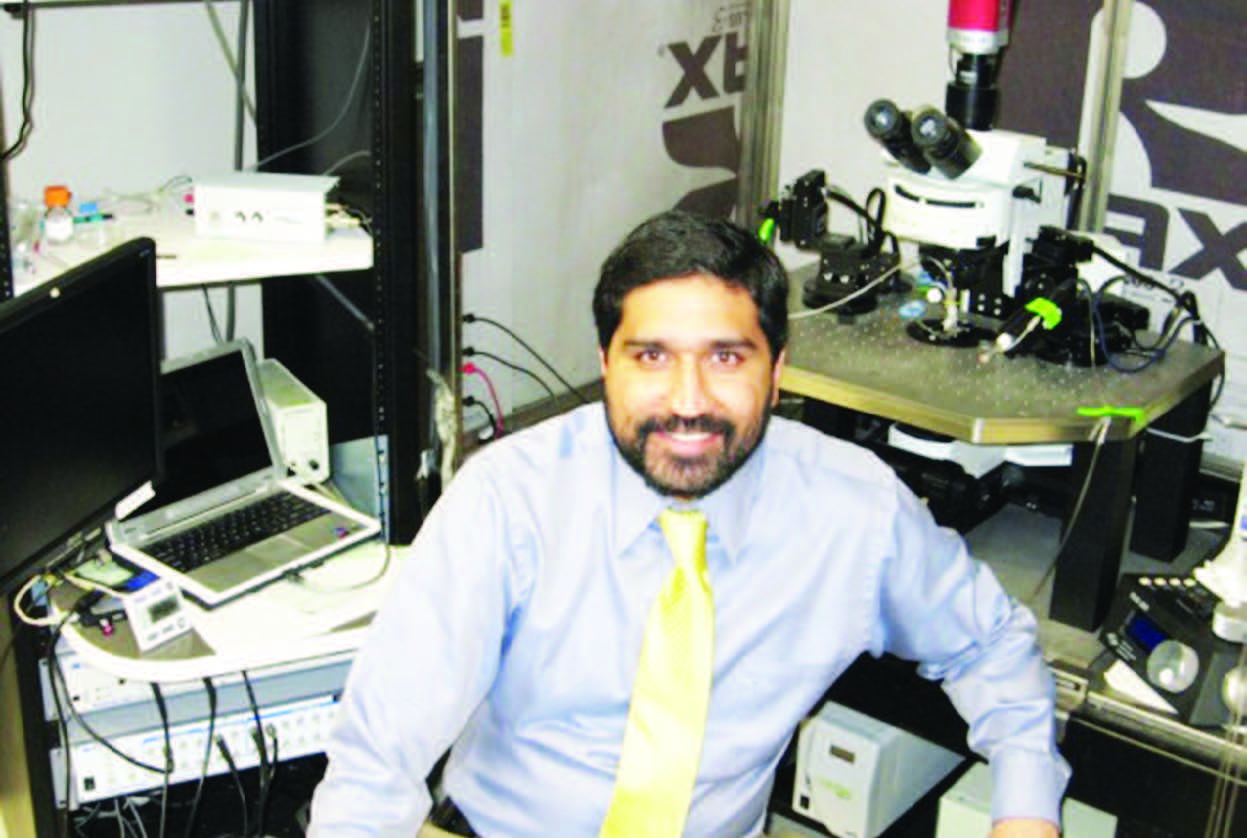
    Dr. Sachin Patel, M.D., Ph.D. is Professor of Psychiatry and director of the Division of Addiction Psychiatry who along with Laura Dugan, M.D. & Mark Wallace, Ph.D. will present their discussion titled “Translational Neuroscience Research at Vanderbilt: Mechanisms and Targets for Brain Disorders.”

    The Flexner Discovery Lecture Series were launched by Vanderbilt University Medical Center and featured some of the world’s most eminent scientists, who speak on the highest-impact research and policy issues in science and medicine.

    Patel, a 2016 recipient of a Presidential Early Career Award for Scientists and Engineers, studies the response of endocannabinoid signaling to stress, with the goal of better understanding the pathophysiology of stress-related neuropsychiatric disorders including depression, addiction and post-traumatic stress disorder.

    For a complete schedule of the Flexner Discovery Lecture series and archived video of previous lectures, go to www.mc.vanderbilt.edu/discoveryseries.

  • Hillary Clinton leads in National Polls

    Hillary Clinton leads in National Polls

    WASHINGTON (TIP): Hillary Clinton has built a formidable lead over Donald Trump in terms of opinion poll’s percentage points, but, poll numbers are swinging in Battleground states as Nevada and Florida change status back to “battleground” from “lean Democratic” and now maintain their traditional toss-up status.

    Leaving the battleground states undecided for now, CNN’s electoral outlook has Clinton at 272 electoral votes from states either solidly or leaning in her direction. Trump has a total of 179 electoral votes from the states either solidly or leaning in his direction. 87 electoral votes currently up for grabs in the battleground states will decide this head to head race regardless of what Opinion Polls suggest – remember opinion polls generally tend to have a sample size of about 1,000 people or more and can track movement and general opinion well.

    But the US election is won and lost in swing states and decided by the electoral college system.

    ratingThis means that polls in states that look like they could vote for either candidate play an integral role in election projections.

    As on October 27, most polls here in the US and in UK speak of Clinton’s lead, and a comfortable one, over Trump.

    The Upshot gives Hillary Clinton, the Democratic nominee for president, a 92 percent chance of winning, compared to Republican candidate Donald Trump’s 8 percent. While Trump could still win, The Upshot says: “Mrs. Clinton’s chance of losing is about the same as the probability that an N.F.L. kicker misses a 31-yard field goal.” According to The Upshot, the chance of Clinton winning the election has increased steadily since the beginning of the month: On October 1, Clinton had a 76 percent chance of winning compared to Trump’s 24 percent.

    On October 26th night, FiveThirtyEight ‘s Nate Silver wrote that Trump has “probably narrowed his deficit against Clinton,” but by too little to see any major shift. FiveThirtyEight ‘s election forecast on October 27 predicted that, nationally, Clinton will take 84.4 percent of the vote to Trump’s 15.6 percent. Meanwhile, 46 percent of voters in a YouGov poll published October 27 said they intend to vote for Clinton, while 41 percent said they will cast their vote for Trump.

    Real Clear Politics had Clinton leading Trump by 5.4 points on Thursday, a slight dip from the same time a week ago, when she was up by 6.1 points. The average from Thursday’s polls had Clinton with 48.6 percent support and Trump with 42.7 percent.

    Outlier of The Day: Evan McMullin! According to a SurveyMonkey poll from Utah published on October 27, 29 percent of voters say they will choose McMullin, a conservative independent candidate, the same percentage who say they intend to vote for Clinton. Trump is ahead in Utah by a narrow margin, at 32 percent. McMullin, who is Mormon, has polled highly in the state, where he’s seen as a viable alternative to the brashness and unpredictability of Trump.

    map

    Solid Republican:

    Alabama (9), Alaska (3), Arkansas (6), Idaho (4), Indiana (11), Kansas (6), Kentucky (8), Louisiana (8), Mississippi (6), Missouri (10), Montana (3), Nebraska (4), North Dakota (3), Oklahoma (7), South Carolina (9), South Dakota (3), Tennessee (11), Texas (38), West Virginia (5), Wyoming (3) (157 total)

    Leans Republican:Georgia (16), Iowa (6), (22 total)


    Battleground states:

    Arizona (11), Florida (29), Nevada (6), Ohio (18), Maine 2nd Congressional District (1) Nebraska 2nd Congressional District (1), North Carolina (15), Utah (6) (87 total)

    Leans Democratic:

    Colorado (9), Michigan (16), New Hampshire (4), Pennsylvania (20), Virginia (13), Wisconsin (10), (72 total)

    Solid Democratic:

    California (55), Connecticut (7), Delaware (3), DC (3), Hawaii (4), Illinois (20), Maine (3), Maryland (10), Massachusetts (11), New Jersey (14), New York (29), Oregon (7), Rhode Island (4), Vermont (3), Washington (12), Minnesota (10), New Mexico (5) (200 total)

  • Donald Trump and ‘Official Racism’ era in politics

    Donald Trump and ‘Official Racism’ era in politics

    The Republican Party and the “conservative establishment” do not disagree with Trump’s racism, xenophobia, prejudice and bigotry toward Hispanic and Latino immigrants, non-whites, Muslims and women. They are just embarrassed and aghast that Donald Trump has dropped the mask of racist gentility and exposed the racist id of today’s Republican Party and movement conservatism for the world to see.

    Republican Party elites are nervous about Donald Trump because he has taken their “polite” “dog whistle” racism and replaced it with a loud speaker.


    Donald Trump

    As the world looks on askance at the freakishness of the US presidential election, it is worth bearing in mind that a large number of Americans feel much the same sense of unease.

    To outside eyes, the rise of Donald Trump especially looks like the ultimate “Only in America” story, but many of his compatriots wish it was a “Not in America” phenomenon.

    For all the billionaire’s dominance in the Republican race, for all the free airtime lavished upon him by the media, polls repeatedly suggest that he is the most unpopular presidential candidate in modern history.

    A recent survey conducted for the Washington Post and ABC News showed that 67% of voters have an unfavorable view of him.

    What’s also striking about the polling data is that the more exposure the billionaire gets, the higher his negatives soar, whether it is women angered by his misogyny, Latinos upset by his racial demagoguery, African-Americans who don’t take kindly to being called “the blacks” or fellow Republicans who believe he will lead their party off a cliff.

    Donald Trump is the preferred candidate of white supremacists. Online and in other spaces, they have anointed him their champion in the 2016 presidential race.

    [inlinetweet prefix=”” tweeter=”” suffix=””]

    Trump & KKK (David Duke) Connection, that he knows nothing about…


    [/inlinetweet]

    LIAR LIAR – “Just so you understand, I don’t know anything about David Duke, OK?” Trump said. Trump was pressed three times on whether he’d distance himself from the Ku Klux Klan — but never mentioned the group in his answers.

    “I don’t know anything about what you’re even talking about with white supremacy or white supremacists,” he said. “So I don’t know. I don’t know — did he endorse me, or what’s going on? Because I know nothing about David Duke; I know nothing about white supremacists…”

    Despite what he said, Trump apparently did know Duke in 2000 — citing him, as well as Pat Buchanan and Lenora Fulani — in a statement that year explaining why he had decided to end his brief flirtation with a Reform Party presidential campaign.

    “The Reform Party now includes a Klansman, Mr. Duke, a neo-Nazi, Mr. Buchanan, and a communist, Ms. Fulani. This is not the company I wish to keep,” Trump said in a statement reported then by The New York Times. …

    Politics is not about people but about parties and their ideology; political parties are a type of “brand name” that voters associate with a specific set of policies, ideas, personalities and moral values. Consequently, the types of voters who are attracted to a given political party also tells us a great deal about how it is perceived by the public. And in a democracy, the relationship between voters, elected officials and a given political party should ideally be reflected by the types of policies the latter advances in order to both win and stay in power.

    By these criteria, the post-civil rights era Republican Party is the United States’ largest white identity organization, one in which conservatism and racism are now one and the same thing.

    In the 2012 election, 89 percent of Republican voters were white. While the Republican Party routinely anoints a professional “best black friend” (Herman Cain in 2012; Ben Carson in 2016; Republican National Committee chairman Michael Steele in 2009) who serves in the role as human chaff to deflect charges of racism, non-whites are a minuscule part of the GOP’s electoral coalition and base. This is reflected by how Republican voters are much more likely to be racially resentful toward black Americans and also manifest what is known as “modern” or “symbolic racism.”

    Even more troubling, research by Brown University political scientist Michael Tesler demonstrates that “old-fashioned racism” has actually increased among Republican voters since the election of Barack Obama.

    New Tactics but same old agenda – Birth of The Southern Strategy

    The Southern Strategy, with its mix of coded and overt anti-black and brown racism, is a script that is closely adhered to by the broader right-wing news entertainment propaganda machine.

    The Southern Strategy was desperately deployed against the United States’ first black president, Barack Obama. From “birtherism” to claims that Obama is “traitor” who “hates Americans,” the rampant disrespect and obstructionism that Republicans have shown toward him, as well as the panoply of both overt and subtle racist attacks by conservatives against Obama’s person (and family) are all outgrowths of the Southern Strategy.

    The Age of Obama also gave rise to the Tea Party movement. As an extreme wing within an already extremist and revanchist Republican Party, Tea Party members and their sympathizers were/are extremely hostile to Barack Obama and the symbolic power of a black man leading “their” White America. The Tea Party demand that “they want their country back” is both a direct claim of white privilege and constitutes a worldview where whiteness is taken to be synonymous with being a “real American.”

    Not all Republicans are racists. But racists are more likely to be Republicans.

    Donald Trump knows this to be true. He has built a political campaign around that fact.

    Ultimately, Republican Party elites are nervous about Donald Trump because he has taken their “polite” “dog whistle” racism and replaced it with a loud speaker.

    The Republican Party and the “conservative establishment” do not disagree with Trump’s racism, xenophobia, prejudice and bigotry toward Hispanic and Latino immigrants, non-whites, Muslims and women. They are just embarrassed and aghast that Donald Trump has dropped the mask of racist gentility and exposed the racist id of today’s Republican Party and movement conservatism for the world to see.

  • ARE REPUBLICANS RACISTS?

    ARE REPUBLICANS RACISTS?

    The Republican Party and the “conservative establishment” do not disagree with Trump’s racism, xenophobia, prejudice and bigotry toward Hispanic and Latino immigrants, non-whites, Muslims and women. They are just embarrassed and aghast that Donald Trump has dropped the mask of racist gentility and exposed the racist id of today’s Republican Party and movement conservatism for the world to see.

    Republican Party elites are nervous about Donald Trump because he has taken their “polite” “dog whistle” racism and replaced it with a loud speaker.


    Donald Trump

    As the world looks on askance at the freakishness of the US presidential election, it is worth bearing in mind that a large number of Americans feel much the same sense of unease.

    To outside eyes, the rise of Donald Trump especially looks like the ultimate “Only in America” story, but many of his compatriots wish it was a “Not in America” phenomenon.

    For all the billionaire’s dominance in the Republican race, for all the free airtime lavished upon him by the media, polls repeatedly suggest that he is the most unpopular presidential candidate in modern history.

    A recent survey conducted for the Washington Post and ABC News showed that 67% of voters have an unfavorable view of him.

    What’s also striking about the polling data is that the more exposure the billionaire gets, the higher his negatives soar, whether it is women angered by his misogyny, Latinos upset by his racial demagoguery, African-Americans who don’t take kindly to being called “the blacks” or fellow Republicans who believe he will lead their party off a cliff.

    Donald Trump is the preferred candidate of white supremacists. Online and in other spaces, they have anointed him their champion in the 2016 presidential race.

    Trump & KKK (David Duke) Connection, that he knows nothing about…

    LIAR LIAR – “Just so you understand, I don’t know anything about David Duke, OK?” Trump said. Trump was pressed three times on whether he’d distance himself from the Ku Klux Klan — but never mentioned the group in his answers.

    “I don’t know anything about what you’re even talking about with white supremacy or white supremacists,” he said. “So I don’t know. I don’t know — did he endorse me, or what’s going on? Because I know nothing about David Duke; I know nothing about white supremacists…”

    Despite what he said, Trump apparently did know Duke in 2000 — citing him, as well as Pat Buchanan and Lenora Fulani — in a statement that year explaining why he had decided to end his brief flirtation with a Reform Party presidential campaign.

    “The Reform Party now includes a Klansman, Mr. Duke, a neo-Nazi, Mr. Buchanan, and a communist, Ms. Fulani. This is not the company I wish to keep,” Trump said in a statement reported then by The New York Times. …

    Politics is not about people but about parties and their ideology; political parties are a type of “brand name” that voters associate with a specific set of policies, ideas, personalities and moral values. Consequently, the types of voters who are attracted to a given political party also tells us a great deal about how it is perceived by the public. And in a democracy, the relationship between voters, elected officials and a given political party should ideally be reflected by the types of policies the latter advances in order to both win and stay in power.

    By these criteria, the post-civil rights era Republican Party is the United States’ largest white identity organization, one in which conservatism and racism are now one and the same thing.

    In the 2012 election, 89 percent of Republican voters were white. While the Republican Party routinely anoints a professional “best black friend” (Herman Cain in 2012; Ben Carson in 2016; Republican National Committee chairman Michael Steele in 2009) who serves in the role as human chaff to deflect charges of racism, non-whites are a minuscule part of the GOP’s electoral coalition and base. This is reflected by how Republican voters are much more likely to be racially resentful toward black Americans and also manifest what is known as “modern” or “symbolic racism.”

    Even more troubling, research by Brown University political scientist Michael Tesler demonstrates that “old-fashioned racism” has actually increased among Republican voters since the election of Barack Obama.

    New Tactics but same old agenda – Birth of The Southern Strategy

    The Southern Strategy, with its mix of coded and overt anti-black and brown racism, is a script that is closely adhered to by the broader right-wing news entertainment propaganda machine.

    The Southern Strategy was desperately deployed against the United States’ first black president, Barack Obama. From “birtherism” to claims that Obama is “traitor” who “hates Americans,” the rampant disrespect and obstructionism that Republicans have shown toward him, as well as the panoply of both overt and subtle racist attacks by conservatives against Obama’s person (and family) are all outgrowths of the Southern Strategy.

    The Age of Obama also gave rise to the Tea Party movement. As an extreme wing within an already extremist and revanchist Republican Party, Tea Party members and their sympathizers were/are extremely hostile to Barack Obama and the symbolic power of a black man leading “their” White America. The Tea Party demand that “they want their country back” is both a direct claim of white privilege and constitutes a worldview where whiteness is taken to be synonymous with being a “real American.”

    Not all Republicans are racists. But racists are more likely to be Republicans.

    Donald Trump knows this to be true. He has built a political campaign around that fact.

    Ultimately, Republican Party elites are nervous about Donald Trump because he has taken their “polite” “dog whistle” racism and replaced it with a loud speaker.

    The Republican Party and the “conservative establishment” do not disagree with Trump’s racism, xenophobia, prejudice and bigotry toward Hispanic and Latino immigrants, non-whites, Muslims and women. They are just embarrassed and aghast that Donald Trump has dropped the mask of racist gentility and exposed the racist id of today’s Republican Party and movement conservatism for the world to see.

  • Oscar Fever overtakes the #OscarsTooWhite controversy

    Oscar Fever overtakes the #OscarsTooWhite controversy

    One of the most awaited award events of the year have finally happened! The 88th Academy Awards, or the Oscars as we like to call them, are indeed a fantasy tale for every cinema lover with the who’s who of Hollywood including names like Leonardo DiCaprio, Cate Blanchett, Kerry Washington, Sylvester Stallon, Priyanka Chopra (the only B-Towner) and many more gathered under one roof.

    After a temperature soaring red carpet, we were treated to a really fun and entertaining event hosted by Chris Rock who went out of his way to take several digs at the #OscarsTooWhite controversy.

    Here’s the list:

    – Best Picture – ‘Spotlight’

    – Best Actor in a Leading Role – Leonardo DiCaprio for ‘The Revenant’

    – Best Actress in a Leading Role – Brie Larson for ‘Room’

    – Best Directing – Alejandro G. Inarritu for ‘The Revenant’

    – Best Original Screenplay – Tom MacCarthy and Josh Singer for ‘Spotlight’

    – Best Adapted Screenplay – Charles Randolph and Adam McKay for ‘The Big Short’

    – Best Actress in a Supporting Role – Alicia Vikander for ‘The Danish Girl’

    – Best Costume Design: Jerry Beavan for ‘Mad Max: Fury Road’

    – Best Production Design: Collin Gibson and Lisa Thompson for ‘Mad Max: Fury Road’

    – Best Makeup and Hairstyling – Lesley Vanderwalt, Benicio Del Toro and Jennifer Garner for ‘Mad Max: Fury Road’

    – Best Cinematography – Emmanuel Lubezki for ‘The Revenant’

    – Best Film Editing – Margaret Sixel for ‘Mad Max: Fury Road’

    – Best Sound Editing – Mark Mangini and David White for ‘Mad Max: Fury Road’

    – Best Sound Mixing – Chris Jenkins, Gregg Rudloff and Ben Osmo for ‘Mad Max: Fury Road’

    – Best Visual Effects – Andrew Whitehurst, Paul Norris, Mark Ardington and Sara Bennett for ‘Ex Machina’

    – Best Short Film (Animated) – Gabriel Osorio and Pato Escala for ‘Bear Story’

    – Best Animated Feature Film – Pete Docter and Jonas Rivera for ‘Inside Out’

    – Best Actor in a Supporting Role – Mark Rylance for ‘Bridges of Spies’

    – Best Documentary (Short Subject) – Sharmeen Obaid-Chinoy for ‘A Girl in the River: The Price of Forgiveness’

    – Best Documentary (Feature) – Asif Kapadia and James Gay-Rees for ‘Amy’

    Indo-British filmmaker Asif Kapadia won the best documentary Oscar for “Amy”, a poignant examination of singer Amy Winehouse’s life and her tragic death at the age of 27.

    Kapadia, who has already won the Golden Globe and Bafta awards for the documentary, paid tribute to Winehouse, who died in 2011 following a battle with drug and alcohol that was gleefully captured by tabloids.

    “Really, this film is all about Amy, this is all about showing the world who she really was: not her tabloid persona, the beautiful girl, the amazing soul, funny, intelligent, witty, someone special, someone who needed looking after. We just wanted to make a film to show the world who she really was,” Kapadia said while accepting his Oscar trophy.

    Producer James Gay-Rees said the award was for all the fans and followers of Winehouse, whose support she always wanted.

    “…this is for the fans, Amy’s fans who loved her through thick and thin, that’s all she ever really needed,” Gay-Rees said.

    Kapadia’s documentary saw off competition from “Cartel Land”, “The Look of Silence”, “What Happened Miss Simone?”, “Winter on Fire: Ukraine’s Fight for Freedom”.

    Kapadia, 44, is known for directing “Senna” in 2012 and Irrfan Khan-starrer “The Warrior” in 2003.

    Finally, Leonardo DiCaprio wins best actor for his performance in “The Revenant”

    Five nominations and 23 years later, Leonardo Di Caprio’s cold streak at the Oscars finally came to an end as he won the best actor trophy for his role of a wounded fur trapper seeking revenge in “The Revenant”.

    The actor’s role in the Alejandro Gonzalez Inarritu- directed 1823-set film was gritty and thrilling, a territory DiCaprio has not dabbled too much.

    The superstar, in his lengthy speech thanked his co-star Tom Hardy, director Inarritu for his cinematic vision and all the filmmakers, including his frequent collaborator Martin Scorsese, who helped him navigate through his career.

    DiCaprio, a keen environmentalist, also took the opportunity to discuss climate change and its impact on planet.

    “Last I want to say this, making ‘The Revenant’ was about man’s relationship in the natural world…  Climate change is real. It is happening right now. It is the most urgent threat facing our entire species and we need to work together and stop procrastinating,” he said.

    A self-declared vegetarian, DiCaprio, for his role of 19th-century American frontiersman Hugh Glass, a rugged mountain man fighting for survival, had to guzzle a live fish, and tuck into a bison liver.

    The actor shot for six months in the inhospitable Canadian wilderness. Whether it was going in and out of frozen rivers, or sleeping in a horse carcass, DiCaprio’s real-life ordeals were no less challenging than the character he played on screen.

    DiCaprio complimented Emmanuel Lubezki’s breathtaking cinematography. The actor might have had Tom Hardy as a co-star, but nothing could steal the spotlight from the 41-year-old star.

    The odds were in favor of DiCaprio right from the beginning of the awards season as the actor was the toast of the Golden Globes and SAG Awards.

    At the Oscars, he was nominated for best actor along with Bryan Cranston (‘Trumbo’), Michael Fassbender (‘Steve Jobs’), Eddie Redmayne (‘The Danish Girl’) and Matt Damon (‘The Martian’).


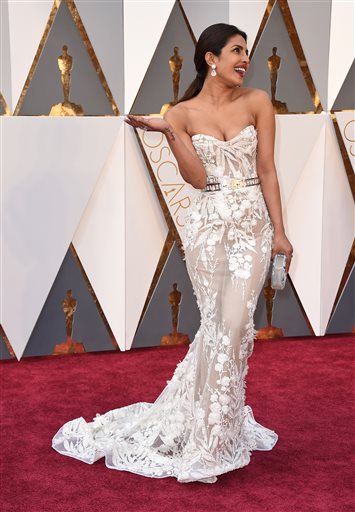
    Bollywood actress Priyanka Chopra’s debut Oscar outing in a white elegant strapless gown has impressed Indian fashion designers and colleagues from the film industry.

    Priyanka Chopra at the Oscars Presentation
    Priyanka Chopra at the Oscars Presentation

    The former Miss World, 33, who rose to fame internationally with last year’s ABC thriller “Quantico”, opted for Lebanese designer Zuhair Murad’s piece for presenting the best editing Oscar. She chose to keep her look minimal in a neat pony tail and diamond accessories.

    National-award winning designer Neeta Lulla tweeted, “Looking lovely and graceful @priyankachopra at the Oscars. Congratulations for your achievements. God bless.”

    Chopra has been making mark on red carpet this awards season.

    At the People’s Choice Awards in January (where she received the award for best actress in a new television series), the Indian actress sparkled in a sequined take on the color block trend by Vera Wang.

    Later at the 22nd annual SAG Awards, the “Bajirao Mastani” star turned heads in a pink Monique Lhuillier strapless gown.


  • Exodus from Punjab

    Exodus from Punjab

    First, let us mourn the death of ‘Sonney di Chidi’ (golden bird) that Punjab once was. It was a prosperous state with abundance in resources. Even more promising was the leadership of those times (somewhat upto 1839) in Maharaja Ranjit Singh. After the last heir of Sikh Misls, Punjab has fallen into attrition; the rate of which has assumed large proportions since the Akali-Congress double trouble after the exit of Britishers. Punjab never really recovered after the Maharaja.

    Teenagers leaving Punjab 

    More and more teenagers from Punjab want to settle abroad, be it United States, Canada, UK or Australia – problems in Punjab are growing out of hand for parents who find it easier to sell their holdings in order to secure a future for their children abroad.

    Young Punjabis flocking abroad signals a deeper problem, which the government does not wish to acknowledge or tackle – one of unemployment, drug abuse, alcohol dependency, economic infrastructure, lack of opportunities to name a few.

    The often repeated regimes of Akali Dal & Congress in the past have killed all hopes that Punjabis could think of their child’s future and separately/collectively have been unable to stop rampant corruption, rising drug addiction or bring industry to the state.

    Children as young as 12 years of age are seen to be involved in the drug trade, drugs are openly sold and easily available.

    How to Pay for a Green Card

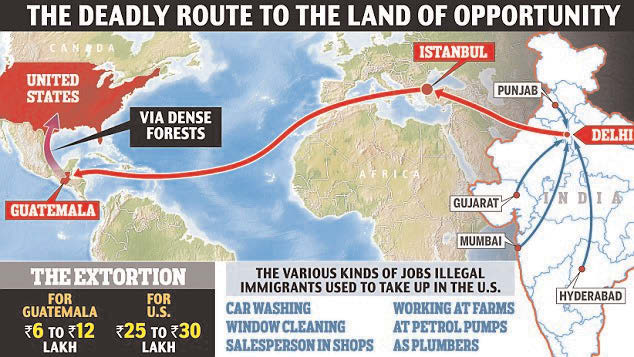
    A recent investigative story done by Channel 4 NBCNY’s I-Team revealed how teenagers from Punjab are buying a Green Card in the populous Sikh community of Queens in New York. The borough’s family court is suddenly swamped with cases that insiders say are strikingly similar -hundreds of young Punjabi men with stories of months-long journeys from India across the Mexican border in the hands of paid smugglers.

    They arrive in court in a hurry and tell a judge how they were abused by a parent.

    Under federal law – SIJS (Special Immigrant Juvenile Status) the court can grant special papers which grants statusto an undocumented person under the age of 21 who claims to have been abused or abandoned.

    If the petition is approved and the child becomes a lawful permanent resident, he or she will have access to financial aid for college, be able to work legally, be eligible for some public benefits, and be able to apply for US citizenship five years after becoming a permanent resident.

    However; one is to keep in mind that the granting of SIJ status is based on allegations of abuse, abandonment or neglect by the applicant’s parents, a person who receives a green card or even ultimately citizenship through the SIJ program cannot petition for a green card on behalf of those parents. Moreover, SIJ program participants cannot petition on behalf of their siblings until they become U.S. citizens through naturalization.

    Number of Indians Seeking Asylum in The United States Rising

    In a surprising and unexplained trend, there has been a sudden rise in the number of Indian citizens seeking asylum in the US in 2015 compared to the two previous years. The figures were obtained from the US Citizenship and Immigration Services under Freedom of Information Act by North American Punjabi Association executive director Satnam Singh Chahal.

    The data reveals some crucial details. While the number of Indians seeking asylum has increased four times in three years, there is a marginal increase in the number of women applicants.

    It is generally men who make the treacherous journey with the help of human traffickers from Moscow into South America, and from there into the US through the Mexican border.

    The US authorities refused to give the backgrounds of the applicants or why they sought asylum but in the recent past there have been a number of cases of Punjabis illegally reaching the US shores and then asking for asylum.

    Chahal, who had interviewed the men, said that all of them had taken help of human traffickers.”Although the real reason behind the rise in asylum seekers from India is not known, a clear trend is noticeable. The way I read it, there is noticeable increase in their numbers after BJP came to power in Delhi in 2014,” said Chahal.

    “The reasons can be different from year to year, but the government should also look at the issues of intolerance in the country.”

    Delhi Sikh Gurdwara Management Committee president Manjit Singh GK, who has been working for review of the black list of Sikhs said that the rise in asylum seekers could be an embarrassment for the country.

    While the Indian government should look into the issue, this could also be a short cut for reaching the US for a better life, not necessarily for political reasons,” he said.

    Drug Menace in Punjab 

    A key poll issue

    Drug addiction is a serious problem in the region of Punjab. One of India’s most prosperous states, the fertile land of the five rivers and nation’s bread basket is having to struggle with a serious problem that is now reaching epidemic proportions.

    The reasons for widespread drug addiction in Punjab are many: unemployment and frustrated economic expectations are among the main ones. There is also the fact that pharmaceuticals such as pain relieving opioids and sedatives are easily available from chemists; without prescriptions.

    According to some, it is the Punjabi culture for heavy drinking and partying as well as the habit of landowners supplying raw opium to farm laborers to encourage them to work harder, that has contributed to the problem. Most rural households in the state are thought to have atleast one addict.

    The fact that there is a steady supply of drugs from across the border is another reason. Heroin is smuggled in from Afghanistan and Punjab is a part of the transit route for drugs.

    In recent years there has also been a sharp increase in the rate of HIV infections in the state. This is because the rate of injectable drug users (IDUs) is far higher here than in other states. The national prevalence of HIV is 9% but in Punjab this number is in the region of 26%.

    It is estimated that four out of ten men are addicted to some or other drug and that up to 50% of those are young farmers. While 15%of those are addicted to poppy husk (known as bhukki), 20% are addicted to synthetic drugs churned out by pharma companies.

    It isn’t just people from the fringes of society that are addicted, students from “good families” are often caught in the toils of drug addiction. A study by the Guru Nanak Dev University suggested that 70% of young Punjabi men could be addicted to the drugs that are easily available, particularly in areas close to the borders.

    Opinion

    The fact is that a large mass of Punjab is befooled by the Panthic-Image of Akali-Congress. Punjabis must see ‘religion’ and ‘politics’ as separate entities and the political parties miss no opportunity to mix both of them and garner votes.

    The Akalis instead of working for the state are busy aggrandizing their bank accounts making the budgetary situation as bad as one can imagine by any stretch of imagination.

    Till the time Punjabis stop flocking to other countries there won’t be sufficient resentment in the masses to seek a change. This migration of punjabis to foreign countries provides a vent to the anger of the masses. As long as this migration is not detered, the pressure cooker won’t blow off.

    What a shame is that the birth place of martyrs like Shaheed Bhagat Singh is today filled with people who no longer fight for their rights.

    The change must come from within…

  • Economic crisis is not far away

    Economic crisis is not far away

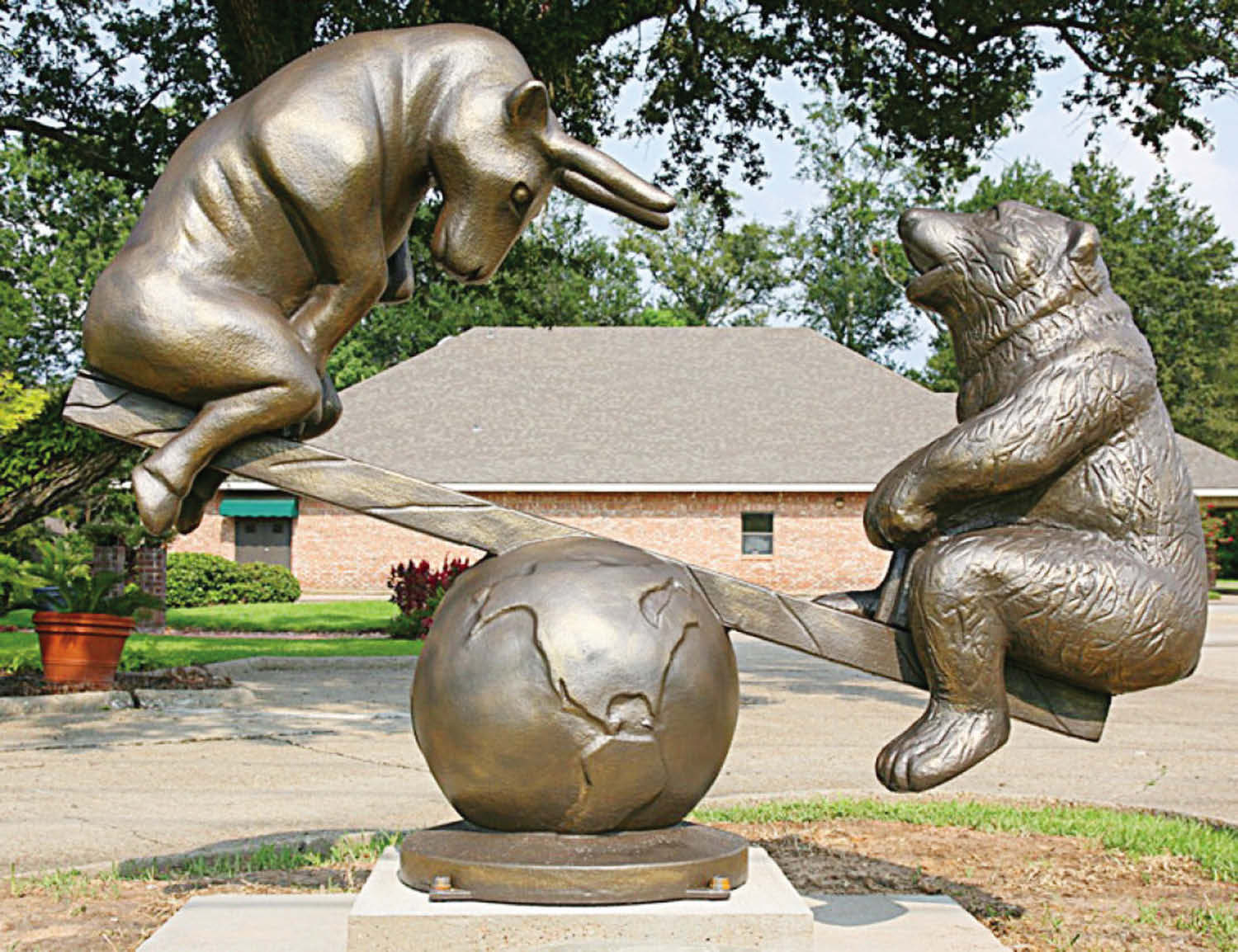
    The next financial crisis is coming. It’s just a matter of time – and we haven’t finished fixing the flaws in the global system that were so brutally exposed by the last one.

    Massive monetary policy stimulus has rekindled growth in developed economies since the deep recession that followed the collapse of Lehman Brothers in 2008; but what the IMF calls the “handover” to a more sustainable recovery – without the extra prop of ultra-low borrowing costs – has so far failed to materialize.

    Meanwhile, the cheap money created to rescue the developed economies has flooded out into emerging markets, inflating asset bubbles, and encouraging companies and governments to take advantage of unusually low borrowing costs and load up on debt.

    “Balance sheets have become stretched thinner in many emerging market companies and banks. These firms have become more susceptible to financial stress,” the IMF says.

    Meanwhile, the failure to patch up the international financial system after the last crash, by ensuring that banks in emerging markets hold enough capital, and constraining risky borrowing, for example, means that a new Lehman Brothers-type shock could spark another global panic.

    VOLATILITY IN STOCKS AROUND THE WORLD

    Jan 13, 2016: Asian shares have tumbled after a heavy sell-off on Wall Street added to nervousness among investors.

    Japan’s Nikkei 225 was down more than 4% at one point – dropping below 17,000 for the first time since September – before closing down 2.7% at 17,240.95.

    US shares had fallen by more than 2% as oil prices continued to decline and worries grew over prospects for US company earnings.

    Weak economic data from Japan also dented investors’ confidence.

    Government data showed that core machinery orders fell 14.4% in November from the previous month.

    The orders were down for the first time in three months in the world’s third largest economy.

    Plunging oil prices

    Brent crude prices, meanwhile, fell 0.9% to $30.05 a barrel after earlier hitting a fresh 12-year low of $29.73.

    Bernard Aw, market strategist at trading firm IG, said oil prices would not see much recovery this year amid a supply glut.

    “Oil prices should continue to remain low, where a sustained pick-up is expected only in the third quarter of 2017,” he said in a note on Thursday.

    Australia’s S&P/ASX 200 share index ended 1.6% lower at 4,909.40, despite the release of better-than-expected employment data.

    The unemployment rate in the country was 5.8% in December, with fewer jobs lost than economists were expecting.

    The country lost 1,000 new jobs, as against expectations of 10,000.

    In South Korea, the benchmark Kospi index closed down 0.9% at 1,900.01 after its central bank kept interest rates unchanged for the seventh consecutive month.

    Hong Kong’s Hang Seng index ended the day down 0.6% at 19,817.41.

    Investors were spooked by Wednesday, Jan 13, sharp falls on Wall Street, when the Dow Jones and S&P 500 fell 2.2% and 2.5% respectively.

    There are fears that the continuing low crude price reflects a slowdown in some economies and could weigh on growth in emerging markets, many of which rely on oil revenues.

    Jan 13, Russia’s Prime Minister, Dmitry Medvedev, warned tumbling oil prices could force his country to revise its 2016 budget.

    He said that the country must be prepared for a “worst-case” economic scenario if the price continued to fall.

    Oil and gas projects worth $380bn have been postponed or cancelled since 2014 as companies slash costs to survive the oil price crash, including $170bn of projects planned between 2016 and 2020, according to a report from energy consultancy Wood Mackenzie.

    Mainland shares recover

    The Shanghai Composite index was the only bright spot in the region, reversing early losses to close up nearly 2% at 3,007.65.

    Regulators had announced late on Wednesday that they had stepped up monitoring share-selling by listed companies’ major shareholders.

    The securities commission also said that its transition to a US-style registration system for listings would be a gradual process and not lead to a surge in initial public offerings (IPOs).

    The announcement was the latest in a series of measures to support the market after heavy losses since last week.

    Elsewhere in the region, Indonesia’s Jakarta composite index closed down 0.5% at 4,513.18 points. The index had fallen more 1.7% earlier as multiple bomb blasts rocked the capital city on Thursday.

    Indonesia’s central bank continued its meeting throughout the attacks and cut its benchmark interest rate to 7.25%from 7.5%. The bank’s move is in an attempt to give its struggling economy a boost and comes despite a weakening currency.

    Jan 14, 2015: US stocks have closed higher, but European markets have continued to suffer from worries over oil prices and economic growth.

    The three main US indexes all gained between 1.4% and 2%, lifted in part by a 2% rise in the US oil price.

    Earlier in London, the FTSE 100 closed 0.7% down, while the main Frankfurt and Paris indexes fell 1.7%and 1.8% respectively.

    Those falls followed a heavy sell-off in some Asian markets.

    The pound hovered close to five-and-half-year lows against the dollar.

    Alongside the rise in the price of US West Texas Intermediate crude, Brent oil also rose in afternoon trading. The price was up 2.5% to $31.03 a barrel, having briefly drifted below $30 on Wednesday.

    The falls in European shares followed overnight losses in Asia. Japan’s Nikkeiindex closed down 2.7%, having dropped more than 4% at one point.

    Hong Kong’s Hang Seng eased off two-and-a-half-year lows to finish down 0.6%. The Shanghai Composite, which has endured torrid trading in recent months, was one of the few bright spots, rebounding nearly 2%.

  • Supreme Court questions the Sabarimala Temple Entry Ban for Women

    Supreme Court questions the Sabarimala Temple Entry Ban for Women

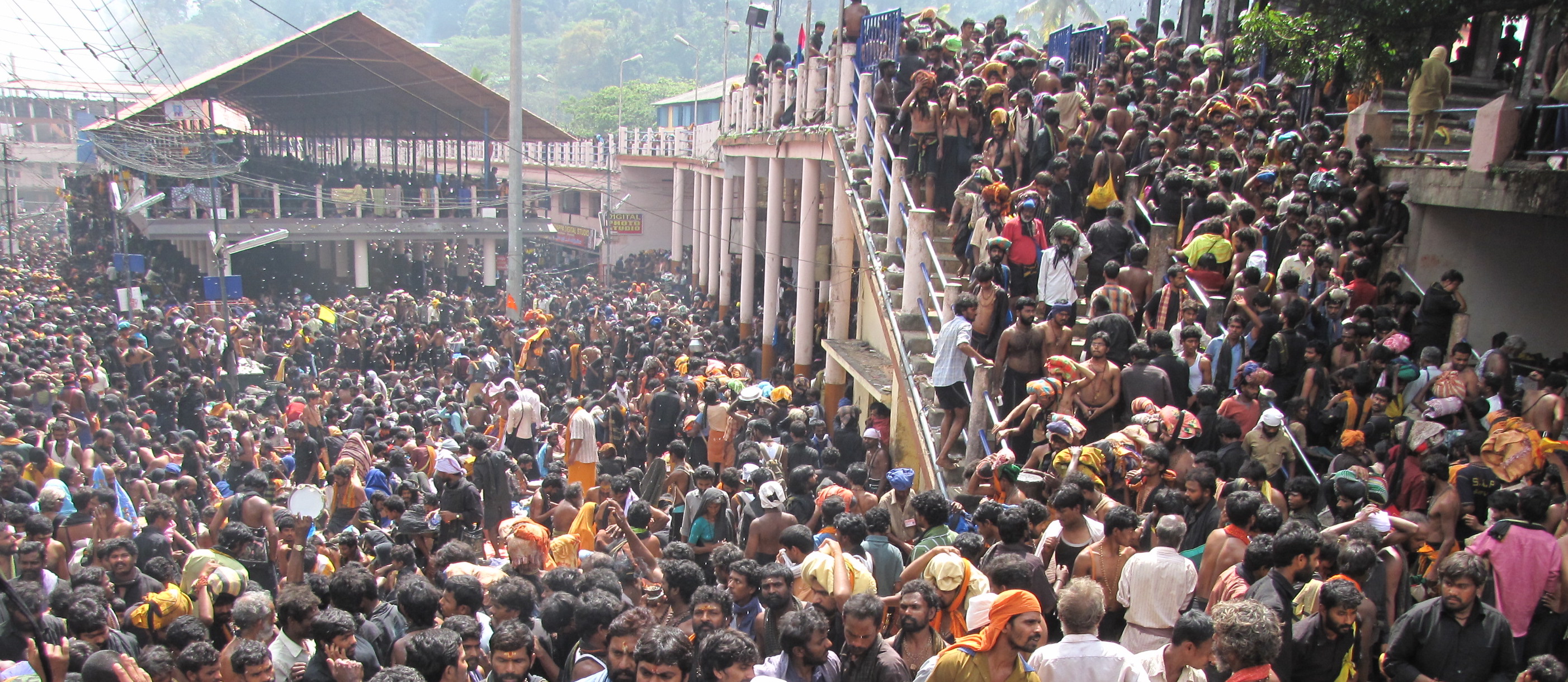
    NEW DELHI (TIP): Supreme Court of India has said that the Sabarimala temple in Kerala has no “constitutional basis” to ban the entry of women.

    The Kerala government clarified that it would not interfere in the customs and traditions of Lord Ayyappa temple at Sabarimala where entry of women in the age group of 10-50 years is banned. “Government has a declared stand on matters like this. It will not interfere on issues of customs and beliefs,” Chief Minister Oommen Chandy said after a Cabinet meeting. “This is the state government stand and it will be conveyed to the Supreme Court,” Chandy added.

    “The temple cannot prohibit entry, except on the basis of religion. Unless you have a constitutional right, you cannot prohibit entry. Anyway, we will examine it on February 8,” a bench of Justices Dipak Misra and N V Ramana said.

    Hinduism regards menstruating women as unclean and many temples impose restrictions on women’s entry during the cycle.

    In November, a group of women students started a campaign to protest against the practice which led to the Supreme Court questioning the state government and Sabarimala temple officials on the ban.

    The Sabarimala temple chief told reporters that he would allow women to enter the shrine only after a machine was invented to detect if they were “pure” – meaning that they weren’t menstruating.

    “A time will come when people will ask if all women should be disallowed from entering the temple throughout the year,” Prayar Gopalakrishnan said.

    “These days there are machines that can scan bodies and check for weapons. There will be a day when a machine is invented to scan if it is the ‘right time’ for a woman to enter the temple. When that machine is invented, we will talk about letting women inside,” he added.

    Meanwhile, the lawyers involved have started getting life threatening calls from within India and countries in the Middle East.

    Advocate Naushad Ahmed Khan, president of the Indian Young Lawyers Association that filed the PIL, and advocate Ravi Prakash Gupta, who is fighting the legal battle for the petitioners, were taken aback when they started receiving calls from cities like Chennai and Kerala apart from Kuwait, Bahrain, Saudi Arabia and other countries.

    Comment by our Guest Writer Karan Beri: First the beef ban and now this!!!! – A chutzpah of epic proportions

    Prayar Gopalakrishnan’s shallow thinking provoked me to think about the direction this Hindutva ideology is taking; and I ask you what is going wrong with our country?

    Will this RSS ideology or diktat cause the ruling party going to take a deaf and dumb stand on everything which is not related to the Gandhis.

    I have no love for the Gandhis and when I voted for Modi, I said to myself – finally a man with guts is at the helm; but he has become Manmohan part 2 (no offense meant) with govt. remote controlled by RSS.

    How can a lead priest suggest that women can only enter the temple after the invention of a machine which can scan and judge the purity of women?

    Purity becomes a biological issue instead of morality, how bizarre is this logic?

    As twinkle Khanna a.k.a Mrs. Funny Bones puts it – if rules have to be followed strictly, then it should be both ways. To get to Sabarimala, men are meant to prepare themselves with 41 days of rigorous fasting and celibacy.

    So along with a machine that scans women, poet and activist Ravi Shankar rightly points out, there should also be a machine that checks if the men entering have adhered to their 41-day regime as well.

    If such a device is invented, perhaps even Mr. Gopalakrishnan and his band of merry men may then be barred entry.

  • Nirbhaya Case – Should the Juvenile Convict be freed?

    Nirbhaya Case – Should the Juvenile Convict be freed?

    An incident that shook the conscience of India. It was a blot on humanity, it was a test of the Justice system & our morality. It was reflective of the barbarity that ‘humans turned animals’ are capable of.

    And now three years later, we are again at crossroads, the courts have to decide whether Nirbhaya’s most brutal rapist stays behind bar or walks away with no remorse. The government wants to keep him in jail. Nirbhaya’s parents along with all Indians are appalled and horrified as this man is set for release.

    Despite the Juvenile Justice (Care and Protection of Children) Bill – 2015, a proposed Act of the Parliament of India, being passed on 7 May 2015 by the Lok Sabha amid intense protest by several Members of Parliament. It is still pending consideration in the Rajya Sabha which has not been able to function due to the ongoing politics & stage show put on by Congress & its allies.

    Only time will show if our politicians can rise above their nepotism and work for India.

    The proposed act would have been helpful in addressing the Nirbhaya case by trying the juveniles between in the age group of 16–18, involved in heinous offences, be tried as adults. (If the Government can pass a retrospective tax act while dealing with Vodafone, I am sure they could have managed this too.)

    Union minister Maneka Gandhi has called for passing the Juvenile Justice Bill pending in Rajya Sabha. The clock is fast ticking and India is watching with bated breath.

    The juvenile convict in the Nirbhaya rape and murder case may walk free on December 20, despite the Centre having moved the Delhi HC against his release, due to delay by Rajya Sabha in approving the Juvenile Justice (Care and Protection of Children) Bill.

  • Nearly 35,000 comment on the proposed changes to the STEM OPT Extension – F1 Student Visa

    Nearly 35,000 comment on the proposed changes to the STEM OPT Extension – F1 Student Visa

    NEWYORK (TIP): On Oct. 19, the Department of Homeland Security (DHS) published a proposal for “Improving and Expanding Training Opportunities for F-1 Nonimmigrant Students with STEM Degrees and Cap-Gap Relief for All Eligible F-1 Students.” “The rule will benefit the U.S. educational system by helping ensure that the nation’s colleges and universities remain globally competitive in attracting international students in STEM fields,” said the U.S., in its description of the proposed changes.

    As of September, 2015, over 34,000 students were in the United States on a STEMOPT extension, according to the Federal Register.

    The proposed rule seeks to remedy the procedural deficiencies of the original STEMOPT Extension, ensure that the extensions can continue beyond February, and make several additional changes to the rules and procedures.

    Since 2008, those who complete a degree in a STEM field have also qualified for a one-time 17-month extension of OPT. This extension, however, was recently challenged in court by the Washington Alliance of Technology Workers, and this August, the District Court for the District of Columbia vacated the STEMOPT Extension on the grounds of procedural deficiency. The court order is set to take effect in February 2016 unless a new rule is enforced.


    DHS, in response to the August 2015 court order, increased the scope of the program. It took the original STEMOPT extension of 17 months and made it 24 months. That means the overall amount of time someone can work on a student visa has been will be extended from 29 months to 36 months.

    The proposed rule received nearly 35,000 comments on its plan to extend the Optional Training. The deadline for comments was November 19, 2015.

    By increasing the length of time someone can work on a student visa, the U.S. is trying to give these students more time to get an H-1B visa. Demand for H-1B visas, especially from IT offshore outsourcing firms, is making it harder for students who graduate from U.S. schools to get a work visa.

    The majority of comments received (view comments) support extending the program, which is not surprising. If the government effort fails, many STEM (science, technology, engineering and math) students may be forced to leave the U.S.

    The comments, some anonymous, were collected over the last month. Technically, the register says it has received about 50,000 comments, but it has only posted 35,000 and moderates before posting. The responses define the sharp divide on this issue.

    The question is whether this comment collection meets the obligations imposed in August by a federal court. That court had ruled that government erred by not seeking public comment in 2008, when it originally extended the OPT program from 12 months to 29 months for STEM students. The court gave the U.S. until Feb. 12 to fix the program or risk giving the students 60 days to return home.

    The Indian Panorama has zealously reported on STEM and will continue to update our readers on the changes on OPT as and when they become available.

  • India needs to play a greater role in the Syrian Conflict

    India needs to play a greater role in the Syrian Conflict

    Syrian Conflict has different meaning for different Nations; however, they stand united on one important issue – Counter-Terrorism.

    Syria recently asked India to play a greater role in resolving the conflict there. New Delhi has consistently maintained that dialogue is the only way to solve the crisis in Syria. However, it has backed Russia’s recent military intervention in the country.

    Syria’s civil war has now taken a dramatic turn with Russian & Iranian involvement in helping Bashar al-Assad’s depleted army and could change the dynamics in the Middle East for the next decade.

    India’s Role so far

    India’s responses to the Syrian civil war have thus far been on the side-lines of the UN, where it has often tilted in favor of the Assad regime.

    2011 saw India voting in favor of a UNSC draft resolution that would implement a peace plan proposed by the Arab League only after a call for Assad to step down was dropped. Then, in October that year, India abstained from a UNSC resolution condemning Assad’s crackdown on pro-democracy protests. The following August, in 2012, India abstained from an UNGA resolution that expressed “grave concern” for the escalation of violence. The reason India gave for this decision was that the resolution referred to Arab League calls for Assad to step down and for UN member states to severe ties with Syria.

    Another Indian show of support for the Assad regime took place during the Geneva II talks in 2013 that sought to end the crisis. Former external affairs minister Salman Khurshid was firmly against the idea of military intervention. At the time, Russia, China and Iran held the same view.

    However, the contours of the conflict have dramatically changed since the Geneva talks.

    Yet, India has not taken the lead and has kept its role restricted to diplomatic peace efforts.

    Now, there seems to be a need for a shift in India’s policy on the issue, and here are the reasons.


    1. India in United Nations Security Council as a permanent member: India has been trying to garner support for its bid to the United Nations Security Council as the emerging power from Asia for quite some time now. To be included in the UNSC means that India will have to take sides and clear its view point on global events where at-least multiple countries are involved.
    2. Isis’s influence poses an immediate challenge: India has been prone to terror attacks coming from foreign soil and it shouldn’t let another outfit join the list. So far, New Delhi has been successful in proactively monitoring cyber recruitments by terror outfits and keeping a real time check. However, given the terror policy adopted by its neighbors and the growing unrest in the country over sacrileges & religious intolerance towards minorities, it is not the best of time for freedom of religion.
    3. Pakistan’s continuous threat of first-use nuclear policy: In order to check Pakistan’s nuclear strike threat if it comes to war with India, New Delhi must send a clear message of its military prowess. Pakistan’s policy seems to be of misdirect, the objective being to unite militant groups engaged in armed conflict within Pakistani to unify & redirect their attacks against India.
    4. With the U.S. – Iran Nuclear standoff being settled, the geopolitical picture is changing with Iran coming closer to the Gulf Cooperation Council (GCC). Gulf has remained no man’s land when it comes to U.S. & Russia and U.S. involvement or argument has always been to prevent one single power from controlling the region’s resources – OIL. The nuclear agreement between Iran and the P5+1-China, France, Russia, the United Kingdom, and the United States plus Germany-raises the possibility, albeit a distant one, of creating a new security order in the Gulf, one that could improve relations between Iran and the Gulf Arab states and help reduce the American military commitment. This deal has opened up huge commercial and strategic opportunities for India and Iran after a decade of U.S. pressure to restrict ties.
    5. The Modi government’s emphasis on greater synergies both economic and strategic with the GCC and Israel.

    This changing environment makes the time ripe for India to chart its revised foreign policy.

    India’s goal to emerge as a major player in West Asia will remain unrealized until India decides to play a greater role in the Middle East.

  • THE POLITICS OF BEEF

    THE POLITICS OF BEEF

    On Sept. 28, in a village less than 60 miles from New Delhi, a Hindu priest announced in a local temple (under threat by some hot heads, he claims) that a Muslim family was consuming beef.

    Shortly afterward, a frenzied (Hindu) mob, wielding sticks, swords and cheap pistols barged into the family’s house and pulled out Akhlaq & his 22-year-old son, Danish, accusing the family of having slaughtered a cow and consuming it. They beat the men with such rapturous fury that within minutes the father was dead and his son in a coma.

    Times cannot be treated as normal if the President of India feels the need to issue a public advisory. What can explain the inexplicable silence of the otherwise hyper-expressive Narendra Modi.

    While, leaders of the political parties have left no stone unturned in trivializing the issue. PM Modi did not issue a single tweet, nor posted a Facebook statement expressing regret or offering condolence for this dead citizen.

    The Prime Minister finds himself unable to condemn utterances of his own party leaders & ministers. Isn’t this what happened in Godhra, when Modi was the Chief Minister.

    PM Speaks – Only too little too late 

    Less than 24 hours after the President’s subtle reprimand, India’s Prime Minister did speak – Not against the murderers of Akhlaq. Not even on the provocative comments by his party men/women in Dadri. No, not even on the urgent need to put an end to beef politics. All this can wait. After all, elections in Bihar happen just once in five years.

    Its all Politics for Narendra Modi – Why else would he choose an election rally to indirectly mention the incident. What are the compulsions of Narendra Modi who has brought to his party 284 seats in the Lok Sabha?

    Why Laloo alone comes to his mind; and people like Mahesh Sharma, Sanjeev Balyan, Sakshi Maharaj, Yogi Adityanath, Sangeet Som, Azam Khan and AIMIM leader Assaduddin Owaisi are allowed to get away with their shameless statements?

    Akhlaq’s family members can wait. And the President of India should learn to wait. Prime Minister of India is busy consolidating his position. And for this he must win Bihar. India’s core civilizational values can wait too

    While only hinting on the raging row over the Dadri lynching incident, Prime Minister Narendra Modi said Hindus and Muslims should decide whether to fight each other or together overcome poverty while asking the people to ignore “irresponsible” statements of politicians.

    Its to be noted that the above statement comes at his 4th Bihar election rally this week and that too after blowing all the jibes on the beef row towards BJP opponents like Laloo.

    “The country has to stay united,” Modi asserted. “I have said it earlier also. We have to decide whether Hindus should fight Muslims or poverty. Muslims should decide whether to fight Hindus or poverty,” he added.

    The silence does not douse flames, it fans conspiracy theories

    Adding Fuel to the Fire – Our Politicians whom ‘WE’ elected

    Why are these shallow leaders not expelled? Every time a party has been questioned, their answer has been simple -point fingers at the other parties.

    Outrageous Things Leaders Have Said – For the record, BJP leads here. 

    Mahesh Sharma 

    Modi’s Culture Minister & BJP Leader Mahesh Sharma, a moral idiot recently opined that India’s late President Abdul Kalam was patriotic “despite being a Muslim,” and dubbed the vicious beating an “accident.” He consoled the family by noting that at least the 17-year-old daughter of the slain man was untouched!

    Azam Khan
    Uttar Pradesh minister Azam Khan took one step further and wrote to United Nations on the condition of Muslims in India.

    He goes on further to hint on a new partition of India, “There should be a round table conference on what will be the new map of India and how people will live in the country” and “Aaj poori duniya dekh rahi hai ki Babri se le ke Dadri tak ka mansooba kya tha”.

    He clubs the incident with the demolition of Babri Masjid to harness the power of hatred.

    Sangeet Som 

    BJP MLA Sangeet Som, infamous for making controversial speeches during the 2013 Muzaffarnagar riots & one of the accused, declared, “Agar nirdoshon ke khilaf karyawahi ki gayi, to munh-tod jawab hamne pehle bhi diya hai aur abh bhi dena jante hain (If action is taken against innocent, we have given a befitting reply earlier and can do so again). We can give a reply whenever we want.” He made this statement at a temple on the outskirts of Bisara, near where the incident occurred.

    Asaduddin Owaisi

    “This murder was premeditated. He has been killed in the name of religion. It is an attack on our community. It cannot be an accident. All of this is being propagated by the state and central governments,” Owaisi says. The Hyderabad MP also questioned Prime Minister Narendra Modi’s silence on the killing. “This mother has seen her son getting beaten to death in front of her. Where are his condolences?”

    Owaisi also slammed Union Minister Mahesh Sharma for describing the killing in the Dadri village as “an accident”. “He is the country’s Culture Minister. It is unfortunate that a minister who has taken an oath on the Constitution does not have the courage and intellectual honesty to condemn the incident unconditionally.”

    Tarun Vijay 

    BJP MP Tarun Vijay said, it wasn’t the Hindu community’s responsibility to maintain peace and the Muslim community should remain mute.

    “Why responsibility to keep peace and maintain calm is always put on the Hindus alone? Be a victim and maintain silence in face of assaults!!” tweeted the former editor the Rashtriya Swayamsevak Sangh (RSS) weekly in Hindi, Panchajanya.

    Muslims & Minorities in India – whatever the politicians may think – have a right to live with their heads held high as anyone else. They cannot & must not be ‘dumped’ or ‘subdued’.

    As Indians we need to fix our dysfunctional democracy. The idea of democracy cannot begin and end with elections alone. Until then we will continue to lose lives like Mohammad Akhlaq’s because of let’s call it “the politics of food “.

    Is anyone there listening???

  • Pakistan objects to India’s foreign trips: Will take ‘Kashmir’ issue to all

    Pakistan objects to India’s foreign trips: Will take ‘Kashmir’ issue to all

    As per media reports, an unidentified Pakistani official has confirmed to BS news that the Army, ISI, Saeed and the closet government are planning to appeal to the United Nations against India’s “Charm Jihad” Foreign policy.

    “All trips are a conspiracy by India to undermine the “K” Issue. They are hurting our brethren.” “If more trips are taken by Modi, we will have no option but to release our Nuclear weapon photographs (after we get them processed from China) on social media,” he threatened.

    Hearing about this reason, many sensible supporters have left Pakistan and have seeked asylum in EU, while others insisted that China was an ally of Pakistan and thus they have a strong case even in the Security Council.

    “We will make sure everyone feels they have been victimized by India” said Army’s top spokesperson condemning Modi’s second visit to US.

    Meanwhile, Sharif announced he will visit all countries via Google Maps while they await funds from United Sates.

    Sharif stated “Pakistan will do everything possible to counter this ‘social jihad’ caused by Modi’s one after another successful foreign trips”.

    Times Wow asked users to tweet with #PAKGoogleGate. Arneb invited two retired officers of Pakistani army and extracted his revenge for all the wars they had waged against India. A panelist at Times wow claimed that lack of funds due to the money spent on Sunny Leone pirated videos had forced Pakistan to use Google Map instead of economy class air travel.

    When Raul was asked to comment, he searched for something in his pocket in vain. Then he said that today was not a day for politics as mom has not updated his calendar.

    Talking at a press meet; Sonia hit out at the government and said “Every travel announcement is made before an election, so that they can garner votes. If we ban elections in India for next 4 years, then, the government will have no work.”


    This article is intended for a mature, sophisticated, and discerning audience.

    The article is a news / political satire, which may or may not use real names, often in semi-real or mostly fictitious ways. Article above is work of fiction, and is fake news.

    Any resemblance to the truth is purely coincidental, all references to politicians and/or celebrities & real people is fictional.

  • SHEENA BORA MURDER CASE: A SHOCKER WITH INTERTWINED LIES

    SHEENA BORA MURDER CASE: A SHOCKER WITH INTERTWINED LIES

    MUMBAI (TIP): Sheena Bora (born Sheena Das-Bora) was an executive working for Mumbai Metro One based in Mumbai.

    She was daughter of media executive Indrani Mukerjea and Siddhartha Das, a Kolkata-based executive (unconfirmed reports).

    Indrani had introduced Sheena & Mikhail as her siblings and not children to the world. Just last week, she revealed during interrogation that Sheena was her daughter, and not her sister.

    Sheena Bora’s brother was Mikhail Bora. Sheena was reportedly dating and was in cohabitation with Rahul Mukerjea who also happened to be her step-brother (son of Peter Mukerjea).

    Sheena went missing on 24 April, 2012 and was never found again.

    In August, 2015 Mumbai Police arrested her mother Indrani Mukerjea, her stepfather Sanjeev Khanna and her mother’s driver Shyamvar Pinturam Rai (Shyam Rai) for allegedly abducting Sheena Bora, killing her and burning her dead-body. Whilst Rai and Khanna  confessed to the crime, Indrani had maintained that Sheena Bora is alive and is in USA.

    Indrani’s past

    INDRANI’S FAMILY TREE
    INDRANI’S FAMILY TREE

    As per Indrani’s last week’s  statements which were revealed during interrogation, that Sheena was her daughter, and not her sister, and that she was born out of incest between her and Sheena’s father. Media Reports indicate that Indrani’s father molested her, and abandoned the family when she was young.

    However, Upendra Kumar Bora has claimed that Indrani Mukerjea is his daughter and not step-daughter. “Indrani is my daughter,” Zee News reported him saying. This is strange because earlier reports claimed that Sheena was the daughter of incest between Indrani’s mother and her brother Upendra Kumar Bora.

    Siddhartha Das is now being considered the father of Sheena and Mikhael Bora. However, he is not Sheena’s incestous father: “I was never married to Indrani Mukerjea. Both children were born out of wedlock. We were in a live-in relationship,” he told Times Now. Siddhartha said that Indrani left him in 1989. “After that, I never met her,” Siddhartha said. “I feel very bad for Sheena. I will cooperate with police. I am also ready to go for a DNA test to prove that I am biological father of Sheena and Mikhail,” Das said.

    It was also “speculated” that Mikhail’s biological father is a Kolkata based Bengali businessman. Allegedly Indrani was in cohabitation with this anonymous businessman around 1990 when Mikhail Bora was born. Duo later split up before Indrani got married to Sanjeev Khanna.

    Indrani Mukerjea got married the second (or third) time to Sanjeev Khanna and the couple had a daughter Vidhie Khanna from the marriage. In 2001 they moved to Mumbai. And, in 2002, Indrani and Sanjeev Khanna too split up and fought a bitter custody battle for Vidhie Khanna. Indrani Mukerjea won the custody battle and shifted Vidhie to the United Kingdom.

    In 2002, Indrani met Peter Mukerjea and moved in with him while awaiting her divorce from Sanjeev Khanna. In November 2002, Indrani married Peter Mukerjea. After this marriage Vidhie Khanna moved in with the Mukerjeas and took the Mukerjea name.

    In 2005 Indrani introduced her children, Sheena Bora and Mikhail Bora, to Peter as her younger siblings. In 2006 Sheena Bora also moved in with the Mukerjeas.

    Sheena and RahulDuring her initial days in Mumbai, Sheena got introduced to Rahul Mukerjea (her step-brother and son of Peter Mukerjea) and the duo had romantic relationship leading to cohabitation from 2009 to 2012. Allegedly, Indrani did not approve of the relationship.

    On 24 Apr 2012, Sheena took leave of absence and while she was on leave, she “sent in her written resignation”. On the same day, Rahul Mukerjea received a breakup SMS from Sheena’s phone.

    Sheena was never seen after 24 April 2012.

    The Plot & Investigation

    Indrani’s driver, Shyamvar Pinturam Rai, confessed that he, Indrani and Khanna ganged up on Sheena and strangled her in a in 2012.

    A day later, Sheena’s body is burned and dumped.

    In a major development on Tuesday, September 1, Indrani Mukerjea admitted to murdering Sheena Bora. Indrani had earlier maintained that Sheena had gone to the United States for higher studies and hence a missing First Information Report was never filed.

    This is for the first time since her arrest she is admitting the crime. According to Mumbai police sources, Indrani was grilled for over 110 hours since her arrest last week.

    Mumbai police commissioner Rakesh Maria himself interrogated her and other accused.

    All three accused in the case are in  police custody for further investigation till September 5.

    On September 2, Peter Mukerjea was questioned for about 12 hours on the murder of his step-daughter Sheena Bora. Mr. Mukerjea met his wife for the first time since her arrest on August 24 for the murder of Sheena Bora, the daughter she had always introduced to everybody as her sister.

    Ms. Mukerjea, the police say, was entrenched in an alleged financial battle with her daughter; the money they fought over was allegedly linked to the INX Media Group, co-founded in 2007 by Ms Mukerjea and Peter Mukerjea.

    News agency PTI reports that Peter and Indrani Mukerjea were interrogated together. The police want Peter Mukerjea to reveal information about his wife’s business dealings. In 2009, the Mukerjeas sold their stake in the INX broadcasting group, tailgated by reports of embezzlement.

    Peter Mukerjea was in the UK when Ms. Bora was allegedly strangled in a hired car by her mother, driver and step father Sanjeev Khanna, according to the police. The corpse was kept overnight in Mr Mukerjea’s garage, then driven to a forest the next morning where it was set on fire. The Mukerjea residence and garage were searched by the police on September 3.

    Mr. Mukerjea & Indrani are still being questioned in this developing story.