Author: Melissa Mark-Viverito

  • Your Vote Can Make the Difference

    Your Vote Can Make the Difference

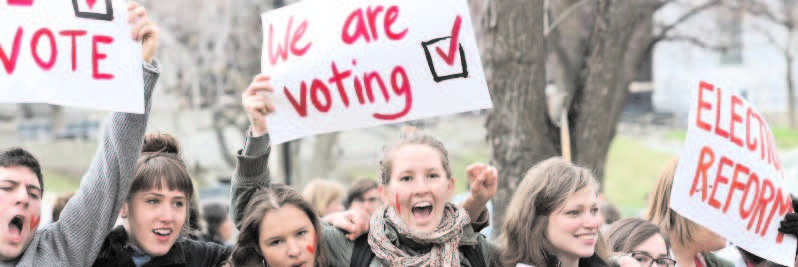
    With this year’s tight and controversial presidential race, and with anti-immigrant sentiment at a peak, we can take nothing for granted. This is why I am urgently calling to those among New York City’s more than 1.5 million naturalized citizens, if you are registered to vote, to go to the polls on November 8. Every single vote counts.

    The right to vote is not a given. Some of you have experienced undemocratic governments in places where voting is riddled with fraud, doesn’t happen at all or can put you at risk of reprisals. But as a U.S. citizen, your right to vote ensures your participation in the democratic process that gives you a voice in the decisions that shape your life.

    The electorate has never been so ethnically and racially diverse. According to a Pew Research Center 2016 report, this year 31 percent of the eligible voters are Hispanic, Asian, black or other minorities. In New York City, the Campaign Finance Board confirms that naturalized citizens lead in the gains made in voter registration, and their turnout rates equal or outpace native-born citizens. Yet, New York City hit a historic low in overall voter turnout in the 2014 midterm elections, when barely 20 percent went to the polls. This has to change.

    It is important we understand what is at stake here.

    In 2013, immigrant workers accounted for $257 billion in economic activity — that’s nearly one third of the value of all finished goods and services produced here. Immigrants represent almost half of the City’s workforce. Over 80 percent of dishwashers, nannies, garment workers and taxi drivers are immigrants. Seventy percent of medical and life scientists; 60 percent of civil engineers; 58 percent of registered nurses; and more than half of our dentists, mechanical engineers, tax preparers, and pharmacists are foreign-born. And one in four CEOs in corporations with a presence in our City are immigrants. Clearly, the economic contribution to the City is tremendous.

    So, casting your vote could be a YES to protecting the economic investment made for your children and their children, and to ensuring an enduring opportunity to work. A YES to keeping the doors open for others like you, who want a better life, and whose enterprise keeps our City and this country vibrant and growing. And a YES to protect the right to educate your children, without fear, who will carry on our immigrant tradition.

    Your vote could also be a NO to racism, discrimination and hate.

    It’s time to rally family, friends, and community members to vote. Remember your vote can help speak for those who are not eligible to go to the polls in November, but whose investment and commitment to their American life is just as strong as yours.

    For information about your polling site and ballots in languages other than English go to http://vote.nyc.ny.us/html/forms/forms.shtml, or call the Board of Elections office in your borough.

  • English proficiency is key to immigrant success

    English proficiency is key to immigrant success

    In New York, providing support for our immigrant communities is personal. Four out of 10 City residents are immigrants and collectively contributed close to $260 billion to the Big Apple’s economy in 2015. What is more, a majority of immigrant New Yorkers belongs to mixed-status families composed of U.S. citizens, legal permanent residents and undocumented residents. They are integral to our broader society, a fact too often overlooked by many.

    So it is unfortunate to see that the Mayor’s Executive Budget fails to provide adequate support for the growing needs of our immigrant communities. To ensure we open the doors to opportunity, my colleagues and I are strongly urging the Administration to invest $16 million for English literacy, adult education and GED preparation, as outlined in our Response to the Preliminary Budget.

    Between 2000 and 2011, neighborhoods with the highest concentrations of immigrants had stronger business growth than the rest of the City. Immigrants have helped revitalize neighborhoods such as Coney Island, Corona, Elmhurst, Flushing, Jackson Heights, Washington Heights and many others.

    Building capacity for immigrant New Yorkers is critical, and to do so, they need to have access to adult literacy programs. Gaining proficiency in English is essential to securing job opportunities and to participation in the civic, social and economic life of this City.

    Nearly 25 percent of immigrant residents speak little or no English, yet at any given time, over 14,000 individuals are on waitlists for English literacy and education programs. Low adult literacy has an outsized impact on parents, their children and their communities. Limited English proficiency traps immigrants into low-paying jobs and puts a strain on their ability to support their families and move ahead economically. Their children reach school with an English-language deficit. Currently, of the 140,000 English Language Learnersin our public schools, the majority are U.S. citizens born to immigrant parents. Poor English-language proficiency also affects parents’ ability to get involved with and advocate for their children’s education.

    Although English-language proficiency is not a requirement to apply for DACA and Expanded DACA, there is an educational requirement that can be met if you are enrolled in an Adult Literacy Program that meets certain criteria. This can be significant to the estimated 16,000 to 24,000 undocumented residents in New York City, who may be eligible for these deportation relief programs.

    There are 1.8 million immigrant New Yorkers who require the tools necessary to ensure they can thrive and, like previous generations, contribute to keep New York the great immigrant city that it is today, and will continue to be tomorrow. Their success, our success, rests on their ability to take full advantage of being New Yorkers. There is no other option.

  • We must respond to young women of color

    We must respond to young women of color

    The future of our City depends on the success of young people today. But instead of being able to focus on their aspirations, many girls and women, particularly those of color, are battling challenges rooted in gender, sex and race discrimination. Poverty, sexual violence and poor health outcomes stand squarely in the way of their success. For young women from immigrant families, these challenges are complicated by immigration status and language barriers. This has to change.

    One year ago, I announced the launch of the New York City Council’s Young Women’s Initiative (YWI), a planning process that brought advocates, policy experts and young women and girls themselves together to make recommendations on how we can improve the lives of young women and girls in New York City. The result of the YWI is a set of policy and budgetary recommendations to improve the lives of young women and girls in our City. The New York City Council is also allocating $10 million over two years to commitment to YWI, a figure that is being matched by philanthropic partners. Together, $20 million will be invested in the futures of our daughters and sisters, all of whom should have the opportunity to thrive.

    The urgency is as great as statistics show. Black and Latina girls and young women are 25 percent more likely to live in poverty. According to a New York Women’s Foundation’s 2015 publication, more than 40 percent of Black and Latina girls in New York City – and comparable percentages of girls from several new immigrant communities – lack access to the support they need to finish high school. In fact, eighteen percent of the women ages 16 to 24 were out of school and out of work, compared to 12 percent of young women ages 12 to 24 who are not Black or Latina.

    Studies show that youth who are not connected to employment opportunities early on will have a difficult time accessing a steady job in the future and, in turn, earn less in the span of their work life. This is why the Young Women’s Initiative recommends that the City’s Summer Youth Employment Program (SYEP) become year-round program, reach all students who apply. YWI also recommends increasing the reach of workforce training organizations that offer hands-on training, and calls for more college counselors to help students transition to higher education.

    Young women want to make healthy and smart choices about their future. Yet many don’t have ready access to information, counseling and health services to avoid teen pregnancy or sexually transmitted infections.

    While unintended pregnancy among young people has declined overall in New York City, pregnancy rates among Black and Latina teens are four to seven times higher than rates among White and Asian American and Pacific Islander teens, with teen pregnancy rates highest in the Bronx. Devastating statistics also reveal that young Black women have the highest share of new HIV diagnoses among women in our City.

    These critical healthcare needs must be dealt with now. YWI calls for an increase the number of School-Based Health Centers across the City’s middle schools and high schools, and to expand the scope of services those currently operating at middle schools to include confidential reproductive and sexual health care.

    Young women have the right to opportunities, information and quality services. They equally have the right to a City that keeps them safe from sexual violence, prohibits discrimination in all forms and works to prevent contact with the criminal justice system. Young women should know that our City is on their side. We should be, and will be, nothing less than a City that elevates our girls.

    To read the full YWI report, visit shewillbe.nyc

    ###