Author: Prakash M Swamy

  • ‘Indian economy is resilient to global headwinds’: Dr. Raghavan Seetharaman

    ‘Indian economy is resilient to global headwinds’: Dr. Raghavan Seetharaman

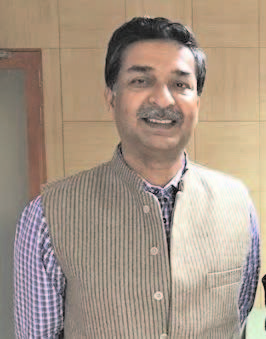
    CHENNAI (TIP); The US ruling on cancellation of H-1B visa rules poses risk towards IT companies immigrants and offshore projects, expectation is that costs may escalate for these companies operating in US. Global growth is challenging, however Indian economy is resilient to global headwinds on account of the strong domestic fundamentals, said Dr Raghavan Seetharaman, CEO of Doha Bank in Qatar.

    The recent budget had given thrust on infrastructure, agriculture and aims to revive the growth of Indian economy. India exported $6 billion worth of drugs to the US in 2015 and restrictions on pharmaceutical imports and manufacturing abroad could impact the industry in India, he said.

    The Indian government has encouraged global investors to participate through FDI. The recent budget has stated that foreign investment promotion board will be abolished, which will improve ease of doing business.

    IMF has pegged India growth at 7.2 percent in 2017.India’s Current Account Deficit decreased from about 1 percent of GDP last year to 0.3 percent of GDP in first half of 2016-17. India has pegged fiscal deficit for 2017-18 at 3.2 percent and its Forex Reserves at $361 billion offer a comfortable cover for 12 months of imports thanks to better financial management by Narendra Modi government, he said.

    Contentious issues are coming between developed and developing world on global trade and investment. The lack of convergence between politics and economics could impact global growth. We’re entering a new stage of international global relations where national policies could shape how globalization eventually develops, he said.

    Dr. R. Seetharaman highlighted the opportunities for India arising from global developments. “After Brexit better trading opportunities with India than is possible as part of a 28-member EU. India has had a trade surplus with UK in the recent years. It is thus crucial for India to have a first mover advantage by executing a bilateral trade agreement with UK encompassing goods, services and technology.

    For UK, India is an attractive trade partner, given its high proportion of skilled working-age population and high growth rate. This strengthens the possibility of an FTA between UK and India and presents a significant opportunity for India’s financial and small and medium-sized enterprises (SME) sectors. European Union (EU) hopes to soon re-engage with India on negotiations regarding the proposed Free Trade Agreement (FTA), he said.

    Dr. R. Seetharaman said” India should also continue to strengthen bilateral relationships with GCC in trade and in other segments. GCC – India Bilateral trade is close to $100bn in 2015-16. In Feb 2016 India and the United Arab Emirates (UAE) signed a wide-ranging set of seven agreements, including on cyber security, infrastructure investment and insurance.

    GCC Sovereign Wealth funds can look forward to participate in India’s infrastructure development. UAE and India have agreed to collaborate closely to identify bottlenecks to trade and new areas of trade with the aim of increasing two way trade by 60 per cent in five years while significantly boosting investment. The new goal set by both sides is to boost trade by 60 per cent by 2020.Qatar and India can look beyond the buyer-seller relationship to include joint ventures, joint research and development and joint exploration. Indian can invest in the port sector of Qatar. Indian companies can participate in Qatar’s infrastructure development pertaining to FIF World Cup 2022.Qatar and India will enhance bilateral cooperation in the field of cyber security, including prevention of the use of cyberspace in support of terrorism and extremism.”

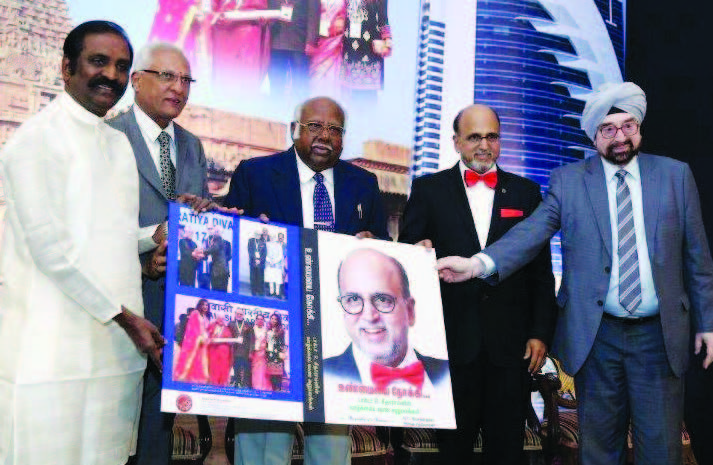
    The Institute of Directors hosted a Felicitation Function of Doha Bank CEO, Dr. R. Seetharaman on being recognized by the Government of India with the Pravasi Bharatiya Samman Award, the Highest Honor Conferred on Overseas Indians. The felicitation was held on Feb 10 at Hotel The Residency Tower Town Hall, Chennai, India.

    Justice Dr AR Lakshmanan, former Judge of Indian Supreme Court and former Chairman of Law Commission of India released a book on Dr Seetharaman titled “In search of truth” a biography on him in Tamil and first copies were received by Poet Laureate Vairamuthu, Judge of Madras High Court Justice PN Prakash and Lt.Gen JS Ahluwalia, President of Institute of Directors. The authors of the book- Prof Aranga Nedumaran and NC Mohandas of Kuwait -were also honored.

  • Vibrant Gujarat connects Gujarat to the world: Bharat Lal

    Vibrant Gujarat connects Gujarat to the world: Bharat Lal

    NEW DELHI(TIP): “Vibrant Gujarat is connecting India to the world,” Resident Commissioner of Gujarat in New Delhi Bharat Lal said. “Our objective is to interact with government officials and the business community during this road show in Canada and USA, to attract investors, scientist, and entrepreneurs from all over the world to come to Gujarat and participate in the Vibrant Gujarat Global Summit 2017,” he said.

    “Vibrant Gujarat is the biggest platform for enabling business in India. In the post GST (Goods and Services Tax Bill) scenario, when India becomes ‘One Nation – One Market’, Gujarat holds a unique distinction with favorable geographical location, state-of-the-art infrastructure and sound policies,” he added.

    “We have had various meeting with leading companies across USA and had an amazing response. People are very excited about GST. Business industry is bullish they think this is the right time to invest. The Vibrant Gujarat Global Summit, which started in 2003 to rekindle the pace of investments in the state, has since established itself as one of the most important international business events in the country, Bharat Lal told this correspondent.

    Vibrant Gujarat Global Summit is an example of the visionary approach of the Government of Gujarat towards inclusive and sustainable development by ensuring policy coherence and effective investment promotion.

    Far from the regional investment fair that characterized the first Summit in 2003, the biennial Summit has today become a unique forum for exchanging ideas, sharing knowledge, networking, exploring business opportunities and signing cooperation agreements and partnerships, while setting the policy agenda for meeting some of the current global challenges.

    Having successfully organized seven constructive summits, Government of Gujarat, as part of its journey towards sustainable long-term growth and inclusive development is organizing the 8th edition of the Vibrant Gujarat Global Summit from the 10th to 13th of January 2017 at Mahatma Mandir, Gandhinagar. The central focus of the Summit is Sustainable Economic and Social Development.

    It will bring together heads of states and governments, ministers, leaders from the corporate world, senior policy makers, heads of international institutions and academia from around the world to further the cause of development and to promote cooperation, he said.

    There will be enough opportunity to interact with key policy makers, industry leaders, global thought leaders, regulators and renowned academicians from all over the world. The participants can witness deliberations between sector experts and global luminaries in an array of knowledge seminars during the summit to comprehend evolving global sectoral trends.

    The Summit provides platform for SMEs to connect globally with potential partners to explore opportunities of collaboration and partnership networking forums to foster interaction between stakeholders through B2B and B2G meetings in an exhibition spread over 1,25,000 sq.mts with exclusive demo sessions showcasing the latest trends and technology, products and services across sectors. Prime Minister Narendra Modi will inaugurate Global Trade Show by in the presence of Gujarat Chief Minister and MOS (Independent Charge), Commerce & Industries Nirmala Seetharaman. There will be a Global CEO Roundtable chaired by Modi with Select 50 top CEOs. The Vibrant Gujarat Global Summit 2017 is receiving tremendous response in the US, members of a high level state delegation said after meeting senior government officials and CEOs of top tech companies here.

    Underlining the rapid economic development that is taking place underPrime Minister Narendra Modi Lal referred to Gujarat as being the driving engine of Indian growth.

    “The state accounts for 19 per cent of industrial output, 41 per cent of cargo exports and 10 per cent of India’s manufacturing industries,” he said, adding that Gujarat ranked number one in “ease of doing business”.

    The US has agreed to be a partner country in the next edition of the Vibrant Gujarat Summit, the brainchild of Prime Minister Narendra Modi, in January 2017. US Assistant Secretary of State for South and Central Asia Nisha Desai Biswal had conveyed this to Bharat Lal, Resident Commissioner of Gujarat in New Delhi. Biswal recently met with a Gujarat delegation, led by Resident Commissioner Bharat Lal, who was accompanied by Indian Charge d’Affairs Ambassador Taranjit Singh Sandhu in Washington.

    The Assistant Secretary praised Resident Commissioner Lal for his efforts to make the state of Gujarat a model of innovation and sustainable economic growth and reform for India.

    She also announced US’ intent to participate as a Partner Country in the 2017 Vibrant Gujarat Global Summit, the government of Gujarat’s biennial investors’ summit that brings together global business leaders, investors, corporations, Kerry thought leaders, and policymakers. US Secretary of State John had attended the last Vibrant Gujarat Summit.

  • WHAT DO HILLARY CLINTON, TRUMP HAVE IN COMMON?

    WHAT DO HILLARY CLINTON, TRUMP HAVE IN COMMON?

    NEW YORK (TIP): What do presidential candidates Hillary Clinton and Donald Trump have in common? They both love Bollywood and have praised the efforts of Kamal Dandona, founder of the Bollywood Awards, in his efforts to bring awareness of Indian cinema to the American mainstream and bridge the entertainment gap between the United States and India.

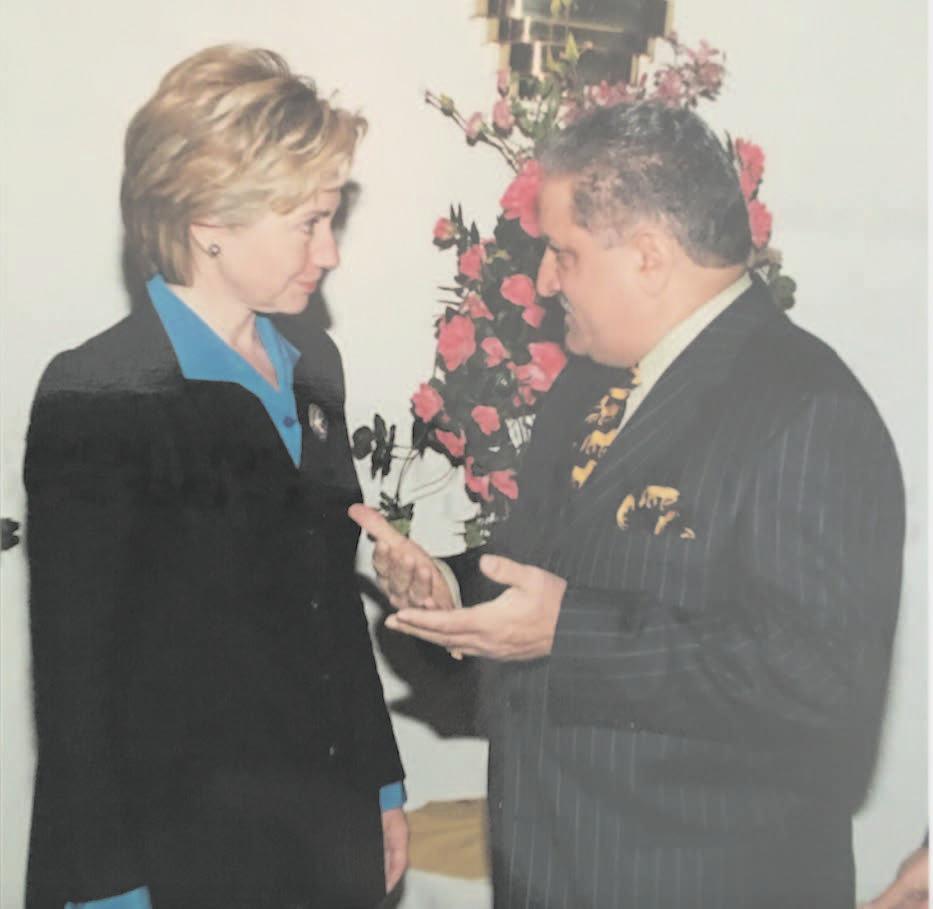
    Republican presidential candidate, Donald Trump, was quoted as saying, “I must tell you, it’s a weakness I love the beautiful Indian actresses. There’s nothing like them.” Democratic presidential candidate, Hillary Clinton, has also expressed her gratitude for the unique ways the arts can connect two vibrant countries with two impactful cinematic industries and complimented Dandona for bringing Bollywood to the US.

    “Both the presidential hopefuls have commended my efforts for bridging the US and India through the medium of entertainment -Bollywood Awards,” said Dandona. He added, “It is an undeniable fact that cultural entertainment is a bridge of enhanced understanding between United States and India.”

    He is optimistic that US relations with India will continue to improve in the next presidential cycle, regardless of which candidate is elected. A longtime resident of New York, Dandona’s latest entrepreneurial venture – Soch Entertainment – is expected to seamlessly link talent agencies, show promoters and new artists worldwide for the first time ever, through a comprehensive online platform.

    “Soch Entertainment, spanning over 150 countries will bring the power of cutting edge technology and social media to market your mission to the universal doorways of entertainment. We get your talents & events noticed and get you the attention you deserve from the movers,” he said.

    Dandona’s globally televised events have been attended by the likes of Hollywood’s most notable figures like Michael Jackson, Richard Gere, Sharon Stone, Bradley Cooper and Tyra Banks as well as Bollywood superstars Shah Rukh Khan, Priyanka Chopra, A.R. Rahman, Aishwarya Rai – to name a few.

  • Obama Names Presidential Delegation for Canonization of Mother Teresa

    Obama Names Presidential Delegation for Canonization of Mother Teresa

    WASHINGTON (TIP); President Barack Obama has announced the designation of a Presidential Delegation to attend the Canonization of Mother Teresa in Vatican City on September 4.

    Lisa Monaco, Assistant to the President for Homeland Security and Counter terrorism, will lead the delegation and members of the delegation include Kenneth Hackett, U.S. Ambassador to the Holy See, Department of State; Suzy George, Deputy Assistant to the President and Executive Secretary and Chief of Staff, National Security Council, Sister Donna J. Markham, President and CEO, Catholic Charities USA and Dr. Carolyn Y. Woo, President and CEO, Catholic Relief Services.

  • Two out of 5 kids are out of school: UNICEF

    Two out of 5 kids are out of school: UNICEF

    UNITED NATIONS (TIP): UNICEF has issued a new data analysis that shows in the 10 countries with the highest out-of-school rates, 40 per cent of children – 18 million – are not accessing primary education.

    The analysis comes at a time when millions of children around the world are preparing to go back to school.

    In the top 10 countries with the highest rates of children missing out on primary education, nearly 2 in every 5 children – 18 million – are out of school, UNICEF said

    Liberia is home to the highest proportion of out-of-school children with nearly two-thirds of primary-aged children not accessing school. The second highest is South Sudan, where 59 per cent of children are missing out on their right to a primary education and 1 in 3 schools is closed due to conflict.

    Afghanistan (46 per cent), Sudan (45 per cent), Niger (38 per cent) and Nigeria (34 per cent) also feature in the top 10 countries with the highest primary out-of-school rates, painting a clear picture of how humanitarian emergencies and protracted crises are forcing children out of school.

    The UNICEF data analysis, which comes as millions of children return to school this month, highlights the extent of an education crisis affecting countries already blighted by conflict, prolonged periods of drought, flash floods, earthquakes and high rates of extreme poverty.

    UNICEF fears that without education, a generation of children living in countries affected by conflict, natural disasters and extreme poverty will grow up without the skills they need to contribute to their countries and economies, exacerbating the already desperate situation for millions of children and their families.

    Education continues to be one of the least funded sectors in humanitarian appeals. In 2015, humanitarian agencies received only 31 per cent of their education funding needs, down from 66 per cent a decade ago. Despite a 126 per cent increase in education requirements since 2005, funding increased by just 4 per cent. Moreover, education systems equipped to cope with protracted crises cannot be built on the foundations of short-term – and unpredictable – appeals.

    During the World Humanitarian Summit, held in May 2016, a new global funding platform, Education Cannot Wait, was launched to bridge the gap between humanitarian interventions during crises and long-term development afterwards, through predictable funding.

    Though not one of the top 10 countries with the highest rates of out-of-school children, Syria is home to 2.1 million school-age children (5-17) who are not in school. An additional 600,000 Syrian children living as refugees in the surrounding region are also out of school.

    Recent, reliable data from countries including Somalia and Libya are not available either from administrative or survey sources partly due to the continuing conflicts.

    “For countries affected by conflict, school equips children with the knowledge and skills they need to rebuild their communities once the crisis is over, and in the short-term it provides them with the stability and structure required to cope with trauma. Schools can also protect children from the trauma and physical dangers around them. When children are not in school, they are at an increased danger of abuse, exploitation and recruitment into armed groups,” said UNICEF Chief of Education Jo Bourne.

  • President – Elect of the United Nations General assembly to visit India

    President – Elect of the United Nations General assembly to visit India

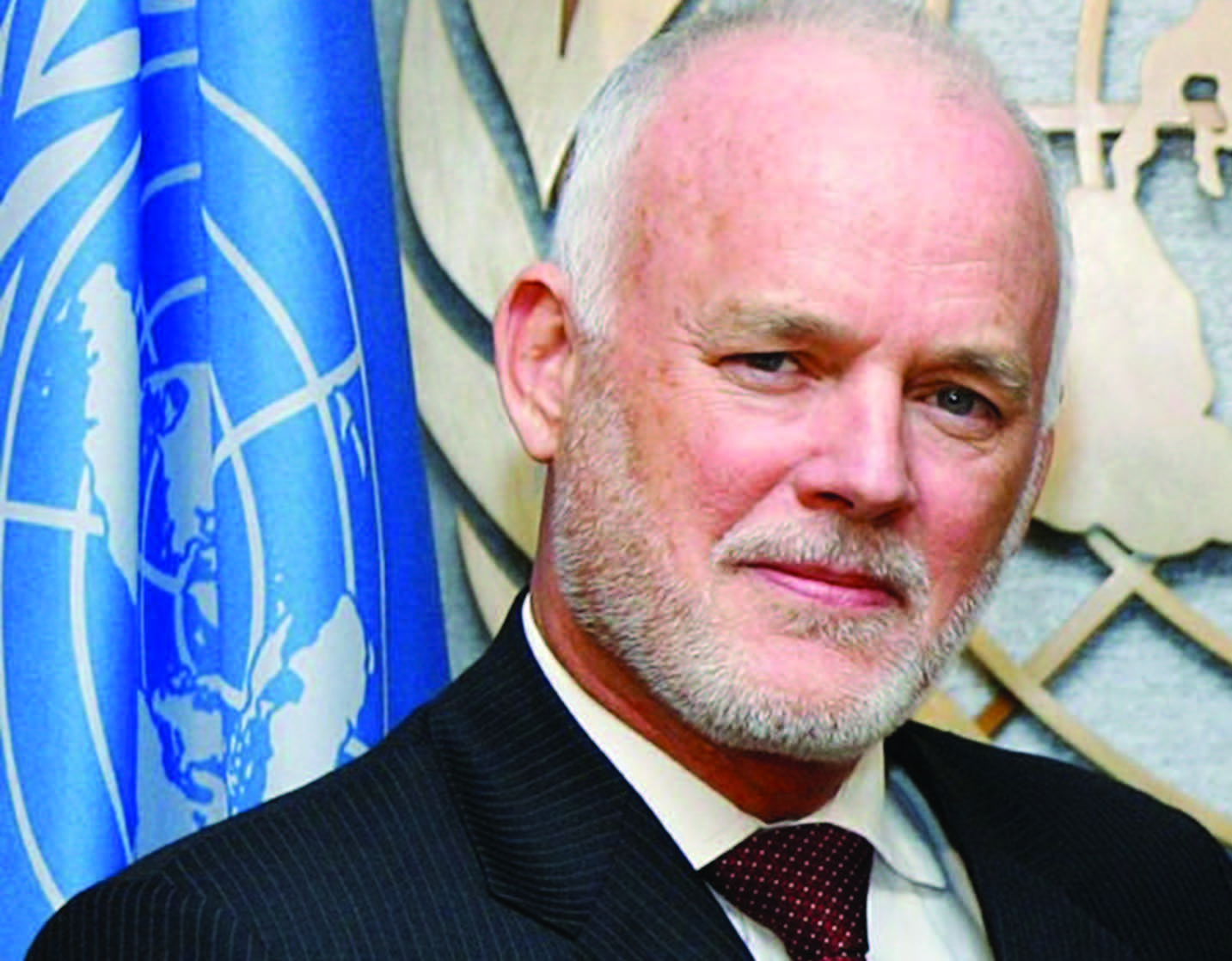
    UNITED NATIONS (TIP): The President-elect of the 71st session of the United Nations General Assembly, Ambassador Peter Thomson, will visit China later this week and India early next week.

    Ambassador Thomson will spend Friday 26 August attending official meetings in Beijing. It is expected the President-elect will meet with Chinese Premier Li Keqiang, State Councillor Yang Jiechi and Minister of Foreign Affairs Wang Yi.

    On Monday 29 August the President-elect will be in New Delhi for official meetings with the Indian Government. It is planned that he will meet with India’s Prime Minister Narendra Modi, External Affairs Minister Sushma Swaraj and Secretary for External Relations, Sujata Mehta.

    Ambassador Thomson said: “Coming from the Asia-Pacific nation of Fiji, I am pleased to have this opportunity to visit the two biggest countries in the regional group to which I belong. I look forward to the high-level talks I will be having with the Governments of China and India. My main interest will be to discuss how the United Nations can assist and accelerate the implementation of the 2030 Agenda for Sustainable Development.”

    The President-elect will be accompanied by the Office of the President of the General Assembly’s Chef de Cabinet Ambassador Tomas Anker Christensen and Senior Adviser Meena Syed. For the Beijing visit, Wen Li, Senior Adviser to the Office of the President of the General Assembly, will also accompany the President-elect.

  • India Should Harness Research: NJ Author

    India Should Harness Research: NJ Author

    NEW YORK: The number of Indians and persons of Indian origin who have enriched many nations, and humanity as a whole, through applied research and innovation in a multitude of fields has increased dramatically, says V. Ramaswami, the New Jersey based Indian American author of the to be released book “Innovation by India for India: the need & the challenge.”

    This should be re-assuring for India particularly because a significant fraction of these have had their initial graduate education and training in India. There can be no doubt that the capacity of the Indian mind and the will of the Indian can match any other. India’s indigenous scientific advances in the nuclear, space, and super-computer technologies are remarkable and attest further to the scientific and engineering talent in the country, he says.

    India’s scientific and technical establishments have many feats to boast about, including the recent successful launch of an orbiter to Mars at a per kilometer cost “less than that of a one kilometer auto-rickshaw ride in Ahmedabad.” Despite all of its above accomplishments, India is yet to harness commercially its research and innovation capabilities. Despite being a significant contributor to the information sector, not a single Indian enterprise has come close to any of the new age technology giants.

    What are those impediments that hold back the Indian in India in the sphere of applied research and its commercialization? Why it is that new product generation is low even at the low end where little technology is needed? Can those issues be redressed and if so how? These concerns form the main focus of this book. Some key factors are identified and examined in detail in the Indian context to find some possible actions for improvement in the book.

    The book deals with the creation of an ecology for commercializable innovations by Indians in India and owned by India. The timing for the book is perfect. There is so much interest in the Modi government to generate many start-ups but unfortunately, it has not worked out well from the response to the call for applications for funding, the author says.

    The most poignant example is the fact that our soldiers in Kargil were struggling with hand cranked telephones while Pakistanis had Motorola satellite phones for which Indian engineers wrote the software. Whoever got rich by working for others?  “Make in India” is much needed but if we stop there, we will become a nation of coolies and laborers for others and not realize our “tryst with destiny” much talked about, he says.

    He was motivated to write the book by former Indian President Dr. APJ Abdul Kalam whom he had met in Anna University in Chennai where he had gone to deliver the Ramanujan lecture series.”In a 45 minute one on one session, I did give him a lot of my views and he felt I should put them down in writing.  He said he is betting entirely on India’s young.”  The book comes recommended by Dr. Anurag Kumar, Director of the Indian Institute of Science and Padmabhushan Dr. Rajaraman of IISc’s supercomputer center.”

    Cover of the yet to be released book
    Cover of the yet to be released book

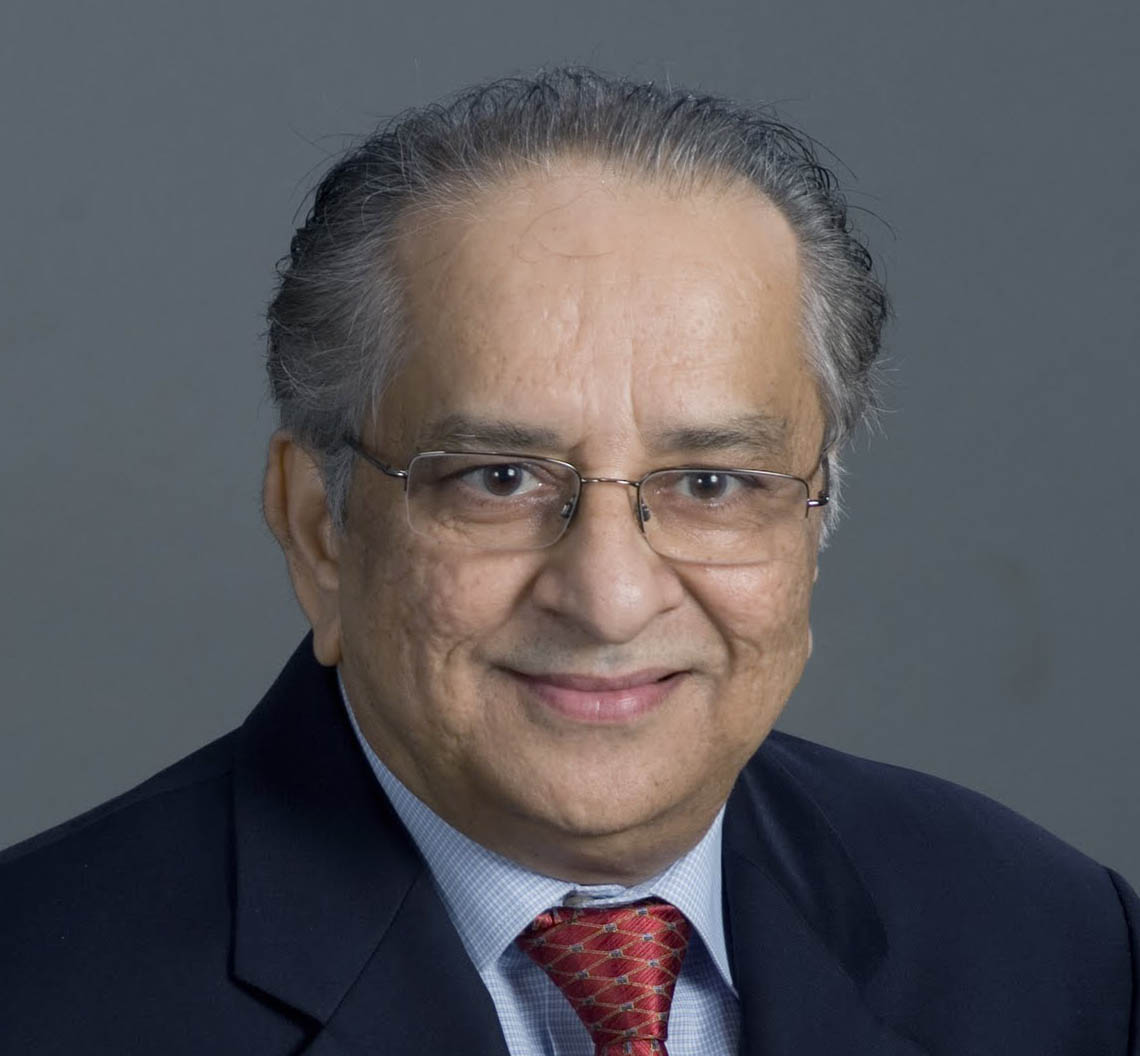
    The author, Dr. Vaidyanathan Ramaswami, a former Chief Scientist at Bell Communications Research, has an innovative track record of research in applied probability and telecommunications with work impacting many real world systems and international standards.  He is the author of over seventy five research papers and a noted monograph, and holds many patents related to communications.  His career has also covered academia as a faculty member and is embellished further by his involvement with several start ups in the areas of strategy and research.  He has a deep interest in India and has written many articles and blogs on Carnatic music, Hindu philosophy, and Indian economy and politics.

    The book is to be released in Chennai on July 22 at the Alumni Association meeting of the Madras Institute of Technology which is the alma mater of Dr. Abdul Kalam.