Author: Vipin Pubby

  • Modi, Nitish brace up for ‘mother of all elections’ in Bihar

    Modi, Nitish brace up for ‘mother of all elections’ in Bihar

    Just hours after returning to Delhi from a whirlwind 48-hour visit to the UAE, Prime Minister Narendra Modi landed in Bihar and announced a massive Rs 1.25 lakh crore package for the poll bound state.

    The war of words between Modi and Nitish has intensified, with each passing day.
    The war of words between Modi and Nitish has intensified, with each passing day.

    The package, which came as a bombshell for the combined rival group led by Bihar Chief Minister Nitish Kumar, has sparked off a fresh offensive for the elections scheduled later this year in the politically sensitive state.

    The importance of Bihar polls for the Bharatiya Janata Party, and for Modi personally, can be gauged from the fact that he has held three rallies in the state in less than a month. Even while Parliament was in a turmoil, Modi was conspicuously absent from Parliament, but missed no opportunity to visit Bihar. Since Parliament was in session, he waited for it to get adjourned before making the announcement regarding the package in Bihar. He also knows very well that such announcements can not be made after election schedule is announced and model code of conduct comes into force.

    Vowing to change the fate of Bihar, Modi said Bihar will get a grant Rs 1.65 lakh crore if the total unutilized Rs 40,000 crore is added to the Rs 1.25 lakh crore package he announced on Tuesday.

    He also laid foundation stones for 11 projects of national highways and inaugurated the 83 km long Muzaffarpur-Sonbarsa national highway after its conversion into two-lane road.

    Rubbing it in where it matters most, Modi said : “I had said Bihar is among the Bimaru states (Abbreviation for Bihar, Madhya Pardesh, Rajasthan and Uttar Pradesh considered to be laggard states) and that we have to get it out of there but the Chief Minister (Nitish) took offence and said Bihar is no longer a Bimaru state.” Turning the Janata Dal United’s strategy of alienating the BJP for denying special packages for the state on its head, Modi asked the gathering, “if Bihar is not among Bimaru states, why is the Chief Minister persistent in his demands for special package for the state?”

    A sharp reaction to the package and the claims made by Modi was only expected from Nitish Kumar. He declared that the package announced by Modi looked like “an auction of Bihar was being held”. Holding out Bihari pride, he said that Modi had “humiliated” the state government and asked “what kind of cooperative federalism is this ?” in which a chief minister seeking central aid is depicted as a beggar.

    At one of the rallies, Nitish Kumar said that if Biharis in Delhi decide not to work for a day, it will come to a standstill.

    The chief minister said that several projects which found mention in Modi’s speech were already pending with the Centre while Congress Vice President Rahul Gandhi said Modi was in the habit of making such promises on the eve of elections which are forgotten later.

    While the JD(U), RJD, Samajwadi Party, NCP and the Congress combine has projected Nitish Kumar as the CM candidate, the BJP is yet to decide its chief ministerial face. Modi is BJP’s star campaigner and  the party is focusing on the developmental agenda. The Nitish led alliance is also banking on caste equations along with its claim for ushering in major development in the state.

    The Election Commission is yet to announce the dates for the high profile elections but both sides are already gearing up for the battle, which was recently described as the ‘mother of all elections’ by the chief election commissioner Nasim Zaidi.

    The BJP is looking at increasing its tally in Rajya Sabha if it secures a win in Bihar. Currently, the party has 4 members from Bihar in the Rajya Sabha, where the NDA is in minority. BJP’s good performance in the Assembly election will help the party in sending in more members to the Upper House to counter the Congress-led Opposition, which has been blocking the NDA government’s move to get important legislations passed. Bihar has a quota of a total of 16 seats in the Rajya Sabha.

    Bihar election results would also be a matter of high stakes for BJP’s master strategist Amit Shah. The man, who is credited for his party’s overwhelming success in 2014 Lok Sabha polls, had played a pivotal role in the party getting huge numbers in Uttar Pradesh.

    The elections are vital for the BJP as a victory in Bihar will come as a morale booster for the saffron camp ahead of the assembly polls in West Bengal, Punjab and Uttar Pradesh. West Bengal goes to polls next year whereas the elections in politically more significant UP and Punjab are scheduled to be held in 2017.

    As Hindustan Times in its editorial put it : Amid caste alliances, coalition dynamics, modernizing rhetoric and personality clashes, few know what the next few weeks would bring, let alone discerning the outcome.

  • India-Pakistan talks under a cloud

    India-Pakistan talks under a cloud

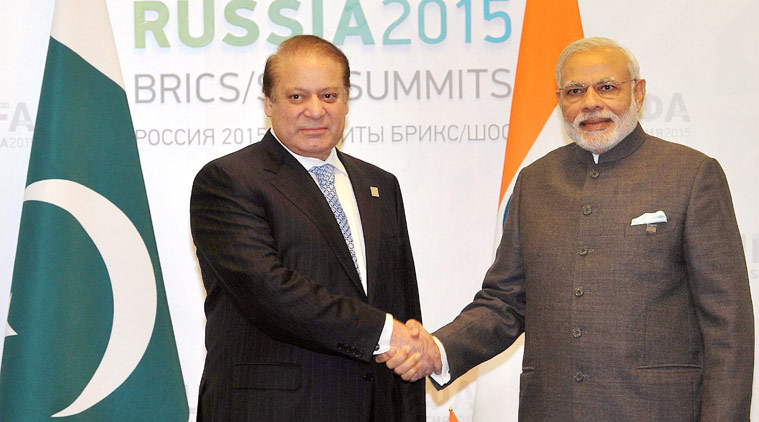
    The proposed talks between the National Security Advisors of India and Pakistan this Sunday, which were decided at a meeting between Prime Minister Narendra Modi and his Pakistan counterpart Nawaz Sharif in Ufa, have come under a cloud due to a variety of reasons.

    Both India and Pakistan have been exchanging skirmishes along the Line of Control and these increased sharply on the Independence Day of India. Both sides have been reporting several civilian casualties and there is yet no indication of a slow down in the exchange of fire. Also there had been terrorist attacks that have emanated from Pakistan in Gurdaspur and Udhampur. A Pakistani national was also caught alive near Udhampur and his parents have owned him despite the fact that Pakistan had denied that he was its citizen.

    But besides the escalating violence along the LoC and the terrorist attacks, what may put the talks in to jeopardy is the insistence of Pakistanis to invite Hurriyat leaders for a reception being held by the Pakistan High Commissioner in honor of the visiting NSA Sartaj Aziz on August 23. Last year the government had called off talks between the foreign secretaries of the two countries for precisely the reason that Pakistan High Commission had invited Hurriyat leaders for talks prior to the meeting scheduled to take place in Islamabad on August 25.

    Though there is no official word from the External Affairs ministry, sources say that the government was closely “monitoring” the situation and that the talks may be called off if Pakistan insists on hosting the Hurriyat leaders before the two NSAs meet. India sees the invitation to the Hurriyat leaders as the defiant attitude of Pakistan and a provocation to call off the talks.

    Pakistan High Commission has, however, defended the invitation and has said that there was nothing “unusual” in calling the Hurriyat leaders for a meeting with the Pakistan NSA. “it is part of our consultation with the relevant stakeholders as we discuss the resolution of the Kashmir issue”, a spokesman of the High Commission said.

    It may be remembered that the Pakistan Prime Minister had received a hostile reaction to his joint statement with the Indian Prime Minister because of the absence of the ‘K’ word in the statement.

    On its part Pakistan plans to bring to the table its grievances against India including the issue of bail granted to the main accused in the Samjhauta blast case and India’s alleged interference and encouragement to militants in FATA and Balochistan.

    Pakistan army chief General Raheel Sharif and Director General of ISI Lt Gen Rizwan Akhtar met Prime Minister Nawaz Sharif earlier this week to discuss the issues to be taken up at the NSA level meeting. It was decided at the meeting that Indian Intelligence Agency RAW’s alleged interference in Pakistan would be among the top agenda items during the talks besides the ceasefire violations along the LoC. A Pakistani newspaper reported that Pakistan will stress on laying out a counter terrorism mechanism during the talks.

    Hurriyat leaders Syed Ali Shah Geelani and Mirwaiz Umar Farooq have confirmed that they had received the invitation from the Pakistan High Commission and stressed that they would go for the meeting. They insisted that it was not a formal dialogue but only a consultation process and said they would tell the Pakistan NSA about the current situation in Kashmir. Geelani said they would urge Pakistan to maintain continuity and stability on its Kashmir policy. “We willl also tell him that Pakistan should use its diplomatic channels to project the Kashmir issue more forcefully and effectively”.

    The two countries hardened their stand on Thursday, August 20, with Pakistan canceling Commonwealth Speakers’ conference because India insisted that the Speaker of JK Assembly should be invited otherwise it shall boycott the conference. On the other hand India placed Hurriyat leader Geelani under House arrest. Some other leaders were also taken in custody but within two hours of their detention, they were let off.

    Anything can happen between now when we are going in to publication and the next few hours.

  • PM Modi’s Promises made a year ago – a Status Report

    PM Modi’s Promises made a year ago – a Status Report

    During his Independence Day speech in 2013, a year before he delivered his first speech as prime minister from the Red Fort, Narendra Modi delivered his speech as Gujarat chief minister in a college in Kutch, to rebut what the then PM Manmohan Singh had said some time ago at the Red Fort. He took a dig at UPA’s 10 year rule and said that the TV channels and media “say that it was PM Manmohan Singh’s last speech from Red Fort. He says he has miles to go. Which rocket does he intend to take to cover these miles”.

    Modi repeatedly hit at Manmohan Singh’s speech and picked holes in whatever he had said. He pointed out the PM had mentioned the same problems that Jawaharlal Nehru had mentioned in 1947. “So what had they been doing all these years ?”, he asked.

    And while delivering his first speech from Red Fort as the prime minister next year, Modi unveiled his roadmap for a bold, new India while listing out key welfare schemes along with ‘small ideas’ that could make a big difference. Observers listed out at least 42 promises that he made during the speech but let’s examine some key promises that he held out that day.

    Clean India campaign

    One of the pet projects of Prime Minister Modi, which he listed at the Red Fort, was a campaign for a clean India. A very laudable step, which evoked a lot of support initially, appears to be floundering a few months after the prime minister himself kick started it at Delhi. He generated good public response when he himself picked the broom while his fellow ministers and MPs did the same ritual across the country. Not just that, he nominated nine ambassadors for the campaign who were supposed to further nominate nine each and thus there was supposed to be chain reaction throughout the country. However, the `Swatch Bharat’ scheme has barely taken off – and that that too only in Varanasi, the constituency from where Modi was elected as MP. He has visited the town a couple of times and has also set up an expert committee to formulate a `Save Ganga” plan but the cities and towns appear to be getting dirtier by the day. Going by the current progress, the aim to clean up all the cities and villages of the country by 2019, when the country observes the 150th birth anniversary of Mahatma Gandhi, appears far fetched.

    Make in India

    During his first Independence Day speech from Red Fort, and subsequently during his large number of foreign visits, Modi has been making a pitch for “Make in India” to make the country a hub of manufacturing. He had been saying that we have the population, skill, talent and talent to do it. Again no major project has taken off during the last one year except that a Taiwanese mobile phone and accessories company has announced that it would be setting up a major hub in Maharashtra. Even his numerous trips abroad have so far not yielded major manufacturing projects and it appears the foreign investors, as well as those at home, are yet to gain confidence to invest in the country. Some of them have expressed apprehensions over the continuing talk of “ghar wapsi” (home coming of Hindus after conversion), unfriendly policies towards multi national companies and the emphasis on “swadeshi” products. The haste with which the government banned Nestle’s popular `Maggi noodles’, and has now even filed a class action suit against the Company seeking Rs 639.95 crore in damages for “unfair trade practices” and “gross negligence, apathy and callousness”, has raised eyebrows. The Company has been charged with using Monosodium Glutamate (MSG), which is considered safe in several countries including the US, and which the company has claimed it does not use. Several laboratories where samples were sent for testing, have sent back contradictory reports. Further, the Company has been asked to withdraw all stocks leading to losses worth crores of rupees. Such hasty, and doubtful, steps are bound to cause skepticism among MNCs who will think many times over before investing in India. The over the top reaction of the government may have stopped several MNCs in their tracks.

    Toilets in schools

    One of the announcements made by Modi from the Red Fort was to set a target for one year to have toilets in each government school, with a separate facility for girl students. He said it was essential as a large number of girls opted out of schools because of a lack of such a facility in the premises of schools. He asked all the MPs to take the mission forward. Corporate participation was also sought under their corporate social responsibility. A recent news report, barely a fortnight ago, said that 85 per cent of the government schools across the country have made the provision and that the central government has asked the rest 15 per cent to complete the target by August 15 this year. If the figures are correct and the toilets have been actually constructed and put to use, it is indeed a laudable achievement of the government.

    Getting Back Black Money

    He had declared that the government would set up a task force to initiate the process of tracking down and bringing back black money stashed in foreign banks and offshore accounts. This was one promise that he and the BJP had been making again and again in the run up to the elections. He was earlier quoted as saying that “people say that if the black money stashed in foreign bank accounts is brought back and distributed amongst the poor in India, then each poor man will pocket Rs 3 lakh each…..““I have decided if you bless me and give me the opportunity I will bring back all the black money”. However, this is one of the promises which has remained just that, a promise. The government has submitted a report to the Supreme Court and has taken the plea of the clause of confidentiality with foreign countries and banks not to disclose details of the account holders. The government has not yet come out with figures on how much black money it has unearthed or brought back home but evidently there is little progress as it has not made any claim to be successful in its aim.

    Banking for the poorest

    He said that taking banking to the poorest, the Pradhan Mantri Jan-Dhan Yojana will give each family a bank account with a debit card and an insurance cover of Rs 1 lakh. He said that, ironically, there are crores of citizens who have mobile phones but no bank accounts. To give credit to Modi, his government has launched two significant schemes. One is to start a campaign where each family shall have a bank account. Banks have been asked to open bulk accounts. The account holders have been offered an attractive accident insurance scheme, Pradhan Mantri Suraksha Bima Yojna, under which they have to pay only Rs 12 per annum as premium for an accident assurance of Rs 2 lakh. Under another scheme, called Jeevan Jyoti Beema, all bank account holders will get a Life Insurance worth Rs 2 lakh at just Rs 330 per annum. The exact figures on the bank accounts opened and beneficiaries of the schemes have not been disclosed but there appears to be some progress on ground.

    Adopting a village

    The Prime Minister asked all members of Parliament to adopt a village in their constituencies and turn it into a model village by 2016 using their development funds. The Sansad Aadarsh Gram Yojana strives to usher improvements in health, sanitation, greenery and cordiality. Most of the BJP members of parliament have adopted a village each in their constituencies but according to recent media reports, a large number of MPs from other parties have not done so. However, some of the villages adopted by BJP members do not match the spirit behind the move. They have adopted villages which are easily accessible or already have basic infrastructure in place. For instance, the Sarangpur village adopted by the Chandigarh MP Kiron Kher is along the main highway and is already considered a developed village.

    The digital age

    The PM said he wanted to connect every Indian through technology, provide governance via mobile phones and have every village on a broadband platform. Set up a National Optical-Fibre Network up to the village level; and Wi-Fi zones in public areas. He placed a lot of emphasize on e-governance for effective governance. Some work in this field was already underway and several states and cities had already set up e-governance models. While there is a fillip in adoption of the technology during the last year, it is difficult to quantify the change after Modi’s speech last year. One major initiative taken by his government in this regard is to identify and adopt 100 cities across the country which are to be declared Smart Cities. Recently the central government initiated to identify such cities by holding a “test” of the existing facilities and to find out whether they can be designated as Smart Cities. The centre has promised to provide special grants to increase the use of e-governance in these identified cities.

    A skilled workforce

    The Prime Minister had declared that the government’s mission was to create a skilled workforce that can be employed anywhere in the world and encourage entrepreneurship to create more jobs at home. There is not much progress at the grassroots level to boost skilled work force even though Modi had been referring to the need to have such a force. No concrete steps have yet been announced to increase skilled force except that the industry has been asked to prepare plans which could match the output of skilled workforce with employment opportunities.

    End of Planning Commission

    Yet another announcement made by the PM was to wind up the Planning Commission set up by former Prime Minister Jawaharlal Nehru. Instead, he said, it will make way for an institution that gave a new direction to the country through creative thinking, public-private partnership and optimum utilization of resources. Steps have been initiated in this direction and the Planning Commission has indeed been disbanded and a Niti Aayog has been set up. However, its first meeting held last month saw the participation of only the chief ministers of BJP and its allied ruled states. The other chief ministers wanted a greater role for the states – a demand also aired by Punjab chief minister Parkash Singh Badal who is running the state government in coalition with the BJP.

  • How Gurdaspur terror attack is a wake up call

    How Gurdaspur terror attack is a wake up call

    Sand bags and fortifications have come up again outside the Dinanagar Police Station as an aftermath of the July 27 terrorist attack, which could have led to a bigger disaster if a bus driver and railway employees were not alert enough.

    The attack, the first such attack in nearly two decades in Punjab, is a wake up call for the security agencies in the state which had adopted a smug attitude after a peaceful span and had not expected such an attack as only Jammu and Kashmir had remained on the target of the terrorists from across the border over the years.

    Fortunately there is no indication of involvement of Sikh militants or supporters of Khalistan. There were initial reports quoting an eyewitness that there was a Sikh in the group. However, his claim was proved wrong and apparently in a state of panic he thought that one of the terrorist with long hair was a Sikh. Even a section of media initially speculated the hand of separatists based in Pakistan. Their speculation was solely based on assumption that such attacks from across the border were only aimed at Jammu and Kashmir and that there was no reason for them to have crossed into Punjab.

    However, they were proved wrong as the terrorists did not shout any slogan in favor of Khalistan nor did they leave behind any placard, banner or document to even remotely link the attack with the demand for Khalistan. The only reason, what the investigations have come to a conclusion, is that they found Punjab region an easy target in view of heavy security deployment in Jammu and Kashmir.

    Now it is not just the Dinanagar Police Station, which is located only about 15 kilometers from the international border, but several other police posts and stations close to the border have been ordered to set up security posts outside their complexes.

    The fortifications are a reminder for the old timers who were witness to macabre play of violence, torture, death and destruction during the decade and a half of bloodshed in the 80s and 90s in Punjab. Not just the fortifications outside the police stations, there were the ubiquitous nakas (check points) dreaded by all citizens. The highways and other roads were deserted before the sun set and there was a general atmosphere of fear. The attack has come as a rude reminder of the dark era which had brought the state on the brink of ruin and had left thousands killed and maimed.

    While the new generation, just stepping into youth, may be unaware of the situation during the dark period, those who had witnessed and particularly those who had suffered, now dread a repeat of such a situation. In fact there was hardly any family which was not affected directly or indirectly and many had to leave their homes and hearths for safety or a new life.

    Old timers recall how it was the rule of the security forces during the day time and that of the militants during the night hours, particularly in the rural areas. The common people were the worst targets from both the sides. Even if someone was remotely suspected to be protecting or supporting militants, the police would pick him up and there was little surety that he would ever return. Similarly if the militants suspected any one to be a police informer, he would face the wrath of the militants.

    There were tales of young men picked up by the security forces who were initially kept in torture cells and then there were reports that they had “attempted” to escape and were shot dead. Even till date there is no information about hundreds of young men of whom there is just no trace. Thus thousands of families were ruined and there is still no closure for them even though several policemen were still facing trial for alleged fake encounters. At couple of police offices, facing serious charges, have committed suicide.

    On the other hand it was the writ of the militants in the state, particularly in the rural areas, where they took shelter a night. There were several instances in which the militants killed innocents. There were also incidents when they ordered all non Sikhs to come out of public buses, lined them up and shot them dead. In one particular instance, they queued up engineering students from other states and shot them dead.

    On the other hand it was the writ of the militants in the state, particularly in the rural areas, where they took shelter a night. There were several instances in which the militants killed innocents. There were also incidents when they ordered all non Sikhs to come out of public buses, lined them up and shot them dead. In one particular instance, they queued up engineering students from other states and shot them dead.

    Even as violence dominated the state and the common people suffered, there was a sharp decline in its economy. While funds were diverted for security, and often misused or misappropriated, the businessmen began moving outside the state to safer pastures. Several of them, who were particularly targeted by militants as well as security personnel, wound up their establishments and shifted to other states. Even now, many of them have not returned.

    The Gurdaspur terror attack as brought back the specter of violence. The GPS coordinates have confirmed the target of the terrorists was Punjab and not Jammu and Kashmir this time. This could be partly due to their strategy to widen the arc of their target areas so as to further stretch the resources of security forces. Also, a mischievous attempt to vitiate the peaceful atmosphere of Punjab cannot be totally ruled out. The ultimate target of the terrorists to reach Gurdaspur is an indication that they were not aiming at fomenting trouble in Jammu and Kashmir.

    If the reports are true, this incident, seen in conjunction with the attempts to revive the demand for Khalistan, could point to a more sinister design behind the attack. Even as a section of NRIs are reportedly stepping up their effort to re-ignite the flames in India, their protégé 83-year Surat Singh Khalsa is currently on indefinite fast to demand release of Sikh prisoners who had completed their terms. This may not be possible because as per a Supreme Court ruling those prisoners who are convicted for terrorism and other heinous crimes cannot be given remission and have to serve the entire life in jail if they were handed over life term.

    Another indication of the militants and their supporters getting active is the demand to shift Sikh prisoners to Punjab. The state government has recently helped in getting two of these, including Devinder Singh Bhullar, to Punjab. Though a mental patient, Bhullar poses no threat to anyone but the reception they got from a section of supporters of Khalistan on their arrival in the state was an indication that the demand is still brewing and a little push may disturb the hard earned peace in Punjab. Also there are reports that a section of NRIs have started a campaign called Referendum 2020 to build public demand for a referendum in favor of a separate state. A resolution to this effect was recently passed in Toronto and there are apprehensions that the demand may be raised during Prime Minister Narendra Modi’s visit abroad next month. The union home ministry had also recently sent an advisory to the state government to step up alert and guard itself from attempts to revive militancy in the state.

  • Lessons from Kargil war: Can another Kargil happen again?

    Lessons from Kargil war: Can another Kargil happen again?

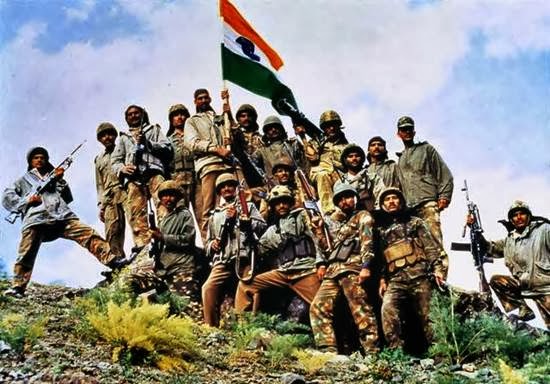
    It took over two months for the Indian forces to push back the intruders and reclaim the posts under an operation code named Op Vijay. India lost 527 officers and soldiers in the operation and hundreds of others were injured. Pakistan never officially admitted that its soldiers were involved, despite the fact that official documents recovered from bodies had confirmed that they were regular soldiers of Pakistan Army in civilian clothes.

    On the eve of the 16th anniversary of the battle, its chief strategist and former Pakistan President Parvez Musharraf, who was then his country’s army chief, has raked up a controversy and has openly admitted the role of Pakistan armed forces.

    Addressing a convention of the youth wing of his party, the All Pakistan Muslim League (APML) earlier this week, Musharraf said that the Pakistani armed forces had caught their Indian counterparts by surprise in Kargil. He claimed that the Pakistani armed forces had won the Kargil battle in 1999 but the then Nawaz Sharif-led government had converted the success into a political defeat.

    “I don’t think India would ever be able to forget the three-month-long battle (Kargil war) when our gallant armed forces caught them by the throat,” Musharraf said.

    Musharraf, 71, who is facing several court cases and is presently based in Karachi, said the Pakistan Army along with the second-line force had entered Kargil district of Kashmir Valley and seized strategic positions at five locations, four of which were not even known to the Indian forces.

    “I can say it was our greatest military victory over India as they couldn’t even claim back half of one strategic location in one area but regrettably our politicians wasted this opportunity,” he said according to agency reports.

    Musharraf, who later seized power in Pakistan after overthrowing Sharif government in a bloodless coup, had been working on the plan to infiltrate in to Kargil even as the then Indian Prime Minister Atal Behari Vajpayee had visited Pakistan on a bus through the Wagah border at the invitation of Sharif. As it turned out later, even Sharif had no inkling of the plan being hatched by his Army chief.

    Ironically, even as Vajpayee was visiting Pakistan on a goodwill tour in February 1999, the Operation Kargil had already been put in force by Musharraf. About 200 Pakistan soldiers disguised as mujahideen had moved in to hold some of the posts vacated by Indian soldiers before the onset of winters in late 1998. The vacation of such posts during winters was a yearly exercise which was also very well known to the Pakistan Army. This time, however, they occupied the posts and Indians got a whiff of it only after the winters somewhere in May 1999 when some cattle grazers informed the authorities about the occupation of the posts.

    The most important factor behind the daring act by Musharraf and his men was the fact that Pakistan had developed a nuclear deterrent and was confident that India would dare not attack it or wage a full fledged war fearing a nuclear attack from Pakistan. If ever such an eventuality was to take place, Pakistan could have inflicted huge losses on India, particularly at its strategic and vulnerable locations, though in the bargain, India had the reserves to wipe out Pakistan from the face of the earth.

    Musharraf was, however, confident that other world powers would intervene before India could flex its nuclear muscles. That actually happened and even as India made veiled references, besides mounting a major operation including strafing by the Air Force, backdoor diplomacy ensured that such an eventuality did not take place. India claimed a comprehensive victory while Pakistan claimed that the Mujahideen had themselves withdrawn from some of the posts.

    The question now if whether such a battle can take place again given the fact that nuclear deterrent is very much in place and so is the hostility off and on displayed by Pakistan armed forces and militants sponsored by it.

    Despite the meetings between Indian Prime Minister Narendera Modi and his Pakistan counterpart, the two sides have been blowing hot and cold over the past year. In fact merely a couple of days after their last meeting in Ufa in Russia, the two sides exchanged firing along the international border and skirmishes were reported from several points along the Line of Control. The situation cooled off so quickly after the Ufa meeting that Pakistan Rangers did not even accept the traditional mithai offered by the Border Security Force personnel on the occasion of Eid.

    Senior Army officers, and those who are in the know of things, do not rule out skirmishes along the border but tend to rule out any largescale battle between the two nations. Kargil has taught a major lesson to India and it no longer allows its posts to be vacated during the winters. There has been a significant upgrade in the vigilance and surveillance equipment and strength along the border, particularly at vulnerable posts. They also hold the opinion that India is better prepared to ward off any such attempt and Pakistan can no longer expect to spring a surprise. Besides the nuclear deterrence, the two countries can ill afford to go in for a prolonged war with other nations, particularly the US, keeping a close watch so that the situation does not get out of control in the sensitive region despite provocations such as the latest one by Musharraf’s statement.

  • Ten years of India-US Nuclear Deal-Transforming bilateral ties

    Ten years of India-US Nuclear Deal-Transforming bilateral ties

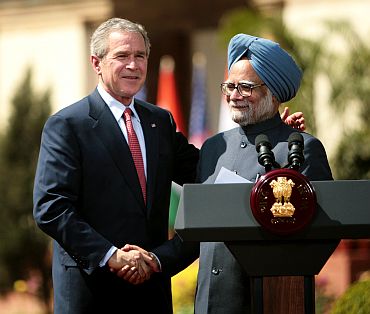
    Ten years ago a historic, though unexpected, announcement was made in Washington after a meeting between the then US President George Bush and the then Indian Prime Minister Dr Manmohan Singh. It said that the US would “work with friends and allies to adjust international regimes to enable full civil energy cooperation and trade with India”. The deal, which had significant international ramifications, lifted the 30 year American-led moratorium on nuclear trade with India and paved way for transforming relations between the two largest democracies of the world.

    While a conference was organized in Washington on the 10th anniversary of the deal, where some of the top leaders who were associated with the process participated in discussions, the anniversary went off largely unnoticed in India. The current dispensation in the Congress perhaps did not wish to credit Dr Singh with the achievement, perhaps his crowning glory as PM, the BJP too did not wish to credit the Congress for the deal in this season of acrimony between the two parties. However, both the BJP and the Congress governments in the past deserved to be patted for the deal. As Dr Sanjay Baru, former media advisor to Dr Singh noted in his book, The Accidental Prime Minister, Dr Singh met Vajpayee on his return from the US and told him that he had only culminated the process which Vajpayee had started as the PM.

    One reason for the rather lukewarm response to the 10th anniversary of the deal is the fact that there has not been any significant gain at the ground level as far as setting up of civil nuclear reactors are concerned. In fact the first civil nuclear plant after the deal slated to come up in Haryana is still not even on a take off stage. Land for the plant has been acquired after dealing with opposition from the residents of the area but even the civil engineering work has not started as yet. However, the availability of fuel for the existing nuclear plants has made a major difference. At the time of the deal, India’s nuclear reactors were running out of fuel due to international sanctions. As per official figures, 11 of the country’s 17 nuclear power reactors were operating below capacity and the overall capacity utilization for the country’s nuclear power plants was just about 50 per cent which has now shot up to over 80 per cent after receiving fuel supplies from abroad. The lifting of sanctions has rescued the country’s nuclear program from a serious crisis.

    Still, it is the other benefits of the deal that have opened up many vistas not only with the US but with other countries as well who had placed a moratorium on trade with India at the instance of the US after the 1998 tests.

    The deal had marked a recognition by the US of the growing role of India in the international stage and its ability to act as a responsible regional and emerging global power. For India it was an end to its mistrust that the US had been “biased” and for the recognition that it was being considered a responsible partner in the process of development across the world.

    Experts say that two developments came in the way of the full realization of the deal. One was the failure of the UPA 2 in getting Parliamentary approval for the original civil nuclear liability bill that was drafted in 2010. The opposition demanded redrafting the bill which was subsequently done but with several amendments. The other was the Fukushima disaster in Japan that increased the cost of building nuclear power plants and revived the global anti-nuclear campaign, including in India.

    Yet the deal had laid the foundation to build a substantially broader partnership. It is mainly as a fallout of the deal that the US is now India’s largest trade partner in goods and services. It has also emerged as one of the major supplier of defense equipment to India. The majority of US advanced technology exports to India now do not require a license. On the other hand the US imports of high technology from India has more than doubled and exports to India have almost tripled since the deal was signed.

    The Obama Administration in its first term, as well as Manmohan Singh government in his second term, did not make much progress and did not seize the opportunity to take it forward. However, there has been some course correction in the last one year and the fillip in the strategic partnership between the two governments led by Obama and Narendra Modi has moved towards a closure on the civil nuclear deal.

    #Indo-USnucleardeal

  • Modi-Sharif  bonhomie under Strain

    Modi-Sharif bonhomie under Strain

    NEW DELHI (TIP) : The bonhomie emerging from the meeting between the Indian Prime minister Narendra Modi and his Pakistan counterpart Nawaz Sharif in Ufa last weekend appeared too good to be true.

    Perhaps for the first time, Pakistan had not insisted on the ‘K’ word – or Kashmir issue – in a joint statement. The joint statement by the Foreign Secretaries of the two countries was also vague on specifics and was open to different interpretations by both sides.

    The backlash from the Pakistan media and ‘intelligentsia’ was expected and instant. Pakistan TV anchors and debaters cried foul and forced the government to back off and issue an official clarification.

    Sharif’s Adviser on National Affairs Sartaj Aziz, who was present in the meeting between the two PMs, said on Monday, July 13 that “no dialogue will take place with India unless the Kashmir issue is included in the agenda”.

    Aziz released a two-page statement asked for “more evidence and information ” from India in the 26/11 Mumbai terror attack case” even though the joint statement after Modi-Sharif talks had said that the two sides will find ways to expedite the 26/11 trial. The Indian Government has been affirming that it has supplied sufficient information and evidence to nail the accused in the attack.

    The statement issued on behalf of the Pakistan Government also said that Sharif had sought information on the trail of Samjhauta Express terrorist incident.

    While the joint statement had referred to the need to curb terrorist activity, the two sides had a different interpretation. The Indian side took it as a reference to the militancy in Jammu and Kashmir, Pakistan has said it was deeply concerned “about Indian interference in Pakistan, including continuing support for insurgency in Balochistan”.

    Aziz said it was to address these “acrimonious concerns” that the National Security Advisers of the two countries will meet.

    Taking this (the proposed meeting of the two NSAs) as an indication, the Indian side claimed that there was no U-turn and that the talks would continue.

    However given the mood, particularly of the hawks on either side, not much progress is expected in the near future. That the Pakistan government had to come out with a clarification to clear its stand is enough indication that it was skidding on thin ice. The situation can change a little by the time Prime Minister Modi visits Pakistan next year for the Saarc meet, provided the two sides handle the situation in a more mature manner.