Tag: Ayodhya

  • It is for historians to dig for tell-tale remains, not bigots

    It is for historians to dig for tell-tale remains, not bigots

    It is unfortunate that judicial misdirection is stirring up the retaliatory instincts of people fed on the falsehoods of manufactured history

    By P.D.T. Achary

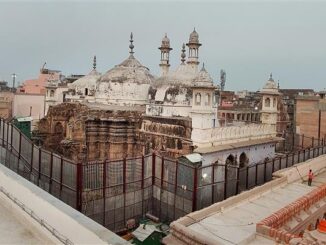
    Normally, digging at historic sites is done by an archaeologist and historians in search of a lost civilization or an ancient city or some signs of mythological events. But nowhere in the world, in the modern age, is an excavation done underneath a place of worship of one religion to find the remains of a place of worship of another religion. While digging in search of historical facts is a secular act, and is done using internationally recognized scientific methods, digging to establish the presence of a place of worship of one religion in a place of worship of another religion is, clearly, a non-secular act. Therefore, it is absolutely puzzling why the former Chief Justice of India (CJI), D.Y. Chandrachud found nothing objectionable or illegal in a survey in a place of worship of a particular religion by another religious group. In his oral observation, the former CJI, said, in 2022 (he was the CJI then), “a survey may not necessarily fall foul of the Places of Worship Act.” He made this tricky observation in the Gyanvapi mosque case.

    Clarity in the Act, yet challenged
    The Places of Worship (Special Provisions) Act was enacted by Parliament in 1991 in the background of a strident movement by Ram Janmabhoomi supporters which heightened communal tensions in Ayodhya and many other parts of north India. The government of the day apprehended the imminent outbreak of violence in different parts of the country due to the raising of claims over the places of worship of a particular minority community. This Act bars the conversion of places of worship of any religious community into a place of worship of a different religious community. It declares that the religious character of a place of worship existing on the 15th day of August 1947, shall continue to be the same as it existed on that day.

    The Act further provides that any suit and appeal seeking to convert the religious character of a place of worship existing on 15th August, 1947 pending before any court or tribunal shall abate on the commencement of the Act. It also states that no suit or appeal relating to this matter shall lie in any court after the commencement of the Act, and any suit alleging that the religious character of a place of worship has been converted after 15th August 1947 will be determined in terms of this Act.

    But the constitutionality of this Act is under challenge in the Supreme Court of India. A petition was filed in 2020 challenging the constitutional validity of the Act on the grounds that the date of August 15, 1947 was fixed arbitrarily and that this Act takes away judicial review.

    The contention that the date of August 15, 1947 was arbitrarily fixed in the Act to prevent the conversion of a place of worship is a specious one. This is the day when the transfer of power from the British government to the Indian government took place. Naturally, this was the earliest date the government could think of for the purpose of this Act. In any case, the Government of India could not have chosen April 21, 1526 when Babur defeated Ibrahim Lodhi in the battle of Panipat and captured Delhi and Agra and laid the foundation of the Mughal empire. Nor could it have chosen, arbitrarily, a later date and kept the field open for a set of religious fanatics to make reckless claims on the places of worship of another religion. Therefore, by all accounts, the date chosen by Parliament in this enactment was the most reasonable one.

    The second ground cited in the petition is that the Act takes away judicial review which is a part of the basic structure of the Constitution of India and any enactment which alters it is unconstitutional. This contention, needless to say, is without any merit. The Act declares that from the commencement of the Act, all pending suits, appeal or proceedings seeking to convert a place of worship of one religion existing as on August 15, 1947 into that of another religion or altering the religious character of a place of worship shall abate. It is the legislative policy of the government to declare through a law that certain types of suits shall abate under certain circumstances. It is not the same as stating that “no court shall have any jurisdiction in respect of any suit arising from the place of worship of any religion”. The latter legislative assertion can be interpreted as an exclusion of judicial review which would, no doubt, be unconstitutional. But that is not the case here.

    On the lower courts
    Subsequent to the above quoted observation of the former CJI, lower courts in the State of Uttar Pradesh are ordering surveys in mosques to determine their religious character with great alacrity. It has led to violence in Sambhal in Uttar Pradesh in which some lives were lost. The lower courts do not seem to have bothered to check whether it was an order of the Supreme Court or a mere observation of the CJI during the hearing. The fact is that such observations from the Bench have no significance as those are not a part of any judgment of the Court.

    Besides, it is a matter of common logic that when the law has barred any kind of conversion of the religious character of a place of worship as it existed on August 15, 1947, then what is the relevance of ordering or carrying out a survey to determine its character? Legally, its character is what existed on the date as above. So, where is the need for a fresh survey?

    A close reading of the provisions of the Act would reveal that what has been prohibited is not merely the act of conversion but also fresh surveys to establish the religious character of a place of worship. As that stands settled, any attempt to resurrect the dispute and get an order from the court would be clearly in violation of the Act.

    The Places of Worship Act 1991 has been hailed as a law which protects secularism in the Ayodhya judgment of the Supreme Court. Wisely, the Court has now put a blanket ban on all litigations relating to the places of worship till it finally determines the issue of the constitutionality of the Act.

    Protection of a fundamental right
    Quite apart from the issue of constitutionality or otherwise of the Places of Worship Act, a religious denomination has the fundamental right, under Article 26, to manage its own affairs in matters of religion. Worshipping in a mosque or a church is a matter of religion and any kind of interference by any outsider in that place of worship can be treated as a violation of the fundamental right of that religious denomination. The court, while ordering a survey of such a place of worship, is in fact committing a violation of Article 26 of the Constitution. The object of this Article is to protect the right conferred on a religious denomination. So, even if the Act was not in existence, a survey or excavation in a place of worship being used by a religious denomination for the purpose of finding out the religious character of that place would be a violation of Article 26.

    It is possible that beneath some mosques lie remains of temples. And beneath the remains of temples there may be the remains of Buddha or Jain viharas. History has sequestered in the womb of earth these tell-tale remains for an archaeologist and a historian to chronicle the history of this nation, and not for bigots to kindle revanchism and poison the minds of generations of unwary people. It is a great pity that judicial misdirection is refiring the retaliatory instincts of people fed on the falsehoods of manufactured history.

    (P.D.T. Achary is a former Secretary General of the Lok Sabha)

  • India’s Elections 2024: A slight sigh of Relief; Will it last?

    India’s Elections 2024: A slight sigh of Relief; Will it last?

    “The people of India have unequivocally rejected the BJP’s agenda, which sought to undermine the constitution and transform the country. This election outcome is a resounding endorsement of the current constitutional framework envisioned and implemented by Jawaharlal Nehru and B.R. Ambedkar. The voters appeared to have arrested the development of the nation’s slide towards dictatorship and fascism for now. It is also important to note that the BJP has not gotten a majority of its own. Narendra Modi himself has lost substantial vote share in his quest for reelection. Even the BJP candidate in Ayodhya, where the temple has been consecrated, had to concede defeat.”

    By George Abraham

    After the announcement of the election results, I heard nothing but a sigh of relief all around, especially from members of the Diaspora. It is almost as if they have been delivered from some precarious situation or a trap that had a debilitating impact on their thinking and actions. People were virtually living in fear of expressing their opinions and even stating the slightest criticism of the Modi government’s policies. Indeed, at least for now, they appear to feel liberated.

    If that is true, what would it have been if the Modi government had come down? Of course, the country would have truly restored its soul while recapturing the dynamism and freedom that was a hallmark of Indian democracy. The public has been struggling for a breath of air for freedom and liberty in the last decade, which was taken for granted mainly under the Congress party rule for six decades.

    Even the Diaspora was under the guns where there were allegations of conspiracies of assassinations of overseas Indian citizens who had disagreed with the Modi administration. The recent filing by the United States Justice Department accusing an ‘Indian government agent’ plotting to kill an American citizen of Indian origin and a Khalistani activist, regardless of our disapproval of issues he has been advocating, sent chills across the overseas community everywhere.

    Many members of the Diaspora were afraid to speak out because of the fear that any dissenting voice may result in the cancellation of the OCI cards. It happened to Aatish Taseer, who wrote a critical piece on Modi in Time magazine and was punished by denying his wish to visit his aging grandmother. Nitasha Kaul, a professor from Westminster University, was deported directly from the Bengaluru airport back to the U.K. because of her past statements critical of the Modi government on constitutional matters. It should be noted that the Modi government changed the rules to make these arbitrary decisions unchallengeable in the judicial system. The Modi regime has deported many more Christian leaders from the West directly from the airport just because they happened to be Christians.

    Modi Administration’s attacks on civil society have been ferocious, where many of the NGOs were forced to shutter their doors, and the foreign-related ones were either expelled or their FCRAs canceled. Minority-related institutions suffered the most at the hands of this regime, where 20000 or more FCRAs belonging to Christian Educational and Charitable organizations were suspended or frozen, thereby effectively putting them out of business. In contrast, Sangh Parivar organizations were allowed to receive money from abroad without any hindrance.

    In the United States, where people are supposed to have freedom of expression, the Godi media, controlled mainly by Gujaratis, may have stifled voices of dissent by striking any criticism of Modi from either printed pages or visual media. Moderators who tried to play even-handedly on some of those networks started distancing themselves from genuine debates or being banished from the scene altogether. Even the Asianet outfit in the U.S., a popular channel in Kerala, allegedly has been under the influence of Sangh Parivar, their principal correspondent in the USA, who was a no-show at the Javits Center, where Rahul Gandhi addressed a large crowd.

    Considering the above, it is understandable why the Diaspora is somewhat relieved by the changing dynamics with a new coalition government under Modi. However, there is a genuine fear that, given the opportunity, the BJP may poach M.P.s from other parties and craft a new majority of their own as they have plenty of resources to accomplish their set goals. Chandrababu Naidu and Nitish Kumar are crafty politicians who have been victims of Modi’s odious agenda, and the world will be restlessly watching how they navigate through opportunities that come their way.

    Nevertheless, the people of India have unequivocally rejected the BJP’s agenda, which sought to undermine the constitution and transform the country. This election outcome is a resounding endorsement of the current constitutional framework envisioned and implemented by Jawaharlal Nehru and B.R. Ambedkar. The voters appeared to have arrested the development of the nation’s slide towards dictatorship and fascism for now. It is also important to note that the BJP has not gotten a majority of its own. Narendra Modi himself has lost substantial vote share in his quest for reelection. Even the BJP candidate in Ayodhya, where the temple has been consecrated, had to concede defeat.

    If Narendra Modi and Amit Shah persist in governing India through their makeshift coalition, it is imperative for them to uphold the constitution. They must cease divisive and unscrupulous politics, halt the weaponization of investigating agencies, stop the destruction of worship places belonging to minority citizens, and govern the country by the law and its constitution. It is also high time for people to exercise their inherent right to express their opinions without fear of arrest or the cancellation of their OCI cards. The Fourth Estate should be allowed to function freely, promoting objective journalism that reaches people without bias or prejudice. We are again reminded that democracy is not a majoritarian rule but respects diversity and facilitates equal justice regardless of caste, creed, language, religion, or region.

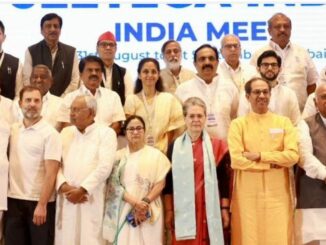
    We at the Overseas Congress salute the INDIA coalition and its leaders, especially AICC President Kharge Ji Rahul Ji and Pitroda ji, for their tireless efforts in getting the message to the people, which elicited the current response through the ballot boxes. We express our special gratitude to all those IOC volunteers from across the globe who participated in the electoral process to save democracy in their motherland.

    (The author is a former Chief Technology Officer of the United Nations. He is Vice Chair of IOC USA. He can be reached at GTA777@gmail.com)

  • Emmy-nominated Indian-American filmmaker Tirlok Malik visits Ram Mandir in Ayodhya seeking divine blessings for his new film ‘I Am Hanuman’

    Tirlok Malik at Ram Mandir in Ayodhya

    NEW YORK (TIP): Emmy-nominated Indian-American filmmaker Tirlok Malik visited Ram Mandir in Ayodhya to seek blessings of Lord Rama for his planned new film “I am Hanuman”.
    Mr. Malik plans to start work on his ambitious film, which he says is different from the dozen films he has made hitherto, from “Lonely in America” to “Khushiyan” to “On Golden Years”.

    The poster of the film “I am Hanuman” in miniature form.

    A poster of his planned film was released after he offered his prayers at the Ram Mandir.


  • Times Square in New York  echoes with bhajans to celebrate Ram Lalla’s Pran Pratishtha

    Times Square in New York echoes with bhajans to celebrate Ram Lalla’s Pran Pratishtha

    NEW YORK CITY (TIP): Ahead of the Ram Temple Pran Prathistha ceremony in India on Monday, January 22, the Indian diaspora illuminated Times Square with the picture of Lord Ram in New York and chanted Shree Ram bhajans and songs to showcase the cultural heritage and vibrancy of their home country.

    The Indian community, which turned out in huge numbers for the celebrations, wore traditional Indian attire and were seen holding saffron flags with Shri Ram portraits inscribed on them.

    Taking to X, Indian embassy in the US said, “Indian Diaspora illuminated Times Square with a spectacular celebration of the Pran Prathistha at Ram Mandir, Ayodhya. #AyodyaRamTemple Dressed in traditional Indian attire, they passionately chanted bhajans and songs, showcasing India’s cultural heritage, vibrancy and unity.” Separately, the Mayor of the city of Worcester, Massachusetts, Joe Petty, also extended his warm greetings to the Hindu community over the Pran Pratishtha ceremony.

    This comes as the mayor issued his proclamation for the 75th Republic Day of India and said, “In the City of Worcester, we encourage all residents to recognize and participate in its observance and extend our warmest congratulations to the American Hindu, Sikh, Jain, and Asian-American communities on the auspicious inauguration of the Shri Ram Temple in Ayodhya (Bharat).”

    It added, “We extend heartfelt congratulations to the American Hindu, Sikh, Jain, and Asian-American diaspora communities on the momentous inauguration of the Shri Ram Temple in Ayodhya, India, planned for Jan 22, and are thankful to Foundation of Indian-Americans (FIA), New England, for helping us to acknowledge and recognize both historic celebrations.”

    The mayor also joined the US-India community for the celebrations held over the Pran Pratishtha of the Ram Temple in Ayodhya.

    Taking to X, the Indian embassy in New York said, “Mayor of the City of Worcester, Massachusetts, @MayorJoePetty extends warm greetings to the community on the ‘auspicious inauguration of the Shri Ram Temple in Ayodhya’ in his proclamation for the 75th Republic Day of India. He joined the US-India community @FIANewEngland in the celebrations and highlighted our spirit of democracy, diversity & unity and the rich cultural heritage and traditions.”

    Shri Ram Janmabhoomi Teerth Kshetra Trust announced on Sunday that the ‘Pran Pratishtha’ ceremony will be marked by a dazzling musical event titled ‘Mangal Dhwani’.

    The soiree, featuring some of the biggest names in the world of music, will be staged at 10 A.M.

    From the Surya Dwar, the main entrance to Ram Janmabhoomi, to the temple, the streetlights and walkways have been decked up with murals inspired from Ramayana ahead of the consecration ceremony. Lamp posts have been designed with traditional “Ramanandi tilak” motifs.

    (Source: ANI)

  • Prime Minister Modi unveils Ram Lalla idol at Ayodhya

    Prime Minister Modi unveils Ram Lalla idol at Ayodhya

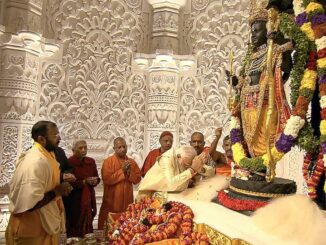
    AYODHYA (TIP): The consecration of the Ram temple in Ayodhya was held today, January 22,  with Prime Minister Narendra Modi attending the rituals. Following the consecration, the shrine will be opened to the public a day later.

    The “ Pran Pratishtha” ceremony began at 12.20 p.m.

    Mangal Dhwani’ from 50 instruments resonated in Ram temple during consecration event

    Fifty traditional musical instruments from across the country were part of a devotional “Mangal Dhwani” that resonated during the consecration ceremony at the newly constructed Ram temple in Ayodhya.

    Orchestrated by Ayodhya’s celebrated poet Yatindra Mishra, the grand musical rendition was supported by the Sangeet Natak Akademi, New Delhi.

    The instruments included pakhawaj, flute and dholak from Uttar Pradesh, veena from Karnataka, algoja from Punjab, sundari from Maharashtra, mardala from Odisha; santoor from Madhya Pradesh, pung from Manipur, nagada and kali from Assam; and tambura from Chhattisgarh. There was also shehnai from Delhi, ravanahatha from Rajasthan, shrikhol and sarod from West Bengal, ghatam from Andhra Pradesh, sitar from Jharkhand, santar from Gujarat, pakhawaj from Bihar, hudka from Uttarakhand and nagaswaram, tavil and mridangam from Tamil Nadu. While about 8,000 people are on the long list of invitees, the select list features 506 A-listers, including prominent politicians, leading industrialists, top film stars, sportspersons, diplomats, judges and high priests. To commemorate the occasion, the Centre gave half a day off to all Government employees including Public Sector Banks. Several States have also followed suit and declared a public holiday.

    The consecration ceremony was held after the first phase of the temple’s construction, made possible by a Supreme Court judgment in 2019 on the Ram Janmabhoomi-Babri Masjid title suit. The Hindu litigants argued that the Babri Mosque was constructed at the site of a temple marking the birthplace of Lord Ram. In 1992, the 16th-century mosque was demolished by “kar sevaks”.

  • Devotees can have ‘darshan’ of Ramlala in Ayodhya temple by 2023-end

    Devotees can have ‘darshan’ of Ramlala in Ayodhya temple by 2023-end

    New Delhi (TIP) : Toward 2023-end, devotees will be able to have “darshan” of Ramlala in the Ayodhya Ram temple. Speaking to The Daily Guardian, Shri Ram Janmabhoomi Teerth Kshetra trust’s general secretary Champat Rai said: “Date has been fixed for getting darshan in Ayodhya’s grand Ram temple. In 2023, Ramlala will be established at the sanctum sanctorum of the Ram temple. By 2025, the vision of Ram temple complex in entire 70 acres will be completed. The decision has been taken in the meeting of Ram Mandir Trust in Ayodhya on Thursday, July 15.”

    Meanwhile, the construction work of Ram temple in Ayodhya is on full swing. The Daily Guardian has an exclusive picture of the construction work. It can be seen in this picture that despite the rain, the temple construction work is going on for 24 hours. At the same time, there are elaborate security arrangements in the Ram temple complex. The premises are being monitored 24 hours a day. For this, watch towers and CCTV cameras have been installed, so that the construction and surrounding activities are monitored at all times.

    Speaking to The Daily Guardian, Shri Ram Janmabhoomi Teerth Kshetra Trust member Anil Mishra said that the foundation work of Ram temple will be completed by October. After this, the work of the walls and building of the Ram temple will be started from November. Till now, 15 layers of the foundation of the Ram temple have been prepared and the work of 16th layer is going on.

    Anil Mishra also said that review is going on regarding the construction of Ram temple. The review is being done for the construction of Ram temple in association with Tata Consultancy and LNT. Tata Consultancy-LNT›s expert and Gujarat›s architect Ashish Sompura has given a presentation through a projector in the meeting regarding the construction of Ram temple. He described how in the coming days, the pace of construction of Ram temple will be further accelerated. It is expected that the work of filling the foundation will be completed by October. After this, the construction work of the main building of the temple will start from November.