Tag: B.R. Ambedkar

  • India at 77: The Republic’s Journey, Its Promises, and Its Tests

    India at 77: The Republic’s Journey, Its Promises, and Its Tests

    By Prof. Indrajit S Saluja
    By Prof. Indrajit S Saluja

    On January 26, 2026, India will mark the 77th anniversary of its Republic—a moment not merely of celebration, but of reflection. Republic Day is not about pomp alone; it is a reminder of a constitutional promise made to nearly one-sixth of humanity. It invites Indians—and friends of India—to ask a fundamental question: How far has the Indian Republic traveled, and how faithfully has it adhered to the ideals enshrined in its Constitution?

    The Indian Republic was born not out of conquest or revolution, but out of reasoned deliberation. On January 26, 1950, India chose to govern itself under a Constitution that was democratic, federal, secular, and transformative. It was a bold experiment—perhaps the boldest democratic experiment the world had ever seen—given the country’s poverty, illiteracy, social stratification, and sheer diversity at the time of independence.

    The Foundational Vision

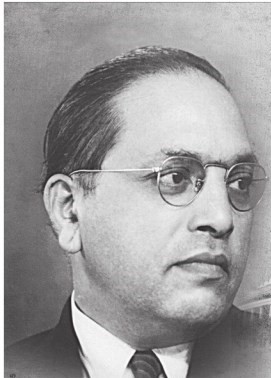
    The principal architect of India’s Constitution, B. R. Ambedkar, was acutely aware of the enormity of the task. Having studied law and political science at Columbia University, Ambedkar was deeply influenced by Western constitutionalism, particularly the principles of liberty, equality, and due process embedded in American democracy. Yet, he also understood India’s unique civilizational context, where social hierarchies were far more entrenched than in most Western societies.

    In his famous Constituent Assembly speech on November 25, 1949, Ambedkar warned: “Political democracy cannot last unless there lies at the base of it social democracy.” This insight remains as relevant today as it was then.

    Early Republic: Stability Against the Odds

    When India became a Republic, its challenges were staggering. Life expectancy hovered around 32 years, literacy was under 18 percent, and the economy was fragile. Yet, unlike many post-colonial states, India did not lapse into authoritarianism. It held regular elections, respected judicial independence, and upheld parliamentary supremacy.

    Between 1950 and the late 1960s, the Indian Republic laid strong institutional foundations: a functioning Election Commission, an independent judiciary, a professional civil service, and a robust Parliament. The democratic transition occurred peacefully—an achievement unmatched in scale.

    Economic growth, however, was modest. The so-called “Hindu rate of growth” averaged about 3–3.5 percent annually until the 1980s. Centralized planning, excessive regulation, and state dominance limited enterprise. Yet, this period also saw the building of core national assets—public sector industries, scientific institutions, and higher education centers—that later generations would rely upon.

    The Turning Point: Reform and Expansion

    A decisive shift came in 1991 with economic liberalization. Market reforms dismantled the license raj, opened India to global trade, and unleashed private entrepreneurship. The results have been transformative. India today is the world’s fifth-largest economy by nominal GDP and among the fastest-growing major economies.

    Poverty has declined significantly. According to World Bank estimates, extreme poverty fell sharply from over 45 percent in the early 1990s to well below 10 percent in recent years. Literacy rates have crossed 77 percent, life expectancy has doubled since independence, and a vast middle class has emerged.

    Democracy, too, has deepened in some respects. The right to vote is universal, participation in elections remains high, and marginalized groups have gained greater political representation through affirmative action and grassroots democracy.

    The Present Republic: Strengths and Strains

    At 77, the Indian Republic stands stronger than many believed possible in 1950—but it also faces new and serious challenges.

    On the positive side, India enjoys political continuity, rising global influence, and technological advancement. Its digital public infrastructure, from Aadhaar to digital payments, has improved service delivery at a scale few countries can match. India is increasingly seen as a key voice of the Global South.

    However, concerns persist regarding institutional balance, freedom of expression, and social cohesion. The concentration of executive power, pressures on federalism, and growing political polarization raise questions about the health of democratic checks and balances. Inequality—economic and social—remains sharp, with wealth concentration accelerating even as overall prosperity grows.

    Ambedkar’s caution about social democracy is particularly relevant. While legal equality exists, social inequities based on caste, religion, and gender continue to test the Republic’s moral foundations.

    Comparing Two Democracies: India and the United States

    A comparison between the Indian Republic and American democracy is instructive—not to elevate one above the other, but to understand democratic diversity.

    The United States Constitution, drafted in 1787, emphasized negative liberties—freedom from state interference. The Indian Constitution, framed in the mid-20th century, went further by embracing positive rights: equality, affirmative action, socio-economic justice, and directive principles aimed at uplifting the disadvantaged.

    While American democracy evolved gradually over two centuries, often denying rights to minorities well into the 20th century, India adopted universal adult franchise from day one—an unprecedented move. In this sense, India was, paradoxically, more radical at birth than older democracies.

    Yet, the U.S. system benefits from a long tradition of institutional restraint, judicial precedent, and decentralization. India’s challenge has been to uphold similar restraints amid mass politics and developmental pressures.

    Both democracies today confront populism, polarization, and distrust in institutions—reminding us that democracy is not a destination, but a continuous process.

    Pluses and Minuses: A Balanced Assessment

    The pluses of the Indian Republic are undeniable: constitutional resilience, peaceful transfers of power, social mobility, and economic progress. Few nations of India’s size and diversity have managed to remain democratic for so long.

    The minuses lie in uneven development, institutional stress, and periodic erosion of civil liberties. The gap between constitutional ideals and everyday reality remains a work in progress.

    Importantly, India has corrected itself in the past—after the Emergency of 1975–77, for instance, when democratic rights were restored through the ballot. This capacity for self-correction remains one of the Republic’s greatest strengths.

    A Republic Still in the Making

    As India celebrates its 77th Republic Day, patriotism must be accompanied by introspection. The Constitution is not a mere document; it is a living covenant between the state and its citizens. Ambedkar described it as “a vehicle of life,” capable of growth but also vulnerable to misuse.

    For the common citizen, the message is simple yet profound: the Republic survives not because of rulers, but because of institutions—and institutions endure only when citizens defend them.

    The Indian Republic, like American democracy, is imperfect but invaluable. Its journey from 1950 to 2026 is a testament to human aspiration, collective effort, and democratic faith. The task ahead is not to rewrite the constitutional promise, but to realize it more fully—so that liberty, equality, and fraternity remain not just words in a Preamble, but lived realities for every Indian.

    At 77, the Indian Republic does not ask for uncritical applause. It asks for informed participation, moral courage, and renewed commitment—precisely what a true Republic deserves.

    Happy 77th Republic Day of India!

  • The unchallenged run of majoritarian encroachments

    The unchallenged run of majoritarian encroachments

    Indian civil society remains hierarchical and fragmented, desirous more of integrating itself into ruling power structures than challenging them. Therefore, any resistance to majoritarian encroachments on our constitutional order is not likely to come from civil society formations or the independent institutions that rely on their support.

    In a recent speech, senior advocate in the Supreme Court of India, Dushyant Dave, expressed his anguish at the seeming co-option of independent institutions to the will of a powerful executive. Mr. Dave contrasted the passivity of India’s civil society and public institutions with the protests that have paralysed Israel. These protests are the widespread demonstrations that have broken out against Israel’s right-wing government over its stated plans that are aimed at restricting the autonomy of the country’s Supreme Court.

    The parallel with Israel (made in the speech) does illuminate a necessary pre-condition for the healthy functioning of democratic institutions. This pre-condition is the existence of a civil society base which fortifies the political legitimacy of autonomous institutions in their confrontation with an overbearing executive. In Israel, the civil society base (which has made its presence felt on the streets), in support of the Supreme Court, is made up of the professionalised middle classes, who zealously guard their individual liberties. In the absence of a written Constitution, it is this social base which has kept mainland Israel (excluding the militarised zone of the occupied territories) a relatively free and democratic space. Meanwhile, right-wing parties such as Benjamin Netanyahu’s populist-nationalist Likud draw their support overwhelmingly from the economically marginalised and the less educated segments of Israeli society.

    The difference in India
    Unlike Israel, Hungary and Turkey, where resistance to the populist right wing has come from the educated middle classes, the Indian case is peculiar because the middle classes here have tended to be its most resolute ideological backers. As a Lokniti survey of 2017 noted, the educated classes displayed the greatest penchant for coercive violence on dissenting individuals (those who ate beef or refused to say ‘Bharat Ma ki Jai’, for instance), along with a higher level of empathy for dictatorship and suppression of speech than found among the cohort of illiterates.

    B.R. Ambedkar once explained the importance of a liberal-secular civil society to an American radio broadcaster this way: “The roots of democracy lie not in the form of Government, Parliamentary or otherwise… The roots of Democracy are to be searched [for] in the social relationship, in terms of associated life between the people who form a society.”

    Has such a civil society base evolved in Indian democracy over the last seven decades? In several States of northern India, the collective retribution of “bulldozer justice”, stringent laws over the conspiratorial fantasy of “love jihad”, and the unremitting stream of “police encounters” have certainly shown up the hollowness of the social and institutional support undergirding our constitutional order.

    In his work, The Social Origins of Dictatorship and Democracy (1966), political sociologist Barrington Moore identified the liberal bourgeoisie as the historical agents of democratisation. According to Moore, at least in the western democratic tradition, these industrial and professional middle classes played a crucial role in constraining state authority and ensuring democratic freedoms partly by pushing their interests through civil society institutions such as the press and trade associations. The Indian path towards modern democracy confounded Moore because, as he wrote in his book, the country “experienced neither a bourgeois revolution, nor a conservative revolution from above, nor so far a communist one”. Perhaps the case of Indian democracy was best captured by Sudipta Kaviraj’s memorable phrase of “passive revolution”, characterised by an absence of substantive democratic struggle and the entrenchment of ruling class dominance through modest reforms and co-option of the symbols of the opposition.

    The thesis of a passive revolution was particularly useful in understanding the Congress’s phase of dominance, where the middle classes and labor unions were firmly integrated into the statist model of nation-building.

    Democratisation, in U.P. and T.N.
    This lack of space afforded to an independent and oppositional civil society has plagued not just the Congress’s vision of democracy but also later models of democratization that came up to challenge its hegemonic rule. We can summarize here two such contrasting routes of democratization: the Mandal route in Uttar Pradesh and the Dravida Munnetra Kazhagam (DMK) route in Tamil Nadu.

    In Uttar Pradesh, the Samajwadi Party (SP) relied excessively on a top-down fabrication of electoral alliances between backward caste groups, while placing little emphasis on nurturing the political space for a democratic civil society. As political scientist Gilles Verniers argued in the paper, Conservative in Practice: The Transformation of the Samajwadi Party in Uttar Pradesh (2018), the SP turned increasingly socially conservative by the turn of the century, moving away from its socialist and progressive roots. The political capital made from the Mandal agitation was fed into the construction of a powerful electoral machine, which came to rely on locally dominant social groups for its electoral mobilization, rather than on a political programme for democratic emancipation. The paper, “Caste and the Power Elite in Allahabad” (2015), written by Jean Dreze et al. conclusively demonstrated how the commanding positions of civil society continued to be dominated by upper castes. In contrast, the DMK anchored its political mobilisation on a radical re-conceptualisation of the basis of politics, as the political scientists R. Sriramachandran et al. have illustrated in their recent book, Rule of the Commoner: DMK and Formations of the Political in Tamil Nadu, 1949–1967. The thesis of the book revolves around the concept of a counter-hegemonic struggle, theorised by the socialist political philosopher Ernesto Laclau.

    The DMK, in this formulation, spurned the path of liberal reforms to the political order and waged a struggle on behalf of the ‘people’ (the majority of the backward castes) against the political elite represented by the Congress. The Dravidian movement succeeded precisely because the conception of the ‘political’ was not confined to elections or democratic procedures but encompassed the transformation of the social and economic relations of power. However, the DMK, much like the Left in Bengal, also did not put too much store by an independent civil society as a guarantor of substantive democracy. Both parties sought to capture state power and then fashion their own civil society, embedded into various ruling party structures.

    Indian civil society remains hierarchical and fragmented, desirous more of integrating itself into ruling power structures than challenging them. Therefore, any resistance to majoritarian encroachments on our constitutional order is not likely to come from civil society formations or the independent institutions that rely on their support.

    (The author is a political researcher and columnist)


  • Protect the power of ‘the little man’ in a democracy

    Protect the power of ‘the little man’ in a democracy

    The real challenge before the nation is how to make citizens, now bystanders, aware of their duties to defend the Constitution

    The nation stands polarized on religious and caste lines, resulting in the creation of deep distrust, if not animosity. The party in power at the Centre is unwilling to cede an inch to the Opposition to maintain a vibrant democracy. There is a constant targeting of the Opposition, as verbal attacks and political destabilization of governments in Opposition-ruled States, through political machinations and “raids” and “checks” by several core central agencies.

    By Dushyant Dave (Twitter photo)

    The nation may have celebrated “Azadi ka Amrit Mahotsav”, on the completion of 75 years of Independence and the 74th anniversary of the founding of the Republic, but there are still deep contradictions in the country. Abject poverty prevails, there is a deepening divide between the rich and the poor, precarious conditions affect the rule of law, and not-so-good governance poses grave challenges to the very existence of democracy and the republic.

    The nation stands polarized on religious and caste lines, resulting in the creation of deep distrust, if not animosity. The party in power at the Centre is unwilling to cede an inch to the Opposition to maintain a vibrant democracy. There is a constant targeting of the Opposition, as verbal attacks and political destabilization of governments in Opposition-ruled States, through political machinations and “raids” and “checks” by several core central agencies.

    With weakened constitutional safeguards and institutions, the judiciary, including the Supreme Court of India, has been slow to stop these attacks. For example, the floor test that the judiciary applies only seems to aid the efforts of the ruling party in bringing down Opposition governments, and is a completely futile judicial weapon. The judiciary needs to innovate to stop the luring of elected MLAs, in order to protect the power of the “little man” in a democracy, as Sir Winston Churchill described it.

    So, where is the Amrit? Our constitutional framers had envisaged a different India, as Constitutional Assembly debates show. H.V. Kamath on November 5, 1948, had said, “I hope that we in India will go forward and try to make the State exist for the individual rather than the individual for the State…At least let us try to bring about this empire of the spirit in our own political institutions. If we do not do this, our attempt today in this Assembly would not truly reflect the political genius of the Indian people… India of the ages is not dead nor has she spoken her last creative word; she lives and has still something to do for herself and for the human family.”

    Have we marched in this direction over seven decades? For those who perpetuate polarization, an incident narrated by H.V. Kamath is the answer. Referring to the 1927 Congress session in Madras, he narrates, “Pandit Madam Mohan Malviya asked Muslims, ‘What safeguards did you ask from the Secretary of State for India or from the Government of India? We are here. What better safeguards do you want?’” After that speech, Maulana Muhammad Ali came to the rostrum, embraced Pandit Malaviya and said, “I do not want any safeguards. We want to live as Indians, as part of the Indian body politic. We want no safeguards from the British Government. Pandit Malaviya is our best safeguard.”

    Constitutionally, the republic that was envisioned by the framers was what George Grote the historian had desired. B.R. Ambedkar quotes him reverentially (on November 4, 1948), “a paramount reverence for the forms of the Constitution, enforcing obedience to authority acting under and within these forms yet combined with the habit of open speech, of action subject only to definite legal control, and unrestrained censure of those very authorities as to all their public acts combined too with a perfect confidence in the bosom of every citizen amidst the bitterness of party contest that the forms of the Constitution will not be less sacred in the eyes of his opponents than in his own”. But then, B.R. Ambedkar expresses his fear thereupon, saying, “The other is that it is perfectly possible to prevent the Constitution, without changing its form by merely changing the form of the administration and making it inconsistent and opposed to the spirit of the Constitution. The question is, can we presume such a diffusion of Constitutional morality? Constitutional morality is not a natural sentiment. It has to be cultivated. We must realize that our people have yet to learn it. Democracy in India is only a top-dressing on Indian soil, which is essentially undemocratic.”

    The failure of the constitutional and administrative authorities to work as per the letter and spirit of the Constitution shows how undemocratic India is. Discussing the importance of Opposition members of the Constituent Assembly, Z.H. Lari, said on May 20, 1949, “… everyone knows that power corrupts and absolute power corrupts absolutely… It is also a truism to say that every party that comes into power tries to make its hold permanent. The only check on the degeneration of party government into despotism is the existence of another party that keeps a strict eye on the doings of the cabinet and the party and thereby prevents the degeneration of a party government into a dictatorship. Besides, there cannot be a proper functioning of any party government unless there is constant criticism of the doings of that party.”

    T.T. Krishnamachari said, “I have no doubt the future parliament and those who are going to be in charge of the destinies of this country would bear in mind the suggestion of Mr. Lari to pay a salary to the Leader of the Opposition, if that would encourage the creation of an Opposition, of a healthy Opposition Party.”

    M.A. Ayyangar said, “I agree there ought to be a healthy opposition… I am really surprised to see … the very protagonist of this healthy opposition had ample opportunity and I do not know why he did not start an opposition… Are their actions calculated to improve the welfare of the Country, much better than what the Congress party has stated in its manifesto?” Biswanath Das felt that the “opposition is a necessary evil and that the function of the opposition is to give the party in power full work”.
    The Congress, which dominated this country for almost four decades, sought to perpetuate its power, post-Independence, by preventing a healthy Opposition. The dismissal of governments in Opposition-ruled States was its key weapon. Yet, today, the Congress and other members of the Opposition have been forced to complain about the state of democracy.

    But are they collectively a healthy opposition? Their utterances and actions cause bewilderment. Are their actions calculated to improve the welfare of the country? Their not speaking in one voice only leaves a clear path for the ruling party to win election after election.

    The challenge before the nation is how to make citizens aware of their duties to defend the Constitution. People are now just bystanders before the political class which is making freedom irrelevant. In Israel, the proposals of Prime Minister Benjamin Netanyahu to undermine the judiciary are being strongly resisted. But what do we have in our nation today?

    The failure to have a strong and healthy Opposition is causing the ruling party to perpetuate its position in a dictatorial manner. Constant attacks on the Supreme Court of India by Ministers and others show the scant regard for a healthy democracy. The ruling party must remember what Ram Narayan Singh once said, “In this country we have just got freedom, and our own party, i.e., the Congress Party, has got no opposition to it. I have seen how things have been going on here and I feel that there must be a strong opposition to criticize our actions and review them…. A Government which does not like opposition and always wants to be in power is not a patriotic but a traitor Government.”

    Let us hope and pray that the party in power and the Opposition will realize their duties and responsibilities towards the Constitution, respect the wishes of the framers of the Constitution, and work for the welfare of the people of India.

    (Dushyant Dave is Senior Advocate in the Supreme Court of India and former President of the Supreme Court Bar Association)

  • The onus of furthering constitutional values is on the film fraternity and on other progressive forces

    The onus of furthering constitutional values is on the film fraternity and on other progressive forces

    An open letter to the Indian film industry

    “There has also been a concerted effort to suppress projects which do not fit the BJP’s vision of and for India. Consequently, barring some notable exceptions, India’s film fraternity consciously self-censors itself, hoping to ride out the storm. Faced with a dispensation that stops at nothing, this self-preservation imperative is understandable. After all, why should an actor or producer or director stand up for constitutional values when they face boycotts and threats, when investigative agencies are unleashed on them, and when no one publicly stands with them?”

    By Pushparaj Deshpande

    In 1938, Charlie Chaplin started work on The Great Dictator. Even though it critiqued the Nazis, Chaplin was forced to self-sponsor, direct and write the project himself because most mainstream Hollywood studios were hesitant to disrupt ties to German finance, or risk making an overtly political project. Additionally, many in the establishment felt appeasing Adolf Hitler could work, so official censorship was also a real threat. Yet, showing tremendous personal and ideological fortitude, Chaplin forged ahead. The film belied expectations and became Chaplin’s biggest commercial success. It was nominated for five Academy awards and became a cult classic.

    Contextualize the enormity of Chaplin’s achievement. Swimming against the tide, his film mocked Hitler’s fetish for photo-ops, self-aggrandizing schemes and critiqued the attacks against minorities to distract from economic failures. Most importantly, it exposed the futility of placating authoritarian figures. This was when Hollywood consciously eschewed taking an anti-Nazi stand on screen, even if it privately opposed Nazism.

    A site of contestation

    A similar situation has come to pass in India. India’s film industries are now a site of ideological and political contestation, as The Kashmir Files and Pathaan controversies highlight. The BJP is consistently leveraging films to sway mass audiences. Mixing religious imagery, patriotism and nationalistic ideals, these films methodically propagate key Sangh Parivar mythologies. The importance given to this endeavor is demonstrated by the fact that no less than the Prime Minister had multiple meetings with key film industry stakeholders, in an effort to prod them into producing “nation-building films”.

    There has also been a concerted effort to suppress projects which do not fit the BJP’s vision of and for India. Consequently, barring some notable exceptions, India’s film fraternity consciously self-censors itself, hoping to ride out the storm. Faced with a dispensation that stops at nothing, this self-preservation imperative is understandable. After all, why should an actor or producer or director stand up for constitutional values when they face boycotts and threats, when investigative agencies are unleashed on them, and when no one publicly stands with them?

    Coincidentally, this assault comes at a time when the nature of film consumption is undergoing a structural shift. As the DVD and retail business model has been rendered obsolete, filmmakers no longer get a second shot at turning a profit. This has been exacerbated by the unfortunate reality that confronting regressive values and uncomfortable truths is now a high-risk endeavor, for it could invite the wrath of regressive forces. Faced with these legitimate concerns, filmmakers are opting to churn out extravagant, high-budget films that are divorced from reality, or ‘safe’ films.

    But India’s film industries do not have the luxury of escaping socioeconomic and political realities. First, the BJP is creating a ‘committed film sector’ by attacking the structural integrity of the film and television sectors. By marshalling the full resources of the state (the merging of four film media units ignoring criticism from the industry, subsidizing projects of aligned filmmakers, the censor board withholding clearances, etc.) and coaxing its core vote bank to support films that pander to its political and ideological projects, the BJP is gerrymandering the market. That is partly why films like The Kashmir Files and Tanhaji did well commercially.

    Second, progressives are targeted not just for their project choices or because they dissent from the BJP, but for what they represent — an India where you could succeed no matter who you are or where you came from. Motivated by their ideological imperatives, these regressive forces need to constantly reinforce two things to their core vote bank, namely that broad-minded, outspoken and disruptive actors/filmmakers cannot shape India’s image of itself, nor do they have an equal space in films.

    Third, audiences do not seem to be watching films as an escape from reality. An ideologically captive audience is seemingly endorsing films that mirror what they are force-fed daily through the electronic and digital media. This is not just an act of solidarity with populist mythologies connected to national, religious and community pride; it also enables them to exert illusionary control over those they don’t agree with.

    However, following Newton’s third law, it follows that there is a liberal audience that spurns films with regressive values. That is why films like Samrat Prithviraj, Dhaakad, Manikarnika, etc. tanked at the box office, despite the initial leg-up they got from the BJP’s ecosystem. If viewership trends on OTT and digital platforms are anything to go by, a silent majority is desperate for films that do not propagate communal, casteist, xenophobic, racist and undemocratic values. In this reading, films that objectively and sensitively address socioeconomic and political realities can succeed commercially. These include Jai Bhim, Mandela, Article 15, Sardar Udham, Raazi, Mulk and Pink. Similarly, films on the farmers’/students’ movements; the lived realities of women, Sikhs, Muslims, Christians, Kashmiri Pandits, OBCs, Adivasis and Dalits; and India’s multiple successes since 1947 could resonate with, and bind Indians together positively.

    Admittedly, actualizing these requires courage. But the film fraternity needs to realize that it is an equal partner in fostering a national consciousness. While it does not need to wade into polarized political debates, it can (and must) use its craft in defense of our shared values. Unless it spearheads films and serials that remind us to preserve our humanity, that weave a symphony from the many voices of India and that envision a better tomorrow (while being truthful about today), this tsunami of hatred will not pass.

    The shared work of progressives

    Yet, the onus of furthering constitutional values is not on India’s film fraternity alone. It is also on other progressive forces (including political parties). Given how insidiously regressive forces are colonizing the minds of our fellow Indians, all progressives need to support each other in this normative battle for India’s soul. We need to propagate our shared values creatively because high-sounding appeals to protect secular, democratic and liberal values do not sway the silent majority. Furthermore, given the state of a section of India’s media, we need to open up new fronts. Unless we display politico-cultural dynamism, the BJP will keep changing its goalposts and unleashing new culture wars that liberals will struggle to catch up to. That is why progressives need to support the film and television industries. Civil society/political action against outfits attacking film sets, raising their issues in the legislature, the media and the judiciary, and establishing new platforms and means of support are just a few ways in which India’s film industries can be tangibly supported.

    B.R. Ambedkar had argued that “constitutional morality is not a natural sentiment. It has to be cultivated”. Seen in this light, it is incumbent on progressives to collaborate in the cultivation of mass emotions. Doing this would mean influencing social consciousness through soaring political rhetoric, disruptive movements like the Bharat Jodo Yatra, and the strategic use of popular culture. Notwithstanding the attack on India’s constitutional edifice, we must recognize that this is also a moment of possibilities — to redesign our operational methodologies, to shed ideological infirmities and to create a more liberal, just and compassionate India.

     (Pushparaj Deshpande is the Director of the Samruddha Bharat Foundation, a multi-party platform that furthers India’s constitutional promise & the series editor of the Rethinking India series [Penguin] )

  • 126th Birth Anniversary of Dr. B.R. Ambedkar celebrated in Chicago

    126th Birth Anniversary of Dr. B.R. Ambedkar celebrated in Chicago

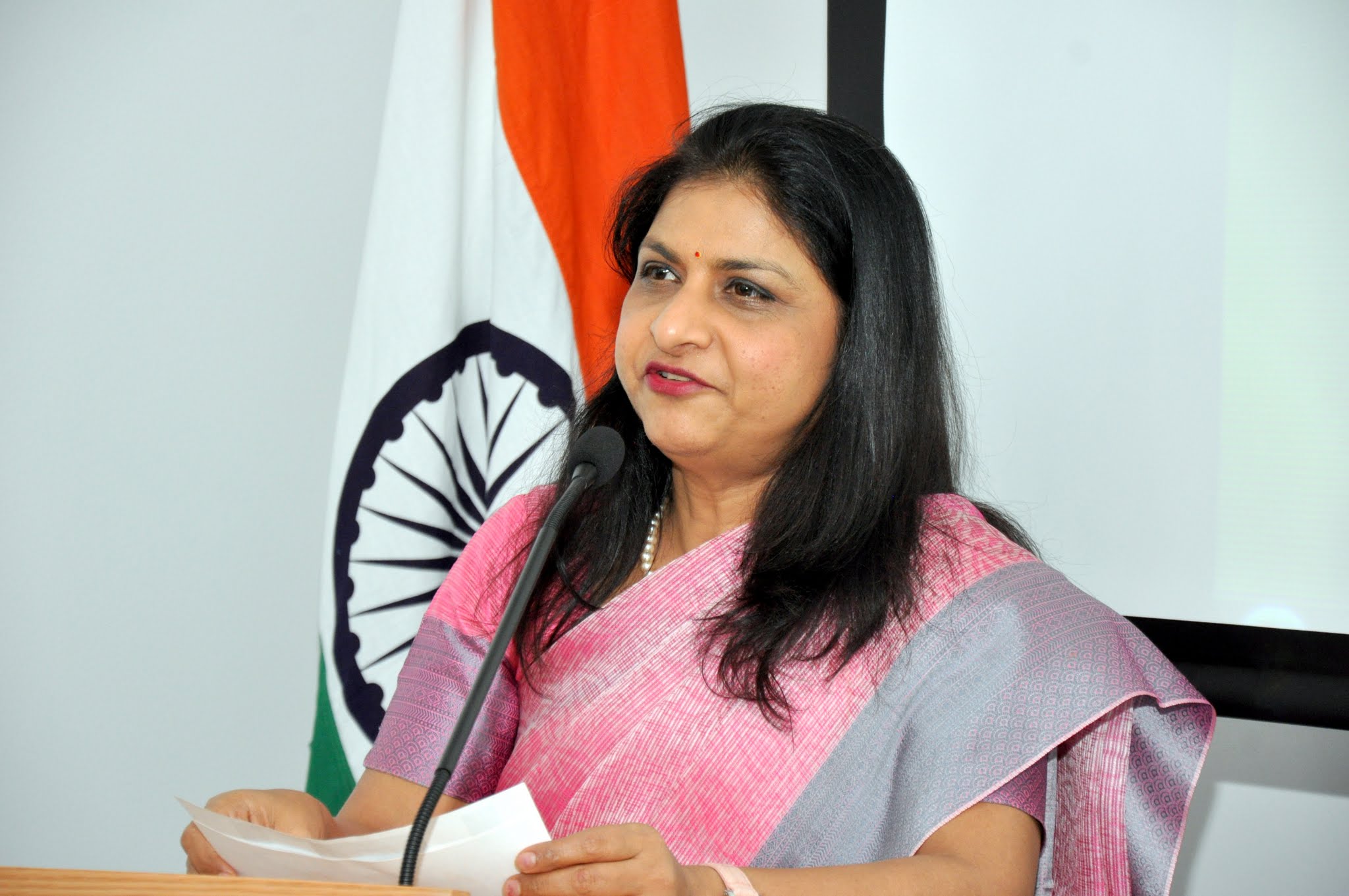
    CHICAGO, IL (TIP): The Consulate General of India in Chicago in collaboration with Ambedkar Association of North America [AANA] celebrated 126th Birth Anniversary of Dr. B.R. Ambedkar on 14th April, 2017.

    The opening remarks were delivered by Mrs. Neeta Bhushan, Consul General. Consul General addressed the gathering and recalled the mammoth work done by the Drafting Committee of the Constituent Assembly under the Chairmanship of Dr. B.R. Ambedkar in drafting the Constitution of India. She emphasized that the Constitution of India does not discriminate anyone on the basis of religion, creed, sex or any other ground. It is the duty of every citizen of India, therefore, to uphold the Constitution both in its letter and spirit.

    Speakers from Ambedkar Association of North America [AANA] spoke on role of Dr. Ambedkar in National Reconstruction, Ambedkar’s agriculture and economic policies and women empowerment. During cultural program, the children sang classical Raga & performed the classical dance “Bharat Natyam”. Mr. Mahesh Wasnik introduced the AANA & its activities.

    A Book and photo exhibition of photographs on the life and times of Dr. B.R. Ambedkar was also organized as part of the celebration.

    The celebration was attended by a cross-section of prominent Indian-Americans residing in Chicagoland. Mr OP Meena, Consul, proposed a vote of thanks.

    (Photograph and Press release by Asian Media USA)

  • Ambedkar’s last words of wisdom

    Ambedkar’s last words of wisdom

    In a speech to the Constituent Assembly in 1949, B.R. Ambedkar stressed on the need to have social democracy, and not only political democracy. He spoke of the need to shun the grammar of anarchy and avoid hero worship of political figures. According to him, in 1950, the Republic will enter a phase of contradictions. In politics, we will have equality and in social and economic life there will be inequality.

    On January 26, 1950, India will be an independent country. What would happen to her independence? Will she maintain her independence or will she lose it again? This is the first thought that comes to my mind. It is not that India was never an independent country. The point is that she once lost the independence she had. Will she lose it a second time? It is this thought which makes me most anxious for the future.

    What perturbs me greatly is the fact that not only India has once before lost her independence, but she lost it by the infidelity and treachery of some of her own people.

    In the invasion of Sindh by Mahommed-Bin-Kasim, the military commanders of King Dahar accepted bribes from the agents of Mahommed-Bin-Kasim and refused to fight on the side of their king. It was Jaichand who invited Mahommed Gohri to invade India and fight against Prithvi Raj and promised him the help of himself and the Solanki kings. When Shivaji was fighting for the liberation of Hindus, the other Maratha noblemen and the Rajput kings were fighting the battle on the side of Moghul Emperors. When the British were trying to destroy the Sikh rulers, Gulab Singh, their principal commander sat silent and did not help to save the Sikh kingdom. In 1857, when a large part of India had declared a War of Independence against the British, the Sikhs stood and watched the event as silent spectators.

    Will history repeat itself? It is this thought which fills me with anxiety. This anxiety is deepened by the realisation of the fact that in addition to our old enemies in the form of castes and creeds, we are going to have many political parties with diverse and opposing political creeds. Will Indians place the country above their creed or will they place creed above country? I do not know. But this much is certain that if the parties place creed above country, our independence will be put in jeopardy a second time and probably be lost for ever. This eventuality we must all resolutely guard against. We must be determined to defend our independence with the last drop of our blood.

    On January 26, 1950, India would be a democratic country in the sense that India from that day would have a government of the people, by the people and for the people. The same thought comes to my mind. What would happen to her democratic Constitution? Will she be able to maintain it or will she lose it again? This is the second thought that comes to my mind and makes me as anxious as the first.

    Democratic system

    It is not that India did not know what is democracy. There was a time when India was studded with republics, and even where there were monarchies, they were either elected or limited. They were never absolute. It is not that India did not know Parliaments or parliamentary procedure.

    A study of the Buddhist Bhikshu Sanghas discloses that not only there were Parliaments — for the Sanghas were nothing but Parliaments — but the Sanghas knew and observed all the rules of parliamentary procedure known to modern times. They had rules regarding seating arrangements, rules regarding Motions, Resolutions, Quorum, Whip, Counting of Votes, Voting by Ballot, Censure Motion, Regularisation, Res Judicata, etc. Although these rules of parliamentary procedure were applied by the Buddha to the meetings of the Sanghas, he must have borrowed them from the rules of the political assemblies functioning in the country in his time.

    This democratic system India lost. Will she lose it a second time? I do not know. But it is quite possible in a country like India — where democracy from its long disuse must be regarded as something quite new — there is danger of democracy giving place to dictatorship. It is quite possible for this new-born democracy to retain its form but give place to dictatorship in fact. If there is a landslide, the danger of the second possibility becoming an actuality is much greater.

    Three warnings

    If we wish to maintain democracy not merely in form, but also in fact, what must we do?

    The first thing in my judgement we must do is to hold fast to constitutional methods of achieving our social and economic objectives. It means we must abandon the bloody methods of revolution. It means that we must abandon the method of civil disobedience, non-cooperation and satyagraha. When there was no way left for constitutional methods for achieving economic and social objectives, there was a great deal of justification for unconstitutional methods. But where constitutional methods are open, there can be no justification for these unconstitutional methods. These methods are nothing but the “Grammar of Anarchy” and the sooner they are abandoned, the better for us.

    The second thing we must do is to observe the caution which John Stuart Mill has given to all who are interested in the maintenance of democracy, namely, not “to lay their liberties at the feet of even a great man, or to trust him with power which enable him to subvert their institutions”. There is nothing wrong in being grateful to great men who have rendered life-long services to the country. But there are limits to gratefulness. As has been well said by the Irish Patriot Daniel O’Connel, “No man can be grateful at the cost of his honour, no woman can be grateful at the cost of her chastity and no nation can be grateful at the cost of its liberty”. This caution is far more necessary in the case of India than in the case of any other country. For in India, Bhakti or what may be called the path of devotion or hero-worship, plays a part in its politics unequalled in magnitude by the part it plays in the politics of any other country in the world. Bhakti in religion may be a road to the salvation of the soul. But in politics, Bhakti or hero-worship is a sure road to degradation and to eventual dictatorship.

    The third thing we must do is not to be content with mere political democracy. We must make our political democracy a social democracy as well. Political democracy cannot last unless there lies at the base of it social democracy. What does social democracy mean? It means a way of life which recognises liberty, equality and fraternity as the principles of life. These principles of liberty, equality and fraternity are not to be treated as separate items in a trinity. They form a union of trinity in the sense that to divorce one from the other is to defeat the very purpose of democracy.

    Liberty cannot be divorced from equality, equality cannot be divorced from liberty. Nor can liberty and equality be divorced from fraternity. Without equality, liberty would produce the supremacy of the few over the many. Equality without liberty would kill individual initiative. Without fraternity, liberty would produce the supremacy of the few over the many. Without fraternity, liberty and equality could not become a natural course of things. It would require a constable to enforce them.

    We must begin by acknowledging the fact that there is complete absence of two things in Indian society. One of these is equality. On the social plane, we have in India a society based on the principle of graded inequality. We have a society in which there are some who have immense wealth as against many who live in abject poverty. On January 26, 1950, we are going to enter into a life of contradictions. In politics we will have equality and in social and economic life we will have inequality. In politics, we will be recognising the principle of one man, one vote and one vote, one value. In our social and economic life, we shall, by reason of our social and economic structure, continue to deny the principle of one man, one value. How long shall we continue to live this life of contradictions? How long shall we continue to deny equality in our social and economic life? If we continue to deny it for long, we will do so only by putting our political democracy in peril. We must remove this contradiction at the earliest possible moment or else those who suffer from inequality will blow up the structure of political democracy which this Assembly has so laboriously built up.

    The second thing we are wanting in is recognition of the principle of fraternity. What does fraternity mean? Fraternity means a sense of common brotherhood of all Indians — of Indians being one people. It is the principle which gives unity and solidarity to social life. It is a difficult thing to achieve. How difficult it is, can be realised from the story related by James Bryce in his volume on American Commonwealth about the United States of America. The story is — I propose to recount it in the words of Bryce himself:

    “Some years ago the American Protestant Episcopal Church was occupied at its triennial Convention in revising its liturgy. It was thought desirable to introduce among the short sentence prayers a prayer for the whole people, and an eminent New England divine proposed the words `O Lord, bless our nation’. Accepted one afternoon, on the spur of the moment, the sentence was brought up next day for reconsideration, when so many objections were raised by the laity to the word ‘nation’ as importing too definite a recognition of national unity, that it was dropped, and instead there were adopted the words `O Lord, bless these United States.” There was so little solidarity in the USA at the time when this incident occurred that the people of America did not think that they were a nation. If the people of the United States could not feel that they were a nation, how difficult it is for Indians to think that they are a nation?

    A great delusion

    I remember the days when politically minded Indians, resented the expression “the people of India”. They preferred the expression “the Indian nation.” I am of opinion that in believing that we are a nation, we are cherishing a great delusion. How can people divided into several thousands of castes be a nation? The sooner we realise that we are not as yet a nation in the social and psychological sense of the world, the better for us. For then only we shall realise the necessity of becoming a nation and seriously think of ways and means of realising the goal. The realisation of this goal is going to be very difficult — far more difficult than it has been in the United States. The United States has no caste problem. In India there are castes. The castes are anti-national. In the first place because they bring about separation in social life. They are anti-national also because they generate jealousy and antipathy between caste and caste. But we must overcome all these difficulties if we wish to become a nation in reality. For fraternity can be a fact only when there is a nation. Without fraternity, equality and liberty will be no deeper than coats of paint.

    These are my reflections about the tasks that lie ahead of us. They may not be very pleasant to some. But there can be no gainsaying that political power in this country has too long been the monopoly of a few and the many are only beasts of burden, but also beasts of prey. This monopoly has not merely deprived them of their chance of betterment, it has sapped them of what may be called the significance of life. These down-trodden classes are tired of being governed. They are impatient to govern themselves. This urge for self-realisation in the down-trodden classes must not be allowed to devolve into a class struggle or class war. It would lead to a division of the House. That would indeed be a day of disaster. For, as has been well said by Abraham Lincoln, “a House divided against itself cannot stand very long”. Therefore the sooner room is made for the realisation of their aspiration, the better for the few, the better for the country, the better for the maintenance for its independence and the better for the continuance of its democratic structure. This can only be done by the establishment of equality and fraternity in all spheres of life. By independence, we have lost the excuse of blaming the British for anything going wrong. If hereafter things go wrong, we will have nobody to blame except ourselves. There is great danger of things going wrong.

    Times are fast changing. People including our own are being moved by new ideologies. They are getting tired of Government by the people. They are prepared to have Governments for the people and are indifferent whether it is Government of the people and by the people. If we wish to preserve the Constitution in which we have sought to enshrine the principle of Government of the people, for the people and by the people, let us resolve not to be tardy in the recognition of the evils that lie across our path and which induce people to prefer Government for the people to Government by the people, nor to be weak in our initiative to remove them. That is the only way to serve the country. I know of no better.

    British English (Excerpts from the last speech by B.R Ambedkar to the Constituent Assembly on November 25, 1949).