Tag: Bajaj

  • RSS centenary events to begin on Vijayadashami; Bhagwat to address workers, Kovind to be chief guest

    RSS centenary events to begin on Vijayadashami; Bhagwat to address workers, Kovind to be chief guest

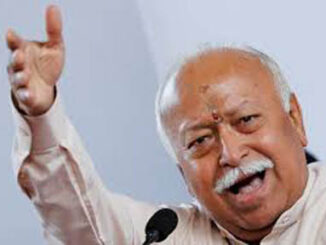
    NAGPUR (TIP): The Rashtriya Swayamsevak Sangh will mark its centenary year with events beginning from Vijayadashami on October 2, which will include an address by its chief Mohan Bhagwat in the presence of former president Ramnath Kovind who will be the chief guest.

    Events to commemorate 100 years of the outfit will take place till Vijayadashami in 2026, RSS Akhil Bhartiya Prachar Pramukh Sunil Ambekar said at a press conference in Reshimbagh here on Monday. “On October 2, former President of India Ramnath Kovind will be the chief guest at the Vijayadashami programme and RSS chief Mohan Bhagwat will address swayamsevaks across the world. Bajaj Finserv chairperson Sanjiv Bajaj, Deccan Industries’ KV Kartik and Lieutenant General Rana Pratap Kalita are the special invitees at the programme,” Ambekar said.

  • RANA honors Indian diaspora for selfless services; raises $1.3 million at the annual gala

    At Ganesh Vandana. Seen among others are Padma Bhushan DR Mehta, Prem Bhandari, CJI Randhir Jaiswal, KK Mehta.
    D R Mehta giving award and flowers to Dr Subha Jain on behalf of Dr Vijay Arya Deep Chopra, BOD RANA, and her son.
    Prem Bhandari giving flowers to LP Pant, national head, Dainik Bhaskar.
    Consul General of India, New York, Randhir Jaiswal, givinga plaque to Dr Raj Bansal, Mrs Raj Bansal. RANA joint treasurer Dr Sharad Kothariis giving flowers to Mrs Raj Bansal.
    Dr Sadhna Joshi from Canada being awarded by Dr Varun Jeph, Deputy Counsel General of India, New York.
    Rakesh Goenka of Canada being honored by Rashi Bajaj, Canada RANA President.
    RANA President Prem Bhandari noted the importance of unity among various diaspora communities and organizations in the US andsaid “it is important that all are united in raising their voices against discrimination and hate crimeslike vandalism of the Gandhi statue at the Hindu temple in Queens. He alsopledged to continue his efforts to bring together all Rajasthanis living in different parts of the world.
    Nidhi Ladda and Krupa Patel performed Ganesh Vandana and Mahishasur Mardini.
    Founder of Bhagwan Mahaveer Viklang Sahayata Samiti (BMVSS) Padma Bhushan D.R. Mehta is seen in attendance among other honorable guests.
    Actor Prashantt Guptha, who acted in Neerja Tashkand Files among others, hosted the Gala Event.

    NEW YORK (TIP): The Rajasthan Association of North America (RANA) held its annual gala event in Long Island, where it honored community leaders from the Indian diaspora for their selfless service and contributions to society. The Indian diaspora in the US has risen to the occasion time and again, in the direst circumstances. Some of the community leaders have led by example by giving selflessly for the welfare of fellow diaspora and beyond in need. The Rajasthan Association of North America (RANA),one such organization that has been a reliable source of help, organized an annual gala in Long Island to honor the community members from the Indian diaspora for their service and contributions to society.

    At the grand event, RANA also raised a generous $1.3 million from various community leaders in contribution to various charitable causes such as Jaipur Foot. Founder of Bhagwan Mahaveer Viklang Sahayata Samiti (BMVSS), which is the parent organization of Jaipur Foot USA, Padma Bhushan D.R. Mehta attended the event as the special guest alongside Consul General of India in New York Randhir Jaiswal, IFS, who was the chief guest, Deputy Consul General Varun Jeph as well as prominent members of the Indian-American community, particularly those hailing from Rajasthan. Dr. Samin Sharma, a noted interventional cardiologist at Mt Sinai, was the guest of honor at the event. At the event, D.R. Mehta spoke at length and gave a power point presentation about the charitable work of Jaipur Foot, which is a prosthetic limb provider to the differently-abled for free of cost. With BMVSS at the helm, Jaipur Foot camps have benefitted millions in India and abroad through various camps.

    As a way to show their support and appreciation, many diaspora members made generous contributions to Jaipur Foot USA and other charitable purposes. K K Mehta and Chandra Mehta announced a contribution of $1 million from their family trust and $100,000 in scholarships. KK Mehta was also the first NRI to donate Rs 1 crore on the first day PM Narendra Modi announced the PM CARES Fund, which was at the peak of the COVID-19 pandemic in India. RANA president and Jaipur Foot USA Chairman Prem Bhandari, who is also the family trust advisory board chairman, said BMVSS chief patron D.R. Mehta will be advising the trust with respect to utilizing the contribution in the best way possible. Bhandari also praised KK Mehta and Chandra Mehta for offering the Times Square Hotel to Air India pilots and crew members during the second phase of the Vande Bharat mission amid the COVID-19 pandemic. He also hailed the generosity with which 100 rooms were given to distressed Indian students for free at the request of the Indian consulate in NY request during the peak of COVID. Demonstrating yet another peak of generosity, Dr. Raj Bansal pledged to sponsor one Jaipur Foot camp in the memory of his late father. Besides this, Dr. Shubha Jain, a noted philanthropist from California, announced a contribution of $100,000 to RANA for charity purposes, and Anil Jain and Jugal Kishore Ladda also announced contributions of $50,000 each for Jaipur Foot.

    RANA posthumously honored Dharamchand Hirawat, and former RANA presidents Dr. Ajay Lodha and Rajiv Garg with the Lifetime Achievement Award “for their memorable contribution towards society.”

    The association also felicitated prominent diaspora members Dr. Raj Bansal, Dr. Sadhna Joshi, Dr. Shubha Jain and Rakesh Goenka for their contribution to the community over the years, including during the pandemic.

    Bhandari noted the importance of unity among various diaspora communities and organizations in the US. He pointed out that there are many state and community-specific organizations like RANA, Telugu Association of North America (TANA) and Bihar Jharkhand Association of North America (BJANA) GANA Gujrat Association of North America and diaspora organizations like FIA and Associations of Indians In America (AIA). But it is important that all are united in raising their voices against discrimination and hate crimes, he said highlighting the incident of vandalism of the Gandhi statue at the Hindu temple in Queens. “We are all Indians first,” Bhandari said, adding that he will continue efforts to bring together all Rajasthanis living in different parts of the world. On the sidelines of the gala event, Prem Bhandari praised International Business Times and said that “IBT is not like other international newspapers that are unable to digest India’s progress under the leadership of Prime Minister Narendra Modi.” He condemned such international news outlets while criticizing their efforts to “spoil India’s image by the means of fake news.” The RANA gala turned out to be an engaging event, complete with cultural performances showcasing Rajasthan’s heritage as well as songs by prominent artists from India. A group of RANA members’ wives also performed Rajasthan’s traditional Ghoomar dance at the event, which enthralled the audience. Nidhi Ladha and Kripa Patel did Ganesh Vandana and performed the Mahishasura Mardini dance.

    At the event, a Hindi newspaper and a TV channel were also awarded for their coverage of social concerns, COVID-19 updates, the Ukraine crisis, and issues related to immigrants. The entire event was hosted by the talented Prashantt Guptha, a Rajasthan-origin actor, producer and writer. He kept the proceedings of the event interesting, keeping the audience occupied in the most fun and entertaining way.

    (Based on a press release by RANA)

  • India in history this Week-November 5 to November 11, 2021

    India in history this Week-November 5 to November 11, 2021

    05 NOVEMBER

    1556       In the second battle of Panipat, the Mughal ruler Akbar defeated Hemu.

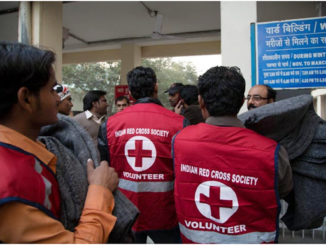
    1920       Indian Red Cross Society was established.

    1961       India’s first Prime Minister Jawaharlal Nehru visited New York.

    2001       India and Russia rejected the Taliban’s participation in the Afghan government.

    1870       The great freedom fighter Chittaranjan Das was born.

    06 NOVEMBER

    1763       The British army defeated Meerkasim and captured Patna.

    1913       Mahatma Gandhi led ‘The Great March’ against apartheid policies in South Africa.

    1998       India’s proposal for ceasefire in Siachen rejected by Pakistan

    1943       During the Second World War, Japan handed over Netaji Subhash Chandra Bose to the Andaman and Nicobar Islands.

    1962       National Defense Council was established.

    2000       Jyoti Basu stepped down after being Chief Minister of West Bengal for 23 consecutive years.

    07 NOVEMBER

    1858       Bipin Chandra Pal, the great revolutionary who fought against the British, was born on 7 November.

    1862       Bahadur Shah II, the last ruler of the Mughal Sultanate, died in Rangoon.

    1876       Bankim Chandra Chattopadhyay composed the song Vande Mataram in a village called Kantal Pada in Bengal.

    1888       Renowned scientist Chandrashekhar Venkata Raman was born.

    2006       India and ASEAN agreed to create a fund for the development of science and technology.

    2008       The famous poet Rahman Rahi of Kashmir was conferred with the Jnanpith Award.

    1711       The ship of the Dutch East India Company sank all of the 300 crew.

    1978       Indira Gandhi was re-elected to the Indian Parliament.

    08 NOVEMBER

    1661       Sikh religious teacher Har Rai died.

    2008       India’s first unmanned space mission Chandrayaan-1 reached the lunar orbit.

    2016       Prime Minister Narendra Modi announced demonetisation and 500,1000 notes were discontinued. After that, new 2000 notes were issued.

    1999       Rahul Dravid and Sachin Tendulkar set a world record by sharing 331 runs in a one-day cricket match.

    2005       Criticized the terrorist actions of Palestinian organizations in India and the repression of Israel.

    1627       The Mughal ruler Jahangir died.

    1920       India’s famous Kathak dancer Sitara Devi was born.

    09 NOVEMBER

    1236       The Mughal ruler Ruknuddin Firoz Shah was assassinated.

    1270       The great saint Namdev was born.

    1947       Junagadh state merged into India.

    1960       First Indian Air Force Chief Subroto Mukherjee died.

    2000       Uttarakhand was carved out of Uttar Pradesh and made a new state.

    10 NOVEMBER

    2001       Indian Prime Minister Atal Bihari Vajpayee addressed the United Nations General Assembly.

    2013       The famous Rajasthani language litterateur Vijaydan Detha passed away.

    1978       Rohini Khandilkar became the first woman to win the National Chess Championship.

    2008       India won the Border-Gavaskar Trophy by defeating Australia 2–0.

    2008       Giving strategic depth to India-Qatar relations, the two countries signed the Defense and Security Agreement.

    11 NOVEMBER

    1888       Freedom fighter Maulana Abul Kalam Azad was born in Saudi Arabia.

    1973       The first international postage exhibition started in New Delhi.

    1889       Freedom fighter Jamnalal Bajaj was born in 1889.

    1943       Indian nuclear scientist Anil Kakodkar was born in 1943.

  • Dominar helps Bajaj Auto race past Royal Enfield

    Dominar helps Bajaj Auto race past Royal Enfield

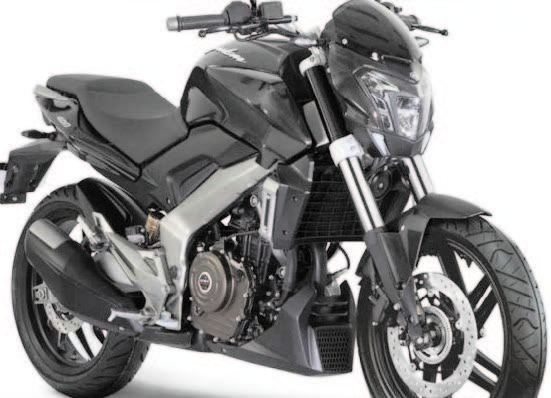
    NEW DELHI (TIP): Within three months of entering into the fast-expanding 350-cc-plus motorcycle segment with its premium sports bike Dominar, Bajaj Auto has raced ahead of Royal Enfield in the category. Driven by demand for the Dominar that has an engine capacity of 373 cc, Bajaj Auto sold around 3,082 units in the segment in February, compared with 2,628 units sold by Royal Enfield.

    According to data available with industry body Society of Indian Automobile Manufacturers (SIAM), Royal Enfield’s sales in the 350-cc-plus motorcycle segment declined by 35%in the period under review. The company had sold 4,053 units in February 2016.

    As per SIAM classification, Royal Enfield, however, continues to command a lion’s share in the 250350 cc midsize motorcycle segment and has registered a growth of 32.6% to sell 544,637 units between April and February in the ongoing financial year. The company’s mainstay products -Classic 350, Bullet 350, Thunderbird 350 – are all powered by 346 cc engines. Royal Enfield motorcycles are priced between ` . 1.22 lakh (for Bullet 350) and . 2.20 lakh (for Con ` tinental GT with a 500 cc engine). Roy al Enfield has a market share of around 97% in all motorcycles with engine capacity up wards of 250 cc sold in the domestic market.

    Bajaj’s overall two wheeler sales (100 373 cc) in the domes tic market is more than three times that of Royal Enfield’s and stood at 18.49 lakh units until February this fiscal year. The company’s presence in the segment upwards of 250 cc is, however, limited. With the Dominar, Bajaj Auto has now set out to expand its footprint in the category.

    Eric Vas, president (motorcycle business), Bajaj Auto said: “The Dominar is an important product for us. It has emerged as a leader in the 350-cc-plus motorcycle segment within three months of launch, despite being available only in 30-odd towns.“ The company seeks to expand its reach to 200 towns by the end of April and is ramping up production to attain monthly sales of 10,000 units by September.

  • LENOVO EYES POLE POSITION IN INDIAN PC MARKET

    LENOVO EYES POLE POSITION IN INDIAN PC MARKET

    KOLKATA (TIP): Lenovo India Pvt. is eyeing the top position in the Indian PC market by March, its Marketing Director – India & South Asia, Bhaskar Choudhuri said.

    The company also aims to grab the number three spot in the smartphone segment, he said.

    The Chinese computer maker is currently ranked third in the Indian PC market with a share of about 18 per cent, which it wants to increase to 20 per cent. It is fifth-largest in smartphones with a share of about 7 per cent.

    “Lot of work needs to be done to get there…it is a stiff target,” he told The Hindu during an interaction. The company “needs to fundamentally rethink the categories and take bold steps to reach there.”

    Lenovo entered the Indian smartphone market a little over two years ago. “We plan to build a portfolio in 4G- enabled phones,” he said, declining to reveal more details of his strategies.

    Mr. Choudhuri said that Lenovo has already started initiatives to boost computer penetration in India, which at 10 per cent, is lowest among developing countries. The programme aims at educating the youth on PC use while providing financial support through Bajaj Fin Serv. This initiative is now being launched in West Bengal after successful pilots in Andhra Pradesh, Telangana, Gujarat, Punjab and Maharashtra. The computer sales market is flat and Lenovo is targeting the tier two markets, he said.

    “In terms of growth, India is among the most important markets for Lenovo. It is among the top-10 countries by turnover,” he said, adding that India could also become Lenovo’s export-hub. “However some clarity is needed on taxes and duties.” The company has two production facilities in India – at Puducherry (for PCs) and the other near Chennai (for smartphones).

  • A mixed Blessing for India

    A mixed Blessing for India

    Lower petroleum prices hold obvious advantages for Indian consumers, but a bearish global oil market could also hurt several segments of the country’s economy

    The Oil Ministers of 12 member states of Organization of the Petroleum Exporting Countries (OPEC) concluded their meeting in Vienna on November 27 by deciding to continue with their three-year-old production quota of 30 million barrels per day (mbpd). Thus, they calculatingly ignored nearly one mbpd oversupply in the global oil market which has pushed the crude prices down by over 30 per cent since June 2014.

    The global oil glut, in turn, has been caused by a number of factors which include OPEC’s own overproduction, rising non-OPEC production (particularly by the U.S.- based “Shale Revolutionaries”) and lower demand from China and Europe. By declining to cut their output to shore up the prices, OPEC in general, and Saudi Arabia in particular, have refused to play the role of global “swing producer.” As most factors responsible for the current global demand-supply disequilibrium are systemic in nature, the world faces prospects for relatively bearish oil prices over the foreseeable future.

    Indeed, the prices have continued to fall with the Indian basket touching $72.51/barrel on November 27 – a decline of nearly $9 from the average during the first fortnight of the month. As the world’s fourth largest importer of crude, India can afford to exult at this precipitous crude price decline. Still, given the strategic importance of this development, a more comprehensive analysis is desirable.

    A virtuous cycle in the economy From the limited perspective of India’s consumer economy, lower global oil prices undoubtedly augur well. Lower pump prices reduce pressure on the consumer who can spend the savings elsewhere, spurring the demand side of the economy. As petroleum products form a large part of the consumer price indices, lower crude prices result in reduced inflation, which in turn paves the way for lower interest rates and greater buoyancy in investments.

    Thus, lower oil prices can trigger a virtuous cycle in the Indian economy. After all, with India’s imports running at an estimated 3.7 mbpd in 2013, a $30/barrel decline in oil prices amounts to a $40 billion savings bonanza on annual imports. The impact would be best felt on the petroleum sector where marketers have been groaning under subsidy burden. The transport sector would also be a direct beneficiary. If we widen the impact analysis to consider the totality of the Indian economy, some challenges also appear.

    First, as oil producers are India’s major markets and investment destinations, their economic decline may affect the country. Recent decline in the share prices of Bharti Airtel and Bajaj Auto due to the devaluation of the Nigerian Naira illustrates this more complex trend. Second, apart from being the fourth largest oil importer, India is also the world’s sixth largest petroleum product exporter earning over $60 billion annually – nearly a fifth of global exports.

    A bearish oil market would hurt this segment with reduced demand, lower unit prices and lower margins. Third, the oil price decline coincides with resumed foreign interest in investing in India. It is difficult to assess their mutual correlation, but lower oil revenues may attenuate arrival of petrodollars into India. Fourth, whenever oil revenues decline, countries that export Gulf oil try to tighten their belts by emphasizing local production and downsizing their foreign labor force in which Indians dominate. Thanks largely to over five million Indian expatiates there, India was the world’s largest recipient of remittances which topped $70 billion in 2013. The possibility of these remittances being reduced cannot be ruled out. This would have a serious impact on remittance-dependent States such as Kerala and Goa.

    Fifth, lower crude prices may cast a shadow over the sputtering controversy over natural gas pricing norms in India as the latter generally follow the oil prices. Future investment decisions in oil-related sectors may get delayed. Sixth, lower pump prices may cause higher fuel consumption as sales of automotive products soar. This would worsen commuter woes as well as cause increased urban pollution. Finally, a decline in oil prices generally accompanies a global decline in commodity prices, particularly those of minerals and agricultural products. India remains a major exporter of these and would see lower realization, particularly of Guar Gum, a critical input for the shale industry.

    The long-term impact of lower oil prices is likely to be felt beyond the economic domain. Geopolitically, persistent lower oil revenue could propel a number of emerging exporters towards domestic political instability as the ruling elites lose their capacity to provide “stomach infrastructure” to the common man. Countries with lower per capita oil revenue such as Nigeria, Iran, Algeria and Venezuela may be more at risk. In general, however, lower oil revenues may have a dampening effect on regional or domestic disputes. Measures to leverage oil prices India can leverage the current low oil prices for long-term gains. To this end, the following measures can be considered.

    One, it can foster long-term crude supply relationships with exporters in return for stable prices, upstream engagements, inbound investments, etc.

    Two, it can enter into oil-for-infrastructure barter deals to boost project exports.

    Three, it can restructure public sector oil companies to make them more productive and globally proactive for leaner times ahead.

    Four, it can channel some of the oil bonanza to mitigate the increased cost disadvantage of renewable and alternative energy sources.

    Five, it can build its own strategic oil reserves. The current downturn in oil prices underlines the cyclic nature of commodity trade and illustrates OPEC’s reduced regulatory capacity consequent to it supplying only a third of global demand.

    While Shale Revolution may be a new and price-sensitive factor, it is unlikely to vanish with time or with lower prices. During past oil bear-hugs in 1986, 1993-99 and 2008, the lower prices invariably spurred consumption and the oil bounced back.

    There is no reason to believe that the oil prices shall not rise again. India would do well to recall an old oil adage, “The cure for high oil price is high oil price itself” – and use this rare, cyclic opportunity for long-term gains.

    (The author has served as Indian ambassador to Algeria, Norway and Nigeria – all major oil exporting countries.)

  • FINANCE MINISTER SIGNALS LOWER RATE, CHEAPER FUNDS

    FINANCE MINISTER SIGNALS LOWER RATE, CHEAPER FUNDS

    NEW DELHI: Finance minister Arun Jaitley on November 5 told industry captains that he expects the cost of capital to come down, a statement which CEOs read as a signal to a rate cut in the coming months. The issue of high cost of capital, mounting bad debt in public sector banks and infrastructure gap came up for discussion during Jaitley’s closed-door meeting with a group of Indian and foreign CEOs, including Bharti Group’s Sunil Mittal, Religare’s Malvinder Singh and Etihad Airways president and CEO James Hogan.

    Source present in the meeting told TOI that some of the foreign CEOs raised concerns over the steep rise in nonperforming assets of banks, and the minister responded by saying that the government is taking steps to address the concern. On October 24, Jaitley had made a case for an interest rate cut by the Reserve Bank of India in an interview to TOI. “Currently, interest rates are a disincentive. Now that inflation seems to be stabilizing somewhat, the time seems to have come to moderate the interest rates,” the minister had said. Despite inflation moderating to a five-year low, the RBI has so far resisted the temptation.

    But, given the surplus cash in the system, the cost of funds for companies raising loans has come down in recent days. Corporate chiefs see a rate cut by the central bank as the best way to step up investment in the economy. “It may be time for the RBI to think of a rate cut,” Mahindra group chairman Anand Mahindra said. Pointing out that inflation is moderating, he added, “The need of the hour has changed and it is time to start looking at supporting growth.” Mahindra sought relief for automakers in the form of lower excise duty. Uday Kotak, vice-chairman and MD of Kotak Mahindra Bank, also pitched for a rate cut.

    “The RBI should be considering a rate cut between December and February. The macroeconomic conditions have improved significantly now.” Kotak said with the Modi government kick-starting the economic reforms process, the economy has started to pick pace. However, he added that one should not expect an immediate recovery. “It has to be seen as a marathon, rather than a sprint.” Kotak added that the Indian economy should see an average growth of 6.5% over five years. Sunil Mittal, chairman of Bharti Enterprises, also hoped that a rate cut happens soon. “Once the finance minister asks for it, he speaks for the nation.”

    The telecom czar said that the new government has moved ahead with “some big reforms” which have led to a movement in the Indian economy. “But just give it some time for a pick-up.” Rahul Bajaj, chairman of Bajaj Auto, said further steps are required to give a big thrust to the economy. “They cannot happen all of a sudden.” He said interest rates should be lowered, though the final call remains with RBI governor Raghuram Rajan.

  • SUZUKI TO MAKE INDIA A MANUFACTURING HUB FOR BIKES

    SUZUKI TO MAKE INDIA A MANUFACTURING HUB FOR BIKES

    NEW DELHI (TIP): Suzuki Motorcycles India is developing four new products, including a 100cc motorcycle, which would be rolled out over the next two years. The company plans to make India a manufacturing hub for motorcycles, which would be exported to countries in Latin America, Africa and the Middle East, apart from neighbouring countries, Atul Gupta, VP (sales and marketing) for Suzuki Motorcycles India, said as the company launched a new 155cc bike ‘Gixxer’ for Rs 72,199. “Suzuki wants to boost its share in the Indian two-wheeler market.

    Work is on at its headquarters at Hamamatsu in Japan for developing four new two-wheelers for India — two scooters and two motorcycles,” Gupta said. Suzuki has not been able to replicate the success of its car business (Maruti Suzuki) in the two-wheeler space and has decided to focus on introducing newer products. Sources said company chairman Osamu Suzuki recently visited the company’s two-wheeler factory in Haryana and took stock of the operations.

    Suzuki has a little over 2% share of the Indian twowheeler market and sold 3.6 lakh units last fiscal, a small share in total industry volumes of 1.48 crore units. The twowheeler market is dominated by Munjals-owned Hero MotoCorp and Honda’s fully-owned subsidiary, Honda Motorcycle and Scooter India (HMSI). Suzuki has been able to make some inroads into the scooter market where it has around 8% market share with models like the 125cc ‘Access’.

    However, it is very weak into the big-volume motorcycle segment, which commands as much as 70% of the two-wheeler sales. “We are hoping for a turnaround in our motorcycle sales with the Gixxer. The model will compete with the FZ from Yamaha, Apache from TVS and Pulsar from Bajaj Auto. The company, which signed up film actor Salman Khan as a brand ambassador, currently sells the 110cc Hayate. However, the model has not been able to deliver the desired volumes. Gupta also said that Suzuki will increase the number of dealerships that the company has in India.

  • Basics very much in Indian economy’s favor

    Basics very much in Indian economy’s favor

    INDIA’S JOURNEY TO DEVELOPMENT AND CHALLENGES

    The economy of India is the tenthlargest in the world by nominal GDP and the third-largest by purchasing power parity (PPP).The country is one of the G-20 major economies, a member of BRICS and a developing economy that is among the top 20 global traders according to the WTO.

    India was the 19th-largest merchandise and the 6th largest services exporter in the world in 2013. India’s economic growth slowed to 4.7% for the 2013-14 fiscal year, in contrast to higher economic growth rates in 2000s. However, India’s decisive election outcome has created the potential for further structural reform that could result in a near 7 per cent GDP growth rate over the coming decade, and bank capital injections could enable banks to facilitate funding for that growth.


    32


    This would have meaningful implications for India’s fixed income markets. It is believed that the next decade for India’s foreign exchange (FX) and fixed income markets will be marked by policy-driven reforms driving accelerated growth with increasing market liberalization. Recent figures already appear more encouraging than the dynamics that have been supporting stagflationary recession conditions: The country’s balance of payments has improved, spurred by FX depreciation and the Reserve Bank of India’s (RBI’s) non-conventional measures. The growth outlook has turned moderately positive, helped by a global recovery; and bad loan formation, even at state-owned banks, may now be moderating.


    33


    The narrative for Indian markets began to brighten even before the elections. Following the second stage of India’s economic liberalization and the foreign direct investment (FDI) reforms initiated in September 2012, foreign investment will likely be a major contributor to a jump in private investment. However, despite liberal FDI limits, it has remained moderate, constrained, in part, by administrative hurdles. As the obstacles are reduced, we expect FDI to lead an investment boom over the next decade, similar to China’s mid-1990s experience. We project FDI will rise to an average of 2.5 per cent of GDP (FY2014-24) from an average of 1.5 per cent of GDP (FY2008-14). We believe such foreign capital flow will lend significant support to India’s balance of payments trajectory.

    Improving public health

    Health care services in India have undergone a vast change over the past few decades and encompass the entire nation. The industry is expected to supersede China by 2030 in terms of population expansion. Hence, it becomes one of the essential duties of the state to raise the nutrition level, the standard of living of the people together with improving public health.

    Health care Industry of India The rapidly increasing health care industry of India is one of country’s largest sectors, both in terms of revenue and employment. It has been estimated that the healthcare industry of India is will grow by & 40 billion. The continuous increase in the population of India is considered one of the principal reasons for the growth in the healthcare industry of India. The rise in the infectious as well as chronic degenerative diseases has contributed to the rise in the healthcare sector of India. Additionally, because of diseases like AIDS and several lifestyle diseases of India, the healthcare sector of India will have a constant growth.

    In spite of the fact that the Indian healthcare industry is rapidly expanding, healthcare infrastructure in India is very poor. A noticeable percentage of India suffers from poor standard of healthcare services. Most of the healthcare facilities of India provided by the various healthcare services are limited and of low standard. In order to understand the current status of the healthcare services in India, it is important to know about the different healthcare services found in the country.

    Public health services, essential public health services, preventive health services, mental healthcare services, home health services, magellen health service and school health services are some of the healthcare services found in India. Companies providing Health Insurance in India The various companies providing health insurance policies in India can also be put under the healthcare services of India. Some of the companies that provide health insurance coverage in India are Appollo DKV Insurance Company Ltd., Bajaj Alliance General Insurance Co. Ltd., Birla Sun Life Insurance, Aviva Life Insurance and the like.

    Points to note

    1).It has been found out that while the private health services have been rising for meet the needs of the rich citizens and foreigners, public health services in India are lagging behind and suffering in a major way.

    2).It has also been found out that less than 1% of the GDP is spent on the public health care services in India.

    3).Surveys made throughout India points out that 65% of the Indian population cannot access to modern medicines.

    4).In addition, a number of drugs and even many diagnostic tests are still unavailable in the public health care sector of India.

    5).Most of the hospitals, one of the prime healthcare services in India, are located in the urban areas, thereby making it almost impossible for the rural people to access.

    Indian industry sees green shoots of manufacturing growth
    A green shoots of revival have started to appear in the manufacturing sector, which is critical for job creation, with a majority of segments likely to post higher output, according to industry bodies. The survey conducted by CII-Ascon for the April-June quarter indicates positive growth in important sectors like consumer durables including the vehicle industry and white goods industry, which recorded a growth of 5- 10 per cent, leading to improvement in the overall industry growth.

    The FICCI survey found that eleven out of fourteen sectors are likely to show improvement in production during the second quarter (Jul-Sept) of the current fiscal. Over 64 per cent respondents are not likely to hire additional workforce in the next three months, though this proportion is less than that of the previous quarter (75 per cent), indicating improvement in hiring outlook in coming months.

    The survey gauges the expectations of manufacturers for Q2 for fourteen major sectors namely textiles, capital goods, metals, chemicals, cement, electronics, automotive, leather and footwear, machine tools, FMCG, tyre, textile machinery and more. Responses have been drawn from 392 manufacturing units from both large and small and medium (SME) segments with a combined annual turnover of over Rs 4 lakh crore.

    An upturn in demand condition is also reflected in the improved order books of the manufacturers, said Ficci survey. While only 36 per cent respondents reported higher order books for the April-June quarter in the last survey, 43 per cent respondents reported higher order books for July-September quarter.

    Foreign relations
    Soon after the 2014 Lok Sabha election results declared a thumping victory for the BJP-led NDA government, Prime Minister Narendra Modi invited the heads of all the SAARC countries including Pakistan, Bangladesh, Sri Lanka, Nepal, Maldives, Bhutan and Afghanistan, for his oath-taking ceremony, sending a major diplomatic signal to the global community.

    Credited with being a focused administrator, Modi signalled that his decisive win would reshape India’s foreign relations and leverage the diaspora to increase investments, business opportunities and better relations. Modi went on to choose neighbouring country Bhutan over others for his first foreign visit.

    “I will follow the (foreign) policies of the Vajpayee-led NDA government, and that also applies to the relationship with the United States. I don’t think a decision taken by any individual or one event should impact the overall policy,” Modi said in an interview. The winds of change were clearly being felt at home and abroad.


    29


    SAARC: A refocus on the neighbourhood
    For the first time, leaders of all South Asian Association Regional Corporation (SAARC) countries were invited for the swearing-in ceremony of an Indian Prime Minister. The presence of all seven countries, Pakistan Prime Minister Nawaz Sharif, Afghanistan President Hamid Karzai, Sri Lanka President Mahinda Rajapaksa, Bhutan Prime Minister Tshering Tobgay, Maldives President Abdulla Yameen Abdul Gayoom, Nepal Prime Minister Sushil Koirala, Speaker of Jatiyo Sangshad in Bangladesh Shirin Sharmin Chaudhury, was a welcome step towards strengthening India’s relations with the SAARC countries. However, political parties in Tamil Nadu voiced their displeasure at Sri Lanka’s president Mahinda Rajapaksa attending the ceremony and held demonstrations against him.


    30


    Bhutan visit: Asserting influence in South Asia
    PM Narendra Modi’s maiden foreign trip to Bhutan was intended to show that in the new scheme of things, the neighbourhood enjoys high priority. Inaugurating Bhutan’s Supreme Court building that was built with India’s assistance, Modi also laid the foundation stone of the 600MW Kholongchu Hydro-electric project, a joint venture between the two countries.

    He also proposed to hold a joint sports festival between Bhutan and north-eastern states of India, doubling scholarships for Bhutanese students in India and establishing e-libraries in 20 districts in Bhutan Though his faux pas of referring to Bhutan as Nepal while addressing the Bhutan Parliament caused some embarrassment, Modi went ahead to say that “when Bhutan calculates its happiness quotient, having a friend in India is also a major factor.”

    Meet with Pakistan Prime Minister Nawaz Sharif: Picking up the threads
    Relations between India and Pakistan have always been tense, but differences between the two countries had escalated after the 26/11 Mumbai terror attack. Modi’s invitation to Pakistan’s Prime minister Nawaz Sharif for his oath ceremony was seen as an attempt at cooperation rather than confrontation, which was reciprocated by his Pakistani counterpart.

    In their first meeting, Modi pressed for confidence-building measures, peace and security as well as enhancing bilateral trade, sending a positive message among the people of both the countries. Modi struck a pragmatic note with Sharif, underlining India’s concerns on terrorism and urging his Pakistani counterpart to crack down on militants and speed up trial of the 2008 Mumbai attack suspects.

    Sharif also responded to the meeting positively, accepting the fact that the two countries must strive for better cooperation. In the interaction which was widely seen as an “icebreaker”, the leaders also decided that their foreign secretaries would be in touch and discuss a way forward on talks that had been suspended since January 2013.

    BRICS Summit: New inroads
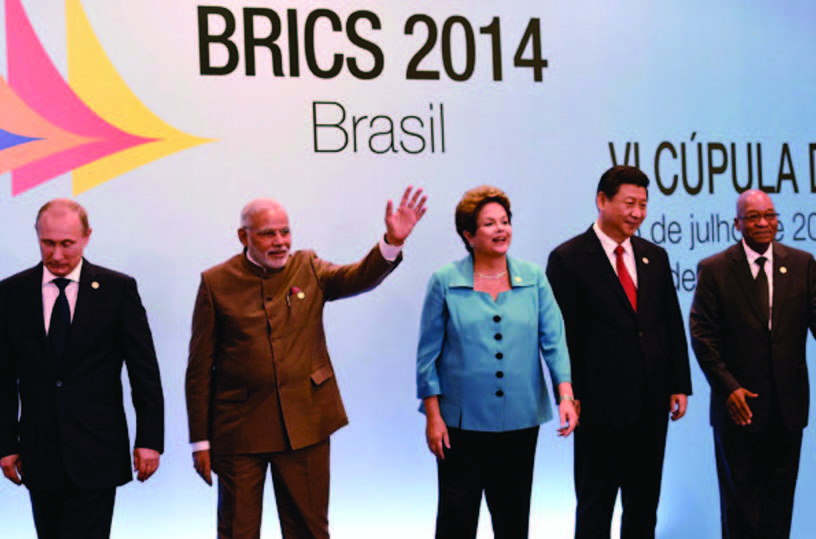
    Pushing for better international governance, Narendra Modi said he favoured an open, rule-based, international trading regime which is critical for global economic growth. Modi’s first BRICS summit saw significant inroads towards the establishment of the New Development Bank and though the headquarters of the bank is slated to be in China, its first President will be from India.

    Addressing the BRICS leaders, Modi also pressed for zero tolerance towards terrorism. He also met Chinese President Xi Jinping and both addressed the need for a solution to the boundary question. Further, Modi also favoured broadening the strategic partnership with Russia in nuclear, defence and energy sectors and invited President Vladimir Putin to visit the Kudankulam atomic power project during his trip in December.

    India poised to make further progress on UN’s development goals
    India has made progress on different indicators such as health and nutrition under the UN’s Millennium Development Goals and is expected to improve further upon them. “There has been progress in all the indicators and further progress is expected to be made in the remaining period up to 2015,” Planning Minister Rao Inderjit Singh had said recently.

    Challenges
    As far as India is concerned, 8 MDGs with 12 targets are relevant which are sought to be achieved during the period 1990 to 2015, the minister said. MDGs are international development goals that UN member states and numerous international organizations, including India, have agreed to achieve by the year 2015.

    Eradicating poverty
    These include eradicating extreme poverty and hunger; achieving universal primary education; promoting gender equality; reducing the child mortality rate and ensuring environmental sustainability. The minister’s said India had achieved the MDG target regarding poverty eradication. India had to halve the proportion of people whose income is less than one dollar a day between 1990 and 2015.

    In 1990, India had 47.8 per cent such poor people and thus the proportion of this population is to be reduced to 23.9 per cent. However, India’s poverty ratio was 21.92 per cent for 2011-12. Similarly, India has to half the proportion of people who suffer from hunger by 2015 to 26 per cent. However, the latest figure for 2004-05 reveal that the percentage of such population was 40 per cent.

    Education: Improving enrolment ratio
    In the education sector, India has to improve the net enrolment ratio in primary schools to 100 per cent by 2015. The country achieved 99.89 per cent enrolment in primary education in 2011-12. The proportion of pupils starting grade 1 who reach grade 5 was 86.05 per cent in 2011- 12 against the target of 100 per cent. The literacy rate in India was 61 per cent in 1990. It went up to 86 per cent in 2017-08.

    The ratio of girls to boys in primary education was 0.73 in 1990 which went up to 1.01 in 2011-12. Similarly the ratio of literate women to men (15-25 years) was 0.67 in 1990, which was 0.88 in 2007-08. MDGs target for both ratios is 1. The mortality ratio among children under the five-year age was 126 per 1,000 live births in 1990 which was brought down to 52 in 2012. The MDGs target is 42 for that.

    Infant mortality ratio
    The infant mortality ratio was 80 per 1,000 live births in 1990 which was brought down to 42 in 2012 against the MDGs target of 27. The proportion of one year old children immunized against measles was 42.2 per cent in 1990 which was improved to 74.1 per cent against targeted 100 per cent coverage.

    Similarly, the maternal mortality ration per 1,00,000 live births was 437 in 1990 which was brought down to 178 by 2011-12 against targeted 109 by 2015.

  • GOPIO-CT HONORS FIVE INDIAN AMERICAN ACHIEVERS AND CONGRESSMAN JIM HIMES AS FRIEND OF INDIA

    GOPIO-CT HONORS FIVE INDIAN AMERICAN ACHIEVERS AND CONGRESSMAN JIM HIMES AS FRIEND OF INDIA

    GOPIO-CT honors 5 Indian American achievers

    Congressman Jim Himes is honored as Friend of India

    STAMFORD (TIP): The Connecticut Chapter of the Global Organization of People of Indian Origin (GOPIO) honored five Indian American achievers and those who provide service to the community or the society at large. Several dignitaries attended the event including India’s Consul General in New York Dnyaneshwar Mulay, Rep Jim Himes (D, CT 4th District), Stamford Mayor David Martin, Norwalk Mayor Harry Rilling, New Jersey State Assembly Speaker Upendra Chivukula and Connecticut Assemblyman Dr. Prasad Srinivasan.

    The program started with a welcome by GOPIO-CT President Shelly Nichani who said the chapter initiated several new programs including a cancer walk fundraiser, participation in the Thanksgiving Day Parade in Stamford, interactive session with elected officials in addition to the regular program such as sponsoring and volunteering in soup kitchens, India Independence Day flag hoisting and Diwali. Stamford Mayor David Martin extended a warm welcome to everyone and complimented GOPIO-CT for its outstanding community work.

    This year, GOPIO-CT had selected U.S. Representative from Connecticut 4th District Congressman Jim Himes as Friend of India. A member of India Caucus, Jim has been a supporter of Indian American community. Congressman Himes had traveled several times to India while he was working for Goldman Sachs. As a Congressman Himes is committed to provide all children in America, access to a first-rate public school, affordable and effective health care, a decent and safe home, and a supportive community. An undergraduate from Harvard, Jim earned a Rhodes Scholarship, and attended Oxford University in England.

    There Indian Americans are honored for their achievements in business and profession. Dr. Subbarao Bollepalli, MD FAPA, is honored for his achievement in medicine. Dr. Bollepalli is a leading psychiatrist in the State of Connecticut. He retired as a Colonel from United States Army Reserve, which was activated during the Iraqi War. He is a member of the Governing Council of Connecticut Medical Society(CSMS). He is currently the President of Connecticut Association of Physicians of Indian Origin (CAPI). His interests include philanthropy, social service, spiritual reading and playing tennis.

    A husband and wife team in business, Ashok and Meera Vasudevan, have been selected to receive entrepreneurship award. Ashok is ‘corporateur’ turned entrepreneur who has co-founded with his wife Meera, Preferred Brands International, which makes Tasty Bite, a leader in the specialty food industry. He is the CEO of Tasty Bite and serves also on the Board of several NGOs both in India and the US. He is the Adjunct Professor of International Entrepreneurship of Great Lakes Institute of Management in Chennai, India.

    Ashok attended the University of Agricultural Sciences, Bangalore, Bajaj Institute Bombay and the Harvard Business School. Meera Vasudevan is a co-founder and Principal of ASG-Omni, a strategy-consulting firm that designs and develops entry strategies for large US corporations looking to do business in India. She has also worked closely on social research projects with the Indian government and UNICEF. She has a Bachelor in English with post-graduate qualifications in Marketing from the University of Madras and INSEAD, France.

    Arati Sureddi received an award for young achievers. Arati is the Founder of Lotus Alliance, a social enterprise addressing human trafficking and forced labor through the responsible tourism industry. She has also helped in launching the Not My Life Awareness Initiative, whose goal is to increase awareness of human trafficking among individuals who are in a position to influence policy and advocate for change. She is a graduate of Boston University’s School of Management.

    Prasad Chirnomula, an avid restaurateur, received a special award for promoting India cuisine to American society by helping community groups through media. Chirnomula creates delectable and imaginative food in each of his four Thali restaurants and Mexican in his latest venture – Oaxaca Kitchen. In addition to running his five restaurants, Chef Prasad leads tasting tours of India, hosts private tasting dinners, teaches cooking classes and offers his services at multiple charity events for such groups as the American Liver Foundation, Varli, James Beard House, the American Red Cross, Share Our Strength, the Connecticut Food Bank and the Food Bank for New York City.

    He has studied at the Food Craft Institute of Poona, including culinary arts and hotel management. Connecticut Senator Blumenthal in a message complimented GOPIO-CT for its outstanding community service and advocacy work and presented certificate of appreciation to all award recipients. The program ended with an entertainment by Bollywood dancers and a dinner.

  • Interim Budget 2014: Cars, consumer durables to be cheaper

    Interim Budget 2014: Cars, consumer durables to be cheaper

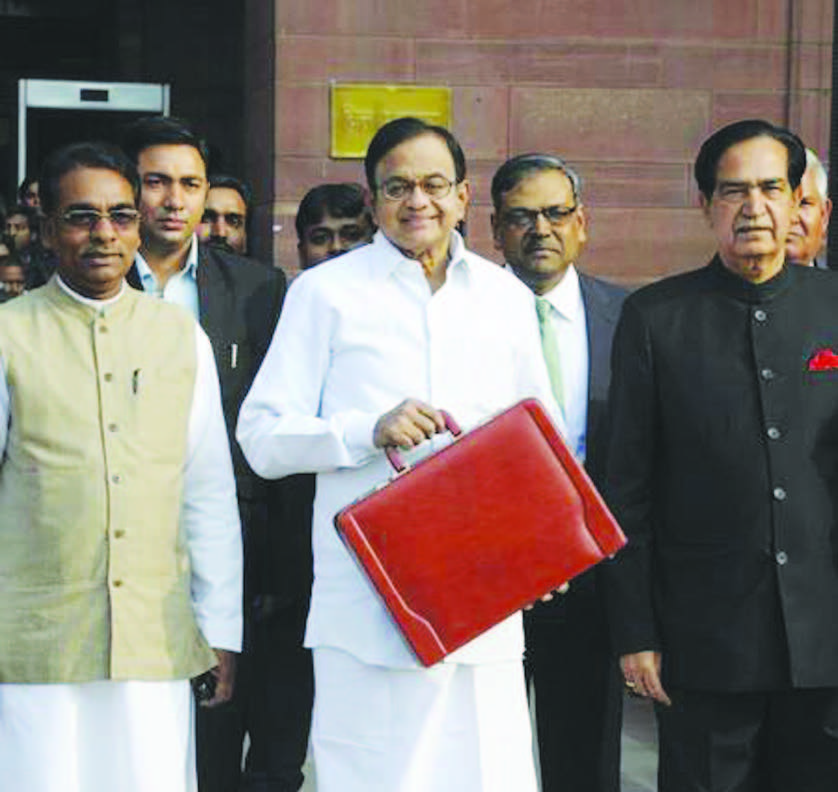
    NEW DELHI (TIP): Financial markets went in for the interim budget with little expectation, and rightly so, as finance minister P. Chidambaram was not expected to tinker with the existing tax laws. But he still had room to manoeuvre and propose changes that will have an impact on your money, well, for at least three months of the next financial year. The markets were looking for the government to contain its deficit under the budgeted target of 4.8% of the gross domestic product (GDP) for the year.

    The government managed to restrict the fiscal deficit to 4.6% of the GDP, and now expects it to come down further to 4.1% in the next fiscal. Therefore, the two very important indicators—the fiscal deficit and the current account deficit which were worrying the financial markets and individuals alike—are now in a much better shape than a year ago, though the improvement under both the heads can be debated. Beyond this critical number of fiscal deficit, there was not much that markets were looking for.

    25
    As a result, the BSE S&P Sensex closed with a modest gain of 0.48%. However, there were some surprises for individuals. If you plan to buy a new car, there is good news as excise in this segment has been reduced, and so they are likely to be cheaper. There is also relief in store for those struggling with the burden of education loans, taken up to 31 March 2009. We take a close look at some of the proposals that will have an impact on your pocket.

    Relief on student loans
    The budget has extended the education loan subsidy scheme with some significant benefits. The finance minister has proposed a moratorium wherein you will not have to pay the interest on your education loan taken before 31 March 2009. The government will shoulder the burden of the outstanding interest portion as of 31 December 2013. From January 2014 onwards, you pay. Given that these loans were taken about four-and-a-half years back, borrowers are likely to have finished their education and moved on to jobs or are at least looking for one.

    The difficult economic scenario in the country, with the GDP growth having fallen from 6.7% in FY09 to a budget estimate of 4.9% for FY14, jobs are not that easy to come by. Says A. Krishna Kumar, managing director and group executive (national banking), State Bank of India (SBI): “This is definitely a good move and will ease pressure on those who are still looking for jobs.” It is too early for banks to know exactly how much this liability is. SBI’s Kumar says, “We are yet to calculate the exact impact on our outstanding education loans.” The government has given an estimated benefit of around Rs.2,600 crore to about 900,000 borrowers. How does this work for you? We take an example using a calculator on Punjab National Bank’s website. Let’s assume, you took an education loan of Rs.10 lakh in April 2007 for a two-year course.

    The interest rate was 12% per annum for 10 years with no processing fees. Your equated monthly instalment (EMI) per month was likely around Rs.14,350. Let’s say, you got a job after two years and started to repay the loan. But in December 2012, you lost your job and have not been able to pay the EMI since. In this case (assuming that the bank hasn’t invoked the guarantee or declared the loan as a bad debt), your outstanding EMIs for 12 months (as on December 2013) would be about Rs.1,72,200. Of this, the interest would be Rs.63,710. As the proposal suggests, the government will pay this outstanding interest on your behalf.

    You will, however, have to start paying from January 2014. More details are awaited. Also, the relief is only for the outstanding interest and not the principal. Your final benefit will depend on the terms of the loan— when you took the loan, the interest rate, the period for which you haven’t paid, and others. It would be pre-emptive to say that this move will result in borrowers becoming complacent and the unpaid dues in this segment going up. Moreover, these loans are not a big portion of banking credit.

    Cheaper wheels
    Another piece of good news came by the way of the proposal to reduce the excise duty for the auto sector till 30 June. The excise duty has been reduced from 12% to 8% on motorcycles, scooters, small cars and commercial vehicles—such as Maruti Suzuki India Ltd’s Alto, Hyundai Motor India Ltd’s i10, Tata Motors Ltd’s Indica, Bajaj Auto Ltd’s Pulsar and TVS Motor Co. Ltd’s Wego.

    For large and mid segment cars, the reduction is from 27% or 24% to 24% or 20%; and for sports utility vehicles (SUVs), from 30% to 24%. According to Prabhudas Lilladher Pvt. Ltd, the benefit is expected to be Rs.1,500-2,000 for two-wheelers and Rs.15,000-20,000 for small cars.

    SUVs should be cheaper by Rs.48,000-60,000, but “given the current slowdown, the automakers may not be able to pass on the entire benefits for SUVs”, says Surjit Arora, research analystinstitutional equities, Prabhudas Lilladher. This may generate more demand and improve sales. Yaresh Kothari, research analyst-automobiles, Angel Broking Ltd, says, “It is a positive announcement for the sector. The cut in excise duty will be passed on to the consumer. Historically, they (auto manufacturers) have always done it. The benefit will differ based on the price of the vehicle.”

    Says Suresh Sadagopan, a Mumbai-based financial planner: “It’s a one-time kind of savings possibility in the short term. If you plan to buy, try and cash in on this benefit before 30 June.” Consumer goods For the mobile handset segment, the finance minister announced that excise duty for all categories of handsets will now be 6% with central value-added tax (Cenvat) credit or 1% without it. Last year, the excise on mobile phones priced above Rs.2,000 had been raised to 6% from 1%, upsetting the industry as the cost of smartphones went up. The reduced excise, however, may not mean cheaper phones.

    “This will not have any significant impact on prices as it will reduce costs marginally given the competition from Chinese manufacturers and the grey market,” says Hemant Joshi, partner, Deloitte Haskins and Sells. Cenvat credit essentially means that a manufacturer can set off excise or service tax paid on the input cost—for example, of raw materials— against its total excise liability. “This may give an edge to domestic manufactures as importers will continue to pay 6%,” says Bipin Sapra, tax partner, EY.

    Two domestic phone manufacturers—Micromax and Karbonn—were the third and fourth largest mobile handset sellers in India with 10.1% and 9.1% market shares, respectively, at the end of the December-2013 quarter, according to International Data Corp. The leader is Samsung, followed by Nokia. The finance minister also proposed to reduce the excise duty on capital goods and consumer nondurables from 12% to 10% for items falling under chapters 84 and 85 of the Central Excise Tariff Act.

    “What this means is that prices of some products such as basic machinery and electronic goods will be affected,” says Sapra. Prices of items such as washing machines, vacuum cleaners, computers, transistors, batteries, software, basic landline telephones, computer disks, knitting machines, etc., may go down if manufacturers choose to pass on the benefit. Super-rich surcharge The surcharge on the super-rich remains. Last year, a 10% surcharge was applied to those with taxable income above Rs.1 crore. This onetime move was supposed to be only for the assessment year 2014-2015, and was in addition to the education cess of 3%.

    The surcharge and income tax rates will continue for the purpose of deduction of tax at source from salaries during the financial year 2014-15, and for computing the “advance tax” payable during that financial year on current incomes. “Practically, the income tax rates, including surcharge, will apply for tax withholding or payment of advance tax. Salaried individuals who pay taxes every month will have to pay this surcharge till the time the new government drops it.

    But non-salaried individuals, who pay advance tax only in September, may not have to pay the additional surcharge at all if the new government drops it,” says Kuldip Kumar, executive director, PwC India. According to the Finance Bill, the total amount payable as income tax and surcharge shall not exceed the total amount payable as income tax on a total income of Rs.1 crore by more than the amount of income that exceeds Rs.1 crore. Here’s an example.

    The tax liability on a taxable income of Rs.1 crore is around Rs.29 lakh. So, if the income is even Rs.10 more than Rs.1 crore, the tax liability will go up by only Rs.10 and not Rs.2.9 lakh. Overall, while the finance minister managed to deliver on his promise of containing expenditure, the reduction in excise duty on various items and relief on education loans will also benefit a key constituent in elections—the middle class. The excise relief will lapse if the new government decides against it. Investors and consumers now have to wait till the new government presents its budget for the full year and give a fresh direction to economic policy and tax laws.

  • British Iconic Motorcycle Brand Triumph Set To Enter India In November

    British Iconic Motorcycle Brand Triumph Set To Enter India In November

    MUMBAI (TIP): After almost a year of delay, the iconic British Motorcycle brand, Triumph is all set to enter India this November. Announcing its entry into India on Wednesday, the company also declared the appointment of Vimal Sumbly as the managing director of the company to lead its charge in India. The company is likely to begin with a portfolio of Bonneville, Daytona 675 and Rocket in India and it will eventually add more models to build its portfolio.

    Some of these models will be assembled at the company’s CKD (completely knocked down) units in Manesar which is nearing completion. It is currently looking for dealer partners across strategic locations, said the company Emphasising the significance India plays in the global strategy, Paul Stroud – director sales & marketing (global) said ‘2013 is a very crucial year for Triumph Motorcycles in India and as a company, we are confident about the timing of our market entry.

    In the past few months, we have carefully assessed the market landscape and will be making well-honed efforts to provide our discerning customers with a complete brand experience.’ Prior to joining Triumph, Sumbly was GM Sales at Bajaj AutoBSE -0.66 % Ltd and comes with close to 16 years of experience in the automobile space. An ardent biker himself, Sumbly will spearhead the sales development and growth of Triumph in India.

    Established in 1902, Triumph Motorcycles completed 110 years of its operation in 2012. For more than two decades, Triumph Motorcycles has been based in Hinckley, Leicestershire, and has produced iconic bikes, known for its design, character and performance. Triumph is the largest British motorcycle manufacturer selling over 50,000 bikes in a year and has more than 750 dealers across the world.