Tag: Balochistan

  • India’s freedom struggle: From first invasion to midnight of Independence

    India’s freedom struggle: From first invasion to midnight of Independence

    India’s journey to freedom was neither swift nor simple-it was a centuries-long saga of resilience, rebellion, and renaissance. While the climax arrived on 15 August 1947, the struggle had its roots in the earliest invasions that disrupted the subcontinent’s autonomy. This story spans from medieval conquests to colonial exploitation, from fragmented resistance to unified nationalism, and from armed uprisings to non-violent mass movements.
    Before the Raj: Early Invasions
    The Turkish and Mughal Periods

    The first significant foreign incursions into India’s political structure began with Mahmud of Ghazni’s raids in the 11th century, followed by Muhammad Ghori’s conquests in the late 12th century. These invasions led to the establishment of the Delhi Sultanate (1206-1526), which reshaped governance and trade but also saw resistance from local rulers like the Rajputs.
    The arrival of the Mughals in 1526, under Babur, ushered in a new imperial order. While the Mughal period (especially under Akbar) was known for cultural synthesis, by the 18th century, weakening central control allowed European trading companies to gain influence.
    The European Footprint: Traders to Rulers
    Portuguese and Dutch Presence
    The Portuguese, led by Vasco da Gama’s arrival in 1498, were the first Europeans to establish a foothold, controlling ports like Goa. The Dutch East India Company followed, though their influence remained largely in trade.
    The British East India Company
    An official of the East India Company in processionSurrounded by Indians, a colonial official of the British East India Company moving on horseback in a procession. Watercolor on paper, c. 1825–30. The British first arrived not as conquerors, but as merchants, drawn by India’s extraordinary wealth, which had been famous in the West since Greek times. They arrived to find India dominated by the vast Mughal empire, which had been established in the 16th century by the conqueror Babur and now ruled most of the subcontinent. In 1613, the Mughal emperor Jahangir granted the British permission to establish a trading post in Surat, Gujarat, which would become the first British foothold in India.
    Over the following century, the British East India Company established additional trading posts and also gradually increased its economic and political influence throughout the subcontinent. After the death of Emperor Aurangzeb in 1707, the Mughal empire entered a rapid phase of decline, providing an opening for various regional powers, including the Marathas, the Sikhs, and the northern Rajput chiefs to assert their sovereignty. By the middle of the 18th century, there was no longer a single dominant power in the subcontinent, leaving the region vulnerable to colonial ambitions.
    The Battle of Plassey
    The Battle of Plassey in 1757, part of the larger Seven Years’ War between Britain and France, was a turning point in the British conquest of India. The East India Company had increasingly solidified its position and was now regarded by native rulers as a serious threat. The nawab (ruler) of Bengal, Siraj al-Dawlah, favoring an alliance with the French, had previously attacked company trading posts. With the help of some of the nawab’s own generals, the British were able to defeat and depose the nawab at the Battle of Plassey and appointed their own administration in Bengal. This crucial victory marked the transformation of the British East India Company from a mere mercantile presence into a military and political power in India. The company would go on to consolidate its power over the Indian subcontinent through a series of military campaigns. It established its dominance in Bengal and Bihar with the Battle of Buxar (1764), in southern India with Tipu Sultan’s defeat in the fourth Mysore War (1799), and in the Punjab following the second Sikh war (1848-49).
    The Rebellion of 1857 and the British raj
    By the 1850s, the company had consolidated its rule over much of India, fostering widespread discontent and a pattern of unrest that produced localized uprisings such as the Sannyasi Rebellion in the late 18th century and the Santhal Rebellion of 1855–56. On May 10, 1857, however, a rebellion erupted in Meerut that would profoundly alter the dynamic between India and Britain. Sepoys (Indian soldiers) in the company’s service shot their British officers and marched to Delhi, rallying local troops to their cause. By the evening of May 11, they had declared the aged Bahadur Shah II the emperor of India, symbolically restoring the Mughals to power and rejecting British rule.
    The Rebellion of 1857, often called as the Sepoy Mutiny in traditional British historiography, spread rapidly across northern and central India. It produced fierce battles at Delhi, Kanpur, and Lucknow, and it eventually involved leaders such as Nana Sahib, Tantia Tope, and Lakshmi Bai, the rani (“queen”) of Jhansi. Lakshmi Bai in particular became a legendary symbol of resistance against British rule; after the British attempted to annex Jhansi using the pretext of the doctrine of lapse, Lakshmi Bai took command of the rebels in the Bundelkhand region and fought valiantly before being killed in battle on June 17, 1858.
    By the end of 1858, the revolt was largely suppressed. The British captured Bahadur Shah II and exiled him to Rangoon (now Yangon, Myanmar [Burma]), where he died in 1862, marking the end of the Mughal dynasty. In response to the revolt, the British government recognized the administrative failures of the East India Company, and the British crown assumed direct rule of India, initiating the period known as the British raj.
    The failure of the revolt had a profound psychological impact on the people of India. The sepoys, the native princes, the queen of Jhansi, and the heir of Mughal grandeur had made their stand against the British—and they had failed. From this time all serious hope of a revival of the past or an exclusion of the West diminished. The traditional structure of Indian society began to break down and was eventually superseded by a Westernized class system, from which emerged a strong middle class with a heightened sense of Indian nationalism.
    Formation of the Indian National Congress
    Yet the struggle continued. On December 28, 1885, the Indian National Congress (Congress Party) was formed, marking the inception of the first major nationalist movement to emerge in the British Empire outside Britain. Led largely by Allan Octavian Hume, a retired British civil servant sympathetic to the cause of Indian freedom, the Congress Party was initially established as a platform for educated Indians to discuss political issues and advocate for a greater role in governance. The first meeting was held in Bombay (now Mumbai), drawing 72 delegates from across the Indian subcontinent. These initial delegates were largely Western-educated and from elite backgrounds and focused on moderate reforms rather than outright independence.
    By the early 20th century, a strong “extremist” faction emerged within the Indian National Congress in response to British policies, especially after the 1905 partition of Bengal, which was widely viewed as an attempt to weaken nationalist sentiment in the region. The partition of Bengal sparked the Swadeshi Movement (swadeshi: “of one’s own country”), the first organized mass action against British rule; though it declined by 1908, its central aim was achieved when the partition was annulled in 1911. By 1907, a clear delineation existed within the Congress between the “extremists,” led by Bal Gangadhar Tilak, Bipin Chandra Pal, and Lala Lajpat Rai, and the “moderates,” led by Gopal Krishna Gokhale.
    Formation of the All-India Muslim League
    The All-India Muslim League, the first political party for Muslims in India, was founded in Dhaka (now the capital of Bangladesh) on December 30, 1906. This development was driven by the increasing dissatisfaction among Indian Muslims with the Indian National Congress, which many perceived as primarily representing Hindu interests. The party was heavily influenced by the visionary Indian Muslim leader Sir Sayyid Ahmad Khan, who had died in 1898, and was founded by leaders including Mian Muhammad Shafi, Nawab Waqar-ul-Mulk, Nawab Mohsin-ul-Mulk, Syed Ameer Ali, Mualana Mohammad Ali Jouhar, and Sir Sultan Mohammed Shah (the league’s first president, also known as Aga Khan III). Sir Muhammad Iqbal would emerge as a key voice within a few years of the party’s founding.
    The league aimed to safeguard the rights of Indian Muslims and initially espoused loyalty to the British raj as a means to achieve greater civil rights and counterbalance the dominance of the Congress Party. The Muslim League would eventually lay the groundwork for modern Pakistan. Mohammed Ali Jinnah, who joined the league in 1913, would later transform the political party into a mass movement for Muslim autonomy.
    Gandhi’s return from South Africa
    Mohandas Karamchand Gandhi, later known as Mahatma (“Great Soul”) Gandhi, was born in 1869 in Porbandar, India, and initially trained as a lawyer in England before relocating to South Africa. There, he advocated for civil rights and developed his foundational philosophy of nonviolent resistance. After spending over two decades in South Africa, Gandhi returned to India in 1915 amid the backdrop of World War I and joined the Indian National Congress. Initially, he remained at the periphery of the movement, supporting the British war effort and refraining from political agitation. However, his perspective shifted dramatically following the enactment of the Rowlatt Act in 1919.
    The Rowlatt Act is passed
    In February 1919 the British government passed the Rowlatt Act, which empowered authorities to imprison suspected independence activists without trial and allowed for certain political cases to be tried without juries. The object of this act was to replace the repressive provisions of the wartime Defence of India Act with a permanent law. Indians felt profoundly betrayed after their support of Britain throughout World War I, and resentment spread throughout the country. Gandhi, provoked by the act, announced his initial satyagraha (“clinging to truth”) struggle, advocating nonviolent civil disobedience, which would lead to a political earthquake throughout the spring of 1919.
    The Jallianwala Bagh Massacre
    On April 13, 1919, British troops under the command of Gen. Reginald Dyer fired on a crowd of unarmed civilians in Amritsar. Following Gandhi’s calls for resistance and a one-day general strike earlier that month, protests had broken out across the country, particularly in Punjab. In Amritsar, following the arrests of prominent Indian leaders, protests had turned violent on April 10. A force of several dozen troops commanded by General Dyer was tasked with restoring order, and among the measures taken was a ban on public gatherings.
    On the afternoon of April 13, a crowd of at least 10,000 men, women, and children gathered in the Jallianwala Bagh, a public garden near the Golden Temple that was nearly completely enclosed by walls and had only one exit. It is not clear how many people there were protesters who were defying the ban on public meetings and how many had come to the city from the surrounding region to celebrate Baisakhi, a spring festival. Dyer and his soldiers arrived and sealed off the exit. Without warning, the troops opened fire on the crowd, reportedly shooting hundreds of rounds until they ran out of ammunition. It is not certain how many died in the bloodbath, but, according to one official British report, an estimated 379 people were killed, and about 1,200 more were wounded. After they ceased firing, the troops immediately withdrew, leaving behind the dead and wounded.
    The shooting was followed by the proclamation of martial law in Punjab that included public floggings and other humiliations. Indian outrage grew as news of the shooting and subsequent British actions spread throughout the subcontinent. The Bengali poet and Nobel laureate Rabindranath Tagore renounced the knighthood that he had received in 1915. Gandhi was initially hesitant to act, but he soon began organizing the noncooperation movement (1920–22), his first large-scale and sustained nonviolent protest campaign.
    The noncooperation movement
    Launched in 1920 Gandhi’s noncooperation movement, backed by the Congress Party, was a mass protest against British authority advocating nonparticipation in colonial institutions. Indians were encouraged to resign from their titles; boycott government educational institutions, courts, government services, foreign goods, and elections; and, eventually, refuse to pay taxes. The noncooperation movement rapidly gained momentum amid growing national anger toward the British raj, particularly in the wake of the Rowlatt Act and the Jallianwala Bagh massacre. The heavy-handedness of the British government and its failure to adequately address the actions of General Dyer only intensified the Indian resolve for self-governance.
    By 1921 the British government, confronted with a united Indian front for the first time, was visibly shaken. The noncooperation movement had definitively shown the potential of united, nonviolent civil disobedience against the colonial regime; additionally, it marked the transition of Indian nationalism from a middle-class movement to a nationwide struggle. Gandhi, at this point, emerged as the de facto leader of both the Indian National Congress and the independence movement itself. The noncooperation movement also drew support from the Khilafat movement, which was mobilizing Muslim protest against the dissolution of the Ottoman empire after World War I. Gandhi’s solidarity with the Khilafat movement helped strengthen Hindu-Muslim unity during this phase of the independence struggle.
    However, Gandhi called an end to the noncooperation movement in 1922 after an angry mob in Chauri Chaura killed 22 police officers. Gandhi feared that the movement was becoming violent, contrary to its principles. Gandhi was arrested for sedition that year and sentenced to six years in prison. Jawaharlal Nehru, a young leader within the Congress Party who would later become India’s first prime minister, had been arrested the previous year for anti-government activity and released a few months later.
    Gandhi was released in 1924 after serving only two years of his sentence. By the time of his release, the political landscape had changed significantly. The Indian National Congress had split into two factions: one led by Chittaranjan Das and Motilal Nehru (the father of Jawaharlal Nehru), favoring participation in the British-dominated legislative councils as a means to gain political influence, and the other led by Chakravarti Rajagopalachari and Vallabhbhai Patel, opposing this approach and advocating for a more assertive stance against British authority. Additionally, the unity between Hindus and Muslims had deteriorated. In 1924 Gandhi was named president of the Congress Party, a position he held for a year.
    Declaration of Purna Swaraj
    On January 26, 1930, the Indian National Congress publicly declared its Purna Swaraj (“Complete Self-Rule”) resolution, decisively rejecting the idea of dominion status within the British Empire and establishing full sovereignty as the goal of the independence movement. Initially, some leaders within the movement had aimed for dominion status, which would have given India a position similar to that of Canada and Australia within the British Empire. However, as the movement progressed, this idea was increasingly viewed as inadequate by Congress Party leaders.
    The resolution was initially passed by the Congress Party on December 19, 1929, during the presidency of Jawaharlal Nehru, who at the time was the youngest person to hold that position in the party. The resolution was publicly declared the following month, with the Congress Party urging Indians to celebrate January 26 as Independence Day. Although August 15 was later chosen as India’s official Independence Day after achieving independence in 1947, the date January 26 remained significant. The constitution of India was drafted to take effect on January 26, 1950, to honor the 1930 declaration, marking India’s transition to a republic. Today, January 26 is celebrated annually as Republic Day in India.
    The Salt March
    In March 1930 Gandhi launched the Salt March (popularly known as the Dandi March), a satyagraha campaign against the British monopoly on salt. Salt production and distribution in India had long been a lucrative monopoly of the British. Through a series of laws, the Indian populace was prohibited from producing or selling salt independently, and instead Indians were required to buy expensive, heavily taxed salt that often was imported. This affected the great majority of Indians, who were poor and could not afford to buy it. Indian protests against the salt tax began in the 19th century and remained a major contentious issue throughout the period of British rule.
    Gandhi decided to mount a highly visible demonstration against the increasingly repressive salt tax by marching through what is now the western Indian state of Gujarat from his ashram (religious retreat) at Sabarmati (near Ahmadabad) to the town of Dandi (near Surat) on the Arabian Sea coast. He set out on foot on March 12, accompanied by several dozen followers. After each day’s march the group stopped in a village along the route, where increasingly larger crowds would gather to hear Gandhi speak about the unfairness of the tax on poor people. Hundreds more would join the core group of followers as they made their way to the sea, until on April 5 the entourage reached Dandi after a journey of some 240 miles (385 km). On the morning of April 6, Gandhi and his followers picked up handfuls of salt along the shore, thus technically “producing” salt and breaking the law.
    In May Gandhi was arrested after informing Lord Irwin, the viceroy of India, of his intention to march on the Dharasana saltworks. Gandhi’s arrest further fueled the movement, prompting tens of thousands more people to join the satyagraha. On May 21 Sarojini Naidu, a well-known political activist and poet, led a march to the saltworks, where many of the 2,500 peaceful marchers were brutally attacked and beaten by police. By the end of 1930 approximately 60,000 people were imprisoned as part of the civil disobedience campaign. In January 1931 Gandhi was released from custody and began negotiations with Irwin, leading to the Gandhi-Irwin Pact, signed on March 5, 1931. This truce ended the satyagraha campaign and allowed Gandhi, accompanied by Naidu, to represent the Indian National Congress at the second section of the Round Table Conference in London later that year. This session, however failed to reach agreement, either on a constitutional framework or on communal representation.
    The Poona Pact, Ambedkar, and the movement against “untouchability”
    The Poona Pact, signed on September 24, 1932, was a significant agreement between Hindu leaders and Dalit representatives, granting new rights to Dalits, Hindu caste groups then labeled “untouchables.” This agreement arose from the British government’s Communal Award, which proposed separate electorates for Dalits to ensure their political representation. Bhimrao Ramji Ambedkar, the most prominent Dalit leader, supported the proposal, believing that it would allow Dalits to advance their interests. However, Mahatma Gandhi opposed separate electorates, fearing that it would divide the Hindu community and weaken India’s fight for independence. While imprisoned, Gandhi began a fast unto death on September 18, 1932, to protest the separate electorates. Faced with Gandhi’s deteriorating health, Ambedkar and Hindu leaders negotiated the Poona Pact, which increased Dalit representation within the Hindu electorate instead of creating separate electorates.
    Ambedkar’s advocacy of Dalit rights was rooted in his personal experiences of discrimination and his extensive education. Born on April 14, 1891, into a Dalit Mahar family, Ambedkar faced severe social exclusion from an early age. Nonetheless, he excelled academically, to the extent that he came to the attention of Sayajirao Gaekwad III, the maharaja of Baroda (now Vadodara). The maharaja provided financial support for Ambedkar’s education at Bombay’s Elphinstone College and later at Columbia University in the United States and the London School of Economics in Britain. Ambedkar would use this education to champion the cause of Dalit rights upon his return to India. Ambedkar would also later become the chairman of the Drafting Committee of the Constitution for the future Republic of India.
    Although the Poona Pact was a significant development in the movement against “untouchability,” Ambedkar felt coerced into the agreement by Gandhi’s threat of suicide by starvation. Nonetheless, Ambedkar’s work would continue. He would found several journals for Dalits and, through his later role in drafting the Indian constitution, secure special representation for them in legislative councils. His efforts laid the foundation for future advancements in social justice and the eventual outlawing of untouchability, although cultural caste prejudice continues to persist in India.
    Provincial elections of 1937
    Following the Government of India Act of 1935, which granted significant autonomy to the provinces of India in response to increasing momentum in the struggle against British rule, elections were held during the winter of 1936–37, and results were declared in February 1937. The Indian National Congress emerged victorious in seven provinces, demonstrating its popularity with the Indian populace. This allowed the Congress Party to form provincial governments, giving Indians significant control over local governance for the first time in over a century. The Muslim League, however, was unable to establish a government in any province, even the Muslim-majority provinces of Punjab and Bengal. The Congress Party ministries resigned only a few years later, in 1939, in protest against India being declared a belligerent nation in World War II without consultation.
    World War II begins
    With the outbreak of World War II in 1939, the Indian Independence Movement entered its last, crucial phase. The viceroy of India, Victor Alexander John Hope (commonly known as Lord Linlithgow), declared that India was at war with Germany, to the dismay of the Congress Party, which had not been consulted. Throughout the war, Indian soldiers would fight for Britain in Asia, Africa, and Europe.
    The Indian National Congress, under the leadership of figures like Mahatma Gandhi and Jawaharlal Nehru, grappled with how to respond to the war. Gandhi, a staunch anti-fascist, was fundamentally opposed to all forms of violence, including war. However, he was equally critical of British colonialism. Initially, the Congress Party was willing to support the British war effort, provided that Britain assured India of eventual self-governance. However, the British did not agree to this condition, leading the Congress Party to distance itself from Britain as the war progressed. In contrast, the Muslim League fully supported the war effort.
    The Lahore Resolution and the idea of Pakistan
    In March 1940 the Muslim League fully resolved to chart its own path. In Punjab’s ancient capital of Lahore, the league called for the creation of a separate state for Muslims, under the leadership of Mohammad Ali Jinnah. The famous Lahore Resolution, later known as the Pakistan Resolution, was passed by the largest gathering of league delegates just one day after Jinnah informed his followers that “the problem of India is not of an inter-communal but manifestly of an international character.” The league resolved, therefore, that any future constitutional plan proposed by the British for India would not be “acceptable to the Muslims” unless it was so designed that the Muslim-majority “areas” of India’s “North-Western and Eastern Zones” were “grouped to constitute ‘independent States’ in which the constituent units shall be autonomous and sovereign.” Although the term “Pakistan” was not mentioned in the resolution itself, it was popularized by the Hindu press in their coverage shortly after the resolution was passed, and the term was then widely adopted by Muslims. Jinnah later clarified that the resolution envisioned the establishment of not two separately administered Muslim countries but rather a single Muslim nation-state—namely, Pakistan.
    The Quit India Movement
    On July 14, 1942, the Congress Party passed its “Quit India” resolution calling for an immediate end to British rule in India. The involvement of India in the war outraged many Indian political leaders, who, despite a range of opinions on the just nature of the war, thought it was morally wrong for the British to force their subjects into the fighting without consulting Indian leadership and to use Indian resources for the effort. By the war’s end 2.5 million Indians had served in the British armed forces, though the majority were volunteers.
    As the war continued and Japanese armies swept through Britain’s Southeast Asian colonies—Singapore, Malaya (now Malaysia), and Burma (now Myanmar)—a faction of the Congress Party began to call for India to gain immediate independence from Britain in order to avoid a Japanese invasion. Japanese forces moved into the Bay of Bengal, attacked British ships, and bombed the east coast ports of Visakhapatnam and Kakinada, thus making the threat of full-scale war on Indian soil seem imminent. Gandhi became more adamant about the departure of the British colonists and less concerned about internal squabbles among Indian leadership. He notably demanded of the British in his magazine Harijan on May 24, 1942: “Leave India to God. If that is too much leave her to anarchy.”
    The Congress Party’s resolution authorized Gandhi to lead a mass nonviolent protest movement if independence was not granted. The slogan “Quit India” was coined by the mayor of Bombay (now Mumbai), Yusuf Meherally. When the British government failed to meet its demands, the Congress Party met in Bombay and voted on August 8 to initiate the Quit India Movement. During that meeting, Gandhi delivered his “Do or Die” speech, in which he famously declared: “The mantra is ‘Do or Die.’ We shall either free India or die in the attempt; we shall not live to see the perpetuation of our slavery.”
    The morning after the Quit India resolution was agreed upon in Bombay, British authorities invoked the Defense of India Act, which permitted detention without a trial, to arrest Gandhi and dozens of other leaders of the Congress Party, including Jawaharlal Nehru, Abul Kalam Azad, and Vallabhbhai Patel. Concern for Gandhi’s age and fear of worldwide condemnation persuaded the British not to jail Gandhi, and instead they confined him in the Aga Khan summer palace in Pune along with his wife, Kasturba, his secretary, and some followers. The British authorities erroneously hoped they could stifle the movement by imprisoning its leaders.
    The British authorities were, however, misguided. Younger leaders stepped forward; among the most prominent of these was Aruna Asaf Ali, who presided over the August 9 Congress session in Bombay, hoisted the Congress flag, and galvanized protesters across the country. The absence of senior Congress leaders also enabled more militant forces to turn the movement in a more incendiary direction. The British government, particularly secretary of state Leopold Amery in a radio address, further fanned the flames by justifying the arrests of the Congress Party leaders as a means of preventing mass violence. Amery’s description of the movement’s disruptive tactics might have inadvertently given voice and legitimacy to those very actions among more militant protesters. Also partly due to the lack of Congress Party leaders emphasizing nonviolence, many demonstrations turned into attacks on the British themselves and parts of the British raj’s infrastructure. Telegraph lines and railroads were destroyed, and hundreds of railway stations, post offices, and police stations were burned down or damaged.
    The British response to these protests was often brutal. The military, already present in India in larger than usual numbers for the war effort, was deployed to disperse rioters, and in a few cases airplanes were instructed to fire their machine guns on the crowds from the air. Parts of the United Provinces, Bihar, the North-West Frontier, and Bengal (now West Bengal state and Bangladesh) were bombed and strafed by pilots as the British raj resolved to crush all Indian resistance as swiftly as possible. Thousands of people were killed or wounded, and roughly 60,000 arrests were made in the first few months. Most of those arrested, along with the leaders of the Congress Party, were imprisoned for the duration of World War II to prevent further protests, although Gandhi was released on May 6, 1944, because of his failing health.
    Although the movement failed to achieve its stated aim of gaining India’s immediate independence from British rule, its impact was profound. The Quit India Movement demonstrated the willingness of ordinary Indians to take action to advance their independence and proved to the British government the necessity of decolonization after World War II.
    Subhas Chandra Bose and his Indian National Army
    Running parallel to the activities of Gandhi, Nehru, and the other nationalist leaders was the career of Subhas Chandra Bose, an individual with a biography worthy of Shakespearean tragedy. Commonly known as Netaji (“Respected Leader”), he was at times an ally and at other times an adversary of Gandhi. Dedicated to the independence movement from a young age, he advocated for broad industrialization, in contrast with Gandhi’s preference for cottage industries, and favored a militant approach to the independence struggle, as opposed to Gandhi’s insistence on nonviolence.
    During World War II, Bose sought alliances with Germany and Japan. Desperate for military support, he believed that they could aid India in driving the British out. In 1943, with Japanese aid and assistance, he proclaimed the establishment of a provisional independent Indian government and formed a trained army of about 40,000 troops in Japanese-occupied Southeast Asia, which he called the “Indian National Army” (Azad Hind Fauj). Alongside Japanese troops, his forces advanced to Rangoon (now Yangon) and thence overland into India, reaching Indian soil on March 18, 1944, and moving into Kohima and the plains of Imphal.
    In a stubborn battle, the mixed Indian and Japanese forces, lacking Japanese air support, were defeated and forced to retreat; the Indian National Army nevertheless for some time succeeded in maintaining its identity as a liberation army, based in Burma (now Myanmar) and later broader Southeast Asia. With the defeat of Japan, however, Bose’s fortunes ended. A few days after Japan’s announced surrender in August 1945, Bose, fleeing Southeast Asia, reportedly died in a Japanese hospital in Taiwan as a result of burn injuries from a plane crash.
    World War II ends
    By the end of World War II, Britain was greatly diminished, under immense international pressure to decolonize and, following the Quit India Movement, increasingly recognizing the necessity of withdrawal from India. In the 1945 United Kingdom general elections, Churchill’s Conservative Party government was voted out of power, and the new Labour Party prime minister, Clement Attlee, appointed one of Gandhi’s old admirers, Lord Frederick William Pethick-Lawrence, as Secretary of State for India and Burma. With the dawn of the atomic age in August and Japan’s surrender, London’s primary concern in India was how to find the political solution to the Hindu-Muslim conflict that would most expeditiously permit the British raj to withdraw its forces and to extricate as many of its assets as possible from what seemed to the Labour Party to have become more of an imperial burden and liability than any real advantage for Great Britain.

    The 1946 Cabinet Mission
    In 1946 Pethick-Lawrence personally led a three-man cabinet deputation to New Delhi with the hope of resolving the Congress Party–Muslim League deadlock and, thus, of transferring British power to a single Indian administration. Richard Stafford Cripps was responsible primarily for drafting the ingenious Cabinet Mission Plan, which proposed a three-tier federation for India, integrated by a minimal central-union government in Delhi, which would be limited to handling foreign affairs, communications, defense, and only those finances required to care for such unionwide matters. The subcontinent was to be divided into three major groups of provinces: Group A, to include the Hindu-majority provinces of the Bombay Presidency, Madras (now Chennai), the United Provinces (now Uttar Pradesh), Bihar, Orissa, and the Central Provinces (virtually all of what became independent India a year later); Group B, to contain the Muslim-majority provinces of Punjab, Sindh, the North-West Frontier, and Balochistan (the areas out of which the western part of Pakistan was created); and Group C, to include the Muslim-majority Bengal (a portion of which became the eastern part of Pakistan and in 1971 the country of Bangladesh) and the Hindu-majority Assam. The group governments were to be virtually autonomous in everything but matters reserved to the union center, and within each group the princely states were to be integrated into their neighboring provinces. Local provincial governments were to have the choice of opting out of the group in which they found themselves should a majority of their populace vote to do so.
    Punjab’s large and powerful Sikh population would have been placed in a particularly difficult and anomalous position, for Punjab as a whole would have belonged to Group B, and much of the Sikh community had become anti-Muslim since the start of the Mughal emperors’ persecution of their Gurus in the 17th century. Sikhs played so important a role in the British Indian Army that many of their leaders hoped that the British would reward them at the war’s end with special assistance in carving out their own country from the rich heart of Punjab’s fertile canal-colony lands, where, in the kingdom once ruled by Ranjit Singh (1780–1839), most Sikhs lived. Since World War I, Sikhs had been equally fierce in opposing the British raj, and, though never more than 2 percent of India’s population, they had as highly disproportionate a number of nationalist “martyrs” as of army officers. A Sikh Akali Dal (“Party of Immortals”), which was started in 1920, led militant marches to liberate gurdwaras (“doorways to the Guru”; the Sikh places of worship) from corrupt Hindu managers. Tara Singh (1885–1967), the most important leader of the vigorous Sikh political movement, first raised the demand for a separate Azad (“Free”) Punjab in 1942. By March 1946 many Sikhs demanded a Sikh nation-state, alternately called Sikhistan or Khalistan (“Land of the Sikhs” or “Land of the Pure”). The Cabinet Mission, however, had no time or energy to focus on Sikh separatist demands and found the Muslim League’s demand for Pakistan equally impossible to accept.
    Direct Action Day
    As a pragmatist, Jinnah—terminally afflicted with tuberculosis and lung cancer—accepted the Cabinet Mission’s proposal, as did Congress Party leaders. The early summer of 1946, therefore, saw a dawn of hope for India’s future prospects, but that soon proved false when Nehru announced at his first news conference as the reelected president of the Congress Party that no constituent assembly could be “bound” by any prearranged constitutional formula. Jinnah read Nehru’s remarks as a “complete repudiation” of the plan, which had to be accepted in its entirety in order to work. Jinnah then convened the league’s Working Committee, which withdrew its previous agreement to the federation scheme and declared August 16, 1946, to be “Direct Action Day,” a day of nationwide protest by the “Muslim Nation.” Thus began India’s bloodiest year of civil war since the mutiny nearly a century earlier. The Hindu-Muslim rioting and killing that started in Calcutta sent deadly sparks of fury, frenzy, and fear to every corner of the subcontinent, as all civilized restraint seemed to disappear.
    Lord Mountbatten’s arrival
    Lord Louis Mountbatten (served March–August 1947) was sent to replace Archibald Percival Wavell as viceroy as Britain prepared to transfer its power over India to some “responsible” hands by no later than June 1948. Shortly after reaching Delhi, where he conferred with the leaders of all parties and with his own officials, Mountbatten decided that the situation was too dangerous to wait even that brief period. Fearing a forced evacuation of British troops still stationed in India, Mountbatten resolved to opt for partition, one that would divide Punjab and Bengal, rather than risk further political negotiations while civil war raged and a new mutiny of Indian troops seemed imminent. Among the major Indian leaders, Gandhi alone refused to reconcile himself to partition and urged Mountbatten to offer Jinnah the premiership of a united India rather than a separate Muslim nation. Nehru, however, would not agree to that, nor would his most powerful Congress Party deputy, Vallabhbhai Patel, as both had become tired of arguing with Jinnah and were eager to get on with the job of running an independent government of India.
    The Indian Independence Act
    Britain’s Parliament passed in July 1947 the Indian Independence Act. It ordered that the dominions of India and Pakistan be demarcated by midnight of August 14–15, 1947, now celebrated annually as Independence Day in both Pakistan (August 14) and India (August 15). It was both a glorious and a tragic moment. The peoples of the subcontinent, though deeply divided, were now free and the masters of their own destinies. Just before midnight, Nehru made his famous “Tryst with Destiny” speech to the Indian Constituent Assembly in the Parliament House.
    The Partition of India and Pakistan
    The Indian Independence Act ordered that the assets of the world’s largest empire—which had been integrated in countless ways for more than a century—be divided within a single month. Racing the deadline, the Boundary Commission, appointed by Mountbatten, worked desperately to partition Punjab and Bengal in such a way as to leave the maximum practical number of Muslims to the west of the former’s new boundary and to the east of the latter’s. The commission consisted of four members from the Congress Party and four from the Muslim League and was chaired by Cyril Radcliffe, a lawyer who had never before been to India. With little agreement between the parties and the deadline looming, Radcliffe made the final determination of the borders, which satisfied no one and infuriated everyone.
    Dividing Punjab and Bengal, the provinces with a slim Muslim majority, caused tremendous problems, as the demographic distributions of those regions were heterogeneous and diverse. The new borders ran through the middle of villages, towns, fields, and more. When Pakistan was created, East and West Pakistan were separated by about 1,000 miles (1,600 km).
    The commission also effectively cut in half the large Sikh population in Punjab. The western half of the community reacted with great concern over potential Muslim rule: the Mughal emperors had persecuted the Sikh Gurus in the 17th century, and the legacy of that persecution remained deeply felt. Although the commission had placed Amritsar, the Sikhs’ most sacred city, under Indian dominion, many other important Sikh shrines and landed estates were set to become part of Pakistan. Some Sikhs of western Punjab tried initially to retain control over their estates by pushing out local Muslims, but their attempts were met with violent reprisals. Nearly the entirety of the Sikh community ultimately fled to areas that would become part of India.
    The transfer of power was completed on August 14 in Pakistan and August 15 in India, held a day apart so that Mountbatten could attend both ceremonies. With the birth of the two independent countries, the British raj formally came to an end on August 15, 1947.
    The borders of the new countries were not published until August 17, two days after the end of British rule. This set the stage for an immediate escalation of communal violence in areas around the new borders. Many people did not understand what partition meant until they were in the middle of it, sometimes literally. If a border village was roughly evenly divided between Hindus and Muslims, one community could argue that the village rightly belonged to India or Pakistan by driving out or killing members of the other community.
    As soon as the new borders were announced, roughly 15 million Hindus, Muslims, and Sikhs fled from their homes on one side of the newly demarcated borders to what they thought would be “shelter” on the other. Some people were able to take trains or buses from one country to another, but most were forced to flee on foot, joining refugee columns that stretched for miles. These columns were the target of frequent ambushes, as were the trains that carried refugees across the new borders. In the course of that tragic exodus of innocents, as many as 2 million people were slaughtered in communal massacres (although scarce documentation left a wide range of estimates). Sikhs, settled astride Punjab’s new division, suffered the highest proportion of casualties relative to their numbers.
    While the worst of the violence took place during the first six weeks of partition, the consequences of those weeks played out for decades. Even provinces that had initially escaped violence later saw outbreaks of conflict; for example, Sindh struggled to absorb large numbers of refugees (muhajirs) from India who, although Muslim, belonged to different ethnolinguistic groups from the local population. Disparities that arose from the hasty creation of Pakistan led ultimately to a devastating war in 1971 between its eastern and western provinces, which resulted in the independence of East Pakistan as Bangladesh. Territorial disputes between India and Pakistan, particularly the question of the Kashmir region, have also led to multiple wars. Moreover, tensions over the rights of Sikhs and the preservation of their communal integrity have also led to violent confrontations in India, most notably with the storming of the Harmandir Sahib in 1984 and the subsequent assassination of Indira Gandhi.
    The assassination of Mahatma
    Gandhi and aftermath
    Amid growing communal violence, Gandhi traveled to New Delhi, India’s capital, to take part in a fast for peace and to participate in prayer meetings. His presence on the day of his death, January 30, 1948, attracted a crowd of followers estimated at between several hundred and 1,000 people. About 5:15 PM, Gandhi and his two granddaughters left Birla House, where he had been living, with the intent of leading his followers to a nearby summer pagoda where he often made his evening devotions. Nathuram Godse approached the frail politician, greeted him, then fired three shots at close range from a small-caliber revolver that he had hidden in his clasped hands, striking Gandhi in the upper thigh, abdomen, and chest. As Gandhi fell to the ground, he put his hand to his forehead in the Hindu gesture of forgiveness. He was quickly carried back into Birla House and placed on a couch, his head resting in the lap of his granddaughter Mani, who minutes later told the crowd: “Bapu is finished.” His final words were, allegedly, “He Ram, He Ram” (“Oh God, Oh God”).
    News of Gandhi’s death spread quickly throughout India, generating a sometimes violent response. In Bombay (now Mumbai), riots set fundamentalist Hindus against terrified Muslims. In New Delhi, throngs of people left their homes and businesses to mourn at Birla House. Troops were sent to maintain order. A few hours after Gandhi’s death, a balcony window at Birla House was opened and Gandhi’s body was carried outside and placed in a chair facing the crowd. Prime Minister Jawaharlal Nehru gave a radio address later in the evening in which he proclaimed a day of national mourning and appealed for calm:
    The light has gone out of our lives, and there is darkness everywhere. I do not know what to tell you and how to say it. Our beloved leader, Bapu as we called him, the Father of the Nation, is no more.…We will not run to him for advice and seek solace from him, and that is a terrible blow….The light has gone out, I said, and yet I was wrong….The light that has illumined this country for these many years will illumine this country for many more years, and a thousand years later, that light will be seen in this country and the world will see it and it will give solace to innumerable hearts.
    At the end of his speech, Nehru informed listeners that Gandhi’s body would be brought out at 11:30 AM the following day and taken to the banks of the Yamuna River, a tributary of the Ganges, and cremated there at 4 PM.
    Nathuram Godse was an acolyte of a right-wing fundamentalist political ideology known as Hindutva, championed at the time by the Rashtriya Swayamsevak Sangh (RSS), a Hindu nationalist organization. Godse was tried by a special court inside the historic Red Fort in May 1948. When it came time for him to speak, Godse read a 30,000-word confession in which he referred to Gandhi’s murder as “wholly and exclusively political” and held Gandhi responsible for partition and communal violence. Godse said he acted alone, although seven others were later convicted in relation to the murder. Godse and an accomplice, Narayan Apte, were executed by hanging on November 15, 1949; the other six were sentenced to life in prison.
    Yet Nehru carried on at India’s helm, and, owing in part to his secular enlightened leadership, not only did India’s flood of religious hatred and violence recede, but also some progress was made toward communal reconciliation and economic development. Nehru spoke out fearlessly against India’s “caste-ridden” and “priest-ridden” society, which, as a Hindu Brahman pandit, he could do without fear of too much upper-caste criticism. His charismatic brilliance, moreover, continued to make him a major vote-winner in each election campaign that he led (1951–52, 1957, and 1962) throughout his 17 arduous years in office as the Indian National Congress—opposed only by minor parties and independent candidates—dominated political life. Nehru’s modernist mentality and cosmopolitan popularity helped to hide the traditional continuity of India’s internal problems, few of which disappeared under his leadership.
    The promulgation of the Indian constitution
    The dominion of India was reborn on January 26, 1950, as a sovereign democratic republic and a union of states. That day is celebrated annually as Republic Day, a national holiday commemorating the adoption of India’s constitution on January 26, 1950. The constitution was crafted under the chairmanship of Bhimrao Ramji Ambedkar and resolved to secure for its citizens liberty, equality, and fraternity.
    With universal adult franchise, India’s electorate was the world’s largest, but the traditional feudal roots of most of its illiterate populace were deep, just as their religious caste beliefs were to remain far more powerful than more recent exotic ideas, such as secular statehood. Elections were to be held, however, at least every five years, and the major model of government followed by India’s constitution was that of British parliamentary rule, with a lower House of the People (Lok Sabha), in which an elected prime minister and a cabinet sat, and an upper Council of States (Rajya Sabha). Nehru led his ruling Congress Party from New Delhi’s Lok Sabha until his death in 1964. The nominal head of India’s republic, however, was a president, who was indirectly elected. India’s first two presidents were Hindu Brahmans, Rajendra Prasad and Sarvepalli Radhakrishnan, the latter a distinguished Sanskrit scholar who had lectured at the University of Oxford. Presidential powers were mostly ceremonial, except for brief periods of “emergency” rule, when the nation’s security was believed to be in great danger and normal constitutional procedures and civil rights were feared to be too cumbersome or threatening.

  • Militants kidnap, kill 11 people in Pakistan’s Balochistan province

    Militants kidnap, kill 11 people in Pakistan’s Balochistan province

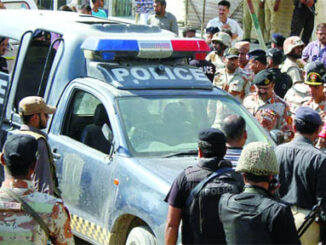
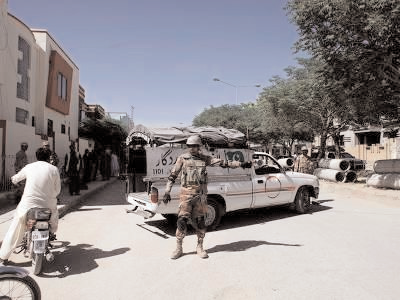
    Karachi (TIP): At least 11 people, including nine bus passengers, were killed by unknown militants in Pakistan’s restive Balochistan province, authorities said on April 13.
    In the first incident, armed men stopped a bus on the highway in Noshki district and kidnapped nine men at gunpoint on Friday, police said.
    “The bodies of these nine men were later found with bullet wounds in the nearby mountainous areas near a bridge,” one official said.
    “The bus was going from Quetta to Taftan when armed men stopped it and after identifying passengers took the nine men to the mountainous areas,” he added.
    In a separate incident a car was fired upon on the same highway in which two passengers were killed and two others injured.
    Balochistan’s Chief Minister Mir Sarfaraz Bugti said that the terrorists involved in the killing of the 11 people on Noshki highway would not be forgiven and hunted down soon.
    Bugti that the terrorists involved in the attacks would be chased, adding that their aim was to sabotage the peace of Balochistan.
    Interior Minister Mohsin Naqvi also condemned the incident, saying that the government stands with the families of the deceased at this time.
    “There is no room for such a tragic incident…,” he added.
    No banned outfit has claimed responsibility for the killings but in recent weeks this year there has been a surge in terror attacks by banned outfits and terrorists in the province in which security forces and installations have also been brazenly targeted.
    The banned Balochistan Liberation Army has claimed to having carried out three major terror strikes in the province in recent weeks in Mach town, Gwadar port and a naval base in Turbat in which security forces killed some 17 militants. (PTI)

  • Iran-Pakistan faceoff : Both nations at fault for backing terrorists

    Iranian missile strikes on terror bases in Balochistan have triggered a fierce retaliation from Pakistan, which targeted purported terrorist hideouts in Iran’s Sistan-Baluchestan province on Thursday. The Inter-Services Public Relations, the Pakistan military’s media wing, stated that hideouts used by two Baloch terrorist organizations were ‘successfully struck in an intelligence-based operation’. It said Pakistan’s armed forces were in a perpetual state of readiness to ensure the safety of its citizens against acts of terrorism. According to Pakistan’s Foreign Office, Islamabad has been sharing its concerns with Tehran about the havens for Pakistan-origin terrorists in Iran, but to no avail.

    The tit-for-tat attacks are a new low in the relations between Iran and Pakistan. Ironically, both nations — notorious for harboring or supporting terrorists as well as militia groups — are playing the victim card. They are desperately trying to make the international community buy their argument that they are more sinned against than sinning. Undoubtedly, Iran and Pakistan have been scorched by terrorism at times, but the onus is on them to first set their own house in order. Collaborative efforts are needed to fight the ‘snakes in the backyard’, which have started biting the very hand that fed them.

    Terrorism is a global threat requiring a multilateral, multipronged strategy. Unilateral actions by Tehran and Islamabad are adding fuel to the raging fire in West Asia. The wider the conflagration spreads, the worse it will get for peace and economic progress in the region. Commenting on the Iranian strikes, India has said that it understands actions that countries take in self-defense, while reasserting its ‘uncompromising position of zero tolerance’ to terrorism. New Delhi should make it a point to condemn terrorism unequivocally, no matter which country sponsors it. At the same time, it is vital to emphasize the importance of diplomatic parleys for defusing tensions.
    (Tribune, India)

  • China may play spoilsport

    China may play spoilsport

    • India prepares to host G20, SCO summits amidst regional rivalries

     “The G20 Summit will be bringing together leaders of countries which constitute two-thirds of the world’s population, while providing 90% of global GDP and 80% of global trade. The year 2023 is set to become the most complex and busy period in India’s diplomatic history. It is also going to be a period when the country’s logistical and organizational strengths will be tested. The forthcoming summits will test our ability in bringing countries together in a constructive and harmonious cooperation at the highest level. The summits are coming in the wake of tensions arising from the military standoff in Arunachal Pradesh.

    The issue of special interest will be whether Xi Jinping will participate in the forthcoming summits in the background of the current state of Sino-Indian ties.”

    By G Parthasarathy

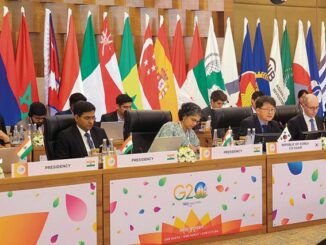
    India’s foreign policy and national security establishments are going to be deeply tied up this year in meetings with members of the Shanghai Cooperation Organisation (SCO) and the G20 grouping. They will have to meticulously prepare for the summit meetings which India will be hosting later this year. The SCO includes eight members, six ‘Dialogue Partners’, and four ‘Observer States’. The G20 Summit will be bringing together leaders of countries which constitute two-thirds of the world’s population, while providing 90% of global GDP and 80% of global trade. The year 2023 is set to become the most complex and busy period in India’s diplomatic history. It is also going to be a period when the country’s logistical and organizational strengths will be tested. The forthcoming summits will test our ability in bringing countries together in a constructive and harmonious cooperation at the highest level. The summits are coming in the wake of tensions arising from the military standoff in Arunachal Pradesh.

    The issue of special interest will be whether Xi Jinping will participate in the forthcoming summits in the background of the current state of Sino-Indian ties.

    There are a few points that New Delhi should bear in mind. It will enjoy unstinted support in the conferences from virtually all members of the G20 and Quad. Both Pakistan and China will be present in the SCO. Pakistan is now engrossed in dealing with its collapsing economy. It also has serious problems with Taliban-ruled Afghanistan, and its own jihadis, the Tehreek-e-Taliban, across its 2,600 km border with Afghanistan and Iran. Given Afghanistan’s strategic location abutting Central Asia, China is keen to secure access to its mineral resources and keep in touch with its radical Islamist Taliban regime, especially in the light of its own tensions with its disaffected Uighur Muslims.

    Chinese President Xi Jinping has displayed continuing hostility towards India. China is focusing attention on the joint production of its much-touted JF-17 fighter aircraft in Pakistan and in strengthening the Pakistan navy. The Gwadar Port in Balochistan has a growing Chinese presence, but Pakistan has more serious problems to deal with, with its dwindling foreign exchange resources. In the meantime, the IMF is insisting on stringent conditions before international assistance can flow in. Even Saudi Arabia and the UAE, which have always been more than generous in bailing out Pakistan, are now making it clear that they will open their purse strings only after Pakistan fully meets IMF conditionalities. Across the world, many governments are recognizing that the economic mess that Pakistan is now in flows from its own blunders.

    There has, meanwhile, been a growing feeling in India that much of the tensions with China flow from deliberate actions of the Xi Jinping government, despite India having rolled out the red carpet during his India visit. It has been interesting to see a comprehensive assessment of India’s policies by Liu Zongyi of the Shanghai Institute of International Studies. Liu is one of China’s most prominent experts on South Asian studies. He has visited both India and Pakistan. In a recent article, which has received due attention in academic circles in our eastern neighborhood, he has bluntly spelt out what China thinks about India and its policies. Senior scholars in China do not speak out of turn. They are a convenient medium to convey the thinking of the country’s Communist Party and government.

    His study, titled ‘India’s Rising Great Power Strategy’, is multifaceted. On India’s domestic political issues, it alludes to the ascendancy of ‘Hindu nationalism’. On economic issues, he describes the ‘Make in India’ strategy as an effort to take over China’s place in the global supply chain. India’s strategy, according to him, will be to target China by building bases in Indian Ocean states, advancing the integration of India’s armed forces and improving border infrastructure, including in the Andaman and Nicobar Islands. It also includes building military bases by India in small Indian Ocean islands.

    In his conclusion, he notes: ‘Thus, the biggest divide between India and China is no longer related to border issues. In fact, border issues have now been instrumentalized. For the Indians, the biggest issue between India and China is the battle for the regional and global order. It is a geopolitical conflict, because India is a country that places a lot of emphasis on the idea of spheres of influence.’ Regarding India hosting the G20 and Quad summits, he notes: ‘Ultimately, the G20 Summit cannot be a success without China’s active participation. Even though the West lavishes praise on India, and even though India presents itself as the so-called poster child of developing countries, and the leader of the South, it will most certainly not succeed without China’s support.’ One cannot think of this as anything but a warning, bordering on threat.

    Liu betrays an obsession with the growth of India-US relations. He avers that it is India’s strategy to work with the US to undermine and counter China’s Belt and Road Initiative to prevent the emergence of a ‘China led’ regional order. This is accompanied by his strong justification of recent Chinese military intrusions in Ladakh and Arunachal Pradesh. Liu expresses serious concerns about India’s relations with the US and its involvement in groupings like Quad and I2U2. He conveniently forgets how China has been deliberately seeking to undermine India’s relations with neighbors across South Asia, notably with Sri Lanka, Bangladesh, Nepal and the Maldives. He even forgets the impact of China’s continuing and growing military relations with Rawalpindi, including its transfer of nuclear weapons and missile capabilities to Pakistan.

    Under these circumstances, the issue of special interest in the coming months will be whether Xi Jinping will participate in the forthcoming summits in the background of the current state of Sino-Indian relations, and the widespread concerns in India about his assertive policies.

    (The author is Chancellor, Jammu Central University & Former High Commissioner to Pakistan)

  • US NGO based in Pakistan associated with terror organizations, alleges Congressman

    US NGO based in Pakistan associated with terror organizations, alleges Congressman

    Congressman Michael McCaul, Chairman of the House Foreign Affairs Committee, seeks a suspension of the funding to the NGO pending a full and thorough review of these allegations

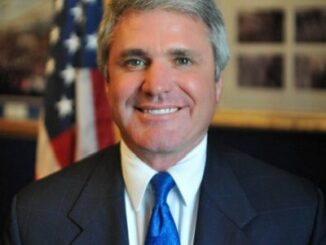
    WASHINGTON, D.C. (TIP): A US NGO based in Pakistan and receiving humanitarian aid from the US Agency for International Development is associated with designated terrorist organizations, an American lawmaker has alleged. In a letter to USAID Administrator Samantha Power on January 24, Congressman Michael McCaul, Chairman of the House Foreign Affairs Committee, sought a suspension of the funding to the NGO pending a full and thorough review of these allegations.

    “This award must immediately be suspended pending a full and thorough review of these accusations,” McCaul said. The Congressman, in the letter, expressed concern that USAID received information from his office more than eight months ago regarding credible allegations that one of its grantees is associated with designated terrorist organizations.

    In October 2021, USAID awarded USD 110,000 to Helping Hand for Relief and Development (HHRD) through the Ocean Freight Reimbursement Program. This award was made despite longstanding, detailed allegations that HHRD is connected to designated terrorist organizations, terror financiers and extremist groups, he said.

    In November 2019, three Members of Congress requested that the State Department review these alleged ties to terrorism in a public letter, he wrote.

    “Please immediately personally review this grant to HHRD. I strongly urge you to pause this grant while you complete a thorough review of the allegations, to include coordination with the intelligence community, federal law enforcement, the State Department Counterterrorism Bureau, and the Department of Homeland Security,” McCaul said.

    The HHRD, a top 4-star rated USA NGO, is also registered in Pakistan with the Ministry of Interior. It is present in all four provinces – Balochistan, Punjab, Sindh, Khyber Pakhtunkhwa – of Pakistan, in addition to Pakistan occupied Kashmir. According to the allegations and media reports, some sponsors of HHRD events in Pakistan include Falah-e-Insaniat Foundation (FIF), the charitable wing of Lashkar-e-Taiba, the terrorist outfit responsible for the 2008 Mumbai attacks. The US in 2016 had designated FIF as a terrorist organization.

    (Source: PTI)

  • Protests in PoK as locals grapple with flour crisis

    Muzaffarabad (PoK) (TIP): Frustrated residents in the illegally-occupied region of Muzaffarabad staged a protest against the spike in the prices of flour, according to a Pakistan media report.

    Trade associations and other groups have warned the government if the prices do not come down, they will launch a movement after January 19, it said. The flour dealers have rejected the government’s plan to form municipal committees to control the supplies.

    Pakistan is facing its worst-ever flour crisis, with parts of the country reporting a shortage of wheat and stampedes reported from several areas in Khyber Pakhtunkhwa, Sindh and Balochistan provinces. Tens of thousands spend hours daily to get the subsidised bags of flour that are already in short supply in the market, according to another report.

    The residents also suffered an electricity shortage. People in Muzaffarabad took to the streets to protest against increasing load-shedding hours. In Hanza, residents and trade unions were protesting against no electricity, no water, no doctors in hospitals and no medicines in the area. (ANI)

  • Death toll from Pakistan floods reaches 1,186

    Death toll from Pakistan floods reaches 1,186

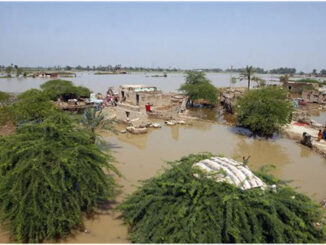
    Islamabad  (TIP): The death toll from flash floods triggered by record monsoon rains across much of Pakistan reached 1,186 on September 1, as authorities scrambled to provide relief materials to tens of thousands of affected people. Record monsoon rains in the last three decades triggered floods which inundated one third of the country, including most of Balochistan and Sindh provinces.

    “So far 1,186 people have died and 4,896 injured while 5,063 kms of roads damaged, 1,172,549 houses partially or completely destroyed and 733,488 livestock killed,” said the National Disaster Management Authority (NDMA), the main body dealing with calamities.

    On Thursday, the army said that some 50,000 people have been evacuated since rescue efforts began.

    Foreign Office spokesperson AsimIftikhar Ahmed said that more than 33 million people have been affected due to “colossal scale of devastation”.

    During a media briefing here, he said Pakistan mounted coordinated rescue and relief operations mobilising all possible resources but the sheer scale of the calamity “stretched our resources and capacities to the limit, thus necessitating support from the international community”.

    The cash-strapped Pakistan government on Tuesday teamed up with the United Nations to issue a flash appeal for USD 160 million to deal with the disaster in the country that has become the “ground zero” of global warming.

    “The Flash Appeal launch was well attended by Member States both in Islamabad and Geneva, Heads of UN agencies in Pakistan, representatives of international organizations, among others. Participants offered condolences and expressions of solidarity, and assured continued support for Pakistan,” the spokesman said.

    He also said that Pakistan faced a “climate-induced calamity” because the monsoons were not ordinary, “as the UNSG termed them ‘monsoons on steroid’.” UN Secretary-General Antonio Guterres will be visiting Pakistan on September 9-10 on an important visit to “express solidarity and international community’s support for Pakistan at this difficult time,” he said.

    Talking about the outpouring of relief supplies, he said till last night, Pakistan received flood relief goods through 21 flights notably from Turkey, UAE and China.

    He said a large number of countries and international organisations pledged to support and are extending cash or in-kind assistance including Australia, Azerbaijan, Canada, China, EU, France, Iran, Japan, Kazakhstan, Kuwait, New Zealand, Norway, Palestine, Qatar, South Korea, Saudi Arabia, Singapore, Turkiye, the UAE, United Kingdom, the United States, Uzbekistan, along with various international organisations including World Bank, Asian Development Bank and other UN Agencies. He said Pakistan on Wednesday signed the Green Framework Engagement Agreement with Denmark in Copenhagen, which marks the first step in creating stronger collaboration in areas such as climate change mitigation and adaptation, and a just and sustainable green transition.

    Separately, Prime Minister Shehbaz Sharif while addressing lawmakers of his Pakistan Muslim League-Nawaz asked them to visit the flood victims with relief goods. The prime minister said that he had never seen such a calamity before. “Water has wreaked havoc everywhere,” he said.

    He also asked Finance Minister Miftah Ismail to devise a plan to give relief to the flood-affected people with electricity bills. Army chief General Qamar JavedBajwa visited the Rohjan area of Punjab and met flood victims whom he assured that the Pakistan Army will help them to overcome their problems in these difficult times, the army said.

    He also directed ground troops to “take this responsibility as a noble cause and spare no effort to lessen the burden of flood-affected brothers and sisters”.

    Advisor to the Prime Minister on Kashmir and Gilgit-Baltistan Affairs Qamar Zaman Kaira said that Prime Minister Sharif would visit Gilgit-Baltistan on Friday and announce a relief package for the flood victims.

    Separately, the United Nations International Children’s Emergency Fund (Unicef) said in a statement that more than three million children were in need of humanitarian assistance in Pakistan and at increased risk of waterborne diseases, drowning and malnutrition due to flooding.

    “These floods have already taken a devastating toll on children and families, and the situation could become even worse,” the statement quoted Unicef representative in Pakistan Abdullah Fadil as saying.

    To add to worries, the Pakistan Meteorological Department (PMD) has forecast more rain in September, saying that La Nina conditions — responsible for recent spells of flood-triggering deluge in the country — would persist in September but become less intense.

    “Tendency for normal to above normal precipitation is likely over the country during September,” the Met Office said, predicting above-normal rainfall in northeastern Punjab and Sindh. (PTI)

  • Pakistan’s former premier accuses Imran Khan of receiving PKR 700 million for Senate seat

    Pakistan’s former premier accuses Imran Khan of receiving PKR 700 million for Senate seat

    Lahore (TIP): Pakistan’s former premier and senior Opposition leader Shahid Khaqan Abbasi has accused Prime Minister Imran Khan of receiving PKR 700 million from a business tycoon of Balochistan to make him a Senator. “Mohammad Abdul Qadir contested the Senate poll as an independent candidate on March 3 and secured votes from the ruling Pakistan Tehreek-e-Insaf and other parties. The PTI lawmakers voted for Qadir on Khan’s direction who had received PKR 700 million from him,” said Abbasi, the senior vice president of main Opposition Pakistan Muslim League-Nawaz (PML-N). Khan will have to be answerable for selling the Senate ticket, Abbasi said on Wednesday, adding that even the ruling party’s members are saying that this man was made a senator after he paid money to Khan. Abbasi has requested the election commission to take notice of this selling of the senate seat by the prime minister to the business tycoon. Interestingly, after Qadir won the seat as independent candidate Khan welcomed him into the Pakistan Tehreek-e-Insaf despite strong Opposition from the party’s Balochistan leadership and zonal heads, who had earlier compelled the central leadership to withdraw a party ticket awarded to him. The former prime minister said that there had been no comparison of the corruption committed by the Khan government with that of its predecessors, but the courts and the anti-corruption establishment were silent over it. “The court should take a suo motu notice in such cases. Suo motu was taken against an elected premier (Nawaz Sharif) and he was removed from his office. People know what is happening today,” he said. Abbasi also asked the military establishment to stay away from politics. “We want to believe what the DG ISPR (inter-services public relations) had said that the army has no involvement in politics. It should be like this. But what happened in the Senate polls and Prime Minister Khan’s vote of confidence, it negated that statement of the DG ISPR,” he said. Recently, ISPR Director General Major General Babar Iftikhar categorically denied that the army was involved in politics. Meanwhile, PML-N vice president Maryam Nawaz warned the military establishment against interfering in the Senate chairman election scheduled to be held on Friday. Indirectly accusing the intelligence agencies, she said that her party’s senators are receiving calls not to vote for the Opposition’s candidate Yousuf Raza Gilani for the slot of Senate chairman. PTI

  • Pakistan to hold elections for Senate on March 3

    Pakistan to hold elections for Senate on March 3

    Islamabad (TIP): Pakistan’s election authorities on Thursday announced that the elections for the Senate will be held on March 3, amidst a raging controversy about allowing open ballot papers in the polls to avoid corruption.

    A total of 52 senators in the 104-member upper house will retire on March 11 on completion of their six-year term. They will also include four of the eight senators from the erstwhile Federally Administered Tribal Areas (FATA). Since the areas have been merged with Khyber-Pakhtunkhwa, they will not be reelected and the Senate strength will shrink to 100. Therefore, polling will be held to elect 48 senators — 12 each from Khyber-Pakhtunkhwa and Balochistan, 11 each from Punjab and Sindh and two from Islamabad, the Election Commission of Pakistan (ECP) said in a notification. Polling will be held to elect seven members on general seats, two women and two technocrats in the four provinces. Besides, the election on one minority seat each in KP and Balochistan will also be conducted.

    The election for Senate or the upper house will be held as the country is torn apart by differences between the government and the Opposition whether to allow open ballot paper to avoid use of money.

    The problem stems from the system of election as senators are elected by the respective provincial assemblies on the basis of proportional representation. For example, in Balochistan a candidate may need just seven votes to become a senator.

    A few days back a video surfaced showing some members of Khyber-Pakhtunkhwa provincial assembly allegedly being bribed to vote against their Pakistan Tehreek-i-Insaf (PTI) party in 2018 elections. Then PTI chief Imran Khan had expelled about 20 lawmakers for voting against the party line.

    Khan has led the drive for open ballots but he is hamstrung by the Constitution of the country which asks for secret ballots. His government last month filed an application with the Supreme Court to allow an open ballots system for the Senate election.

    While the application is being heard, the PTI government first tried to amend the Constitution but failing to do so, it last week got the Elections (Amendment) Ordinance 2021 promulgated by President Arif Alvi to pave the way for Senate elections to be held via an “open and identifiable ballot”.

    The opposition parties have rejected the ordinance as well as the appeal in the Supreme Court by saying that PTI was trying to stuff the Senate with “friends of Imran Khan” against the wishes of several of its lawmakers.

    The ordinance has also been challenged in the top court as violation of the Constitution. As the Senate election has been announced, all eyes are set at the Supreme Court to decide the issue of open ballots. — PTI

  • Mohajirs welcome India’s statement in UN Human rights session: Nadeem Nusrat

    Mohajirs welcome India’s statement in UN Human rights session: Nadeem Nusrat

    WASHINGTON DC (TIP): Mohajirs have welcomed India’s statement in United Nations human rights session on state atrocities committed by Pakistan in Sindh, Baluchistan and KPK.

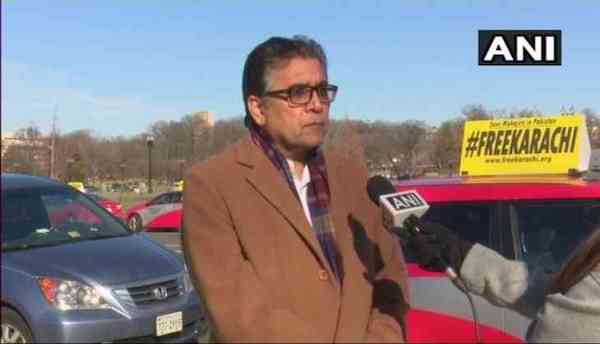
    This was said in a statement sent to The Indian Panorama on March by Nadeem Nusrat, Spokesperson of ‘ Free Karachi ‘ Campaign and former Convener of MQM.

    Nadeem Nusrat said that the inclusion of the name of Sindh in India’s statement on human rights violations is an important and encouraging development for 70 million Mohajirs.

    The people of Karachi and Urban Sindh are grateful to Indian government for raising voice on the plight of Mohajirs in Pakistan.

    Nusrat further said that Sindh, especially Karachi and Urban centers of Sindh province had been neglected previously by world community while highlighting persecution of ethnic groups in Pakistan. More than 25,000 innocent Mohajirs have been brutally killed in Army and para military operations in Karachi since 1992. Enforced disappearances, abductions and extra judicial killings are on the rise in Pakistan’s port city of Karachi since the latest phase of operation in 2013.

    Highlighting the issue of terrorism, Mr. Nusrat said that religious extremism, fanaticism and terrorism is being nourished by the state of Pakistan which has put peace and security of the region at stake. Pakistani soil has been used to plan and launch major terror attacks in the region. The providers and facilitators of terror sanctuaries in Pakistan must be hold accountable by United Nations and all peace-loving Nations.

    He further added that ‘ Free Karachi ‘ Campaign has been drawing world’s attention towards the state atrocities of Pakistan on Mohajirs, Balochs, Pashtuns and other religious minorities.

    Nusrat said that ‘ Free Karachi ‘ team is approaching international community, lawmakers, decision making bodies, human rights groups and is getting tremendous support from all quarters.

    Nadeem Nusrat urged all the major regional powers of South Asia and international powers to put pressure on Pakistan to end crimes against humanity in Karachi and urban centers of Sindh along with Balochistan, KPK and FATA.

    ‘ Free Karachi ‘ Campaign was launched on January 15th on the eve of Martin Luther King Day to raise global awareness on human rights violations in Karachi and Urban Sindh.

  • Islamic State claims it killed two Chinese in Pakistan

    Islamic State claims it killed two Chinese in Pakistan

    CAIRO/QUETTA (TIP): Islamic State has killed two Chinese teachers it kidnapped in Pakistan’s southwestern Balochistan province last month, the militant group’s Amaq news agency said on June 8, in a blow to Islamabad’s efforts to safeguard Chinese workers. China’s foreign ministry said it was “gravely concerned” about the report and working to verify the information.

    Armed men pretending to be policemen kidnapped the two language teachers in the provincial capital, Quetta, on May 24. The kidnapping was a rare security incident involving Chinese nationals in Pakistan, where Beijing has pledged $57 billion for its “Belt and Road” plan.

    “Islamic State fighters killed two Chinese people they had been holding in Balochistan province, southwest Pakistan,” Amaq said. A Balochistan government spokesman said officials were in the process of confirming “whether the report is true”. China’s foreign ministry said it noted the report and expressed “grave concern”. “We have been trying to rescue the two kidnapped hostages over the past days,” the ministry said in a short statement.

    “The Chinese side is working to learn about and verify relevant information through various channels, including working with Pakistani authorities,” it said. “The Chinese side is firmly opposed to the acts of kidnapping civilians in any form, as well as terrorism and extreme violence in any form.”

    There was no immediate comment from Pakistan’s interior ministry or its foreign office. Islamic State, which controls some territory in neighbouring Afghanistan, has struggled to establish a presence in Pakistan. But it has claimed several major attacks, including one on the deputy chairman of the Senate last month in Balochistan, in which 25 people were killed.

    Earlier on Thursday, Pakistan’s military published details of a three-day raid on a militant hideout in a cave not far from Quetta, saying it had killed 12 “hardcore terrorists” from a banned local Islamist group and prevented Islamic State from gaining a “foothold” in Balochistan.

    China’s ambassador to Pakistan and other officials have often urged Islamabad to improve security, especially in Balochistan, where China is building a new port and funding roads to link its western regions with the Arabian Sea.

    The numbers of Pakistanis studying Mandarin has skyrocketed since 2014, when President Xi Jinping signed off on the China-Pakistan Economic Corridor, pledging to invest $57 billion in Pakistani road, rail and power infrastructure. Security in Balochistan has improved in recent years.

    However, separatists, who view the project as a ruse to steal natural resources, killed 10 Pakistani workers building a road near the new port of Gwadar this month, a key part of the economic corridor.

    China has also expressed concern about militants in Pakistan linking up with what China views as separatists in the far western Chinese region of Xinjiang, where hundreds have been killed in violence in recent years.

    (Reuters)

  • China demands action from Pak to rescue kidnapped Chinese couple

    China demands action from Pak to rescue kidnapped Chinese couple

    BEIJING (TIP): China has stepped up pressure on Pakistani authorities “to take every necessary measure” to rescue a Chinese couple who were abducted near Quetta, the capital of Balochistan province which also houses the Gwadar port.

    The couple who teach the Chinese language at a local school were kidnapped on Wednesday by three men posing as policemen at Jinnah city near Quetta, Pakistani media said. The husband and wife team were forced to board a white car by the kidnappers at gun point, it said. The police have found no clues about the whereabouts of the abductors although a high-power investigation group is looking at it.

    “We keep close communication with Pakistan, request relevant Pakistani authorities to take every necessary measure to rescue the abducted while ensuring their safety and take more effective measures to secure the safety of Chinese citizens and organs in Pakistan,” Chinese foreign ministry spokesman Lu Kang said on Thursday

    China has been repeatedly telling Pakistani authorities to ensure the safety of Chinese citizens as part of the security arrangements for the $46 billion China Pakistan Economic Corridor.

    “The Chinese government attaches great importance to the safety of overseas Chinese citizens and condemns the abduction of personnel in any form,” Lu said adding, “After the incident happened, the Chinese government, along with relevant departments, the Chinese Embassy in Pakistan and the Chinese Consulate General in Karachi, immediately launched the emergency response mechanism”. (AP)

  • CPEC may ignite more India-Pakistan tensions: UN report

    CPEC may ignite more India-Pakistan tensions: UN report

    ISLAMABAD (TIP): The $50 billion China-Pakistan Economic Corridor (CPEC) traversing through PoK might create “geo-political tension” in the region by igniting further tensions between India and Pakistan, a UN report has warned.

    The report released by the UN’s Economic and Social Commission for Asia and the Pacific (ESCAP) said that the project could also fuel separatist movement in Pakistan’s Balochistan province. “The dispute over Kashmir is also of concern, since the crossing of the CPEC in the region might create geo-political tension with India+ and ignite further political instability,” said the report on China’s ambitious Belt and Road Initiative (BRI).

    The report, prepared at the request of China, also cautioned that the instability in Afghanistan could cast a shadow over viability of the CPEC over which India has already raised protests with China and boycotted the last week’s BRI summit in Beijing. “Afghanistan’s political instability could also limit the potential benefits of transit corridors to population centres near Kabul or Kandahar, as those routes traverse southern and eastern Afghanistan where the Taliban are most active,” the report said.

    The report also covered other economic corridors of the BRI including the Bangladesh-China-India-Myanmar Economic Corridor (BCIM). According to the report, while the CPEC could serve as the “driver for trade and economic integration” between China, Pakistan, Iran, India, Afghanistan and the Central Asian states, it could also cause many problems within Pakistan and reignite separatist movement in the country due to opposition in Balochistan.

    “However, social and environmental safeguards are a concern. The CPEC could lead to widespread displacement of local communities+ . In Balochistan, there are concerns that migrants from other regions of Pakistan will render ethnic Baloch a minority in the province,” it said.

    Further, concerns exist that the CPEC will pass from the already narrow strip of cultivable land in the mountainous western Pakistan, destroying farmland and orchards. The resulting resettlements would reduce local population into an “economically subservient minority”, it said. “In addition, Hazaras are another minority of concern. If the benefits of the proposed CPEC are reaped by large conglomerates, linked to Chinese or purely Punjabi interests, the identity and culture of the local population could be further marginalised,” the report cautioned. “Marginalisation of local population groups could reignite separatist movements and toughen military response from the government,” it said.

    About the BRI, it said, the scale of the BRI both in terms of geographical coverage and its cross-sectorial policy influence will shape the future of global development and governance.

    “It brings wide-reaching implications for China, for the countries it links across the Asia-Pacific and for the global economy+ ,” it said. “In order for the full potential of the BRI to be realised there are several prerequisites. It should be founded on principles such as trust, confidence and sharing benefits among participating states.” It should play a positive role in the response to climate change over the coming decades, promoting low carbon development and climate resilient infrastructure, the report said.

    “Lastly, to be effective and deliver results in a timely fashion, it should go beyond bilateral project transactions to promote regional and multilateral policy frameworks,” it said. “The BRI will serve the interests of China and the countries along its corridors more effectively if it is shaped as a collective endeavour and is well integrated into existing regional cooperation initiatives,” it said.

    To this end, the BRI needs to co-opt and engage Asian sub regional platforms to ensure that it reinforces regional plans of connectivity and prioritises the missing transport links along corridors, particularly those in the China-Central-West Asia and the China-Indo-China-Peninsula corridors, it said.

    Shamshad Akhtar, former governor of State Bank of Pakistan, who heads the ESCAP wrote the foreword for the report. In her foreword Akhtar said, “our analysis confirms the benefits the BRI could bring are significant. The BRI could help raise economic output levels by an average of 6 per cent in participating countries. If these countries lowered border transaction costs and import tariffs, the difference the BRI could make would be greater still.” (PTI)

  • Pakistan at crossroads in terror fight, must decide: Army chief

    Pakistan at crossroads in terror fight, must decide: Army chief

    ISLAMABAD (TIP): Pakistan stands at a “crossroads” in its fight against extremism and must decide whether it wants to enjoy the benefits of its young demography or suffer at the hands of terrorism, Army chief Gen Qamar Javed Bajwa said on May 19.

    Gen Bajwa, speaking on the role of ‘Youth In Rejecting Extremism’ here, said the Army would defeat terrorists but it needed the support of the nation to wipe out extremism from the society.

    “Please remember, while the Army fights terrorists, terrorism and extremism is fought by law enforcing agencies and society,” he said.

    Pakistan is a young nation, the army chief said, adding that demographically, more than 50 per cent of population is projected to be less than 25 years of age.

    “We are standing at a crossroads; ten year down the line, we will either be enjoying the fruits of a youth dividend or suffering at the hands of a youth bulge, especially with the youth which remains vulnerable to extremism,” he said.

    “A youth driven towards extremism is a youth without a clear idea of his values and identity,” Gen Bajwa said.

    Talking about India caught in extremism, he said: “Just next door, India seems to have given in to extremism to such an extent that it has become the new normal. Hate has been mainstreamed in India and it is distorting there national outlook.”

    “The Hindutva extremism of the RSS and their GaoRakshaks, deprivation of Palestinians, the burning and desecration of mosques or gurdwaras in western capitals, the rise of hyper nationalists and the monster of racism, are all manifestations of extremism.”

    He said Pakistani youth is getting exploited due to poor governance and lack of justice in the society.

    “Our challenges are very real but there are positive sides to the picture as well. Not only have we survived the worst onslaught of terrorism in modern history, we have reversed the tide. In fact, security has now achieved conditions to help development take off,” he said. He accused enemies of Pakistan for waging war.

    “Our enemies, both state and non state, are actively pursuing divisive tendencies in society. Let me say that they are waging the biggest and most sustained ‘Hybrid War’ against us from multiple directions and using multiple ways,” he said.

    He said said the “enemy” was using social media to achieve its objective.

    “We are being targeted by not only terrorists but also spin masters of multiple hostile agencies, trying to subvert our minds, particularly that of our youth. Being denied opportunities in the mainstream media, they are using faceless platforms on the internet and smart phones,” he said.

    He said the Indian leadership has made no secret of its involvement in proxy struggle in the erstwhile East Pakistan (which later became Bangladesh) and now in Balochistan.

    He said Pakistan took action affiant “terrorists of all hues and colours” and ensured the writ of state in the farthest and remotest corners of the country. “Today there are no safe havens for any miscreants in Pakistan,” he said.

    He vowed that extremism will also be defeated as terrorism was defeated in Pakistan. (PTI)

  • Hitting where it hurts: India must keep up the momentum

    Hitting where it hurts: India must keep up the momentum

    As I write these lines, Pakistan has strongly denied that the Indian army carried out surgical strikes across the LoC. It has claimed, indeed asserted, through the official army spokesman that the Indian action was confined to the traditional exchange of fire across the LoC which the two armies have undertaken many times in the past, including heavy fire last year. In doing so, as of now, Pakistan has obviously sought to ensure that it does not come under pressure from its domestic public opinion to adequately respond to uphold the country’s honor. For if it acknowledges that Indian soldiers crossed the LoC, even by a short distance of a couple of kilometers, the Pakistani people, more so, Pakistani soldiers and officers will demand of its generals, especially army chief General Raheel Sharif, that the Indian Army be soonest taught a lesson so it does not undertake such an action again. This refrain would be heard the loudest from the jehadi tanzeems.

    Raheel Sharif has an image to live up to – his elder brother and maternal uncle were decorated with the Naishan-e-Haider, Pakistan’s highest gallantry award, and the Sharif family is greatly respected in army circles and by the public at large. Raheel Sharif is also credited with successful action in North Waziristan to clear Tehrik-e-Taliban-e-Pakistan cadres under the Zarb-e-Arz operation. Thus more than Prime Minister Nawaz Sharif, it is the General who is under greater scrutiny. It is obvious that his initial reaction has been not to immediately get into a tit-for-tat situation and to move cautiously. That is not unnatural, for the Pakistan General staff would need to carefully weigh all options, especially as the international community knows that Pakistan has provoked India continuously over two decades with its pursuit of cross-border terrorism and that no army would take the Uri terrorist attack lying down.

    The major powers, especially the US, have advised Pakistan that it has to take action against all terrorist groups, not only those that have turned against the state. This counsel has fallen on deaf ears, for there is no evidence that Pakistan army is willing to take a re-look at its security doctrines. These prescribe the pursuit of low-intensity conflict to contain India by keeping it off-balance. The fact is that despite the Pathankot attack and India’s acceptance of a Pakistani joint investigation team, including an ISI representative, to visit the Pathankot air base, it continued to essentially remain in denial, which is a clear evidence of its unwillingness to modify its security approaches. As India has crossed a threshold, Pakistan’s security planners will be under international pressure to modify their policies on the use of terror, even as they will not easily give it up. Why?

    The major powers, including Pakistan’s all-weather friend, China, do not want a conflagration between two countries with nuclear weapons. As India has always acted “responsibly”, it has ironically been under greater pressure to avoid taking any step that would enhance the chance of escalation. This has been so after every significant terrorist provocation, including the Parliament attack and the Mumbai outrage. Each time, India absorbed terrorist action, despite the loss of life. Indeed, influential sections of the Indian political and security classes advanced the view that terrorism did pose a real security challenge to the country. Thus Pakistan-sponsored terrorism was cynically relegated to a matter of political management. If this was the view of those who governed the country, the international community naturally went along. The Pakistan Generals too felt secure that India’s political masters would not really react with force. They were initially concerned that Prime Minister Narendra Modi may be different and they tested him even prior to his taking oath when the Indian consulate-general in Herat was attacked. When Modi flip-flopped, laying down red lines only to dissolve them, they felt that he was no different from his predecessors. They will now have to reassess.

    The only time the global powers brought pressure to bear on Pakistan was during the Kargil encroachment. Then India acted with determination to throw out Pakistan forces that had occupied the Kargil heights. It is because India refused to accept Pakistani action and the Indian Army started meeting with success despite great odds that the US put pressure on Pakistan to abandon its unacceptable misadventure. The US pressure was a contributory factor to Pakistan’s decision to withdraw. The Kargil lesson was that if India showed resolve and acted then Pakistan was asked to act responsibly. The key factor in all such situations is calm and sober resolve and deliberate action. Now after the surgical strikes, which have been undertaken with precision, it would be Pakistan that would be under pressure not to notch up the situation. That would be the quiet message that the Chinese would also give, notwithstanding the public postures that they may take.

    Modi government has also done well not to have undertaken the surgical strikes in isolation, but as part of a package of measures to show that India is re-examining the premises of its Pakistan policy. No previous government has focused on the Indus Waters Treaty and Pakistan’s MFN status. Nor has any government raised Pakistan’s human rights record in Balochistan internationally, that too at the UN. Most importantly, the withdrawal from the SAARC Summit -and, it is obvious that Afghanistan, Bangladesh, Bhutan and India have consulted on this matter – would not have gone unnoticed in important capital cities. While there will be routine counsels of restraint, there is no doubt that there will be an understanding that India has suffered much and Modi expended much political capital and the present action – with no intention, at present, to undertake any other surgical strike – was neither adventurous nor unnatural.

    There is little doubt that Pakistan will loudly proclaim the dangers of Indian action leading to the danger of acquiring a nuclear dimension. This is hogwash and self-serving. Pakistan will also renew efforts to draw attention to the Kashmir situation, but global indifference to developments in the Valley will continue as no country wants to intervene in it.

    So, how will Pakistan respond? Indian security managers should redouble their vigilance against a major terrorist strike.

    (The author is a former Secretary, Ministry of External Affairs)

  • Isolate nations which nurture, peddle and export terrorism: Indian foreign minister at UNGA

    Isolate nations which nurture, peddle and export terrorism: Indian foreign minister at UNGA

    UNITED NATIONS: Indian Minister for External Affairs Sushma Swaraj, speaking at the 71st United Nations General Assembly, said on Monday that it was time to identify nations who nurture, peddle and export terrorism and isolate them if they don’t join the global fight against terrorism.

    “In our midst, there are nations that still speak the language of terrorism, that nurture it, peddle it, and export it,” said Swaraj in a veiled reference to Pakistan.

    The harsh India rhetoric at the UNGA comes after the attack on an Indian army base in India-held Kashmir earlier this month. The attack killed 18 Indian army personnel. India immediately blamed Pakistan for the attack.

    The Indian minister added it had become the calling card of such nations to shelter terrorists, and urged the United Nations (UN) to hold such nations to account.

    “These nations, in which UN declared terrorists roam freely, lead processions and deliver their poisonous sermons of hate with impunity, are as culpable as the very terrorists they harbour,” said Swaraj.

    She also said that “such countries should have no place in the comity of nations”.

    Swaraj referred to the speech of Prime Minister Nawaz Sharif at the UNGA, and said the allegations levelled against India were “baseless”.

    “Prime Minister of Pakistan used this podium to make baseless allegations about human rights violations in my country.”

    The Indian foreign minister stated that Pakistan should introspect and see the abuses being carried out in Balochistan.

    She also added that the “brutality against the Baloch people represents the worst form of state oppression”.

    It is pertinent to mention that the brutal and heavy-handed tactics used by Indian security forces in India-held Kashmir has led to the deaths of more than 100 people, hundreds have been blinded by ‘non-lethal pellet guns’ and over a thousand people have been injured.

    Swaraj claimed that India had no preconditions for talks with Pakistan and said India wants to resolve issues not on the basis of conditions, but on the basis of friendship.

    She further alleged that India did not receive the appropriate response from Pakistan and instead got a reply in the form of “Pathankot, Bahadur Ali, and Uri”.

    “Bahadur Ali is a terrorist in our custody, whose confession is a living proof of Pakistan’s complicity in cross-border terror,” claimed the foreign minister.

    Referring to Kashmir, she ‘advised’ Pakistan to abandon the dream of having control of India-held Kashmir.

    “My firm advice to Pakistan is: abandon this dream. Let me state unequivocally that Jammu and Kashmir is an integral part of India and will always remain so,” Swaraj said.

    ‘India not serious about resolving Kashmir issue’
    Chief of Army Staff General Raheel Sharif, while addressing a US CENTCOM conference in Germany, said India is not serious about resolving the issue of Kashmir.

    “Pakistan has suffered the most by terrorism losing lives more than any other country in the world,” said the army chief.

    General Raheel added that terrorists could move across borders because of no effective border management systems in place and it is exploited by anti-Pakistan intelligence agencies such as RAW.

  • A Day of Protests in front of the United Nations

    A Day of Protests in front of the United Nations

    NEW YORK (TIP): September 21 was a day of protests in front of the United Nations. The most important, from the point of view of Indian American community were the protests against Pakistan, organized by Balochis and Indian Americans.

    There was another organized by the Bangladeshi BNP against Sheikh Hasina. Yet another was a protest organized against the Chinese government by the practitioners of Falun Dafa who alleged persecution of “100 million people” at the hands of the Chinese regime. Yet another, a little distance away on 2ndAvenue, was a protest against Iranian regime.

    We are presenting here the stories in brief in pictures. However, the protests against Pakistan by the Balochis and the Indian Americans are more detailed.

    BALOCHIS AND INDIAN AMERICANS PROTEST AGAINST PAKISTAN


    Several Baloch and Indian activists held large-scale demonstrations outside the UN headquarters here while Pakistan Prime Minister Nawaz Sharif addressed the UN General Assembly as they were joined by other groups demanding that it stop “exporting” terror into India.

    The protestors converged across the street from the world body’s headquarters to condemn atrocities and human rights violations by Pakistan just as Mr. Sharif was addressing the General Debate of the General Assembly.

    The crowd shouted slogans of ‘Free Balochistan’, ‘Down Down Pakistan’, ‘Save World from Pakistan Terror’ as they waved banners and placards that read ‘US Government stop giving funds to Pakistan’, ‘Kashmiri Hindus are Humans, Wake up to their sufferings’, ‘Remove Pakistan from the UN’, ‘Stop Atrocities in Pakistan-occupied Kashmir’ and ‘Killing Fields of Pakistan -Sindh and Balochistan’.

    “Pakistan is a terror state and does not want the people of Balochistan to live in peace,” Ahmar Musti Khan, founder of the American Friends of Balochistan told Press Trust of India.

    He said Pakistan and its leaders are committing crimes against the residents of Kashmir, demanding that the country stop “exporting terror and let its neighbors live in peace”.

    He added the Pakistani leadership should respect the right to self-determination of the Baloch people.

    Mr. Khan said the Baloch people are “indebted” to Prime Minister Narendra Modi “for speaking out for Balochistan’s right and the right of the Baloch people to be the masters of our own destiny”.

    He slammed the Pakistani army for its brutalities against “innocent Balochis”, saying “the Pakistan Army is ISIS in uniform”.

    The Baloch National Movement (BNM) condemned the Pakistani atrocities and the ‘ongoing military operations’ in Sindh and Balochistan.

    “Baloch and Sindhi people appeal to the freedom loving citizens of America and the world to support our demands for freedom, peace, and justice. We, the victims of Pakistani state aggression and crimes against humanity, want to tell the world that ‘Pakistan is a nuclear-armed terrorist state’ and must be stopped,” the group said.

    Condemning the “barbaric” terror attack on the Uri camp in Kashmir and Pathankot air base, BNM said such attacks are part of Pakistan’s policy of “aggression, employing terrorist methods and outfits to escalate war in the region”.

    It said the Baloch people are grateful for the support extended by the Indian Prime Minister at “such a critical juncture when our nation is struggling to be free from the illegal military occupation of Pakistan since 1948”.

    Jayesh Patel, the former President of the Overseas Friends of BJP, said Pakistan should stop terrorism against India, saying countless innocent lives have been lost due to attacks in Kashmir, mostly recently on the army base in Uri that killed 18 soldiers.

    “The families of our soldiers are the worst sufferers,” he said.

  • Balochis, Indians protest against Pakistan outside UN

    Balochis, Indians protest against Pakistan outside UN

    United Nations: Several Baloch and Indian activists held large-scale demonstrations outside the UN headquarters here while Pakistan Prime Minister Nawaz Sharif addressed the UN General Assembly as they were joined by other groups demanding that it stop “exporting” terror into India.

    The protestors converged across the street from the world body’s headquarters to condemn atrocities and human rights violations by Pakistan just as Mr Sharif was addressing the General Debate of the General Assembly.

    The crowd shouted slogans of ‘Free Balochistan’, ‘Down Down Pakistan’, ‘Save World from Pakistan Terror’ as they waved banners and placards that read ‘US Government stop giving funds to Pakistan’, ‘Kashmiri Hindus are Humans, Wake up to their sufferings’, ‘Remove Pakistan from the UN’, ‘Stop Atrocities in Pakistan-occupied Kashmir’ and ‘Killing Fields of Pakistan – Sindh and Balochistan’.

    “Pakistan is a terror state and does not want the people of Balochistan to live in peace,” Ahmar Musti Khan, founder of the American Friends of Balochistan told Press Trust of India.

    He said Pakistan and its leaders are committing crimes against the residents of Kashmir, demanding that the country stop “exporting terror and let its neighbours live in peace”.

    He added the Pakistani leadership should respect the right to self determination of the Baloch people.

    Mr Khan said the Baloch people are “indebted” to Prime Minister Narendra Modi “for speaking out for Balochistan’s right and the right of the Baloch people to be the masters of our own destiny”.

    He slammed the Pakistani army for its brutalities against “innocent Balochis”, saying “the Pakistan Army is ISIS in uniform”.

    The Baloch National Movement (BNM) condemned the Pakistani atrocities and the ‘ongoing military operations’ in Sindh and Balochistan.

    “Baloch and Sindhi people appeal to the freedom loving citizens of America and the world to support our demands for freedom, peace, and justice. We, the victims of Pakistani state aggression and crimes against humanity, want to tell the world that ‘Pakistan is a nuclear-armed terrorist state’ and must be stopped,” the group said.

    Condemning the “barbaric” terror attack on the Uri camp in Kashmir and Pathankot air base, BNM said such attacks are part of Pakistan’s policy of “aggression, employing terrorist methods and outfits to escalate war in the region”.

    It said the Baloch people are grateful for the support extended by the Indian Prime Minister at “such a critical juncture when our nation is struggling to be free from the illegal military occupation of Pakistan since 1948”.

    Jayesh Patel, the former President of the Overseas Friends of BJP, said Pakistan should stop terrorism against India, saying countless innocent lives have been lost due to attacks in Kashmir, mostly recently on the army base in Uri that killed 18 soldiers.

    “The families of our soldiers are the worst sufferers,” he said.

  • Exiled Baloch leader Brahumdagh Bugti to get Indian citizenship, Pakistan media reports

    Exiled Baloch leader Brahumdagh Bugti to get Indian citizenship, Pakistan media reports

    ISLAMABAD (TIP): In a move that will no doubt annoy Pakistan, Geo News reported late yesterday that Baloch leader Brahumdagh Bugti, currently in exile in Switzerland, is set to get Indian citizenship after long negotiations with Indian authorities.

    India will also give citizenship to Brahumdagh’s key lieutenants in Switzerland, including his trusted aides, Sher Muhammad Bugti and Azizullah Bugti, sources told Geo News, a Pakistani media outlet. Brahumdagh is founder of the Baloch Republican Party (BRP), that Pakistan has outlawed.

    Interestingly, Indian officials and Brahumdagh began talks about granting him Indian citizenship earlier this year, much before Prime Minister Narendra Modi began to be proactive in highlighting Pakistan’s human rights abuses in its beleaguered Balochistan province, a BRP source told Geo, a Pakistani media outlet.

    “We will use Indian papers to travel around the world to campaign against Pakistan and to highlight our case. We have openly thanked Narendra Modi for his support and we are no more hiding anything. We have no other option. We do not care what our opponents think of our support for Modi and his support for us,” the BRP source is quoted as saying.

    Brahumdagh has alleged in the past that the Swiss government is under pressure from Pakistan to not grant him citizenship. He realized earlier this year, the report says, that he may not get a Swiss passport any time soon and could be confined in Switzerland for an indefinite period of time.

    The Baloch leader fled his hometown Dera Bugti in Balochistan in 2006 following the assassination of his grandfather Akbar Bugti. He lived in Afghanistan as a state guest, first, and was then flown from there to Switzerland in October 2010. He has been living there ever since, in political asylum, with his family.

    Brahumdagh will formally apply for Indian citizenship in Geneva, Switzerland, after a meeting of his party’s officials there on September 18-19. In the meeting, seven members of the 16-member BRP – from Germany, London, Norway, Sweden and Switzerland – are expected to be present and endorse Brahumdagh’s decision to get India’s help.

    “India has facilitated Dalai Lama against the pressure from a powerful country like China. It helped Sheikh Mujeeb-ur-Rehman as well. It will help Brahumdagh and his colleagues as well. Brahumdagh has asked for Indian citizenship for himself and all his colleagues. There are 15,000 Bugtis stuck in Afghanistan. Around 2,000 are in various countries including European countries. Their asylum applications have been either approved or are in process. Brahumdagh would like all these people accommodated along with his own case,” said the BNP source told Geo News.(PTI)

  • Pro-India protests in Balochistan

    Pro-India protests in Balochistan

    BALOCHISTAN: Pro-India protests have been staged by residents of Balochistan, condemning cases filed by Pakistan government against three Baloch leaders who praised Prime Minister Narendra Modi’s August 15 Independence Day speech.

    Cases have been filed against leaders Brahumdagh Bugti, Karima Baloch and Hyrbyair Marri.

    Baloch leader Brahumdagh Bugti reacting over pro-India protests in Baloch region, said, “This is the reaction of the people over PM Modi’s statement. Case have been filed after we thanked Modi ji. People were beaten for doing this. Army was also brought in. Thousands of cases have been filed against me in Pakistan. They question me as to why I support Modi ji’s speech. I said that I will continue to support Modi ji’s statement.”

    PM Narendra Modi in his Independence Day speech on August 15 clarified that India stands by the people of Balochistan in PoK. Modi also highlighted India’s firm stand against terror and condemned atrocities against Balochistan residents by Pakistani establishement. He also said that Baloch people had thanked him for India’s support to them.

  • Taliban couldn’t erase Pak man’s sense of humor

    Taliban couldn’t erase Pak man’s sense of humor

    ISLAMABAD (TIP): A Pakistani man, Shahbaz Taseer, who was held by the Taliban for nearly five years before being abruptly freed this month, is lighting up Twitter with his frank and often-humourous account of his captivity.

    Taseer is a son of Salman Taseer, the liberal Punjab governor assassinated in 2011. He was taken hostage a few months after his father was murdered.

    Taseer has turned down interview requests but this week he took to Twitter — his late father was also a prolific user and early adopter — to share his story in his own words.

    Pakistanis have been riveted as Taseer and his wife Maheen light up the Internet with their funny, loving and often heart-stopping account of his captivity and release.

    When asked what he said to his wife the first time he saw her, he replied: “i told you id come back”.

    She also described the moment of their reunion: “I was crying with happiness, could hardly speak but hugged him and told him I love him”.

    Using the hashtag #AskST, he invited questions from fans eager to find out more about his detention, where according to militant sources, he was shuffled between various extremist groups in Pakistan’s tribal areas.

    Asked whether he remained loyal to his favourite football team Manchester United, he replied: “U can’t be a united fan it’s a family”.

    His wife later chirped in asking “who is number one, me or @ManUtd?”, with Taseer responding: “You… but they are a VERY close second :)”

    Some responses, while light-hearted, hinted at darker times.

    “How the heck did you rewire your brain to not be overwhelmed with the negativity?” one user asked.

    He responded: “just press delete :)”

    Asked whether he was asked to formally join the Taliban he said: “no, they didn’t like my sense of style”, adding that his only friend “was a spider called peter”.

    Some details remain confusing, such as when he was asked if he ever thought of trying to run away from his kidnappers. He responded: “only in my dreams which was good enough.”

    Taseer also recalled phoning his mother from the restaurant he was recovered from in southwest Balochistan province earlier this month.

    He wrote: “i said ‘hey ami i ran away btw the mountain dew is great at saleem hotel kuchlak baluchistan’ she said ‘whose this?’”

    Many of the questions centred around how life had changed during his half decade away from civilisation.

    Earlier in the week he joked that his wife had compared him to Nicholas Brody, the character played by actor Damien Lewis in US drama “Homeland” — a US Marine turned would-be terrorist after eight years in captivity.

    It was a powerful respite to the grim news many Pakistanis have grown accustomed to in the country’s more than decade-long fight against an Islamist insurgency, including Sunday’s bombing of a park in Lahore targeting Christians celebrating Easter that killed dozens of children.

    Pakistani users have responded warmly.

  • The Pakistani Shadow on Indo-US Relations

    The Pakistani Shadow on Indo-US Relations

    We should be treating the visits of Pakistani leaders abroad as part of normal diplomacy that all countries engage in. By paying too much attention to them we boost Pakistan’s political importance and diminish our own stature. Unfortunately, we cannot easily ignore the visits of top Pakistani leaders to the US, not because of concerns about what Pakistan may seek but what the US may dispense.

    US policies towards Pakistan have always been a source of serious strategic concern to us. Even with the visible improvement of India-US ties, now elevated to a strategic partnership, we have to be watchful of US dealings with Pakistan and their impact on our security interests. Pakistan has always been, and remains, a US blindspot in its relationship with India.

    This has been proved again with Nawaz Sharif’s just concluded visit to the US. Prior to the visit, US sources leaked to the media that Washington was contemplating some sort of a nuclear deal with Pakistan that would legitimise its nuclear status despite its known proliferation activities, the rapid expansion of its nuclear arsenal, its development of tactical nuclear weapons and open threats to use them against India. While Sharif’s visit did not produce such a deal, the US ignored all these Pakistani nuclear provocations and transgressions and preferred to focus self-servingly on the success of the Nuclear Security Summit to be hosted by Obama next year and “welcomed Pakistan’s constructive engagement with the Nuclear Security Summit process and its cooperation with the International Atomic Energy Agency and other international forums”. Obama also noted “Pakistan’s efforts to improve its strategic trade controls and enhance its engagement with multilateral export control regimes”. All these were approving chits of Pakistan’s nuclear policies, unfortunately at the cost of India’s security, given that a day prior to Nawaz Sharif’s Washington visit, the Pakistani Foreign Secretary publicly brandished the tactical nuclear threat to India, spoke of full spectrum deterrence and dismissed any talk of Pakistan accepting any restraint on its nuclear arsenal. The un-named US official’s categorical declaration that the US was not contemplating any 123 type agreement with Pakistan or an NSG exemption has come after Sharif’s visit and in the wake of Pakistani defiance.

    The recognition by Obama and Sharif in their joint statement of their “shared interest in strategic stability in South Asia” is seriously objectionable from our point of view, even if similar language figured in the Obama-Sharif joint statement in 2013. Such a stance is inconsistent with the import of the India-US nuclear deal which was intended to free India from some strategic constraints while also bringing large parts of its nuclear program, present and future, under IAEA safeguards in a bid to restrict its scope. There are no such constraints on China’s nuclear program, or on China’s nuclear cooperation with Pakistan in both civilian and military areas. There can therefore be no strategic stability in South Asia unless China and its cooperation with Pakistan is brought into the equation and India’s strategic needs vis a vis China are recognised. Until the India-US nuclear deal, the US has viewed the nuclear equation in the sub-continent as a purely India-Pakistan affair. Even before India and Pakistan became overtly nuclear the US pressed for “strategic stability” with a view to curbing India’s nuclear program, in the belief that this would deprive Pakistan of the argument that it must match India’s nuclear capabilities to ensure its security.

    The tenacity of such US thinking surfaced during discussions on the “Next Steps in the Strategic Partnership” when the US tried to introduce the concept of strategic stability to offset Pakistani concerns about US tilting in favor of India on strategic matters. Why after the nuclear compromise inherent in the India-US nuclear deal the US continues to stress strategic stability in South Asia and wants all sides to “continuously act with maximum restraint and work jointly toward strengthening strategic stability in South Asia”, is difficult to understand. So is the reference to “the importance of regional balance and stability in South Asia” which unreasonably equates India with Pakistan, including in the sphere of their security interests.

    Even if we ignored the reference to strategic stability in 2013, we have less reason to ignore it today. India and the US have in 2015 greatly widened the scope of their geopolitical engagement by releasing a US-India Joint Strategic Vision for the Asia-Pacific and Indian Ocean Region and upgrading the trilateral India-US-Japan relationship relationship in a certain strategic perspective. In this context it makes little sense for the US to still talk of strategic balancing India and Pakistan. This merely sends confusing signals about the depth of India’s strategic commitment to India.

    Likewise, in January 2015, on the occasion of Obama’s January 2015 visit, the US-India Delhi Declaration of Friendship was issued, which proclaimed a higher level of trust and coordination between the two countries. Furthermore, in the joint statement issued then, Obama and Modi “committed to undertake efforts to make the U.S.-India partnership a defining counterterrorism relationship for the 21st Century by deepening collaboration to combat the full spectrum of terrorist threats”. It “called for eliminating terrorist safe havens and infrastructure, disrupting terrorist networks and their financing, and stopping cross-border movement of terrorists”, besides asking “Pakistan to bring the perpetrators of the November 2008 terrorist attack in Mumbai to justice”. In September 2015, as part of the inaugural India-US Strategic and Economic Dialogue, a U.S.-India Joint Declaration on Combating Terrorism was issued with expansive provisions.

    read-more

  • Pakistan PM fails to win US support against India

    Pakistan PM fails to win US support against India

    WASHINGTON (TIP): Pakistan Prime Minister must be a disappointed man. His bilateral with US President Barack Obama is being viewed as a diplomatic failure. India has watched the Sharif-Obama summit in Washington keenly, and while it is clear that Prime Minister Nawaz Sharif returns to Islamabad without any big announcement to show for the bilateral, and no progress on US-Pakistan civil nuclear negotiations, there are many parts to the 2015 joint statement issued by the two that could  be worrisome for India.

    Here are the key statements in the US-Pakistan joint statement which may cause concern to India.

    1.  Hydroelectric projects in PoK/Gilgit-Baltistan 

    President Obama expressed support for Pakistan’s efforts to secure funding for the Diamer Bhasha and Dasu dams to help meet Pakistan’s energy and water needs.

    India has opposed the construction of hydro-electric projects in the disputed region of Kashmir that includes PoK and Gilgit-Baltistan. Most recently, External Affairs Minister Sushma Swaraj had called the China-Pakistan Economic Corridor (CPEC) unacceptable because it includes these projects, while India had told the UNGA that “India’s reservations about the proposed China-Pakistan Economic Corridor stem from the fact that it passes through Indian territory illegally occupied by Pakistan for many years.”

    In recent years, the 4,500 m W Diamer Bhasha dam (DBD) project, that the Pakistan government says will halve its electricity shortfall when constructed, had come to a standstill over funding. In 2013, prospective investors – the ADB, China and Russia – had asked Pakistan to obtain an NOC (No objection certificate) from India before they could proceed on loans. Even after the announcement of the China-Pakistan Economic Corridor by President Xi Jinping for projects including dams in PoK in April 2015, China has shown a preference for the $1.6 billion Karot project, rather than DBD, which would now cost an estimated $14 billion. It is significant that the US wants to play ‘White Knight’ on these two dams, and for India, the construction of major projects like these endorsed by the US would be a blow to its claim on PoK. Earlier this month, reports suggested India had protested over a USAID event aimed raising funding for DBD, where US firm Mott McDonald has been contracted to perform a technical engineering review.

    2.  Talks with the Taliban
    President Obama commended Pakistan for hosting and facilitating the first public talks between the Afghan government and the Taliban in July 2015 and highlighted the opportunity presented by Pakistan’s willingness to facilitate a reconciliation process that would help end insurgent violence in Afghanistan.

    India has felt cut out of the Taliban peace process, and relations with President Ghani’s government underwent a strain when New Delhi learned that Pakistan would be allowed to host the talks in Murree. “This is an open acknowledgement that Pakistan controls the Taliban,” a senior official had told The Hindu at the time, “And rather than castigate Pakistan for not curbing the Taliban’s violence, these talks will legitimize its actions.”

    When the talks collapsed over the announcement of Mullah Omar’s death, it was felt Pakistan’s claim of being a ‘peacemaker’ rather than a sponsor of Taliban-terror would end. However, despite a surge in violence by the Taliban, including the brutal siege of Kunduz that was overthrown by Afghan and US special forces last month, the Joint statement seems to indicate the US is prepared to let Pakistan host the talks again.

    3.  Resume India-Pakistan talks
    President Obama and Prime Minister Sharif stressed that improvement in Pakistan-India bilateral relations would greatly enhance prospects for lasting peace, stability, and prosperity in the region. The two leaders expressed concern over violence along the Line of Control, and noted their support for confidence-building measures and effective mechanisms that are acceptable to both parties. The leaders emphasized the importance of a sustained and resilient dialogue process between the two neighbors aimed at resolving all outstanding territorial and other disputes, including Kashmir, through peaceful means and working together to address mutual concerns of India and Pakistan regarding terrorism.

    For over a decade, the US has stayed away from openly pushing India towards talks with Pakistan. In the period between 2003-2008, this was because India and Pakistan were engaging each other, and both the composite dialogue and back-channel diplomacy yielded many important confidence building measures between them. After the Mumbai 26/11 attacks, the US recognized India’s legitimate anger over the attacks being planned and funded in Pakistan, and abstained from making any comments on the resumption of India-Pakistan dialogue, restricting itself only to “welcoming” talks between their leaders in Thimphu, Delhi, New York and Ufa. The US-Pakistan joint statement doesn’t just put the importance of “sustained and resilient dialogue process” (codeword for comprehensive dialogue) back in focus, it makes a new mention of “violence along the LoC” which India squarely blames Pakistan for initiating. India believes ceasefire violations are aimed at “infiltrating terrorists”, a charge the government repeated when the NSA talks were cancelled. Of particular worry for India will be the US-Pakistan joint statement’s reference to “mutual concerns of terrorism”, as it comes in the wake of Pakistan’s latest claims of Indian support to terrorism inside Pakistan. Pakistan NSA Sartaj Aziz had told the press that Indian agency “involvement” in Balochistan and FATA would be taken up during the summit.

    4.  Action on LeT?
    In this context, the Prime Minister apprised the President about Pakistan’s resolve to take effective action against United Nations-designated terrorist individuals and entities, including Lashkar-e-Tayyiba and its affiliates, as per its international commitments and obligations under UN Security Council resolutions and the Financial Action Task Force.

    Action against the LeT has been India’s most sustained demand from Pakistan, especially after the 26/11 attacks, when the LeT’s top leadership was charged with planning and executing the carnage in Mumbai. Yet years later, chief Hafiz Saeed is free, LeT operations chief Zaki Ur Rahman Lakhvi is out on bail, and there seems little evidence that Pakistani forces have conducted any sort of crackdown on the Lashkar e Toiba, especially when compared to action against other groups after the Peshawar school attack of December 2014. While the US-Pakistan joint statement doesn’t note President Obama’s acceptance of Pakistan’s claims of keeping its “international commitments and obligations”, it is significant that the US has not raised the obvious violation of the UNSC and FATF requirements earlier this year during the bail process of Lakhvi. Despite Indian representations to the US and UN, there has been little pressure on Pakistan how Lakhvi raised the funds when according to the UNSC 1267 Committee rules, a designated terrorist cannot be allowed recourse to finances.

    5.  Nuclear talks
    The leaders noted Pakistan’s efforts to improve its strategic trade controls and enhance its engagement with multilateral export control regimes. Recognizing the importance of bilateral engagement in the Security, Strategic Stability and Non-Proliferation Working Group, the two leaders noted that both sides will continue to stay engaged to further build on the ongoing discussions in the working group.

    Both, the US and Pakistan, have denied a report in the Washington Post that they had planned what it called a “diplomatic blockbuster”: negotiations over a civil nuclear deal on the lines the US and India signed in 2005. Pakistan’s foreign secretary reacted to the report with a detailed account of Pakistan’s “low-yield tactical nuclear weapons” aimed at India, to calm fears in Pakistan that the government was giving up its weapons program. Even so the details in the Post have left lingering doubts over what the US intends, including pushing for a possible NSG waiver for Pakistan in exchange for limiting Pakistan’s missile capability. The report goaded the MEA into counseling the US on taking a closer look at Pakistan’s past on supplying nuclear weapons to North Korea and Iran, “Whosoever is examining that particular dossier should be well aware of Pakistan’s track record in proliferation. And when India got this particular deal, it was on the basis of our own impeccable non-proliferation track record,” the MEA spokesperson said on October 9, given that India will watch this space closely, particularly the phrase on “engagement with multilateral export regimes” mentioned in the US-Pakistan joint statement.

  • India-Pakistan talks under a cloud

    India-Pakistan talks under a cloud

    The proposed talks between the National Security Advisors of India and Pakistan this Sunday, which were decided at a meeting between Prime Minister Narendra Modi and his Pakistan counterpart Nawaz Sharif in Ufa, have come under a cloud due to a variety of reasons.

    Both India and Pakistan have been exchanging skirmishes along the Line of Control and these increased sharply on the Independence Day of India. Both sides have been reporting several civilian casualties and there is yet no indication of a slow down in the exchange of fire. Also there had been terrorist attacks that have emanated from Pakistan in Gurdaspur and Udhampur. A Pakistani national was also caught alive near Udhampur and his parents have owned him despite the fact that Pakistan had denied that he was its citizen.

    But besides the escalating violence along the LoC and the terrorist attacks, what may put the talks in to jeopardy is the insistence of Pakistanis to invite Hurriyat leaders for a reception being held by the Pakistan High Commissioner in honor of the visiting NSA Sartaj Aziz on August 23. Last year the government had called off talks between the foreign secretaries of the two countries for precisely the reason that Pakistan High Commission had invited Hurriyat leaders for talks prior to the meeting scheduled to take place in Islamabad on August 25.

    Though there is no official word from the External Affairs ministry, sources say that the government was closely “monitoring” the situation and that the talks may be called off if Pakistan insists on hosting the Hurriyat leaders before the two NSAs meet. India sees the invitation to the Hurriyat leaders as the defiant attitude of Pakistan and a provocation to call off the talks.

    Pakistan High Commission has, however, defended the invitation and has said that there was nothing “unusual” in calling the Hurriyat leaders for a meeting with the Pakistan NSA. “it is part of our consultation with the relevant stakeholders as we discuss the resolution of the Kashmir issue”, a spokesman of the High Commission said.

    It may be remembered that the Pakistan Prime Minister had received a hostile reaction to his joint statement with the Indian Prime Minister because of the absence of the ‘K’ word in the statement.

    On its part Pakistan plans to bring to the table its grievances against India including the issue of bail granted to the main accused in the Samjhauta blast case and India’s alleged interference and encouragement to militants in FATA and Balochistan.

    Pakistan army chief General Raheel Sharif and Director General of ISI Lt Gen Rizwan Akhtar met Prime Minister Nawaz Sharif earlier this week to discuss the issues to be taken up at the NSA level meeting. It was decided at the meeting that Indian Intelligence Agency RAW’s alleged interference in Pakistan would be among the top agenda items during the talks besides the ceasefire violations along the LoC. A Pakistani newspaper reported that Pakistan will stress on laying out a counter terrorism mechanism during the talks.

    Hurriyat leaders Syed Ali Shah Geelani and Mirwaiz Umar Farooq have confirmed that they had received the invitation from the Pakistan High Commission and stressed that they would go for the meeting. They insisted that it was not a formal dialogue but only a consultation process and said they would tell the Pakistan NSA about the current situation in Kashmir. Geelani said they would urge Pakistan to maintain continuity and stability on its Kashmir policy. “We willl also tell him that Pakistan should use its diplomatic channels to project the Kashmir issue more forcefully and effectively”.

    The two countries hardened their stand on Thursday, August 20, with Pakistan canceling Commonwealth Speakers’ conference because India insisted that the Speaker of JK Assembly should be invited otherwise it shall boycott the conference. On the other hand India placed Hurriyat leader Geelani under House arrest. Some other leaders were also taken in custody but within two hours of their detention, they were let off.

    Anything can happen between now when we are going in to publication and the next few hours.

  • Putting India Emphatically on Global Map – Part 2

    Putting India Emphatically on Global Map – Part 2

    Continued from Putting India Emphatically on Global Map – Part 1

    It defies logic that a country that is considered as our most serious adversary and whose policies in our region has done us incalculable strategic harm should have been accepted as India’s strategic partner during Manmohan Singh’s time. Such a concession that clouds realities serves China’s purpose and once given cannot be reversed. Pursuant to discussions already held during the tenure of the previous government, the Chinese announced during Xi’s visit the establishment of two industrial parks in India, one in Gujarat and the other in Maharashtra, and the “endeavour to realise” an investment of US $ 20 billion in the next five years in various industrial and infrastructure development projects in India, including in the railways sector. The Chinese Prime Minister’s statement just before Modi goes to China on May 14 that China is looking for preferential policies and investment facilitation for its businesses to make this investment suggests that the promised investment may not materialise in a hurry. While the decision during Xi’s visit to continue defence contacts is useful in order to obtain an insight into PLA’s thinking and capacities at first hand, the agreement, carried forward from Manmohan Singh’s time, to explore possibilities of civilian nuclear cooperation puzzles because this helps to legitimise China’s nuclear cooperation with Pakistan.

    Even as Modi has been making his overall interest in forging stronger ties with China clear, he has not shied away from allusions to Chinese expansionism, not only on Indian soil but also during his visit to Japan. During his own visit to US in September 2014 and President Obama’s visit to India in January 2015, the joint statements issued have language on South China Sea and Asia-Pacific which is China-directed. A stand alone US-India Joint Vision for Asia Pacific and the Indian Ocean Region issued during Obama’s Delhi visit was a departure from previous Indian reticence to show convergence with the US on China-related issues. India has now indirectly accepted a link between its Act East policy and US rebalance towards Asia. The Chinese have officially chosen to overlook these statements as they would want to wean away India from too strong a US embrace. During Sushma Swaraj’s call on Xi during her visit to China in February 2015 she seems to have pushed for an early resolution of the border issue, with out-of-the-box thinking between the two strong leaders that lead their respective countries today. Turning the Chinese formulation on its head, she called for leaving a resolved border issue for future generations.

    It is not clear what the External Affairs Minister had in mind when she advocated
    “out-of-the-box” thinking, as such an approach can recoil on us. That China has no intention to look at any out-of-the-box solution has been made clear by the unusual vehemence of its reaction to Modi’s visit to Arunachal Pradesh in February 2015 to inaugurate two development projects on the anniversary of the state’s formation in 1987. The pressure will be on us to do out-of-the-box thinking as it is we who suggested this approach. China is making clear that it considers Arunachal Pradesh not “disputed territory” but China’s sovereign territory. This intemperate Chinese reaction came despite Modi’s visit to China in May. The 18th round of talks between the Special Representatives (SRs) on the boundary question has taken place without any significant result, which is not surprising in view of China’s position on the border. The Chinese PM has recited the mantra a few days ago of settling the boundary issue “as early as possible” and has referred to “the historical responsibility that falls on both governments” to resolve the issue, which means nothing in practical terms. As against this, India has chosen to remain silent on the China-Pakistan Economic Corridor (CPEC) which will traverse territory that is legally Indian, and which even the 1963 China-Pakistan border agreement recognises as territory whose legal status has not been finally settled. The CPEC cannot be built if China were to respect its own position with regard to “disputed” territories which it applies aggressively to Arunachal Pradesh. Why we are hesitant to put China under pressure on this subject is another puzzle.

    Modi’s visit to Seychelles, Mauritius and Sri Lanka in March 2015 signified heightened attention to our critical interests in the Indian Ocean area. The bulk of our trade- 77% by value and 90% by volume- is seaborne. Modi was the first Indian Prime Minister to visit Seychelles in 34 years, which demonstrates our neglect of the Indian Ocean area at high political level and Modi’s strategic sense in making political amends. During his visit Modi focused on maritime security with agreement on a Coastal Surveillance Radar Project and the supply of another Dornier aircraft. In Mauritius, Modi signed an agreement on the development of Agalega Island and also attended the commissioning of the Barracuda, a 1300 tonne Indian-built patrol vessel ship for the country’s National Coast Guard, with more such vessels to follow. According to Sushma Swaraj, Modi’s visit to Seychelles and Mauritius was intended to integrate these two countries in our trilateral maritime cooperation with Sri Lanka and Maldives.

    In Pakistan’s case, Modi too seems unsure of the policy he should follow- whether he should wait for Pakistan to change its conduct before engaging it or engage it nevertheless in the hope that its conduct will change for the better in the future. Modi announced FS level talks with Pakistan when Nawaz Sharif visited Delhi for the swearing-in ceremony, even though Pakistan had made no moves to control the activities of Hafiz Saeed and the jihadi groups in Pakistan.

    The Pakistani argument that Nawaz Sharif was bold in visiting India for the occasion and that he has not been politically rewarded for it is a bogus one. He had a choice to attend or not attend, and it was no favour to India that he did. Indeed he did a favour to himself as Pakistan would have voluntarily isolated itself. The FS level talks were cancelled when just before they were to be held when the Pakistan High Commissioner met the Hurriyet leaders in Delhi. Pakistan’s argument that we over-reacted is again dishonest because it wanted to retrieve the ground it thought it had lost when Nawaz Sharif did not meet the Hurriyet leaders in March 2014.

    Modi ordered a robust response to Pakistani cease-fire violations across the LOC and the international border during the year, which suggested less tolerance of Pakistan’s provocative conduct. We have also been stating that talks and terrorism cannot go together. Yet, in a repetition of a wavering approach, the government sent the FS to Islamabad in March 2015 on a so-called “SAARC Yatra”. Pakistan responded by releasing the mastermind of the Mumbai attack, Lakhvi, on bail and followed it up by several provocative statements on recent demonstrations by pro-Pakistani separatists in Srinagar, without any real response from our side. Surprisingly, in an internal political document involving the BJP and the PDP in J&K, we agreed to include a reference to engaging Pakistan in a dialogue as part of a common minimum programme, undermining our diplomacy with Pakistan in the process.

    Pakistan believes that it is US intervention that spurred India to take the initiative to send the FS to Pakistan, which is why it feels it can remain intransigent. Pakistan chose to make the bilateral agenda even more contentious after the visit by the FS by raising not only the Kashmir cause, but also Indian involvement in Balochistan and FATA. On our side, we raised the issue of cross border terrorism, the Mumbai terror trial and LOC violations, with only negative statements on these issues by Pakistan. Since then the Pakistani army chief has accused India of abetting terrorism in Pakistan. The huge gulf in our respective positions will not enable us to “find common ground and narrow differences” in further rounds of dialogue, about which the Pakistani High Commissioner in Delhi is now publicly sceptical.

    Even though one is used to Pakistan’s pathological hostility towards India, the tantrums that Nawaz Sharif’s Foreign Policy Adviser, Sartaj Aziz, threw after President Obama’s successful visit to India were unconscionable. He objected to US support for India’s permanent seat in the UNSC and to its membership of the Nuclear Suppliers Group (NSG). He castigated the Indo-US nuclear deal, projecting it as directed against Pakistan and threatened to take all necessary steps to safeguard Pakistan’s security- in other words, to continue to expand its nuclear arsenal.

    Chinese President Xi’s April 2015 visit to Pakistan risks to entrench Pakistan in all its negative attitudes towards India. The huge investments China intends making through POK constitutes a major security threat to India. China is boosting a militarily dominated, terrorist infested, jihadi riven country marked by sectarian conflict and one that is fast expanding its nuclear arsenal, including the development of tactical nuclear weapons, without much reaction from the West. President Ashraf Ghani’s assumption of power in Afghanistan and his tilt towards Pakistan and China, as well as the West’s support for accommodating the Taliban in Afghanistan with Pakistan’s help will further bolster Pakistan’s negative strategic policies directed at India. Ghani’s delayed visit to India in April 2015 has not helped to clarify the scenario in Afghanistan for us, as no change of course in Ghani’s policies can be expected unless Pakistan compels him to do by overplaying its hand in his country. Modi is right in biding his time in Afghanistan and not expressing any undue anxiety about developments there while continuing our policies of assistance so that the goodwill we have earned there is nurtured.

    Prime Minister Modi, belying expectations, moved rapidly and decisively towards the US on assuming office. He blindsided political analysts by putting aside his personal feelings at having been denied a visa to visit the US for nine years for violating the US law on religious freedoms.