Tag: Ban Ki-moon

  • Ban Ki-moon condemns attack in Jakarta

    Ban Ki-moon condemns attack in Jakarta

    JAKARTA, Indonesia: The secretary general of the United Nations Ban Ki-moon has condemned the bombings and gun attacks in Jakarta and expressed “his solidarity with the government and people of Indonesia.”

    A statement released by Ban Ki-moon’s spokesman said the secretary general “reaffirms that there is absolutely no justification for such acts of terrorism. He hopes the perpetrators of today’s attacks will be swiftly brought to justice.” January 14 attack in central Jakarta left seven dead, five were the attackers and two were civilians – and Indonesian and a Canadian.

    (AP)

  • Iran and Saudi Arabia: Islamic Intolerance or Oil Intolerance | In-depth Coverage & Analysis

    Iran and Saudi Arabia: Islamic Intolerance or Oil Intolerance | In-depth Coverage & Analysis

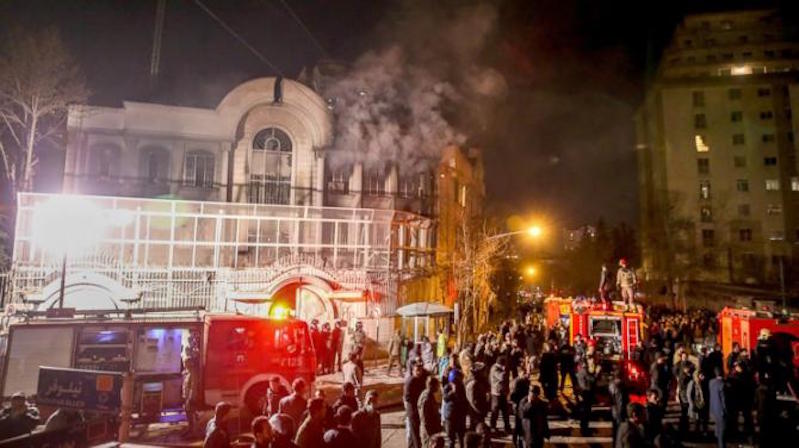
    Saudi Arabia has announced it is severing diplomatic ties with Iran following Saturday’s (January 2) attack on its embassy in Tehran during protests against executions in the kingdom.

    Adel al-Jubeir, the Saudi foreign minister, made the announcement on Sunday while the foreign ministry said it was asking Iranian diplomatic mission to leave the kingdom within 48 hours.

    The Saudi foreign ministry also announced that the staff of its diplomatic mission had been evacuated and were on their way back to the kingdom.

    Later reports said the flight carrying the Saudi embassy staff had landed in Dubai in the UAE.

    Saudi Arabia’s interior ministry announced on Saturday the execution of 47 people on terrorism charges, including a convicted al-Qaeda leader and a Shia religious leader.

    Many of the men executed had been linked to attacks in Saudi Arabia between 2003 and 2006, blamed on al-Qaeda.

    Four of those executed were said to be Shia.

    Nimr al-Nimr, the Shia leader, was accused of inciting violence and leading anti-government protests in the country’s east in 2011. He was convicted of sedition, disobedience and bearing arms.

    He did not deny the political charges against him, but said he never carried weapons or called for violence.

    Nimr spent more than a decade studying theology in predominantly Shia Iran.

    His execution prompted demonstrations in a number of countries, with protesters breaking into the Saudi embassy in Tehran late on Saturday night and starting fires.

    At Sunday’s press conference in Riyadh, Jubeir said the Saudi diplomatic representative had sought help from the Iranian foreign ministry when the building was stormed, but the requests were ignored three times.

    He accused the Iranian authorities of being complicit in the attack, saying that documents and computers were taken from the embassy building.

    Calling the incident an act of “aggression”, he said Iran had a history of “violating diplomatic missions”, citing the attacks on the US embassy in Tehran in 1979 and the British embassy in 2011.

    “These ongoing aggressions against diplomatic missions are a violation of all agreements and international conventions,” he said, calling them part of an effort by Iran to “destabilise” the region.

    – With Inputs from Al Jazeera

    IRANIAN ACTION

    Earlier on Sunday, Iranian President Hassan Rouhani ordered the arrest and prosecution of individuals involved in the embassy attack, while also condemning the execution of Nimr.

    Asked at the press conference what other steps the Saudis would take against Iran, Jubeir said “we will cross each bridge when we will get to it”.

    “We are determined not to allow Iran to undermine our security,” he said.

    Ellie Geranmayeh, an Iran expert at the European Council on Foreign Relations, said the Saudi decision was likely to have repercussions for the region, particularly concerning the Syrian negotiations.

    “Western powers must increase efforts to safeguard this process and encourage the Saudis and Iran to continue their participation [in the Syria peace talks],” she told Al Jazeera from London.

    “These events further set back the urgently needed rapprochement between Tehran and Riyadh, and spell further trouble for an already fragile region.”

    BAHRAIN, UAE AND SUDAN RALLY TO SAUDI SIDE IN IRAN ROW

    Saudi Arabia’s regional allies have stepped up diplomatic pressure on Iran, breaking or downgrading relations with the country following an attack on the Saudi embassy in Tehran, which followed executions in the kingdom.

    Bahrain announced on Monday that it was closing its embassy in Iran, and called upon Iranian diplomats to leave the country within 48 hours.

    Bahrain frequently accuses Iran of being behind protests among its majority Shia population.

    Within hours of the announcement, Sudan also said it was cutting off diplomatic relations with Iran “in solidarity with Saudi Arabia”.

    For its part, the UAE said it was downgrading its ties with Iran, replacing its ambassador with an embassy officer-in-charge.

    Saudi Arabia announced on Sunday it was severing diplomatic relations with Iran and urged its allies to follow its move.

    The decision came after Iranian protesters attacked its embassy in Tehran, following the kingdom’s decision to execute Shia religious figure Nimr al-Nimr along with 46 other mostly Sunni convicts on terrorism charges.

    Shia minorities across the Middle East have been demonstrating after Nimr’s execution.

    Saudi Arabia is adamant Nimr got a fair trial. Many of the men executed had been linked to attacks in Saudi Arabia between 2003 and 2006, blamed on al-Qaeda.

    Saudi Arabia further announced on Monday that it was cutting commercial ties with Iran and cancelling all flights to and from Iran, according to Reuters.

    In an interview with the news agency, Adel al-Jubeir, Saudi foreign minister, said the kindom was banning all its citizens from travelling to Iran.

    However, Iranian pilgrims are still welcome to visit Saudi Arabia and Mecca, Islam’s holiest site, he said.

    Earlier, Abdul Latif bin Rashid al-Zayani, secretary-general of the Gulf Cooperation Council, condemned the attack in Tehran and held Iranian authorities fully responsible for failing to protect the Saudi diplomatic mission.

    IRANIAN PERSPECTIVE

    It is not the first time diplomatic relations have been cut between Saudi Arabia and Iran. However, there are fears it could lead to more violence.

    Iran’s foreign ministry said Saudi Arabia was using the attack on its embassy in Tehran as a pretext to fuel tensions..

    The statement came after Iran was given a 48-hour deadline to remove its diplomatic mission from Riyadh.

    “Iran … is committed to providing diplomatic security based on international conventions. But Saudi Arabia, which thrives on tensions, has used this incident as an excuse to fuel the tensions,” Hossein Jaberi Ansari, Iran’s foreign ministry spokesman, said in televised remarks on Monday.

    On the other hand, Jubeir has accused Iranian authorities of being complicit in the attack, saying that documents and computers were taken from the embassy building.

    He said the Saudi diplomatic representative had sought help from the Iranian foreign ministry when the building was stormed, but the requests were ignored three times.

    Hamid Soorghali, a UK-based Iran observer said, the attack of the Saudi embassy “only works to damage and affect the image of Iran”.

    He said while the leadership in Iran is unified in condemning the execution of Nimr, it is divided in terms of the reaction.

    “We get different responses from different institutions and leaders in Iran. We get a harsher message from Iran’s supreme leader, which very much reverberates in the mood and scenes of protesters in front of the embassy,” he told Al Jazeera.

    ‘NO LOVE LOST’

    Ghanbar Naderi, a journalist with Kayhan, a publication closely linked to Ayatollah Ali Khamenei, Iran’s supreme leader, said the breaking of diplomatic relations between Saudi Arabia and Iran was inevitable.

    “It was going to happen today or tomorrow. This is a natural outcome of what has been going on for the past four or five years in Syria, Iraq and Yemen,” he told Al Jazeera.

    “Make no mistake about it, there is no love lost between the Iranians and the Saudis.”

    Al Jazeera’s James Bays, reporting from New York, said diplomats at the UN have expressed worries over the escalating war of words.

    “What we are seeing is the fallout across the Gulf countries,” he said. “In terms of the relationship between Saudi Arabia and Iran, I think most people think that this is probably as bad as you can get.”

    On Sunday, Ban Ki-moon, UN secretary-general, issued a statement saying he was “concerned” about both sides of the diplomatic dispute, while criticising both the executions and the attack on the Saudi embassy in Tehran.

    Ban was to send Staffan de Mistura, the UN special representative for Syria, to Riyadh and Tehran on Monday, a UN official told Al Jazeera.

    In a call on Monday, Ban conveyed his concerns to the foreign ministers of Saudi Arabia and Iran, a UN statement said.

    The statement said he urged the two countries “to avoid any actions that could further exacerbate the situation between two countries and in the region as a whole”.

    THE OIL PRICE, IRAN AND SAUDI’S ECONOMY

    Analysis: How Iran’s return to global oil markets may impact Saudi Arabia’s 2016 budget.

    During last month’s OPEC meeting, Saudi Arabia again declined to cut oil production despite the world being awash with oil.

    The great unanswered question for Saudi Arabia is: How low can prices go, and for how long?

    Saudi Arabia’s refusal to reduce oil output shows no sign of abating, but its determination to drive out US shale producers is taking a toll on the kingdom’s economy, recent data suggests. And with the expectation of Iran’s return to global oil markets already undermining fragile prices, Riyadh’s strategy looks increasingly like it might be a gamble with declining odds.

    Although the kingdom has substantial reserves, it appears to be burning through its financial war chest at an alarming rate. According to the Saudi Arabian Monetary Agency, foreign exchange reserves fell to $648bn at the end of October from $742bn a year earlier.

    OIL PRICES AND OPEC

    If OPEC does not compensate for the increase in Iran’s oil exports by cutting oil production, the International Monetary Fund says oil prices could fall between five and 10 percent in the medium term. Energy giant BP estimates that Iran has the fourth-largest proven oil reserves in the world after Venezuela, Saudi Arabia and Canada, as well as the second-largest gas reserves, according to the IMF.

    How quickly Iran can ramp up production is up for debate, but a consensus appears to be emerging. Industry Think Tanks believe that Iran will add between 0.5 to one million barrels a day within a year, while the IMF forecasts an increase of around 0.6 million barrels a day in 2016.

    Bijan Zangeneh, Iran’s oil minister, is considerably more bullish about the country’s ability to bolster output but, whatever the figure, it is expected to increase pressure on Saudi’s economy, in which about 90 percent of government revenues are derived from hydrocarbons.

    At the same time, there are signs that the Saudi campaign against US shale is having an impact. There is mounting evidence that shale production in the United States is beginning to wane, while energy consumption in advanced economies is rising. Elsewhere in the world, major energy companies have shelved a number of projects – a move that will support of prices in the medium term.

    SAUDI ECONOMY

    Even so, the IMF predicts that the gross domestic product in Saudi Arabia will grow by only 2.2 percent in 2016, compared with 4.4 percent in Iran.

    Eduard Gracia, a principal at the AT Kearney consulting firm, says Saudi Arabia’s decision not to cut production is due in part to the supply-demand dynamics of the global market.

    “It only makes sense ‎to cut production if the supply situation is such that a small output reduction results in a substantial price increase,” Gracia told Al Jazeera. “In a situation of global oversupply this may not be the case, so the appeal of a production-cutting strategy is not clear.”

    By the end of this year, Saudi Arabia’s budget deficit will reach 20 percent of GDP, according to a December report from Capital Economics. The situation has prompted the IMF to warn that Saudi could exhaust its reserves within five years if policies remain unchanged. Riyadh has responded with cutbacks in spending, and is under intense pressure to reduce expensive energy subsidies.

    The IMF estimates that these implicit subsidies cost the government $83bn in 2014, one of the highest totals in the Gulf Cooperation Council countries, second only to Bahrain. Attention is now turning to Saudi’s 2016 budget. It is expected to be one of mostly heavily scrutinised budgets in years, as investors seek reassurance that the kingdom’s finances are under control.

    According to press reports, leaked memos from King Salman to the Ministry of Finance in October ordered government entities to stop new infrastructure projects and to postpone purchases of new cars and furniture. Mounting economic uncertainty led Standard & Poor’s to downgrade Saudi’s rating from AA-/A-1+ to A /A-1 in October, with a warning of a possible further downgrades.

    The downgrade pushes up the costs of borrowing at a time when government revenues have fallen sharply. There has also been speculation in financial markets about how this could affect the Saudi riyal, with the spread between forward and spot rates recently widening to the highest level since 2003.

    However, according to Capital Economics, that scenario would be the last resort, and Saudi has other options that could include tapping into the international bond markets early in 2016 – something it has never done before. Authorities are currently issuing around SAR 20bn ($5bn) of debt per month to local banks, reducing the amount local banks have left to lend to the private sector, according to an estimate from Capital Economics.

  • BAN KI-MOON PUSHES FOR EQUAL RIGHTS FOR THE LGBT COMMUNITY

    BAN KI-MOON PUSHES FOR EQUAL RIGHTS FOR THE LGBT COMMUNITY

    UNITED NATIONS (TIP): Speaking at the High Level LGBT Core Group Event, the secretary general of the UN Ban ki-Moon pushed for equal rights for the community and urged government to end discrimination -something India has been struggling to do so.

    ban ki moonEchoing the motto of the sustainable development goal ‘Leaving No One Behind’, Ban ki-Moon said this guiding vision could be reached only if everyone regardless of their sexual orientation or gender entity is reached out to. “In too many countries, lesbian, gay, bisexual, transgender and intersex people are among the poorest, most marginalized members of society,” he said. Activists would agree that India is one of these countries. “Studies show that gay and lesbian people suffer disproportionate discrimination and abuse. They are rejected by their families… kicked out of their homes … and pushed out of school. Too many of our LGBT brothers and sisters are jobless, homeless and struggling to survive,” he added.

    The situation of transgender people is even worse overall, Ban ki-Moon said. “They have higher rates of homelessness, poverty and hunger. For individuals and their families, this is a personal tragedy. And for society, it is a shameful waste of human talent, ingenuity and economic potential,” he added.

    While India did not mention anything about LGBT rights at the UN, the situation in the country is dire. Homosexual relationships are considered criminal even after the Delhi high court decriminalized. The Supreme Court overturned the order and made it a crime again for people to have consensual relationships with the same gender. India is, however, one of the very country that legally recognizes transgender as a separate gender identity. However, the social stigma attached is strong and they face discrimination at every level of life.

    Urging governments to change their stance and be more proactive in protecting their rights, Ban ki-Moon said: “the human rights of LGBT people are abused, all of us are diminished. Every human life is precious – none is worth more than another”.

    The president of Zimbabwe Robert Mugabe created a furore when exclaimed “Zimbabwe is not gay!” at the UN General Assembly on Monday. “We equally reject attempts to prescribe new rights that are contrary to our norms, values, traditions and beliefs. We are not gays. Cooperation and respect for each other will advance the cause of human rights worldwide. Confrontation, vilification and double standards will not,” he said at the general assembly.

  • UN chief sacks CAR mission head over sex abuse claims

    UNITED NATIONS (TIP): UN Secretary-General Ban Ki-moon has fired his mission chief in the Central African Republic amid “disturbing allegations” of sexual abuse, even as he reposed “full confidence” in the Indian diplomat Atul Khare, his senior-most peacekeeping official in the country.

    Babacar Gaye, 64, of Senegal “tendered his resignation at my request,” Ban told reporters here yesterday.

    “I cannot put into words how anguished, angered and ashamed I am by recurrent reports over the years of sexual exploitation and abuse by UN forces,” he said.

    The unprecedented move by Ban followed fresh accusations that a peacekeeping soldier had raped a 12-year-old girl.

    The allegations have also raised questions over the responsibility of UN’s peacekeeping and field support wings, one of which is headed by Khare.

    “The Secretary-General has full confidence in (UN peacekeeping head Herve) Ladsous, the peacekeeping department, and, of course, Khare, the head of the Department of Field [Support].

    “Both DPKO [Department of Peacekeeping Operations] and DFS [Department of Field Support] are dedicated to ensuring the highest level of standards and accountability among personnel,” Ban’s spokesperson Stephane Dujarric said.

    Khare, 55, was appointed head of the Department of Field Support, in January this year.

    Deployed in early 2014, the UN Multidimensional Integrated Stabilization Mission (MINUSCA) in the CAR, is currently aiming to defuse sectarian tensions across the country, but it has been plagued by a series of sexual abuse allegations.

    More than two years of civil war and violence have displaced thousands of people amid ongoing clashes between the mainly Muslim Seleka alliance and anti-Balaka militia, which are mostly Christian.

    The UN estimates that some 450,000 people remain displaced inside the country while thousands of others have sought asylum across the borders.

  • INTERNATIONAL YOUTH DAY

    INTERNATIONAL YOUTH DAY

    International Youth Day (IYD) is the brainchild of the United Nations, and was first celebrated on 12th August 2000, after the UN General Assembly passed a resolution accepting the recommendation made by the World Conference of Ministers Responsible for Youth in Lisbon in 1998. The UN uses celebrations like these to draw public awareness to problems surrounding a particular global demographic and, IYD focuses on the youth, their issues and their contributions.

    The UN offers resources like promotional material, ideas for events, training material etc. through its subsidiary agencies as well as its website, for independent entities world over to celebrate the day. They also declare a theme for the year that communicates the scope, direction, and objectives of the year’s youth initiatives, such “Change Our World” for IYD 2011. The UN Secretary General Ban Ki-Moon has said “Youth should be given a chance to take an active part in the decision-making of local, national and global levels.” All persons between the ages of 15 and 24 qualify as the youth, and according to 2010 statistic, they constitute 18% of the global population, with 87% of international youth residing in developing countries.

    International Youth Day focuses on the rights of these young people to have full access to education, adequate healthcare, employment opportunities, financial services and full participation in public life. In a climate of economic uncertainty, it is all the more important for countries to invest in opportunities for their youth to learn, earn and grow so that the common future lies in good hands. In 1985, the World Program of Action for Youth was set up to define a policy framework and guidelines for national action and international support to improve the situation of young people. It is just one of the many extensive efforts of the United Nations to help member states reach out to their youth. Along with ensuring their rights, an equally important goal of IYD is to shape the youth not just as a passive beneficiary of development efforts, but as a force for positive social change. They are a source of innovation, creativity, energy and foresight, and member states must use all means possible to foster and harness the power of the youth. These are the ideals of International Youth Day.

    It is celebrated through events, seminars and programs from an international to a local level. Anyone can organize an event. Recommendations also include talking to local politicians and business-owners, so that the government, corporate and development sectors can work together for the advancement of society. Initiatives have also focused youth attention on particular issues like HIV/AIDS, and recent data from UNAIDS indicates that HIV prevalence has dropped by more than 25% among young people in 15 out of 21 countries most affected by HIV. The youth is leading the change, and International Youth Day ensures that they have the ability, skill, motivation and recognition to continue to do so.

    The theme of International Youth Day 2015 is “Youth Civic Engagement.” The engagement and participation of youth is essential to achieve sustainable human development. Yet often the opportunities for youth to engage politically, economically and socially are low or non-existent.

    More efforts are needed to raise awareness about the importance of youth civic engagement and its benefits to the individual and to society, including for sustainable development as well as resilience and wellbeing. The International Youth Day 2015 campaign aims at promoting civic engagement and participation of youth in politics and public life, so that young people can be empowered and bring a full contribution to society, development and peace.

    The Inter-Agency Network on Youth Development, led by the co-chairs, DESA and UNDP, is running an online campaign in the lead up to International Youth Day 12 August 2015. The campaign will open up a space for young people to share their stories and ideas on civic engagement activities. Young people will be able to share their message by submitting a photograph that relates to the theme, by tweeting ideas and opinions on the theme using #YouthDay, or by organizing an International Youth Day Event.

  • ‘Yemen is in flames’, says UN chief Ban Ki-moon, calls for immediate ceasefire

    ‘Yemen is in flames’, says UN chief Ban Ki-moon, calls for immediate ceasefire

    WASHINGTON (TIP): United Nations Secretary-General Ban Ki-moon called April 16 for an immediate cease-fire in Yemen to spur peace talks and get lifesaving aid into the impoverished Middle East nation.

    The UN chief addressed “the many fateful challenges” the world confronts, from 50 million refugees and displaced people – the largest number since World War II – to the urgent problem of climate change in a speech at the National Press Club.

    “Millions of people face hatred and persecution, billions suffer from hunger and exploitation,” he said. “The United Nations has appealed for $16 billion to cover humanitarian relief for this year – almost five times what we needed a decade ago.”

    Ban announced he will visit the Vatican later this month to meet with Pope Francis and discuss “common concerns,” including the encyclical on the environment that the pontiff plans to issue in the months ahead.

    He said he has invited the pope, President Barack Obama and all other world leaders to the United Nations in September to adopt new UN goals for 2030 to protect the environment, combat poverty and promote human rights and economic development that doesn’t contribute to climate change.

    Surveying the crisis-ridden state of the world and the “many fateful challenges on our plate,” Ban pointed to the ever-worsening “nightmare” in Syria, now in its fifth year, and said his envoy Staffan de Mistura will be holding a series of talks in Geneva to see if anyone is “truly serious” about engaging in meaningful negotiations to end the conflict.

    He made a special plea for Palestinians in the Yarmouk refugee camp caught between the Syrian government’s “military machine … and the brutality of extremist groups.”

    Ban said Yemen is “in flames,” and U.N.-brokered talks offered “the best way out of a drawn-out war with terrifying implications for regional stability.” He made no mention of Wednesday’s announcement that his special envoy for Yemen, Jamal Benomar, was stepping down.

    Ban said the UN is working on a plan of action, which will be launched in autumn, to fight violent extremism by the Islamic State group, Boko Haram and al-Qaida-linked groups such as al-Shabab in Somalia.

    On Nigeria, he expressed hope that the country’s new government, led by President-elect Muhammadu Buhari, can promote “a return to normalcy” and rescue schoolchildren kidnapped and mistreated by Boko Haram. In South Sudan, where a civil war continues despite cease-fires, Ban said U.N. bases are sheltering 115,000 people, “a landmark in our efforts to protect civilians.”

    The UN chief welcomed the framework agreement between six major powers and Iran to rein in its nuclear program and said the U.N. would do its best to help implement a comprehensive agreement once it is finalized.

    “This breakthrough can also create space for efforts to address the many other serious security challenges in the region,” he said.

    Earlier on April 16, Thursday, Ban met with U.S. Defense Secretary Ashton Carter and members of the Senate Foreign Relations Committee.

  • 519 dead in two weeks of Yemen fighting: UN

    UNITED NATIONS (TIP): Some 519 people have been killed and nearly 1,700 injured in two weeks of fighting in Yemen, the UN aid chief has said, raising alarm over the fate of civilians.

    Valerie Amos yesterday said she was “extremely concerned” for the safety of civilians trapped in the fierce fighting and appealed to armed factions to do their utmost to protect ordinary Yemenis.

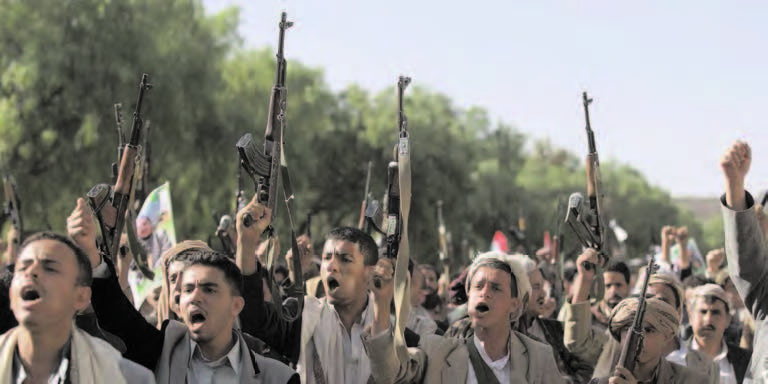
    The violence has sharply escalated in Yemen following a Saudi-led air campaign launched on March 26 to stop an advance by Shia Huthi rebels that forced President Abedrabbo Mansour Hadi to flee to Saudi Arabia.

    Aid groups have expressed alarm over the mounting toll of civilian casualties following an air strike on a camp for displaced people and the bombing of a dairy. Dozens were killed in both attacks.

    “Those engaged in fighting must ensure that hospitals, schools, camps for refugees and those internally displaced and civilian infrastructure, especially in populated areas, are not targeted or used for military purposes,” Amos said in a statement.

    The UN children’s agency this week said at least 62 children had been killed and 30 injured over the past week in Yemen, and that more of them were being recruited as child soldiers.

    Tens of thousands of people have fled their homes, some making the perilous journey by sea to Djibouti and Somalia, Amos said.

    UN aid agencies are working with the Yemen Red Crescent to deliver emergency health kits and generators so that civilians can have clean water, food and blankets, she added.

    UN secretary-general Ban Ki-moon this week reminded all sides to uphold international humanitarian law and protect civilians.

    The United Nations is backing Hadi as Yemen’s legitimate leader in the face of the Huthi uprising that has plunged the poor Arab state deeper into chaos.

    The Huthis seized power in the capital Sanaa in February and last month advanced on the port city of Aden, Hadi’s stronghold, where they seized the presidential palace on April 2.

  • Ban appoints Khare as under-secretary-general

    Ban appoints Khare as under-secretary-general

    UNITED NATIONS (TIP): UN Secretary-General Ban Ki-moon Wednesday, January 7, appointed a veteran Indian diplomat and UN official, Atul Khare, as the Under-Secretary-General for Field Support, making him one of the two highest-ranking Indians at the UN.

    Khare will join Vijay Nambiar, the Secretary-General’s Special Representative for Myanmar, on the world body’s Senior Management Group.

    He succeeds Ameerah Haq of Bangladesh as head of the UN Department of Field Support, which backs up the extensive network of peacekeeping and political field missions.

    India’s UN Mission welcomed his appointment and said it “has full confidence that Dr. Khare will discharge the important responsibilities entrusted to him with complete distinction.”

    In earlier UN assignments, Khare was chosen to head the Change Management Team tasked with finding ways to reform the organization’s operations and improve efficiency. He has been the assistant secretary-general for peacekeeping operations and the Secretary-General’s special representative for Timor-Leste.

    A medical doctor by training, Khare graduated from the All India Institute of Medical Sciences before joining the Indian Foreign Service in 1984. He also has a master’s degree in management from the University of Southern Queensland.

    During his Indian diplomatic career, Khare obtained experience in many troubled spots in Africa where the UN has extensive involvement. As the Charge d’affaires of the Indian embassy in Senegal he was concurrently accredited to Mali, Mauritania, Gambia, Guinea Bissau and Cape Verde.

    He also served as the Deputy High Commissioner in Mauritius, a Counsellor at India’s UN Mission, the director of the External Affairs Ministry’s UN Division, and the Director of the Nehru Centre in London. He also did a stint as the Chef de Cabinet of the Foreign Secretary .

  • Sri Lanka to refuse entry to UN investigators: President

    Sri Lanka to refuse entry to UN investigators: President

    COLOMBO, SRI LANKA (TIP): Sri Lanka will not grant visas to UN investigators probing war crimes allegedly committed during the island’s decades-long separatist conflict, President Mahinda Rajapakse said on August 19. “We will not allow them into the country,” said Rajapakse, who is under international pressure to cooperate with the UN-mandated investigation.

    Sri Lanka has refused to accept the authority of the UN Human Rights Council which voted in March to probe allegations that the military killed 40,000 civilians in the final months of the separatist war, which ended in 2009. But it is the first time that Rajapakse has said UN investigators will not be allowed into the country, effectively barring them from face-to-face access to Sri Lankans wanting to testify in the probe. Rajapakse said however that his government was cooperating with all other UN agencies.

    “We are saying that we do not accept it (the probe). We are against it,” he told Colombo-based foreign correspondents at his official residence. “But when it comes to other UN agencies, we are always ready to fully cooperate and fully engage with them,” he said. UN secretary general Ban Ki-moon and other leaders have urged Colombo to cooperate with the UNHRC after ending a prolonged separatist war that pitted ethnic minority Tamil rebels and the largely Sinhalese army in a drawn out ethnic war.

    Outgoing UN rights chief Navi Pillay earlier this month suggested that her investigators looking into allegations of mass killings may not have to travel to Sri Lanka at all. She said there was a “wealth of information” outside the country. Her remarks prompted allegations from Sri Lanka’s foreign ministry that her probe was on a “preconceived trajectory” and that her “prejudice and lack of objectivity” were unfortunate.

  • Fresh fighting erupts on DR Congo-Rwanda border

    Fresh fighting erupts on DR Congo-Rwanda border

    KINSHASA (TIP): Rwandan and Congolese troops traded heavy weapons fire on June 12 in a second day of fighting on the border between the two neighbours which have been locked in a decades-long dispute. After the morning clashes abated, rival troops were engaged in a staredown from afar in the mountainous Kanyesheza region which straddles the border, a Congolese administrative official said on condition of anonymity.

    An AFP reporter on a press trip to the area with the Rwandan army and foreign defence attaches said the combat zone — some 20 kilometres (12 miles) north of the border towns of Goma in the DRC and Gisenyi in Rwanda — was calm on Thursday afternoon. “There were heavy arms fire, explosions, rockets,” which lasted for half an hour, said a resident in the area of the morning clashes. Another resident on the Congolese side of the frontier said about “30 families” were fleeing the border regions after the fighting.

    – Trading blame –

    senior Congolese military officer said that Rwandan troops had attacked their positions, but a Rwandan military source, also speaking anonymously, told AFP that there had “not been serious clashes, they were sporadic firings” of heavy weapons. The latest cross-border clash came a day after the two sides exchanged automatic weapons fire, with each blaming the other for the outbreak of violence. Rwanda’s army on Thursday displayed five bodies to journalists which it said were Congolese soldiers killed in the fighting on Wednesday, an AFP reporter said.

    Lambert Mende, a spokesman for the Congolese government, accused Rwanda of lying about the deaths of its soldiers. “Rwandans have taken corpses from hospitals, or killed poor peasants — perhaps Congolese, Rwandan maybe — just to back up their story,” he said. The DRC has said only one of its soldiers was killed. The Congolese army said the conflict started after one of its soldiers was kidnapped by Rwandan troops who crossed into its North Kivu province. However Rwanda said Congolese troops crossed into its territory and opened fire on Rwandan soldiers. “We are only seeking to reinforce our positions,” North Kivu governor Julien Paluku said.

    A resident of a village on the road from Goma to Kanyesheza, said he saw mounted heavy machine-guns and three army tanks roll past on June 12 morning.Each side denied returning fire when shelled by the other.In an apparent sign of goodwill, the Rwandan and Congolese armies sent a team from a Joint Verification Mission (JVM) they have formed with the United Nations to carry out checks in the conflict zone, a JVM official who monitors the border said.

    Both the JVM and a western military source confirmed the deaths of the five Congolese soldiers. No deaths were reported in Thursday’s fighting. Farhan Haq, a spokesman for the UN Secretary- General Ban Ki-moon, said diplomatic efforts were under way to “avoid unnecessary tension” and to encourage the DRC and Rwanda to “continue furthering good neighbourly relations.”

    – Strained relations –

    have been strained for decades between the neighbours, with the DRC accusing Rwanda of seeking to destabilise it by backing various militia which have risen up against Kinshasa.Much of the tension arises from the presence in the eastern DRC of Rwandan Hutu rebels in the Democratic Forces for the Liberation of Rwanda (FDLR).This armed movement’s older members are accused of taking part in the 1994 genocide of ethnic Tutsis in Rwanda which left an estimated 800,000 dead in three months of slaughter.

  • Colombia, ELN guerrillas launch peace process

    Colombia, ELN guerrillas launch peace process

    BOGOTA (TIP): Colombia’s government and the country’s second largest guerrilla group, the National Liberation Army, announced Tuesday they have opened peace talks, with a tense presidential election just days away. In a joint statement released by the government, the two sides said they have been holding exploratory talks since January “with the objective of agreeing on the agenda and design of the process to make viable the end of the conflict and build the peace.”

    The government already is in the midst of peace talks with the Revolutionary Armed Forces of Colombia (FARC), Colombia’s largest rebel group, which were launched in November 2012. No date or place was given for the next set of talks with the National Liberation Army, or ELN, though Ecuador’s president Rafael Correa said Tuesday his country was ready to “provide the facilities.” President Juan Manuel Santos said they would be no different than those being held with the FARC.

    The process would involve the laying down of arms, an agenda with specific points, and talks held outside the country, he said. “The political responsibility for this new peace effort falls exclusively on my shoulders and on no one else’s,” Santos said. “A peace process that includes both the FARC and the ELN is the best guarantee … that this conflict is ended for good, and that it will never be repeated.”

    The joint statement said the two sides have agreed to discuss the victims of the conflict and the rebel group’s “participation in society.” “The rest will have to be agreed on” at a later time, the statement said. UN chief Ban Ki-moon said he welcomed the start of talks with the ELN. “Combined with the progress already achieved in the ongoing talks with the Revolutionary Armed Forces of Colombia (FARC), the Secretary- General hopes that this new development will contribute to ending the hemisphere’s longest armed conflict and to building sustainable peace for the Colombian people,” he said in a statement.

    The surprise announcement comes as Santos, who is seeking a second term, finds himself in a close run-off election on Sunday. Opposition candidate Oscar Ivan Zuluaga has made the peace talks the main point of contention in the race. He called the timing of the announcement of talks with the ELN “suspicious,” saying it showed the “desperate attitude” of the government to influence voters.

    The FARC, meanwhile, welcomed the ELN’s talks with the government, calling the announcement “very important news for peace.” “We consider them (the talks) positive and we hope that they proceed in a spirit of peace and not in an electoral spirit,” FARC negotiator Andres Paris told AFP in Havana. Both sets of talks aim to end a leftist insurgency that has afflicted Colombia for half a century, claiming the lives of more than 220,000 people and uprooting another five million. The FARC has between 7,000 and 8,000 fighters, according to the army. The ELN has another 2,000 or so combatants under arms. As in the talks with the FARC, several countries will act as guarantors of the peace process, including Cuba, Chile, Ecuador, Norway and Venezuela.

    “The message is one of a new opportunity, a historic event,” said Fabrizio Hochschild, the head of the UN delegation in Colombia. “It’s very important because it completes the panorama of peace,” said Jorge Alberto Restrepo, an analyst with the Colombian think tank Cerac. “One could not have an internal conflict that is resolved with the FARC but continues with the ELN.”

    It is the third attempt at a negotiated peace with the ELN, after two failed efforts under the governments of Cesar Gaviria (1990-1994) and Alvaro Uribe (2002-2010). After the government embarked on peace talks with the FARC — their fourth attempt — the ELN’s leadership said it was ready to join the peace process. Operating mainly in the north of the country along the border with Venezuela, the ELN recently focused on fighting “the looting of natural resources” by multinational companies. It has pursued a campaign of sabotage against oil and mining installations, and has taken engineers and other workers hostage. Unlike the FARC, the ELN has not publicly.

  • THAI MILITARY JUNTA SUMMONS LEADERS DEPOSED IN COUP

    THAI MILITARY JUNTA SUMMONS LEADERS DEPOSED IN COUP

    BANGKOK (TIP): Thailand’s military summoned the deposed cabinet and rulingparty leaders to report May 23 to a new junta that seized power a day earlier in a coup which has triggered US-led international censure. Claiming to act to halt months of deadly political turmoil, a new military regime under the tough-talking army chief declared a nationwide night-time curfew, curbs on civil liberties, and ordered masses of rival demonstrators off Bangkok’s suddenly hushed streets.

    The junta headed by General Prayut Chan- O-Cha suspended most of the constitution, drawing rebukes from Washington, Europe, and the UN Secretary-General, who all called for civilian control to be restored. Members of the now ousted Cabinet, along with leaders of the Puea Thai party that had been in power, were told to report to the military in central Bangkok at 10am (0300 GMT) Friday. Prayut had said Thursday the coup was staged “in order for the country to return to normal quickly.”

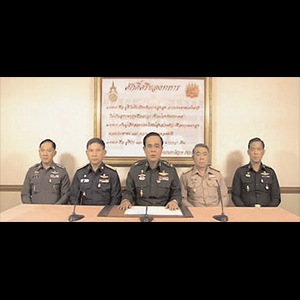
    “All Thais must remain calm and government officials must work as normal,” he said in a brief televised address announcing the takeover, flanked by top military and police officials. It remained unclear what awaited members of the ousted government if they turned up. But moments before the coup, leaders of Puea Thai and their Democrat Party foes along with each side’s rival protest leaders were taken away by the military from Bangkok talks called by Prayut to bridge their differences.

    Their whereabouts remained unknown early Friday. US Secretary of State John Kerry said there was “no justification” for a coup that would have “negative implications” for US relations. He called for “early elections that reflect the will of the people,” while the Pentagon said it was reviewing military cooperation with its Southeast Asian ally.

    Thailand has been locked in a nearly decade-long political crisis since a 2006 military coup that deposed controversial tycoon-turned-politician Thaksin Shinawatra as premier. Since then, a power bloc centred on Thaksin’s family has battled for primacy with a Bangkok-based royalist camp closely tied to the powerful military. Thailand’s democratic development has now been interrupted by 19 actual or attempted coups since 1932, interventions that traditionally require the monarchy’s approval.

    It was unclear whether the palace had blessed Prayut’s coup. Some observers see the crisis as a struggle to decide who will run the country when the more than six-decade reign of ailing, 86-year-old King Bhumibol Adulyadej eventually ends. Backers of the royalist elite have engaged in several months of escalating confrontation with the democratically elected government that saw Thaksin’s younger sister Yingluck dismissed as premier earlier this month by a controversial court ruling.

    Yingluck and three of Thaksin’s other relatives were among those told to report to military authorities Friday morning. Thaksin lives in exile after a corruption conviction, but his camp retains strong support particularly in rural northern Thailand, and has won every general election since 2001, to the dismay of its military-allied rivals. Experts at the Siam Intelligence Unit, a Bangkok-based think-tank, expect an interim premier to be named and the junta to rule for up to two years and draft a “draconian” new constitution.

    Some fear more turmoil. “The coup is not a solution at all to end the crisis. This will become the crisis,” said Pavin Chachavalpongpun of the Centre for Southeast Asian Studies at Japan’s Kyoto University. “It shows the military has never learned the lesson from 2006,” he said, referring to the cycle of instability stemming from Thaksin’s overthrow. Violence related to nearly seven months of anti-Thaksin protests have left at least 28 dead and hundreds wounded.

    Caretaker premier Niwattumrong Boonsongpaisan was among ministers ordered to report to the army. His whereabouts were unknown. But Chalerm Yubamrung, a Thaksin insider and labour minister until recently, was detained Thursday by the military, his son Doung Yubamrung said. Prayut declared martial law on Tuesday, giving the military draconian powers.

    With the coup, all television and radio stations including foreign broadcasters were ordered to air only a steady stream of army announcements and the junta warned it would block social media platforms that carry anti-coup content. UN Secretary-General Ban Ki-moon was “seriously concerned,” his spokesman said. He urged a return to “constitutional, civilian, democratic rule.” Prayut gave no indication how long the military would rule. It kept the reins for more than a year after the 2006 coup. Anti-Thaksin protesters had demanded the removal of the government and the his clan’s influence in politics, alleging deep corruption. It was not immediately clear how the pro- Thaksin “Red Shirt” protesters would respond.

    Its leaders had said a coup could trigger civil war, but there were no immediate reports of unrest. The coup — which sent commuters scurrying to get home before Thursday’s 10 pm curfew — elicited jubilation from opposition protesters and dismay from government supporters. “Our country has been chaotic and has had no solutions for a long time,” said office worker Arnusit Chenruk, 39, calling the coup a “good” thing.

  • UN asks Lanka to cooperate with UNHRC

    UN asks Lanka to cooperate with UNHRC

    UNITED NATIONS (TIP): UN chief Ban Ki-moon has asked Sri Lanka to engage “constructively” and cooperate with its human rights body to implement a resolution calling for an international inquiry into alleged war crimes committed during the final stages of the country’s civil war.

    Ban has “consistently underlined the importance of an accountability process for addressing violations of international humanitarian and human rights law in Sri Lanka,” the UN Secretary General’s Deputy Spokesman Farhan Haq told reporters here yesterday. “He welcomes the determination by the High Commissioner for Human Rights to advance accountability and promote lasting peace and reconciliation in the country,” he said.

    Haq said Ban “calls on the government of Sri Lanka to constructively engage and cooperate with the Office of the High Commissioner (for Human Rights) on the implementation of the resolution adopted last week by the Human Rights Council.” Haq was responding to a question on comments by Sri Lankan Minister Mahinda Samarasinghe that Sri Lanka would not participate or cooperate in the investigations into human rights violations.

    The Council had on March 27 voted to open an international inquiry into alleged war crimes committed by the Sri Lankan government and the Liberation Tigers of Tamil Eelam (LTTE) in the final stages of a decades-long conflict that ended in 2009. India had abstained from voting on the resolution which was adopted by a vote of 23 in favour to 12 against.

    The Geneva-based Council requested the Office of the UN High Commissioner for Human Rights (OHCHR) to undertake a “comprehensive investigation” into alleged serious violations and abuses of human rights and related crimes by both parties, and to establish the facts and circumstances of such alleged violations “with a view to avoiding impunity and ensuring accountability”. Haq said Ban recalled the commitments made to him on accountability by the President of Sri Lanka in their joint statement of 2009. The United Nations will remain engaged with Sri Lanka to support Sri Lanka’s efforts to make progress in accountability, reconciliation and a lasting political solution,” Haq added.

    The resolution had also called on the Sri Lankan government to release publicly the results of its investigations into alleged violations by security forces, including the attack on unarmed protesters in Weliweriya in August 2013, and the report of 2013, by the court of inquiry of the Sri Lanka Army. UN High Commissioner for Human Rights Navi Pillay had stressed the need to ensure justice and accountability, including through the establishment of an independent and credible investigation, saying: “This is essential to advance the right to truth for all in Sri Lanka and create further opportunities for justice, accountability and redress.”

  • Top US diplomat for Europe says sorry for cursing the EU

    Top US diplomat for Europe says sorry for cursing the EU

    WASHINGTON (TIP): Washington’s new top diplomat for Europe, Victoria Nuland, apologized on February 6 to EU counterparts after she was caught cursing about the European response to the crisis in Ukraine in a bugged phone call.

    *** the EU,” Nuland allegedly says in what appeared to be a recent phone call with US ambassador to Kiev, Geoff Pyatt, which was somehow intercepted and uploaded onto YouTube accompanied by Russian captions. US officials, while not denying such a conversation took place, refused to go into details, and pointed the finger at Russia for allegedly bugging the diplomats’ phones.

    “Let me convey that she has been in contact with her EU counterparts, and of course has apologized,” State Department spokeswoman Jen Psaki said. While Psaki said she had no independent details of how the conversation was captured and uploaded onto the social networking site, she added: “Certainly we think this is a new low in Russian tradecraft.”

    White House spokesman Jay Carney alleged that the fact that it had been “tweeted out by the Russian government, it says something about Russia’s role.” Nuland, who took over late last year as assistant secretary for European affairs, and Pyatt appear to discuss President Viktor Yanukovych’s offer last month to make opposition leader Arseniy Yatsenyuk the new prime minister and Vitaly Klitschko, deputy prime minister. Both men turned the offer down.

    Nuland, who in December went down to Independence Square in Kiev in a show of support for the demonstrators, adds she has also been told that the UN chief Ban Ki-moon is about to appoint a former Dutch ambassador to Kiev, Robert Serry, as his representative to Ukraine. “That would be great I think to help glue this thing and have the UN glue it and you know, f*** the EU,” she says, in apparent frustration at policy differences.

    “We’ve got to do something to make it stick together, because you can be pretty sure that if it does start to gain altitude the Russians will be working behind the scenes to try to torpedo it,” Pyatt replies. Psaki sought to downplay any tensions with the European Union over Ukraine, which has been rocked by weeks of protests by pro-democracy protestors.

    Demonstrators were angered by Yanukovych’s sudden decision last year to abandon moves to sign an association accord with the EU, and instead solicit a financial aid package from former Soviet master, Russia. Psaki said the United States, which is mulling possible sanctions on Ukraine if it cracks down on the protests, has “been working closely” with the EU.

  • ‘International Day of Non- Violence’ commemorated at the United Nations

    ‘International Day of Non- Violence’ commemorated at the United Nations

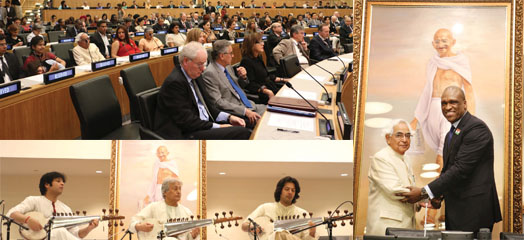
    UNITED NATIONS (TIP): The Permanent Mission of India to United Nations, New York hosted a special event on October 2 at the United Nations to commemorate the “International Day of Non Violence”. UN Secretary General (UNSG) H.E. Mr. Ban ki-moon and President of the 68th UN General Assembly (PGA) H.E. Ambassador John Ashe graced the event and delivered the key note and presidential address respectively. Other speakers on the distinguished panel included the Permanent Representative of South Africa to UN, H.E. Ambassador Kingsley Mamabolo, and featured interventions by the Permanent Representative of Argentina, H.E. Ambassador María Cristina Perceval, the Permanent Representative of Czech Republic, H.E. Ambassador Edita Hrda, and Permanent Representative of Norway H.E. Ambassador Geir O. Pedersen.


    img8

    The event had a packed audience of 450 plus, which included 65 Permanent Representatives of UN Member states, in addition to members of the media and several other dignitaries including Ambassador Vijay Nambiar, the Special Adviser on Myanmar to U.N. Secretary-General and other senior UN officials. Ambassador Asoke K Mukerji, Permanent Representative of India to UN, welcomed the distinguished gathering and underscored the increasing relevance of Gandhian ideals by stating ‘that the path of non-violence and dialogue is the surest path to sustainable peace, sustainable development and indeed, sustainable reforms. It is through such an approach that we would be best equipped to deal with the challenges of change, whether political, social, economic or environmental, and find solutions on the basis of the strength of dialogue.’ Delivering the key note address UN Secretary General called on member states to ‘draw strength from the courage of individuals like Mahatma Gandhi’ and quoting him said : “I object to violence because when it appears to do good, the good is only temporary; the evil it does is permanent” . UNSG emphasized that it was from this ideology that the UN has “insisted throughout the war in Syria that all concerned must work for a political solution” and reiterated that “whatever one’s sympathies or convictions, violence is a poor means to an unsatisfactory end.” In his Presidential Address, Ambassador John Ashe, President of the 68th UN General Assembly, stated that as the General Assembly embarks upon setting the post 2015 development agenda, it was important that “laying the groundwork for this new agenda, is laying the groundwork for a non-violent world – one that values peace and well-being for all”.

    In the subsequent statements by the Ambassadors of South Africa, Czech, Argentina and Norway, the need for the world to resort to ‘non violent’ pathways as the only available solution to conflicts around the world, was emphasized as a common resonating theme. Ambassador John Ashe, President of the 68th UN General Assembly was also presented with a life size portrait of Mahatma Gandhi by renowned artist, Dr. R.D. Pareek, who had flown in from Mumbai to present his painting to the PGA. In addition, a ‘special edition book’ on the life of Mahatma Gandhi was presented to the UN Secretary General for his personal collection by the Permanent Representative of India to UN, Ambassador Asoke K Mukerji. The Special Event also featured an exclusive Sarod recital by Ustad Amjad Ali Khan, his sons Amaan and Ayaan and accompanying artists. The performance included special renditions of tunes of ‘Vaishnav Jan to Tene Kahiye’ and ‘Raghupati Raghav Rajaram’ to mark the occasion and drew a standing ovation from the packed audience at the UN. It may be recalled that the UN General Assembly had adopted resolution 61/271 with a record number of 143 co sponsors in June 2007, whereby it declared October 2, the birthday of Mahatma Gandhi, as “International Day of Non Violence” and invited all member states, NGOs and individuals, including the United Nations to organize events to commemorate this day.

  • Egypt Violence: World Leaders Concerned;UN Urges ‘Restraint’

    Egypt Violence: World Leaders Concerned;UN Urges ‘Restraint’

    NEW YORK (TIP): The ever increasing violence in Egypt which has claimed hundreds of lives and is threatening a bloody civil war in the country has shaken world leaders and the United Nations. The Argentine president of the United Nations Security Council urged all parties in the crisis in Egypt to exercise “maximum restraint” on Thursday, following an emergency meeting in New York.

    Argentine Ambassador Maria Cristina Perceval said that the Council’s 15 member states had regretted the loss of life in Cairo, called for an end to the violence and spoke of the need to advance “national reconciliation”. The meeting was requested by France, Britain and Australia a day after nearly 600 people were killed when security forces moved to clear camps of supporters of ousted Islamist president Mohamed Morsi.

    France and Britain are permanent members of the Security Council and Australia is one of the 15 countries currently represented. Argentina currently presides over the Council. Perceval said its members shared “a common desire” to stop the unrest. U.N. Secretary-General Ban Ki-moon condemned the violence and urged calm and restraint on both sides.

    He made no direct criticism of the military leadership or the protesters who had refused to disperse on their own but said he was “well aware that the vast majority of the Egyptian people, weary of disruptions to normal life caused by demonstrations and counterdemonstrations, want their country to go forward peacefully in an Egyptian-led process towards prosperity and democracy.” UN rights chief Navi Pillay has urged a wide-ranging probe.

    A disturbed President Obama announced that the United States had canceled longstanding joint military exercises with the Egyptian Army set for next month, using one of his few obvious forms of leverage to rebuke Egypt’s military-backed government for its brutal crackdown on supporters of the ousted president, Mohamed Morsi. Earlier, U.S. Secretary of State John Kerry termed Egypt violence as “deplorable”.

    “The United States strongly condemns the use of violence against protesters in Egypt,” White House spokesman Josh Earnest said in a statement. “We have repeatedly called on the Egyptian military and security forces to show restraint and for the government to respect the universal rights of its citizens, just as we have urged protesters to demonstrate peacefully.”

    The U.S. opposed the one-month state of emergency imposed by the Egyptian government, he added. Britain, Germany, France and Italy also criticized the use of force and called on both sides to stand down from their dangerous face-off and return to meaningful dialogue to defuse Egypt’s political stand-off.

  • They Thought Bullets Would Silence Us…

    They Thought Bullets Would Silence Us…

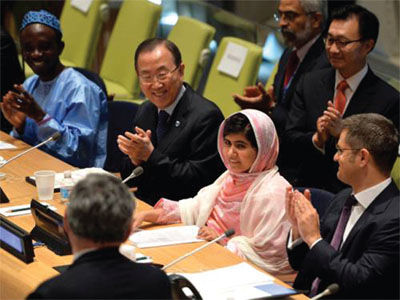
    On Friday, July 12, the United Nations Assembly listened spellbound to 16-year-old Malala, who was shot by the Talibans in Pakistan for attending school. Malala urged the governments to ensure free and compulsory education. Excerpts from her speech
    HONORABLE UN Secretary General Mr. Ban Ki-moon, respected president of the General Assembly Vuk Jeremic, honorable UN envoy for global education Mr. Gordon Brown, respected elders and my dear brothers and sisters: Assalamu alaikum(peace be upon you). Today is it an honor for me to be speaking again after a long time. Being here with such honorable people is a great moment in my life and it is an honor for me that today I am wearing a shawl of the late Benazir Bhutto.

    I don’t know where to begin my speech. I don’t know what people would be expecting me to say, but first of all thank you to God for whom we all are equal and thank you to every person who has prayed for my fast recovery and new life. I cannot believe how much love people have shown me. I have received thousands of good-wish cards and gifts from all over the world. Thank you to all of them.

    Thank you to the children whose innocent words encouraged me. Thank you to my elders whose prayers strengthened me. I would like to thank my nurses, doctors and the staff of the hospitals in Pakistan and the UK and the UAE government who have helped me to get better and recover my strength. I fully support UN Secretary General Ban Ki-moon in his Global Education First Initiative and the work of UN Special Envoy for Global Education Gordon Brown and the respectful president of the UN General Assembly Vuk Jeremic.

    I thank them for the leadership they continue to give. They continue to inspire all of us to action. Dear brothers and sisters, do remember one thing: Malala Day is not my day. Today is the day of every woman, every boy and every girl who have raised their voice for their rights. There are hundreds of human rights activists and social workers who are not only speaking for their rights, but who are struggling to achieve their goal of peace, education and equality.

    Thousands of people have been killed by the terrorists and millions have been injured. I am just one of them. So here I stand, one girl among many. I speak not for myself, but so those without a voice can be heard. Those who have fought for their rights. Their right to live in peace. Their right to be treated with dignity. Their right to equality of opportunity. Their right to be educated. Dear friends, on 9 October 2012, the Taliban shot me on the left side of my forehead.

    They shot my friends, too. They thought that the bullets would silence us, but they failed. And out of that silence came thousands of voices. The terrorists thought they would change my aims and stop my ambitions. But nothing changed in my life except this: weakness, fear and hopelessness died. Strength, power and courage was born. I am the same Malala. My ambitions are the same. My hopes are the same.

    And my dreams are the same. Dear sisters and brothers, I am not against anyone. Neither am I here to speak in terms of personal revenge against the Taliban or any other terrorist group. I am here to speak for the right of education for every child. I want education for the sons and daughters of the Taliban and all the terrorists and extremists. I do not even hate the Talib who shot me.

    Even if there was a gun in my hand and he was standing in front of me, I would not shoot him. This is the compassion I have learned from Mohamed, the prophet of mercy, Jesus Christ and Lord Buddha. This the legacy of change I have inherited from Martin Luther King, Nelson Mandela and Mohammed Ali Jinnah. This is the philosophy of nonviolence that I have learned from Gandhi, Bacha Khan and Mother Teresa.

    And this is the forgiveness that I have learned from my father and from my mother. This is what my soul is telling me: be peaceful and love everyone. Dear sisters and brothers, we realize the importance of light when we see darkness. We realize the importance of our voice when we are silenced. In the same way, when we were in Swat, the north of Pakistan, we realized the importance of pens and books when we saw the guns.

    The wise saying, “The pen is mightier than the sword.” It is true. The extremists are afraid of books and pens. The power of education frightens them. They are afraid of women. The power of the voice of women frightens them. This is why they killed 14 innocent students in the recent attack in Quetta. And that is why they kill female teachers. That is why they are blasting schools every day because they were and they are afraid of change and equality that we will bring to our society.

    And I remember that there was a boy in our school who was asked by a journalist: “Why are the Taliban against education?” He answered very simply by pointing to his book, he said: “A Talib doesn’t know what is written inside this book.” They think that God is a tiny, little conservative being who would point guns at people’s heads just for going to school.

    These terrorists are misusing the name of Islam for their own personal benefit. Pakistan is a peace-loving, democratic country. Pashtuns want education for their daughters and sons. Islam is a religion of peace, humanity and brotherhood. It is the duty and responsibility to get education for each child, that is what it says. Peace is a necessity for education.

    In many parts of the world, especially Pakistan and Afghanistan, terrorism, war and conflicts stop children from going to schools.We are really tired of these wars.Women and children are suffering in many ways in many parts of the world. In India, innocent and poor children are victims of child labor. Many schools have been destroyed in Nigeria. People in Afghanistan have been affected by extremism.

    Young girls have to do domestic child labor and are forced to get married at an early age. Poverty, ignorance, injustice, racism and the deprivation of basic rights are the main problems, faced by both men and women. Today, I am focusing on women’s rights and girls’ education because they are suffering the most. There was a time when women activists asked men to stand up for their rights.

    But this time we will do it by ourselves. I am not telling men to step away from speaking for women’s rights, but I am focusing on women to be independent and fight for themselves. So dear sisters and brothers, now it’s time to speak up. So today, we call upon the world leaders to change their strategic policies in favor of peace and prosperity.We call upon the world leaders that all of these deals must protect women and children’s rights.

    A deal that goes against the rights of women is unacceptable. We call upon all governments to ensure free, compulsory education all over the world for every child.We call upon all the governments to fight against terrorism and violence. To protect children from brutality and harm.We call upon the developed nations to support the expansion of education opportunities for girls in the developing world.

    We call upon all communities to be tolerant, to reject prejudice based on caste, creed, sect, color, religion or agenda to ensure freedom and equality for women so they can flourish.We cannot all succeed when half of us are held back.We call upon our sisters around the world to be brave, to embrace the strength within themselves and realize their full potential.

    Dear brothers and sisters, we want schools and education for every child’s bright future. We will continue our journey to our destination of peace and education. No one can stop us.We will speak up for our rights and we will bring change to our voice.We believe in the power and the strength of our words.

    Our words can change the whole world because we are all together, united for the cause of education. And if we want to achieve our goal, then let us empower ourselves with the weapon of knowledge and let us shield ourselves with unity and togetherness. Dear brothers and sisters, we must not forget that millions of people are suffering from poverty and injustice and ignorance.We must not forget that millions of children are out of their schools.

    We must not forget that our sisters and brothers are waiting for a bright, peaceful future. So let us wage a glorious struggle against illiteracy, poverty and terrorism, let us pick up our books and our pens, they are the most powerful weapons. One child, one teacher, one book and one pen can change the world. Education is the only solution. Education first. Thank you.

    The most courageous girl in the world Former UK Prime Minister Gordon Brown hailed Malala Yousafzai as “the most courageous girl in the world” as the Pakistani schoolgirl who was attacked by the Taliban last year called on world governments to provide free compulsory education for every child in a speech at the United Nations headquarters in New York.

    The address, timed to coincide with her 16th birthday, drew a standing ovation at a special Youth Assembly held in the presence of Mr. Brown, who is the UN’s special envoy for education, and the body’s Secretary- General, Ban Ki-moon, who declared it “Malala day”. Ms Yousafzai, who was shot in the head in October in Pakistan’s Swat Valley after attracting the ire of the Taliban for raising a voice against its attacks on girls’ education, also presented Mr. Ban with a petition signed by 4 million people asking for help to deliver education to all children.

    The speech came as Save the Children released a report based on research by UNESCO revealing that almost 50 million children living in war zones do not attend school at all, and that attacks on education are on the rise, largely due to the conflict in Syria. Justin Forsyth, Save the Children’s chief executive, said of Malala: “She was speaking for the nearly 50 million children around the world who are currently being denied the opportunity of an education because of conflict.”

    He added that the world “should listen” to Malala, who was nearly killed in last year’s attack. Few, however, managed to watch Ms Yousafzai in Pakistan. Only two of the county’s many news channels showed the speech live. The most-watched broadcaster, Geo News, showed portions of the speech later, while other channels all stuck to normal programming. Moreover, Pakistanis are currently unable to see videos on YouTube, because of an ongoing court ban.

    The speech did not get much attention in the days leading up to the event. In Pakistan, she is seen as a hero by many, especially those who oppose the Taliban’s campaign of violence. But for others she has been turned into an object of controversy, shrouded in conspiracy theories wildly alleging that she was “a CIA agent” and that her shooting was “staged”.

    These theories have had alarmingly wide purchase among young Pakistanis on the internet. The hostility to the schoolgirl, some observers say, is a measure of the pitch of anti-Americanism in Pakistan, where even the faintest association with the US is attacked.

  • MORSI OUSTED, under house arrest

    MORSI OUSTED, under house arrest

    CAIRO (TIP): Mohammed Morsi, in office only a year as the first democratically elected leader of Egypt, was rousted from power by the military July 3 as a euphoric crowd in Tahrir Square cheered his exit. The former leader was placed under house arrest at the Republican Guard Club, a senior adviser to the Freedom and Justice Party and spokesman for the Muslim Brotherhood said. Most members of the presidential team have also been placed under house arrest. Egyptian security forces also arrested the head of the Muslim Brotherhood’s Freedom and Justice Party and another of the movement’s top leaders.

    The commanding general of the armed forces, Gen. Abdel Fattah al-Sisi, said on Egyptian television that the military was suspending the constitution, which Morsi pushed through and which many Egyptians saw as slanted toward Islamists. “The armed forces couldn’t plug its ears or close its eyes as the movement and demands of the masses calling for them to play a national role, not a political role as the armed forces themselves will be the first to proclaim that they will stay away from politics,” al-Sisi said.

    He added that the head of the constitutional court, Adli Mansour, would be the acting president, with new elections to be held later. The general said that the military did not have designs on controlling the country’s politics but would “never turn a blind eye to the aspirations of the Egyptian people.” He spoke alongside a leading Sunni Muslim cleric and the head of Egypt’s Coptic Christians, as well as a prominent political opponent of Morsi — Mohamed ElBaradei, the former head of the U.N. nuclear weapons agency. Armored vehicles, tanks and troops deployed throughout the Egyptian capital, including near the presidential palace. The army seized the headquarters of the state television and the state-run newspaper, which reported that Morsi had been told he was no longer president.

    A statement on Morsi’s Facebook page described the army’s move as a “military coup.” Mansour will be sworn in as interim head of state on July 4. The United States will continue to monitor the “very fluid situation” in Egypt, President Barack Obama said in a statement Wednesday night. “We are deeply concerned by the decision of the Egyptian Armed Forces to remove President Morsy and suspend the Egyptian constitution,” the statement read. “I now call on the Egyptian military to move quickly and responsibly to return full authority back to a democratically elected civilian government as soon as possible through an inclusive and transparent process, and to avoid any arbitrary arrests of President Morsy and hisU.N. Secretary-General Ban Ki-moon called for calm and restraint, as well as the preservation of rights such as freedom of expression and assembly. “Many Egyptians in their protests have voiced deep frustrations and legitimate concerns,” he said in a statement that did not condemn the Egyptian armed forces’ ouster of Morsi.

    “At the same time, military interference in the affairs of any state is of concern,” he added. “Therefore, it will be crucial to quickly reinforce civilian rule in accordance with principles of democracy.” Security forces, meanwhile, raided the Cairo offices of Al Jazeera’s Egyptian television channel and detained at least five staff members. Four were later released, the channel said. Karim El-Assiuti, a journalist at the station, told Reuters his colleagues at the Al Jazeera Mubasher Misr channel were arrested while working in the studio. The station was prevented from broadcasting from a pro-Morsi rally and its crew there was also detained, he said. Authorities also shut down three Islamistrun TV stations, including one operated by the Muslim Brotherhood. The State Department warned U.S. citizens to defer travel to Egypt and told Americans already living in Egypt to depart “because of the continuing political and social unrest.” Morsi was elected a year ago after Egyptians ousted Hosni Mubarak, the autocrat who had ruled for almost three decades. Egyptians hoped he would build a more pluralistic and tolerant country.

    Instead, Egyptians have been frustrated by a struggling economy and poor services and infuriated by what they see as power grabs by Morsi — stifling the judiciary and forcing through a constitution that favored Islamists and ignored minorities. “Now we want a president who would really be the president of all Egyptians and will work for the country,” Said Shahin, a 19- year-old protester in Tahrir Square, told The Associated Press. The ouster will remake the politics of the Middle East at a volatile time. Egypt is the most populous country in the region, has a peace treaty with Israel and is a partner of the United States. On july 2, Morsi gave a loud, passionate, 45- minute speech to the country, blaming loyalists of Mubarak for fighting against democracy and refusing to step down.

    He vowed to die for his cause. “I am prepared to sacrifice my blood for the sake of the security and stability of this homeland,” he said. On July 3, as the military appeared to be taking control of parts of Cairo, advisers to Morsi said the generals were staging a coup and subverting the will of the people. In Tahrir Square, however, the military announcement hours later was greeted with jubilation reminiscent of the first days of the Arab Spring two years ago. Tens of thousands of people shot fireworks, sang, danced, chanted and waved Egyptian flags. Before they deposed Morsi, Egyptian military officials assured the U.S. that the military would not assume long-term control of the government, and ensured the safety of the U.S. Embassy, personnel and all Americans in Egypt, U.S. officials told NBC News.

  • Commonwealth Day Celebrated

    Commonwealth Day Celebrated

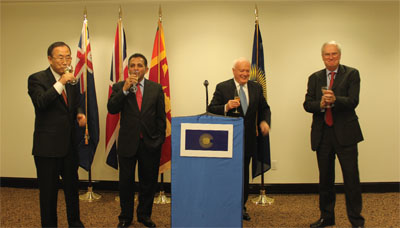
    NEW YORK (TIP): A reception to celebrate the Commonwealth Day was organized at Sri Lanka mission here on 11th March. Sri Lanka, UK and Australia cohosted the event. United Nations Secretary-General Ban Ki-Moon was among those present that included the Permanent Representative of UK Sir Mark Lyall Grant, Permanent Representative of Australia Gary Quinlan, Sri Lanka Permanent Representative Palitha Kohona, and Heads of Missions, senior UN officials and diplomats from various countries.


    img4

    The Permanent Representative of Sri Lanka, Palitha T.B. Kohona welcomed the guests in a speech and insisted on more unity among the Commonwealth Nations, “In the long run, it is tangible benefits that will keep us together. Although ideas and values are important, tangible benefits will be the glue that will bind us together as a family”. He also highlighted the challenges of “youth empowerment, women’s issues and trade and labor liberalization”.

    The Permanent Representative of Australia, Gary Quinlan, in his address spoke of the distinctive differences among the Commonwealth countries. “The Commonwealth comprises of 54 member states, of which, only 4 are developed countries. The rest are still developing”, he added. Permanent Representative of UK Sir Mark Lyall Grant read out a message from Queen Elizabeth. In her message the Queen said, “The heart of the Commonwealth lies in the striving of individuals and communities to achieve great goals”.

  • Ban Ki-Moon Condemns Hyderabad Attack

    Ban Ki-Moon Condemns Hyderabad Attack

    WASHINGTON (TIP): U.N. Secretary General Ban Kimoonhas joined the international community in condemningthe terrorist attack in Hyderabad that killed 18people and injuring scores of others.”The Secretary-General strongly condemns the indiscriminateattacks against civilians which occurred inthe Indian city of Hyderabad,” said a statement issued bythe office of the U.N. Secretary General on February 21.”He extends his heartfelt condolences to the families ofthe victims and to the Government and people of India,”the statement said.

  • India Rejects Pakistan demand for UN probe

    India Rejects Pakistan demand for UN probe

    NEW DELHI (TIP): India has rejected Pakistan’s demand that the UN be asked to probe allegations that Pakistani troops killed and beheaded two Indian soldiers in Jammu and Kashmir as Indian political parties called for “tough” action against Pakistan. “That (Pakistan’s) demand is rejected out of hand. We will not internationalize the issue nor go to the United Nations,” Finance Minister P. Chidambaram told reporters after a cabinet meeting.

    He said the cabinet committee on security was briefed about the January 8 killings near the Line of Control (LoC). “Our report is that the Indian forces did not violate the ceasefire (in place in LoC since 203),” he said. In Islamabad, Pakistan Foreign Minister Hina Rabbani Khar reiterated the demand for a third party enquiry into ceasefire violations on the LoC. Khar, addressing a news conference, said Islamabad abides by the 2003 ceasefire. She added that Pakistan has also contacted UN Military Observer Group for India and Pakistan (UNMOGIP) to probe the killing of one of its soldiers Jan 6 in alleged firing by Indian troops. She had a day ago denied the killing of Indian soldiers was a “tit-for-tat” reaction.

    According to Radio Pakistan, a Pakistani soldier was killed when “Indian troops resorted to unprovoked firing at Tatta Pani Sector in Kotli on January 10”. Hamid Mir of Geo TV said in a tweet: ‘Tatta Pani sector of Kashmir became another battlefield, one Pakistani soldier Havaldar Mohyudin martyred by Indian shelling.’ Home Minister Sushilkumar Shinde said the heightened border tensions will not to come in the way of a liberalized visa agreement between India and Pakistan. ‘The visa agreement (inked last year) will be carried out as scheduled, there is no rethink on it,’ Shinde told reporters. National Security Advisor Shivshankar Menon noted that ceasefire violations by Pakistan on the LoC had increased last year. ‘There has been an increase in ceasefire violations by Pakistan and in infiltration attempts in 2012 over 2011.’ The opposition Bharatiya Janata Party said it would organize nation-wide protests Friday over the killings of the two soldiers. ‘People are very angry over this matter,’ BJP spokesperson Nirmala Sitaraman said, adding: ‘We hold the Pakistan government and army accountable for breaking the ceasefire.’ ‘We should give proof, name and shame Pakistan for having done this… we can’t afford to have our goodwill misused,’ she added.

    BJP leader Sushma Swaraj said the party would support the UPA government if it takes ‘tough’ decisions against Pakistan for the killings. Shiv Sena executive president Uddhav Thackeray demanded that India should ‘take revenge’ against Pakistan for the brutal killing of the two soldiers.

    Bahujan Samaj Party (BSP) chief Mayawati asked the government to take ‘strong action’ to ensure that such brutalities are not repeated and that India-Pakistan relations did not suffer. The US has asked India and Pakistan to talk to each other to improve relations. ‘We’re urging both sides to take steps to end the violence.

    We continue to strongly support any efforts to improve relations between the two countries,’ State Department spokesperson Victoria Nuland told reporters in Washington. The UNMOGIP has asked India and Pakistan to respect the ceasefire and de-escalate tensions. The UNMOGIP said it has received an official complaint from the Pakistan Army to probe the Jan 6 killing of a Pakistani soldier. But Martin Nesirky, spokesman for Secretary-General Ban Ki-moon, said no official complaint had been from India or Pakistan on the second ‘alleged incident’ of Jan 8 for a probe.

    Indian Army sources have denied a media report linking the current border skirmishes to an elderly Kashmiri woman crossing into Pakistani Kashmir to be with her children. The sources also denied the Indian Army had transgressed the LoC on Jan 6, and said soldiers had only carried out ‘controlled retaliation’ in response to a ceasefire violation by Pakistan.

  • UN Urges India, Pak To De-Escalate Tensions Through Dialogue

    UN Urges India, Pak To De-Escalate Tensions Through Dialogue

    UNITED NATIONS (TIP): The UN has urged India and Pakistan to respect the ceasefire and “de-escalate” tensions over the recent cross-border firings through dialogue. The United Nations Military Observer Group in India and Pakistan (UNMOGIP) made the plea even as it received a complaint from Pakistan which claimed that Indian troops had allegedly crossed the Line of Control (LoC) and “raided” a border post on January 6. India has denied it has crossed the LoC. “UNMOGIP is aware that the Pakistan Army and Indian Army are in contact via the Hotline and urges both sides to respect the ceasefire and de-escalate tensions through dialogue,” the UN observer force said in an emailed statement to . The ceasefire has been in place along the LoC since 2003.

    However, “no official complaint has been received either from the Pakistan Army or Indian Army” regarding the January 8 clash in which two Indian soldiers were killed, it said. UN Secretary General Ban Ki-moon’s spokesperson Martin Nesirky said at the daily briefing yesterday that the UN observer mission had not received any complaint from either side over the January 8 clashes. “Regarding the 6 January alleged incident, the United Nations Military Observer Group in India and Pakistan, or UNMOGIP, has received an official complaint from the Pakistan Army and will conduct an investigation as soon as possible in accordance with its mandate,” the observer group added. An UNMOGIP official did not provide further details of the complaint, saying that the mission “is not in position to distribute communications between member states and the UN.”

    The Pakistani mission to the UN did not respond to queries from seeking comment on the complaint to UNMOGIP. Tensions between India and Pakistan escalated after two Indian soldiers Lance Naik Sudhakar Singh and Lance Naik Hemraj were brutally killed by Pakistani troops on January 8, which India has described as “highly provocative.” The attack took place along the LoC in Poonch district when the Pakistani troops entered into Indian territory and assaulted a patrol party. The bodies of the two Indian soldiers were mutilated by Pakistani troops. UNMOGIP observers have been located at the ceasefire line between India and Pakistan in Jammu and Kashmir since 1949 and supervise the ceasefire between the two countries. Currently there are 39 military observers in Kashmir, 25 international civilian personnel and 48 local civilian staff.

    Outraged over the attack, India summoned the Pakistan High Commissioner in New Delhi Salman Bashir yesterday and lodged a strong protest against the “highly provocative” attack in its territory and described as “extremely distressing” and “inhuman” the mutilation of bodies of the two soldiers. India has denied crossing the LoC on January 6 and said the Pakistan army started firing mortar shells towards its posts with some of the shells landing close to civilian habitation. It has said that Pakistani troops commenced “unprovoked firing on Indian troops” in the early hours of January 6. A civilian house was damaged in the firing and Indian troops then undertook “controlled retaliation” in response. Pakistan is currently holding the rotating Presidency of the UN Security Council. It will complete its two-year term at the 15-nation body this year end. India’s two years at the Council as a non-permanent member ended in December.

  • UN Secretary General Unveils the Aakash2 Tablet at the United Nations

    UN Secretary General Unveils the Aakash2 Tablet at the United Nations

    UNITED NATIONS (TIP): On the occasion of India’s Presidency of the UN Security Council, the Permanent Mission of India to the United Nations, New York hosted a special event to unveil and launch the world’s most cost competitive tablet Aakash2 at the United Nations on November 28. Secretary General of the United Nations, H.E. Mr. Ban Ki-moon, was the Chief Guest at the Special Event, which was attended by a packed audience of 500 plus invitees, including 65 Ambassadors/PRs, media delegates, NGOs and select members of the Indian communityIn his remarks, Secretary General H.E. Mr. Ban Ki- moon congratulated India on its Presidency of the Security Council during an ‘extremely challenging month’ and emphasized that India was a critical player on security issues.

    Terming India as a ‘superpower on the information superhighway’, he appreciated the launch of technologies such as the Aakash2, which helped bridge the digital divide. Calling them as ‘great enablers’ with potential to transform people’s lives, he encouraged partners around the world to work with the United Nations to help young people reach for the sky and meet their dreams. In his welcome address, Ambassador Hardeep Singh Puri, Permanent Representative of India to the United Nations in New York, noted that the device represented the ‘actualization of an idea of development innovation’ which had the potential to fundamentally alter the development discourse.

    Emphasizing that the innovation seeks to empower and give access to quality education for all, he called for the need promote research and innovation in national institutions and create an eco-system of excellence right from the elementary level up to the institutions of high-end research and innovation. He emphasized that by partnering with key initiatives such as these, the UN development system would be able to ‘force multiply’ to achieve the MDGs of universal education and global partnership. The architect of the device and CEO of Datawind, Mr. Suneet Singh Tuli, who flew in from Canada for the launch at the UN, also made a presentation and outlined that purpose of the device was not to create an ‘Ipad killer’ but to create a device for the most needy sections of society at costs that they could easily afford.

    Terming it a product of ‘frugal innovation’, Mr Tuli outlined that the device incorporated that best of innovative hardware design with a unique business model, and reflected Government of India’s commitment to eliminating illiteracy by equipping all 220 million students in India over the next 5 years with low cost computers & internet. An extremely interactive and interesting Q & A Session followed the presentations, in which several member states termed the device as ‘revolutionary’ especially from the perspective of requirements of developing countries and the need to replicate such technological innovations within the multilateral development agenda of the UN, which places increasing emphasis on public private partnerships.

    The full video of the event is available at the weblink: http://webtv.un.org/search/ban-ki-moon-launch-theaakash2- tablet/1995233558001?term=aakash2.

  • Palestine wins historic UN Assembly vote

    Palestine wins historic UN Assembly vote

    Palestine wins historic UN Assembly vote and Gets status of non-member observer state

    India votes for resolution; US, Israel oppose bid

    UNITED NATIONS (TIP): Palestine overwhelmingly won, November 30, a historic UN General Assembly vote which will upgrade its status to non-member observer state at the world body, a stinging diplomatic setback to the US and Israel that had strongly opposed the bid.

    India was among the 138 nations in the 193-member body that voted in favor of the resolution, which accords Palestine recognition as observer state from its current entity status.

    The US and Israel were among the nine countries that opposed the resolution, while 41 countries abstained. The Palestinians, led by their President Mahmoud Abbas, cheered exuberantly when the results of the voting were announced.
    The delegation held up a Palestinian flag inside the General Assembly hall as members congratulated each other.
    Speaking to reporters after the vote, Palestine’s envoy to the UN Riyad Mansour said he hopes to soon see the Palestinian flag flying outside the UN building along with those of the other 193 nations once the opposition to their bid ended at the Security Council.

    He said Palestine has always been ready to engage in negotiations to achieve lasting peace.
    Addressing the General Assembly before the vote, Palestinian Authority President Mahmoud Abbas said his nation had come to the UN for the vote at a time when it was “still tending to its wounds” from the latest Israeli attacks in the Gaza Strip.

    The vote came on the same day that the UN observed the annual International Day of Solidarity with the Palestinians.
    Abbas said the UN now had a “moral and historic duty” to “salvage the chances for peace” and “issue a birth certificate of the reality of the State of Palestine” on an urgent basis.

    The vote could enable Palestine to access bodies like the International Criminal Court (ICC) in The Hague, which prosecutes people for genocide, war crimes and major human rights violations. Some nations like the UK have said Palestine could use access to the ICC to complain against Israel.

    UN Secretary General Ban Ki-moon termed the vote “an important vote” in the General Assembly.

    “Today’s vote underscores the urgency of a resumption of meaningful negotiations. We must give new impetus to our collective efforts to ensure that an independent, sovereign, democratic, contiguous and viable State of Palestine lives side by side with a secure State of Israel,” Ban said in his remarks after the votes were cast.
    The US termed the resolution as “unfortunate and counterproductive” and said lasting peace between Israel and Palestine can only be achieved through direct negotiations and not by pressing a “green voting button here in this hall.”

  • An Overview of the  67th UN General Assembly

    An Overview of the 67th UN General Assembly

    What did we learn from the 67th UNGA?

    Every year, United Nations General Assembly brings world leaders from across the world to New York under a single roof, to address the global issues that stare us in the face. The 67th United Nations General Assembly (UNGA) was no different, with more than 120 world leaders sharing a single podium to make statements.

    The General Assembly convened on 18th September 2012 with the theme “Bringing About Adjustment or Settlement of International Disputes or Situations by Peaceful Means.” The session officially ended on 1st October 2012.

    The UNGA is usually a dramatic affair where we see several debate boycotts and menacing threats that are openly made. And this year’s General Assembly did not fail to meet such standards. This year, the GA’s line up had an impressive transition. Mohammed Morsi, Egypt’s first democratically elected President addressed the world leaders for the first time while Iran’s Mahmoud Ahmadinejad spoke for the last time as Iranian President from the same podium.

    As the GA sessions started soon after the Benghazi attacks, the topic of Freedom of Speech was debated heavily. However, Syrian crisis remained the main issue at the UNGA. Almost all countries condemned the spiraling civil war in the region but they could not agree on a solution. Although there was no Muammar Gaddafi to tear up the UN charter this year, the debate was ‘action-packed’ nonetheless.

    Syrian crisis

    Once again, the world leaders who met at the UNGA failed to reach an amicable approach to solve the Syrian crisis. In his opening speech during the General Debate, UN Secretary-General Ban Ki-moon urged all the assembled nations to extend efforts to end the Syrian crisis and to immediately stop all arms flow into Syria. According to UN reports, approximately 28,000 have been killed in the crisis ridden Syria so far and thousands have been forced to take refuge in neighboring countries. Syrian civil war is slowly spilling across its borders, causing tensions in the region.

    Neither the nations supporting the opposition nor the nations supporting the Assad regime could eventually come to a unanimous decision on the appropriate steps that need to be taken in Syria. The Syrian Foreign Minister Walid Moellem accused several ‘well known countries’ of using the Syrian crisis as a pretence to pursuing their ‘colonial interests’ in the region. He also said that calling for Bashar Assad to step down is a ‘blatant interference in the domestic affairs of Syria.’

    Anti-Islam film

    US President Barack Obama delivered a speech that highlighted and honored the importance and preservation of freedom of speech. Violence erupted in the Islamic nations after a controversial movie made in the United States about the Islamic Prophet was televised in Egypt. The violence led to attacks on the US consulates and resulted in the murder of Christopher Stevens, US Ambassador to Libya. President Obama’s powerful speech contained the message meant for new Islamic leaders to “speak out forcefully against violence and extremism”. He also termed the video as ‘disgusting’ but maintained that no amount of controversies in video justifies the violence that surfaced in the Middle East. “There is no video that justifies an attack on an embassy. There is no slander that provides an excuse for people to burn a restaurant in Lebanon, or destroy a school in Tunis, or cause death and destruction in Pakistan. Like me, the majority of Americans are Christian, and yet we do not ban blasphemy against our most sacred beliefs,” he added.

    However, Islamic leaders assembled in the UN strongly disagreed with the President Obama’s opinion. Egyptian President Morsy said the contents of the film are ‘unacceptable’. Yemen’s President Abed Rabbo Mansour Hadi also agreed saying, “There are limits to the freedom of expression especially if such freedom blasphemes the beliefs of nations and defames their figures.”

    Iran and Israel

    Iranian President Ahmadinejad did not deter from his usual zealous attacks against Israel. He condemned “uncivilized Zionist military threats against Tehran”. He also accused the West for its “oppressive international order” and termed them as “handmaidens of the devil”. Tension has been mounting between Israel and Iran after Israel warned that Tehran is close to achieving nuclear weaponry and Iran maintaining that its nuclear program is peaceful. Israeli Prime Minister Netanyahu pushed President Obama to clearly set ‘red lines’ for Iran that would initiate military action against Iran’s nuclear developments. Obama took a clear stand against Iran at the UNGA by saying that US will “do what it must do” on Iran. He assured that the consequences of a nuclear armed Iran will be immense.

    Meanwhile Netanyahu literally drew the ‘red lines’ for the assembled world leaders to make Israel’s stand on Iran extremely clear. In his speech at the UNGA backed with a chart with a bomb drawn on it, Netanyahu suggested that threshold for a military strike should be set at the point Iran produces enough highly enriched uranium to produce a nuclear weapon. “Red lines don’t lead to a war, red lines prevent war”, said Netanyahu in his speech before the UNGA.
    Palestine

    Palestinian President Mahmoud Abbas stood before the General Assembly once again to bid for a full membership of Palestine in the UN. In his speech he condemned numerous attacks on Palestinians by Jewish settlers and claimed that the Israeli polices undermined the functioning of the Palestinian National authority and warned of a possible collapse of the nation. His speech was very well received by the UN leaders who gave him a standing ovation. Israel’s Netanyahu responded by saying that ‘libelous speeches’ at the UN could hardly further the cause of peace.
    India

    On the sidelines of the UN General Assembly, India participated in several meetings related to the international and regional stakeholders in Afghanistan after the proposed 2014 withdrawal of foreign forces is completed. Meanwhile, Kashmir once again made it to the General debate in the UN after a remark by Pakistani President Asif Ali Zardari triggered the issue. Zardari said in his speech that the ‘people of Kashmir have chosen their destinies’ and it was followed up by Pakistan’s Deputy Permanent representative at the UN, Raza Bashir Tarar’s remark that Jammu and Kashmir was never an integral part of India.

    India’s External Affairs Miniter S.M. Krishna spoke before the UN members and made it ‘abundantly clear’ that Jammu and Kashmir ‘has always been a part of India’. It must be noted that India always maintained that the issue of Kashmir should never be discussed on the UN podium and even President Obama conceded that Kashmir is an ‘internal issue’ for both India and Pakistan.

    Other issues

    Most of the UN member countries asked for strengthening of the nuclear Non-Proliferation Treaty (NPT). The nations asked for disarmament of nuclear weaponry and destruction of chemical weapons. Egyptian President Morsy accused Israel of disrupting peace in the Middle East region by saying, “Middle East no longer tolerates any country’s refusal to join the nuclear Non-Proliferation Treaty (NPT), especially if this is coupled with irresponsible policies or arbitrary threats”. Meanwhile most countries asked for Iran’s complete cooperation with UN’s nuclear wing, International Atomic Energy Agency.

    India took a strong stand at the UNGA and asked all the member states to ensure a “zero tolerance” approach towards terrorism. Countering Terrorism was also discussed extensively at the United Nations and many member states pledged support for India’s stance on terrorism.

    Cuban Foreign Minister Bruno Rodriguez denounced the embargo that was put in place in 1960 by the United States. He also added that the embargo has caused several downturns for its economy and that it has caused “invaluable human and economic damage.”

    North Korea’s Vice Foreign Minister Pak Kil-yon criticized the United States claiming that it wants to conquer the Korean Peninsula and use it as a stepping stone to achieving complete Asian domination.

    South Sudan’s President Riek Machar vowed to fight poverty in the region through diversifying its economy by utilizing its oil revenue.

    Middle East was the center of focus at this year’s General Assembly. This eventually led to many other global issues that were either almost sidelined or merely mentioned callously. The high-level meetings conducted on the Rule of Law at both International and National level only called for the reformation of the UN. Most of the member states called for a structural change in the working of the UN, including extending veto powers to members beyond the Permanent Council. However, issues such as the realization of the Millennium Development Goals found strong supporters among the participating countries. Yet, the session saw a mere reiteration of the importance of completing the goals before the deadline that seems to be closing in very soon. But discussion on efforts that are to be made and solutions to problems that surfaced were limited.

    Global warming and other environmental issues also found very few mentions, which could be attributed to the recent completion of the Rio-20 meetings. But considering the fact that the Rio meetings were less than successful, superficial discussion on global climate changes were rather surprising.

    Global health issues also found a backseat at the UN this year. At the event “New Alliance: Progress and the Way Forward”, USAID Administrator Rajiv Shah discussed U.S. efforts to address global hunger and food security through the Feed the Future Initiative and the New Alliance for Food Security and Nutrition. US Secretary of State Hilary Clinton also engaged in the meetings on health and water security pledging US support and efforts that are to be taken to achieve an AIDS free world and dispel wars for water.

    Education also did not receive complete focus this year at the UNGA and was only discussed with the Middle East crisis. Governments of several countries addressed the pressing concerns of lack of education in countries that are facing ongoing crisis. In a statement that was circulated on the sidelines of the UNGA, many member states ensured participation to eradicate lack of education in these regions. “Few Education Sector Plans and budgets address disaster risk reduction and emergency preparedness, response and recovery. This lack of plans, capacity and resources makes it harder for schools to keep children and youth safe and continue to hold classes when a crisis strikes, to inform communities of risks and actions to take, and for education systems to recover after a crisis,” the statement read.

    The 67th United Nations General Assembly focused heavily on the ongoing Middle East crisis. However, the participating nations remained ‘disunited’ on the appropriate solutions that need to be taken to resolve these issues. Such major differences led to an expected silence and complete inaction on other globally significant issues such as health, poverty, education, etc