Tag: Banking

  • Modi-Putin summit yields sweeping economic and strategic package

    Modi-Putin summit yields sweeping economic and strategic package

    NEW DELHI (TIP): In a display of enduring strategic partnership, Russian President Vladimir Putin and Indian Prime Minister Narendra Modi on Friday, December 5,  sealed a broad agreement aimed at deepening cooperation across trade, energy, defense, mobility, and technology — under a new “Economic Cooperation” umbrella slated to run through 2030. The accord, unveiled during the two-day 23rd annual summit between India and Russia, comes as both nations face mounting global pressure and shifting geopolitical fault lines — yet signal a clear determination to bolster bilateral ties rather than drift apart.

    Key pillars: trade, investment, energy and mobility

    At the heart of the summit was a comprehensive economic program stretching until 2030. Under the agreement, both countries are committed to diversify and expand trade and investment, with new cooperation across sectors including agriculture, shipping, ports, fertilizers, food safety, medical sciences, and consumer protection.

    One of the concrete outcomes: Indian firms have inked a deal with Russia’s chemical major Uralchem to establish a urea production plant in Russia — a significant step for bilateral industrial collaboration.

    In the maritime and logistics sphere, an MoU has been signed to boost cooperation in the port and shipping sector, underlining ambitions to improve transport connectivity and trade routes.

    Importantly, the summit also delivered a mobility pact: a new framework agreement for labor mobility, facilitating movement of skilled and semi-skilled Indian professionals to Russia.

    Russian authorities, including the banking sector, signaled readiness to support increased imports of Indian goods — especially in manufacturing, pharmaceuticals, and IT — while making trade settlements in rupees and troubles in a bid to bypass Western financial restrictions.

    Energy security & uninterrupted fuel supply: Moscow reassures New Delhi

    On energy, the summit reaffirmed Russia’s commitment to remain a “reliable” supplier of oil, gas and coal to India, pledging uninterrupted shipments despite Western sanctions on Moscow following its 2022 invasion of Ukraine.

    Given India’s rising energy demands — especially for industrial and agricultural sectors — that assurance carries strategic weight, helping New Delhi balance its energy security with growing global pressure to reduce reliance on Russian hydrocarbons.

    Defense, technology and strategic-sector cooperation

    Defense ties — long a cornerstone of the Russia–India relationship — featured prominently. While no large new weapons deal was publicly announced yet, the two sides confirmed intent to expand cooperation in space, artificial intelligence and other strategic technologies.

    Officials say discussions will likely include upgrades to existing platforms — such as additional deliveries under the air-defense S-400 missile system contract — and faster supply of spare parts, maintenance, and possibly joint maintenance facilities.

    Calls were also renewed for cooperation on next-generation projects — including hypersonic weapons and extended-range missile systems — reflecting Moscow’s ambition to deepen the technological dimension of the partnership.

    On the civil side, broad cooperation in sectors like space, medical sciences, and port infrastructure was agreed — underlining a mixed civil-military character to the renewed engagement.

    Diplomacy, world affairs and India’s stance on Ukraine

    During their joint press briefing, PM Modi reaffirmed that India was not neutral on the war in Ukraine, declaring that “India is on the side of peace” — and calling urgently for a return to dialogue and diplomacy.

    President Putin, for his part, expressed gratitude for India’s attention to peace initiatives. Moscow hailed the durability of the “deep-rooted” Indo-Russian strategic partnership that has weathered global turbulence — including sanctions and Western pressure.

    Observers note that while the two powers avoided a detailed confrontation over Ukraine, the summit’s outcome sends a clear geopolitical signal: that Moscow and New Delhi intend to sustain — and deepen — ties even under pressure from Western capitals.

    Why this summit matters: timing, balance and geopolitical significance

    This is Putin’s first official visit to India since the Ukraine war began — and comes at a time when India faces mounting pressure from Western countries, particularly the United States, over its continued purchase of Russian oil.

    Yet, by pushing ahead with a sweeping cooperation package spanning trade, energy, defense, mobility, and high technology — and by establishing a vision through 2030 — both sides underscore their commitment to a long-term, even “structural” partnership, rather than just transactional deals.

    For India, the agreements are a strategic hedge: securing energy and fertilizer supplies, enhancing industrial cooperation, and opening markets for Indian exports at a time when global supply-chain disruptions and geopolitical turbulence demand diversified trade partners.

    For Russia, finalizing such agreements with India reinforces Moscow’s efforts to pivot eastward — toward new markets, new supply routes, and a trade architecture less reliant on Western-dominated systems.

    What to watch next: implementation and global reactions

    The coming months will be critical to seeing whether the newly signed pacts translate into concrete deliveries: building and commissioning the Uralchem urea plant, operationalizing the labor mobility agreement, boosting Indian exports to Russia, and laying groundwork for joint infrastructure and defense projects.

    At the same time, global reactions — especially from Western capitals — are likely to be sharp. Washington has already imposed tariffs on Indian goods in response to Russia oil imports, and the deepening of Russian-Indian ties could complicate New Delhi’s diplomatic balancing act.

    Finally, how India navigates its appeal for peace over Ukraine, while simultaneously deepening ties with Russia, will be scrutinized by both allies and critics — making the 2025 summit a defining moment in India’s foreign-policy recalibration.

    It is a developing story .

    (With inputs from news outlets)

  • Santander UK plans to close 95 branches cutting 750 jobs

    Santander UK plans to close 95 branches cutting 750 jobs

    Santander UK’s announcement on Wednesday that it plans to shut a fifth of its branch network has raised concerns about the bank’s future in the UK. The move, which could result in around 750 job losses consist of the closure of 95 out of 444 branches by June. The bank which has faced speculation over its long-term presence in the UK, will retain 349 branches, including 290 full-service locations and 36 branches with reduced hours. Like many other UK banks, Santander has been scaling back its physical presence as customers increasingly turn to digital banking, reported news agency Reuters. Since 2019, the bank has reported a 63% rise in digital transactions, while in-branch financial transactions have declined by 61% over the same period. Despite this, the closures have sparked criticism from UK lawmakers, who argue that they harm local businesses and make it more difficult for vulnerable customers in rural areas to access banking services.
    In response to these concerns, the Financial Conduct Authority (FCA) introduced new rules in September to make it more difficult for banks to close branches without ensuring that customers have free access to cash alternatives.Santander UK explained that the decision to close branches was part of its strategy to align with customer behaviour. “As a business, we must move with customers and balance our investment across all the places where we interact with them,” said the bank. “Closing a branch is always a very difficult decision, and we spend a great deal of time assessing where and when we do this and how to minimize the impact on our customers.”
    The bank added that it is consulting with employee unions and will provide support to affected staff, including assistance with finding alternative roles within the bank.
    In its most recent financial report, Santander UK posted a 38% drop in annual pre-tax profit, totalling £1.33 billion ($1.73 billion) in 2024. The bank employs approximately 18,000 people.
    Despite reports in January suggesting that Barclays had explored a potential offer for Santander UK’s operations, the parent company reiterated last month that its UK unit remains a key part of its globally diversified business strategy and is not for sale.

  • Fed delivers small rate hike, says ‘some additional’ tightening possible

    Fed delivers small rate hike, says ‘some additional’ tightening possible

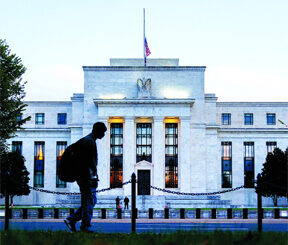
    Washington (TIP)- The Federal Reserve on Wednesday, March 22, raised interest rates by a quarter of a percentage point, but indicated it was on the verge of pausing further increases in borrowing costs amid recent turmoil in financial markets spurred by the collapse of two U.S. banks. The move set the U.S. central bank’s benchmark overnight interest rate in the 4.75%-5.00% range, with updated projections showing 10 of 18 Fed policymakers still expect rates to rise another quarter of a percentage point by the end of this year, the same endpoint seen in the December projections.
    But in a key shift driven by the sudden failures this month of Silicon Valley Bank (SVB) and Signature Bank, the Fed’s latest policy statement no longer says that “ongoing increases” in rates will likely be appropriate. That language had been in every policy statement since the March 16, 2022 decision to start the rate hiking cycle.
    Instead, the policy-setting Federal Open Market Committee said only that “some additional policy firming may be appropriate,” leaving open the chance that one more quarter-of-a-percentage-point rate increase, perhaps at the Fed’s next meeting, would represent at least an initial stopping point for the rate hikes.
    Though the policy statement said the U.S. banking system is “sound and resilient,” it also noted that recent stress in the banking sector is “likely to result in tighter credit conditions for households and businesses and to weigh on economic activity, hiring, and inflation.”
    There were no dissents on the policy decision.
    The document made no presumption that the battle with inflation has been won. The new statement dropped language saying that inflation “has eased” and replaced it with the declaration that inflation “remains elevated.”
    Job gains are “robust,” according to the Fed. Officials projected the unemployment rate to end the year at 4.5%, slightly below the 4.6% seen as of December, while the outlook for economic growth fell slightly to 0.4% from 0.5% in the previous projections. Inflation is now seen ending the year at 3.3%, compared to 3.1% in the last projections.
    The outcome of the two-day meeting this week marks an abrupt repositioning of the central bank’s strategy from just two weeks ago, when Fed Chair Jerome Powell testified in Congress that hotter-than-expected inflation would likely force the central bank to raise interest rates higher and possibly faster than expected.
    The March 10 collapse of California-based SVB and the subsequent collapse of New York-based Signature Bank highlighted broader concerns about the health of the banking sector, and raised the possibility that further Fed rate increases might tip the economy towards a financial crisis. Source: Reuters

  • Navinder Oberoi

    The year 2022was the year of tiger according to Chinese calendar. Very sharp and aggressive with lots of ups and downs like roller coaster rides

    The circle of 365 (2022)days is just about to complete and very soon we will see the beginning of the first point of another cycle of the year 2023 with great hopes of prosperity and good health around the globe.

    How comfortable we all were in 2022 and where do we want to see ourselves in 2023 ?

    Expectations and disappointments are the most important characteristics of human nature but how we take this, that’s more important. The economy, stock market, jobs, real estate, banking industry , health sector, education etc.. Were the major issues we been fighting with throughout the year in 2022 because right after the pandemic  two year of suspension of our life, almost every public and private sector destroyed and many people lost their job but again life always rotates on our personal predictions and I am not a economist who can predict but based on my personal experience in my opinion I can’t see any major breakthrough in the year 2023 in any sector but like always real estate sector is the biggest shareholder because this sector alone provide jobs to many manufacturing sectors but the success of this sector is dependent upon banking interests rates if the mortgage rates remain same or going up and up in 2023 then I can’t see any difference in 2023.  I am not the one who decides the fate of billions of people it is the government who decides every moment of our life that how we are going to live in coming year

    We can learn so many lessons from past year failures but can also improve ourselves by not repeating those mistakes in the coming year and I wish all  readers a very Happy New Year 2023 .

    Navinder Oberoi

    (Navinder Oberoi is a businessman based in Abbotsford, Canada)

  • 2 Indian Americans appointed by Biden to his National Infrastructure Advisory Council

    2 Indian Americans appointed by Biden to his National Infrastructure Advisory Council

    WASHINGTON, D.C. (TIP): US President Joe Biden has announced his intent to appoint Indian-Americans Manu Asthana and Madhu Beriwal to his National Infrastructure Advisory Council. The President’s National Infrastructure Advisory Council (NIAC) advises the White House on how to reduce physical and cyber risks and improve security and resilience of the nation’s critical infrastructure sectors. The 26 individuals announced Wednesday to the NIAC are leading senior executives with deep experience across a broad range of sectors, including banking and finance, transportation, energy, water, dams, defense, communications, information technology, healthcare services, food and agriculture, government facilities, emergency services, and higher education.

    Asthana oversees the largest power grid in North America and one of the largest electricity markets in the world as the CEO and president of PJM. “Under his leadership, PJM has established a clear path for defining the grid operator’s role in the transition to a cleaner, more efficient grid while maintaining reliable electric service,” the White House said. Asthana has extensive leadership experience in the energy industry in the areas of power generation operations, optimization and dispatch, competitive retail electricity, electricity and natural gas trading, and risk management. He is a member of the Electricity Subsector Coordinating Council and serves on the Board of Trustees of Texas Children’s Hospital, the White House added.

    “He also serves on the Board of Directors of the Chamber of Commerce for Greater Philadelphia. Asthana earned a Bachelor of Science in economics from The Wharton School at the University of Pennsylvania, where he was a Benjamin Franklin Scholar and a Joseph Wharton Scholar,” it said. Madhu Beriwal founded the Innovative Emergency Management, Inc. (IEM) in 1985 and continues to serve as its CEO and president. IEM is the largest woman-led homeland security and emergency management firm in the United States.

    “Under Beriwal’s leadership, IEM has led some of the largest mitigation and resilience efforts across the United States, building back stronger following disasters including disaster recovery programs, delivering federal funds to survivors and communities faster than any other program of the same type and magnitude,” the White House said.

    “For over 37 years, Beriwal has been dedicated to the use of technology to enhance preparedness and response and build resilience in communities and their critical infrastructure. She was inducted into the International Women in Homeland Security and Emergency Management Hall of Fame in 2012,” it said. She holds a master’s degree in urban planning and a bachelor’s degree in geography and economics.

  • RBI brings NBFCs on par with banks in new PCA framework

    RBI brings NBFCs on par with banks in new PCA framework

    To further strengthen the supervision on non-banking entities (NBFCs), the Reserve Bank on Tuesday, Dec 14,  issued revised guidelines on a Prompt Corrective Action (PCA) framework for such companies, excluding government-owned ones, effective from October 1, 2022, on the lines of what it had introduced for banks in 2002.

    The RBI came up with stricter supervisory norms under the PCA framework for banks after their bad loans mounted and balance-sheets bled badly. This involved restricting them from fresh lending, brand opening and, hiring, among others.

    The RBI said the revised PCA framework is also applicable to all deposit-taking non-banking financial companies (NBFCs), all non-deposit taking NBFCs in the middle, upper and top layers, including investment and credit companies, core investment companies, infrastructure debt funds, infrastructure finance companies and microfinance institutions.

    However, it has excluded NBFCs not accepting/not intending to accept public funds, primary dealers and housing finance companies along with government-owned ones.

    Being put under the PCA framework means restrictions on dividend distribution/remittance of profits; promoters/shareholders to infuse equity and reduction in leverage; restrictions on issue of guarantees or taking on other contingent liabilities on behalf of group companies, the RBI said.

    Special supervisory actions will be taken in matters regarding breach in strategy, governance, core capital, credit risk, market risk, HR, and profitability, it added.

    The mandatory curbs also include restrictions on branch expansion, capital expenditure (other than for technological upgrade within board approved limits) and curbs on reduction in variable operating costs. Besides, the central bank can even supersede the Board under the RBI Act, appoint an administrator and send the NBFC to NCLT for insolvency resolution.

                    Source: PTI

  • Indian-origin Healthcare Experts in Queen’s Birthday Honors spotlight

    Indian-origin Healthcare Experts in Queen’s Birthday Honors spotlight

    LONDON (TIP): Indian-origin healthcare experts involved in the field of Covid-19 vaccine trials and community support efforts are among those in the spotlight at the Queen’s Birthday Honors List.

    The Queen’s Birthday Honors List, unveiled on Friday evening, is released every year to coincide with Queen Elizabeth II’s official birthday celebrations held during the second weekend of June. This time, it has a special focus on the extraordinary efforts made by individuals across the country during the pandemic.

    Kolkata-born Divya Chadha Manek has been honored with an Order of the British Empire (OBE) for services to the government during the Covid-19 response for her involvement in the research and development of vaccines and the resulting clinical trials.

    Chadha Manek, now the director of business development and marketing at the British government’s National Institute for Health Research (NIHR) Clinical Research Network, was at the heart of ensuring that Covid-19 vaccines could be put through requisite trials for a timely deployment as the Clinical Trials Work stream lead at the UK’s Vaccine Taskforce.

    “To me, this honor is recognizing not just me, but everyone involved in the success of UK vaccine research—the half-a-million people who signed up to the vaccine research registry and the tens of thousands who took part in the vital Covid-19 vaccine trials here,” said Chadha Manek, who moved to the UK as a teenager with a simple message from her Punjabi father.

    “When I left India for the UK at the age of 18, my father gave me a flight ticket, put 500 pounds in my pocket and told me: ‘Be good, do good and do something amazing that you get to meet the Queen’. I lost my father last year, but this honor truly feels like I have done good on his behalf. So, thank you so much for this honor,” she said.

    Chadha Manek was instrumental in supporting companies to bring vaccine trials to the UK, generate the data required for marketing authorization and help with the development of the Vaccine Research Registry.

    “The honor feels like a real recognition and nod to clinical research, which may not always get the spotlight it truly deserves. It’s fantastic to receive this ‘thank you’ from the Queen,” she added.

    Chadha Manek represents one of many honors related to Covid-19 pandemic response that make up nearly 23 per cent of the list this year, including dame hoods for Sarah Gilbert, said Professor of Vaccinology at the Jenner Institute, University of Oxford, for her pivotal role in developing a vaccine, and Kate Bingham, Chair of the Vaccine Taskforce, for services to the procurement, manufacture and distribution of vaccines.

    Andrew Pollard, professor of Pediatric Infection, University of Oxford, receives knighthood for services to public health, particularly during Covid-19, for his role in the Oxford/AstraZeneca vaccine development as the director of the Oxford Vaccine Group.

    “The Queen’s Birthday Honors allow us to pay tribute to all those who have gone above and beyond in their service to this country,” said UK Prime Minister Boris Johnson.

    “Throughout the pandemic, we have seen countless examples of everyday heroes. From those using their expertise to help develop life-saving vaccines, which are now being rolled out successfully to all parts of the UK, to the people who have given time and energy to care for their communities,” he said.

    “We should take heart from the stories of those receiving honors today and be inspired by their courage and kindness. May they be a reminder of all that we can achieve when we come together as a society,” he added.

    Among the over 30 Indian-origin honors recipients for 2021 include OBEs for Jasvinder Singh Rai, founder and chairman of the Sikh Recovery Network for services to the Sikh community during the pandemic, and Jasjyot Singh of Lloyds Banking Group for services to financial services during the pandemic.

    Those honored as Members of the British Empire (MBE) include Devina Banerjee, from Vaccine Taskforce, Department for Business, Energy and Industrial Strategy, for services to Covid-19 vaccine development; Anoop Jivan Chauhan, professor of respiratory medicine and executive director of Research, Portsmouth Hospitals University NHS Trust, for services to respiratory medicine; and Dr Ananthakrishnan Raghuram, consultant physician, Gloucestershire Hospitals NHS Foundation Trust, for services to the NHS and Covid-19 response.

    Others across different fields honored with an OBE include Jagjit Singh Chadha, director of the National Institute of Economic and Social Research, for services to economics and economic policy; actress and writer Lolita Chakrabarti for services to drama; and Sumita Singha for services to architecture.

    Those receiving MBEs include Vimalkumar Choksi, Councilor, Ashton Waterloo, Tameside, for services to the community in Greater Manchester; Gurveer Dhami, senior private secretary to the Secretary of State For Education, and Amika Sara George, Founder of #FreePeriods Campaign, both for services to education; Sumit Goyal, consultant oncoplastic surgeon, Cardiff and Vale University Health Board, for services to breast cancer and Cardiff Breast Centre Charity; and Priya Guha, Venture Partner, Merian Ventures, and Member, Innovate UK Council, for services to international trade and women-led innovation.

    Of the 1,129 recipient of an award this year, 567 are women which is 50 per cent of the total and 62 per cent of the recipients have undertaken outstanding work in their communities, either in a voluntary or paid capacity.

  • Indian Americans named to Biden’s Agency Review Teams 

    Indian Americans named to Biden’s Agency Review Teams 

    WASHINGTON (TIP): US President-elect Joe Biden has named more than 20 Indian Americans as members, including three as team leads, to his agency review teams (ARTs) that are responsible for evaluating the operations of the key federal agencies in the current administration to ensure smooth transfer of power. Biden’s transition team said this is one of the most diverse agency review teams in presidential transition history.

    Days after he named former surgeon general Vivek Murthy to co-chair a task force to address the critical  coronavirus pandemic issue, Biden rolled out several agency review teams (ARTs) with at least three Indian Americans as leads. Arun Majumdar of Stanford University heads the Department of Energy transition team; Rahul Gupta of March of Dimes heads the Office of National Drug Policy team; Kiran Ahuja of Philanthropy Northwest heads Office of Personnel Management team. There are at least 20 other Indian Americans in ARTs relating to the Departments of State, Commerce, Education, Energy, Health and Human Services, Justice, Labor, and the Federal Reserve. The Biden transition team said the ARTs have been rolled out “to ensure a smooth transfer of power, and preparing for President-elect Biden and Vice President-elect Harris and their cabinet to hit the ground running on Day One.”

    These teams, it said, have been crafted to ensure they not only reflect the values and priorities of the incoming administration, “but reflect the diversity of perspectives crucial for addressing America’s most urgent and complex challenges.”

    Other Indian Americans on the ARTs include Puneet Talwar for State Department, Pav Singh for National Security Council and Office of Science and Technology and Arun Venkatraman for Department of Commerce and USTR.

    Pravina Raghavan and Atman Trivedi have been named for Department of Commerce; Shital Shah for Department of Education; R. Ramesh and Rama Zakaria for the Department of Energy; Subhasri Ramanathan for the Department of Homeland Security; Raj De for Department of Justice; and Seema Nanda and Raj Nayak for Department of Labor.

    Reena Aggarwal, and Satyam Khanna have been named for Federal Reserve, Banking and Securities Regulators; Bhavya Lal for NASA; Dilpreet Sidhu for National Security Council, Divya Kumaraiah for Office of Management and Budget; Kumar Chandran for Department of Agriculture; and Aneesh Chopra for US Postal Service. Almost all of them are volunteers.

    The transition team also disclosed that during calls from several foreign leaders including French President Emmanuel Macron, German Chancellor Angela Merkel and British  Prime Minister Boris Johnson, Biden told them that “America is going to be back. We’re going to be back in the game.”

    Biden’s transition team said this is one of the most diverse agency review teams in presidential transition history.

    More than half of the review team members are women, and approximately 40 per cent represent communities historically underrepresented in the federal government, including people of color, people who identify as LGBTQ+, and people with disabilities.

    These teams are composed of highly experienced and talented professionals with deep backgrounds in crucial policy areas across the federal government.

    “Our nation is grappling with a pandemic, an economic crisis, urgent calls for racial justice, and the existential threat of climate change,” said Senator Ted Kaufman, Co-Chair, Biden-Harris Transition.

    “We must be prepared for a seamless transfer of knowledge to the incoming administration to protect our interests at home and abroad. The agency review process will help lay the foundation for meeting these challenges on Day One,” he said. “The work of the agency review teams is critical for protecting national security, addressing the ongoing public health crisis, and demonstrating that America remains the beacon of democracy for the world,” Kaufman said. Biden announced the ARTs even as President Donald Trump has declined to concede the election and the General Services Administration has so far denied access to the President-elect’s transition team.

    Once the GSA Administrator ascertains the results of the election, the review teams will meet with former agency officials and experts who closely follow federal agencies, and with officials from think tanks, labor groups, trade associations, and other nonprofits.

    Many of the ART members have had long careers in the federal agencies they will now help prepare for the incoming Biden-Harris administration, the transition said.

  • PAYTEL APP for world financial connectivity Launched

    PAYTEL APP for world financial connectivity Launched

    NEW DELHI / NEW YORK (TIP): PAYTEL FINANCIAL TECHNOLOGY Private Limited is a FINTECH company, launched its PAYTEL App to Public in India on November 9, 2020 by its management team under the leadership of Mr. Rishi Vashisht, Mr. Arjun Vashisht and talented team of industry professionals including significant international partners. PAYTEL channelizes business through its network partners who are situated across India and aims to provide end-to-end banking services to all segments of the country. PAYTEL vision is to digitize the untapped segment of India through its partners and provide banking to those who have been deprived access to the advancing digital world. Team PAYTEL considers this as a serious economic and social responsibility and believe will bring the best financial services to the deprived population of India along with the mainstream community. PAYTEL platform is user friendly and is available as browser, mobile app-based technology. PAYTEL is in the process of expanding into domains of financial digitization with modules already developed in the areas of banking, payment gateway, IMT, e-wallet, POS and many other modules. These modules will be launched in coming months. PAYTEL’s goal is to become a one-stop financial service provider through their network partners and hope to generate over 1 million direct and indirect employment opportunities in India. With the historic pandemic COVID-19 it has affected all of us in the world and the way we do business in the year 2020 and going forward. While the world tries to find a cure for COVID 19 it has already brought a big change in how we do business in our everyday lives. PAYTEL’s team and partners have built the PAYTEL platform which allows users to manage the new normal. PAYTEL’s friendly platform will facilitate payments and manage finances through browser, mobile phone or any other portable devices without the need to rely on brick and mortar services. PAYTEL having been successfully launched in India will soon be launching its operations in USA, Canada, Mexico, Central America, South America, UK, Europe, Middle East, South-East Asia and African nations by 2021. PAYTEL has diversified and dedicated knowledgeable international board members like Dr. Bobby Kalotee who is an entrepreneur, chairman of Human Rights Commission in NY , former chair and current board member of NCNY , Leslie Greyling president of Golden Square Partners a multibillion dollar firm who own multiple gold mines across the globe, Nick von Schirnding, CEO of London Stock Exchange AIM Markets and many other significant industry leaders and entrepreneurs across the world. PAYTEL’s vision is connecting the world through PAYTEL APP.

  • Indian- Origin British Expert on Mission to Fix Diversity Gap for Women in Finance 

    Indian- Origin British Expert on Mission to Fix Diversity Gap for Women in Finance 

    • Nirpal Singh  Shergill in London

    LONDON (TIP): A British-Indian financial expert, recently honored in the Queen’s Birthday Honors List for her work in the field of inclusion and diversity, says she is on a mission to fix the diversity gap within the financial services sector, especially for women.

    Dr Bijna Kotak Dasani, an Executive Director at global investment bank Morgan Stanley, was awarded an MBE by Queen Elizabeth II for “Services to Diversity and Inclusion in Financial Services” last month. She now wants to make use of that platform to support women in India as she advocates the upskilling of women in the financial services workforce.

    “This fix in the diversity gap needs to be a firm partnership between both men and women and the shared responsibility discussion needs to extend beyond the boardroom and into the home environment,” said Dasani.

    “My primary focus is on promoting women into senior roles and I will be extending mentoring capabilities to India with a focus on helping as many young women as possible thrive and progress in their career trajectories,” she said.

    The UK-based professional graduated from De Montfort University (DMU) in Leicester with a degree in Business Administration and went on to study at the University of Oxford, where her postgraduate thesis examined gender parity in the C-suite within the UK financial services sector. Since completing her studies, Dasani has become a strong advocate for equal opportunities in the workplace and serves on numerous boards, including the Inclusive Companies Network, Generation Success, CIO Net, Fintech Connect and Cajigo.

    She said: “My mother as a single parent raised three children whilst working full-time in financial services and the working world was very different then. We have relatively new layers of awareness, protocols and policies in the corporate world today to accommodate and support flexible working arrangements and equal opportunities. “I am keen to better understand assumptions about gender, social mobility and ethnicity stereotypes. There is significant evidence to suggest inclusion of diverse backgrounds leads to better outcomes in organizations. Businesses therefore do better when they truly reflect the communities, and the segments they aim to serve.”

    Prior to joining Morgan Stanley, Dasani has worked across some of the world’s largest corporations in the financial services sector, including Lloyds Banking Group, Deutsche Bank and Credit Suisse. She has spent a number of years between Wall Street in New York and London, as well as in Asia.

    Dasani is also working with her alma mater DMU in her hometown of Leicester to develop a partnership that will offer students from social mobility backgrounds the opportunity to gain professional mentoring and work experience in the investment banking world.

  • NPAs continue to bite: Banks have lost Rs 1.76 lakh crore in the last three years

    NPAs continue to bite: Banks have lost Rs 1.76 lakh crore in the last three years

    The RTI replies demonstrate a constant surge in the amount written off by the scheduled commercial banks, which include public sector banks and private banks in the country, since 2014-15.

    While banks claim that the recovery measures continue even after write-offs, sources say not more than 15-20 per cent is recovered.

    In the last three years, Indian banking system has lost Rs 1.76 lakh crore on account of writing off  non-performing loans of 416 defaulters — each owing Rs 100 crore or more.

    On an average, the amount declared as bad loans turns out to be around Rs 424 crore per borrower.

    This the first time data relating to big loans and biggest defaulters –owing at least Rs 100 crore – has come to light.

    The statistics showed that 109 unique borrowers had their loans to the tune of Rs 40,798 crore written off.

    Following a norm issued by the RBI to all the scheduled commercial banks to come clear on the amount to be prudentially written off and set the accounts right, the data has been exclusively accessed by the CNN-News18 by filing a series of RTI applications.

    The RTI replies demonstrate a constant surge in the amount written off by the scheduled commercial banks, which include public sector banks and private banks in the country, since 2014-15.

    Between 2015 and 2018, a total of Rs 2.17 lakh crore were written off as bad debts by the scheduled commercial banks.

    The statistics showed that 109 unique borrowers had their loans to the tune of Rs 40,798 crore written off.

    This number grew to 199 unique borrowers as on March 31, 2016 with a total of Rs 69,976 crore as amount written off.

    The next two years – post demonetization, however, witnessed the sharpest increase in the amount being written off for the borrowers.

    The RBI collects credit information of large borrowers with exposure of Rs 5 crore and above, which contain data on borrowers with amount technically/prudentially written off.

    The number of unique borrowers grew to 343 – an addition of 144 more, i.e. a 72 percent rise in number of such loanees.

    For this period, the amount written off also jumped from Rs 69,926 to Rs 1, 27, 797 crore.

    This amounted to a rise by Rs 57,821 crore as compared to Rs 29,178 of the preceding financial year. It also meant a whopping hike by almost 83 percent in the total amount written off by the scheduled commercial banks in the year immediately following the demonetization.

    The story remained the same for the next financial year.

    As on March 31, 2018, there happened to be 525 unique borrowers – this was an addition of 182 borrowers whose big loans were written off.

    The total amount written off as bad debts shot up from 1.27 lakh crore to Rs 2.17 lakh crore – an increase of Rs 89,324 crore – another huge jump by almost 70 percent.

    The RTI reply pointed out that the data prior to September 2014 for number of write-offs to the tune of at least Rs 100 crore is not available.

    The constant spurt in bad loans has prodded the government into stepping in time and again to bail out banks by recapitalizing them.

    While banks claim that the recovery measures continue even after write-offs, sources say not more than 15-20 per cent is recovered.

    The RBI collects credit information of large borrowers with exposure of Rs 5 crore and above, which contain data on borrowers with amount technically/prudentially written off.

    The information accessed by the CNN-News18 is a first in getting the exact number of unique borrowers in respect of which an amount of Rs 100 crore and above were written off.

    The information also uniquely depicts the pattern between 2014 and 2018 when such numbers grew, especially post demonetization.

    SBI writes off Rs 76,600 crore of 220 defaulters, RTI query reveals

    Similarly, Central Bank of India and Indian Overseas Bank had 4 defaulters each, owing more than Rs 500 crore when their loans were written off.

    The data has been accessed by the CNN-News18 through a series of RTI applications, following the Supreme Court judgments that directed the RBI to disclose relevant information on the NPAs and bad debts under the RTI Act.

     India’s largest bank, State Bank of India (SBI) has written off bad loans worth Rs 76,600 crore of 220 defaulters, who owed more than Rs 100 crore each.

    As on March 31, 2019, the SBI has declared as unrecoverable outstanding worth Rs 37,700 crore that 33 borrowers, with loans of Rs 500 crore and more, owed to it.

    In a first, the latest information, furnished by the RBI to CNN-News18 under the Right To Information Act, has disclosed the bank-wise break up where loans more than Rs 100 crore and Rs 500 crore were written off by the banks as on March 31, 2019.

    A total of Rs 2.75 lakh crore has been written off for entities that borrowed Rs 100 crore or more from scheduled commercial banks. The latest statistics divulge that Rs 67,600 crore were declared as bad debts for those given loans of Rs 500 crore and more.

     As on March 31, 2019, the SBI has declared as unrecoverable outstanding worth Rs 37,700 crore that 33 borrowers, with loans of Rs 500 crore and more, owed to it.

    As many as 980 borrowers have been enlisted by the RBI whose debts of more than Rs 100 crore each had to be written off by the banks. Out of these, 220 accounts – more than one-fifth of the total number – belonged to SBI. An average of Rs 348 crore was waived off in respect of each such account.

    Out of 71 total accounts reported as having defaulted in loans of over and above Rs 500 crore each, SBI’s share turned out to be 33 to 46 per cent of the total.

    Similarly, as on March 31, Punjab National Bank (PNB) had waived off debts of at least Rs 100 crore each in respect of 94 borrowers. The gross amount came out to be Rs 27,024 crore, with an average of Rs 287 crore per account.

    PNB also wrote off loans of Rs 500 crore or more for 12 biggest defaulters, totaling Rs 9,037 crore.

    While SBI and PNB topped the list among the public sector banks, IDBI stood at the top among the private banks. IDBI also came third among all the scheduled commercial banks in declaring bad debts of Rs 100 crore or more.

    IDBI had 71 borrowers of Rs 100 crore and more, with a total outstanding of Rs 26,219 crore written off.

    Canara Bank too had 63 accounts with outstanding of Rs 100 crore and more, and another 7 accounts with borrowings of Rs 500 crore and more, in respect of which loans worth Rs 27,382 crore.

    The list of borrowers with Rs 100 crore and more as outstanding having been declared as bad loans is followed by Bank of India with 56 accounts, Corporation Bank with 50 accounts, Bank of Baroda with 46 accounts and Central Bank of India with 45 accounts.

    Among the private banks, Axis Bank had 43 such borrowers, followed by ICICI Bank having 37 such accounts.

    Similarly, Central Bank of India and Indian Overseas Bank had 4 defaulters each, owing more than Rs 500 crore when their loans were written off.

    The data has been accessed by the CNN-News18 through a series of RTI applications, following the Supreme Court judgments that directed the RBI to disclose relevant information on the NPAs and bad debts under the RTI Act.

    (Source; CNN -News 18)

  • SENSEX PAST 32K NIFTY AT NEW PEAK

    SENSEX PAST 32K NIFTY AT NEW PEAK

    ‘First-time-ever’ records continue to tumble as rally continues on BSE and NSE

    Mumbai, July 13: The Sensex today went past the 32,000- mark for the first time ever, soaring over 232 points, and the Nifty closed at a new peak of 9,892 as inflation hit a record low, offering the RBI leeway for a lower policy rate.

    The 30-share BSE index took 33 sessions to rise 1,000 points before it finally went beyond the psychologically significant 32,000.

    Higher Asian and European stocks provided fodder after the US Fed chief, in a House testimony, signalled that the approach to higher rates would be steady, prompting investors here to buy more.

    Retail inflation for June hit a historically low 1.54 per cent and industrial output growth for May slumped to 1.7 per cent, boosting chances of a rate reduction by the Reserve Bank at its upcoming August policy meet. The macro numbers were released after market hours yesterday.

    The BSE Sensex settled at a new peak of 32,037.38, up 232.56 points, or 0.73 per cent. It surpassed its previous record of 31,804.82 touched yesterday. In the past four days, the index has gained 676.75 points.

    The broader 50-issue NSE Nifty spurted 75.60 points, or 0.77 per cent, to close at a fresh lifetime high of 9,891.70, bettering its earlier record 9,816.10 hit yesterday.

    Both indices rose for the fourth consecutive session.

    Traders said ample liquidity in the market was driving the current phase of the rally amid optimism over earnings from blue-chip companies. Consumer goods and banking stocks had a good day. The FMCG index rose the most by surging 1.58 per cent, followed by capital goods and banking.

    Foreign investors have been pumping in sizeable money into domestic markets. Foreign portfolio investors bought shares worth a net Rs 361.25 crore yesterday. Source: PTI

  • Aadhaar gets praise at global forum for financial inclusion

    Aadhaar gets praise at global forum for financial inclusion

    HAMBURG (TIP): As the world debates use of big data and analytics to improve financial inclusion, India’s Aadhaar system has come in for praise by a global body on financial reforms for expanding banking reach and lesser use of cash.

    In a progress report on efforts to assess and address decline in correspondent banking, the Financial Stability Board (FSB) said its action plan in this regard is making good progress but the fall in numbers is continuing.

    “A decline in the number of correspondent banking relationships remains a source of concern for the international community,” it said, while flagging issues like problems in international payments and some payment flows being driven underground.

    This may have adverse consequences for financial inclusion, as well as the stability and integrity of the financial system, it added. The FSB has submitted its action plan in this regard to the G20 Summit, which begins here tomorrow and is being attended by Prime Minister Narendra Modi along with the leaders of the world’s other largest economies.

    The FSB has been established to coordinate at the international level the work of national financial authorities and global standard-setting bodies in order to develop and promote the implementation of effective regulatory, supervisory and other financial sector policies.

    It has established a Correspondent Banking Coordination Group (CBCG) to coordinate and maintain impetus in the implementation of the action plan.

    On potential applications of financial technologies, the FSB said the CBCG had an initial discussion on whether advances in big data and analytics might be usefully combined with KYC utilities, better information in payment messages and the LEI (Legal Entity Identifier) to facilitate due diligence on correspondent banks and transaction monitoring.

    Source: PTI

  • NJ Gubernatorial race: South Asians of New Jersey extend support to Phil Murphy

    NJ Gubernatorial race: South Asians of New Jersey extend support to Phil Murphy

    Ashok Ojha

    EDISON, NJ (TIP): Phil Murphy, the democratic candidate for this year’s gubernatorial election in New Jersey, was praised as a friend of South Asian population of the state.

    New jersey’s only Assemblyman of South Asian origin Raj Mukherjee exhorted a gathering of diverse South Asian population for actively participating in the election process of the state. He was speaking at a fund raising event held in support of Murphy at South Brunswick.

    Mukherjee, who represents Jersey City in the state Assembly, regretted that only a small section of South Asian voters were exercising their rights to vote in local elections. “We should be sitting at the table, not remain as part of Menu”, he told the audience metaphorically.

    Mukherjee praised the South Asian community for its remarkable contribution towards improving the US economy and said that Democratic candidate for the post of NJ Governor, Phil Murphy, was a true supporter of diversity in the state. Quoting from a book by JFK, Mukherjee made a point in favor of treating immigrants fairly, and said, “Murphy is the one who could stand up to Trump”, adding that “he will have or back as New Jerseans.”

    Addressing the gathering of supporters Murphy successfully made a case in his favor at the fund raising event. He minced no words criticizing President Trump, for his ‘erratic and negative’ policies on health care, economy, environment, education and immigrants issues the nation.

    The 59-year-old former banking executive told the audience that he cared for diversity. He turned to Congressman Frank Pallone proclaiming him the leader of all New Jersey residents of South Asian descents – and said that he stood for protecting the rights of all immigrants. Making a comparison with the state of Massachusetts, Murphy recounted varieties of similarities and said that New Jersey was a strong contender for a healthier economy and progressive policies. “We have all the resources that makes a state great, except the leadership”, he pointed out.

    Congressman Pallone, a vicious critic of President Trump, told Indian Panorama, that he had no doubt New Jersey will have a Democrat Governor this year. “Phil talks about and believes in diversity”, he pointed out adding that he was seen as the representative of people from all states of India, who are settled in New Jersey.

    Murphy served as the US Ambassador to Germany during President Obama’s tenure. “Murphy cares for nine million people of New Jersey including the working class population”, said Pallone, Jr.

    The previous NJ governor, who belonged to Democratic Party, was Jon S. Corzine, another former Goldman Sachs banker, who didn’t win re-election after one term, and was succeeded by the current Governor, Chris Christie.

    Murphy appears to have established himself as the front-runner to succeed Christie. Elections for Governor’s posts in two states, New Jersey and Virginia, are scheduled to take place on November 7. The Primary elections will take place on June 6, 2017.

    In New Jersey only registered party members may vote in primary elections.

  • GEN-NEXT CARDS TO REPLACE ATM PINS WITH FINGERPRINTS

    GEN-NEXT CARDS TO REPLACE ATM PINS WITH FINGERPRINTS

    WASHINGTON (TIP): Forgot your ATM pin? A next-generation biometric card that lets you authenticate your payments with your fingerprints could soon come to your aid.

    US-based company Mastercard today unveiled the new biometric card that combines chip technology with fingerprints to conveniently and safely verify the cardholder’s identity for in-store purchases.

    The technology was recently tested in South Africa in two separate trials.

    The card builds on fingerprint scanning technology used for mobile payments today and can be employed at EMV terminals worldwide.

    “Consumers are increasingly experiencing the convenience and security of biometrics,” said Ajay Bhalla, President of enterprise risk and security at Mastercard.

    “Whether unlocking a smartphone or shopping online, the fingerprint is helping to deliver additional convenience and security,” said Bhalla, an Indian-origin senior executive of the company.

    “It’s not something that can be taken or replicated and will help our cardholders get on with their lives knowing their payments are protected,” he said.

    A cardholder enrolls their card by simply registering with their financial institution. Upon registration, their fingerprint is converted into an encrypted digital template that is stored on the card. The card is now ready to be used at any EMV card terminal globally.

    When shopping and paying in-store, the biometric card works like any other chip card. The cardholder dips the card into a retailer’s terminal while placing their finger on the embedded sensor.

    The fingerprint is verified against the template and – if the biometrics match – the cardholder is successfully authenticated and the transaction can then be approved with the card never leaving the consumer’s hand.

    Authenticating a payment transaction biometrically – in this instance via a fingerprint – confirms that the person using the card is the genuine cardholder.

    The card works with existing EMV card terminal infrastructure and does not require any new hardware or software upgrades.

    It can detect and prevent fraud, increase approval rates and reduce operational costs.

    The recent South African trials tested the potential ways convenience and security could contribute to the checkout process.

    Over the next few months, additional trials will be conducted with the biometric card. A full roll out is expected later this year, the company said.

    Additional trials are being planned in Europe and Asia Pacific in the coming months. Source: PTI

  • Vijay Mallya arrested in London by Scotland Yard

    Vijay Mallya arrested in London by Scotland Yard

    NEW DELHI: Business tycoon Vijay Mallya, the boss of the now defunct Kingfisher Airlines, owes Rs 9,081 crore to a consortium of 17 Indian banks, has been arrested in London and will be produced in a metropolitan court today.

    The liquor baron was arrested at about 9.30 am London local time and was taken to Westminster court.

    Mallya, whose extradition India has been seeking since he fled to the United Kingdom in March 2016, is wanted in various cases of foreign exchange violation and debt recovery.

    India had in February asked the UK to extradite Mr Mallya, who is facing charges of money laundering and several warrants in the country. CBI sources count the arrest, which took place around 9.30 in the morning, as a big win in attempts to bring the liquor baron to justice.

    Last month, the UK told India that its request had been certified by the Secretary of State.

    Mr Mallya has been charged with cheating and conspiracy by the CBI that filed a 1,000-page chargesheet against him for defaulting on a 900-crore loan taken from the IDBI bank in 2009. The CBI probe found that 250 crore of this – given to buy aircraft parts – was diverted abroad.


  • Wells Fargo adds Axis Bank to Express Send remittance network in India

    Wells Fargo adds Axis Bank to Express Send remittance network in India

    NEW YORK (TIP): Wells Fargo & Company (NYSE: WFC) recently announced that it has added more than 2,500 Axis Bank locations to its ExpressSend® remittance payout network in India, bringing the total number of locations in that country to more than 8,300, in addition to nearly 35,000 ATMs. Wells Fargo also announced that beginning April 8, 2017, it will offer a $0 transfer fee for all ExpressSend transactions sent to India, extending pricing that was previously available for transactions larger than$500.

    “We know that our Express Send customers have a choice of remittance providers, and they choose our service because it is economical, dependable, and convenient for both the customer and their family and friends back home,” said Daniel Ayala, executive vice president and head of Wells Fargo’s Global Remittance Services. “By adding Axis Bank to our network in India, this expansion will make it even more convenient for beneficiaries in India to receive their money, and give our customers another reason to feel good about sending money back home.”

    ExpressSend customers can send up to $5,000 per day to a beneficiary in India receiving the funds to their account. Beginning April 8, 2017, all transactions sent to any ExpressSend location in India from an eligible account pay no transfer fee (previously, customers sending up to $500 paid a transaction fee of $5). In addition to Axis Bank, beneficiaries in India may receive remittances at more than 5,700 locations and more than 22,000 ATMs operated by ICICI Bank and HDFC Bank.

    “Wells Fargo’s integration of Axis Bank into its ExpressSend network provides a valuable opportunity to Indian transnational families,” said Manuel Orozco, Senior Director at Inter-American Dialogue. “This initiative will enhance financial asset building opportunities for the more than 2 million households – representing the third largest migrant community in the U.S. – that send funds from the U.S. to India. This expansion will also financially empower millions of women-headed households in India.”

    According to the World Bank Group, remittance volume from the U.S. to India totaled $11.5 billion in 2015, making India the third largest recipient of U.S. remittances. Additionally, according to a 2016 WealthInsight report, more than 133,000 non-resident Indian (NRI) millionaires live in the United States, representing more than half of all NRI millionaires worldwide.

    ExpressSend transactions can be initiated by calling Wells Fargo Global Remittance Services at 1-800-556-0605, going online at wellsfargo.com, or visiting a Wells Fargo banking branch, making Wells Fargo the only U.S. commercial bank to offer all three channels for remitting funds. The first remittance sent under each ExpressSend Service Agreement must be initiated in person at a Wells Fargo branch. Customers with an existing checking or savings account may be able to initiate their first remittance by calling the Wells Fargo Phone BankSM.


  • SBI STARTS NEW YEAR WITH RATE CUT WAR

    SBI STARTS NEW YEAR WITH RATE CUT WAR

    NEW DELHI (TIP): State Bank of India on Jan 2 (Monday) unleashed a rate war by cutting its home loan rates by 0.9%, betting big on mass migration from other banks, while also maintaining the largest ever spread to ensure increased profitability.

    The move by the market leader – SBI is India’s largest commercial bank – is expected to push other banks to follow suit, which could lead to a sharp reduction in interest rates on loans for homes and products, which in turn would stir stagnant sales in real estate and consumer goods. SBI said it expects its loan growth to rise by 1-2%.

    From January 1, 2017, SBI is offering interest rates of 8.65% for home loans of up to ?75 lakh. The cut is based on a reduction in the marginal cost based lending rate (MCLR), which it brought down to 8% from 8.90% on Sunday. MCLR is the new method to calculate rates, replacing the earlier base rate system.

    The cut was necessitated by the surplus liquidity that flowed into banks after the government cancelled old notes of ?500 and ?1,000. Typically, a cut in MCLR enables banks to offer lower loan rates to new borrowers.

    Although only 10% of existing loan products of SBI are based on MCLR, the bank’s premise is that Monday’s cut would bring in new customers.

    Going a step forward, SBI also announced new products. “We will bring out the SBI bridge loan, for people who want to upgrade, but are unable to sell their existing house,” SBI chair Arundhati Bhattacharya said.

    The interest rates on such loans will be at 10.45% for the first year and 11% after that. The borrower has to find a buyer for the existing house within two years, Rajnish Kumar, SBI’s managing director, explained.

    There is also an ‘Insta top up’ loan for existing home loan borrowers, where in a day, the bank offers top-up on existing loans, provided the borrower meets the condition of having a credit score of 700 or higher; the loan amount would be 5% of the home loan.

    These top-up loans will attract interest of 1% above MCLR, or around 9%. The measures are to boost home loan growth, which has been lagging at about 15% to 16%, post-demonetisation, from the previous 20% growth.

    To keep profitability, a concern that rattled stock markets which sold bank shares heavily on Monday, SBI has increased the spread – the difference between MCLR rate and the loan rate where banks earn profit – from 0.25% to 0.65%. That is why though the bank cut MCLR to 8%, the home loan borrower will have to pay 8.65% interest.

    “At this point this is what we could afford. It is based on our strategy and not on risks… we will see how this works. If competition is high, we may change it later,” Bhattacharya said.

    About 10% of the total retail loans and 40% of corporate loans are linked to MCLR. “Our point is that borrowers can move to MCLR. People may not have seen the advantage. Maybe now they will see,” Bhattacharya said.

    Borrowers can shift from Base Rate to MCLR by paying a switch-over fee of 0.5%. Interest rates on car loans will range from 9.10-9.25%. Car loans grew in December, even better than pre-demonetisation and the year-ago period. Source: HT

  • Multiple deposits of scrapped notes allowed till Dec 30: RBI

    Multiple deposits of scrapped notes allowed till Dec 30: RBI

    MUMBAI (TIP): Reserve Bank of India on Thursday clarified that account-holders can make multiple cash deposits in withdrawn currencies till December 30. RBI had on Wednesday reversed an earlier directive requiring banks to question customers who deposit scrapped notes worth more than Rs 5,000. The circular had also insisted that all future cash deposits be made in one go.

    While Wednesday’s notification withdrew the condition that banks question depositors, it was silent on whether multiple deposits would be allowed. On Thursday, RBI updated its `frequently asked questions’ on demonetisation where it clarified that deposits can be made more than once.

    “Specified Bank Notes (scrapped notes) can be deposited in cash deposits machines/cash recyclers or at bank branches more than once till December 30, 2016. At bank branches, customers should use separate pay-in-slips for depositing SBNs and other legal tender,” RBI said.

    Bankers had gone on nationwide protests against RBI’s directive which put the onus of ensuring compliance on bank officials. According to the circular, deposits of scrapped notes above Rs 5,000 could be accepted only if the customer gave a `satisfactory explanation’ on why he or she could not deposit funds for so long. Also the explanation was to be recorded in the presence of two bank officials. Many banks had stopped accepting deposits above Rs 5000 completely while others rejected deposit statements on the grounds that the explanation was not satisfactory. Source: TOI

  • SBI becomes first domestic bank to open branch in Yangon

    SBI becomes first domestic bank to open branch in Yangon

    Mumbai, Oct 3 : The State Bank of India today announced its entry into Myanmar by opening a branch in the capital city of Yangon, becoming the first domestic lender to do so.

    The Yangon branch is the 54th foreign branch of the nations largest lender, chairperson Arundhati Bhattacharya, who opened the office, said in a statement here today.

    This branch extends the global presence of SBI in 37 countries through 198 offices, she said.

    Bhattacharya, who became the first chairman to get a second term at SBI last Saturday, said: “SBI has been associated with Myanmar since 1861, when the erstwhile Bank of Bengal operated its branch in the then Rangoon. Later, as part of bank nationalisation, the operations of the Rangoon branch of SBI were taken over by the Peoples Bank of Burma in February 1963.”

    The Myanmarese central bank earlier this year allowed SBI to open a branch with the primary objective of extending wholesale banking services to foreign corporates.

    India has been a major trading partner of Myanmar for centuries. Since the signing of India and Myanmar trade agreement in 1970, bilateral trade has been growing steadily and rose from USD 328 million in 1997-98 to USD 2.052 billion in 2015-16.

    Bhattacharya also donated equipment for recreation of cancer-surviving children to the Yangon Childrens Hospital.

    Ghanshyam Srivastava has been appointed as the chief executive of SBI Yangon branch.

  • RBI LETS BANKS ISSUE MASALA BONDS, TO ACCEPT CORPORATE BONDS IN LAF

    RBI LETS BANKS ISSUE MASALA BONDS, TO ACCEPT CORPORATE BONDS IN LAF

    MUMBAI (TIP): Reserve Bank on Thursday announced a slew of changes in fixed income and currency markets such as allowing lenders to issue ‘masala bonds’ and to accept corporate bonds under the liquidity adjustment facility (LAF).

    “These measures are intended to further deepen market development, enhance participation, facilitate greater market liquidity and improve communication,” an RBI release said.

    To encourage overseas rupee bonds market, banks are being permitted to issue rupee-denominated bonds overseas (masala bonds) for their capital requirements and for financing infrastructure and affordable housing.

    Currently, masala bonds can be issued only by corporates and non-banking lenders like, HFCs and large NBFCs. Masala bonds are instruments through which Indian entities can raise funds by accessing overseas capital markets, while the bond Investors hold the currency risk.

    These will constitute for additional tier-I and tier-II capital for the lenders, it said, adding such overseas bonds can also be issued to finance infrastructure and affordable housing under a current dispensation which applies for foreign currency bond raising.

    It can be noted that so far two Indian corporates — HDFC and NTPC — have made use of this facility to raise over Rs 5,000 crore, but the segment was not open to banks.

    The RBI will be seeking amendments to enable the central bank to accept corporate bonds under the LAF which is used to bridge temporary liquidity issues by lenders, it said.

    Outgoing Governor Raghuram Rajan had earlier said RBI would be announcing a series of measures aimed at bonds and currency markets by end of the month. Rajan, whose tenure ends on September 4, is likely to handover charge to Governor designate Urjit Patel on September 6.

    Stating the absence of an overarching ceiling on total borrowing by a corporate entity from the banking system has resulted in banks collectively having very high exposures to some of the large corporates, the RBI will be coming out with draft guidelines on the ‘large exposure framework’, it said.

    To give an impetus to the corporate bonds market, RBI has also decided to expand limit of partial credit enhancement (PCE) provided by banks.

    “The aggregate PCE that may be provided by the financial system for a given bond issue will be increased from the present 20 per cent to 50 per cent of the bond issue size subject to the PCE provided by any single bank not exceeding 20 per cent of the bond issue size and the extant exposure limits,” the RBI said.

    RBI has constituted a working group to review the guidelines for hedging of commodity price risks by resident investors in the overseas markets.

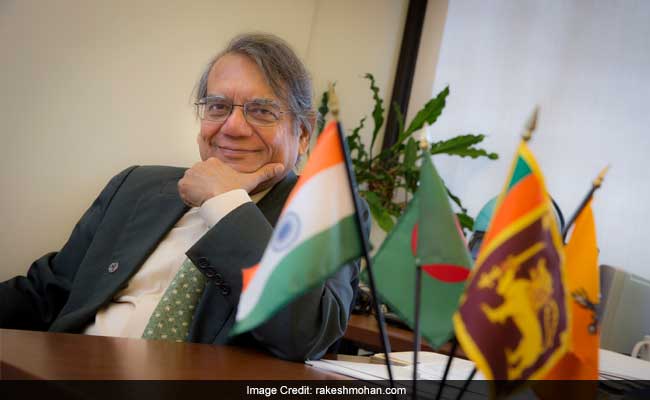
  • Former RBI Deputy Governor Rakesh Mohan Named Senior Fellow At Yale Institute

    Former RBI Deputy Governor Rakesh Mohan Named Senior Fellow At Yale Institute

    NEW YORK: Top economist and RBI’s former deputy governor Rakesh Mohan has been named senior fellow at the prestigious Yale University’s institute for global affairs.

    Mr Mohan will join the 2016-2017 class of 15 Senior Fellows at The Yale Jackson Institute for Global Affairs. Senior Fellows are leading practitioners in various fields of international affairs who spend a year or semester at Yale teaching courses and mentoring students.

    At Jackson, Mr Mohan will teach courses on central banking and the Indian economy, the institute said in a statement.

    The institute described Mr Mohan as one of India’s “senior-most economic policymakers” and an expert on central banking, monetary policy, infrastructure and urban affairs.

    Most recently he was executive director at the International Monetary Fund in Washington, representing India, Sri Lanka, Bangladesh and Bhutan, and chairman of the Indian government’s National Transport Development Policy Committee.

    Reserve Bank of India’s deputy governor Urjit Patel has been appointed as the next Governor of the central bank after Mr Rajan demits office on September 4. However, Mr Mohan was reportedly among the front-runners to bag the coveted job.

    Mr Mohan has previously taught at Yale as Professor in the Practice of International Economics of Finance at its School of Management. He has also been a past Senior Fellow at the Jackson Institute.

    As deputy governor of India’s central bank from September 2002 to October 2004 and July 2005 to June 2009, he was in charge of monetary policy, financial markets, economic research and statistics.

    In addition to serving in various posts for the Indian government, including representing India at a variety of international forums such G20, Mr Mohan has worked for the World Bank and headed prestigious research institutes. He is also a Non Resident Senior Research Fellow of Stanford Centre for International Development, Stanford University, and Distinguished Fellow of Brookings India.

    Mr Mohan holds a B Sc in Electrical Engineering from Imperial College, University of London, a BA from Yale University and a PhD in Economics from Princeton.

    During the period October 31, 2004, to July 2, 2005, he was Secretary, Department of Economic Affairs. He has held several positions in the Indian government and was Chief Economic Advisor in 2001-02.

    The other senior fellows include Blair Miller, who leads impact investing for the office of Ray Chambers, the UN Secretary-General’s Special Envoy for Malaria, where they are developing a large scale impact investment fund for emerging markets and Ambassador Dennis Ross, former special assistant to President Barack Obama and National Security Council senior director for the Central Region.

    The new fellows will be joining returning fellows — Director of the Financial Stability Department at the Central Bank of Iceland Sigridur Benediktsdottir, former CEO of the Clinton Foundation Eric Braverman, New York Times op-ed columnist David Brooks, former US Deputy Permanent Representative to the United Nations Ambassador Rosemary DiCarlo, former Ambassador to Syria Ambassador Robert Ford, former International President of Doctors Without Borders Unni Karunakara and former Chairman of Morgan Stanley Asia Steve Roach.

    The Jackson Institute for Global Affairs promotes education and scholarship on global affairs at Yale.

    It serves the entire university through courses and core teaching programmes in global affairs, career counselling, and public lectures, according to the institute’s website.

  • Indian American Suresh Ramamurthi Named ‘Digital Banker of the Year’

    Indian American Suresh Ramamurthi Named ‘Digital Banker of the Year’

    NEW YORK (TIP): Suresh Ramamurthi, chairman and chief technology officer of Weir, Kan.-based CBW Bank, has been honored as one of the 2016 “Digital Bankers of the Year” by American Banker, for leading the development and launch of the industry’s first digital banking architecture that enables real-time payments across multiple channels.

    “Suresh Ramamurthi has been on American Banker’s radar for some time now. Ramamurthi, one of the finalists for the 2016 Digital Banker of the Year, keeps innovating. In the past 12 months, he and his team have introduced a healthcare payment portal based on a faster payment platform they created,” said Penny Crosman, editor at large of American Banker, in a recent article. “The technology behind CBW’s new application, and many of its APIs, is a system built by Ramamurthi’s team at Yantra Financial Technologies, where he’s also CEO, that uses debit networks to instantly disburse payments across multiple channels, including cards, the automated clearing house and internal systems.”

    Each year at its annual Digital Banking Summit, American Banker recognizes the professionals that guide the development, implementation and advancement of digital banking technologies at his or her bank, and provide customers with a top-notch digital banking experience. Winners are selected based on their role in progressing the capabilities and adoption of digital banking at their institution or within the industry, as well as the technology’s impact on the customer experience. Previous honorees include: Heather Cox, chief client-experience, digital and marketing officer at Citigroup; Niti Badarinath, senior vice president and head of mobile banking at U.S. Bank; and Jim Smith, executive vice president and head of digital channels at Wells Fargo.

    The bank, with resources from Yantra Financial Technologies, leverages the digital banking architecture to offer the ONECard and BlastPay solutions. ONECard is a consumer account product that enables consumers to view and manage their funds, send money instantly within the U.S. as well as to India, and create multiple accounts and debit cards linked to these cards. BlastPay is an FDIC insured business bank account that supports the disbursement of mass payments across multiple channels.

    “Accelerated payments support a wide range of use cases and provide valuable, industry-specific benefits, yet most financial institutions are hesitant to introduce new products and payment methods because of regulatory and compliance concerns,” said Ramamurthi. “However, by respecting the compliance restraints of the banking industry and incorporating risk management features at the outset, we have successfully modernized the payments process to meet the needs of various customers and business verticals.”

    Ramamurthi is also the recipient of several other recent accolades, including American Banker’s 2015 “Innovator of the Year” and the 2015 Payments Innovation Award by Your Electronic Payments Core of Knowledge (EPCOR). Ramamurthi was also named in Bank Innovation’s 2015 Innovators to Watch and was recognized by Bank Technology News for leading one of the Top 10 Community Bank IT Projects. This consistent recognition demonstrates Ramamurthi’s commitment to transforming how businesses and individuals send and receive money.

  • Eid-al- Fitr wishes from HAB Bank

    Eid-al- Fitr wishes from HAB Bank

    On behalf of HAB BANK, I would like to extend our warmest wishes as we celebrate Eid-al-Fitr throughout the U.S. Eid reminds us of the many achievements and contributions of Muslim Americans to building the very fabric of our nation.

    Saleem Iqbal President & CEO HAB BANK, New York
    Saleem Iqbal
    President & CEO
    HAB BANK, New York

    As we celebrate Eid-al- Fitr this year, we also can take pride in our achievements as a community despite the challenges that lie ahead. We have, in a short span of time, been able to establish ourselves as a community engaged at so many levels, culturally and economically, and determined to pursue our American dream of achieving success in our adopted homeland.

    HAB BANK, since its inception in 1983 as a New York State chartered bank, has played a vital role in nurturing communities through its network of branches in New York, New Jersey, and California. We are proud to be the first bank in the U.S. solely focused on meeting and serving the banking needs of South Asian community.

    We are honored to join in celebrating this blessed holiday and reaffirm our Bank’s commitment to South Asian community in the U.S.

    Saleem Iqbal

  • Indian Consulate Outreach Program in Hartford, Connecticut on June 3rd, 2016

    Indian Consulate Outreach Program in Hartford, Connecticut on June 3rd, 2016

    NEW YORK CITY, NY (TIP): With an aim to strengthen ties with the local Indian community in Connecticut, a high level delegation led by Ambassador Riva Ganguly Das would be visiting Hartford, Connecticut (CT) on June 3rd, 2016 for an Outreach Program.

    The delegation will comprise of representatives from nationalized Indian banks, Air India, IndiaTourism Office, Confederation of Indian Industries (CII), Federation of Indian Chambers of Commerce & Industry (FICCI), United States India Business Council (USIBC), Make my Trip and Cox and Kings Global Services (CKGS).

    During the visit, the delegation would be meeting the Honorable Governor of Connecticut Mr. Dannel Malloy, the Honorable Mayor of Hartford, Mr. Luke Bronin, local chambers of commerce, business communities and the Indian-American communities.

    The delegation will address the Indian Community at a reception in the evening, starting at 7pm, at the Comfort Inn & Suites. The Consulate and the accompanying delegation members from the chambers of commerce, banks and tourism office will address any queries related to steps taken to improve consular services, passport, visa and banking services, business environment and economic reforms. This platform will provide a great opportunity for the community to interact with the Consulate and its partner stakeholders.

    Venue: Comfort Inn & Suites, 900 East Main Street, Meriden, CT 06450