Tag: Banwarilal Purohit

  • Governor Purohit prorogues Budget Session of Punjab Vidhan Sabha, gives assent to FRBM Bill

    Governor Purohit prorogues Budget Session of Punjab Vidhan Sabha, gives assent to FRBM Bill

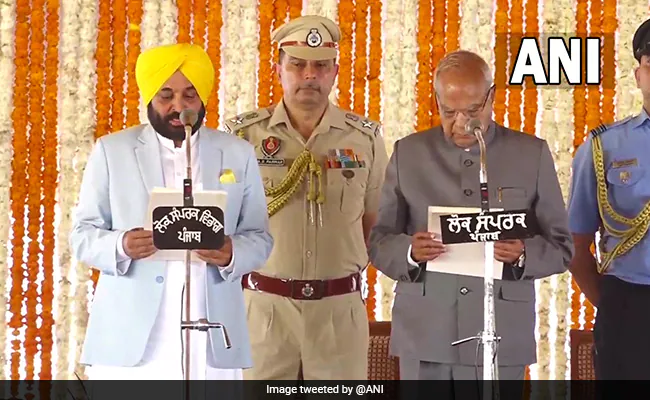
    Chandigarh (TIP)- After the tussle between Punjab Governor Banwarilal Purohit and Chief Minister Bhagwant Mann reached the Supreme Court, the former on Thursday prorogued the Budget Session of the Punjab Vidhan Sabha. Governor Purohit has also given his consent to the Punjab Fiscal Responsibility and Budget Management (Amendment) Bill (FRBM), 2023. The Bill is to be presented in the Winter Session of the Vidhan Sabha, which is proposed to be held in the last week of November.
    With this, all three money Bills that the government wanted to be tabled in the Vidhan Sabha have been given the nod by the Governor. The other two money Bills — The Punjab Goods and Services Tax (Amendment) Bill, 2023, and the Indian Stamp (Punjab Amendment) Bill, 2023 — were given the nod on October 31.
    However, no decision has been taken on the four Bills passed by the Punjab Vidhan Sabha in its two-day special sitting held on June 19-20. These Bills include the Sikh Gurdwaras (Amendment) Bill, 2023; the Punjab Universities Laws (Amendment) Bill, 2023; the Punjab Police (Amendment) Bill, 2023; and the Punjab Affiliated Colleges Amendment Bill, 2023. Though the Governor had termed the special sitting of the Vidhan Sabha in June invalid, the apex court, on November 10, had declared the sitting as valid and asked the Governor to decide on the fate of these Bills. It may be mentioned that the Punjab Government had approached the Supreme Court last month against the decision of the Governor declaring the October 20 special sitting as invalid and his refusal to give consent to the Money Bills.
    The Governor had been objecting to the extension of the session after its adjournment and convening special sittings of the House without getting it prorogued. Source: TNS

  • Raj Bhawan-Govt row escalates

    Raj Bhawan-Govt row escalates

    ‘Legal advice first’: Guv refuses to give nod to summon Punjab assembly budget session

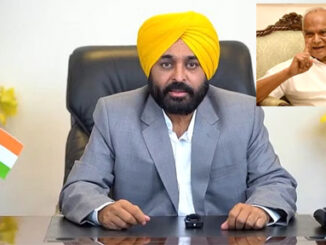
    Chandigarh (TIP)- The ongoing row between Governor Banwarilal Purohit and Chief Minister Bhagwant Mann in Punjab further deepened on Thursday, February 23,  with the former refusing to summon the Assembly’s Budget session while stating that he would take a decision only after getting legal advice on the “derogatory and unconstitutional” letter and tweet made by the AAP leader in response to a letter from Raj Bhavan on February 13. The governor sent a letter to  Mann to convey his position on the state cabinet’s decision two days ago regarding the summoning of the house of the legislature of the state. The state cabinet on Tuesday decided to convene the budget session of the Punjab assembly on March 3, following which the governor was requested to summon the house.

    “Since your tweet and letter both are not only patently unconstitutional but extremely derogatory also, therefore, I am compelled to take legal advice on this issue. Only after getting legal advice, I will take a decision on your request,” Purohit wrote. The letter is likely to further flare up the long-running tussle between Mann and Purohit which has strained their relations.

    The governor had, in a letter to Mann on February 13, raised questions about the selection of school principals for a training trip to Singapore, saying he received complaints of “malpractices and illegalities” in this regard.

    The AAP government sent 36 government school principals to a professional teacher training seminar in Singapore from February 6 to 10. The governor also questioned the appointment of Guninderjit Singh Jawandha as the Punjab Information and Communication Technology (Punjab Infotech) chairman while pointing out that his name figured in a kidnapping and property grabbing case.

    He had also raised questions about the promotion and posting of IPS officer Kuldeep Singh Chahal as the Jalandhar police commissioner; the presence of a non-official Naval Aggarwal in meetings of senior officers where sensitive and confidential matters of security of the country were discussed, and non-disbursal of scholarships to 2 lakh SC students. Claiming that Mann “never cared to reply” to his letters in the past and treated “all my queries with contempt”, Purohit told the CM that people elected him (Mann) for running the administration as per the Constitution and not according to his “whims and fancies” and that he is bound to furnish any information sought by Raj Bhavan. He also asked Mann to reply to his letter within a fortnight, failing which he would be compelled to take legal advice for further action.Mann promptly took to the microblogging site Twitter to tell the governor that he and his government are accountable to 3-crore Punjabis according to the Constitution and not to any governor appointed by the central government.

  • After Round One, what next for Bhagwant Mann & team?

    After Round One, what next for Bhagwant Mann & team?

    By Prabhjot Singh

    It has been a mixed start- more cautious and less controversial- for new Chief Minister Bhagwant Singh Mann and his AAP government. The new government has gone through the initial Constitutional and ritualistic formalities by following the parliamentary and conventional practices. Swearing in of the Chief Minister Bhagwant Mann at Khatkar Kalan, the native village of Shaheed-e-Azam Bhagat Singh, was perhaps the first and the only deviation from the existing practice of holding the solemn ceremony mostly at Raj Bhavan or rarely at a public place, like a stadium. Rest of the Constitutional mandates, including swearing in of members of the Council of Ministers, oath taking by members of new Vidhan Sabha, election of Speaker, and subsequently the opening session of the Legislature where Vote on Account and Interim Budget for first three months of the new financial year were all gone through by the laid down procedures.

    Another deviation, if at all, was to defer debate on the Governor’s address till the next session of the Assembly. The reason given was shortage of time as well as to give time to nearly 80 per cent members making their debut in legislative politics to go through the address and come prepared for debate on it after a break.

    The next session will, in all probability, be held in June to pass the full budget for 2022-2023. The new Finance Minister Harpal Singh Cheema needs to sit with the senior functionaries of his department and other heads to decide allocations in consonance with the promises the ruling party has made to the electors of Punjab.

    In between, members will meet by the end of the month to complete the formality of electing five new members of Rajya Sabha. The process of nomination has already been completed. It is the filling of Rajya Sabha seats that has evoked criticism of the Opposition parties. The criticism, unanimous and vociferous, veered around naming of “outsiders” as representatives of the State in the Upper House of Parliament. Called the House of “Elders”, Rajya Sabha members from Punjab have traditionally been senior members of major political parties, especially of Congress, Shiromani Akali Dal, and Bharatiya Janata Party.

    This time, AAP, with a landslide mandate, has chosen faces that are mostly new to Parliamentary politics. Two businessmen, two political strategists and a cricketer will now represent the State in the House of “Elders”.

    These nominations bring to focus the role representatives of Punjab had been playing in both the Houses of Parliament – Lok Sabha and Rajya Sabha. Punjab has the distinction of sending several top political leaders, including Inder Kumar Gujral (who rose to be the Prime Minister of the country), besides several Union Ministers holding important portfolios like Defense, Home and Agriculture. These personal accolades apart, the State has generally remained without Statesmen leaders like Kapur Singh who remained steady and firm on demands and issues of the State. While Inder Kumar Gujral is credited with waiving a part of the debt the State incurred in its fight against terrorism, other major demands, including autonomy t States, for which Punjab witnessed long spells of agitations, both peaceful and armed, were generally swept under the carpet.

    Over the years, or to be precise after Independence, the State has lost control not only of its new capital Chandigarh (that it built after losing Lahore to Pakistan), but also control on its river waters, power projects like Bhakra and Beas dams and institutes like Panjab University, Punjab Engineering College and the Postgraduate Institute of Medical Education and Research.

    Going by the record of both Lok Sabha and Rajya Sabha, the pitch for these long-standing demands appears to have been lost. Compromises, generally for power, were made and to fight Centre for backing out of its commitments, including transfer of Chandigarh to Punjab in mid 80s, none of its representatives, both in Lok Sabha and Rajya Sabha, ever made a sincerely noticeable effort. Even the sacrifice of Darshan Singh Pheruman in support of these demands was ignored.

    No doubt Punjab is an agricultural State, but it does not mean that it does not need industry for its overall economic development. When militancy was at its peak, several incentives, including industrialization, were promised. But none of these promises, including development of Sri Goindwal Sahib, as an industrial hub in the border belt were kept. Instead, the State witnessed a flight of industry to neighboring hilly States of Himachal Pradesh and Uttarakhand in general. Even at that time, the pitch of the protest raised by Punjab MPs was so frivolous as to be audible elsewhere.

    No one will support outsiders to represent the State in Parliament. The million-rupee question is “Are our political parties and their bigwigs acting at the behest of the State or are just appeasing a section of their loyalists at the cost of the State?”

    Answers may generate an animated debate about the practices followed in the past viz a viz recent action of the first-time ruling group. Whatever be the outcome, the State needs a government that works for finding solutions to its vexed and long-standing demands besides attending to its conjugal problems.

    (Prabhjot Singh is a veteran journalist with over three decades of experience covering a wide spectrum of subjects and stories. He has covered  Punjab and Sikh affairs for more than three decades besides covering seven Olympics and several major sporting events and hosting TV shows. For more in-depth analysis please visit probingeye.com  or follow him on Twitter.com/probingeye. He can be reached at prabhjot416@gmail.com)


  • Stalin takes oath as Tamil Nadu CM

    Stalin takes oath as Tamil Nadu CM

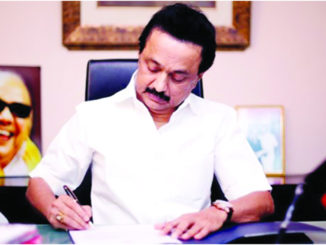
    Dravida Munnetra Kazhagam (DMK) leader MK Stalin took oath as the Chief Minister of Tamil Nadu on Friday, May 7, morning.

    Governor Banwarilal Purohit administered the oath of office and secrecy to 68-year old Stalin, for whom this would be the first stint as CM, in a simple ceremony at the Raj Bhavan.

    Along with the DMK chief, 34 ministers of his party also took oath to be appointed in the state cabinet.

    The names include 19 former ministers and 15 new faces. It has two women. Stalin’s son Udhayanidhi does not figure in the list of ministers.

    AIADMK top leader O Panneerselvam, leaders from alliance parties including Congress’s P Chidambaram, MDMK chief Vaiko and top state officials took part in the ceremony.

    DMK had fought the elections with its allies and got an absolute majority on its own by bagging 133 seats in the 234-member assembly.

    Stalin will hold several portfolios including Home, General Administration, Special Initiatives, Special Programme Implementation and Welfare of Differently -Abled Persons.

    While he has been branded as the ‘son who rose’, Dravida Munnetra Kazhagam (DMK) president MK Stalin cannot be called so anymore after ensuring his party’s victory in the 2021 Tamil Nadu Assembly election. Ever since his father, M Karunanidhi, passed away in 2018, Stalin has managed to consolidate the DMK.

    The party’s sweep in the 2019 Lok Sabha election was seen as his personal achievement. But the victory, which will make Stalin walk inside St. Fort George as Tamil Nadu’s chief minister, is the reward for his perseverance of over 50 years.

    As Stalin himself had recalled in a recent interview to India Today TV, he started his political career as a teenager at a barbershop.

    “We youngsters started an outfit called DMK Elaingar Mandram (DMK youth wing),” he had said. Stalin later campaigned for his uncle Murasoli Maran in the 1967 elections.

    During the Emergency, he was arrested under the Maintenance of Internal Security Act (MISA) for taking part in protests. MK Stalin came to the forefront when he was beaten up in police custody. C Chittibabu, a DMK leader, who was his cellmate died protecting him.

    Since then, Stalin eventually grew in the party and became secretary of its youth wing in 1982. In his own words, as Stalin told India Today, “They kept calling me heir. But, I came up in the party on my own, in a step by step process.”

    Stalin was first given a ticket to contest from the Thousand Lights constituency in Chennai but lost the election. However, he won from the same constituency in 1989.

    In 1996, MK Stalin became the Mayor of Chennai. This post, he has said several times, gave him “great experience”. His slogan of converting Chennai into ‘Singara Chennai’ (beautiful Chennai) became popular.

    Stalin went on to become Tamil Nadu’s Deputy Chief Minister in his father’s cabinet in 2009. The same year, when this journalist in an interview asked M Karunanidhi about Stalin’s next elevation, he said, “DMK is a democratic party. Every decision will be taken with consent of the general council.”

    Karunanidhi did not project MK Stalin as the chief ministerial candidate in 2016 even though he himself was unwell.

    A senior DMK leader said, “Kalaingar didn’t handover the position so easily to Stalin. He was made to wait for a really long time and his has been a long battle.”

    In 2014, MK Stalin was criticised by political analysts for not leading the DMK to victory in the Lok Sabha elections.

    “They said his strategy failed. But he didn’t wear out and continued to tour the state,” said the senior DMK leader on condition of anonymity.

    While dynasty politics has been an allegation levelled against MK Stalin by his opponents and critics, he also faced trouble from his brother MK Alagiri.

    Over the years, Stalin worked towards creating a niche for himself in the party. At one point, Karunanidhi was forced to handover powers of Tamil Nadu’s southern districts to MK Alagiri.

    Nevertheless, ‘Thalapathy’, as MK Stalin is called by his supporters, toured across Tamil Nadu to garner support.

    In his first interview to India Today TV (then Headlines Today) in 2013, said, “State autonomy is very important for DMK. We believe in self-rule in the state.”

    He had lashed out at then Chief Minister J. Jayalalithaa for not keeping up the promises made to the people. Stalin had spoken about his vision for Tamil Nadu and to strengthen the DMK.

    This was the time things went sour between Alagiri and his father Karunanidhi. After many struggles, Madurai which was seen as MK Alagiri’s bastion came under the wings of MK Stalin.

    The 2016 assembly election saw a close fight. Stalin was the one who had spearheaded DMK’s campaign and alliance strategies.

    After losing a closely fought battle, Stalin had to wait to live his dream of becoming the chief minister.

    But the massive victory in this election has finally paved way for the 68-year-old Stalin to occupy the chief minister’s chair.

    However, challenges are far from over for the chief minister elect. He is taking over the mantle in the midst of a raging pandemic and is inheriting the state’s financial burden from the previous government.

    Some AIADMK leaders have openly said in debates that it might not be easy for Stalin’s government to get help from the central government.

    For now, ‘Team Stalin’ is getting ready to decide the cabinet and handle the pandemic on priority, sources say.

    Governor Banwarilal Purohit appointed DMK president M K Stalin as Chief Minister of Tamil Nadu after he submitted a letter on his election as legislature party leader, the Raj Bhavan said on Wednesday. Stalin called on Purohit at the Raj Bhavan and “submitted a letter intimating of his election as the leader of the Dravida Munnetra Kazhagam Legislature party.”

    Governor Purohit appointed him as the Chief Minister of Tamil Nadu and invited him to form the ministry and to have the swearing-in ceremony on 7 May at 9 am at Raj Bhavan, an official release said.

    On Tuesday, Stalin was unanimously elected as legislature party leader of the Dravida Munnetra Kazhagam (DMK). “Party president @mkstalin was elected leader of the DMK legislature party,” the DMK said on its official twitter handle.

    The meet to elect him was held at headquarters ‘Anna Arivalayam’ and it witnessed participation of 133 newly elected MLAs, including eight from alliance parties like the Vaiko-led MDMK who fought the polls on DMK’s ‘Rising Sun’ symbol. A DMK release said Stalin was unanimously elected as the legislature party leader after his name was proposed by party general secretary Duraimurugan and seconded by principal secretary KN Nehru.

    The DMK has won 133 of the total 234 Assembly seats that went to polls on April 6. Some more seats were won by allies, including the Congress that bagged 18 constituencies.

    Garnering two-thirds of the 234 seats, the 68-year old Stalin, through his sustained campaign yet again ushered in a victory similar to that of the 2019 Parliamentary election win. The victory did not, however, land in Stalin’s lap and he worked towards it by reaching out to people systematically by targeting the Centre and state governments on many issues.

    Source: Live Mint, India Today and News 18