Tag: BCCI

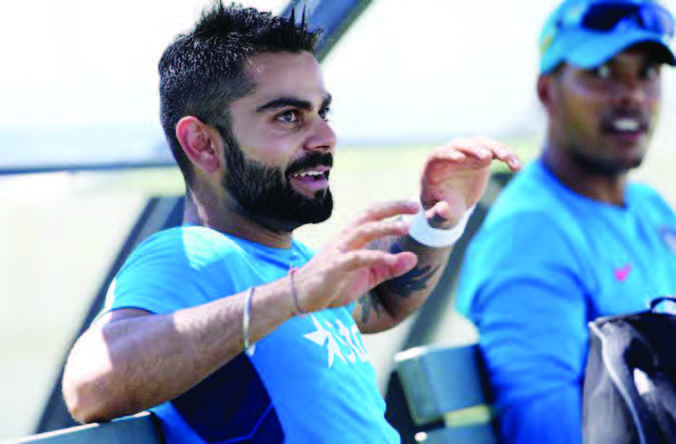
  • Fighting fire: BCCI asks Virat Kohli to behave

    Fighting fire: BCCI asks Virat Kohli to behave

    NEW DELHI (TIP): Stung by the Indian media’s severe criticism of Virat Kohli’s abusive rant at a journalist and the bizarre statement on the issue by team’s media manager RN Baba, the Indian cricket board (BCCI) rushed in to douse the fire with a statement of apology on March 5.

    In a carefully-worded statement released to pacify the angry media, BCCI’s secretary Anurag Thakur emphasized on the key role media plays in covering and popularizing the game of the cricket.

    “The BCCI has taken note of the incident that occurred in Perth a couple of days ago. The BCCI has been in touch with the Indian team management on this issue, and has advised that this kind of incident should not be repeated,” Thakur said in the statement.

    Thakur’s choice of words suggests a change in BCCI’s attitude towards the journalists. “The BCCI respects the role played by the media in covering and popularizing the game of cricket and acknowledges the support of the media in its mission to administer and promote the game of cricket in India,” Thakur said.

    “The player in question has been told to maintain the dignity of the Indian team at all times, and avoid any such behaviour in the future. The BCCI would like to request the concerned parties to move on, and focus on the Indian cricket team’s campaign in the ongoing ICC CWC 2015,” Thakur added.

    Baba, in his statement on Wednesday, had strangely dismissed the incident by saying Kohli had not abused the journalist.

  • Conflict of interest: BCCI list includes Gavaskar, Ganguly

    Conflict of interest: BCCI list includes Gavaskar, Ganguly

    NEW DELHI (TIP): The BCCI on Wednesday submitted a list of individuals to the Supreme Court with potential conflicts of interest. The list reportedly includes names of Sunil Gavaskar, Ravi Shastri, Kris Srikkanth, Venkatesh Prasad and Sourav Ganguly. ?The SC has also reserved the order on Srinivasan’s future in the BCCI and the fate of the Chennai Super Kings franchise. The court observed that there is deep rooted conflict of interest and it has dented the game.

    The apex court continued their hearing on the issue of conflict of interest in N Srinivasan’s stakes in the Chennai Super Kings franchise and asked the BCCI how a selector can hold two posts at the same time. The court cited the example of Srikkanth’s example during his stint in the IPL. Srikkanth was a selector in the BCCI and he had held stakes in the CSK franchise during his tenure.

    The court asked the board to submit the names of individuals, other than N Srinivasan, who would be affected if Rule 6.2.4 of BCCI’s Constitution is struck down.This rule was amended in September 2008 where it permitted office bearers, administrators, players and others to have a commercial interest in the IPL.

  • ‘My role is to oversee everything’ – Shastri

    ‘My role is to oversee everything’ – Shastri

    NEW DELHI (TIP): Former India allrounder Ravi Shastri, the newly appointed team director for the ODI series in England, has said that though he will be in charge of the team, head coach Duncan Fletcher has not been sidelined. “My role is to oversee everything. All of them report to me,” Shastri told ESPNcricinfo in an interview where he expanded on his role.

    The decision by the BCCI to bring in Shastri along with the three Indian assistants – Sanjay Bangar (batting), B Arun (bowling) and R Sridhar (fielding) – and “give a break” to fielding coach Trevor Penney and bowling coach Joe Dawes ignited speculation about Fletcher’s future. But Shastri emphasised that Fletcher would not be sidelined. “Absolutely not. He stays as the head coach. And these two (Bangar and Arun) will be his assistants.

    I am there to oversee.” Immediately after the BCCI made public his appointment on Tuesday morning, Shastri went to the team hotel in London where he had a two-hour chat with both MS Dhoni and Fletcher to chalk out plans for the fivematch ODI series which starts in Bristol on Monday. “We had a chat about where things are at the moment and how things have to be addressed. And how important communication will be.” Shastri has been blunt in his assessments in the wake of India’s 3-1 defeat against England in the five-match Test series. Although he picked inexperience as the deciding factor behind India’s defeat he described the team’s performance as “spineless”. “On this tour I saw India’s greatest ever overseas win I have seen.

    I know it because I have never seen a track like that and with this kind of inexperienced side, for them to pull it off… Then I also saw some spineless cricket over the last three Tests matches. Spineless means stomach for a fight. People would have accepted 3-1 if there was a little more fight.” Shastri said that it was painful to watch batsmen not learning from their mistakes during the series.

    “My only disappointment was players at times making the same mistake,” Shastri said. “That disappointed me. Everyone makes a mistake, but you want to try something different.” In his newspaper column, published the day after the Oval defeat, Shastri wrote: “Five sessions and not five days have been enough to nail them. But move on we must. Sit back and watch if these glam boys are ready for penance.” Asked who exactly were his targets, Shastri revealed it was the top-order pair of Cheteshwar Pujara and Virat Kohli.

    “I was hard on Pujara and Kohli specifically because they came here with big reputations. And they have been brought down to earth with their techniques being found out against the moving ball. And there is nothing wrong in that, it has happened to the biggest players. Now the true test of their character will be: how they bounce back. I have absolutely no doubt that not only will they bounce back, they will excel very, very soon.”

  • Foreign funding and the Maharajas among NGOs

    Foreign funding and the Maharajas among NGOs

    It is speculated that a big portion of foreign funding goes to politicians and bureaucracy as a large number of institutes are owned, controlled and managed by politicians and business houses.

    India is a fascinating country. The number of stock exchanges we have, as per official records is 20, but the number of functioning exchanges is only two. The number of scrips listed on the Bombay Stock Exchanges [BSE] is nearly 9,000, only 3500 of these are traded at least once a year, and the top 50 securities constitute nearly two-third of the turnover. Actually only 250 to 300 are “active” traded scrips. Interestingly, the latest Handbook of Statistics on Indian Securities Market published by the Securities Exchange Board of India (SEBI) has dropped the column for number of scrips listed on the BSE! It is one way to solve the issue of numbers.

    In a similar fashion, we decided to probe the number of not-for-profit or nongovernmental organisations (NGO) in India. Being in the teaching line, we have the habit of probing issues that are otherwise not to be probed at all! Let sleeping dogs lie is the national dictum in such matters. NGOs are also known as Voluntary Organizations (VOs) or Voluntary Agencies (VAs) and more recently as Voluntary Development Organizations (VDOs), Non- Governmental Development Organizations (NGDOs) or Non-Profit Institutions (NPIs).

    There are equivalent names for NGOs available in different Indian languages. In Hindi NGOs are called Swayamsevi Sansthayen or Swayamsevi Sangathan. Prior to the enactment of the Societies Registration Act of 1860, voluntary action was guided mainly by religious and cultural ethos. Subsequently, a series of legislations addressing the non-profit sector were promulgated. The starting point in this respect was Article 19 of the Indian Constitution which recognized a number of civic rights including the right “….to form associations or unions”. It constitutes the legal basis of relevant legal provisions applicable to the non-profit sector.

    There are also non mandatory provisions that allow any group with the intention of starting a non-profit, voluntary or charitable work to organize itself into a legally registered entity. However, given the optional nature of these provisions, there is a large group of voluntary bodies that are not registered. The United Nations Development Programme (UNDP) India and the UN Volunteers(UNV) programme had organized a Forum in January 2006 at UNDP’s Delhi office to discuss the issues relating to implementation of the UN Handbook on Nonprofit Institutions (NPIs) in the System of National Accounts in India.

    The meeting was attended by representatives of the Planning Commission, Ministry of Statistics and Programme Implementation (MoSPI), NGOs, UNV Headquarters, and the Centre for Civil Society Studies of Johns Hopkins University, which is leading the effort to implement the UN NPI Handbook throughout the World. At this Forum, the UN Resident Coordinator and UNDP India Resident Representative stressed the need to implement the UN Handbook in order to capture the contribution of NPIs to the national economy. It was mentioned that the voluntary sector played a significant role in the economic and social change of the country and contributed significantly to the development in both rural and urban areas.

    The Forum therefore urged that India should take suitable steps to implement the UN Handbook on NPIs and compile accounts of NPIs functioning in the country. The National Policy on the Voluntary Sector, adopted in May 2007, presumably under the guidance of the National Advisory Council, pledges to encourage, enable and empower an independent, creative and effective voluntary sector, with diversity in form and function, so that it can contribute to the social, cultural and economic advancement of the people of India.

    It constitutes the beginning of a process to evolve a new working relationship between the government and the voluntary sector, without affecting the autonomy and identity of voluntary organizations (GoI/Planning Commission, 2007). Accordingly, it is expected that the enabling environment will be further enhanced to encourage the development and active engagement of the non-profit sector, including volunteerism, in the community’s affairs and developmental efforts. So we can conclude that at the beginning of the United Progressive Alliance (UPA)’s second term, the so called voluntary or NGO sector was fully ensconced in decision making and fund collecting activities. NGOs can be registered under several regulations or none-the latter is more common.

    The main statutory laws governing the various types of registered non-profit organizations are: The Societies Registration Act, 1860; The Indian Trusts Act, 1882; Public Trust Act, 1950; The Indian Companies Act (Section 25), 1956 Religious non-profit organizations can be registered under: the Religious Endowments Act, 1863; The Charitable and Religious Trust Act, 1920; Mussalman Wakf Act, 1923; Wakf Act, 1954 and the Public Wakfs (Extension of Limitation) Act, 1959 By 2009, a total of 33 lakh societies reported as “Societies registered under the Societies Registration Act/ Mumbai Public Trust Act”.

    Of these, the State Directorates of Economics and Statistics [DESs] were able to collect information for about 22.58 lakh units and computerize the information relating to about 21 lakh units. But when the Central Statistics Office (CSO) sent people searching for these NGOs in the states, it could not trace lakhs of them. Of the roughly 22 lakh NGOs it tried to verify, only 6.95 lakh could be traced. These figures did not include non-profit organizations registered under the Charitable and Religious Trust Act, 1920, which, if counted, would add a few thousands to the number. Then there are non-profit companies under the Indian Companies Act, 1956, and other laws that also help set up trusts.

    The numbers also did not include many groups and associations, which, in common parlance are referred to as mass-based groups, usually operating at block and village levels, at times federating into larger organizations for specific purposes or campaigns. A study by PRIA and Johns Hopkins University suggested, nearly 50% of the total voluntary organizations in India were not registered under any law. The antiquated societies registration law is blind when it comes to classifying these registered groups.

    It treats all registered societies the same way. These numbers include societies that run hugely profitable schools, colleges, hospitals and sports bodies in the country. Remember, the Board of Control for Cricket in India (BCCI) is also an NGO, registered under the Tamil Nadu Societies Registration Act. The Confederation of Indian Industries (CII) too is an NGO, under the law.

    The Major Findings from the CSO Survey are as follows:

    The CSO’s study covered only the societies registered under the Societies Registration Act 1860/Bombay Public Trusts Act, 1950 and companies Registered under section 25 of Indian Companies Act, 1956. Data available from the first phase shows that there are about 31.7 lakh NPIs registered in India and that 58.7% of these are located in rural areas. A majority of NPIs are involved in community, social and personal services, cultural services, education, and health services. The number of NPIs formed after 1990 has increased manifold. This is the post economic reform period when global powers began to show interest in India.

    There were only 1.44 lakh societies registered till the year 1970, followed by 1.79 lakh registrations in the period from 1971 to 1980, 5.52 lakh registrations in the period from 1981 to 1990, 11.22 lakh registrations in the period from 1991 to 2000, and as many as 11.35 lakh societies were registered after 2000. Since there is no clause in the Act for the de-registration of defunct societies, the first phase of the survey results give number of societies and their distribution on the basis of records available with the registering authorities. About 18 lakh societies have been visited during the second phase, i.e. 57.6% of the registered societies.

    Out of these, results are available for 4.65 lakh. The top three sectors where these societies were engaged is as follows: engaged in Social Services (35%), followed by Education Research (21%), and Culture Recreation (15%). The top three activities account for 71% of the registered societies. The data on total work force includes volunteers and paid workers. Out of the 144 lakh work force, only 11 lakh are paid workers. The CSO used the sum of their operational expenditures to come to a value of their economic output at a whopping Rs41,292 crore! Non Profit Institutions are also registered under the Indian Companies Act (Section 25), 1956.

    The financial data in respect of 2,595 companies listed with Ministry of Corporate Affairs has been obtained and analyzed. However, no information could be obtained in respect of the workforce of these companies and activities/purposes in which they are involved. CSO decided to limit the coverage to the Societies registered under Societies Registration Act 1860, Mumbai Trust Act and the Indian Companies Act (Section 25), 1956. This is because a majority of the NPIs are registered under Societies Registration Act 1860. This also means that NGOs under various religious non-profit organisations were excluded and they constitute a large number. The study found that in most States, the provision of submitting financial statements is not strictly enforced. Even if societies file financial statements with the registrar’s office, there is no mechanism to maintain this database.

    Maharajas among NGO’s:

    Maharajas among NGO’s: A category of NGOs are registered with Ministry of Home Affairs -under Foreign contributions regulations Act [ FCRA] -These can be called Euro or Dollar NGOs who get funds from private charities as well as Government organizations abroad. The salient features for 2011-2012 are as follows: I. A total of 43,527 Associations have been registered under the FCRA until 31 March 2012. During 2011-12, as many as 2001 associations were granted registration and 304 associations were given prior permission to receive foreign contributions. II. 22,702 Associations reported a total receipt of Rs11,546.29 crore as foreign contributions. [Under or non-reporting is common]

    TRENDS OVER LAST 10 YEARS

    Year No. of Registered Associations No.of Reporting Associations

    Amount of Foreign Contributions
    [Rs Crore]
    2002-2003
    26404
    165905046.51
    2003-2004
    2835117145
    5105.46
    2004-2005
    3032118540
    6256.68
    2005-2006
    3214418570
    7877.57
    2006-2007
    3393718996
    11007.43
    2007-2008
    3480318796
    9663.46
    2008-2009
    3641420088
    10802.67
    2009-2010
    38,43621,508
    10,337.59
    2010-201140,575
    22,735
    10,334.122011-2012
    43,527
    22,70211,546.29
    Total from 2002-2012
    97383.531. Source: Ministry of Home Affairs

    Foreigners Division, FCRA wing
    III. Delhi reported the highest receipt of foreign donations at Rs2,285.75 crore, followed by Tamil Nadu (Rs1,704.76 crore) and Andhra Pradesh (Rs1,258.52 crore).
    IV. Among districts, Chennai reported the highest foreign donations (Rs889.99 crore), followed by Mumbai (Rs825.40 crore) and Bangalore (Rs812.48 crore).
    V. The list of donor countries is headed by the US (Rs3,838.23crore), followed by UK (Rs1,219.02 crore), and Germany (Rs1,096.01 crore).
    VI. The list of foreign donors is topped by the Compassion International, US (Rs183.83 crore), followed by the Church of Jesus Christ of Latter day Saints, US (Rs130.77 crore), and the Kinder Not Hilfe (KNH), Germany (Rs51.76 crore).
    VII. World Vision of India, Chennai, Tamil Nadu (Rs233.38 crore) received the highest foreign donations among NGOs, followed by the Believers Church India Pathanamthitta, Kerala (Rs190.05 crore) and Rural Development Trust, Ananthapur, AP (Rs144.39 crore)
    VIII. The highest foreign contribution was received and utilized for–Rural Development (Rs945.77 crore), Welfare of Children (Rs929.22 crore), Construction and Maintenance of school/colleges (Rs824.11 crore) and Research (Rs539.14 crore). Activities other than those mentioned above received Rs2,253.61 crore. Interestingly establishment expenses [Building/ cars/ Jeeps/ Computers/Cameras etc.] constituted the bulk of expenditure in most of the NGOs.

    Need of the Hour:
    In the context of the Intelligence Bureau’s (IB) report on antidevelopment activities of many foreign funded NGOs, it may be time to constitute a commission of experts including those from the IB to comprehensively study this sector. Also, to use experiences of other countries like Russia, China and the US in dealing with NGOs and formulating regulation to govern them. Perhaps, it is also time to re-look the foreign funding of NGOs in the context of compulsory CSR contributions introduced in the Companies Act 2013-since we are no more the white man’s burden!

    (The author is Professor of Finance at IIM-Bangalore. He sits on the advisory boards of SEBI and the RBI.)

  • SRINIVASAN TAKES OVER AS CHAIRMAN OF ICC

    SRINIVASAN TAKES OVER AS CHAIRMAN OF ICC

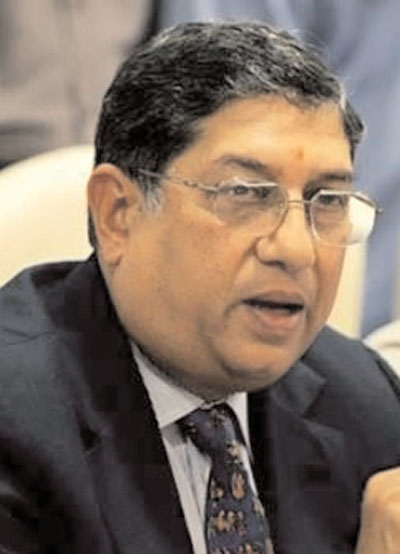
    MUMBAI (TIP): India’s N. Srinivasan was confirmed as chairman of the International Cricket Council (ICC) in Melbourne on Thursday, giving the 69-year-old industrialist the most powerful role in the governing body’s restructured organisation. Srinivasan, who emerged as the leading candidate to become ICC chairman in February, will assume office almost immediately after the governing body rubber-stamped constitutional changes at its annual conference being held this week in Australia.

    “It is an honour to be confirmed as the Chairman of the International Cricket Council,” Srinivasan said in a statement after the 52-member full council approved amendments which, to many observers, give India, England and Australia virtual control of the sport. Often described as the most powerful man in cricket, Srinivasan became the Board Of Control For Cricket In India (BCCI) president in 2011 but was ordered to step aside in March to ensure a fair investigation into an illegal betting scandal during last year’s Indian Premier League involving his son-in-law.

    The Chennai-native was also accused of having a conflict of interest due to his India Cements company owning a franchise in the lucrative Twenty20 league. Those controversies have led to some criticism of his appointment with one official of a now unrecognised unit within the Indian cricket board urging the country’s Supreme Court to bar Srinivasan from taking over as ICC chief.

  • Srinivasan removed as BCCI chief: Gavaskar is the interim President

    Srinivasan removed as BCCI chief: Gavaskar is the interim President

    NEW DELHI (TIP): The Supreme Court of India, on March 28, removed N. Srinivasan as BCCI chief and asked Sunil Gavaskar to take charge as an interim president for the duration of IPL 7. The Supreme Court said Sunil Gavaskar will be the interim president of BCCI only for managing affairs of the IPL. It also asked Gavaskar to get out of contractual obligations with BCCI for commentary.

    The court also said that IPL matches of season 7 to go on as per schedule and it is not going to stop any team or player to participate in IPL. The court said Gavaskar will be compensated for the job of interim president by BCCI. However, BCCI on Friday told Supreme Court that Indian team skipper Mahendra Singh Dhoni never made a statement that Gurunath Meiyappan was just a cricket enthusiast.

    Pushed to the brink following the Supreme Court’s sweeping proposals to clean up the game, a beleaguered BCCI president N. Srinivasan found himself under intense pressure to step down with senior administrators and former players asking him to abide by the apex court’s suggestions. Srinivasan spent most part of the day at home in Chennai on Thursday having telephonic conferences with his legal experts and his close confidants in the BCCI but continued to maintain a stoic silence on the developments.

    In a huge jolt for the Tamil Nadu strongman, the Supreme Court on Thursday, March 27, proposed the replacement of Srinivasan by former captain Sunil Gavaskar and suspension of franchises Chennai Super Kings and Rajasthan Royals from IPL 7 till the pendency of the betting and spot fixing case. The apex court also proposed to pass an order barring India Cements officials from getting involved with the functioning of BCCI. Soon after the court’s proposals, more pressure was put on Srinivasan to voluntarily step down from the president’s post with legends of the game like Rahul Dravid, Anil Kumble, Bishan Singh Bedi and Kris Srikkanth asking him to abide by the apex court’s suggestions. BCCI vice-president Ravi Sawant, former secretary Niranjan Shah and former treasurer Ajay Shirke were among the administrators who urged him to quit in the interest of Indian cricket.

  • IPL 7 SUSPENSION COULD LEAD TO RS 20K CRORE LOSS

    IPL 7 SUSPENSION COULD LEAD TO RS 20K CRORE LOSS

    NEW DELHI (TIP): With the Supreme Court proposing the suspension of Chennai Super Kings and Rajasthan Royals from IPL 7 over the spot-fixing and betting scandal, India’s biggest and hottest sports property and BCCI’s most sumptuous cricket tournament faces a potentially unprecedented crisis.

    If the IPL 7 is fully scrapped, the total loss of business could amount to Rs 20,000 crore, according to consultancy firm KPMG in India, which has estimated that a season of IPL generates combined revenues of around $3.2 billion for various sectors. However, if only CSK and RR are made to stay away from this year’s edition, the loss would be around Rs 9,000 crore.

    If CSK and RR are forced to quit this edition, reducing to a six-team, home-andaway league, the number of games will drop from 60 to 34; almost 45% fewer games. “It would negatively impact viewership, ad inventory, jersey sponsorships, licensing and merchandising deals and channel partnerships. This would also have a cascading impact on hospitality, travel, security and associated sectors. Considering IPL teams generate Rs 1.5-Rs 3 crore per match, the total value lost just on account of gate revenues alone would be around Rs 40-78 crore,” says Jaideep Ghosh, head, sports advisory services at KPMG in India.

    There could be other issues emerging as well. For instance, players’ payments for the year are scheduled to begin shortly. “Not paying them could create legal complications,” an IPL business insider said. Most teams have already invested in promotional material worth crore of rupees, he added. Industry insiders also mention that PepsiCo, IPL’s title sponsor, might try to renegotiate its deal with the BCCI depending on the final judgment. In 2012, PepsiCo had beaten telecom major Bharti Airtel to become the league’s title sponsor, with a bid of Rs 396.8 crore for five seasons starting 2013.

    Interestingly, CSK’s skipper MS Dhoni is also a brand ambassador for the New York-based food and beverage giant. PepsiCo, however, refused to speculate on what could be at this stage. “The matter is sub-judice. We would not like to offer any comment,” said a PepsiCo India spokesperson. Another major sponsor, Vodafone, also declined to comment. Moving the first half of IPL 7 to UAE has also galled companies. “Sponsors are noticeably worried about their investments in the IPL this time. Stadiums in UAE are smaller than the ones here. For starters, instadia sales will be lower,” says Ghosh.

    Advertising revenues will also be hit significantly if the IPL gets stalled. According to Navin Khemka, managing partner of ZenithOptimedia, a media-buying firm that represents consumer goods major Reckitt Benckiser among others, Rs 700 crore to Rs 1,000 crore of advertising revenues will be affected. “A 10-second spot is being sold for Rs 4.5-5 lakh. If the two teams don’t play, with a lesser number of matches, broadcasters will be forced to bring the ad rates down and we could see smaller advertisers coming in,” he says.

    Prasana Krishnan, business head of Multi Screen Media’s (MSM) sports entertainment channel Sony Six, which has the television broadcasting rights of the IPL, sounds wary as he says, “Give us a few more days. We are also watching the space.” IPL teams such as, Delhi Daredevils, Kolkata Knight Riders (KKR) and Rajasthan Royals shied away from sharing their views on the impending scenario. While CEO and MD of KKR Venky Mysore and CEO of Delhi Daredevils Hemant Dua were not available for comment, a spokesperson for Rajasthan Royals preferred not to comment when contacted by TOI. “We would prefer to wait and watch before airing our views.”

  • IPL shadow over India game in World T20

    IPL shadow over India game in World T20

    DHAKA (TIP): Has there ever been an occasion when a World Cup match involving India been reduced to a side show? In the wake of the damning interim order of the Supreme Court on N Srinivasan and the spotfixing controversy, the team’s ICC World T20 Super 10 encounter against hosts Bangladesh at the Sher-E-Bangla National Stadium, has been reduced to a footnote.

    The team arrived at the stadium in their spacious greenline luxury bus at around 3 pm and Rohit Sharma, who addressed the media in place of skipper MS Dhoni, would have been surprised to see many non-Indian mediapersons showing interest. Before the first question could be asked, the team’s media manager Dr RN Baba, issued instructions to the media. “No questions on what’s happening back home. Questions only on World T20.”

    That irked a senior journalist who retorted: “You need not state the obvious. We all know Rohit is not in a position to answer those questions.” ICC spokesperson then stepped in and said that Baba was just making a polite request. The mood was restive and Rohit must have felt tackling Dale Steyn on a green top at Kingsmead would have been easier. A couple of western journalists though did ask him about how the team could concentrate with so much happening back home. The opener handled those googlies well. “It’s important for us to focus as we have a big job on our hands.

    When we came here, we were determined to win the tournament. We have won two out of two games and tomorrow (Friday) is another crucial match. At the moment, our focus is on this game,” he said. Another googly came in the form of a similar question as Rohit was asked if the players had spoken about these issues and followed news channels. “Not at all,” was his reply. After the press conference concluded, a large group of scribes surrounded Baba and asked him why Dhoni didn’t address the media. He said, “He will be available only when the team loses. When the team wins, the performer of the day will speak.” Baba also denied that there was a BCCI diktat which prevented players from talking about the IPL controversy. “But they will not speak about it,” he stressed.

  • IPL action set for May 1 return to India

    IPL action set for May 1 return to India

    CHENNAI (TIP): The seventh edition of the IPL will be flagged off in the UAE, which will host the first 20 matches, but the tournament is likely to come back to India from May 1.

    In March 18 IPL governing council meeting, six affiliated units – Karnataka, Gujarat, Kochi, Hyderabad, Orissa and Jharkhand – assured the BCCI that they have received clearances from the respective state governments to host IPL matches from May 1-15. “They have submitted letters to the BCCI stating they are ready to host IPL matches during this 15-day window.

    That’s why we’re planning to get the league back to India after the first 15 days in UAE,” a source told mediaperson. BCCI secretary Sanjay Patel, too, confirmed the development. “Pursuant to the initiative taken by the Union ministry of home affairs, many state governments have indicated that IPL matches can be conducted in their respective states,” Patel said in a statement after the meeting here.

    “Based on the responses received so far, the BCCI believes that the IPL can be conducted in India from the first week of May.” Bangladesh was kept on standby for this second phase of the tournament but it seems the need may not arise. IPL franchises, too, are happy with the development because they want the least number of matches to move out of India. “The franchises are relieved. But we’re still awaiting the final clearance, which will probably come very soon,” the source added.It is also learnt that the BCCI will bear the cost of acquiring the grounds for the UAE leg.

    “That amount will be paid to the UAE board by BCCI. The rest of the expenses will have to be shouldered by the franchises,” the source added.The BCCI will also restrict the number of persons in the dug-out following the spot-fixing saga last year. The board will also monitor the movements of players after the match. “We’re in constant touch with the Anti-Corruption Unit officials and every step will be taken to avoid any controversy,” the source added.There won’t be any home-away system either once the matches are back in India. “It is impossible to allot a specific number of home and away games for a certain franchise. It has to be according to the availability of the grounds.”

  • Polls push IPL 7 to UAE, Bangladesh on standby

    Polls push IPL 7 to UAE, Bangladesh on standby

    NEW DELHI (TIP):
    Ending weeks of speculation and uncertainty, the Indian cricket board (BCCI) announced on Wednesday that the seventh season of the Indian Premier League (IPL) will be held in three phases from April 16 to June 1. The tournament will start in the United Arab Emirates (UAE) and end in India but the final schedule is yet to be announced since there is still no clarity over a possible second phase to be held either in Bangladesh or India. That decision will depend on permission from the home ministry following complexities over providing security in an election year.

    The UAE will host the first 16 matches from April 16 to April 30, following which the tournament will come back to India or shift to Bangladesh from May 1 to May 12. The third and final phase, including remaining league matches and playoffs, will be held in India from May 13 onwards when the polling ends, the BCCI said. As reported by TOI, IPL teams are not in favour of hosting the majority of the tournament outside India for fear of a sharp fall in revenues from gate receipts. Thus, efforts are underway to seek a “favourable consideration” from the government for the second phase too.

    The home ministry had earlier told the BCCI that it would not be possible to provide security for the matches during the elections. “For May 1-12, the BCCI has approached the ministry of home affairs seeking permission to play IPL matches in India in cities where the polling has concluded in the respective states. The BCCI is extremely conscious of the various complexities involved but hopes for a favourable consideration.

    The BCCI will abide by the decision of the authorities in this regard. If it is not possible to play in India during this period, IPL matches will be held in Bangladesh and the BCCI is thankful to the Bangladesh Cricket Board and the government of Bangladesh for their support,” board secretary Sanjay Patel said in a statement. Patel said that from May 13 onwards, once the polling has been concluded in all states, the remainder of the tournament will be played in India. There will be no matches scheduled on the (vote) counting day — May 16.

    “The BCCI will take the advice of the authorities if any further restrictions are required around the counting day,” Patel said, thanking the Emirates Cricket Board for its support. A detailed schedule is expected soon. This will be the IPL’s second foray into international territory following the move to South Africa during the 2009 general elections. The South Africa choice did the rounds this time too but logistics and cost issues dictated the move to the UAE and possibly Bangladesh.

    India has stayed away from the UAE since the match-fixing scandal broke at the turn of the millennium, playing only two ODIs against Pakistan – both in April 2006 – in Abu Dhabi. Welcoming the move to shift the first leg of the IPL to the UAE, world body International Cricket Council (ICC) said the BCCI’s decision “is great news for the people of UAE and the region”. ICC chief executive dave Richardson said, “The BCCI’s decision to stage the first part of the IPL 2014 season in the UAE is great news for the people of the UAE and the region.

    It will complete a remarkable season of cricket in the UAE, which has already seen the successful staging of the ICC World Twenty20 Qualifier 2013 and the ICC U19 Cricket World Cup 2014. “This news comes on the back of the onfield success of the UAE national team which has qualified for both the ICC World Twenty20 in Bangladesh and the ICC Cricket World Cup 2015 in Australia and New Zealand and has the potential to propel cricket’s profile to new heights in the country.”

  • South Africa demanded Rs 180 crore to host IPL 7

    South Africa demanded Rs 180 crore to host IPL 7

    NEW DELHI (TIP): BCCI would have loved to host the IPL in South Africa but the plan was shelved because of the cost factor. According to sources, Cricket South Africa ( CSA) was demanding close to Rs 180 crore to host the T20 event, though it could not be ascertained if the demand was for hosting the entire event or just a part.

    The steep demand put off not only the board but also IPL team owners who did not want to spend that kind of money. Thus, South Africa lost out as a possible host as the teams did not want to go there even for a part of the event. In comparison, BCCI will need to spend a total of around Rs 60 crore on staging the event in UAE, and if needed, Bangladesh. Of course, the board will save some more money if the government allows IPL matches in India from the first week of May itself.

    “These venues work out to be cheaper. The intention is to play as many matches as possible in India. The calculations have been done but we will get correct figures only after home ministry’s direction,” a top BCCI official told TOI. Franchises hope that a large population of expats in UAE will help boost revenue from gate receipts which would compensate them partly

  • Challenges in India-US ties

    Challenges in India-US ties

    Inconsistencies mark Obama Administration’s approach

    “… the US is becoming increasingly strident in its economic relations with India on issues ranging from sanctions on sections of our pharmaceutical industry and our civil aviation facilities, while demanding changes in our policies on solar panels and equipment and placing restrictions on the movement of IT personnel. It is, however, not India alone that is the recipient of such measures from the US!”, says the author

    Traveling across the US as the winter Olympics in Sochi commenced, one was saddened to witness how India’s international credibility had been shaken when television audiences across the world saw three forlorn Indian athletes marching without the national flag. India faced this disgrace, thanks to the avariciousness and nepotism of an internationally disgraced Indian Olympic Association.

    Sadly, this was accompanied by charges of corruption, nepotism, match fixing and worse involving the President of the BCCI. Many Indian friends in the US asked in anguish: “Is there no section of national life left in India which is free from corruption and venality?” The mood in Washington, where one had an occasion to meet a cross section of senior officials, business executives, analysts and scholars, was quite different.

    In marked contrast to the earlier years, I found widespread criticism of the conduct of foreign and security policies by President Obama. The Administration had not just botched up its healthcare program, but was seen as indecisive and weak in dealing with challenges in West Asia, Afghanistan and the provocations of a jingoistic and militaristic China. President Obama, in turn, is acutely conscious of the mood in the country which wants an end to foreign military entanglements. More significantly, as the US moves towards becoming a net exporter of energy, thanks to the expanding production of shale gas and oil, the country’s geopolitics are set for profound change.

    Using its leadership in areas of productivity and innovation, the US now appears set to the stage for increasing domination of the world economic order. From across its eastern shores, the US is negotiating comprehensive trade and investment partnerships with its European allies. Across its western shores in the Pacific, the Americans are negotiating transpacific partnerships with Australia, Brunei, Chile, Canada, Japan, Malaysia, Mexico, New Zealand, Peru, Singapore, South Korea and Vietnam as negotiating partners. While China has informally indicated an interest in joining this partnership, the US will use its influence to ensure that China is not admitted till American political and economic pre-conditions are met.

    There is naturally interest in Washington in the forthcoming general election in India. The assessment appears to be that the ruling Congress is headed for a drubbing in the polls. Not many tears will be shed in Washington or elsewhere about this inevitability as the only questions which well-wishers of India ask are how India landed itself in its present morass of corruption and whether a new dispensation, which may be fractious, will be able to restore India to a high growth path. Speaking informally, a senior official recalled that President Obama had described the US-India partnership as “one of the defining partnerships of the world”.

    The official noted that “every meaningful partnership between powerful nations encounters setbacks”, adding that such setbacks should be minor compared to the benefits of the relationship and the magnitude of what the two could accomplish together. The Khobragade episode was a defining event in India-US relations. The Americans found Indians across the political spectrum united in the view that insults to India’s national dignity would not be acceptable.

    It is important that in future negotiations by the Task Force set up to address such issues, India should make it clear that it will not tolerate events like Mrs. Sonia Gandhi being threatened with prosecution while undergoing medical treatment in New York, or the supercilious attitude adopted towards Mr. Narendra Modi, who is a constitutionally elected Chief Minister. We should not accept a situation where Americans believe that they can behave high-handedly towards our elected politicians because of their domestic lobbies. The US should also be left in no doubt that on such issues, including consular and diplomatic privileges, India will firmly adhere to a policy of strict reciprocity.

    The Obama Administration has messed up its relations with President Karzai in Afghanistan, dealing with him in a manner that showed scant regard for his position as the elected Head of State of Afghanistan. Worse still, by its actions, the US has clearly given the impression that despite its protestations it was clandestinely dealing, behind Mr. Karzai’s back, with the Taliban. While the US-Afghanistan Strategic Partnership speaks of joint determination in eliminating the “al- Qaida and its affiliates,” the US now speaks only of eliminating al-Qaida and not is affiliates like the Taliban, the Islamic Movement of Afghanistan, Lashkar-e-Taiba and Jaish-e- Mohammed.

    There are naturally concerns in Afghanistan that the US, which needs Pakistan’s assistance for withdrawing its military equipment from Afghanistan, will seek to appease the Pakistanis by giving them a lessthan- healthy role in determining the future dispensation in Afghanistan and the role of the Taliban in such a dispensation. While there is an evident congruence of interests in working with the US, Japan and others in the face of growing Chinese military assertiveness, New Delhi and Tokyo cannot ignore the reality that there have been many flipflops and inconsistencies in the approach of the Obama Administration to China.

    Moreover, the US is becoming increasingly strident in its economic relations with India on issues ranging from sanctions on sections of our pharmaceutical industry and our civil aviation facilities, while demanding changes in our policies on solar panels and equipment and placing restrictions on the movement of IT personnel. It is, however, not India alone that is the recipient of such measures from the US! Despite these challenges, India cannot ignore the reality that the US is the pre-eminent power in the world.

    Moreover, it will remain so in the coming years, primarily because its innovative and technological strengths are going to be reinforced by its energy surpluses, together with the energy potential of its neighbors like Canada, Mexico and Argentina. It will, moreover, remain the foremost power in the manufacture of high-tech equipment, particularly in defense and aerospace. It is for India to fashion industrial policies to leverage its strengths and potential to secure high levels of investment and partnership in crucial high-tech industries.

    I was advised in Washington that contracts currently secured with US companies enable us to import 5.8 million metric tons per annum of shale gas from the US annually. According to oil industry sources, these contracts alone provide us more gas than we could obtain from the controversial Iran-Pakistan-India pipeline. But, for all this to fructify, the new dispensation in New Delhi will have to replace economic populism and accompanying fiscal irresponsibility with a quest for accelerated growth.

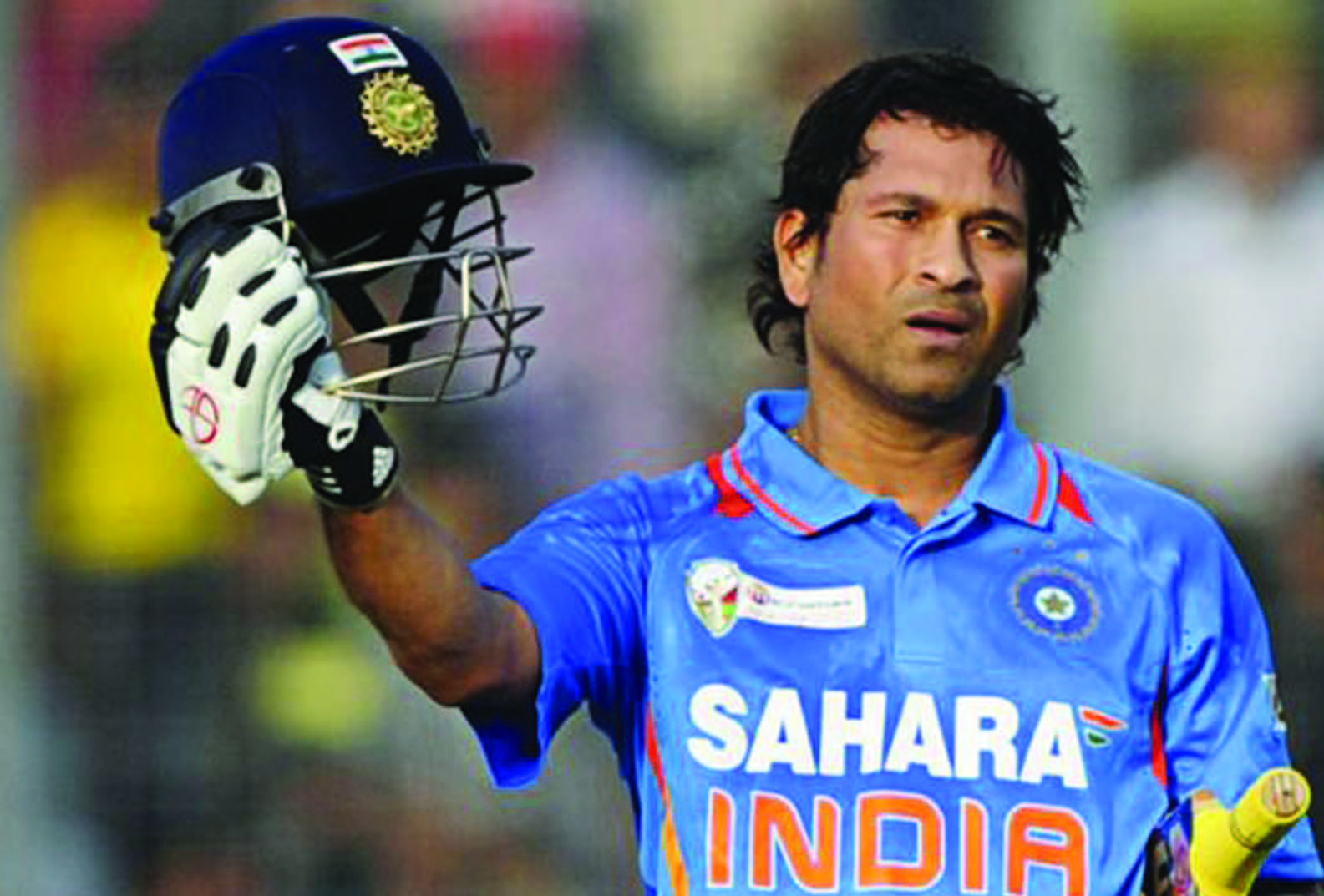
  • I HAVE NO REGRETS: SACHIN TENDULKAR

    I HAVE NO REGRETS: SACHIN TENDULKAR

    MUMBAI (TIP): Fielding questions from the media with as much savvy as he did in delivering his farewell speech at the Test match, Sachin Tendulkar endeared himself to all women saying he shares his Bharat Ratna with all mothers who have made tremendous sacrifices for the sake of their children. “They have sacrificed everything and the beauty about it is till this date, I was never told we did this for you. When you grow up, you realise all those things. That’s the reason I feel this award is for my mother. And not just her -I would like to go a step further.

    It is not just my mother but like my mother, there are millions and millions of mothers in India who sacrifice thousands of things for their children. So I would like to share this award with all the mothers for all the sacrifices they have made,“ he said on Sunday in his first interaction with the media after calling stumps on his 24-year career. He declared that he had retired at the “perfect time“ as his body was finding it tough to cope with the rigours of international cricket. Saying 75 per cent of his life had revolved around cricket, Tendulkar said he had “no regrets“ about hanging his boots after 24 years.

    “It hasn’t struck me that I won’t play cricket again. It has been a dream journey, no regret that I am leaving cricket. This was the right time to stop playing cricket. It was an enjoyable journey.“ he said at a packed press conference. A day after retirement, Tendulkar says it hasn’t sunk in yet.

    What did you do this morning?
    I woke up at 6.50. I go according to my body clock. I suddenly realised that I didn’t need to quickly have a shower and get ready for a match. I made myself a cup of tea and enjoyed a nice breakfast with my wife. It was a relaxed morning. A lot of people had sent me their wishes, so I spent some time responding to those text messages and thanking them for their support and good wishes over the last 24 years.

    Q Did it all feel like a dream, the cricketing journey?
    That was a dream journey of 24 years but last night, when I sat back and thought about it, till now it has not sunk in that I won’t play cricket again. I will go somewhere and play some cricket. I have no regrets at leaving cricket. I felt it was the right time to stop playing cricket.

    Q Fans want you to keep playing, how will you be associated with cricket?
    It has been my life. I have said in an interview that cricket is my oxygen. Seventy five per cent of my life has been cricket. So at different levels, I will be associated with cricket, maybe not in the immediate future.

    Q You had said you will stop playing when you will stop enjoying. How did you reach this decision to stop playing?
    I was enjoying it, but honestly speaking, I have always maintained the day I get the feeling that I should stop playing cricket, I will definitely tell you. I remember there have been questions about my retirement for a few years and I have always said when I get the feeling, I will let you know. I got that feeling because I felt after playing 24 years, you have to appreciate that I had many injuries in the past and to overcome those injuries was not easy. I think somewhere down the line, a stage comes in life when your body gives you the message `enough’. Enough of this physical load. I think the body requires rest now.

    So I thought the body is not able to take that load consistently. Earlier when I trained, everything used to happen automatically. Sometimes I used to feel of late that let me sit back and watch some TV. Thus, I requested the BCCI to have the last match in Mumbai because before this match,my mother had never seen me play a ball in my life. She never told me that she wanted to come to a match. I wanted it to be a surprise for her that I was making this arrangement for her. To answer the question, when I got the feeling that it is time to stop, I took that decision.

    Q Do you still maintain you would play for India?
    Even though physically I will not be playing for India, in my heart I will always be playing for India and praying for India’s victory. Whether I am a part of the team really doesn’t matter.What I think as an Indian that whenever India participates in any field, not just cricket, India comes first and then the rest.

    Q On mentoring the next generation and starting a cricket Academy:
    It’s a nice thought. I need to be involved with cricket and I would definitely be. It is not just because I have retired. Even before retirement, I have spent time with youngsters from U-19 teams to Ranji Trophy teams. I like interacting with players. It’s just nice to share your knowledge and understand sometimes their problems also which in return teaches you more about the game. It may not be done publicly, it may be done quietly at a very low profile but I would like to help the youngsters.

    Q The lasting image, going back to the pitch and touching it…
    That is where my life started. And those 22 yards have given me everything in life. Whatever I have achieved today is because of the time I spent between those 22 yards. It’s like a temple for me. So I just wanted to say a big thank you to cricket. When I decided to retire, my family was more emotional than me. I became emotional when I got the kind of send off from the players and while coming back from the wicket. Whenever I see those images on TV, that particular moment, I will get emotional.

    Q Achrekar never said well played in 28 years and on Saturday he said well done after the government announced Bharat Ratna. Do you think it took too long for the compliment?
    He had never said `well played’ and the reason was very clear. He didn’t want me to become complacent. He always reminded me that the game is bigger than any player and you have to respect it. He called me after the award announcement last night and said `well done’. He was happy, I was very delighted about it. The joy of receiving such awards enhances when you share it with some special people and that is what happened to me last night.

    Q You endured a lot of injuries in the 24-year career. Shed some light on the recovery process?
    When I had a surgery for tennis elbow, it took four and a half months to recover. I tried to come back earlier, but it was not possible. So I understood to respect nature and time. Sometimes, I felt that my career was over, that I might not be able to lift a bat again. After the tennis elbow sur gery, I could not even lift Arjun’s plastic bat. It was a difficult phase in my life and because of the support of a lot of people, I could come back so I would like to say thank all of them.

    Q Are you happy with your last innings of 74 and what was your mother’s reaction?
    My mother was extremely happy. Earlier I was not sure whether she would come or not because it’s a little difficult for her to travel. After the first day itself, I was worried that she might not be able to sit there for long. For safety I had also told MCA to keep a room for my mother at the Garware guesthouse. But my mother preferred to sit and watch each and every ball. It was special and when I went to meet her in the president’s box, I could see in her eyes what it meant. She spoke to me more through her eyes than her words.

    Q On his son Arjun’s cricket journey:
    As a father I will say leave alone Arjun. I will say let him enjoy the cricket and don’t burden him with expectations. If I had such pressure on me, then I would have pen in my hands because my father was a professor and he was in literature field. That time nobody has questioned my father as why your son has a cricket bat in his hand, and why not a pen? So, Arjun has opted for cricket bat in his hand, and he’s passionate about it. I will say that you need to be madly in love with cricket to bring the best, and he’s madly in love with it.

    Q The best and most disappointing moments:
    Winning the World Cup. It was my dream to win it, but I had to wait for 22 years, and that was such a long period. I will also say that Saturday was also a very special day . The way people responded to me. And the disappointing moments, I will say it came in the 2003 World Cup. It was big disappointment that we couldn’t cross the final hurdle despite playing well.

    Q Where do critics stand in your book?
    I observe it to a certain stage about who is writing and about what subject. Opinions will be available all around the world. A stage comes when you are convinced as to which person’s advice you should follow and who are the ones who offer constructive criticism and what is the motive behind it. I don’t think I have paid much attention to it because those who were guiding me were by my side and they didn’t hold a pen for a long time. They had either a bat in their hand or cricket thoughts in their mind to encourage me to perform better so that I could perform better. I was normally interacting with such people whose interests was in how I could make more runs. I didn’t think much about the critics.

  • Tendulkar to retire after 200th test match

    Tendulkar to retire after 200th test match

    NEW DELHI (TIP): Sachin Tendulkar on October 10 announced his decision to retire from Test cricket after playing his landmark 200th match against the West Indies next month, bringing an end to the intense speculation about his future. The 40-year-old Tendulkar, who has not been in the best of form in recent times, has informed the BCCI about his decision to quit Test cricket after a glorious career spanning 24 years. “All my life, I have had a dream of playing cricket for India. I have been living this dream every day for the last 24 years. It’s hard for me to imagine a life without playing cricket because it’s all I have ever done since I was 11 years old. “It’s been a huge honour to have represented my country and played all over the world. I look forward to playing my 200th Test Matchon home soil, as I call it a day,” Tendulkar, who has already retired from the ODIs, said in the released issued by BCCI Secretary Sanjay Patel.

    Tendulkar thanked the BCCI for its support throughout his career and also for allowing to walk into Test sunset at a time of his choosing. “I thank the BCCI for everything over the years and for permitting me to move on when my heart feels it’s time! I thank my family for their patience and understanding. Most of all, I thank my fans and well-wishers who through their prayers and wishes have given me the strength to go out and perform at my best,” he said. Reacting to the news of his retirement, BCCI President N Srinivasan said that he is one of the greatest admirers of Sachin Tendulkar. “We respect Sachin’s decision to retire but many of us can’t imagine an Indian team without him,” he said. “Sachin has been an inspiration for generations of sportsmen and not just for cricketers,” he added. There was intense pressure on Tendulkar to bid adieu to Test cricket after a prolonged form slump and particularly with the advent of a number of young players. Tendulkar’s 200th Test match is most likely to be held at his home ground in Mumbai from November 14. The Eden Gardens in Kolkata is also a contender for hosting that historic match. The BCCI has not yet announced the venues for the two Tests against the West Indies.

    The fact that the BCCI squeezed in a home series against the West Indies had raised speculation that it was done to give Tendulkar the opportunity to retire in front of his home fans. Although Tendulkar had always maintained that he would continue playing cricket as long as he enjoys playing the game, the pressure of playing at the international level has gradually taking a toll on his ageing body. He recently retired from the IPL and the Champions League T20 event after his franchise Mumbai Indians won both the titles this year. Although the decision to retire was in the offing for some time, the BCCI release did create a flutter, prompting many former Test crickets to pay glorious tributes to the champion batsman who virtually held every batting record. Tendulkar has been the most complete batsman of his time and the most prolific runmaker of all time. His 198 Test appearances yielded 15,837 runs at an average of 53.86. From his 463 ODI matches, he had, under his belt, a whopping 18,426 at an average of 44.83. He is the only batsman to score 100 international centuries — 51 in Tests and 49 in ODIs.

    Much before his debut on November 15, 1989 against Pakistan, Tendulkar’s precocious talent was there to be seen when he shared an unbeaten 664-run stand with buddy Vinod Kambli in the Lord Harris Shield Inter-School Game in 1988. His first Test century came in England in 1990 at Old Trafford and the Mumbaikar rose in stature after the 1991-92 tour of Australia, hitting sublime hundreds on a Sydney turner and a Perth minefield. Tendulkar was also the first batsman in the world to score a double ton in ODIs, a feat he achieved in Gwalior against South Africa in February 2010. This was included in Times magazine’s top 10 sports moments of the year. A perfect team-man, Tendulkar limited his Twenty20 ambition to the Indian Premier League, ruling himself out of national reckoning lest it upsets the existing equilibrium of the side. The biggest compliment to his batting came from Bradman himself in 1999 when he said that Tendulkar’s style of playing resembled his style. His 154 scalps in ODIs underline the fact that Tendulkar could have also staked claim to be that elusive all-rounder that India has been desperately looking for since the legendary Kapil Dev. In the field, he is among the safest pair of hands in the slip and his flat throw releasing strong arm saw him manning the deep with equal aplomb. He has taken 114 catches in Test cricket and 140 in the ODIs.

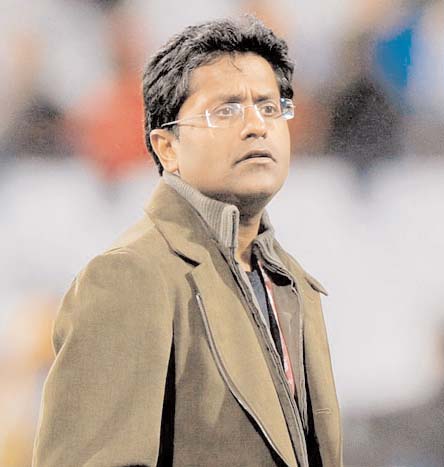
  • LALIT MODI EXPELLED FROM BCCI

    LALIT MODI EXPELLED FROM BCCI

    CHENNAI (TIP) : The decision to ban Lalit Modi from BCCI for life was taken much ahead of the board’s special general meeting (SGM), which started at 2:05 pm on September 25 and was over by 2:20 pm. Modi the maverick became history as his sworn enemy, president-in-exile N Srinivasan, clinically packed him off, gaining a huge advantage ahead of the annual general meeting (AGM) on Sunday. The 29-0 scoreline in an electorate of 30 (the J&K representative was absent) said it all. There was no voice of support for Modi who was desperately trying to prolong his administrative career. All Srinivasan needed was a two-thirds majority (21 votes), but there was no voice of dissent, proving beyond doubt who is the supreme boss in BCCI at the moment. “Modi is guilty of committing acts of misconduct and indiscipline, and therefore, in exercise of powers as per Regulation 32 of the Memorandum of Rules and Regulations of the BCCI, Modi is hereby expelled from the board,” a terse note written by BCCI secretary Sanjay Patel was sent to the media. Modi’s Special Leave Petition in the Supreme Court to stop the SGM was rejected and a letter that he had sent to BCCI urging the members to allow him to present his case or defer the meeting to a date after the Sunday AGM wasn’t paid attention to.

    “Please note that I do intend to appear before the SGM and place my version and the facility that was extended to the BCCI witnesses for the purposes of recording of their evidence, that is by way of video conferencing, may kindly be extended to me as well,” Modi had said in his letter. According to a BCCI member present in the meeting, they were informed about the contents of Modi’s letter but they didn’t feel it important enough to attach importance to it. “He was found guilty by the disciplinary committee and there was no reason to waste too much time on it any longer. And Modi wasn’t available for video conferencing either,” a BCCI member present in the meeting said. “It was a unanimous choice to ban Modi. The proposer was Anirudh Chaudhury from the Haryana Cricket Association and the seconder was Ranjib Biswal from Orissa Cricket Association. There was no voice of opposition,” Rajeev Shukla said. IS Bindra, the president of Punjab Cricket Association and a known Modi sympathizer, didn’t attend the meeting and MP Pandove, who represented the association, went in favour of the motion. The only office-bearer absent from the meeting chaired by Srinivasan was North Zone vice-president Arun Jaitley, who was busy with a BJP rally in Bhopal.

    Officials only interested in themselves: Lalit Modi
    In a video interview to ESPN Cricinfo, Modi said: “Board officials are not interested in doing what is good for cricket. They are only interested in what they are getting out of it.” Modi spoke about how ridiculous it was for Srinivasan to stand for elections in the midst of a burning spot fixing controversy involving his son-inlaw. “There is unanimity in allowing him to continue. You never see a lone ranger standing out because they shut them all up. Only I S Bindra and myself have been lone rangers in the past, “ he said.

  • TENDULKAR TO QUIT AFTER PLAYING 200TH TEST AT HOME AGAINST WEST INDIES

    TENDULKAR TO QUIT AFTER PLAYING 200TH TEST AT HOME AGAINST WEST INDIES

    KOLKATA (TIP): Sachin Tendulkar will play his 200th Test match at home against the West Indies later this year. BCCI interim secretary Sanjay Patel confirmed on Sunday that the West Indies Cricket Board (WICB) has agreed to tour India in November during which they are likely to play at least two Tests and five ODIs. The itinerary for the tour will be drawn up in consultation with the WICB, but in all likelihood the second Test will be played at the Wankhede Stadium. Assuming he figures in both Tests, Sachin would not only become the first player in cricket’s history to play 200 Tests, he would also get to achieve the landmark in Mumbai, his own backyard.

    It could also be his farewell series as indications are that the Little Master is likely to announce his retirement from all forms of the game at the end of that series. BCCI’s tour and fixtures committee, which will meet shortly to finalise the dates and venues, is also likely to award the first Test to Kolkata. The proposed tour by the West Indies was sprung on the Working Committee members by BCCI’s president-inexile N Srinivasan and was passed unanimously, ostensibly to appease host broadcasters and sponsors. Under the Future Tours Programme (FTP), India are scheduled to host only a seven-match ODI series against Australia in October. Sachin, who recently started practising after undergoing surgery on his left palm, has confirmed his availability for the Champions League T20 where he will turn out for the Mumbai Indians. The peerless batsman has so far played 198 Tests, scoring 15,837 runs at an average of 53.86. He is also the only batsman in the world to log 100 centuries in international cricket, 51 of them coming in the longest (five-day) format. He had announced his retirement from ODIs late last year after having played 463 games in the course of his 24-year long career, amassing a record 18,426 runs, including 49 centuries at an average of 44.83.

  • IPL spot-fixing: Sree, Ankeet Chavan banned for life

    IPL spot-fixing: Sree, Ankeet Chavan banned for life

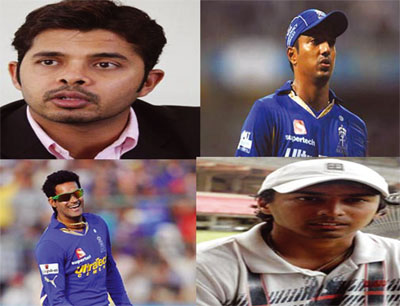
    NEW DELHI (TIP): Rajasthan Royals’ players S Sreesanth and Ankeet Chavan were on September 13 “banned for life” for their involvement in the IPL spotfixing scandal by the Disciplinary Committee of the Board of Control for Cricket in India (BCCI). “They have been banned for life from playing any representative cricket, or in any way being associated with the activities of the BCCI or its affiliates,” a statement issued by board secretary Sanjay Patel said. The BCCI disciplinary committee, comprising N Srinivasan, Arun Jaitley and Niranjan Shah, met here today to consider the report submitted by Ravi Sawant, appointed by the board to inquire into the scandal. Sawant has held Sreesanth, Chandila and Chavan guilty of conceding a “predetermined number of runs per over in exchange for bribes”.

    The committee took the decision “after considering the evidence on record, and hearing each of the players in person”. Cricketer-turned-bookie Amit Singh was banned for five years while his Royals teammate Siddharth Trivedi got one-year ban for not reporting that he was approached by bookies. The case against Harmeet Singh, 20, who was part of India’s under-19 World Cup winning team in 2012, has been “closed in the absence of evidence against him”. No decision was taken on Ajit Chandila, as his deposition was not complete. He got bail three days ago and would be asked to appear before Sawant for evidence. His case would come up before the disciplinary committee after that.

    Sreesanth was the last to be called in by the committee. The former India player said, “I have never cheated. I gave them my side of the story. I did not argue with anybody. Everybody was very cooperative. Since childhood, I only dreamt of playing for India. I will never cheat the game. I have faith in the judiciary and the BCCI. I hope to play again.” However, the BCCI did not trust his side of the story, and preferred to go by what Ravi Sawant had observed. A minor drama was played out in the Disciplinary Committee room as N Srinivasan reached the venue and chaired the meeting, though it was widely expected that Jaitley would steer the proceedings in the wake of Srinivasan “stepping aside” as the board president following alleged involvement of his son-in-law Raghunath Meiyappan in the fixing scandal. However, a reliable source said it had been decided at the working committee meeting that Srinivasan would discharge his constitutional duties, and, therefore, it was “mandatory” for him to chair today’s meeting.

  • 200th Test venue to depend on Sachin

    200th Test venue to depend on Sachin

    NEW DELHI (TIP): With speculation rife over whether Sachin Tendulkar will retire from Test cricket after playing his 200th Test and even the cricket board (BCCI) not sure about the batsman’s plans, the issue of which venue is going to host the landmark Test is getting interesting. According to BCCI insiders, the board may talk to Tendulkar before deciding on the venue for the important Test. Sources said if Tendulkar is thinking of retiring after playing his 200th Test, Mumbai will probably get to host the game against the West Indies. “It began there and it should end there if he is retiring,” a top BCCI official told TOI. But if Tendulkar plans to keep on playing beyond the series against West Indies, then Kolkata could land the tie. Interestingly, Tendulkar himself is open to playing this Test anywhere in the country.

    “He has no qualms about playing at any centre,” a source said. Bangalore, it was learnt, is another venue which is in the BCCI short-list. Tendulkar is looking forward to the momentous occasion, he would like to have some first class games under his best before he plays the two-Test series against the Caribbeans. A source said Tendulkar is likely to play some Ranji matches for Mumbai to get some match practice before the Tests. “The West Indies team will be in India between October 31 and November 27, during which it will play two Tests and three ODIs. The itinerary and venues for the matches will be announced shortly,” BCCI secretary Sanjay Patel said in a statement.

  • INDIA’S HIGHS AND THE LOWS

    INDIA’S HIGHS AND THE LOWS

    The transition of India from a British colony to a sovereign, secular, and democratic nation was indeed historical. It was a long journey of around two decades that started with the conceptualisation of the dream in 1930 to its actual realization in 1950. A look into the journey that led to the birth of Indian Republic will make our celebrations more meaningful.

    Lahore Session of the Indian National Congress The seeds of a republican nation were sowed at the Lahore session of the Indian National Congress at the midnight of 31st December 1929. The session was held under the presidency of Pt. Jawarhar Lal Nehru. Those present in the meeting took a pledge to mark January 26 as “Independence Day” in order to march towards realizing the dream of complete independence from the British. The Lahore Session paved way to the Civil Disobedience movement.

    It was decided that January 26, 1930 would be observed as the Purna Swaraj (complete Independence) Day. Many Indian political parties and Indian revolutionaries from all over the country united to observe the day with honour and pride.

    Indian Constituent Assembly Meetings
    The Indian Constituent Assembly, which was constituted as a result of the negotiations between the Indian leaders and members of the British Cabinet Mission, had its first meeting on December 9, 1946.The Objective of the Assembly was to give India a constitution, which would serve a lasting purpose and hence appointed a number of committees to thoroughly research the various aspects of the proposed constitution. The recommendations were discussed, debated and revised many times before the Indian Constitution was finalized and officially adopted three years later on November 26, 1949.

    Constitution came into force
    Though India became a free nation on August 15, 1947, it enjoyed the true spirit of Independence on January 26, 1950 when the Constitution of India finally came into force. The Constitution gave the citizens of India the power to govern themselves by choosing their own government. Dr. Rajendra Prasad, took oath as the first President of India at the Durbar Hall in the Government House and this was followed by the Presidential drive along a five-mile route to the Irwin Stadium, where he unfurled the National Flag.

    Ever since the historic day, January 26 is celebrated with festivities and patriotic fervor all around the country. The day owes its importance to the constitution of India that was adopted on this day. On this Republic Day, read what the great Constitution of India, that propounds liberal democracy, has in its store. Let’s also feel proud in pronouncing what the Preamble to our Constitution (External website that opens in a new window) says.

    1971 Indo Pak War As in the 1965 Indo-Pak War, the main battles in 1971 between armoured formations was relegated to Chamb and Shakargarh sectors – located in the Western Theatre. Sporadic tank battles took place in the East Theatre, but these were one-sided battles weighed heavily in India’s favour. No action had taken place in the Punjab sector, but the South-Western sector in Rajasthan did see much activity. An offensive by the Pakistanis was blunted here solely on the use of air power.

    The Indian Army had two armoured regiments and three independent armoured squadrons supporting Lieutenant General Jagjit Singh Aurora’s Eastern Command’s thrust into East Pakistan. India had one T-55 tank regiment in the northern sector supporting the XXXIII Corps’ offensive in the Hilli-Bogra area, with one PT-76 regiment in the western area supporting the II Corps’ thrust.

    Finally three independent armoured squadrons (one PT-76, one AMX- 13 and one Ferret armoured car) were supporting the IV Corps’ offensive from the east. Opposing them were a Pakistani armoured force of a regiment of M-24 Chafees in the Bogra area, countering India’s T-55 regiment and two squadrons of Chafeee tanks supporting the west and Dacca sectors.

    When full scale hostilities began, half the tanks were either knocked out or captured by the time the Indian troops were on the outskirts of Dacca. After which the rest of the tanks were finally accounted for, as part of the surrender deal. In it’s offensive, Indian losses were heavy. At least thirty PT-76 tanks were destroyed or damaged, another four T-55s had their tracks blown up over mines.

    The high loss rate among the PT-76 tanks was due to the fact that this type of tank had very thin armour plating to help assist its amphibious capabilities and was an easy target for mines. However all, but eleven, of the PT-76s were repaired after the war. The AMX-13s did not see much action and the Ferrets had no battle casualties. One very interesting situation, had the tank squadron of the 7th Light Cavalry recovering one of their own tanks lost to the Pakistan Army during the 1965 War, which was displayed at the East Bengal Regimental Center as a war trophy.

    The tank was then handed to the Army Ordnance Corps, which in turn handed it back to the East Bengal Regimental Center! The Battle of Basantar took place during the 1 Corps’ offensive in the Shakargarh Sector. India employed two armoured brigades to support its offensive by three infantry divisions and the Pakistani reaction was swift. On December 16th and 17th, when Indian infantry captured certain villages at the River Basantar, Pakistan sent in an armoured brigade.

    The 17 Poona Horse equipped with the Centurion tank, blunted the Pakistani armoured offensive. One particular action at Barapind saw one lone tank troop (three tanks) of the 17 Poona Horse – Indian Army take on an entire squadron of Pattons of the 13th Cavalry – Pakistan Army. When one of the tanks was hit & disabled and another tank’s gun was jammed, the troop commander, Captain V Malhotra gave the order for the last remaining tank to withdraw.

    But this tank led by Second Lieutenant Arun Khetarpal, stuck to its position and kept firing at the Pattons till the last moment when Second Lieutenant Khetarpal was hit and killed. These three tanks accounted for more than the ten tanks out of the squadron. So impressed were the Pakistanis with this action, that the Squadron Commander of Pakistan’s 13 Cavalry – Major Nissar came over to the Indian lines after the ceasefire to talk to the tank commanders who had blunted his offensive.

    At the end of which, 66 Pakistani tanks were claimed as destroyed. Indian casualties were about 23 tanks, however the efforts of the EME (Electrical & Mechanical Engineers) saw to that all, but 10 of the tanks, were back on the road again.

    Period of Liberalization
    The arrival of the East India Company in India caused a huge strain to the Indian economy and there was a twoway depletion of resources.The British would buy raw materials from India at cheaper rates and the finished goods were sold at higher than normal price in Indian markets. During this phase India’s share of world income declined from 22.3% in 1700 AD to 3.8% in 1952. Post Colonial Indian Economy: After India got independence from colonial rule in 1947, the process of rebuilding the economy started. For this various policies and schemes were formulated. First five year plan for the development of Indian economy came into implementation in 1952.

    These Five Year Plans, started by Indian government, focused on the needs of the Indian economy. If on one hand agriculture received the immediate attention on the other hand the industrial sector was developed at a fast pace to provide employment opportunities to the growing population and to keep pace with the developments in the world. Since then the Indian economy has come a long way.

    The Gross Domestic Product (GDP) at factor cost, which was 2.3 % in 1951-52 reached 6.5 in the financial year 2011-2012 Trade liberalization, financial liberalization, tax reforms and opening up to foreign investments were some of the important steps, which helped Indian economy to gain momentum. The Economic Liberalization introduced by Man Mohan Singh in 1991, then Finance Minister in the government of P V Narsimha Rao, proved to be the stepping-stone for Indian economic reform movements.

    To maintain its current status and to achieve the target GDP of 10% for financial year 2006-07, the Indian economy has to overcome many challenges. Challenges before Indian economy: Population explosion:The rising population is eating into the success of India. According to 2011 census of India, the population of India has crossed one billion and isgrowing at a rate of 2.11% approx. Such a vast population puts lots of stress on economic infrastructure of the nation.

    Thus India has to control its burgeoning population. Poverty:As per records of National Planning Commission, 36 crore people are living below the poverty line in India in 2012. Unemployment:The increasing population is pressing hard on economic resources as well as job opportunities. Indian government has started various schemes such as Jawahar Rozgar Yojna, and Self Employment Scheme for Educated Unemployed Youth (SEEUY). But these are proving to be a drop in an ocean. Rural Urban Divide:It is said that India lies in villages, even today when there is lots of talk going about migration to cities, 70% of the Indian population still lives in villages.

    There is a very stark difference in pace of rural and urban growth. Unless there isn’t a balanced development Indian economy cannot grow. These challenges can be overcome by the sustained and planned economic reforms. These include: Maintaining fiscal discipline Orientation of public expenditure towards sectors in which India is faring badly such as health and education. Introduction of reforms in labour laws to generate more employment opportunities for the growing population of India. Reorganization of agricultural sector, introduction of new technology, reducing agriculture’s dependence on monsoon by developing means of irrigation. Introduction of financial reforms including privatization of some public sector banks.

    Scams That Rocked India
    Ever since India has achieved her freedom, she has also been known as a corrupted land. The extend of corruption has increased to such an extend that, any person joining political parties does have an intention of making easy and fast money within the shortest period of time. If all the amounts that have been disclosed, for every scam till date is pooled up, I guess , India is most richest country and the power and strength She holds could not be compared with any other.

    However, since people are getting more and more selforiented, when it comes to progress and wiping away poverty, nobody is least bothered. A few of the top scams that have taken place since the year 1947 is discussed here, just to bring to the notice of the public where we stand and how things are working. Let us get from the latest to the oldest.
    1. The Indian Coal Allocation Scam: This is one among the latest scams that has occurred concerning the Indian government’s allocation of the nation’s coal deposits to public sector entries and private companies. According to the CAG (Comptroller and Auditor General of India), the Indian Government was accused of allocating coal blocks, in an in-efficient manner during the period 2004-2009.

    The reason for this allegation was because, the Government had the authority to check on the allocation of coal blocks by a process of competitive bidding, but they failed to do so, resulting in lower payment by the public sector enterprises and the private firms. According to the CAG report, an amount of near to Rs. 185,591 crore (USD $ 35.08 billion) was lost to the government because of this improper screening in procedures, which might have happened due to bribery is what studies says. Whatever it may be, loosing such a huge amount by the Government is a fall from the Governments side.
    2. The 2G Spectrum Scam: This scam was one which involved the politicians and government officials equally. The scam involved in issuing frequency allocation licenses by the telephone companies in re-creating 2G subscriptions for cell phones. When valued by the Comptroller and Auditor General ( CAG ) of India about the money composed from the 2G licenses , the defeat for the exchequer was Rs. 176,369 crore ( USD $ 39.16 billion ). The issuing of licenses began in 2008; however it came to public attention when the Indian Income tax Department conducted an investigation on the political campaigner Niira Radia.

    The Supreme Court on February 2012 declared cancellation of all licenses issued in 2008 during the tenure of A. Raja, who was the minister of telecom then. There were about 122 licenses that were cancelled. The actual plan for awarding the licenses was on a first come first served policy. However, A. Raja manipulated the rules and instead pf the first who applied for the licenses, it was first who tipped Raja got the license. 3.

    Commonwealth Games Scam:
    This was a scam that was harshly criticized by several well-known social activists and politicians as billions of dollars were being spent on sporting event, although the fact that we have the leading concentration of poor people. Some of the other major problems that was being highlighted was grave corruption by the games organizing committee, delay in the erection of the main Games venues, and infrastructural compromise. Indian businessman Azim Premji called the Commonwealth games a “drain on the public funds” and also said that hosting such an expensive game event was not the priority for India, and India had other priorities to look into like education, public health and infrastructure.

    4. Satyam Scam:
    In the history of the corporate, Satyam Computer Services Scandal is biggest ever and the chairman, Ramalinga Raju confessed that the company’s accounts were falsified. For near to a decade, Raju kept the accounts details in the dark by pumping up revenues and earning up figures of Satyam. He confessed that , as per the balance sheet of 30th September 2008, the company had exaggerated figures for cash and bank balances of Rs. 5040 crore ( USD $ 1.12 billion ) as next to Rs. 5361 Crore ( USD $ 1.19 billion ) in the book thus acquiring an interest of Rs. 376 Crore , which was not existing.This scam was in tune of near to Rs. 14000 Crore.

    5. Bofors Scam:
    This scandal is also known as the hallmark of Indian Corruption. This was a most important corruption during the 1980`s where the then Prime Minister Rajiv Gandhi and quite a few others which also includes a powerful NRI family named the Hindujas were accused of receiving bribe from Bofors AB for engaging a proposal to supply India’s 155 mm field howitzer. The scale of the corruption was so worse that it led to the crush of Gandhi’s ruling in the Indian national Congress party.

    It was hypnotized that the level of the scandal was tuned to be about Rs. 400 million. The middle man who was associated with this scandal was an Italian businessman named Ottavio Quattrocchi and who also represented the petrochemicals firm, Snamprogetti. Quattrocchi was very intimate to the family and emerged as a influential broker in the 1980`s between big business and the Government of India. Despite the controversy, the Bofor gun was used extensively during the Kargil War with Pakistan and gave India ‘an edge’ over Pakistan according to battlefield comrades.

    6. The Fodder Scam:
    This scam involved the misappropriation of about Rs. 950 crore (USD $ 179.55 million) from the government treasury, of Bihar. The scheme involved the manufacture of ‘vast herds of invented stock’ for which food, medicines and animal husbandry equipment was apparently acquired. In this scam even the Chief Minister of Bihar, Laloo Prasad Yadav was included then which finally led to his resignation. The scam had its origins in small scale by some government employees by submitting false expense reports, which grew in magnitude and drew additional elements over a period of time which ultimately led to the forming of a mafia. This scam still continues to be exposed by the media due to the widespread links between tenured bureaucrats, elected politicians and businesspeople involved.

    7. The Hawala Scandal:
    This was an Indian political scandal, which involved payments allegedly acknowledged by politicians through four hawala brokers, mostly the Jain brothers. It was about $ 18 million bribery humiliation. In an arrest linked to the militants in Kashmir is what gave way to the raid of the hawala brokers and the scandal through them, which revealed large scale payments to national politicians.

    8. The IPL Scam:
    Cricket is a game where lot of commotions occur and there hare many hurdles to cross over and the IPL (Indian Premier League) is no better at it. The BCCI (Board of Control for Crocket in India) has found itself in the middle of many conflicts with the coming of IPL. The IPL had set forth many terms at many occasions, which were not accepted and had to be terminated. There were conflicts with the Cricket Club of India, with the England and Wales Cricket board, with Cricket Australia and many more. The IPL chairman Lalit Modi was suspended in 2010 for alleged act of individual transgression by the BCCI. There was also spot fixing among the players during the IPL in 2012.

    9. Harshad Mehta Scam:
    Mehta was a famous stockbroker of his time. He was well known for his high record breaking profits from the stock market and trading and later was involved in the scandal worth Rs. 5000 crore ( USD $ 945 million) in Bombay Stock Exchange. He had a great way in convincing the public that through the banking system he could finance his buying. Two small and little known banks helped him in this and he made a great fraudulent price hikes in the stock markets. By the time the scandal came to limelight, many banks were left blank and in fact Managers from two reputed banks committed suicide.

    10. Kinetic Finance Limited Scam:
    In this scam, various banks lost about Rs. 200 crore (USD $ 37.8 million). The promoters of kinetic finance limited borrowed about Rs. 145 crore from an association of banks led by SBI, and Bank of Baroda. After borrowing the money, they used it for other purposes of the Kinetic group and eventually the promoters resigned and the firm was renamed in another name. A special Investigation Audit was conducted and based on the report it was found that about five banks filed criminal cases against the promoters.

    11. Adarsh Housing Scam
    In this scam, land was allotted to the war widows of Kargil war and also for the retired personal of The continued on page 48 Defense Services. Over a period of 10 years, the top politicians and bureaucrats bend several rules and commit various acts of commission and omission to have the building in order and finally they got themselves allotted with flats at the premium locality at a much cheaper cost. This scam is noticeable as it took keen planning and almost 10 years to execute this kind of brutality to the poor and left alone in the defense.

    12. Citibank Fraud:
    This was a fraudulent done by the bank employee by promoting false promises to the customers. Shivraj Puri, the Relationship manager of Gurgaon branch had convinced his customers to invest in a fake scheme that gave high interests. He made forged circulars from SEBI. He opened joint accounts in several names and made customers deposit into those accounts and he invested in places of his interests. This was bought to lime light when customers started complaining about being asked to invest in a scheme that was not available to the bank.

    13. Madhu Koda Scandal:
    Madhu Koda is the ex-chief Minister of Jharkhad. He was bought to limelight by the IT department by charging for laundering money for about Rs. 4000 crore and other disproportionate income. Almost five currency counting machines were seized from his residence. The amount was used to purchase hotels, mines, and companies, in foreign countries like Thailand, Liberia, Dubai and many other places. With this kind of laundering and investments, he builds an empire, but bigger to the most successful businessmen within a short period of time.

    14. Barak Missile Scandal:
    This is a case of alleged defense corruption which was related to the purchase of Barak 1 Missile Systems by India from Israel. The contracts have been signed by the Indian government to procure seven Barak systems at a total cost of Rs. 199.50 million. This was done despite objections raised by several groups, including members of the team that had actually visited Israel to observe the performance of the missile.

    15. Kargil Coffin Scam:
    This is one of a kind of scam, where even the coffins for the soldiers who died in the Indo-Pak war, were bought for low quality and at higher price. The government had paid about $2500 per coffin, which was earlier purchased for $172 per coffin. And moreover the quality was very poor. This led to range among the public and led to the resignation of the defense minister.

    16. Mining Scam in India:
    This scam is related to the ore-rich states of India and has generated controversies in India which spans encroachment of forest areas, underpayment of government royalties, and conflict with tribal regarding land-rights.

    17. Sukh Ram Telecom Scam:
    Sukh Ram is a former union communication minister in Indian National Congress Government. He was the telecom Minister during the P.V. Narasimha Rao`s cabinet. He was caught with allegations regarding irregularities in awarding a telecom contract. The CBI seized around Rs. 3.6 crores from his residence. He has been imprisoned for the fraud that he has done.

    18. SNC Lavalian Scam:
    This is a financial scam related to the government with a Canadian company. A loss of about Rs. 374.50 crores, for the renovation and modernization of the hydroelectric power stations at Pallivasal, Sengulam, and Panniar (The PSP Project as it is called) at the Idduki district in Kerala.

    19. Belekeri Port Scam:
    This scam relates to about 3.5 million of sequester iron ore that was exported illegally from Belekeri Port in Karnataka. This scam is said to be worth about Rs. 60,000 crore (USD $ 12 billion). The iron ore was illegally mined after giving a minimal pay to the government.

    20. Telgi Scandal: The Telgi scandal is after the great Abdul Karim Telgi who issued counterfeit stamp papers. Had appointed about 300 people as agents to sell these counterfeit stamp papers to bulk purchasers like banks, insurance companies, and share broking firms. The size of the scam is about 20,000 crores (USD $3.78 billion). In this scam, many high ranked governmental officials were also recorded.

  • In Search Of Form, Gautam Gambhir Heads To England

    In Search Of Form, Gautam Gambhir Heads To England

    MUMBAI (TIP): The Indian cricket board’s loss of camaraderie with the England and Wales Cricket Board (ECB) notwithstanding, left-handed opener Gautam Gambhir has been allowed to fly to Essex, north-east of London, to play with the first division county for the remaining season. The BCCI, in the recent past, had been reluctant to allow Indian cricketers to play in English counties following the ECB’s snub more than a year ago in refusing to let Indian Premier League (IPL) teams play in Ireland and Scotland.

    However, that stand may now restrict only to Twenty20 and not the longer formats of the game as Gambhir – looking to make a comeback to the national team – has been granted a NOC from the BCCI to replace Kiwi opener Hamish Rutherford at Essex. The batsman will look to find some runs for himself while he helps the county gun for the championship.

    Gambhir’s arrival should come as a huge shot in the arm for Essex. But more importantly, from India and Gambhir’s point of view, it will allow him to keep himself busy at a time when there’s no domestic cricket being played in the country and give national selectors a good reason to keep an eye on his performance. To allow Gambhir to fly to England is a decision that seems to have been taken keeping several factors including the views of the national selection committee – in mind.

    Besides Rohit Sharma, who has continuously failed to show a larger appetite for runs, there’s no other experienced batsman available to partner the in-form Shikhar Dhawan at the top of the order. With South Africa coming up as the next big test this winter and the rising expectation of a five-Test duel in England in 2014, the selectors may have started looking at the options available.

  • Raj Kundra ‘Has Confessed To Betting’

    Raj Kundra ‘Has Confessed To Betting’

    Rajasthan Royals Run Risk Of Franchise Termination

    NEW DELHI (TIP): Another IPL team owner has been caught betting. After Chennai Super Kings principal and the inoperative BCCI chief S Srinivasan’s son in law, Gurunath Meiyappan, was arrested by Mumbai police for being in touch with bookies and placing bets, Rajasthan Royals owner, Raj Kundra, has confessed to the Delhi Police of doing the same. While betting/gambling is a minor, bailable offence under the CrPC, the BCCI rules are pretty harsh.

    If an owner is caught betting, his team franchise can be terminated. So, Rajasthan Royals runs the risk of being scratched as Kundra is one of its owners. Meiyappan’s status as CSK owner is disputed. If he’s found to be not an owner but an important official in the team, CSK won’t be scratched but will probably attract a hefty fine. The Delhi Police commissioner told the media on Thursday that during his 11-hour interrogation on Wednesday, Kundra has confessed to placing bets on his team winning.

    He said Kundra has lost a lot of money on bets, which other police officers estimate it to be around Rs 1 crore in the last three IPL seasons. He also said that Kundra would place his bets through one Umesh Goenka, Kundra’s business partner, whom the commissioner described as a “bookie”. Kundra and his wife Shilpa Shetty went back to Mumbai on Thursday as Delhi police was undecided on whether to slap the anti-gambling laws against Kundra.

    Police sources said Kundra was betting for the past three years while his friend Umesh Goenka has been betting in matches for past 6-7 years and was also in touch with several bookies. The cops are now trying to ascertain whether the Kundra-Goenka betting link was in any way connected with spot-fixing. Police also revealed on Thursday that Shilpa Shetty had also placed bets in an IPL match. This was claimed by Umesh Goenka in his statement.

    Sources said they have identified a “money trail” and the bookies who routed Kundra and Goenka’s wagered money. TOI had first reported on Thursday that Kundra was betting on IPL matches. Raj Kundra reportedly told the cops that being a British national, “he was unaware of the fact that betting was illegal in India”. He said that betting was legal in the UK. A policer officer, however, said that ignorance of the law was no defence.

    In any case, it was strange that Kundra didn’t find anything odd in the manner in which bets were placed in India. Delhi Police sources say that Umesh Goenka, who was given VIP passes by Kundra for every RR match, used to talk to team players and would ask them about team’s strategy, pitch and other details and then place bets. Kundra gambled through Umesh, often by giving verbal instructions on the amount he would place and on what. In short, Goenka was acting as a bookie for Kundra.

    Umesh, claimed the police, was in touch with many other bookies. “In betting world, if a person bets and when it is taken further (or doubled), words like kha liya (ate it) are used or having won on the initial amount, if he gambles again on the winnings, it would be referred to as badha diya (increased),” said an officer. Officials said they will question Kundra once again and they currently taking a call on whether to charge him under gambling act or not.

    Shilpa Shetty denied the allegations on Twitter saying her involvement in betting was “complete nonsense” and that she had “never bet on any cricket match ever”. The tweets were retweeted by Kundra. Earlier in the day, the couple had tweeted denying all allegations. However, Delhi Police Commissioner Neeraj Kumar came on record to say, “Raj Kundra has admitted to betting. He used to bet on his own team. We have also come to know that he has lost a lot of money in betting.

    He used to bet through Goenka, who is also a bookie”. Police have confiscated the passports of Kundra and Goenka to ensure that they do not leave the country during investigations. According to sources, Kundra became one of the owners of the team in the third season of IPL. Reacting to police claims, Shilpa Shetty had tweeted earlier, “we love cricket, it’s the passion for the sport that made us a part of IPL. It’s extremely disheartening to keep clarifying that. For those who care, my apparent involvement in betting is complete nonsense and I have never bet on any cricket match ever.

    Truth will prevail. I won’t be saying any more as the case is subjudice.” Police sources said Goenka, who was born in Sikkim, was in the sponge iron business but had suffered losses. As he stayed near the residence of Kundra’s mother in West Punjabi Bagh and knew each other, he became family friends and went to London where he met Kundra after his business collapsed. In 2008, he returned and started Ashwani Steel Private Ltd in Ahmedabad in which he has 16% stake while Kundra has 42% stake.

    Sources said the name of Goenka, with whom Kundra owns a company dealing in steel business, came during the recording of statement of Trivedi, a prosecution witness in the case. In his statement recorded before a magistrate, sources said, Trivedi claimed that Goenka approached him and sought details about the cricket pitch in Ahmedabad and details about team formations.

  • PRESSURE MOUNTS ON BCCI CHIEF TO GO

    PRESSURE MOUNTS ON BCCI CHIEF TO GO

    NEW DELHI (TIP): Board of Control for Cricket in India (BCCI) president N Srinivasan came under all round attack with the Sports Ministry and Board heavyweights mounting pressure on him to quit. Srinivasan, however, remained unfazed and refused to step down. The Ministry for Sports and Youth Affairs said the BCCI chief should resign to avoid a conflict of interest, four days after the police arrested his son-in-law Gurunath Meiyappan in connection with the IPL scandal.

    “There is a conflict of interest in this inquiry. Therefore, the BCCI president should tender his resignation on moral grounds pending the outcome of the inquiry,” the ministry said in a statement. Pressure mounted on Srinivasan from within the Board too as two key members — Rajeev Shukla, vicepresident, and Arun Jaitley, vice president — asked the BCCI chief to stay away from the top post till investigations into the scandal were completed.

    “Srinivasan is an elected president, but we are of the view that it would be good if he stays away from this procedure (of the inquiry into the fixing scandal). We have made this suggestion. The decision is up to him,” Shukla said after meeting Jaitley. Shukla said he and Jaitley were in touch with all Board members. A three-member BCCI inquiry committee is probing Meiyappan’s role and the spot-fixing allegations against three Rajasthan Royals players and its franchise as well as the Chennai Super Kings.

    Srinivasan, on his part, showed no signs of relenting under pressure. “I saw Rajiv Shukla’s interview. What he says is that this commission has been appointed and I should disassociate myself from the procedure,” he said. “I had said in Kolkata that I will have nothing to do with the commission — its appointment, its terms of reference and its decision. Rajiv Shukla has reiterated this only,” said Srinivasan.

    “I have nothing to do with the commission. It is independent. Under the operational powers, they have powers to sanction and impose punishment. So, we will just await the results,” he said. Pressure has been mounting on Srinivasan to quit ever since his son-in-law was arrested in the fixing scandal, though his own name has not been linked to the scandal. He cannot be forced to quit, unless the Board takes a majority decision.

    He, however, can be prevailed upon to step down on moral grounds. The Sports Ministry, meanwhile, said it was in favour of a law to curb malpractices in all sports, and it will send its comments on the Bill drafted by the Law Ministry to all stakeholders. The ministry also clarified that enacting a law regularising betting in sports was a State subject, and therefore it “cannot be part of a Central Law”. “The ministry has made no recommendations to regularise betting to the Law Ministry or to any other organisation”, the ministry stated.

  • SPOT-FIXING: SACHIN TENDULKAR BREAKS SILENCE, SAYS HE IS SHOCKED AND DISAPPOINTED

    SPOT-FIXING: SACHIN TENDULKAR BREAKS SILENCE, SAYS HE IS SHOCKED AND DISAPPOINTED

    NEW DELHI (TIP): Breaking his silence on the raging spot-fixing scandal, Sachin Tendulkar on May 31 said that the developments of the last two weeks were “shocking and disappointing” and the faith reposed by the millions of fans in the game should be justified. Tendulkar said the authorities must take sincere steps to get to the root of the issue and ensure that credibility of the game is restored.

    The champion batsman, who retired from IPL after his side Mumbai Indians won the title recently, said as a cricketer he has always learnt to play in the true spirit of the game. “It has always hurt me when the game of cricket is in the news for the wrong reasons. The developments in the last two weeks have been shocking and disappointing. As cricketers we are always taught to go out, fight hard, give our very best and play in the true spirit of the game,” Tendulkar said in a statement.

    The milestone man of Indian cricket said it was important that the authorities get to the root of the problem. “During this difficult phase, I join every cricketer, from the boys in the maidans across the country to those who represent clubs, states and the country, who trust the authorities to take sincere steps to get to the root of the issue. “The faith reposed by the millions of fans should be justified and we owe it to them to ensure that Indian cricket is all about pride and joy,” the statement added.

    Tendulkar’s statement on the spotfixing scandal assumes great importance since none of the current Indian cricketers have spoken on the issue, since it broke out about two weeks ago. Indian skipper Mahendra Singh Dhoni has steadfastly refused to speak on the scandal, apparently under a gag order from the BCCI. Dhoni evaded questions on spot-fixing at the pre-departure press conference in Mumbai on Tuesday and also did the same at the media interaction in Birmingham on Thursday ahead of the Champions Trophy.

    The only thing Dhoni said at the press conference in Birmingham was that Indian cricket’s reputation was not “gone” and that some people were “slightly mentally weak” compared to others. He said that he will speak when the time was right. With more and more cricket boards and state unit officials coming out in the open against BCCI president N Srinivasan’s continuance over the last few days, it will be interesting to see whether more cricketers also start giving their views, taking a cue from Tendulkar.

  • SPOT-FIXING PROBE REACHES DOORSTEP OF BCCI CHIEF’S FAMILY

    SPOT-FIXING PROBE REACHES DOORSTEP OF BCCI CHIEF’S FAMILY

    CHENNAI/MUMBAI (TIP): The IPL fixing scandal has reached the doorstep of Indian cricket’s powerful boss and Chennai Super Kings (CSK) owner N Srinivasan’s family — quite literally. A day after a report about the police investigating Srinivasan’s son-in-law and CSK CEO Gurunath Meiyappan’s phone conversations with Dara Singh’s son Vindu for possible links with a betting syndicate, a fivemember crime branch team from Mumbai arrived in Chennai on May 23 morning to serve summons on Meiyappan.

    They first went to the headquarters of Srinivasan-controlled India Cements, and on finding no one there, stuck a copy of the summons on the door before going to Meiyappan’s home around 2pm to instruct him to present himself before the CB between 11am and 5pm within 24 hours. But with no member of the family available to meet the team, they were initially not let in by the guard; after several phone calls, they were allowed into the compound.

    Rama Subbu, the chief security officer of India Cements, arrived soon thereafter and was seen signing a paper which the officers handed him. Strangely though, on his way out, he denied having received any summons on behalf of Meiyappan. Later in the evening, the crime branch is reported to have received a one-page fax from Meiyappan saying he was out of town and seeking time till Monday, with the assurance that he would appear in person. A top police officer said night that no decision had been taken on whether to allow him the extra time.

    If the police were to reject such a request, which seems unlikely, Meiyappan could be arrested. The whereabouts of the 35-year-old continued to be shrouded in mystery with speculation placing him variously in Kodaikanal (where he has a holiday home), Kolkata (where CSK plays the IPL finals on Sunday against the winners of the Mumbai Indians vs Rajasthan Royals match) and Delhi (to prepare his legal defence with top-flight lawyers).

    Nor is there any word as to where the BCCI chief might be although New Delhi was abuzz with rumours that he would leverage his considerable clout to counter what his supporters consider a “politicallymotivated conspiracy to discredit him”. On May 16, the day Sreesanth and his two Rajasthan Royals were arrested, Srinivasan had said, “One or two bad eggs cannot sully the game,” before stating, on further questioning, “I hope nobody else is involved, but if information comes to BCCI, we will act immediately.”

    I was close to Bhajji, Virat: Vindu Dara Singh MUMBAI (TIP): Vindu Dara Singh has told Mumbai police that he knew several players but was close to Virat Kohli, Harbhajan Singh, and Manpreet Gony. Gony, who now plays for Kings XI Punjab, played one-dayers for India while he was with Chennai Super Kings in 2008. Police said they are yet to come across anything that links the three players to Vindu’s betting racket. Vindu also revealed the names of Bollywood celebrities who bet on IPL matches.

    He acted as a middleman, placing bets on their behalf with bookies. He said he came in contact with the betting syndicate several years ago through a friend, Anand Saxena, who introduced him to Ramesh Vyas and Shobhan Mehta, both big bookies. He got to know Sreesanth through Ajit Chandila and some Delhi-based bookies.

  • ICC WITHDRAWS UMPIRE ASAD RAUF FROM CHAMPIONS TROPHY

    ICC WITHDRAWS UMPIRE ASAD RAUF FROM CHAMPIONS TROPHY

    NEW DELHI (TIP): The raging spot-fixing saga in the IPL turned murkier with controversial Pakistani umpire Asad Rauf being withdrawn by the ICC from next month’s Champions Trophy in UK for his alleged role in the scandal which is growing bigger by the day. A week after the sensational arrest of India paceman S Sreesanth and two of his Rajasthan Royals team-mates on charges of spot-fixing, Rauf’s pull-out from the June 6-23 Champions Trophy added a new twist to the fast unfolding drama.

    The ICC said in a statement that Rauf has been withdrawn as he was under investigation by the Mumbai Police, thus becoming the first umpire to come under the scanner in the IPL spot-fixing scandal. “The decision has been made after media reports indicated that the umpire was under investigation by Mumbai Police,” the ICC release said.

    Explaining the decision, ICC Chief Executive David Richardson said: “In the wake of reports that the Mumbai Police are conducting an investigation into Asad Rauf’s activities, we feel that it is in Asad’s best interests as well as those of the sport and the event itself, that he is withdrawn from participating in the ICC Champions Trophy.” Rauf has had a history of controversies and only last year a small-time model named Leena Kapoor had accused him of sexually exploiting her for months before refusing to marry her.

    As per the duty schedule of the on-field umpires, Rauf was supposed to officiate in a warm-up match between Australia and West Indies in Cardiff on June 1. In the tournament group league stage, he was supposed to officiate in two matches in Cardiff. The first on June 9 was between Sri Lanka and New Zealand while other was between West Indies and South Africa. In the ongoing IPL, Rauf had on-field umpiring duty in 13 matches, the last one being in the game between Sunrisers Hyderabad and Kolkata Knight Riders in Hyderabad on May 19.

    The three Rajasthan Royals players — Sreesanth, Ajit Chandila and Ankeet Chavan — are in police custody while actor Vindu Randhawa, son of the late Dara Singh, has also been arrested by the Mumbai Police in connection with the case along with several other bookies, many of whom have underworld connection. But the BCCI threw its weight behind Srinivasan, saying that it was unfair to implicate his son-in-law of any wrong doing until the investigations are over.