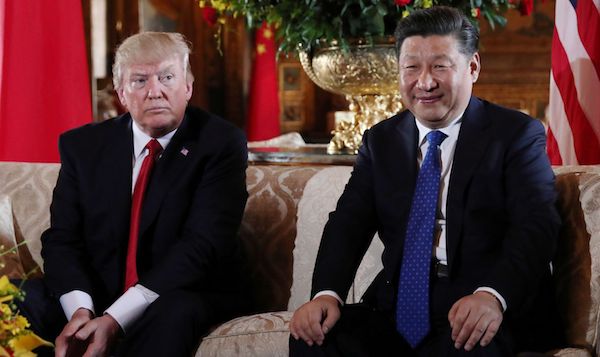
BEIJING (TIP): China has become the first country to confer diplomatic status to a Taliban-nominated official as Afghanistan’s Ambassador to Beijing, thereby formally recognising the Taliban-run administration as a legitimate government in Kabul.
“As a long-standing friendly neighbour of Afghanistan, China believes that Afghanistan should not be excluded from the international community,” Chinese Foreign Ministry spokesman Wang Wenbin told a media briefing on Tuesday when asked whether China recognised the Taliban as the legitimate government of Afghanistan.
Earlier reports from Kabul said China has given Bilal Karimi, a Taliban nominee the status of Ambassador and he has submitted his credentials to the foreign ministry here.
China along with Pakistan and Russia maintained its embassy in Kabul after the Taliban took control of Afghanistan in August 2021 following the withdrawal of American troops from the war-ravaged country.
While maintaining close contact with the Taliban interim administration, Beijing withheld recognition, especially over global criticism of the Taliban’s treatment of women and girls, excluding them from educational institutions.
No other country has formally recognised the Taliban government, which has been criticised over human rights violations and crushing women’s rights.
Defending China’s move, Wang said, “We hope Afghanistan will further respond to the expectations of the international community, build an open and inclusive political structure, adopt moderate and prudent domestic and foreign policies, firmly combat all forms of terrorist forces, develop friendly relations with other countries, especially with its neighbours, and integrate itself into the world community.”
“We believe that diplomatic recognition of the Afghan government will come naturally as the concerns of various parties are effectively addressed,” Wang said. China, which shares borders with Afghanistan, also has serious concerns over the regrouping of the East Turkistan Islamic Movement (ETIM), a banned outfit comprising Uighur militants from the volatile Xinjiang province, and pressing the Taliban administration to crack down on the outfit.
Significantly, China’s diplomatic recognition comes at a time when Pakistan, Beijing’s all-weather ally, is having serious problems with the Taliban which it once nurtured.
Pakistan is now blaming the Taliban government for recurring terrorist attacks in the country and criticised it for not cracking down hard on Pakistan Islamic militant groups, especially the Pakistani Taliban, operating from Afghanistan. In retaliation, Islamabad has ordered forceful evacuation of thousands of Afghan refugees living in the country for decades. (pti)
Tag: Beijing
-

China formally accords diplomatic recognition to Taliban govt in Afghanistan
-
China slams Biden’s ‘irresponsible’ remarks on Xi
BEIJING (TIP): Beijing condemned on February 9 US President Joe Biden’s comments that Xi Jinping faced “enormous problems”, saying the remarks were “extremely irresponsible”.
The latest rhetorical skirmish between the United States and China came after last week’s downing of a Chinese balloon that Washington said was part of a spy fleet spanning five continents. Following a brief warming after a November G20 meeting between Biden and Xi, US-China relations have once again nosedived, with Secretary of State Antony Blinken last week calling off a visit to Beijing over the balloon fracas.
The US has alleged the high-altitude device — which crossed directly over at least one sensitive US military site — was intended for espionage.
China has angrily denied the claims, arguing it was a weather observation craft that blew off course.
On Thursday, Beijing confirmed it had refused the offer of a call between the two countries’ defence chiefs after Washington shot down the inflatable aircraft.
“This irresponsible and seriously mistaken approach by the US did not create a proper atmosphere for dialogue and exchanges between the two militaries,” China’s defence ministry said in a statement.
The previous day, Washington said the balloon was part of a “fleet”, adding they had been spotted around the world for several years and urged allies to step up vigilance.
In an interview with PBS NewsHour the same day, Biden defended the decision to shoot it down and stressed that the US is not looking for conflict with China.
He also said Xi had “enormous problems”, including “an economy that is not functioning very well”.
“Can you think of any other world leader who’d trade places with Xi Jinping? I can’t think of one,” Biden said. China hit back at the remarks Thursday, with foreign ministry spokesperson Mao Ning telling a regular briefing that Beijing was “strongly dissatisfied”.
“This type of rhetoric from the US is extremely irresponsible and runs counter to basic diplomatic etiquette,” Mao said, adding that Beijing “firmly opposed this”.
It also doubled down on its position that the balloon shot down last week was for civilian purposes, saying claims it was part of a fleet were part of an “information war” against China.
“The US disregard for China’s repeated explanations and communications, excessive reaction, and misuse of force are irresponsible,” Mao said.
(AFP)
-

After Omicron pandemic, it is Russia-Ukraine war afflicting world of sports now

By Prabhjot Singh Gallant attempts by the world of sports to wriggle out of the devastating impact of the Omicron pandemic may be severely hit by the Russia-Ukraine military conflict that threatens to divide the world again. Unfortunately, the timing of the Russian invasion of Ukraine coincides with the holding of a major International Olympic Committee event, the Paralympic Games, scheduled to start in Beijing on March 4. Twice before the Olympic movement had been hit hard by World War II. The 1940 and 1944 editions of the Olympic Games had to be cancelled during the global hostilities at that time.
Led by the United States, the NATO nations, in expression of their complete solidarity with Ukraine, have already heaped a series of sanctions on Russia in their valiant attempt to force cessation of hostilities.
It was for almost similar reasons that the 1980 Moscow Olympic Games were boycotted by a group led by the NATO leader, the United States. The boycotters had objected to the presence of the then Soviet Union forces in Afghanistan.
Interestingly, the Beijing Winter Olympic Games 2022, that witnessed a diplomatic boycott by most of the NATO nations, including the US and Canada, had the Russian President, V. Putin, as a guest of honor
Other than NATO, it is the International Olympic Committee (IOC) that has come hard on both Russia and its aide Byelorussia by urging all International Sports Federations (ISFs) to relocate or cancel their sports events currently planned in Russia or Belarus. The ISFs should take the breach of the Olympic Truce by the Russian and Belarussian governments into account and give the safety and security of the athletes absolute priority. The IOC itself has no events planned in Russia or Belarus.
The IOC Executive Board also wants that no Russian or Byelorussian national flag be displayed and no Russian or Byelorussian anthem be played in international sports events that are not already part of the respective World Anti-Doping Agency (WADA) sanctions for Russia. In the just concluded Beijing Winter Olympic Games, it was the Russian Olympic Committee (ROC) and not Russia that was allowed to send its contingent. Neither any Russian flag was flown, nor the Russian national anthem was played during the Games though the ROC athletes were placed at number two in the overall medals (32) tally with six gold. 12 silver and 14 bronze medals. Norway topped the tally with 37 medals, including 16 gold. Eight silver and 13 bronze medals while Germany took the third spot with 27 medals and Canada finished fourth with a tally of 24. Incidentally, Norway, Germany and Canada are now on the other side opposing the Russian action in Ukraine.
Though the IOC Executive Board has expressed its full support to the International Paralympic Committee (IPC) for the upcoming Paralympic Winter Games in Beijing from March 4, the shadow of the Russian action may impact the games in a big way.
Immediately after Russia launched its military operations, the International Olympic Committee (IOC) came out with a strong condemnation of the breach of the Olympic Truce by the Russian government by referring to the December 2, 2021 resolution of the UN General Assembly adopted by consensus of all 193 UN Member States. The Olympic Truce began seven days before the start of the Olympic Games, on February 4, 2022, and ends seven days after the closing of the Paralympic Games.
Earlier in a similar resolution passed by the General Assembly of the United Nations on 9 December 9, 2019, it was decided to include in the provisional agenda of its seventy-sixth session the sub-item entitled “Building a peaceful and better world through sport and the Olympic ideal” and also recalling its prior decision to consider the sub-item every two years, in advance of the Summer and Winter Olympic Games. The Olympic Truce was first taken up by the UN General Assembly on October 25, 1993, which, inter alia, revived the ancient Greek tradition of ekecheiria (“Olympic Truce”) calling for a truce during the Olympic Games to encourage a peaceful environment and ensure safe passage, access and participation for athletes and relevant persons at the Games, thereby mobilizing the youth of the world to the cause of peace.
The core concept of ekecheiria, historically, has been the cessation of hostilities from seven days before until seven days after the Olympic Games, which, according to the legendary oracle of Delphi, was to replace the cycle of conflict with a friendly athletic competition every four years. Other than the Paralympic Olympic Games starting in Beijing on March 4, where winter para athletes of both Russia and Ukraine are scheduled to participate, the first test for any International Sports Federation under the new IOC directive is for field hockey (International Hockey Federation – FIH).
An elite FIH event – Junior Women World Cup – will be organized at Potchefstroom in South Africa from April 1 where both Russia and Ukraine are among 16 nations confirmed to participate. Going by the hostilities back home, participation of both Russia and Ukraine in the Potchefstroom event looks doubtful, both the South African Hockey Federation and the FIH have a problem on hand.
The tournament had already been postponed once. The list of participants, too, has witnessed changes. For example, Japan had withdrawn at the last minute. It was replaced by Malaysia. Now the sword of uncertainty is hanging over the Potchefstroom event again following the Russia-Ukraine war.
(Prabhjot Singh is a veteran journalist with over three decades of experience covering a wide spectrum of subjects and stories. He has covered Punjab and Sikh affairs for more than three decades besides covering seven Olympics and several major sporting events and hosting TV shows. For more in-depth analysis please visit probingeye.com or follow him on Twitter.com/probingeye. He can be reached at prabhjot416@gmail.com)
-
Nine railway workers killed in train crash in China
Beijing (TIP): A passenger train crashed into railway maintenance workers in northwest China’s Gansu province on June 4, killing at least nine people. The accident occurred around 5:19 am near Jinchang city. Nine railway workers were killed in the accident, state-run China Daily reported. PTI
-

China hikes defence budget to USD 209 billion, 6.8 per cent increase
Beijing (TIP): China on Friday hiked its defence budget to USD 209 billion, maintaining a single-digit growth for the sixth consecutive year with a 6.8 per cent increase in 2021.
The budget hike was announced by Chinese Premier Li Keqiang at the country’s Parliament, the National People’s Congress (NPC).Defending the increase, Zhang Yesui, spokesperson for the NPC, told the media here that China’s efforts to strengthen the national defence do not target or threaten any country.
Whether a country poses a threat to others depends on what kind of defence policy it pursues, he said, adding that China is committed to the path of peaceful development and adheres to a defence policy that is defensive in nature.
Last year, China allocated 1.268 trillion yuan (about USD 196.44 billion), according to the state-run Global Times.
China’s annual defence budget maintains a single-digit growth for a sixth consecutive year, state-run Xinhua news agency reported.This year’s planned defence spending will be about 1.35 trillion yuan (about USD 209 billion), it said.
China’s defence budget is about one-quarter of the US figure, which is USD 740.5 billion for the 2021 fiscal year, it said. As the world’s second-largest economy and the most populous country, China’s planned defence spending per capita in 2021 will be less than 1,000 yuan (USD 154), it said.
China applies strict mechanisms of fiscal allocation and budget management on its defence expenditure, which is mainly assigned to personnel, training and sustainment, and equipment, it said.
China has voluntarily downsized its armed forces by over four million troops since 1978, according to a white paper released in 2019. — PTI
-
China releases high-resolution Mars images from its Tianwen-1 probe
Beijing (TIP): China’s national space agency on Thursday published high-resolution images of Mars captured by the country’s Tianwen-1 probe, which is currently orbiting the Red planet. These images include two panchromatic view and one colour image, said the China National Space Administration (CNSA). The panchromatic images were taken by the high-resolution camera of China’s spacecraft, Tianwen-1 meaning Questions to Heaven, at a distance of 330 to 350 km above the surface of Mars. In the images, Martian landforms such as small craters, mountain ridges and dunes are clearly visible. It is estimated that the diameter of the largest impact crater in the images is around 620 meters, state-run Xinhua news agency reported quoting CNSA statement. PTI
-
Hong Kong court denies bail to 32 democracy activists
Hong Kong (TIP): A Hong Kong court on Thursday denied bail to 32 out of 47 pro-democracy activists charged under a Beijing-imposed national security law, ending a four-day marathon court hearing.
The group of activists was charged with conspiracy to commit subversion under the law and detained on Sunday over their involvement in an unofficial primary election last year that authorities said was a plot to paralyze Hong Kong’s government.
The mass charges against the activists were the most sweeping action taken against the city’s pro-democracy camp since the national security law was implemented last June. With the 32 activists remanded in custody until the next court hearing on May 31, it means that a majority of Hong Kong’s pro-democracy figures will now be in jail or in self-exile abroad amid an ongoing crackdown on dissent in the semi-autonomous Chinese city. AP
-

China denies backing coup in Myanmar amid protests outside its Embassy in Yangon
Beijing (TIP): China on Thursday denied that it was backing the military coup in Myanmar amid protests in front of its embassy in Yangon by pro-democracy protesters who accused Beijing of aiding the coup plotters. Pro-democracy protesters have staged repeated demonstrations outside the Chinese embassy in Yangon, Myanmar’s commercial capital, demanding that Beijing stop supporting the country’s junta, Hong Kong-based South China Morning Post reported. Myanmar’s military ousted the elected government in a coup on February 1 and put de facto leader Aung San Suu Kyi and President Win Myint under house arrest. Holding up signs saying “Support Myanmar, Don’t support dictators” and “Stop helping the military”, the pro-democracy protesters accused Beijing of aiding the coup plotters, the Post report said. Asked at a media briefing here on Thursday about the allegations that Beijing backed the coup, Chinese Foreign Ministry spokesperson replied: “You said there are some ‘rumours’ circulating in Myanmar. It’s true. Some say China is behind the thing. But our Ambassador to Myanmar already stated China’s position and refuted those rumours.” “I would like to reiterate again that those are totally rumours circulating online. They are intended to sow discord between the two countries,” she said.
China shared close relations with the military junta when it ruled the country for over two decades and later with Suu Kyi after she swept into power in 2016 after years of incarceration. During President Xi Jinping’s visit to Myanmar in January last year, China and Myanmar signed 33 deals, especially on the implementation of the $9 billion China-Myanmar Economic Corridor (CMEC), which provided Beijing access for the first to time to the Indian Ocean. China has denied prior knowledge of the coup and any involvement in it.
Chinese Foreign Minister Wang Yi had visited Myanmar on January 11 during which he held talks with Suu Kyi and met Myanmar Commander-in-Chief of Defence Services Min Aung Hlaing, who staged the coup on February 1. PTI
-

5 Chinese soldiers were killed in Galwan Valley clash, acknowledges China
Beijing (TIP): Five Chinese military officers and soldiers were killed in the fierce clash with the Indian Army in the Galwan Valley in eastern Ladakh in June last year, the People’s Liberation Army (PLA) officially acknowledged for the first time on Friday, February 19. Five Chinese frontier officers and soldiers stationed in the Karakoram Mountains have been recognised by the Central Military Commission of China (CMC) for their sacrifice in the border confrontation with India, which occurred in the Galwan Valley in June 2020, the PLA Daily, the official newspaper of the Chinese military, reported on Friday.
Those killed included Qi Fabao, the regimental commander from the PLA Xinjiang Military Command, state-run Global Times quoted PLA Daily report as saying.
The border standoff between the Indian and Chinese militaries erupted on May 5 last year following a violent clash in the Pangong Lake areas and both sides gradually enhanced their deployment by rushing in tens of thousands of soldiers as well as heavy weaponry.
Twenty Indian soldiers were killed in the fierce hand-to-hand combat on June 15 in Galwan Valley, an incident that marked the most serious military conflicts between the two sides in decades.
The CMC, the overall high command of the PLA headed by President Xi Jinping, has awarded Qi Fabao, the regimental commander from the PLA Xinjiang Military Command, the title of ‘Hero regimental commander for defending the border’, Chen Hongjun with ‘Hero to defend the border’, and awarded first-class merit to Chen Xiangrong, Xiao Siyuan and Wang Zhuoran.
This is the first time China has acknowledged casualties and details of these officers and soldiers’ sacrifice, four of whom died when dealing with the Indian military’s “illegal trespassing” of the Galwan Valley Line of Actual Control (LAC), the report said.
While India has announced the casualties immediately after the incident, China did not officially acknowledge the casualties until Friday.
The Russian official news agency TASS reported on February 10 that 45 Chinese servicemen were killed in the Galwan Valley clash.
According to an American intelligence report last year, the number of casualties on the Chinese side was 35.
Qian Feng, director of the research department at the National Strategy Institute at Tsinghua University, told the Global Times that China unveiled the details of the incident to refute previous “disinformation” that stated China suffered greater casualties than India or China incited the incident.
Both countries had rushed a large number of battle tanks, armoured vehicles and heavy equipment to the treacherous and high-altitude areas of eastern Ladakh region after tension escalated following a deadly clash in the Galwan Valley in June last.
The admission of the casualties by the PLA coincides with the disengagement of troops by both sides at the North and South banks of the Pangong Lake, the most contentious part of the standoff which began in May last year.
(Source: PTI)
-

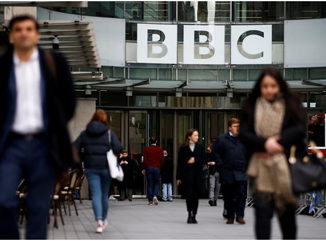
China bans BBC from broadcasting
Beijing (TIP): China has banned BBC World News from broadcasting in the country for seriously violating its guidelines for reporting, its television and radio regulator has announced. The move comes a week after the UK revoked the license of Chinese state-owned broadcaster China Global Television Network’s (CGTN). China has criticised the BBC for its reporting on the deadly coronavirus pandemic and the persecution of ethnic minority Uighurs and lodged a protest with the British broadcaster. The BBC said it was “disappointed” by China’s decision to ban it. The Chinese regulator, National Radio and Television Administration (NRTA), has made the announcement on Thursday night on pulling BBC World News off the air in the country for serious content violation. The NRTA said BBC World News was found to have seriously violated regulations on radio and television management and on overseas satellite television channel management in its China-related reports, state-run Xinhua news agency reported.
The BBC coverage went against the requirements that news reporting must be true and impartial, and undermined China’s national interests and ethnic solidarity, it said. “As the channel fails to meet the requirements to broadcast in China as an overseas channel, BBC World News is not allowed to continue its service within Chinese territory. The NRTA will not accept the channel’s broadcast application for the new year,” NRTA said in a statement.
China’s ban followed British media regulator Ofcom revoking state broadcaster CGTN licence to broadcast in the UK.
Ofcom’s decision to revoke the license of CGTN came after it found that the Chinese state television licence was wrongfully held by Star China Media Limited.
CGTN was also found in breach of British broadcasting regulations for airing the allegedly forced confession of UK citizen Peter Humphrey.
Reacting to China’s ban, the BBC said in a statement: “We are disappointed that the Chinese authorities have decided to take this course of action. The BBC is the world’s most trusted international news broadcaster and reports on stories from around the world fairly, impartially and without fear or favour.”
The commercially-funded BBC World News TV channel broadcasts globally in English. In China, it is largely restricted and appears only in international hotels and some diplomatic compounds, meaning most Chinese people cannot view it, the BBC report on China’s ban said.
British Foreign Secretary Dominic Raab called the move an “unacceptable curtailing of media freedom”.
The US State Department condemned the decision, calling it part of a wider campaign to suppress free media in China.
Relations between China and the UK have seen a serious deterioration in recent months over Hong Kong, where Beijing introduced a controversial new security law after a large pro-democracy movement swept the ex-colony.
In January the UK introduced a new visa that gives 5.4 million Hong Kong residents the right to live in the UK and eventually becomes citizens because it believes China is undermining the territory’s rights and freedoms, the BBC report said.
China’s tiff with BBC followed Beijing’s spat last year with three US newspapers resulting in the expulsion of some journalists from those media outlets.
China has sharply criticised this month’s BBC report featuring interviews with Uighur women who said they had been systematically raped, sexually abused and tortured in China’s “re-education” camps in Xinjiang. PTI
-
Over 80 people arrested in China for smuggling fake COVID-19 vaccines
Beijing (TIP): China has arrested over 80 people for smuggling and supplying counterfeit COVID-19 vaccines, amid reports that some of the jabs have already made their way to Africa, the official media has reported.
Apart from the arrests, 3,000 doses of the fake vaccines were confiscated from the accused in a special drive that China has carried out to curb vaccine-related crimes, the Global Times reported on Tuesday.
The raids were carried out in a joint action by police in Beijing and East China’s Jiangsu and Shandong provinces, among other regions. The criminal activity was scattered across multiple cities, the report said.
The suspects were profiting from the illegal manufacture and sale of the vaccines since September last year, the report added. The accused made the counterfeit vaccines by injecting saline into pre-filled syringes, the newspaper said, adding that the “doses” were being sold for high prices.
The smugglers are believed to have smuggled the fake vaccines into Africa, although it is not known how they managed to leave the country, the report said.
Asked about the reports of fake vaccines in circulation, Chinese Foreign Ministry spokesman Wang Wenbin told a media briefing on Tuesday that China will take effective measures to fight against the counterfeit vaccines and their smuggling. He said cooperation with other countries would be needed to prevent such criminal activities.
The captured suspects might have planned to send vaccines abroad, the report said. The police have multiple times checked with vaccine manufacturers to confirm the vaccines illegally sold in markets were the fake ones produced by the suspects.
In early January, Japanese media had reported that smuggled Chinese vaccines were in circulation in the country. However, the reports were slammed by the Chinese Embassy to Japan as “unverified and misleading”.
China is presently conducting clinical trials of 16 COVID-19 vaccines, seven of which have entered phase three trials and one has conditionally hit the market, according to Wu Yuanbin, an official with the Ministry of Science and Technology.
The deadly coronavirus emerged in the central Chinese city of Wuhan in December 2019 and then spread across the world and became a pandemic.
According to Johns Hopkins University COVID-19 tracker, over 2,240,00 people have died and more than 103,500,000 people have been hit by the coronavirus. China is vaccinating people at home with two vaccines and sending the same doses abroad. The Chinese government has given conditional approval to the Sinopharm vaccine, even as the results of the third trial is yet to be released. PTI
-

Gandhi Memorial Observes Gandhi Punyatithi
CHICAGO, IL(TIP): Mahatma Gandhiji 73rd death anniversary was observed with singing of Gandhiji’s favorite hymns, release of a book, swearing in of New Gandhi Memorial Board,powerful tributes by community leaders and floral tributes to the Mahatma Gandhi Statue in the National Heritage Park on McCormick Boulevard in Skokie, Illinois. The homage ceremonies opened with garlanding of Gandhi’s Statute followed by singing of the American national Anthem followed by the Indian national Anthem sung by Mrs Bharti Desai, renowned Gujarati singer. Suresh Bodiwala, Chairman of Gandhi Memorial Foundation, Chicago welcomed the guests and announced the new officers of the Board of Directors: Chandrakant Modi MD, Founder, Suresh Bodiwala, Chairman, Dr. Mrs. Santosh Kumar, President, Dr. Sriram Sonty & Dr. Vijay G Prabhakar Vice Presidents and Mrs. Bharti Desai, Treasurer. Chairman Suresh Bodiwala applauded the Founder of the Gandhi Memorial, Chandrakant Modi MD who personally donated over $150,000 dollars in 2005 to facilitate this Gandhi Statue in Skokie. Chairman Suresh Bodiwala hoped that the new Board will expand the organization’s activities to be more global in outlook and involve all other communities in cherishing Gandhi’s vision.
India’s Consul General at Chicago Amit Kumar administered the Oath of Office to the new Board of Directors of Gandhi Memorial Foundation, Chicago headed by Dr. Mrs. Santosh Kumar.
Dr. Mrs. Santosh Kumar in her presidential remarks said, “I am honored to be part of this noble institution, the Gandhi Memorial Foundation, Chicago. With all humility, I accept this great responsibility as your President. Mahatma Gandhi inspired me as a teenager to choose Law as my career rather than being a physician for what I studied for. GandhiJi ‘s freedom struggle and the injustice done to our motherland emboldened me to become an Attorney to fight for the oppressed. Gandhiji’s words: “Be the Change” is the words of reckoning that still guide me every step of the way and are relevant even today in this digital age. Our Consul General Amit Kumar and his wife Mrs. Surabhi Kumar are very Godfearing and Simple people called to serve with a smile. We look forward to seeking his guidance as our new Board builds on the legacies of our past presidents and boards in realizing GandhiJi vision in our daily lives. I am fortunate to have three very creative, energetic and dedicated leaders: Dr. Sriram Sonty, Dr. Vijay Prabhakar, Mrs. Bharathi Desai to join me on the new Board with our Chairman Bodiwala. Today we seek Mahatma Gandhi blessings in all our endeavors as we strive to incorporate Gandhiji ideals into our everyday lives by embarking on life transforming projects that can make a difference in our lives and in the lives of our communities., She added”.
Dr. Vijay G. Prabhakar, the Master of Ceremonies introduced India’s Consul General Amit Kumar and his wife, Mrs. Surabhi Kumar as an action couple who has endeared themselves to the community. Dr. Prabhakar recalled the key assignments held by Consul General Amit Kumar which included Deputy Chief of Mission at Washington D.C., Chief of Human Resources Management at Ministry of External Affairs, Delhi, Deputy Chief of Mission at Tokyo, who also had previously served in PMI, UN, New York, Beijing, China, Berlin, Germany, and Ankara, Turkey. Career Diplomat Amit Kumar is an alumnus of IIT Kanpur, India and had worked with the Spiritual Guru Dalai Lama, when he as Director of Protocol, External Affairs Ministry, Delhi. Dr. Prabhakar commended the work of the Consul General Amit Kumar along with his Consuls P.K. Misra, Ranjith Singh and L.P. Gupta during this pandemic time for their effective response to the Midwest Community needs.
Speaking on the occasion, Consul General Amit Kumar traced the different significant initiatives of Gandhiji during India’s freedom struggle and extolled Gandhiji’s services to the Nation. Consul General Amit Kumar congratulated the new board of the Gandhi Memorial Foundation and was pleased to note that Mrs. Santosh Kumar and Dr. Vijay Prabhakar was involved in several Gandhi initiatives in Delhi and Chicago. He also commended Dr. Sriram Sonty’s efforts for a U.S. Gandhi Stamp. Consul General Amit Kumar exhorted the Indian diaspora to translate Gandhi’s vision into action by undertaking meaningful and purposeful projects here in Chicago. Consul General Amit Kumar honored Dr. C.M. Modi and his wife Mrs. Dina Modi with a silk shawl. Mrs. Surabhi Kumar presented the MAFS Gandhi Global Icon Medallion to Dr. C.M. Modi, Founder Gandhi Memorial, Chicago for all his efforts in nurturing the Gandhi Memorial Foundation, Chicago.
Consul General Amit Kumar released a Book: “Lasting Legacy of Gandhiji -Ma Santosh Kumar” and Dr. Sriram Sonty received the first Copy of the book. Dr. Sriram Sonty said that 7 June 1893, the day young Gandhi was thrown out of the Durban to Pretoria train at the Pietermaritzburg Railway station was the turning point in Gandhi’s life. From that date, Gandhi took up the fight against racial oppression and Gandhiji’s nonviolence movement was born, he added. Dr. Sonty said that when he personally visited that Railway station in 1983, it led him to become a staunch Gandhi follower.
Ms. Nisha Modi daughter of the Gandhi Memorial Founder Dr. C.M. Modi acknowledged the honor bestowed on her parents at the event. Dr. Sreenivas Reddy, President, American Association of Multiethnic Physicians, Chicago read the message U.S. Congressman Raja Krishnamoorthi sent for the occasion. U.S. Congressman Raja Krishnamoorthi in his message reminded us of a Gandhi quote,” It is not just words. Action expresses priorities.” That defined Gandhi’s own life, as well as your work to honor him and his legacy. Americans for generations to come can learn from Gandhi’s example as we strive to create a more perfect Union. A Union that shuns violence and promotes civil rights, equality and liberty for all its people, Congressman Krishnamoorthi added.
Community leaders Sohan Joshi, Trustee FIA-Chicago, Dr. Suresh Reddy, AAPI Past President, Chandini Divvuri, Chairperson, Nari Global Foundation, Palatine, and Smitesh Shah, UMAS Coordinator, Chicago paid glowing tributes to Mahatma Gandhi on the occasion. Gandhi’s favorite songs were sung by the MAFS Senior Chorale Group led by Anthony Rathor, Urvashi Bhatt, Himali Bharucha, Promila Mehta and Pankaj Patel while floral tributes were placed at the Gandhi Statue.
Ms. Bharti Desai, Treasurer of Gandhi Memorial Foundation, Chicago proposing a vote of thanks appreciated the presence of all the guests who attended this event despite the chilling cold weather. Ms. Desai said “We the people are eternally indebted to Dr C.M. Modi and his family for a generous gesture that is remembered in posterity. The presence of our Honorable Consul General Amit Kumar with us on this cold morning is a testament of Government of India’s support for propagating Gandhi’s ideals throughout the world. Sir Amit Kumar Ji, thank you for being with us and we look forward to your continued support to our new board with all the exciting plans ahead. Your presence here is a great source of inspiration to our new board and we count on your continued support. Refreshments were served by Volunteers of Metropolitan Asian Family Services to all.
(Photograph and Press release by Asian Media USA)
-

China derecognises British passport amid row over HK
Beijing/London (TIP): Britain on Friday hailed a new visa offering Hong Kong citizens a route to citizenship after China’s crackdown but Beijing said it would no longer recognise special British passports offered to residents of the former colony. Britain and China have been bickering for months about what London and Washington say is an attempt to silence dissent in Hong Kong, though Beijing says the West’s views are clouded by misinformation and an imperial hangover. Britain says it is fulfilling a historic and moral commitment to the people of Hong Kong after China imposed a tough new security law on the city that Britain says breaches the terms of agreements to hand the colony back in 1997. “I am immensely proud that we have brought in this new route for Hong Kong BN(O)s to live, work and make their home in our country,” Prime Minister Boris Johnson said, referring to a special British National Overseas (BNO) passport. But China and the Hong Kong government hit back by saying neither would recognise the BNO passport as a valid travel document from January 31. “Britain is trying to turn large numbers of Hong Kong people into second-class British citizens. This has completely changed the original nature of BNO,” Chinese foreign ministry spokesman Zhao Lijian told a regular briefing. Beijing’s decision not to recognise the travel document is largely symbolic as Hong Kong residents would not normally use their BNO passports to travel to the mainland. A BNO passport holder in Hong Kong could still use their Hong Kong passport or identity card. Beijing’s imposition of a national security law in the former British colony in June last year prompted Britain to offer refuge to almost 3 million Hong Kong residents eligible for the BNO passport from January 31. The scheme, first announced last year, opens on Sunday and allows those with “British National (Overseas)” status to live, study and work in Britain for five years and eventually apply for citizenship. — Reuters
-

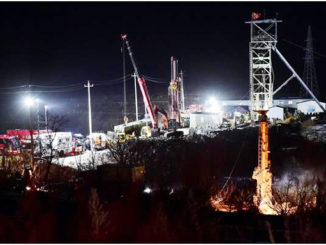
Managers detained as 22 trapped in China mine for 3rd day
Beijing (TIP): Authorities have detained managers at a gold mine in eastern China where 22 workers have been trapped underground following an explosion on Sunday. The condition of the workers trapped for more than three days remains unknown. Managers waited more than a day to give notice of the explosion in violation of rules saying accidents must be reported within one hour, the official Xinhua News Agency said on Thursday, calling that an illegal act that will not go unpunished. It wasn’t clear if other accusations would be brought against them. The mine in Qixia, a jurisdiction under the city of Yantai in Shandong province, had been under construction at the time of the Sunday afternoon blast, the cause of which hasn’t been announced. More than 300 workers are seeking to clear obstructions while drilling a new shaft to reach the chamber and expel dangerous fumes. Dominated by coal, China’s mining industry used to be the world’s deadliest, suffering more than 5,000 fatalities a year from explosions, gas leaks an floods. Safety improved dramatically after authorities overhauled the industry starting about 15 years ago, closing most smaller, more dangerous operations and boosting supervision. Still, accidents happen relatively frequently, including two in the southwestern megacity of Chongqing last year that killed 39 miners. AP
-

Chinese Communist Party clamps new rules for its members; bans public dissent
Beijing (TIP): As China’s ruling Communist Party gears up to celebrate its centenary year, it has revised rules for its 92 million members, stipulating that no public expression of dissent will be tolerated.
But party cadres have been granted the right to seek the removal of leaders if they are found incompetent, according to the amended party rules published by the Chinese language service of the state-run Xinhua news agency.
Founded in 1921 by Mao Zedong, the Communist Party of China (CPC) — which took over power in 1949 — is drawing up grand plans to celebrate its centenary year in July. The CPC is also a rare Marxist party with the longest tenure in power continuing with the one-party political system. The amended rules include new guidelines on access to information and how to handle internal complaints which were portrayed as the “boosting democracy within the party”.
The new rules make it clear that the party will not tolerate dissenting views from its own ranks, especially airing the complaints in public.
“When a party member criticises, exposes or requests for treatment or punishment, he/she shall use organisational channels. He/she shall not spread it freely or on the Internet, exaggerate or distort facts, fabricate facts, or falsely accuse or frame up”, the new rule said.
Article 16 of the rule book says “party members shall not publicly express opinions that are inconsistent with the decisions of the Central Committee” of the CPC. In an effort to motivate the cadres, the new rules stipulate that work-related mistakes will no longer be treated as discipline violations, the Hong Kong-based South Morning Post reported on Wednesday. According to another rule, party members will be entitled to propose the removal of their leaders if they can prove they are incompetent, it said.Often criticised for its secrecy and opaque functioning, the CPC which followed ideals like democratic centralism and collective leadership system introduced by Deng Xiaoping, who succeeded Mao after his death in 1976, has undergone a transformation after the advent of President Xi Jinping at the helm of the party in 2012.
Since then, Xi, 67, has consolidated his leadership as the head of the party, the military and the presidency and bestowed the “core leader” status of the CPC, a position only enjoyed by Mao.
Thanks to a constitutional amendment doing away with the two-term provision for the president in 2018, Xi now has the privilege to continue in power for life.
The recent adoption of “Long-Range Objectives Through the Year 2035” plan by CPC sparked off speculation that Xi may remain in power till that time ensuring the objective of China emerging as a superpower. Xi—who previously headed the CPC’s Central Party School specialising in ideology, especially the implementation of the party’s policy of Socialism with Chinese characteristics—has passed a rule in 2018 asking party members to give up religion. PTI -

Indian Embassy in Beijing launches Bollywood ‘cinema SCOpe’ series for SCO diplomats
BEIJING (TIP):Secretary General of the Shanghai Cooperation Organisation (SCO) Vladimir Norov and diplomats from the member states of the bloc attended the inaugural session of a movie series—’cinemaSCOope’—organized by the Indian Embassy here. ‘CinemaSCOpe’ series, being exclusively screened for the diplomats and their families of the SCO countries, commenced on Saturday at the Indian Embassy premises with the screening of Aamir Khan’s ‘3 Idiots’. More than two dozen Indian movies including ‘3 Idiots’, dubbed in Russian language, will be screened on a monthly basis till India’s chairmanship of the eight-member SCO ‘Council of Heads of State’ meeting in 2023.
The event was jointly inaugurated by Indian Ambassador to China Vikram Misri along with Norov. SCO diplomats and their families attended the event.
The SCO is an economic and security bloc in which India and Pakistan were admitted as full members in 2017. Its founding members included China, Russia, Kazakhstan, Kyrgyzstan, Tajikistan and Uzbekistan. In his address to the gathering, Misri said a proposal from Prime Minister Narendra Modi for a ‘SCO Film Festival’ is under consideration by the member states. Meanwhile, the Indian Embassy has decided to launch ‘cinemaSCOpe’ series for the SCO diplomats, he said. Top Bollywood stars like Raj Kapoor, Mithun Chakraborty, Amitabh Bachchan are household names in the SCO countries especially the Central Asian Republics, part of the former Soviet Union where Russian language remained popular. Norov, former foreign minister of Uzbekistan, in his address complemented the Indian Embassy for the initiative and highlighted the popularity of the Bollywood movies in the Central Asian countries. Indian cinema industry is also one of the largest in the world, providing employment to thousands of people, he said, adding that its global influence remained unparalleled showcasing Indian culture and civilizational values.
-
18 miners killed due to excessive carbon monoxide level at a coal mine in China
Beijing (TIP): Eighteen of the 23 workers were killed in a coal mine in China due to an excessive level of carbon monoxide, local officials said. The accident happened at around 5 pm on Friday at the Diaoshuidong coal mine in the district of Yongchuan in Chongqing Municipality, state-run Xinhua news agency reported.
Eighteen miners were confirmed dead due to excessive level of carbon monoxide, it said.
Rescuers, including police officers and firefighters, are trying to reach the trapped miners. The cause of the accident is under further investigation, the report said. The Diaoshuidong coal mine, which was established in 1975 and became privately-owned in 1998, has an annual production capacity of 120,000 tonnes of coal, according to the local emergency management department. Hydrogen sulfide poisoning in the mine left three dead and two injured in March 2013, Xinhua report said. PTI
-
China launches satellites for gravitational wave detection
Beijing (TIP): China on Dec 10 successfully launched two satellites for the detection of gravitational waves into planned orbit from the Xichang Satellite Launch Centre in Sichuan. The satellites, which compose the Gravitational Wave High-energy Electromagnetic Counterpart All-sky Monitor mission, were launched by a Long March-11 carrier rocket, Xinhua-news agency reported. PTI
-

US-China Trade War Begins
Beijing vows to strike back against tariffs on US$34 billion worth of Chinese goods
NEW YORK(TIP): The big question is now that the first shots have been fired, what goods will be affected, who will pay the price and what could happen next?
China’s Ministry of Commerce, on July 5 (July 6 in China) said China will fight back against the US and report to the World Trade Organisation.
The remarks were in response to Washington’s decision to impose 25 per cent duties on a similar amount of Chinese imports, which also came into effect on Friday.
US President Donald Trump had threatened to target another US$400 billion in Chinese products with tariffs if Beijing continued to hit back.
On top of that, each country has prepared a second tariff list of goods worth about US$16 billion. The effective dates are pending as the office of the US trade representative is in the midst of a public comment period on its list.
The trade war became official after Trump repeatedly said he wanted to reverse the United States’ massive trade deficit with China, which rose to about US$375 billion last year. That number is US$100 billion higher than China’s own calculation.
In an updated list published on June 15, Washington dropped many China-made consumer goods, such as TVs and flat panel screens, and added more intermediary products like semiconductors and plastics, after opposition during a public hearing in May.
The second tariff list, which is still under review, focuses particularly on “Made in China 2025”, a Chinese industrial policy aimed at getting ahead in hi-tech industries. It includes electronic integrated circuits and the machines that produce them.
Washington has dropped many China-made consumer goods, such as TVs and flat panel screens, and added more intermediary products like semiconductors and plastics to its tariff list. Photo: Reuters
China struck back in April with a list of US$50 billion worth of US imports, many of which were agricultural products. Beijing later removed US$16.3 billion worth of US aircraft from the list and added more food such as fish and nuts.
The primary US goods affected are soybeans and vehicles, while it is mostly Chinese industrial goods hit by US tariffs.
Who bears the brunt of these rounds of tariffs? Eventually consumers.
Analysts said imposing tariffs on Chinese goods such as semiconductors would eventually increase prices for American consumers because they were key components of electronic products. And it’s not an easy business decision for US manufacturers to shift sourcing after tariffs are in place.
“Alternative sources do exist for most of the Chinese products on the targeted list, but less expensive products purchased by less affluent consumers are likely to see larger price hikes as manufacturers substitute more expensive parts for Chinese inputs facing tariffs,” Mary Lovely, a senior fellow at the Washington-based Peterson Institute for International Economics, wrote.
“These consumers may not see much difference in performance due to one higher-quality part, but they are likely to see a difference at the cash register.”
Chinese consumers, on the other hand, could pay higher prices for imported seafood and fruit.
It is just the beginning. What happens in the longer run will impact economic policies of many countries across the world.