Beirut (TIP): Hamas said on May 2 that it was sending a delegation to Egypt for further cease-fire talks, in a new sign of progress in attempts by international mediators to hammer out an agreement between Israel and the militant group to end the war in Gaza. After months of stop-and-start negotiations, the cease-fire efforts appear to have reached a critical stage, with Egyptian and American mediators reporting signs of compromise in recent days. But chances for the deal remain entangled with the key question of whether Israel will accept an end to the war without reaching its stated goal of destroying Hamas.The stakes in the cease-fire negotiations were made clear in a new UN report that said if the Israel-Hamas war stops today, it will still take until 2040 to rebuild all the homes that have been destroyed by nearly seven months of Israeli bombardment and ground offensives in Gaza. It warned that the impact of the damage to the economy will set back development for generations and will only get worse with every month fighting continues.
Hamas is seeking guarantees for a full Israeli withdrawal and complete end to the war. — Reuters
Tag: Beirut
-
Hamas to send delegation to Egypt for Gaza ceasefire talks
-

Islamic State group announces successor after death of leader
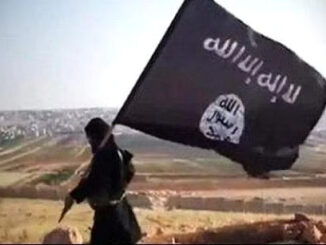
BEIRUT (TIP): The Islamic State group announced on August 3 the death of its leader Abu al-Hussein al-Husseini al-Qurashi, who it said was killed in clashes in northwestern Syria, and named a successor.
The leader “was killed after direct clashes” with jihadist group Hayat Tahrir al-Sham in Idlib province, an IS spokesman said in a recorded message on its channels on the Telegram messaging app, without specifying when he was killed. The spokesman announced the group’s new leader — its fifth — as Abu Hafs al-Hashimi al-Qurashi.
In late April, Turkish President Recep Tayyip Erdogan said the suspected IS leader had been killed in Syria in an operation carried out by Turkey’s MIT intelligence agency.
“The suspected leader of Daesh, codename Abu Hussein al-Qurashi, has been neutralised in an operation carried out… by the MIT in Syria,” Erdogan said at the time, using the Arabic acronym for the Islamic State organisation.
Turkish media released images of a fenced-off building in the middle of a field where it said he was hiding in Syria’s Afrin region. Afrin lies in Aleppo province — neighbouring Idlib — in an area controlled by Turkish-backed rebels.
However, the IS spokesman insisted Thursday that Hayat Tahrir al-Sham (HTS), which controls rebel areas of Idlib province, had killed the group’s chief and handed his body to Turkey.
IS accuses HTS — which has not claimed any operation targeting the IS leader — of working in Ankara’s interests. The United States and other Western governments have blacklisted HTS as a terrorist group.
Turkey’s Anadolu state news agency said at the time that the MIT conducted a four-hour operation during which it located the IS leader.
The IS leader set off his suicide vest when he realised he was about to be captured, Anadolu said, adding that no Turkish operatives were killed or injured. After a meteoric rise in Iraq and Syria in 2014 that saw it conquer vast swathes of territory, IS saw its self-proclaimed “caliphate” collapse under a wave of offensives.
The Sunni Muslim extremist group’s austere and terror-ridden rule was marked by beheadings and mass shootings.
It was defeated in Iraq in 2017 and in Syria two years later, but sleeper cells still carry out attacks in both countries. In November last year, IS said its previous leader, Abu Hasan al-Hashimi al-Qurashi, had been killed.
His predecessor, Abu Ibrahim al-Qurashi, was killed in February last year in a US raid in Idlib province. The group’s first “caliph”, Abu Bakr al-Baghdadi, was killed, also in Idlib, in October 2019. (AFP) -

‘Not like every time’: Beirut blast victims want the truth
Beirut (TIP): Months after a massive explosion ripped through Beirut’s port and disfigured the Lebanese capital, family members of some of the 211 people killed in the blast demanded an international probe.
It was a swift vote of no confidence in the authorities’ ability to investigate one of the largest non-nuclear explosions in history and one of the nation’s most traumatic experiences.
The skepticism was justified. Lebanon, a country wrought by political violence and assassinations, has a history of unfinished prosecutions and buried secrets. Six months after the August 4 blast, the domestic investigation has been brought to a virtual halt by the same political and confessional rivalries that thwarted past attempts to uncover the truth in major crimes. What started as an investigation into how nearly 3,000 tons of ammonium nitrate, a highly explosive fertilizer component, were stored in Beirut port for years with politicians’ and security agencies’ knowledge has taken a turn, wading into a web of murky international business interests in the explosives trade and global shipping. Government officials rebuffed an international probe and appointed former military court judge Fadi Sawwan to investigate. He has largely focused on government incompetence amid public anger at a corrupt political class blamed for Lebanon’s slide into poverty and upheaval.
In a rare move, Sawwan charged two former ministers and the current prime minister with negligence, triggering pushback.
The prime minister refused to appear for questioning, calling it “diabolic” to single him out for charges. The ministers challenged the judge and asked Lebanon’s highest court to replace him in a move that brought the probe to a halt since December 17. The interior minister said he won’t ask security forces to implement arrest warrants targeting political figures.
In early January, the Court of Cassation ruled that Sawwan can resume his investigation while it reviews calls to replace him, keeping the possibility hanging over the probe. Yet Sawwan hasn’t resumed work, raising concerns among victims’ families that he may have caved to pressure.
Dozens of family members gathered outside his house Monday, urging him to restart the probe.
“We want to know if they are not letting him,” Kayan Tleis, whose 40-year-old-brother was killed in the blast, said in reference to politicians. “This should not be like every time.”
Lebanon’s sectarian-based political factions have had a lock on power in the country for decades and have divvied up posts across the state among themselves. Though rivals, they have a common interest in preventing accountability.
Structural problems undermine the judiciary. The government and the president name judges, allowing political factions to install loyalists as rewards. Prosecutors stall, preventing cases from reaching courts.
The government also holds enormous sway over the five-member Judicial Council, a special court where it refers security and political crimes. Decisions by the government-appointed judges can’t be appealed.
Human Rights Watch said Sawwan’s appointment process was opaque and the investigation itself, so far secret, has been tainted with political interference. — AP