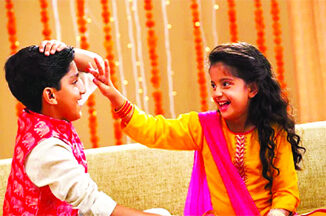
As the lamps of Diwali slowly fade and the fragrance of sweets still lingers in the air, India celebrates one of its most tender and heartfelt festivals-Bhai Dooj, the Festival of Sibling Love. Marking the fifth and final day of the Diwali celebrations, Bhai Dooj (also known as Bhaiya Dooj, Bhau Beej, or Yama Dwitiya) honors the timeless bond of affection, trust, and protection between brothers and sisters.
If Raksha Bandhan is the thread that ties brothers and sisters together, Bhai Dooj is the reaffirmation of that bond through blessings, prayers, and gratitude. It is a day when sisters pray for the long and prosperous lives of their brothers, while brothers, in turn, promise to protect and cherish them forever.
The Mythological Origins: The Tale of Yamuna and Yama
The origins of Bhai Dooj lie in a deeply symbolic and touching legend from Hindu mythology involving Yamuna, the sacred river, and her brother Yama, the god of death and justice.
According to ancient texts, Yama had been away for a long time, carrying out his divine duties in the underworld. His sister Yamuna missed him dearly and often invited him to visit her home. After many years, Yama finally accepted her invitation and came to see her on the second day of the Shukla Paksha in the Hindu month of Kartika.
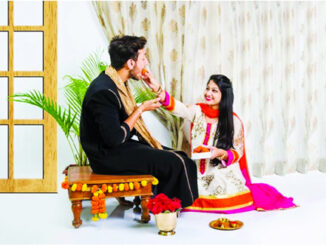
Yamuna joyfully welcomed her brother with a grand feast, applied a tilak (vermilion mark) on his forehead, and performed aarti, praying for his happiness and immortality. Touched by her affection and devotion, Yama was moved and granted her a boon-that on this day, any brother who visits his sister and receives a tilak from her would be blessed with a long, prosperous, and fearless life.
From that day, the festival of Bhai Dooj or Yama Dwitiya came to be celebrated as a sacred occasion symbolizing the loving bond between brothers and sisters and the triumph of affection over separation.
Symbolic Meaning of the Rituals
The essence of Bhai Dooj goes beyond the simple exchange of gifts and sweets-it is rooted in love, protection, and gratitude. The tilak ceremony symbolizes a sister’s heartfelt prayers for her brother’s well-being and the divine shield of her blessings. The brother’s visit, in return, reflects his respect, affection, and protective duty toward his sister.
The five dots often drawn on the brother’s forehead during the ritual represent Panchatatva-the five elements of life (earth, water, fire, air, and space)-invoking harmony and balance. The aarti performed by the sister signifies illumination and divine guidance in the brother’s life, while the exchange of sweets reflects the wish for sweetness and peace in their relationship.
Celebrations Across India: Diverse names, Shared Emotions
While the sentiment of Bhai Dooj is universal, its name, customs, and flavors vary beautifully across India’s regions.
– In North India, the festival is widely known as Bhai Dooj or Bhaiya Dooj. Sisters prepare festive dishes, apply tilak to their brothers’ foreheads, and pray for their long lives. Brothers give gifts, clothes, or money as tokens of love.
In Maharashtra, Goa, and Karnataka, it is called Bhau Beej. Sisters perform the ritual by drawing a square on the floor where the brother sits, symbolizing a sacred protective space. In some communities, brothers who cannot visit send symbolic gifts or even coconuts as a token of remembrance.
– In Bengal, it is known as Bhai Phonta, and the rituals are especially elaborate. Sisters observe a fast until they perform the phonta (tilak) ceremony, and brothers are treated to special Bengali delicacies like sandesh and mishti doi.
– In Nepal, the festival is celebrated as Bhai Tika, one of the most important festivals after Dashain. The sisters apply multi-colored tikas on their brothers’ foreheads and place garlands of marigolds around their necks, praying for their safety and longevity.
In every version, the essence remains the same-a reaffirmation of love and mutual respect between siblings, transcending distance and time.
The Modern Meaning: Beyond Rituals
In today’s times, as families become more dispersed and lifestyles more demanding, Bhai Dooj carries an even deeper significance. It is a day to pause, reconnect, and celebrate familial bonds that often get overshadowed by modern life’s pace. Even if brothers and sisters are separated by distance, they mark the occasion virtually-exchanging video calls, gifts, and heartfelt messages, proving that love transcends physical presence.
Beyond blood relations, the festival also celebrates chosen family-many people now extend the spirit of Bhai Dooj to cousins, friends, or even colleagues who share sibling-like affection and trust.
It’s not just a festival-it’s a reminder of the emotional and spiritual balance that the relationship between a brother and sister brings into one’s life: the nurturing care of the sister and the reassuring protection of the brother.
Spiritual and Social Symbolism
Bhai Dooj carries a universal spiritual symbolism that mirrors the larger philosophy of Diwali itself-the victory of light over darkness, love over isolation, and connection over indifference. The brother, representing strength and duty, and the sister, representing compassion and nurturing, together symbolize the harmony of masculine and feminine energies that sustain family and society.
The festival also conveys a moral message: that no matter how powerful one becomes (like Yama, the god of death), the bonds of affection, respect, and humility must always guide one’s heart.
As the Diwali festivities draw to a close, Bhai Dooj serves as the perfect emotional epilogue-an intimate reminder that beneath the glitter of lamps and sweets lies the enduring light of human relationships. It is a celebration of love that protects, and protection that loves.
From the mythic meeting of Yama and Yamuna to the laughter shared between modern-day siblings, Bhai Dooj continues to weave hearts together across generations. Whether through a simple tilak, a heartfelt blessing, or a cherished memory, the message remains timeless-that the bond of a brother and sister is among life’s purest and most enduring gifts.
Tag: Bhai Dooj
-

Bhai Dooj – The festival of sibling love
-

Bhai Dooj: Celebrations to honor the bond between siblings
Bhai Dooj, the festival that is celebrated just one day after the grand Diwali festival celebration is much like the festival of Raksha Bandhan that strengthens the brother-sister bond. It is one of the auspicious and very popular Indian festivals that are celebrated across India with great excitement. For every brother and sister, the day of Bhai Dooj festival celebration comes as a day of opportunity to celebrate their bond of love and care as well as strengthen it by following the auspicious rituals.
The most important ritual of the celebration of Bhai Dooj is the aarti and tika ceremony. On the day of Bhai Dooj sister firstly puts does the aarti of her brother with the holy flame and does the tika on her forehead and then she prays to God for his long and healthy life. This is the way of expressing care and love to brother by a sister. In this return, sisters get a token of love from brothers. It’s a Bhai Dooj gift.
Meaning and Significance
The majority of Hindu festivals and rituals put stress on the significance of family bonding and relationships. Although every relationship possesses its own value, but the brother-sister relationship is quite unique and unmatched. Hindu culture has manifested the greatness and glory of this relationship in many forms, out of which Bhai Dooj festival is an eminent form. This auspicious occasion also reveals the importance of siblings in someone’s life.
The golden occasion of Bhai Dooj provides a golden chance to a woman, bound in the clutches of her day to day routine, to go to her native place and meet her parents and siblings. This festival is like a homage to the pious brother-sister relationship and it also strengthens this bond further.
With the passage of time, this Bhai Dooj festival has no doubt changed its form like use of e-mails, e-greetings, mobile phones, chocolate and beverage hampers, and so. But, the basic significance of Bhau Bij and the feeling and emotion behind celebrating this wonderful festival is still the same, i.e., revealing and rejuvenating the eternal love of brother and sister. In the present context, we can say that Bhai Dooj will remain significant and consequential in the Indian culture as ever, in the years to come.
Customs and Traditions
Customs and traditions are an inherent part of the rich Indian culture. In India, a lot of festivals occur one after the other, throughout the year. Each and every festival celebrated in India has its own social and cultural importance. Among these, one of the most significant and awaited festival is the Bhai Dooj festival. The festival is named Bhai Dooj as it focuses on the brothers, and celebrated on the second day after the new-moon (Amavasya), or Diwali day. This day is also the third day of the Kartik month, according to the Hindu calendar.
Customs and Traditions
Customs and traditions are an inherent part of the rich Indian culture. In India, a lot of festivals occur one after the other, throughout the year. Each and every festival celebrated in India has its own social and cultural importance. Among these, one of the most significant and awaited festival is the Bhai Dooj festival. The festival is named Bhai Dooj as it focuses on the brothers, and celebrated on the second day after the new-moon (Amavasya), or Diwali day. This day is also the third day of the Kartik month, according to the Hindu calendar.
The basic theme behind the origination of the Bhai Dooj festival is believed to be the safety of women. But, there are also several mythological narrations associated with this festival. Two most popular stories are as mentioned below:
It is believed that once Yamraj (the god of death) visited her sister Yami. His sister became very delighted to see him and applied a tilak on his forehead. At this, Yamraj became so happy that he announced that the person whose sister will apply tilak on his forehead on that day would become free from the fear of death and hell. From that day, the tradition of Bhai Dooj came into existence.
Another mythological tale says that after killing the devil named, Narkasur, lord Krishna went to his sister Subhadra. The day on which lord Krishna visited his sister was the second day after the new-moon day, or the dooj day. Subhadra gave her brother a warm welcome by doing his arti, applying a tilak on his forehead, sprinkling flowers over him, and offering him sweets. From then onwards, it became a tradition and got fame as the Bhai Dooj festival.
On the auspicious and delightful occasion of Bhai Dooj, sisters apply tilak (a holy mark) on their brothers’ forehead. They perform artiof their beloved and caring brothers and offer sweets to them, as well. Brothers also take pledge of their sisters’ safety and give them some gift or present as a reciprocation. Bhai Dooj is really a great festival, which clearly reflects the customs and traditions of India.
How to celebrate Bhai Dooj
The festival of Bhai Dooj is known to be based on mythological concept. The celebrations of Bhai dooj reflects the importance of unique cultural traditions that vary with different region of India. This helps to keep the family close and brings prosperity, well being and luck. Bhai Dooj falls on the two day after Diwali and is celebrated all over the country.
All the rituals and pooja held on Bhai Dooj is carried out in the general puja room or on the same platform that was decorated for Diwali pooja. Sisters decorate their puja thali with mithai, batashas, roli and rice along with the coconut. They light up the puja lamp and perform all the rituals. Once the pooja is performed by every members of the family, the sister applies tika on the forehead of the brother. After applying tika, she gives him a few of the eatables along with the coconut.
Those married women who stay close to their parent’s place visit their brother early in the morning and greet them. Those staying far off either take out few days to visit her brother or express their love and blessings through posting greeting cards or e-cards and sending their good wishes. After all the rituals of Bhai Dooj is performed, brothers pamper their sisters by presenting the most memorable gifts. Most commonly, the girl of the house is given presents of clothes, utensils, and lots of mithai and fruits at festivals. -

Bhai Dooj
The last and final day of Diwali celebrations is called the Bhai Dooj or Bhau Beej, which celebrates the special bond of brothers and sisters. Bhaiya Dooj falls on October 26. On this day, the Aparahna time will last from 01:12 pm to 03:26 pm. It is celebrated on the second day of the Shukla Paksha of the lunar calendar and is similar to Rakshabandhan.
It is one of the auspicious and very popular Indian festivals that are celebrated across India with great excitement. For every brother and sister, the day of Bhai Dooj festival celebration comes as a day of opportunity to celebrate their bond of love and care as well as strengthen it by following the auspicious rituals.
The most important ritual of the celebration of Bhai Dooj is the aarti and tika ceremony. On the day of Bhai Dooj sister firstly puts does the aarti of her brother with the holy flame and does the tika on her forehead and then she prays to God for his long and healthy life. This is the way of expressing care and love to brother by a sister. In this return, sisters get a token of love from brothers. It’s a Bhai Dooj gift.
Meaning and Significance
The majority of Hindu festivals and rituals put stress on the significance of family bonding and relationships. Although every relationship possesses its own value, but the brother-sister relationship is quite unique and unmatched. Hindu culture has manifested the greatness and glory of this relationship in many forms, out of which Bhai Dooj festival is an eminent form. This auspicious occasion also reveals the importance of siblings in someone’s life.
The golden occasion of Bhai Dooj provides a golden chance to a woman, bound in the clutches of her day to day routine, to go to her native place and meet her parents and siblings. This festival is like a homage to the pious brother-sister relationship and it also strengthens this bond further.
With the passage of time, this Bhai Dooj festival has no doubt changed its form like use of e-mails, e-greetings, mobile phones, chocolate and beverage hampers, and so. But, the basic significance of Bhau Bij and the feeling and emotion behind celebrating this wonderful festival is still the same, i.e., revealing and rejuvenating the eternal love of brother and sister. In the present context, we can say that Bhai Dooj will remain significant and consequential in the Indian culture as ever, in the years to come.
The Story Of Bhai Dooj
For Hindus, the story behind each festival play a very important role in the formation of their culture and have a very deep significance and values. Most of the Indian festivals are attached to specific characters and personalities that helps the masses to understand and know the true significance of the festival. Just like all important Indian Festivals, Bhai dooj also has a story to follow that have carved a niche with its unique presence and strength.
Through generations, the story of Bhai Dooj has been passed from generation to generation either by word of mouth or through carefully stored scriptures. The narration of the story marks the end of the Bhai dooj puja. Once the various rituals of Bhai dooj such as the sister applying the teeka on the forehead of the brother, giving him the eatables and in return receiving the gifts are over, the women and children sit around, to hear the story behind Bhai Dooj from the elders of the family.
The story goes that once there was a family living in a village that had only a sister and a brother. The sister was very elder to her brother, thus when she got married, the brother was at a very tender age. The boy did not remembered any thing about his sister’s marriage. After the marriage, the sister never returned to her mother’s home. As the brother grew up, the image of her sister started fading with each passing years. He terribly missed his sister, especially on the Bhai Dooj day, as he used to see his friends with teeka on their forehead and plates full of sweets.
On one particular Bhai dooj, when the boy had turned up into a handsome young boy, he inquired his mother about the reason as to why his sister never visited her original home after her marriage. The mother replied that she does not come because there is a big forest between this village and the one in which she lives and there is a big river flowing in between. One has to cross the river by boat and then there are wild animals which fill people with so much terror, that many people do not travel through the forest.
Inspite of knowing the immense difficulty he will have to face, the young brother decided to visit his sister on the next Bhai dooj day. The mother reminded him again of the dangers, but he did not listen, and so it was decided that he would go and visit her. When the time came she told him to tell his sister that she should now come over and choose a suitable bride for him.
The boy set off and on his way he faced the rising level of river, which made it impossible for him to cross the road. There was also the danger of snakes. The boy requested the river not to drown him and told the snakes that they can bite him on his return journey, after he meets his only sister. The snake agreed, and the boy proceeded. Now, he came to a mountain, which started through big stones on him, and he again pleaded with it to let him go. The mountain also agreed. When the boy was near his sister’s village, a big tiger appeared and decided to eat him up. He also pleaded to the tiger and promised him that the tiger can feed on him on his return journey.
The poor boy knew now that is days were numbered, still, he eagerly went along to meet his only sister. He entered the house, and saw that she was doing the Bhai Dooj puja. The sister on seeing him after such a long time, welcomed her brother with a smile and embraced him. She at once brought lovely fruits and sweet meats to eat. She set about preparing kheer, puri, kachori, and lots of other tasty items. When her husband came after work, both of them provided a very enjoyable and memorable time to the young lad, so that he was full of joy.
Days passed, and it was time for the brother to take leave of his sister and brother-in-law. Before returning back, the brother narrated the whole incident to his sister and told her that his days were numbered and that he is soon going to die. The sister was shocked, but she decided to accompany him for the return journey. She secretly packed some meat for the tiger, some milk for the snake, flowers of silver and gold for the mountain and some roli and rice for the river.
Soon they were on their way and, of course, the tiger came first to eat up the brother. The sister gave him the meat and he went his way. Then came the mountain, which wanted to fall on her brother. She quickly performed puja with the gold and silver flowers and the mountain was very pleased with the offerings and stopped falling. Then it was the turn of the snake, and it was given the milk, and went away satisfied. They now reached the river and as was expected, it started to rise, but the sister subdued it by doing puja with roli and rice, and the river went down.
Both, brother and sister were very happy to escape the dangers of the forest and were anxious to reach home. The sister was now tired and thirsty. Soon she saw some gypsies working far away. She wanted to ask them for water, so the brother sat down under a tree-happy to be alive-and she went to the gypsies and got some water. Their the gypsies predicted that the danger was not over and her brother will die very soon. She asked them to tell her some way by which this calamity could be averted. One old woman came to her rescue and suggested that until her brother gets married, she should go on cursing him, right from now on and continuous to curse him all through the wedding and also insists on getting all rituals done to her first, only then this boy can be saved.
As soon as she reached near her brother, she started to curse him and to abuse him. The poor fellow was taken by surprise, but she continued calling him bad names. This thing continued even when they reached home. The mother, along with the villagers were very surprised at the nasty behavior of the sister, but no said anything as she was married and had came to her mother’s place after a long time.
Soon, the brother’s marriage was fixed to a beautiful girl. Still the sister went on cursing on any pretext. Everyone wanted the wedding to be over as soon as possible and the sister to be sent back to her village. On the wedding day, she insisted that all rituals be performed on her before her brother. The sister insisted that they tie the sehra on her forehead first. She found a small snake in the sehra instead of a string. She pulled out the snake. Next, the sister insisted that the barat (marriage procession) should go from the back door and not from the front door and no decorations be made. When the barat was to start, somehow the sister had fallen asleep. Ignoring her words, the barat started from beautiful front porch. But, no longer had everyone gather, the whole porch fell down, and narrowly missed the groom.
Now the time for the pheras (going round the fire) arrived and the sister had again gone to sleep. As soon as the first round of the pheras was done, the boy fell down in a dead faint, because of the evil spirits who had come to take him away. The sister woke up on hearing the noise and came cursing in to the courtyard. Hearing the abuses and seeing her blazing eyes, the evil spirits fled. It was now time for the boy and the girl to give kheer to each other. They let the sister have the first morsel from which she took out a hedgehog’s spiked needle and quickly put it in her tiny bag as well.
The wedding was finally over and every one including the mother and brother were keen to see the sister leave. Before leaving for her husbands place, the sister narrated the prediction of the gypsies and gave the reason for her bad behavior. Everyone had tears in their eyes and they hugged her feet, and all present said with one voice: ‘Let everyone have a sister like this, who is willing to be talked ill of, and will go about looking wild and angry even during a wedding, although it was to be the only wedding in the family – all this just to save her brother and family from disaster.
Thus, the custom is prevalent that a brother does not go to his sisters house for the teeka; instead the sisters bring or send the teeka to the brother, as danger may lurk on the way. -

Diwali: The 5-day festival from Dhanteras to Bhai Dooj
Every year, Hindus celebrate Diwali to mark the victory of good over evil, light over darkness, and happiness over despair. The festival of lights, also known as Deepavali, is observed with much pomp across the country. People decorate their homes with diyas, rangoli, ornaments and lights, eat delicious sweets and dishes, wear new traditional clothes, observe rituals, perform puja, and more. According to Hindu mythology, Diwali marks the return of Lord Ram to Ayodhya after defeating Ravana and completing 14 years in exile. People commemorate the festival of lights by praying to Goddess Lakshmi, Lord Ganesh and Lord Kubera to bless them with health, wealth and prosperity. Diwali celebrations are spread out over five days, beginning with Dhanteras or Dhan Trayodashi and ending with Bhai Dooj.
Here’s a list of the five days of Diwali.
October 22: Dhanteras or Dhan Trayodashi
The Dhanteras puja muhurat will be observed from 07:00 pm to 08:17 pm on October 22. People worship Lord Kubera and Goddess Lakshmi and buy something new on this day. Considered very auspicious, people purchase gold, silver, clothes, gadgets as a sign of good fortune. This day is purely dedicated to the goddess of wealth
October 23: Narak Chaturdashi, also known as Choti Diwali
Naraka Chaturdasi, the second day, also known as Choti Diwali, will begin at 05:05 am and end at 06:27 am on 23 October. According to Hindu tradition and mythology, it is believed that Lord Krishna fought the demon Narakasura and killed him.
October 24: Diwali
The Lakshmi puja muhurat will begin at 06:53 pm and end at 08:15 pm on October 24. The main festive day is Diwali, when people perform Lakshmi Pujan. The main celebration of Diwali takes place on this day and Lord Rama returned to Ayodhya after killing Ravana. People welcome Goddess Lakshmi, the goddess of wealth, who is believed to bless people with luck and prosperity.
October 25: Govardhan Puja
The Govardhan Puja muhurat is from 06:28 am till 08:43 am. Govardhan Puja is celebrated a day after Diwali and people worship Lord Krishna on this day. People believe that Lord Krishna saved the residents of Mathura from Lord Indra by lifting a mountain named ‘Govardhan’.
October 26: Bhai Dooj
The last and final day is called the Bhai Dooj or Bhau Beej, which celebrates the special bond of brothers and sisters. Bhaiya Dooj falls on October 26. On this day, the Aparahna time will last from 01:12 pm to 03:26 pm. It is celebrated on the second day of the Shukla Paksha of the lunar calendar and is similar to Rakshabandhan.
Mythical origins of Diwali
Deepavali or Diwali means “a row of lights”. It falls on the last two days of the dark half of the Hindu month of Kartik. There are various alleged origins attributed to this festival. Some hold that they celebrate the marriage of Lakshmi with Lord Vishnu. In Bengal the festival is dedicated to the worship of Kali. It also commemorates that blessed day on which the triumphant Lord Rama returned to Ayodhya after defeating Ravana. On this day also Sri Krishna killed the demon Narakasura. In South India people take an oil bath in the morning and wear new clothes. They partake of sweetmeats. They light fireworks, which are regarded as the effigies of Narakasura who was killed on this day. They greet one another, asking, “Have you had your Ganges bath?” which actually refers to the oil bath that morning as it is regarded as purifying as a bath in the holy Ganga.
Give and Forgive
Everyone forgets and forgives the wrongs done by others. There is an air of freedom, festivity and friendliness everywhere. This festival brings about unity. It instills charity in the hearts of people. Everyone buys new clothes for the family. Employers, too, purchase new clothes for their employees.
Rise and Shine
Waking up during the ‘Brahmamuhurta’ (at 4a.m.) is a great blessing from the standpoint of health, ethical discipline, efficiency in work and spiritual advancement. It is on Deepavali that everyone wakes up early in the morning. The sages who instituted this custom must have cherished the hope that their descendents would realise its benefits and make it a regular habit in their lives.
Unite and Unify
In a happy mood of great rejoicing village folk move about freely, mixing with one another without any reserve, all enmity being forgotten. People embrace one another with love. Deepavali is a great unifying force. Those with keen inner spiritual ears will clearly hear the voice of the sages, “O Children of God unite, and love all”. The vibrations produced by the greetings of love, which fill the atmosphere, are powerful enough to bring about a change of heart in every man and woman in the world. Alas! That heart has considerably hardened, and only a continuous celebration of Deepavali in our homes can rekindle in us the urgent need of turning away from the ruinous path of hatred.
Prosper and Progress
On this day, Hindu merchants in North India open their new account books and pray for success and prosperity during the coming year. The homes are cleaned and decorated by day and illuminated by night with earthen oil-lamps. The best and finest illuminations are to be seen in Bombay and Amritsar. The famous Golden Temple at Amritsar is lit in the evening with thousands of lamps placed all over the steps of the big tank. Vaishnavites celebrate the Govardhan Puja and feed the poor on a large scale.
Illuminate Your Inner Self
The light of lights, the selfluminous inner light of the Self is ever shining steadily in the chamber of your heart. Sit quietly. Close your eyes. Withdraw the senses. Fix the mind on this supreme light and enjoy the real Deepavali, by attaining illumination of the soul. He who Himself sees all but whom no one beholds, who illumines the intellect, the sun, the moon and the stars and the whole universe but whom they cannot illumine, He indeed is Brahman, He is the inner Self. Celebrate the real Deepavali by living in Brahman, and enjoy the eternal bliss of the soul. The sun does not shine there, nor do the moon and the stars, nor do lightnings shine and much less fire. All the lights of the world cannot be compared even to a ray of the inner light of the Self. Merge yourself in this light of lights and enjoy the supreme Deepavali.