Tag: Bhai Gurdas ji

  • Prakash Utsav of Sri Guru Granth Sahib Ji

    Prakash Utsav of Sri Guru Granth Sahib Ji

    Prakash Utsav of Sri Guru Granth Sahib Ji takes place on the 15th day (New Moon) of Bhadon, the sixth month of the Punjabi calendar, which occurs in August or September in the Western calendar.
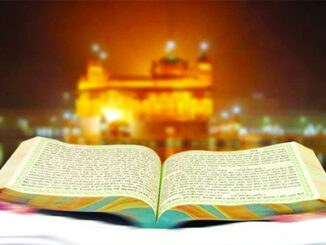
    Guru Granth Sahib Ji is unique among the great texts of the world. It is considered to be the supreme spiritual
    authority and head of Sikhism rather than any living person. It is also the only book of its kind that not only contains the works of its religious founders but also the writings of people of their faith. The living Guru of the Sikhs, the book is kept with great reverence by the Sikhs and is treated with the utmost respect. The Guru Granth Sahibji is a compilation of many hymns, poems, Shabad and other writings from several different scholars, including the Sikh Gurus and other saints.
    Guru Granth Sahib jihas 1,430 pages, and each copy is identical.It contains words spoken by the Gurus. It is known as Gurbani, which means ‘from the mouth of the Guru’.It is considered the word of God. It is written in Gurmukhi.
    History of Guru Granth Sahib ji
    Guru Arjan Dev ji, the fifth Sikh Guru compiled the original version of Guru Granth Sahib ji. Guru Arjan Dev ji felt that the Sikhs needed authentic compilation of the hymns of their gurus. Thus Guru ArjanDev ji started the collection of original verses of all the Gurus. He sent reliable Sikhs like Bhai Piara ji, Bhai Gurdas ji and Baba Buddha ji across the country in search of original manuscripts. Guru Arjan Dev ji travelled to Goindwal, Khadur and Kartarpur to visit the families of the previous Gurus. Guru Arjan Dev ji collected original manuscripts of the Gurus from Mohan ji (son of Guru Amar Das ji), Datu ji (son of Guru Angad ji) as well as Sri Chand ji (son of Guru Nanak ji).
    Compilation and Contents of the Guru Granth Sahib
    Many of Guru Nanak ji’s hymns and prayers were preserved and complied by Guru Angad ji and Guru ArjanDev refuse to expunge the so-called offensive text or pay the fine. Guru Arjan Dev ji was against making alterations in the hymns as required by Jahangir and instead preferred a martyr’s death. This led to his execution. The Adi Granth was completed in 1604 and installed in the Golden Temple. In 1708, Adi Granth became Sri Guru Granth Sahib Ji, the Eternal Guru of Sikhs as was declared by Guru Gobind Singh Ji. After Guru Gobind Singh ji’s martyrdom in 1708, Baba Deep Singh ji and Bhai Mani Singh ji prepared many copies of the Sri Guru Granth Sahib ji for distribution. The original version of the Sri Guru Granth Sahib can be found at Nanded, a city in Maharashtra state.
    Sri Guru Granth Sahib ji which presides over in other gurdwaras are copies of this edition.The first Shabad of the Guru Granth Sahib ji is the “Mool Mantra”. This is a statement of recognition for Sikhism. This underlines the belief in one God.The first line of the Sri Guru Granth Sahib ji is “Ik Onkar”. It literally means ‘there is only one God’.
    Guru Gobind Singh Ji raised Sri Guru Granth Sahib ji to the status of a permanent Guru and conferred it the title of “Guru of the Sikhs” in 1708. Declaring the Sri Guru Granth Sahib ji to be the next Guru after him, Guru Gobind Singh ji commanded the Sikhs to regard the Guru Granth Sahib ji as their next and everlasting Guru.
    He said, “Sab Sikhan ko hukamhai Guru Manyo Granth” meaning thereby that all Sikhs are commanded to regard the Granth as a Guru.

    Guru Gobind Singh ji commanded the Sikhs in the following words
    – Agya Bhai Akal Ki Tabhi Chalayo Panth. (Under orders of the Immortal Being, the Panth was created)
    – Sabh Sikhan Ko Hukam Hai Guru Manyo Granth. (All the Sikhs are enjoined to accept the Granth as their Guru)
    – Guru Granth Ji Manyo Pargat Guran Ki Deh. (Consider the Guru Granth as embodiment of the Gurus)
    – Jo Prabhu Ko Milbo Chahe Khoj Shabad Mein Le. (Those who want to meet God, can find Him in its hymns)
    – Raj Karega Khalsa Aqi Rahei Na Koe, (The pure shall rule, and impure will be no more)
    – Khwar Hoe Sabh Milange Bache Sharan Jo Hoe. (Those separated will unite and all the devotees shall be saved)
    Facts about Sri Guru Granth Sahib ji
    – Total words – 398697
    – Most often repeated word is “Hari” – 9288 times
    – No punctuation marks have been used
    Authors /contributors:
    – Six Sikh Gurus, first Five Gurus (Guru Nanak dev Ji, Guru Angad dev Ji, Guru Amar Das ji, Guru Ram Das ji,Guru Arjan Dev ji) and ninth Guru (Guru Tegh Bhadur Ji)
    – Sri Guru Granth Sahib jiincludes sermons of Guru Nanak Dev Ji (974 Shabad and Shloka), Guru Angad Dev Ji (62 Shloka), Guru Amardas Ji (907 Shabad and Shloka), Guru Ram Das Ji (679 Shabad and Shloka), Guru Arjan Dev Ji (2218 Shabad and Shloka) and Guru Tegh Bahadur Ji (115 Shabad and Shloka).
    – Three Sikhs (Bhai Satta ji, Bhai Balwand ji and Bhai Sundar ji)
    – 17 Bhatts: The Bhatts were a group of musicians who lived in the sixteenth century. All of them were scholars, poets and singers. (Bhat Kal, Bhat Kalsehar, Bhat Tal, Bhat Jalup, Bhat Jal, Bhat Kirat, Bhat Sal, Bhat Bahil, Bhat Nal, Bhat Bhikha, Bhat Jalan, Bhat Kas, Bhat Gend, Bhat Sevak, Bhat Mathra, Bhat Bal andBhat Harbans)
    – 15 Bhagats (Kabir, Namdev, Ravidas, Sheikh Farid, Trilochan, Dhanna, Beni,Sheikh Bhikan, Jaidev, Surdas, Parmanand, Pipa, Ramanand, Sadhna and Sain)

    Prayers
    Nitnem
    It is the collection of hymns of different Gurus to be read daily by the common people at least three times a day. Nitnem usually includes Panj Bania and sometimes includes Rehiras Sahib and Kirtan Sohilla ( for the night). The morning and the evening prayers should be followed by a set of prayers known as Ardas. The five Banis or the Panj Bania are Japji Sahib- appears at the beginning of the Guru Granth Sahib
    Jaap Sahib
    Morning prayers of the Sikh which was composed by tenth Guru Gobind Singh and is found at the start of Sikh scripture Dasam Granth. It is the praise of God and includes names of various Gods in different languages. It is composed of 199 verses and is the first Bani of Dasam Granth.
    Tav- Prasad Savaiye
    It is a short composition that contains around 10 stanzas and is present on pages 13 to 15 of Dasam Granth.
    Chaupai Sahib
    Also referred as Banti Chaupai is a hymn by Guru Gobind Singh
    Anand Sahib
    It is the collection of hymns written by Guru Amar das Ji who was the third Guru in Sikhism. It is available from page 917-922 in Guru Granth Sahib. It is chanted at all the religious ceremonies of the Sikhs
    Rehras Sahib
    It is the evening prayer of Sikhs which is a part of Gurbani ( Hymns in the central text of Guru Granth Sahib). It contains hymns of four different Gurus Guru Nanak, Guru Amardas, Guru Ramdas, Guru Arjan Dev, and Guru Gobind Singh Ji. It gives energy to the mind and body after the day-long hard work. It is in a way to thank God for completing the day with no hassles. Rehras contains hymns from So Dar and So Purakh, Chaupai Sahib, Anand Sahib, and Mundhavani. Chaupal Sahib is taken from Dasam Granth.
    Kirtan Sohila
    It is the night prayers chanted by all Sikhs before they go to bed. It is composed of five hymns or Shabd. The five hymns are contributed by Guru Nanak, Guru Ram das, and Guru Arjan. The first three hymns were uttered by Guru Nanak, the fourth by Guru Ram Das, and the fifth by Guru Arjan Dev.

  • SRI GURU TEGH BAHADUR SAHIB A PROPHET AND A MARTYR

    SRI GURU TEGH BAHADUR SAHIB A PROPHET AND A MARTYR

    Special on the occasion of the 400th birth anniversary celebrations of Sri Guru Tegh Bahadur Ji

    By Dr. Amrit Kaur

    Sri Guru Tegh Bahadur Sahib was a protector of the oppressed class. He fought against oppression and laid down his life to protect the right of the people to follow the religion of their own choice. His bani consists of 59 sabdas and 57 slokas. These sabdas and slokas essentialize the same spiritual experience and insights as does the bani of his predecessor Gurus.

    Sri Guru Tegh Bahadur Sahib, the Ninth Guru (Revealer of the Sikh faith) of the Sikhs was born on Baisakh vadi 5, 1678 Birkimi i.e., April 1, 1621 in Amritsar, Punjab. He was the youngest of the five sons of Sri Guru Hargobind Sahib, the Sixth Guru of the Sikhs and Bibi Nanaki. His childhood name was Tyag Mal, tyag means ‘giving away’ or parting with what one possesses. As a small child he gave away his clothes to a poor child in charity. On being asked by his mother as to why he had done so, he promptly answered that no one else would have given ‘that boy’ any clothes whereas you will immediately give me new clothes. From his early childhood, he was very humble, religious and detached from worldly possessions. During his childhood, Bhai Buddha Ji, a very revered Sikh of the time, taught him the manly arts of archery and horsemanship and Bhai Gurdas Ji, another renowned Sikh was in-charge of his religious instruction.

    At the age of 13 he took part in the battle of Kartarpur in District Jallandhar of Punjab fought by his father Sri Guru Hargobind Sahib against one of his own former warriors who had deserted him and subsequently invaded him. In this battle (Guru) Tegh Bahadur Sahib evinced so much bravery and valor that his father, Sri Guru Hargobind Sahib renamed him as Tegh Bahadur, tegh means sword and bahadur means brave. In his life to come he lived up to the ‘meaning’ implied in this name. At the age of 12 he was married to (Mata) Gujri Ji, daughter of Bhai Lal Chand Ji and Bibi Bishan Kaur Ji of Kartarpur in District Jallandhar of Punjab who had migrated from village Lakhnaur near Ambala in Haryana. After this, his father Sri Guru Hargobind Sahib, along with the whole family went to Kiratpur Sahib, a small township in the foothill of Himalayas in District Ropar of Punjab, where they lived for nine years. After his father left for his heavenly abode in 1644, he left Kiratpur Sahib alongwith his mother Bibi Nanaki Ji and wife Mata Gujri Ji and shifted to Baba Bakala in District Amritsar of Punjab, the ancestral village of Bibi Nanaki Ji’s father.

    On March 30, 1664 before leaving for his heavenly abode, the Eighth Sikh Guru, Sri Guru Har Krishan Sahib bestowed Guruship on him. Thus, on March 30, 1664 he assumed Guruship but was formally anointed Guru on August 11, 1664. After assuming this high seat of Guruship, he started preaching the message of the First Sikh Guru, Sri Guru Nanak Dev Ji’s that (i) God is one (ii) God is omnipresent and omnipotent (iii) God is the creator of the whole world and of all human beings (iv) all human beings are equal, thus persons of all religions and castes should be given equal respect (v) women should be given equal status (vi) we should recite the name of God Almighty (vii) we should earn our livelihood honestly and share it with the needy persons. The spiritual pathway as revealed by Sri Guru Nanak Dev Ji is a pathway of gradual growth and leads to union with God.

    After assuming Guruship, as a first step, with a view to establish a place for the congregation of Sikhs he bought some land at a place 8 kms. north of Kiratpur Sahib, from Deep Chand the King of Kahlur. He bought three villages Makhopur, Mataur and Lodhipur from Deep Chand at a cost of Rs. 2200 and in June 1665 established the town Chakk Nanaki which later came to be called Anandpur Sahib (the City of Bliss). This town is now one of the five spiritual seats (Takhts) of the Sikhs, and this is where in April 1699, Sri Guru Gobind Singh Ji, the Tenth Sikh Guru created the Khalsa. After establishing this place of pilgrimage, to further strengthen the preaching activity, he left for an extensive tour of Banger area which now partly falls in Punjab and partly in Haryana. During this tour he visited more than 120 places in the Districts of Amritsar, Ropar, Patiala, Jallandhar, Nawan Shahar, Fatehgarh Sahib, Sangrur, Bathinda and Mansa in Punjab. In fond memory of his visits, historical Gurdwaras have been established at all of the places that he visited. After his he visited several places in the districts of Ambala, Kaithal, Kurukshetra, Mohindergarh, Narnaul, Rohtak, Yamuna Nagar and Jind in Haryana State. To commemorate his holy visits in Haryana more than 30 historical Gurdwaras have been established.

    During his tour of Punjab and Haryana, in addition to conveying the message of Sikhism, he (i) got several wells dug in the areas which faced scarcity of water due to draught (ii) campaigned against drug addiction (iii) campaigned against growing of tobacco, and (iv) dispelled the miseries of sick and suffering population. Although, his tours were purely religious in nature, but they created many doubts in the mind of Aurangzeb, the emperor on the Delhi throne. Several false complaints to this effect were received by Aurangzeb and he sent orders for his arrest. Aurangzeb who had acceded to the Delhi throne in July 1658 after sending his father to prison and killing his brothers wanted to please Mughals by giving torture to non-Mughals. As part of his mission, he wanted to arrest Sri Guru Tegh Bahadur Sahib. But Raja Ram Singh, son of Mirza Raja Jai Singh intervened and convinced the ruler that Guru Sahib’s activities were religious and social and not any threat to his empire. Thus, his arrest was averted.

    After this, Sri Guru Tegh Bahadur Sahib started on an extensive tour of the eastern part of India to further spread the message of Sikhism. During this tour, he visited Agra, Mathura, Etawah, Kanpur, Fatehpur, Mirzapur, Allahabad, Jaunpur, Nizamabad and Banaras in U.P.; Gaya, Sasaram, Bhagalpur, Patna Sahib, Lakshmipur (District Katihar) and Monghyr in Bihar; Sahibganj in Jharkhand; Calcutta in West Bengal, Dhubri in Assam and Dhaka, Pabna, Comilla, Sylhet and Chittagong (now in Bangladesh) and Sondip Island.

    By the time he returned to Punjab, Aurangzeb’s pro-Islam policies and programs were in full swing. Aurangzeb wanted to completely destroy the Hindu old civilization. Under his orders centuries old temples in Ayodhya, Banaras and Mathura in U.P. were demolished. A very renowned temple Vishwanath which had been built by Raja Nar Singh Dev at a cost of Rs. 33 lacs was destroyed. ‘Mathura’, the holy city of Hindus was renamed as ‘Islamabad’. Ancient Hindu temples in Bihar and Orissa were also demolished. Ban was imposed on Hindu fairs and festivals. Aurangzeb had established a Jatha of Mullans consisting of horse riders who would go from place to place to destroy Hindu idols and temples. All Governors were directed not to give jobs to Hindus and wherever possible to dismiss them and replace them by Muslims. Employees in various sectors were issued orders to get converted to Islam up to a specific date or be prepared to lose their jobs. Aurangzeb had established a full-fledged Department for this purpose and appointed a Director General as its in-charge. Under his policies and programs thousands of Brahmins were imprisoned and put to torture to pressurize them to get converted to Islam. As per historical evidence, Aurangzeb would not eat any meal unless the janeu (sacred thread) taken away from the bodies of Brahmins weighing a quarter and a maund (one quintal) were presented to him. This means that thousands of Hindus were being converted to Islam.

    It was part of this policy that Aurangzeb sent directions to Iftikhar Khan the Governor of Kashmir that all Hindus in Kashmir be converted to Islam. Within a few months more than half of the Brahmins adopted Islam. As a result of this, Kashmiri Brahmins became awe stricken. As reported by PNK Bamzai, a Kashmiri historian, in his book History of Kashmir when the cruelty became unbearable, some Pandits got together and went to Amar Nath for pilgrimage and praying. After that, under the leadership of Pandit Kirpa Ram, about 500 Brahmins decided to meet Sri Guru Tegh Bahadur Sahib for help. This desperate group met Sri Guru Tegh Bahadur Sahib at Anandpur Sahib on May 25, 1675 and requested for help. After listening to the woeful stories of Pandits Sri Guru Tegh Bahadur Sahib decided to sacrifice his life to dispel their tortures and save the Hindu Community from extinction. He resolved to lay down his life to uphold the people’s right to practice the religion of their own choice. He told the Pandits to return to Kashmir and tell the Mughal Governor that if they convert their Guru i.e., Sri Guru Tegh Bahadur Sahib to Islam they would all get converted to Islam. Getting furious over this development Aurangzeb ordered that Guru Sahib be arrested, put to torture and executed.

    By that time, Guru Sahib himself had left Anandpur Sahib and was traveling towards Delhi via Agra. As per Aurangzeb’s orders the soldiers arrested him at Sikandra, District Agra in U.P. At this place now stands Gurdwara Guru Ka Taal Sahib. At Sikandra he was put in an iron cage and then subjected to torture and then under a heavy escort brought to Delhi on November 4, 1675. At Delhi, he was bound in chains and as per Aurangzeb’s orders was to be tortured until he accepted Islam. Thus, he was subjected to severe torture. But he firmly refused to abandon his religion. When Mullans became sure that he could not be persuaded to abandon his religion, he was asked to perform some miracle, which he firmly refused. Finally, on November 11, 1675 he was brutally beheaded in Chandni Chowk, Delhi in public view. At this place now stands Gurdwara Sisganj Sahib. At nightfall, a devout Sikh Lakkhi Shah Lubana Ji helped by three of his sons Nagahia, Hema and Harhi, not caring for the Mughal reprisal placed the headless trunk in a cart and took it to his home in Raisina village. To avoid direct confrontation with the Mughals, instead of an open cremation, he set fire to his whole house and thus cremated the sacred headless body of the martyred Guru Sahib. At this spot now stands Gurdwara Rikabganj Sahib.

    Bhai Jaita Ji, another devout Sikh alongwith Bhai Uda Ji and Bhai Nanu Ji secretly carried the severed sacred head in a basket to Kiratpur Sahib. On the way they stopped to take rest at Taraori, District Karnal in Haryana; two places in Ambala, Haryana and village Nabha which now falls in district SAS Nagar, Punjab. In village Nabha now stands Gurdwara Sis Asthan Patshahi Naumi ate Dasmi. After Nabha, Bhai Jaita Ji and his companions reached Kiratpur Sahib in District Ropar of Punjab. At the spot where the sacred head of the martyred Guru was handed over to his son (Sri Guru) Gobind Singh Ji, now stands Gurdwara Bibangarh Sahib. From here the sacred head was taken in a decorated palanquin by (Sri Guru) Gobind Singh Ji, who became the Tenth Guru, to Anandpur Sahib and cremated there on November 16, 1675. In fond memory of Sri Guru Tegh Bahadur Sahib Gurdwara Sisganj Sahib has been established at this place.

    Sri Guru Tegh Bahadur Sahib was a protector of the oppressed class. He fought against oppression and laid down his life to protect the right of the people to follow the religion of their own choice. His bani consists of 59 sabdas and 57 slokas. These sabdas and slokas essentialize the same spiritual experience and insights as does the bani of his predecessor Gurus.

    Dhan Sri Guru Tegh Bahadur Sahib!

    (The author is a Retd. Professor, Punjabi University, Patiala, Punjab, India)

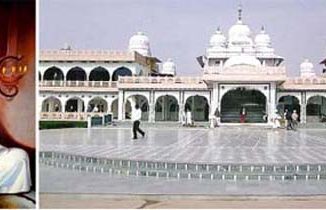
    Gurdwara Sisganj Sahib, Delhi and Gurdwara Rikabganj Sahib, New Delhi
  • Remembering the Sikh heroes: bearers of Nishaan Sahib Insignia’

    Remembering the Sikh heroes: bearers of Nishaan Sahib Insignia’

    By Amarjit Singh Anand

    “During the current global pandemic, the Divine Guru’s teachings of compassionate sharing, came to the fore, when millions of people were served with edibles, medicines, clothing, shelter and all essential services. As a collective, during the unprecedented lockdown, several governments officially requested the Sikhs to prepare food in Gurdwaras, to be served to individuals, as well as to be sent to hospitals and other institutions for the old and the infirm, orphans, and economically weaker sections.”

    Battle of Saragarhi,12 September 1897 when 21 Sikh soldiers fought 12,000 Afghan tribesmen.
    Serving free food during a calamity.

    Truth, contentment and kindness are the GUIDING LIGHTS that bless and prod the Sikhs towards living a Divine life, fighting invaders and tyrannical oppressive regimes, for the protection of the weak and the meek teeming millions.

    During these five centuries, hundreds of thousands of Sikh Martyrs have performed the supreme sacrifice of life, as defenders of Freedom of Religion, as protectors of their motherland, as saviors of the honor of women and as helpers of the oppressed classes.

     The Sikhs, whether in India or while living as law-abiding citizens and contributing significantly to the economic growth of their adopted nations of abode, have maintained strong connections with their land of origin. The foreign exchange remittances, to India, from the Sikhs are exemplary, in rejuvenating the Indian economy.  Wherever the Sikhs reside, they assimilate extraordinarily well, in the mainstream life of any nation, culturally, politically, socially, economically, lending a spiritual and ethically sublime touch to all that they are involved in or are called upon to do.   ALL the Role-Model Sikhs must utilize the affluence and influence, with an ever-enhanced sense and degree of responsibility towards the “good of all”. Material growth must be tempered with spiritual elevation and evolution.

    The global community of the Sikhs is built on the spiritually strong edifice of “treating death as a reality, verily as life”. Sikh role-models, globally, are the insignia bearers of Sikhism.

    The history of Sikhism starts from the Blessed Advent of Sree Guru Nanak Sahib, in circa 1469, in Talwandi region, then part of a much larger India. His Tenets include Truthful living, humility, liberty, equality, justice, compassion, honest earning, serving the needy selflessly and protecting the weak and the meek. All this, he said would be tantamount to a Divine Life and real, true, actual worship and attainment of God and fulfillment of the purpose of human-birth.

    For over a thousand years, this region was invaded by a small bunch of horse-rider marauders, from Mongolia, Persia, Afghanistan, and the like. Taimur, Ghazni, Ghori, Nadir Shah, Abdali are only a few of those invaders, who plundered Hindu Temples, looted gold, took women and children as slaves, killed everyone who crossed their path.

    And then appeared a man on earth, the likes of whom are seen, once in a millennium. Guru Nanak Sahib Jee confronted Babur, an invader who established his empire on Indian soil. Guru Nanak Ji’s Divine ambrosial words were adequate to transform a ruthless mass-murderer into one who fell at the Guru’s feet, pledging to rule with justice. Babur sought a boon of ruling for several generations and Guru Nanak Sahib Jee granted it and it came to fruition for seven generations, exactly during the lifetime of ten Divine Gurus.

    The Divine Preceptor of ONENESS of humanity traversed 27,000 miles, across various continents, in 25 years of his 70 years’ sojourn on this planet, during which he reformed several tyrannical rulers, vociferously advocated human rights and women’s rights, brought about social revolution, by speaking out against slavish mentality, superstitious belief system, hollow ritualistic practices, religious bigotry and suppression of the downtrodden social and economic classes.

    Guru Nanak Ji was the pioneer, enunciating the cause of Inter-Religious Peace and Harmony. Guru Arjan Sahib and Guru Tegh Bahadur Sahib attained martyrdom for the cause of Freedom of Religion and Interfaith acceptance and harmonious coexistence. Guru Gobind Singh Sahib, tenth Spiritual Master, sacrificed his entire family including four sons, all under 17, fighting the tyrannical regimes, bent upon annihilating the Freedom of Religion, Culture and Traditions. Martyrs include Bhai Mani Singh, Baba Deep Singh (valiant warrior) Bhai Taru Singh, Bhai Dayal Das, Bhai Mati Das, Bhai Jati Das, Bhai Sati Das.

    At this juncture, it is paramount to remember the supreme sacrifices made by noteworthy Hindu and Muslim supporters of the Gurus and Sikhs. They are Rai Bular Bhatti, Bhai Mardana ji, Sain Mian Mir, Pir Budhan Shah, Pir Bhikhan Shah, Raja Dewan Todar Mal, Moti Ram Mehra, Nawab Sher Khan of Malerkotla, Dr. Sir Gokul Chand Narang, Daulat Rai, Rabindra Nath Thakur (Tagore) Sri Aurobindo Ghosh.

    During these five centuries, hundreds of thousands of Sikh Martyrs have performed the supreme sacrifice of life, as defenders of Freedom of Religion, as protectors of their motherland, as saviors of the honor of women and as helpers of the oppressed classes. They have been in the forefront against marauding invaders and the oppressive British regime. The maximum number of those exiled from India or those executed by the British, after fake trials, were Sikhs.

    Illustrious Martyrs include Bhagat Singh, who instilled courage in the masses by kissing the gallows, as a reward for serving the cause of India’s freedom. Udham Singh, avenged the Jallianwala Bagh massacre perpetrated by the British, after twenty-one years, and was also hanged. Udham Singh, Kartar Singh Sarabha,

    Maharaja Ranjit Singh reigned over the Khalsa Empire for almost 50 years and his legendary General Hari Singh Uppal ‘Nalwa’ conquered regions in Afghanistan. Baba Banda Singh Bahadur established the first Sikh kingdom. Bhagel Singh, Jassa Singh Ahluwalia and Jassa Singh Ramgarhia are the valiant Generals, who vanquished Delhi (under Mughal Empire) Several notables include Nawab Kapur Singh, Akaali Phoola Singh ji. Maharaja Ripudaman Singh of Nabha, one of the few rulers of princely states who dared to defy the British, continues to inspire generations. Lieutenant General Harbaksh Singh (Vir Chakra) commanded the Indian Army and played a key role during the Indo-Pakistani War of 1965. For his role in the war, he was awarded the Padma Vibhushan.

    General Mohan Singh and Colonel Gurbaksh Singh Dhillon of the Indian National Army which fought the British colonial rulers.

    Hardit Singh Malik (CIE OBE) an Indian civil servant and diplomat. He was the first Indian High Commissioner to Canada, and then Indian Ambassador to France. He was the first Indian to fly as a pilot with the Royal Flying Corps in the First World War. He also played first-class cricket between 1914 and 1930. The role of the Sikhs in the Liberation of France is well recognized.

    Sikh regiments and battalions have served the United Nations Peace-keeping forces, worldwide, whether in war-torn countries or civil-wars, and in regions ravaged by natural calamities as famines, floods, droughts or earthquakes.

    Fighting in the World Wars, as part of the British Indian Army, the highest number of “exceptional gallantry” Awards from the British Empire were bestowed upon the Sikhs.

    The epic battle of Saragarhi witnessed the saga of twenty-one Sikhs attaining martyrdom facing ten thousand ferocious Tribal Afghans is unparalleled in world history.

    Today, the Sikhs reside in several countries and have made a mark for themselves, in various spheres of endeavor.

    The Sikhs, whether in India or while living as law-abiding citizens and contributing significantly to the economic growth of their adopted nations of abode, have maintained strong connections with their land of origin. The foreign exchange remittances, to India, from the Sikhs are exemplary, in rejuvenating the Indian economy.

    Whether the armed forces or politics, science and technology, business or various professions, the arts or sports, Sikhs have excelled unproportionately, in correlation to their very negligible percentage of the world populace.

    Revered Saint Bhagat Pooran Singhji, personally, served the residents in a leprosy-home which he established. Being an epitome of humility and selfless service, he refused to be nominated for the Nobel Prize.

    To name a few luminaries: Dr. Manmohan Singh (Prime Minister of India) Zail Singh (President of India) Air Marshal Arjan Singh, Lt. Gen. Jagjit Singh Aurora (effected the surrender of ninety thousand Pakistan army personnel) Bhai Mohan Singh (industrialist, Founder of Ranbaxy pharmaceuticals) Hukam Singh & Gurdial Singh Dhillon (both Speakers of Lok Sabha) Swaran Singh (Foreign Affairs Minister)

    Literary geniuses include the wise grand old man Baba Buddha Ji (who lived from Guru Nanak Sahib up to 6th Guru Hargobind Sahib) Bhai Gurdas ji, Bhai Vir Singh, Kahan Singh Nabha, Amrita Pritam (poet par excellence) Khushwant Singh, Manjit Tiwana, Surjit Patter.

    Other notables are The ‘Flying-Sikh’ Milkha Singh (Olympian sprinter) Ajaypal Singh Banga (CEO, Mastercard) Dr. Narinder Singh Kampany (inventor of fiber-optics) Capt. Tania Shergill, the youngest Adjutant and the only lady to become the Parade-Adjutant, on India’s Republic Day, 2020.

    Yogi Harbhajan Singh Khalsa was the Preacher of Sikhism in the Western Hemisphere, where the Sikh universal doctrine has been embraced by people from various races and those having different religious and cultural affiliations.

    There are many Sikh parliamentarians in various countries. Gurbax Singh Malhi, elected to the Canadian Parliament in 1992, created history, when laws had to be amended, to accommodate a turban- wearing member to sit in the Parliament. Jagmeet Singh Dhaliwal, political influencer and Tanmanjit Singh Dhesi (UK MP).

    In the scenario of the post 911 tragedy, several Sikhs were murdered and bore the brunt of hate crimes, due to the mistaken-identity syndrome, but succeeded through relentless endeavors, to enhance awareness about the Sikhs.

    During the current global pandemic, the Divine Guru’s teachings of compassionate sharing, came to the fore, when millions of people were served with edibles, medicines, clothing, shelter and all essential services. As a collective, during the unprecedented lockdown, several governments officially requested the Sikhs to prepare food in Gurdwaras, to be served to individuals, as well as to be sent to hospitals and other institutions for the old and the infirm, orphans, and economically weaker sections. And, then, came the farmers agitation, for the restitution of their rights. This peaceful agitation, soon, got transformed into a People’s Protest, gaining momentum with support from all segments of the society.

    Wherever the Sikhs reside, they assimilate extraordinarily well, in the mainstream life of any nation, culturally, politically, socially, economically, lending a spiritual and ethically sublime touch to all that they are involved in or are called upon to do.

    Sree Guru Nanak Sahib, The Divine Preceptor and his nine successors inculcated numerous Divine attributes like truth, humility, wisdom, bravery, perseverance, contentment, compassion, in the Sikhs. The valorous, chivalrous, industrious, Sikhs have, throughout their legendary history of five and a half centuries, been living life, in consonance with the DIVINE Tenets, as espoused by Sree Guru Nanak Sahib, The Exalted and Humble Prophet of ONENESS of humanity.

    Truth, contentment and kindness are the GUIDING LIGHTS that bless and prod the Sikhs towards living a Divine life, fighting invaders and tyrannical oppressive regimes, for the protection of the weak and the meek teeming millions.

    Guru Sahib opines that a Believer, a GOD-conscious aspirant would always practice kindness towards all, not just for friends but also to the soldiers in the enemy rank and file, just as Bhai Kanhaiyaa Jee, who was blessed by Guru Gobind Singh Jee, for performing such unique Divine deed of serving water and providing first-aid on the battlefield, sans any distinction or discrimination, whatsoever.

    The Soul-nurturing act of “GIVING” is a GODLY attribute, signifying GRATITUDE towards the GREATEST GIVER, our Omniscient Creator.

    The Great Gurus instilled the spirit of giving in the Sikhs, in consonance with which, every single Gurdwara provides food to all, irrespective of race, religion, caste, status, to every single person who walks in. At the Sanctum Sanctorum of Sree Harmandir Sahib, volunteers prepare and serve meals for 3000 people every half hour. Many Gurdwaras offer shelter to the visitors and send edibles and medicines to the shelters.

    Several Sikh organizations like Khalsa Aid, United Sikhs, SALDEF and Sikh Coalition are, proactively, engaged in global humanitarian relief endeavors during natural calamities or man-made tragic events. GIVING may include time, emotional support or physical assistance and not, necessarily, monetary help.

    Outside of India, history was made when Dalip Singh Saund was elected as the first US Congressman, of Indian descent. Today, Sikhs adorn the highest offices in Europe, the Americas, Australia, in diverse spheres of endeavor, including diplomatic assignments and parliamentary, administrative and judicial appointments.

    Not to forget the two World Wars and various occasions whereby high-ranking Sikh officers and soldiers have offered their exemplary services as the United Nations Peacekeepers.

    In North America Sikhs have added to the rich tapestry of the fabric of pluralism, as envisaged in the Constitution of the United States of America.

    The leadership role has been bestowed by the Great Guru Sahib, upon each Sikh, more so when The Tenth Spiritual Master, Guru Gobind Singh Jee blessed us with the unique identity of turban and beard, stipulating these as mandatory. This distinct appearance shall, verily, bear a tremendous exemplary impact upon the Sikh youth, motivating them to retain it. Such leadership role falls more upon those who have been blessed with the path-breaking success and accomplishments.

    ALL the Role-Model Sikhs must utilize the affluence and influence, with an ever-enhanced sense and degree of responsibility towards the “good of all”. Material growth must be tempered with spiritual elevation and evolution.

    ONLY then, commands SREE GURU NANAK SAHIB, shall every human attain the objective of a purposeful LIFE, by way of realizing and recognizing THE ALMIGHTY MAJESTY in ALL CREATIONS. “Gobind milan kee eh tairee bariyaa; Awar kaaj tairai kitai na kaam, mil Saadh Sangat bhaj kewal Naam”. The GOLDEN opportunity of human-frame must be availed to envision GOD in ALL. Such WORSHIP, as advised by the Benevolent Guru Sahib, would be acceptable to THE CREATOR. The responsibility to HEAL HUMANITY becomes incumbent upon those who have been blessed with abundance of Divine bounties. We are, all, the insignia bearers of the Vision & Mission of Sree Guru Nanak Sahib, and must continue striving and thriving to work in tandem, traversing the GOLDEN PATHWAY of DIVINITY in HUMANITY.

    (The author is a keen researcher of Sikhism and spirituality. A United Nations Ambassador of Peace, he has written extensively on various aspects of diverse faiths and has actively worked on the interfaith front. He can be reached at amar1ujagar1pritam@gmail.com)