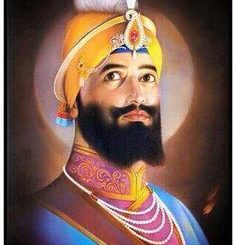
Tag: Bhai Vir Singh

  • Remembering the Sikh heroes: bearers of Nishaan Sahib Insignia’

    Remembering the Sikh heroes: bearers of Nishaan Sahib Insignia’

    By Amarjit Singh Anand

    “During the current global pandemic, the Divine Guru’s teachings of compassionate sharing, came to the fore, when millions of people were served with edibles, medicines, clothing, shelter and all essential services. As a collective, during the unprecedented lockdown, several governments officially requested the Sikhs to prepare food in Gurdwaras, to be served to individuals, as well as to be sent to hospitals and other institutions for the old and the infirm, orphans, and economically weaker sections.”

    Battle of Saragarhi,12 September 1897 when 21 Sikh soldiers fought 12,000 Afghan tribesmen.
    Serving free food during a calamity.

    Truth, contentment and kindness are the GUIDING LIGHTS that bless and prod the Sikhs towards living a Divine life, fighting invaders and tyrannical oppressive regimes, for the protection of the weak and the meek teeming millions.

    During these five centuries, hundreds of thousands of Sikh Martyrs have performed the supreme sacrifice of life, as defenders of Freedom of Religion, as protectors of their motherland, as saviors of the honor of women and as helpers of the oppressed classes.

     The Sikhs, whether in India or while living as law-abiding citizens and contributing significantly to the economic growth of their adopted nations of abode, have maintained strong connections with their land of origin. The foreign exchange remittances, to India, from the Sikhs are exemplary, in rejuvenating the Indian economy.  Wherever the Sikhs reside, they assimilate extraordinarily well, in the mainstream life of any nation, culturally, politically, socially, economically, lending a spiritual and ethically sublime touch to all that they are involved in or are called upon to do.   ALL the Role-Model Sikhs must utilize the affluence and influence, with an ever-enhanced sense and degree of responsibility towards the “good of all”. Material growth must be tempered with spiritual elevation and evolution.

    The global community of the Sikhs is built on the spiritually strong edifice of “treating death as a reality, verily as life”. Sikh role-models, globally, are the insignia bearers of Sikhism.

    The history of Sikhism starts from the Blessed Advent of Sree Guru Nanak Sahib, in circa 1469, in Talwandi region, then part of a much larger India. His Tenets include Truthful living, humility, liberty, equality, justice, compassion, honest earning, serving the needy selflessly and protecting the weak and the meek. All this, he said would be tantamount to a Divine Life and real, true, actual worship and attainment of God and fulfillment of the purpose of human-birth.

    For over a thousand years, this region was invaded by a small bunch of horse-rider marauders, from Mongolia, Persia, Afghanistan, and the like. Taimur, Ghazni, Ghori, Nadir Shah, Abdali are only a few of those invaders, who plundered Hindu Temples, looted gold, took women and children as slaves, killed everyone who crossed their path.

    And then appeared a man on earth, the likes of whom are seen, once in a millennium. Guru Nanak Sahib Jee confronted Babur, an invader who established his empire on Indian soil. Guru Nanak Ji’s Divine ambrosial words were adequate to transform a ruthless mass-murderer into one who fell at the Guru’s feet, pledging to rule with justice. Babur sought a boon of ruling for several generations and Guru Nanak Sahib Jee granted it and it came to fruition for seven generations, exactly during the lifetime of ten Divine Gurus.

    The Divine Preceptor of ONENESS of humanity traversed 27,000 miles, across various continents, in 25 years of his 70 years’ sojourn on this planet, during which he reformed several tyrannical rulers, vociferously advocated human rights and women’s rights, brought about social revolution, by speaking out against slavish mentality, superstitious belief system, hollow ritualistic practices, religious bigotry and suppression of the downtrodden social and economic classes.

    Guru Nanak Ji was the pioneer, enunciating the cause of Inter-Religious Peace and Harmony. Guru Arjan Sahib and Guru Tegh Bahadur Sahib attained martyrdom for the cause of Freedom of Religion and Interfaith acceptance and harmonious coexistence. Guru Gobind Singh Sahib, tenth Spiritual Master, sacrificed his entire family including four sons, all under 17, fighting the tyrannical regimes, bent upon annihilating the Freedom of Religion, Culture and Traditions. Martyrs include Bhai Mani Singh, Baba Deep Singh (valiant warrior) Bhai Taru Singh, Bhai Dayal Das, Bhai Mati Das, Bhai Jati Das, Bhai Sati Das.

    At this juncture, it is paramount to remember the supreme sacrifices made by noteworthy Hindu and Muslim supporters of the Gurus and Sikhs. They are Rai Bular Bhatti, Bhai Mardana ji, Sain Mian Mir, Pir Budhan Shah, Pir Bhikhan Shah, Raja Dewan Todar Mal, Moti Ram Mehra, Nawab Sher Khan of Malerkotla, Dr. Sir Gokul Chand Narang, Daulat Rai, Rabindra Nath Thakur (Tagore) Sri Aurobindo Ghosh.

    During these five centuries, hundreds of thousands of Sikh Martyrs have performed the supreme sacrifice of life, as defenders of Freedom of Religion, as protectors of their motherland, as saviors of the honor of women and as helpers of the oppressed classes. They have been in the forefront against marauding invaders and the oppressive British regime. The maximum number of those exiled from India or those executed by the British, after fake trials, were Sikhs.

    Illustrious Martyrs include Bhagat Singh, who instilled courage in the masses by kissing the gallows, as a reward for serving the cause of India’s freedom. Udham Singh, avenged the Jallianwala Bagh massacre perpetrated by the British, after twenty-one years, and was also hanged. Udham Singh, Kartar Singh Sarabha,

    Maharaja Ranjit Singh reigned over the Khalsa Empire for almost 50 years and his legendary General Hari Singh Uppal ‘Nalwa’ conquered regions in Afghanistan. Baba Banda Singh Bahadur established the first Sikh kingdom. Bhagel Singh, Jassa Singh Ahluwalia and Jassa Singh Ramgarhia are the valiant Generals, who vanquished Delhi (under Mughal Empire) Several notables include Nawab Kapur Singh, Akaali Phoola Singh ji. Maharaja Ripudaman Singh of Nabha, one of the few rulers of princely states who dared to defy the British, continues to inspire generations. Lieutenant General Harbaksh Singh (Vir Chakra) commanded the Indian Army and played a key role during the Indo-Pakistani War of 1965. For his role in the war, he was awarded the Padma Vibhushan.

    General Mohan Singh and Colonel Gurbaksh Singh Dhillon of the Indian National Army which fought the British colonial rulers.

    Hardit Singh Malik (CIE OBE) an Indian civil servant and diplomat. He was the first Indian High Commissioner to Canada, and then Indian Ambassador to France. He was the first Indian to fly as a pilot with the Royal Flying Corps in the First World War. He also played first-class cricket between 1914 and 1930. The role of the Sikhs in the Liberation of France is well recognized.

    Sikh regiments and battalions have served the United Nations Peace-keeping forces, worldwide, whether in war-torn countries or civil-wars, and in regions ravaged by natural calamities as famines, floods, droughts or earthquakes.

    Fighting in the World Wars, as part of the British Indian Army, the highest number of “exceptional gallantry” Awards from the British Empire were bestowed upon the Sikhs.

    The epic battle of Saragarhi witnessed the saga of twenty-one Sikhs attaining martyrdom facing ten thousand ferocious Tribal Afghans is unparalleled in world history.

    Today, the Sikhs reside in several countries and have made a mark for themselves, in various spheres of endeavor.

    The Sikhs, whether in India or while living as law-abiding citizens and contributing significantly to the economic growth of their adopted nations of abode, have maintained strong connections with their land of origin. The foreign exchange remittances, to India, from the Sikhs are exemplary, in rejuvenating the Indian economy.

    Whether the armed forces or politics, science and technology, business or various professions, the arts or sports, Sikhs have excelled unproportionately, in correlation to their very negligible percentage of the world populace.

    Revered Saint Bhagat Pooran Singhji, personally, served the residents in a leprosy-home which he established. Being an epitome of humility and selfless service, he refused to be nominated for the Nobel Prize.

    To name a few luminaries: Dr. Manmohan Singh (Prime Minister of India) Zail Singh (President of India) Air Marshal Arjan Singh, Lt. Gen. Jagjit Singh Aurora (effected the surrender of ninety thousand Pakistan army personnel) Bhai Mohan Singh (industrialist, Founder of Ranbaxy pharmaceuticals) Hukam Singh & Gurdial Singh Dhillon (both Speakers of Lok Sabha) Swaran Singh (Foreign Affairs Minister)

    Literary geniuses include the wise grand old man Baba Buddha Ji (who lived from Guru Nanak Sahib up to 6th Guru Hargobind Sahib) Bhai Gurdas ji, Bhai Vir Singh, Kahan Singh Nabha, Amrita Pritam (poet par excellence) Khushwant Singh, Manjit Tiwana, Surjit Patter.

    Other notables are The ‘Flying-Sikh’ Milkha Singh (Olympian sprinter) Ajaypal Singh Banga (CEO, Mastercard) Dr. Narinder Singh Kampany (inventor of fiber-optics) Capt. Tania Shergill, the youngest Adjutant and the only lady to become the Parade-Adjutant, on India’s Republic Day, 2020.

    Yogi Harbhajan Singh Khalsa was the Preacher of Sikhism in the Western Hemisphere, where the Sikh universal doctrine has been embraced by people from various races and those having different religious and cultural affiliations.

    There are many Sikh parliamentarians in various countries. Gurbax Singh Malhi, elected to the Canadian Parliament in 1992, created history, when laws had to be amended, to accommodate a turban- wearing member to sit in the Parliament. Jagmeet Singh Dhaliwal, political influencer and Tanmanjit Singh Dhesi (UK MP).

    In the scenario of the post 911 tragedy, several Sikhs were murdered and bore the brunt of hate crimes, due to the mistaken-identity syndrome, but succeeded through relentless endeavors, to enhance awareness about the Sikhs.

    During the current global pandemic, the Divine Guru’s teachings of compassionate sharing, came to the fore, when millions of people were served with edibles, medicines, clothing, shelter and all essential services. As a collective, during the unprecedented lockdown, several governments officially requested the Sikhs to prepare food in Gurdwaras, to be served to individuals, as well as to be sent to hospitals and other institutions for the old and the infirm, orphans, and economically weaker sections. And, then, came the farmers agitation, for the restitution of their rights. This peaceful agitation, soon, got transformed into a People’s Protest, gaining momentum with support from all segments of the society.

    Wherever the Sikhs reside, they assimilate extraordinarily well, in the mainstream life of any nation, culturally, politically, socially, economically, lending a spiritual and ethically sublime touch to all that they are involved in or are called upon to do.

    Sree Guru Nanak Sahib, The Divine Preceptor and his nine successors inculcated numerous Divine attributes like truth, humility, wisdom, bravery, perseverance, contentment, compassion, in the Sikhs. The valorous, chivalrous, industrious, Sikhs have, throughout their legendary history of five and a half centuries, been living life, in consonance with the DIVINE Tenets, as espoused by Sree Guru Nanak Sahib, The Exalted and Humble Prophet of ONENESS of humanity.

    Truth, contentment and kindness are the GUIDING LIGHTS that bless and prod the Sikhs towards living a Divine life, fighting invaders and tyrannical oppressive regimes, for the protection of the weak and the meek teeming millions.

    Guru Sahib opines that a Believer, a GOD-conscious aspirant would always practice kindness towards all, not just for friends but also to the soldiers in the enemy rank and file, just as Bhai Kanhaiyaa Jee, who was blessed by Guru Gobind Singh Jee, for performing such unique Divine deed of serving water and providing first-aid on the battlefield, sans any distinction or discrimination, whatsoever.

    The Soul-nurturing act of “GIVING” is a GODLY attribute, signifying GRATITUDE towards the GREATEST GIVER, our Omniscient Creator.

    The Great Gurus instilled the spirit of giving in the Sikhs, in consonance with which, every single Gurdwara provides food to all, irrespective of race, religion, caste, status, to every single person who walks in. At the Sanctum Sanctorum of Sree Harmandir Sahib, volunteers prepare and serve meals for 3000 people every half hour. Many Gurdwaras offer shelter to the visitors and send edibles and medicines to the shelters.

    Several Sikh organizations like Khalsa Aid, United Sikhs, SALDEF and Sikh Coalition are, proactively, engaged in global humanitarian relief endeavors during natural calamities or man-made tragic events. GIVING may include time, emotional support or physical assistance and not, necessarily, monetary help.

    Outside of India, history was made when Dalip Singh Saund was elected as the first US Congressman, of Indian descent. Today, Sikhs adorn the highest offices in Europe, the Americas, Australia, in diverse spheres of endeavor, including diplomatic assignments and parliamentary, administrative and judicial appointments.

    Not to forget the two World Wars and various occasions whereby high-ranking Sikh officers and soldiers have offered their exemplary services as the United Nations Peacekeepers.

    In North America Sikhs have added to the rich tapestry of the fabric of pluralism, as envisaged in the Constitution of the United States of America.

    The leadership role has been bestowed by the Great Guru Sahib, upon each Sikh, more so when The Tenth Spiritual Master, Guru Gobind Singh Jee blessed us with the unique identity of turban and beard, stipulating these as mandatory. This distinct appearance shall, verily, bear a tremendous exemplary impact upon the Sikh youth, motivating them to retain it. Such leadership role falls more upon those who have been blessed with the path-breaking success and accomplishments.

    ALL the Role-Model Sikhs must utilize the affluence and influence, with an ever-enhanced sense and degree of responsibility towards the “good of all”. Material growth must be tempered with spiritual elevation and evolution.

    ONLY then, commands SREE GURU NANAK SAHIB, shall every human attain the objective of a purposeful LIFE, by way of realizing and recognizing THE ALMIGHTY MAJESTY in ALL CREATIONS. “Gobind milan kee eh tairee bariyaa; Awar kaaj tairai kitai na kaam, mil Saadh Sangat bhaj kewal Naam”. The GOLDEN opportunity of human-frame must be availed to envision GOD in ALL. Such WORSHIP, as advised by the Benevolent Guru Sahib, would be acceptable to THE CREATOR. The responsibility to HEAL HUMANITY becomes incumbent upon those who have been blessed with abundance of Divine bounties. We are, all, the insignia bearers of the Vision & Mission of Sree Guru Nanak Sahib, and must continue striving and thriving to work in tandem, traversing the GOLDEN PATHWAY of DIVINITY in HUMANITY.

    (The author is a keen researcher of Sikhism and spirituality. A United Nations Ambassador of Peace, he has written extensively on various aspects of diverse faiths and has actively worked on the interfaith front. He can be reached at amar1ujagar1pritam@gmail.com)


  • Baisakhi Mubarak

    Baisakhi Mubarak

    By Nikky-Guninder Kaur Singh

    Memories are important for our personal and collective identity. We celebrate Baisakhi by remembering the phenomenal personality, life, and legacy of Guru Gobind Singh:

    Whether he was at Anandpur riding his handsome blue charger, his regal plume setting off his wiry and commanding figure, with a knightly body of devoted and daring Sikhs following him, or in the jungle of Machhiwara, barefoot and forlorn, his heart was constantly in harmony with the Divine, neither losing its qualities of love and compassion in one situation, nor giving way to despair in the other…. It is difficult to imagine a genius more comprehensive and versatile.

        –Professor Harbans Singh, Guru Gobind Singh (1966)

    We canpicture the Guru with his resplendent plume astride his royal-blue stallion, hear his valiant melodies, feel his intense spirituality, absorb his egalitarian ideals, value his arduous battles, and recognize his vast metaphysical worldview. The consequence? We are energized to put his message into practice.


    Historians often make a rupture between the “peace-loving” Guru Nanak and the “crusader-warrior” Guru Gobind Singh, which is not only erroneous, but also detrimental to Sikh psyche and society. These either-or binaries take away the multi-dimensionality of the Gurus and give a skewed sense of their ideology and praxis. The Tenth Guru as a natural successor to the First who challenged social hegemonies, criticized degrading and exclusive cultural norms, and validated heroism. Guru Nanak’s poignant protest against Babur’s invasion of India and his devastation of innocent people—both Hindu and Muslim, male and female— resonates throughout Guru Gobind Singh’s fight for freedom and justice. In his own voice we hear the Tenth’s awareness of his divine purpose: identifying himself with the founder Nanak, he commits to reverse the moral imbalance of his contemporary society, one in which the saints were being persecuted and the tyrants rewarded.

    The Guru spent his childhood in Patna where his parents Guru Tegh Bahadur (Nanak 9) and Mata Gujari were spending some time. Several stories of little Gobind are present in the Sri Gur Pratap Suraj Granth. As we all know stories may not be factual, but they exude enormous power as articulated by Muriel Rukeyser, “the universe is made of stories, not of atoms.” The childhood stories portray an enthusiastic, empathetic, wise, loving, and a happy Gobind. Professor Harbans Singh effectively conveys the youngster’s impact: “Its [Patna’s] air was intoxicated with the presence of so lovable a being. Its streets echoed with the prattle and mirth of Gobind Singh as he grew up and started ransacking the place with a group of playmates.” He would frequently overstay his playtime and return home late which would delay the evening liturgy. Interestingly, even today the tradition is maintained, for the evening Rahiras in the Patna Sahib Gurdwara is still read after the usual canonical hour. In one of the stories, little Gobind announced that he had found a second mother. When Mata Gujari asked how will one son play on two laps, the son responds most poetically: “Just as one moon plays simultaneously in two pools.” With his narrative flair, Professor Harbans Sing hdelineates a vivid portrait of the Guru which fosters not only a close relationship with the historical figure but also a deeper understanding of his adult psyche and subsequent accomplishments.

    Unfortunately, as the family is resettling in Anandpur in the Shivalik hills, the nine-year-old comes face to face with the tragic martyrdom of his father.  The son lost his father; the Sikhs, their spiritual leader. And the torture and the cruelty with which Guru Tegh Bahadur met his end in Delhi in 1675 was so agonizing. But the qualities embodied in the young Gobind we met earlier mature forcefully. He “remoulds the spirit in Anandpur” by converting the pain and distress of his father’s death into a bracing memory. His personal loss, pain, and anger are sublimated into a dynamic and creative mode of living. The hills around Anandpur begin to echo with the chanting of sacred verses and heroic ballads, and with the gallop of the young Guru’s horses. The elemental sounds pierced their depressed emotions and the anguished Sikh hearts began to beat with a new consciousness. His father’s death did not make him vindictive, a claim made by some scholars. Professor Harbans Singh describes the diverse ways in which Guru Gobind Singh diverted the minds of his Sikhs from thoughts of retaliation, and inspired a healthy and harmonious attitude. “His heart was constantly in harmony with the Divine, neither losing its qualities of love and compassion in one situation, nor giving way to despair in the other.” In fact, what his father was for him, the young Guru becomes for his community.

    The poetic genius of the Guru and his aesthetic sensibility must be remembered. With our single-minded attention on the Guru’s battles and daring deeds, we overlook his artistic brilliance. He was “a poet of deep spiritual insight” along with his various significant roles — that of a “prophet,” “kingly patron of learning,” “natural leader,” “soldier of unmatched military prowess and courage,” “social reformer,” “liberator,” “saint with a wide human sympathy,” and more. Actually, all his talents perfectly fuse in his poetic enterprise.

    And so sacred poetry vitally important from the very origins of the Sikh faith acquires an even more urgent impulse from the Tenth.  The first Guru identified himself as a sairu/shair, from the Arabic word for poetry al-shi’r, which the Islamic scholar S.H. Nasr traces to consciousness and knowledge. Clearly the Asian understanding of poetry is very different from “making” or “crafting” that underlies the Greek poesis. In the Sikh instance, the Gurus are so consumed by their awareness and love for the Divine that their words flow out instinctively. The first Sikh community in Kartarpur evolved around the founder Guru’s sonorous rhyme (bani). Sikh subjectivity is born from the Guru’s bani; Sikh subjectivity is nourished by Guru’s bani. For Guru Gobind Singh poetry was the means of revealing the divine principle, and concretizing the vision that had been vouchsafed to him. His popularly recited Jaap carries forward the first Guru’s Japu in breathtaking speed. It is a marvelous profusion of divine attributes that flashed on the tenth Guru’s artistic horizon. He ends at verse 199 rather than at a round figure to signify that there is no culminating point. The cascading terms saluting the infinite One are dynamic, their rhythm is speedy, a perfect proof of his spiritual lineage from Nanak 1.

    Through his verse the tenth Guru expressed the themes of love and equality, and a strictly ethical and moral code of conduct. Deprecating idolatry and superstitious beliefs and practices, Guru Gobind Singh evoked love for the singular Divine. His quatrains (savvaye), for instance, underscore devotion as the basis of religion. They reject all forms of external worship and cast Guru Nanak’s message of internal love in undulating rhythm — “jin prem kio tin hi prabhpaio” (those who love find the Transcendent). Rather than an impassive list of do-s and don’ts, these poetic rhythms hit us at a visceral level and reproduce spontaneous re-actions.

    Metaphysical poetry is also essential to his historic inauguration of the Khalsa. How did Guru Gobind Singh prepare the invigorating amrit drink that his five beloved sipped and spewed out all hegemonies of caste and class? The Guru churned water in a bowl with his double-edged sword — in the accompaniment of bani. The alchemy of iron intensified by the vigor of the Gurus’ hymns and sweetened by the sugar-puffs put in by Mata Jitoji was the revolutionary drink that the Khalsa consumed to fight against all forms of tyranny and oppression. By sipping amrit prepared in and with the sight and sound and touch of Guru Nanak’s Jap, Guru Gobind Singh’s Jaap, Swaiyyas, Chaupai, and Guru Amar Das’Anand, the Khalsa is born, and is thereafter daily nurtured. The nutrients physically taken inside the body become a part of the blood stream of the newly born members, and continue to feed them throughout their lives and that of their future generations. The five items of faith (bana) given by the Guru to his beloved five are made out of bani. The fusion of the devotional and the martial was the most important feature of the philosophy of Guru Gobind Singh and of his career as a spiritual leader and harbinger of a revolutionary impulse.

    On that historic Baisakhi of 1699 Guru Gobind Singh meaningfully retrieved his past, and set it in motion for the future. The Sikh religion is not static but a rich, ever-accumulating tradition. It is for us to keep the Guru’s dynamic momentum going. Celebrating Baisakhi at the Indian Consulate in New York City 2021 inspires us to be courageous, creative, empathetic, innovative, and loving. In our dangerously divided world, the Guru serves as a wonderful role model. We must follow his appeal

    manas kijatsabaiekaipahichanbo….

    ek hi sarupsabaiekai jot janbo (Akal Ustat: 85)


    Recognize: humanity is the only caste….

    Know: we are all of the same body, the same light.

    There is an urgency in the Guru’s tone as he voices the two imperatives “pahichanbo” (recognize) and “janbo” (know). He does not want us to be afraid of one another; he does not intend for people to merely tolerate one another with different colored eyes or complexions or accents or texture of hair. Such differences happen to be an effect of our different geographical regions and cultural locales: “Different vestures from different countries may make us different; nevertheless, we have the same eyes, the same ears, the same body, the same voice — niareniaredesankebhes ko prabhaohaiekainainekaikanekaidehekai ban” (Akal Ustat: 86). Our very birth and biology justify our human equality. The Sikh Guru makes it our responsibility to know (janbo) that we all have the same body (ek hi sarupsabai), and are formed of the same spiritual light (ekaijoti). We are urged to open ourselves, generate new potentialities, forge close relationships — build ourselves a rich and meaningful human community.

    Let us rejoice and sing together the felicitations from Bhai Vir Singh’s Gurpurab Gulzar:

                       Ajjkhushian mane khalsa

                       Mainundarastere di lalsa

                       Kar darshan nalnihal

                                 Ajj aa mil kalgivaliah

                       Auhkalgianvala aa gia

                       Mainuncarnanvicsamalia

                       Hun vicchurnamelanvalia

                                 Rahu milia kalgivalia


    The Khalsa rejoices today

    How I long to have a vision of you

    Show me yourself, fill me with joy

    O plumed one, come meet me today!

    O here comes the plumed one

    Caresses me tenderly around his feet

    You who attached me, do not leave

    O plumed one, now stay with me!

    The citations in this essay are from my father Professor Harbans Singh’s biography Guru Gobind Singh, published in 1966 for the 300th birth centennial of the Guru. It has been republished by the Bhai Vir Singh Sadan (New Delhi).  Not only was the book translated into most Indian languages, its Sanskrit translation won the coveted Sahitya Akademi award.

    (The author is Crawford Family Professor & Chair of the Department of Religious Studies, Colby College, Waterville, ME. 04901, USA