Tag: Bharat Jodo Yatra

  • Jaipur Literature Festival- a Mahakumbh of Men of Ideas

    By Dr Yash Goyal

    Special Correspondent TIP

    JAIPUR (TIP): Described as the ‘greatest literary show on earth’, the Jaipur Literature Festival is a sumptuous feast of ideas. The past decade has seen it transform into global literary phenomenon having hosted nearly 2000 speakers and welcoming over a million book lovers from across India and the globe.

    Over the past 15 years, JLF’s core values remain unchanged, and the festival brings together a diverse mix of world’s top writers, thinkers, humanitarians, politicians, business leaders, sports people and entertainers on one stage to champion the freedom to express and engage in thoughtful debate and dialogue.

    As the fear and threat of pandemic Covid-19 minimized this time, the 15th edition of iconic JLF was back at its customary city of Jaipur from January 19-23 with its characteristic flavour, substance and scale, bringing together writers, readers, connoisseurs, influencers and thinkers.

    The magnificent and diverse programme for the much awaited 16th edition featured  some of the most celebrated and extraordinary minds of the world. It  displayed 21 Indian and 14 International languages with sessions spread across five venues.

    The festival hosted 350 speakers from across a vast array of nationalities, as well as recipients of major awards such as the Nobel, the Booker, International Booker, the Pulitzer, the Sahitya Akademi, Baillie Gifford, Pen America Literary Awards, the DSC Prize for South Asian Literature and JCB Prize for literature.

    In this season there was luckilyno political, social and religious controversy that could attract fanatic people to create hurdles and media hype.

    Rajasthan Education Minister Dr B D Kalla conferred the 8th Kanhiyalal Sethia Award to K Satchidanandan for his best poetry. A cash Prize of Rs. One lakh and memento of appreciation along with a felicitation was gave away by Dr Kalla and its organizer.Siddharth Sethia of Mahakavi Kanhaiyalal Sethia Foundation, said, “MKSA Sethia Poetry award in association with JLF is a platform which brings the versatility of Indian poetry to a global audience.”

    Recipient of Nobel Prize in Literature 2021, Abdulrazak Gurnah has inaugurated the JLF with his key note address ‘writing as a form of resistance’. In another session devoted to him, the Tanzanian-born British author of 10 novels Gurnah said, “I was young, untraveled, unskilled and poor 18-year-old boy in this country (UK) which does not want me. The need to understand that feeling of having lost, the hostility, adventure, all of these, I was trying to work all that out that started me off writing. But I was not writing, it was not writing, rather trying to work things out and reflecting, not intended for anybody to see. Sometimes, writing starts like that”.

    Saying that he never thought of publishing when he started writing, Gurnah said, “When you start fictionalizing, you innovate, enhance, diminish, or whatever. But none of these were intended for writing. But then slowly, the ambition stirred, and I wanted to do something with these writings”.

    Shashi Tharoor 

    Noted Politician-Author Shashi Tharoor had the maximum sessions for interaction on wide variety of subjects including politics, history, and current topics.Media always awaited Tharoor’s press briefing every year, and this time on the grand success of Bharat Jodo Yatra (BJY), he announced that he would write a book on this as this has very significantly rehabilitated the image and success of Rahul Gandhi who is walking on the roads from Kanyakumari to Srinagar. Saying that he is already writing a column on BJY in a Malayalam newspaper’s website, Tharoor said that it has been confirmed that Yatra has a huge success in the entire country.

    “It has very significantly rehabilitated the image of Rahul Gandhi. After all, a caricature of Pappu business was erased. The older caricature was based on three charges: One, he is a politician who sits on small dharna, and participates in protests only. Now it is proven that he has been marching on roads not for a day, but for 150 days on 3570 kms. Now you cannot put this first charge anymore”, Tharoor said.

    “Second charge: RaGa was arrogant, inaccessible, etc. What do you see now, he meets all sorts of people, from all walks of life, shakes their hands or holds them, and marches with them”, he elaborated.

    “Third charge: RaGa is not serious and cannot talk on politics. Now, he has dozens of press conferences. How many PM Narendra Modi has till now?”, he asked, adding “He is totally transformed by his Yatra. The public has seen the outcome”.

    “RaGa’s BJY has energised the party and its workers. Inspired everyone and given new energy”, Tharoor confidently said, adding, “If the party wants to win the next LS polls 2024, then the party workers, who feel motivated should go for an energetic campaign to have it”.

    Gulzar

    Renowned poet, lyricist, author and screenwriter Gulzar also addressed a few sessions. In an interaction Gulzar said poetry was not just a matter of textbooks but it is connected with everyday life and things.

    “Today’s generation feels that poetry is a matter of textbooks. They are not able to see it by connecting it with everyday life and things. So I have added these 365 contemporary poems (Nazam) for them only in my book : A Poem A Day. Through them, they will also be able to understand the pulse of the changing times”, Gulzar told the audience.  ‘A Poem a Day’ is a collection of 365 Nazms compiled by Gulzar Sahib. He has collected contemporary poems of 365 poets from 1947 to 2017 and translated them into Hindustani.He strongly said no language was small and that all languages with scripts can be considered as national languages.

    Javed Akhtar and Shabana Azmi (Photos: courtesy JLF Media)

    In ‘Daira and Dhanak’ session two famous poets of their time, Jaan Nisar Akhtar and Kaifi Azmi, were mentioned. ‘Daira’ and ‘Dhanak’ are collections of poems by Jaan Nisar Akhtar and Kaifi Azmi respectively, edited by Javed Akhtar and Shabana Azmi. Through these two great poets who were born at the same time, some pleasant things of that period and nazms were shared with the audience. Akhtar saheb mentioned the progressive movement in 1930 and its impact on the writings of both the poets. There are many similarities between these two poets but mentioning a big difference, famous actress Shabana Azmi said, “The picture of women in both the poems is completely different. Such interesting discussions are nothing less than a ‘treat’ for the listeners”.Former NDTV anchor and senior journalist Ravish Kumar engaged in a riveting discussion about ‘fear’ and its role in politics today. He began by discussing the fears he has had as an individual, and then related these to the fear that has been instituted by the state. He spoke at length about political prisoners, the rich and judges—and how all of them are afraid of the government today. In that sense, the undergirding theme of the talk was the all-encompassing nature of fear.

    Sudha Murty,  an Indian educator, author and philanthropist  said about how writing has changed her. Murty told everyone that her first book got published when she was 29 in Kannada. She further emphasised on the importance of her mother tongue and the culture of the land. She started writing in English at the age of 52.

    “I connect to the people because I tell the truth. I don’t act. What you see, you only get that much. Nothing extra… What I say, I walk.” She said, “Normally, if you’re truthful when you write, then you can establish a relationship. That’s what I believe.”

    Biologist and author Merlin Sheldrake talked about his book Entangled Life and shed light on the enchanting world of fungi and how they are intrinsic to our existence. The focus of Sheldrake’s book is on how fungi play a role in shaping our futures and making our worlds. Sheldrake also talked about how deeply linked the arts and the sciences are and that the passion for both emerges from a place of wonderment and curiosity.

    Speaking at the session “The Elephant and the Dragon”, Former Indian Army Chief J J Singh said, “The situation of the Indian Army is not the same as it was in 1962. I want to reassure you that they got bloody noses in Galwan Valley, they were made to stop in Doklam and similarly, they were told to go back to Twang valley. This is the New India they are facing and they must understand India is no longer the same”. He anticipated that India and China can get into a constructive and positive engagement which is only through dialogue and discussions.

    Professor of Mathematics at the University of Oxford, Marcu Du Sautoy stressed on how math lets us do more with less and attempts to solve the age-old question of hard work truly being the only key to success.

    Renowned classical musician, Padma Bhushan Hariprasad Chaurasia and author Sathya Saran, in conversation with Managing Director and Festival Producer Sanjoy K Roy, discussed anecdotes from Chaurasia’s childhood and his journey with the bansuri. Namita Gokhale, JLF’s co-director, noted woman writer, and recipient of Sahitya Akademi award for his book “Things to Leave Behind” in 2021 also talked on “A Life in Books” and her latest book “JAIPURNAMA”.

    Among others who figured &attracted audiences in many sessions included actor Deepti Naval, veteran TV journalist Vir Sanghvi, former Foreign Secretary Shyam Saran, Infosys co-founder Nandan Nilekani, and Deputy Executive Director United Nations Women, Anita Bhatia.

  • Mehbooba Mufti joins Rahul Gandhi in Bharat Jodo Yatra day after ‘security lapse’

    Mehbooba Mufti joins Rahul Gandhi in Bharat Jodo Yatra day after ‘security lapse’

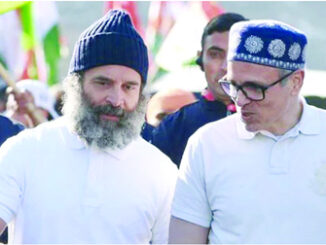
    Awantipora (TIP)- Congress’s Bharat Jodo Yatra resumed from Awantipora in Jammu and Kashmir on Saturday, January 28,  with PDP chief Mehbooba Mufti joining Rahul Gandhi and other Congress leaders, a day after the yatra was halted due to alleged security lapses. Mufti, along with a number of women, are walking with Rahul Gandhi from Chursu. There will be a tea break near the Birla International School, Pampore and the night halt will be at the truck yard in Pantha Chowk in the outskirts of Srinagar.

    On January 29, the Yatra will resume from Pantha Chowk and walk up to Nehru Park on the Boulevard Road. Rahul Gandhi will address a press conference there.

    Rahul Gandhi had to cancel his walk on Friday after it entered Kashmir Valley, as the party alleged a security lapse and claimed the police arrangements by the Union territory administration “completely collapsed”.

    The Gandhi scion, who began his yatra from Banihal in Jammu region on Friday, crossed the Jawahar Tunnel into the valley in Qazigund in a bulletproof vehicle. While the yatra got a rousing reception on this side of the tunnel, the security forces found it difficult to control and manage the crowd of hundreds of party supporters. The yatra was cancelled for the day.

    The Jammu and Kashmir Police rejected the Congress charge and said there was no security lapse at the Bharat Jodo Yatra and that the organisers had not informed the police about a large crowd joining the march from Banihal. The Congress, however, put out a video purportedly showing police personnel withdrawing from the site.

    Now Congress president Mallikarjun Kharge has written to Home Minister Amit Shah seeking adequate protection on the day of the culmination of Rahul Gandhi-led Bharat Jodo Yatra on January 30 in Srinagar.

    In his letter, Kharge said the party welcomed the Jammu and Kashmir Police statement on ensuring complete security and said a huge gathering is expected on the day the yatra ends in Srinagar.

  • Yatra lends purpose to Rahul’s political journey

    Yatra lends purpose to Rahul’s political journey

     In Indian electoral politics, alliances are formed on the basis of strengths rather than weaknesses of the participants. The aura of success surrounding Rahul’s Bharat Jodo Yatra is set to provide him with moral authority to play a pivotal role. In addition, in Sonia Gandhi, Rahul has a reserve bench of sorts; the former party chief can act as a line of communication with many non-NDA allies, including the Left, to keep the mahagathbandhan going. 

    This year, the Congress faces a litmus test in Karnataka, Madhya Pradesh, Rajasthan and Chhattisgarh. If it can win these states, the grand old party would emerge as a serious challenger for the 2024 General Election.

    By Rashid Kidwai

    There are many quotes that have been attributed to Mahatma Gandhi. In the Congress party office at 24, Akbar Road, one of them reads, “Kabhi kabhi hum apne virodhiyon ke karan aage badhte hain.” (At times, we move ahead due to our opponents). Then there is another one saying, “Pehle woh aap par dhyan nahin denge, phir who aap par hasenge, phir aapse ladengen, aur tab aap jeet jayenge.”(First they would not pay any attention to you, then they would mock you and then they would fight with you. You would win once these stages are completed).

    In the context of Rahul Gandhi’s ongoing abstract, yet arduous, Bharat Jodo Yatra, these quotes ring a bell, bringing some relevance and hope for the Congress leader.

    There is a broader and growing consensus of sorts among Rahul’s detractors and well-wishers that finally, the Gandhi scion is showing signs of purpose, perseverance and hope in his political journey that began in 2004.

    Politically, the yatra may or may not be a game-changer, but it has succeeded in establishing Rahul as a credible politician who can walk the talk, intermingle with the masses and get support from a range of politicians and celebrities — from MK Stalin, Aaditya Thackeray, Supriya Sule and Farooq Abdullah to Raghuram Rajan, AS Dulat, Swara Bhaskar and Kamal Haasan.

    More importantly, the BJP’s stringent criticism, Union Health Minister Mansukh Mandaviya’s ‘appeal’ to suspend the yatra over Covid concerns, and the outrage over Rahul’s comments on China allegedly entering Indian territory have helped him become a singular dissenting voice.

    When the yatra began from Kanyakumari, Rahul’s popularity ratings were at an all-time low. The Congress organization was in a shambles and the leadership issue was far from settled. While the yatra was on the Kerala-Karnataka border, Rajasthan Chief Minister Ashok Gehlot, at that time tipped to be the next AICC president, stunned friends and foes alike by showing defiance, a throwback to the bygone era of Devaraj Urs, Arjun Singh and other party chief ministers.

    But throughout the Congress organizational election process, Rahul stayed away and focused on the yatra. The Assembly polls of Himachal Pradesh and Gujarat offered a mixed bag as the Congress went on to win HP. It was a surprise for those predicting the Congress’ death. The ‘corpse’ is, in fact, very much alive and kicking.

    This year, the Congress faces a litmus test in Karnataka, Madhya Pradesh, Rajasthan and Chhattisgarh. If it can win these states, the grand old party would emerge as a serious challenger for the 2024 General Election.

    We need to remember that the fortunes of the Congress and other non-BJP parties are closely linked to the 2024 Lok Sabha polls where the non-BJP, non-NDA Opposition and the Congress-UPA partners will have to target the ‘half of half’, i.e. half of the 272 Lok Sabha seats on their own — a challenging but not unmanageable number in the 2024 battle.

    There are four crucial states of West Bengal, Bihar, Maharashtra and Karnataka where the BJP-NDA had done exceedingly well in 2019 but the subsequent political developments have unfolded a new scenario. In West Bengal, for example, the BJP had won 18 Lok Sabha seats out of 42, while in Bihar, the alliance with the JD(U) had resulted in its netting 39 out of 40 parliamentary seats. In Karnataka, the BJP had won 25 out of 28 seats, while in Maharashtra, the alliance with the undivided Shiv Sena  had resulted in the NDA allies winning 42 out of 48 seats. Imagine a situation if the BJP’s strength from these four states gets reduced to half. A simple majority of 272 would become a distant dream and prospects of a khichdi government a reality.

    The Congress, in order to be a contender, has to win 100 or more Lok Sabha seats from states such as Kerala, Chhattisgarh, Maharashtra, Rajasthan, Madhya Pradesh, Assam, Karnataka, Uttarakhand, Himachal Pradesh and a few others where the grand old party has been in direct contest with the BJP or traditionally has a strong presence.

    Next year’s parliamentary polls are set to be contested in contrasting styles. If Team Modi is set to make full use of the Prime Minister’s personal ratings, big-ticket projects, Covid-19 handling in the context of the massive vaccination programme, achievements on the diplomatic front and reliance on emotive issues like the Ram Temple, the Congress and its potential allies are prepared to take the battle to the states where regional players are expected to hold sway.

    So, if the parties led by Mamata Banerjee, Nitish Kumar, Uddhav Thackeray, Sharad Pawar, MK Stalin, Naveen Patnaik, HD Kumaraswamy, Chandrababu Naidu and Akhilesh Yadav together manage to hold on to a chunk of the parliamentary seats, the Congress has the task of doing well in most of the Hindi-belt states and the Northeast.

    In Indian electoral politics, alliances are formed on the basis of strengths rather than weaknesses of the participants. The aura of success surrounding Rahul’s Bharat Jodo Yatra is set to provide him with moral authority to play a pivotal role. In addition, in Sonia Gandhi, Rahul has a reserve bench of sorts; the former party chief can act as a line of communication with many non-NDA allies, including the Left, to keep the mahagathbandhan going.

    (Rashid Kidwai is a Senior Journalist and Author)

  • The onus of furthering constitutional values is on the film fraternity and on other progressive forces

    The onus of furthering constitutional values is on the film fraternity and on other progressive forces

    An open letter to the Indian film industry

    “There has also been a concerted effort to suppress projects which do not fit the BJP’s vision of and for India. Consequently, barring some notable exceptions, India’s film fraternity consciously self-censors itself, hoping to ride out the storm. Faced with a dispensation that stops at nothing, this self-preservation imperative is understandable. After all, why should an actor or producer or director stand up for constitutional values when they face boycotts and threats, when investigative agencies are unleashed on them, and when no one publicly stands with them?”

    By Pushparaj Deshpande

    In 1938, Charlie Chaplin started work on The Great Dictator. Even though it critiqued the Nazis, Chaplin was forced to self-sponsor, direct and write the project himself because most mainstream Hollywood studios were hesitant to disrupt ties to German finance, or risk making an overtly political project. Additionally, many in the establishment felt appeasing Adolf Hitler could work, so official censorship was also a real threat. Yet, showing tremendous personal and ideological fortitude, Chaplin forged ahead. The film belied expectations and became Chaplin’s biggest commercial success. It was nominated for five Academy awards and became a cult classic.

    Contextualize the enormity of Chaplin’s achievement. Swimming against the tide, his film mocked Hitler’s fetish for photo-ops, self-aggrandizing schemes and critiqued the attacks against minorities to distract from economic failures. Most importantly, it exposed the futility of placating authoritarian figures. This was when Hollywood consciously eschewed taking an anti-Nazi stand on screen, even if it privately opposed Nazism.

    A site of contestation

    A similar situation has come to pass in India. India’s film industries are now a site of ideological and political contestation, as The Kashmir Files and Pathaan controversies highlight. The BJP is consistently leveraging films to sway mass audiences. Mixing religious imagery, patriotism and nationalistic ideals, these films methodically propagate key Sangh Parivar mythologies. The importance given to this endeavor is demonstrated by the fact that no less than the Prime Minister had multiple meetings with key film industry stakeholders, in an effort to prod them into producing “nation-building films”.

    There has also been a concerted effort to suppress projects which do not fit the BJP’s vision of and for India. Consequently, barring some notable exceptions, India’s film fraternity consciously self-censors itself, hoping to ride out the storm. Faced with a dispensation that stops at nothing, this self-preservation imperative is understandable. After all, why should an actor or producer or director stand up for constitutional values when they face boycotts and threats, when investigative agencies are unleashed on them, and when no one publicly stands with them?

    Coincidentally, this assault comes at a time when the nature of film consumption is undergoing a structural shift. As the DVD and retail business model has been rendered obsolete, filmmakers no longer get a second shot at turning a profit. This has been exacerbated by the unfortunate reality that confronting regressive values and uncomfortable truths is now a high-risk endeavor, for it could invite the wrath of regressive forces. Faced with these legitimate concerns, filmmakers are opting to churn out extravagant, high-budget films that are divorced from reality, or ‘safe’ films.

    But India’s film industries do not have the luxury of escaping socioeconomic and political realities. First, the BJP is creating a ‘committed film sector’ by attacking the structural integrity of the film and television sectors. By marshalling the full resources of the state (the merging of four film media units ignoring criticism from the industry, subsidizing projects of aligned filmmakers, the censor board withholding clearances, etc.) and coaxing its core vote bank to support films that pander to its political and ideological projects, the BJP is gerrymandering the market. That is partly why films like The Kashmir Files and Tanhaji did well commercially.

    Second, progressives are targeted not just for their project choices or because they dissent from the BJP, but for what they represent — an India where you could succeed no matter who you are or where you came from. Motivated by their ideological imperatives, these regressive forces need to constantly reinforce two things to their core vote bank, namely that broad-minded, outspoken and disruptive actors/filmmakers cannot shape India’s image of itself, nor do they have an equal space in films.

    Third, audiences do not seem to be watching films as an escape from reality. An ideologically captive audience is seemingly endorsing films that mirror what they are force-fed daily through the electronic and digital media. This is not just an act of solidarity with populist mythologies connected to national, religious and community pride; it also enables them to exert illusionary control over those they don’t agree with.

    However, following Newton’s third law, it follows that there is a liberal audience that spurns films with regressive values. That is why films like Samrat Prithviraj, Dhaakad, Manikarnika, etc. tanked at the box office, despite the initial leg-up they got from the BJP’s ecosystem. If viewership trends on OTT and digital platforms are anything to go by, a silent majority is desperate for films that do not propagate communal, casteist, xenophobic, racist and undemocratic values. In this reading, films that objectively and sensitively address socioeconomic and political realities can succeed commercially. These include Jai Bhim, Mandela, Article 15, Sardar Udham, Raazi, Mulk and Pink. Similarly, films on the farmers’/students’ movements; the lived realities of women, Sikhs, Muslims, Christians, Kashmiri Pandits, OBCs, Adivasis and Dalits; and India’s multiple successes since 1947 could resonate with, and bind Indians together positively.

    Admittedly, actualizing these requires courage. But the film fraternity needs to realize that it is an equal partner in fostering a national consciousness. While it does not need to wade into polarized political debates, it can (and must) use its craft in defense of our shared values. Unless it spearheads films and serials that remind us to preserve our humanity, that weave a symphony from the many voices of India and that envision a better tomorrow (while being truthful about today), this tsunami of hatred will not pass.

    The shared work of progressives

    Yet, the onus of furthering constitutional values is not on India’s film fraternity alone. It is also on other progressive forces (including political parties). Given how insidiously regressive forces are colonizing the minds of our fellow Indians, all progressives need to support each other in this normative battle for India’s soul. We need to propagate our shared values creatively because high-sounding appeals to protect secular, democratic and liberal values do not sway the silent majority. Furthermore, given the state of a section of India’s media, we need to open up new fronts. Unless we display politico-cultural dynamism, the BJP will keep changing its goalposts and unleashing new culture wars that liberals will struggle to catch up to. That is why progressives need to support the film and television industries. Civil society/political action against outfits attacking film sets, raising their issues in the legislature, the media and the judiciary, and establishing new platforms and means of support are just a few ways in which India’s film industries can be tangibly supported.

    B.R. Ambedkar had argued that “constitutional morality is not a natural sentiment. It has to be cultivated”. Seen in this light, it is incumbent on progressives to collaborate in the cultivation of mass emotions. Doing this would mean influencing social consciousness through soaring political rhetoric, disruptive movements like the Bharat Jodo Yatra, and the strategic use of popular culture. Notwithstanding the attack on India’s constitutional edifice, we must recognize that this is also a moment of possibilities — to redesign our operational methodologies, to shed ideological infirmities and to create a more liberal, just and compassionate India.

     (Pushparaj Deshpande is the Director of the Samruddha Bharat Foundation, a multi-party platform that furthers India’s constitutional promise & the series editor of the Rethinking India series [Penguin] )

  • Indian American academic Prof. Sheila Sen Jasanoff joins Rahul Gandhi during Bharat Jodo Yatra in Haryana

    Indian American academic Prof. Sheila Sen Jasanoff joins Rahul Gandhi during Bharat Jodo Yatra in Haryana

    PANIPAT (TIP): Indian American academic Prof Sheila Sen Jasanoff Holberg Awardee, 2022,  along with Prof Jay H. Jasanoff and social science students Alan Jasanoff and Hilton Simmet from Harvard University USA, joined Congress leader Rahul Gandhi in Bharat Jodo Yatra on Friday, January 6 morning.

    The yatra resumed from the Sanoli-Panipat Road in Haryana.

    A public meeting will also be addressed by Rahul Gandhi in Panipat. Thousands of people welcomed the ‘Bharat Jodo Yatra’ in the Panipat district of Haryana with fireworks. Congress’s Bharat Jodo Yatra on Thursday, January 5  completed its Uttar Pradesh leg and re-entered the state of Haryana.

    Talking to ANI about the Yatra, Congress leader Selja Kumari said, “Under the leadership of Rahul Gandhi, we will walk from the border to Panipat. We will have a massive rally, where Rahul Gandhi will address the public. There is a lot of enthusiasm in the people of Haryana, as they look up to Rahul Gandhi for their future. Taking inspiration from Rahul Gandhi, Congress will work hard in Haryana,” she added.

    Launching a scathing attack on the Bharatiya Janata Party (BJP), the Congress leader said, “BJP is anxious because what started as a ‘Yatra’ has now become a ‘Jan Aandolan’.

    Selja Kumari alleged that the industries in Panipat were in bad shape. “We should have been top in export, but we are not,” she said. Former Congress President Rahul Gandhi has been leading the Bharat Jodo Yatra which started from Kanyakumari last year.

  • Bharat Jodo Yatra

    Bharat Jodo Yatra

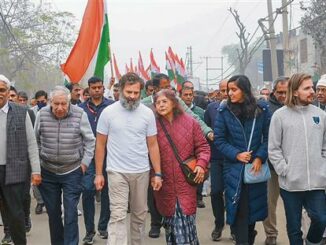
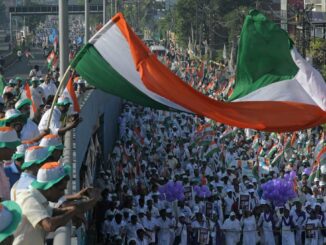
    The Congress party is undertaking the 3,570-km ‘Bharat Jodo Yatra’ that began at Kanniyakumari on September 7, 2022, and will end at Srinagar covering 12 States in 150 days. The party’s biggest mass contact programme in the recent times will see 119 leaders, including former party president Rahul Gandhi.

    According to the Congress,  the Bharat Jodo Yatra has been uniting people across the country and has proved that people want to live in peace and coexist in communal amity.

    Rahul Gandhi maintains that the Bharat Jodo Yatra is not for any political or personal interest, but against the politics of hate, fear and violence.

    The idea has rallied the Left liberal intelligentsia around him, for sure. From actor Swara Bhaskar to activist Medha Patkar and from lawyer Prashant Bhushan to author Tushar Gandhi—the list is impressive. The only drawback in this list is that it’s drawn from Congress’ extended eco-system. It’s like preaching to the converted. That doesn’t help the Congress expand its support base and breach the BJP’s. When Bharat Jodo Yatra was conceptualised, it was meant to be a mass mobilisation programme to rejuvenate the party. It wasn’t supposed to be Rahul Gandhi’s tapasya or spiritual quest. He has made it truly apolitical so far as the Congress is concerned.

    The Congress said that they started this movement to unite the country against the alleged “divisive politics” of the Bharatiya Janata Party-led central government at New Delhi. Launched by Gandhi and Tamil Nadu chief minister MK Stalin on September 7, 2022, its main objective is to fight against the politics of “fear, bigotry and prejudice” and the economics of livelihood destruction, increasing unemployment and growing inequalities. The presidential election of the party was held during the movement. The party also formed a government on its own for the first time in 4 years during the movement.

    Background

    The Congress party launched the logo, tagline, and website for Bharat Jodo Yatra at AICC headquarters on 23 August 2022. The march started from Kanyakumari on 7 September. It will be a 3,570-kilometre long, 150-day ‘non-stop’ march that will cover 12 states and two Union Territories from across the country in which Gandhi will meet people during the day and will sleep in makeshift accommodation in the night.  Yatris are scheduled to cover a total of 23 kilometres everyday in 2 shifts. The march has as of December 2022 covered more than 3,000 kilometers. There are several parallels between the Congress’s ‘Bharat Jodo Yatra’ and ex-prime minister of India Chandra Shekhar’s nearly 4,260 kilometers-long Bharat Yatra in 1983.

    Many grassroots movements have been joining or endorsing the Bharat Jodo Yatra. The Congress has also appealed to citizens, organizations, and movements to join the Yatra. More than 200 civil society members have appealed people to support Congress’ Bharat Jodo Yatra.

    (7-13 September)

    Rahul Gandhi launches the yatra at Kanyakumari after paying tributes to his late father Rajiv Gandhi, Swami Vivekananda, and the Tamil poet Thiruvalluvar on September 7. The Congress dubs the yatra as “India’s biggest mass contact program” where the concerns of the people will reach Delhi.

    (14-20 September)

    The yatra reached Kollam on 14 September, as Rahul Gandhi paid his respects to Sri Narayana Guru. He met local cashew workers there and promised to bring up their grievances in the upcoming parliamentary session.[33] The yatra entered various cities such as Kollam, Alappuzha, and Kochi during this week.

    (21-27 September)

    Rahul Gandhi paid floral tributes to Mahatma Gandhi in Kochi on 22 September. BJP leaders falsely alleged the break on 23 September in the yatra was in solidarity with the PFI. Hollywood actor John Cusack expressed his solidarity with Rahul Gandhi. A plea to regulate the Bharat Jodo Yatra was dismissed by Kerala High Court. Yatra entered Thrissur and Malappuram before entering Gudalur in Tamil Nadu on 29 September.

    On 30 September, it entered Karnataka with huge crowds. Police started cracking down on the PayCM campaign. Rahul Gandhi paid floral tribues to Mahatma Gandhi on the occasion of Gandhi Jayanthi. He also targeted the BJP on its handling of the COVID-19 pandemic in Karnataka.[ Yatra took a break at Mandya on 4 October.

    (5-11 October)

    Sonia Gandhi joined the yatra on 6 October, despite being unwell. Late journalist Gauri Lankesh’s family joined Bharat Jodo Yatra as it completed 30 days on the road. The yatra received an impressive response from the local public in Tumakuru district. It reached Chitradurga district on 11 October.

    (11-17 October)

    Rahul Gandhi met unemployed youth in Chitradurga district.[ The Congress stressed the importance of the Kannada language and regional languages like it. The yatra entered Anantapur district in Andhra Pradesh on 14 October, getting a large crowd. It reentered Karnataka the day later, completing 1000 kilometers in Bellary district.

    (18-24 October)

    The yatra reentered Andhra Pradesh via Kurnool district on October 18, before entering into Karnataka again on 21 October. The yatra entered Telangana on 23 October, followed by a 3-day Diwali break.

    (25-31 October)

    The yatra resumed in Telangana on October 27 with massive crowds following the Diwali break. It passed through many major districts such as Mahabubnagar, Narayanpet, Sangareddy, and Ranga Reddy. On 29 October 2022, the Congress leader Rahul Gandhi was joined by Tollywood actress Poonam Kaur during his walk towards Mahabubnagar district’s Jadcherla town.

    (1-7 November)

    On 1 November 2022, Late Dalit scholar Rohith Vemula’s mother joined to walk in Bharat Jodo Yatra along with Rahul Gandhi, en route to Hyderabad. Rahul Gandhi unfurled the national flag in front of the Charminar, over 32 years after his father and then party chief Rajiv Gandhi had started the Sadbhavna Yatra from the same spot in 19 October 1990. On 2 November 2022, actress and film maker Pooja Bhatt joined Rahul Gandhi in Bharat Jodo Yatra in Hyderabad on the 56th day of the yatra. On its 61st day, Bharat Jodo Yatra entered Maharashtra in evening of 7 November 2022.

    (8-14 November)

    On 10 November 2022, Bollywood actor Sushant Singh joined Bharat Jodo Yatra in Nanded, Maharashtra. On 11 November 2022, Shiv Sena leader and former Maharashtra Minister Aaditya Thackeray joined the Bharat Jodo Yatra in Hingoli district. The Bharat Jodo Yatra entered its 65th day since its beginning in September this year and fifth day in Maharashtra.

    (15-21 November)

    On 16 November 2022, activist Medha Patkar joined Bharat Jodo Yatra in Washim. On 17 November 2022, actress Riya Sen joined Bharat Jodo Yatra in Akola, Maharastra. Rahul Gandhi reiterated that Vinayak Damodar Savarkar had helped the British. On 18 November 2022, Mahatma Gandhi’s great-grandson Tushar Gandhi and actress Mona Ambegaonkar joined Rahul during Bharat Jodo Yatra in Shegaon in Buldhana district. On the day of birth anniversary of Indira Gandhi, actress Rashami Desai , Akanksha Puri and Nagma joined Bharat Jodo Yatra in Buldhana district on 19 November 2022. Actor Amol Palekar joined Bharat Jodo Yatra on its last day in Maharashtra in Jalgaon Jamod on 20 November 2022.

    (22-28 November)

    On 24 November 2022, Priyanka Gandhi and her husband Robert Vadra joined Bharat Jodo Yatra in Madhya Pradesh. Rahul Gandhi said in Burhanpur, Madhya Pradesh that the goal of the yatra was a march against the hatred, violence and fear that is being spread in India. During the meeting with banana plantations and powerloom workers, from Burhanpur region Gandhi opined about unemployment and farm issues. Former CM of Madhya Pradesh, Digvijaya Singh underplayed the electoral impact of the yatra.

    (29 November-5  December)

    Bharat Jodo Yatra entered Rajasthan on 4 December 2022, a Congress ruled state for the first time. Rahul Gandhi said that Bharat Jodo Yatra has taught him things that cannot be learnt while travelling in any mode of transport, be it an aeroplane, a helicopter or any other mode. Rahul Gandhi and his fellow travelers were given a warm welcome at Chanwli Chauraha about 40 kms from Jhalawar city in a traditional Rajasthani style. Congress leader Rahul Gandhi and Madhya Pradesh Congress president Kamal Nath danced with tribal dancers.

    (6-12 December)

    On 9 December 2022, Congress General Secretary (Communications) Jairam Ramesh informed that Bharat Jodo Yatra will take a nine-day break on December 25 and resume on January 3, 2023. On 11 December 2022, actress Digangana Suryavanshi joined Bharat Jodo Yatra in Bundi district.

    (13-19 December)

    On 13 December 2022, Bharat Jodo Yatra resumed from Jeenapur in Sawai Madhopur district, Rajasthan. On 14 December 2022, Former RBI governor Raghuram Rajan joined Bharat Jodo Yatra in Sawai Madhopur district.

    Bharat Jodo yatra which started from Meena High Court in Dausa District completed 100 days on 16 December 2022. Himanchal Pradesh Chief Minister Sukhvinder Singh Sukhu, Mukesh Agnihotri deputy CM, the Congress’ chief of the state Pratibha Singh walked alongside Rahul Gandhi.The Padyatra  covered eight states in 100 days – Tamil Nadu, Kerala, Karnataka,Telangana, Andhra Pradesh, Maharashtra, Madhya Pradesh and Rajasthan. Issues of common man have been highlighted through the yatra , which is its biggest achievement. Singer Sunidhi Chauhan performed at a concert marking the completion of 100 days of Bharat Jodo Yatra, at Albert Hall Museum in Jaipur on 16 December 2022. On 19 December 2022, while addressing a rally in Rajasthan’s Alwar, Rahul Gandhi highlighted the importance of English language and said that around 1,700 English medium schools have been opened in Rajasthan.

    (20-26 December)

    Former Punjab Chief minister Charanjit Singh Channi joined Bharat jodo yatra at Alwar in Rajasthan on 20 December. On 21 December 2022, Bharat Jodo Yatra entered Haryana from Mundaka border in Nuh district. Bharat Jodo Yatra resumed from Patan Udaipuri in Nuh, Haryana after the flag handover ceremony. On 23 December 2022, DMK MP Kanimozhi joined Bharat Jodo Yatra in Haryana.

  • In the new evolving world, India needs a new vision

    In the new evolving world, India needs a new vision

    The foundation for this new vision is a harmonious and inclusive society that embraces India’s unique plurality; incrementalism using existing tools, structures and processes may not suffice

    By Shashi Tharoor and Praveen Chakravarty

    The year 2022 can perhaps be best summarized by a quote by Vladimir Lenin: ‘There are decades where nothing happens; and there are weeks where decades happen.’

    The year began with the ostensible vanquishing of the COVID-19 pandemic, thanks to the remarkable collective vaccination efforts of science, business and governments across the world. This significant accomplishment promised to restore normalcy in daily lives and rekindle the doused human spirit.

    Alas, that was not meant to be. Just two months into the new year, the fallibility of the human mind reared its head in the form of the Russia-Ukraine conflict, throwing the world into disarray again. A global war, soon after a pandemic was both rare and unfathomable. Retaliatory economic sanctions and weaponization of trade dependencies have triggered woes of inflation, recession and gas shortage in winter, making lives miserable for millions.

    ‘Foe trade’ and an aggressive China

    The era of innovative consumer technologies from America and Europe, mass produced in Taiwan, Korea and Japan, and consumed in China, Brazil and India, seems to be nearing its end. America is now championing trade restrictions against its enemies, promoting trading blocs among its allies and incentivizing domestic production through large financial assistance. Trusted free trade among nations has turned into distrustful ‘foe trade’, leading to formation of ‘friend trade’ groups and the glorification of ‘economic nationalism’.

    India’s explosive exports growth over the last four decades has helped create millions of jobs, bring in valuable foreign reserves, and spurred domestic production and consumption. India stands to gain from the established trade order and can ill afford to get squeezed in the emerging bipolar world of western and Russia-China trading blocs.

    In the midst of such profound global changes comes the sudden, and incomprehensible military aggression by China against India. China’s advances into Indian territory are both undeniable and unacceptable. The timing and rationale of China’s military threat are intriguing and, purportedly, has a larger motive than just territorial interests across India’s borders. China has managed to engineer a realignment of the world order through strategic use of debt diplomacy, economic power and a ‘common enemy’ doctrine. The Chinese threat is neither just a border dispute with India nor an isolated bilateral conflict. It marks a fundamental reshaping of global forces.

    China’s economic might as the factory of the world is what gives it the confidence and the power to indulge in such aggression. Knee-jerk reactions such as trade restrictions and economic sanctions against China by western powers are blunt measures that will backfire. The counter to a Sino-centric world order is an economically powerful India.

    Social harmony is a necessary condition

    Factories employing millions of people producing billions of dollars of goods and services for the world in a thriving India is the strongest response to China. But social harmony is a necessary condition for India’s rise as an economic power. Factories cannot afford to differentiate amongst people of multiple identities working together, sowing distrust and hatred on the basis of workers’ religion, identity, caste or class. Ability is all that matters.

    If we accept that India’s economic power holds the key to its internal security, then it follows that India’s social harmony is the foundation of its edifice. It is in this context that the ongoing Bharat Jodo Yatra led by Rahul Gandhi is significant. Sadly, India’s communal harmony is under threat, but of our own doing. There is a lurking danger of one stray communal incident erupting into large-scale violence and unrest. A communally divided India on tenterhooks is a gift to our enemies. Tormented sections of our society can be easy targets for a preying attacker. The yatra is a momentous effort to heal communal wounds and strengthen the nation’s social fabric to help surmount the geopolitical and economic challenges facing the nation and the world.

    Cliched as it may sound, 2022 may go down in history as the year when the global equilibrium that lasted many decades and reaped tremendous benefits was disrupted. Seemingly rational pursuits of peace and prosperity are not the sole or even primary motivator for all nations and leaders. We must contest this ‘no more shared rational pursuits’ premise for the emerging new world order.

    It is time to re-imagine India’s overall strategy and re-evaluate our normative policy framework in this backdrop of an irrational world. We need a holistic military, diplomatic, social and economic strategy and not be afraid to challenge conventional wisdom.

    There is an imminent need to modernize and augment our defense capabilities with state-of-the-art weaponry and not be held hostage to antiquated military purchase norms and processes.

    A belligerent and hostile China will reaffirm who India’s active friends are and who merely observes from the sidelines. The established foreign policy doctrine of non-alignment may now conflict with India’s growing need for trade and market access in the new economic world order and may need to be re-envisioned. India needs a bolder geo-economic strategy to gain preferential access to unique technologies and capital from other nations in return for domestic market access.

    India’s politics will need to craft a new social contract with citizens, as the traditional tools of welfare and governance turn creaky and the gap between the haves and have-nots widens further. India’s economic road map will have to factor in environmental concerns, move away from the monopolies model of private enterprise, carve a new inclusive, labor market focused economic development path of production, and not chase financialization-driven GDP growth that has lost relevance for the common person.

    Look at decentralization

    India’s political governance model calls for greater decentralization and federalism reforms to cater to widening divergence among States. Centralization played a critical role in holding together and building the republic in the first half a century after Independence. The time has now come to let go and move away from a ‘one nation one policy’ mindset. Stronger institutions are a necessary condition for greater decentralization. Reforming public institutions with more powers, autonomy, resources and accountability is essential.

    In a nutshell, the nation needs a new vision in the new world. But the foundation for this new vision is a harmonious and inclusive society that embraces India’s unique plurality. Incrementalism using existing tools, structures and processes may not suffice. It requires the collective efforts of all leaders across the political spectrum to come together and craft a new vision, for which the onus rests with the Prime Minister. We sincerely hope for the sake of our beloved country and its beautiful people that a new awakening awaits.

    (Shashi Tharoor is a Congress Member of Parliament and former United Nations Under Secretary General. Praveen Chakravarty is a senior office bearer of the Congress party and a political economist.)

  • The pangs in birthing new political leaders

    The pangs in birthing new political leaders

    ”The year 2018 could have marked a decisive shift for the Congress, if only the leadership had captured the zeitgeist it was leading to. The party had won Assembly elections in three states which were in the BJP’s thralldom. Madhya Pradesh, Rajasthan and Chhattisgarh were not easy states to wrest from the BJP. This was the juncture at which the Congress could have addressed the leadership question on a clean slate, without getting daunted by the entrenched provincial Old Guard. This was the juncture to spot and nurture younger leaders from the grassroots to helm the states instead of allowing a sclerotic hierarchy to work the system on rickety limbs.”

    By Radhika Ramaseshan
    By Radhika Ramaseshan

    The year 2018 could have marked a decisive shift for the Congress, if only the leadership had captured the zeitgeist it was leading to. The party had won Assembly elections in three states which were in the BJP’s thralldom. Madhya Pradesh, Rajasthan and Chhattisgarh were not easy states to wrest from the BJP. This was the juncture at which the Congress could have addressed the leadership question on a clean slate, without getting daunted by the entrenched provincial Old Guard. This was the juncture to spot and nurture younger leaders from the grassroots to helm the states instead of allowing a sclerotic hierarchy to work the system on rickety limbs.

    The Congress displayed the spunk to shake up the system only in Chhattisgarh. It chose Bhupesh Baghel, then 57, as the chief minister in place of veteran TS Singh Deo, a running favorite, with a reported assurance to Singh Deo that the position was a rotational arrangement between him and Baghel. With just a year for Chhattisgarh to vote, the assurance, if real, never materialized. Baghel, a backward-caste Kurmi, not only survived internal challenges but also became a lynchpin of the national Congress organization. His ascendancy was a recognition and an acknowledgment on the Congress’s part that to survive and retain the base it is left with, strong state leaders were invaluable.

    The Congress missed the bus in MP and Rajasthan. In MP, Kamal Nath, 72 in 2018 and remarkably agile, positioned himself as the frontrunner through deft footwork, leaving younger leaders, notably Jyotiraditya Scindia, to search for options.

    In Rajasthan, evidently intimidated by the perception that Ashok Gehlot, then 67, had a formidable organizational network of his own (which inevitably failed after he completed his five-year term as the Congress’s rout in 2003 and 2008 testified), the party played safe and rooted for Gehlot to helm a third term. Like Scindia, a much younger Sachin Pilot, projected as Gehlot’s closest rival, was left hanging. The Congress’s fear was that Gehlot could inflict considerable damage to the party if driven up the wall.

    The grit displayed in Chhattisgarh — that was perhaps because Singh Deo was seen as less troublesome than Nath and Gehlot — evaporated in Madhya Pradesh and Rajasthan.

    It need not have played out that way because out of this trio of states, Chhattisgarh is regarded as a sure-fire winner a second time. If re-elected, it will prove that the limited experimentation paid off for the Congress.

    In Himachal Pradesh, the Congress top brass overlooked the time-honored metric of lineage and ‘stature’ when it went for Sukhvinder Singh Sukhu as the CM. Lok Sabha MP Pratibha Singh held on to her claim to the last, insisting that the victory symbolized a homage to her departed husband and former CM Virbhadra Singh. Hers was a contention whose emotional quotient might have worked in the old days but in an era in which ordinariness commands a higher premium over bloodline in politics, Sukhu, the son of a bus driver, pipped her to the post.

    The Congress awaits its next big leadership test in poll-bound Karnataka, where it is caught in a welter of rivalry between the old warhorses, Siddaramaiah and DK Shivakumar, who refuse to forfeit their assumed prerogative to lead the party even on peril of losing an election. Will the high command have the mettle to call their bluff or let the party go adrift amid their strife? By now, the Congress should have developed a second line of leadership, but it passed up the opportunity.

    Leadership transition in politics, as in every winner-takes-all venture, is painful. While change ushers in the arrival of the next generation, it also brings the possibility of a different functioning mode from what the elite and the rank and file are used to.

    Unlike industry, the fear in politics is partially unfounded because the original structure in which parties exist is rusted and will not countenance, let alone implement, the radical changes its timeworn frames are called on to do. Politics is essentially conservative and change-averse.

    The BJP under Prime Minister Narendra Modi is often described as unrecognizably different from the party that existed under Atal Bihari Vajpayee and LK Advani. That is not true. The BJP and Modi command a majority of their own and are, therefore, supremely well placed to execute the RSS’s agenda in almost every sphere of governance. A centralized political entity, allowing marginal latitude to the states, has been at the heart of the Sangh’s political philosophy. So, it is not surprising that the BJP’s command structures have been refashioned to enforce the might of the center in which the losers take nothing, not even the leftovers. The compulsions in the preceding dispensations were different. Vajpayee ran an unwieldy coalition because the BJP never gained the numbers to stand on its own. It had to contend with pesky allies as well as the Sangh’s incessant demands and could keep neither very happy.

    Does this mean that the seemingly invincible central BJP always overrides the states? Himachal partially busted the myth because the BJP’s rebels refused to heed Delhi’s entreaties to back off and help the official candidates. The BJP is struggling to get its Chhattisgarh, Bihar and Rajasthan organizations in place because these states are bereft of credible leaders to replace the veterans in Chhattisgarh and Rajasthan, while Bihar never had a helmsman. The BJP leaned so heavily on the Janata Dal (United) that the state party was eviscerated. The BJP’s lacunae do not solve the Congress’s problems. A stated objective of Rahul Gandhi’s Bharat Jodo Yatra was to re-energize the party organizations in the states. The aftermath? Days after the walkathon traversed Telangana, there was a virtual revolt against the state Congress president, A Revanth Reddy, for allegedly patronizing the TDP defectors over the original leaders. There are no short cuts.

    (The author is a Senior Journalist)

  • HOW CHANGE BEGINS WITH RAHUL GANDHI’S BHARAT JODO YATRA

    By Sharath Chandra Vemuganti

    Congress suffered major setbacks due to the rapid rise of communal politics in India. It may take some more time to see Congress regain its glory again. But I am confident that a significant change is about to occur in Indian politics, and the Bharath Jodo Yatra of Mr. Rahul Gandhi is the beginning of that forthcoming political change in India,” said professor Yogendra Yadav when I asked his opinion about the Walkathon.

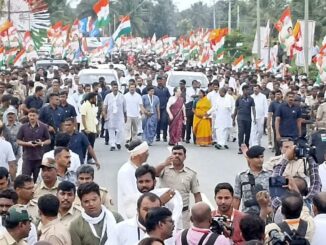
    TheBharat Jodo Yatra drew mammoth crowds.

    I walked in a daze, my left foot following the right, right following the left. This movement became automatic. Lunch and dinner breaks were the only scale to measure the distance I walked on any given day are the only scale to measure the distance I walked because time flew away during the Yatra or the Walkathon. Minor soreness in my body, aching legs, and calluses in my feet was testimony to the number of steps I walked, around 30,000 each day.

               Slogans such as “Jodo – Bharath jodo,” “Jai congress,” and “Rahul Gandhi zindabad” filled the air. Scores of enthusiastic and excited congress sympathizers joined the already existing dense crowd forming a huge cavalcade that drove along the villages, towns, muddy roads, and national highways before encamping for food and rest. Every evening, the Yatra concluded with a roadside public meeting addressed by Mr. Rahul Gandhi, Member of Parliament from Waynad, Kerala. Tens of top congress leaders from Delhi and Hyderabad, hundreds of party workers, the CRPF, Telangana police, and other security forces all played roles in making the Yatra a success story every step of the way. “Most NGOs in the country that work at the grassroots level are represented as a symbol of solidarity. They are supporting a Congress leader for the first time in their lives,” said a senior journalist when I asked for his opinion. “Rahul Gandhi’s focus has been on the message of forging unity in the country, which is targeted to be divided into religious lines by the BJP,” he added. “I was always critical of Rahul Gandhi’s leadership and non-serious attitude, but now I have to appreciate him. I can tell this “Any leader who goes to people and listens to their problems will always win” Rahul Gandhi is no exception,” said a senior IPS officer.

    “No one paid us to come, we were provided a vehicle with a full tank of diesel, and we’re covering all other expenses,” said a group of people from a village 200 km away from the Yatra. With great enthusiasm to see Rahul Gandhi,   people stood all along the roads, business streets, and residential colonies to see and greet Mr. Gandhi. They waved back happily when Mr. Gandhi waved at them. People from all walks of life stepped up with Rahul Gandhi. All ages of children, women, and men. Young Men dominated the Yatra.

    During the Yatra, people gave their opinions both explicitly and indirectly. When I casually questioned a bystander in the town of Kothur, en route to Hyderabad, about the Gandhi family’s leadership, he retorted, “Can you show me any leader in the Congress party who can pull such a huge crowd? “I don’t know what this huge presence of people indicates, but it is bringing back the long-buried memories of the Congress party,” said a merchant in a medical shop in Mahbubnagar. Many people said that they wanted to see Rahul Gandhi. Young people in Devarakadra town said they wanted to see and greet the TPCC president, Mr. Revanth Reddy.

     “My father drives a truck, and I am a college dropout. I support the Congress party because my father and grandfather supported it, “said a young Muslim man in Shadnagar.  Meeting Party workers from all 29 states of India at the Yatra’s camp was an entirely new experience for me.

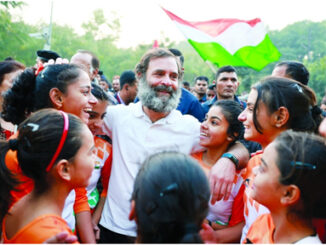
             Mr. Rahul Gandhi was very sober and responsible when interacting with children, students, farmers, senior people, and party workers and heard about their difficulties. He was curious to know the local customs. Rahul ate their native food, danced with tribes, and played with kids. He prioritized people over leaders and did not campaign for Congress. I told Mr. Rahul Gandhi, “Every NRI, though they don’t vote in India, speaks daily to their parents, siblings, and friends. Thus, they can influence 2, 3, or 4 votes. Every inactive NRI vote is equivalent to 3 or 4 active Indian votes. Hence you should address a huge meeting of overseas Indians, and it should help connect the diaspora’s young generation to the Congress party”. He listened to me attentively and said that that was a good idea.

        Along the way, I was surprised and mostly disappointed when almost everyone I met, whether they were friends, relatives, or political leaders, was curious to know if  I was interested in electoral politics. Most of them did not understand that my social consciousness, patriotism, and belief in secularism and socialism led me to travel to India and join the Yatra.

    President of IOCUSA Mohinder Singh Gilzian flew to India, as did many NRIs to join the Bharat Jodo Yatra.
    IOC USA General Secretary Rajendar Dichpally also joined the Yatra.

    While hundreds of NRI’s participated in Yatra in India, as a mark of solidarity, members of the Indian overseas Congress organized walkathons in various countries, wherever they lived. Mr. Sam Pitroda, Chairman of IOC, and other leaders inspired the Indian diaspora across the globe, particularly in the USA. NRIs from various countries, including the USA, the U.K., Australia, and the Middle East, were seen participating in solidarity with the cause of the Walkathon, representing an umbrella organization, “The Indian overseas congress.” This effort is Indicative of the growing patriotism against nationalism and divisiveness in the Indi diaspora.

             Congress suffered major setbacks due to the rapid rise of communal politics in India. It may take some more time to see Congress regain its glory again. But I am confident that a significant change is about to occur in Indian politics, and the Bharath Jodo Yatra of Mr. Rahul Gandhi is the beginning of that forthcoming political change in India,” said professor Yogendra Yadav when I asked his opinion about the Walkathon.No recent national-level politician has undertaken this arduous Walkathon since former Prime Minister Chandrasekhar in 1982. Bharath Jodo Yatra will register itself as a milestone in the history of India that future generations will read about. Indisputably, Rahul Gandhi’s image has soared quickly. It has established Rahul Gandhi as a serious politician who is a patriot and people-oriented.When Rahul Gandhi finishes this Yatra in Kashmir, the people of India will see a new, much evolved national leader who will not only be an equal counterweight to Shri Narendra Modi but one who has heard one-on-one, the voices of more Indians than any leader in our history. Jai Hind.

    The author Sharath Chandra Vemuganti with Rahul Gandhi on Bharat Jodo Yatra.

    (Sharath Chandra Vemuganti, a Pharmacist in  New York,   hails from Telangana, India)

  • Bharat Jodo Yatra:Congress President Sonia Gandhi joins Bharat Jodo Yatra in Mandya

    Bharat Jodo Yatra:Congress President Sonia Gandhi joins Bharat Jodo Yatra in Mandya

    NEW DELHI (TIP): The Congress party is undertaking the 3,570-km ‘Bharat Jodo Yatra’ that began at Kanniyakumari on September 7, 2022 and will end at Srinagar covering 12 States in 150 days. The party’s biggest mass contact programme in the recent times will see 119 leaders, including former party president Rahul Gandhi.

    Congress President Sonia Gandhi joined the Bharat Jodo Yatra, which resumed its journey in Pandavapura in Karnataka’s Mandya district on Thursday, October 6, after a two-day Dasara break. She joined the padayatra led by her son and Congress MP Rahul Gandhi for some time after it left Bellale village in Mandya district on Thursday, October 6 morning. Several other party leaders including former Chief Minister Siddaramaiah and Karnataka Pradesh Congress Committee (KPCC) President D K Shivakumar walked alongside within a security ring thrown around her.

    Ms. Gandhi has joined the Bharat Jodo Yatra for the first time since it began on September 7 and wound its way through parts of Tamil Nadu and Kerala before entering Karnataka on September 30.

    The morale of the Congress party in poll-bound Karnataka, which has been on a high ever since the yatra entered the State, has received a fresh boost with the entry of Ms. Gandhi, who arrived in Mysuru on Tuesday and spent the last two days at a forest resort in Kabini when the Bharat Jodo Yatra was on a two-day break for Dasara festival.